Window boxes have long been part of New England’s architectural vocabulary. From historic farmhouses and colonials to more contemporary homes, they offer a simple way to introduce color, texture, and seasonal change directly at eye level. When designed and maintained well, window boxes feel like a natural extension of the home rather than an added accessory.
For homeowners in the Boston area and across New England, window boxes come with unique considerations. Shifting seasons, cold winters, coastal winds, and summer heat all influence how they should be designed, planted, and cared for. This guide breaks down what to consider, from placement and materials to planting strategies and long-term maintenance, so window boxes enhance your landscape rather than becoming a short-lived detail.
Key Takeaways
- Window boxes add architectural balance, seasonal color, and curb appeal with relatively modest investment.
- Proper placement, proportion, and drainage are essential for both plant health and protecting the home.
- New England’s climate requires thoughtful material selection and seasonal planting transitions.
- Ongoing maintenance, including watering and replanting, is key to keeping window boxes looking intentional.
- Professionally designed and installed window boxes integrate more seamlessly with the broader landscape.

What Window Boxes Add to a Residential Landscape
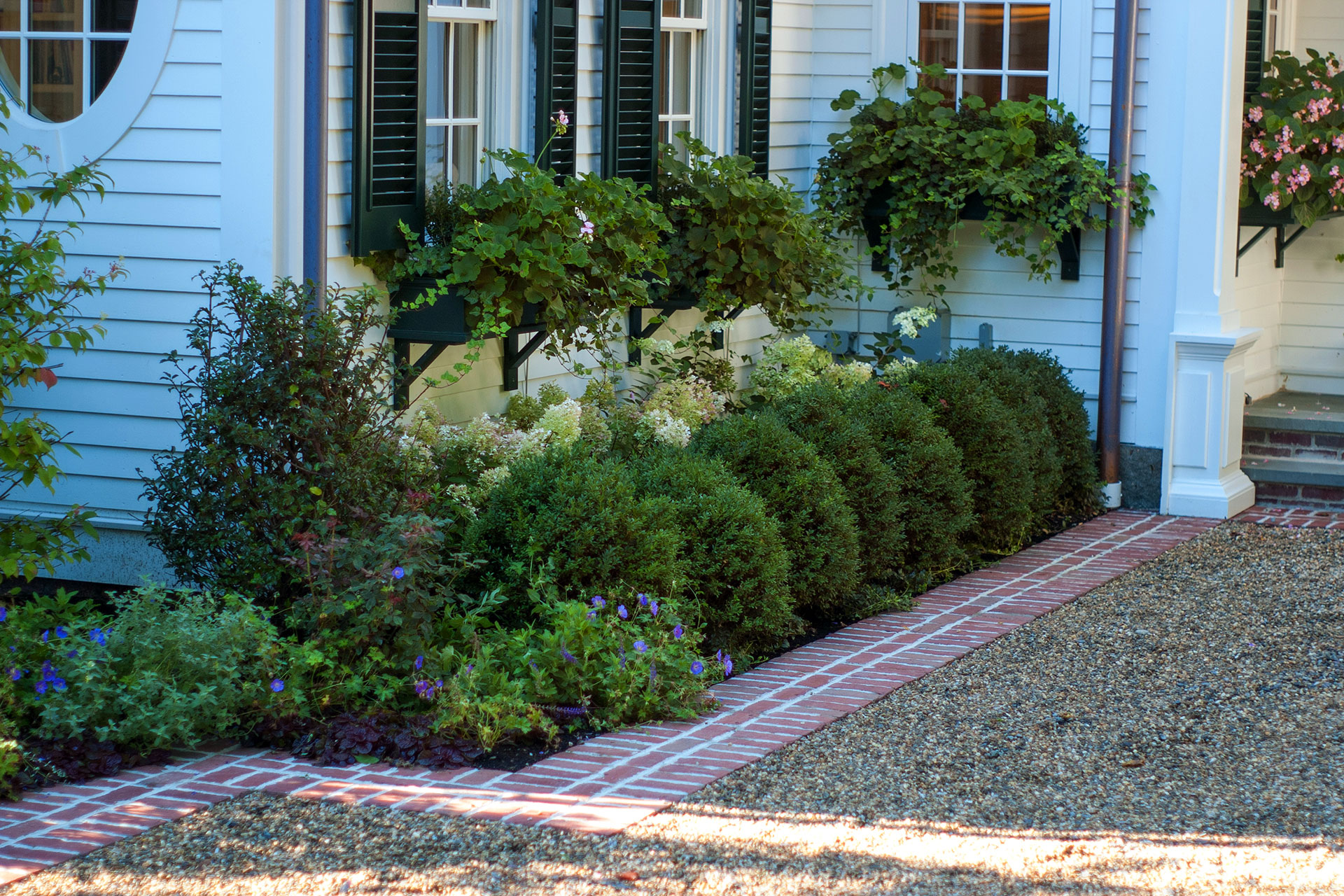
Window boxes sit at the intersection of architecture and landscape design. They soften façades, introduce living material where hard surfaces dominate, and create visual continuity between the home and surrounding plantings.
Unlike ground-level gardens, window boxes operate at eye level, which makes color choices, texture, and plant form especially noticeable. They also reinforce rhythm along a façade, helping windows feel more connected and proportionate, particularly on larger homes or elevations with repeating windows.
From a landscape perspective, window boxes can echo plant palettes used elsewhere on the property. Annuals, foliage textures, and seasonal accents often mirror nearby entry plantings, foundation beds, or container arrangements, helping the landscape feel cohesive rather than pieced together.
“As designers, we think of window boxes as architectural accents. When they’re sized and planted correctly, they reinforce the character of the home instead of competing with it.”
– Heather Lashbrook Jones, a Blade of Grass
Placement and Proportion for New England Homes
Choosing the Right Windows
Not every window needs a box. In fact, selective placement usually creates a stronger result. Front-facing windows often provide the most impact, especially those visible from the street or main approach. Secondary elevations can benefit as well, but restraint helps prevent visual clutter.
Accessibility also matters. Window boxes require regular watering and seasonal maintenance, so windows that are difficult to reach can quickly become liabilities rather than assets.
Getting the Scale Right
Proportion is one of the most common pitfalls with window boxes. Boxes that are too narrow or shallow often look undersized and struggle to support healthy plant growth.
As a general guideline, window boxes should closely match the width of the window trim or be slightly wider, and deep enough to support a meaningful root system. Depth not only improves plant performance but also allows for more layered, intentional planting designs.
“When window boxes feel off, it’s almost always a scale issue. Proper depth and alignment make the difference between a decorative afterthought and a feature that feels built-in.”
– Katie Johnson, a Blade of Grass
Materials and Construction Considerations
Selecting Durable Materials
Material choice plays a significant role in longevity, especially in a climate defined by freeze-thaw cycles and moisture.
Cedar remains a popular option due to its natural resistance to rot and insects, along with its classic appearance. Metal options, including steel and aluminum, offer clean lines and durability when properly finished. Composite and fiberglass boxes provide consistent performance with minimal upkeep and are often favored for homeowners seeking lower maintenance.
Each material carries different aesthetic and maintenance implications, and the right choice depends on architectural style, exposure, and long-term expectations.
Installation and Mounting
Proper installation is critical. Window boxes must be securely mounted to support the combined weight of soil, plants, and water. Poor installation can lead to sagging, water damage, or compromised siding and trim.
Professional installation ensures boxes are mounted into appropriate structural elements and spaced to allow for drainage and airflow. This protects both the plants and the building envelope.Drainage and Soil Fundamentals
Drainage is non-negotiable for successful window boxes. Without it, even the most carefully selected plants will struggle.
Boxes should include adequate drainage holes, and many designs incorporate internal liners that allow excess water to escape while protecting exterior materials. Lightweight, well-draining soil mixes help prevent compaction and promote healthy root development.
In New England, where heavy rain can be followed by sudden heat or cold, managing moisture levels is especially important. Proper drainage also helps protect siding and trim from prolonged exposure to water.
Planting for Seasonal Success
Spring and Early Summer
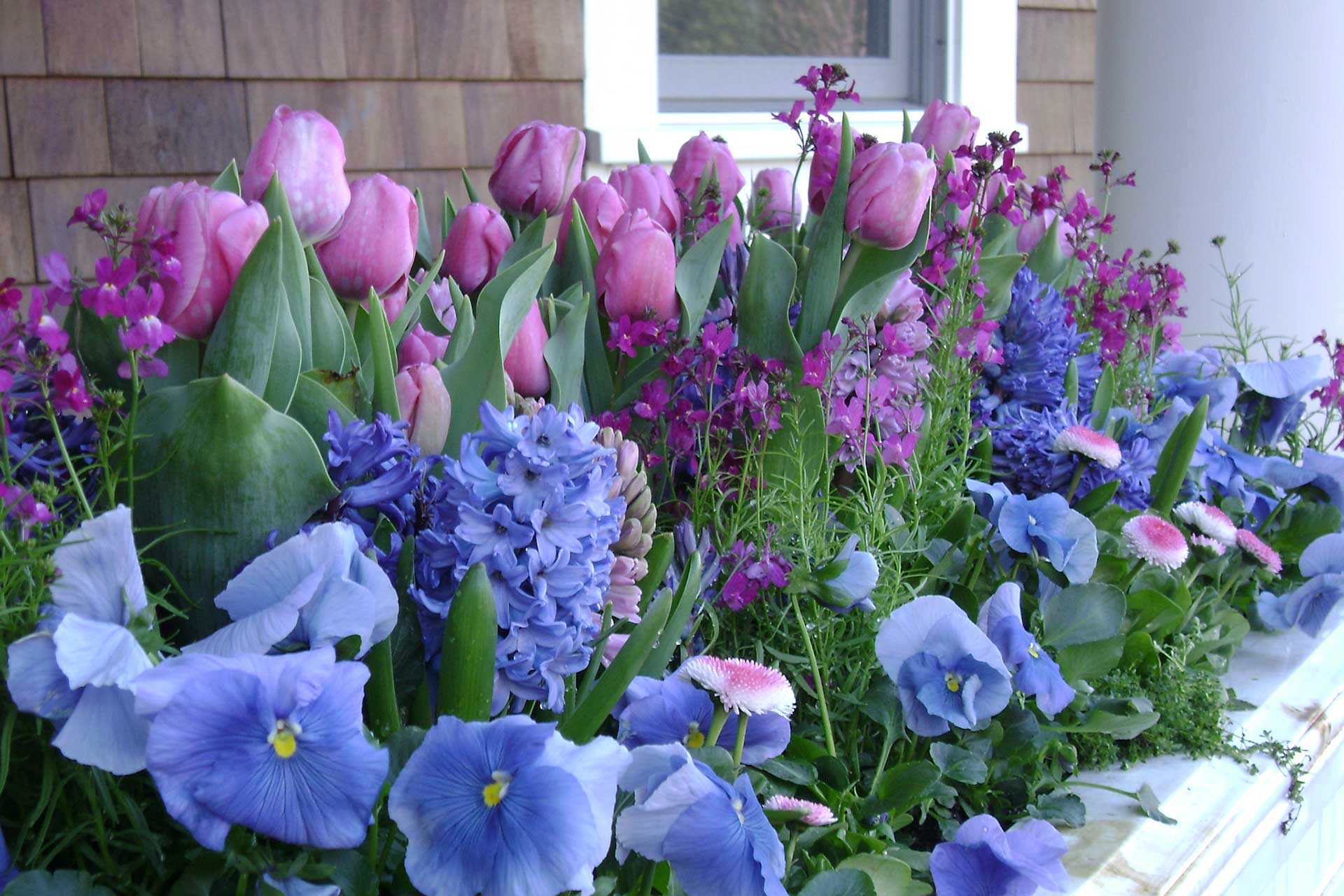
Spring plantings often emphasize early color and fresh texture. Cool-season annuals such as pansies and violas perform well early in the year, while bulbs can provide a short but impactful burst of color before transitioning to summer plantings.
Layering remains essential. Upright plants establish structure, mid-height selections add fullness, and trailing varieties soften edges and create movement.
Summer Performance
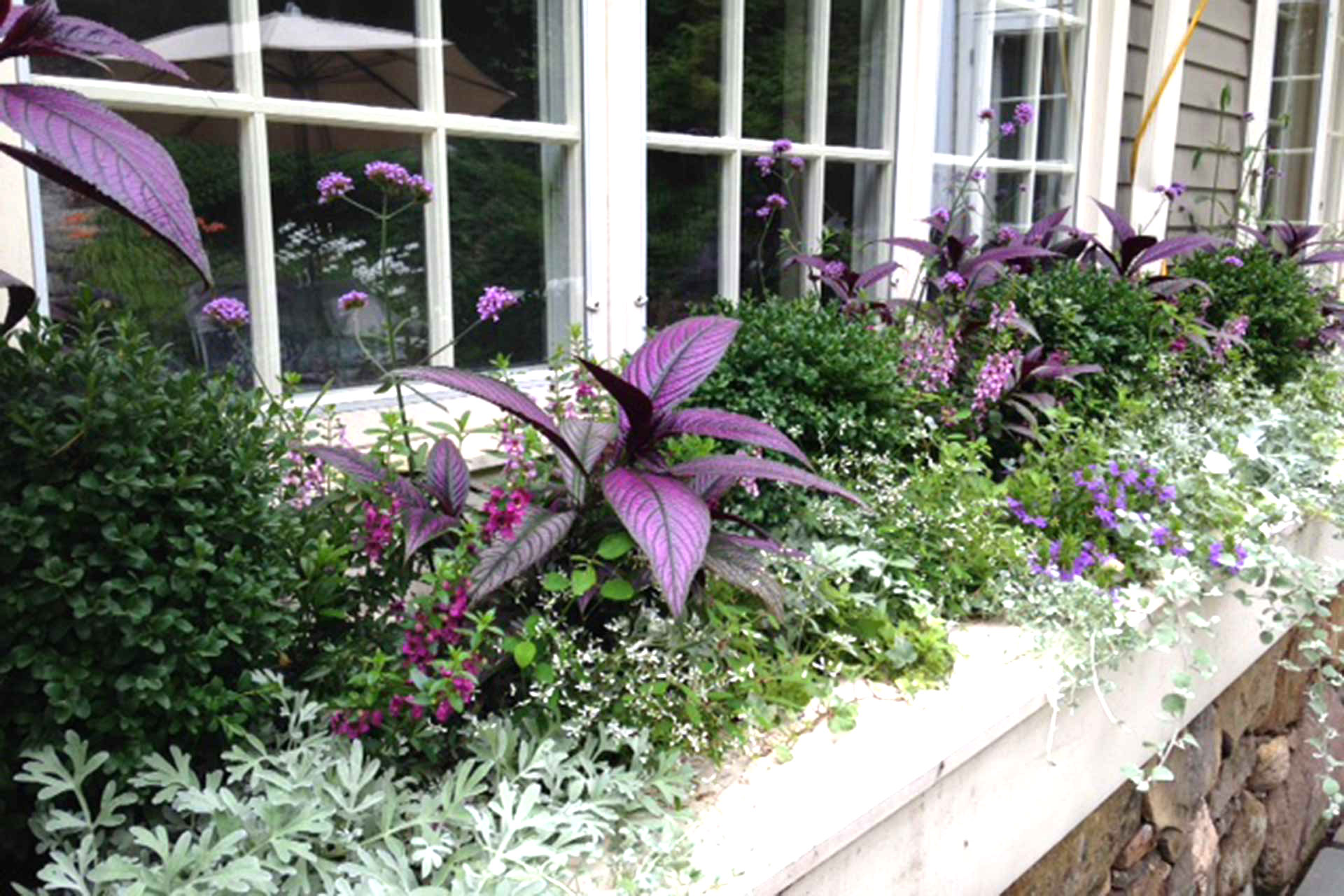
Summer window boxes must handle heat, sun exposure, and frequent watering. Plant choices should align with the specific light conditions of each window, whether full sun, partial shade, or more protected exposures.
Consistent watering and periodic feeding help maintain vigor during peak summer months, especially for boxes exposed to southern or western sun.
Fall and Winter Transitions
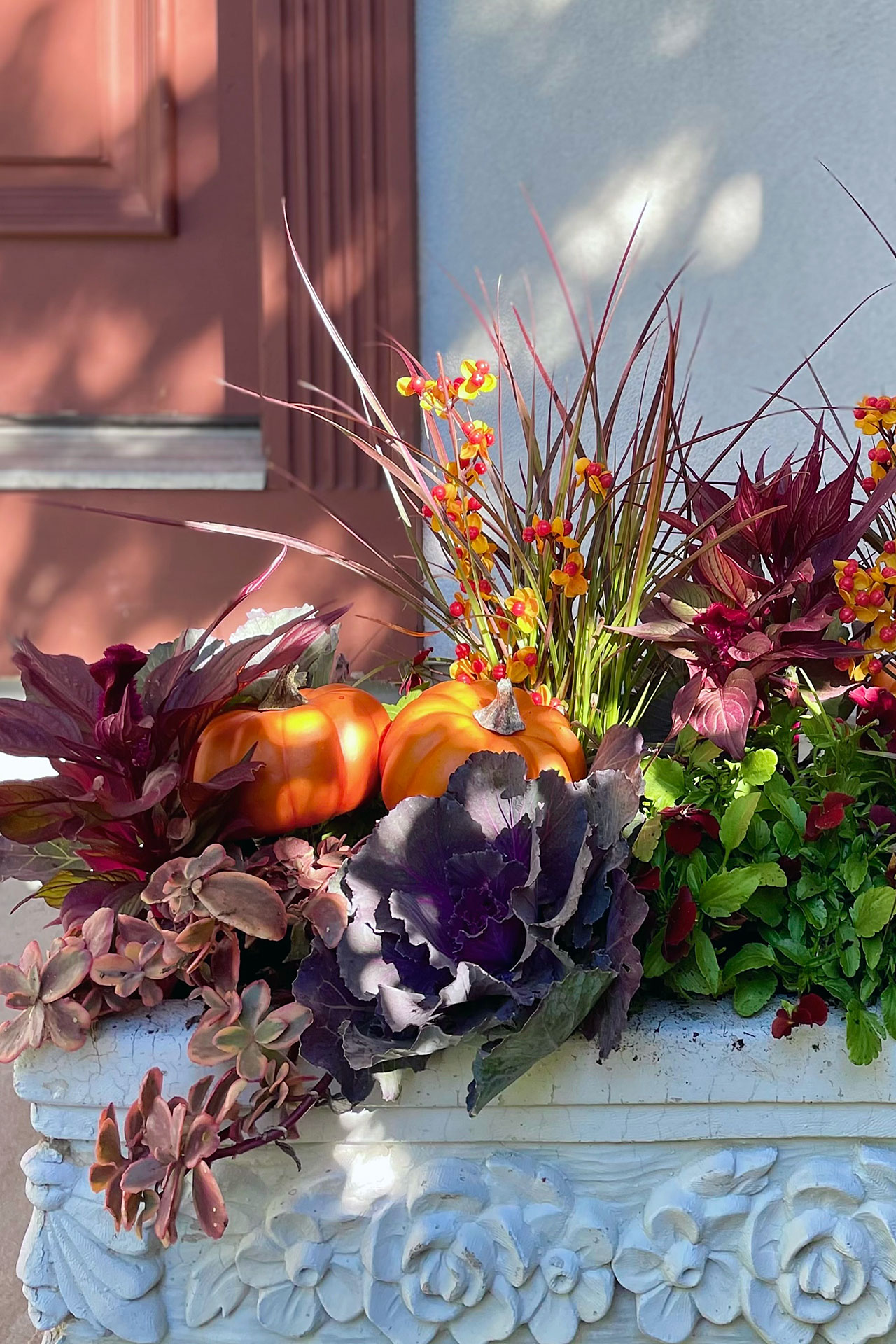
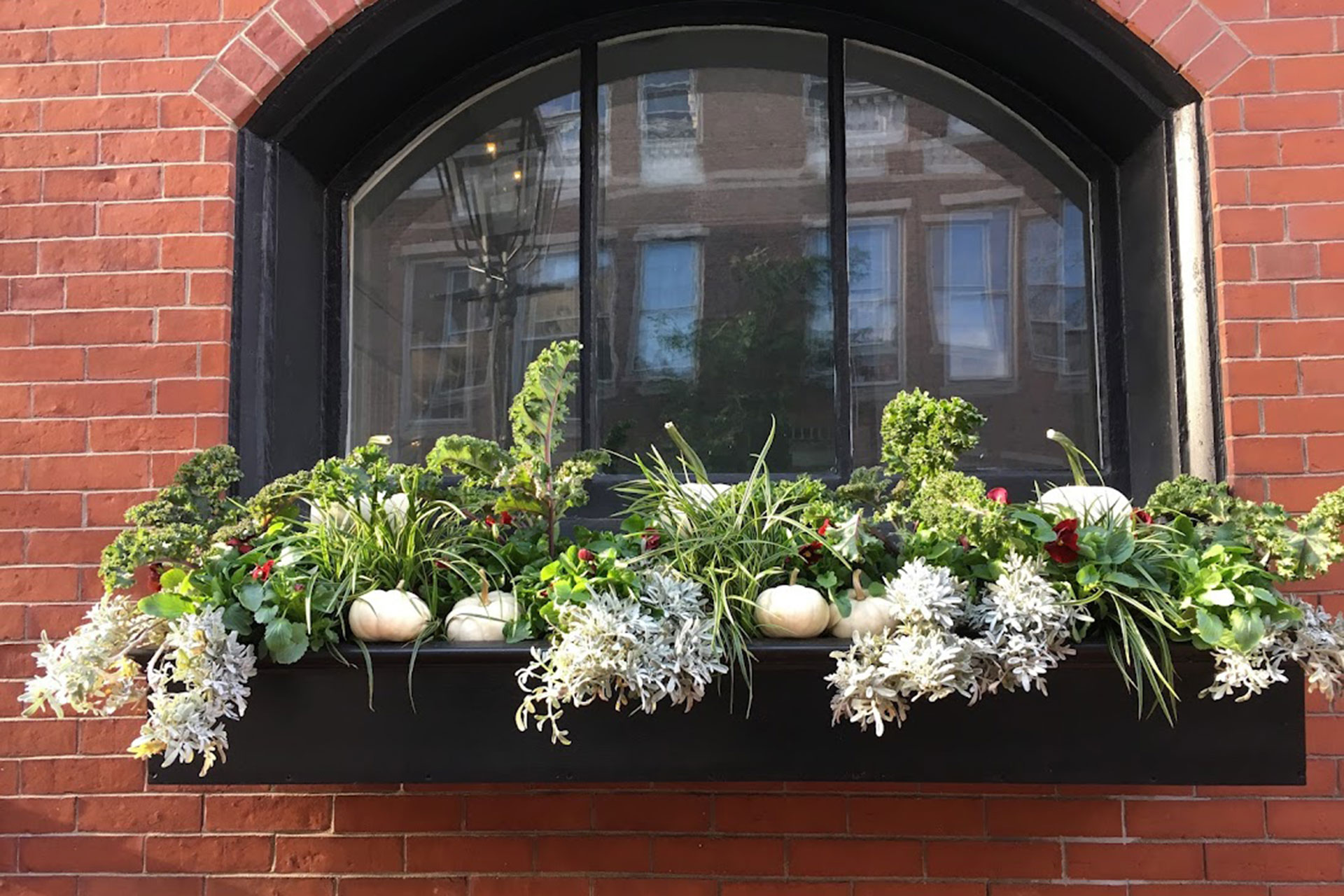
As temperatures cool, plantings can shift to cold-tolerant selections that extend visual interest into fall. Ornamental grasses, seasonal foliage, and autumnal colors provide warmth as summer annuals fade.
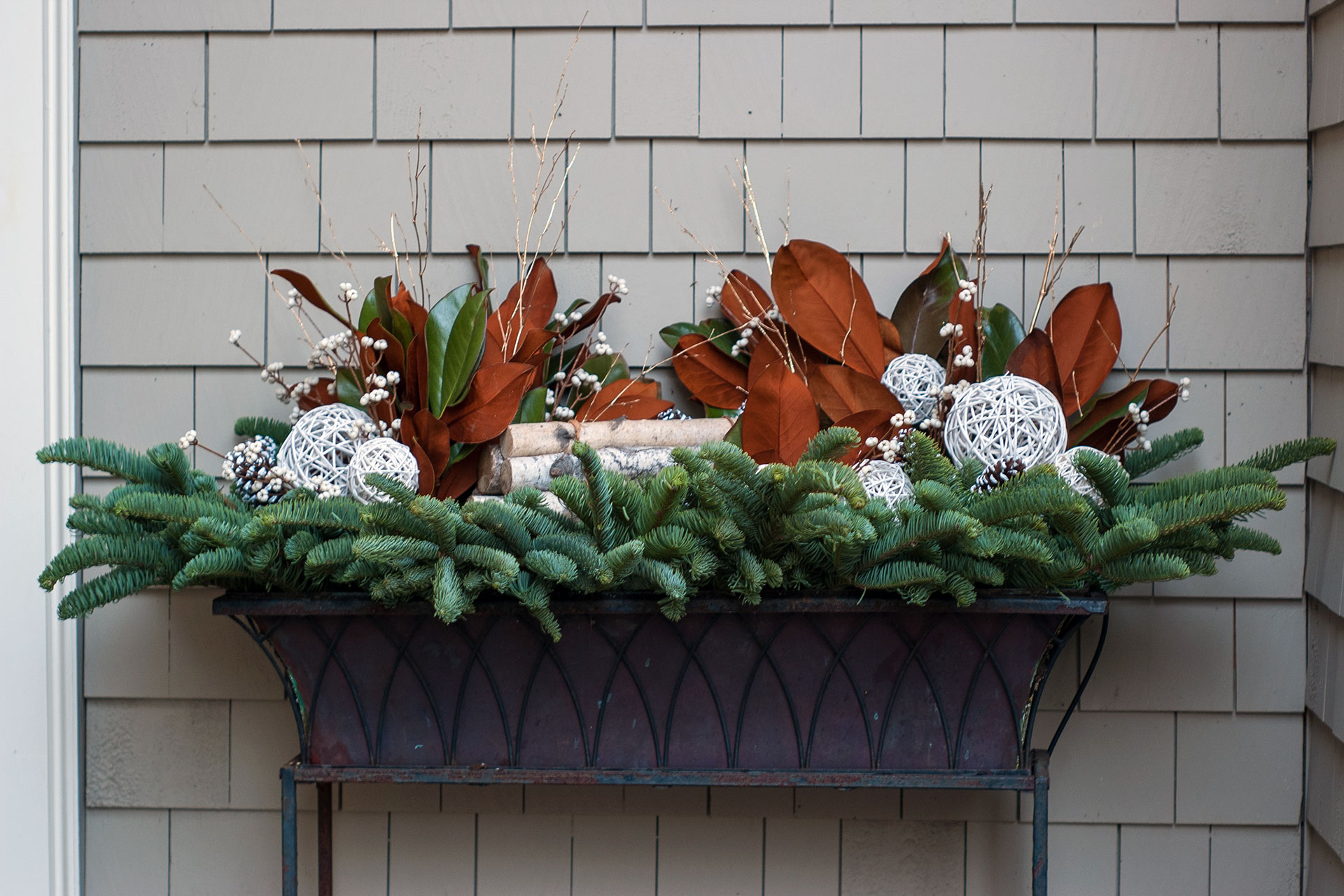
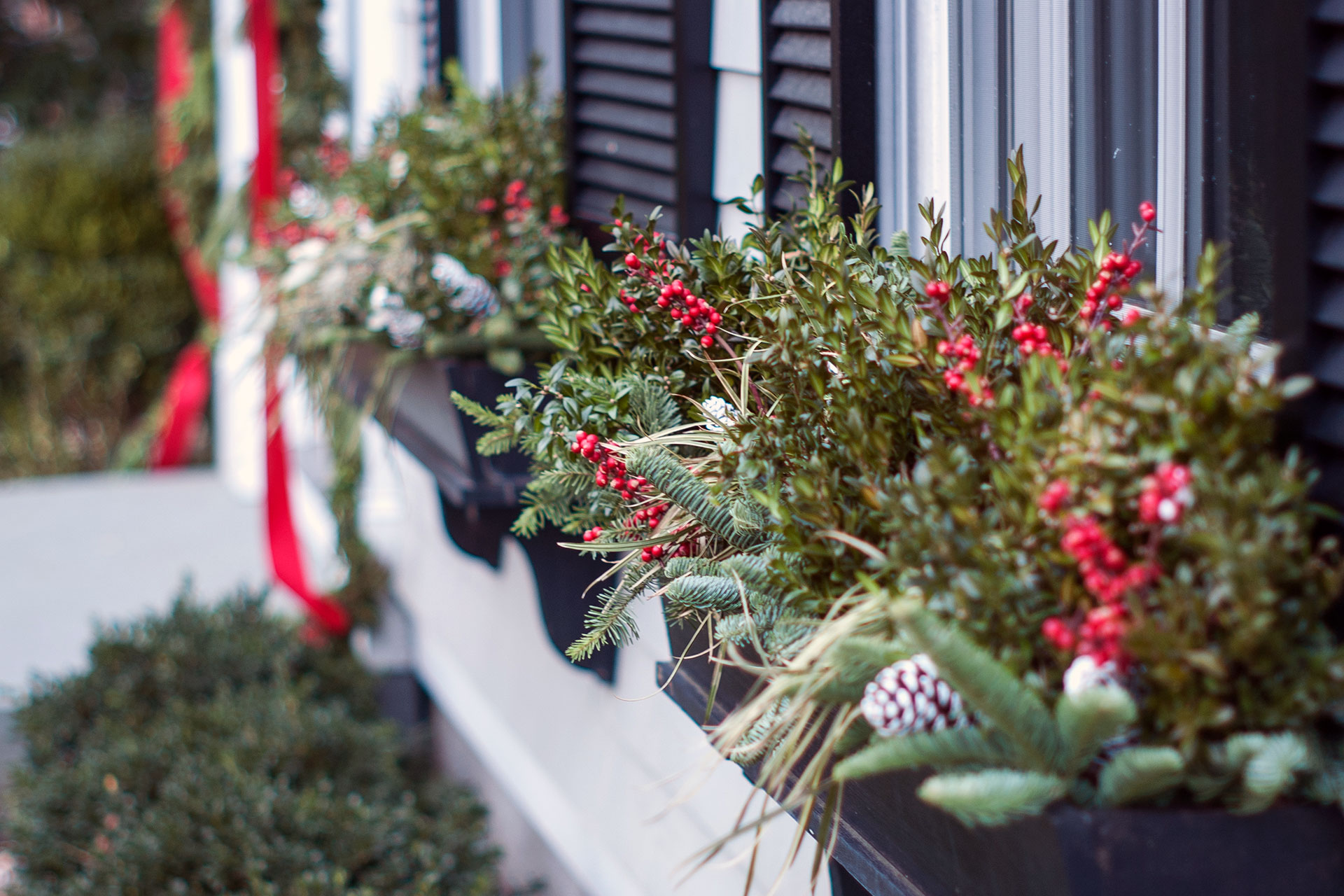
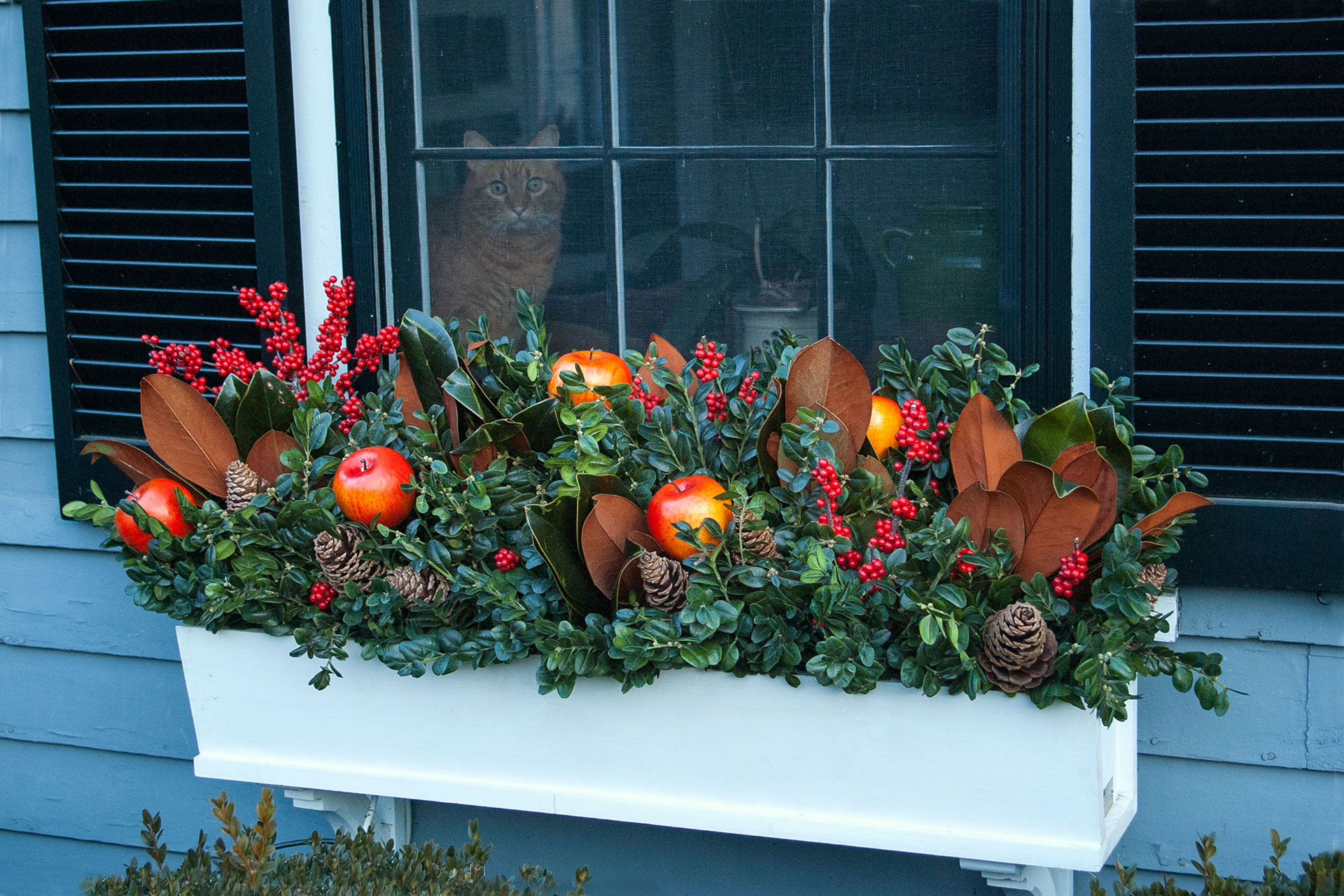
Winter displays often replace living plants altogether, using evergreens, berries, and natural materials to maintain presence through the coldest months. These arrangements add seasonal character without relying on active growth.
“In New England, window boxes don’t stop in October, Winter displays keep homes feeling cared for, even when the landscape is dormant.”
– Miriam Hellweg, a Blade of Grass
Related Blog: Planters and Containers in Landscape Design: Versatile, Affordable, and Easy to Maintain
Maintenance and Long-Term Care
Window boxes require consistent attention to look intentional rather than neglected. During the growing season, watering is the most frequent task, particularly during warm, dry periods.
Periodic pruning, deadheading, and reshaping help maintain balance and prevent overcrowding. Over time, soil nutrients are depleted, making seasonal refreshes or full replanting an important part of long-term care.
Winter preparation is equally important. Clearing spent plant material and transitioning to seasonal displays helps protect boxes and keeps them visually relevant year-round.
Cost and Value Compared to Other Landscape Improvements
Window boxes offer a high visual return relative to their cost. While pricing varies based on materials, installation complexity, and planting design, they typically represent a smaller investment compared to hardscape or structural landscape projects.
For many homeowners, window boxes serve as an entry point into broader landscape enhancements, offering immediate curb appeal while complementing future improvements.
Common Mistakes to Avoid
Window boxes fail most often due to preventable issues. Poor drainage, undersized boxes, overcrowded plantings, and inconsistent maintenance all shorten their lifespan. Another frequent mistake is installing boxes without considering long-term access, making proper care difficult.
Avoiding these pitfalls ensures window boxes enhance the property rather than becoming a recurring frustration.
Learn More About Window Boxes and Seasonal Planting
For homeowners interested in deeper guidance, these trusted resources provide regionally relevant information:
- The Art of the Window Box – Boston Magazine / Home & Garden
- Window Boxes 101: A Guide to Selecting and Filling Flower Boxes for Instant Curb Appeal – Contained Creations
- 19 Colorful Window Box Ideas to Brighten Up Your Exterior – Better Home & Gardens
To see how window boxes are integrated into professionally designed landscapes, explore our window boxes portfolio page.
Frequently Asked Questions
Q: How deep should a window box be?
A: Most window boxes should be at least eight to ten inches deep to support healthy root systems and layered plantings.
Q: Do window boxes damage siding?
A: When properly installed with adequate drainage and spacing, window boxes should not damage siding or trim.
Q: Can window boxes survive New England winters?
A: While most plants are seasonal, the boxes themselves can remain in place year-round when made from durable materials and properly maintained.
Q: Are window boxes high maintenance?
A: They require regular watering and seasonal updates, but professional maintenance programs can significantly reduce homeowner involvement.
Bringing It All Together
When thoughtfully designed, window boxes add lasting character and seasonal interest to New England homes. By considering placement, materials, climate, and maintenance from the start, they become a reliable design element rather than a short-term experiment.
If you are considering window boxes as part of a broader landscape design or property maintenance plan, the Blade of Grass team can help ensure they feel intentional, durable, and perfectly suited to your home. Contact us to learn more about fine gardening services.