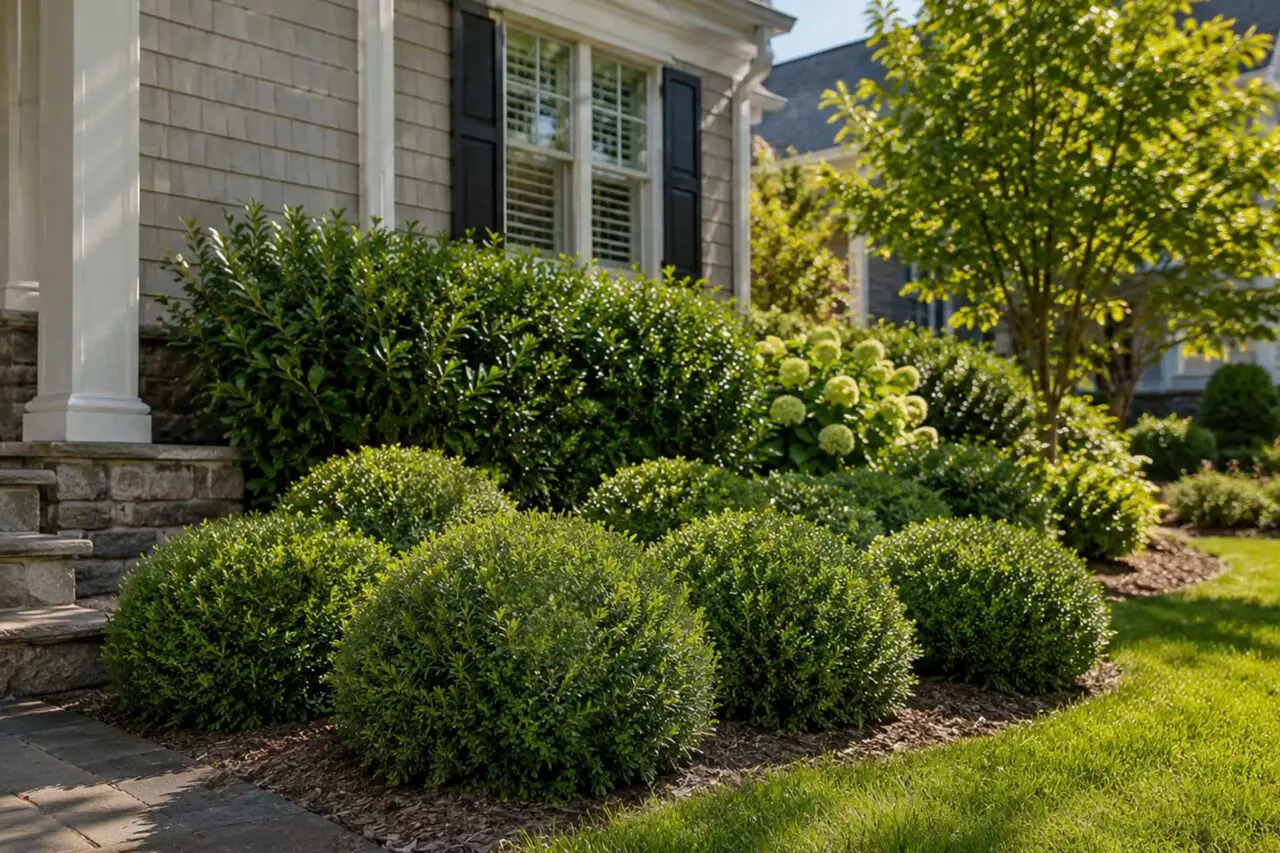
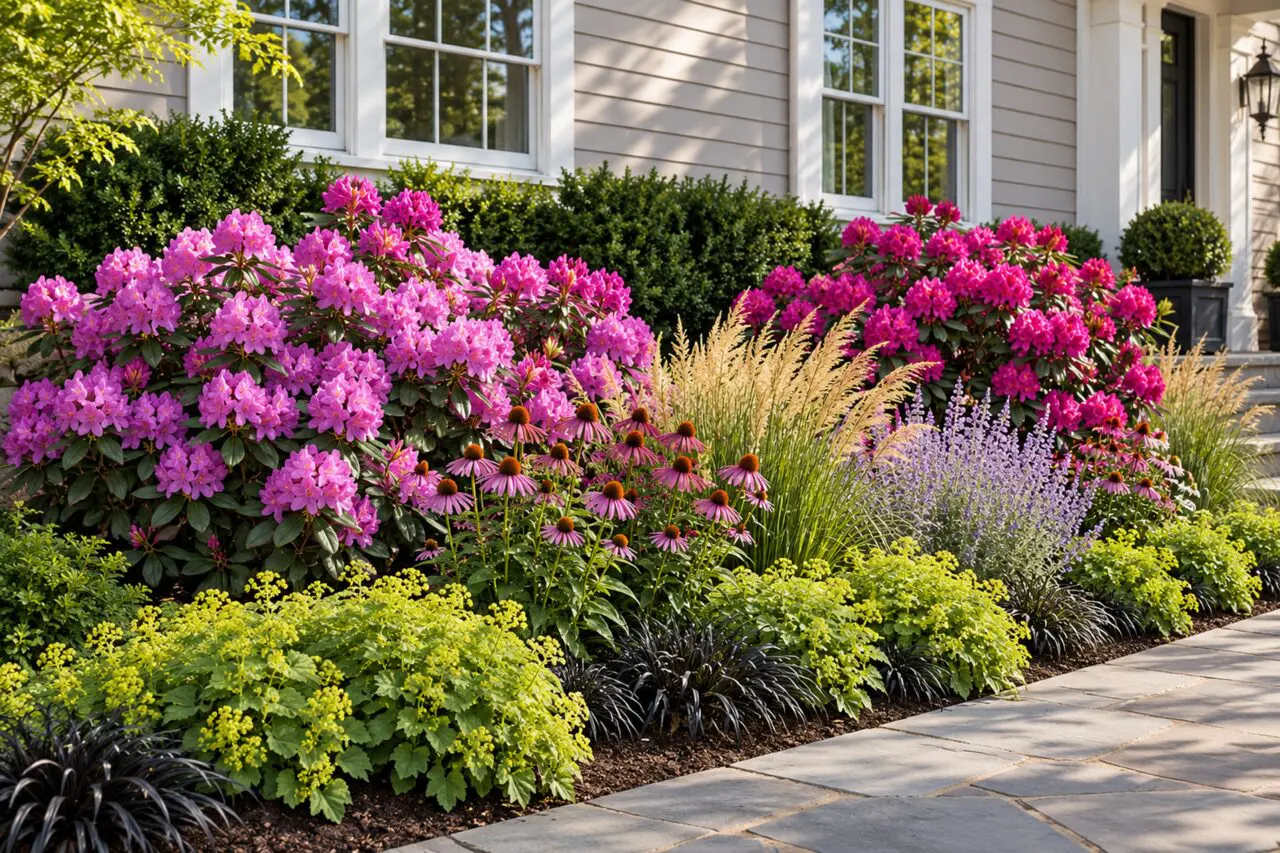
A brown lawn can make drought feel like a lawn problem. But elsewhere on the same property, a recently planted hedge may be drying out, a mature tree may be losing access to its usual irrigation, and containers beside a sunny terrace may need attention before anything looks obviously wrong.
When watering restrictions arrive, those differences matter. Protecting your landscape in the Boston area requires more than shortening every sprinkler cycle or turning the system off and hoping for rain. It starts with understanding the rules for your property, then deciding where care will make the greatest difference.
At a Blade of Grass, we recommend looking at the whole landscape: its established structure, vulnerable new plantings, soil conditions, irrigation, and ongoing maintenance. The goal is to conserve water while making informed decisions about the places and plants that need attention.
Key Takeaways
- Confirm watering restrictions with your town or water supplier before changing your landscape-care plan.
- Assess new plantings, mature trees, garden beds, containers, and lawns separately.
- Brown grass may be dormant, but prolonged drought and other damage can affect whether it recovers.
- Drip irrigation and smart controllers can improve efficiency, but they do not automatically create an exemption from restrictions.
- Plant selection, soil conditions, irrigation design, and ongoing care all contribute to a more resilient landscape.
Start With the Watering Rules for Your Property
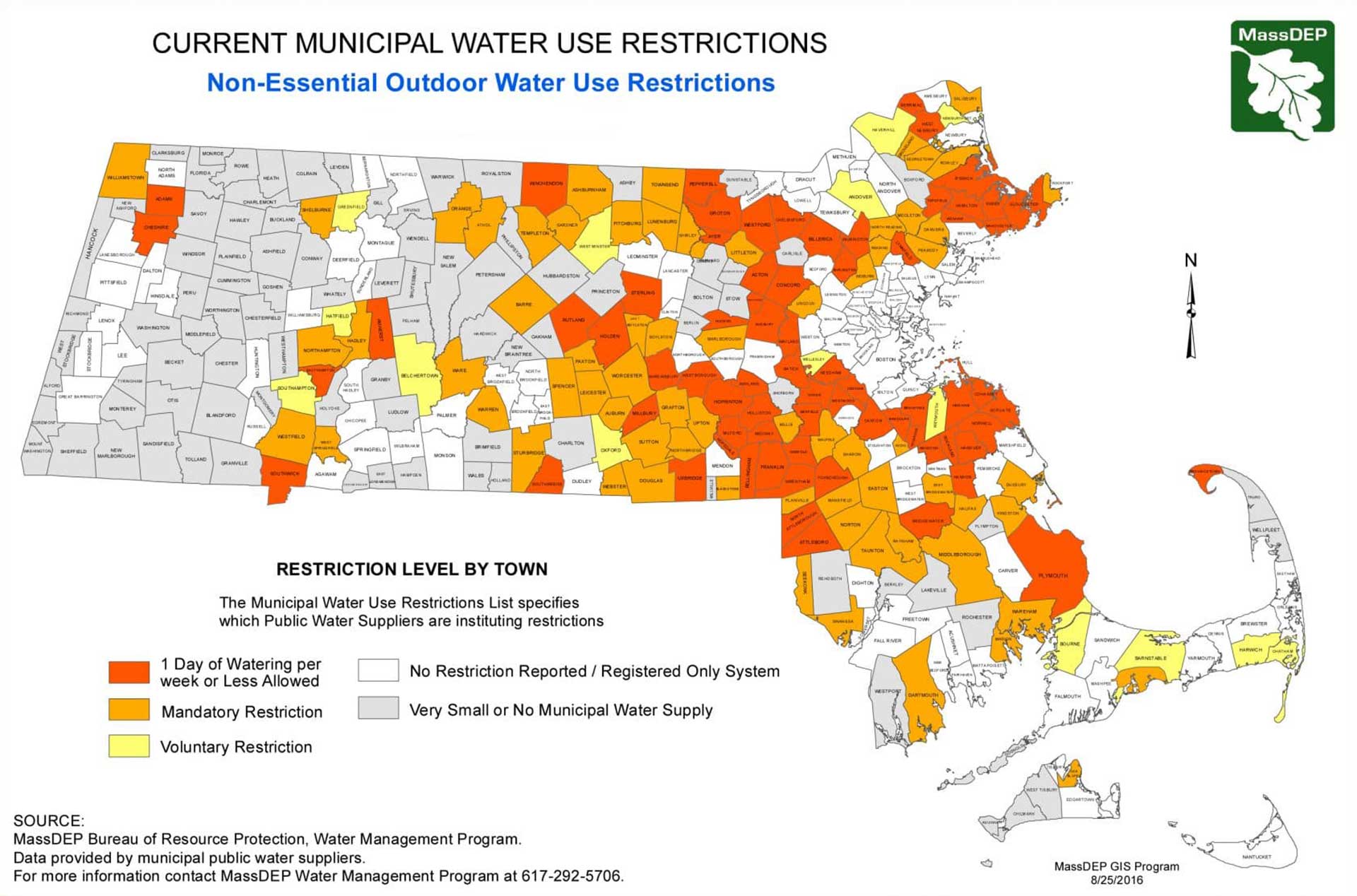
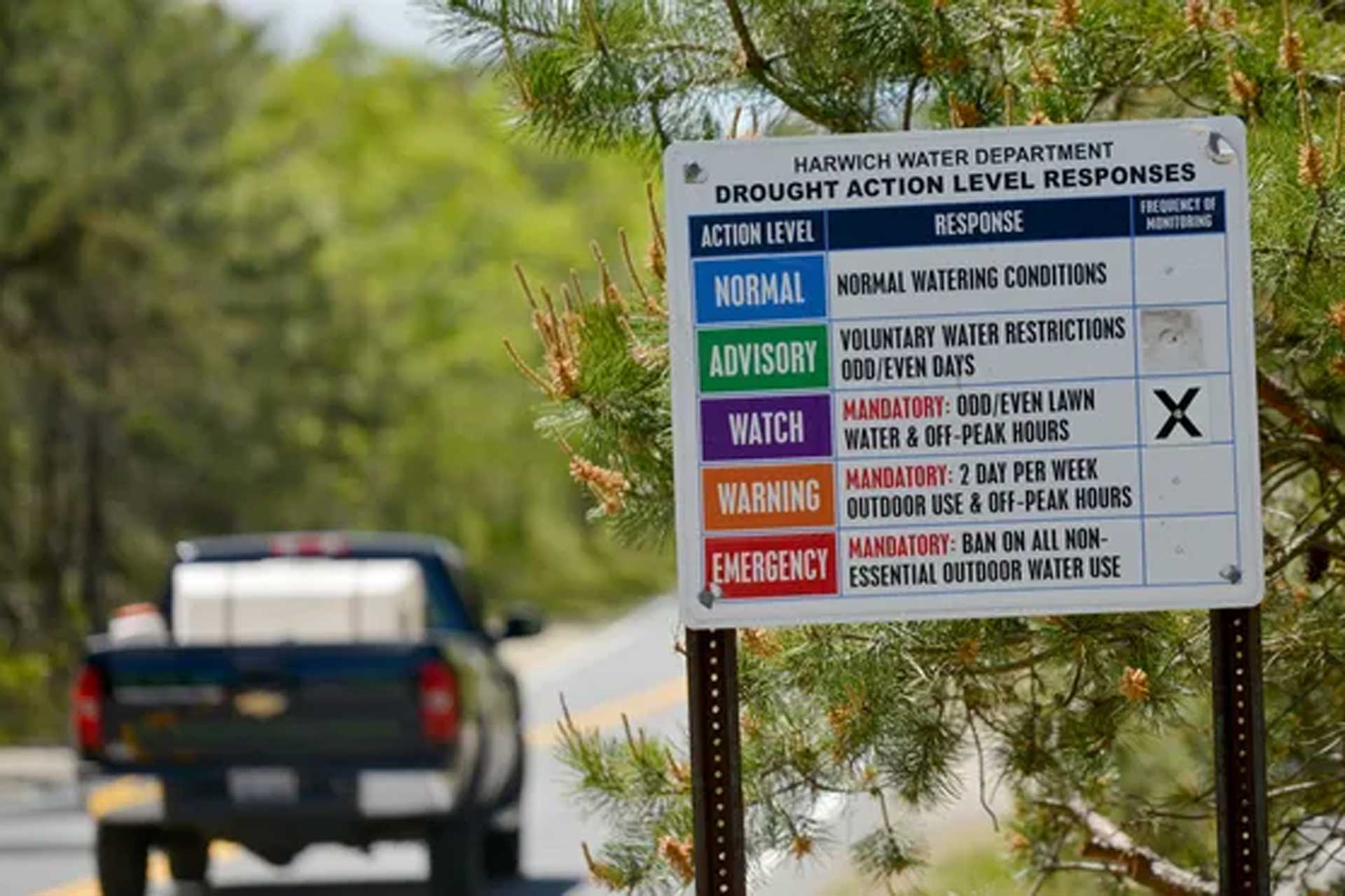
Before deciding how to water, confirm what is allowed. “Water ban” is often used as a general description, but the notice affecting your property may distinguish between watering days, permitted hours, irrigation methods, and particular uses.
Start with MassDEP’s outdoor water-use restriction resource, then confirm the current requirements with your town or water supplier. Do not rely on a neighbor’s schedule or last year’s instructions. If the wording is unclear, ask the issuing authority how it applies to your property.
Useful questions include:
- Which outdoor uses are restricted, and during what days and hours?
- Are hand-held hoses, watering cans, drip systems, or soaker hoses treated differently?
- Is there an exemption for new plantings, and does it require advance approval?
- Do the restrictions apply to private irrigation wells or other water sources?
A regional drought designation provides important context, but it does not replace the instructions governing your particular property. Nor should homeowners assume that rules elsewhere in New England are identical to those in Massachusetts.
Share the current requirements with anyone maintaining the property. An irrigation controller can continue following an old program unless someone deliberately changes it.
Decide What Needs Attention First
A landscape is a collection of living systems with different tolerances. The most visibly brown area is not necessarily the most vulnerable or the most difficult to replace.
A newly installed screening hedge, for example, may still depend heavily on moisture within its original root balls. An established lawn may have more capacity to tolerate temporary browning, depending on the grasses present and the severity of the drought.
Where watering remains permitted, use plant condition, establishment, and long-term importance to guide priorities.
| Landscape Element | What to Assess | Care Consideration |
|---|---|---|
| New Trees, Shrubs, and Hedges | Root-ball moisture, exposure, and establishment | Arrange prompt assessment and a permitted watering plan. |
| Established Trees | Condition, species, root-zone stress, and previous irrigation | Consider the long-term value of canopy, shade, and screening. |
| Perennial Beds and Containers | Plant needs, soil moisture, and exposure | Identify vulnerable plants rather than treating every area alike. |
| Established Lawn | Grass type, growth, browning, and drought duration | Evaluate whether dormancy is appropriate and what recovery may require. |
This is a framework for assessment, not a universal watering order. A declining mature tree may require more urgent professional attention than a healthy new shrub in a sheltered bed.
Trees also deserve a separate check when lawn irrigation stops. A system that appeared to serve only turf may have been supplying moisture to nearby tree roots.
“If you’re allowing your lawn to go dormant during a drought, provide water for established trees which normally depend on turf irrigation.”
– University of New Hampshire Extension, Using Water Efficiently in the Landscape
That horticultural recommendation still has to be applied within the restrictions governing the property.
Where Your Property Loses Moisture
Two planting beds can behave very differently even when they receive the same rainfall. A sheltered border may retain moisture while another bed beside a stone terrace dries quickly.
Across Greater Boston and MetroWest, mature tree roots, compacted soil, slopes, and reflected heat can complicate watering. On coastal properties, sandy soil and wind may create a different set of demands. Shade alone does not guarantee moist soil, particularly beneath established trees.
These differences are worth recording during a dry spell. Note which areas repeatedly struggle and which continue performing well. That information can help distinguish a temporary weather problem from a planting or irrigation mismatch that deserves a longer-term correction.
The answer is not always more water. Sometimes it is a different plant, better coverage, less runoff, or a change in how the space is maintained.
Water According to Roots and Soil Conditions
Where watering is allowed, the useful question is whether moisture is reaching the roots that need it. A wet surface can be misleading, especially after a brief shower or a short irrigation cycle.
New root balls deserve particular attention because their moisture conditions may differ from the surrounding bed. Our guide to proper watering after a landscape installation explains that establishment period in more detail.
Check Before Adding Water
Look beyond dry mulch or wilted foliage. Check soil moisture near the roots, taking care not to damage them, and consider whether the area has been receiving water consistently.
Wilt, browning, and poor growth can have several causes. If soil is already wet, adding more water may compound the problem rather than solve it. Persistent decline deserves an assessment that considers drainage, roots, pests, and planting conditions as well as drought.
Avoid Applying Water Faster Than Soil Can Absorb It
Water running down a slope or across a walkway is not helping the intended planting. Slower application, corrected coverage, or pauses between irrigation cycles may improve infiltration where the permitted schedule allows.
The EPA’s WaterSense guidance explains how cycle-and-soak scheduling can reduce pooling and runoff on suitable sites. It is an adjustment to delivery, not permission to exceed a restriction or increase the total amount applied.
Do Not Rely on a Universal Runtime
Twenty minutes can deliver very different amounts of water through different sprinkler heads or drip systems. Soil texture, coverage, rooting depth, and weather also affect the result.
An effective schedule should therefore reflect the property and the equipment. A fixed runtime copied from another garden is a weak substitute for knowing what your own system delivers.
Recognize the Difference Between a Dormant and Damaged Lawn
Many New England lawns contain cool-season grasses that can slow or stop growth during hot, dry weather. Some turn straw-colored while retaining living crowns capable of producing new growth when conditions improve.
As UNH Extension explains in its drought lawn-care guidance, dormancy can help grass survive unfavorable conditions. Severe drought can still kill turf, however, so a brown lawn should not come with an automatic promise of recovery.
Grass species, soil, previous condition, and the length of the dry period all matter. Newly seeded or recently sodded areas also need separate consideration from established turf.
During a dry spell, avoid scalping the lawn or continuing to mow simply because it is the usual service day. Reduce unnecessary wear on stressed areas and coordinate maintenance with actual growth.
If irrigation is prohibited, follow that restriction. Once conditions improve, assess recovery before committing to extensive repair. Areas that remain thin or bare may need investigation beyond the assumption that they were merely dormant.
Make Irrigation Adjustments Deliberately
An irrigation system should respond to the landscape and the rules, rather than continue operating as though every week were the same.
Start with the controller. Confirm which programs are active, whether automatic watering is currently permitted, and whether lawn and planting-bed zones can be managed separately. A seasonal percentage adjustment alone may not address the actual restriction.
Then review performance. Broken heads, leaks, blocked emitters, and overspray can undermine a carefully chosen schedule. Changes in planting size can also leave a once-adequate system watering the wrong places.
Smart controllers and moisture sensors can provide useful information, but they still need appropriate settings and oversight. A weather-based program should not be assumed to understand every local requirement.
Where allowed, drip irrigation may help deliver water to planting beds with less overspray. It still needs inspection, correct placement, and a schedule suited to the plants. Switching to drip is not, by itself, a way around a water ban.
A professional review of the landscape irrigation system can help coordinate these decisions rather than treating each dry patch as an isolated problem.
Reduce Stress Without Increasing Water Use
Some of the most useful responses to drought involve changing maintenance rather than adding irrigation.
Maintain appropriate mulch coverage in cultivated beds, while keeping mulch clear of trunks and plant crowns. Check the existing depth before adding another layer, and avoid assuming that dry mulch means the soil below is equally dry.
Manage weeds while avoiding unnecessary disturbance around stressed roots. Large-scale bed renovation, transplanting, and discretionary planting may be better postponed if reliable establishment water cannot be provided.
Fertilizer is not a remedy for drought stress. Nor is heavy pruning a useful general strategy for reducing a woody plant’s water needs. Both decisions should be based on plant condition and professional judgment, rather than an attempt to stimulate a struggling landscape back into growth.
The distinction is between maintaining the property and asking it to do more. During a prolonged dry period, protecting existing roots and reducing avoidable stress may be more useful than pursuing fresh growth or immediate cosmetic improvement.
Do Not Overlook a Dry Autumn
Cooler weather can make a landscape look less stressed even when the root zone remains dry. Newly planted trees and shrubs may still need moisture after summer temperatures have eased.
Leaf drop also does not mean that establishment care is finished. UMass guidance on fall plantings recommends continuing appropriate watering until the ground freezes. Any watering must still comply with restrictions and respond to actual soil conditions.
Coordinate that care with irrigation winterization. If the system has been shut down, clarify how vulnerable plantings will be monitored and what permitted alternatives are available.
This is especially important after fall installation work. A planting date in a normally favorable season does not remove the need for an establishment plan.
Use Dry Spells to Improve the Long-Term Design
A drought can reveal where a landscape depends on repeated intervention. The same lawn edge may brown every summer. A border may contain plants with incompatible moisture needs. Containers may be too small for their exposed location.
Those observations can inform improvements once conditions are suitable.
Match Plants to the Conditions They Will Actually Experience
Select for the particular combination of sun, shade, soil, drainage, and exposure. Native plants are not automatically suited to every dry site, and a drought-tolerant label does not remove the need for establishment watering.
Our guide to drought-tolerant plants for Boston landscapes explores planting options in more depth. Here, the larger design question is how those plants fit the conditions and composition of the property.
Group Compatible Watering Needs
A planting bed becomes harder to manage when moisture-loving plants share irrigation with plants that prefer drier conditions. Coordinating the planting plan and irrigation zones can make care more precise.
Soil preparation belongs in that conversation, particularly before new construction or planting. Existing mature roots and sensitive natural areas require a different approach from a newly prepared garden bed.
Reconsider Repeatedly Struggling Areas
Not every difficult lawn area needs to remain lawn. A dry slope, narrow strip, or space beneath mature trees may be better suited to another planting approach.
That does not mean replacing an entire property with gravel or abandoning the character of a New England garden. A more resilient landscape can still offer shade, seasonal flowers, screening, and comfortable outdoor spaces. The design simply asks less of places that have consistently struggled.
Frequently Asked Questions
Q: Does Rain Automatically End a Watering Restriction?
A: No. Do not assume that a storm cancels the notice affecting your property. Confirm any change with the issuing authority, and reassess soil moisture before resuming permitted irrigation.
Q: Are Private Irrigation Wells Exempt From Water Bans?
A: Do not assume an exemption. Ask your town which requirements apply to private wells and whether any additional conditions affect their use.
Q: Can I Water Newly Planted Trees During a Water Ban?
A: Check the specific notice and ask the issuing authority about any establishment exemption or approval process. The fact that a plant needs water does not automatically make watering permissible.
Q: Can Rain Barrels Keep a Landscape Watered During Drought?
A: Stored rainwater may help with limited planting areas where its use is permitted, but storage is finite and depends on rainfall. A small barrel should not be treated as a reliable supply for a whole landscape or new installation.
Q: Should I Restore My Old Irrigation Schedule When Restrictions Lift?
A: Review the landscape first. Recent rainfall, cooler temperatures, plant condition, and seasonal water needs may make the previous schedule inappropriate even when watering is allowed again.
Learn More About Drought and Landscape Water Use
- UMass Extension: Efficient Outdoor Watering
- UMass Extension: Drought-Tolerant Annuals and Perennials
- UMass Extension: Successful Care for Fall Plantings
Plan for a Landscape That Handles Dry Weather Better
The most useful outcome of a difficult season is a clearer understanding of the property. Knowing which plants need closer monitoring, where irrigation falls short, and which areas repeatedly struggle creates a better foundation for future decisions.
If dry weather has exposed weaknesses in your planting, irrigation, or maintenance plan, a Blade of Grass can help evaluate how those elements work together. Contact our team to discuss caring for your landscape through dry conditions and planning for greater resilience.