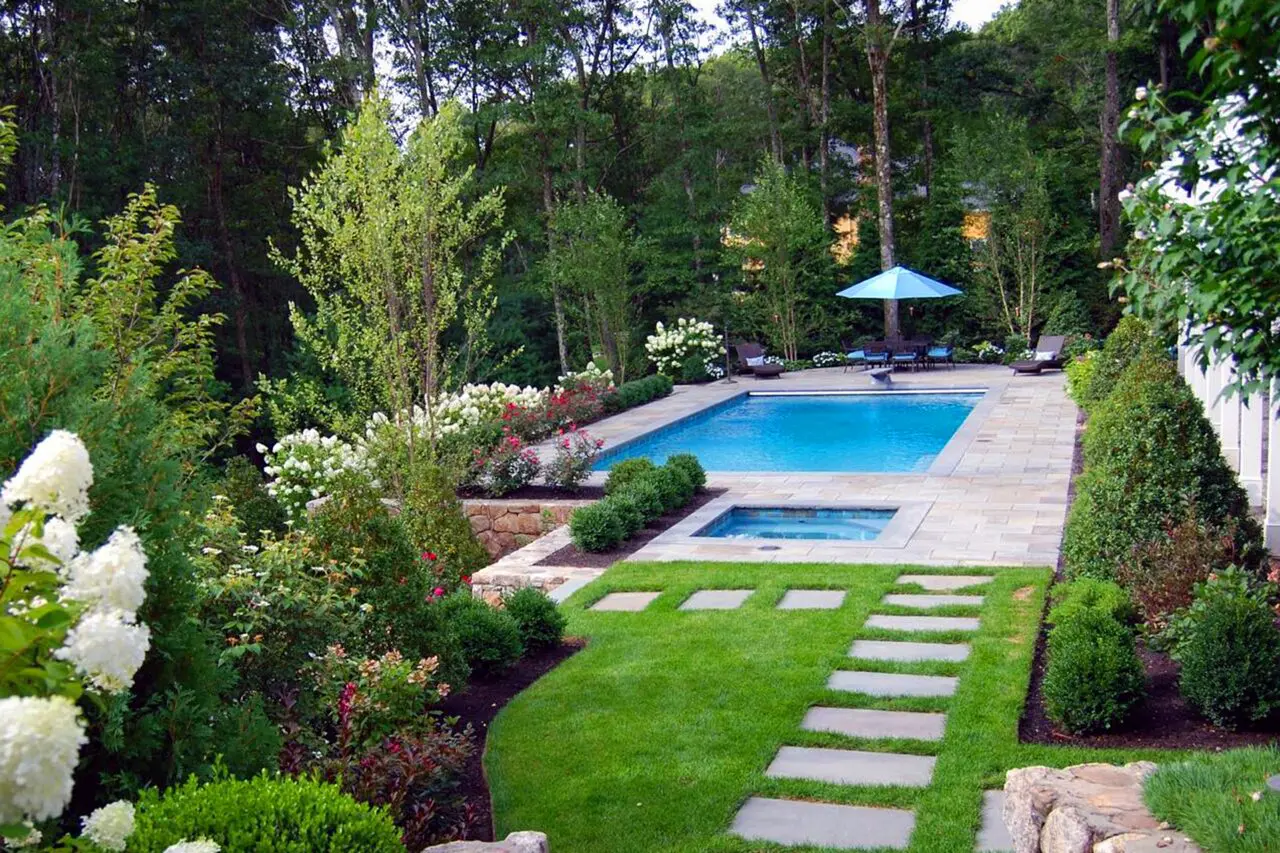
A new landscape can transform how a property looks, feels, and functions. Fresh planting beds soften the architecture. New trees and shrubs create structure. A renovated lawn brings order and openness. Patios, terraces, walkways, lighting, and garden spaces begin to connect the home to the outdoors in a more intentional way.
But a newly installed landscape is not finished the day planting is complete.
Trees, shrubs, perennials, lawn areas, hedges, and garden beds are living parts of the property. They need time to settle into new soil, recover from transplant stress, and begin producing roots beyond the original root ball. During that establishment period, proper watering is one of the most important factors in whether the landscape thrives or struggles.
For Boston-area homeowners, this can be easy to underestimate. New England weather is unpredictable. A week of rain may be followed by dry heat and wind. One part of the property may stay damp while another dries quickly. Mature trees can compete with new plantings for water. Slopes may shed water before it reaches the root zone. Compacted soils can make moisture management even more difficult.
That is why irrigation and landscape design should be considered together. A professional irrigation system is not simply a convenience. It is part of how a new landscape is protected, maintained, and allowed to mature.
UMass Extension advises that newly planted trees and shrubs need consistently moist, but not soggy, soil as roots establish in new ground. At planting, they should be watered thoroughly to soak the roots and settle soil around the root mass.
Key Takeaways
- New plantings need consistent watering while roots establish.
- Too little or too much water can damage plants.
- Rainfall alone is often not enough for new landscapes.
- Professional irrigation improves consistency, zoning, and seasonal adjustment.
- Proper watering supports plant health, maintenance, and warranty expectations.
A New Landscape Needs Time to Establish
Plant establishment is the period when newly installed plants begin adapting to their new location. Their roots must move from the nursery-grown root ball into the surrounding soil. Until that happens, the plant has limited access to moisture beyond the immediate planting area.
That means a new shrub or tree may look “installed,” but it is still vulnerable.
During establishment, plants are adjusting to:
- new soil conditions
- different sun and shade patterns
- wind exposure
- root disturbance
- drainage conditions
- reflected heat from patios, walls, and driveways
- competition from nearby trees and mature shrubs
- seasonal weather swings
A professionally installed planting bed gives plants the best possible start, but it does not remove the need for water. Even the best soil preparation, planting technique, mulch, and design cannot compensate for a dry root zone during the establishment period.
“A new landscape should be thought of as newly planted, not fully established. The design and installation create the foundation, but water is what helps the planting settle in and become part of the property.”
– Richard Duhamel, Design Associate, a Blade of Grass
Why New Plants Are More Vulnerable
Established plants usually have roots that extend into a broader area of soil. They can often tolerate short dry periods because their root systems are larger and better adapted to the site.
New plants do not have that advantage. Their roots are still concentrated close to the original root ball. If that area dries out, the plant can become stressed quickly, even if the surrounding soil looks damp at the surface.
The University of Minnesota Extension notes that newly planted trees and shrubs require more frequent watering than established trees and shrubs. Their general schedule recommends watering daily for the first 1 to 2 weeks, every 2 to 3 days from weeks 3 to 12, and weekly after 12 weeks until roots are established.
This does not mean every plant on every Boston-area property should be watered on the exact same schedule. Soil type, plant type, exposure, rainfall, slope, mulch, and irrigation coverage all matter. But the larger point is clear: new plantings need active attention.
What Happens When New Landscapes Are Not Watered Properly
Improper watering can lead to visible decline, but the earliest signs are not always obvious. A plant may look healthy for several days or weeks while the root zone is drying. By the time leaves brown or branches die back, the plant may already be under significant stress.
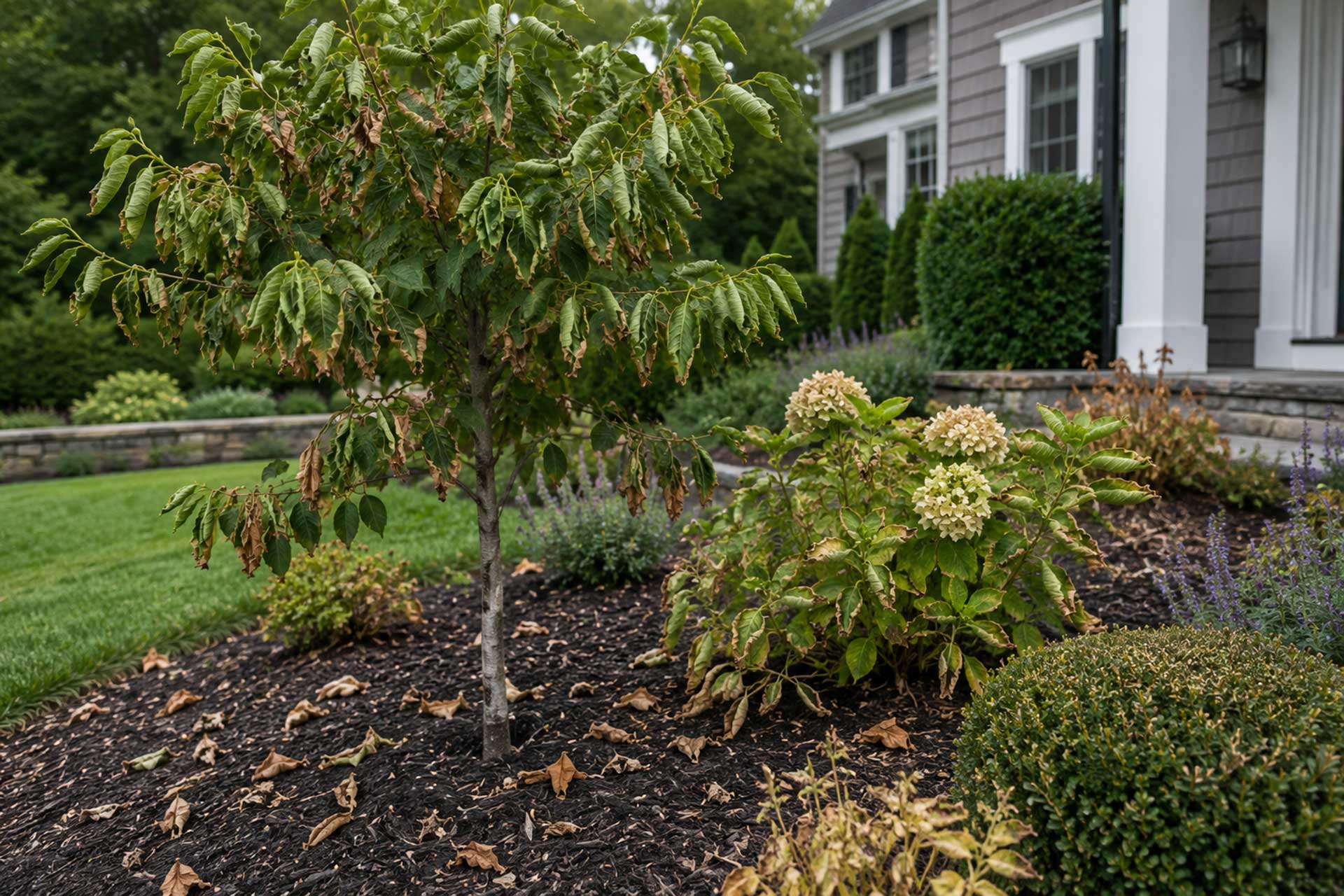
Common signs of watering-related stress include:
- wilting leaves
- leaf scorch or browning edges
- premature leaf drop
- thin or patchy lawn areas
- slow growth
- dieback at branch tips
- curling leaves
- declining perennials
- plants that fail to root into surrounding soil
- increased vulnerability to pests or disease
Watering is not only about keeping plants alive during the first week. It is about helping the landscape establish deeply enough to become resilient.
Under-Watering
Under-watering is one of the most common risks for new landscapes. Light surface watering may make mulch or the top layer of soil appear damp, but it may not reach the root zone where the plant actually needs moisture.
This is especially important for:
- newly planted trees
- large shrubs
- hedges
- lawn renovation areas
- sunny foundation plantings
- slopes
- raised beds
- containers
- planting areas near stone, brick, asphalt, or reflected heat
When water does not reach the root zone, plants may survive for a short time but fail to establish properly. A new tree may leaf out, then decline during the next heat wave. A row of shrubs may look acceptable in spring but struggle in July. A lawn may germinate but thin out if moisture is inconsistent.
Over-Watering
More water is not always better. Over-watering can also damage plants.
When soil stays saturated, roots may not receive enough oxygen. That can lead to root stress, fungal problems, poor growth, and decline. In heavy or compacted soils, this risk can be significant. In shaded areas, water may evaporate more slowly. In low spots, water may collect after storms or irrigation cycles.
That is why proper watering is not simply about frequency. It is about balance.
The goal is to keep the root zone consistently moist during establishment without leaving it soggy. UMass Extension’s guidance uses that same distinction: steadily moist, but not soggy.
Why Rainfall Is Usually Not Enough
Many homeowners assume that if it rained recently, new plantings are fine. Sometimes that is true. Often, it is not.
A quick summer shower may wet the leaves, mulch, and soil surface without soaking deeply enough into the root zone. Rainfall can also be uneven across a property. A planting bed under mature trees may receive less rain because the canopy intercepts it. A slope may shed water before it infiltrates. A bed near a roofline, wall, or driveway may receive too much water in one area and too little in another.
For new plantings, the question is not simply “Did it rain?” The better question is “Is the soil moist where the roots are?”
University of Maryland Extension recommends checking soil moisture daily for the first 2 weeks after planting and watering deeply if the top 6 inches of soil feel dry. It also recommends checking moisture at least weekly during the first two years after planting, especially while roots become established.
For Boston-area landscape installation, that kind of monitoring is especially helpful during warm, dry, windy, or irregular weather.
How Boston-Area Conditions Affect Watering
Greater Boston and MetroWest properties often have varied microclimates within the same yard. A front foundation bed in full afternoon sun may dry quickly. A shaded side yard may stay damp. A lawn bordered by mature maples may face root competition. A terrace surrounded by stone may hold heat. A slope in Dover, Weston, or Wellesley may drain differently from a compact urban garden in Brookline or Cambridge.
Those microclimates are one reason irrigation should be adjusted to the specific conditions of the property. Our guide to landscaping tips for Boston’s climate discusses how sun, shade, soil, slopes, and seasonal weather patterns should influence planting, watering, and long-term landscape care.
Several local conditions can affect watering needs.
New England Weather Swings
Spring can be wet and cool. Summer can bring dry heat. Fall may be mild, windy, or unexpectedly dry. These changes affect how often new plants need water.
A fixed watering habit can miss the point. The landscape needs to be monitored according to actual site conditions.
Compacted or Disturbed Soil
Construction, grading, foot traffic, and older property conditions can compact soil. Compacted soil may shed water or hold it poorly, depending on the situation. This is one reason soil preparation and irrigation should be discussed during landscape design and landscape construction, not after problems appear.
Slopes and Grade Changes
On sloped properties, water may move across the surface before it has time to soak in. These areas may need slower, deeper watering or drip irrigation to help moisture reach the root zone.
Mature Tree Competition
Mature trees add beauty and structure, but their roots can compete with new shrubs, perennials, and lawns. Newly planted material beneath or near mature trees may need extra attention.
Sun, Shade, and Reflected Heat
Plantings near stone patios, walkways, driveways, walls, and south-facing foundations may dry faster because of reflected heat. Shaded beds may need less frequent watering but should still be checked.
Basic Watering Guidance for New Plantings
Every property is different, and exact watering needs depend on plant type, soil, weather, sun exposure, slope, drainage, mulch, and irrigation coverage. Still, several general principles apply to most new Boston-area landscapes.
- Water deeply rather than lightly.
A brief sprinkle may not reach the root zone. Deeper watering encourages better root establishment. - Check soil moisture near the roots.
Do not rely only on the appearance of mulch or the soil surface. Feel the soil several inches down when possible. - Adjust for heat, wind, sun, and rainfall.
Hot, dry, or windy weather can increase water needs quickly. - Pay extra attention to new trees, shrubs, lawns, and containers.
These areas often need more consistent monitoring than established beds. - Continue monitoring beyond the first few weeks.
Many plants need establishment care for months, and some trees and shrubs require attention for longer. - Ask for professional guidance if plants show signs of stress.
Wilting, browning, yellowing, and dieback can come from too little water, too much water, drainage issues, soil problems, pests, disease, or planting stress.
For newly planted trees and shrubs, a useful general framework is to water more frequently at the beginning, then gradually reduce frequency as roots establish. The University of Minnesota schedule provides a helpful reference point, while still allowing for site-specific judgment.
Hand Watering, Hose Watering, Sprinklers, Drip Irrigation, and Professional Systems

Not every watering method works the same way. A successful watering plan depends on consistency, coverage, timing, and the needs of different planting areas.
Hand Watering
Hand watering can be useful for containers, small beds, or individual plants that need special attention. The challenge is consistency. It is easy to under-water large root balls or miss areas that look damp at the surface.
Hose Watering
A hose can deliver more water than a watering can and can be effective when used slowly and thoroughly. Soaker hoses can also help water certain beds more gradually. However, hoses still require attention, timing, and movement from area to area.
Portable Sprinklers
Portable sprinklers may work for lawns or temporary watering, but they can be inefficient if they water pavement, miss bed edges, or deliver uneven coverage. They are usually less precise for planting beds with mixed shrubs, perennials, trees, and ground covers.
Drip Irrigation
Drip irrigation is often useful for planting beds, hedges, containers, and areas where water should be delivered closer to the root zone. It can reduce overspray and help water more efficiently when designed and maintained correctly.
Professionally Designed Irrigation Systems
A professional irrigation system can be designed around the actual property, not a generic watering pattern. That means lawns, planting beds, containers, trees, sunny areas, shaded areas, and slopes can be handled differently.
A strong residential irrigation system may include:
- separate zones for lawns and planting beds
- drip irrigation for garden beds or containers
- smart controllers
- rain or weather-based adjustments
- coverage designed around plant needs
- seasonal startup and winterization
- periodic inspections and adjustments
- repairs for broken heads, leaks, or clogged lines
EPA WaterSense reports that residential outdoor water use in the United States accounts for nearly 8 billion gallons of water each day, mostly for landscape irrigation. EPA also notes that the average U.S. household uses more water outdoors than for showering and washing clothes combined. Another EPA WaterSense resource states that as much as 50% of water used for irrigation may be wasted because of evaporation, wind, runoff, or inefficient irrigation methods and systems.
That is why the goal is not simply to water more. The goal is to water better.
Why a Professional Irrigation System Makes a Difference
For a new landscape, irrigation can help reduce guesswork during the most vulnerable period of plant establishment. It can also help protect the landscape after the installation team leaves and daily care becomes part of property ownership.
A professional irrigation system can help by:
- delivering more consistent moisture during establishment
- separating lawn zones from planting bed zones
- adjusting for sun and shade differences
- supporting drip irrigation in beds and containers
- reducing reliance on memory or manual watering
- helping avoid waste from overspray and runoff
- allowing seasonal changes to watering schedules
- supporting long-term Greater Boston landscape maintenance
This is particularly important for larger or more complex properties. A new landscape may include full-sun perennials, shaded foundation shrubs, lawn renovation, new hedges, specimen trees, seasonal containers, and planting around a patio or pool. Those areas should not all be watered the same way.
“The best irrigation plans are not just about coverage. They are about matching water to the way the landscape is planted, used, and maintained.”
– Ivan Hernandez, Director, Maintenance Operations, a Blade of Grass
Irrigation Is Not Just for New Plantings
New plantings need the most attentive care, but established landscapes also benefit from thoughtful water management.
Mature properties can change over time. Trees grow and create more shade. Shrubs expand and compete for moisture. A new patio may alter drainage. A lawn area may become more compacted. A hedge may become denser. Garden beds may be renovated with plants that have different water needs than the original design.
Established properties may need irrigation support for:
- mature hedges
- perennial borders
- foundation plantings
- lawns
- shade gardens
- seasonal containers
- newly renovated planting beds
- trees under drought stress
- outdoor living areas with heat-reflective hardscape
- gardens near walls, driveways, or terraces
Even properties with existing irrigation systems should be reviewed periodically. A system designed ten years ago may no longer match the landscape it serves today.
How Irrigation Should Be Adjusted Seasonally in New England
Boston-area irrigation should not be treated as a “set it and forget it” system. Watering needs change through the growing season.
Spring
Spring startup should include checking heads, drip lines, leaks, controller settings, coverage, and zones. New plantings may need careful monitoring as temperatures rise, and irrigation readiness should be part of a thoughtful spring landscape cleanup in Greater Boston.
Summer
Summer requires the closest attention. Heat, wind, dry spells, and increased plant demand can stress both new and established landscapes. Irrigation may need seasonal adjustments, especially during extended dry periods.
Fall
Fall watering is often overlooked. New trees and shrubs may still need moisture as they prepare for winter, especially if autumn is dry. Irrigation systems also need proper winterization before freezing temperatures arrive.
Winter
Irrigation systems are typically shut down and winterized in New England, but the effects of fall moisture can carry into winter plant health. Dry plants entering winter may be more vulnerable to stress.
For a deeper seasonal breakdown, our guide to irrigation maintenance for Greater Boston homes explains how regular inspections, seasonal adjustments, and system repairs help protect lawns, planting beds, and long-term landscape performance.
How Irrigation Fits Into Landscape Design and Construction
Irrigation should be considered before or during landscape installation whenever possible. Waiting until after patios, walls, walkways, lawns, and planting beds are complete can make the work more disruptive and less efficient.
During a thoughtful landscape design process, irrigation planning can be coordinated with:
- planting design
- lawn areas
- new trees and hedges
- soil preparation
- drainage improvements
- grading
- patios and terraces
- walls and steps
- walkways
- outdoor kitchens
- pergolas and pavilions
- lighting conduit
- seasonal containers
- future maintenance access
This is especially important in a phased landscape master plan. Even if every feature is not installed at once, irrigation sleeves, zones, and access points can often be planned early so future phases are easier to complete.
A strong irrigation plan supports landscape design, landscape construction, and residential landscape maintenance. It is part of the property’s long-term infrastructure.
Proper Watering and Plant Warranty Expectations
Plant warranties are meant to provide reasonable protection, but they cannot replace proper care during the establishment period.
A new plant is living material. Its success depends on professional installation, appropriate plant selection, soil conditions, drainage, weather, and consistent aftercare. Watering is central to that aftercare.
A warranty can protect against certain issues, but it cannot replace the daily role of water during establishment. If new plantings are not watered properly, plants can decline even when they were healthy at installation and planted correctly.
This is why clear communication matters. Homeowners should understand:
- new plants need consistent monitoring
- rainfall may not be enough
- watering needs vary across the property
- both too little and too much water can cause problems
- irrigation systems need seasonal adjustment
- plants should be observed for early signs of stress
- professional maintenance can help protect the landscape investment
The goal is not to place blame. The goal is to help the landscape succeed.
Related Blog: What Should a Landscape Warranty Cover? A Boston Homeowner’s Guide
Where Soil and Drainage Fit In
Watering does not happen in isolation. Soil and drainage strongly influence how water moves, holds, and reaches plant roots.
A property with compacted soil may need different watering than one with amended, well-drained planting beds. A low area may stay wet after storms. A slope may dry quickly. A sandy soil may drain faster. A shaded bed may hold moisture longer.
That is why soil testing before planting and thoughtful landscape drainage solutions can support better irrigation decisions.
A healthy landscape needs balance: enough water to support root growth, enough drainage to prevent saturation, and enough ongoing care to adapt as conditions change.
Helpful Resources
For readers who want to understand watering and irrigation more deeply, these resources are useful:
- UMass Extension guidance on watering new plantings explains the importance of keeping newly planted roots consistently moist, but not soggy.
- University of Minnesota Extension provides a practical watering schedule for newly planted trees and shrubs.
- Keeping Your Landscape Healthy and Beautiful: When to Upgrade Your Irrigation System – a Blade of Grass
- University of Maryland Extension explains how to check soil moisture after planting and during the first two years.
- EPA WaterSense provides national context on outdoor water use and irrigation efficiency.
- The Hidden Landscape Problems to Look for Before Buying a Boston-Area Home – a Blade of Grass
Frequently Asked Questions
Q: How often should I water a new landscape after installation?
A: New landscapes usually need frequent watering during the first weeks after installation, but the exact schedule depends on weather, soil, plant type, sun exposure, slope, drainage, and irrigation coverage. Newly planted trees and shrubs often need more frequent watering early on, then less frequent but still consistent watering as roots establish. University extension guidance commonly recommends close monitoring during the first weeks and continued watering as needed while roots establish.
Q: Is rainfall enough for newly planted trees and shrubs?
A: Sometimes, but not always. A light rain may wet the surface without reaching the root zone. Rainfall can also vary across the property because of tree canopies, slopes, rooflines, compacted soils, and wind. New plantings should be checked directly, especially during the establishment period.
Q: Can over-watering damage new plants?
A: Yes. Over-watering can keep soil too wet, reduce oxygen around roots, and contribute to poor root health or disease. The goal is consistent moisture, not saturated soil. UMass Extension describes the ideal condition for new plantings as steadily moist, but not soggy.
Q: Do I need an irrigation system for a new landscape?
A: Not every property requires a full irrigation system, but many Boston-area landscapes benefit from professional irrigation, especially when new planting beds, lawns, hedges, trees, containers, or outdoor living areas are involved. A professional irrigation system can improve consistency, reduce guesswork, and help match watering to specific zones and plant needs.
Q: How long does it take new plants to become established?
A: Establishment time varies. Perennials and small shrubs may settle in faster, while larger shrubs and trees often need monitoring for much longer. University of Maryland Extension recommends checking soil moisture at least weekly during the first two years after planting, especially to support root establishment.
Q: Does improper watering affect plant warranty coverage?
A: Often, yes. Plant warranties typically assume reasonable care after installation, including proper watering. If plants are not watered appropriately, they can decline for reasons unrelated to plant quality or installation. The best approach is to clarify watering expectations at the start and use irrigation or professional maintenance to support plant establishment.
Conclusion: Water Is Part of the Landscape Plan
A successful landscape depends on more than a beautiful design and skilled installation. It also depends on what happens next.
New trees, shrubs, lawns, perennials, hedges, and planting beds need consistent care as they establish. Rainfall may help, but it is rarely something homeowners should rely on without checking the soil. Too little water can stress or kill new plants. Too much water can create its own problems. The right approach requires attention, adjustment, and a clear understanding of the property.
Professional irrigation helps make that care more consistent. When designed well, it supports new plantings, established gardens, lawns, seasonal containers, outdoor living areas, and long-term Greater Boston landscape maintenance.
If you are planning a new landscape, have recently completed a Boston-area landscape installation, or want to better protect an established property, contact the a Blade of Grass team to discuss landscape irrigation, maintenance, and long-term property care.