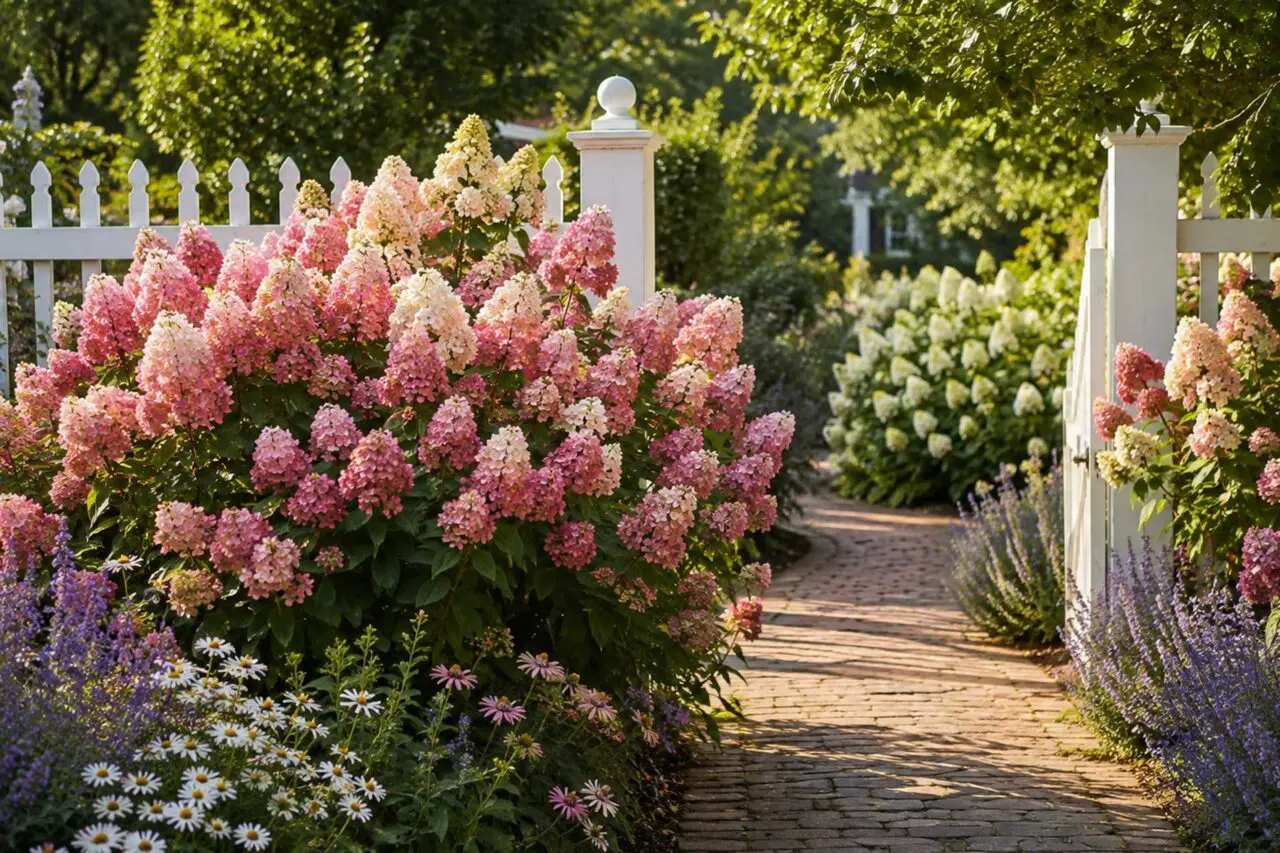
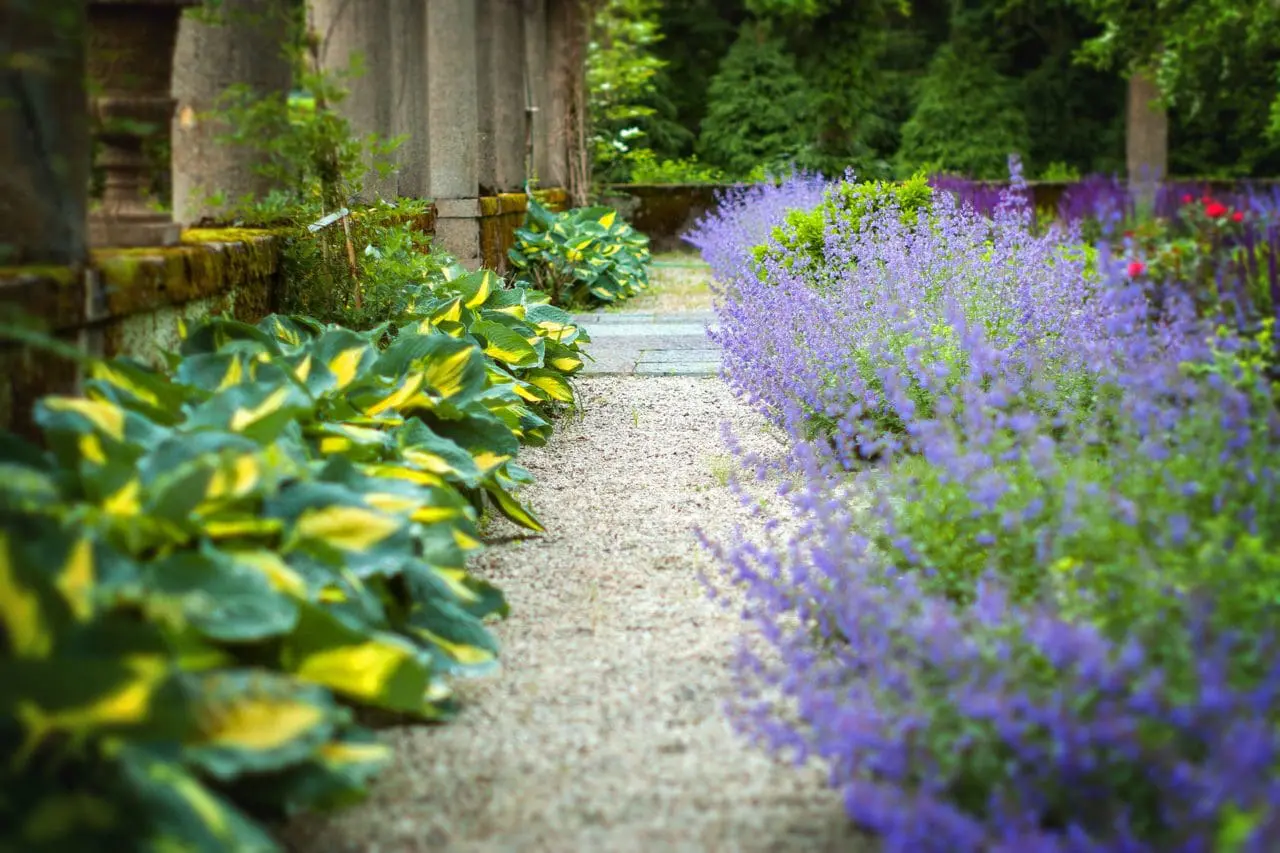
Many planting projects begin with inspiration photos, favorite plants, and a vision for how the finished garden should look. But before choosing hydrangeas, evergreens, perennials, lawn seed, privacy trees, or foundation plants, there is a more important question to ask: what will those plants be growing in?
Soil testing is one of the most overlooked steps in landscape design, yet it can have a major impact on how well new plantings establish, grow, and perform over time. A beautiful plant list can still struggle if the soil is compacted, poorly drained, too acidic, low in organic matter, or carrying nutrient imbalances that limit root development.
In the Boston area, soil conditions can vary dramatically from one property to the next. A shaded Newton yard, a sandy coastal property, a compacted new-construction site in Wellesley, an older Brookline garden, and a wet lawn edge in Concord may all require different soil strategies. Even within a single property, the soil near a foundation, under mature trees, along a driveway, and at the back of the lawn may tell very different stories.
That is why successful planting design should begin below the surface. Soil testing helps turn guesswork into guidance, allowing the design, preparation, plant selection, and long-term care plan to respond to the actual conditions of the site.
Key Takeaways
- Soil testing helps identify pH, nutrient levels, organic matter, and other conditions that influence plant health.
- Testing before planting can reduce plant failure, unnecessary amendments, and over-fertilizing.
- Boston-area soils vary widely because of glacial history, construction, compaction, fill, drainage, shade, and coastal conditions.
- Soil test results should inform plant selection, soil preparation, fertilizer, compost, lime, irrigation, and long-term maintenance.
- Soil testing is also useful when established plants show yellowing leaves, weak growth, dieback, poor flowering, or repeated decline.
Why Soil Testing Should Come Before the Plant List
Planting design is often approached from the top down. Homeowners think first about flower color, privacy, bloom time, deer resistance, height, fragrance, or seasonal interest. Those details matter, but they come after a more fundamental question: can the site support the plants being considered?
Soil affects nearly every part of plant performance. It influences how roots grow, how water moves, how nutrients are held, how oxygen reaches the root zone, and how available certain nutrients are to the plant. If the soil conditions are poorly matched to the planting plan, even high-quality plants can struggle.
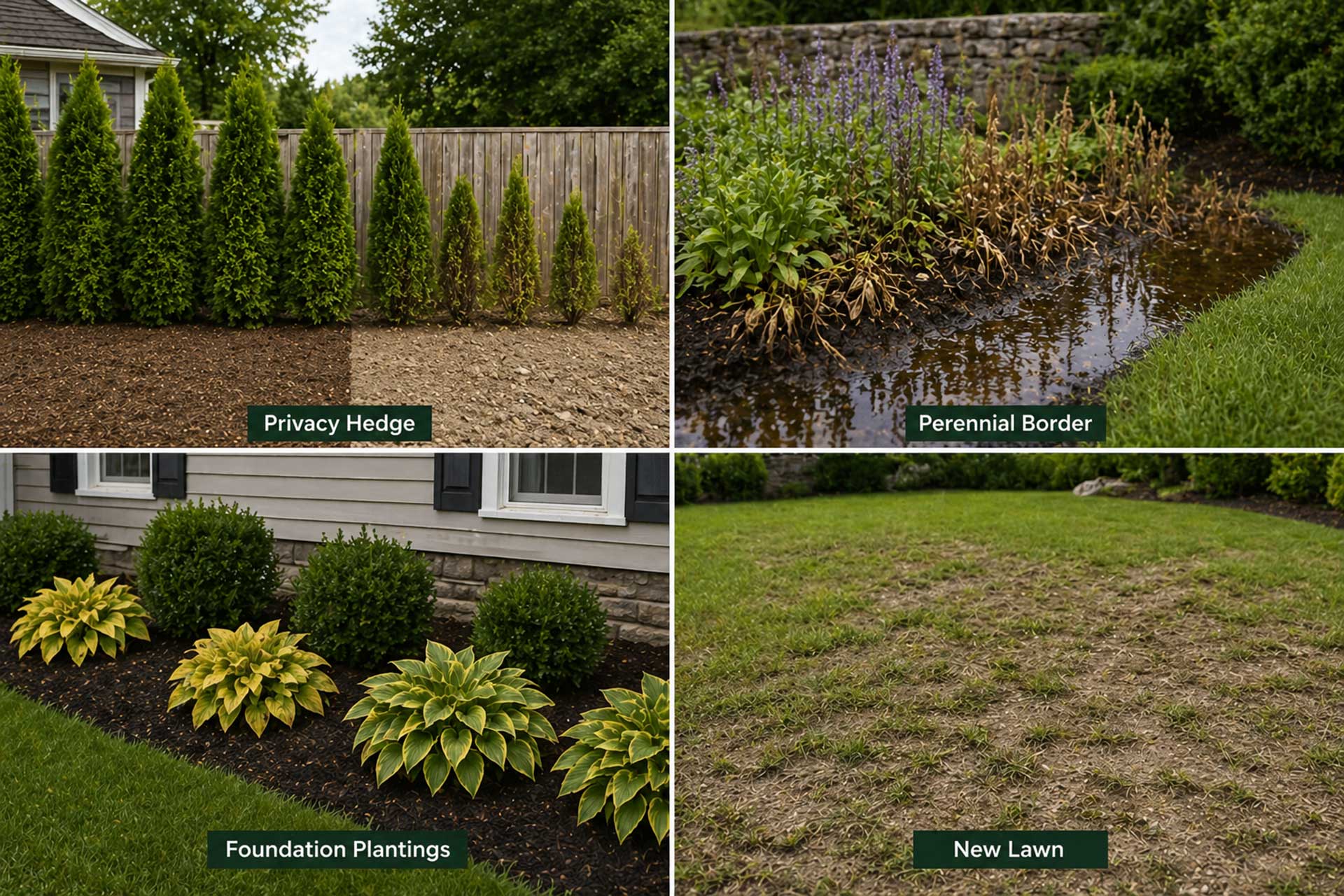
For example, a privacy hedge may grow unevenly if one stretch of the property line has compacted fill and another has loose, organic soil. A perennial border may decline if the bed stays wet through winter. Foundation plantings may yellow if pH limits nutrient availability. A new lawn may remain thin if the soil is compacted or poorly balanced.
The U.S. Environmental Protection Agency recommends having soil tested for nutrient content, pH, soil composition, and organic matter when planning landscapes, noting that sandy soil, heavy clay, compacted soil, or extreme pH can affect which plants are right for a yard. EPA WaterSense landscaping guidance also notes that healthy soils help cycle nutrients, retain water, reduce runoff, and absorb excess nutrients, sediments, and pollutants.
That makes soil testing both a design tool and a stewardship tool. It helps guide smarter choices before plants are purchased, installed, and expected to perform.
A successful planting plan starts below the surface. Soil testing helps reveal the conditions that determine whether new trees, shrubs, lawns, and gardens will establish with strength.
— Richard Duhamel, Design Associate, a Blade of Grass
What a Soil Test Can Tell You
A soil test does not tell a designer everything about a property, but it provides important information that cannot be reliably judged by appearance alone. Soil may look dark and healthy on the surface while still having pH, nutrient, compaction, or drainage issues below.
The UMass Soil and Plant Nutrient Testing Laboratory explains that soil test results can provide nutrient levels, fertilizer recommendations, soil acidity information for lime requirements, environmental protection guidance related to excess nutrients, and economic value by helping homeowners buy amendments only when needed.
Soil pH
Soil pH measures how acidic or alkaline the soil is. This small number can have a large influence on plant health because pH affects nutrient availability. In simple terms, nutrients may be present in the soil but unavailable to the plant if the pH is outside the preferred range for that planting type.
Different plants prefer different pH ranges. Rhododendrons, azaleas, mountain laurel, blueberries, and some hydrangeas often prefer more acidic soil. Lawns and many broad ornamental plantings may require a different range. Because there is no single perfect pH for every plant, soil testing helps match the planting plan to the site or guide appropriate adjustments before planting.
Nutrient Levels
Soil testing can help identify whether key nutrients are deficient, sufficient, excessive, or imbalanced. This matters because more fertilizer is not always better. In fact, unnecessary fertilizer can waste money, stress plants, encourage weak growth, and contribute to nutrient runoff.
A test can help determine whether amendments are actually needed and, if so, which ones. That is especially valuable before installing a new lawn, large planting bed, privacy hedge, specimen tree, or kitchen garden.
Organic Matter
Organic matter contributes to soil structure, moisture retention, microbial activity, and nutrient-holding capacity. Soils with very low organic matter may dry out quickly, compact more easily, or support weaker root systems.
Adding compost can be helpful in many situations, but it should still be guided by the site. Too much amendment, poorly incorporated amendment, or the wrong amendment strategy can create problems of its own. Soil testing helps establish a baseline before decisions are made.
For larger properties, soil testing is even more valuable when it supports a broader landscape master plan, since soil conditions can affect planting design, lawn renovation, drainage, irrigation, hardscape sequencing, and long-term maintenance.
Soil Acidity and Lime Needs
Many homeowners add lime because they have heard that New England soils are often acidic. That can be true, but lime should not be applied blindly. If the soil does not need it, or if the target pH depends on the plantings, unnecessary lime can move the soil in the wrong direction.
Soil testing helps determine whether lime is needed and how much should be applied. Mass.gov notes that pH testing can provide an estimate of lime, sulfur, or other additives needed to correct soil pH. Massachusetts guidance on determining soil nutrient needs also describes standard soil tests as a tool for evaluating soil conditions before applying amendments.
Lead and Heavy Metals
For older urban and suburban properties, especially where edible gardens or children’s play areas are planned, testing for lead or other contaminants may be appropriate. This can be especially relevant near older homes, painted structures, roads, or disturbed fill.
Soil testing is not meant to create alarm. It is a way to make informed decisions. If a kitchen garden is being planned, testing can help determine whether raised beds, imported soil, or other precautions should be considered.
Why Soil Testing Matters in the Boston Area
Boston-area landscapes have complex soil histories. Many properties have been shaped by glacial deposits, old construction, imported fill, mature tree roots, drainage changes, compacted lawns, salt exposure, and decades of previous landscape work. The result is that soil conditions are rarely uniform.
New England Soils Are Often Acidic
Many New England soils tend toward acidity, but that does not mean every bed or lawn needs the same treatment. Soil pH can differ between front yards, foundation beds, lawns, woodland edges, and vegetable gardens. Testing helps avoid applying the same solution everywhere.
Older Properties Often Have Disturbed Soil
In established towns such as Brookline, Newton, Wellesley, Weston, Concord, Cambridge, and Boston, many properties have been altered over time. Additions, patios, driveways, grading, utility work, removed trees, old planting beds, and imported materials can all change the soil.
Soil near the house may be compacted, dry, or influenced by construction materials. Soil at the edge of the property may have more organic matter or more root competition. Soil near a driveway or walk may be affected by compaction, runoff, salt, or snow storage.
Construction Compaction Is Common
Landscape construction, home additions, pool projects, and hardscape installations can compact soil. Compacted soil limits pore space, making it harder for roots to grow and for water and oxygen to move through the root zone.
This is why soil testing should be considered alongside site analysis, drainage review, and construction planning. When soil preparation is built into the project from the start, plantings have a much stronger chance of establishing well.
Drainage Varies from Property to Property
Some Boston-area landscapes have wet clay pockets, compacted subsoil, ledge, poorly draining lawn areas, or low points that collect water. Others, especially coastal properties or sandy sites, may drain quickly and dry out faster than expected.
Soil testing does not replace a full drainage evaluation, but it helps complete the picture. If plants are failing in an area that stays wet, dries quickly, or shifts between extremes, soil information can help guide both plant selection and site preparation.
If testing confirms that the site naturally holds moisture, consider these Massachusetts plants for wet soil when developing the planting plan.
Related Blog: Landscape Drainage Solutions for Massachusetts Homes
Soil Testing Helps Prevent Expensive Planting Mistakes
Soil testing is a small step compared with the cost of replacing failed plants, rebuilding beds, correcting drainage issues, or renovating a landscape that was installed without enough site information.
This is especially true for higher-value planting projects such as specimen trees, privacy hedges, layered foundation plantings, poolside gardens, perennial borders, and full-property landscape renovations. These projects involve significant investment in design, plant material, construction, irrigation, and maintenance. Soil testing helps protect that investment.
Testing can help homeowners avoid several common mistakes:
- choosing plants that are poorly suited to the soil
- adding lime when it is not needed
- using fertilizer without knowing nutrient levels
- over-amending soil before understanding the baseline
- planting into compacted or poorly drained areas without preparation
- assuming the same soil strategy works across the entire property
- misdiagnosing plant decline as a watering or pest issue
The goal is not always to change the soil to fit the plant. Often, the smarter approach is to choose plants that fit the soil, then make targeted improvements where they will matter most.
In Greater Boston, soil can change from one side of a property to the other. Testing helps turn those hidden differences into useful design information.
— Richard Duhamel, Design Associate, a Blade of Grass
Soil Testing and Plant Health Problems
Soil testing is also valuable when established plants are struggling. A shrub with yellow leaves, a hedge that declines in sections, a lawn that remains thin, or perennials that repeatedly fail in the same bed may all be showing symptoms of a deeper growing-condition problem.
Possible symptoms that can point to soil-related issues include:
- yellowing leaves
- weak flowering
- stunted growth
- thin or patchy lawn areas
- poor root development
- repeated plant failure in the same location
- dieback or sparse growth
- plants needing constant watering
- soil that stays wet or smells sour
- mossy lawn areas where turf struggles
A soil test does not diagnose every plant health issue. It will not confirm a fungal disease, identify an insect problem, or explain every environmental stress. UMass notes that plant nutrient tests provide nutrient analysis only and do not diagnose problems caused by insects, disease, or other environmental factors. For those issues, the UMass Plant Diagnostics Laboratory may be more appropriate.
Still, soil testing is often a smart early step. It can reveal whether pH, nutrients, organic matter, or soil conditions are contributing to the decline. When combined with a site visit and plant health evaluation, it helps narrow the problem and reduce guesswork.
When plants struggle, the problem is not always the plant. Sometimes the real issue is pH, drainage, compaction, or soil structure.
— Miriam Hellweg, Chief Executive Officer, a Blade of Grass
Soil pH: The Small Number That Can Change the Whole Planting Plan
Soil pH deserves special attention because it influences how plants access nutrients. A plant can appear underfed even when nutrients are present if the pH limits availability.
This is one reason broad, one-size-fits-all recommendations can be misleading. A lawn, a rhododendron border, a kitchen garden, and a foundation planting may not all want the same soil conditions. A soil test helps define the target and guide any recommended adjustments.
For Boston-area homeowners, this matters in several common situations:
- hydrangeas not flowering or coloring as expected
- rhododendrons or azaleas yellowing
- lawns thinning despite fertilization
- new foundation plantings struggling near the house
- blueberries or other acid-loving plants performing poorly
- older beds receiving repeated amendments without improvement
The important point is not that every problem is caused by pH. It is that pH is one of the first things worth understanding before making changes. Without that information, homeowners may apply products that do not solve the real issue.
Soil Testing Before Planting Trees, Shrubs, Perennials, and Lawns
Different planting projects place different demands on the soil. Testing helps the design and preparation respond to the type of landscape being created.
Trees and Specimen Plants
Trees are long-term investments. They are also more difficult and expensive to replace than smaller plants. Before planting a specimen tree, ornamental tree, or large evergreen, it is worth understanding whether the soil can support healthy establishment.
Soil testing can inform preparation, but so can drainage review, root space, sun exposure, irrigation, and long-term maintenance. A healthy tree depends on more than the planting hole. It depends on the surrounding environment.
Privacy Hedges
Privacy plantings need consistency. If soil conditions vary along a property line, one section of the hedge may thrive while another remains sparse or stressed. Testing can help determine whether the planting bed needs different preparation in different zones.
Related Blog: Creating Privacy with Trees and Hedges in Residential Landscapes
Foundation Plantings
Foundation beds are often more complicated than they look. Soil near the house may be dry, compacted, alkaline from construction materials, affected by roof runoff, or limited by overhangs and shade. A soil test can help guide plant selection and amendments before a new foundation planting is installed.
Related Blog: Foundation Landscaping Ideas for Boston Homes
Perennial Gardens
Perennial gardens depend heavily on drainage, organic matter, and soil preparation. A bed that is too wet, too dry, too compacted, or poorly balanced may produce weak plants, winter losses, or inconsistent performance.
Testing before planting helps guide the preparation needed to support perennials over multiple seasons, not just the first year.
Lawns
For lawns, soil testing can guide pH correction, nutrient strategy, and soil improvement before seeding, overseeding, or installing sod. A thin lawn is not always a fertilizer problem. It may also be related to compaction, shade, drainage, soil pH, or poor organic matter.
Kitchen Gardens
Soil testing is especially important for edible gardens. In addition to nutrients and pH, older properties may warrant testing for lead or other contaminants before vegetables, herbs, or berries are planted directly in the ground.
Related Blog: Kitchen Garden Design in the Boston Area
When Should Homeowners Test Soil?
Soil testing is most valuable before decisions are made, not after problems appear. It is especially useful at the beginning of a planting project, when the results can still influence design, plant selection, soil preparation, and maintenance planning.
Consider soil testing:
- before a major planting project
- before installing a new lawn
- before planting specimen trees or large evergreens
- before creating a privacy hedge
- before building a kitchen garden
- before adding lime, compost, or fertilizer
- when plants repeatedly fail in the same area
- when renovating older planting beds
- after major construction, grading, or hardscape work
- every few years as part of ongoing landscape maintenance
Testing frequency depends on the site and the project. A newly designed garden may need testing before installation, while an established landscape may benefit from periodic testing as part of long-term stewardship.
How Soil Testing Fits Into a Professional Landscape Design Process
Soil testing should not be treated as a separate technical task. It should be part of the larger landscape design process, along with site analysis, exposure, drainage, grading, architecture, circulation, irrigation, and long-term care.
A professional design process considers how soil information affects decisions such as:
- which plants belong in each part of the property
- where amendments are needed
- whether drainage or grading should be addressed first
- how planting beds should be prepared
- whether irrigation should be adjusted by zone
- how maintenance should change after installation
- whether certain areas should be planted differently
Soil testing does not replace design judgment. It supports it. The results help the designer make better decisions about plants, amendments, irrigation, drainage, and long-term care.
What Happens After the Soil Test?
A soil test is only useful if the results are interpreted and applied correctly. The next step is not automatically to add fertilizer or compost. The next step is to understand what the results mean for the specific planting goal.
Depending on the results, the design or maintenance plan may include:
- adjusting pH with lime or sulfur when appropriate
- adding compost or organic matter
- correcting nutrient deficiencies
- avoiding phosphorus if levels are already high
- improving drainage or grading
- loosening compacted soil
- choosing plants suited to the existing conditions
- separating the property into different planting zones
- building a maintenance plan around the findings
This is where soil testing becomes part of landscape intelligence. It helps prevent unnecessary work while identifying the improvements that will actually support plant health.
Common Soil Testing Mistakes
Soil testing is simple, but the details matter. Poor sampling or misinterpreting the results can lead to the wrong recommendations. UConn Extension notes that poor sampling techniques can result in misleading recommendations, and that soil tests can identify nutrient deficiencies, excesses, or imbalances, but cannot identify problems caused by disease, insect pests, pesticides, or poor cultural practices. UConn soil test interpretation guidance reinforces the importance of using test results as one part of diagnosis.
Common mistakes include:
- testing only after plants have already failed
- taking one sample from a large, varied property
- mixing very different areas into one sample
- ignoring pH and focusing only on fertilizer
- adding compost, lime, or fertilizer before testing
- using a cheap meter as the only source of information
- not testing edible garden areas for lead when appropriate
- treating test results as a full planting plan rather than one design input
For best results, separate distinct areas into separate samples. A lawn, foundation bed, vegetable garden, wooded edge, and new planting area may each need its own test if their conditions or intended uses are different.
Soil Testing and Long-Term Landscape Maintenance
Soil conditions are not fixed forever. Irrigation, fertilization, mulch, compost, leaf litter, plant uptake, construction, drainage changes, and seasonal weather can all influence soil conditions over time.
For established landscapes, periodic soil testing can help refine maintenance. Instead of applying the same products year after year, a maintenance team can respond to current conditions. That can improve plant health, reduce waste, and support a more sustainable long-term care plan.
This is especially important for refined residential landscapes with layered plantings, lawns, seasonal displays, specimen trees, and high-value garden areas. The more carefully a landscape is maintained, the more useful soil information becomes.
Soil Testing, Sustainability, and Responsible Landscape Care
Soil testing is not just about better plant performance. It also supports more responsible landscape care. When homeowners and professionals understand the soil, they can avoid unnecessary fertilizer, reduce over-application, improve water management, and choose plants more suited to the site.
The EPA notes that healthy soils help minimize runoff, retain water, and absorb excess nutrients, sediments, and pollutants. Soil testing supports that goal by helping homeowners understand nutrient content, pH, composition, and organic matter before making planting and amendment decisions.
In a region like Greater Boston, where landscapes connect to wetlands, streams, storm drains, ponds, and coastal waters, thoughtful soil management is part of responsible property stewardship.
Learn More About Soil Testing and Plant Health
For homeowners who want to better understand soil testing, plant health, and responsible landscape planning, these resources are useful starting points:
- UMass Soil and Plant Nutrient Testing Laboratory – Massachusetts soil testing services, lab information, and testing guidance.
- EPA WaterSense Landscaping Tips – guidance on healthy soils, water-efficient landscapes, and choosing plants for site conditions.
- Mass.gov: Determining Your Soil’s Nutrient Needs – Massachusetts guidance on pH testing, standard soil tests, and nutrient planning.
- UConn Extension: Interpretation of Soil Test Results – helpful explanation of what soil test results can and cannot diagnose.
- UMass Plant Diagnostics Laboratory – diagnostic services for plant disease, insect, and plant health concerns beyond nutrient testing.
Frequently Asked Questions About Soil Testing Before Planting
Q: Do I need a soil test before planting shrubs or perennials?
A: For larger or more permanent plantings, a soil test is highly recommended. It helps guide plant selection, soil preparation, amendments, pH adjustment, and long-term care. Testing is especially useful for foundation plantings, privacy hedges, perennial gardens, lawns, and specimen trees.
Q: What does a soil test show?
A: A soil test can show pH, nutrient levels, acidity, organic matter, and other characteristics depending on the test selected. Some tests may also evaluate lead or other elements. The results help determine whether soil amendments, pH correction, or different plant choices may be needed.
Q: How often should soil be tested?
A: Test soil before major planting projects, when plants repeatedly struggle, when creating a new lawn or kitchen garden, and after significant construction or grading. Established gardens and lawns may benefit from periodic testing every few years as part of ongoing maintenance.
Q: Can poor soil make healthy plants fail?
A: Yes. Compaction, poor drainage, extreme pH, low organic matter, or nutrient imbalance can stress plants even when they are high quality and otherwise well chosen. A soil test can help reveal whether the growing environment is part of the problem.
Q: Is soil testing useful for plant health problems?
A: Yes, but it is one part of diagnosis. Soil testing can identify nutrient and pH issues that affect plant health. It does not diagnose every insect, disease, irrigation, or environmental problem, so a broader plant health evaluation may still be needed.
Q: Should I add compost before getting a soil test?
A: It is usually better to test first. Compost can be helpful, but adding amendments before testing may make it harder to understand the baseline condition of the soil. A test helps determine what the soil actually needs.
Planning a Planting Project in the Boston Area?
Soil testing is a small step that can have a major impact on the success of a planting project. It helps reveal the conditions that influence plant health, reduces unnecessary guesswork, and allows a planting plan to respond to the actual site rather than assumptions.
At a Blade of Grass, our landscape design services begin with a careful understanding of the property itself: soil, drainage, sun and shade, architecture, circulation, plant selection, construction details, and long-term care. With more than 30 years of experience designing, building, and maintaining landscapes across Greater Boston, MetroWest, and Cape Cod, our team understands how local conditions shape successful planting design.
If you are planning new plantings, a garden renovation, privacy screening, foundation landscaping, a kitchen garden, or a larger landscape design project, contact us to schedule a complimentary consultation. We can help create a landscape that is designed to establish well, mature beautifully, and support the long-term vision for your property.