Top Low-Maintenance Native Plants for Shady Woodland Gardens in New England
Native plants have earned renewed attention in residential landscape design, often through pollinator gardens planted to support bees, butterflies, birds, and other wildlife. These gardens are commonly associated with bright, flowering perennials, but native planting can do much more than provide seasonal color.
In shaded woodland gardens, native and regionally adapted plants can create structure, texture, habitat value, and year-round interest without requiring constant intervention. The best choices are not always the showiest plants at the garden center. Many are quieter, more durable, and better suited to the layered conditions found in New England landscapes.
For homeowners across Greater Boston, MetroWest, and surrounding communities, woodland gardens can be especially valuable. Mature trees, dappled light, shaded foundations, damp edges, and naturalized areas often need a planting strategy that works with the site rather than against it. When the right plants are selected, these areas can become some of the most refined and resilient parts of the landscape.
Key Takeaways
- Native and regionally adapted woodland plants can create resilient, lower-maintenance landscapes that support wildlife.
- Shade gardens do not need to feel sparse or unfinished. The right plants add structure, texture, bloom, fall color, and seasonal interest.
- Plant selection should be based on actual site conditions, including shade level, soil moisture, drainage, deer pressure, and available space.
- Serviceberry, oakleaf hydrangea, hay-scented fern, and woodland phlox each bring a different role to a layered woodland garden.
- The most successful woodland gardens are designed as communities of plants, not isolated specimens.
Why Native Plants Matter in Woodland Gardens
A native plant is generally understood as a plant indigenous to a specific region or ecosystem. Native plants have developed over time within local patterns of soil, climate, rainfall, insects, birds, and wildlife. When used in the right setting, they often require less supplemental watering, less fertilizer, fewer soil amendments, and less corrective care than plants poorly matched to the site.
That does not mean every native plant is automatically low maintenance. A native plant placed in the wrong light, soil, or moisture condition can still struggle. The real value comes from matching plant to place.
In a shaded New England garden, that means asking:
- Is the shade dry, moist, or seasonally wet?
- Is the soil rich and organic, compacted, rocky, or root-filled?
- Will the area receive morning sun, filtered light, or dense shade?
- Is deer browsing a concern?
- Should the planting look naturalized, refined, or somewhere in between?
When those questions guide the design, native woodland plants can feel both practical and beautiful.
Designing a Layered Woodland Garden
A successful woodland garden usually includes several layers. Small trees and large shrubs provide structure and height. Mid-sized shrubs create mass and seasonal interest. Ferns and perennials soften the ground plane and help connect the planting visually.
This layered approach is especially useful in Greater Boston landscapes, where shaded areas often sit near mature trees, stone walls, walkways, foundations, or property edges. Rather than treating shade as a limitation, a thoughtful planting plan can turn it into a design opportunity.
The following plants are strong candidates for a dappled light or part-shade woodland garden.
1. Amelanchier canadensis: Shadblow Serviceberry
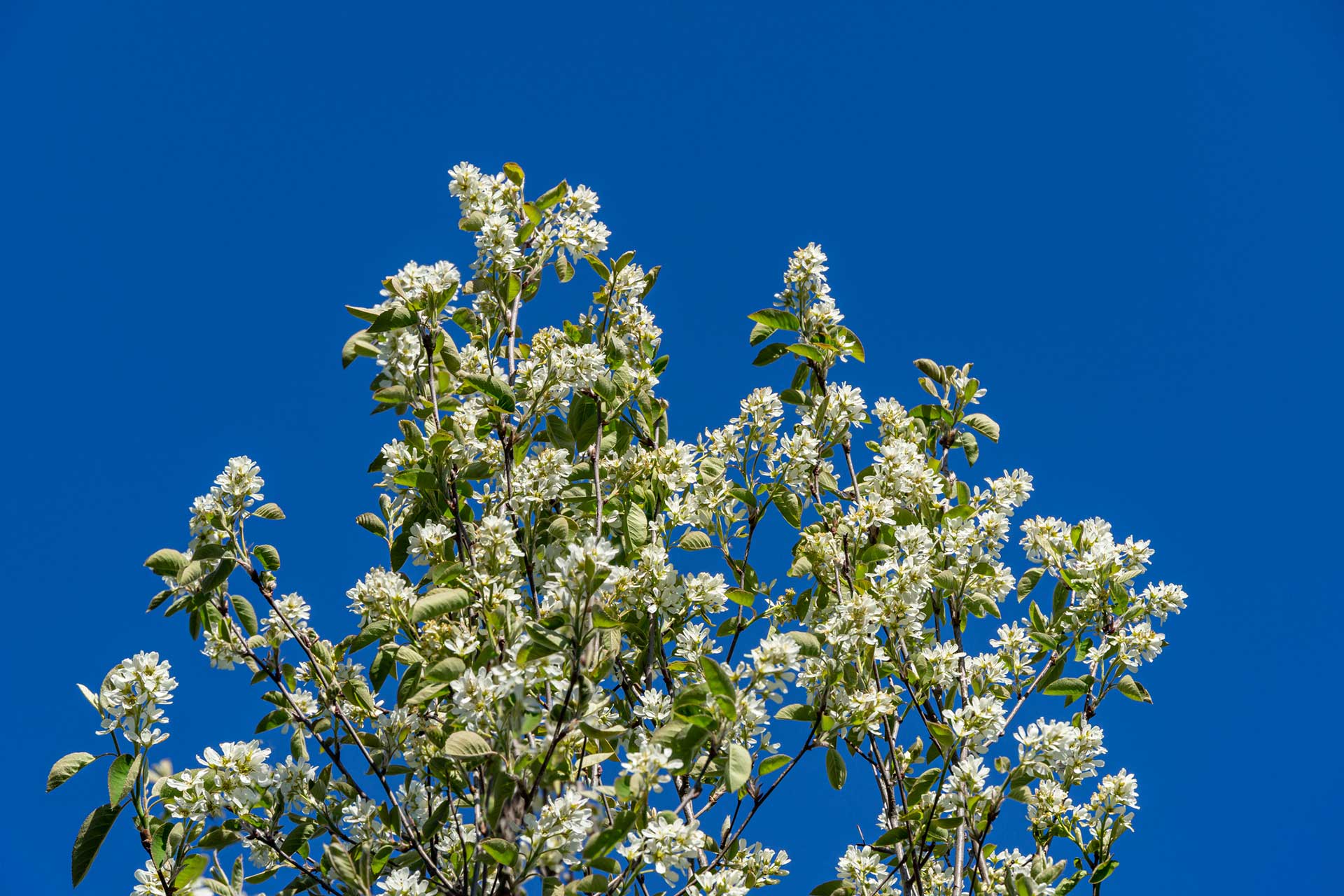

Shadblow serviceberry is one of the most useful small trees or large shrubs for a New England woodland garden. It typically reaches 20 to 30 feet tall with a spread of roughly 15 feet, making it large enough to provide structure without overwhelming most residential landscapes.
In early spring, serviceberry produces delicate white flowers that appear before many other plants are fully active. Those blooms give way to dark purple-black berries that are edible and also attractive to songbirds and other wildlife. In fall, the foliage often turns bright orange, red, and gold, providing the kind of seasonal color that feels distinctly New England.
Winter interest is another strength. Multi-stem forms show off smooth gray bark and an elegant branching structure after the leaves have dropped.
Best Uses
- Woodland edges
- Naturalized screening
- Small-tree structure in shaded or partly shaded gardens
- Wildlife-friendly planting areas
- Transitions between lawn, woods, and garden beds
Design Notes
Serviceberry works especially well where it can be appreciated through multiple seasons. Use it near a woodland path, at the edge of a shaded lawn, or as a soft structural plant in a layered border. It pairs well with ferns, shade-tolerant perennials, low shrubs, and spring ephemerals.
2. Hydrangea quercifolia: Oakleaf Hydrangea
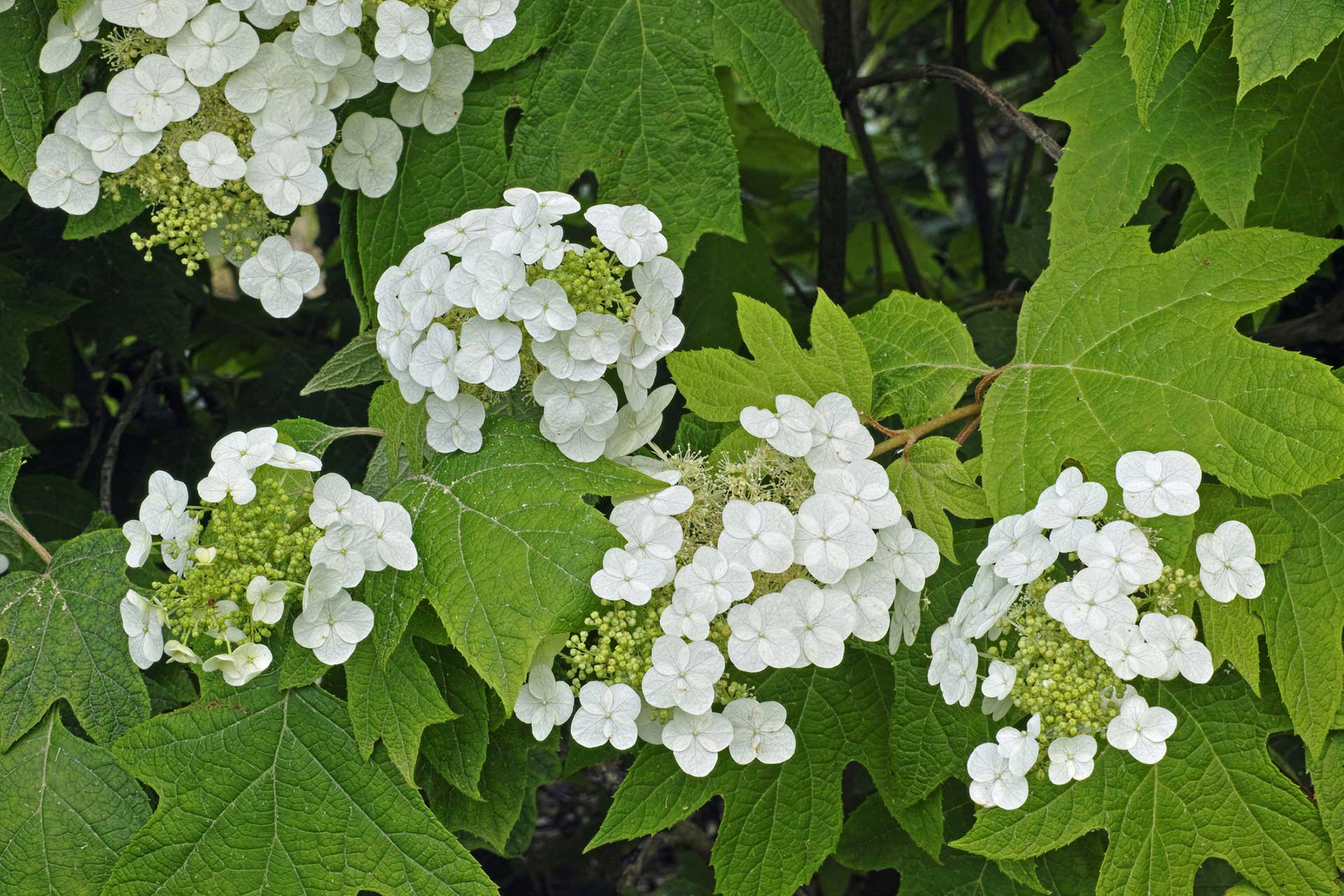
Oakleaf hydrangea is not native to New England specifically, but it is native to the southeastern United States and can perform well in many protected New England gardens. It earns its place because of its texture, seasonal interest, and relatively easy care when planted in the right conditions.
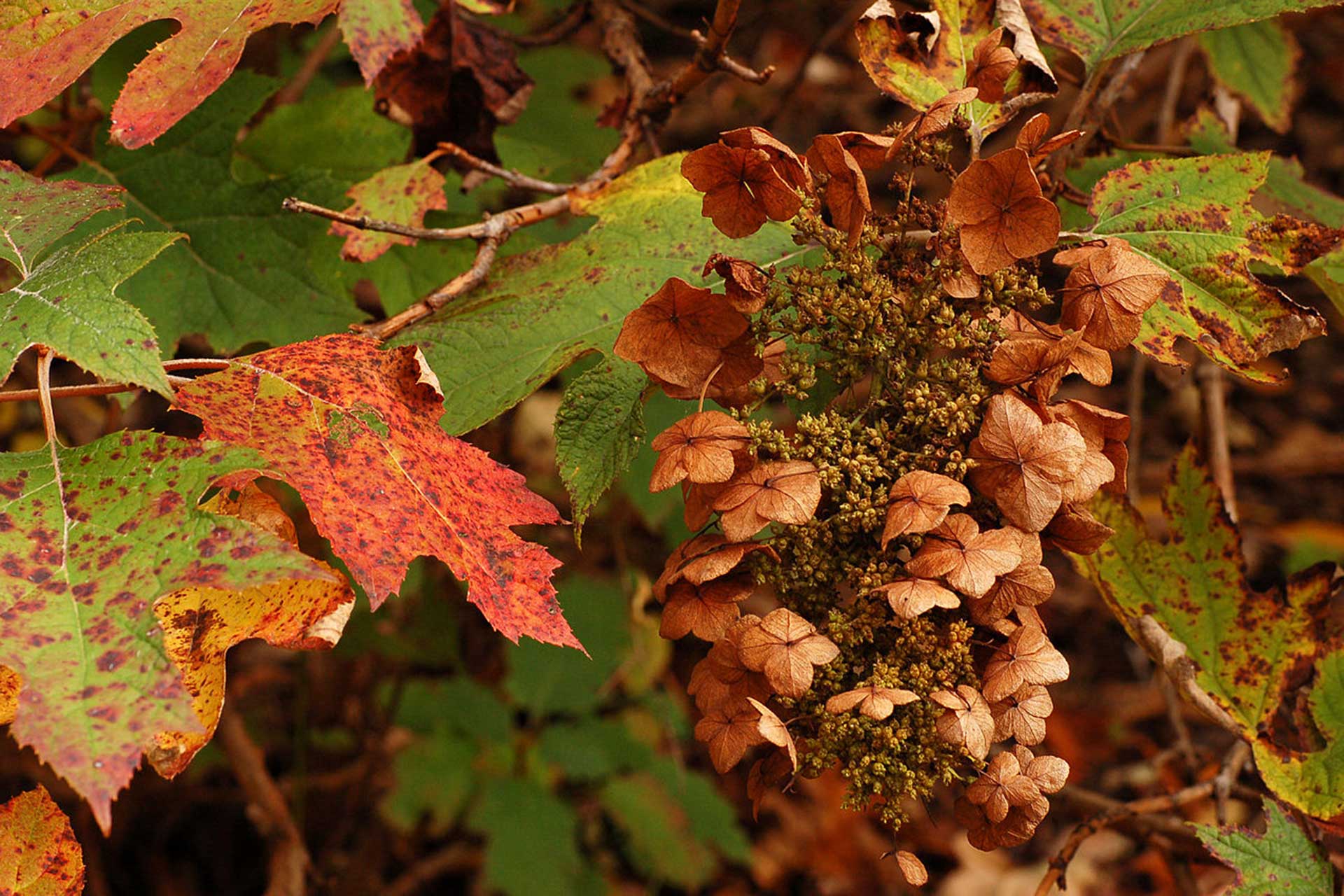
The large oak-shaped leaves give this shrub a bold, architectural presence. In early to midsummer, it produces long white flower panicles that gradually age to pink, tan, or brown. Some cultivars, such as ‘Ruby Slippers,’ develop deeper red tones as the flowers mature.
Oakleaf hydrangea also offers excellent fall color, often turning burgundy, red, and purple. In winter, mature stems can provide subtle bark texture and structure.
Best Uses
- Dappled shade gardens
- Woodland edges
- Foundation plantings with enough room
- Mixed shrub borders
- Part-shade garden rooms
Design Notes
Oakleaf hydrangea performs best in part shade to filtered light with well-drained soil. It can tolerate deeper shade, but flowering may be reduced and the plant can become leggier. Compact cultivars such as ‘Pee Wee’ are useful for smaller residential gardens because they stay closer to 3 to 4 feet tall and wide.
This is a strong choice when you want a shrub that feels lush without needing constant pruning. Give it enough space to develop its natural form.
3. Dennstaedtia punctilobula: Hay-Scented Fern

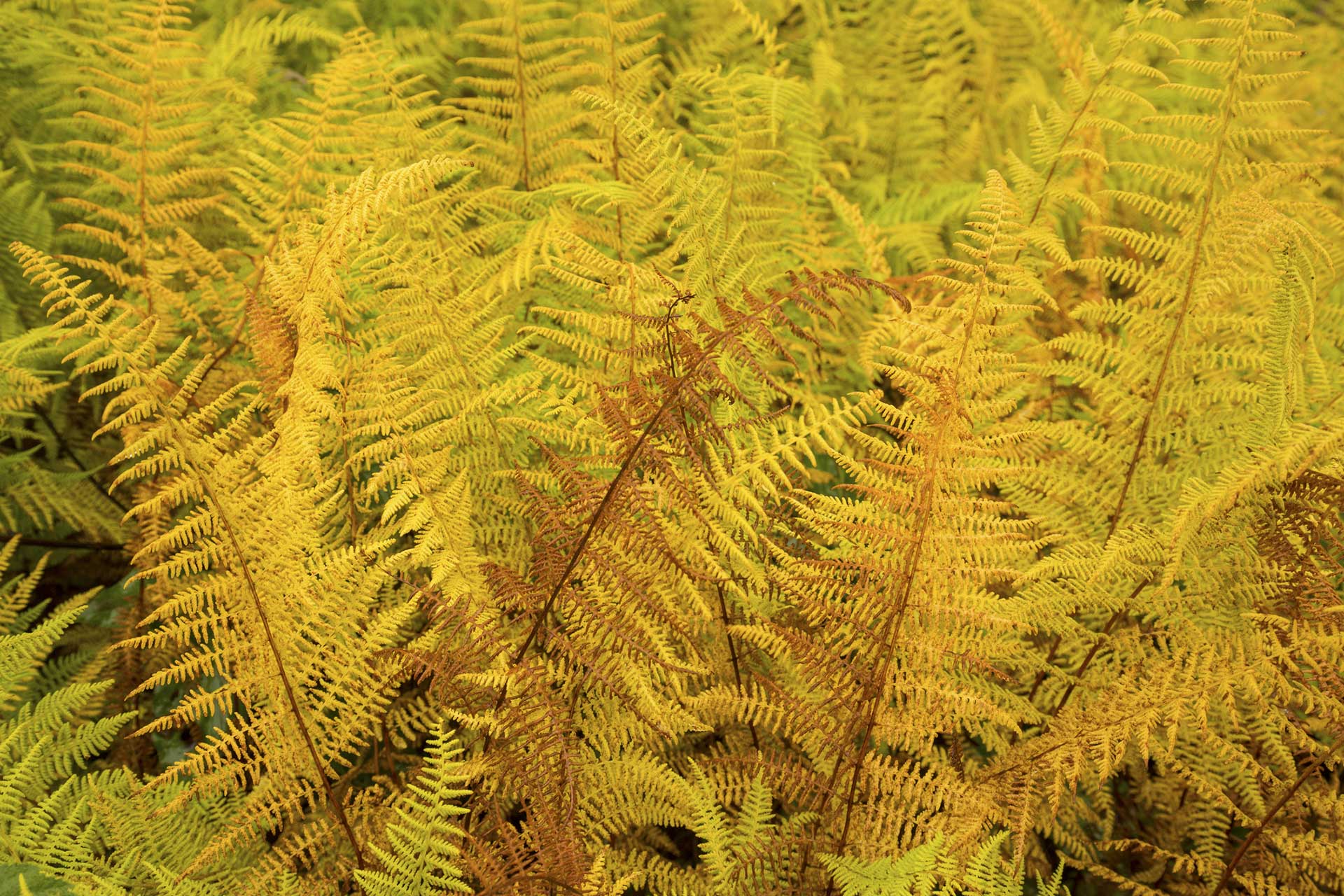
Hay-scented fern is a beautiful choice for the perennial layer of a woodland garden. It brings a soft, airy texture that contrasts well with woody shrubs, stonework, and broader-leaved plants.
This fern typically grows about 18 to 24 inches tall and spreads to form colonies. That spreading habit can be an advantage when the goal is to naturalize a shaded area or cover ground beneath taller plants. It is best used where it has room to move rather than in tightly controlled garden beds.
Hay-scented fern prefers shade to part shade and performs best in soil that has some consistent moisture, although it can tolerate drier conditions once established. In fall, the foliage often turns a warm golden yellow before dying back.
The name comes from the scent released when the fronds are crushed or broken, which is similar to freshly cut hay.
Best Uses
- Naturalized woodland areas
- Ground-layer planting beneath shrubs and small trees
- Transitions between lawn and woods
- Shaded slopes or informal garden edges
- Areas where spreading is welcome
Design Notes
Hay-scented fern is not the right plant for every bed because it can spread assertively. Used in the right place, however, that habit is part of its value. It can create a soft, unified ground layer that helps reduce bare soil and gives shaded areas a more established woodland character.
Like many ferns, it is generally less appealing to deer and rabbits than many flowering perennials.
Ask an Expert: Which Native Plants Will Thrive on My Weston Property?
Bonus Plant: Phlox divaricata, Woodland Phlox
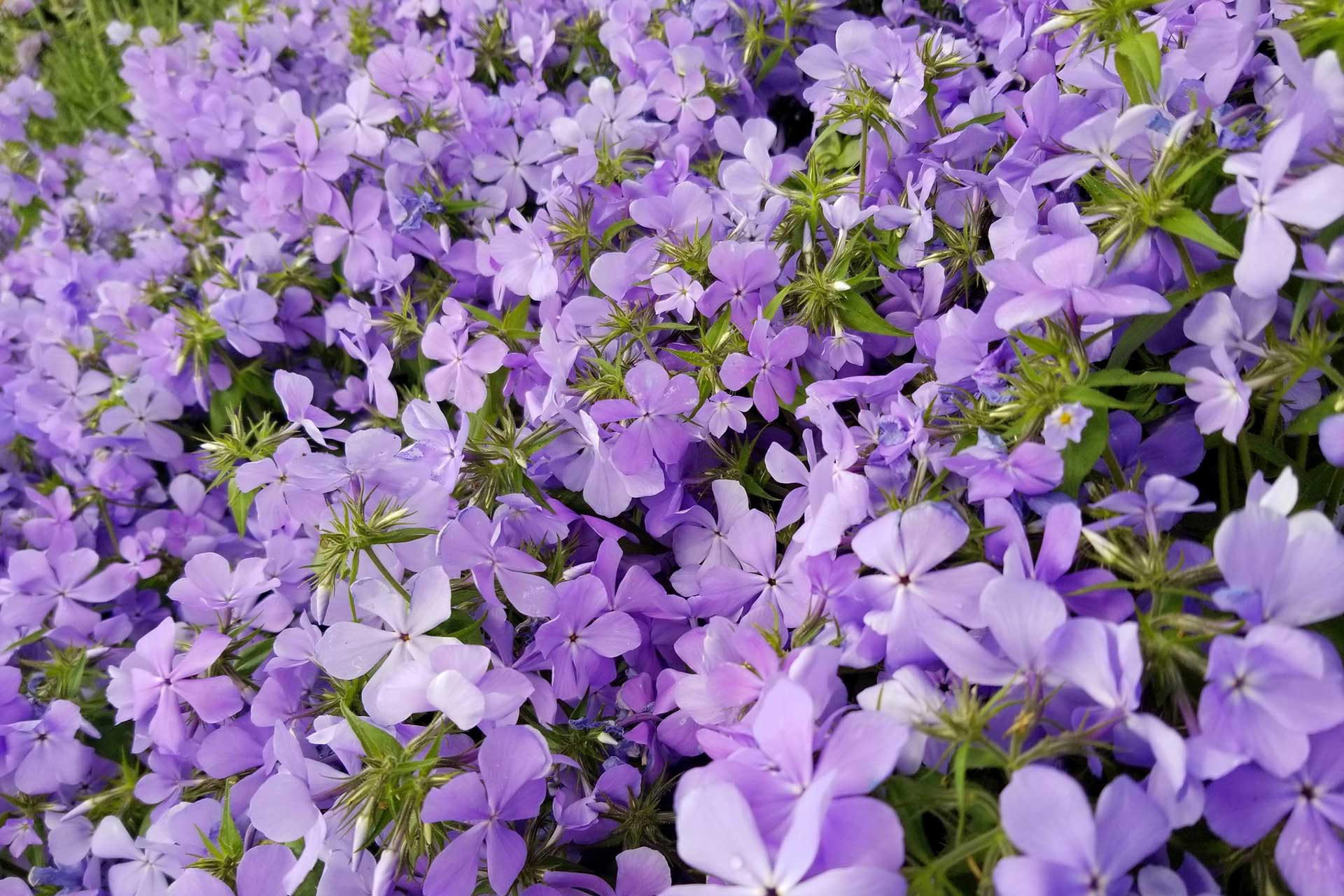
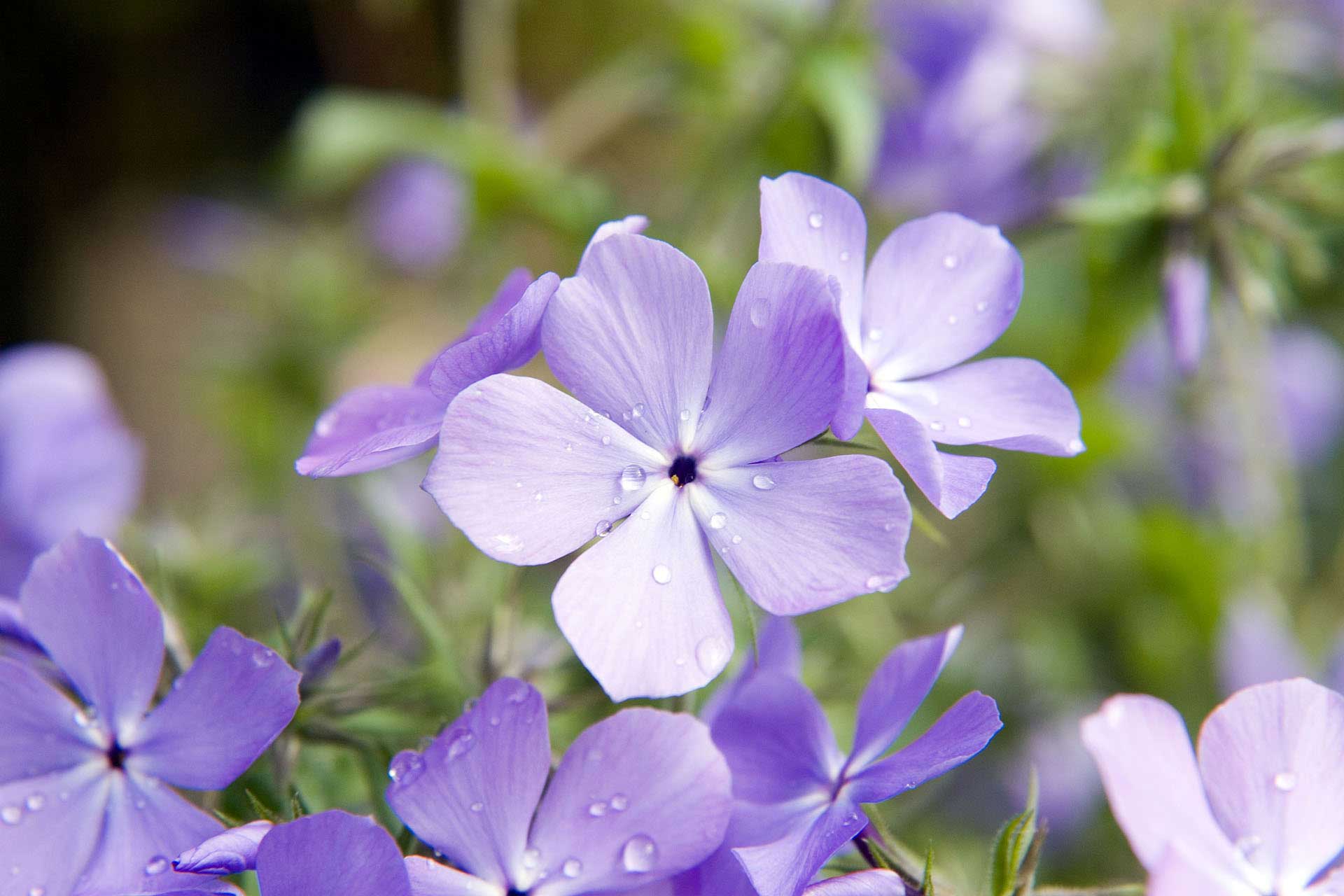
Woodland phlox is a lovely early-season perennial for shade and part-shade gardens. It produces soft blue, lavender, or violet flowers in spring, often around April or May in New England, depending on the season and site.
This plant typically grows around 12 inches tall and spreads gradually when conditions are favorable. It prefers moist, well-drained soil and works best in areas where it can form a loose colony. After flowering, the foliage becomes quieter and less noticeable, but the spring display can be well worth it.
Woodland phlox is especially useful for adding color before the woodland garden fully leafs out. It pairs beautifully with ferns, serviceberry, spring bulbs, hellebores, and shade-tolerant ground covers.
Best Uses
- Spring color in shade gardens
- Woodland edges
- Naturalized perennial layers
- Underplanting below small trees and shrubs
- Softening paths and shaded borders
Design Notes
Woodland phlox is valuable for early bloom, but it should not be expected to carry the garden visually through the entire season. Use it as part of a larger layered planting, where later-emerging ferns, shrubs, and perennials provide structure after flowering has finished.
Deer often leave it alone, but rabbits may browse it.
How These Plants Work Together
These plants are especially effective because they each occupy a different layer of the woodland garden.
- Serviceberry provides height, flowers, berries, fall color, and winter structure.
- Oakleaf hydrangea adds bold foliage, summer flowers, and strong fall color.
- Hay-scented fern creates a soft, spreading ground layer.
- Woodland phlox adds early spring color and a naturalized perennial effect.
Together, they create a garden that feels layered and seasonally alive without depending on high-maintenance annuals or constant replanting.
Low Maintenance Does Not Mean No Maintenance
Native and woodland plants often reduce maintenance, but they do not eliminate it. A successful woodland garden still needs care during establishment and occasional editing over time.
Expect to provide:
- Regular watering during the first growing season
- Mulch or leaf litter to protect soil and retain moisture
- Selective pruning of shrubs and small trees
- Monitoring for spreading plants that move beyond their intended area
- Seasonal cleanup that preserves habitat where appropriate
The advantage is that, once established, a well-designed woodland garden can become more self-sustaining than many traditional planting beds.
Designing Woodland Gardens for Greater Boston Homes
For Boston-area homeowners, shaded woodland gardens can solve real property challenges. They can soften the edge of mature trees, reduce struggling lawn, add depth to shaded side yards, and create a more natural transition between formal spaces and wooded areas.
The key is to design with the site rather than forcing a sunny garden palette into shaded conditions.
A strong woodland planting plan should consider:
- Existing tree roots and canopy
- Soil moisture and drainage
- Seasonal views from inside the home
- Deer and rabbit pressure
- Pathways, stonework, and garden edges
- How the planting will mature over several seasons
When these factors are considered early, native and regionally adapted woodland plants can create a garden that feels natural, refined, and easier to care for over time.
Related Blog: Pollinator Garden Design Ideas for Boston Homes
Frequently Asked Questions
Q: Are native plants always low maintenance?
A: Not automatically. Native plants can be lower maintenance when they are matched to the correct site conditions. A native plant placed in the wrong light, soil, or moisture condition may still struggle.
Q: What is the best native plant for a shady Boston-area garden?
A: There is no single best plant for every shaded garden. Serviceberry, hay-scented fern, woodland phlox, and many other woodland plants can work well depending on soil moisture, shade level, and design goals.
Q: Can a woodland garden look polished?
A: Yes. Woodland gardens can feel very refined when they are designed with structure, repetition, clear edges, and a balanced mix of small trees, shrubs, ferns, and perennials.
Q: Will these plants attract wildlife?
A: Yes. Serviceberry produces fruit that birds enjoy, woodland phlox supports pollinators, and layered native plantings can provide habitat value for insects, birds, and other wildlife.
Q: Is hay-scented fern too aggressive for a residential garden?
A: It can spread, so placement matters. It is best used in naturalized areas or larger shaded spaces where colonizing is welcome, rather than small formal beds where tight control is needed.
Bring More Life to Shaded Spaces
Shady woodland gardens do not have to feel difficult, bare, or secondary. With the right plant palette, they can become some of the most beautiful and ecologically valuable areas of a property.
At a Blade of Grass, we design, build, and maintain landscapes that respond to real New England conditions, including shade, mature trees, woodland edges, soil challenges, and long-term maintenance needs.
If you are interested in creating or refining a woodland garden for your Greater Boston property, contact the Blade team to start a conversation.