The Pollinator Movement
Pollinator gardens have become one of the most requested ideas in residential landscape design, especially among Boston-area homeowners who want their properties to feel more beautiful, more seasonal, and more connected to the local environment. But the best pollinator gardens are not casual wildflower patches or areas of lawn that have simply been left alone. On well-designed properties in Greater Boston, a pollinator garden can be refined, intentional, seasonally dynamic, and ecologically useful at the same time.
That distinction matters.
Many homeowners like the idea of supporting bees, butterflies, hummingbirds, and other beneficial insects, but they still want a landscape that feels cared for, fits the architecture of the home, and works with the rest of the property. That is especially true in communities such as Weston, Wellesley, Dover, Concord, Lincoln, Brookline, Newton, and Needham, where the landscape is expected to do more than one job. It should look beautiful, support outdoor living, hold up through New England seasons, and contribute to the long-term value of the property.
“The most successful pollinator gardens do not look accidental. They feel composed, intentional, and connected to the rest of the property, while still creating real habitat value.”
— Megan Davey, Design Associate, a Blade of Grass
A thoughtfully designed pollinator garden can absolutely do that. It can soften the edge of a lawn, animate a sunny side yard, create movement near a terrace, support seasonal color, and reduce the amount of high-input turf on the property. It can also contribute to habitat value at a time when it is badly needed. The USDA notes that about 35% of the world’s food crops depend on animal pollinators, and that pollinators are responsible for roughly one out of every three bites of food we eat.
At a Blade of Grass, we see pollinator-friendly design as part of a broader shift toward landscapes that are more site-responsive, layered, and ecologically intelligent without giving up beauty, structure, or long-term performance.
Key Takeaways
- Pollinator gardens work best when they are designed with structure, repetition, and clear edges.
- Plant choices should reflect sun, soil, moisture, deer pressure, and New England seasonality.
- Native and regionally adapted plants often provide the strongest ecological foundation.
- The best gardens support pollinators through bloom succession, host plants, nesting areas, and overwintering habitat.
- Replacing low-use lawn with layered planting can add beauty, habitat value, and long-term landscape resilience.
What a Pollinator Garden Really Is
A pollinator garden is a planting designed to provide food, shelter, and seasonal habitat for pollinating insects and other beneficial wildlife. That includes bees, butterflies, moths, beetles, and in some cases hummingbirds. But if the goal is long-term ecological value, nectar alone is not enough.
Pollinator-friendly landscapes also need host plants for larvae, bloom succession across the growing season, places for insects to nest or overwinter, and a maintenance strategy that does not erase habitat every fall. Mass Audubon emphasizes that pollinator-friendly yards should include both nectar plants and host plants, along with nesting and overwintering habitat.
This is where many residential pollinator gardens fall short. They may include a few flowering perennials, but they are not planned as complete garden systems.
A better approach is to think about the garden the way a landscape designer would think about any other part of the property. It needs structure, rhythm, scale, seasonal variation, and a relationship to adjacent spaces. A pollinator garden should feel like it belongs there, whether it is part of a front entry sequence, a backyard terrace, a meadow-inspired garden room, or a woodland-edge transition.
Why Pollinator Gardens Make Sense in Greater Boston
Pollinator garden design is especially relevant in the Boston area because local properties often include a mix of formal spaces, mature trees, sunny lawn panels, woodland edges, stonework, slopes, and outdoor living areas. These conditions create strong opportunities for a more layered planting approach.
- Many homeowners are rethinking the role of lawn. Large expanses of turf can be expensive to maintain, visually repetitive, and poorly suited to every part of the site. Sunny slopes, awkward side yards, difficult edges, and low-use lawn panels are often better candidates for more diverse planting.
- Greater Boston landscapes need to perform across four distinct seasons. Spring can be wet and erratic. Summer can shift from humid stretches to drought pressure. Fall is long and visually important. Winter exposes the structure of the landscape. A successful planting plan needs to work beyond one short bloom window.
- Homeowners increasingly want landscapes that feel alive. A pollinator garden brings motion, texture, color, and seasonal activity to a property in a way that static plantings often do not.
- Pollinator planting can support broader landscape goals. It can pair naturally with landscape design, lawn reduction, privacy planting, seasonal color, drainage improvements, and long-term landscape maintenance.
There is also a meaningful regional upside. Mass Audubon encourages homeowners to plant pollinator gardens, mow less lawn where appropriate, and minimize pesticides and herbicides to help support pollinators and the plants they rely on. Across Greater Boston, even small changes on individual properties can become part of a larger habitat network.
The Biggest Misconception: “Pollinator” Does Not Mean Messy
One of the main reasons some homeowners hesitate is aesthetic concern. They picture a pollinator garden as loose, overgrown, and visually chaotic.
That can happen, but it is usually a design problem, not an ecological requirement.
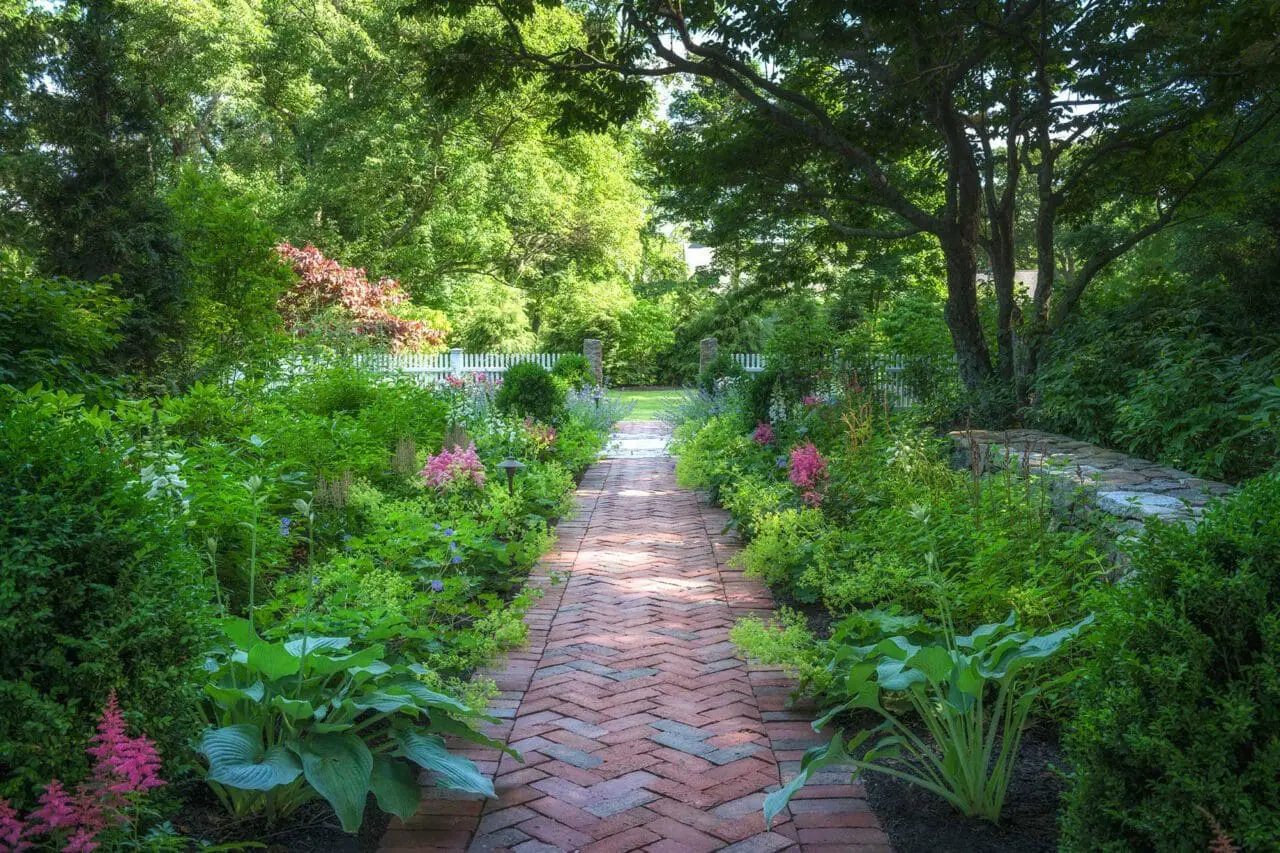
A successful pollinator garden for a high-end residential property is typically edited and intentional. It may be naturalistic in style, but it still has form. It may include self-seeding species, but it is not unmanaged. It may feel softer than a formal boxwood garden, but it should still read as a designed part of the property.
1. Use Clear Edges
Clear edges help a pollinator garden read as a designed part of the landscape rather than an area that has simply been left to grow. Crisp bed lines, stone edging, mown paths, gravel transitions, or a framed border create visual order and make a looser planting style feel more intentional.
2. Repeat Plants in Generous Drifts
When too many individual species are scattered throughout a bed, the result can feel visually restless and disconnected. Repeating plants in larger groupings creates rhythm, strengthens the design, and gives the garden a calmer, more cohesive appearance.
3. Layer Heights Carefully
A thoughtful height progression helps the planting feel organized and easier to appreciate from different viewpoints. Low growers at the front, medium-height perennials through the middle, and taller anchor plants toward the back usually create a more balanced composition than a mix arranged without structure.
4. Include Evergreen or Woody Structure Nearby
Pollinator gardens tend to be softer and more seasonal in character, so nearby evergreen or woody elements help give the space year-round definition. Small trees, shrubs, clipped hedges, or evergreen masses can act as a visual anchor and keep the garden feeling grounded even when the perennial layer is less active.
5. Plan for Winter
In New England, a garden needs to hold its visual interest well beyond peak bloom season. Seed heads, dried stems, ornamental grasses, branch structure, and neighboring evergreens all contribute to a landscape that still feels attractive and purposeful through fall and winter.
6. Connect the Garden to the Broader Landscape
Pollinator gardens are usually most successful when they are designed as part of the larger property rather than treated as a stand-alone feature. That is one reason they pair so well with broader landscape design services, which help ensure the garden feels integrated, functional, and consistent with the character of the home.

Start With Site Conditions, Not Just Plant Names
Before choosing flowers, it helps to evaluate the site honestly.
A good pollinator garden in Boston is not built from a generic plant list copied from the internet. It is built around the actual conditions of the property.
Questions Worth Asking First
- How much sun does the area receive?
- Is the soil dry, average, or consistently moist?
- Does water collect there after rain?
- Is the space visible from the street, a main terrace, or an entry sequence?
- Is deer browsing a concern?
- Do you want the planting to feel meadow-like, garden-like, or more architectural?
- Will the area receive professional maintenance or mostly informal stewardship?
These questions shape everything that follows.
A dry, sunny slope in Weston may support a very different pollinator palette than a moist edge near woodland in Lincoln or Concord. A front-facing pollinator garden in Brookline or Newton may need a more structured visual language than a looser back-of-property meadow transition. A shaded edge in Needham may call for native shrubs, sedges, and early bloomers rather than a classic full-sun perennial mix.
The design should respond to context.
For more shade-specific ideas, see Native Ground Covers for Shade in Boston-Area Landscapes. For properties where browsing is an issue, Deer-Resistant Plants and Landscaping Strategies for Boston-Area Gardens is another helpful related resource.
Plant for Bloom Succession
One of the simplest ways to improve both beauty and habitat value is to make sure something is flowering from spring into fall.
The Xerces Society recommends choosing regionally native plants that provide pollen and nectar to a wide range of pollinators and support additional functions such as larval host value, nesting materials, and specialist bees. Their Northeast plant list includes species such as red columbine, swamp milkweed, butterfly milkweed, New Jersey tea, buttonbush, partridge pea, and common yarrow.
In practical design terms, that means thinking in seasonal layers.
Early Season
Spring bloom matters because emerging pollinators need food early. Red columbine, serviceberry, violets, and certain native shrubs can help bridge this period while adding early softness and color to the landscape.
Summer
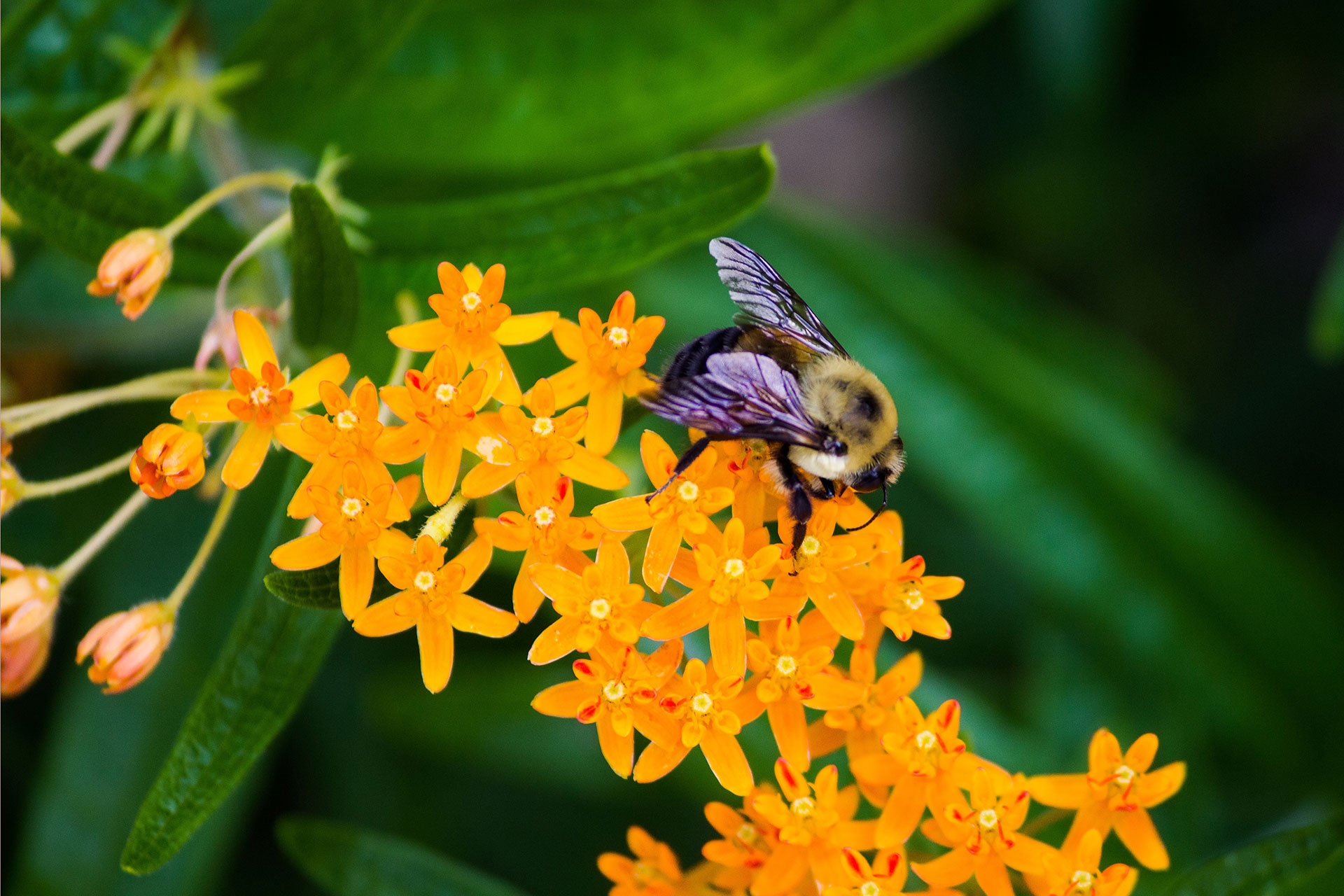
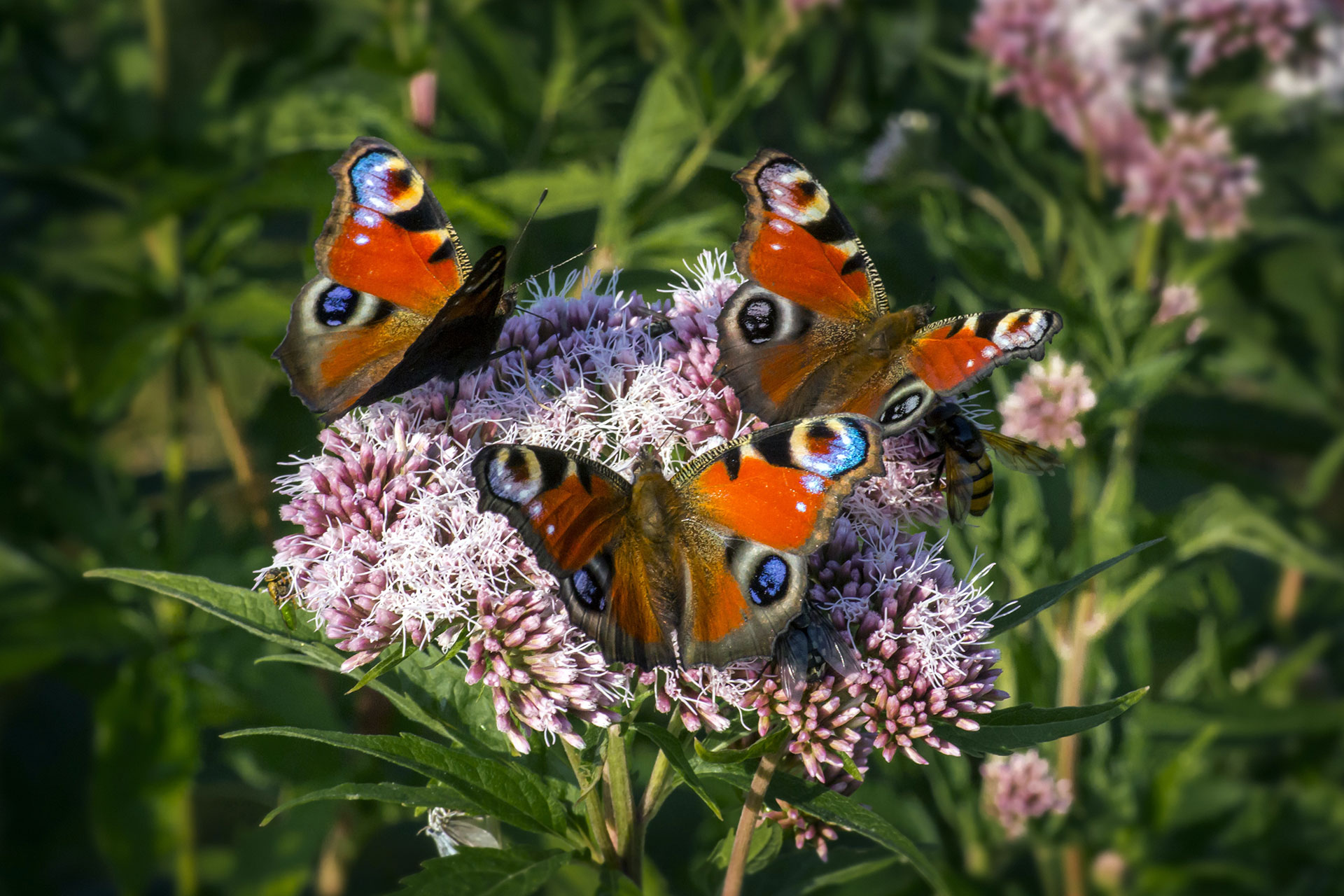
This is when many pollinator gardens hit their visual stride. Milkweeds, mountain mints, bee balm relatives, coreopsis, Joe-Pye weed, and buttonbush can carry strong activity through the warm months while creating texture, movement, and visual depth.
Late Season
Late-summer and early-fall bloom is especially valuable. Mass Audubon highlights asters and goldenrods among useful native plants for Massachusetts landscapes, and these are often some of the most important late-season nectar sources. They also bring the kind of rich fall color that works beautifully in New England gardens.
Include Host Plants, Not Just Nectar Plants
A garden that only feeds adult pollinators is incomplete. Mass Audubon points out that many pollinator-friendly yards need host plants because caterpillars and larvae often depend on a narrower set of species than adult insects do.
This is an important shift in thinking for homeowners who want the garden to do more than attract occasional bees. It means trees, shrubs, and foliage plants can be just as important as showy flowers.
For example, a small tree or shrub layer can add habitat value while also helping the garden feel more substantial and designed. This can be particularly effective when pollinator planting is integrated with adjacent shrubs, privacy screening, ornamental trees, or a woodland edge. For more on the role of small trees in residential landscapes, see Ornamental Trees for Boston Landscapes.


Make Room for Nesting and Overwintering Habitat
A lot of residential cleanup practices work against pollinator habitat.
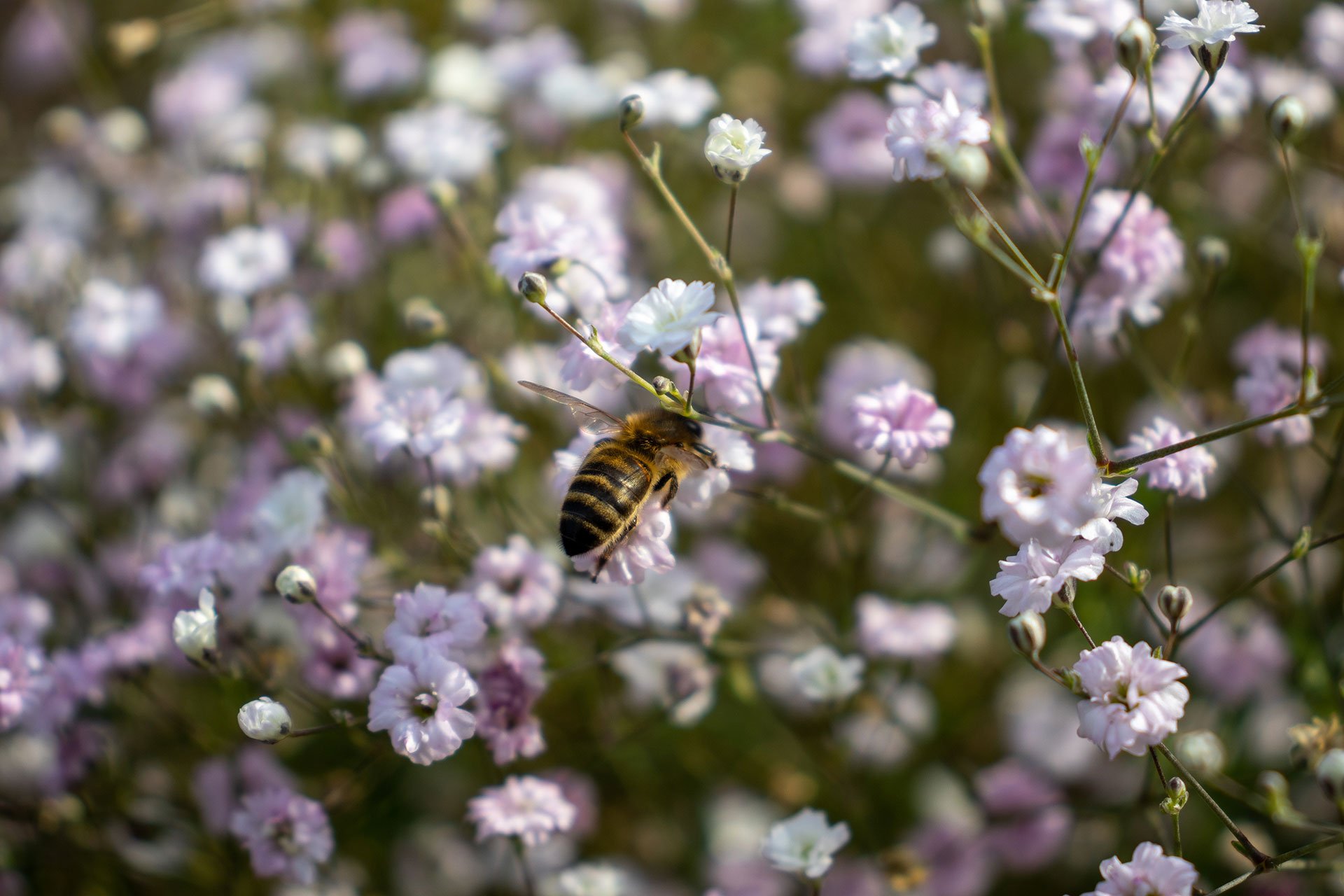
The Xerces Society notes that nesting and overwintering habitat is one of the most important factors influencing populations of native bees and other beneficial insects. It also points out that traditional landscaping practices often remove the natural resources these insects need.
That does not mean a property has to look untidy. It means maintenance should be smarter and more selective.
On many Boston-area properties, that can include:
- leaving some stem material standing through winter
- delaying full spring cutback until temperatures are consistently mild
- reducing unnecessary pesticide use
- preserving patches of undisturbed ground where appropriate
- avoiding the impulse to strip every bed completely clean in fall
- coordinating seasonal cleanup with the specific design intent of the garden
This kind of stewardship aligns naturally with long-term landscape maintenance services, especially when a garden needs to stay polished while still supporting habitat.
Design Ideas for Pollinator Gardens on Boston-Area Properties
Not every pollinator garden needs to look like a meadow. In fact, many of the best versions on residential properties are more nuanced than that.
Pollinator Borders Along Lawn Edges
A classic approach is to convert the outer band of a lawn into a deeper mixed border. This works well where turf feels visually flat or difficult to maintain. The border can still feel tailored, but it brings in bloom, texture, and habitat value.
Sunny Side-Yard Pollinator Gardens
Side yards are often underused and over-lawned. A sunny side exposure can be an excellent place for a pollinator planting that softens the edge of the property while adding visual interest from interior windows.
Pollinator-Friendly Foundation Extensions
Not every foundation bed should be a formal shrub composition. In the right architectural context, portions of a front or side bed can be planted with pollinator-friendly perennials and shrubs, especially if they are framed with strong edges and repeated masses. This can pair well with ideas from Foundation Landscaping Ideas for Boston Homes.
Meadow-Style Garden Rooms
On larger properties, a meadow-inspired pollinator area can become its own destination. Paths, stone edges, seating, or framed views can turn it into a designed landscape experience rather than a passive leftover space.
Woodland-Edge Pollinator Transitions
Not all pollinator planting belongs in full sun. At the edge of a wooded area, a more nuanced planting of native shrubs, shade-tolerant perennials, and early bloomers can support pollinators while helping the garden transition naturally into the surrounding landscape. Low-Care Natives for the Woodland Garden is a useful related read for this kind of setting.
Pollinator Planting Near Patios and Terraces
Pollinator gardens can also be beautiful near outdoor living areas when the planting is carefully edited. Lower plants near the edge, taller drifts set slightly back, and fragrant or textural species can bring movement and seasonal interest without overwhelming a terrace or dining area. This approach works especially well when paired with thoughtful hardscape design, stone transitions, and long-term maintenance planning.

Pollinator Garden Plants Worth Considering in Massachusetts
Plant selection should always be site-specific, but several regional plant groups consistently deserve attention for Greater Boston pollinator gardens.
Mass Audubon highlights native and beneficial Massachusetts plants such as goldenrod, columbine, Joe-Pye weed, asters, wild bergamot, butterfly weed, mountain mint, lowbush blueberry, New England aster, and others. Xerces’ Northeast list reinforces many similar species and adds regionally valuable shrubs and perennials such as buttonbush, New Jersey tea, partridge pea, swamp milkweed, butterfly milkweed, and red maple or serviceberry in the woody layer.
Useful categories often include:
Small Trees and Shrubs
Small trees and shrubs often play an important role in pollinator gardens because they add structure, seasonal layering, and habitat value beyond the perennial layer. Plants such as serviceberry, buttonbush, lowbush blueberry, and New Jersey tea can provide flowers, fruit, branching structure, and a stronger architectural framework that helps the garden feel more grounded and complete.
Early and Mid-Season Perennials
Early and mid-season perennials help carry the garden through spring and summer, when pollinator activity begins to build and then intensifies. Red columbine, common yarrow, butterfly milkweed, swamp milkweed, mountain mints, and bee balm relatives can bring color, movement, and steady floral resources while also giving the planting a fuller and more dynamic appearance.
Late-Season Anchors
Late-season anchors are especially important because they extend both the visual life and ecological usefulness of the garden well into late summer and fall. Asters, goldenrods, and Joe-Pye weed help sustain pollinator activity at a time when many other plants have faded, while also giving the planting height, richness, and seasonal depth.
Supporting Matrix Plants
Supporting matrix plants are the connective tissue of a successful pollinator garden, helping the composition feel unified rather than patchy or scattered. Grasses, sedges, and other durable filler species weave between showier plants, soften transitions, suppress visual gaps, and give the garden a more cohesive, natural-looking structure.
The Massachusetts Department of Agricultural Resources native pollinator plant database is especially useful because it organizes species by light, moisture, flower color, and flowering time, with many plants commonly available through local nurseries. The Native Plant Trust Garden Plant Finder is another helpful resource for exploring plants suited to New England gardens.
Related Blog: Four Keystone Plants That Are Good for Your Garden and the Planet
Common Mistakes to Avoid
Even well-intentioned pollinator gardens can fall short when the design is not carefully planned. The goal is not simply to add more flowering plants, but to create a landscape that is attractive, functional, and ecologically useful over time.
Going Too Random
A diverse plant list can be valuable, but diversity alone does not create a strong garden composition. When too many different plants are mixed together without repetition or structure, the result often feels scattered rather than intentional.
Ignoring Mature Size
Plants that look small at installation can quickly outgrow their allotted space once they are established. Ignoring mature size often leads to crowding, weaker airflow, and a garden that feels overgrown and visually chaotic within just a season or two.
Forgetting Seasonal Gaps
A garden that looks spectacular for a short stretch in midsummer but offers little before or after that period is missing an important part of its job. The strongest pollinator gardens provide visual interest and ecological value across the full season, with bloom succession and structure that carry the planting from spring into fall.
Treating the Whole Area the Same Way
Not every section of a pollinator garden should have the same density, height, or visual intensity. Good gardens usually rely on hierarchy, with stronger focal areas, supportive masses of repeated plants, and quieter transitions that allow the design to feel balanced.
Forgetting the Maintenance Plan
Pollinator-friendly planting still needs stewardship. Without a maintenance strategy, even a strong design can become weedy, crowded, or visually confusing. Seasonal editing, selective cutbacks, plant replacement, and careful observation help keep the garden healthy and attractive.
Overcorrecting Into Neglect
Pollinator-friendly does not mean a garden should be left entirely alone. Every planting still benefits from thoughtful editing, seasonal cutbacks, monitoring for weeds or decline, and ongoing care that keeps it healthy and visually composed.
Helpful Pollinator Resources
If you want to explore the topic further, these trusted resources offer useful guidance on pollinator health, native plant selection, and habitat-friendly gardening practices.
- USDA: The Importance of Pollinators — A clear overview of why pollinators matter to food systems, ecosystems, and everyday life, including the connection between pollinators and crop production.
- Mass Audubon: The Power of Pollinators — A Massachusetts-focused resource explaining the role of pollinators and practical ways homeowners can support them through planting, lawn reduction, and reduced pesticide use.
- Mass Audubon: Native & Beneficial Plants — A helpful guide to native and beneficial plants that support birds, bees, butterflies, and other wildlife in Massachusetts landscapes.
- Xerces Society: Native Plants for Pollinators & Beneficial Insects, Northeast — A detailed Northeast plant list for selecting native trees, shrubs, and perennials that provide nectar, pollen, host value, and habitat support.
- Xerces Society: Nesting & Overwintering Habitat — A practical guide to creating habitat beyond flowers, including stems, soil, leaf litter, and other features that support pollinators through their full life cycle.
- Massachusetts Native Pollinator Plant Database — A searchable Massachusetts plant database that helps homeowners and designers filter native pollinator plants by light, moisture, bloom time, flower color, and plant type.
- Native Plant Trust: Garden Plant Finder — A useful New England plant search tool for identifying native plants suited to specific garden conditions, design goals, and habitat needs.
Conclusion
A pollinator garden can do much more than attract bees and butterflies. When it is designed well, it can help a property feel more dynamic, more regionally grounded, and more alive from spring through fall. It can reduce the visual monotony of lawn, support local ecology, and bring a richer sense of movement and seasonal change to the landscape.
The key is to resist the false choice between beauty and habitat.
For Greater Boston homeowners, the most successful pollinator gardens are the ones that fit the architecture, respect the site, and are managed with enough care to stay intentional over time. They are not just environmentally useful. They are good landscape design.
If you are thinking about adding a pollinator garden, reworking a sunny lawn edge, replacing low-use turf, or creating a more native and ecologically resilient planting plan, contact us to start the conversation. The Blade team can help you create a landscape that supports pollinators while still feeling polished, functional, and fully connected to the rest of your property.