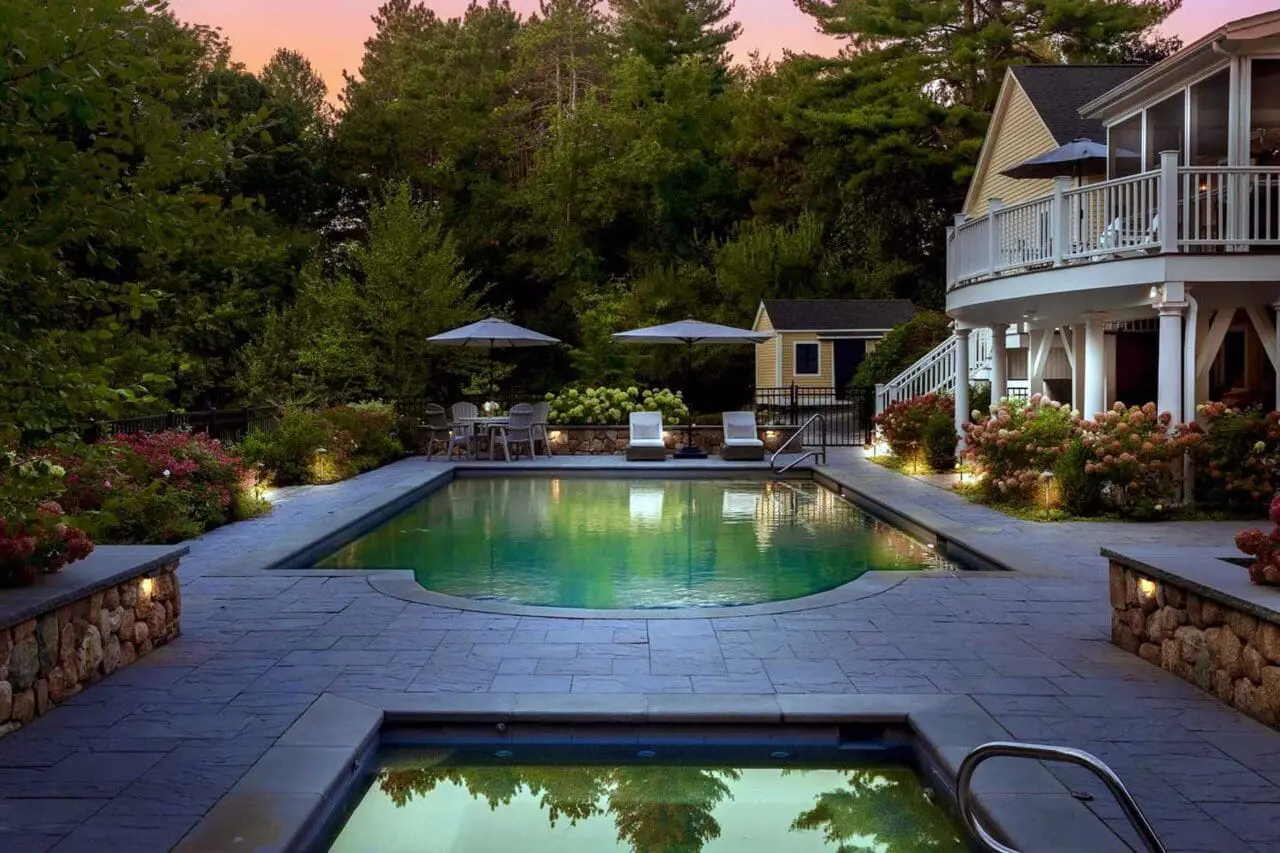
Homeowners across Greater Boston are increasingly turning to plunge pools as a smart, space-efficient way to elevate their outdoor living spaces. These compact pools offer many of the relaxation and cooling benefits of a traditional pool while fitting more naturally into the urban, suburban, and tight-lot environments common throughout New England. When paired with thoughtful landscape design, hardscape integration, planting, lighting, and long-term property maintenance planning, a plunge pool can transform even a modest backyard into an inviting, multi-season retreat.
Part of the appeal is versatility. Plunge pools work beautifully within patio expansions, garden courtyards, pool terraces, and modern outdoor living areas where every square foot needs to serve a purpose. For homes in Wellesley, Weston, Brookline, Newton, Cambridge, Dover, Concord, and surrounding Boston-area communities, they can solve a familiar design challenge: how to create a memorable backyard experience without overwhelming the property. As landscape designer Colin Hand explains:
“Plunge pools allow homeowners to enjoy the comfort of a pool without surrendering their entire landscape. They’re efficient, beautiful, and easy to live with.”
That shift is especially relevant in the Boston region, where compact outdoor spaces, premium land values, mature trees, and older lot configurations often make a full-sized pool difficult to justify. For many homeowners, a plunge pool offers the right balance of comfort, design impact, and long-term manageability.
Key Takeaways
- Plunge pools are gaining popularity throughout the Boston area because they use space efficiently while adding strong design value.
- Most Boston-area plunge pool projects fall between $65,000 and $160,000+, depending on materials, access, site conditions, permitting, and features.
- They offer the most value when planned as complete outdoor living spaces with quality hardscaping, lighting, planting, and privacy screening.
- Concrete, fiberglass, stainless steel, and modular plunge pools each offer distinct advantages depending on access, budget, and design goals.
- Their compact footprint makes them especially useful for urban and suburban properties seeking a high-impact outdoor upgrade.
What Is a Plunge Pool?
A plunge pool is a small, often deeper pool designed for cooling off, hydrotherapy, relaxation, and light exercise. Most are roughly 7 to 12 feet wide and 10 to 22 feet long, with depths that may exceed those of some standard residential pools. Unlike traditional swimming pools, plunge pools are less about lap swimming and more about comfort, refreshment, and visual appeal.
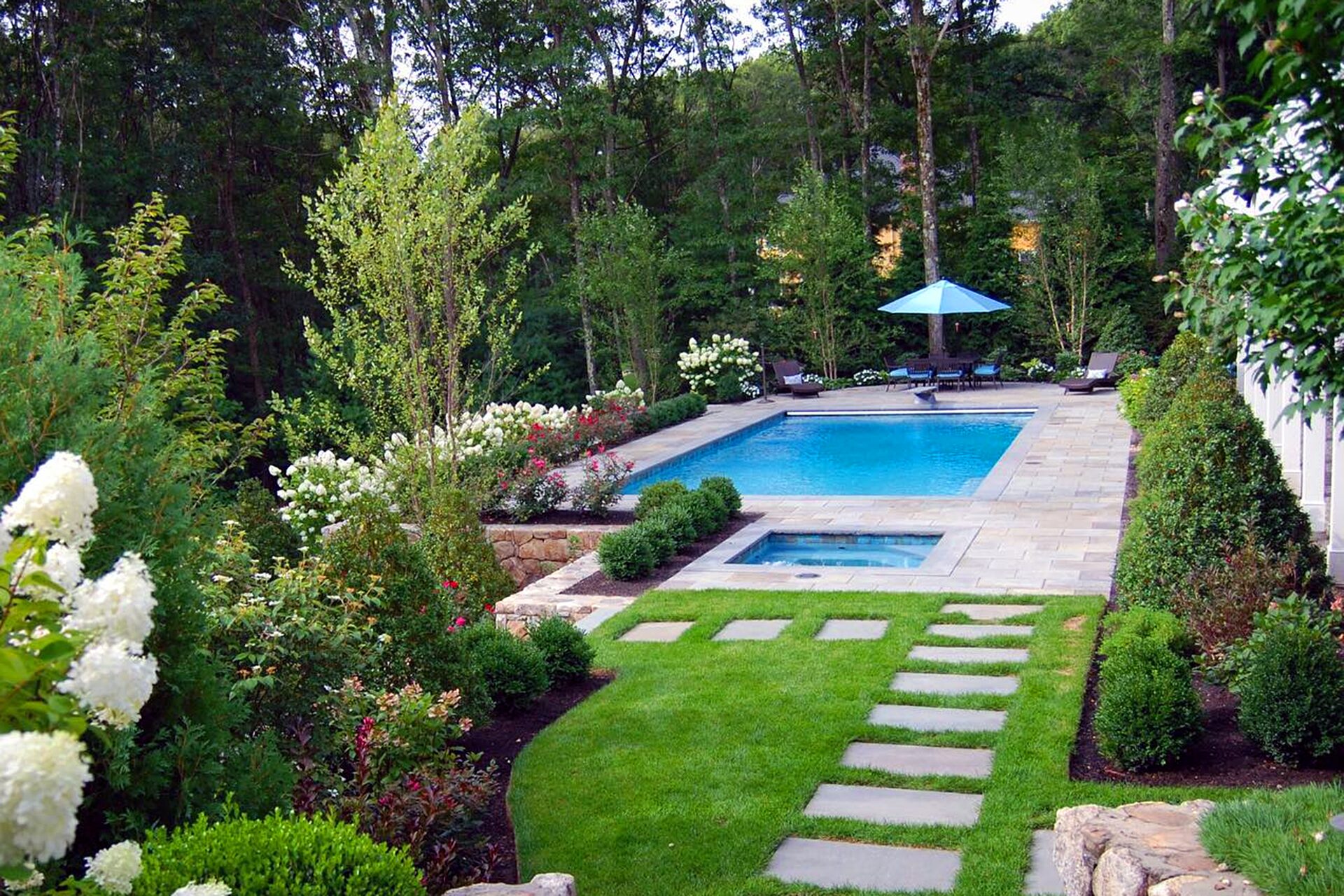
They blend well with stone patios and garden terraces, modern hardscapes, outdoor showers, planting beds, privacy screening, and outdoor living zones, making them a strong choice for homeowners who want a compact but memorable landscape feature. A well-designed plunge pool can also work as a year-round focal point, even when the pool itself is not in active use.
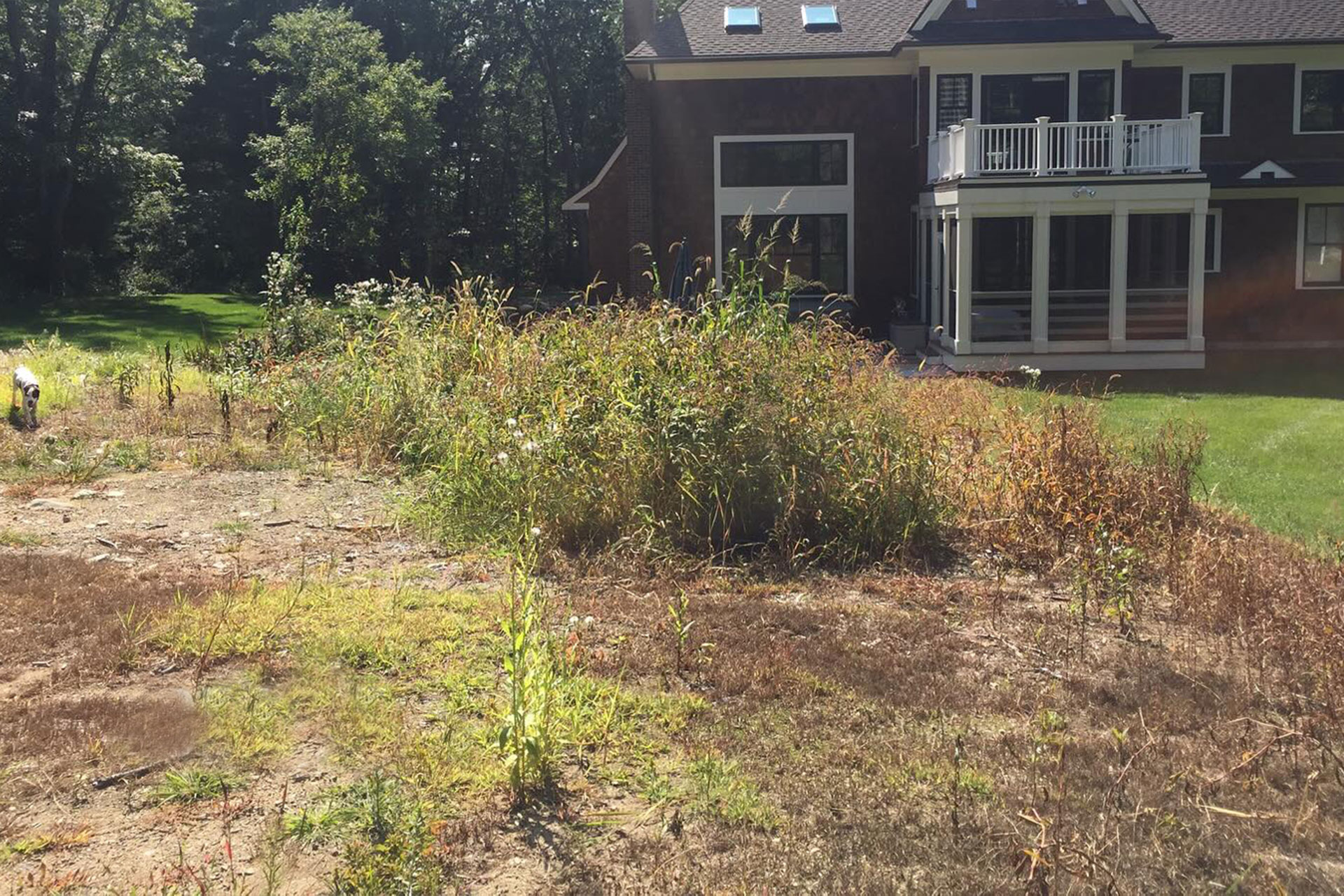
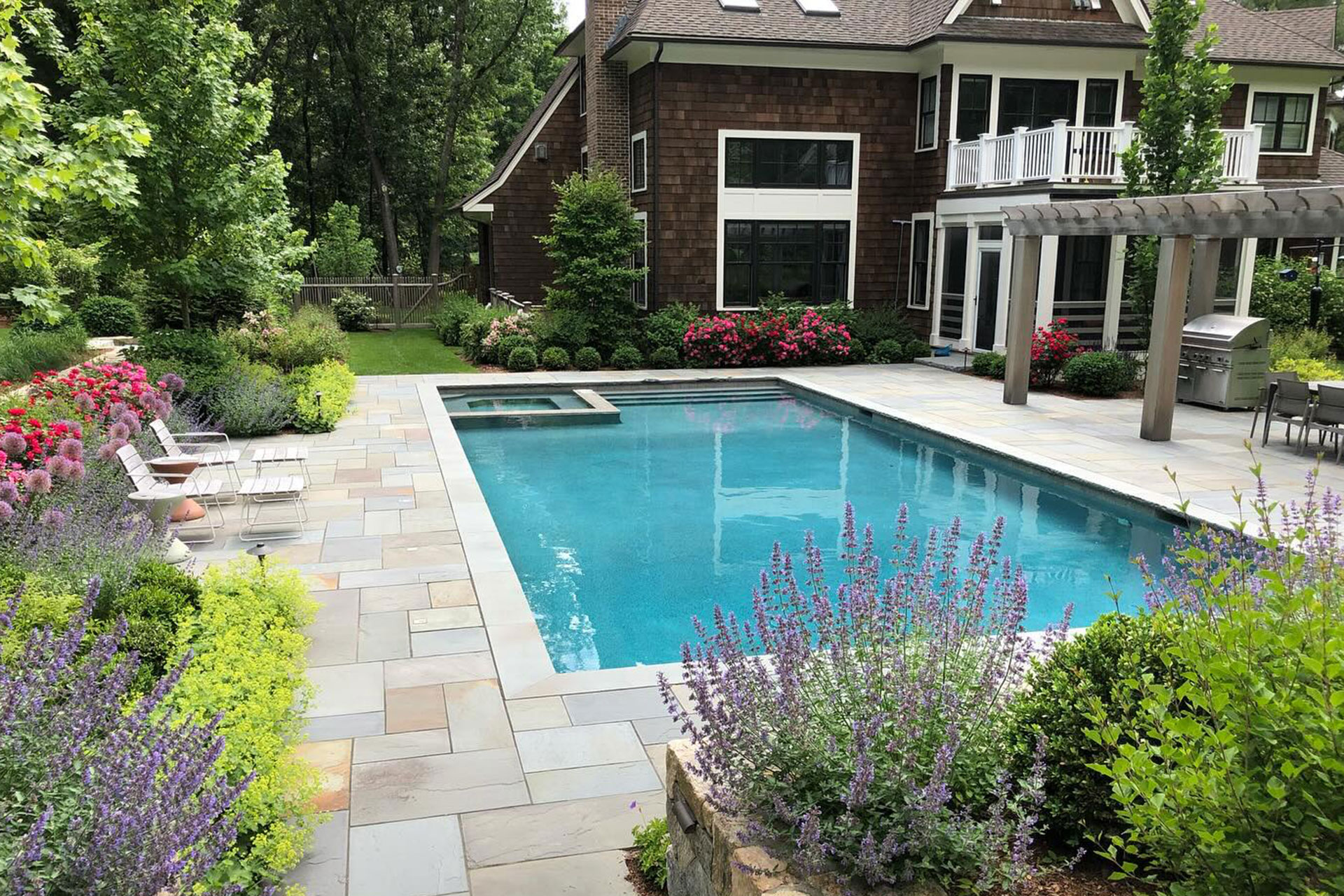
Why Plunge Pools Are Gaining Popularity in the Boston Area
Boston-area homes often sit on smaller, older, or irregularly shaped lots, which makes space a serious design consideration. Many properties also include mature trees, narrow side yards, grade changes, overhead utilities, ledge, or existing hardscape that must be respected during design and construction. A plunge pool addresses those constraints by offering:
- a compact footprint that integrates well with existing landscaping and hardscaping
- lower water volume than many traditional pools
- a refined focal point that complements both historic and contemporary architecture
- flexible installation options for challenging New England sites
- room for surrounding patios, planting, outdoor dining, privacy, and circulation
Beyond function, plunge pools can introduce a strong visual anchor to a backyard. They can serve as a sculptural water feature, a wellness element, and a practical outdoor living upgrade at the same time.
As Scott Cornish, Chief Sales Officer at a Blade of Grass, notes:
|
Construction Types and Popular Styles
Homeowners exploring plunge pools typically encounter several main construction categories, each with its own advantages, limitations, and cost considerations. The right choice depends on budget, property access, design goals, soil conditions, and how the pool will connect to the surrounding landscape.
Concrete Plunge Pools
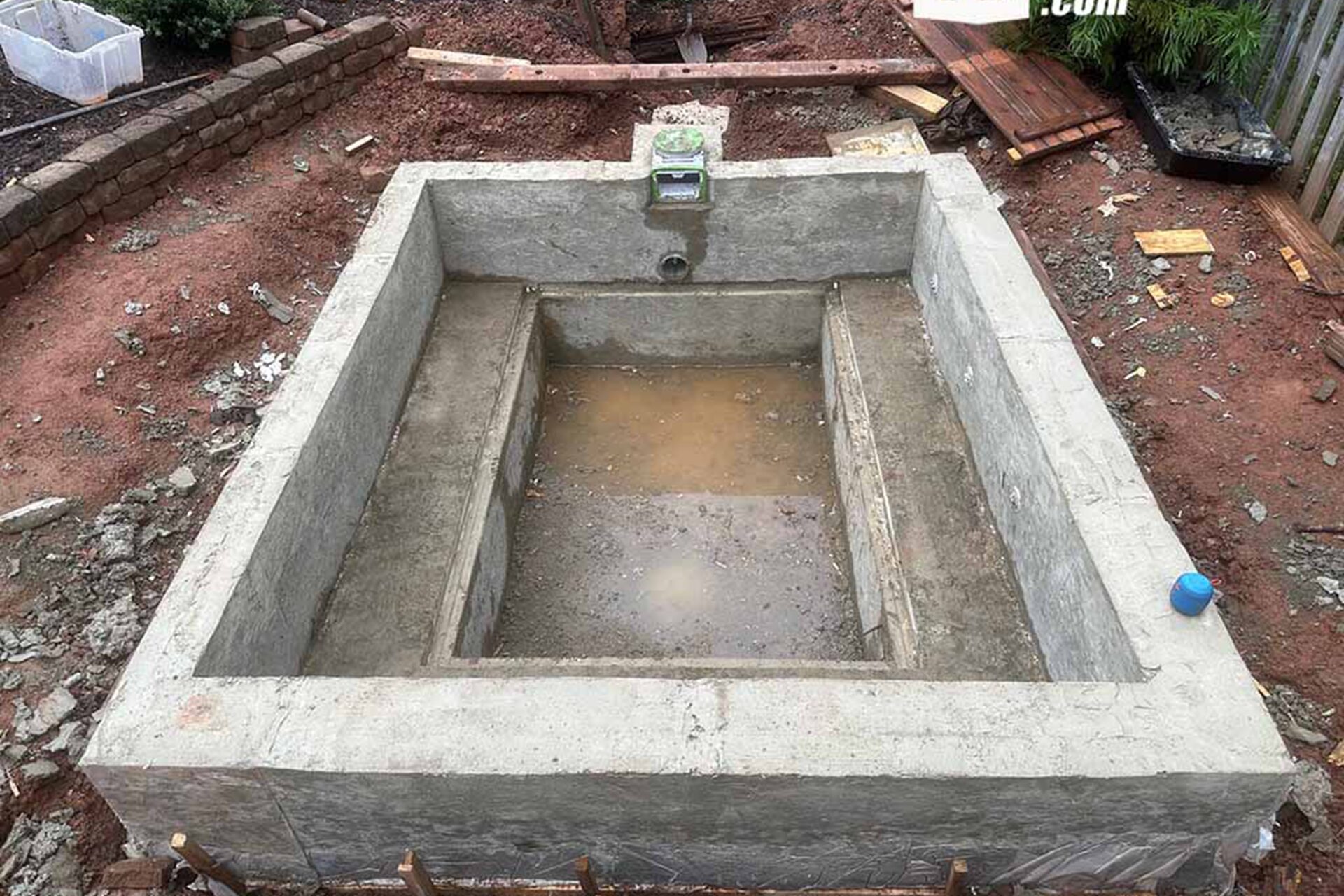
Concrete plunge pools offer the highest level of customization, making them ideal for homeowners who want a fully tailored design or need to integrate the pool into a complex hardscape layout. Their durability and flexibility allow them to pair beautifully with natural stone, porcelain pavers, terraces, retaining walls, integrated steps, benches, and other high-end landscape materials.
Concrete also adapts well to sloped yards, custom dimensions, and unusual site conditions that are common throughout Greater Boston. This can be especially valuable when the plunge pool needs to align with an existing terrace, garden wall, outdoor kitchen, or architectural sightline. The tradeoff is that concrete pools typically require longer installation timelines, higher upfront costs, and periodic resurfacing to maintain their finish.
Fiberglass Plunge Pools
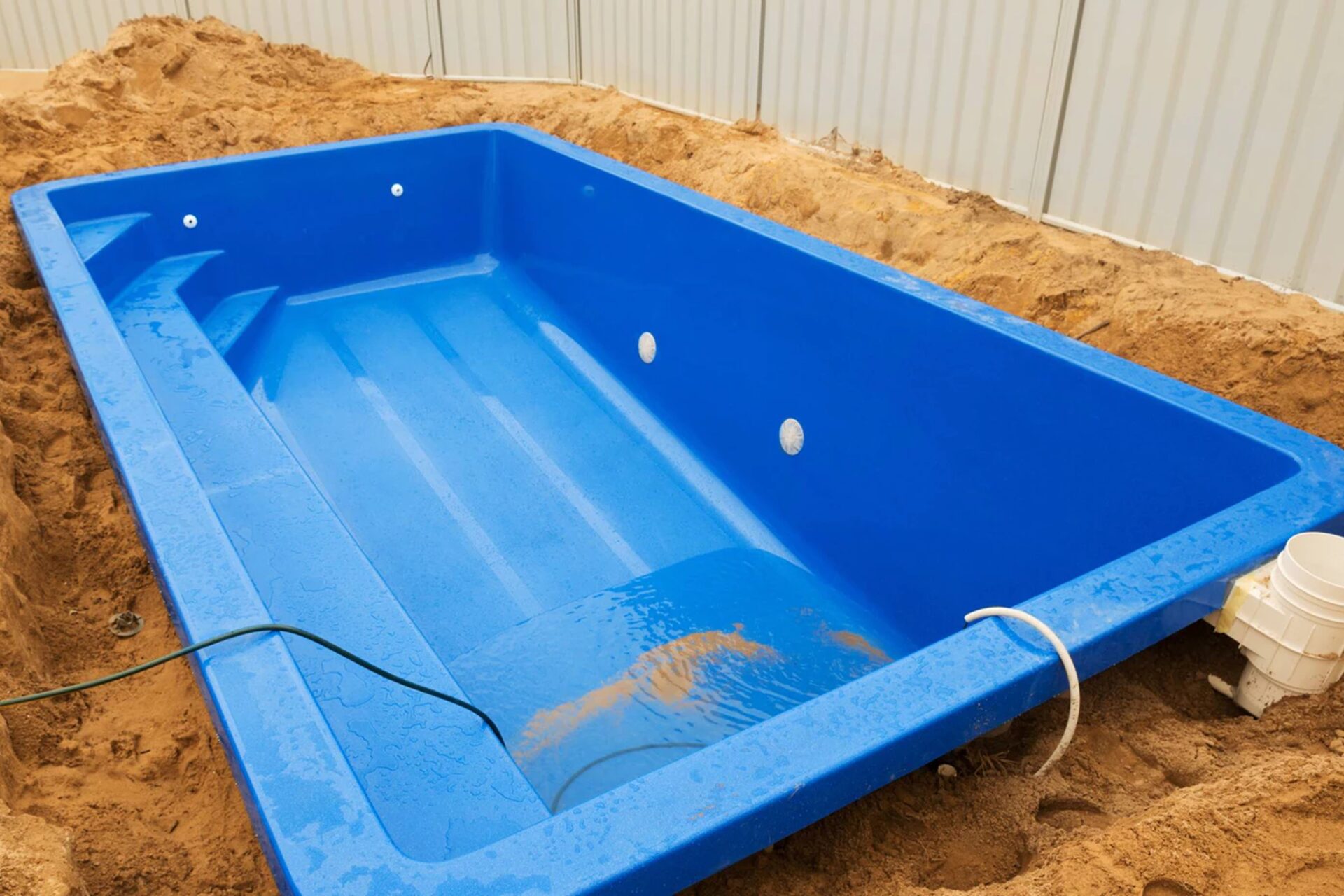
Fiberglass plunge pools are built as pre-formed shells and can appeal to homeowners who want a smooth, low-maintenance option with a more predictable installation timeline. Their consistent interior surfaces and streamlined setup make them an attractive choice for many residential properties.
Because they arrive as a single unit, access is a major factor. Tight side yards, narrow driveways, mature trees, overhead wires, fences, neighboring structures, and limited staging areas can all influence whether a fiberglass plunge pool is practical. In some cases, crane delivery may be required.
Stainless Steel and Modular Plunge Pools
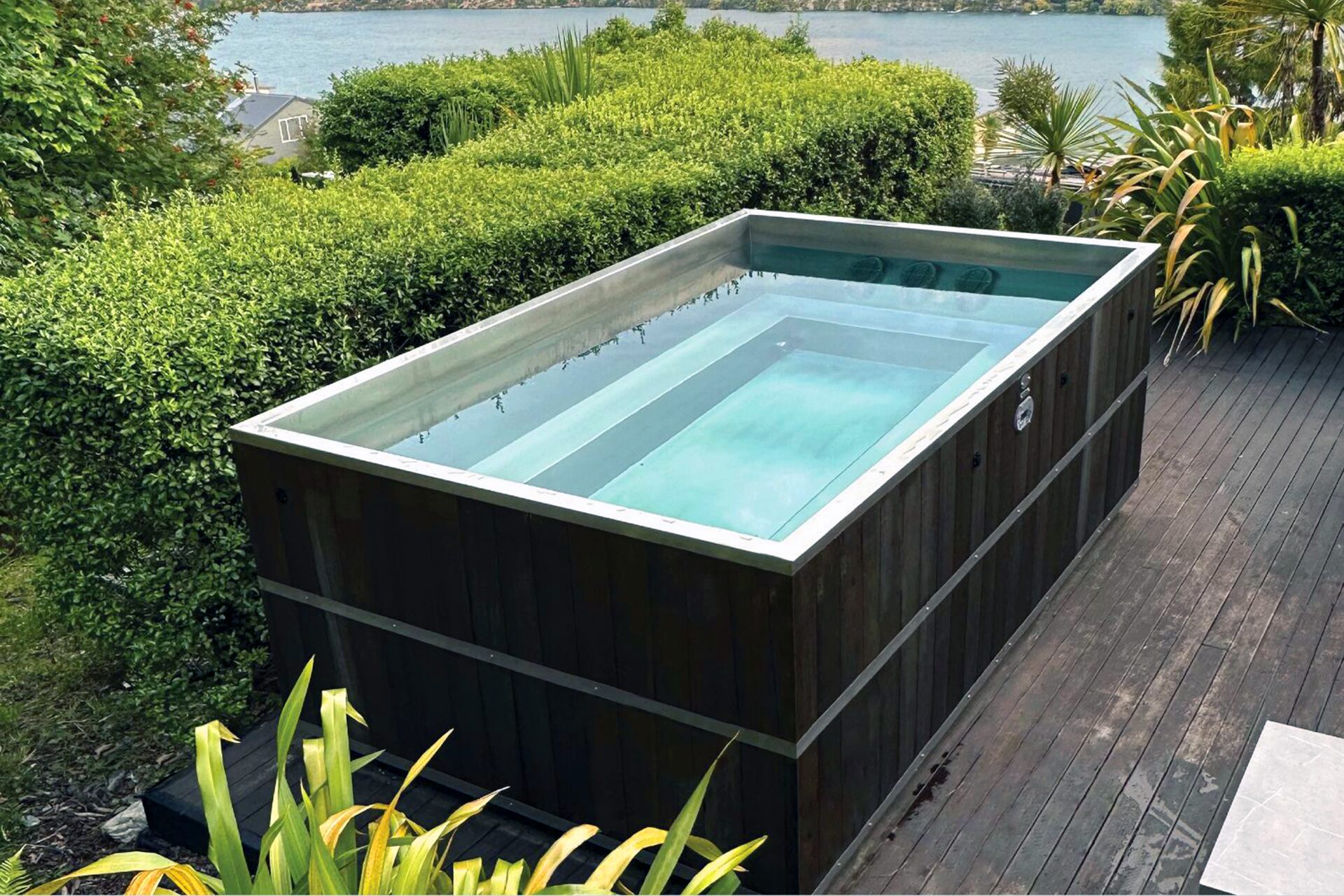
Stainless steel and modular plunge pools are increasingly popular in contemporary residential design. They offer a clean, architectural look and strong long-term durability. These systems can often be craned into tight spaces, making them suitable for compact Boston-area properties.
Installation is often efficient once the site is prepared, but premium materials, delivery requirements, and integration with surrounding hardscaping can increase the overall project cost. These pools tend to work best when the design language is crisp, modern, and closely coordinated with the architecture of the home.
Costs, ROI, and Long-Term Value
Plunge pool investment varies significantly depending on build method, materials, depth, site preparation, access, permitting, utilities, and added features such as heating systems, chillers, waterfalls, automated covers, jets, or integrated lighting.
Typical Cost Ranges in the Boston Region
- Fiberglass plunge pools: approximately $65,000 to $110,000+
- Concrete plunge pools: approximately $90,000 to $160,000+
- Stainless steel or modular systems: approximately $80,000 to $150,000+
These ranges may include excavation, foundational hardscaping, plumbing, electrical work, and basic finishing, though complex design integration or premium features can push totals higher. In Greater Boston, site access, grading, drainage, utilities, fencing, ledge, tree protection, and town permitting often have a major impact on final cost.
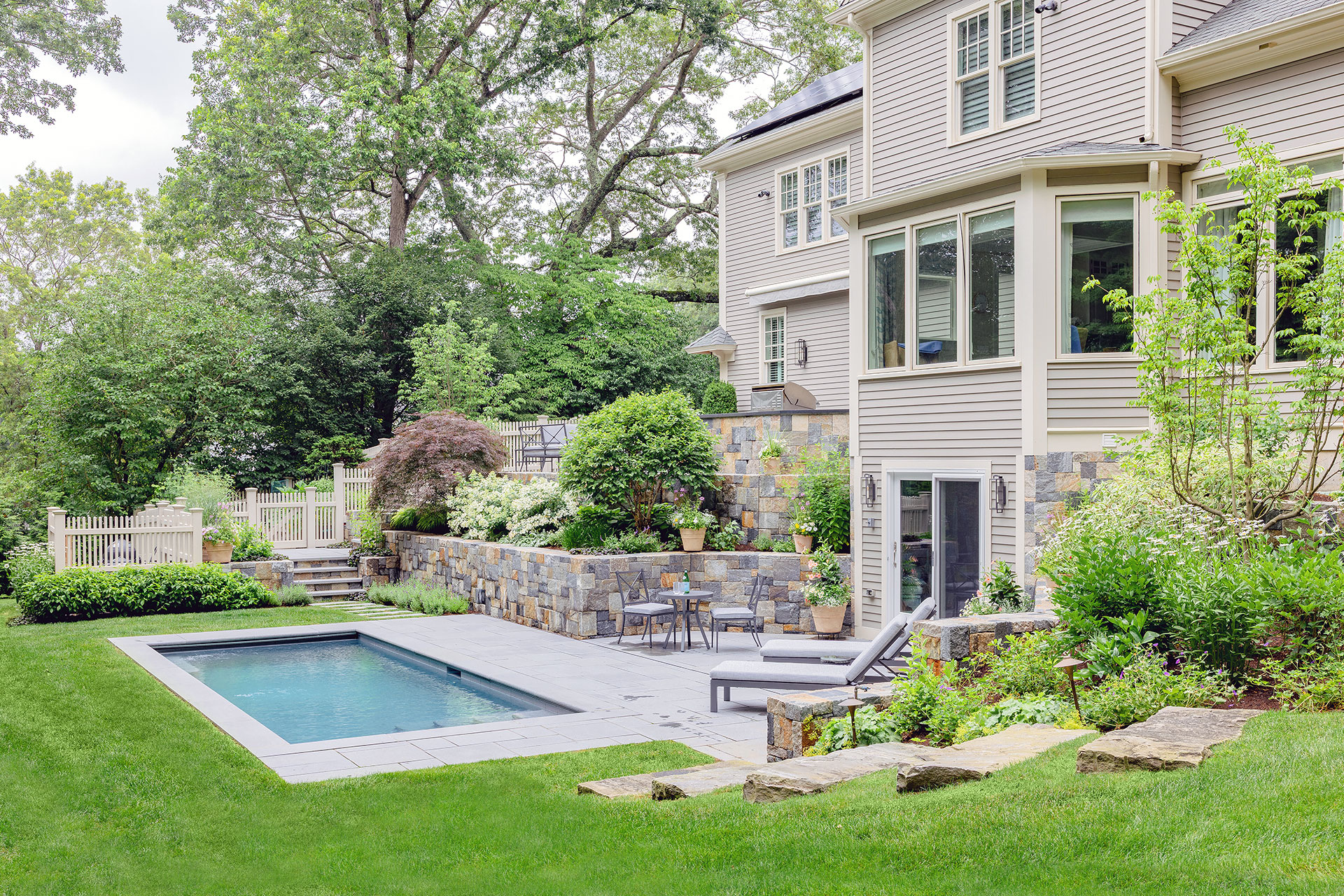
It is also important to consider the space around the pool. A plunge pool rarely functions well as a standalone feature dropped into a yard. The surrounding terrace, coping, planting, privacy screening, lighting, furniture layout, drainage, and circulation patterns are what make the finished space feel complete.
Maintenance Costs
Annual upkeep is often lower than a full-sized pool, frequently falling around $1,200 to $2,500 per year depending on heating use, water treatment systems, covers, and service frequency. Smaller water volume typically means fewer chemicals, less filtration, and reduced energy use, although plunge pools still require regular care.
In New England, homeowners should also plan for opening, closing, winterization, equipment protection, cover management, and seasonal maintenance around the pool terrace. When the plunge pool is part of a larger landscape, ongoing property care helps protect planting beds, masonry, drainage, lighting, and privacy screening over time.
ROI Considerations
Plunge pools can contribute meaningfully to perceived property value, especially when incorporated into a cohesive landscape design. The strongest return usually comes when the pool is paired with high-quality stonework, planting, lighting, privacy screening, and outdoor living features that make the entire backyard feel complete.
For Boston-area homeowners, the value is not only resale-driven. A well-designed plunge pool can improve daily use, extend outdoor enjoyment, create a stronger connection between the home and landscape, and make a compact property feel more refined and functional.
Related Blog: Planning a Backyard Transformation: Where to Start and What to Prioritize
Plunge Pools vs. Other Pool Types
When comparing plunge pools to full-sized in-ground pools or spas, most homeowners look at space, cost, maintenance, and seasonal use. Plunge pools take up far less room, making them ideal for Boston properties where yards often need to serve multiple purposes. Their compact size can also reduce construction complexity and long-term maintenance.
Traditional pools offer more room for swimming, entertaining, and active recreation, but they require significantly more yard area, higher operating costs, and more frequent upkeep. For some properties, a full-sized pool may overwhelm the available outdoor space or limit room for patios, gardens, dining areas, lawn, or circulation.
Spas provide warmth and hydrotherapy but usually lack the visual impact and flexibility of a plunge pool. Plunge pools strike a practical middle ground: cooling in summer, comfort in the shoulder seasons, and strong visual appeal year-round. With optional heating, seating, jets, lighting, or cold-plunge functionality, they can extend usability well beyond the typical New England pool season.
What to Consider Before Installing a Plunge Pool
Because plunge pools integrate closely with surrounding stonework, grading, lighting, planting, and landscape architecture, homeowners should evaluate the entire outdoor environment, not just the pool itself.
Key factors include:
- yard size and access for excavation, delivery, staging, or crane placement
- soil conditions typical to the Boston area, including clay pockets, ledge, and glacial till
- grading and drainage around patios, walls, foundations, and nearby structures
- privacy screening from neighboring homes, roads, and upper-story windows
- desired features such as heaters, chillers, jets, waterfalls, or automatic covers
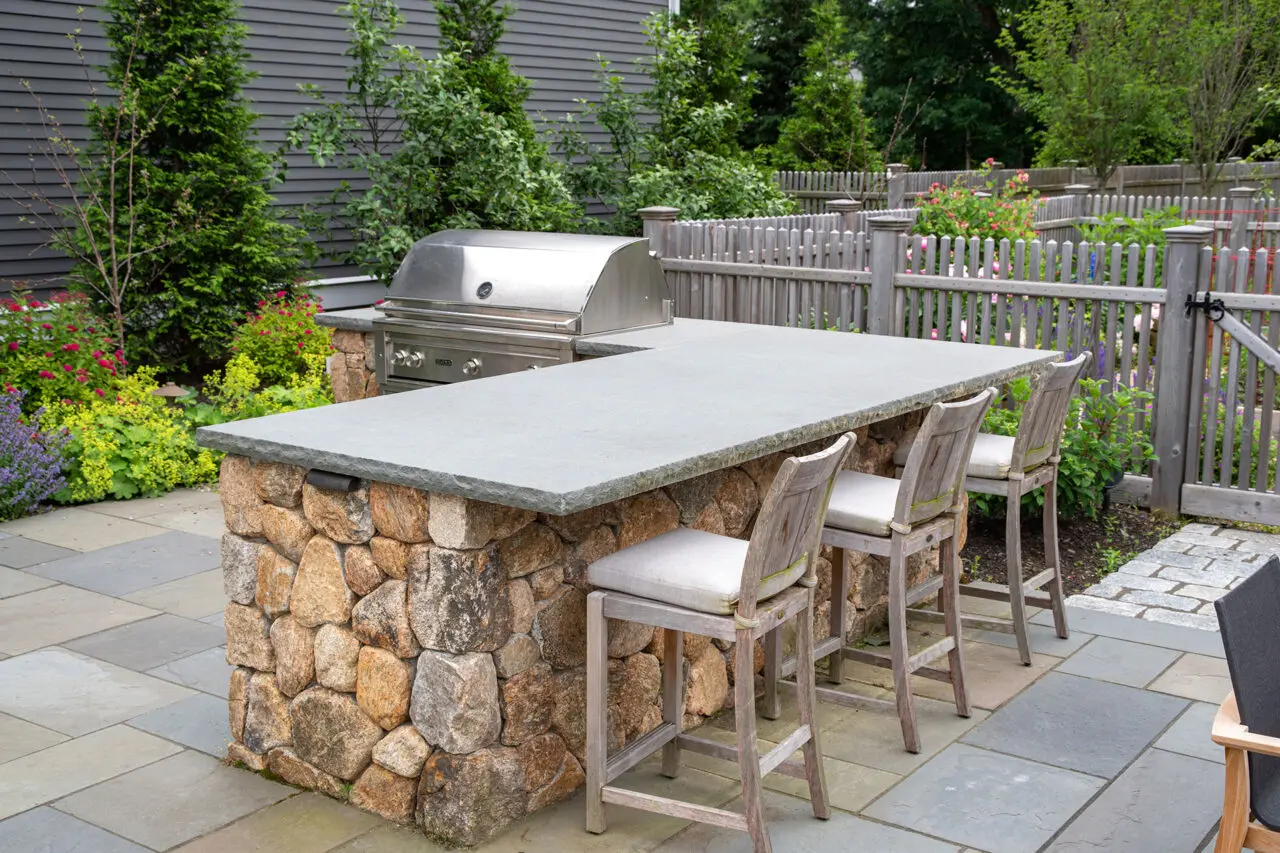
- integration with patios, retaining walls, outdoor kitchens, garden structures, and planting beds
- local permitting requirements, which vary by town
- landscape lighting for safety, atmosphere, and evening use
- safety requirements such as fencing, covers, gates, alarms, and code-compliant barriers
- long-term maintenance access for equipment, cleaning, planting, and masonry care
In Massachusetts, pool barrier and safety requirements are governed by state and local codes, and towns may have additional rules. Homeowners should consult their municipality early in the planning process so fencing, gates, setbacks, alarms, and covers can be addressed before design decisions become expensive to revise.
A well-coordinated design ensures the pool feels intentional and cohesive with the broader outdoor living space. It also helps prevent common problems such as awkward circulation, poor drainage, insufficient privacy, crowded patios, or equipment locations that interfere with the finished landscape.
Pros and Cons of Plunge Pools
| Pros | Cons |
|---|---|
|
|
Frequently Asked Questions
Q: How long does it take to install a plunge pool?
A: Fiberglass and modular pools can often be installed within a few weeks once permitting, design, and site preparation are complete. Custom concrete builds typically take 8 to 14 weeks, depending on complexity, weather, access, subcontractor scheduling, and site conditions.
Q: Are plunge pools usable in New England’s climate?
A: Yes. Many homeowners install heaters or combination heater-chiller systems to extend use from early spring through late fall. Some systems can also support cold-plunge functionality for recovery and wellness. Winterization, covers, and equipment protection should be part of the design plan.
Q: How deep are plunge pools?
A: Most plunge pools range from 4 to 7 feet deep, though custom concrete designs can vary depending on use, site conditions, seating, steps, and design goals.
Q: Do plunge pools require fencing?
A: In most Massachusetts towns, yes. Safety enclosures, alarms, gates, and barrier requirements depend on state and local building codes. Homeowners should consult their municipality before planning construction.
Q: Are plunge pools easier to maintain than regular pools?
A: Generally, yes. Because they hold less water, plunge pools often require fewer chemicals, less filtration, and lower energy use. They still need regular care, water balancing, cleaning, seasonal opening and closing, and periodic equipment maintenance.
Q: Can a plunge pool fit in a small backyard?
A: Often, yes. Plunge pools are specifically suited to smaller yards, courtyards, side yards, and compact outdoor living spaces. The key is careful planning so the pool, patio, circulation, planting, privacy, utilities, and safety barriers all work together.
Q: What makes a plunge pool feel high-end rather than simply small?
A: The surrounding landscape makes the difference. Natural stone coping, well-scaled patios, layered planting, integrated lighting, privacy screening, custom fencing, and clean circulation can make a compact plunge pool feel intentional, architectural, and fully connected to the home.
Plunge Pool Resources
- A Buyer’s Guide to Prefab Plunge Pools – This Old House
- What You Should Know Before Putting In a Plunge Pool – Better Homes & Gardens Real Estate
- Remodeling Impact Report: Outdoor Features – National Association of REALTORS®
- Massachusetts State Building Code, 780 CMR – Mass.gov
- What Is a Plunge Pool? Size, Cost and More – The Spruce
Ready to Explore a Plunge Pool for Your Property?
A well-designed plunge pool can bring structure, beauty, and everyday enjoyment to your backyard, especially when it is planned as part of a cohesive landscape. From placement and grading to stonework, planting, lighting, privacy, and long-term care, the right design team can help ensure the finished space feels refined, functional, and fully integrated with your property.
If you are considering a plunge pool for your Boston-area home, contact the a Blade of Grass team to schedule a free consultation and start exploring what is possible.