A thinning or bare slope can be difficult to plant well. Rain carries soil and mulch downhill, turf struggles to establish, and exposed roots become more noticeable after every storm. Even when the slope is stable, choosing plants for it is rarely as simple as selecting a fast-growing ground cover.
The best plants for erosion control in Massachusetts depend on the conditions found across the slope. A sunny bank with sandy soil in Sudbury needs a different plant community than a shaded hillside in Brookline, a damp low area in Concord, or an exposed coastal slope on Cape Cod.
This guide focuses specifically on planting fundamentally stable residential slopes. It explains how to select ground covers, grasses, perennials, and shrubs based on sunlight, soil moisture, exposure, and maintenance needs.
If the hillside is actively moving, deeply eroded, or carrying concentrated runoff, start with our broader guide to landscape design for sloped yards in Greater Boston. Those conditions usually need drainage, grading, or structural planning before planting begins.
Key Takeaways
- Combine ground covers, grasses, perennials, and shrubs instead of relying on one plant.
- Match plants to the slope’s sunlight, moisture, soil, exposure, and deer pressure.
- Roots and foliage help slow runoff, soften rainfall, and hold surface soil.
- Sunny, shaded, wet, and coastal slopes each need a different plant palette.
- New plantings may need erosion-control fabric and temporary irrigation while establishing.
- Plants alone cannot correct concentrated runoff, unstable soil, or severe erosion.
Why a Mixture of Plants Controls Erosion Better
Plants protect a slope in several ways. Foliage softens the impact of rain before it reaches the ground. Stems and accumulated plant material slow water moving across the surface. Roots help hold the upper layers of soil together.
The Massachusetts Office of Coastal Zone Management explains that plants help prevent erosion by “shielding the ground from rainfall and stabilizing soils with their roots.” Its guidance on vegetated buffers recommends combining trees, shrubs, grasses, perennials, and other plants to provide more opportunities to slow and absorb water.
A single ground cover may eventually hide bare soil, but it gives the planting only one root structure, one mature height, and one response to difficult weather. If that plant struggles, the whole slope can begin to open up again.
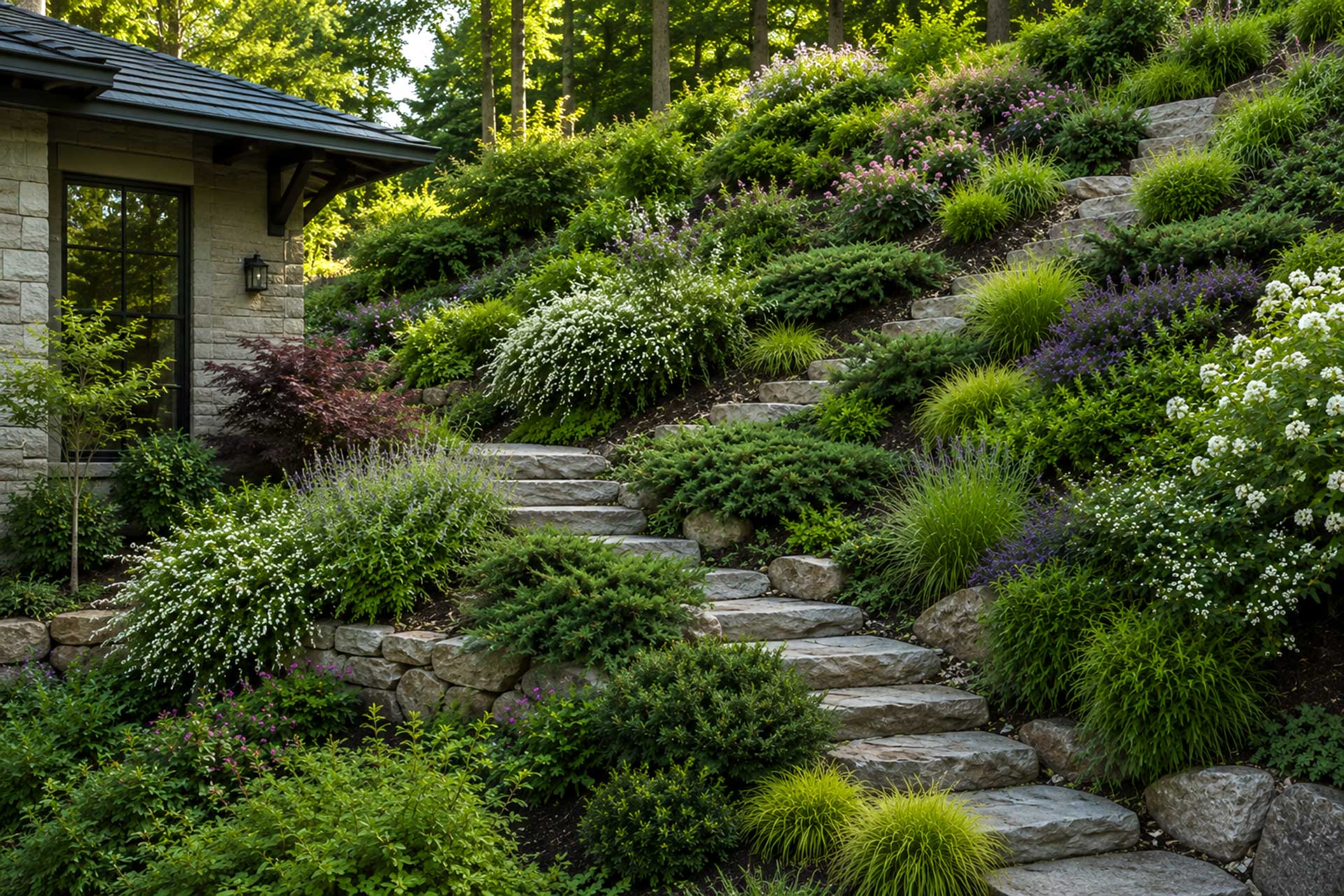
A mixed planting creates several useful layers:
- Ground covers and sedges protect soil close to the surface.
- Grasses and perennials add fibrous roots, foliage density, and seasonal interest.
- Spreading shrubs provide larger root systems and more substantial year-round structure.
- Selected taller shrubs connect the slope to the larger landscape and reduce the visual expanse of the hill.
This approach also looks more intentional. Broad groups of repeated plants can turn an awkward bank into a designed garden that changes through the seasons.
Match the Plants to the Slope
The upper and lower portions of a hillside often have different growing conditions. Soil at the top may drain quickly and become dry, while the base receives runoff and stays moist. Sun exposure, mature trees, stone walls, and nearby buildings can create additional microclimates.
Before developing the plant list, evaluate four basic conditions.
Sunlight and Slope Direction
South- and west-facing slopes usually receive stronger afternoon sun and lose moisture quickly. Plants here need to tolerate heat, dry soil, and winter exposure.
North- and east-facing slopes tend to be cooler. They may remain shaded for much of the day and hold moisture longer in spring.
Evaluate sunlight after nearby deciduous trees have leafed out. A hillside that appears sunny in March can become heavily shaded by June.
Soil Moisture
Look at how quickly the soil dries after rain. A plant that tolerates moist soil may still fail in continuously saturated ground, while a drought-tolerant plant can struggle at the bottom of a hill where water collects.
If water flows onto the slope from a downspout, driveway, road, or neighboring grade, correct or disperse that concentrated runoff first. Our guide to landscape drainage solutions for Massachusetts properties explains how to identify the source of runoff before selecting a solution.
Soil Type and pH
Massachusetts properties can contain compacted clay, sandy fill, shallow ledge, acidic woodland soil, or several of these conditions within one yard.
A soil test before planting can identify pH, organic matter, and nutrient conditions. Physical observation is equally important because a laboratory test will not fully explain compaction, drainage, soil depth, or buried construction material.
Maintenance Access
A hillside that is difficult to reach will also be difficult to water, weed, prune, and inspect. Plants should eventually reduce maintenance, but they will need regular attention during establishment.
Consider how a gardener will move through the area without stepping between young plants or loosening the soil. A narrow access route or a few discreet stepping stones can make early maintenance safer without turning the project into a larger circulation redesign.
Ask an Expert: Which Native Plants Will Thrive on My Weston Property?
Best Plants for a Sunny, Dry Slope in Massachusetts
Hot, exposed slopes need plants that tolerate summer heat and rapid drainage. Low ground covers can protect the soil surface, while grasses and shrubs add deeper structure.
Bearberry
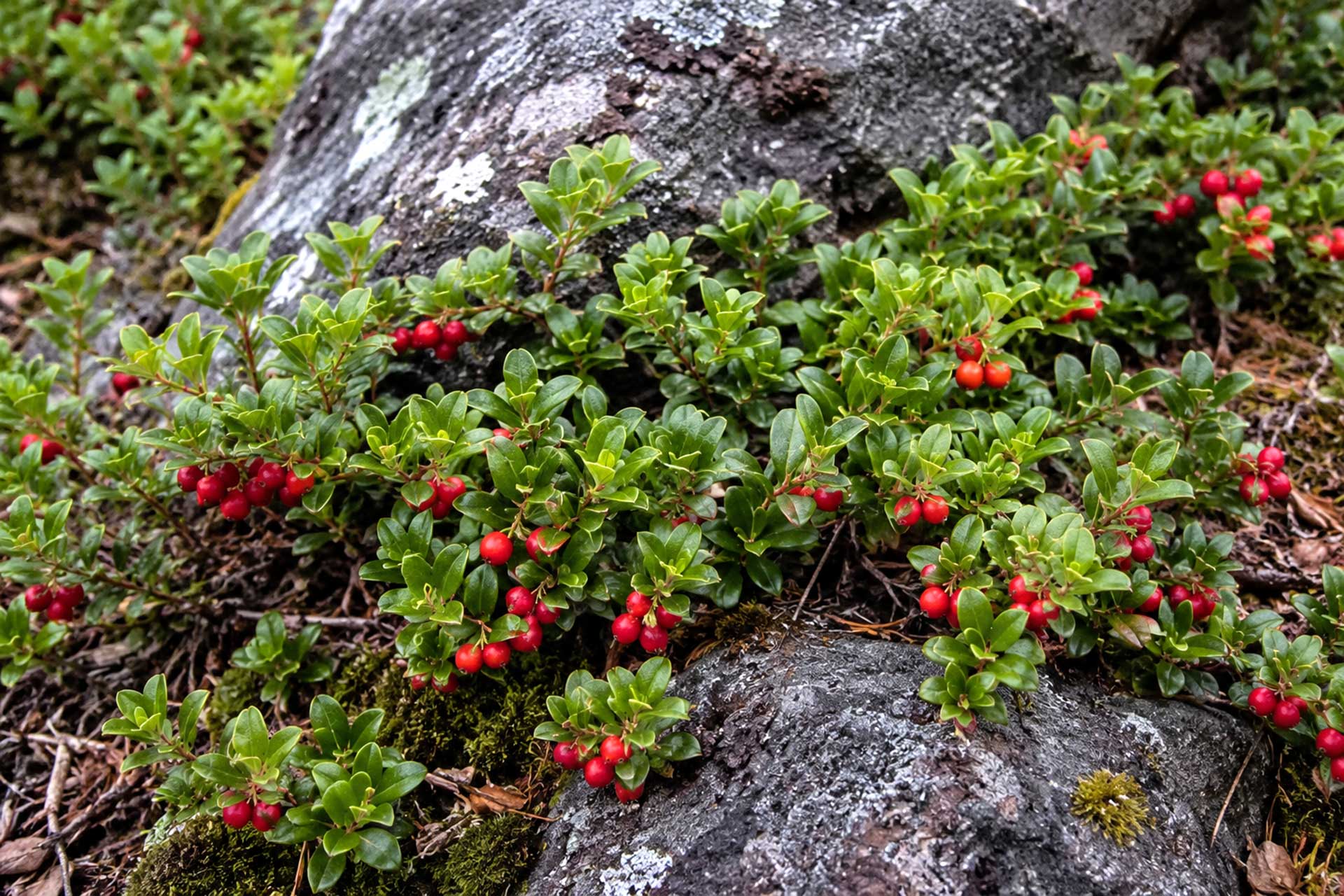
Bearberry (Arctostaphylos uva-ursi) is a low evergreen native that spreads gradually through sandy, gravelly, or rocky soil. It offers small flowers, red fruit, and year-round foliage.
Bearberry performs best in acidic, well-drained soil. It dislikes heavy clay, excess fertilizer, and persistently wet conditions, so it should not be treated as a universal ground cover.
Little Bluestem
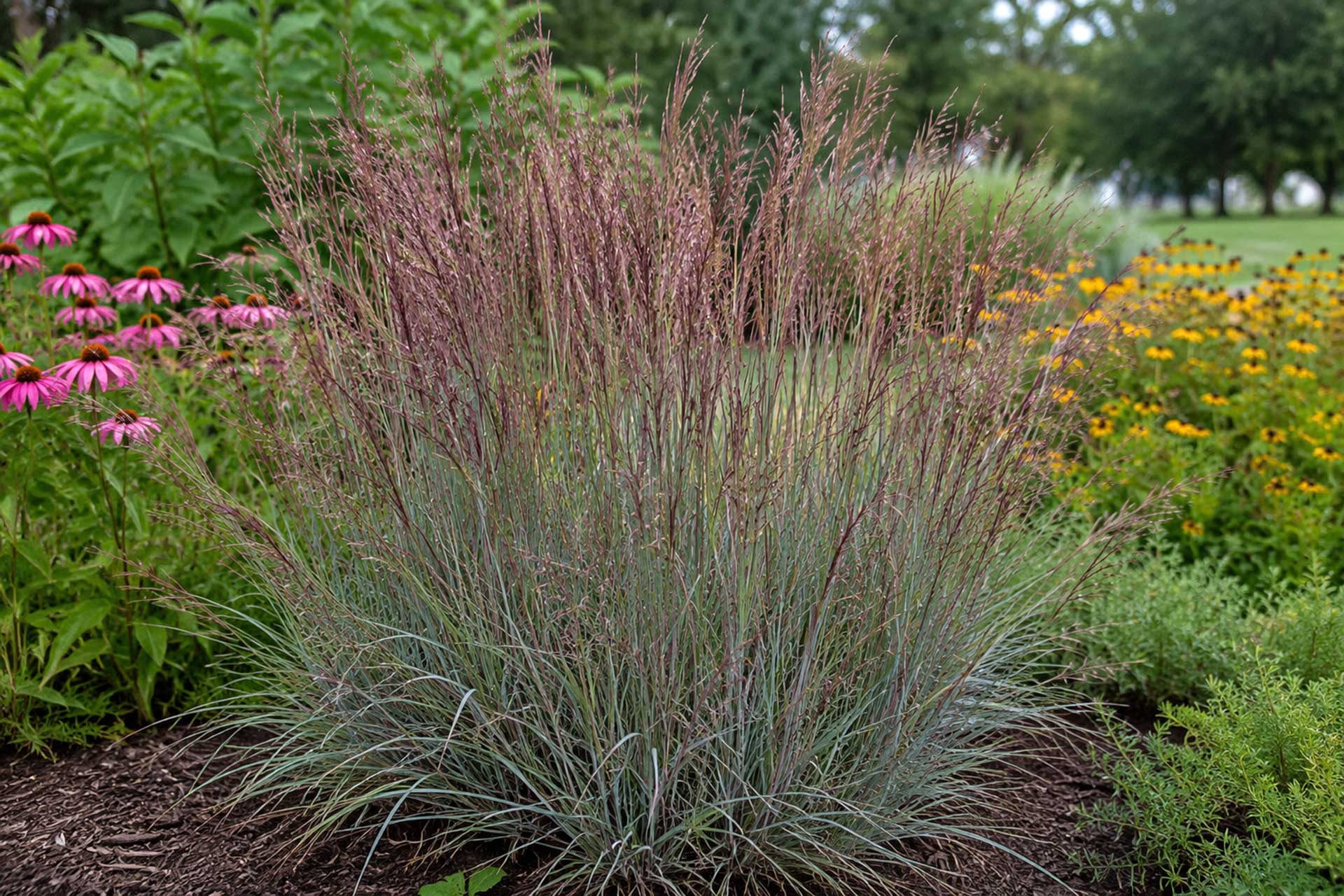
Little bluestem (Schizachyrium scoparium) is a warm-season native grass with a dense, fibrous root system. Its upright foliage turns copper and bronze in fall and remains attractive into winter.
Rather than scattering individual grasses, use little bluestem in repeated groups. The resulting masses create stronger visual rhythm and more continuous soil coverage.
Sweetfern
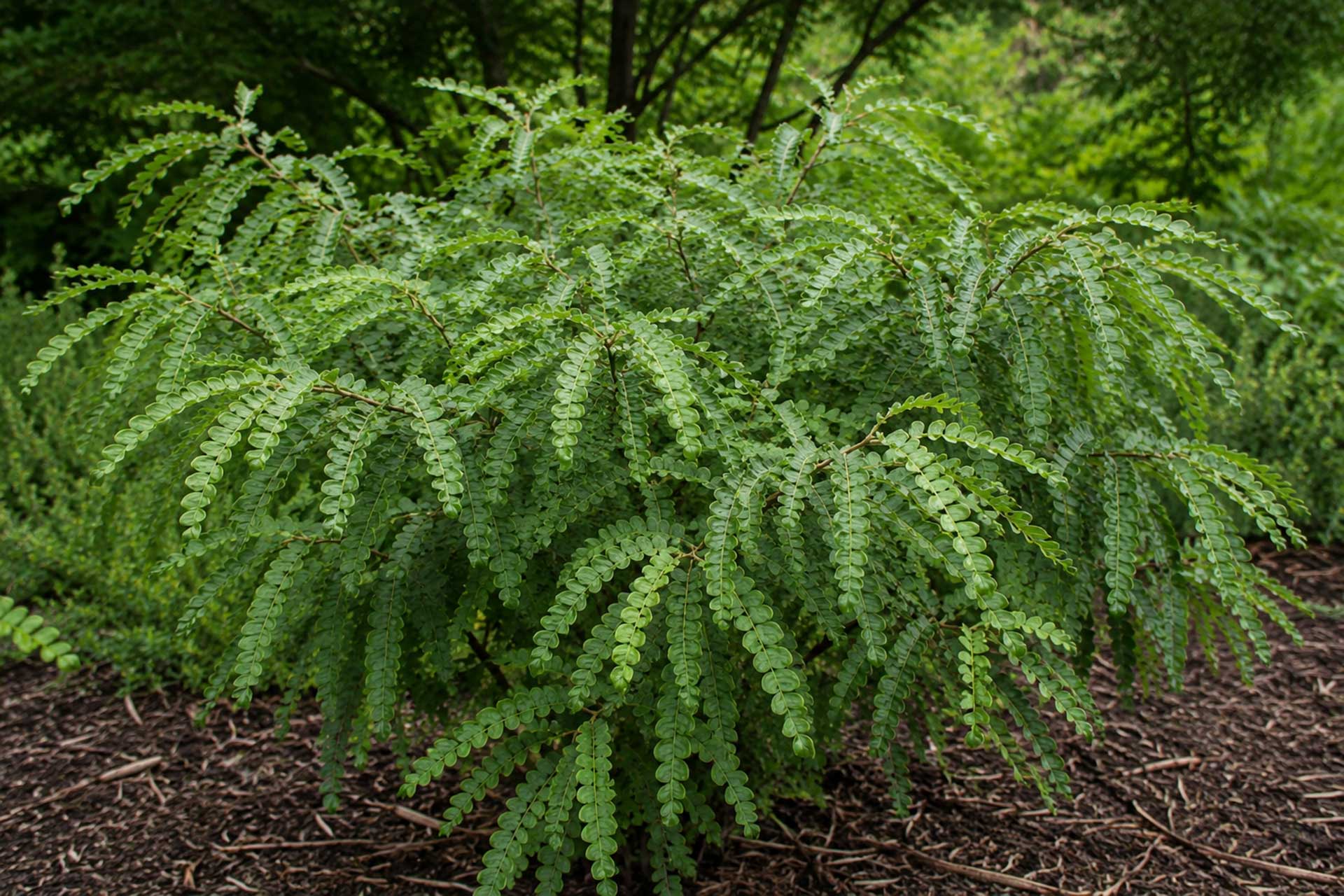
Sweetfern (Comptonia peregrina) is a spreading native shrub with aromatic foliage. It tolerates dry, acidic, nutrient-poor soil and works particularly well on naturalistic banks and woodland edges.
Its loose habit may look out of place in a tightly formal bed, but it is valuable where a relaxed, colony-forming shrub can have room to spread.
Lowbush Blueberry
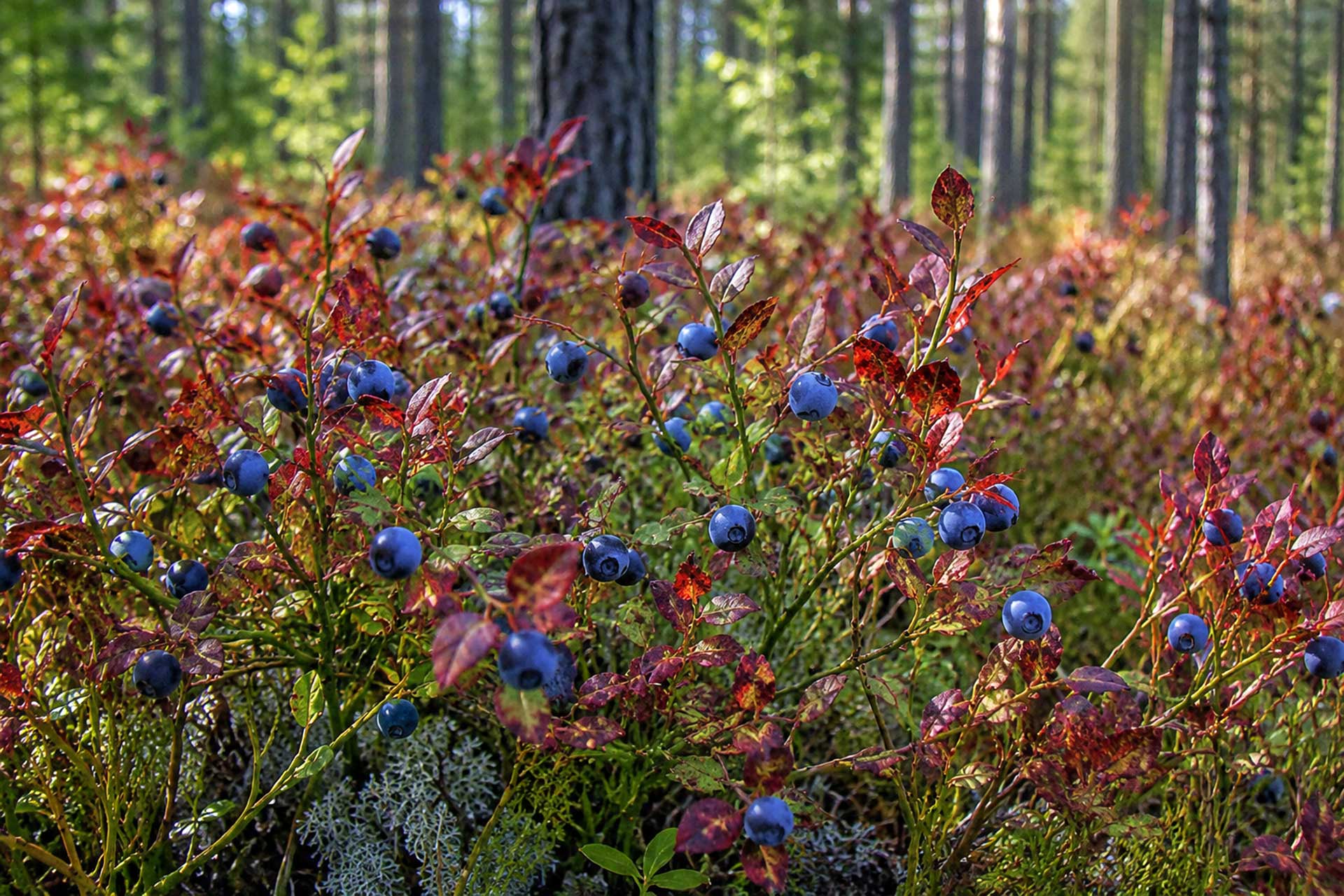
Lowbush blueberry (Vaccinium angustifolium) forms a low colony in acidic, well-drained soil. It offers spring flowers, summer fruit, and red fall color.
This is a particularly useful plant where homeowners want a native ground layer with more seasonal interest than a conventional evergreen ground cover.
Common Juniper
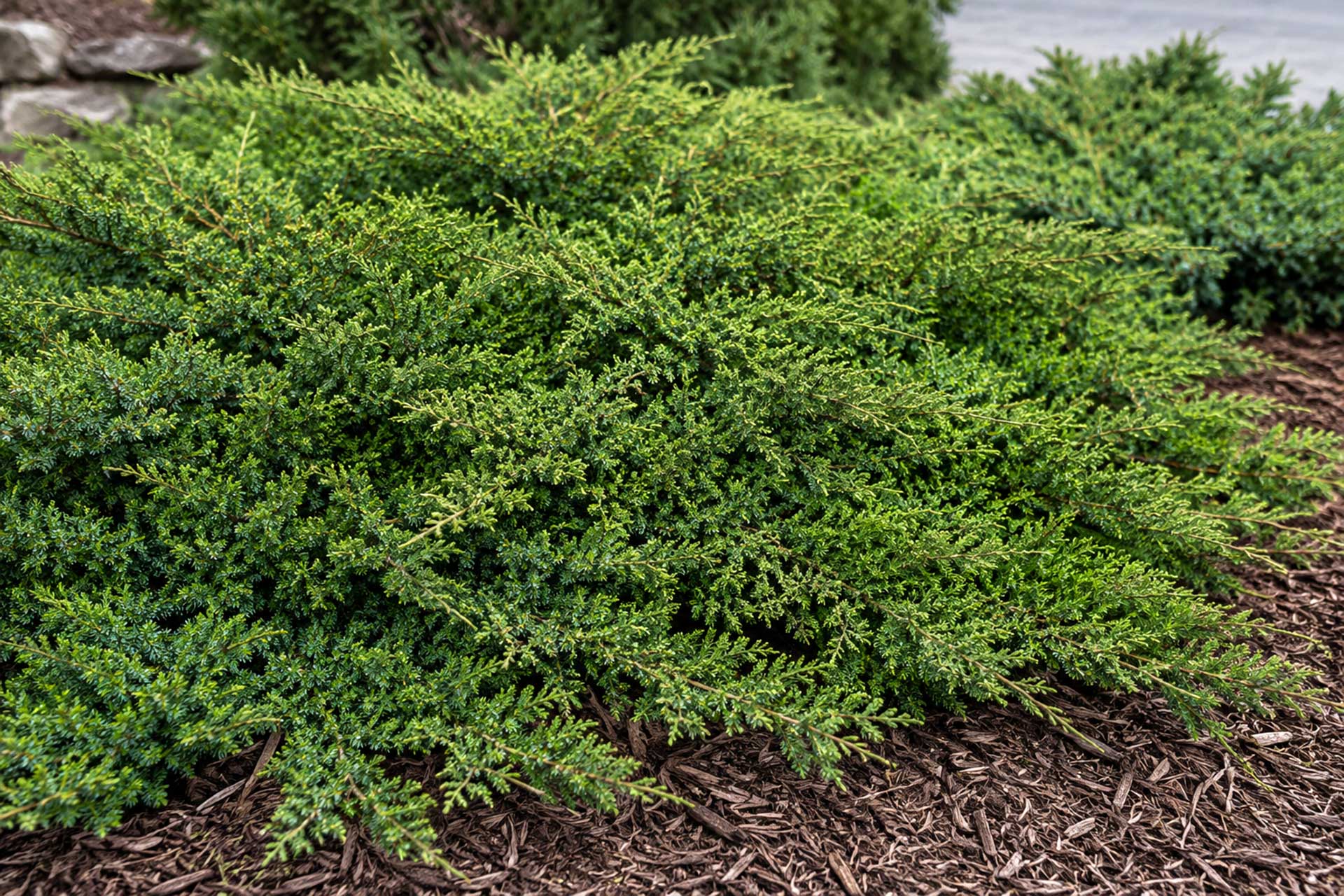
Common juniper (Juniperus communis) provides evergreen coverage and performs well in exposed, freely draining conditions. Available forms vary in height and spread, making cultivar selection important.
Junipers should have enough air circulation and should not be crowded into damp, heavily irrigated soil.
Purple Lovegrass
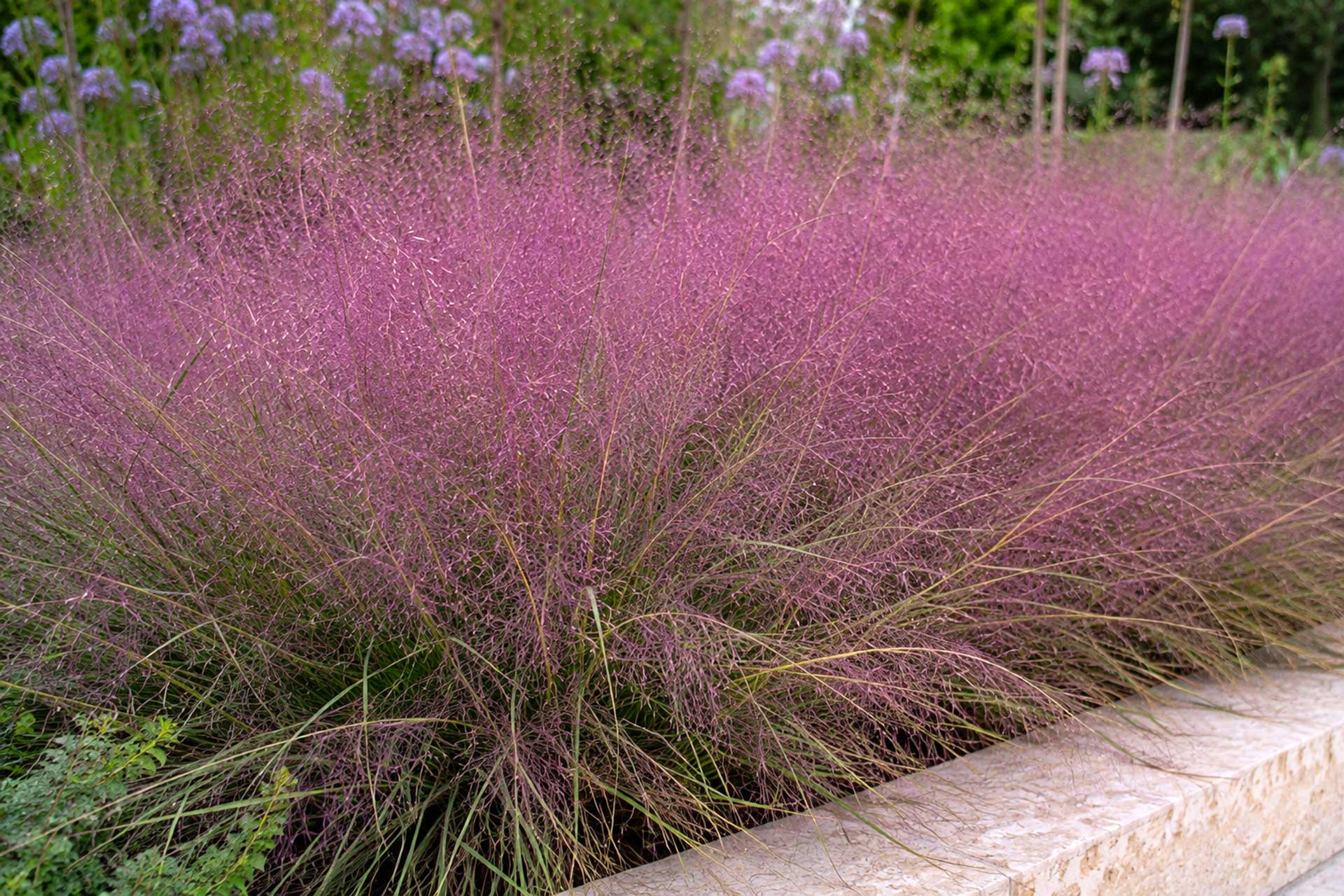
Purple lovegrass (Eragrostis spectabilis) is a low native grass with airy reddish-purple flowers in late summer. It performs well in sunny, dry soil and looks most convincing when planted in broad groups.
Because its foliage is relatively low, combine it with more substantial grasses or shrubs when the slope needs stronger year-round structure.
New England Aster
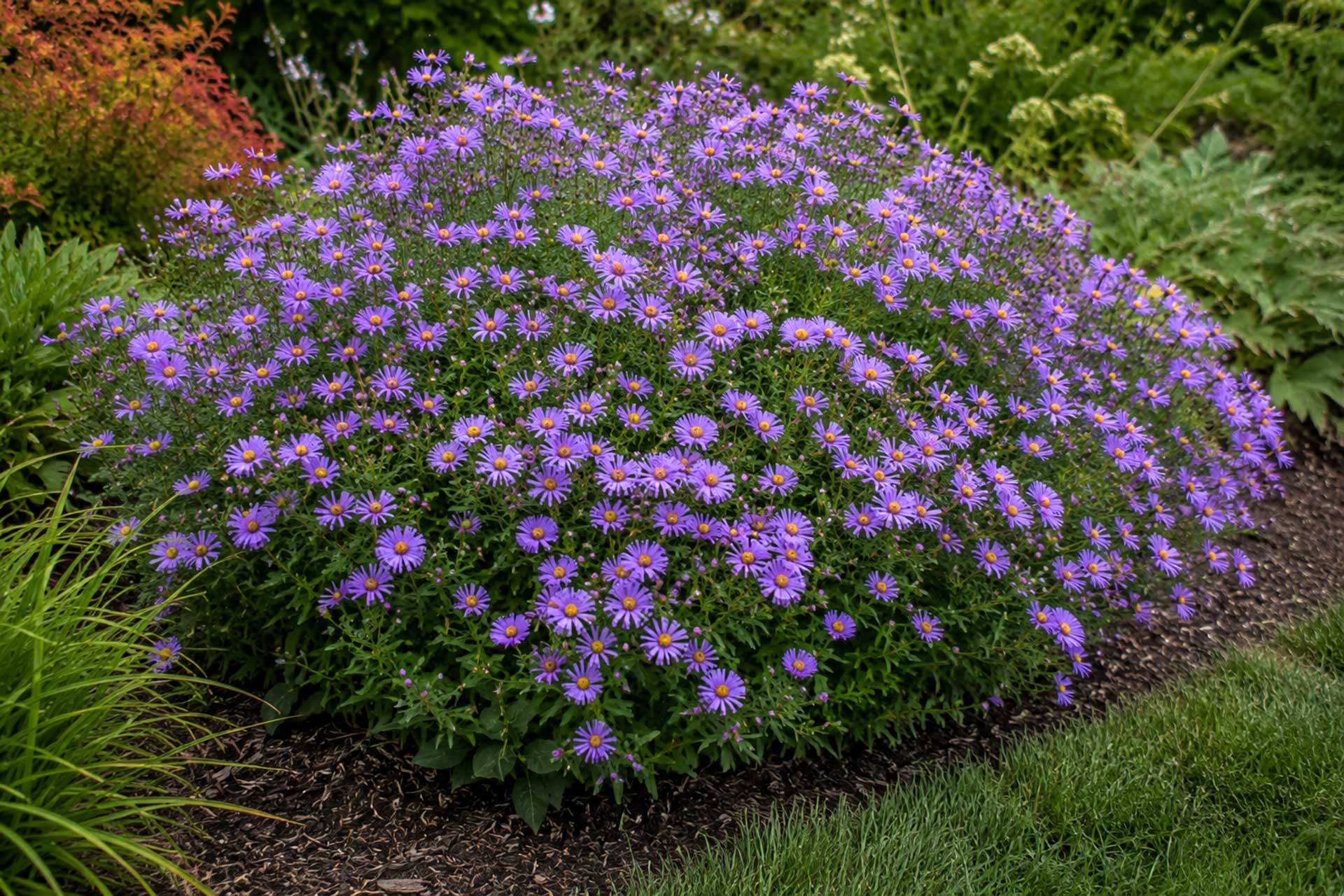
New England aster (Symphyotrichum novae-angliae) adds late-season flowers and pollinator value. Its height makes it better suited to the middle or upper portions of a mixed slope than the edge of a path.
Use it as a seasonal accent among grasses and shrubs rather than expecting it to function as the primary ground stabilizer.
Best Plants for a Shaded Slope
Shaded slopes are often found below mature trees or beside older Greater Boston homes. These areas may have limited sunlight, root competition, and soil that is either consistently moist or surprisingly dry.
Our guide to native ground covers for shade in Boston-area landscapes explores the differences between dry shade, moist shade, and areas beneath mature trees.
Pennsylvania Sedge
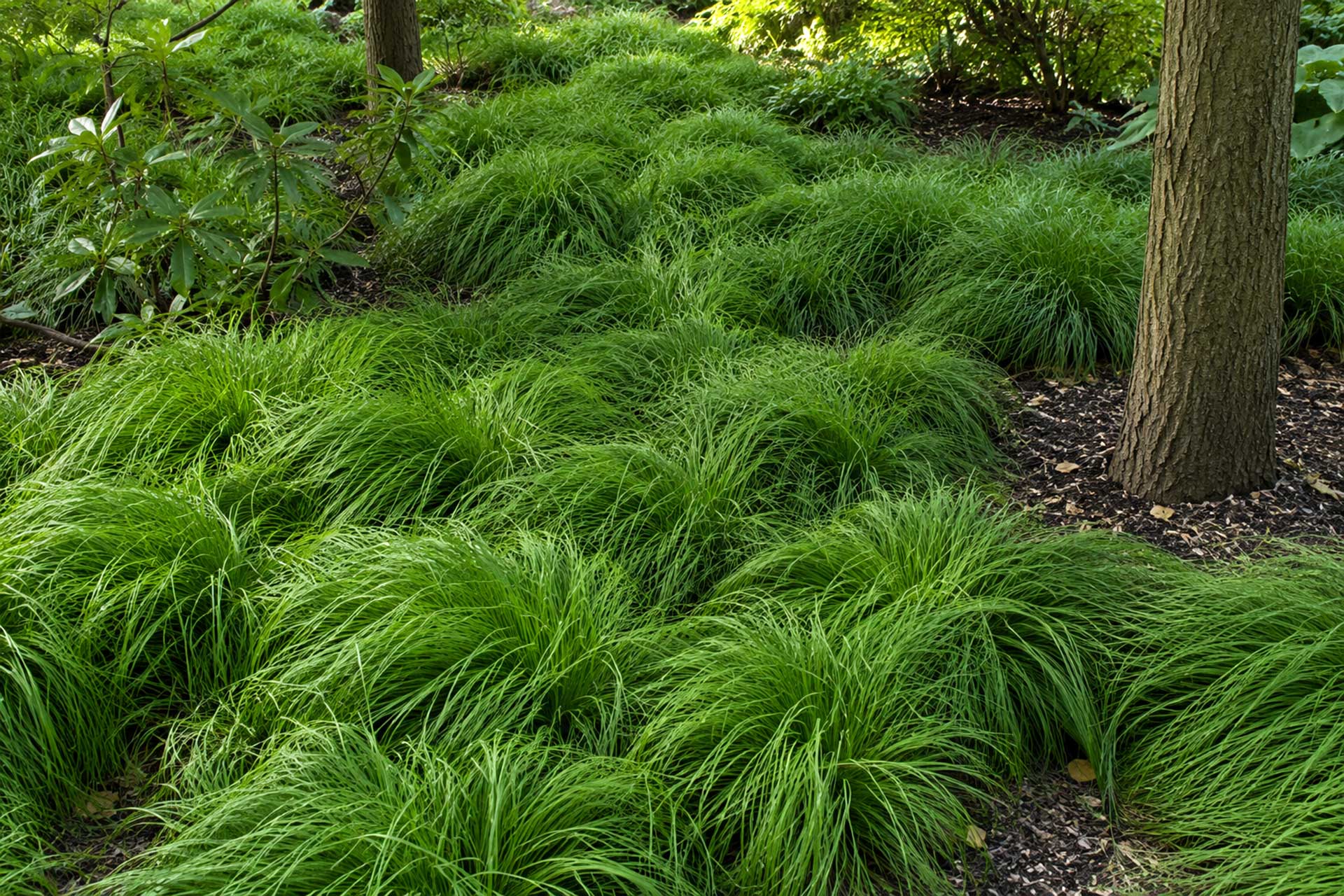
Pennsylvania sedge (Carex pensylvanica) creates soft, grass-like colonies in dry to moderately moist shade. It works particularly well beneath deciduous trees where conventional turf becomes thin.
Planting it as closely spaced plugs allows the sedge to form a continuous matrix while preserving a natural woodland character.
Foamflower
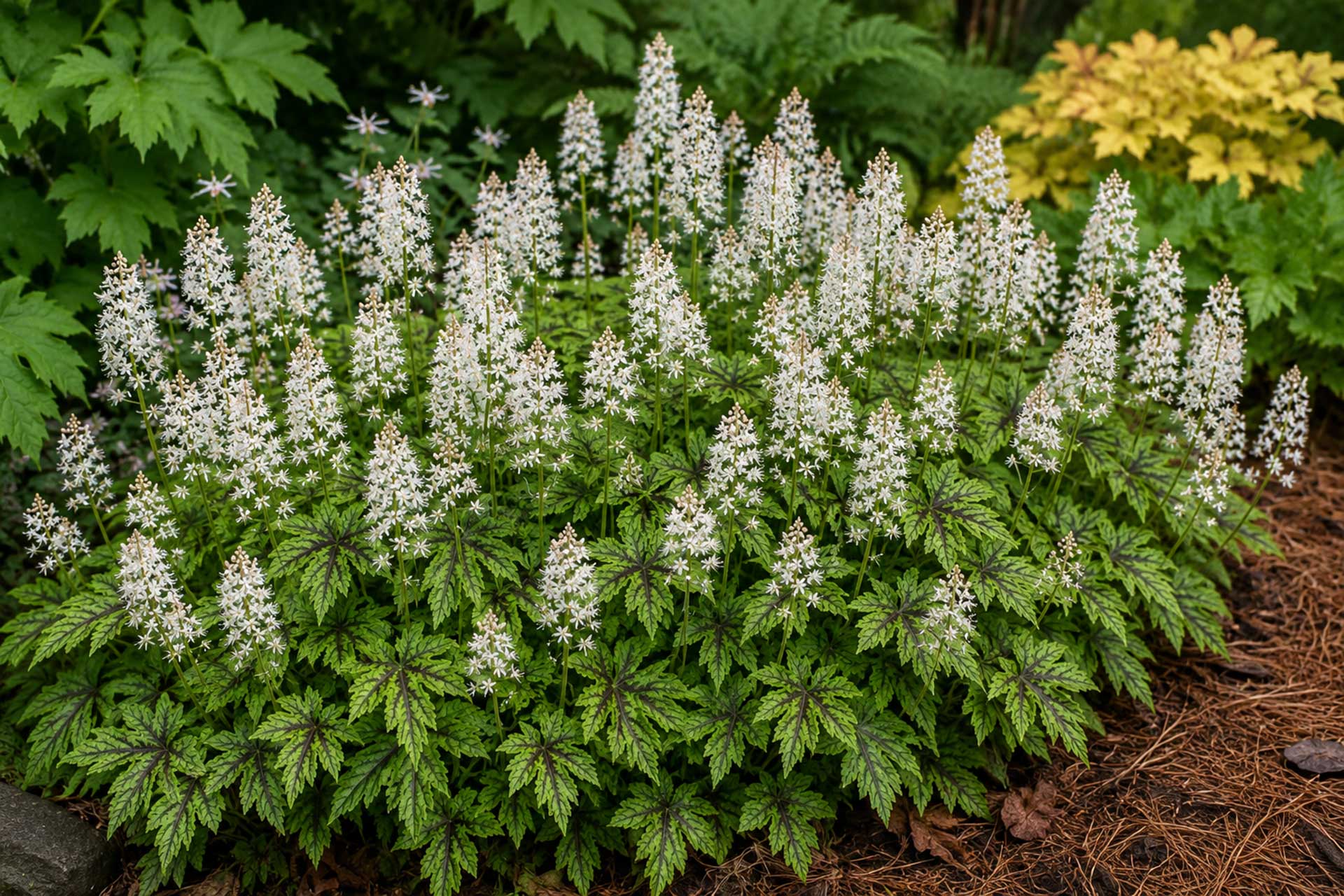
Foamflower (Tiarella cordifolia) is a spreading native perennial with attractive leaves and light spring flowers. It prefers part shade, organic soil, and consistent moisture.
Foamflower is useful among ferns and sedges, where its broad leaves contrast with finer foliage.
Wild Ginger
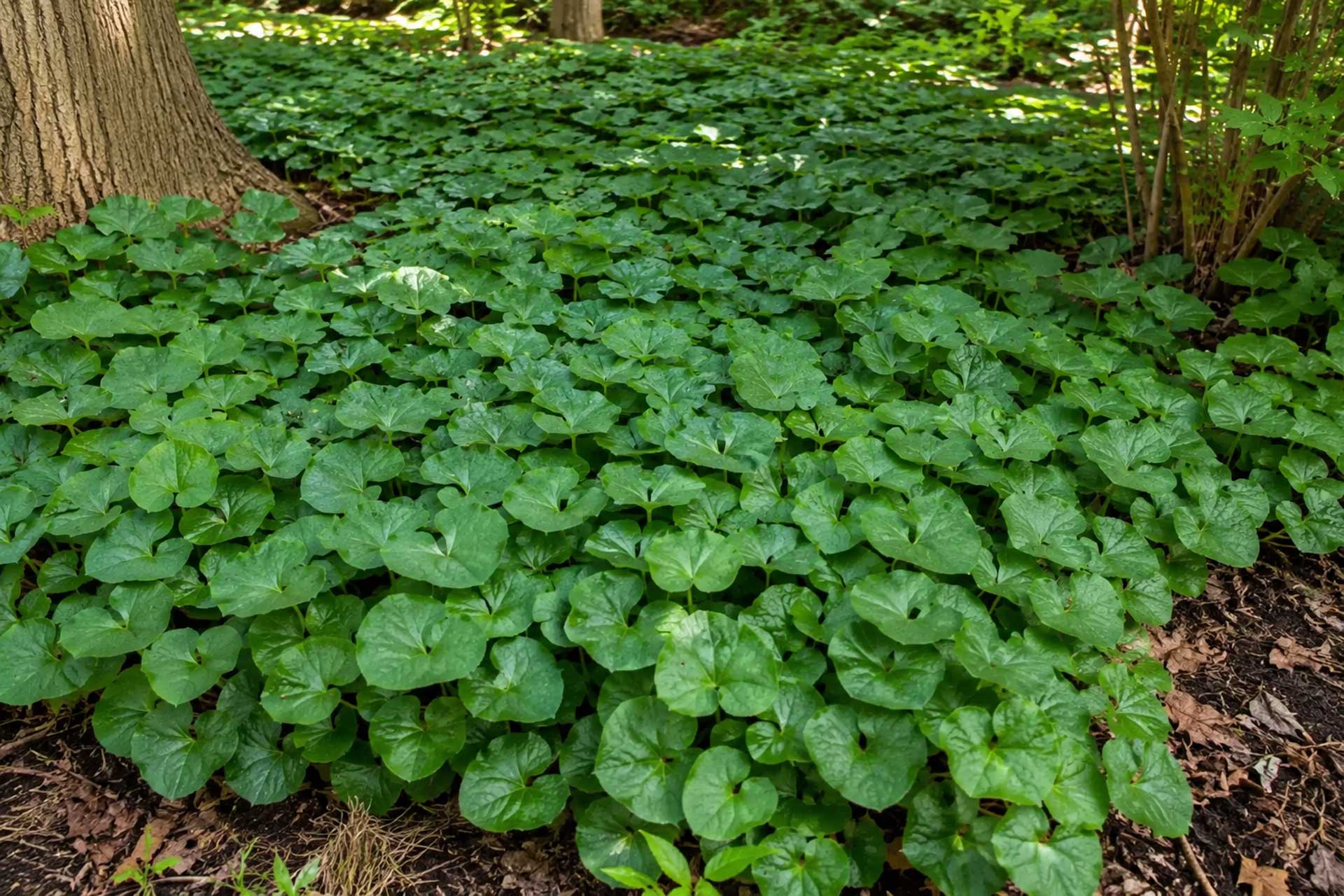
Wild ginger (Asarum canadense) creates a low ground layer in moist woodland conditions. Its broad leaves cover exposed soil effectively once the plant establishes.
It is not suited to sunny, drought-prone banks. Reserve it for protected slopes with shade and dependable moisture.
Christmas Fern
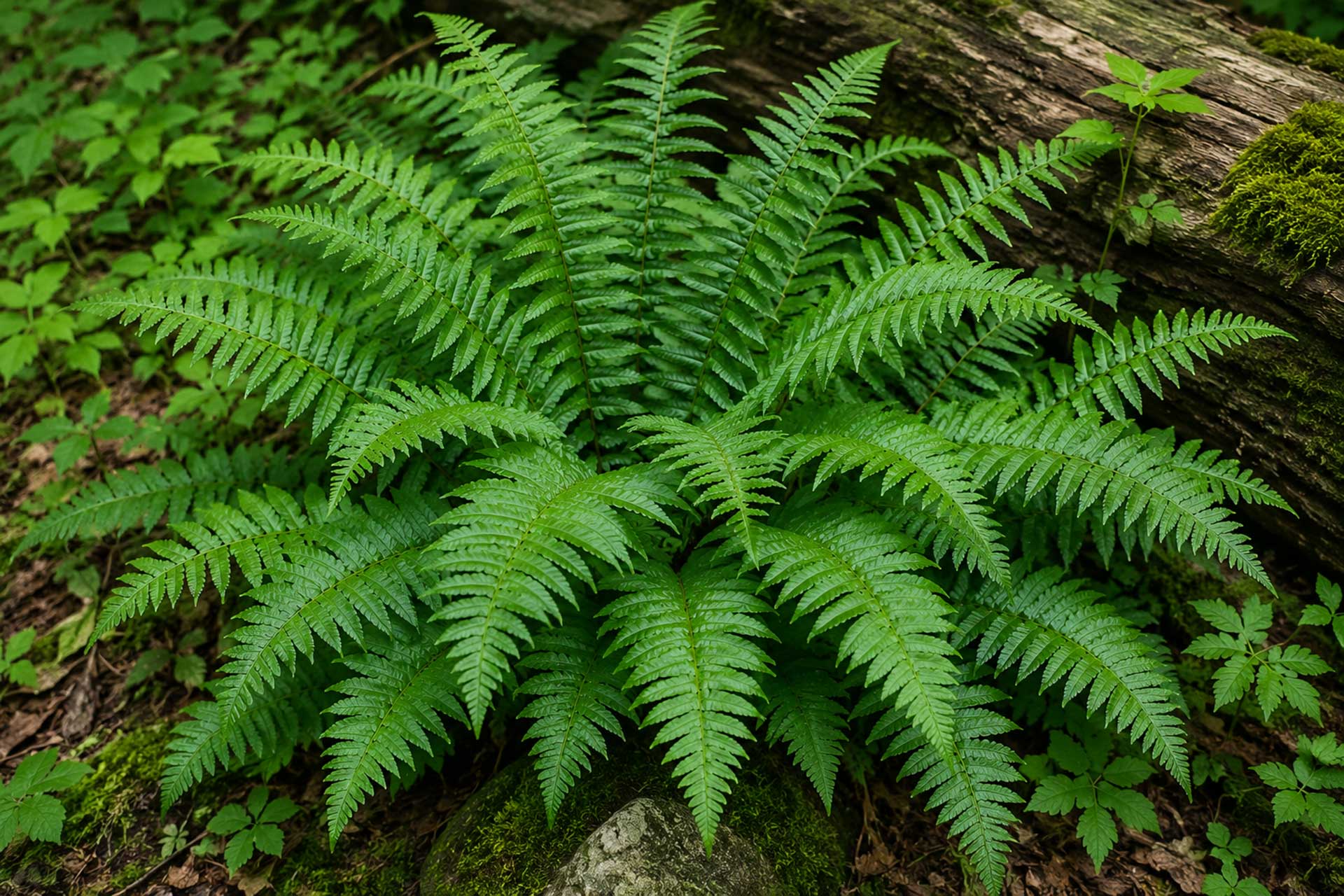
Christmas fern (Polystichum acrostichoides) is an evergreen native fern that tolerates shaded, well-drained woodland conditions. It grows in clumps rather than spreading rapidly, so it works best as part of a mixture.
Combine it with Pennsylvania sedge, foamflower, wild ginger, or low shrubs to create more complete soil coverage.
Hay-Scented Fern
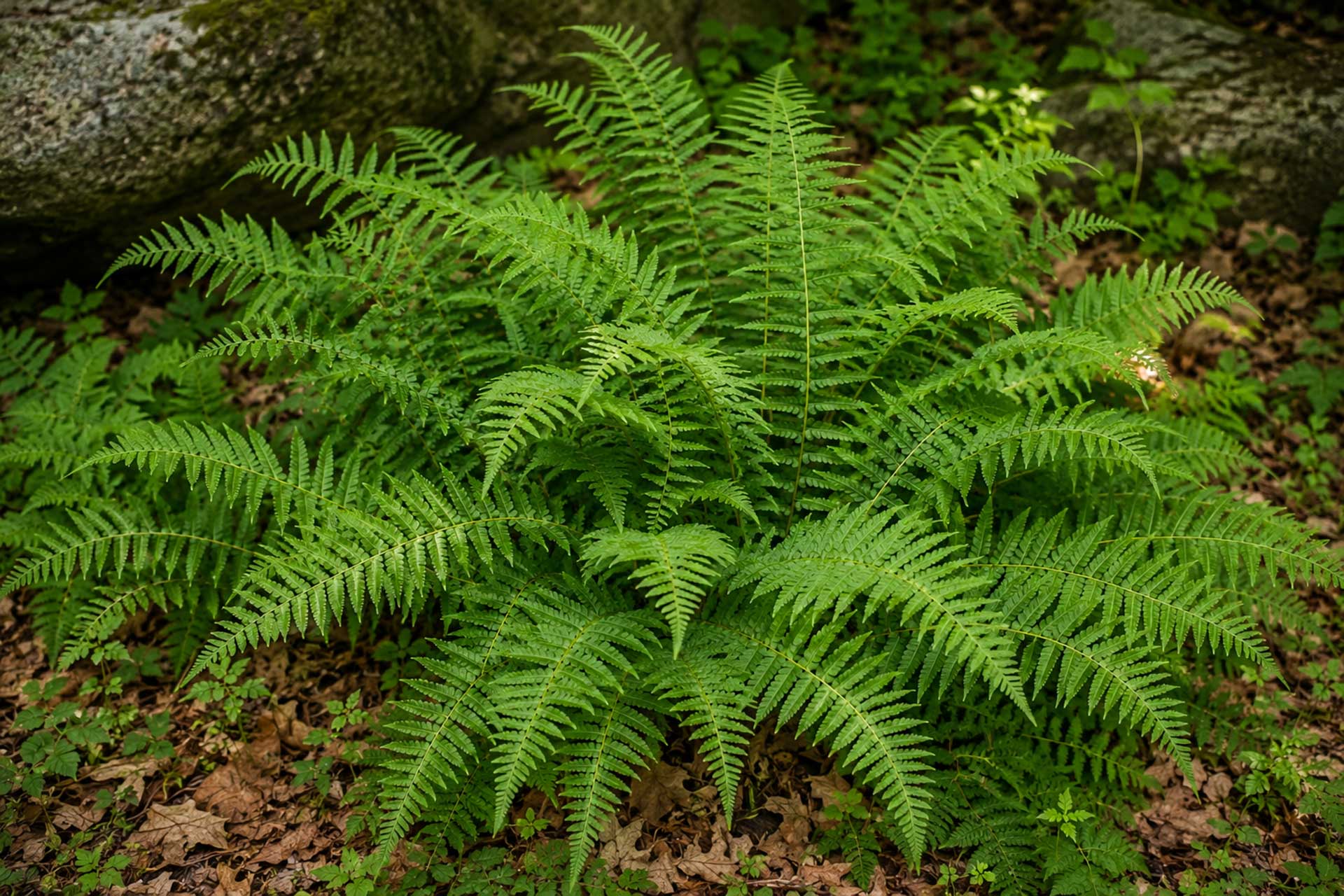
Hay-scented fern (Dennstaedtia punctilobula) spreads readily and can cover a large woodland bank. This vigor makes it useful on informal slopes, but it can overwhelm less assertive plants.
It is generally better suited to expansive naturalistic areas than small, carefully detailed garden beds.
Arrowwood Viburnum
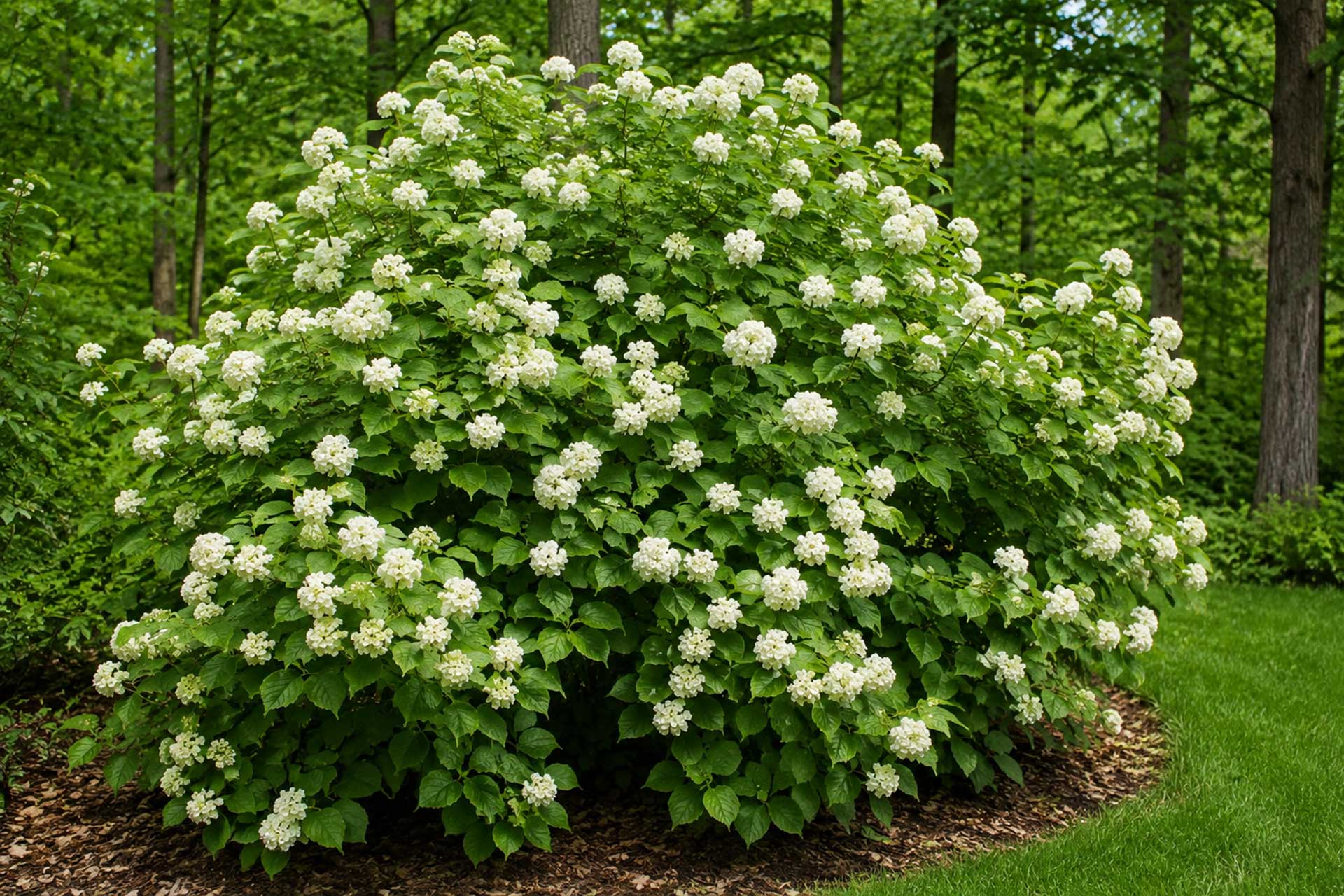
Arrowwood viburnum (Viburnum dentatum) adds shrub-level structure, spring flowers, fruit, and fall color. It tolerates a range of soil and light conditions.
Deer may browse viburnums heavily on some Massachusetts properties, particularly while the plants are young. Protection or an adjusted plant palette may be necessary.
Best Plants for a Moist Slope or the Bottom of a Hill
The base of a slope frequently receives more moisture than the upper bank. Plants in this zone may need to tolerate periodic wetness followed by drier summer conditions.
Standing water that remains for several days may indicate compacted soil, a high water table, failed drainage infrastructure, or concentrated runoff. Wet-tolerant plants can work with seasonal moisture, but they should not be used to conceal a drainage problem.
Switchgrass
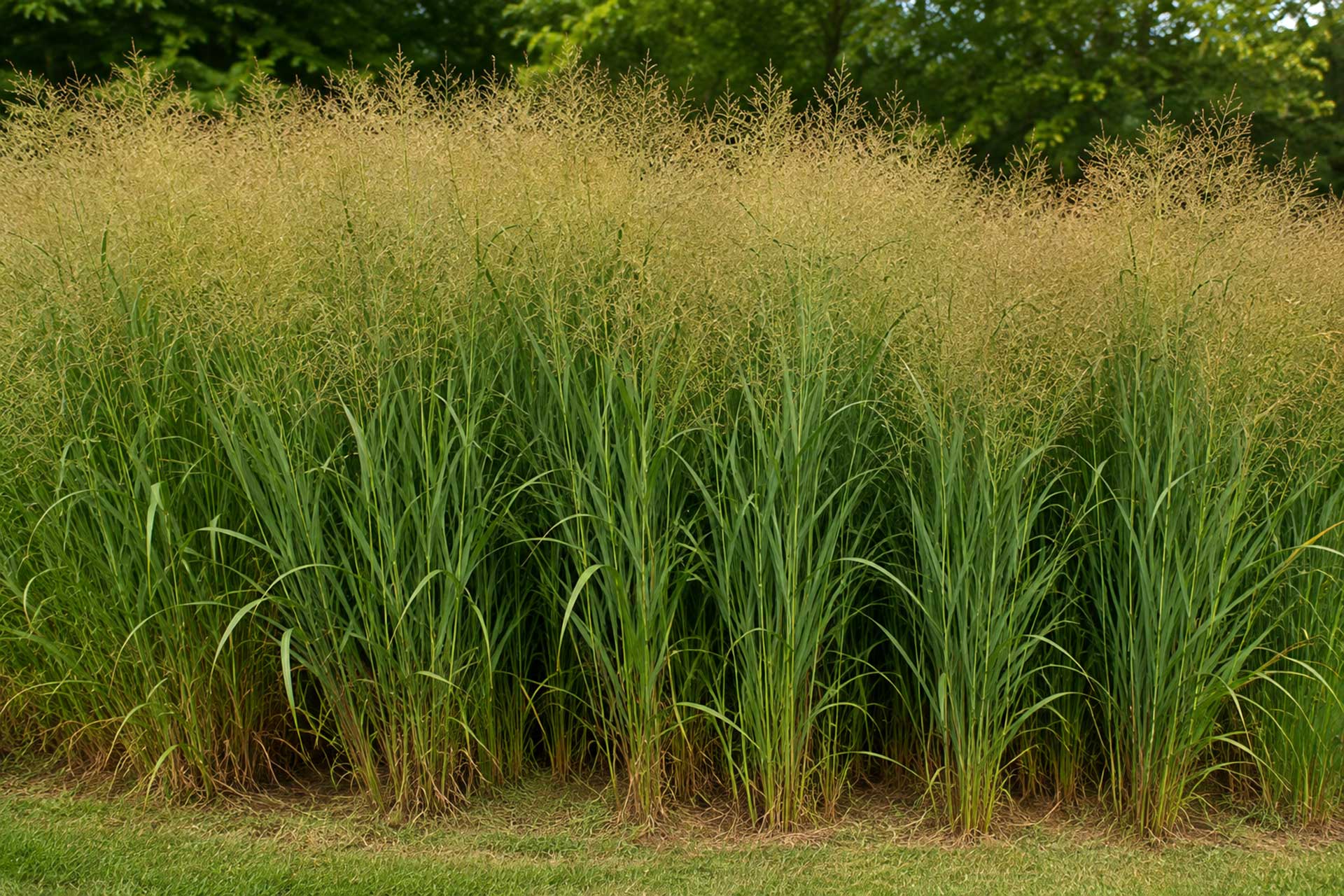
Switchgrass (Panicum virgatum) is a native warm-season grass with an extensive fibrous root system. It tolerates periodic moisture and summer dryness once established.
Cultivars vary from compact forms to grasses several feet tall. Choose one that fits the scale of the slope and will not block windows, paths, or views.
Red Chokeberry
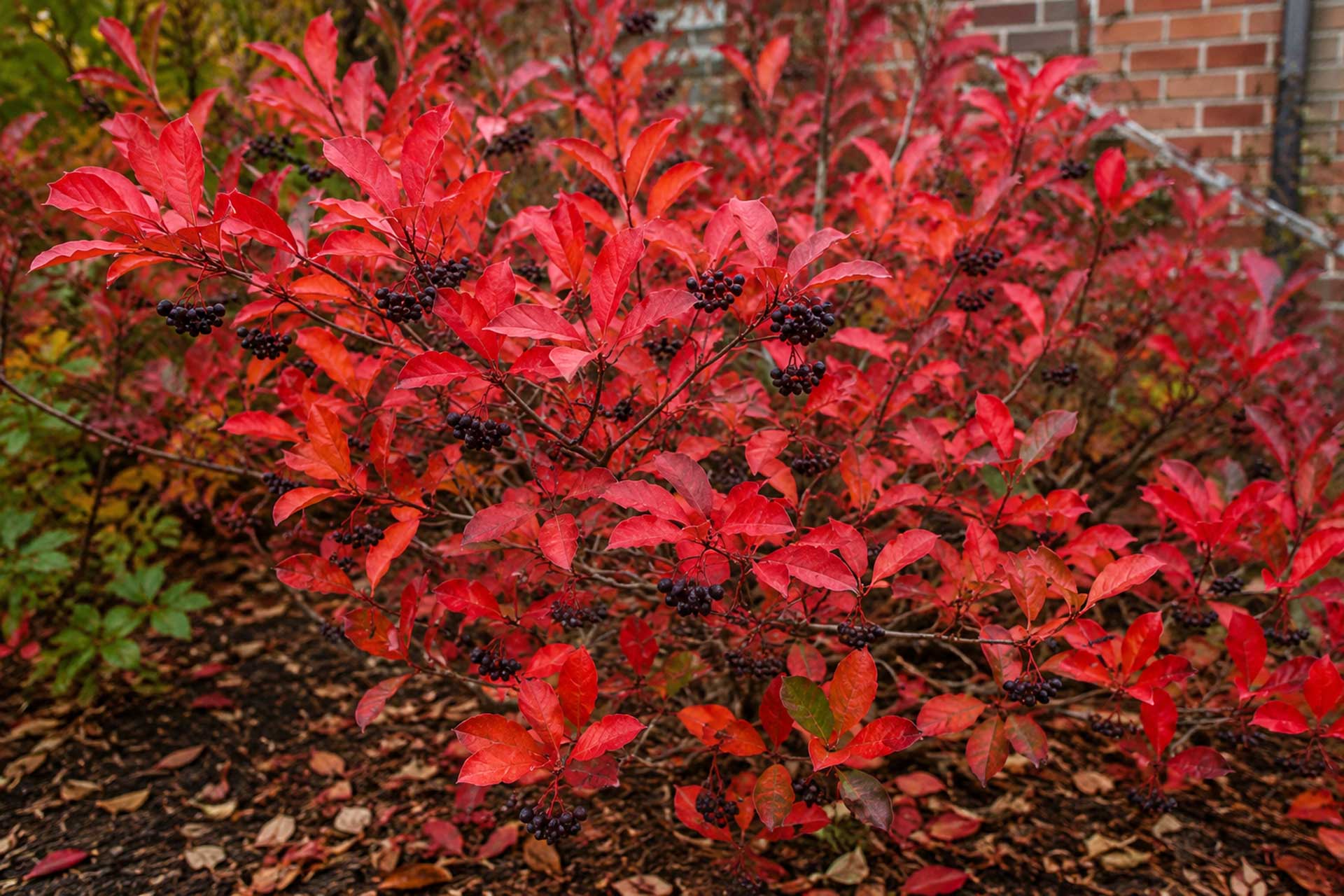
Red chokeberry (Aronia arbutifolia) is a suckering native shrub that tolerates moist soil. It offers spring flowers, persistent red fruit, and vivid autumn color.
Its spreading habit is an advantage on a larger slope but requires enough room. It is less appropriate where the planting must remain within a tight boundary.
Winterberry
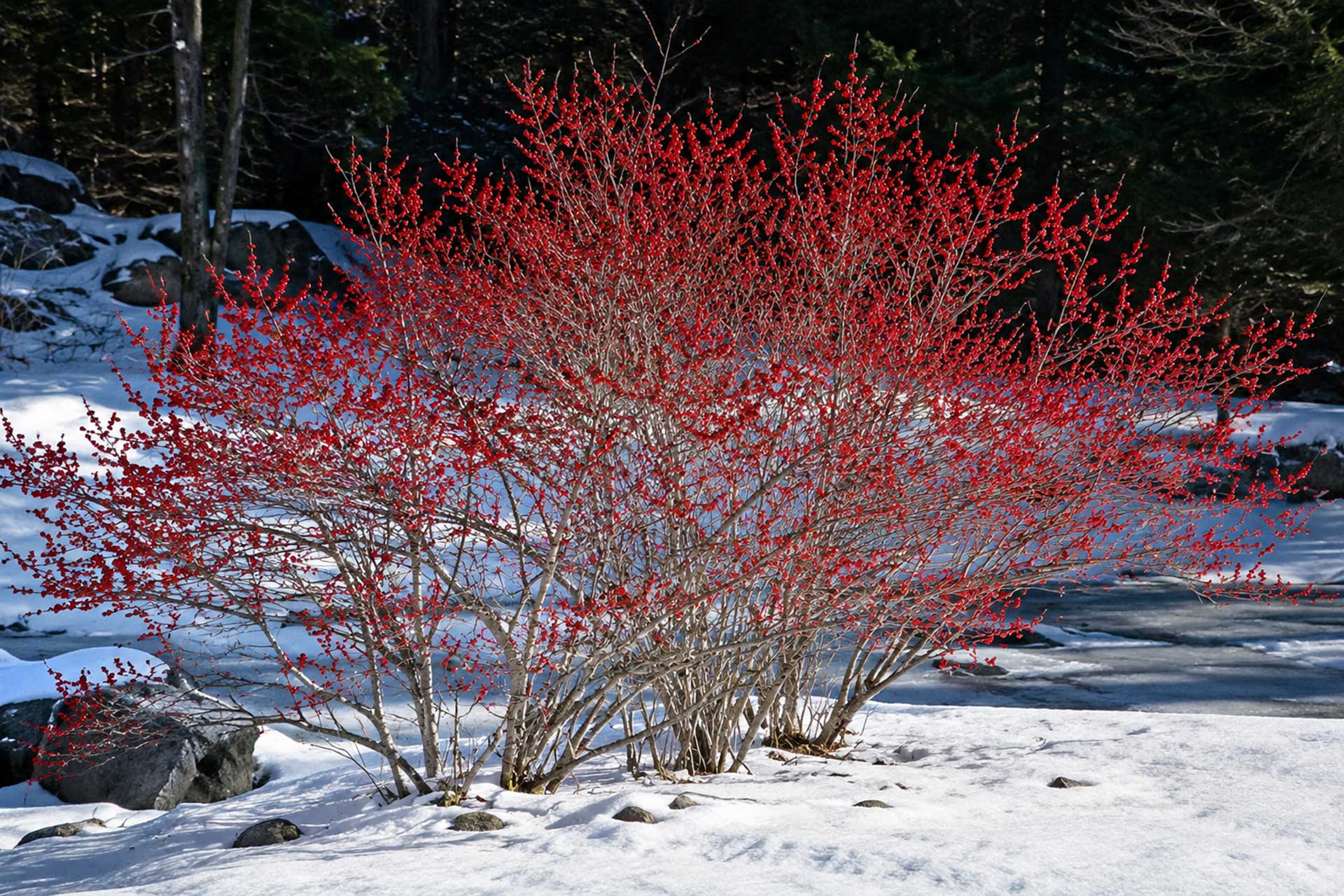
Winterberry (Ilex verticillata) brings upright structure and bright fruit to moist, acidic sites. Because winterberry plants are male or female, compatible plants of both sexes are required for reliable fruit production.
Place winterberry where its winter display can be seen from the house, driveway, or garden path.
Highbush Blueberry
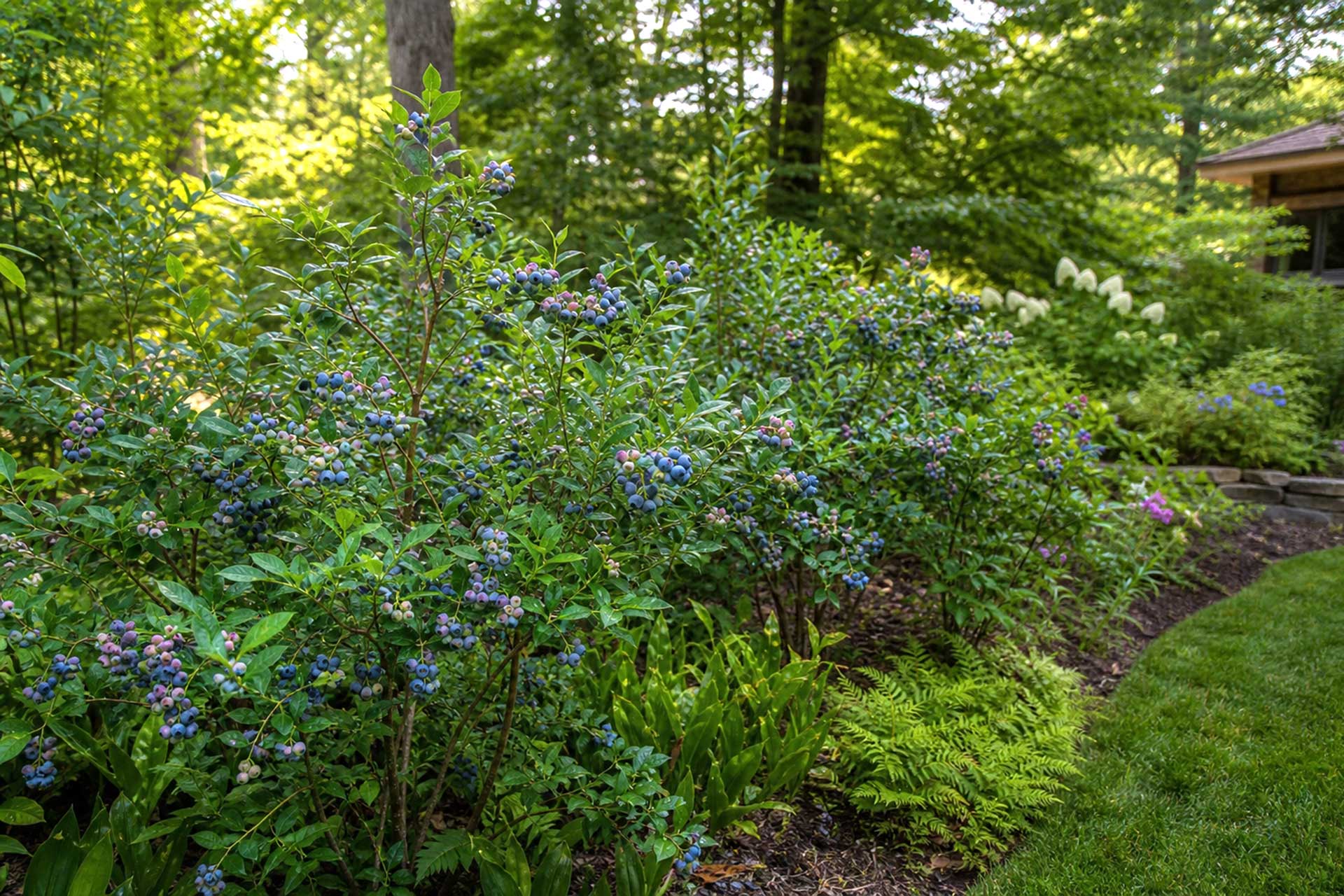
Highbush blueberry (Vaccinium corymbosum) tolerates moist, acidic soil while adding flowers, edible fruit, and strong fall color.
It does not thrive in permanently flooded soil. Testing the soil pH and observing drainage remain important before planting.
Summersweet
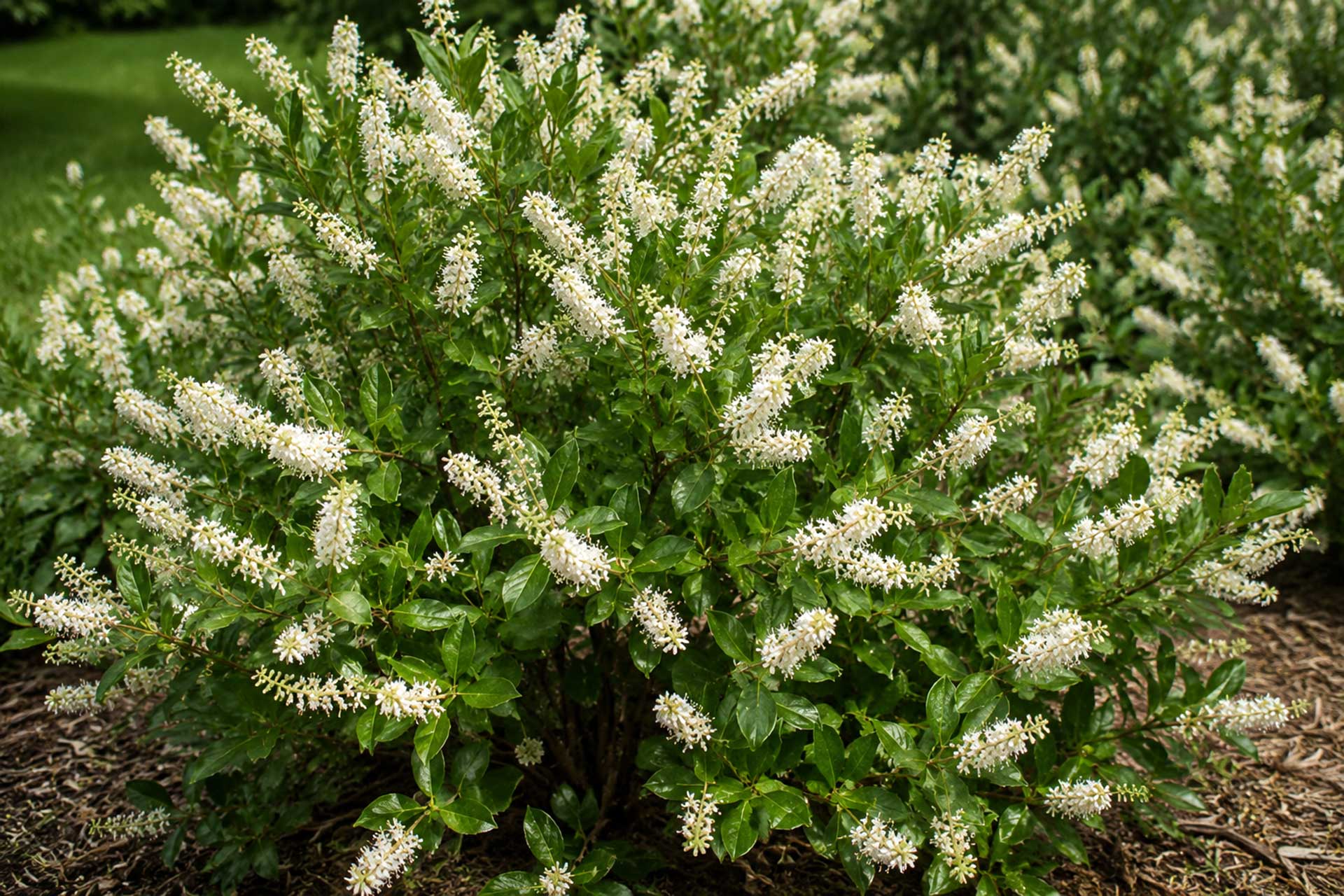
Summersweet (Clethra alnifolia) is a fragrant native shrub that performs in moist soil and part shade. It can form colonies over time and works well where a broader shrub mass is desirable.
Compact cultivars are useful on smaller residential slopes, while larger forms can fill more expansive naturalistic areas.
Best Plants for Coastal and Salt-Exposed Slopes
Cape Cod and other coastal Massachusetts properties introduce wind, salt spray, sandy soil, and rapid drainage. Plant selection should reflect the intensity of exposure, not simply the property’s distance from the ocean.
For a broader look at planning beyond the slope, our guide to coastal landscaping in Massachusetts explores how salt exposure, wind, and sandy soil influence the larger landscape.
The Massachusetts Office of Coastal Zone Management recommends plants such as bearberry, bayberry, beach plum, common juniper, little bluestem, and switchgrass in its guidance on landscaping coastal banks.
Useful coastal candidates include:
- Northern bayberry (Morella pensylvanica) for durable shrub massing and salt tolerance
- Beach plum (Prunus maritima) for flowers, fruit, and sandy coastal soil
- Bearberry for low evergreen coverage in acidic, well-drained conditions
- Little bluestem for fibrous roots, movement, and warm fall color
- Common juniper for exposed evergreen structure
- Switchgrass where the site offers enough moisture and room for its mature size
Coastal banks may fall within protected resource areas. Homeowners should consult their local Conservation Commission before removing vegetation, disturbing soil, installing erosion fabric, or changing the grade.
Vegetation also has limits on coastal land. UMass Extension’s coastal landscaping guidance notes that groundwater seepage can cause sections of an otherwise vegetated bank to erode or slump. Active coastal erosion requires specialized evaluation.
How to Arrange Plants on a Slope
Choosing suitable species is only part of the work. Their arrangement affects how quickly the soil becomes covered, how clearly the composition reads, and how manageable the planting remains.
Plant in Repeated Groups
Avoid distributing one of every plant evenly across the hillside. Instead, create broad, repeated groups that respond to changing site conditions.
A dry upper bank might contain bearberry, little bluestem, and sweetfern. The cooler middle portion could transition into sedges and ferns. Moisture-tolerant shrubs and switchgrass could occupy the lower zone.
This arrangement follows the conditions found on the slope while creating a more coherent design.
Run Groups Across the Contour
Plant groups that extend across the hillside can interrupt the downhill movement of surface water. Straight vertical rows tend to emphasize the drop and can create open channels between plants.
The layout does not need to resemble stripes. Curving, overlapping drifts can follow the contours while appearing natural from the house or garden.
Use Shrubs to Give the Slope Structure
Low ground covers alone can make a large hillside appear flat. Repeated shrub groups break up the expanse, create stronger seasonal form, and visually connect the slope with nearby trees, architecture, and garden beds.
Place shrubs according to their mature size. A slope that requires constant hard pruning probably contains plants that were spaced too closely or selected at the wrong scale.
How to Establish Plants Without Losing More Soil
Newly planted slopes are vulnerable because installation disturbs the soil before roots have spread. The establishment strategy is therefore as important as the plant list.
- Address concentrated water first. Disperse runoff from roofs, paving, roads, and the top of the hill before installing plants.
- Limit disturbance. Avoid stripping or tilling the entire slope when individual planting pockets will accomplish the work.
- Use suitable plant sizes. Plugs and smaller containers are often easier to install securely, while selected shrubs provide earlier structure.
- Protect exposed soil. Biodegradable coir or jute erosion-control fabric can stabilize the surface while roots develop.
- Cut and pin fabric carefully. Openings should fit closely around the plants, and the material should remain securely anchored along its edges and seams.
- Choose mulch carefully. Shredded mulch tends to knit together better than large bark pieces. Mulch is temporary protection, not permanent erosion control.
- Water slowly. Multiple short irrigation cycles may soak into sloped soil more effectively than one long application that creates runoff.
- Inspect after storms. Correct small washouts, displaced plants, or exposed fabric before the damage expands.
Even drought-tolerant native plants need reliable water while establishing. Depending on plant size, soil, weather, and exposure, that establishment period can extend through more than one growing season.
Related Blog: Landscape Design Ideas and Solutions for Sloped Yards in Greater Boston
Account for Deer Before Finalizing the Plant List
A carefully installed slope can develop new gaps if deer repeatedly browse young plants. No plant is completely deer-proof, and local pressure varies considerably across Greater Boston and MetroWest.
Grasses, sedges, sweetfern, aromatic plants, and several ferns often receive less browsing than favored woody shrubs. Blueberries, viburnums, and other shrubs may need protection during establishment.
Our guide to deer-resistant plants and landscaping strategies explains how plant selection, repetition, physical barriers, and ongoing property care can work together.
Do not select every plant solely for deer resistance. The finished palette must still fit the soil, sunlight, moisture, design, and erosion-control goals.
Maintaining a Planted Slope
The goal is to create a plant community that becomes denser and more stable over time. That still requires attentive maintenance, especially during the first few years.
- Replace failed plants before open areas expand.
- Control invasive plants while the soil remains disturbed.
- Adjust irrigation as roots develop.
- Remove debris that blocks or redirects surface water.
- Reposition mulch that accumulates at the bottom.
- Prune shrubs selectively rather than shearing the entire slope.
- Inspect the planting after heavy rainfall and spring snowmelt.
- Watch for new runoff created by construction or paving elsewhere on the property.
Dense planting should eventually reduce exposed soil and suppress many weeds. It will not create a maintenance-free hillside, but it can replace repetitive repairs with more predictable seasonal care.
Recognizing a Problem Plants Cannot Solve
This article addresses plant selection for stable residential slopes. If water is carving deep channels, soil is slumping, a retaining wall is moving, or erosion is threatening a structure, planting should not be the first intervention.
Those conditions require a broader assessment of drainage, grading, soil stability, and structural needs. The appropriate response may involve dispersing runoff, regrading part of the slope, constructing terraces, repairing a wall, or consulting an engineer.
Planting can then become part of the finished solution, providing surface protection and integrating the repaired area into the surrounding landscape.
Frequently Asked Questions
Q: What is the best ground cover for a slope in Massachusetts?
A: There is no single best ground cover for every slope. Bearberry works in sunny, dry, acidic soil; Pennsylvania sedge performs in dry shade; wild ginger prefers moist shade; and lowbush blueberry suits acidic, well-drained conditions. The best choice depends on the site.
Q: Can I plant grass seed on a steep slope?
A: Seed can wash away before it germinates, particularly where runoff is concentrated. Some installations use a suitable seed mixture beneath biodegradable erosion-control fabric. On residential properties, plugs, container-grown plants, shrubs, and temporary stabilization often provide a more predictable result.
Q: Are native plants better for erosion control?
A: Native plants can be excellent choices because many are adapted to regional conditions and also support wildlife. Native status does not override site requirements. A plant native to a Massachusetts wetland will not perform well on a hot, dry slope simply because it is native.
Q: Will mulch stop erosion on a hillside?
A: Mulch protects exposed soil temporarily, but it can wash downhill and does not provide living roots. Shredded mulch may stay in place better than large bark pieces, but it should support a planting plan rather than serve as the entire erosion-control strategy.
Q: How long does it take plants to stabilize a slope?
A: The timing depends on species, plant size, spacing, soil, irrigation, and weather. Some grasses and perennials begin filling gaps during the first growing season, while shrubs and slower ground covers take longer. Temporary erosion protection and regular inspection remain important until roots and foliage provide consistent coverage.
Choosing the Right Plants for Your Property
The best plants for erosion control in Massachusetts are not simply the fastest-growing species available. They are plants selected for the slope’s sunlight, soil, moisture, exposure, and maintenance conditions, then arranged as a durable community.
A sunny bank may combine bearberry, little bluestem, sweetfern, and lowbush blueberry. A shaded hillside may rely on Pennsylvania sedge, foamflower, Christmas fern, and carefully placed shrubs. Moist lower slopes and exposed coastal banks need their own palettes.
The result should do more than stop bare soil from washing away. It should turn the hillside into a deliberate part of the property, with texture, seasonal interest, habitat value, and a realistic plan for long-term care.
If you are deciding what to plant on a slope in Greater Boston, MetroWest, or Cape Cod, contact us today. We can evaluate the growing conditions, runoff, soil, exposure, and maintenance needs, then develop a planting plan that feels appropriate to both the hillside and the larger landscape.