When a Sloped Yard Becomes an Opportunity
A sloped yard can feel like a problem at first. The lawn is hard to mow, water seems to move where it wants, planting can wash out, and everyday circulation is less intuitive than it should be. In Greater Boston, these issues are especially common on older properties, wooded suburban lots, hillside homes, and neighborhoods where grade changes are part of the site’s character rather than an exception.
But a slope is not automatically a flaw. In many cases, it is the feature that gives a property depth, drama, and opportunity. A thoughtful landscape plan can turn awkward grade changes into elegant terraces, a steep backyard into a sequence of usable outdoor rooms, or a difficult front entry into an arrival experience that feels composed and welcoming. The key is understanding that slope design is both technical and aesthetic. It is about managing water, soil, access, and structure while also shaping how the landscape looks and feels.
As landscape designer Jan Johnsen wrote for ASLA, “Grading and drainage are critical to any project.” That is particularly true on sloped residential properties, where every design choice affects not only appearance, but also stability, safety, and long-term performance.
Because slopes affect so many parts of a property, they are often best addressed through a broader landscape master plan that coordinates grading, walls, steps, terraces, drainage, planting, lighting, and long-term maintenance.
Key Takeaways
- Sloped yards often need more than planting. They require coordinated grading, drainage, circulation, and structural planning.
- Retaining walls, terraces, and steps can make a hillside property both more usable and more visually cohesive.
- Drainage is central to slope design. Poor water management leads to erosion, runoff, wall pressure, and long-term problems.
- Planting works best when combined with grading and erosion-control strategy.
- The best sloped-yard design improves function as much as appearance, making the landscape easier to use, maintain, and enjoy.
Why Sloped Yards Are So Common in Greater Boston
Across Greater Boston and MetroWest, many residential properties are anything but flat. Some sit on natural hillsides. Others were developed long before modern grading standards were common. Many include mature trees, ledge, compacted soils, or inherited drainage patterns that make the site more complicated than it first appears.
Four common local scenarios:
1) Front Yards That Rise Sharply From the Street
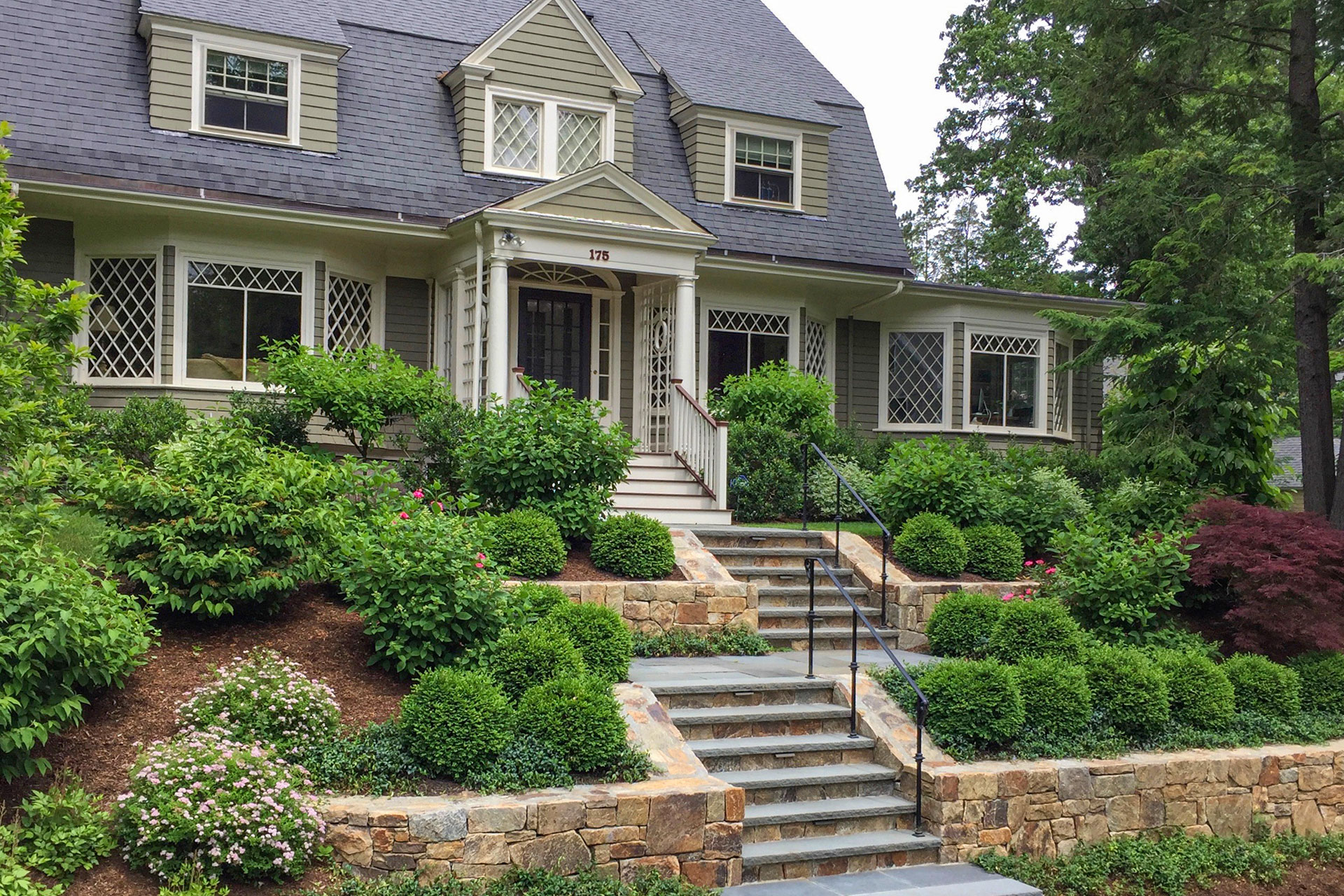
This is common in towns with older housing stock and established topography. The challenge is often less about backyard living and more about arrival, curb appeal, and safe access in all seasons. A steep front slope may call for stone steps, low retaining walls, regraded planting beds, and clear edges that make the entry feel intentional rather than improvised.
2) Backyards That Fall Away Behind the House
Many suburban properties have decks or back doors that open onto lawns that quickly descend. That condition can make entertaining difficult because there is no obvious level area for dining, seating, or a fire feature. In these cases, terracing is often the move that unlocks the yard.
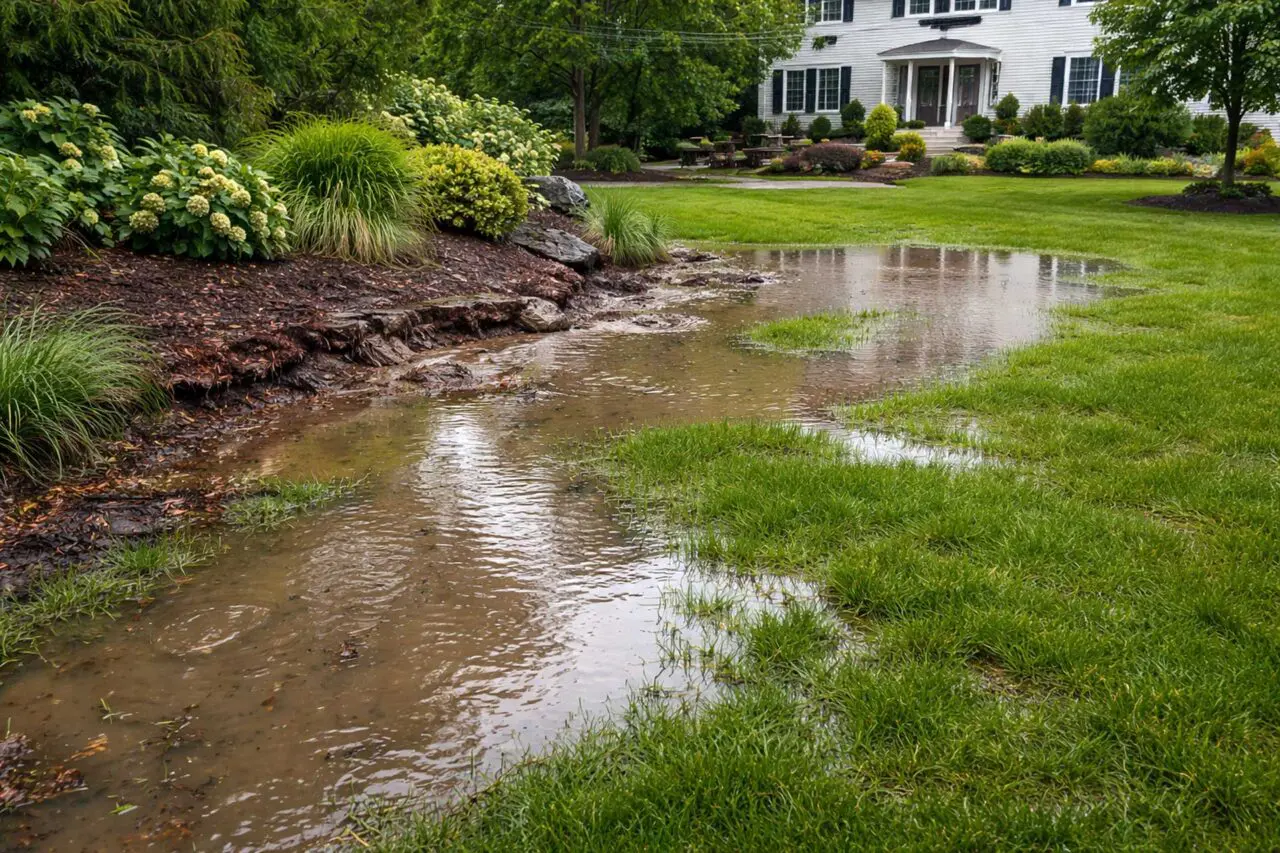
3) Side Yards That Become Drainage Corridors
A narrow side slope can look minor on paper but create major headaches in practice. Water picks up speed, mulch migrates, turf struggles, and the route between front and back yard becomes awkward or slippery. These transitions usually benefit from a combination of drainage planning, steps or pathways, and stabilizing planting.
4) Wooded or Naturalistic Slopes With Erosion Concerns
These sites often look attractive from a distance but become difficult over time. Foot traffic creates ruts, thin soils dry out or wash out, and maintenance becomes increasingly reactive. Here, the goal is not always to flatten the site. Often it is to work with the slope more intelligently through path layout, selective terracing, and durable plant communities.
“A sloped yard starts working when every part of the plan agrees on where people should move and where water should go.”
— Stephen McCusker, Design Associate, a Blade of Grass
Good Slope Design Starts With Grading and Drainage
It is tempting to jump straight to walls, steps, or plants, but the real beginning of any sloped landscape is grading and drainage. If runoff is not understood early, even a visually beautiful landscape can become high-maintenance or unstable.
The EPA explains that stormwater runoff is generated when rain or snowmelt flows over land or impervious surfaces instead of soaking into the ground, carrying sediment and pollutants along the way. EPA also notes that an estimated 10 trillion gallons of untreated stormwater runoff enter U.S. waters each year, underscoring how large a role runoff plays in landscape performance and environmental quality.
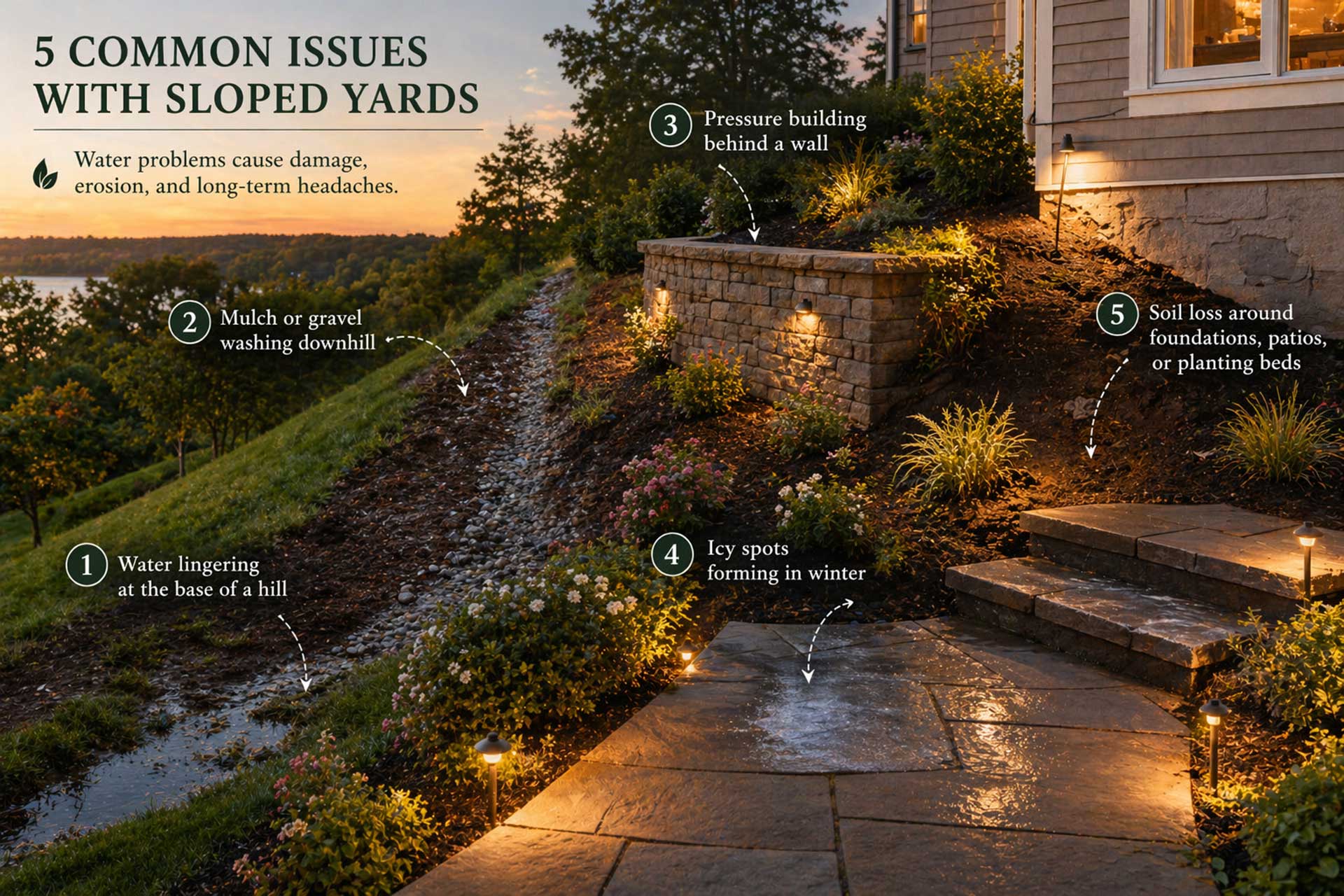
On residential slopes, that often translates into issues homeowners know well:
- water lingering at the base of a hill
- mulch or gravel washing downhill
- pressure building behind a wall
- icy spots forming in winter
- soil loss around foundations, patios, or planting beds
NRCS guidance for residential sites recommends grading surfaces so runoff flows away from the home, with a minimum slope of six inches over the first ten feet near foundations. On walls, drainage is equally important. This Old House notes that poor drainage and saturated soil are leading causes of retaining wall failure, and describes gravel backfill, filter fabric, perforated drainpipe, and proper grading as core parts of a durable wall assembly.
For Boston-area homeowners, the practical takeaway is simple: if a slope project does not address water first, it is not finished design.
Once drainage and grading have been addressed, selecting the right plant community becomes the next priority. Our guide to erosion-control plants for Massachusetts slopes explains how to match species to sunlight, moisture, and site conditions.
Related Blog: Landscape Drainage Solutions: How to Fix Standing Water, Runoff, and Erosion
Terracing: The Most Effective Way to Create Usable Space
One of the best landscape design ideas for sloped yards is also one of the most transformative: break the slope into purposeful levels.
Terracing does not necessarily mean building a dramatic hillside garden with tall walls everywhere. In residential landscapes, it often means introducing two or three modest grade shifts that create clearer, more comfortable zones. A terrace can hold a dining patio near the house, a lawn panel below, a garden overlook off to one side, or a quiet sitting area tucked into a wooded edge.
This strategy works especially well because it solves multiple problems at once:
- it creates level areas for furniture and circulation
- it slows the visual drop of the site
- it gives planting a stronger framework
- it helps organize drainage and runoff
- it can make a steep yard feel larger by turning one difficult plane into a sequence of experiences
Terraces are especially effective on sloped properties because they can create flat, usable areas without wasting the site’s footprint or overlooking its views. That distinction matters. The best terraced landscape is not just easier to manage. It also makes the property far more enjoyable to live in.
Retaining Walls That Do More Than Hold Soil
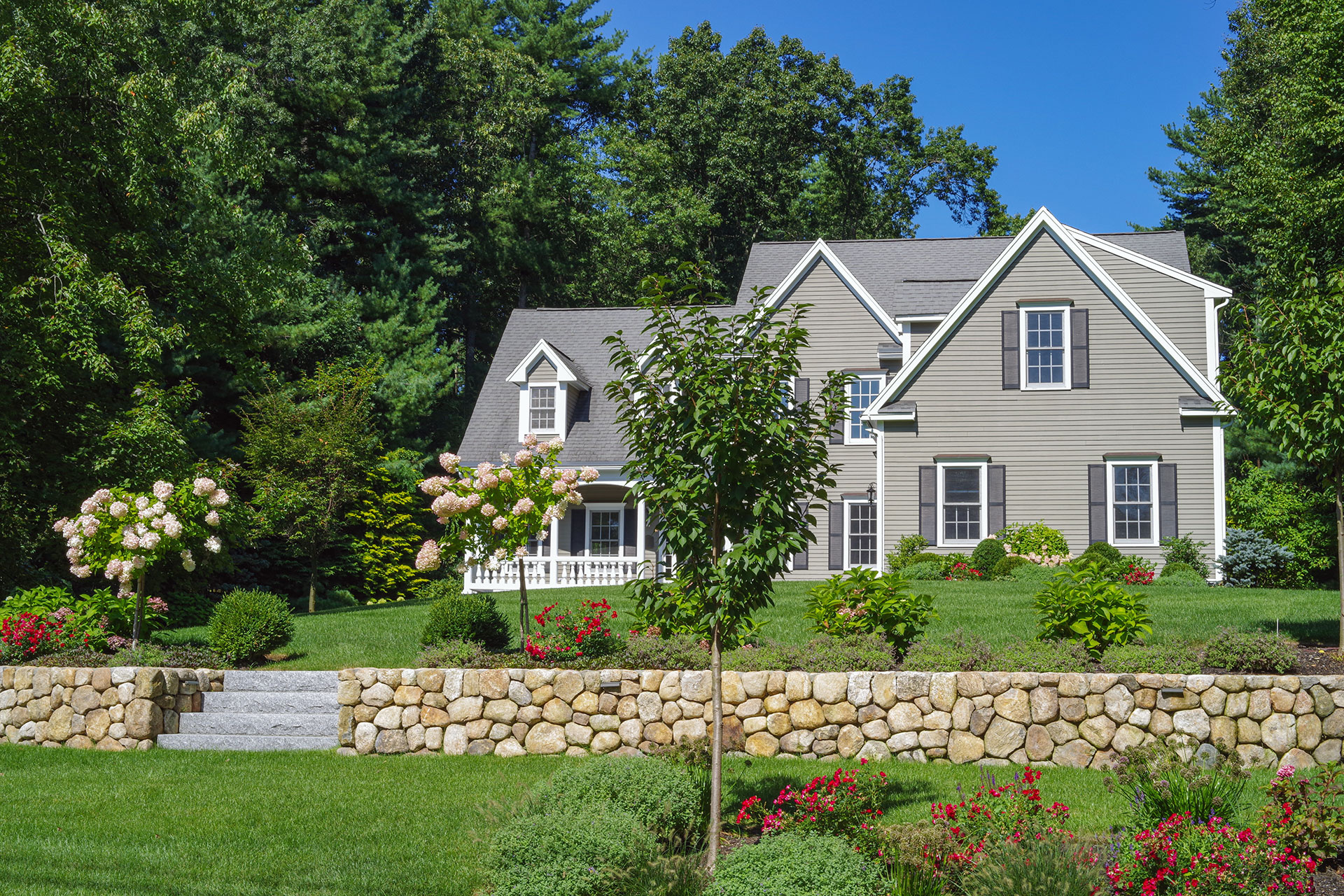
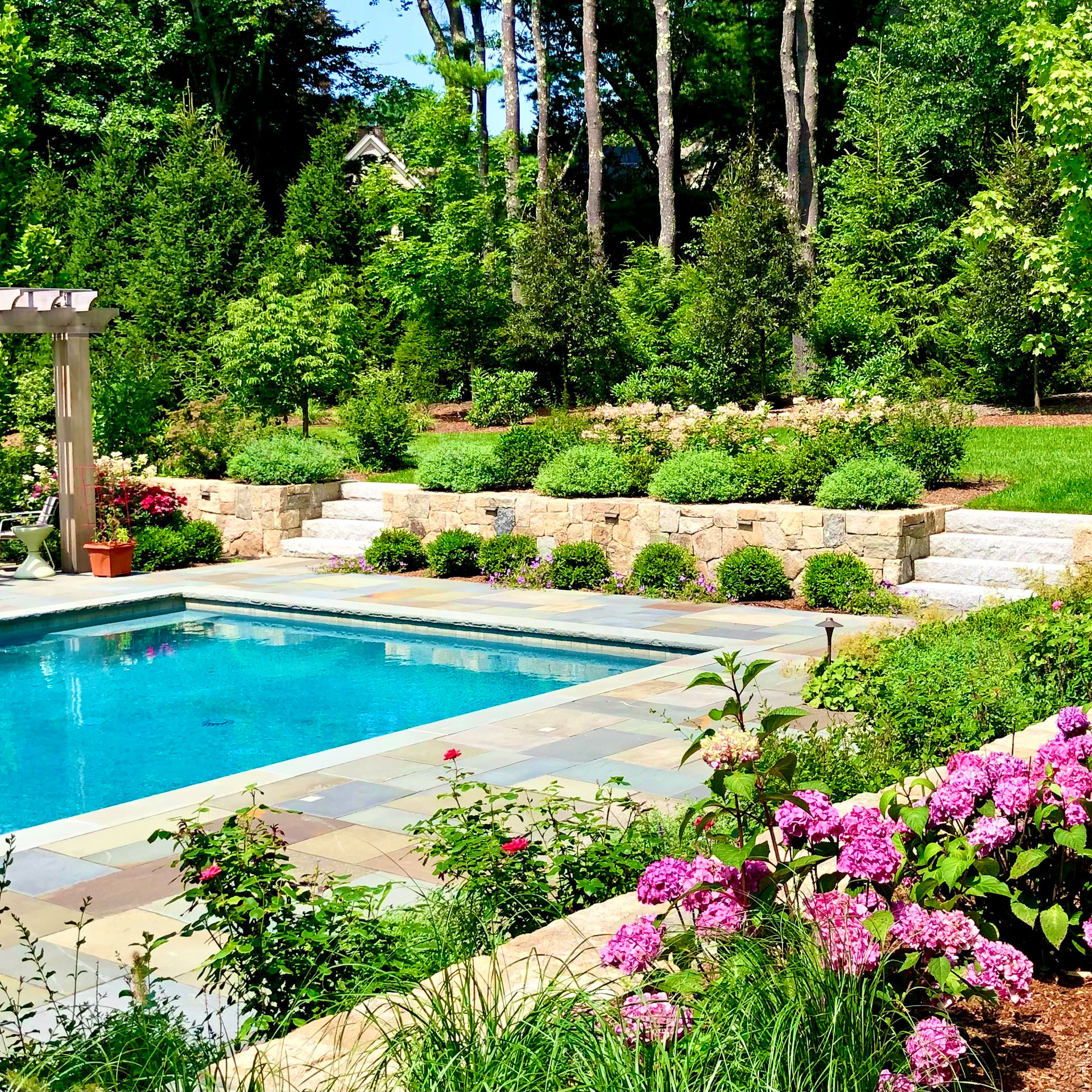
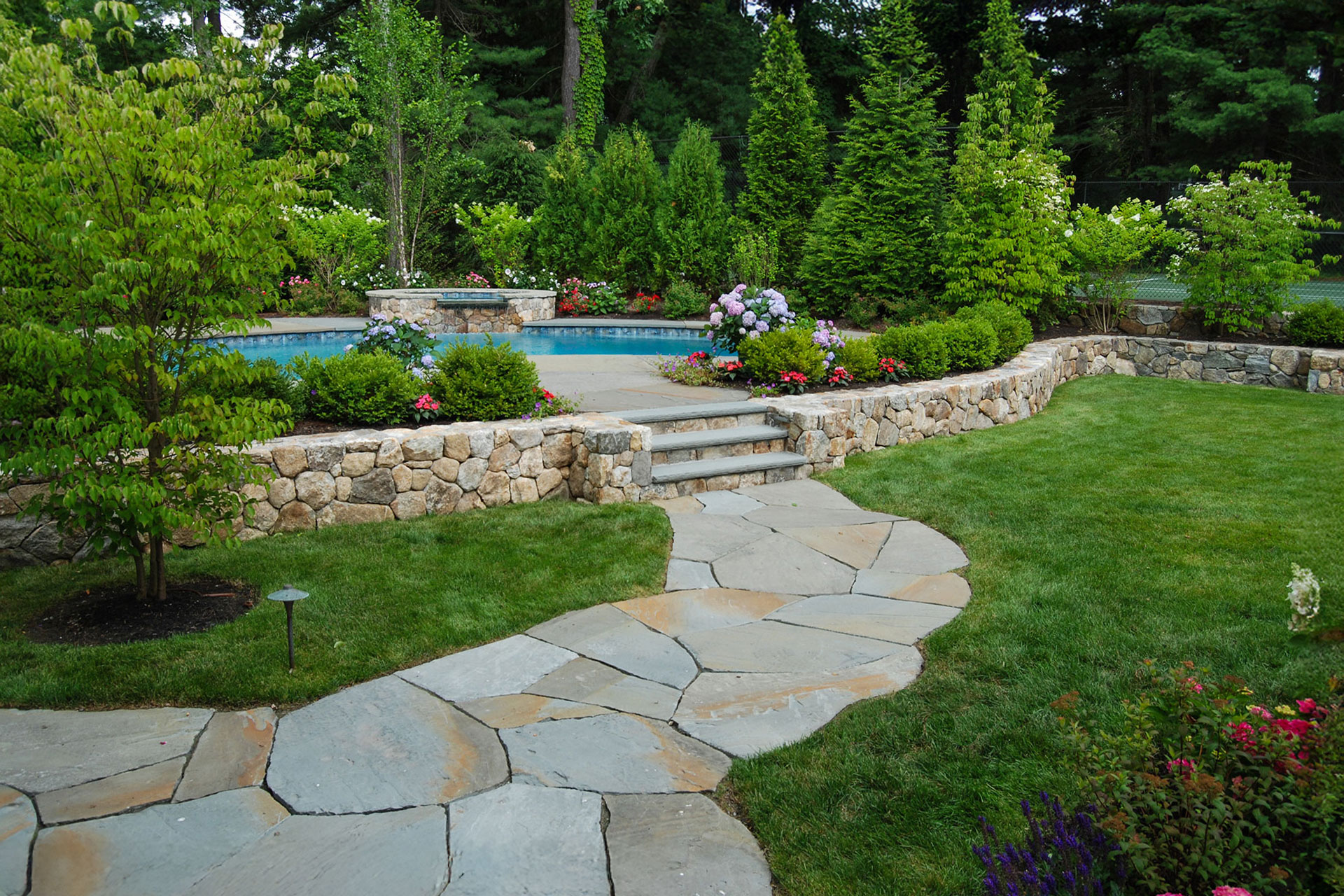
Retaining walls are often discussed as purely structural elements, but on well-designed properties they do much more. Yes, they stabilize grade changes. But they also define outdoor rooms, frame planted edges, support steps, and create a sense of permanence.
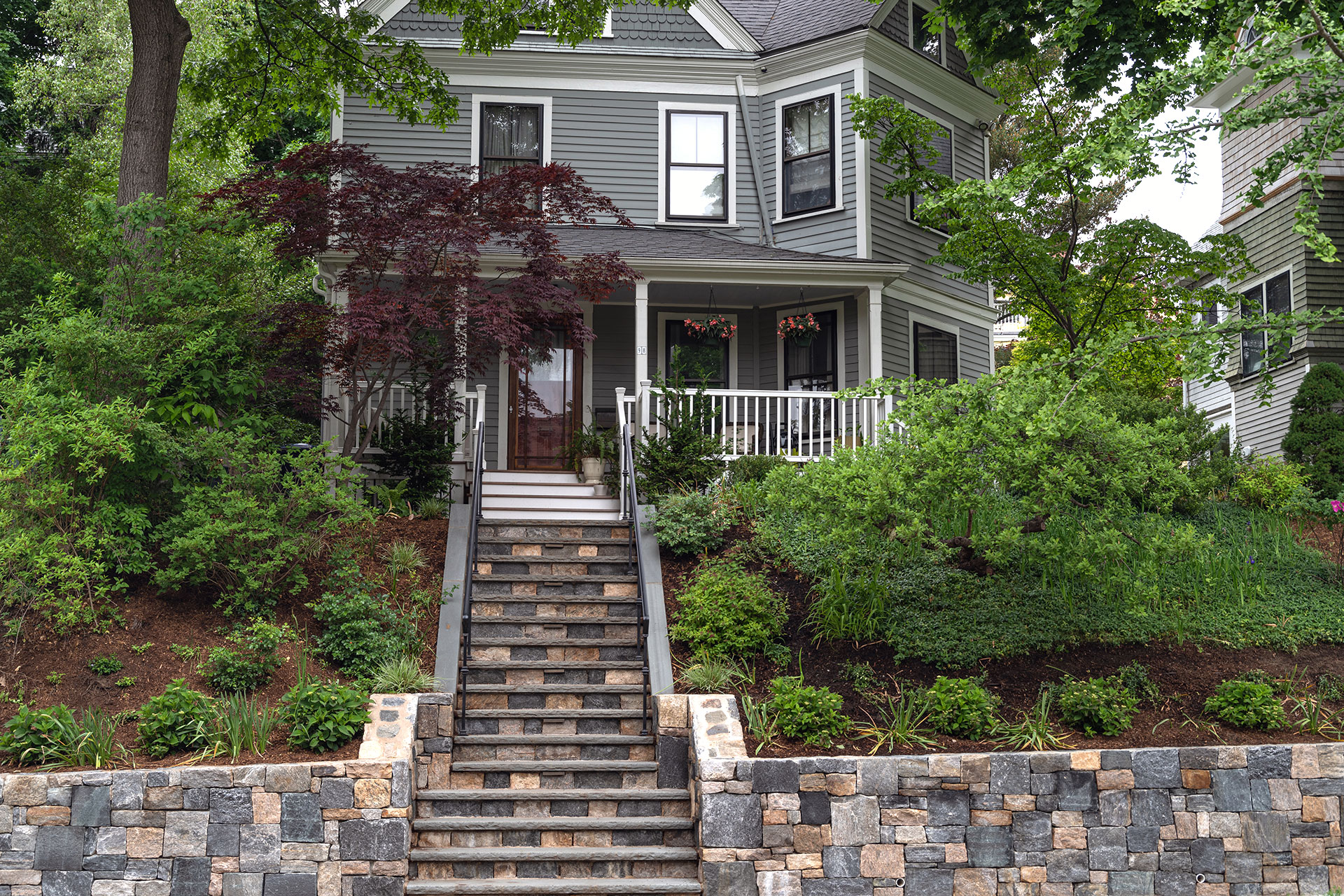
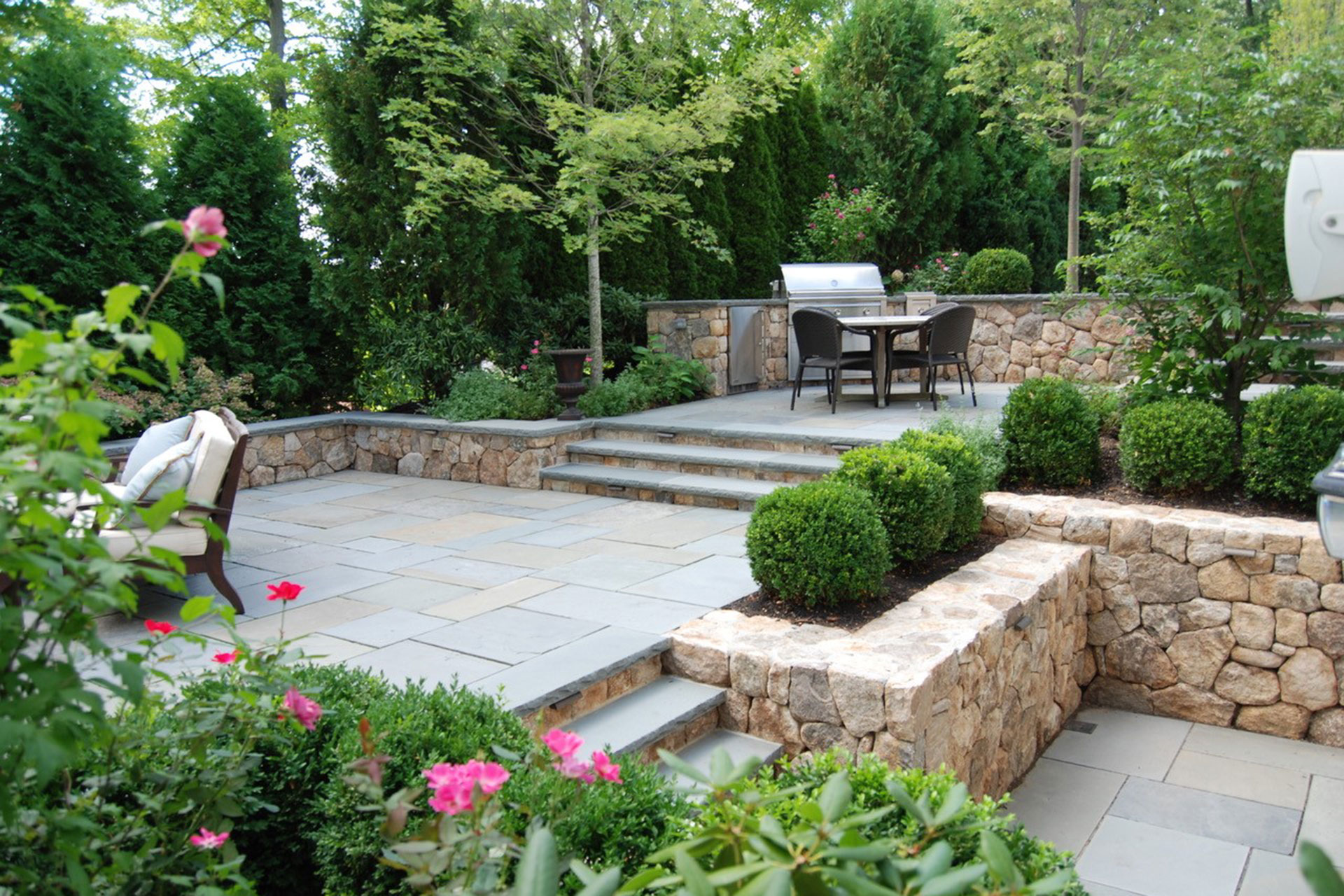
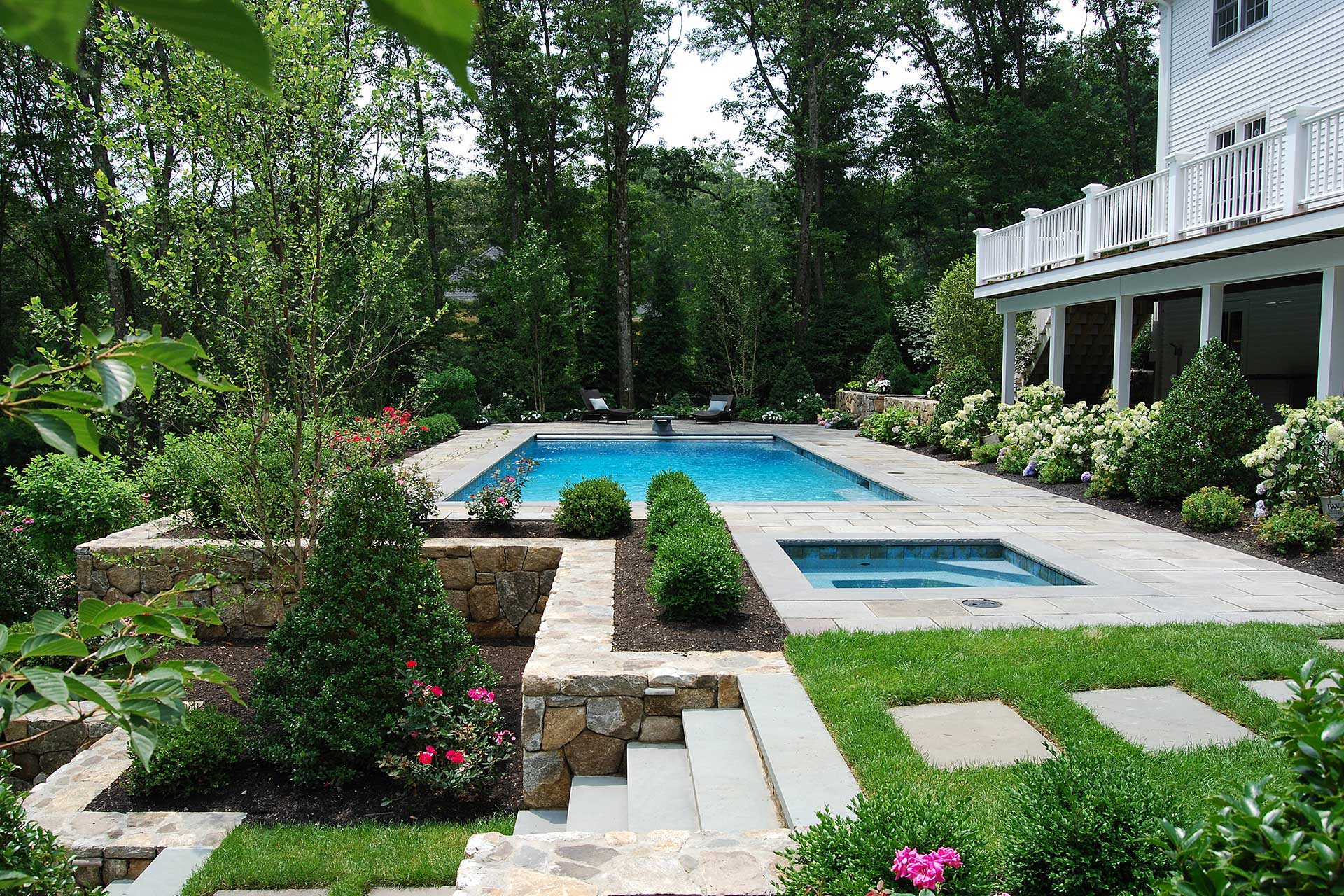
Walls and steps often become the backbone of a sloped landscape. They stabilize grade changes, guide movement, and give the overall composition a stronger sense of structure. On Boston-area properties, that role is especially important because a wall is rarely just a wall. It is usually part of a larger system that also includes drainage, terraces, paving, lighting, and planting.
When Low Walls Are Better Than One Tall Wall
Homeowners sometimes assume one tall wall is the cleanest answer. In reality, a series of lower walls is often more graceful and more usable. Lower terraces can reduce visual heaviness, create more opportunities for planting, and produce spaces that feel more residential and refined.
Material Matters in New England
Granite, bluestone, and fieldstone tend to feel especially at home on Greater Boston properties because they align with regional architecture and weather gracefully in freeze-thaw conditions. Proper detailing still matters, of course, but material choice has a major effect on whether the finished work feels integrated with the home.
Drainage Behind the Wall Is Not Optional
It is worth repeating because many failures start here. Water pressure behind a retaining wall is a long-term risk. Drainpipe, gravel, backfill, and grading are not hidden extras. They are core parts of the construction.
Related Blog: Stone Walls & Steps: How Artful Masonry Shapes Residential Landscapes
Steps, Paths, and Circulation Make a Slope Feel Comfortable
A slope may be structurally stable and still feel frustrating to use. That is where circulation design comes in.
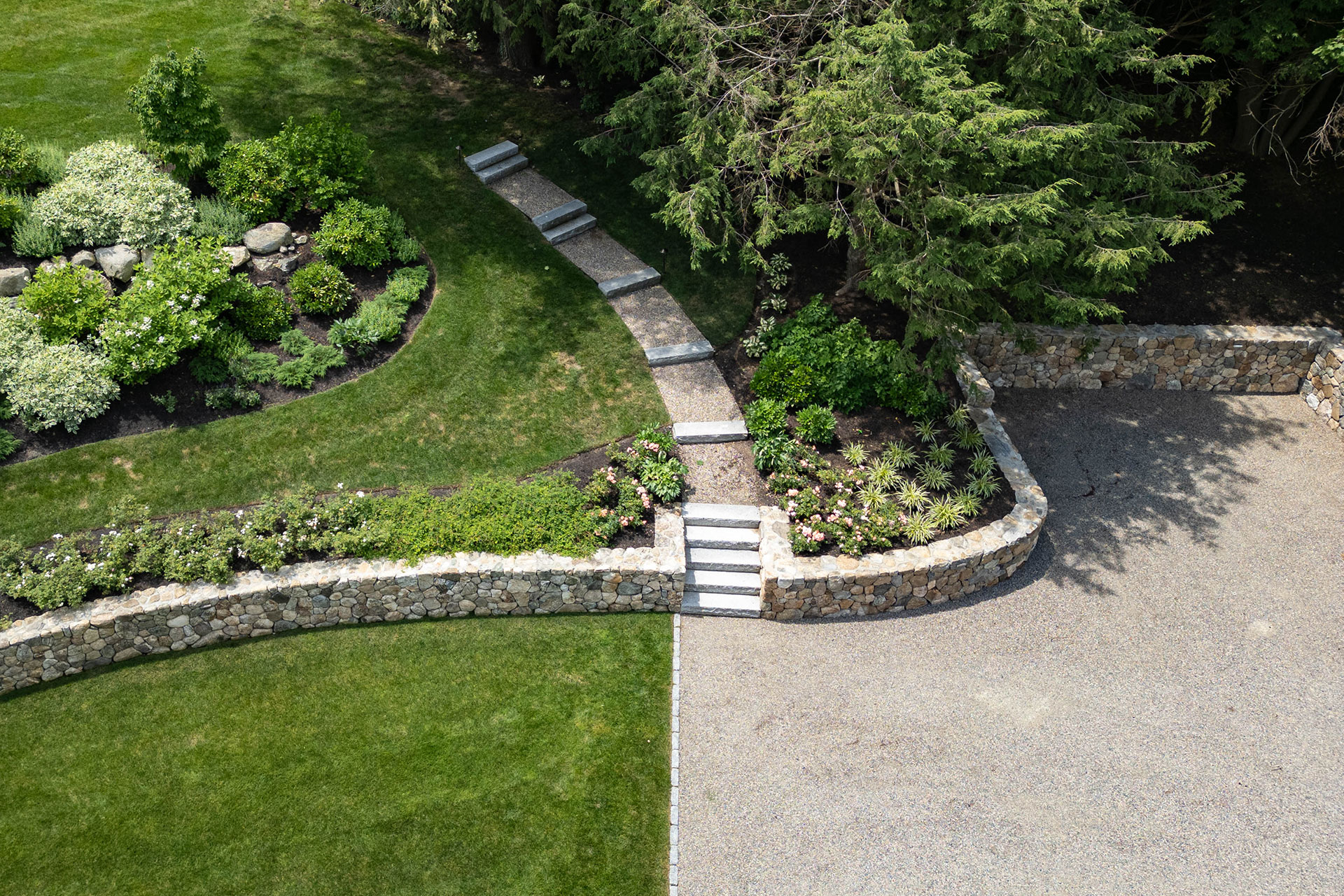
Paths and steps are not just connectors. They determine how welcoming a property feels every day. A good route should feel intuitive, safe, and visually anchored. On a sloped lot, that usually means step placement that follows desire lines, landings that create rhythm and rest, and materials that hold up in wet or icy weather.
Well-designed walkways improve navigation, safety, and visual continuity, especially in New England conditions. On steeper sites, that principle becomes even more important.
Ideas That Work Well on Boston-Area Slopes
Broad Front-Entry Steps With Planted Side Slopes
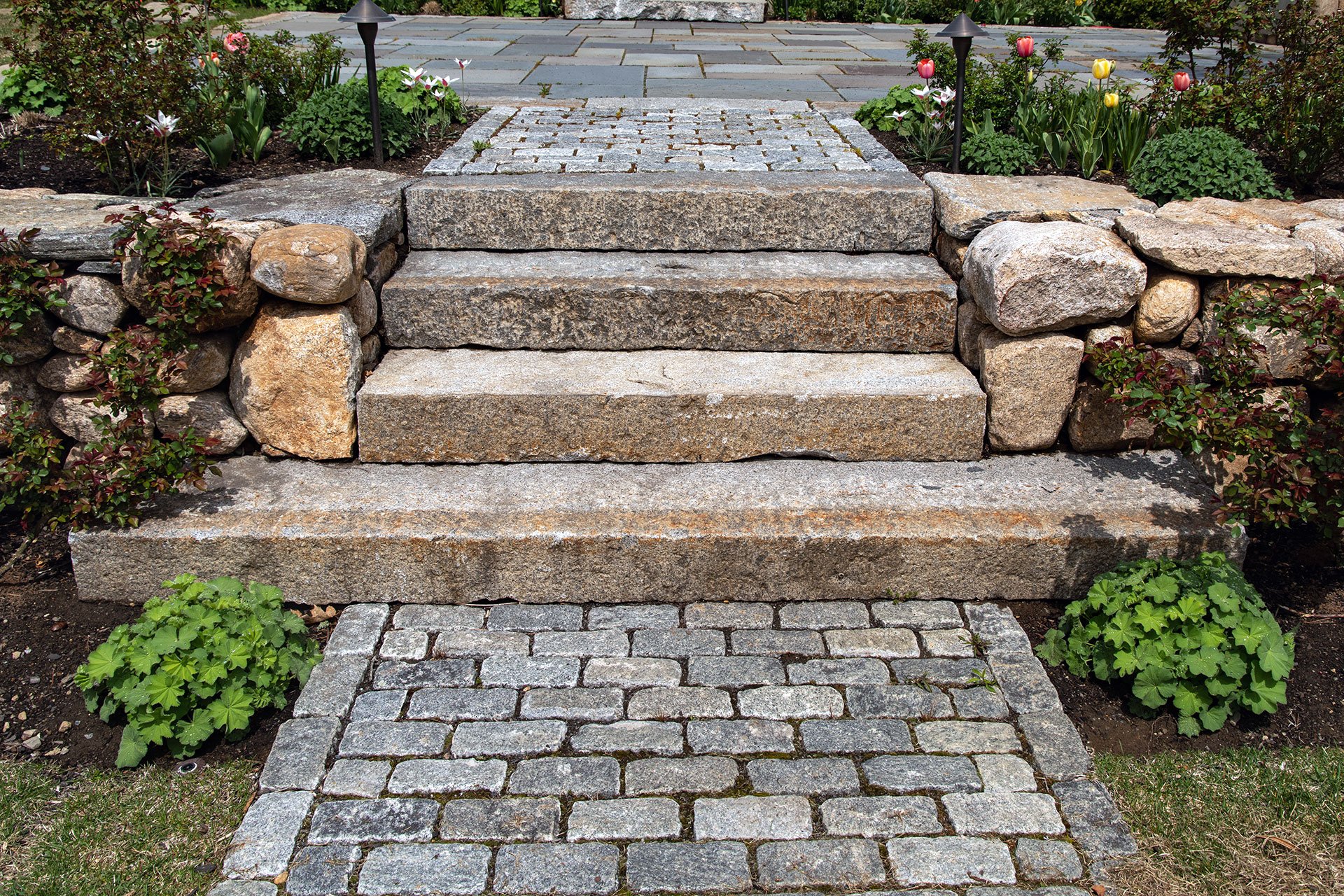
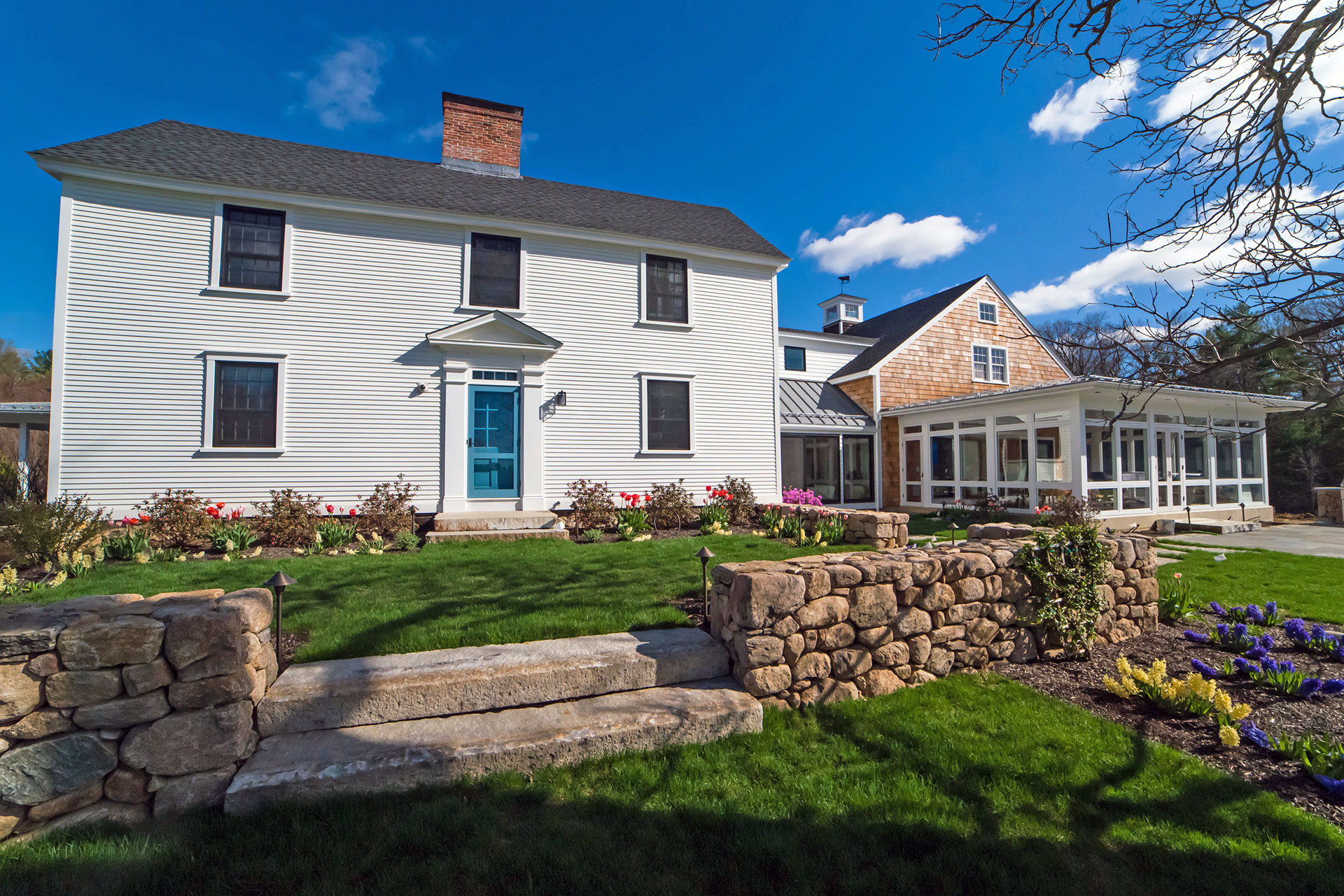
Broad front-entry steps can bring order and presence to a sloped front yard, especially when the house sits noticeably above the street. When paired with planted side slopes, they help the grade change feel intentional rather than abrupt, while low stone walls can add structure and help hold the surrounding terrain in place. This approach also creates room for layered planting, which softens the masonry and gives the entry a more welcoming, residential feel through the seasons.
Meandering Garden Paths
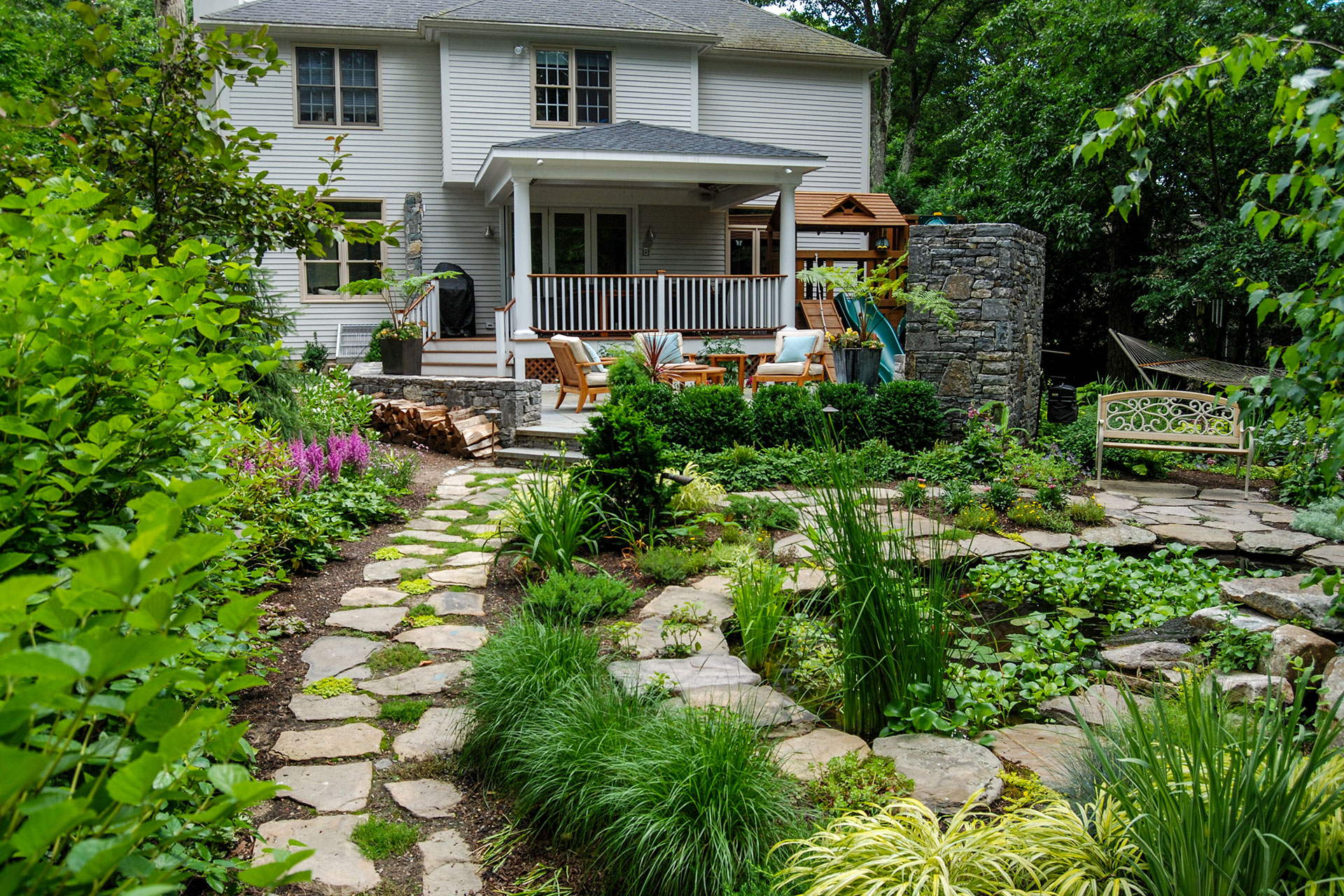
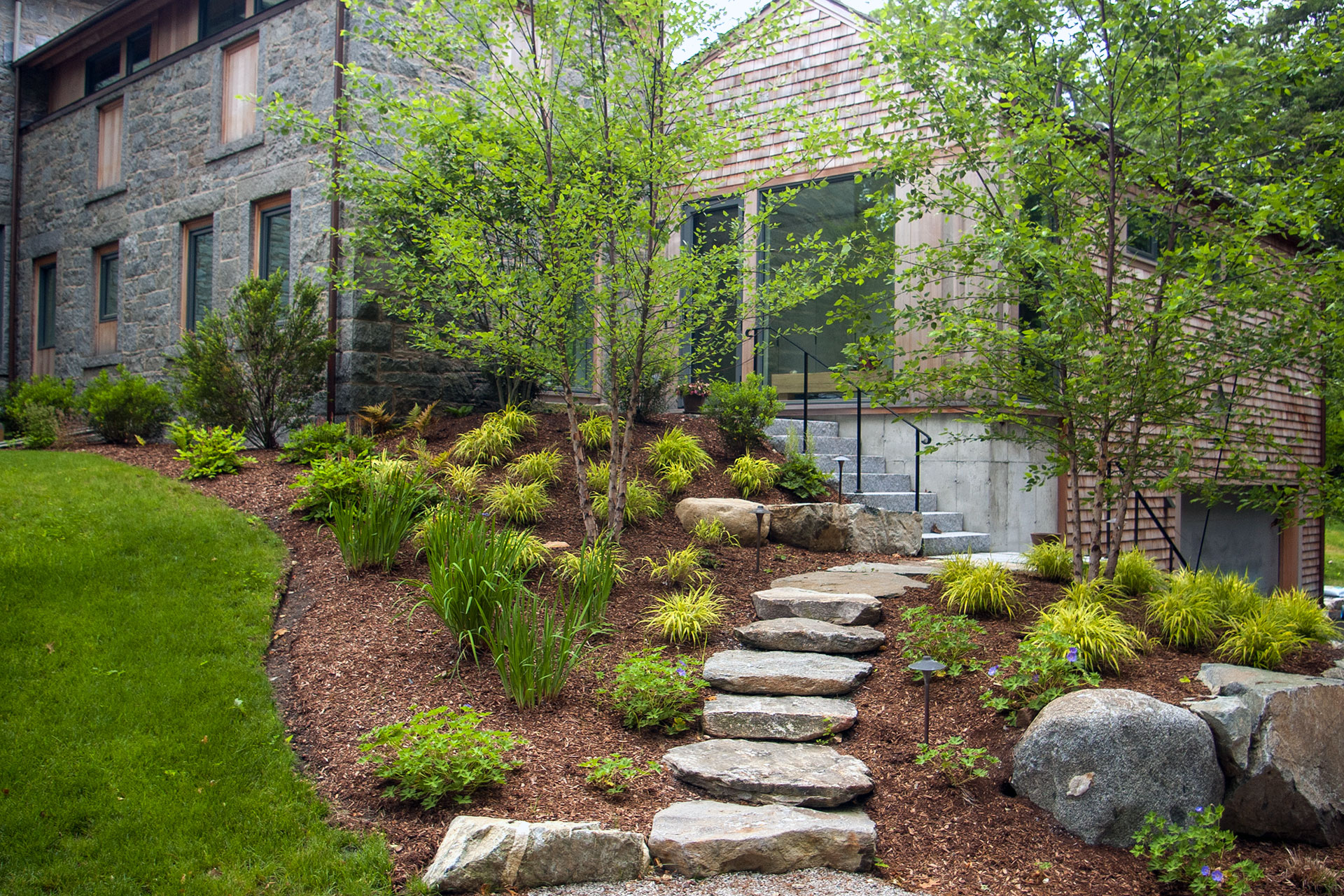

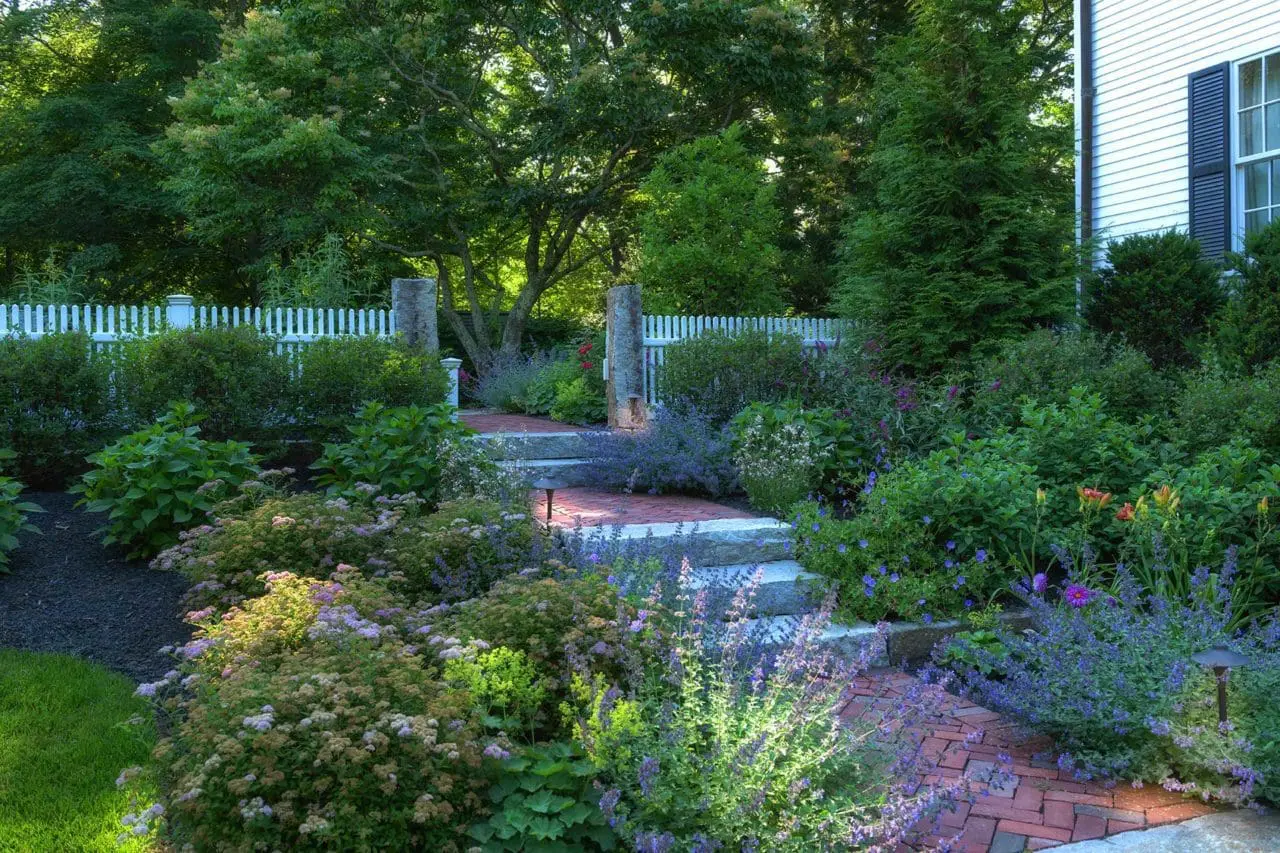
Not every slope needs to be handled with straight runs and direct climbs. In wooded, naturalistic, or more informal landscapes, a gently curving path can make the elevation change feel more gradual and more enjoyable, while also encouraging a slower, more immersive experience of the property. Meandering paths are also useful for fitting circulation into tighter or more irregular sites, creating opportunities for planting pockets, overlooks, or small seating moments along the way.
Terraced Landings
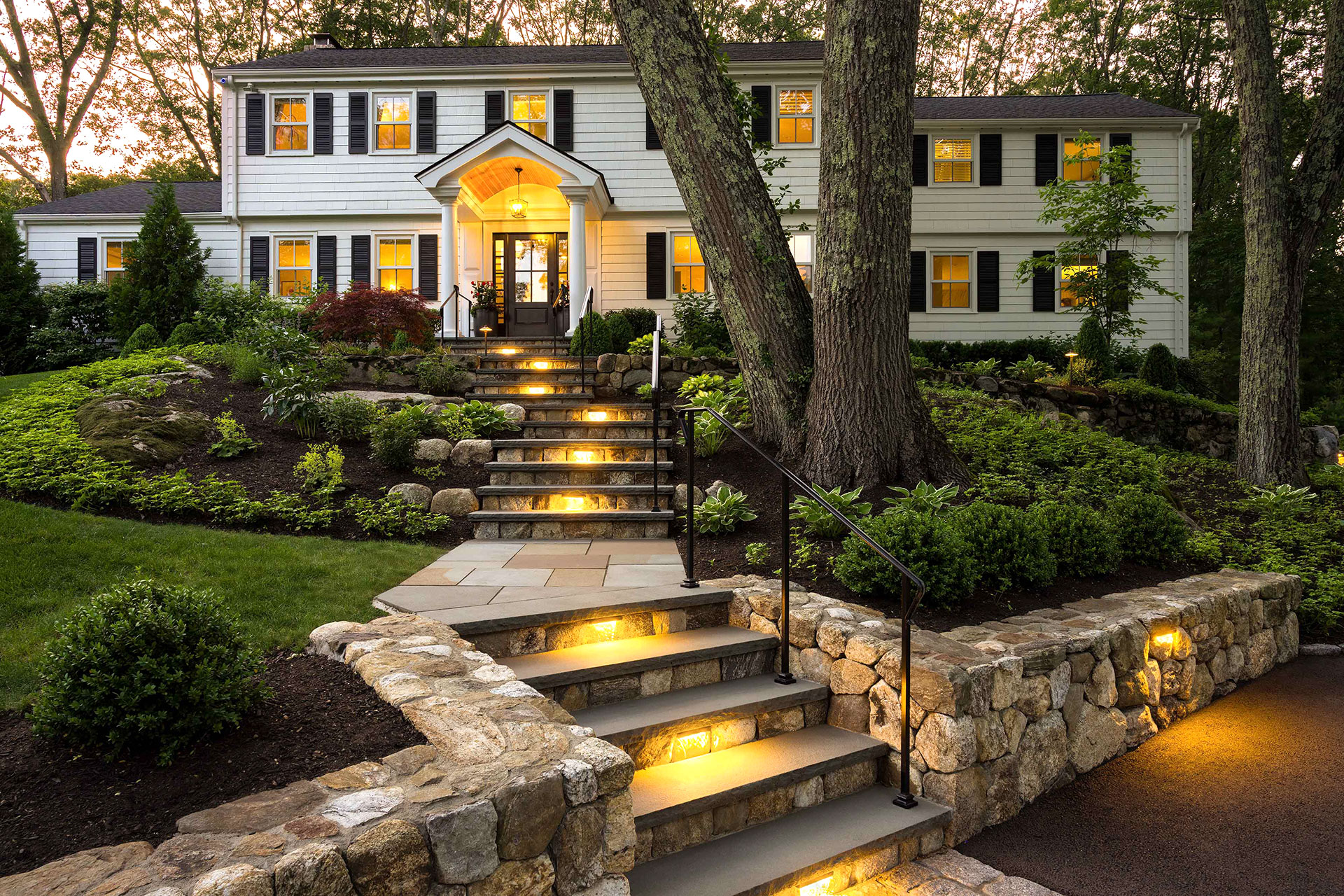
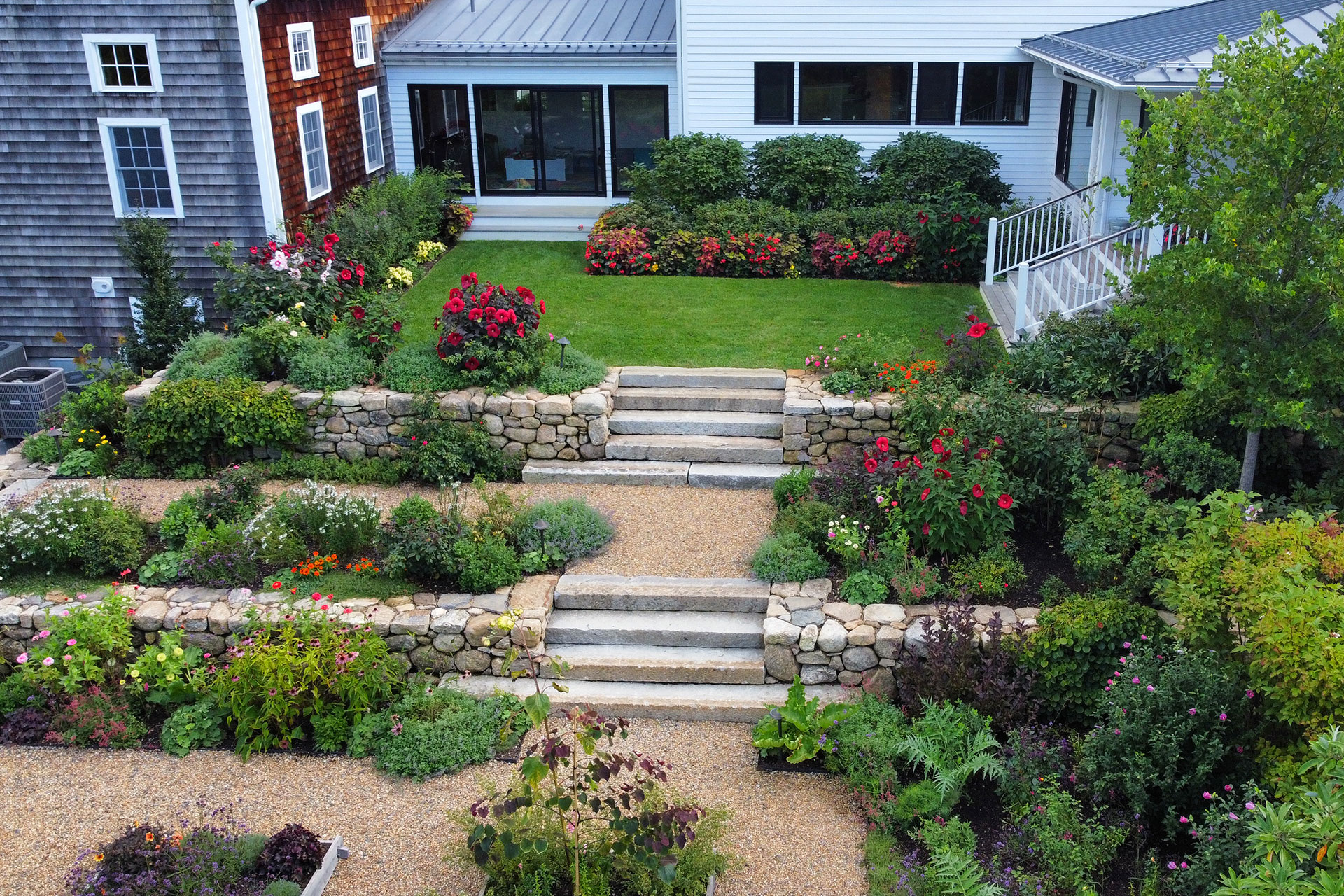
Long runs of steps can feel steep, repetitive, and visually harsh, particularly on larger grade changes. Breaking them into shorter runs with intermediate landings improves comfort and safety, while also giving the landscape a more composed rhythm. Those landings can become useful design moments as well, with space for lighting, containers, specimen plantings, or a small pause point that makes the route feel more thoughtful and less purely functional.
Planting for Slope Stability and Beauty
Planting cannot solve every slope problem by itself, but it plays a major role in finishing and stabilizing the site. The goal is not simply to “cover the hill.” It is to create root structure, slow runoff, soften built elements, and make the slope feel intentional in every season.
UMass Extension explains that rain gardens and similar planted depressions help capture and filter stormwater, allowing water to soak in more slowly and reducing erosion potential. NRCS homeowner guidance also notes that vegetation works well as ground cover on many slopes and that directing runoff to swales or rain gardens can reduce erosion.
What Planting Should Accomplish on a Sloped Yard
- hold soil with layered root systems
- reduce splash and sheet flow
- soften the edges of walls and steps
- create scale between house and landform
- provide year-round structure, not just seasonal color
In Greater Boston, plant selection should also account for deer pressure, shade patterns, salt exposure near streets, and maintenance expectations. A steep front bank may need a different palette than a sheltered backyard hillside. This is one reason why slope design often benefits from a full-property approach rather than treating each problem area separately.
Outdoor Living on a Slope
A sloped yard often feels unusable because there is no obvious “floor” for outdoor life. Once a terrace or leveled zone is created, that perception can change quickly.
This is where slope design becomes especially rewarding. A grade change can help establish a dining terrace, a fire feature terrace below, a pool surround on a middle plateau, or a tucked-away sitting area that enjoys better privacy and views than a flat yard could offer.
Landscape construction is where a site-responsive design becomes a finished, functioning landscape through coordinated grading, hardscape, and installation. That coordination matters most on sloped sites, where patios, walls, drains, steps, lighting, and planting all need to work together as one system.
For homeowners, this often reframes the whole project. The question stops being “How do we deal with this hill?” and becomes “What could this hillside allow us to do that a flat lot would not?”
Featured Property: Wooded Wellesley Terraces
Frequently Asked Questions
Q: How do I know if my sloped yard needs a retaining wall?
A: Not every slope needs a retaining wall. Some can be managed with regrading, planting, or a path system. A wall becomes more likely when you need level usable space, structural support, erosion control, or safe transitions between grades.
Q: Can drainage problems be fixed with planting alone?
A: Usually not. Planting helps, but persistent runoff, washout, or pooling often points to a grading and drainage issue first. On sloped properties, planting works best when combined with water management strategy.
Q: Are terraced yards harder to maintain?
A: They can actually be easier to maintain when designed well. Terraces make mowing, access, irrigation, and circulation more controlled than one large awkward slope. They also allow maintenance zones to be defined more clearly.
Q: What materials work best for walls and steps in Greater Boston?
A: Granite, bluestone, and fieldstone are common choices because they perform well and suit many New England architectural styles. The right material depends on the home, the level of formality, and the engineering needs of the site.
Q: Can a sloped yard still support patios or outdoor entertaining?
A: Yes. In many cases, a slope is exactly what makes terraced outdoor living possible. Raised patios, stepped seating areas, retaining walls, and connected landings can create outdoor rooms that feel more distinct and memorable than a flat lawn.
Bringing It All Together
A sloped yard asks more of the design. It asks for technical judgment, construction discipline, and a clear visual plan. But when those pieces come together, the result can be one of the most compelling landscapes on the street.
Instead of fighting the grade, the best landscape design ideas for sloped yards in Greater Boston work with it. They shape the land into useful terraces, guide runoff where it belongs, create safe and elegant circulation, and use planting to soften, stabilize, and connect every piece. What begins as a difficult site can become a stronger, more distinctive property.
If your front yard, backyard, or hillside landscape feels harder to use than it should, a Blade of Grass can help. Our team brings together landscape design, grading insight, masonry, planting, and construction coordination to create Boston-area landscapes that are both beautiful and technically sound. Contact us to start the conversation.
Learn More
Want to explore the technical side of slope design in more detail? These trusted resources offer helpful guidance on runoff, rain gardens, retaining walls, and residential design principles.