Ornamental Grasses for Boston Suburban Landscapes | a Blade of Grass -
April 17, 2019
# Ornamental Grasses for Boston Suburban Landscapes
By [Peter DiZinno](https://abladeofgrass.com/author/peterdizinno/)
Ornamental grasses are one of the most useful plant groups for suburban landscapes across Greater Boston and MetroWest. They bring movement, texture, seasonal color, winter interest, and structure to planting beds without the constant attention many flowering perennials require.
For homeowners in communities west of Boston, such as Wellesley, Weston, Newton, Brookline, Needham, Dover, Concord, Sudbury, Wayland, Lincoln, and Carlisle, the right grasses and grass-like plants can soften patios, frame walkways, replace struggling lawn, add privacy near outdoor living spaces, and help a property feel more cohesive through every season.
The key is choosing the right plant for the right place. Sun, shade, drainage, soil moisture, mature size, deer pressure, winter exposure, irrigation, and maintenance expectations all matter. A grass that looks beautiful in one garden can become crowded, floppy, too aggressive, or difficult to maintain in another.
---
#### Key Takeaways
- Ornamental grasses add movement, texture, softness, height, and winter interest.
- The right choice depends on sun, shade, soil, drainage, size, and maintenance needs.
- Native and lower-risk grasses support responsible planting in Massachusetts.
- Different grasses can provide privacy, edging, patio softness, or lawn alternatives.
- Carex and Hakonechloa work well in shaded or difficult planting areas.
- Most ornamental grasses need only seasonal care once established.
- Professional design helps match grasses to the property, architecture, and long-term plan.
---
[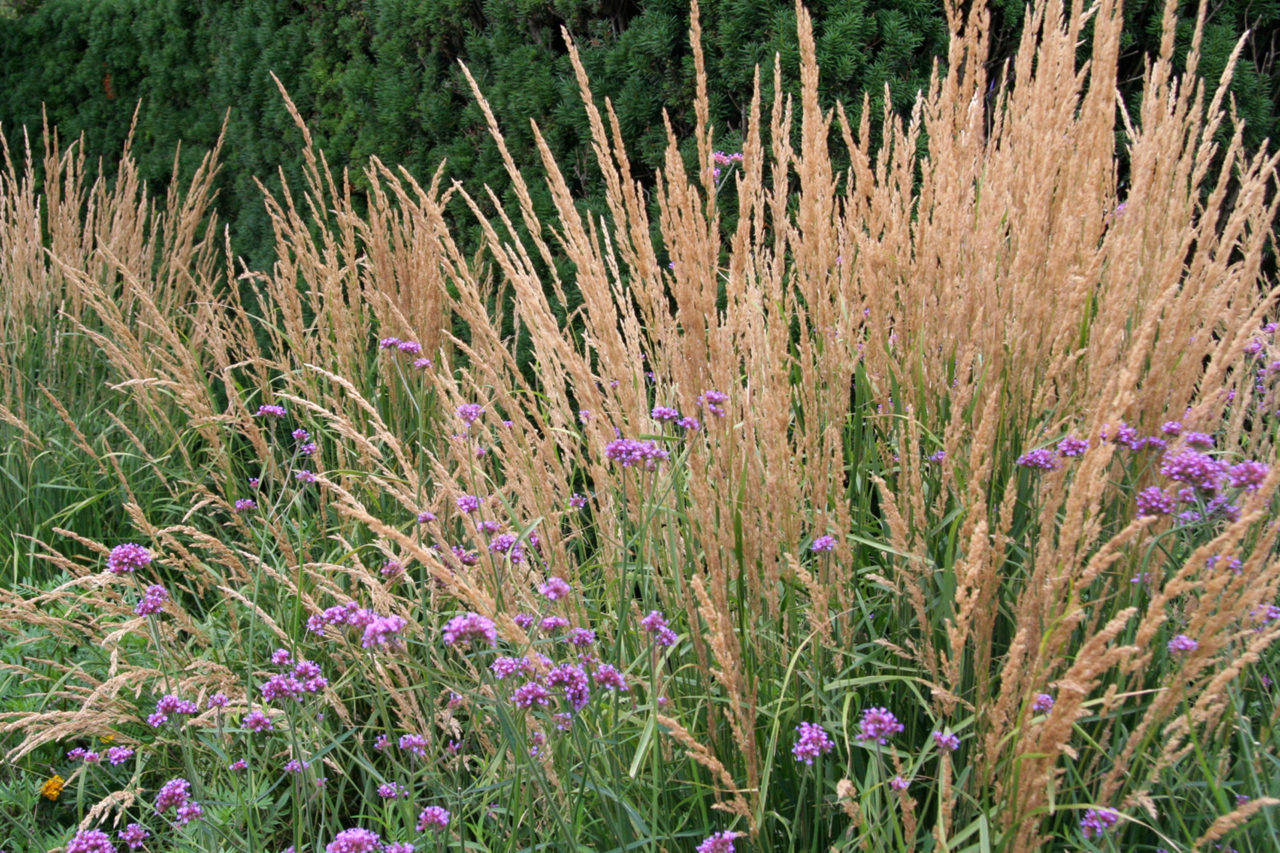](https://abladeofgrass.com/wp-content/uploads/blog-calamagrostis-x-acutiflora-karl-foerster-01.jpg "Calamagrostis x acutiflora 'Karl Foerster' (Photo: Hoffman Nursery, Inc.)")
[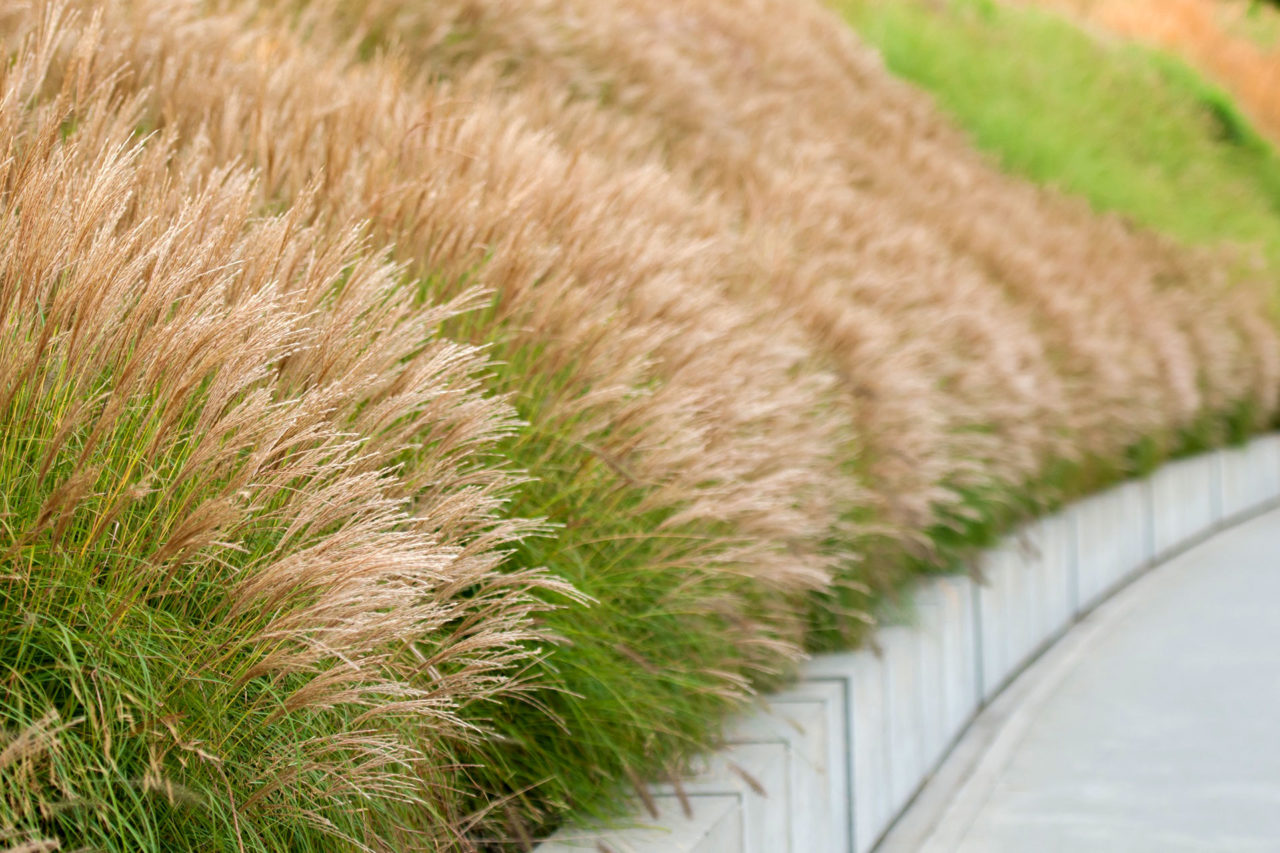](https://abladeofgrass.com/wp-content/uploads/blog-miscanthus-adagio-01.jpg "Miscanthus 'Adagio' (Photo: Exemplar Horticulture)")
[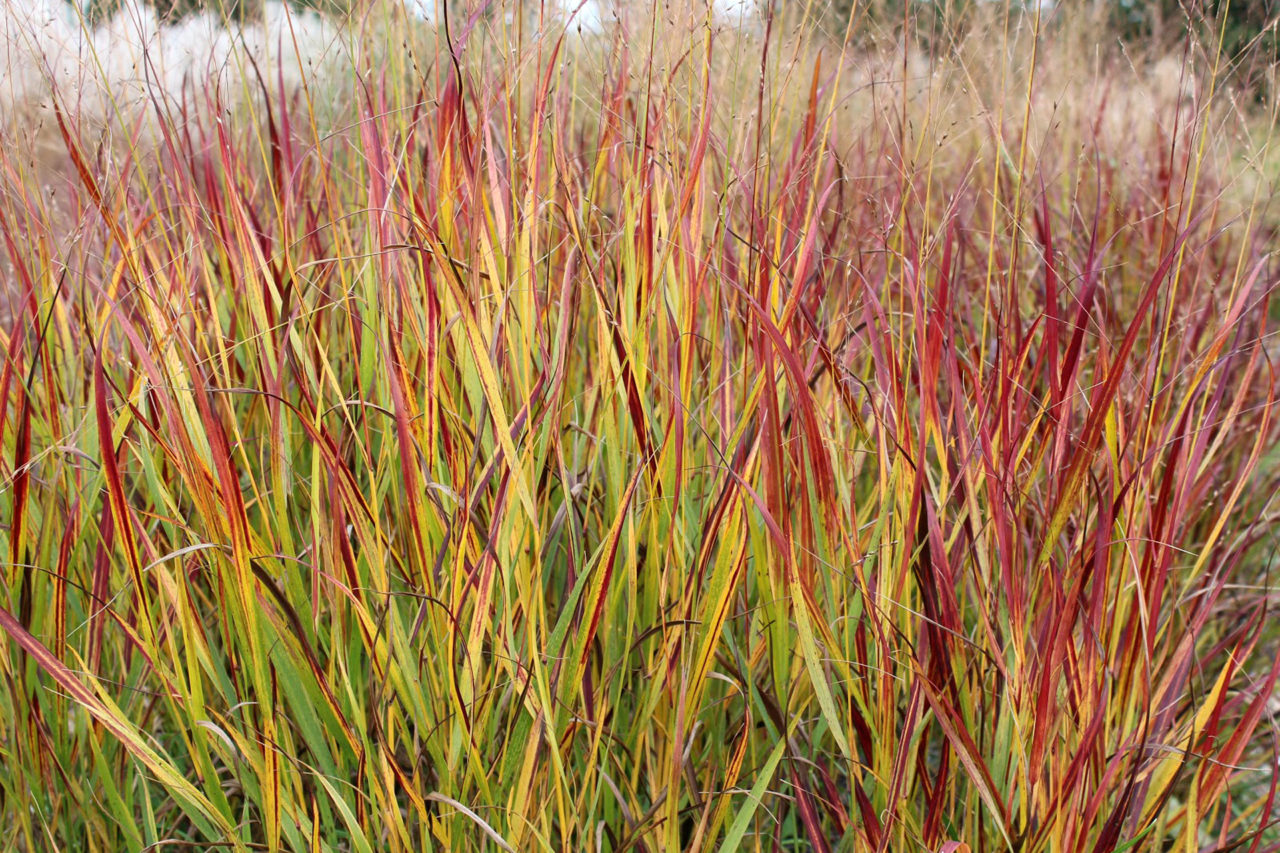](https://abladeofgrass.com/wp-content/uploads/blog-panicum-shenandoah-01.jpg "Panicum "Shenandoah' (Photo: Garden Goods Direct)")
[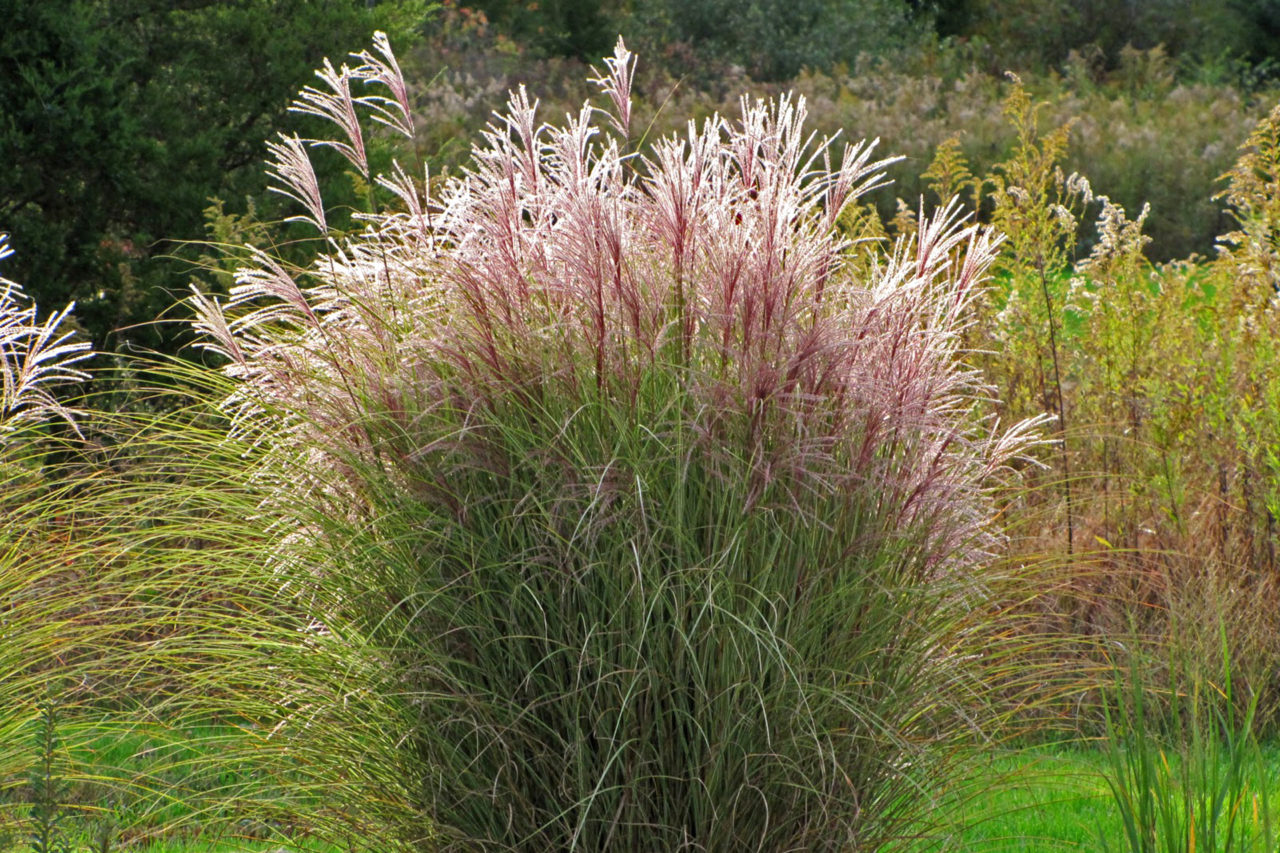](https://abladeofgrass.com/wp-content/uploads/blog-miscanthus-morning-light-01.jpg "Miscanthus 'Morning Light' (Photo: Garden Goods Direct)")
[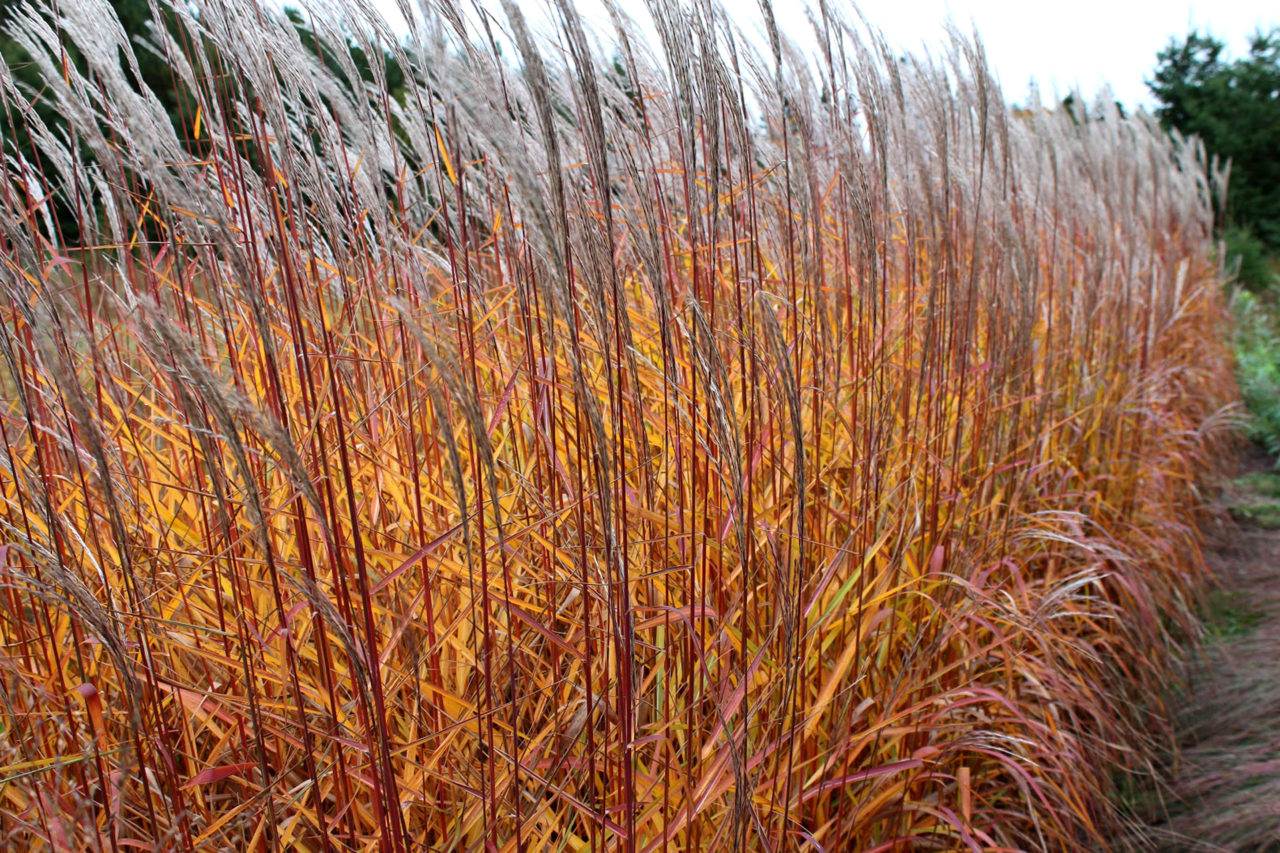](https://abladeofgrass.com/wp-content/uploads/blog-miscanthus-purpurascens-01.jpg "Miscanthus 'Purpurascens' (Photo: Centre de Jardin Brossard)")
[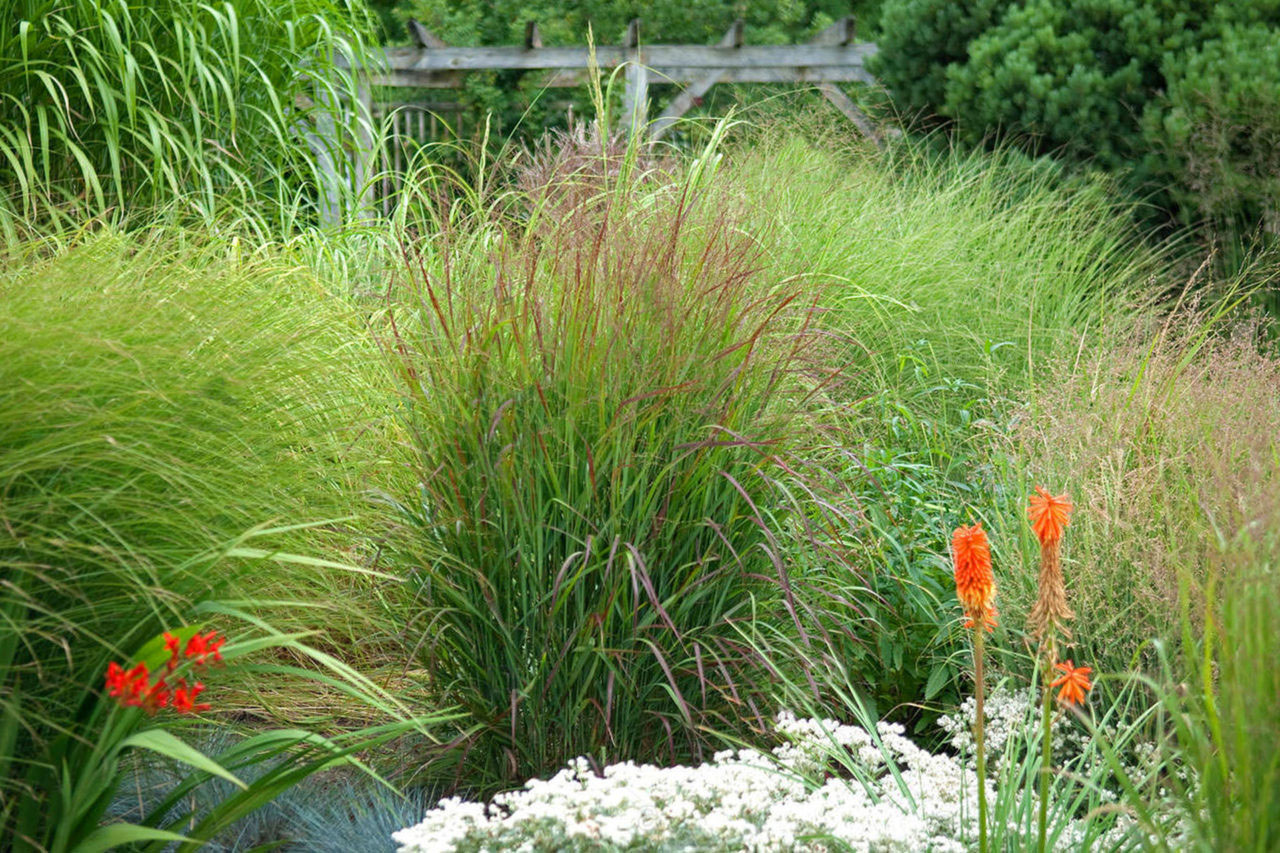](https://abladeofgrass.com/wp-content/uploads/blog-panicum-cloud-none-01.jpg "Panicum 'Cloud Nine'")
## Why Ornamental Grasses Work So Well in Boston Suburbs
[Ornamental grasses](/portfolio/ornamental-grasses/") bring qualities that many flowering plants cannot provide on their own. They move in the wind, catch low-angle sunlight, hold their shape into winter, and soften the edges of stone walls, terraces, walkways, lawns, pools, patios, and planting beds.
They are also practical. Once established, many ornamental grasses are relatively drought tolerant, pest resistant, and lower maintenance than many traditional perennial beds. In most cases, maintenance is limited to cutting back old foliage before new spring growth begins.
That matters in Boston-area suburbs, where landscapes often need to handle mature trees, compacted soils, clay pockets, old stonework, slopes, shade, deer pressure, irrigation limitations, and four distinct seasons. A well-selected grass can make a property feel more relaxed and natural without making it feel unmaintained.
According to the [U.S. Environmental Protection Agency WaterSense program](https://www.epa.gov/watersense/outdoors), outdoor water use accounts for more than 30% of total household water use on average. Choosing well-adapted, lower-maintenance plantings can help reduce the need for excessive irrigation once plants are established.
In a designed landscape, ornamental grasses can be used to:
- soften patios, terraces, walls, steps, and walkways
- add movement to foundation plantings and garden borders
- create seasonal screening around pools, patios, and outdoor dining areas
- replace struggling lawn in difficult areas
- add winter structure when many perennials have gone dormant
- support a more naturalistic planting style
- connect formal architecture with softer garden spaces
- reduce maintenance when selected and placed correctly
For high-end residential properties, ornamental grasses are rarely used as filler. They work best when they are part of a larger [landscape design](/services/landscape-design/) plan that considers hardscape, planting design, irrigation, lighting, drainage, views from inside the home, and long-term [property maintenance](/services/landscape-maintenance/).
> “Ornamental grasses are most successful when they are chosen for the site, not just for their appearance. The right grass can soften stonework, add winter structure, and reduce maintenance, but scale, sunlight, soil, and long-term care all need to be considered.”
> – [Nicole DiGiacomo](/team/), Account Manager, a Blade of Grass
## How to Choose the Right Ornamental Grass for Your Property
The most common mistake homeowners make is choosing an ornamental grass based only on how it looks at the garden center. A young plant in a container may look compact and graceful, but some varieties can mature into large clumps that overpower a walkway, block a window, or crowd nearby shrubs.
Before choosing an ornamental grass, consider these questions:
1. **How much sun does the area receive?** Full-sun grasses usually need at least six hours of direct sun. Shade-tolerant options are often grass-like plants, such as Carex or Hakonechloa.
2. **Is the soil dry, moist, compacted, or poorly drained?** Some grasses tolerate dry soils once established, while others prefer consistent moisture.
3. **How much space is available at maturity?** Height and width matter, especially near walkways, driveways, patios, pools, and front entries.
4. **Do you want structure, softness, privacy, or ground coverage?** Upright grasses behave very differently from low, flowing sedges.
5. **Will the grass be viewed in winter?** Some grasses provide excellent dormant-season interest from inside the home.
6. **How much maintenance do you want?** Most grasses need seasonal cutback, and some may need division as they mature.
7. **Is the plant appropriate for Massachusetts?** Some previously popular grasses now require more caution because of invasive potential.
## Quick Guide: Choosing Ornamental Grasses for Boston Suburban Gardens
Landscape NeedGood OptionsBest UseFull sun and vertical structureCalamagrostis, Panicum, SchizachyriumBorders, driveway edges, contemporary planting beds, sunny foundationsSoft movement near patiosHakonechloa, Carex, SporobolusTerrace edges, stone steps, courtyard gardens, seating areasWinter interestPanicum, Calamagrostis, SchizachyriumViews from inside the home, meadow-style beds, larger garden bordersShade or part shadeCarex, Hakonechloa, DeschampsiaWoodland edges, foundations, shaded paths, areas below mature treesLawn alternative in shadeCarex pensylvanicaLow, natural ground coverage where turf strugglesPoolside texturePanicum, Sporobolus, compact CarexPool gardens, planting pockets, privacy transitions, low-litter areasNaturalistic plantingSchizachyrium, Panicum, SporobolusMeadow-inspired gardens, large properties, conservation-edge landscapesSmall-space plantingCarex, Hakonechloa, compact CalamagrostisBrookline, Newton, Cambridge, and other tighter suburban properties## Best Places to Use Ornamental Grasses Around a Suburban Property
### Along Patios and Terraces
Ornamental grasses are especially effective near [patios and terraces](https://abladeofgrass.com/portfolio/patios-terraces/) because they soften the transition between hardscape and planting. A stone terrace can feel too rigid if it is surrounded only by clipped shrubs or lawn. Grasses introduce movement and texture while keeping the space elegant.
For patios in Wellesley, Weston, Dover, and similar communities, grasses can be used to create a relaxed garden edge around dining areas, fire features, outdoor kitchens, and lounge spaces. Lower grasses and grass-like plants are often best near seating areas so they do not overwhelm the space or interfere with views.
Good options may include Hakonechloa, Carex, Sporobolus, and compact Calamagrostis, depending on sun and soil conditions.
### Near Pools and Plunge Pools
[Around pools](https://abladeofgrass.com/portfolio/pools/), ornamental grasses can add softness without creating a heavy, formal hedge. They can help screen equipment areas, frame steps, create privacy near lounging spaces, and make a pool feel more connected to the surrounding landscape.
Poolside plantings need to be chosen carefully. The best options should be relatively tidy, scaled to the space, and suited to the amount of reflected heat, sun, and irrigation available. Avoid oversized grasses too close to pool edges, narrow paths, or covers.
For pool landscapes, grasses often work best when combined with evergreens, flowering shrubs, stonework, and [landscape lighting](/services/landscape-lighting/).
### Along Walkways and Driveways
Grasses can make [walks](https://abladeofgrass.com/portfolio/paths-walkways/) and drives feel less utilitarian. A line of upright grasses can create rhythm along a [driveway](https://abladeofgrass.com/portfolio/driveways-approaches/), while lower grasses can soften the edge of a front walk without blocking sightlines.
For front-yard landscapes in Newton, Brookline, Needham, and Wellesley, the goal is usually not to make the property feel wild. The best planting design uses grasses in a controlled, intentional way so the landscape still feels refined from the street.
Compact grasses, sedges, and repeating masses often work better than scattered individual plants.
### Under Mature Trees and Along Woodland Edges
Many Boston suburban properties have mature oaks, maples, pines, hemlocks, or beech trees. These areas often have dry shade, root competition, leaf litter, and limited turf success. Traditional lawn may thin out, moss may appear, and flowering perennials may struggle.
Grass-like plants such as Carex and Hakonechloa can be useful in these conditions. They provide texture and coverage without demanding the same light and water that lawn requires.
For shaded properties in Concord, Lincoln, Carlisle, Weston, and Wayland, sedges can help create a more natural transition between maintained gardens and woodland edges.
### On Slopes and Banks
Grasses can help make [slopes look more intentional](https://abladeofgrass.com/blog/landscape-design-ideas-sloped-yards-greater-boston/), especially where mowing is difficult. They are not a universal erosion-control solution, but when paired with the right soil preparation, ground covers, shrubs, and drainage strategy, they can reduce the need for high-maintenance turf.
On sloped suburban properties, ornamental grasses should be chosen for mature size, root behavior, and long-term maintenance access. A grass that looks beautiful for one season but becomes hard to cut back on a steep bank may not be the right choice.
For properties with drainage concerns, grasses should be selected as part of a broader drainage and grading plan.
### In Meadow-Inspired Gardens
Meadow-inspired planting has become increasingly popular for larger properties across MetroWest and the western Boston suburbs. Native grasses such as Panicum, Schizachyrium, and Sporobolus can help create a soft, layered landscape that feels seasonal and alive.
This style works best when it is designed with structure. A meadow-style garden still needs edges, pathways, seasonal maintenance, and thoughtful plant combinations. Without that structure, it can quickly look unplanned.
For larger properties in Dover, Concord, Carlisle, Lincoln, Sudbury, and Wayland, ornamental grasses can help create a refined naturalistic landscape that connects lawns, gardens, woods, and outdoor living areas.
## Full-Sun Ornamental Grasses
Many of the most familiar ornamental grasses prefer full sun. These are often the best choices for open lawns, sunny borders, pool areas, driveway edges, patios, and meadow-style planting.
### Calamagrostis
[](https://abladeofgrass.com/wp-content/uploads/BLOG-Ornamental-Grasses-Calamagrostis-inpage-01-1.jpg "Calamagrostis adds upright structure, soft movement, and golden seedheads. Best used in sunny borders, walkway edges, and refined planting beds where a clean vertical form is needed.")
Calamagrostis, often known through varieties such as feather reed grass, is valued for its upright habit and clean vertical form. It works well where homeowners want structure without too much width.
Because it stays relatively narrow compared with many larger grasses, Calamagrostis can be useful along walkways, garden edges, contemporary planting beds, and tight spaces where a broader grass would feel too loose.
It is often used for:
- upright structure in sunny borders
- repetition along paths or driveways
- softening modern stonework
- adding winter interest
- creating a refined, architectural planting rhythm
Calamagrostis is a good fit when the design calls for a grass that looks controlled, vertical, and polished.
### Panicum
[](https://abladeofgrass.com/wp-content/uploads/blog-panicum-cloud-none-01.jpg "Panicum 'Cloud Nine'")
Panicum, or switchgrass, is a native grass that can bring height, airiness, and seasonal color to sunny planting beds. Many varieties have upright forms, delicate seedheads, and attractive fall tones.
Panicum can work beautifully in larger suburban landscapes where there is enough space for it to mature naturally. It pairs well with flowering perennials, shrubs, boulders, stone walls, and meadow-inspired plantings.
The [UMass Extension guide to North American plants for New England gardens](https://www.umass.edu/agriculture-food-environment/landscape/fact-sheets/north-american-plants-for-new-england-gardens) notes the value of using plants of North American origin in designed landscapes, especially because of the diversity of habitats represented across the region.
Panicum is often useful for:
- sunny borders
- naturalistic planting
- winter interest
- larger residential landscapes
- meadow-style gardens
- soft screening around outdoor living areas
Because some varieties can grow tall, Panicum should be placed where it will not block important views, windows, walkways, or sightlines.
### Schizachyrium Scoparium
[](https://abladeofgrass.com/wp-content/uploads/BLOG-Ornamental-Grasses-Schizachyrium-Scoparium-inpage-01.jpg "Schizachyrium scoparium, or little bluestem, brings blue-green foliage, fine texture, and warm seasonal color. Best used in sunny, naturalistic plantings, meadow-inspired gardens, and low-maintenance borders.")
Schizachyrium scoparium, commonly known as little bluestem, is a native grass with fine texture, upright growth, and strong late-season color. It is especially useful in sunny, well-drained areas where a more naturalistic effect is desired.
Little bluestem can work well in meadow-style planting, pollinator-friendly gardens, sunny slopes, and larger planting beds. It tends to feel less formal than Calamagrostis, which makes it especially useful where a property transitions from maintained lawn to a more natural edge.
Use little bluestem where you want:
- native plant value
- fine texture
- fall color
- movement
- a meadow-inspired look
- seasonal interest without heavy maintenance
The [University of New Hampshire Extension](https://extension.unh.edu/blog/2021/02/what-are-some-best-native-ornamental-grasses-landscapes) includes several native ornamental grasses among its recommendations for New England landscapes, including species that support meadow-style and naturalistic planting.
### Sporobolus Heterolepis
[](https://abladeofgrass.com/wp-content/uploads/BLOG-Ornamental-Grasses-Sporobolus-Heterolepis-inpage-01.jpg "Sporobolus heterolepis, or prairie dropseed, offers delicate texture, airy seedheads, and a graceful low habit. Best used along patios, paths, garden edges, and sunny planting beds where softness is desired.")
Sporobolus heterolepis, commonly known as prairie dropseed, is a refined, lower-growing native grass with fine texture and a soft, graceful habit. It is not usually used for height or screening. Instead, it is valuable for texture, edging, and quiet movement.
Prairie dropseed can be an excellent choice near patios, walkways, sunny garden edges, and smaller planting beds where a taller grass would feel too bulky.
It is especially useful for:
- softening stone edges
- sunny borders
- low-maintenance planting beds
- naturalistic garden transitions
- smaller spaces where height is not desired
Because it has a more delicate presence, it often looks best when planted in groups rather than as a single isolated specimen.
## Ornamental Grasses and Grass-Like Plants for Shade
Not every ornamental grass is suited to shade. In fact, many true grasses become thin, floppy, or weak without enough sun. For shaded suburban properties, grass-like plants are often the better solution.
These plants can be especially helpful under mature trees, along shaded foundations, beside north-facing walkways, and in woodland-edge gardens.
### Carex
[](https://abladeofgrass.com/wp-content/uploads/BLOG-Ornamental-Grasses-Carex-inpage-01.jpg "Carex provides low, grass-like texture for shade and part-shade gardens. Best used under trees, along woodland edges, near foundations, or as a lawn alternative where turf struggles.")
Carex, commonly known as sedge, is one of the most useful grass-like plants for shade and part shade. Many sedges have a soft, fine texture and can form attractive ground-level coverage where traditional lawn struggles.
Carex can be especially helpful on properties with mature trees, filtered light, and dry shade. It is often used as a lawn alternative, pathway edge, or woodland garden layer.
Carex works well for:
- shade and part shade
- woodland edges
- low ground coverage
- areas where turf is thin
- softening foundations and paths
- naturalistic planting below trees
Carex pensylvanica, or Pennsylvania sedge, is often discussed as a useful option for shaded landscapes in the Northeast. It can create a low, soft, natural look when used correctly.
### Hakonechloa
[](https://abladeofgrass.com/wp-content/uploads/BLOG-Ornamental-Grasses-Hakonechloa-inpage-01.jpg "Hakonechloa, or Japanese forest grass, creates bright, cascading texture in shaded gardens. Best used along stone paths, steps, woodland edges, and patios where a softer, flowing effect is needed.")
Hakonechloa, commonly known as Japanese forest grass, is valued for its flowing habit and elegant foliage. It is one of the best choices for adding softness to shaded or partly shaded spaces.
Unlike upright grasses, Hakonechloa has a cascading form. It works especially well along steps, garden paths, shaded patios, and stone walls where its texture can spill gently over an edge.
Hakonechloa is a strong choice for:
- part-shade gardens
- shaded stone steps
- courtyard gardens
- walkway edges
- foundation beds with filtered light
- softening walls or boulders
It has a refined look that works well on high-end residential properties, especially when repeated in drifts.
### Deschampsia Cespitosa
[](https://abladeofgrass.com/wp-content/uploads/BLOG-Ornamental-Grasses-Deschampsia-Cespitosa-inpage-01.jpg "Deschampsia cespitosa, or tufted hairgrass, adds fine texture and airy seedheads in part-shade or moist garden settings. Best used in woodland edges, shaded borders, and naturalistic planting beds.")
Deschampsia cespitosa, commonly known as tufted hairgrass, can be useful in part shade and moist soils. It offers fine texture and airy seedheads, making it a good fit for naturalistic gardens, woodland edges, and cooler planting conditions.
It is not the right choice for every property, but it can be useful when the site has more moisture than typical dry-shade conditions.
Use Deschampsia where the design calls for:
- fine texture
- part-shade tolerance
- airy movement
- a naturalistic look
- moist or cool planting conditions
---
**Related Blog:** [Native Ground Covers for Shade in Boston-Area Landscapes](https://abladeofgrass.com/blog/native-ground-covers-shade-boston-area-landscapes/)
---
## Native and Lower-Risk Ornamental Grass Options
[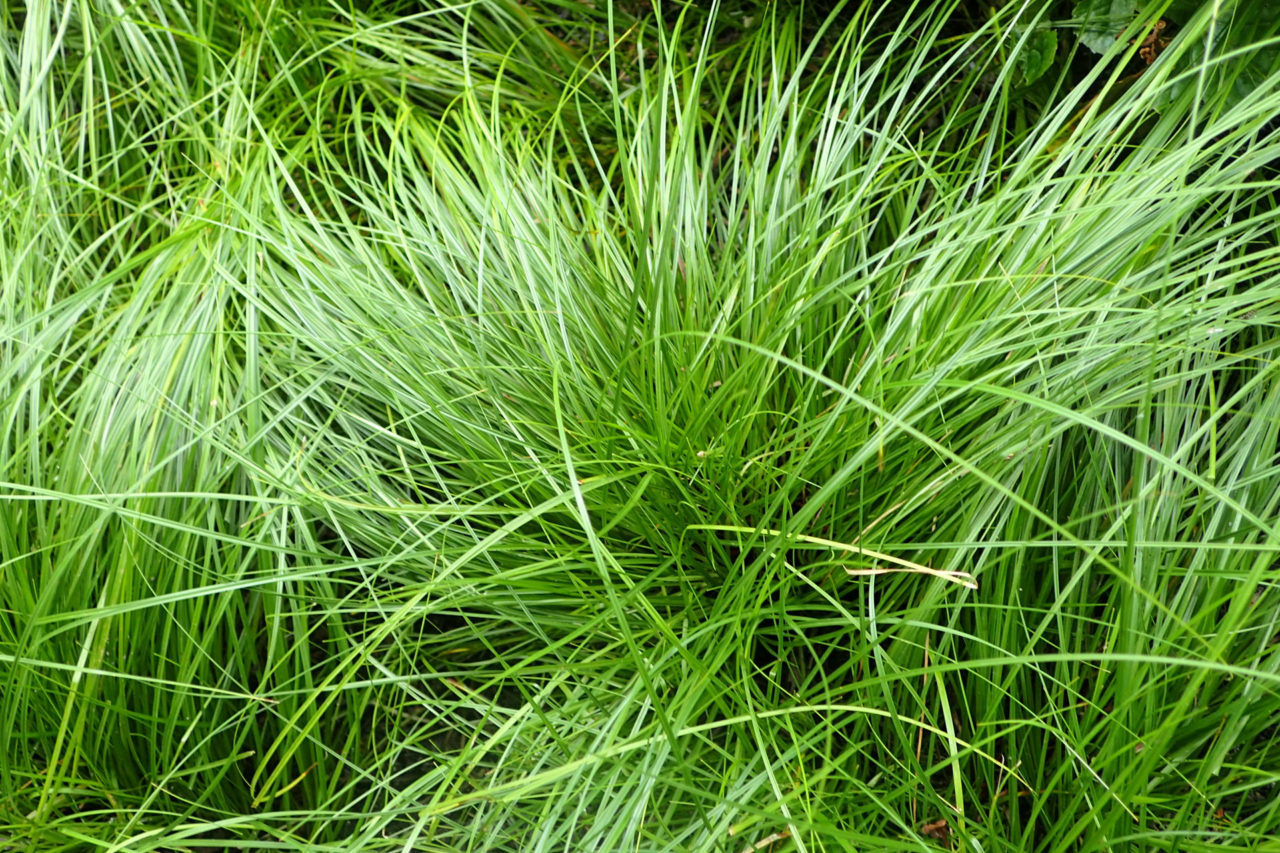](https://abladeofgrass.com/wp-content/uploads/blog-carex-pennsylvanica-01.jpg "Carex ‘Pennsylvanica’")
[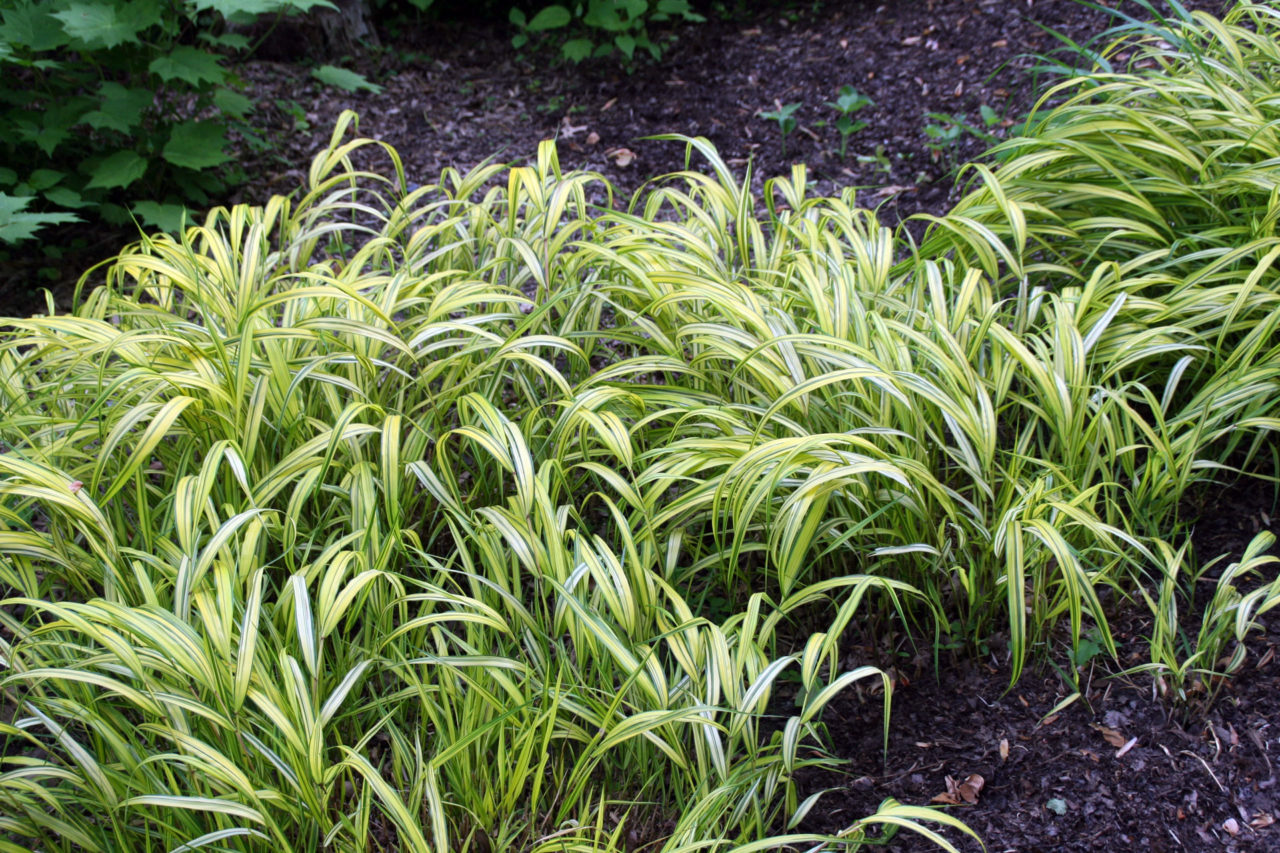](https://abladeofgrass.com/wp-content/uploads/blog-hakonechloa-aureola-01.jpg "Hakonechloa ‘Aureola’")
[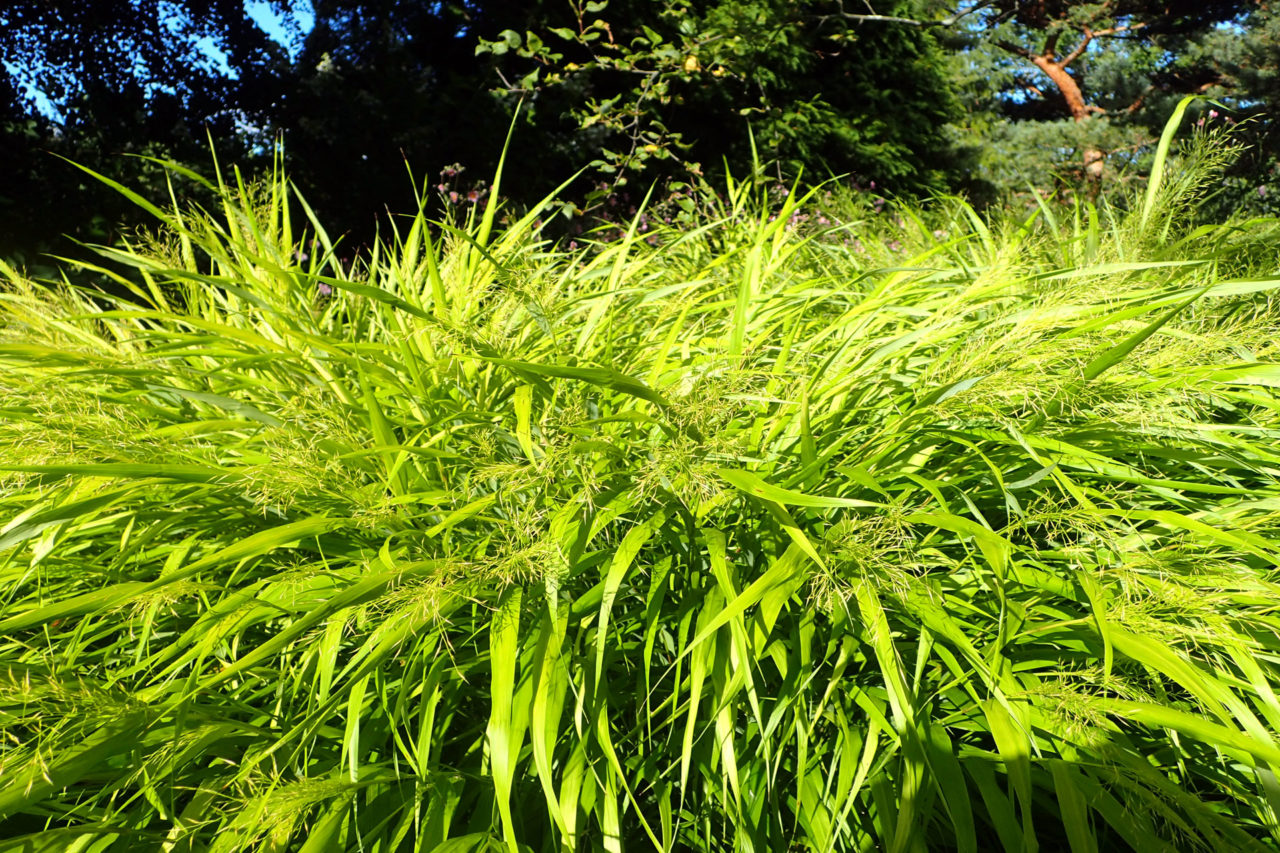](https://abladeofgrass.com/wp-content/uploads/blog-hakonechloa-all-gold-01.jpg "Hakonechloa 'All Gold' (Photo: Yew Dell Botanical Gardens)")
[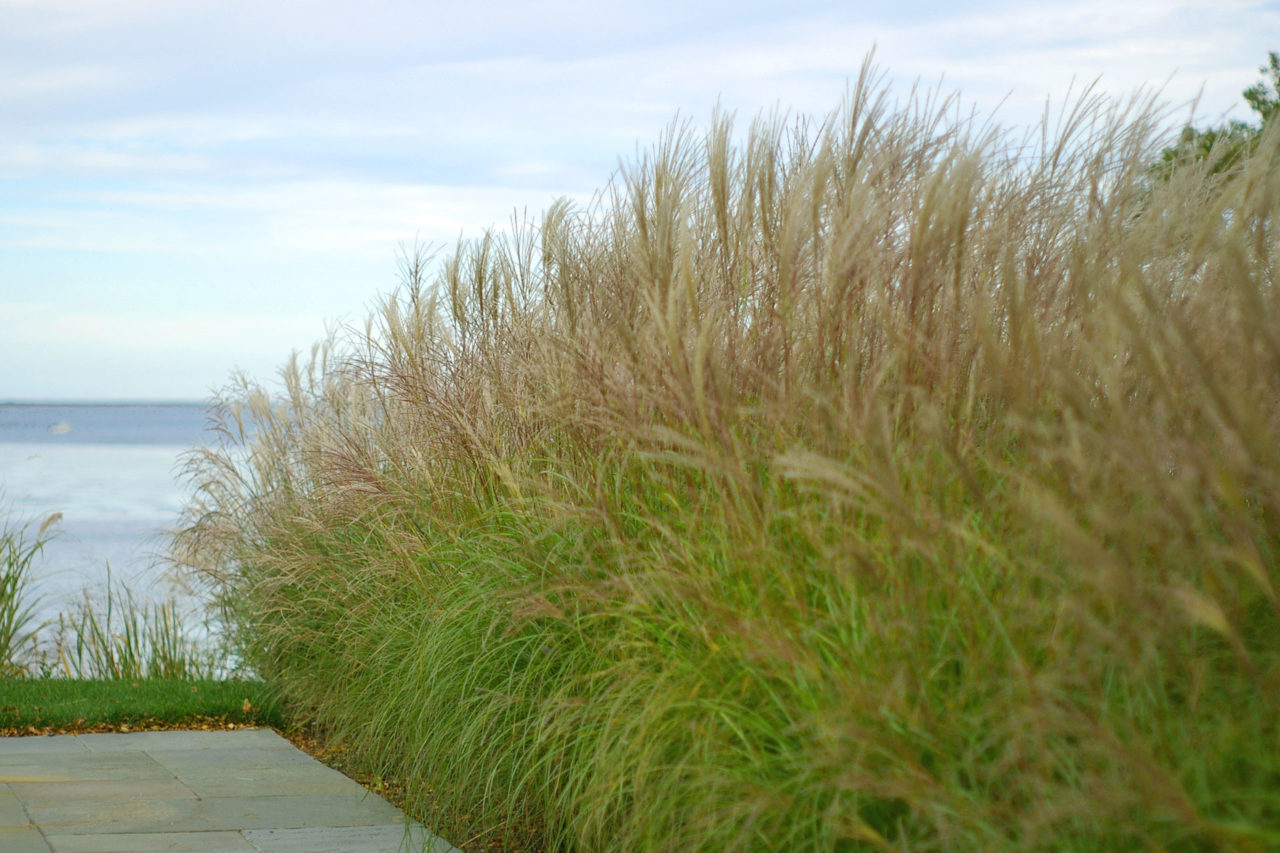](https://abladeofgrass.com/wp-content/uploads/blog-pennisetum-hameln-02.jpg "Pennisetum ‘Hameln’ forms compact mounds of arching green foliage topped with soft, bottlebrush-like flower plumes that add movement and texture to the garden.")
Many properties have low-light areas where ornamental grasses and grass-like plants can thrive better than traditional turf.
Responsible plant selection matters in Massachusetts, especially on properties near conservation land, wetlands, woodland edges, meadows, coastal areas, or open space. Some ornamental grasses that were once widely planted are now being viewed more carefully because of their ability to spread beyond maintained gardens.
For many Boston suburban properties, native and lower-risk grasses can provide the same movement, texture, and seasonal interest while fitting more comfortably into a resilient planting plan.
The [Native Plant Trust](https://plantfinder.nativeplanttrust.org/cat/Ornamental-Grass) identifies several ornamental grasses appropriate for New England native plantings, including switchgrass, little bluestem, yellow prairie grass, prairie dropseed, and gama grass.
Strong native and lower-risk options may include:
- **Panicum virgatum:** A native switchgrass with upright form, airy seedheads, and excellent late-season texture.
- **Schizachyrium scoparium:** A fine-textured native grass with strong fall color and a natural meadow-like feel.
- **Sporobolus heterolepis:** A refined, lower grass with delicate texture and a graceful habit.
- **Carex pensylvanica:** A useful grass-like sedge for shaded areas where lawn struggles.
- **Deschampsia cespitosa:** A cool-season grass that can work well in part shade and moist soils.
- **Sorghastrum nutans:** A taller native grass that may be useful in larger meadow-style plantings.
Native grasses are not automatically low maintenance in every condition. They still need the right siting, spacing, soil preparation, and establishment care. However, when used well, they can help create landscapes that feel connected to the New England setting.
## A Note About Miscanthus in Massachusetts
Miscanthus has long been used in residential landscapes for its height, movement, and late-season plumes. Many homeowners recognize it as maiden grass, Chinese silvergrass, or Eulalia.
However, Massachusetts now lists *Miscanthus sinensis* on the state’s Prohibited Plant List. The [Massachusetts Prohibited Plant List](https://www.mass.gov/info-details/massachusetts-prohibited-plant-list) includes *Miscanthus sinensis*, and the state has also published [updates to the Prohibited Plant List](https://www.mass.gov/info-details/massachusetts-prohibited-plant-list-updates) that address newly added invasive plants.
For new planting plans, Boston-area homeowners should consider native or lower-risk alternatives such as Panicum, Schizachyrium, Sporobolus, Carex, and Deschampsia.
If Miscanthus already exists on a property, it should be evaluated carefully. The right approach may depend on the specific plant, location, property goals, proximity to natural areas, and maintenance plan.
---
**Related Blog:** [12 Invasive Plants Commonly Found in Massachusetts Landscapes and What to Plant Instead](https://abladeofgrass.com/blog/invasive-plants-massachusetts-alternatives/)
---
## Choosing Ornamental Grasses by Property Goal
### If You Want More Privacy
Use upright grasses with enough height and density to create seasonal screening. Panicum and taller native grasses may help soften views around patios, pools, dining areas, or property edges.
Keep in mind that most ornamental grasses are not evergreen. They may provide screening during the growing season and some winter structure, but they will not replace evergreen hedging where year-round privacy is needed.
For [year-round privacy](https://abladeofgrass.com/blog/best-privacy-trees-massachusetts/), grasses are often best combined with evergreen shrubs, trees, fencing, walls, or layered planting.
---
**Related Blog:** [Best Privacy Trees for Massachusetts: Top Options That Thrive in Boston’s Climate](https://abladeofgrass.com/blog/best-privacy-trees-massachusetts/)
---
### If You Want Less Lawn
For shaded areas where turf struggles, consider sedges such as Carex. These can create a softer, more natural ground layer under trees or along woodland edges.
For sunny areas, native grasses can be part of a meadow-inspired planting plan, but replacing lawn with grasses should be carefully designed. It requires a clear edge, a maintenance strategy, and thoughtful plant combinations.
A lawn alternative should not simply look like unmowed grass. It should look intentional.
### If You Want a More Polished Front Yard
Use grasses in controlled masses, repeated patterns, or clean borders. Avoid scattering too many single grass clumps across a front foundation bed.
For a refined suburban front yard, grasses should support the architecture of the home. They can soften stone steps, add texture near evergreens, or create rhythm along a walkway.
Good choices may include Calamagrostis, compact Carex, Hakonechloa in part shade, or lower native grasses depending on the site.
### If You Want a Naturalistic Garden
Use grasses as part of a layered planting plan with perennials, shrubs, and seasonal structure. Panicum, Schizachyrium, Sporobolus, and other native grasses can help create a meadow-like feeling while still fitting a designed residential landscape.
Naturalistic does not mean unmanaged. The most successful meadow-inspired gardens still have clear edges, paths, maintenance access, and seasonal cutback plans.
### If You Want Better Winter Interest
Choose grasses that hold their form well after frost. Upright grasses can look beautiful in winter when backlit by low sun or dusted with snow.
This is especially valuable where planting beds are visible from kitchen windows, family rooms, entries, patios, and primary bedroom views.
Panicum, Calamagrostis, and little bluestem can all contribute winter structure when placed correctly.
### If You Want Lower Maintenance
Choose grasses that fit the site from the start. A grass is not truly low maintenance if it becomes too large for the bed, flops over a path, needs constant division, blocks irrigation heads, or overwhelms nearby plants.
Lower maintenance starts with correct selection, proper spacing, good soil preparation, and realistic expectations for seasonal care.
---
**Related Blog:** [How to Design a Low-Maintenance Garden in Boston](https://abogstage.wpengine.com/blog/how-to-design-a-low-maintenance-garden/)
---
## Common Mistakes to Avoid
Ornamental grasses are forgiving in many ways, but they are not foolproof. Poor placement can create problems that become more noticeable as the plants mature.
Avoid these common mistakes:
- **Planting too close to walkways:** Mature grasses can flop or spread into paths, steps, and driveways.
- **Ignoring mature size:** A small nursery container can become a large clump within a few seasons.
- **Using sun grasses in shade:** Many full-sun grasses become weak or thin in low light.
- **Overusing one variety:** Too much repetition can feel commercial or monotonous if not balanced with other plants.
- **Choosing plants without checking invasive concerns:** Some familiar ornamental grasses are no longer appropriate for new Massachusetts landscapes.
- **Skipping irrigation planning:** New grasses still need consistent watering while they establish.
- **Cutting everything back too early:** Some grasses provide valuable winter interest and should remain standing until late winter or early spring.
## How Ornamental Grasses Fit Into a Larger Landscape Plan
Ornamental grasses are most effective when they are not treated as isolated accents. They should support the larger design of the property.
A well-designed suburban landscape may use grasses to connect:
- front entry plantings
- driveway borders
- patios and terraces
- pool areas
- outdoor kitchens
- stone walls and steps
- woodland edges
- foundation plantings
- privacy screening
- seasonal containers and garden beds
- landscape lighting and irrigation zones
When grasses are chosen as part of a larger [residential landscape design](/services/landscape-design/), they can help unify different parts of the property. They can make a patio feel more settled, a walkway feel more inviting, a lawn edge feel softer, and a garden feel more alive through the seasons.
They also work well with other services such as [masonry and stonework](/services/masonry/), [planting design](/services/planting-design/), [irrigation](/services/irrigation/), [landscape lighting](/services/landscape-lighting/), and long-term [landscape maintenance](/services/landscape-maintenance/).
---
**Related Blog:** [The Landscape Master Plan: Why the Best Boston Properties Are Designed in Phases](https://abladeofgrass.com/blog/landscape-master-plan-boston/)
---
## Maintenance: What Homeowners Should Expect
Many ornamental grasses are considered low maintenance, but low maintenance does not mean no maintenance.
Most grasses benefit from:
- regular watering during establishment
- seasonal cutback in late winter or early spring
- occasional division if the clump becomes too large or thin in the center
- removal of dead foliage
- monitoring for crowding near paths, walls, patios, or other plants
- adjustments to irrigation as plants mature
For many properties, leaving grasses standing through winter is part of the design. The seedheads and foliage can add movement, catch frost, and provide structure during months when many gardens feel bare.
Cutback is usually done before new growth begins. Timing may vary depending on the plant, site, and maintenance schedule.
## Ornamental Grasses for Different Boston Suburban Property Types
### Wellesley, Weston, and Dover Properties
Larger residential properties often have room for [layered planting](https://abladeofgrass.com/blog/what-is-layered-planting/), pool gardens, meadow-inspired areas, long driveway borders, and broad foundation beds. Taller grasses and native meadow-style plantings can work well when balanced with evergreen structure and long-term maintenance.
### Newton, Brookline, and Needham Properties
Smaller lots and closer neighboring homes often call for more controlled plant choices. Compact grasses, sedges, and refined shade-tolerant plants may work better than large, spreading grasses. These properties often benefit from grasses that soften patios, steps, walls, and tight garden beds without overwhelming the space.
### Concord, Lincoln, Carlisle, Sudbury, and Wayland Properties
Properties near woods, [wetlands](https://abladeofgrass.com/blog/massachusetts-wetlands-laws-landscaping/), fields, or conservation land should be especially thoughtful about plant selection. Native and lower-risk grasses are often a strong fit, particularly where the landscape transitions from maintained gardens to more natural edges.
### Cape Cod and Coastal Properties
Coastal sites bring their own challenges, including wind, salt exposure, sandy soils, and drought stress. The Massachusetts Office of Coastal Zone Management provides guidance on [coastal landscaping grasses and perennials](https://www.mass.gov/info-details/coastal-landscaping-in-massachusetts-grasses-and-perennials) that may be useful when selecting plants for coastal Massachusetts properties.
Grasses are one part of a successful coastal planting plan. Our guide to [landscaping for Massachusetts coastal properties](https://abladeofgrass.com/blog/coastal-landscaping-massachusetts/)considers how exposed planting areas relate to sheltered gardens and outdoor living spaces.
## FAQ: Ornamental Grasses for Boston Suburban Landscapes
**Q: Are ornamental grasses low maintenance?**
**A:** Many ornamental grasses are low maintenance once established. Most need seasonal cutback, occasional division, and proper watering during establishment. The biggest factor is choosing a grass that fits the site and mature space available.
**Q: What ornamental grasses grow best in shade?**
**A:** Many true ornamental grasses prefer sun, but grass-like plants such as Carex and Hakonechloa can work well in shade or part shade. These are useful under trees, along shaded paths, and near north-facing foundations.
**Q: Can ornamental grasses replace lawn?**
**A:** In some areas, yes. Carex can be useful where lawn struggles in shade, while native grasses can be part of meadow-inspired planting in sunny areas. Lawn replacement should be designed carefully so the result looks intentional and is manageable over time.
**Q: Are ornamental grasses good around patios?**
**A:** Yes. Ornamental grasses are excellent near patios because they soften stone, add movement, and make outdoor living spaces feel more connected to the garden. Lower or more compact grasses are usually best near seating areas.
**Q: Do ornamental grasses need irrigation?**
**A:** Newly planted grasses need consistent watering while they establish. Once established, many are relatively drought tolerant, but irrigation needs depend on the plant, soil, exposure, and weather conditions.
**Q: Should ornamental grasses be cut back in fall or spring?**
**A:** Many grasses are left standing through winter for structure and seasonal interest, then cut back in late winter or early spring before new growth begins. The best timing depends on the variety and the maintenance goals for the property.
**Q: Is Miscanthus invasive in Massachusetts?**
**A:** Massachusetts lists *Miscanthus sinensis*, also known as Chinese silvergrass, Eulalia, or maiden grass, on the state’s Prohibited Plant List. For new planting plans, homeowners should consider native or lower-risk alternatives such as Panicum, Schizachyrium, Sporobolus, Carex, and Deschampsia.
**Q: What is the best ornamental grass for privacy?**
**A:** There is no single best grass for privacy. Taller grasses such as Panicum may provide seasonal screening, but they are not evergreen. For year-round privacy, ornamental grasses are usually best combined with evergreens, shrubs, fencing, or layered planting.
**Q: What is the best ornamental grass for a refined suburban front yard?**
**A:** For a polished front yard, choose grasses with controlled size and clean form. Calamagrostis, compact Carex, Hakonechloa, and lower native grasses can work well depending on sun, shade, and the style of the home.
## Choosing the Right Ornamental Grass Starts With the Site
Ornamental grasses can make a suburban landscape feel more graceful, seasonal, and complete. They can soften stonework, bring movement to planting beds, reduce reliance on high-maintenance lawn, and add structure long after summer flowers have faded.
The best results come from thoughtful selection. A grass should be chosen for the property, not just the plant tag. Sun, shade, soil, drainage, mature size, architecture, maintenance expectations, and local environmental concerns all influence what will work best.
For homeowners in Greater Boston, MetroWest, and surrounding suburbs, ornamental grasses can be a beautiful part of a broader landscape plan that includes planting design, patios, walkways, lighting, irrigation, drainage, and long-term property care.
[Contact us](/contact/) to discuss ornamental grasses, planting design, and a landscape plan tailored to your Boston-area property.
[Grass](https://abladeofgrass.com/tag/grass/), [Low Maintenance](https://abladeofgrass.com/tag/low-maintenance/), [Perennials](https://abladeofgrass.com/tag/perennials/)
- [](http://www.facebook.com/share.php?u=https://abladeofgrass.com/blog/easy-grow-perennials-ornamental-grasses/&title=Ornamental+Grasses+for+Boston+Suburban+Landscapes)
- [](http://twitter.com/intent/tweet?text=Ornamental+Grasses+for+Boston+Suburban+Landscapes+https://abladeofgrass.com/blog/easy-grow-perennials-ornamental-grasses/)
- [](http://pinterest.com/pin/create/button/?url=https://abladeofgrass.com/blog/easy-grow-perennials-ornamental-grasses/&media=https://abladeofgrass.com/wp-content/uploads/blog-easy-to-grow-perennials-ornamental-grasses-01.jpg&description=Ornamental+Grasses+for+Boston+Suburban+Landscapes)
- [](http://www.tumblr.com/share/link?url=https://abladeofgrass.com/blog/easy-grow-perennials-ornamental-grasses/&name=Ornamental+Grasses+for+Boston+Suburban+Landscapes)
- [](mailto:?subject=Site%20Sharing&body=Check%20out%20this%20site-https://abladeofgrass.com/blog/easy-grow-perennials-ornamental-grasses/)

#### Peter DiZinno
Peter has been an Account Manager with Blade for 6 years and has been working in the landscape industry since 2002. Enjoying everything that makes for a successful landscape, he is a member of numerous trade organizations and is a Massachusetts Certified Landscape Professional, a Massachusetts Certified Horticulturist, and an Accredited Organic Land Care Professional. See all of [Peter's posts](/author/peterdizinno/).
### similar posts
[
#### Why Is Landscape Design So Expensive in Boston?
](https://abladeofgrass.com/blog/why-is-landscape-design-so-expensive/)
[
#### Top 10 Things to Consider When Designing an Outdoor Dining Area
](https://abladeofgrass.com/blog/outdoor-dining-area-design/)
[
#### Best Stone and Hardscape Materials for Boston-Area Landscapes
](https://abladeofgrass.com/blog/best-stone-hardscape-materials-boston-landscapes/)
- ### in this blog post
- ### recent blog posts
[
Coastal Landscaping in Massachusetts: Designing for Salt, Wind, and Sandy Soil](https://abladeofgrass.com/?post_type=post&p=96818)[
Rhododendrons: Spring Flowers and Structure for Boston-Area Landscapes](https://abladeofgrass.com/?post_type=post&p=96800)[
Grass, Clover, or Both? Finding the Right Balance](https://abladeofgrass.com/?post_type=post&p=96651)
- ### we're making news
[
Mid-Century Modern House Tour | Wayland Museum & Historical Society](https://abladeofgrass.com/?post_type=post&p=96774)[
Compact in Cambridge Wins APLD’s Gold Award for Residential Design | APLD](https://abladeofgrass.com/?post_type=post&p=96665)[
14 Charming Ways to Upgrade Your Garden | Martha Stewart](https://abladeofgrass.com/?post_type=post&p=96196)
- ### ready to transform your property?
Learn how our award-winning designers and installers can transform your property into a beautiful living space. [Contact us today.](https://abladeofgrass.com/contact/)
[ Schedule a Consultation ](https://abladeofgrass.com/contact/)