What Is the Difference Between Hardscaping and Landscaping?
Transforming an outdoor space can dramatically improve how a property looks, functions, and feels. For Boston-area homeowners, that often means balancing two closely connected parts of landscape design: hardscaping and landscaping.
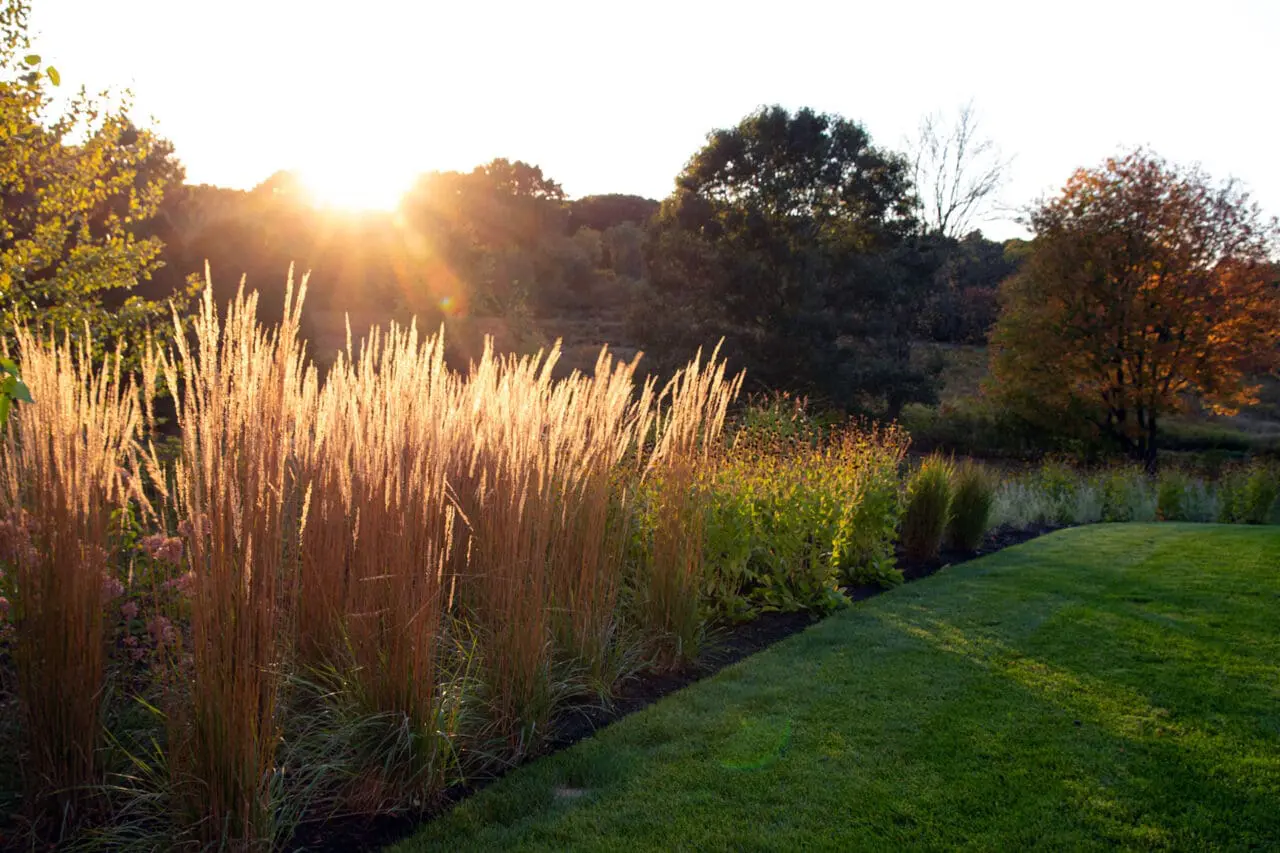
The terms are often used together, but they are not interchangeable. Hardscaping refers to the built, non-living elements of an outdoor space, such as patios, walkways, stone walls, steps, terraces, fire features, and outdoor kitchens. Landscaping refers more broadly to the living elements, including trees, shrubs, perennials, lawns, soil, mulch, and planting design.
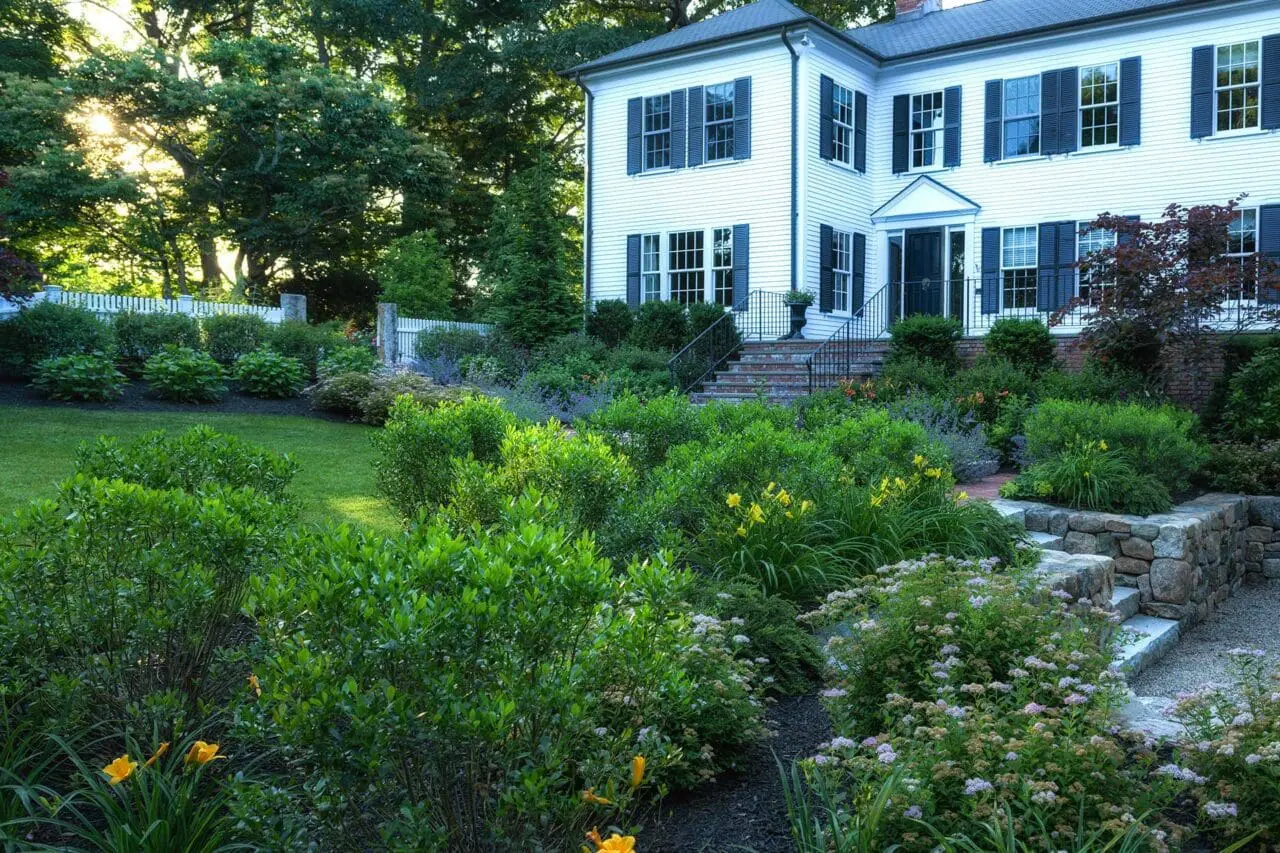
The best residential landscapes use both. Hardscaping creates structure, circulation, and usable outdoor rooms. Landscaping softens those spaces, adds seasonal interest, supports plant health, and helps the property feel connected to its setting.
Understanding the difference can help homeowners ask better questions, compare proposals more confidently, and choose a landscape company that can manage both the design and construction details required for a cohesive result.
Key Takeaways
- Hardscaping includes non-living outdoor elements such as patios, walkways, stone walls, steps, fire features, and outdoor kitchens.
- Landscaping includes living elements such as trees, shrubs, lawns, perennial gardens, soil, mulch, and planting design.
- Hardscaping provides structure and function, while landscaping adds softness, seasonal interest, and ecological value.
- The most successful outdoor spaces combine both in a coordinated plan.
- For Greater Boston properties, drainage, freeze-thaw cycles, soil conditions, and long-term maintenance should guide both hardscape and landscape decisions.
What Is Hardscaping?
Hardscaping refers to the built, non-living elements of an outdoor environment. These features often form the framework of the landscape, shaping how people move through the property, where they gather, and how outdoor spaces are organized.
Common hardscape features include:
- Patios and terraces: Outdoor living areas designed for dining, entertaining, lounging, or connecting the home to the garden.
- Walkways and garden paths: Circulation routes that guide movement between entries, patios, lawns, gardens, and secondary spaces.
- Stone walls and retaining walls: Structural elements that manage grade changes, prevent erosion, and create usable level areas.
- Steps and stairs: Transitions between elevations that should be safe, comfortable, and visually connected to the surrounding landscape.
- Fire pits and outdoor fireplaces: Gathering features that extend seasonal use and create focal points within outdoor rooms.
- Outdoor kitchens: Built-in cooking and entertaining spaces that require careful planning for utilities, materials, and circulation.
- Fences, gates, pergolas, and pavilions: Vertical structures that define space, add privacy, and support outdoor living.


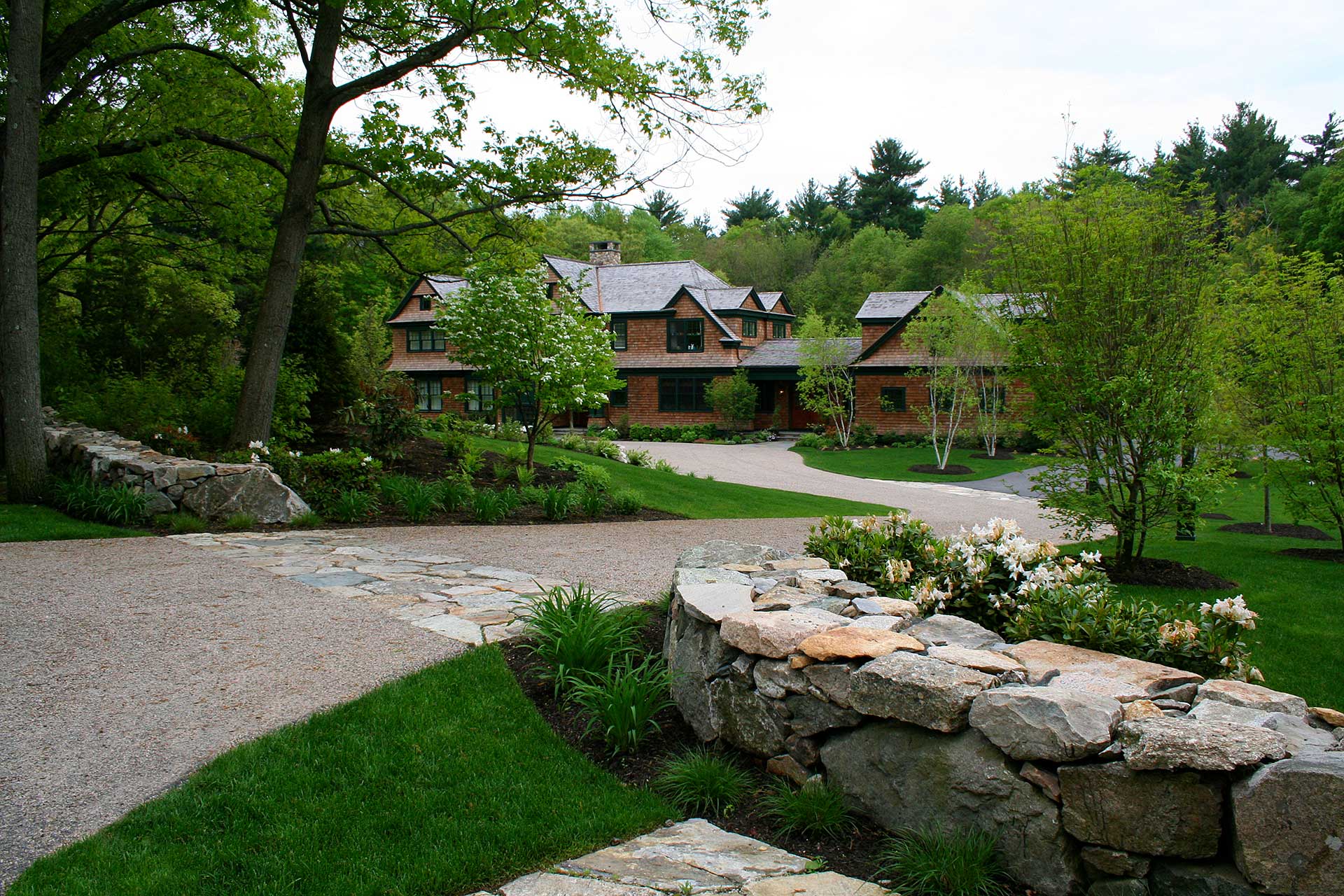
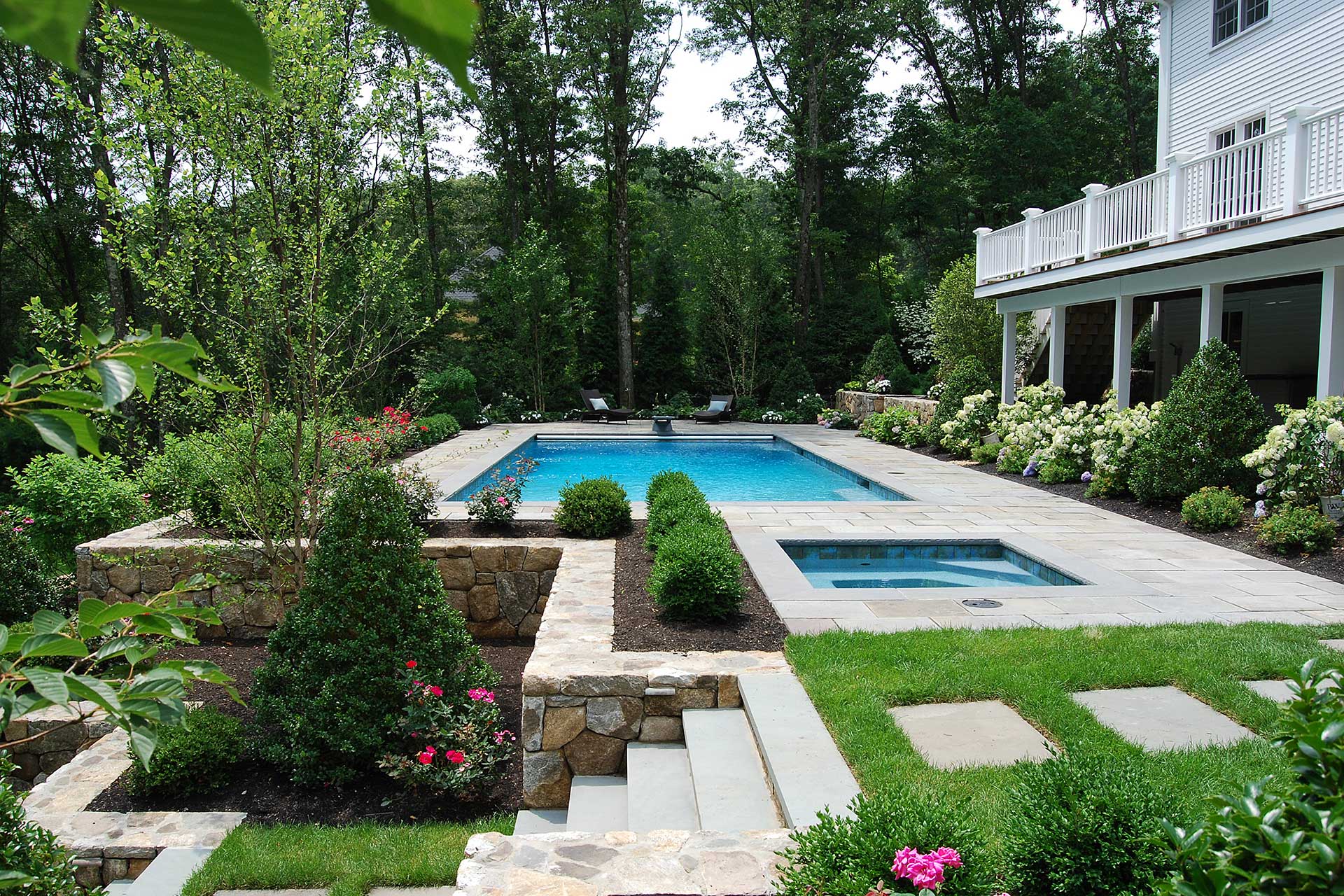
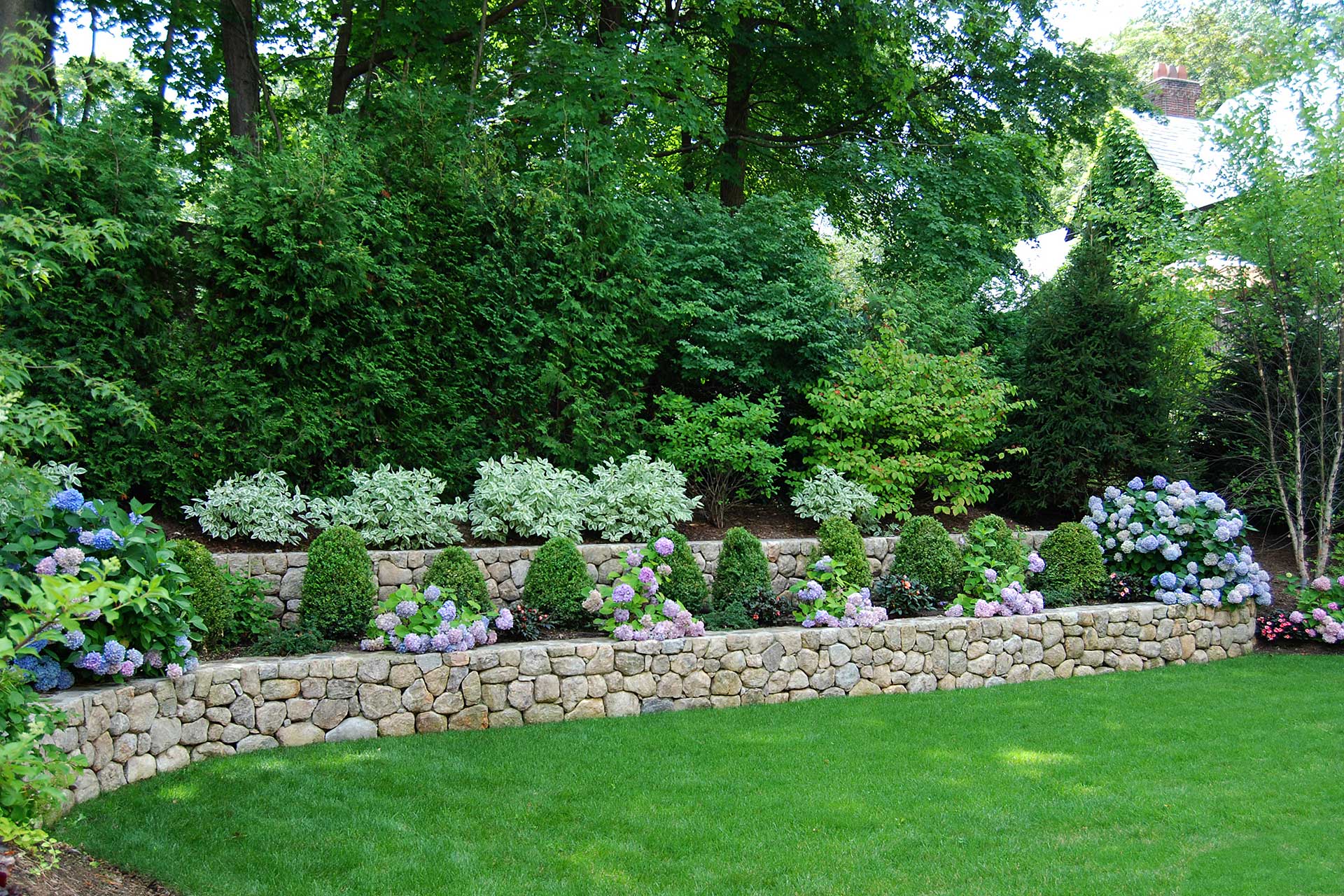
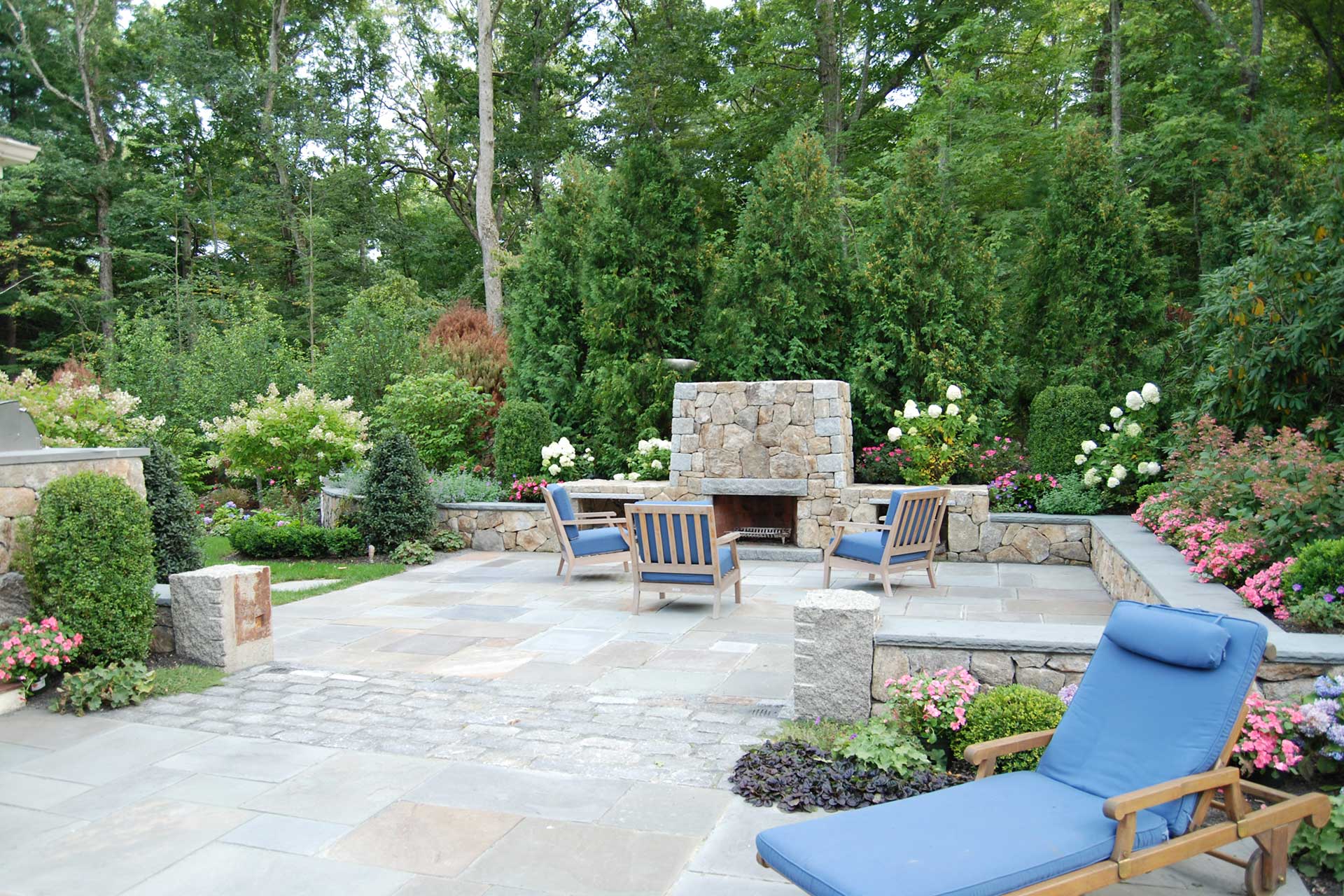
Hardscaping is especially important on properties with slopes, drainage challenges, aging walkways, or underused outdoor areas. It creates the physical structure that allows a landscape to function.
In New England, quality hardscaping also requires technical planning. Patios, walls, steps, and walkways must be built for freeze-thaw cycles, snow, drainage, and long-term settlement. A beautiful patio that drains poorly or shifts after a few winters will not serve the property well.
Related Blog: Best Stone and Hardscape Materials for Boston-Area Landscapes
What Is Landscaping?
Landscaping refers to the living and horticultural components of an outdoor space. While the word is sometimes used broadly to describe the entire outdoor environment, it most often refers to planting, lawn, soil, garden design, and ongoing care.
Common landscaping elements include:
- Trees: Canopy, shade, privacy, seasonal interest, and long-term structure.
- Shrubs and hedges: Foundation planting, screening, enclosure, texture, and year-round form.
- Perennials and annuals: Seasonal color, pollinator support, garden rhythm, and visual softness.
- Lawns: Open green space for recreation, visual contrast, and circulation.
- Ground covers: Soil coverage, weed suppression, erosion control, and planting continuity.
- Mulch and soil amendments: Moisture retention, weed control, soil improvement, and root protection.
- Planting beds: Designed compositions that frame the home, soften hardscape, and create seasonal interest.

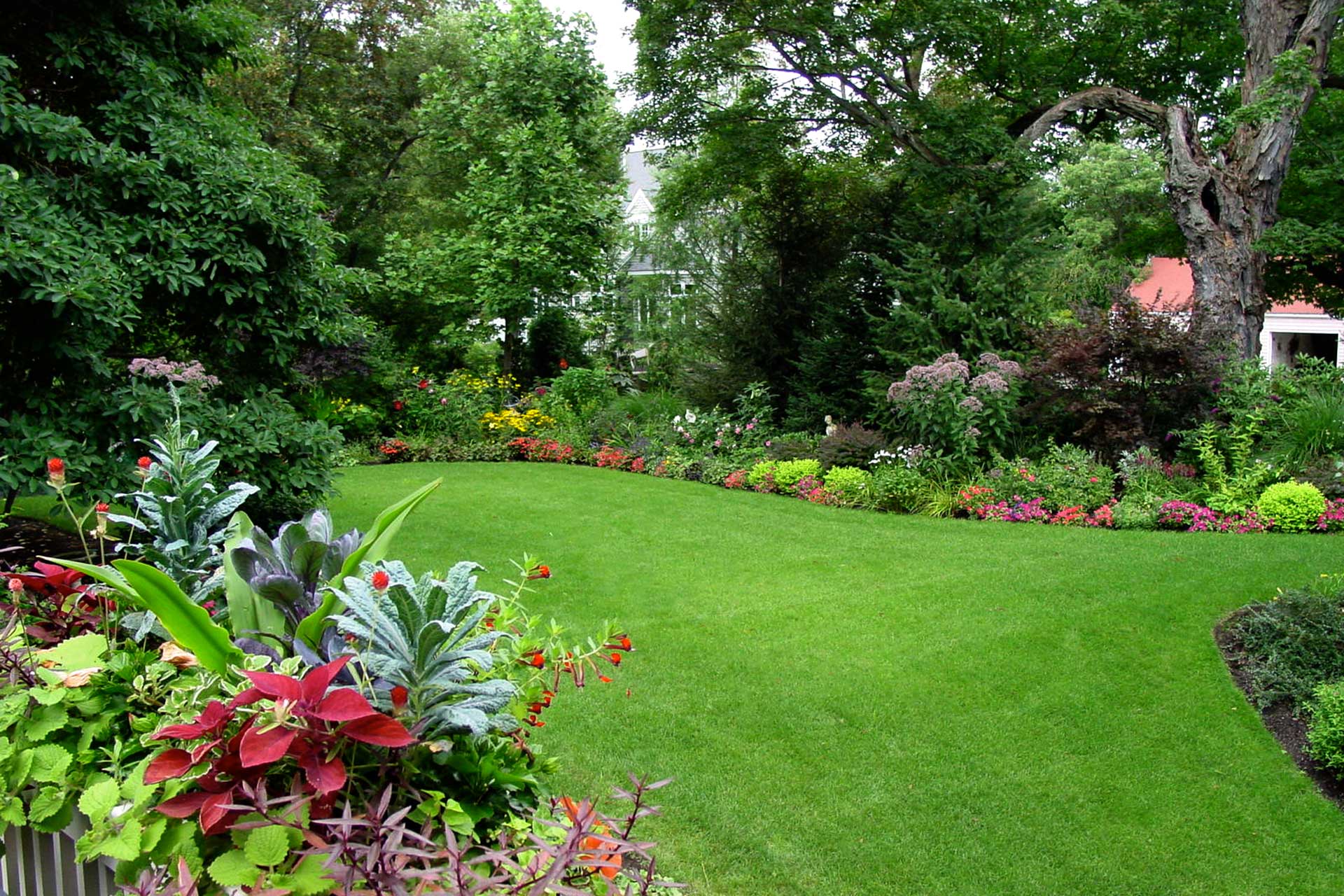
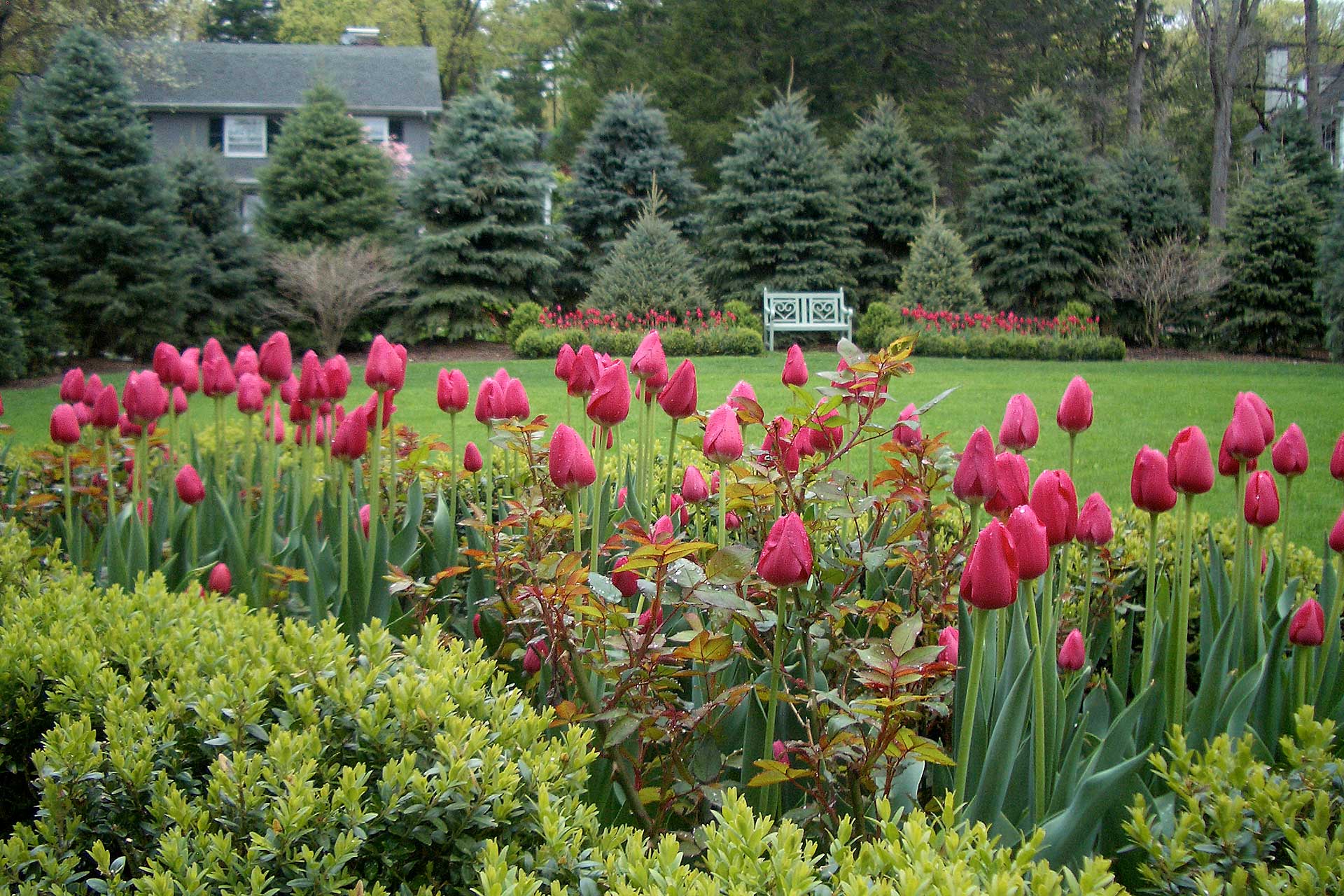
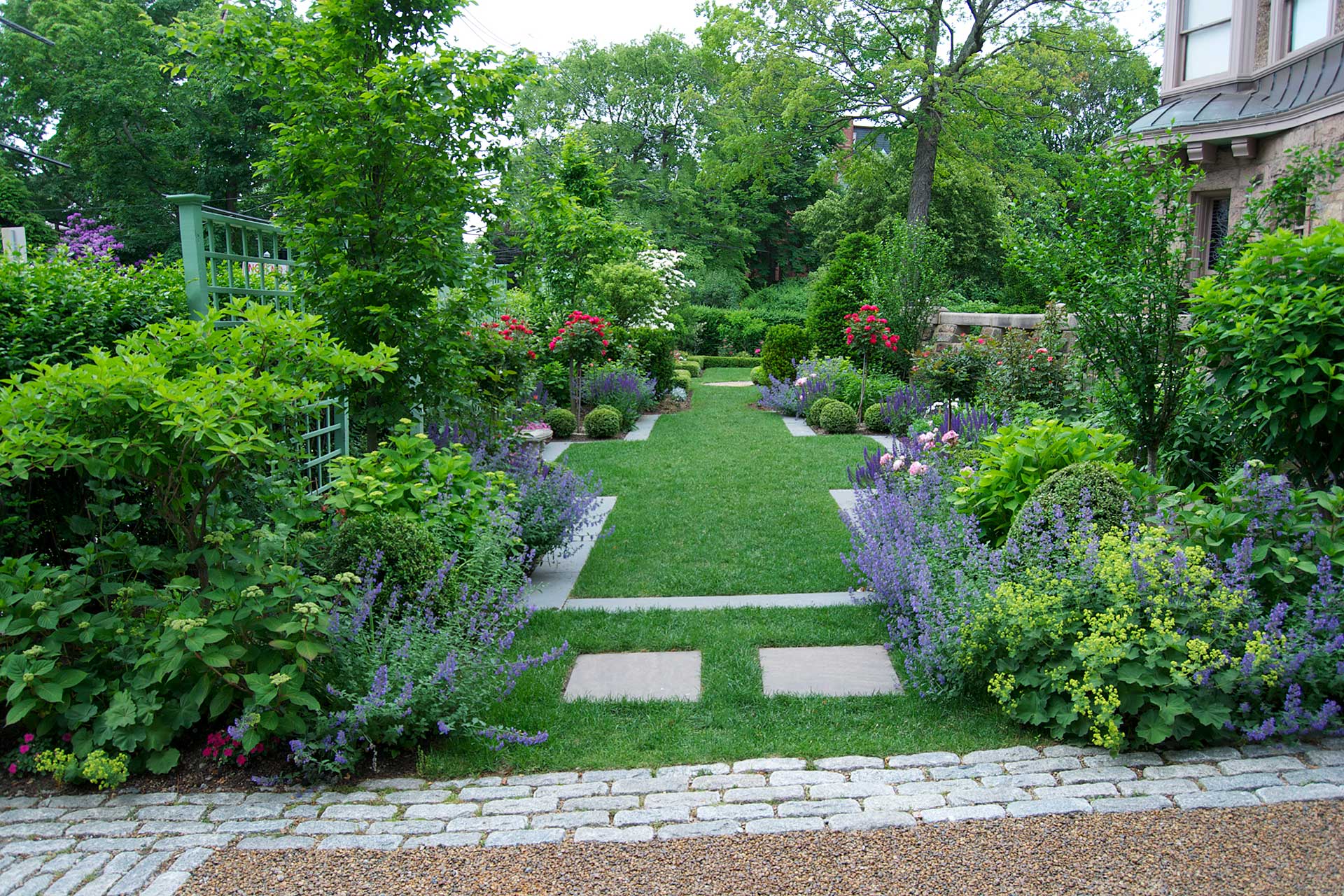
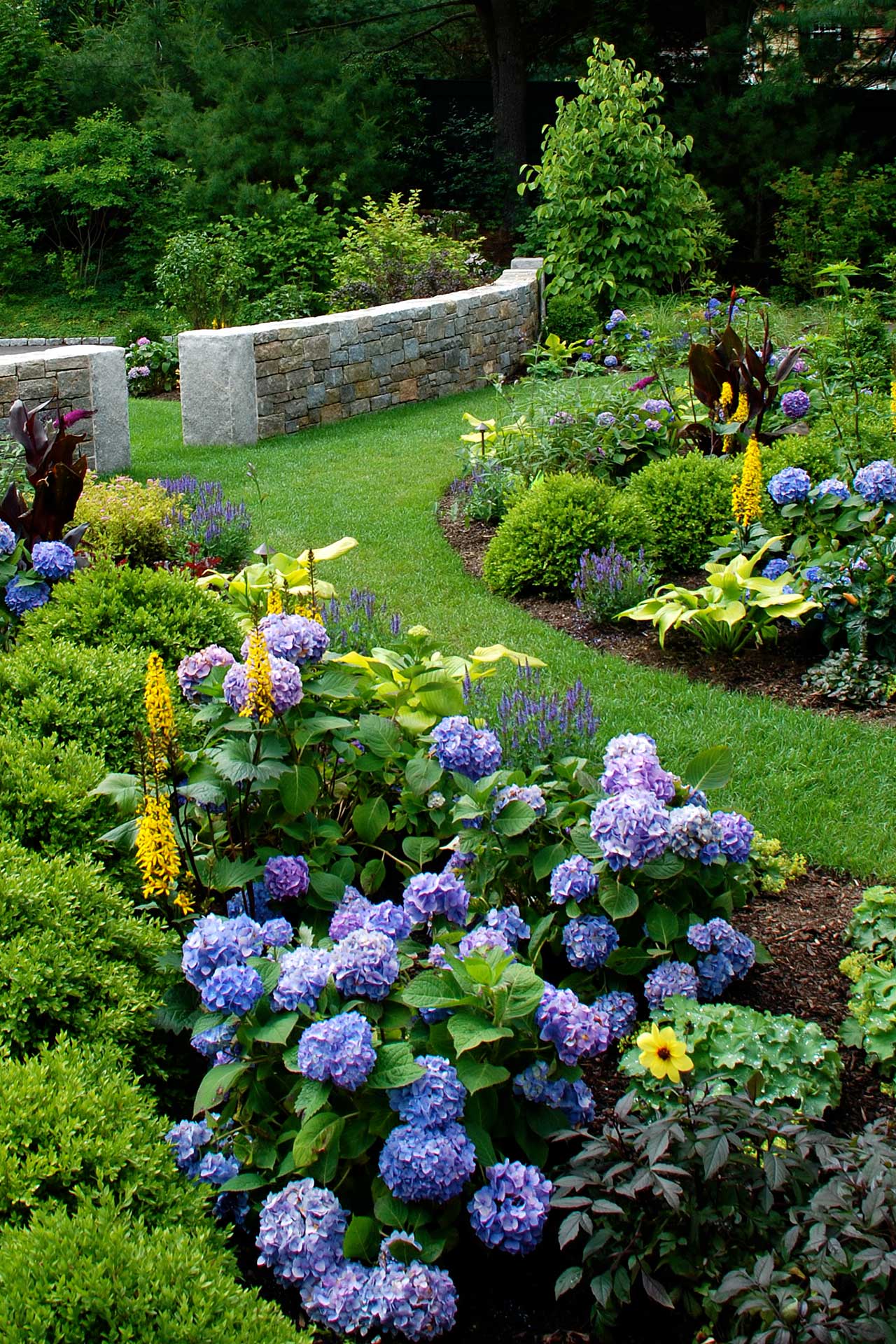

Landscaping changes over time. Plants grow, mature, bloom, decline, and respond to weather, soil, shade, pruning, irrigation, and maintenance. That living quality is what makes planting design so powerful, but it also means that landscaping requires ongoing stewardship.
For Boston-area properties, good landscaping must account for site-specific realities such as deer pressure, mature tree shade, compacted soil, coastal exposure, clay-heavy soils, and seasonal maintenance needs.
Related Blog: Soil Testing Before Planting: Why It Matters in Boston-Area Landscape Design
Hardscaping vs. Landscaping: The Main Difference
The simplest distinction is this: hardscaping is built; landscaping is grown.
Hardscaping uses materials such as stone, brick, concrete, gravel, metal, wood, porcelain, and masonry. Landscaping uses living material such as trees, shrubs, lawns, flowers, ground covers, soil, and mulch.
| Category | Hardscaping | Landscaping |
|---|---|---|
| Primary Materials | Stone, brick, concrete, gravel, wood, metal, porcelain, masonry | Trees, shrubs, perennials, lawns, soil, mulch, ground covers |
| Main Purpose | Structure, circulation, outdoor living, grade management, durability | Softness, seasonal interest, plant health, screening, ecological value |
| Maintenance | Usually lower, but still requires cleaning, joint care, drainage attention, and occasional repair | Ongoing care such as pruning, watering, mulching, fertilizing, weeding, and seasonal cleanup |
| How It Changes Over Time | Ages through weathering, settlement, patina, and material wear | Grows, matures, flowers, spreads, declines, and changes seasonally |
How Hardscaping and Landscaping Work Together
Hardscaping and landscaping are most successful when they are planned together. A patio without planting can feel exposed or unfinished. A garden without paths, walls, or defined edges can feel difficult to use or maintain.
Together, they create balance.
Hardscaping provides:
- outdoor rooms
- walking routes
- level areas on sloped properties
- edges and transitions
- structural definition
- durable gathering spaces
Landscaping provides:
- shade and cooling
- privacy and screening
- seasonal color
- softness around stone and masonry
- habitat value
- visual connection to the surrounding property
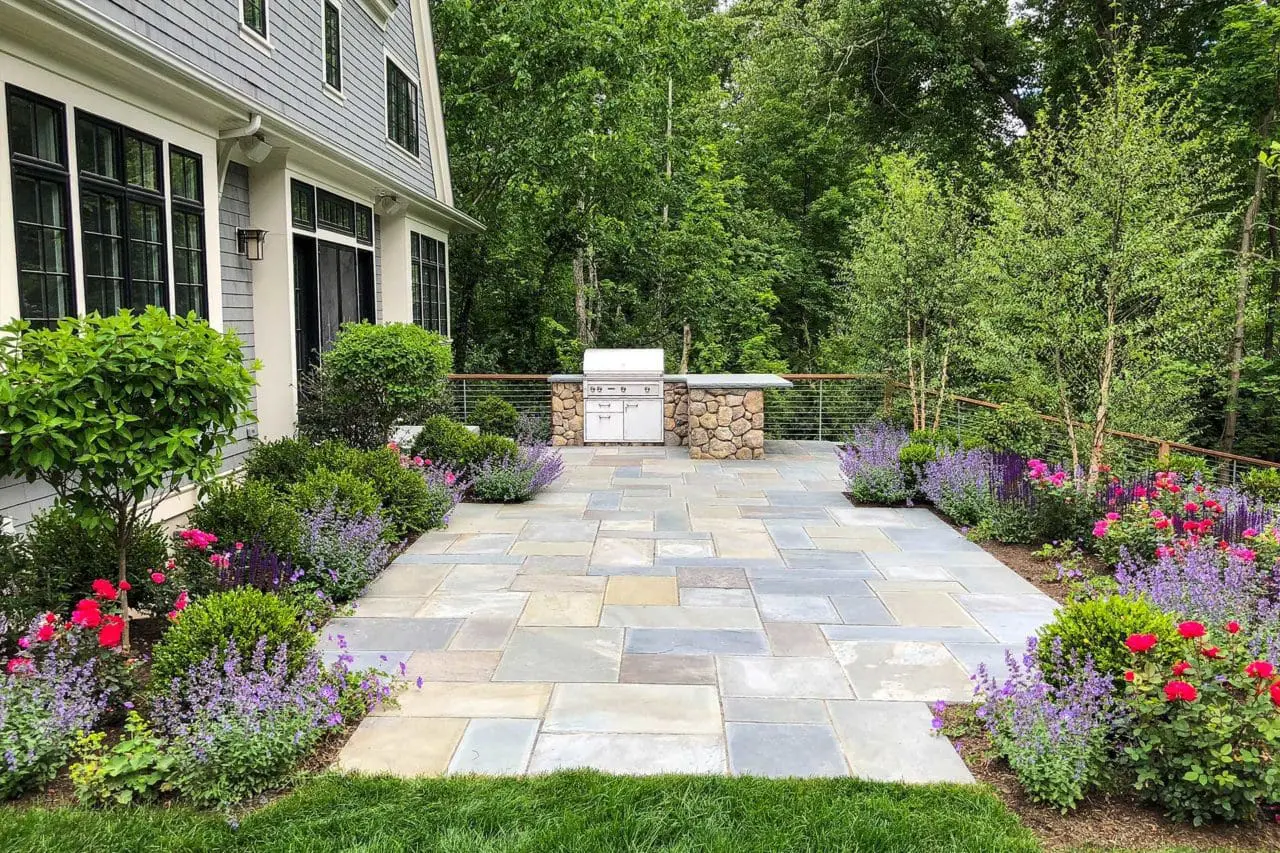
For example, a bluestone terrace may provide the surface for outdoor dining, but surrounding plantings give that terrace comfort, scale, and enclosure. A retaining wall may solve a grading issue, but shrubs, perennials, and ground covers help it feel integrated into the landscape rather than purely structural.
“The most successful landscapes do not treat stonework and planting as separate decisions. Hardscape gives a property structure, while planting gives it life. When the two are designed together, the outdoor space feels intentional from the start.”
— Joanna McCoy, Senior Landscape Designer, a Blade of Grass
Pros and Cons of Hardscaping
| Pros | Cons |
|---|---|
|
|
Pros and Cons of Landscaping
| Pros | Cons |
|---|---|
|
|
Which Should Come First: Hardscaping or Landscaping?
In most landscape projects, hardscaping should be planned before major planting. This does not mean the planting design is less important. It means that patios, walls, steps, drainage, utilities, irrigation sleeves, and circulation routes often need to be established before final planting begins.
A typical sequence may include:
- Site analysis and master planning
- Drainage and grading strategy
- Hardscape layout and material selection
- Utility planning for irrigation, lighting, audio, gas, or outdoor kitchens
- Construction of patios, walls, steps, and paths
- Soil preparation and planting installation
- Mulch, irrigation calibration, lighting adjustment, and maintenance planning
This sequence helps avoid costly rework. For example, installing planting beds before drainage or patio construction can lead to damaged plants, disrupted soil, or unnecessary replacement.
Related Blog: Landscape Drainage Solutions for Massachusetts Properties
Why the Difference Matters When Hiring a Landscape Company
Some companies are strong at planting but less experienced with masonry, grading, or construction. Others are skilled at hardscape installation but may not bring the horticultural knowledge needed for planting design and long-term care.
For homeowners, that distinction matters.
A patio, wall, or walkway affects drainage, access, grade, and how planting beds are shaped. Planting design affects how hardscape feels, how outdoor rooms are framed, how privacy develops, and how much maintenance the property will require over time.
Before hiring a landscape company, ask:
- Do you design and install both hardscape and planting?
- Who handles grading and drainage planning?
- How do you coordinate patios, walls, steps, irrigation, lighting, and planting?
- Can you maintain the landscape after installation?
- Do you have experience with Boston-area freeze-thaw conditions?
- Can I see examples of completed projects that include both hardscape and planting design?
A full-service landscape design and construction firm can help ensure that both sides of the project are planned together instead of treated as separate pieces.
Examples of Hardscaping and Landscaping Working Together
Outdoor Dining Terrace
A stone terrace creates the dining surface. Planting beds soften the edges, provide privacy, and frame views from inside the home.
Front Entry Walkway
A walkway guides guests to the front door. Foundation plantings, trees, and lighting make the entry feel welcoming and complete.
Retaining Wall and Garden Bed
A retaining wall manages slope and creates usable space. Shrubs, perennials, and ground covers soften the wall and help integrate it into the site.
Pool and Surrounding Landscape
Pool coping, paving, and walls create the structure. Planting, lighting, privacy screening, and seasonal containers shape the atmosphere around the pool.
Fire Feature Area
A fire pit or fireplace provides the focal point. Seating, paths, planting, and lighting determine whether the area feels comfortable and connected.
Common Mistakes to Avoid
- Installing hardscape without drainage planning: Poor drainage can cause settlement, ice, erosion, and plant stress.
- Choosing plants after construction without a plan: Planting should be integrated into the overall design, not used to fill leftover space.
- Overbuilding with too much hardscape: Large paved areas can feel harsh without planting, shade, and scale.
- Underestimating maintenance: Even low-maintenance planting needs pruning, watering, mulching, and seasonal care.
- Ignoring mature plant size: Shrubs planted too close to patios, walls, or walkways quickly become maintenance problems.
- Using materials unsuited to New England: Freeze-thaw cycles require durable materials and proper installation.
Frequently Asked Questions
Q: Is hardscaping part of landscaping?
A: Yes. Hardscaping is often considered one part of the broader landscape design process. It refers specifically to built, non-living elements such as patios, walkways, walls, steps, and outdoor structures.Q: What is the main difference between hardscaping and landscaping?
A: Hardscaping uses non-living materials such as stone, brick, concrete, wood, and metal. Landscaping focuses on living elements such as trees, shrubs, lawns, perennials, soil, mulch, and planting design.Q: Does hardscaping require less maintenance than landscaping?
A: Generally, yes. Hardscape features often require less routine care than planting, but they still need cleaning, joint maintenance, drainage oversight, and occasional repairs. Poorly installed hardscape can become expensive to fix.
Q: Should I install hardscape before planting?
A: In most cases, yes. Patios, walls, steps, drainage systems, and utilities should usually be planned and installed before major planting begins. This protects plants and reduces the risk of rework.
Q: Can one company handle both hardscaping and landscaping?
A: Yes, and for many residential projects, that can be an advantage. A full-service landscape design and construction firm can coordinate grading, drainage, stonework, planting, lighting, irrigation, and long-term maintenance under one cohesive plan.
Q: What adds more value, hardscaping or landscaping?
A: Both can add value when designed well. Hardscaping often adds usable outdoor living space and structure, while landscaping improves curb appeal, comfort, privacy, and seasonal beauty. The strongest value usually comes from combining both thoughtfully.
Bringing Hardscaping and Landscaping Together
A successful outdoor space is rarely only hardscape or only planting. It is the relationship between the two that makes a landscape feel complete.
Hardscape gives the property structure, durability, and function. Landscaping brings life, softness, texture, and seasonal change. When planned together, they create outdoor spaces that are practical, beautiful, and built to mature well over time.
For Greater Boston homeowners, that integration is especially important. New England landscapes must handle cold winters, heavy rain, freeze-thaw cycles, compacted soils, mature trees, slopes, and seasonal maintenance needs. A cohesive design can address those realities while still creating outdoor spaces that feel refined and inviting.
Plan a Landscape That Balances Structure and Life
At a Blade of Grass, our team designs, builds, and maintains residential landscapes that bring hardscaping and landscaping together in a cohesive way. From patios, terraces, walls, steps, and outdoor living spaces to planting design, irrigation, lighting, and long-term care, we help homeowners shape outdoor environments that feel intentional and perform beautifully over time.
If you are planning a landscape project for your Greater Boston property, contact us to schedule a consultation. We can help you determine the right balance of hardscape, planting, and maintenance for your home.