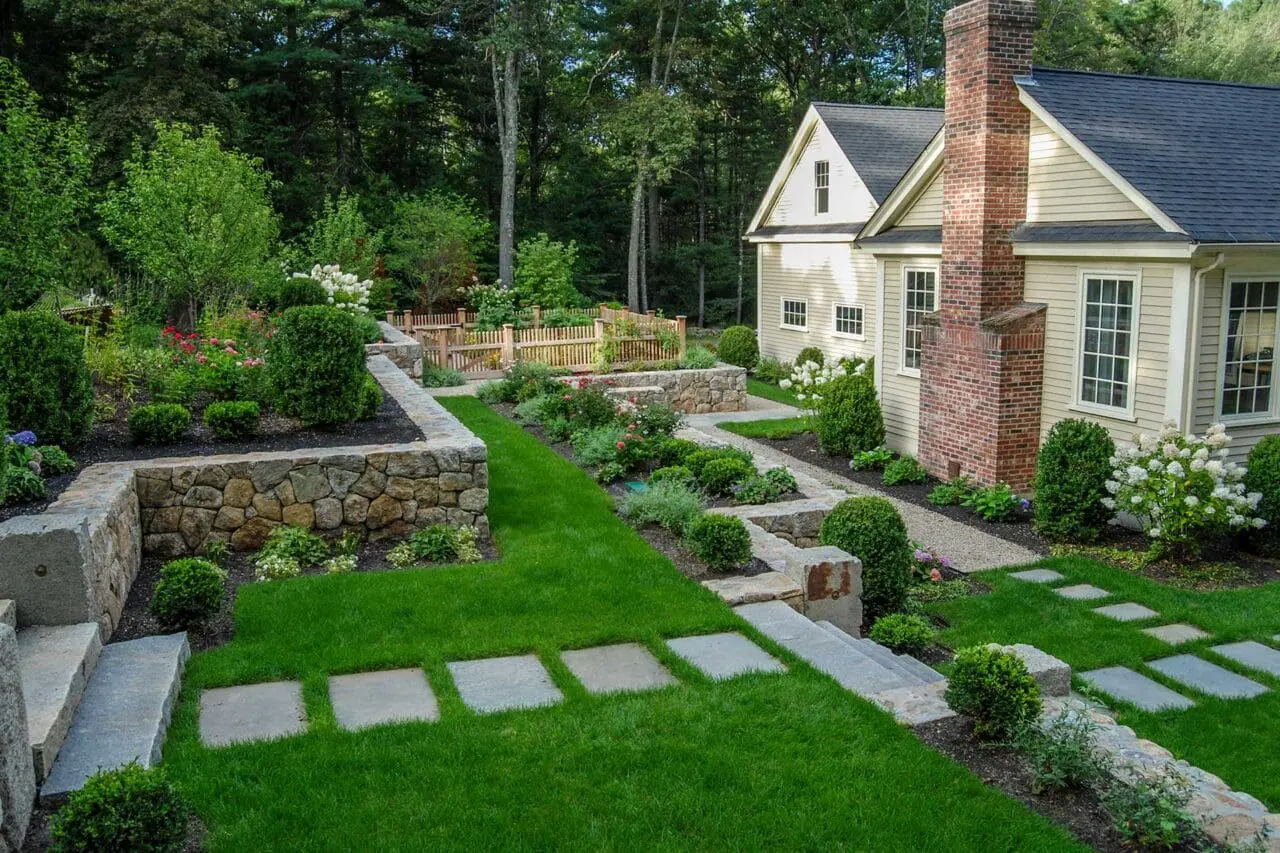
Stone is one of the most important materials in a New England landscape. It shapes how people move through a property, how outdoor rooms feel underfoot, how grade changes are handled, and how a landscape settles into the architecture around it. On Boston-area properties, stone and hardscape materials are not simply decorative. They have to perform.
A patio in Wellesley has to handle winter, shade, and furniture traffic. Granite steps in Newton need to feel safe, proportional, and appropriate to the home. A fieldstone wall in Lincoln or Concord should look like it belongs to the land. A Cape Cod garden path may need to feel lighter, more relaxed, and better suited to sandy soils, salt air, and coastal architecture.
For homeowners planning a landscape master plan, patio, walkway, wall, outdoor kitchen, fire feature, pool surround, or full property renovation, material selection is one of the decisions that will shape the project for decades.
At a Blade of Grass, we have spent more than 30 years designing, building, and maintaining landscapes across Greater Boston, MetroWest, and Cape Cod. In that time, we have seen how the right material can elevate a property, and how the wrong material can create maintenance issues, drainage problems, or a look that feels disconnected from the home.
“The best stone choice is rarely about the stone alone. It is about the house, the grade, the drainage, the way the space will be used, and how the material will age in that specific setting.”
– Richard Duhamel, a Blade of Grass
Key Takeaways
- Choose hardscape materials for durability, drainage, architectural fit, and long-term maintenance.
- Bluestone, granite, fieldstone, reclaimed stone, brick, pavers, gravel, and cobble all have a place when matched to the right setting.
- Boston-area landscapes need materials that can handle freeze-thaw cycles, snow, shade, drainage, slope, salt, and mature trees.
- Natural stone often suits traditional New England homes, while concrete and porcelain pavers can work well in contemporary landscapes.
- Installation matters as much as material selection. Grading, base preparation, drainage, and edge restraint determine long-term performance.
- Stone can shape patios, entries, walls, steps, terraces, kitchens, fire features, pool surrounds, paths, driveway details, and garden structure.
Why Material Selection Matters in Boston-Area Landscape Design
In a mild climate, homeowners may be able to choose hardscape materials mostly by color, texture, or cost. In Massachusetts, the decision is more complex.
Boston-area landscapes have to deal with wet springs, humid summers, heavy leaf fall, winter ice, snow removal, and repeated freeze-thaw cycles. Properties in towns such as Weston, Wellesley, Dover, Brookline, Newton, Concord, Lincoln, and Wayland often add another layer of complexity: mature trees, established architecture, grade changes, older walls, drainage constraints, and a high expectation for craftsmanship.
That means the best material is not always the most expensive material. It is the material that suits the site.
A stone patio that looks beautiful in June still needs to shed water in March. A front walk should complement the house, but it also needs to feel safe in winter. A retaining wall should look natural, but it must also be engineered with proper drainage behind it. UMass Extension notes that landscape drainage strategies such as rain gardens can help capture and filter stormwater before runoff reaches storm drains, reducing erosion and pollutant movement into waterways.
For a homeowner, the real question is not simply, “What stone do I like?” It is: What material will look right, function properly, and age well on this specific property?
The Most Common Stone and Hardscape Materials for Boston Landscapes
Bluestone
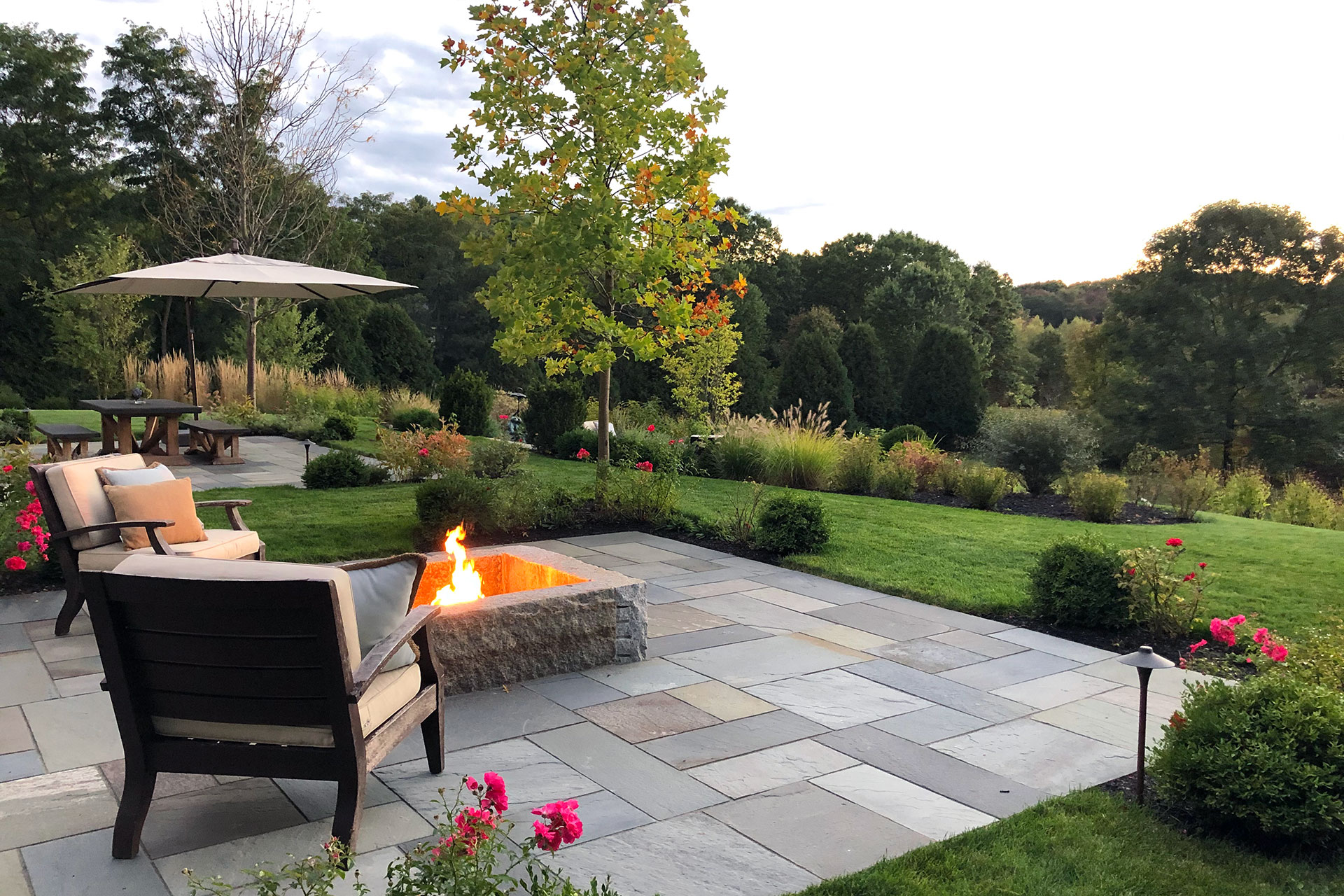
Bluestone is one of the most familiar patio and walkway materials in New England. It has a refined but natural appearance, works with a wide range of architectural styles, and is commonly used for terraces, walks, landings, pool-adjacent spaces, and outdoor dining areas.
Bluestone can feel formal when cut in clean rectangular patterns, or more relaxed when used in irregular shapes. That flexibility makes it useful for both traditional suburban homes and more contemporary landscapes.
Bluestone works especially well for:
- Patios and terraces
- Front walks
- Garden paths
- Pool surrounds
- Outdoor dining areas
- Landings and transitions
- Garden seating areas
For Boston-area homeowners, the appeal of bluestone is that it feels established without feeling overly rustic. It pairs well with brick, granite, fieldstone, lawn, clipped hedges, and layered planting.
Granite
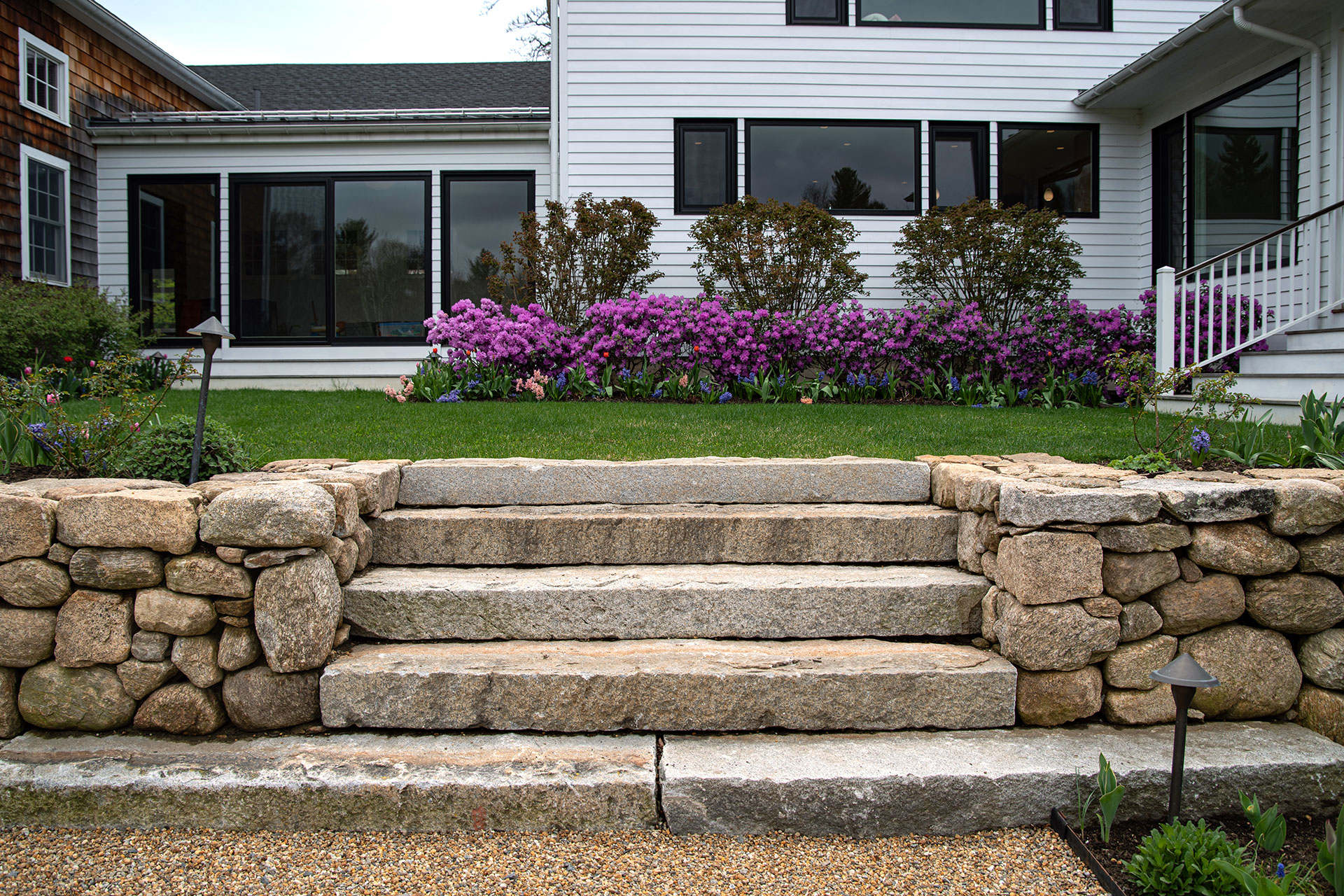
Granite is one of the most durable and regionally appropriate materials for Massachusetts landscapes. It is often used where strength, clean edges, and long-term performance matter.
Granite is especially effective for:
- Front steps
- Stair treads
- Edging
- Curbing
- Wall caps
- Thresholds
- Driveway aprons
- Outdoor kitchen details
- Formal entry sequences
Granite has a natural connection to New England architecture. It can feel crisp and tailored on a formal property, or rugged and understated when paired with fieldstone and native planting.
For higher-end homes, granite is often a smart choice for details that receive heavy foot traffic or need a strong architectural presence. It also works well where a landscape needs a sense of permanence.
Fieldstone

Fieldstone is deeply associated with New England landscapes. It has an irregular, grounded quality that works especially well in wooded, rural, historic, and estate settings.
Fieldstone is often used for:
- Freestanding walls
- Retaining walls
- Garden walls
- Seat walls
- Woodland edges
- Terraced slopes
- Informal steps
- Landscape transitions
A well-built fieldstone wall can look as though it has always belonged to the property. This makes it especially valuable in towns such as Lincoln, Concord, Carlisle, Dover, and Weston, where landscapes often benefit from a softer, more natural relationship to the surrounding land.
Fieldstone is not the right answer for every project. On a very formal entry or modern home, it may need to be paired with cleaner materials to avoid feeling too rustic. But in the right setting, it brings texture, authenticity, and regional character.
Reclaimed Stone
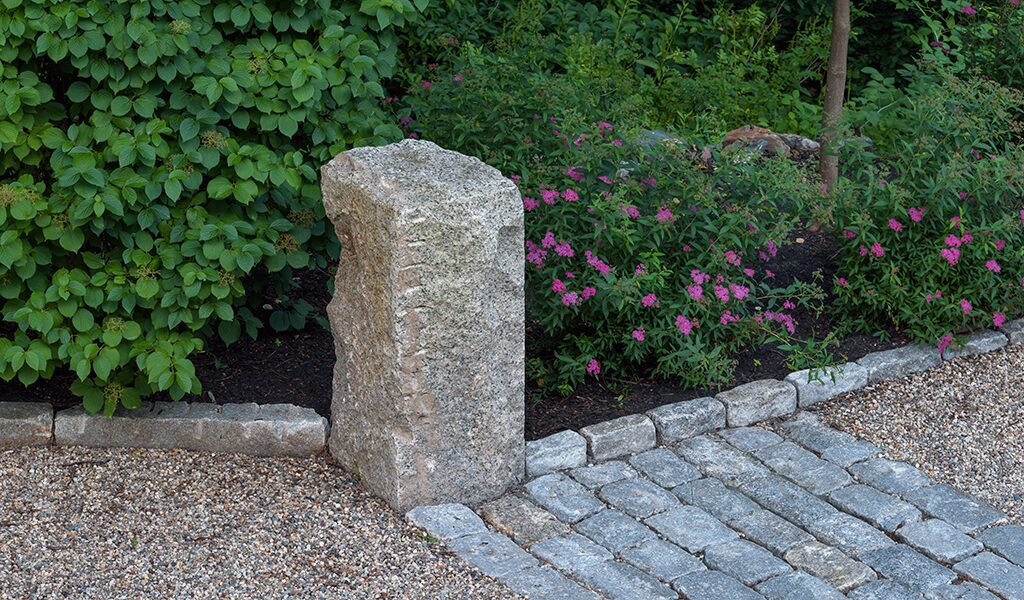
Reclaimed stone is one of the most compelling materials for Boston-area landscapes because it already carries age, patina, and history. Our recent blog post on reclaimed stone notes that reclaimed granite, cobble, and fieldstone have often already performed for decades, sometimes longer, and can help a renovated landscape feel more rooted in its setting.
Reclaimed stone is often used for:
- Garden paths
- Entry walks
- Steps
- Edging
- Cobble details
- Wall accents
- Historic property renovations
- Informal terraces
- Thresholds and transitions
For older homes in Brookline, Newton, Cambridge, Boston, Wellesley, Concord, or Cape villages, reclaimed stone can help new work avoid looking too new. It gives the landscape a sense of continuity.
It can also support sustainable design goals by reusing high-quality materials rather than relying entirely on newly quarried products.
Brick

Brick can be a beautiful hardscape material, especially when used around traditional homes. It pairs naturally with Colonial, Federal, Georgian, Victorian, and Cape-style architecture.
Brick works well for:
- Front walks
- Courtyards
- Garden paths
- Edging
- Herringbone or running bond patterns
- Historic entry landscapes
- Accent bands within stone paving
Brick can add warmth that stone sometimes lacks. It is particularly effective when it echoes brick on the home, chimney, garden wall, or nearby architecture.
However, brick needs to be selected and installed carefully. Not every brick is appropriate for exterior paving in New England conditions. The installation base, drainage, and edge restraint are critical to prevent settling, heaving, and uneven surfaces.
Concrete Pavers
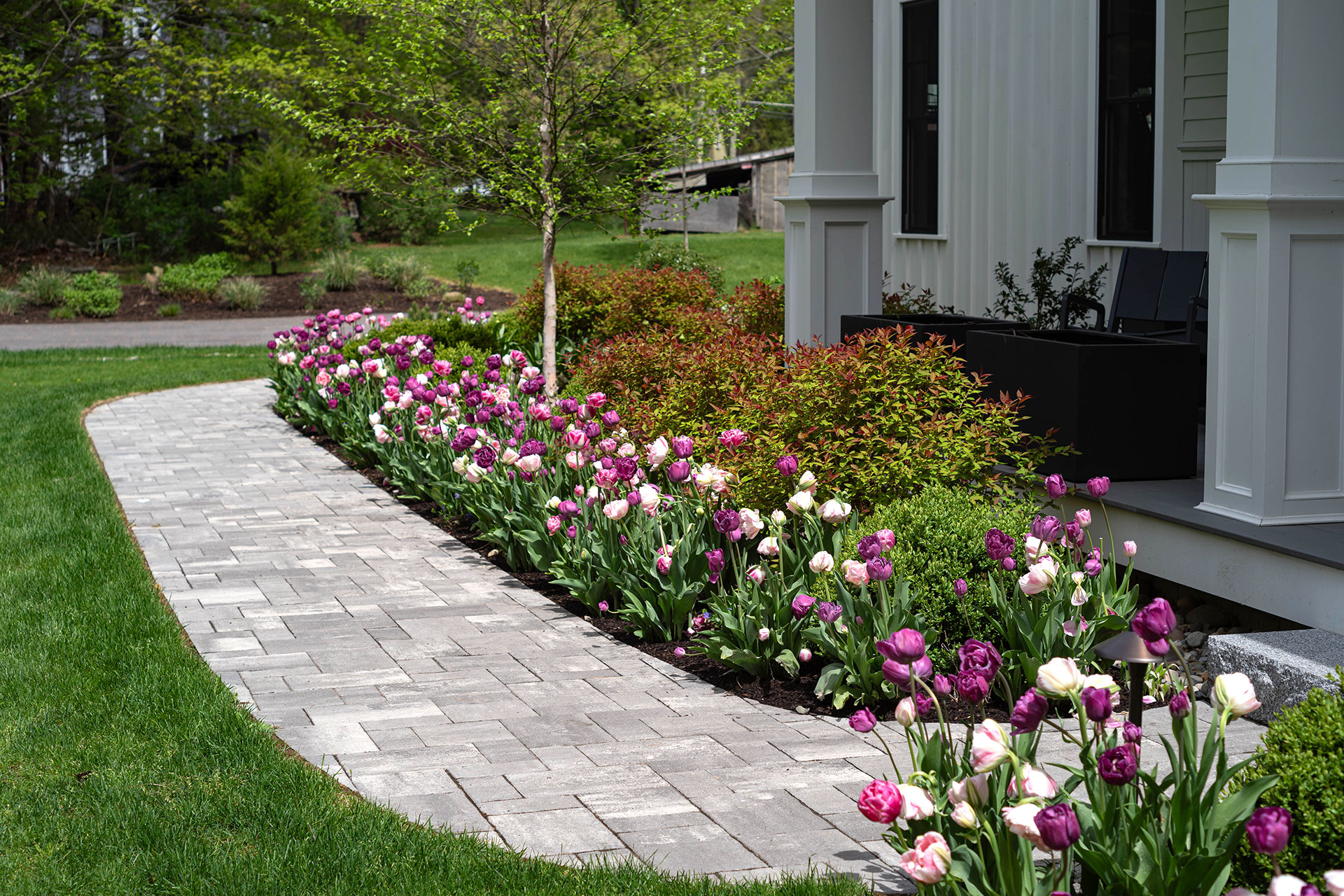
Concrete pavers have improved significantly over the years. While some homeowners still associate them with more utilitarian projects, high-quality pavers can work well in many residential landscapes, particularly where consistency, modularity, or budget control matters.
Concrete pavers are often used for:
- Patios
- Walkways
- Pool surrounds
- Driveways
- Large terraces
- Utility areas
- Contemporary outdoor spaces
They can be especially useful for larger areas where natural stone may exceed the budget. They also allow for consistent sizing, predictable installation, and a broad range of colors and finishes.
The key is restraint. For high-end properties, pavers should be chosen carefully so they do not compete with the architecture or imitate natural stone too aggressively. The most successful paver installations often use simple patterns, muted colors, and clean detailing.
Porcelain Pavers
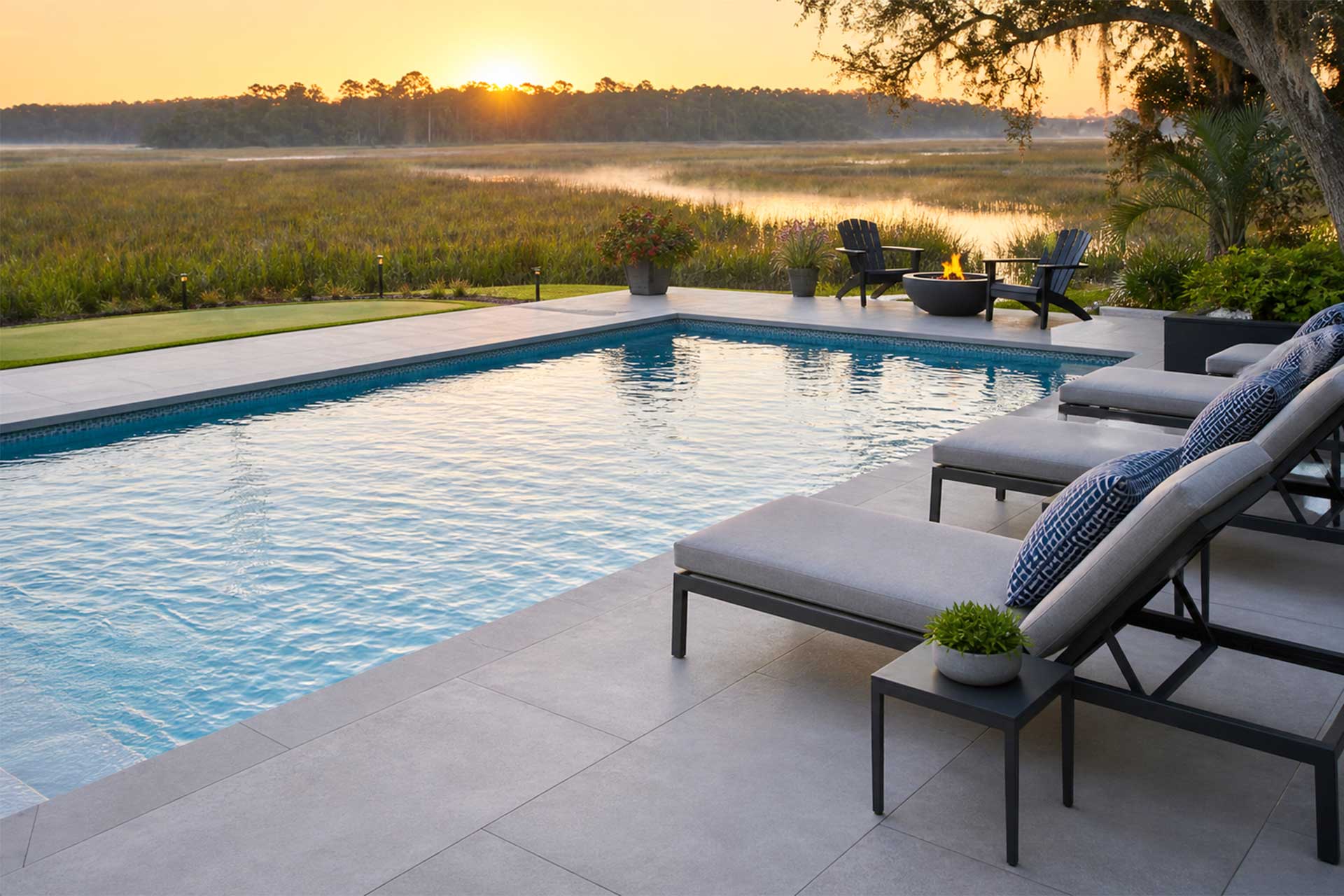
Porcelain pavers are increasingly used in contemporary landscapes. They offer a crisp, modern look, consistent sizing, and strong resistance to staining. They can be useful for roof terraces, modern patios, pool areas, and spaces where a clean architectural surface is desired.
Porcelain pavers work best when the surrounding design supports their more refined character. They can look out of place if dropped into a rustic landscape without careful transition details.
They may be a good fit for:
- Contemporary homes
- Urban terraces
- Pool surrounds
- Outdoor lounge areas
- Modern garden courtyards
- Minimalist patios
Porcelain requires careful installation and detailing. On a Boston-area property, it should be evaluated in relation to drainage, winter conditions, slip resistance, edge conditions, and the style of the home.
Gravel and Crushed Stone
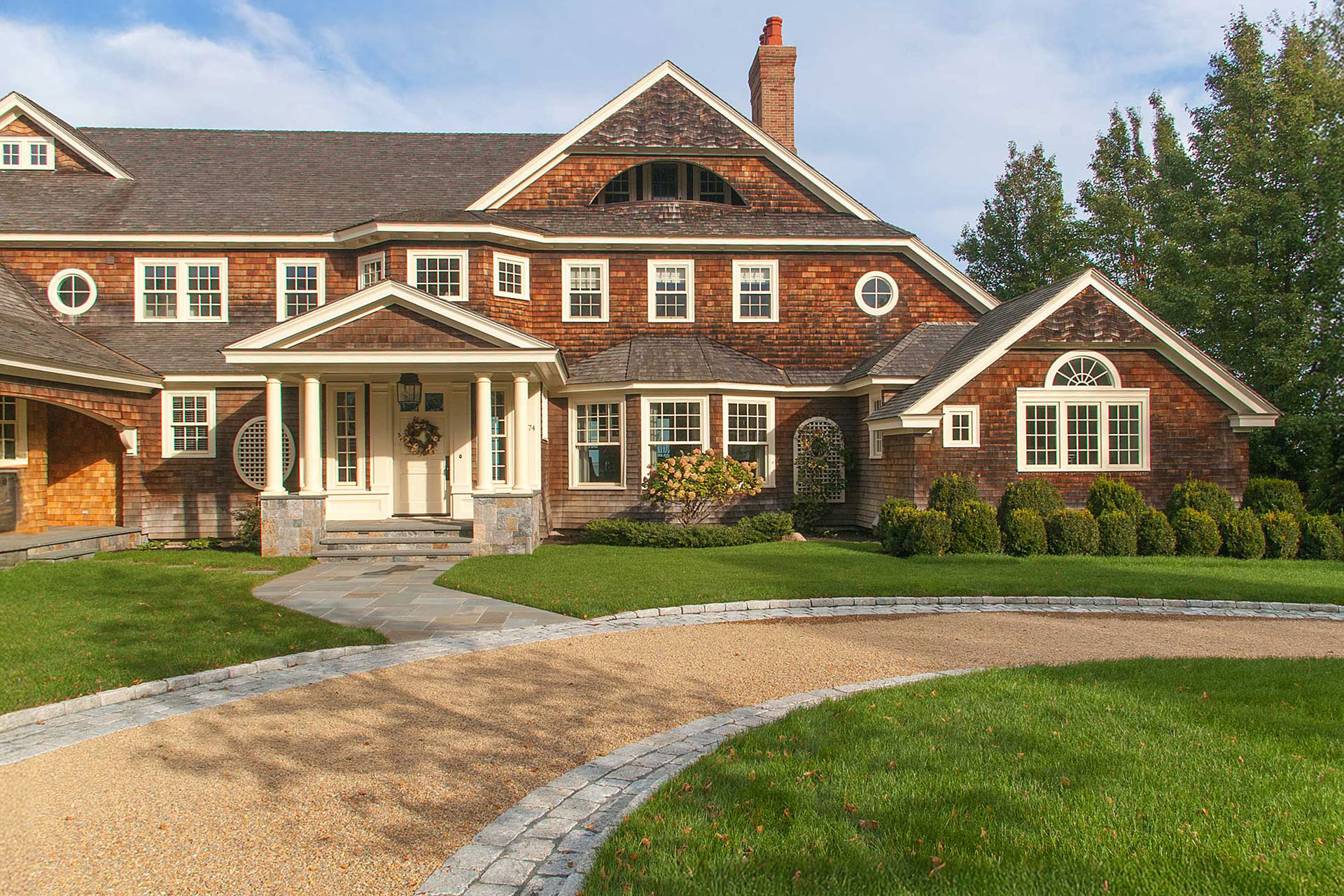
Gravel and crushed stone are sometimes overlooked because they feel less formal than cut stone or pavers. Used well, they can be elegant, practical, and environmentally useful.
Gravel can work well for:
- Garden paths
- Informal terraces
- Fire pit areas
- Utility paths
- Permeable driveway edges
- Woodland walks
- Secondary seating areas
- Cape Cod landscapes
On Cape Cod properties, gravel can feel especially appropriate because it complements sandy soils, relaxed architecture, beach grasses, and coastal planting palettes. It can also soften the transition between built areas and naturalized landscapes.
Gravel does require maintenance. It may need occasional raking, replenishment, edging, and weed control. It is not ideal for every front entry or dining area, but it can be very effective in the right place.
Cobble
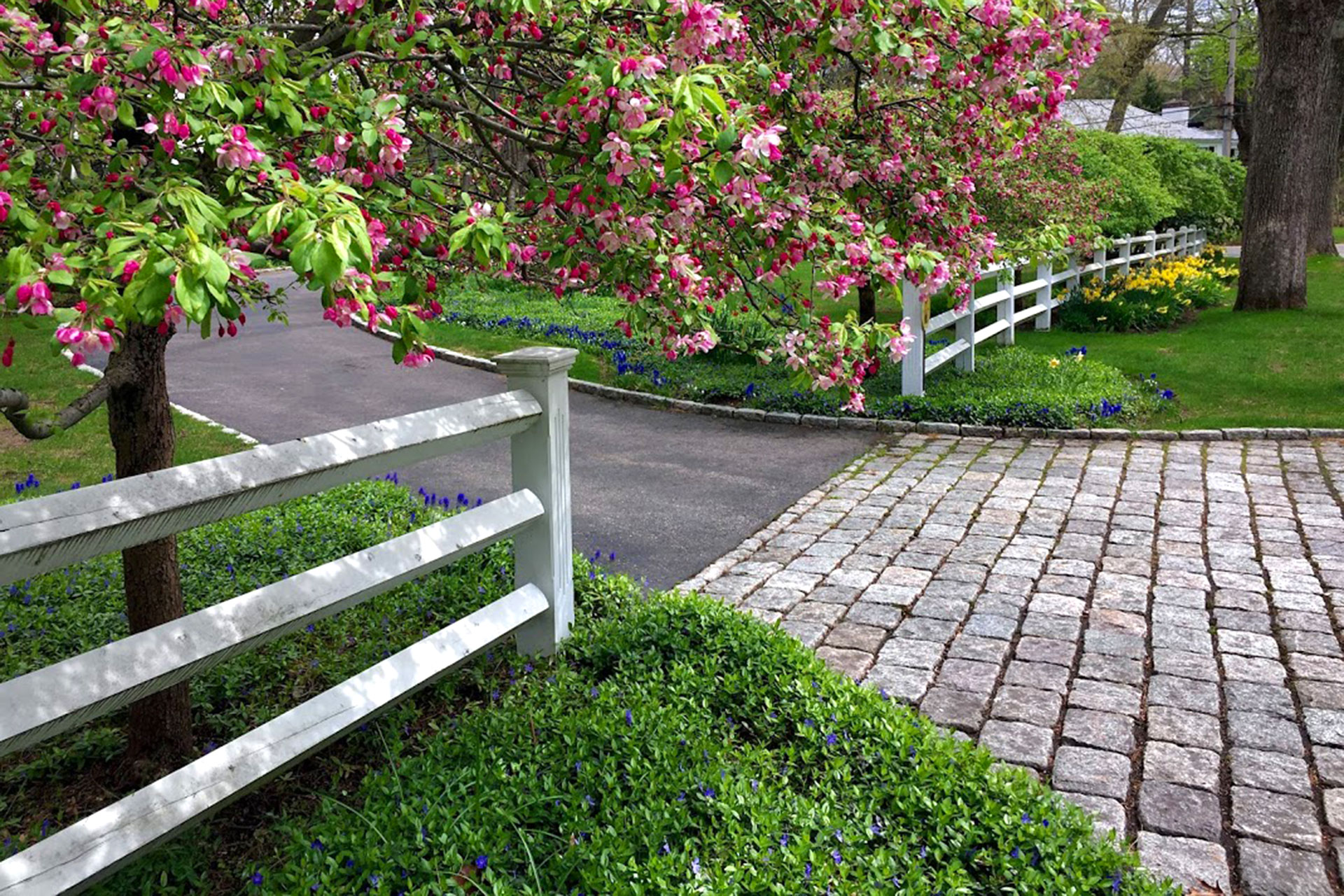
Cobble is often used as an accent rather than the main paving surface. It has a strong New England character and can add texture, rhythm, and historic reference.
Cobble is useful for:
- Driveway aprons
- Edging
- Bands within paving
- Thresholds
- Drainage channels
- Courtyard accents
- Historic garden details
Because cobble is uneven underfoot, it is not always the best primary surface for dining areas, main walks, or accessibility-sensitive routes. But as a detail, it can be extremely effective.
Matching Materials to the Project
The best stone or hardscape material depends on how the space will be used. A front walk, patio, retaining wall, and fire feature each ask something different from the material.
1. Patios and Terraces
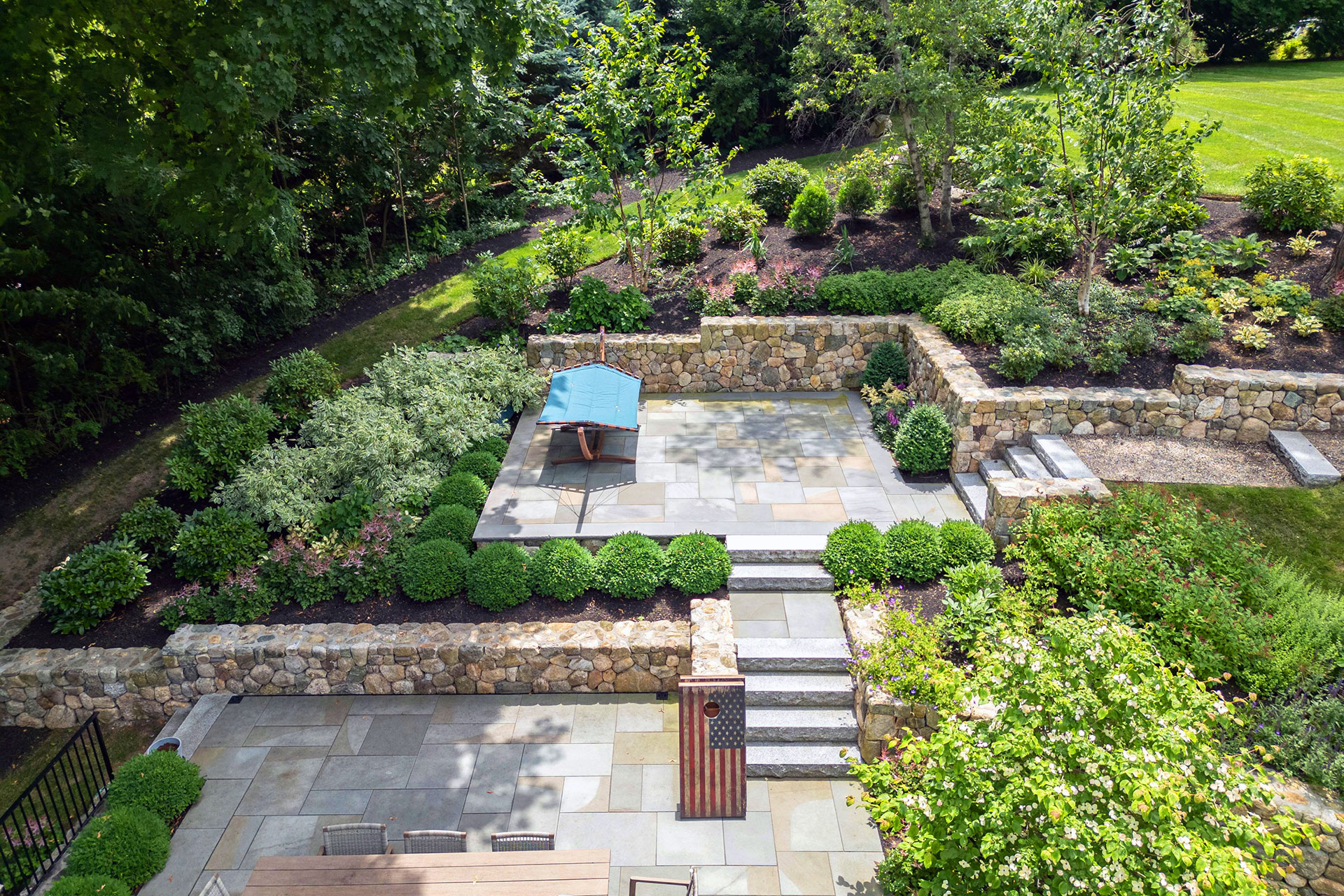
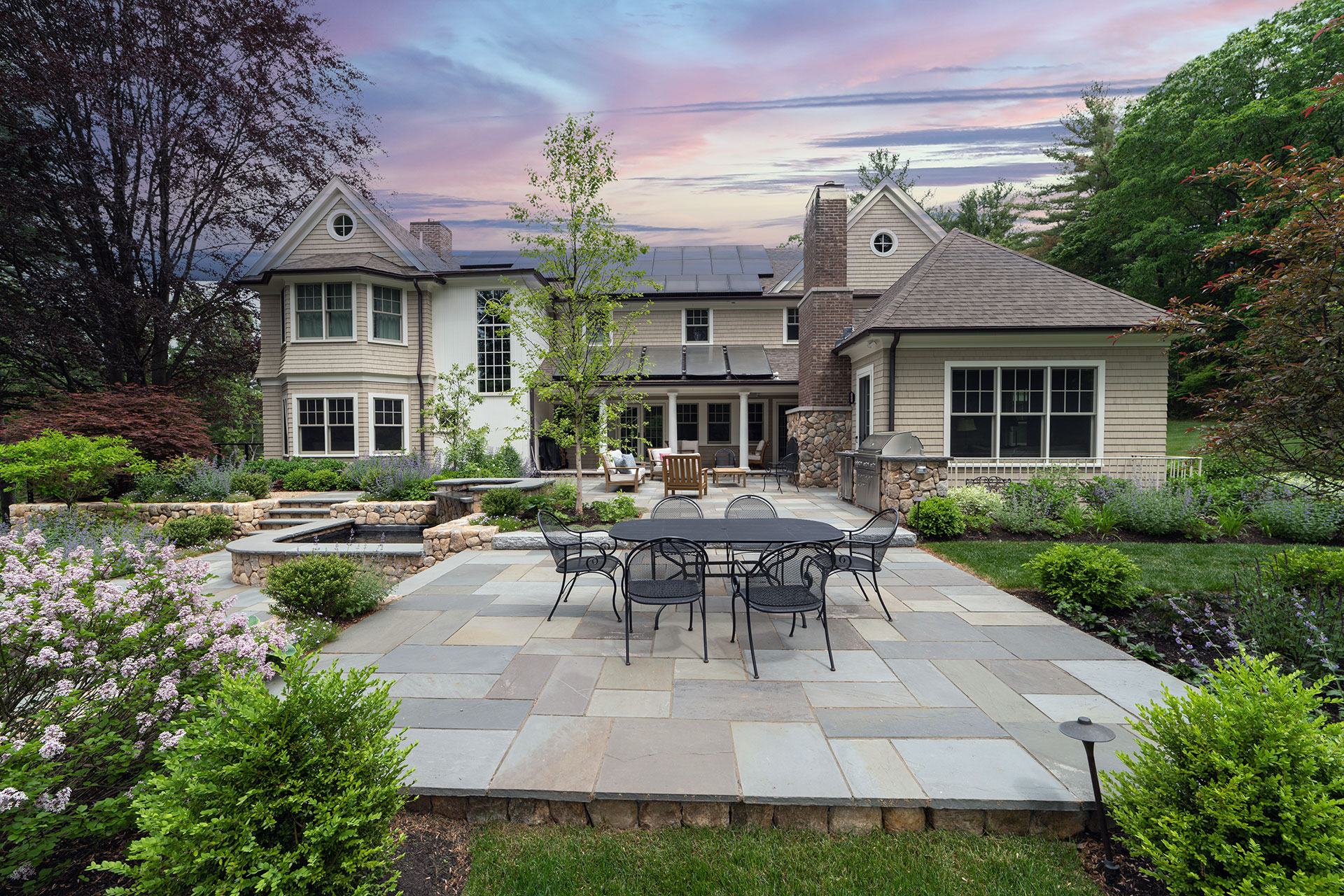
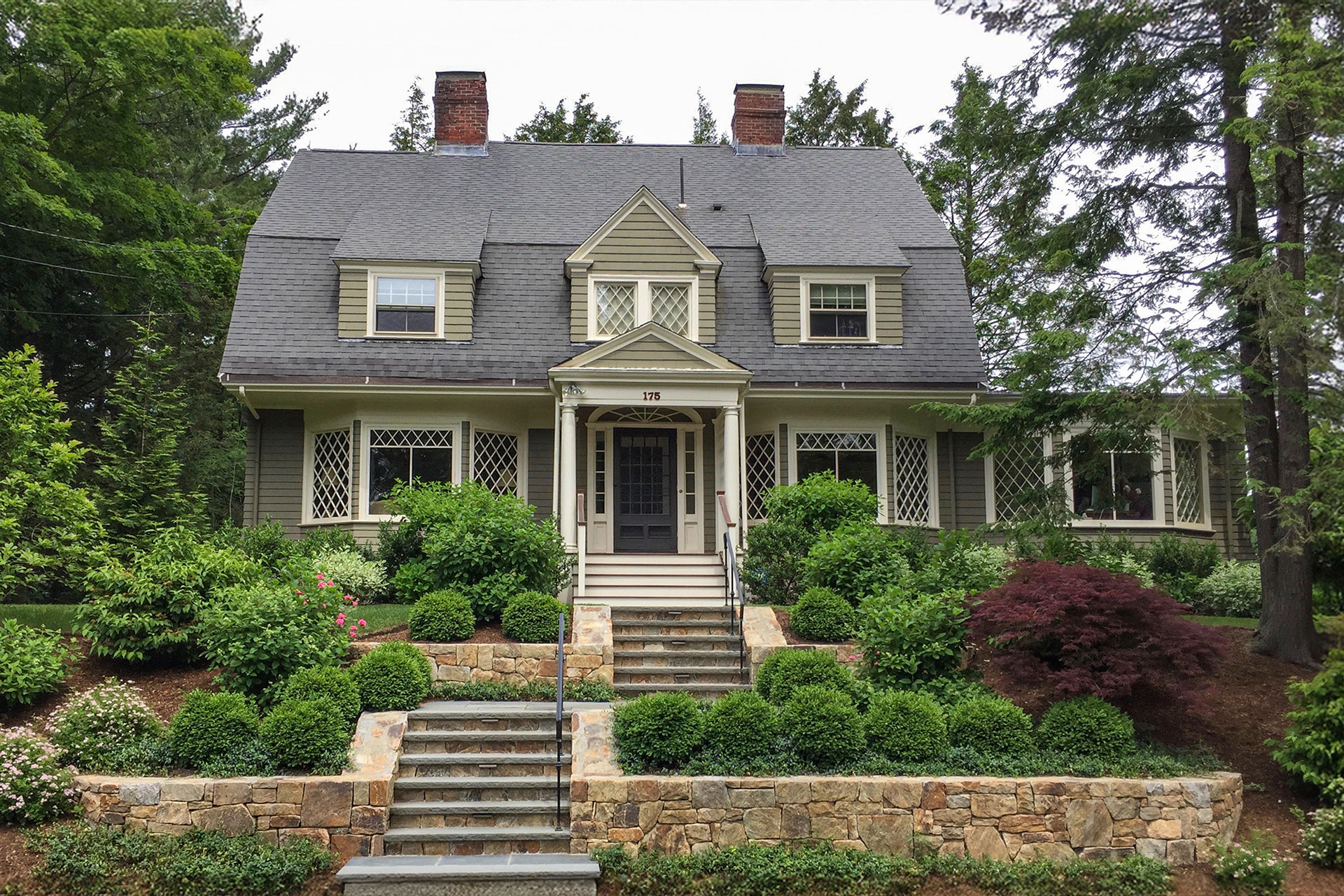
Patios and terraces need to support furniture, foot traffic, drainage, outdoor dining, and seasonal use. Bluestone, granite, high-quality concrete pavers, porcelain pavers, and select brick installations can all work, depending on the property.
For traditional Boston-area homes, bluestone is often a strong choice because it feels refined and timeless. For more contemporary properties, large-format pavers or porcelain may be appropriate. For rustic or woodland settings, irregular stone or gravel may feel more natural.
The patio material should also relate to nearby features. If the space connects to a stone wall, outdoor fireplace, pool, or kitchen, those materials should be coordinated rather than selected separately.
Related Blog: Patios, Walkways, and Retaining Walls: Which Hardscaping Features Add the Most Value?
2. Walkways and Front Entries


Front walks do more than move people from the driveway to the door. They establish the first impression of the home.
For Boston-area entry landscapes, granite, bluestone, brick, cobble accents, and reclaimed stone can all work beautifully. The best choice depends on the home’s architecture.
A Colonial home may benefit from brick, granite, or bluestone with a clear axial walk. A Victorian may allow more detail, pattern, and planting around the path. A contemporary home may call for larger slabs, cleaner lines, and restrained planting. A Cape house may feel best with softer textures, gravel, brick, or understated stone.
Your existing front yard and foundation landscaping content already emphasizes how entries, walkways, walls, and planting shape curb appeal, making this materials post a useful supporting resource for those articles.
Related Blog: Front Yard Landscaping Ideas for Colonial, Victorian, Tudor, and Contemporary Boston Homes
3. Stone Walls and Retaining Walls
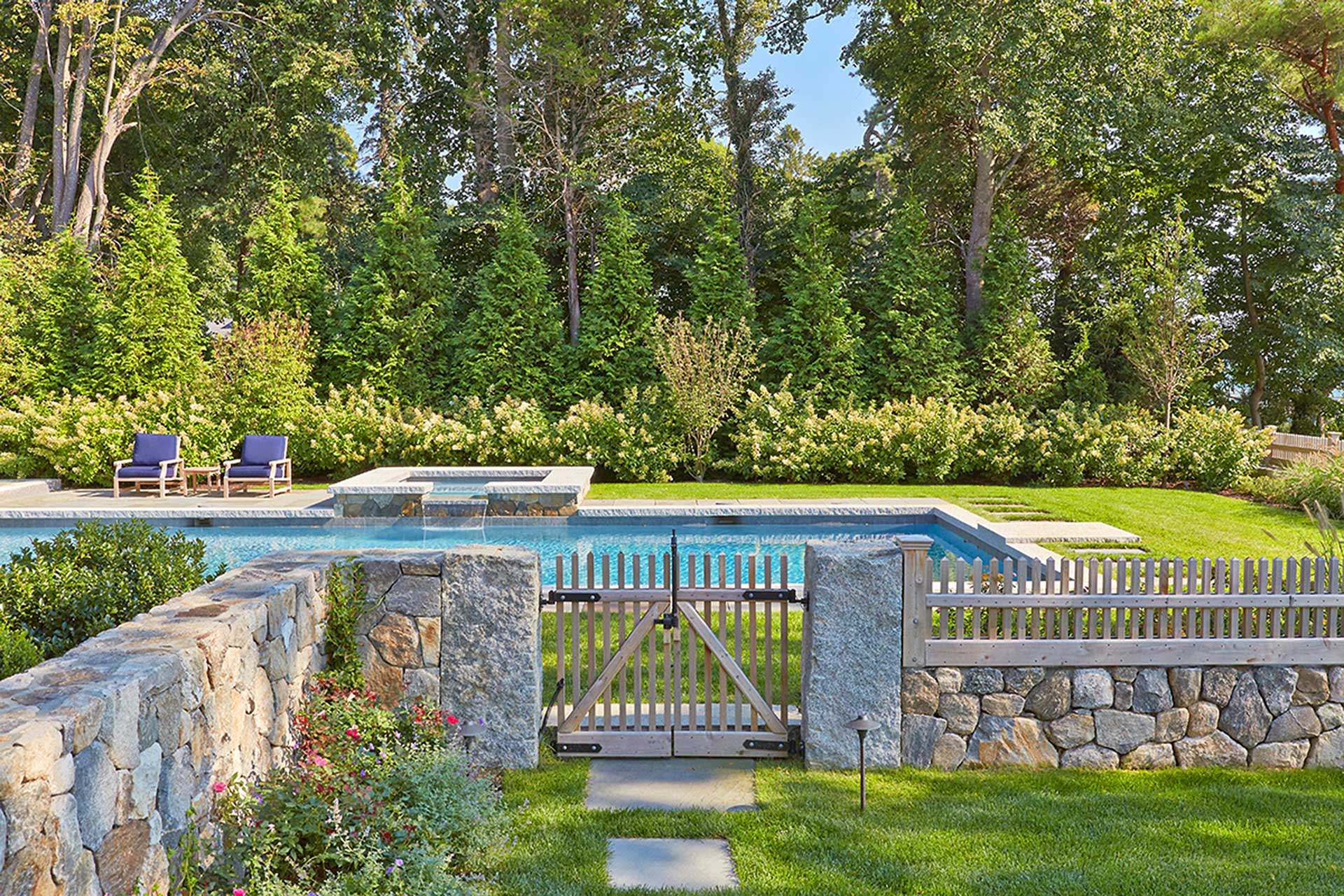
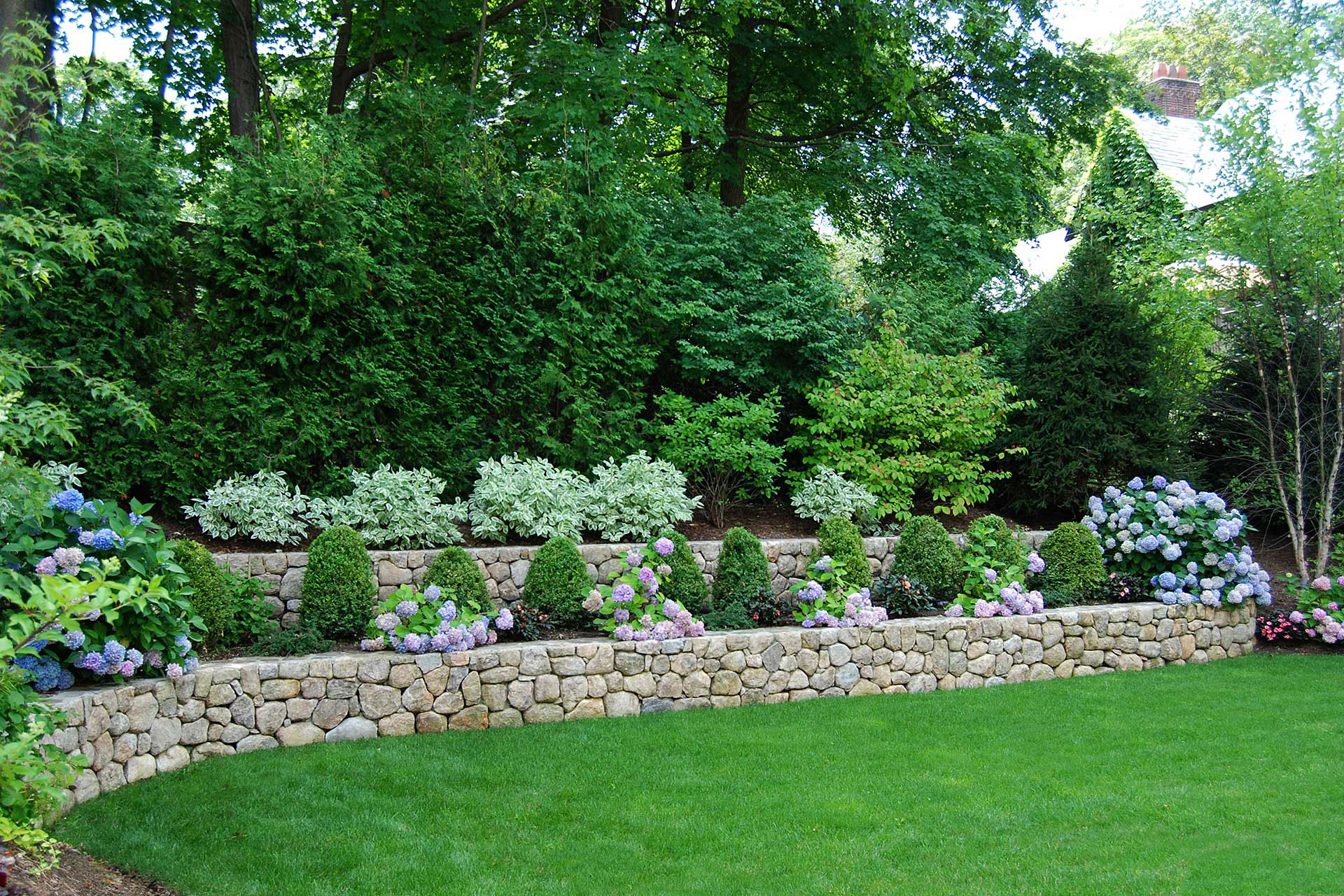
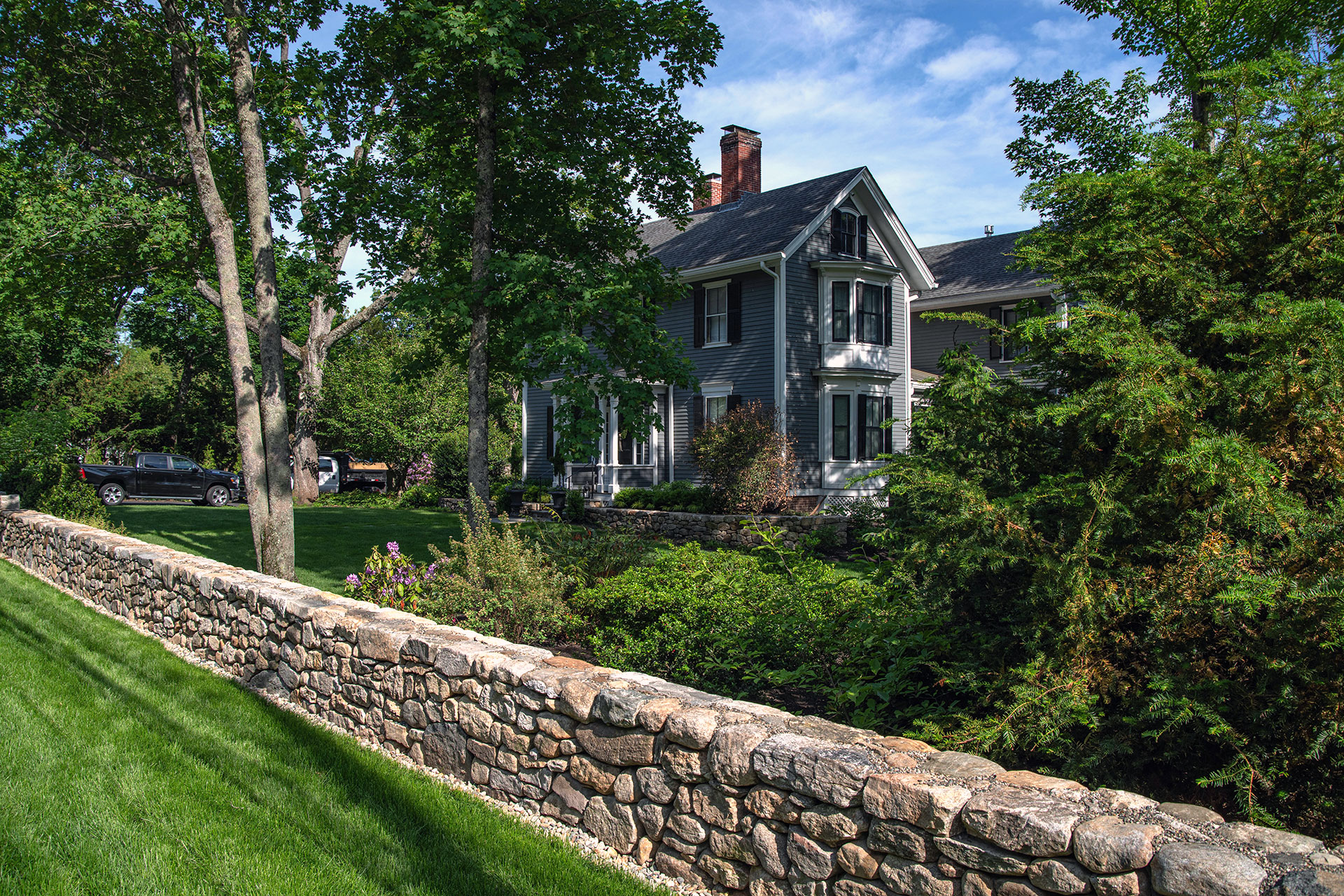
Walls require both design judgment and technical construction. They may define space, manage slope, frame a garden, support a terrace, or create a sense of arrival.
Materials commonly used for walls include:
- Fieldstone
- Granite
- Reclaimed stone
- Natural wall stone
- Segmental wall systems
- Stone veneer over structural walls
A decorative garden wall and a structural retaining wall are not the same thing. Retaining walls need proper engineering, base preparation, drainage stone, backfill, and often permitting considerations. Our stone walls and steps post explains why drainage, cold-climate experience, scale, and long-term performance should be part of evaluating any stonework project.
Related Blog: Retaining Walls in New England: Design, Drainage, Construction, and Long-Term Care
4. Steps and Grade Transitions
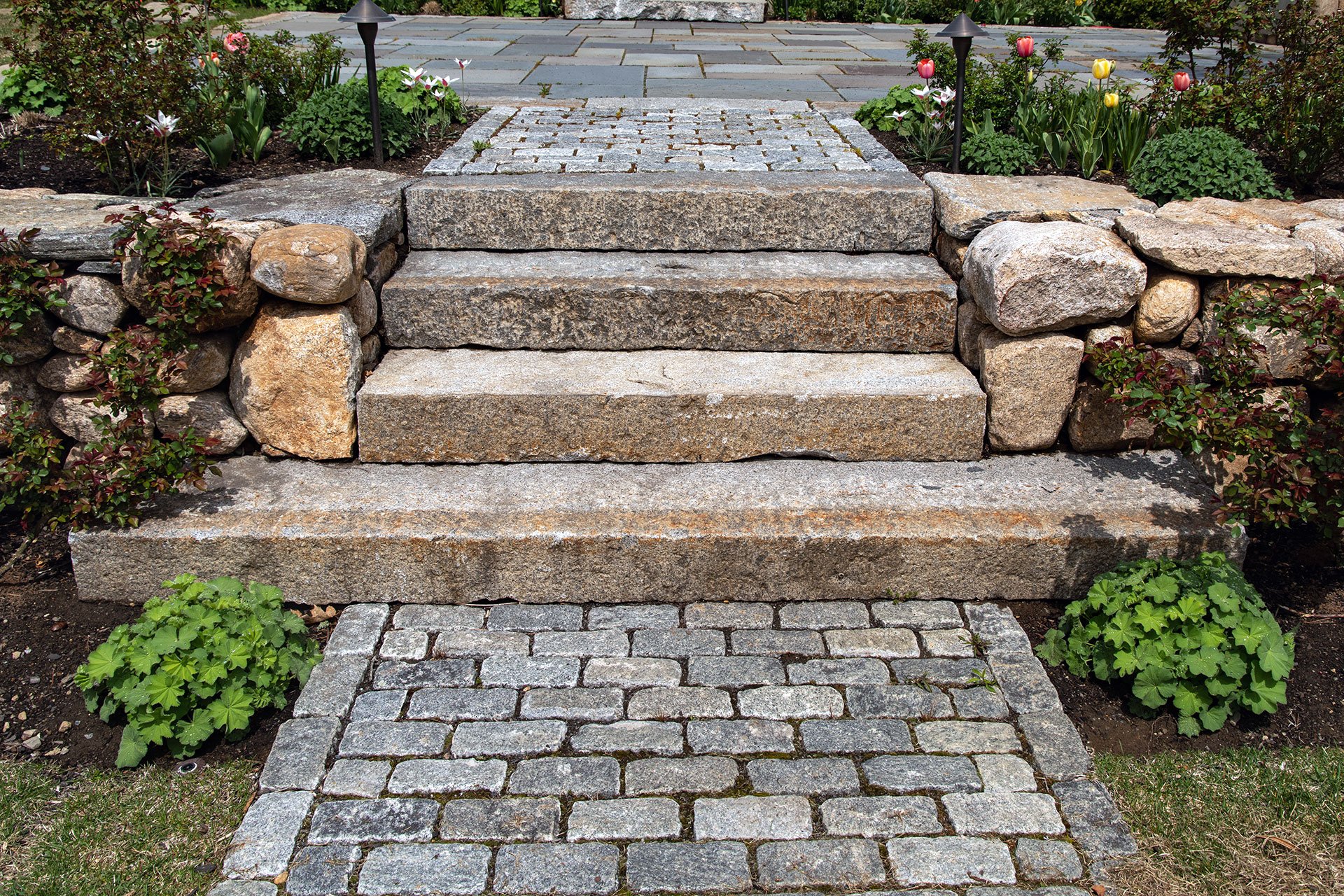
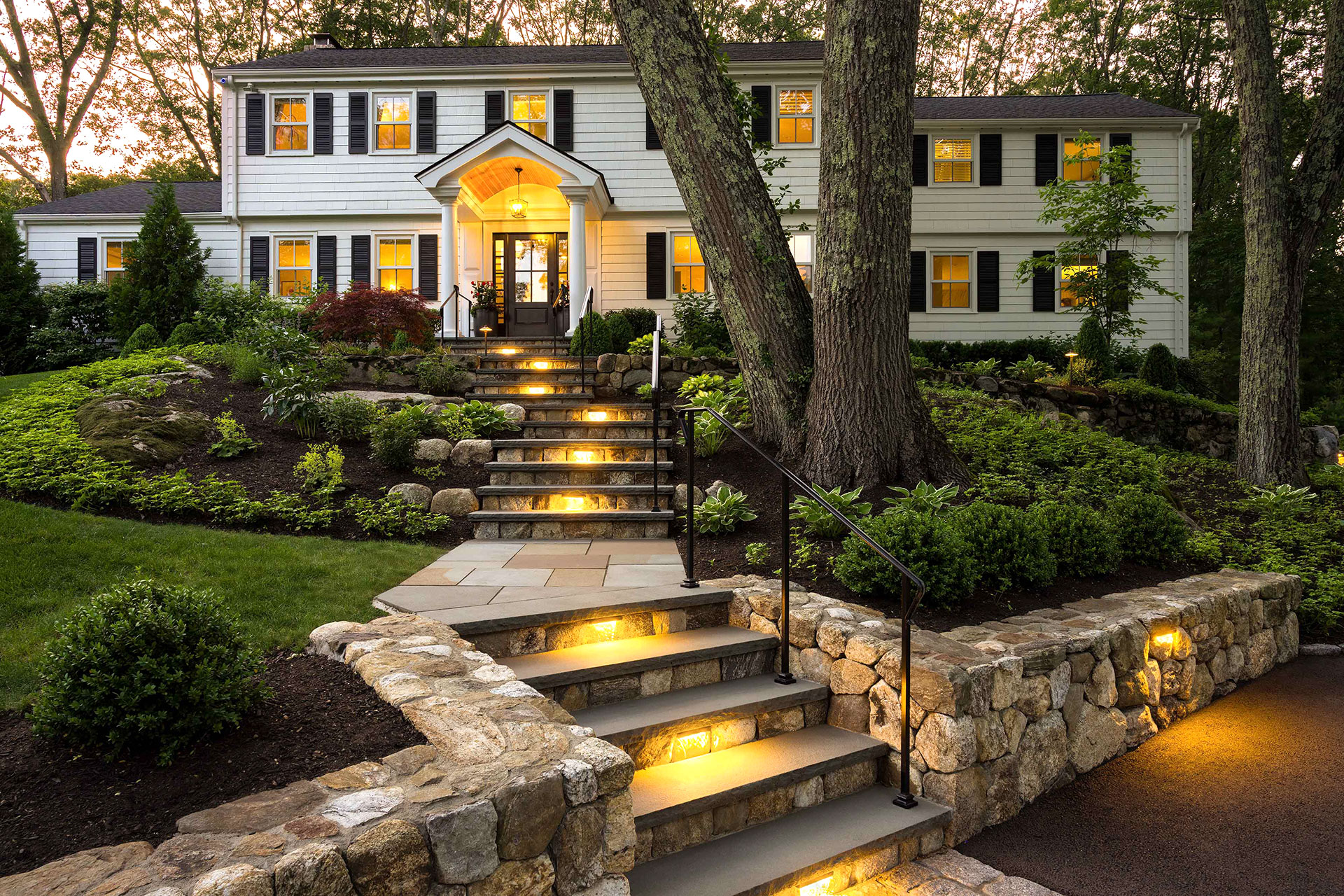
Steps are one of the most important places to invest in quality materials. They need to feel safe, comfortable, and visually connected to the home.
Granite is often the strongest choice for formal or high-traffic steps. Bluestone can work for treads and landings. Fieldstone may be appropriate for informal garden steps. Reclaimed granite can be beautiful where a project needs age and character.
Step design should consider:
- Rise and run
- Handrail requirements
- Drainage
- Ice and snow
- Lighting
- Landing size
- Relationship to doors, paths, and driveways
- Maintenance access
A beautiful step that feels awkward to use is not successful. Comfort and proportion matter.
5. Outdoor Kitchens
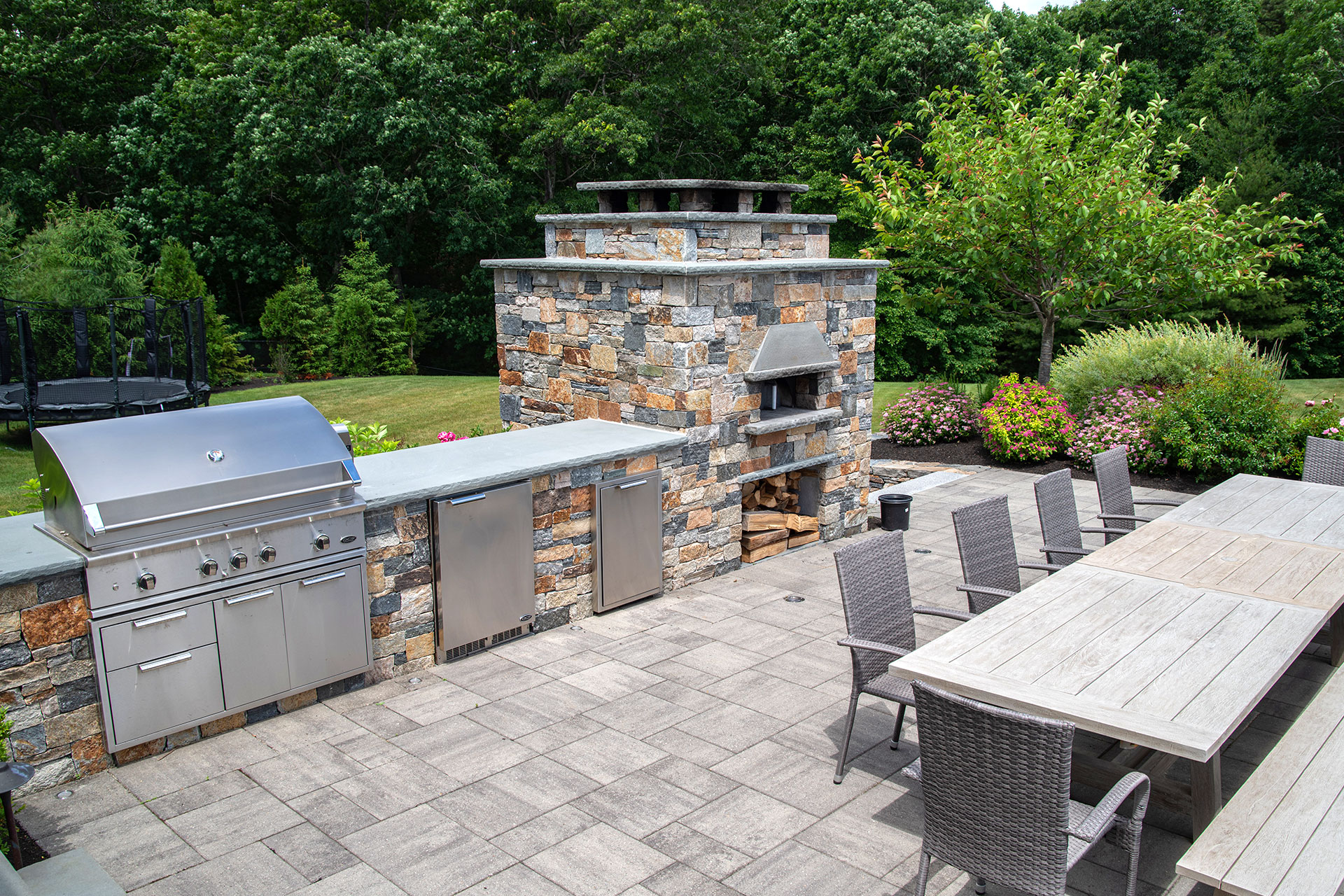

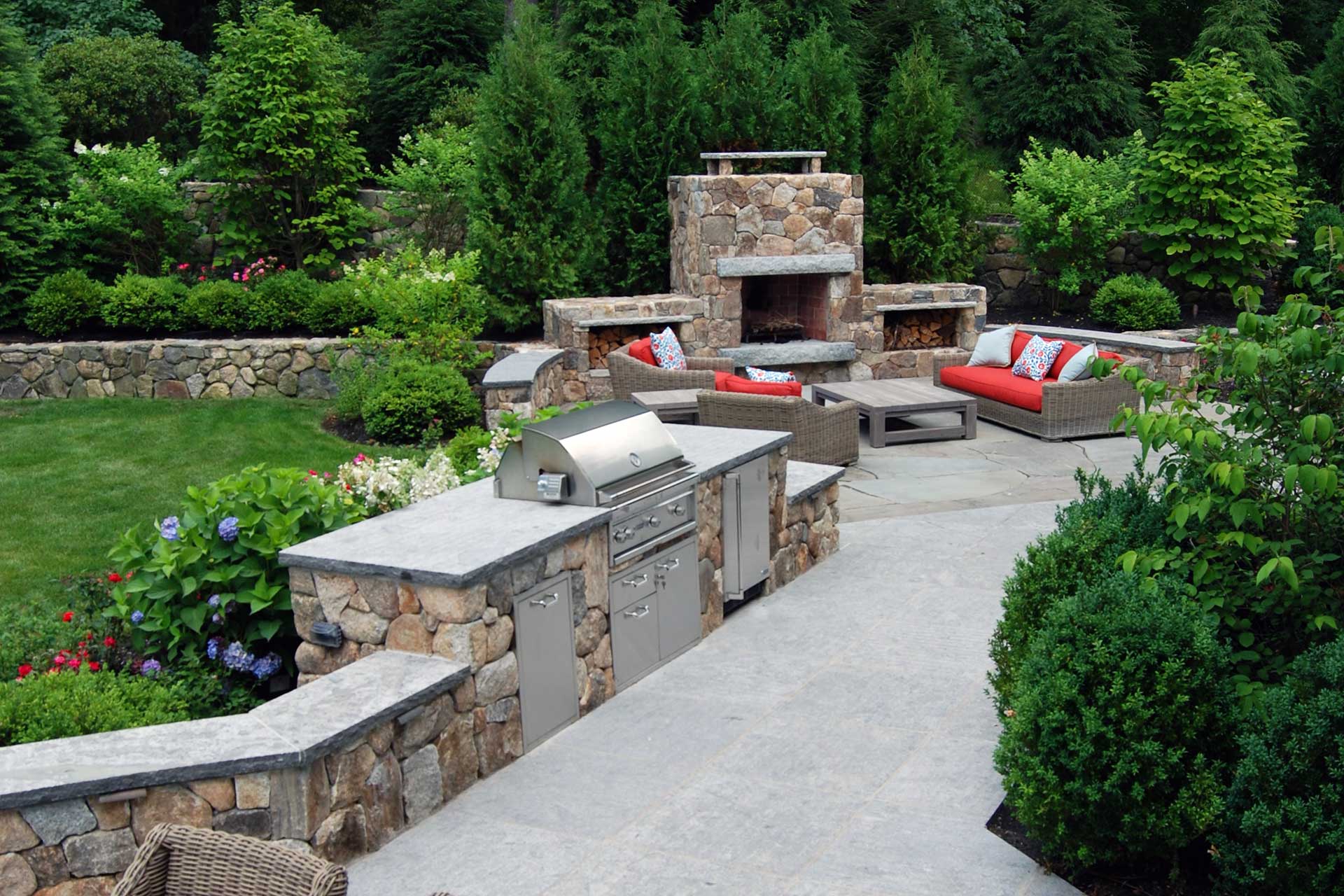
Outdoor kitchens introduce additional material considerations. Surfaces must work around heat, food preparation, utilities, appliances, grease, winter exposure, and cleaning.
Common materials include:
- Natural stone veneer
- Granite counters
- Concrete counters
- Porcelain surfaces
- Bluestone terraces
- Masonry bases
- Stainless steel appliances
- Paver or stone flooring
The kitchen should feel integrated with the patio, dining area, planting, lighting, and circulation routes. It should not look like an appliance station placed on the edge of a terrace.
For Massachusetts homes, it is also important to think about winterization, drainage, ventilation, and how the kitchen will look when it is not in use.
Related Blog: Top 10 Things to Consider When Designing an Outdoor Dining Area
6. Fire Pits and Outdoor Fireplaces
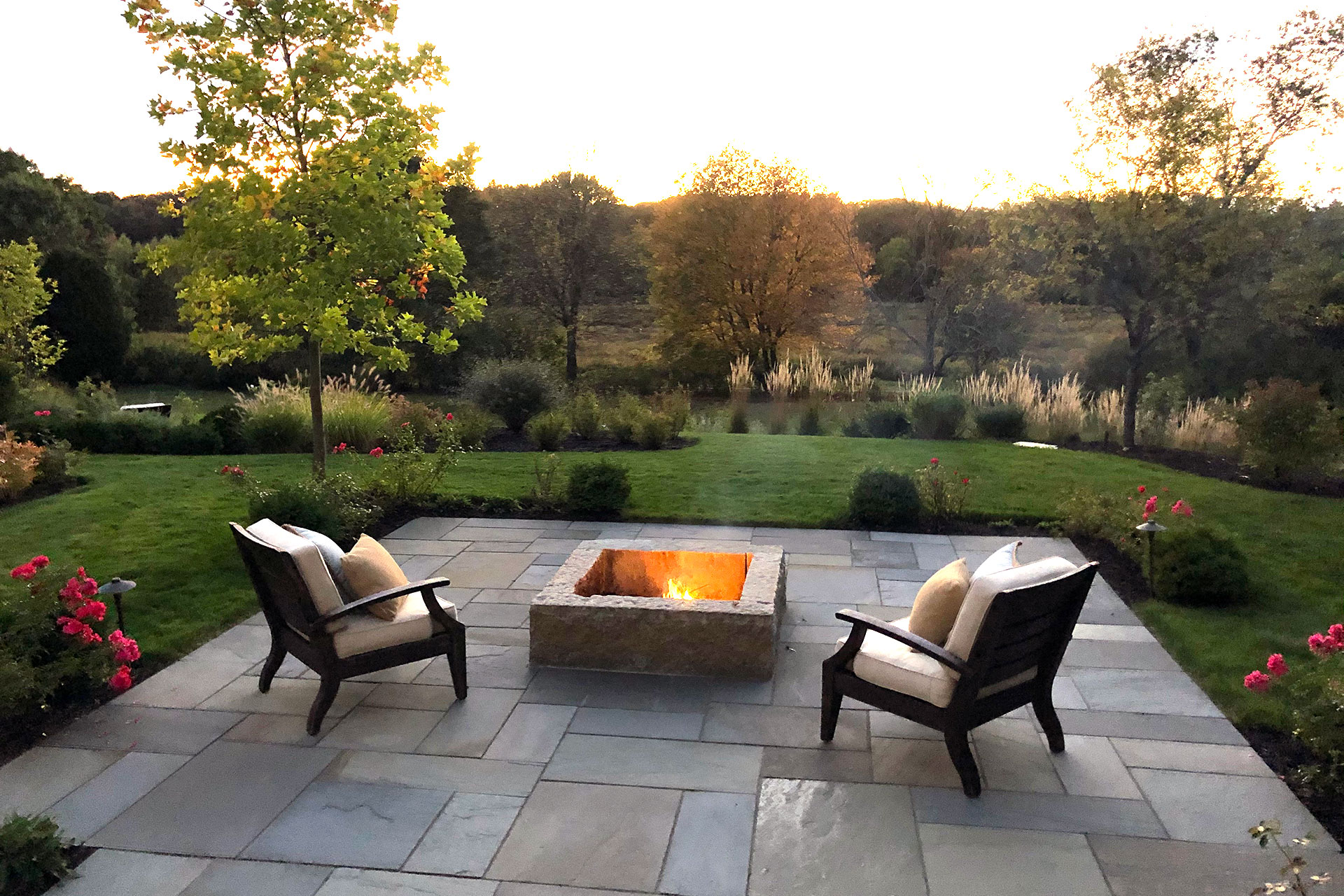
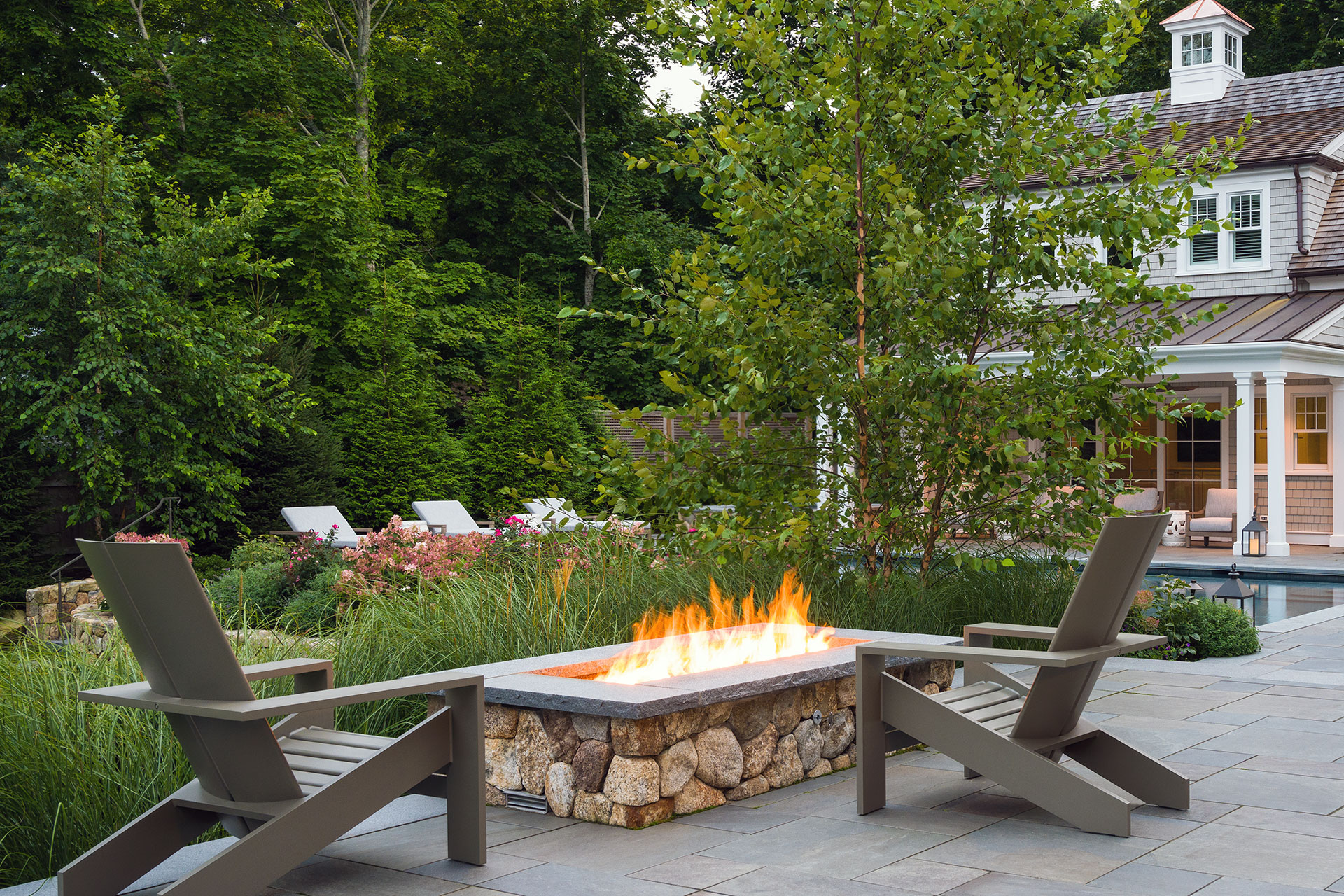
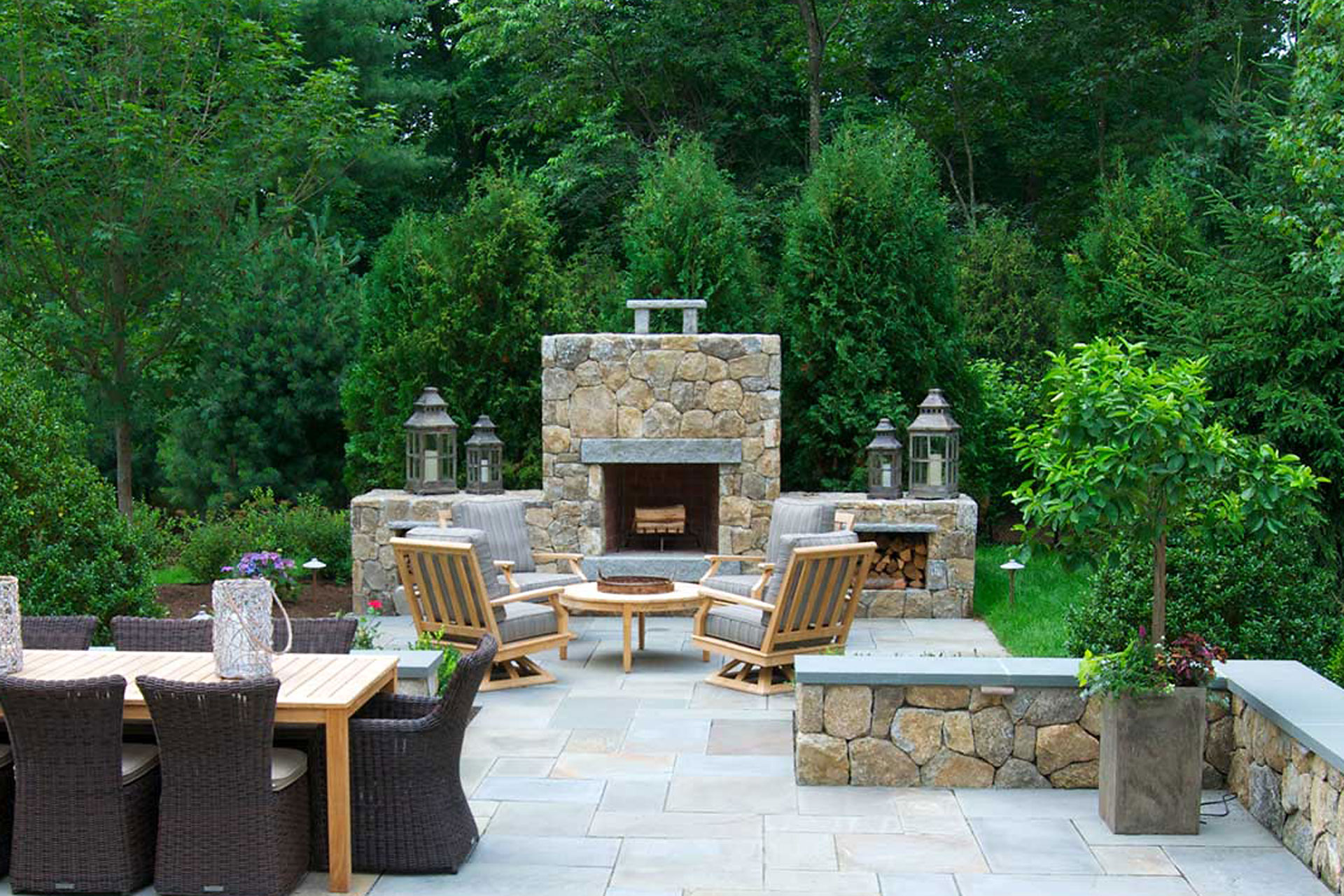
Fire features are highly material-dependent. The surrounding paving, seat walls, hearth, capstones, and adjacent planting all shape the experience.
Stone and masonry materials commonly used around fire features include:
- Granite
- Bluestone
- Fieldstone
- Concrete
- Fire-rated masonry components
- Stone veneer
- Gravel in informal fire pit areas
Our outdoor fire features post notes that durable masonry, natural stone, granite, bluestone, concrete, and weather-resistant components are common choices for New England fire features.
The material palette should make the fire feature feel anchored, not isolated. If the fireplace is the visual center of a patio, the surrounding stonework needs to support that role.
Related Blog: Custom Fire Pits and Outdoor Fireplaces for Boston-Area Homes
7. Pool Surrounds

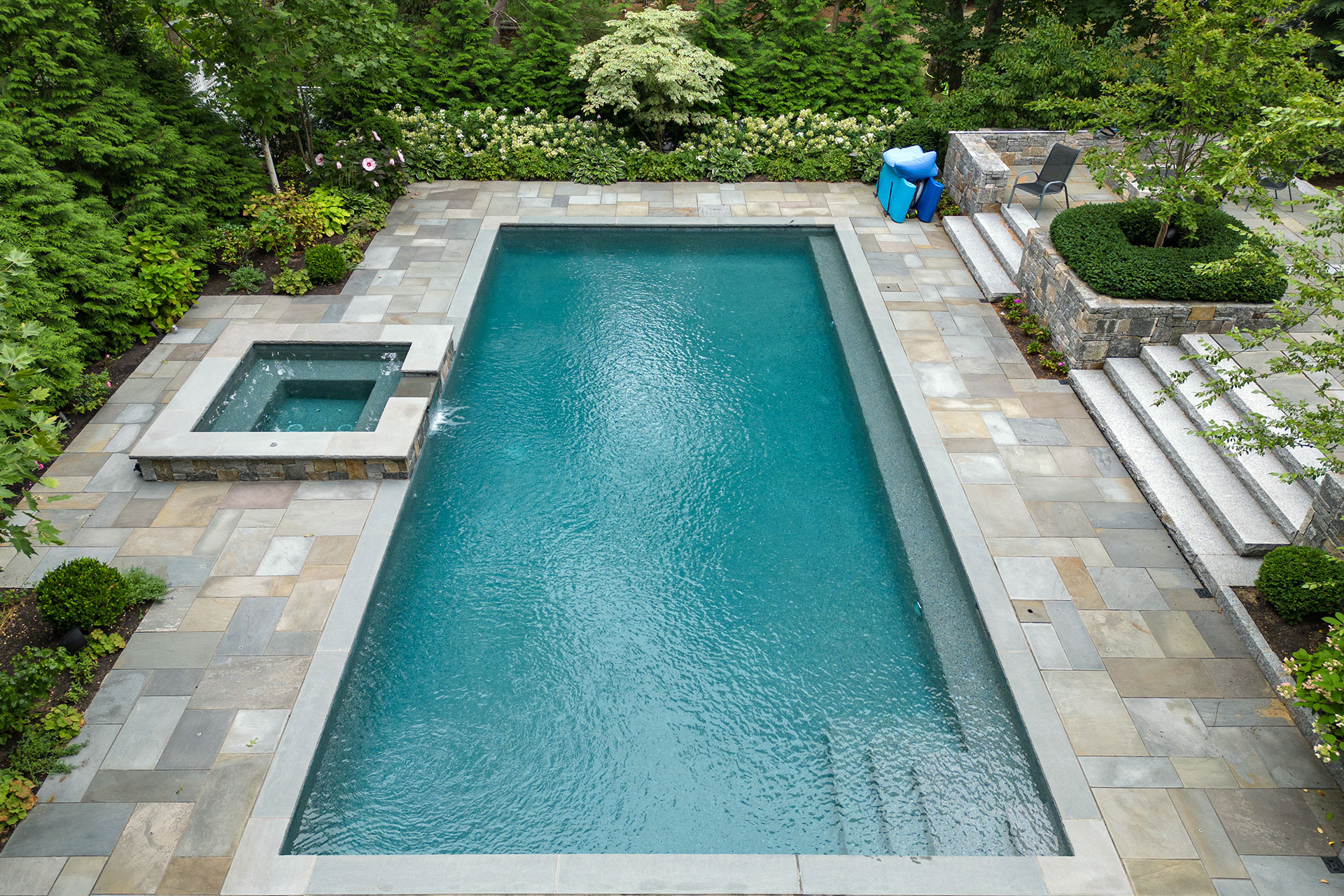
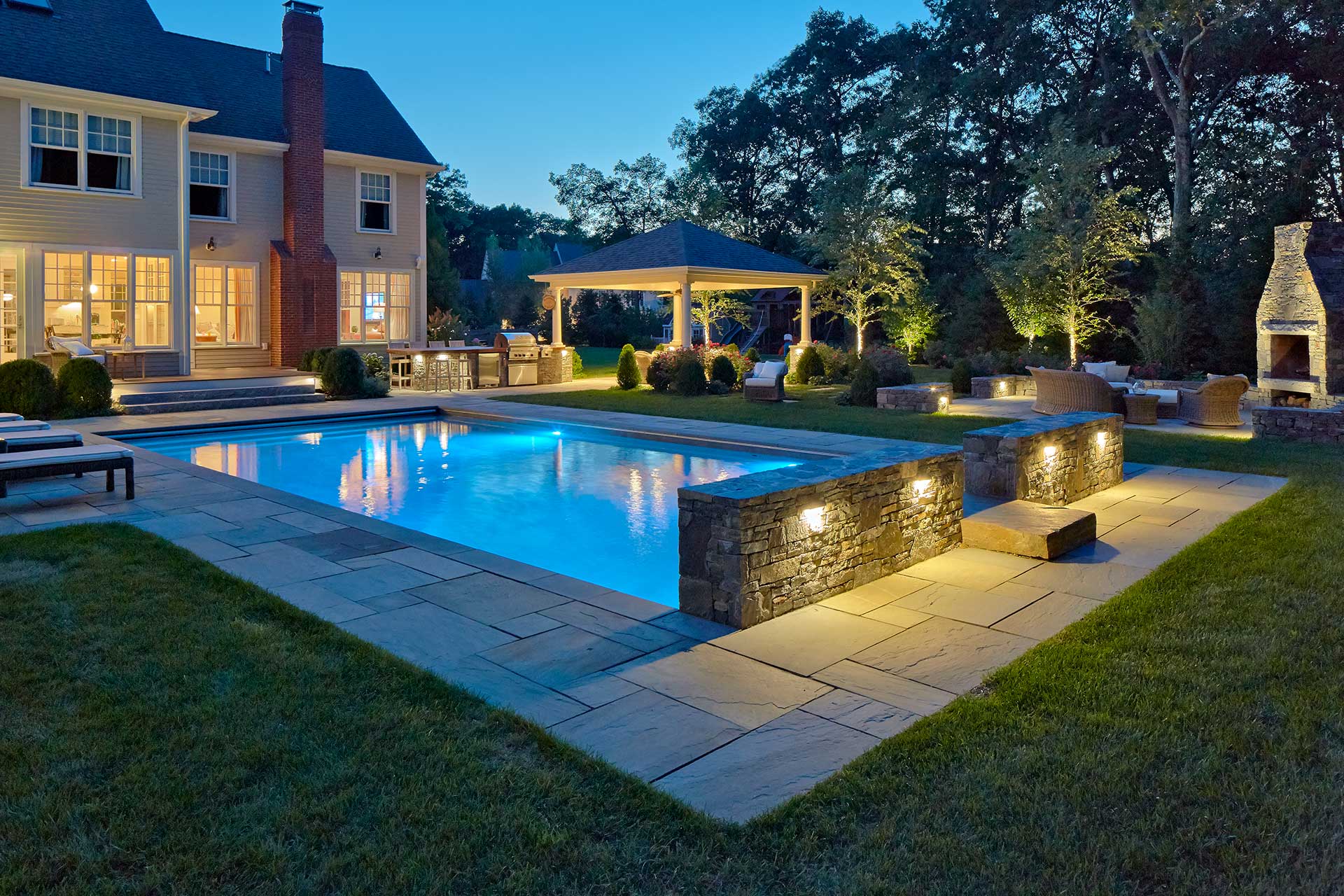
Pool surrounds need to balance appearance, comfort, safety, and maintenance. The material must feel good under bare feet, resist excessive heat, provide traction, and manage water.
Potential materials include:
- Bluestone
- Granite
- Porcelain pavers
- Concrete pavers
- Select natural stone
- Lawn and stone combinations
- Gravel or planting transitions outside the main pool deck
Pool areas also require careful coordination with drainage, fencing, lighting, planting, and irrigation. The most successful pool landscapes do not treat the pool deck as a separate surface. They make it part of a larger outdoor living environment.
8. Garden Paths and Secondary Walks

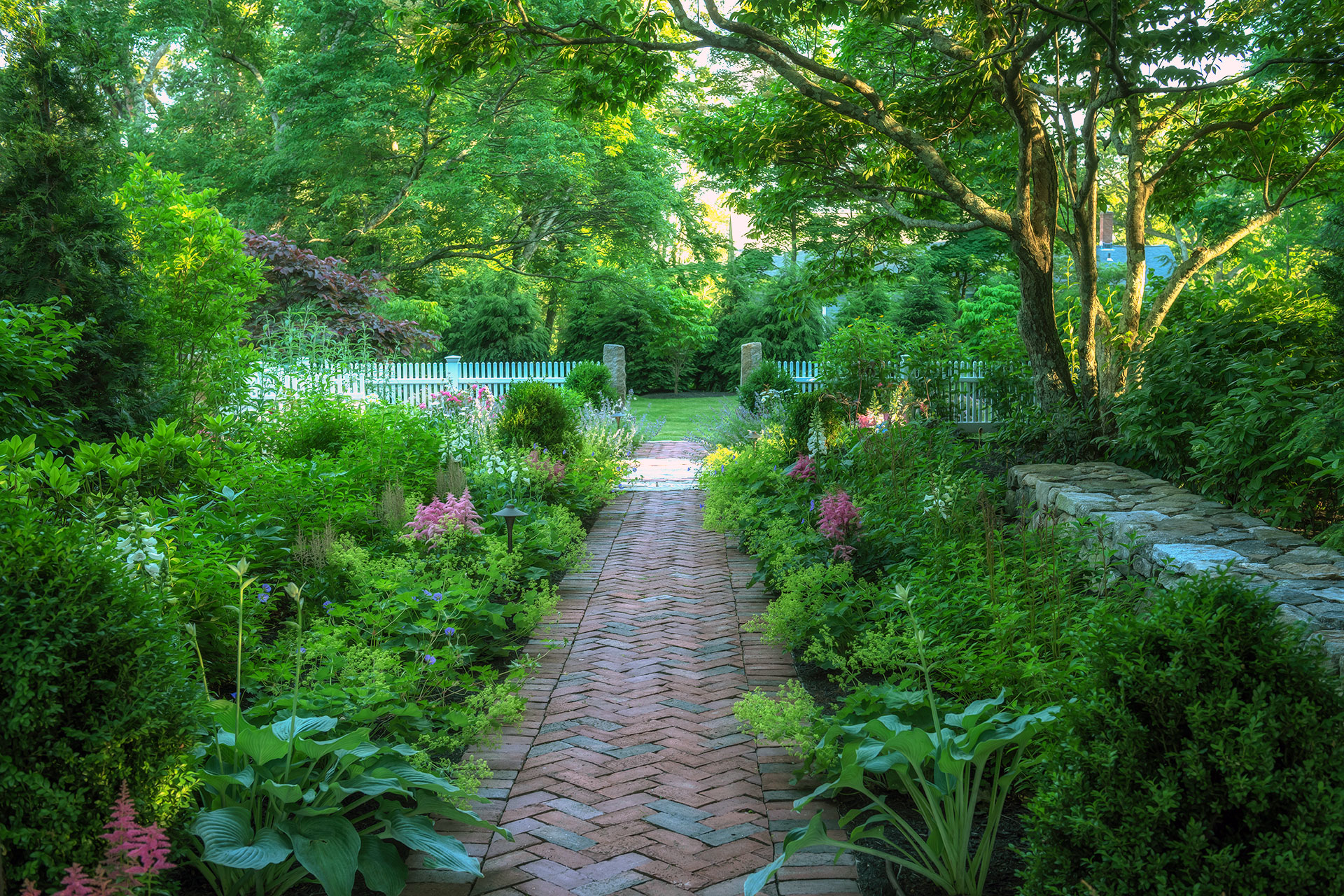
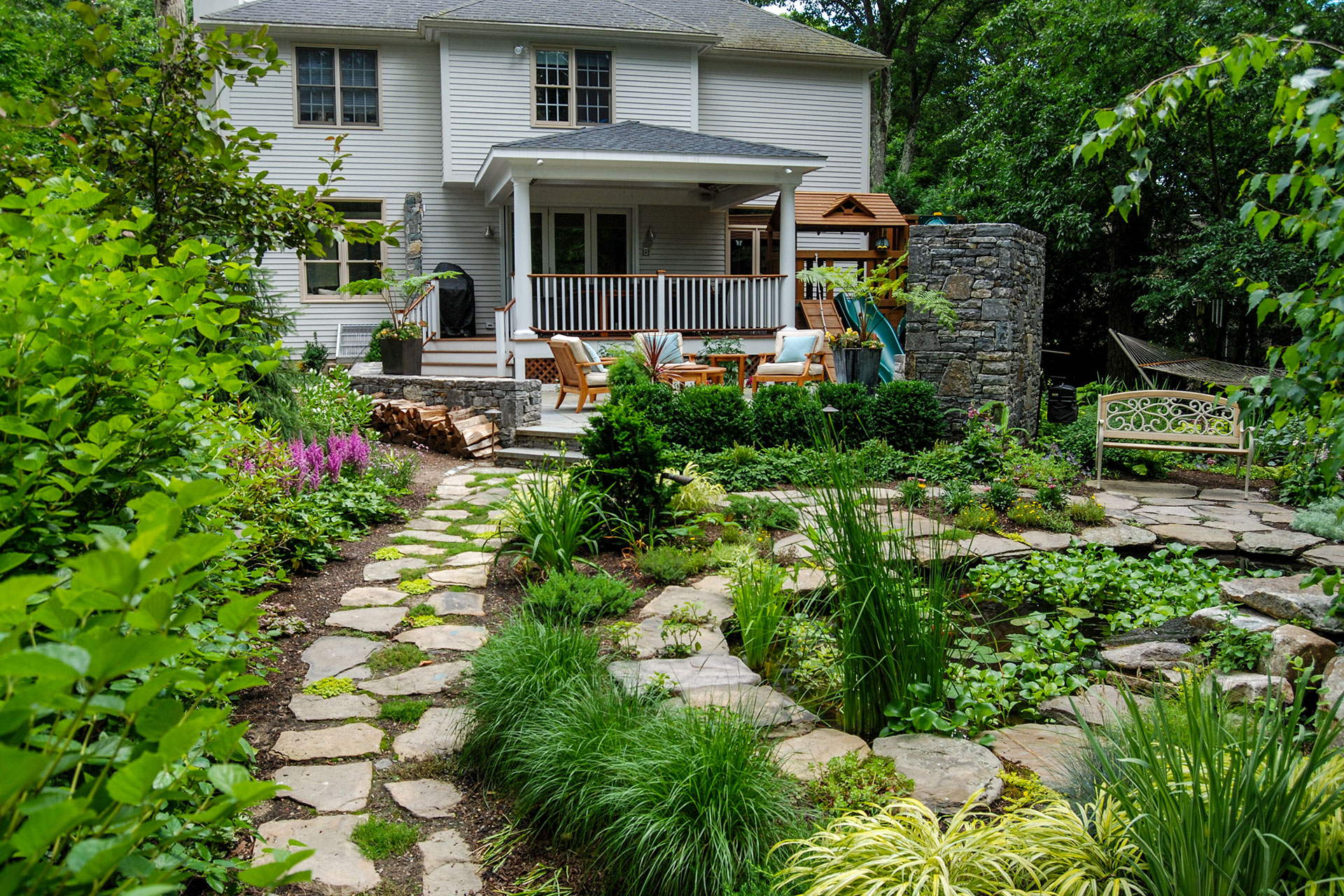
Not every path needs the same level of formality. A main entry walk may call for bluestone or granite, while a woodland path may be better suited to stepping stones, gravel, reclaimed stone, or compacted crushed stone.
Secondary paths can help a property feel more complete by connecting:
- Gardens
- Terraces
- Side yards
- Pool areas
- Kitchen gardens
- Fire pit spaces
- Service areas
- Wooded edges
These details often separate a basic yard from a fully considered landscape.
9. Driveway Aprons, Edging, and Thresholds
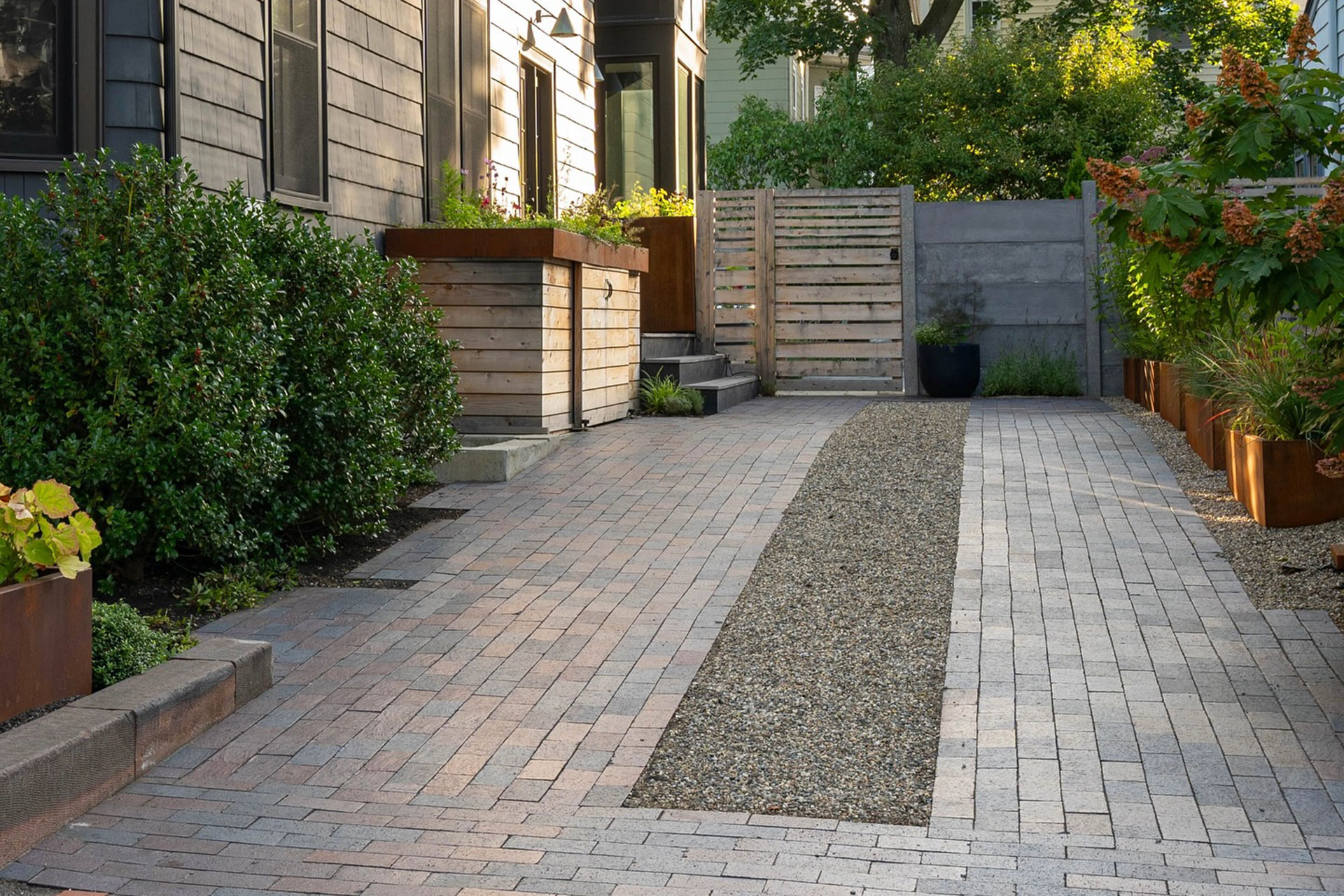
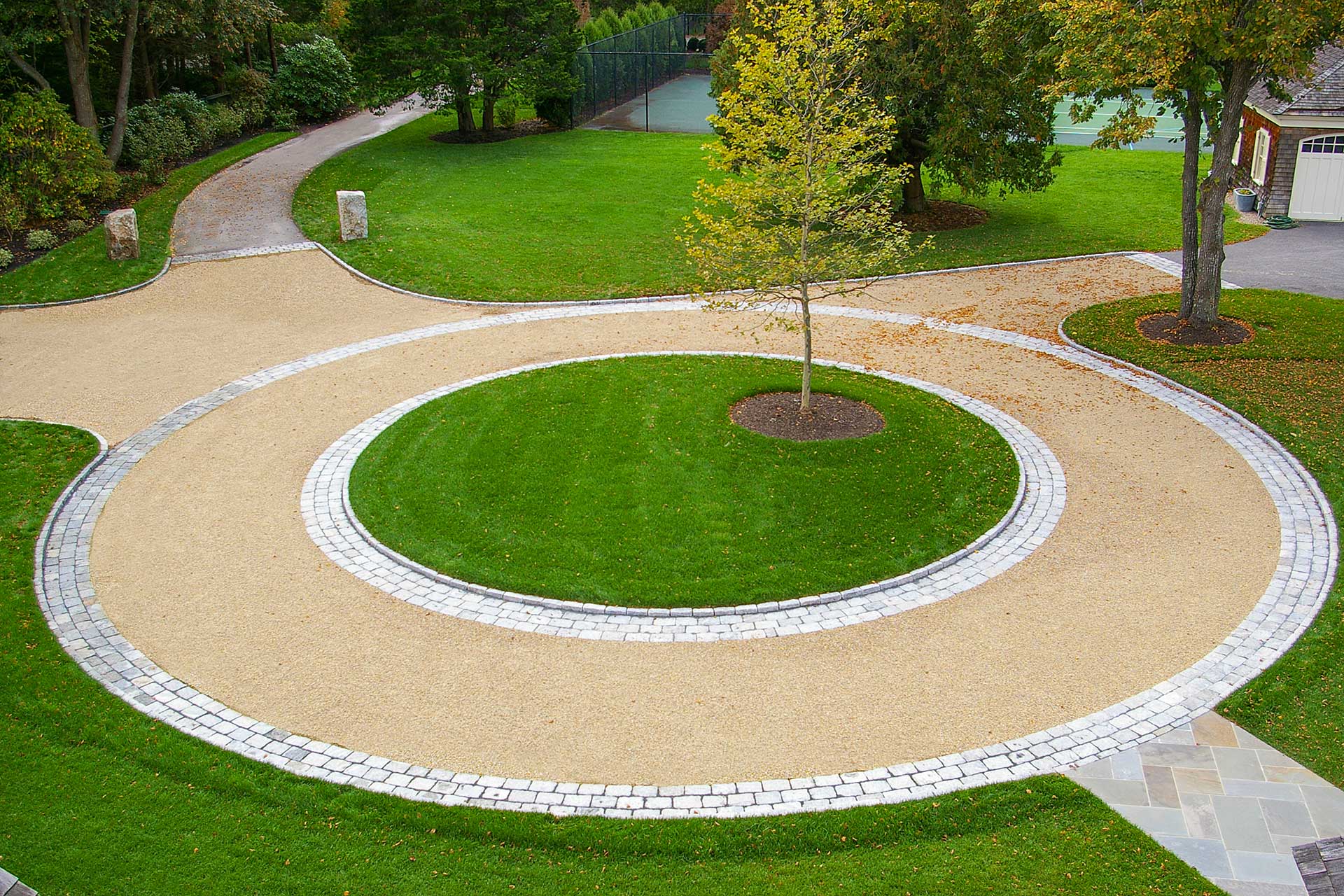
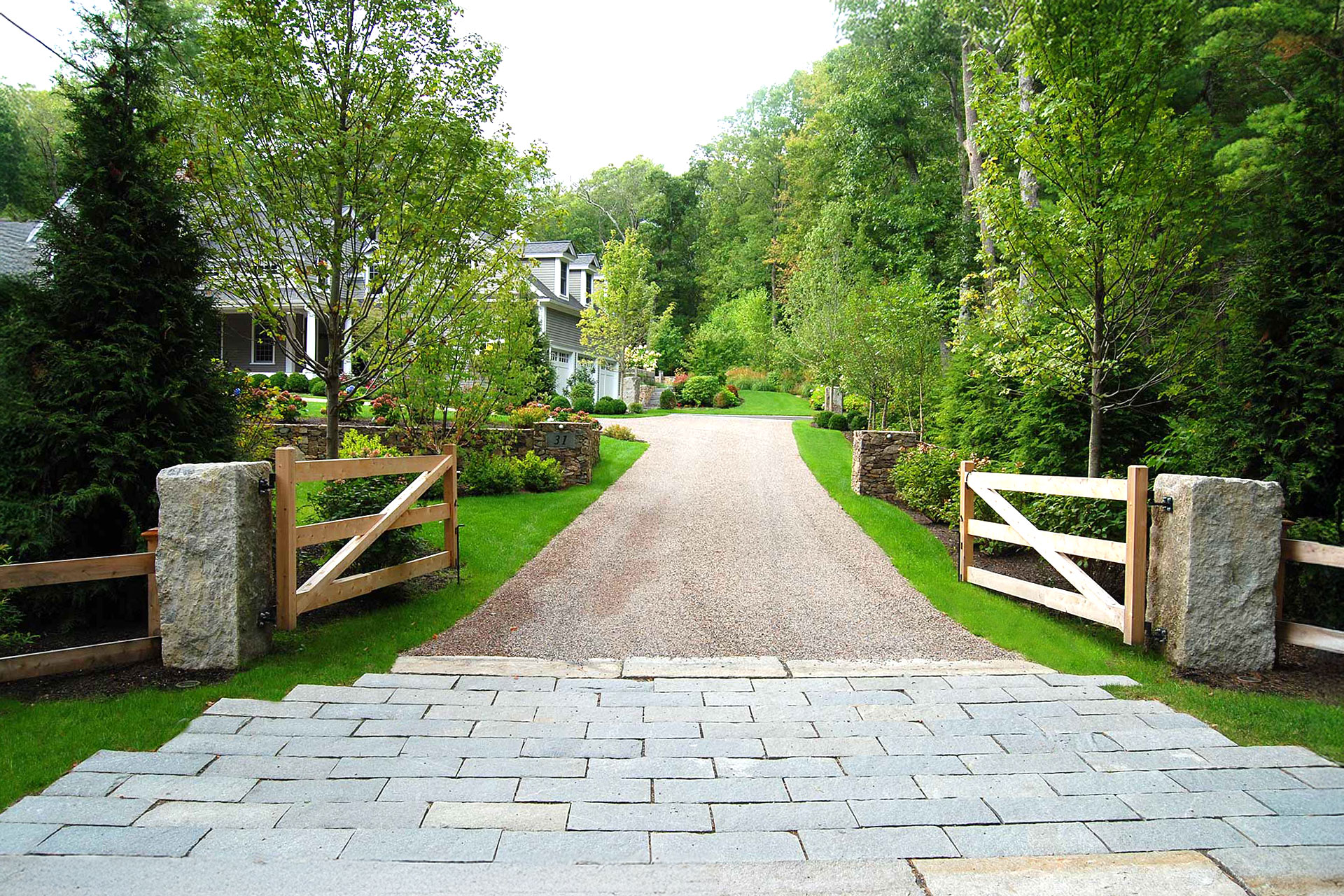
Small hardscape details can have an outsized impact. Granite edging, cobble aprons, stone thresholds, and clean transitions between driveway, lawn, planting, and walkway can make a property feel more finished.
These elements are especially useful where asphalt or concrete driveways need to relate more gracefully to the home and surrounding landscape.
Boston, Suburbs, and Cape Cod: Matching Materials to Local Character
Boston and Inner Suburbs
In Boston, Brookline, Newton, Cambridge, Somerville, and similar communities, landscapes often need to work within tighter spaces. Materials must be chosen with scale in mind.
Good choices often include:
- Bluestone for patios and courtyards
- Brick for historic homes
- Granite for steps and thresholds
- Reclaimed stone for older properties
- Porcelain or large-format pavers for contemporary renovations
- Cobble accents for driveway or entry details
Urban and inner-suburban landscapes benefit from restraint. Too many materials in a small space can feel busy. A limited palette, carefully detailed, usually performs better.
MetroWest and Estate Properties
In towns such as Weston, Wellesley, Lincoln, Concord, Dover, Wayland, Carlisle, and Sudbury, properties often have more room for layered hardscape.
Materials can be used to create:
- Long entry walks
- Terraced patios
- Garden rooms
- Pool landscapes
- Retaining walls
- Outdoor kitchens
- Fireplaces
- Woodland paths
- Lawn-to-garden transitions
Natural stone, fieldstone, reclaimed granite, bluestone, and carefully selected pavers can all work well. The key is to keep the material palette cohesive across the property.
Cape Cod Properties
Cape Cod landscapes have their own design language. The Cape Cod Commission’s community design resources cover site planning, landscape design, lighting, architecture, and contextual design for the Cape.
For Cape properties, hardscape materials often need to feel lighter, more relaxed, and more connected to coastal conditions. Gravel, reclaimed stone, brick, bluestone, shell-like color palettes, weathered textures, and restrained granite details can all work, depending on the home and site.
Cape landscapes also need to consider:
- Sandy soils
- Salt exposure
- Wind
- Drought stress
- Coastal regulations
- Informal circulation
- Native and adapted planting
- Visual sensitivity near roads and shorelines
These conditions should shape the planting and outdoor spaces as well as the stonework. Our guide to coastal landscape design in Massachusetts looks at planning these elements together.
Stone should not feel imported from an unrelated setting. The best Cape hardscapes often look settled, modest, and durable.
Drainage: The Hidden Factor Behind Successful Stonework
Drainage is one of the most important topics in any hardscape project. It is also one of the easiest for homeowners to overlook because much of the work happens below the surface.
A patio may fail not because the stone was wrong, but because the base, grading, or drainage was inadequate. A wall may move because water builds pressure behind it. A walkway may become icy because runoff crosses it in winter. A fire pit area may become muddy because surrounding grades direct water toward it.
Good hardscape design should consider:
- Where water currently flows
- How new paving will change runoff
- Whether the surface should be pitched
- Where downspouts discharge
- Whether permeable materials are appropriate
- How walls drain from behind
- How soil conditions affect infiltration
- Whether planting areas can help absorb water
- How snow and ice will be managed
Massachusetts stormwater guidance for homeowners focuses on landscaping strategies that reduce the quantity and contamination of stormwater runoff, reinforcing why hardscape design should be considered alongside water management rather than separately.
Related Blog: Why Professional Landscape Drainage Should Be Part of Every Boston Landscape Plan
Maintenance: What Homeowners Should Expect
Stone and hardscape materials are durable, but they are not maintenance-free. The maintenance profile depends on the material, installation method, surrounding trees, shade, moisture, use, and winter care.
Common Maintenance Considerations
| Material | Typical maintenance needs |
|---|---|
| Bluestone | Occasional cleaning, joint care, monitoring for shifting or staining |
| Granite | Low maintenance, with occasional cleaning or joint upkeep as needed |
| Fieldstone | Wall inspection, vegetation management, and resetting if movement occurs |
| Brick | Weed control, joint sand maintenance, and resetting if heaving occurs |
| Concrete pavers | Joint sand, cleaning, and possible sealing depending on the product |
| Porcelain pavers | Cleaning, joint care, and careful edge inspection |
| Gravel | Raking, replenishment, edging, and weed control |
| Reclaimed stone | Similar to natural stone, with added attention to irregular surfaces |
Maintenance should be part of the design conversation from the beginning. A shaded bluestone patio under mature trees will age differently from a sunny terrace. A gravel path near a lawn edge will need different care than a granite front step.
“Long-term maintenance is not an afterthought. It should influence material selection, joint width, edge details, drainage, planting placement, and even how snow will be removed in winter.”
– Katie Johnson, a Blade of Grass
Ask an Expert: Our Retaining Wall Is Starting to Lean. How Worried Should I Be?
Frequently Asked Questions
Q: What is the best stone for patios in Boston?
A: Bluestone is often one of the best all-around choices for Boston-area patios because it offers a strong balance of durability, appearance, and regional character. Granite, high-quality concrete pavers, porcelain pavers, and select natural stones may also be appropriate depending on the style of the home, budget, sun exposure, drainage, and intended use.
Q: Is natural stone better than concrete pavers?
A: Not always. Natural stone often has more character and regional authenticity, while concrete pavers can offer consistency, modular installation, and cost control. The better choice depends on the property. A historic Brookline home may call for brick, bluestone, or reclaimed stone, while a contemporary Newton or Wellesley renovation may be well suited to large-format pavers or porcelain.
Q: What material works best for front steps?
A: Granite is often an excellent choice for front steps because of its durability, clean appearance, and long-term performance. Bluestone, reclaimed granite, and carefully detailed masonry can also work well. The best step material should feel comfortable underfoot, fit the architecture, and manage winter conditions safely.
Q: What is the most New England-looking stone?
A: Fieldstone, granite, reclaimed stone, cobble, and bluestone all have strong New England associations. The most appropriate choice depends on the home. A rural Concord or Lincoln property may call for fieldstone walls, while a formal Wellesley entry might be better suited to granite and bluestone.
Q: Are permeable materials worth considering?
A: Yes, in the right application. Gravel, permeable pavers, planted joints, and carefully designed drainage strategies can help manage runoff. They are especially worth discussing where a property has drainage challenges, compacted soils, slope, or regulatory considerations.
Q: Can stonework help with a sloped yard?
A: Yes. Stone walls, steps, terraces, and paths can turn a slope into usable space. The design must account for grade, drainage, retaining requirements, planting, lighting, and circulation. This is one of the clearest examples of why design and construction should be coordinated closely.
What to Ask Before Choosing a Material
Before selecting stone or hardscape material, homeowners should ask:
- Does this material suit the architecture of the home?
- Will it perform well in Boston-area freeze-thaw conditions?
- How will it drain?
- What kind of maintenance will it require?
- Will it feel safe and comfortable underfoot?
- Does it work with nearby walls, steps, planting, lighting, and irrigation?
- Will it still look appropriate in 10 or 20 years?
- Can it be repaired or adjusted if needed?
- Is it appropriate for the budget and project scope?
- Does it support the long-term plan for the property?
The goal is not to choose the most dramatic material. The goal is to choose the material that makes the property feel more resolved.
Learn More
For homeowners who want to understand how stone, hardscape, drainage, and regional design fit together, these resources provide useful background:
- Natural Stone Institute: Natural Stone Resource Library – A useful industry resource for homeowners who want to better understand natural stone selection, care, maintenance, sealers, and freeze-thaw considerations.
- EPA: Soak Up the Rain, Permeable Pavement – Explains how permeable pavement can reduce runoff by allowing rainwater and melting snow to move through the surface into soil and gravel layers below.
- Massachusetts Stormwater Solutions: Reducing Impervious Surfaces – A Massachusetts-specific homeowner resource that explains how reducing hard, impervious surfaces and using permeable paving can help manage stormwater.
- Concrete Masonry & Hardscapes Association: Maintenance Guidelines for Permeable Interlocking Concrete Pavements – A more technical resource for readers interested in how permeable paver systems are maintained over time.
Bringing It All Together
The best stone and hardscape materials for Boston-area landscapes are not chosen from a catalog. They are selected through a careful reading of the property: the architecture, the grade, the soils, the drainage, the intended use, the surrounding planting, and the way the landscape should feel over time.
Bluestone may be ideal for one terrace. Granite may be the right choice for a front entry. Fieldstone may make a sloped garden feel settled and timeless. Gravel may be exactly right for a relaxed Cape Cod path. Reclaimed stone may give an older property the character that new materials cannot easily replicate.
The strongest landscapes rarely depend on one material. They depend on the right combination, detailed well and installed with care.
If you are planning a patio, walkway, wall, outdoor kitchen, fire feature, pool surround, entry landscape, or larger property renovation, the Blade team can help you make material decisions that support both the design and the long-term performance of your landscape. With more than 30 years of hands-on experience across Greater Boston, MetroWest, and Cape Cod, a Blade of Grass brings together landscape design, construction, horticultural care, drainage awareness, and ongoing maintenance to create outdoor spaces that mature beautifully.
Contact a Blade of Grass to start a conversation about your property.