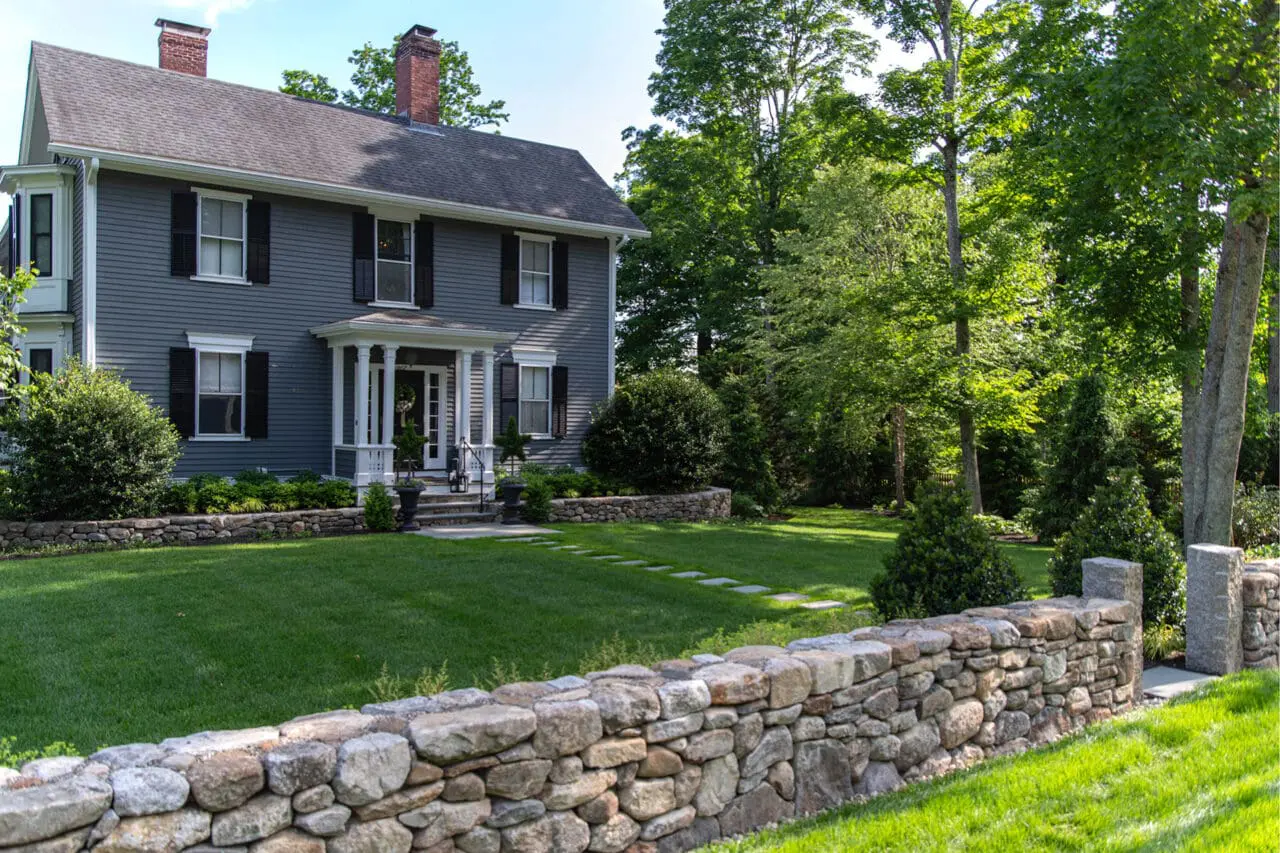
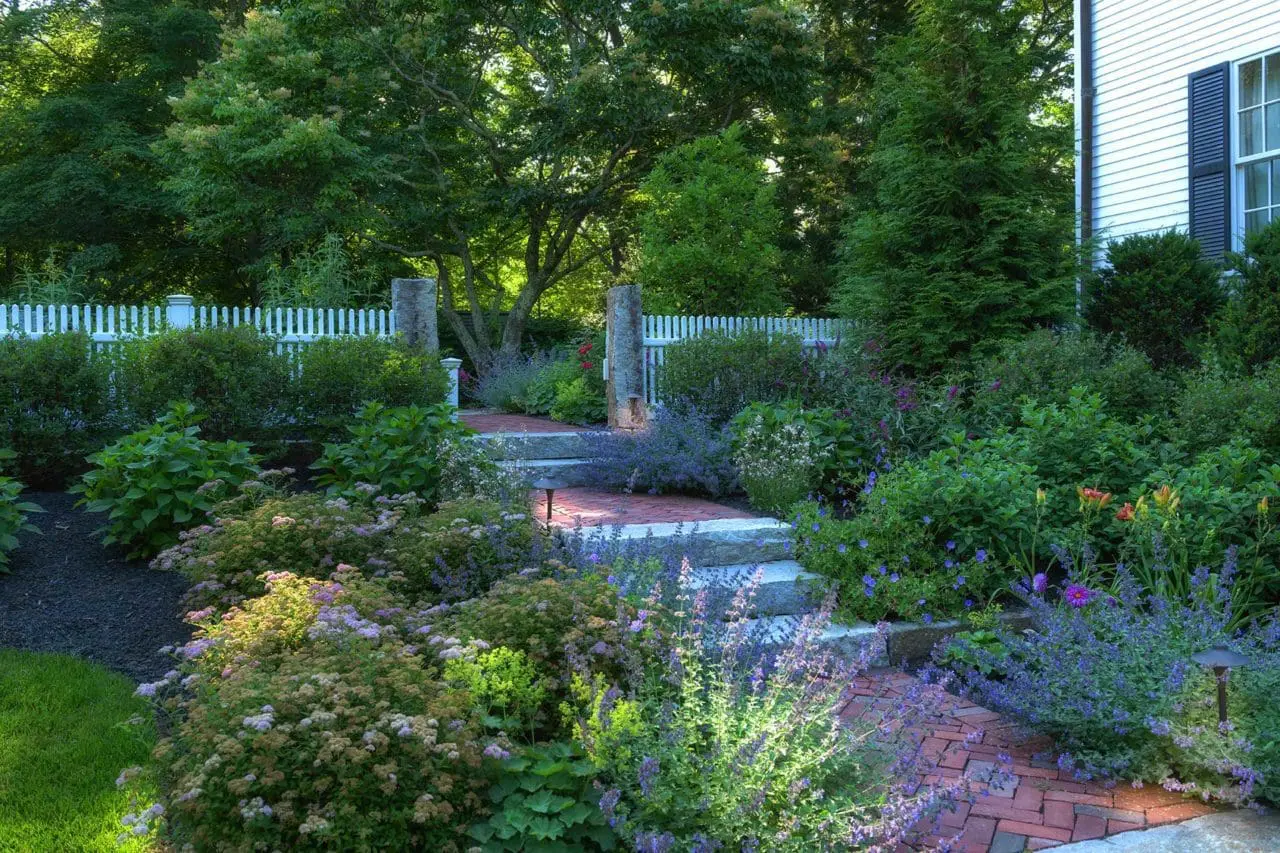
Outdoor dining areas are often imagined as simple upgrades, but the most successful ones are carefully designed landscape features that respond to the property, the architecture, and how a household actually lives. When done well, outdoor dining becomes a natural extension of the home and landscape. When done poorly, it can feel underused, uncomfortable, or disconnected.
This guide focuses on the design thinking behind great outdoor dining spaces, not trends or quick fixes. These ten considerations reflect what consistently determines whether an outdoor dining area becomes a favorite gathering spot or an occasional novelty, with particular relevance to New England properties.
Key Takeaways
- Outdoor dining should be designed as part of the overall landscape.
- Proportion and scale matter as much as square footage.
- Climate-appropriate materials extend the life of patios, terraces, and outdoor dining areas.
- Comfort, privacy, shade, and lighting determine how often the space is actually used.
- The best outdoor dining spaces balance structure, flexibility, and long-term maintenance.
1. How the Dining Area Fits Into the Overall Landscape Design
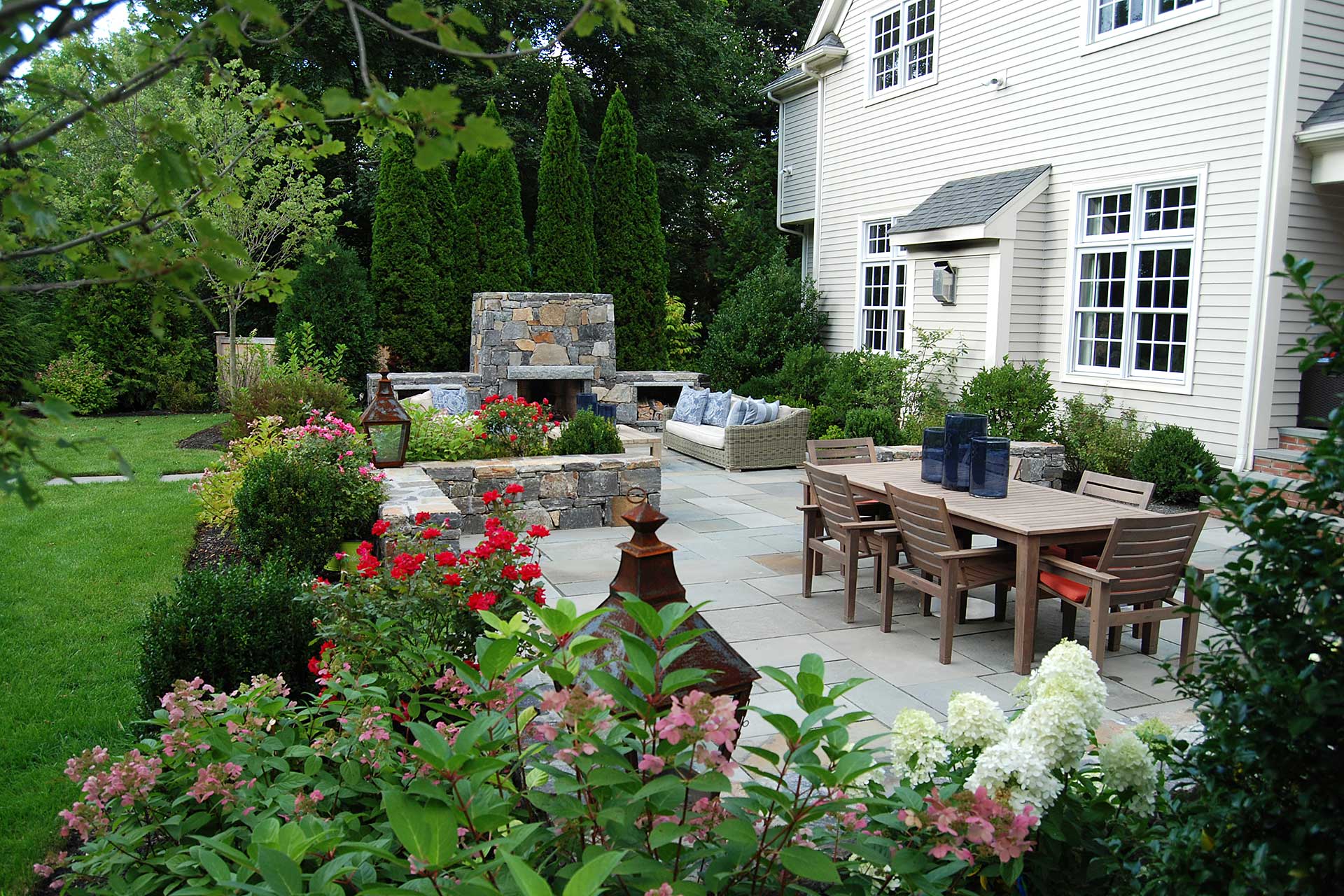
An outdoor dining area should feel intentional, not added on. The strongest designs are planned as part of the larger landscape composition, aligned with circulation routes, planting design, and architectural lines.
Dining spaces that feel disconnected often lack visual anchors. Low walls, changes in paving pattern, subtle elevation shifts, or surrounding planting can help define the area without fully enclosing it. When the dining space visually relates to terraces, gardens, lawn areas, and the home itself, it becomes part of a cohesive outdoor experience.
According to the American Society of Landscape Architects, residential landscape design should support comfort, connection to nature, and the way outdoor spaces are used. That broader thinking is especially important for dining areas, which need to function as both practical gathering spaces and integrated landscape features.
2. Proportion and Scale Relative to the Home and Property
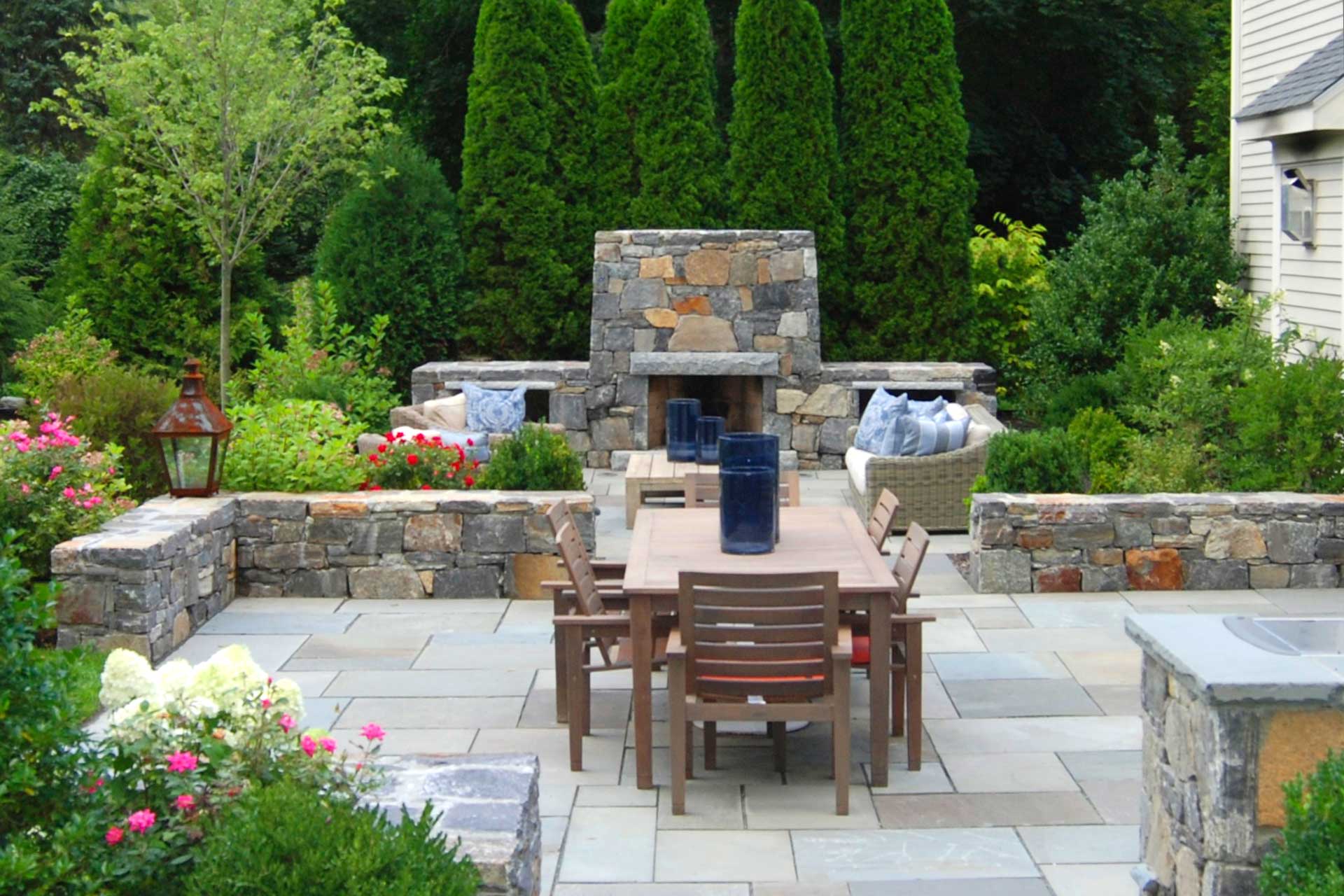
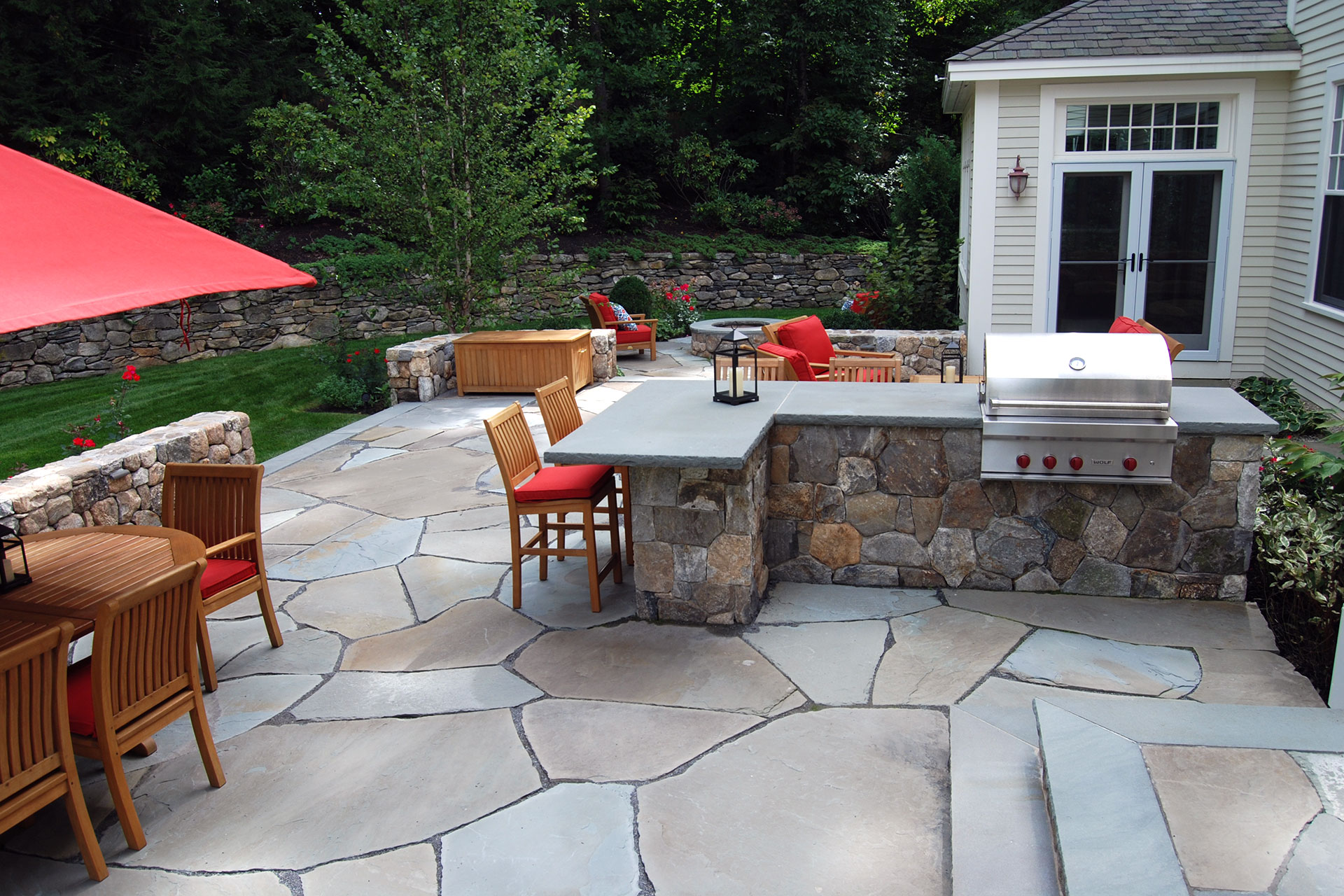
Scale is one of the most common issues with outdoor dining areas. A space that is technically large enough may still feel uncomfortable if it is out of proportion with the house or yard.
On smaller properties, restraint matters. A compact dining area that fits naturally into the available space often performs better than a large patio that overwhelms the landscape. On larger properties, dining spaces benefit from surrounding structure so they do not feel lost or temporary.
Designing with proportion in mind helps outdoor dining areas feel balanced, comfortable, and visually connected to the home.
Outdoor dining works best when the space is scaled to the house and the way people actually gather. A patio that is too small feels cramped, but one that is oversized often feels disconnected and underused.
— Joanna McCoy, Senior Landscape Designer, a Blade of Grass
3. Surface Design and Underfoot Experience
The surface beneath an outdoor dining area affects far more than appearance. It influences comfort, maintenance, drainage, furniture placement, and safety.
Stone and concrete pavers are popular choices because they create a stable, level surface that supports furniture and foot traffic. Natural stone such as bluestone or granite offers durability and subtle texture, which helps with traction during wet conditions.
The feel underfoot also matters. Smooth finishes can be elegant but slippery in the wrong setting, while overly rough textures can be uncomfortable for bare feet or difficult for dining chairs. Successful dining areas strike a balance between refinement and practicality.
4. Long-Term Performance in a New England Climate
Outdoor dining areas in New England must contend with freeze-thaw cycles, snow load, summer heat, and shoulder-season moisture. Design decisions that ignore these realities often lead to premature wear.
Materials should be selected for durability rather than appearance alone. Proper base preparation beneath patios and terraces is critical to prevent settling and movement over time. Drainage design also plays a major role in reducing winter damage and ice formation.
The U.S. Department of Energy notes that well-designed landscaping can influence comfort around the home, including shade, wind protection, and seasonal exposure. For outdoor dining in Greater Boston, that kind of site-responsive planning can make the difference between a space that looks attractive and one that is comfortable enough to use often.
5. Comfort as a Design Priority, Not an Afterthought
Comfort determines whether an outdoor dining area is used regularly or only on ideal days. Sun exposure, wind patterns, shade, glare, and proximity to heat-reflective surfaces all influence how comfortable a space feels.
Shade can come from structures, trees, umbrellas, or a combination of several elements. Wind protection often requires thoughtful placement rather than solid barriers. Slight changes in elevation, planting density, or wall placement can significantly reduce exposure without making the space feel enclosed.
Comfort is the invisible feature that determines whether outdoor dining feels effortless or inconvenient. When shade, wind, seating, and circulation are considered early, the space works harder and feels more natural to use.
— Kate Notman, Landscape Architect, a Blade of Grass
6. Flexibility Versus Permanence
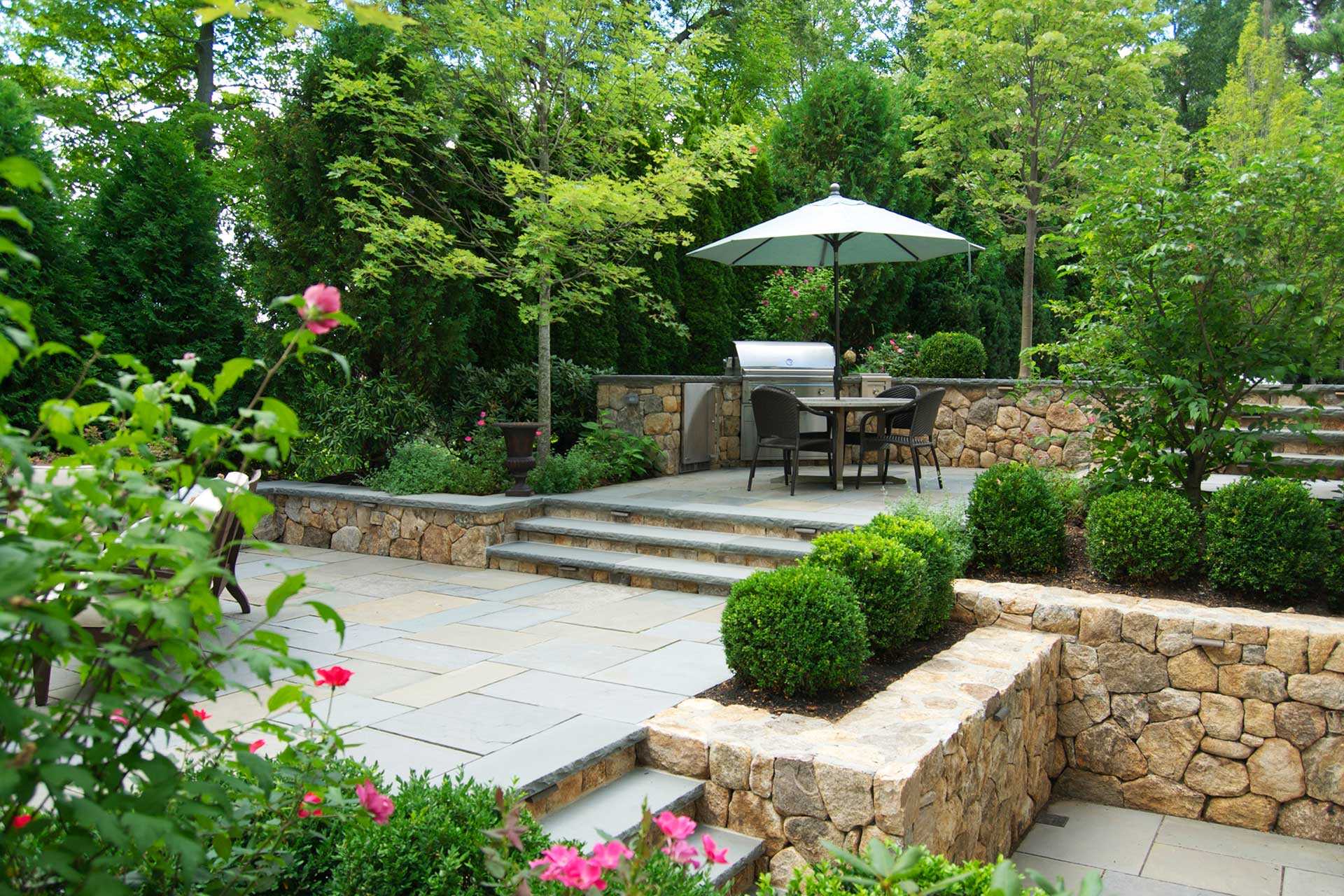
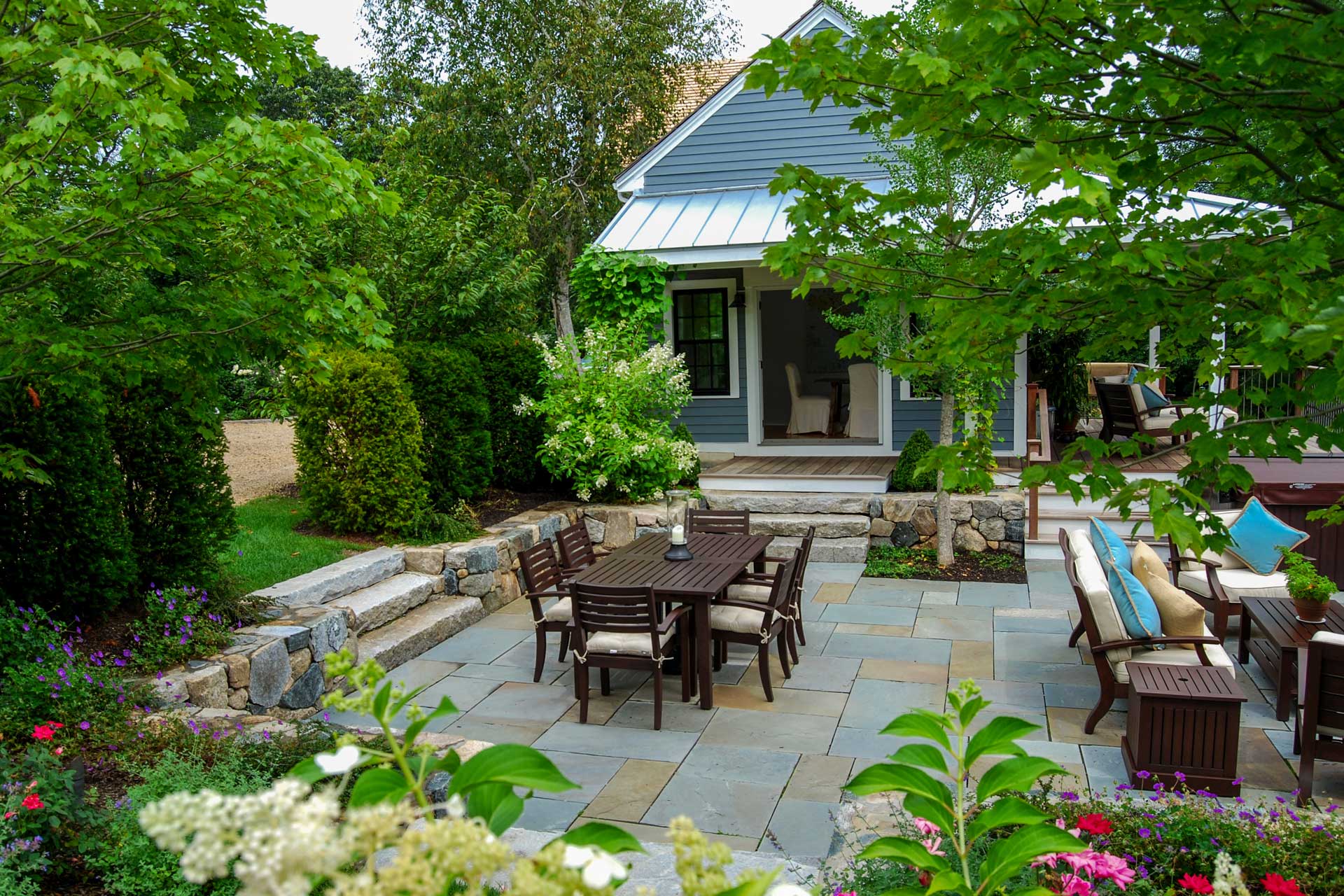
One of the most important design decisions is how permanent the outdoor dining setup should be. Built-in elements create a refined, architectural feel but limit flexibility. Movable furniture and accessories allow the space to adapt over time.
Many successful designs blend both approaches. A permanent patio or terrace provides structure, while furniture and accessories remain flexible. This hybrid approach supports evolving needs without sacrificing visual cohesion.
Homeowners who entertain frequently may benefit from more permanent features, while those still refining how they use their outdoor space often appreciate adaptability.
7. Visual Privacy and Sense of Enclosure
Privacy plays a major role in how relaxed an outdoor dining area feels. Complete enclosure is rarely necessary, but some level of separation from neighboring properties, upper-story windows, or public views improves comfort.
Planting is one of the most effective tools for creating privacy while maintaining openness. Layered plantings with varying heights soften boundaries and provide seasonal interest. Architectural elements such as screens, walls, pergolas, or grade changes can also define the space without isolating it.
The goal is to create a sense of place rather than a barrier.
The best outdoor dining spaces feel protected without feeling closed off. Using layered planting and light architectural elements lets you create privacy that still feels open, natural, and connected to the rest of the landscape.
— Kate Notman, Landscape Architect, a Blade of Grass
8. Lighting That Supports Evening Use Without Overpowering the Space
Lighting often determines whether outdoor dining extends into the evening hours. Effective lighting enhances visibility and atmosphere without drawing attention to the fixtures themselves.
Ambient lighting establishes overall brightness, while subtle task lighting ensures the dining table remains functional after dark. Accent lighting can highlight nearby planting, stonework, steps, or specimen trees, adding depth and interest around the dining area.
For Boston-area homes, lighting is especially valuable because the landscape is experienced after dark for much of the year. A well-lit dining area can extend the usefulness of a terrace, improve safety, and make the property feel more complete in the evening.
Related Blog: Landscape Lighting Ideas to Highlight Your Boston Property’s Best Features
9. Maintenance Expectations and Lifestyle Fit
Outdoor dining areas should align with a homeowner’s willingness to maintain them. High-maintenance materials or finishes may look appealing initially but can become burdensome over time.
Designers often recommend prioritizing materials that age gracefully rather than those that require frequent refinishing or replacement. Furniture selection, planting choices, and surface finishes should all support realistic maintenance expectations.
A well-designed outdoor dining area feels easy to live with, not demanding. That is especially important for homeowners who want the space to feel polished during the season without requiring constant attention.
10. How the Space Will Actually Be Used
The final and most important consideration is how the dining area will realistically be used. Formal dinner parties, casual family meals, and larger gatherings all place different demands on a space.
Designing based on actual habits rather than aspirational ones leads to better outcomes. Table size, seating configuration, circulation, cooking access, shade, and lighting should reflect how many people typically gather and how often.
Outdoor dining works best when it reflects real routines, not idealized ones. A space designed around how a family actually lives will almost always be used more than one designed around a perfect occasion.
— Megan Davey, Design Associate, a Blade of Grass
Bonus Tip: Does an Outdoor Dining Area Add Value?
Outdoor dining areas are often associated with increased appeal and perceived value, especially when they are well integrated into the landscape. The National Association of Realtors has reported that outdoor living features remain highly desirable among buyers.
That said, the strongest return is often experiential. A space that is used frequently delivers value through daily enjoyment, not just resale potential. For many homeowners, a thoughtfully designed dining terrace, patio, or garden room becomes one of the most used parts of the property.
Want to Learn More About Designing Outdoor Dining Areas?
For deeper insights into planning, design, and long-term performance of outdoor dining spaces, these reputable resources offer practical, homeowner-friendly guidance:
- Residential Landscape Design – American Society of Landscape Architects: Explains how professionally designed outdoor spaces, including dining areas, are integrated into overall landscape plans to improve usability, comfort, and long-term value.
- Outdoor Living and Dining – HGTV: Covers layout ideas, furniture selection, lighting, and entertaining considerations, with a focus on how homeowners actually use outdoor spaces.
- Outdoor Living – This Old House: Provides construction-focused guidance on patios, decks, materials, and best practices that support durable and functional outdoor dining areas.
- Outdoor Living Design Ideas – Better Homes & Gardens: Offers approachable design inspiration and planning tips that connect outdoor dining areas with gardens, planting design, and everyday living.
Frequently Asked Questions About Outdoor Dining Areas
Q: What is the best location for an outdoor dining area?
A: The best location depends on how the space will be used, how it connects to the house, and how comfortable it feels throughout the season. Outdoor dining areas often work well near the kitchen or main living areas, but destination dining spaces can also be successful on larger properties when paths, lighting, and planting make the area feel connected.
Q: What materials work best for outdoor dining patios in New England?
A: Durable materials such as bluestone, granite, concrete pavers, porcelain pavers, and other properly installed hardscape materials can perform well when designed for freeze-thaw cycles, drainage, and regular use. The best choice depends on the architecture, level of formality, exposure, and maintenance expectations.
Q: How much space do you need for an outdoor dining area?
A: The space should allow for the table, chairs, circulation, serving access, and comfortable movement around the dining area. A compact dining terrace can work beautifully when scaled properly, while larger properties may need surrounding planting, walls, or changes in grade to keep the space from feeling exposed or undefined.
Q: Should an outdoor dining area include shade?
A: In most cases, yes. Shade can come from trees, pergolas, umbrellas, pavilions, or nearby architecture. In Greater Boston, shade planning helps make outdoor dining more comfortable during summer while still allowing the space to feel open and connected to the landscape.
Q: How can privacy be added around an outdoor dining area?
A: Privacy can be created with layered planting, hedges, ornamental trees, walls, fencing, pergolas, screens, or grade changes. The goal is usually to soften views and create comfort, not to completely enclose the space.
Plan an Outdoor Dining Area That Truly Works for Your Property
Designing an outdoor dining area is about more than selecting materials or furniture. It requires understanding how your property functions, how you entertain, and how New England’s climate will affect long-term use and durability. From layout and hardscaping to shade, privacy, lighting, and landscape maintenance, thoughtful planning ensures your outdoor dining space feels comfortable, intentional, and well integrated into the property.
The a Blade of Grass team brings award-winning experience in landscape design, installation, and ongoing care, with a deep understanding of New England conditions. If you are considering an outdoor dining area or rethinking an existing space, we can help you explore design options, avoid common pitfalls, and create a solution that supports how you live and gather outdoors.
Contact us to learn more about designing an outdoor dining area that adds lasting value to your property.