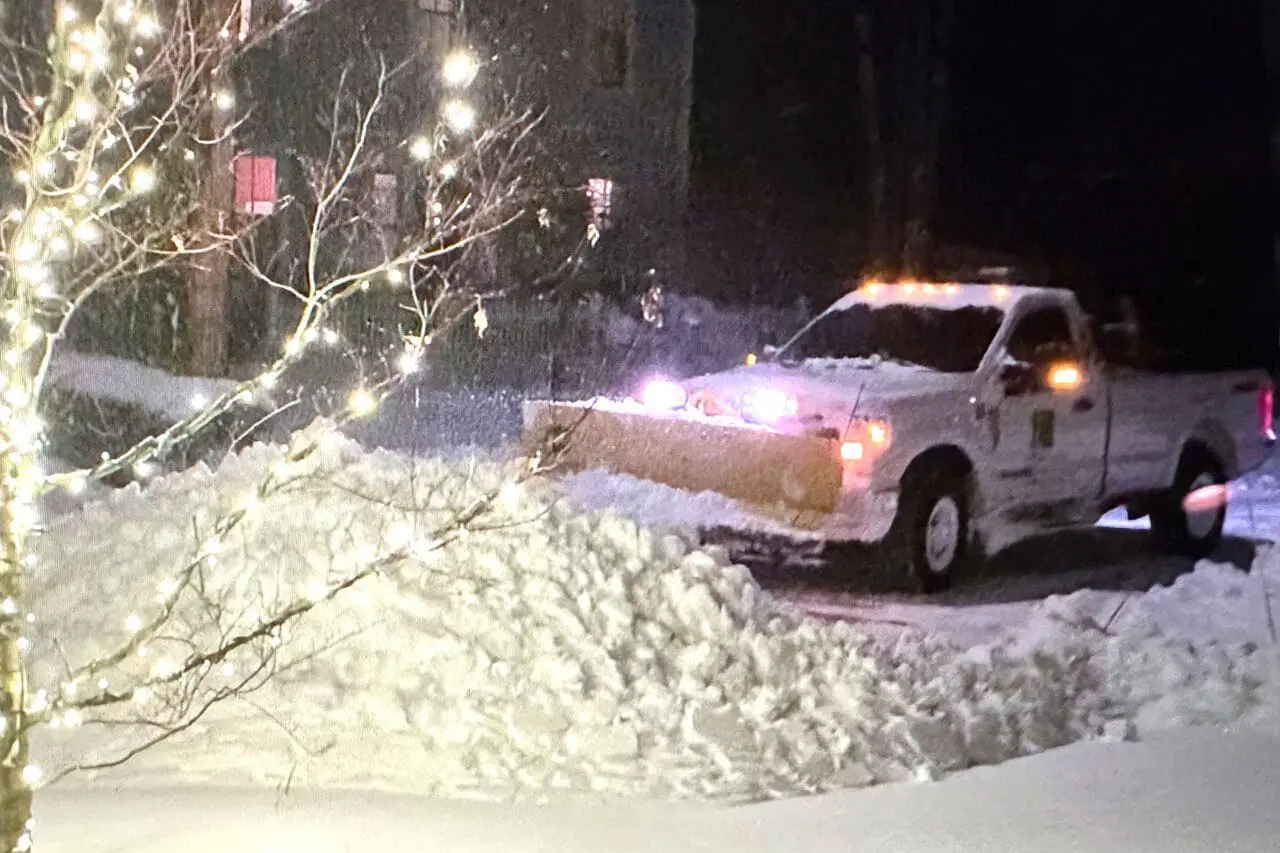
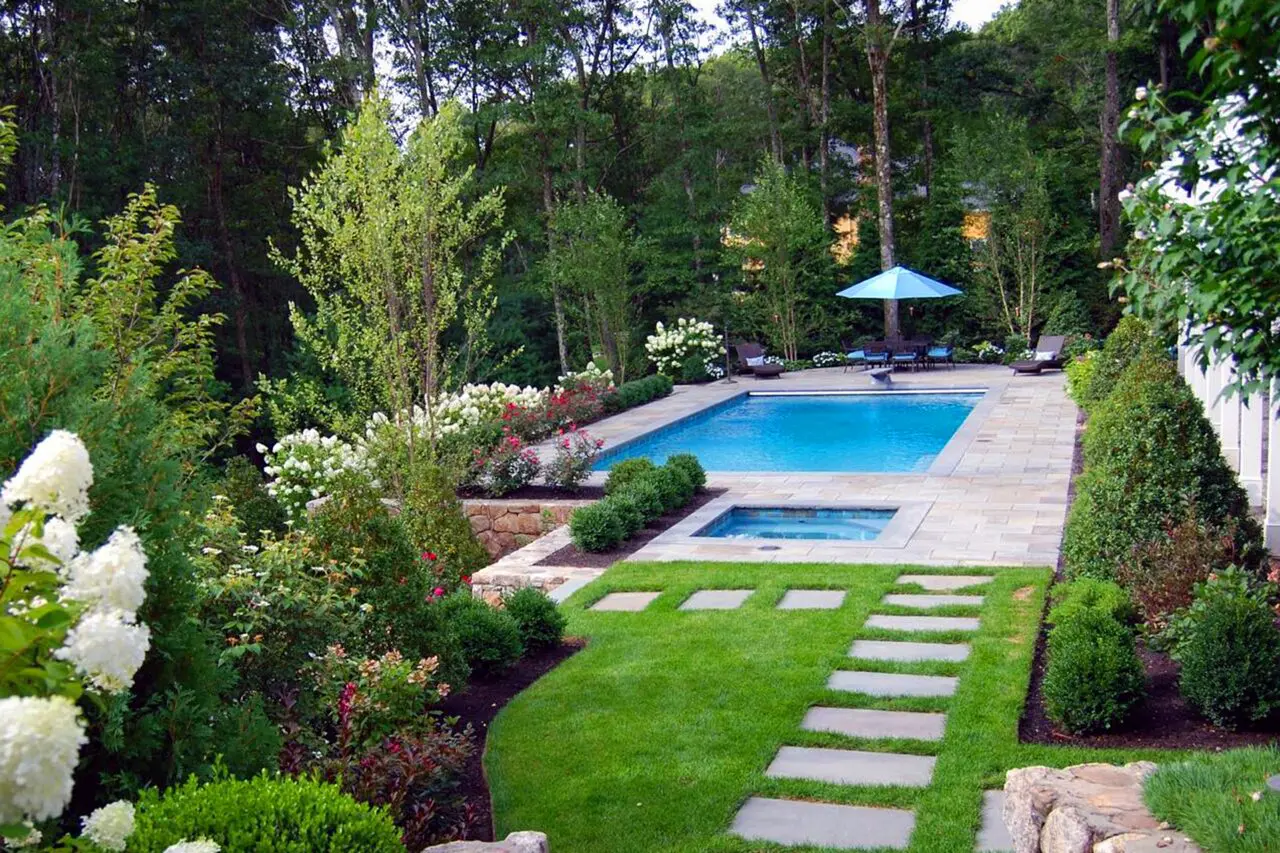
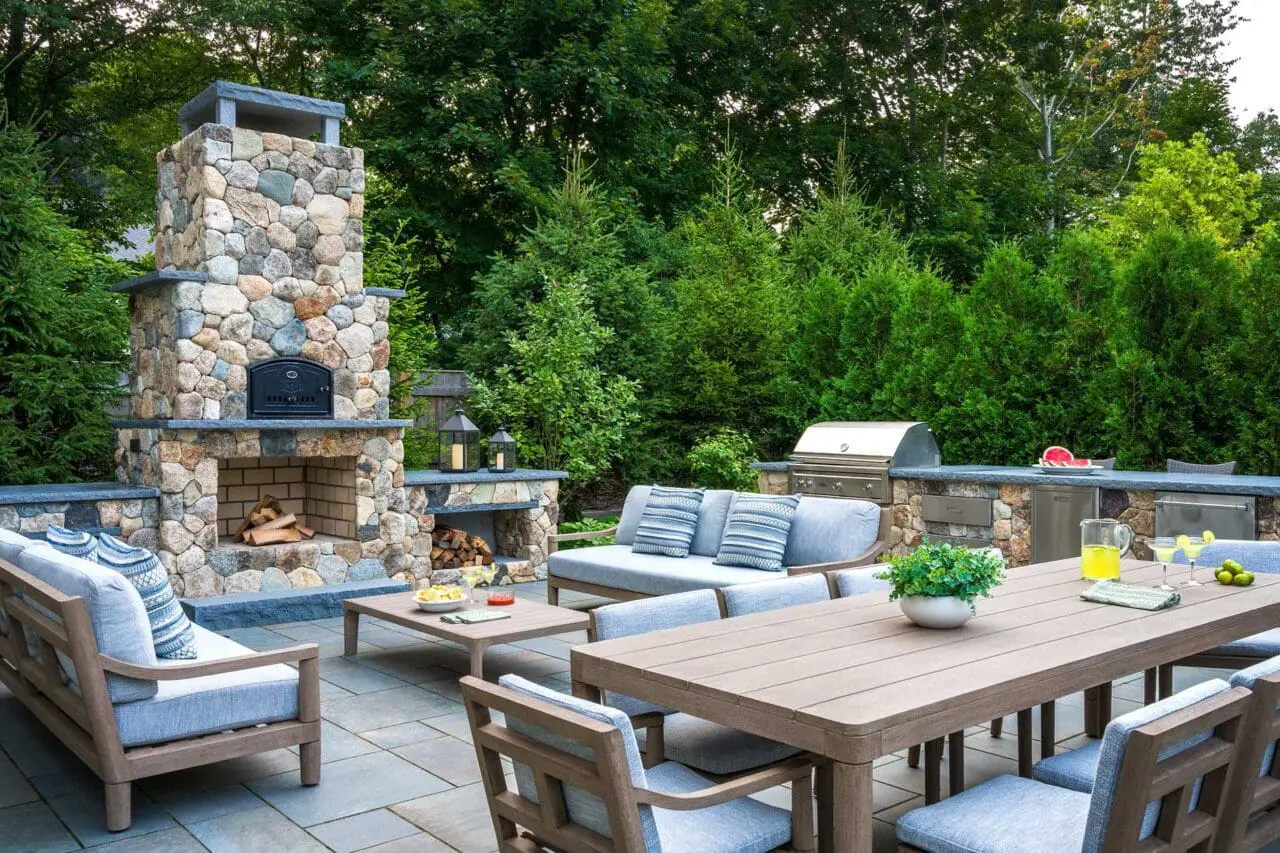
As Boston-area homeowners look for ways to enhance the beauty, security, and functionality of their outdoor spaces, landscape lighting has become an essential part of thoughtful property design. From historic homes in Brookline to contemporary properties in Wellesley, the right outdoor lighting plan can elevate curb appeal while extending the usability of patios, paths, gardens, pools, and entryways well beyond sunset.
At a Blade of Grass, our team designs and installs custom exterior lighting systems that fit naturally within New England’s architecture and landscape character. This guide outlines practical landscape lighting ideas for showcasing your property’s best features, whether you are illuminating a manicured garden, a modern poolscape, a wooded driveway, or a refined outdoor entertaining area.
Key Takeaways
- Landscape lighting improves curb appeal, safety, security, and evening usability.
- The best lighting plans highlight architecture, mature trees, paths, stonework, and outdoor living areas without over-lighting the property.
- Layered lighting strategies such as uplighting, downlighting, path lighting, and wall washing create depth and atmosphere.
- Boston-area properties need durable, weather-rated fixtures that can handle moisture, snow, freeze-thaw cycles, and seasonal change.
- Smart controls, LED technology, and zoning make modern outdoor lighting more efficient and easier to manage.
Why Landscape Lighting Matters in Greater Boston
Boston’s seasonal climate makes well-designed outdoor lighting both a functional necessity and a design opportunity. Long winter nights, early fall sunsets, and evening entertaining during spring and summer all increase the value of thoughtful lighting.
A strong outdoor lighting plan can:
- Improve safety on walkways, steps, driveways, and terraces
- Enhance security around entries, side yards, and darker parts of the property
- Highlight landscape architecture, mature trees, masonry, and specimen plantings
- Create a warm, welcoming atmosphere for outdoor entertaining
- Extend the use of patios, pools, paths, and gardens after dark
In communities such as Weston, Newton, Brookline, Lincoln, and Wellesley, the difference between a good landscape and a truly memorable one often comes down to lighting. During the day, the design is shaped by planting, stonework, architecture, and views. At night, lighting decides what is revealed, what feels welcoming, and how the property is experienced.
Top Landscape Lighting Ideas for Boston Properties
Illuminate Architectural Details
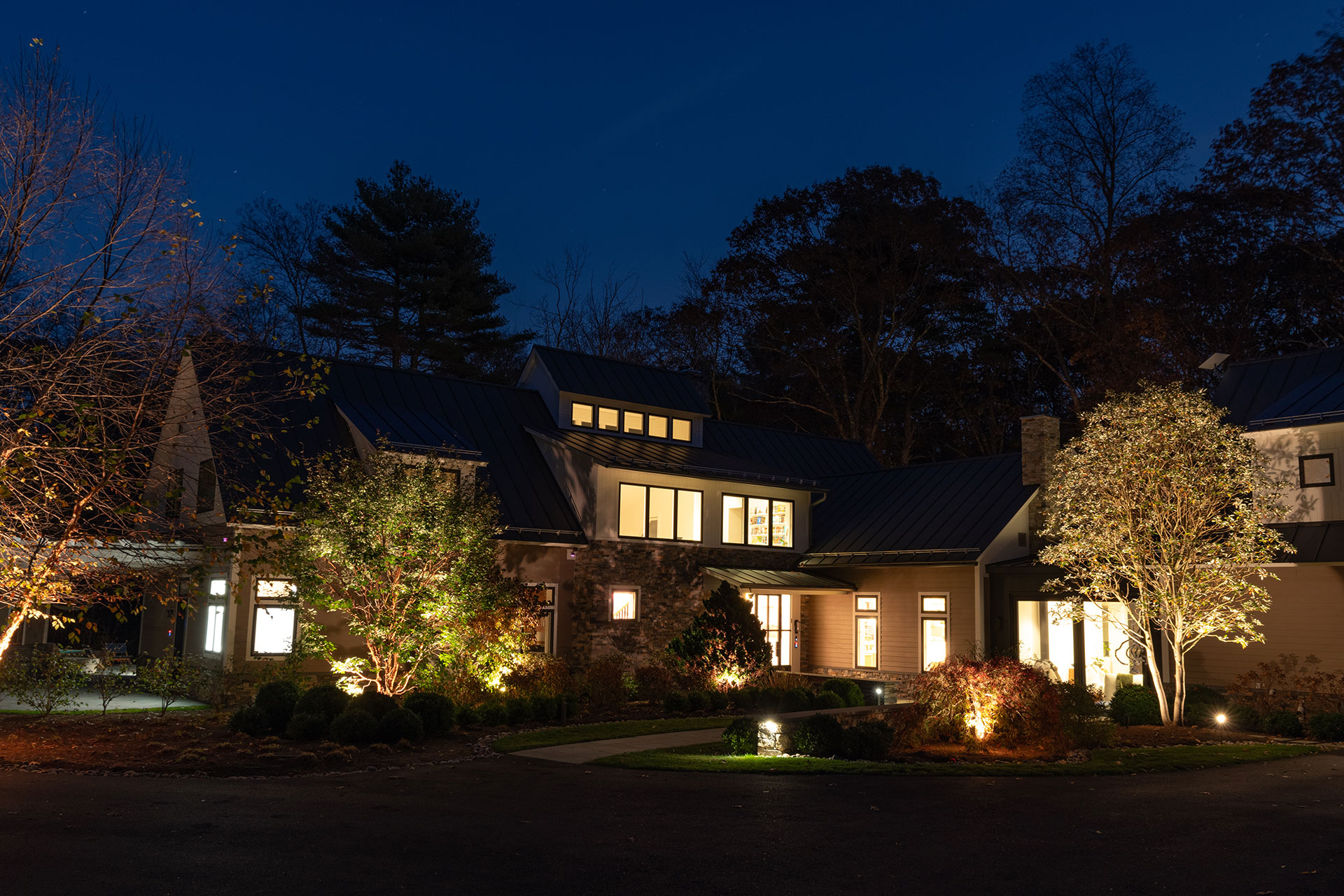
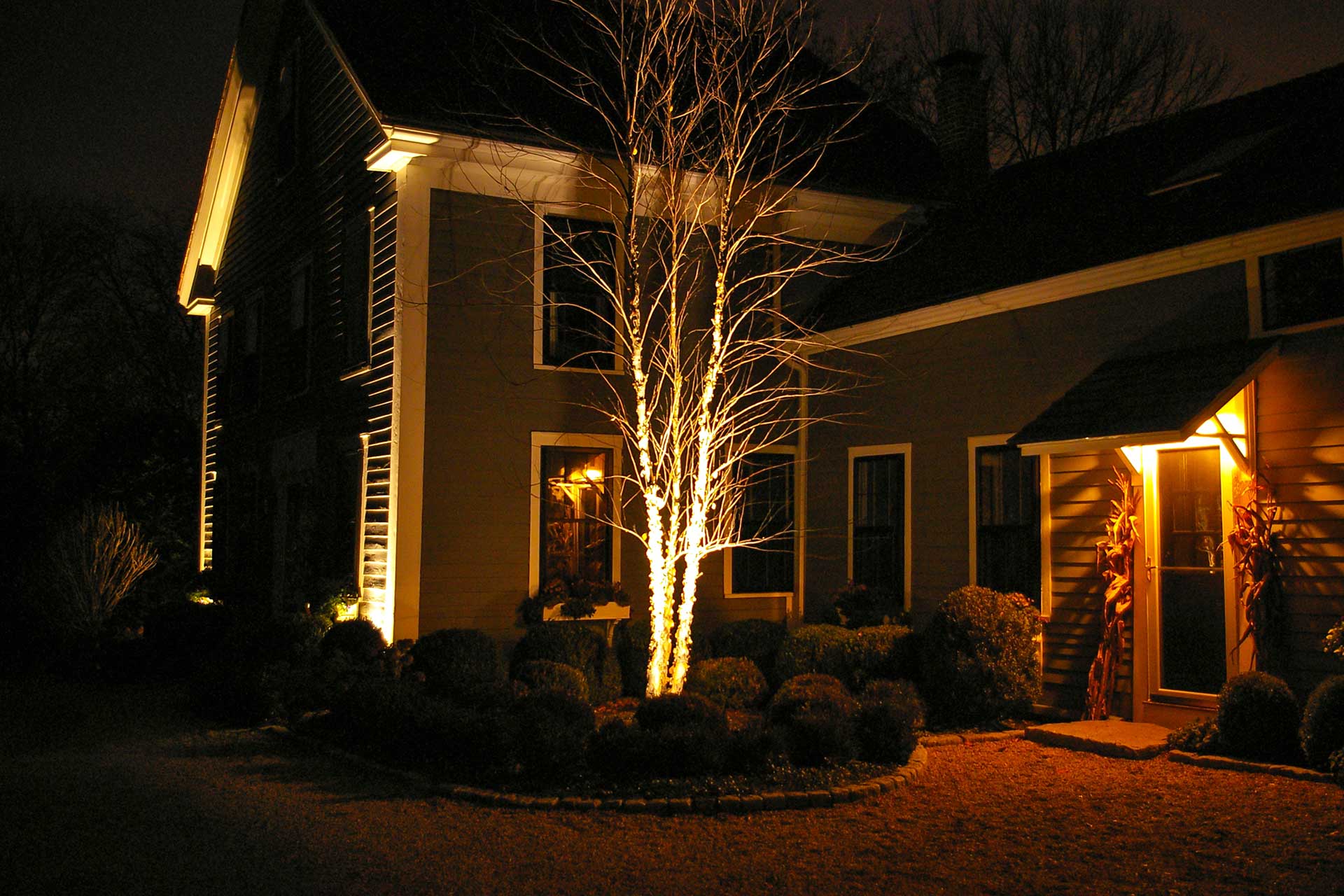
Subtle uplighting can accentuate stone façades, columns, shingle siding, modern rooflines, garden walls, and entry details. Low-profile LED fixtures placed near the base of a structure can create depth and shadow without overwhelming the architecture.
This is especially effective on New England homes with clapboard, brick, fieldstone, granite, or layered architectural trim. The goal is not to flood the house with light. It is to reveal the home’s character after dark.
Highlight Mature Trees and Plantings
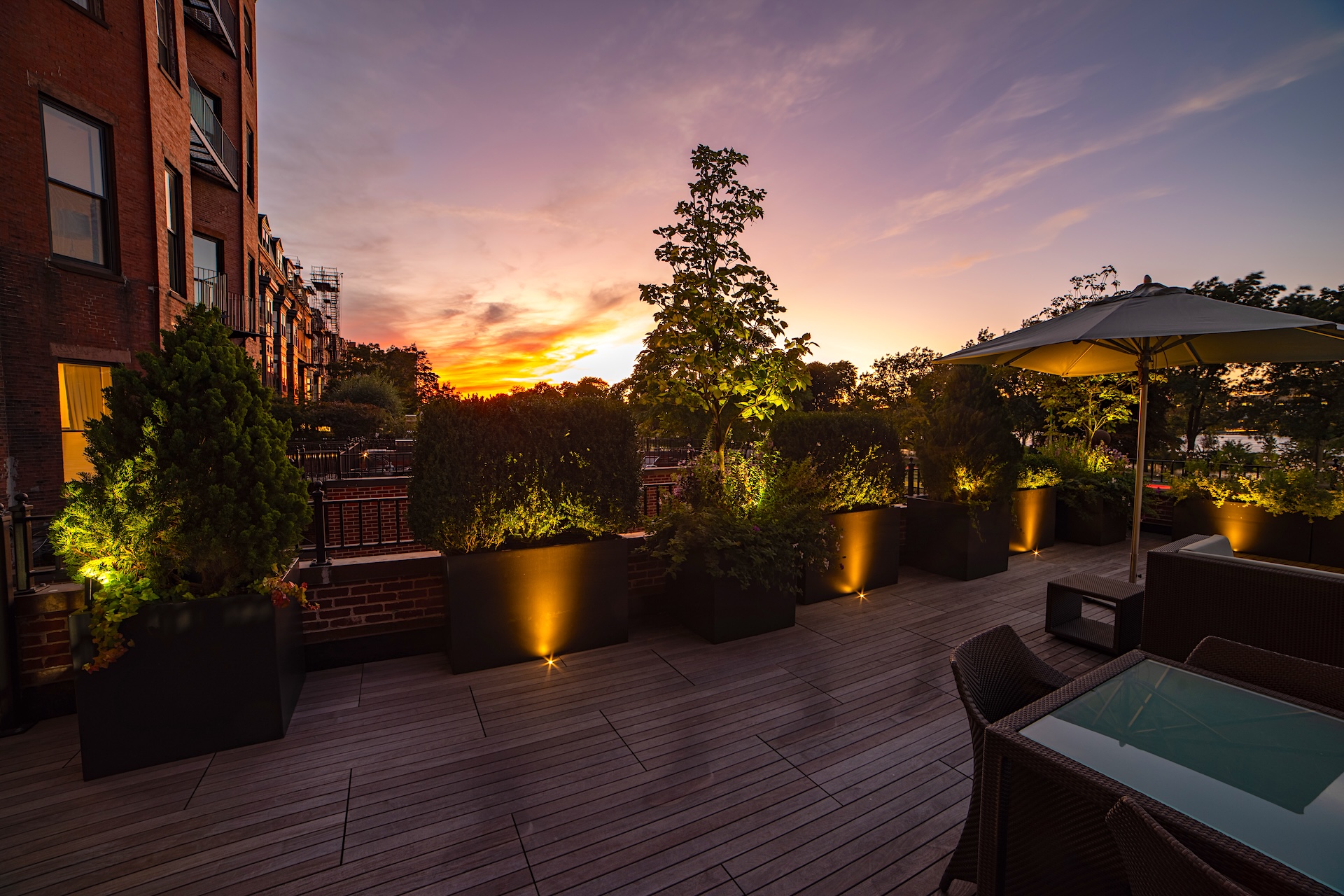
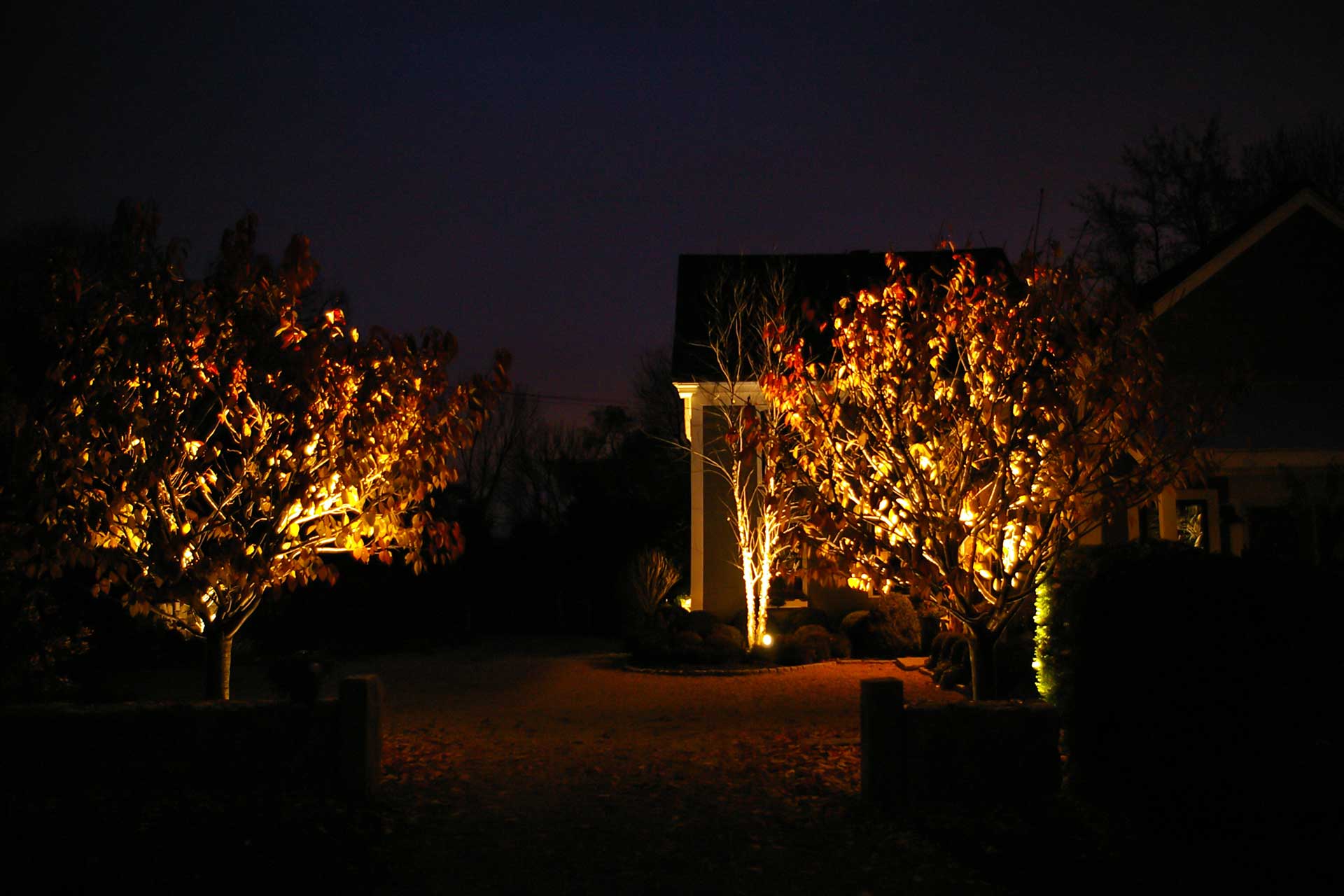
Mature trees are often among the most valuable features on a Boston-area property. Uplighting a large oak, Japanese maple, river birch, beech, or white pine can add drama and draw the eye upward.
In woodland garden settings common in Greater Boston and MetroWest, directional lighting can also highlight layered planting, ferns, rhododendrons, ornamental grasses, and evergreen structure. This helps the landscape feel alive at night rather than disappearing into darkness.
Define Pathways and Garden Edges
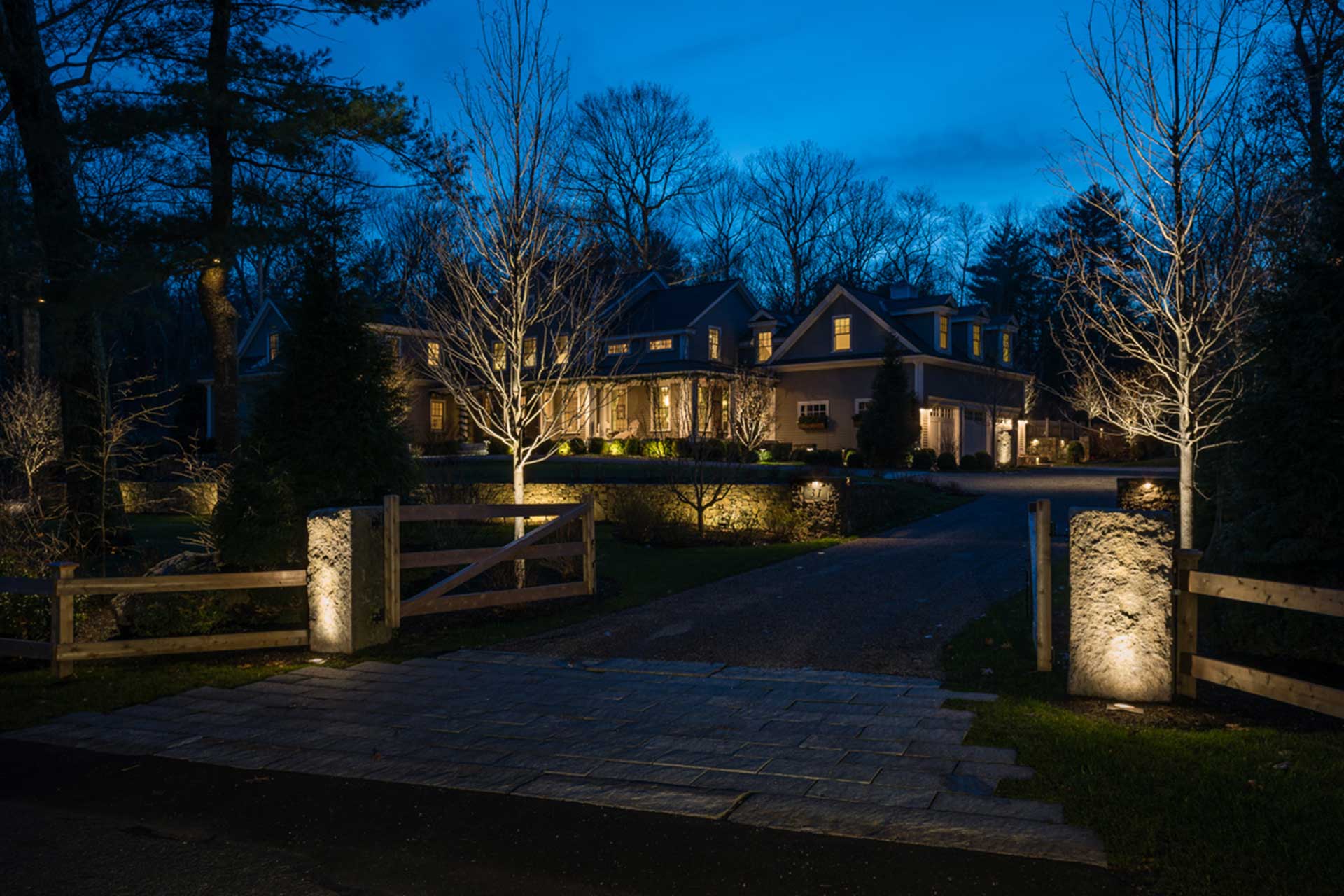
Path lighting should guide movement without creating glare. Low-voltage path lights, integrated step lights, and subtle bollards can make walks, terraces, driveways, and garden paths easier to navigate while reinforcing the structure of the landscape.
For more contemporary properties, minimalist fixtures with glare-free optics often work best. For traditional homes, classic path lights in aged brass, copper, or dark finishes can feel more appropriate.
Use Downlighting for a Natural Moonlit Effect
Downlighting places fixtures above eye level, often in trees or architectural structures, to cast light downward. When done well, it creates a soft, natural effect similar to moonlight.
This approach works beautifully over patios, seating areas, lawn edges, and pathways. It can feel more subtle than uplighting and is especially useful where homeowners want atmosphere without visible fixtures.
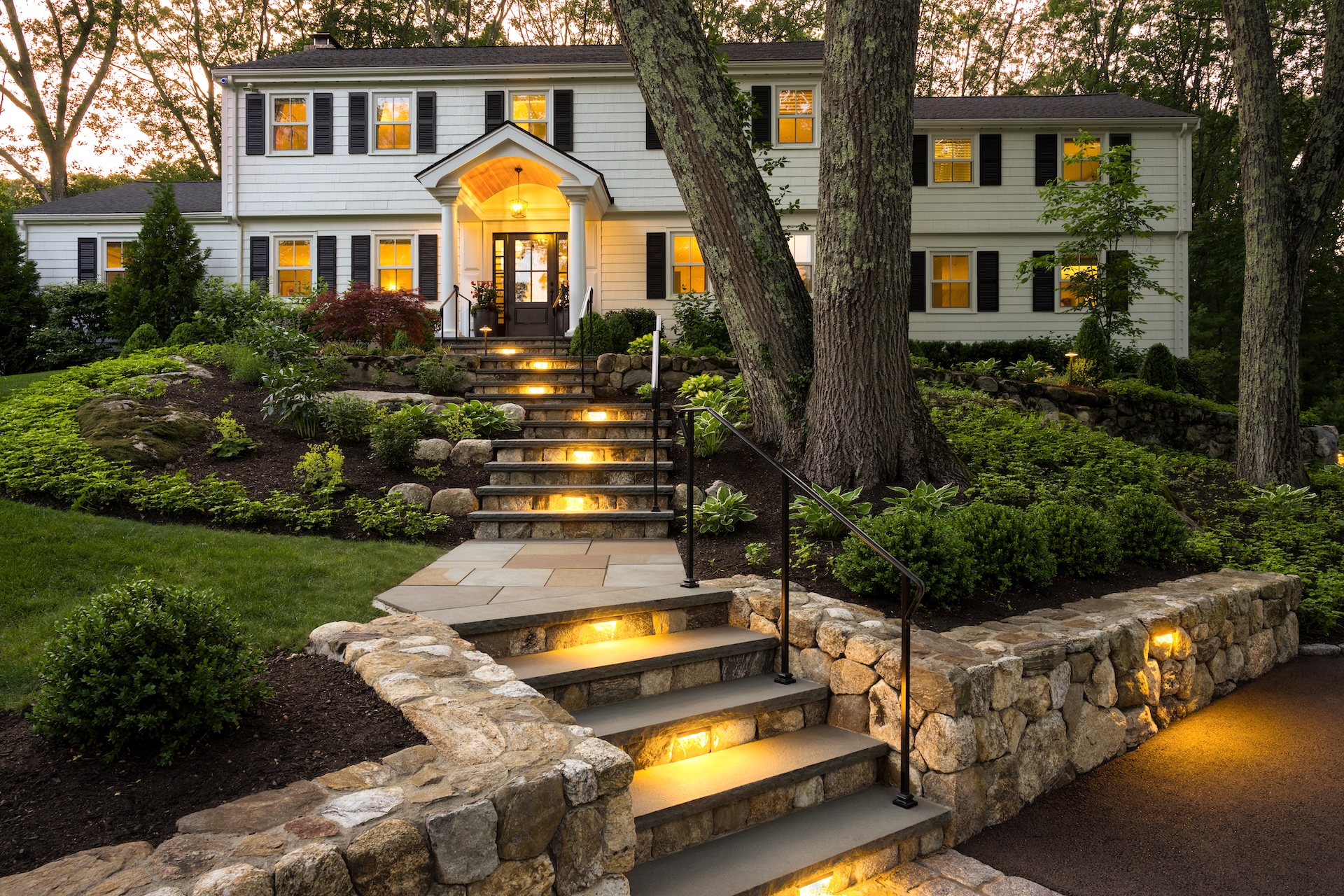
Light Steps, Walls, and Grade Changes
In New England landscapes, grade changes are common. Stone steps, retaining walls, terraces, and sloped paths should be addressed carefully for both safety and appearance.
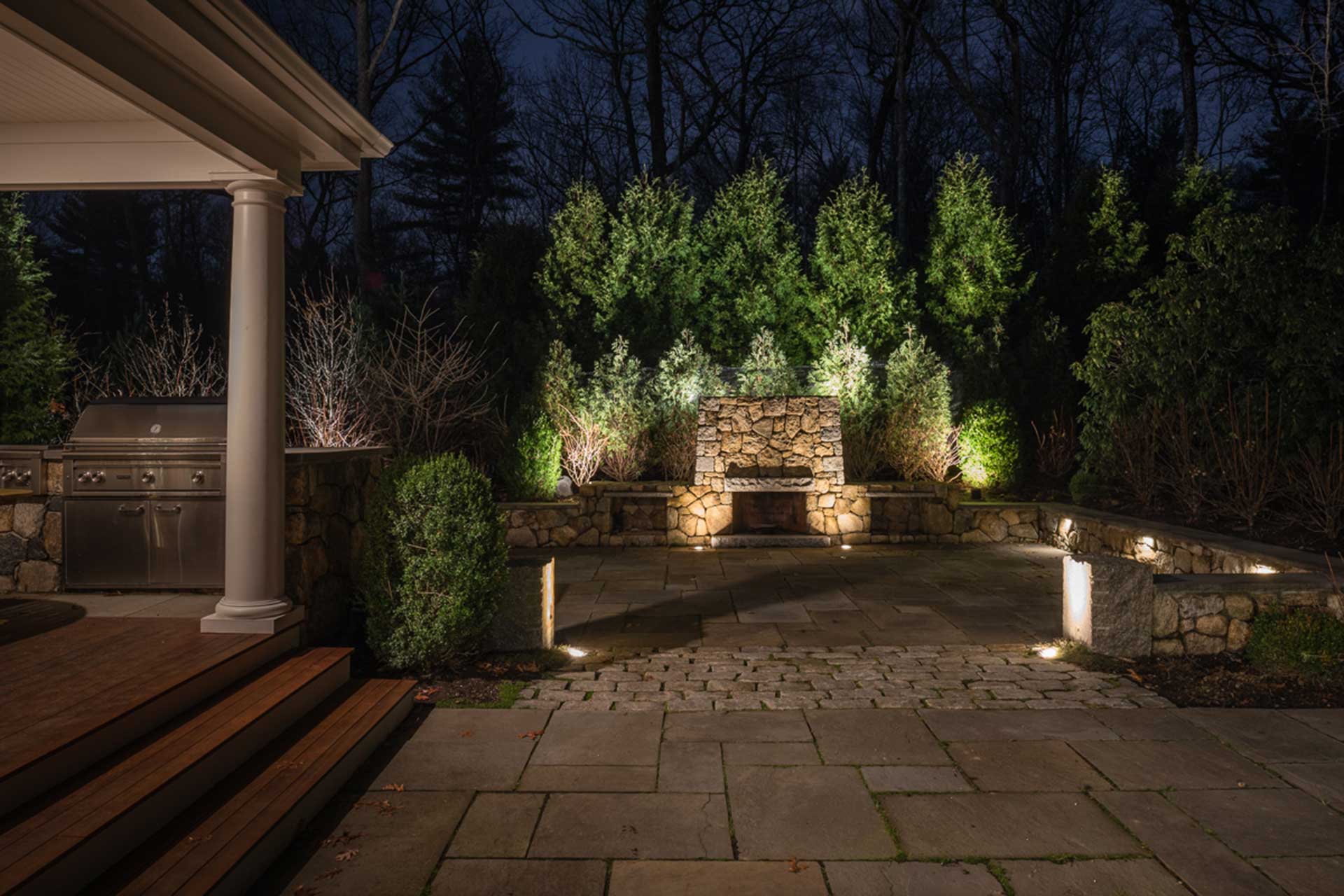
Integrated step lights, wall lights, and low-profile fixtures help make transitions easier to navigate after dark. They also reveal the craftsmanship of masonry and stonework, which is often one of the strongest design elements on the property.
Enhance Outdoor Dining and Entertaining Areas
Outdoor dining areas, fire features, pool terraces, and patios need lighting that supports comfort. Too much light can feel harsh. Too little can make the space difficult to use.
The best approach is layered: soft ambient lighting, subtle task lighting where needed, and accent lighting that gives surrounding planting or masonry depth. The result should feel warm and comfortable rather than bright or commercial.
Related Blog: Top 10 Things to Consider When Designing an Outdoor Dining Area
Expert Tips for Successful Outdoor Lighting
A strong landscape lighting design depends on restraint, quality, and planning. From decades of experience designing outdoor environments in New England, a few principles matter most.
Layer the Light
Combine uplighting, downlighting, path lighting, wall lighting, and ambient lighting to create a balanced effect. Avoid relying on one type of fixture throughout the whole property. Good lighting creates rhythm and depth.
Avoid Over-Lighting
More fixtures do not automatically create a better result. Over-lighting can flatten the landscape, create glare, and make the property feel less refined. The most elegant lighting plans often use fewer fixtures in more thoughtful locations.
Choose Quality Fixtures
Boston’s climate demands durable materials. Fixtures should be corrosion-resistant and designed for exterior use through humid summers, winter moisture, snow, and freeze-thaw cycles. Brass, copper, stainless steel, and high-quality powder-coated finishes tend to perform better than lower-grade materials.
Manufacturers such as CAST Lighting and FX Luminaire are often used in higher-end landscape lighting systems because they offer professional-grade fixtures designed for long-term performance.
Plan for Seasonal Change
A landscape changes dramatically across the year. A hydrangea may obscure a fixture in summer but leave it exposed in winter. A deciduous tree may cast dense shade in July and reveal open branching in January.
Lighting should be planned with those shifts in mind. Fixture placement, beam spread, and brightness should account for both summer fullness and winter structure.
“Outdoor lighting is not just about visibility. It is about creating mood, rhythm, and experience. In high-end residential design, lighting is one of the most powerful tools we have to define space and elevate a landscape.”
— Colin Hand, Senior Designer, a Blade of Grass
Pros and Cons of Professional Landscape Lighting
| Pros | Cons |
|---|---|
|
|
Energy Efficiency and Smart Control Options
Today’s luxury lighting systems are more efficient and easier to control than older halogen systems. LED technology allows homeowners to reduce energy use while gaining better control over brightness, beam spread, color temperature, and zoning.
Modern systems may include:
- LED fixtures that use significantly less energy than older halogen fixtures
- Smart timers that adjust automatically by season
- Lighting zones for entries, patios, gardens, driveways, and pool areas
- Dimming controls for entertaining or everyday use
- App-based systems such as Lutron Caséta or FX Luminaire Luxor
These features are especially useful for homeowners who entertain seasonally, travel frequently, or want different lighting scenes for everyday use, evening gatherings, and security.
Common Landscape Lighting Mistakes to Avoid
Even attractive properties can be undermined by poorly planned lighting. Common mistakes include:
- using fixtures that are too bright
- placing path lights too close together
- lighting every tree instead of selecting key focal points
- choosing fixtures that are visible from main views
- using cool light temperatures that feel harsh against traditional architecture
- failing to plan for plant growth
- installing lower-quality fixtures that cannot withstand winter conditions
The goal is not to make the entire property bright. The goal is to guide the eye, improve comfort, and reveal the most important features with subtlety.
What Outdoor Lighting Costs in Greater Boston
Professional landscape lighting costs vary based on property size, fixture quality, control systems, trenching requirements, and design complexity. As a general planning range:
- Smaller lighting systems: often begin around $4,000 to $6,000 for a limited number of fixtures
- Mid-range systems: commonly range from $7,500 to $15,000 for additional zones, pathways, and focal points
- Larger luxury systems: can exceed $20,000 when they include architectural lighting, mature tree uplighting, smart controls, long wiring runs, and complex installation conditions
The long-term value depends heavily on design and fixture quality. A smaller, well-designed system often looks better than a larger system installed without restraint.
Frequently Asked Questions
Q: What type of outdoor lighting works best for Boston’s seasonal weather?
A: Weather-rated LED fixtures made from durable materials such as brass, copper, stainless steel, or high-quality coated metal generally perform best. Fixtures should be designed for exterior use and sealed against moisture.
Q: Do I need a permit to install exterior lighting in Massachusetts?
A: Low-voltage landscape lighting often does not require a permit, but requirements vary by town and project scope. If the project involves hardwired electrical work, trenching near utilities, or modifications to electrical systems, a licensed electrician and local permitting may be required.
Q: How much does professional landscape lighting cost in Greater Boston?
A: Costs vary by scope. Smaller systems may begin around $4,000 to $6,000, mid-range systems often range from $7,500 to $15,000, and larger custom systems with advanced controls or extensive fixture layouts can exceed $20,000.
Q: Can outdoor lighting increase my home’s value?
A: High-quality lighting can improve curb appeal, safety, and outdoor usability, all of which support perceived property value. It is especially valuable when integrated with patios, planting, architecture, and outdoor entertaining spaces.
Q: What color temperature is best for landscape lighting?
A: Warm white light is usually best for residential landscapes. It feels softer, more natural, and more flattering against stone, wood, planting, and traditional New England architecture.
Q: Can landscape lighting be added to an existing landscape?
A: Yes. A professional team can often retrofit lighting into an existing landscape, although care must be taken around irrigation, roots, planting beds, hardscape, and utilities.
Learn More About Outdoor Lighting
For homeowners still exploring landscape lighting ideas, these trusted resources offer additional guidance and inspiration:
- 22 Landscape Lighting Ideas for a Stunning Nighttime Display – Martha Stewart
- Pros Field Your Questions About Outdoor Lighting – Houzz
- All About Outdoor Lighting – This Old House
Ready to Illuminate Your Landscape?
A well-lit landscape does more than look beautiful. It improves safety, enhances curb appeal, supports outdoor entertaining, and creates a more welcoming experience after dark. Whether you are planning a new landscape or refining an existing garden, a custom lighting plan can help your property feel more complete.
At a Blade of Grass, our team designs and installs custom landscape lighting systems that fit the architecture, planting, hardscape, and long-term goals of each property.
If you are considering outdoor lighting for your Greater Boston home, schedule a consultation with our design team. We would be glad to help you explore a lighting plan that highlights your property’s best features.