A well-designed fire feature can change the way a property is used. It creates a natural gathering place, extends evenings outdoors, and gives patios, terraces, pool areas, and garden rooms a stronger sense of purpose. For Boston-area homes, where cool spring nights and crisp fall evenings are part of the outdoor living season, a custom fire pit or outdoor fireplace can make a landscape feel more complete.
For more refined properties, the best fire features are rarely added as afterthoughts. They are planned as part of the larger landscape, coordinated with stonework, seating, lighting, planting, circulation, privacy, drainage, and long-term care. When those elements work together, a fire feature becomes more than a source of warmth. It becomes an architectural anchor for outdoor living.
Key Takeaways
- Fire features work best when they are designed as destinations, not isolated objects.
- Gas fire pits offer clean operation and convenience, while wood-burning fire features provide a more traditional experience.
- Placement should account for the house, terrace, views, wind, seating, circulation, and neighboring properties.
- Boston-area rules vary by municipality, so local fire codes should be reviewed before installation.
- The most refined fire features are integrated with masonry, lighting, planting, drainage, seating, and the broader outdoor living plan.
- A fire feature should feel like it belongs to the property. The best examples are not simply placed on a patio; they are composed into the landscape.
Why Fire Features Have Become a Signature Element in Outdoor Living
Fire has always drawn people together. In a residential landscape, that instinctive appeal becomes a design opportunity. A fire pit, fireplace, or sculptural fire bowl can define where people gather, how they move through the property, and how the space feels after sunset.
For Boston-area homeowners, fire features are especially valuable because they extend the practical use of outdoor spaces. A terrace that feels quiet after dinner can become a comfortable evening destination. A pool area can transition from daytime recreation to nighttime entertaining. A garden that might otherwise be admired from indoors can become part of the home’s daily rhythm.
Fire features also help organize larger landscapes. On estate properties, they can create a destination away from the house. In more compact urban or suburban yards, they can make a small patio feel intentional and complete. In both settings, the goal is the same: to create a comfortable outdoor room with atmosphere, structure, and purpose.
Fire Pit, Outdoor Fireplace, or Fire Bowl: Which Type Fits the Space?
The right fire feature depends on how the space will be used. A casual family gathering area needs a different solution than a formal entertaining terrace, a poolside lounge, or a compact courtyard. Before choosing a style, consider the experience you want to create.
Custom Fire Pits
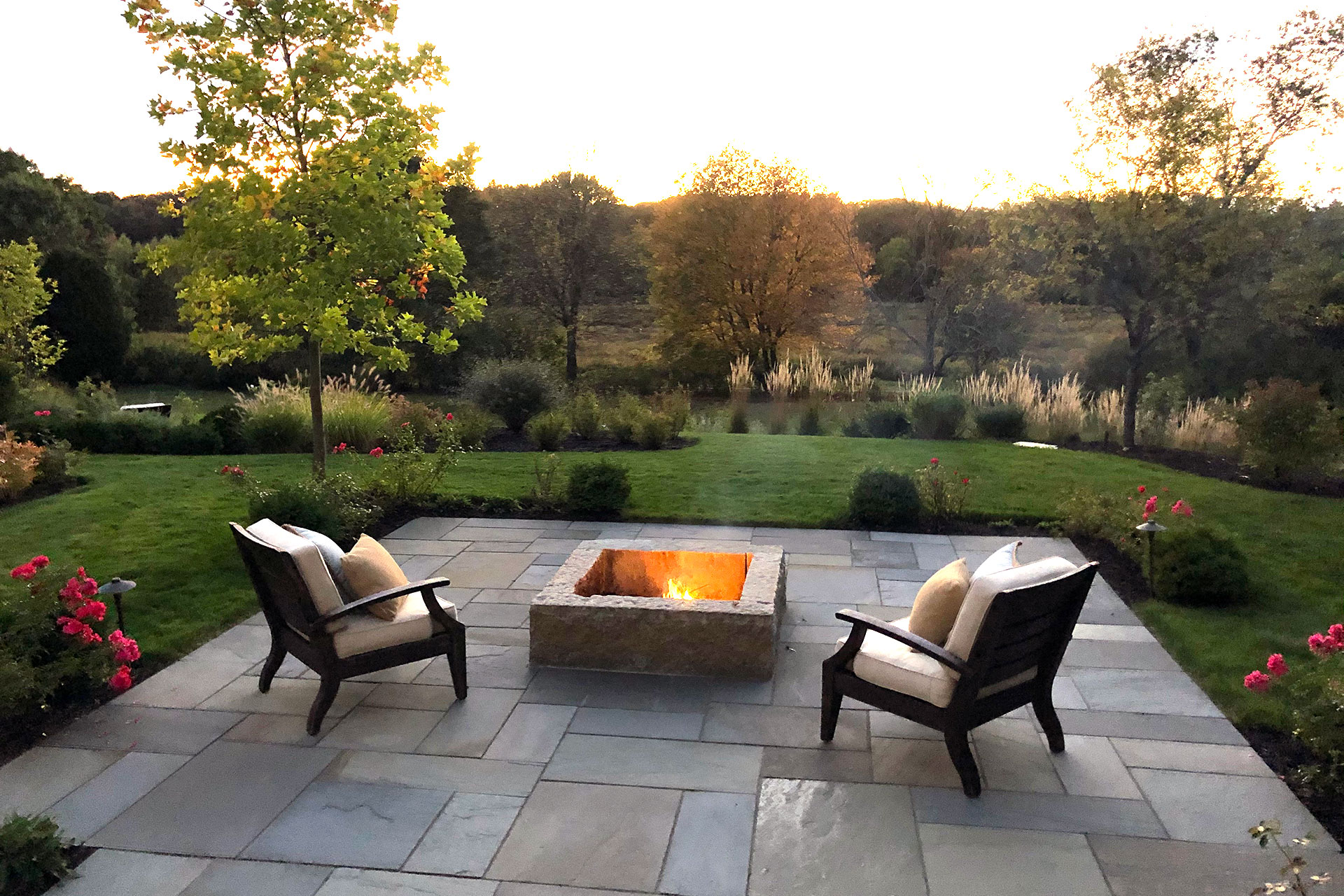
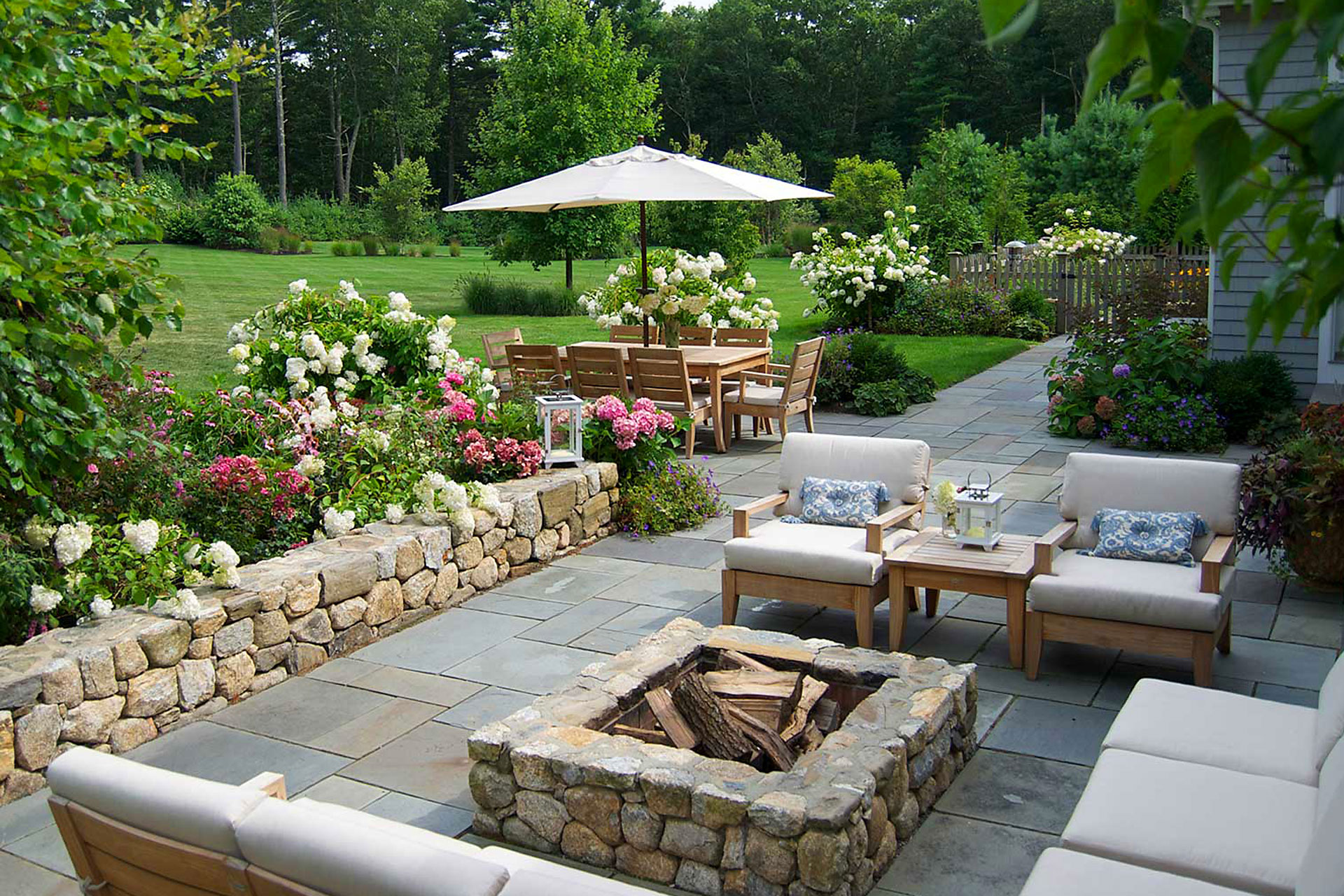
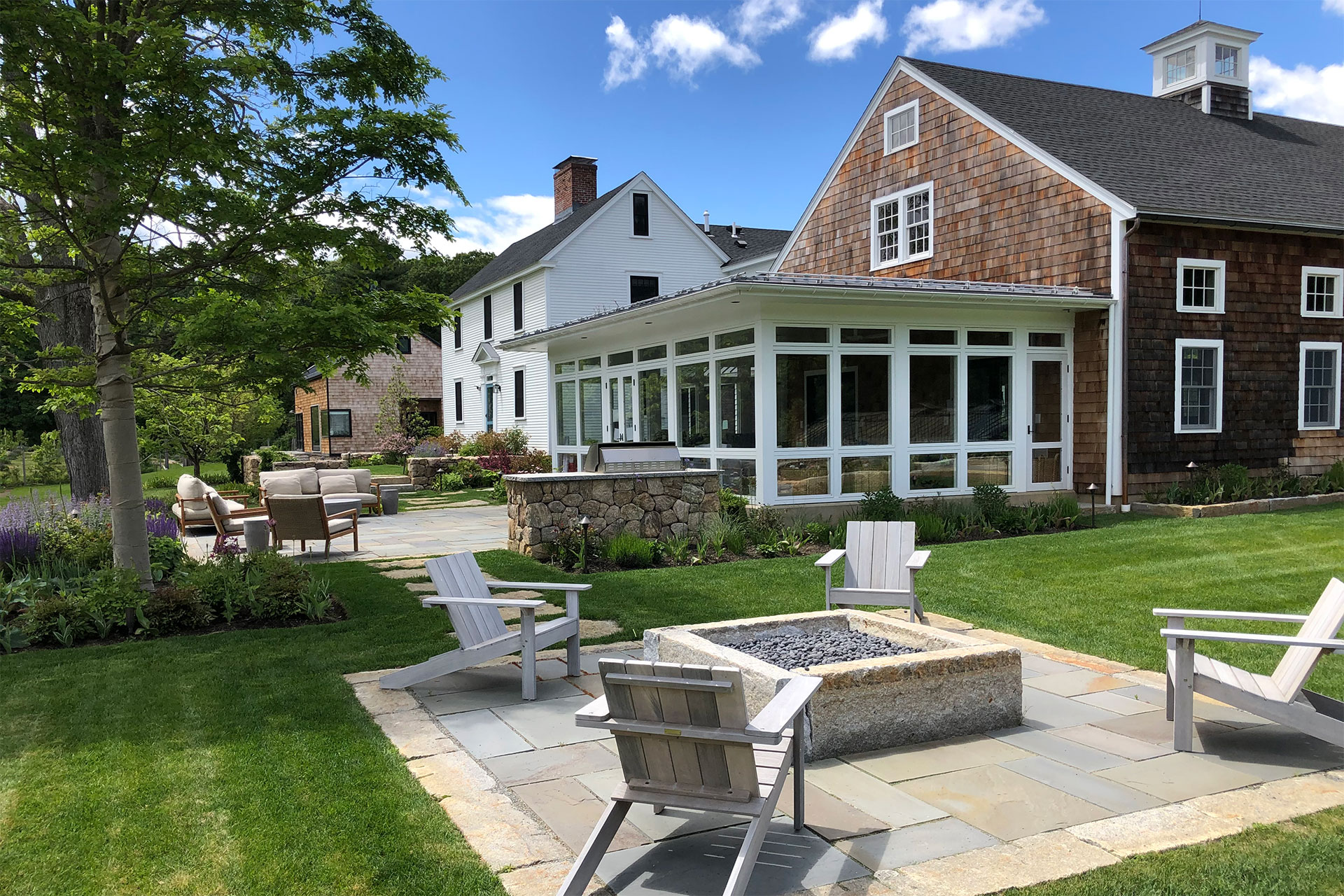
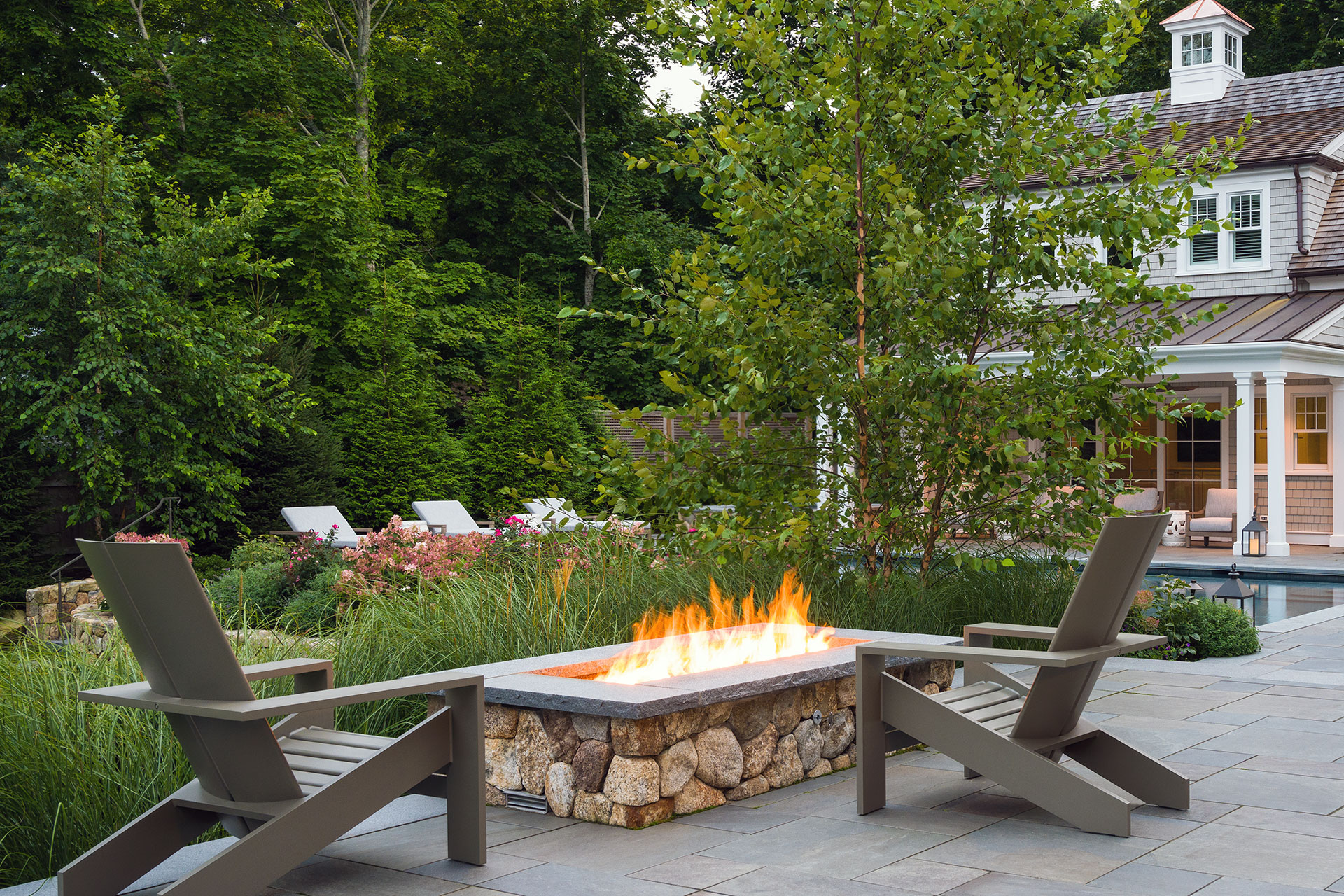
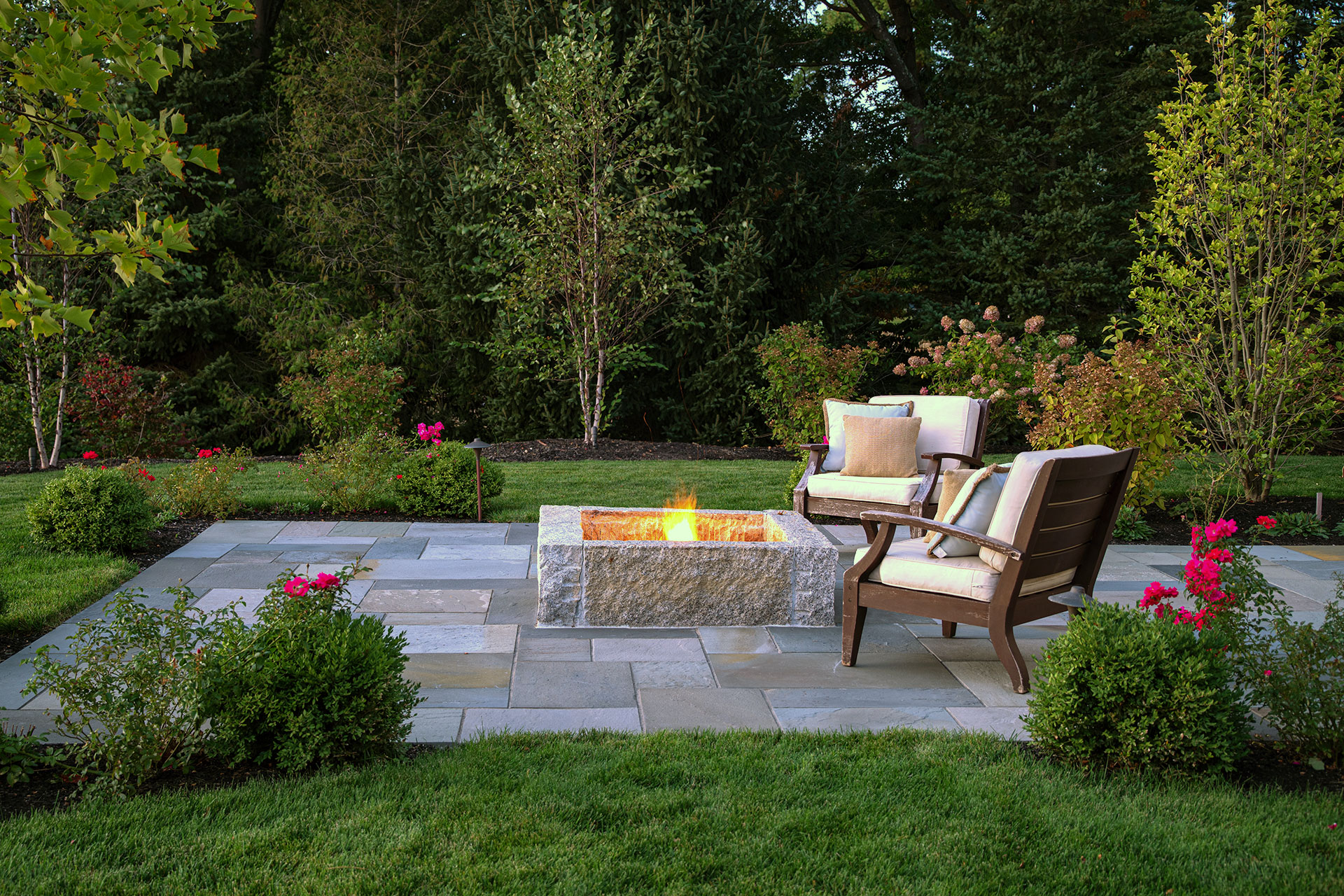
Custom fire pits are ideal for conversation. They work beautifully in circular seating areas, open patios, pool terraces, sunken gardens, and relaxed outdoor rooms. A fire pit encourages people to face one another, making it one of the most social fire feature options.
Design options range from low, round masonry fire pits to clean-lined square or rectangular forms. In more refined landscapes, the fire pit is often built from stone or masonry that coordinates with nearby walls, steps, paving, or the architecture of the house.
Outdoor Fireplaces
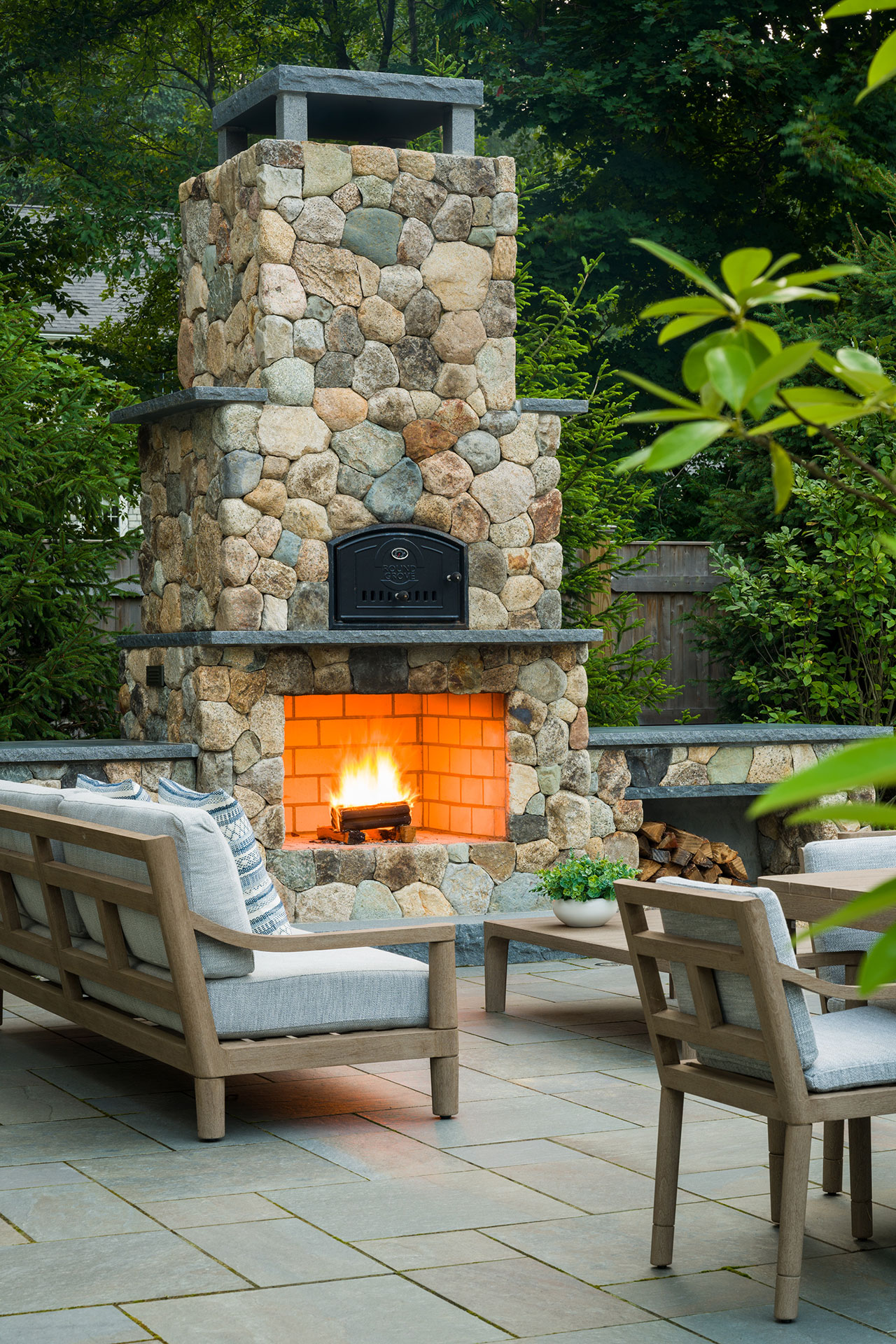
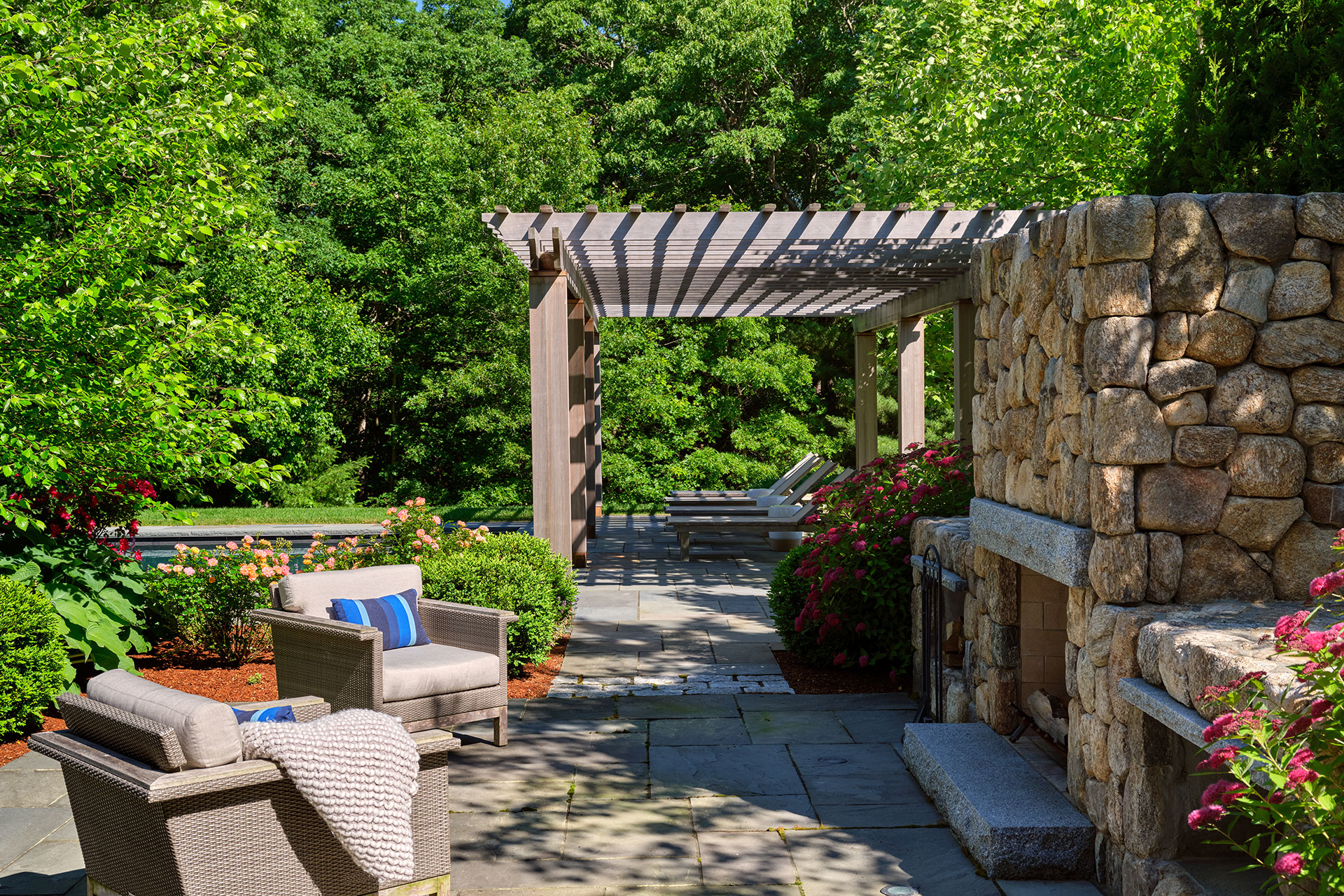
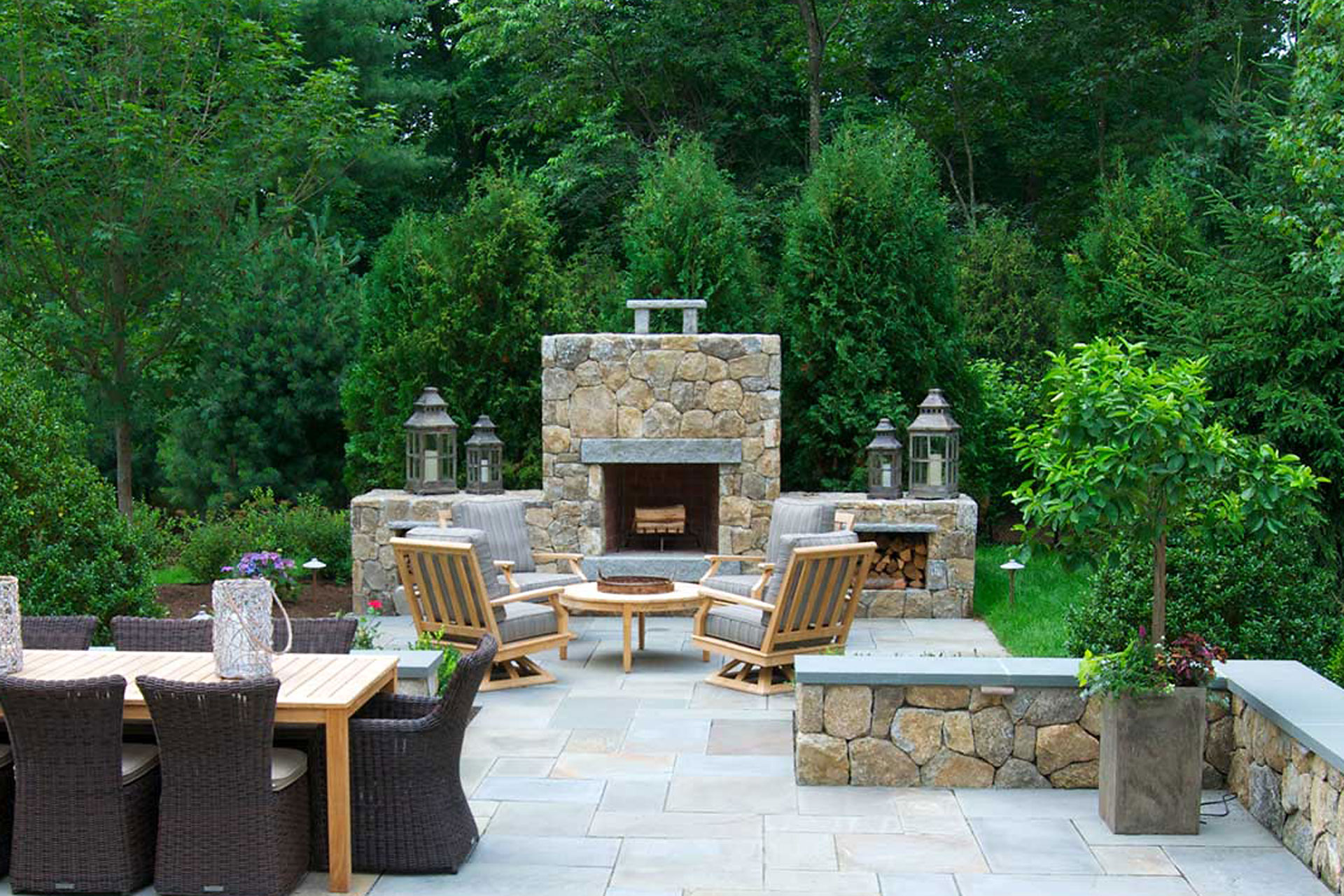
An outdoor fireplace creates a stronger architectural statement. Unlike a fire pit, which is usually viewed from all sides, a fireplace creates a clear focal point and can make a patio feel more like an outdoor room.
Fireplaces are especially effective at the edge of a terrace, against a garden wall, beside an outdoor kitchen, or in a covered or semi-enclosed seating area. They can also help screen a view, frame a destination, or add vertical structure to a flat outdoor space.
Fire Bowls and Sculptural Fire Features
Fire bowls and sculptural fire features work well in contemporary landscapes, pool areas, courtyards, and properties where the feature should feel more artistic than rustic. They can be subtle or dramatic, depending on scale, material, and placement.
These features are often used to create rhythm or symmetry. A pair of fire bowls near a pool, for example, can frame the water and create a striking evening view from inside the home.
Fire Tables
Fire tables are useful when a homeowner wants warmth, ambiance, and a furniture-integrated look. They are often best for smaller terraces, lounge areas, roof decks, and patios where a full masonry feature may feel too heavy.
| Type | Best Use | Design Feel |
|---|---|---|
| Fire pit | Conversation areas, patios, pool terraces, relaxed seating zones | Relaxed and social |
| Outdoor fireplace | Outdoor rooms, covered terraces, formal seating areas | Architectural and anchored |
| Fire bowl | Pool areas, contemporary terraces, framed views | Sculptural and dramatic |
| Fire table | Lounge areas, compact patios, roof decks, smaller terraces | Contemporary and furniture-like |
Gas vs. Wood-Burning Fire Features
One of the most important early decisions is whether the feature should be gas or wood-burning. Both can be beautiful, but they create different experiences and require different planning.
Gas Fire Features
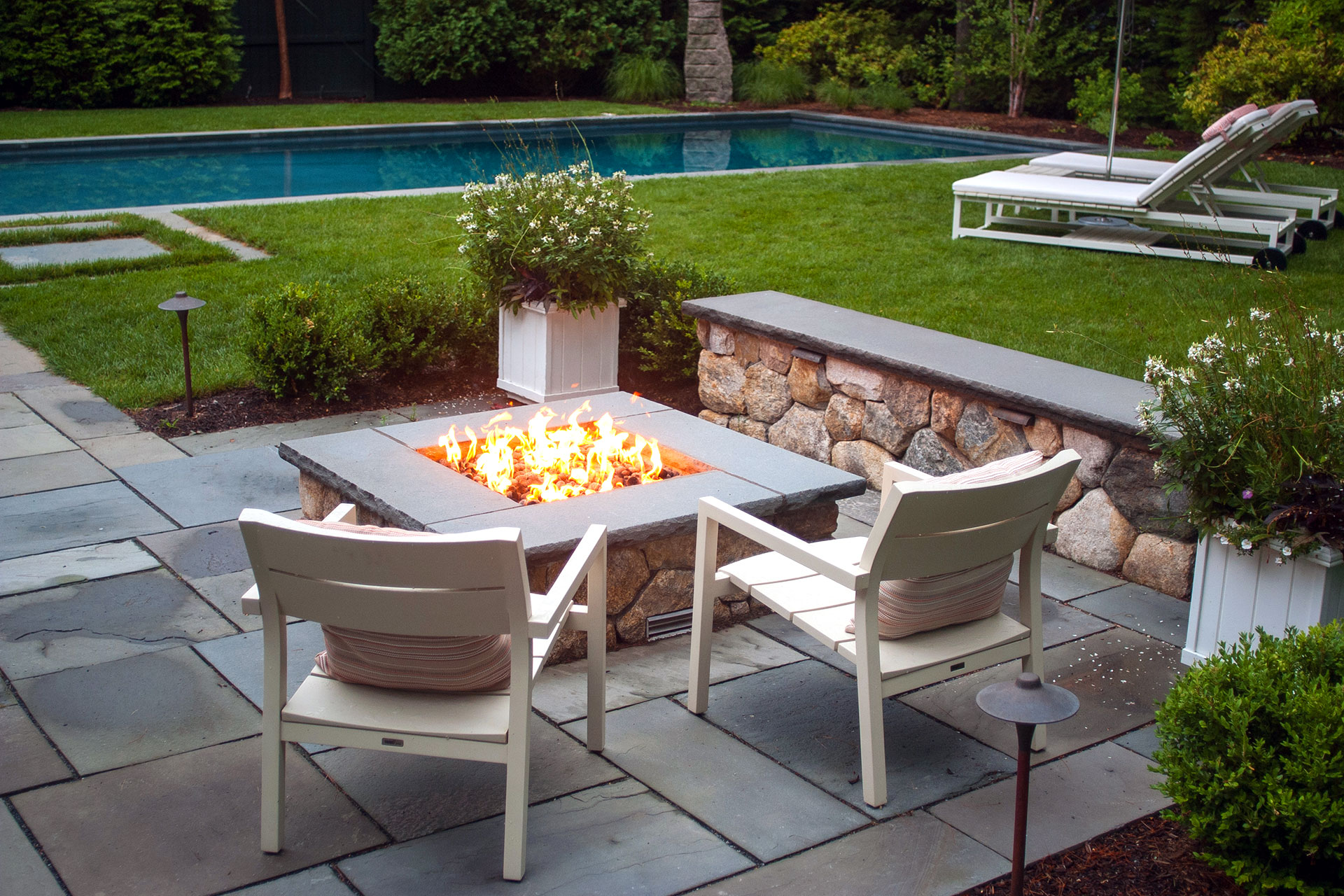
Gas fire features are often the preferred choice for refined outdoor living spaces. They are clean, convenient, and easy to use. With the turn of a key or the press of an ignition, the space is ready for guests without hauling wood, managing smoke, or cleaning ash.
Gas is especially well suited to outdoor entertaining areas, poolside lounges, roof terraces, and spaces close to the house. It also works well when the homeowner wants a more polished experience with less maintenance.
The main consideration is planning. Gas fire features require proper utility coordination, licensed installation, appliance selection, clearances, ventilation, and code review. If the fire feature is being added as part of a larger landscape construction project, it is best to plan for utilities early, before patios, walls, or planting areas are installed.
Wood-Burning Fire Features
Wood-burning fire features offer a classic sensory experience. The crackle, scent, and movement of a wood fire can feel timeless and inviting. For larger properties, informal gardens, rustic terraces, and destination fire circles, wood may be the right choice.
However, wood-burning features also require more management. Smoke direction, wood storage, ash cleanup, fire safety, and neighborhood conditions all matter. In denser Boston-area communities, wood smoke can quickly become a concern for nearby homes.
Local rules also vary. Some Massachusetts towns allow recreational fire pits under specific conditions, while Boston and other dense municipalities may have stricter limitations. Before committing to a wood-burning design, confirm requirements with the local fire department.
A fire pit creates a place to gather, encouraging conversation and connection around warmth, light, and movement. An outdoor fireplace creates a room, giving a patio or terrace structure, intimacy, and a stronger sense of arrival.
— Joanna McCoy, Senior Landscape Designer, a Blade of Grass
Where to Place a Fire Feature in a High-End Landscape
Placement is just as important as style. A fire feature should feel connected to the way the property is used, not stranded in the middle of a patio or pushed into an unused corner.
For some homes, the best location is close to the house, where the fire feature supports outdoor dining, evening drinks, and easy access from the kitchen or family room. For other properties, the strongest design move is to place the fire feature farther away, creating a destination at the edge of a lawn, near a garden, or overlooking a view.
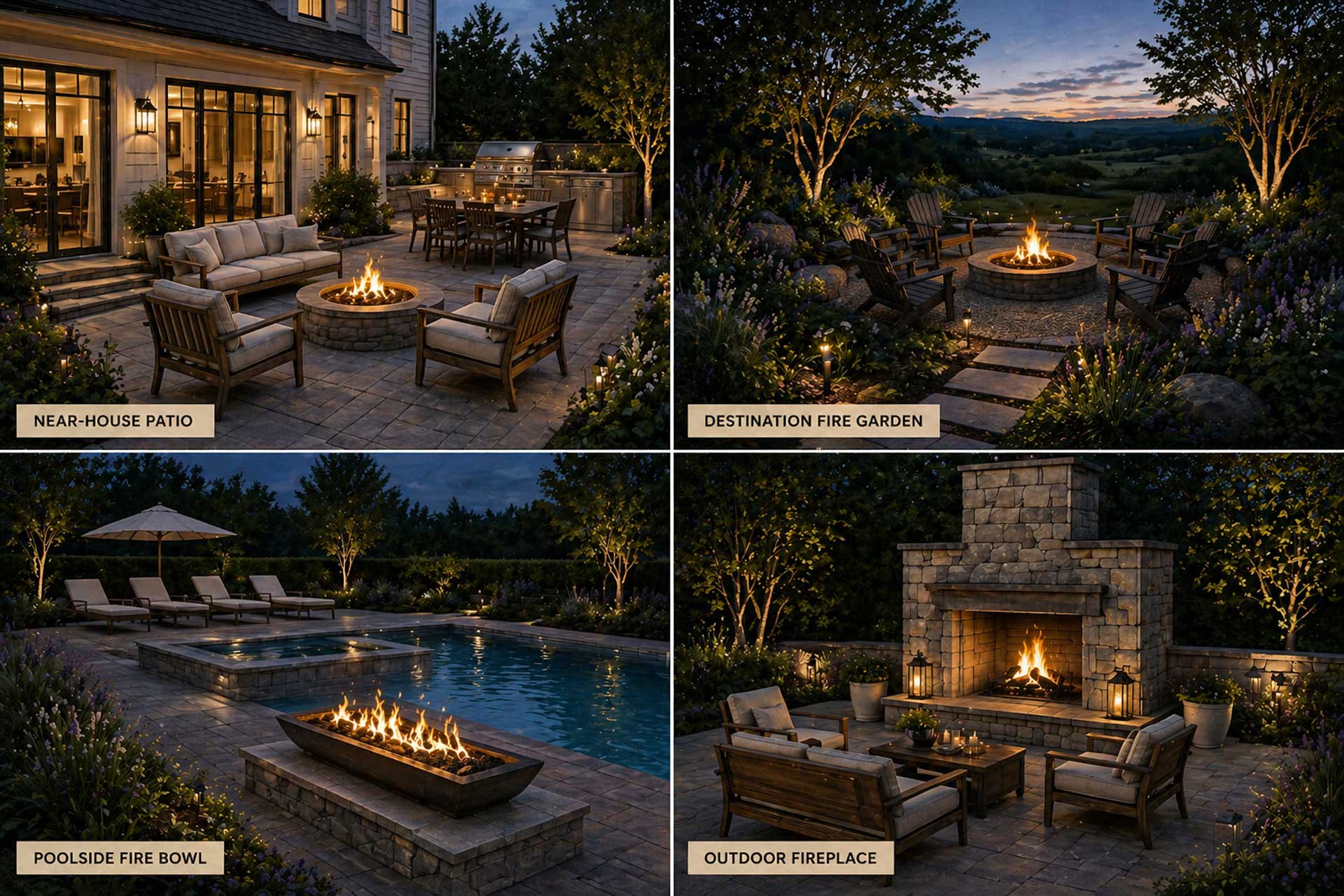
Common placement strategies include:
- near the house as part of a main patio or terrace
- beside an outdoor kitchen or dining area
- near a pool, spa, or lounge terrace
- within a sunken patio or lower garden room
- at the edge of a lawn or meadow
- along a view corridor
- inside a courtyard or protected seating area
- as a destination connected by paths, steps, and lighting
Wind, smoke, furniture spacing, foot traffic, views, privacy, and proximity to structures should all be studied before final placement. In a well-designed landscape, the fire feature should feel natural from both outside and inside the home.
Designing Around the Fire Feature
A fire feature is rarely successful on its own. The surrounding elements determine whether the space feels comfortable, polished, and usable.
Seating
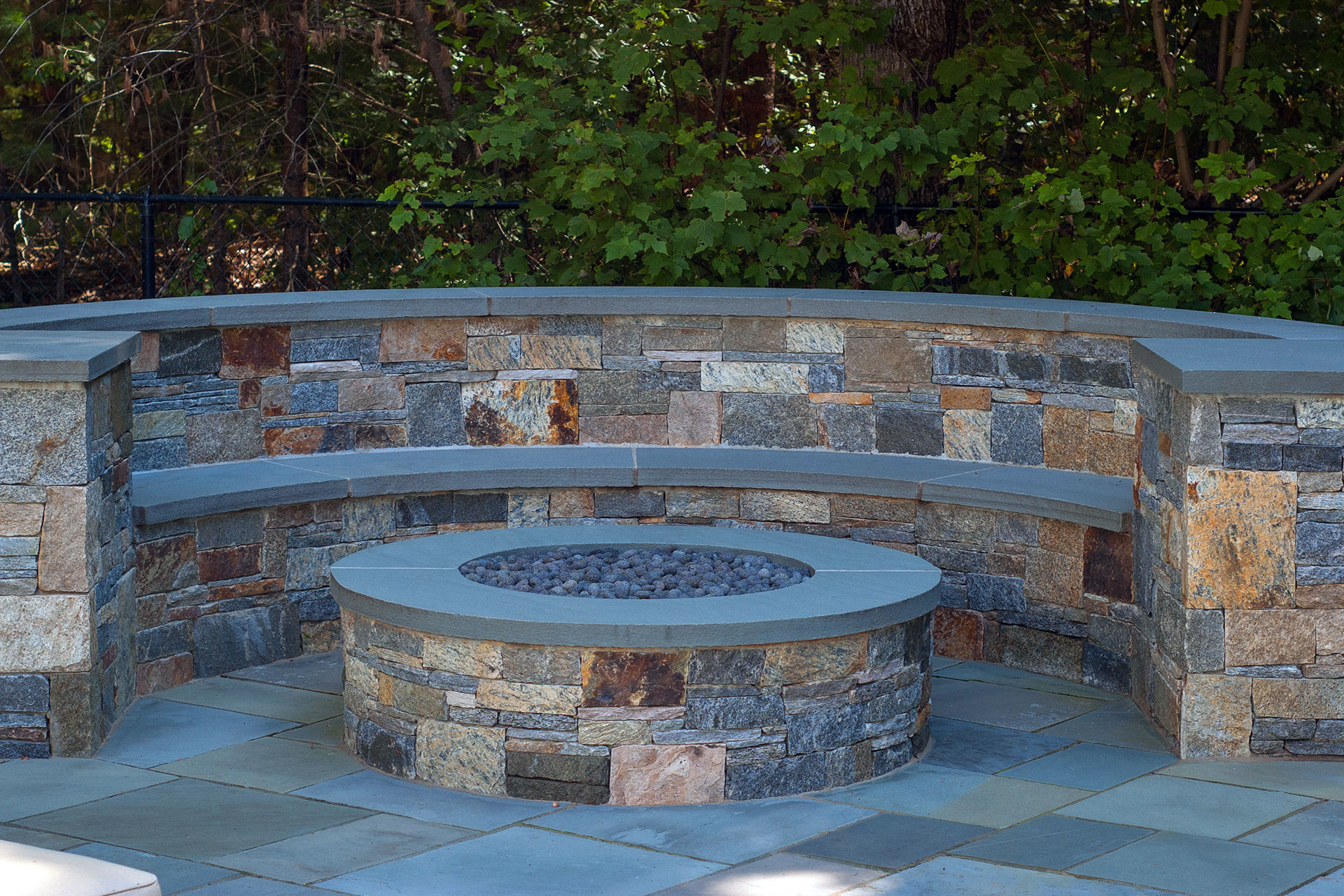
Seating should be planned before the fire feature is built. The size and shape of the seating area will influence the fire pit’s dimensions, the position of walls, and the flow of circulation around the space.
Built-in seat walls can create structure and permanence, while lounge chairs, sectionals, and movable seating allow for flexibility. On larger properties, a combination of fixed and movable seating often works best.
Related Blog: Patios, Walkways, and Retaining Walls: Which Hardscaping Features Add the Most Value?
Stonework and Materials
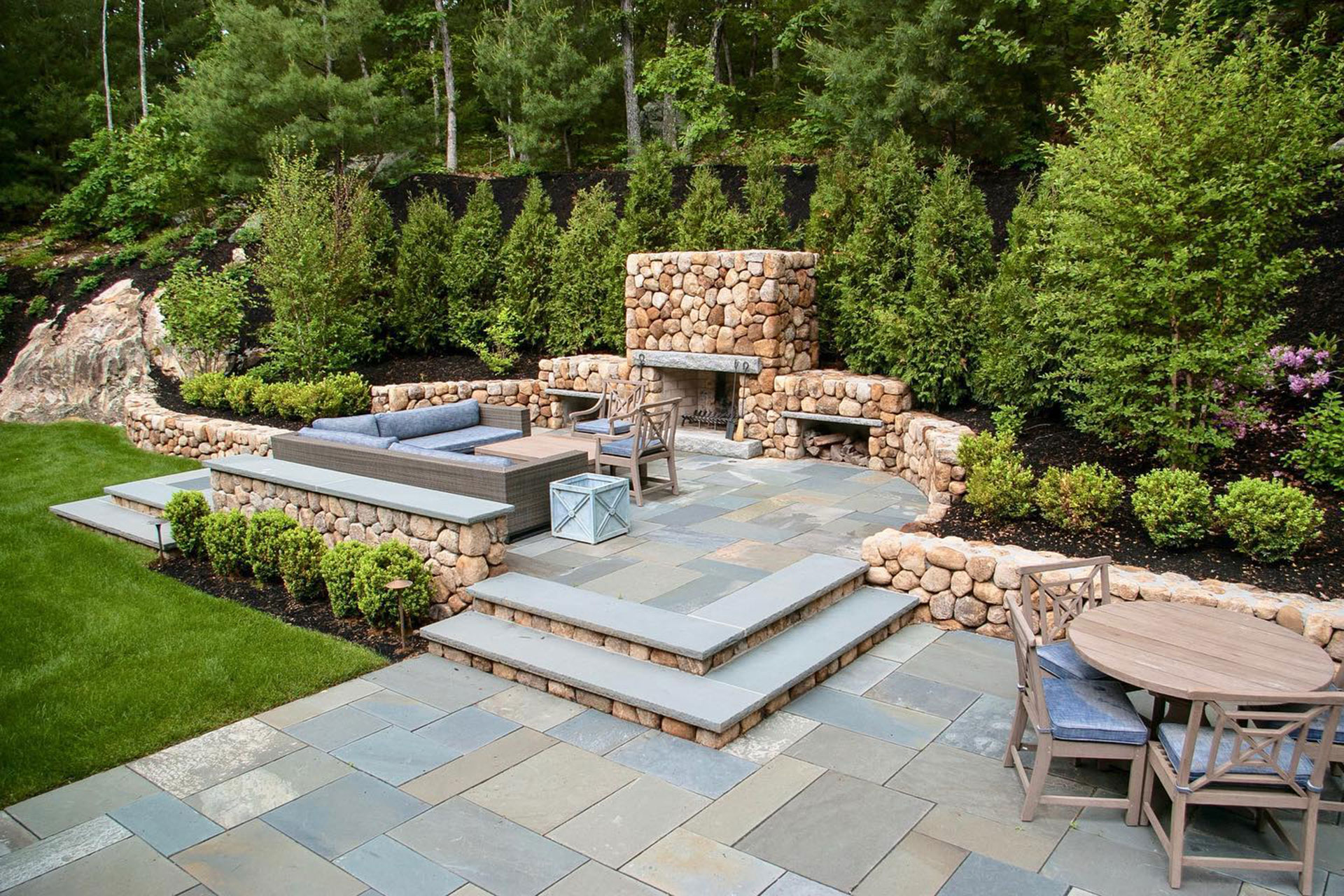
Material choice has a major impact on the character of the space. Natural stone, granite, bluestone, fieldstone, limestone, porcelain pavers, and custom masonry can all be used to create a fire feature that feels connected to the architecture of the home.
For high-end properties, the goal is usually restraint and continuity. A fire feature should not look like a separate product dropped into the landscape. It should feel related to the patio, walls, steps, coping, planting beds, and nearby architectural materials.
Related Blog: Why Reclaimed Stone Works So Well in Boston-Area Landscapes
Lighting
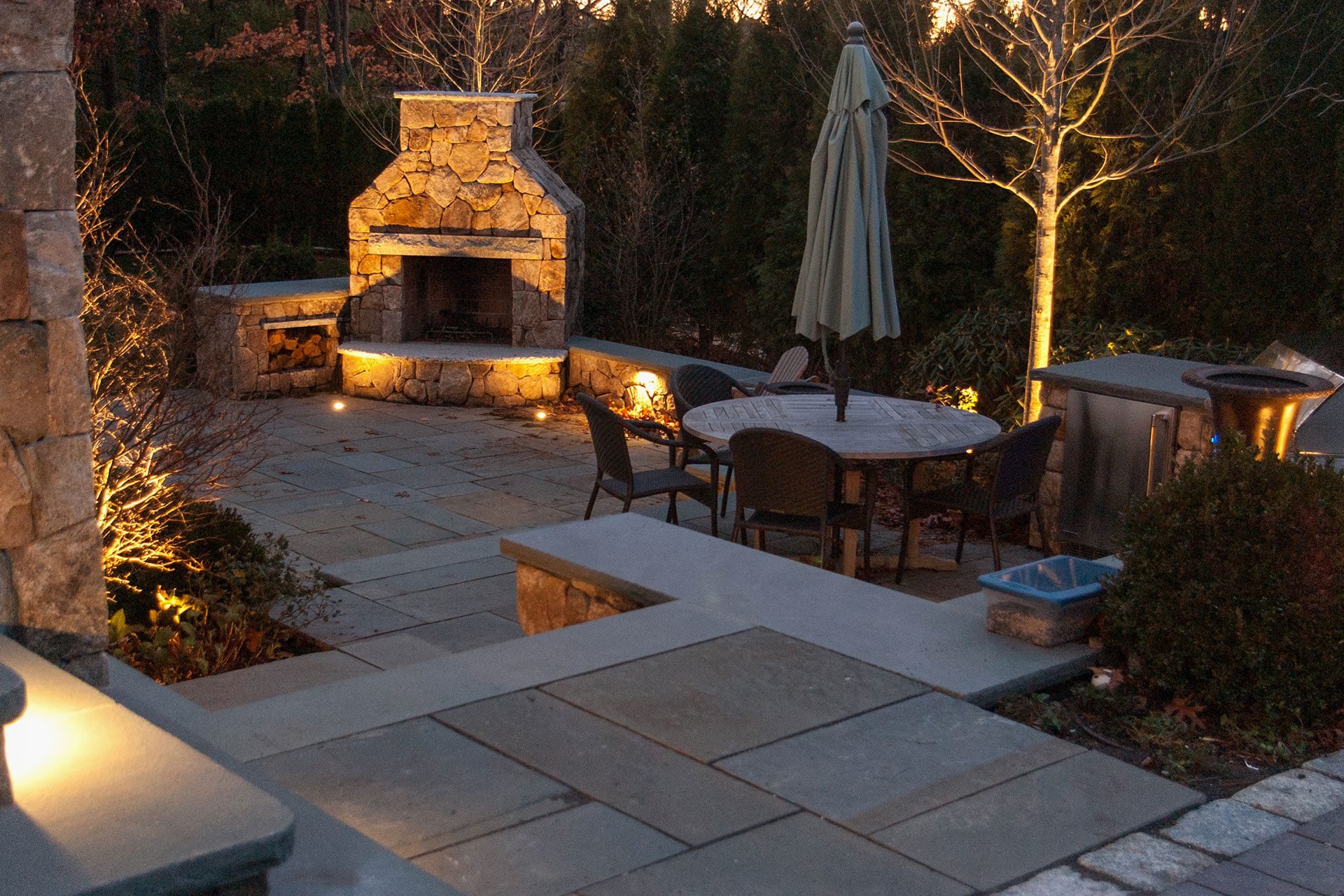
Lighting is essential around any evening gathering space. Subtle path lights, step lights, wall lights, downlights, and accent lighting can make the area safer and more inviting without overpowering the fire itself.
The best lighting plans create layers. Paths should be easy to navigate. Seating should feel comfortable. Planting and masonry should have enough definition to give the space depth. The fire should remain the focal point.
Related Blog: Landscape Lighting Ideas to Highlight Your Boston Property’s Best Features
Planting
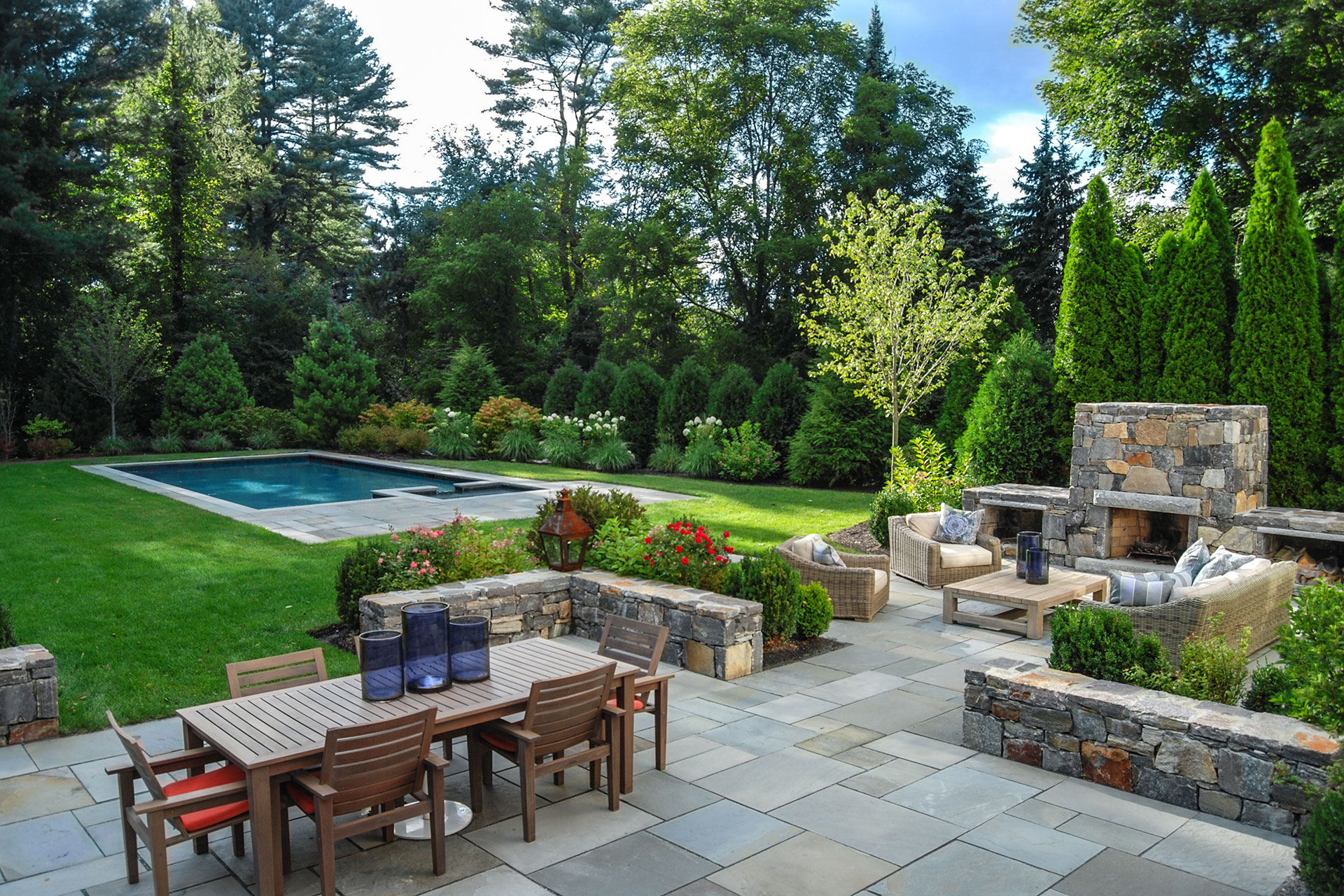
Planting softens the hard edges of masonry and helps the fire feature feel settled into the property. Evergreens can provide structure and screening. Perennials and ornamental grasses can add texture and movement. Trees can frame the space, filter views, and create a sense of enclosure.
For Boston-area properties, plant selection should account for exposure, wind, salt, snow, shade, deer pressure, and seasonal interest. A fire feature may be most used in spring and fall, but the surrounding planting should look composed throughout the year.
Related Blog: What Is Layered Planting? A Guide to Depth, Structure, and Four-Season Interest
Privacy

Fire features are often used at night, when privacy becomes especially important. A patio that feels comfortable during the day may feel exposed after dark if it is visible from neighboring homes, roads, or upper-story windows.
Privacy can be created with hedges, layered planting, fencing, walls, grade changes, or carefully placed trees. The goal is not always to block every view. Often, the best approach is to soften exposure and create a stronger sense of enclosure.
Related Blog: Creating Privacy with Trees and Hedges in Residential Landscapes
Drainage and Durability
Fire feature areas need to be comfortable underfoot and durable through New England weather. Drainage, grading, base preparation, masonry detailing, frost movement, and surface materials all matter.
A beautiful fire area that holds water, shifts over time, or becomes difficult to access will not serve the property well. This is one reason fire features are best planned as part of a larger landscape construction strategy.
Related Blog: Landscape Drainage Solutions for Massachusetts Homes
Fire Features for Different Property Styles
The most successful fire feature designs reflect the character of the home and property. A fire pit for a contemporary house in Newton should not necessarily look like one designed for a coastal home in Duxbury or a historic property in Brookline.
Estate and Country Properties
Larger properties can support more generous fire feature designs. A destination fire circle at the edge of a lawn, a stone fireplace beside a pool terrace, or a series of fire bowls framing a view can help activate different parts of the landscape.
On estate properties, scale is critical. The feature must be large enough to hold the space, but not so large that it overwhelms the surrounding architecture, planting, or view.
Featured Property: Carlisle Country Estate
Historic Boston and Brookline Homes
Historic homes often benefit from quieter, more restrained fire feature designs. Traditional masonry, natural stone, compact proportions, and careful placement can help the feature feel appropriate to the architecture.
In denser neighborhoods, privacy, code compliance, smoke, and proximity to neighboring properties require extra attention. Gas fire features or smaller fire tables may be more appropriate than wood-burning options.
Contemporary Homes
Contemporary landscapes often pair well with linear gas fire pits, smooth stone, porcelain paving, steel details, and integrated lighting. The design should feel clean, intentional, and connected to the geometry of the home.
For modern properties, the fire feature can also become a strong nighttime visual element when viewed from inside.
Featured Property: Harborside Entertaining
Coastal and Cape Homes
Coastal properties require careful attention to wind, exposure, salt, and material durability. Fire features should feel relaxed but resilient, with stone, masonry, and planting that can stand up to the coastal environment.
Fire features near pools, patios, or ocean-facing terraces should be placed with wind patterns in mind. Seating and planting should create comfort without blocking important views.
Featured Property: Duxbury Seaside Estate
Compact Urban Properties
Smaller properties can still benefit from fire, but the design must be precise. Gas fire tables, small masonry features, courtyard fireplaces, and integrated seating can make compact spaces feel more complete.
In urban settings, code review is especially important. The design should also consider ventilation, privacy, clearances, furniture layout, and access for maintenance.
Safety, Code, and Practical Planning in Massachusetts
Before installing any fire feature, homeowners should confirm local rules with their municipality or fire department. Requirements can vary significantly between Boston, Brookline, Cambridge, Newton, Wellesley, Weston, Concord, and other surrounding communities.
Important planning considerations include:
- distance from structures, fences, trees, and property lines
- whether wood-burning features are allowed
- fuel type and appliance listing
- manufacturer installation requirements
- utility permitting for gas features
- smoke and neighbor impacts
- proper extinguishing methods
- supervision during use
Gas fire features must be installed according to applicable code, manufacturer specifications, and local requirements. Wood-burning features may face additional restrictions related to smoke, open flame, materials burned, size, and seasonal conditions.
This is one reason custom fire features should be planned early in the design process. When the fire feature, utilities, masonry, drainage, lighting, and planting are coordinated from the beginning, the result is safer, cleaner, and more cohesive.
What Makes a Fire Feature Feel Luxurious?
Luxury in a fire feature is not simply about size. A large fire pit that feels disconnected from the rest of the landscape can look less refined than a smaller feature that is beautifully proportioned and carefully integrated.
The most elevated fire feature designs often share several qualities:
- custom masonry or high-quality materials
- proportions that fit the house and outdoor room
- comfortable seating and clear circulation
- integrated lighting
- concealed utilities where possible
- planting that frames and softens the space
- privacy without feeling closed in
- durable construction suited to New England weather
- visual interest even when the fire is not in use
For affluent homes, a fire feature should feel like part of a larger outdoor living experience. It may relate to a pool, outdoor kitchen, dining terrace, garden room, audio system, or seasonal planting plan. The more seamlessly those pieces work together, the more natural and refined the space feels.
Luxury comes from proportion, material quality, comfort, and integration, not simply from making the feature larger.
— Megan Davey, Design Associate, a Blade of Grass
Fire Features and the Broader Outdoor Living Plan
A fire feature often becomes the starting point for a larger conversation about how the property should function. If the goal is to entertain, the design may need a dining terrace, outdoor kitchen, lighting, and direct circulation from the house. If the goal is relaxation, the plan may focus more on privacy, comfortable seating, planting, and evening atmosphere.
For many Boston-area properties, a fire feature is best considered alongside:
- landscape design
- landscape construction
- patios and terraces
- stone walls and steps
- landscape lighting
- landscape audio
- outdoor dining spaces
- privacy screening
- custom pools and poolside living areas
- seasonal planting
- landscape maintenance
When these elements are planned together, the result is more cohesive and easier to maintain. The fire feature becomes part of the property’s long-term vision, not a standalone addition.
Related Blog: How to Plan an Outdoor Kitchen in Massachusetts: Layouts, Materials, and Costs
When to Add a Fire Feature to a Landscape Project
The best time to plan a fire feature is at the beginning of a landscape project. This allows the design team to coordinate utilities, drainage, masonry, lighting, seating, planting, and circulation before construction begins.
A fire feature is especially worth considering when:
- building a new patio or terrace
- renovating an outdated outdoor living space
- adding a pool, spa, or poolside lounge area
- creating an outdoor kitchen or dining space
- improving evening use of the property
- adding privacy or structure to a backyard
- creating a destination area away from the house
Retrofitting a fire feature into an existing patio is sometimes possible, but it should be evaluated carefully. The condition of the patio, available utilities, clearances, drainage, and code requirements will all influence what is practical.
Frequently Asked Questions About Outdoor Fire Features
Q: Are fire pits allowed in Boston-area backyards?
A: Rules vary by municipality. Some suburban towns allow recreational fire features under specific conditions, while Boston and other dense communities may be more restrictive. Always confirm with your local fire department before installing or using a fire pit, fireplace, chiminea, or gas fire feature.
Q: Is a gas or wood-burning fire pit better for a luxury landscape?
A: Gas is often the better choice for refined outdoor living because it is clean, convenient, and easy to use for frequent entertaining. Wood-burning fire features provide a more traditional experience, but they require more cleanup and may create smoke or permitting concerns in denser neighborhoods.
Q: Where should an outdoor fireplace be placed?
A: An outdoor fireplace should anchor a seating area, frame a view, or define an outdoor room. Placement should account for wind, smoke, circulation, furniture, privacy, proximity to the house, and the relationship between the fireplace and surrounding patios, paths, lighting, and planting.
Q: Can a fire feature be added to an existing patio?
A: Often, yes, but the existing patio should be reviewed first. The design team should evaluate structural conditions, surface materials, drainage, clearances, access, utility routing, and local code requirements before recommending a fire pit, fireplace, or fire table.
Q: What materials work best for custom fire features in New England?
A: Durable masonry, natural stone, granite, bluestone, concrete, and weather-resistant components are common choices. The best material depends on the architecture of the home, the surrounding hardscape, the type of fire feature, and the level of exposure to New England weather.
Designing a Fire Feature for Your Boston-Area Property
A fire feature can make a landscape more inviting, more useful, and more memorable. Whether the goal is a quiet retreat, a refined entertaining space, or a complete outdoor living environment, the best results come from careful planning.
At a Blade of Grass, our landscape design and construction teams integrate custom fire pits, outdoor fireplaces, patios, terraces, stonework, planting, lighting, irrigation, and long-term maintenance into cohesive outdoor spaces. Each feature is designed with the property in mind, so the final landscape feels considered, comfortable, and complete.
Considering a custom fire pit, outdoor fireplace, or complete outdoor living space for your Boston-area property? Contact a Blade of Grass to schedule a complimentary consultation.