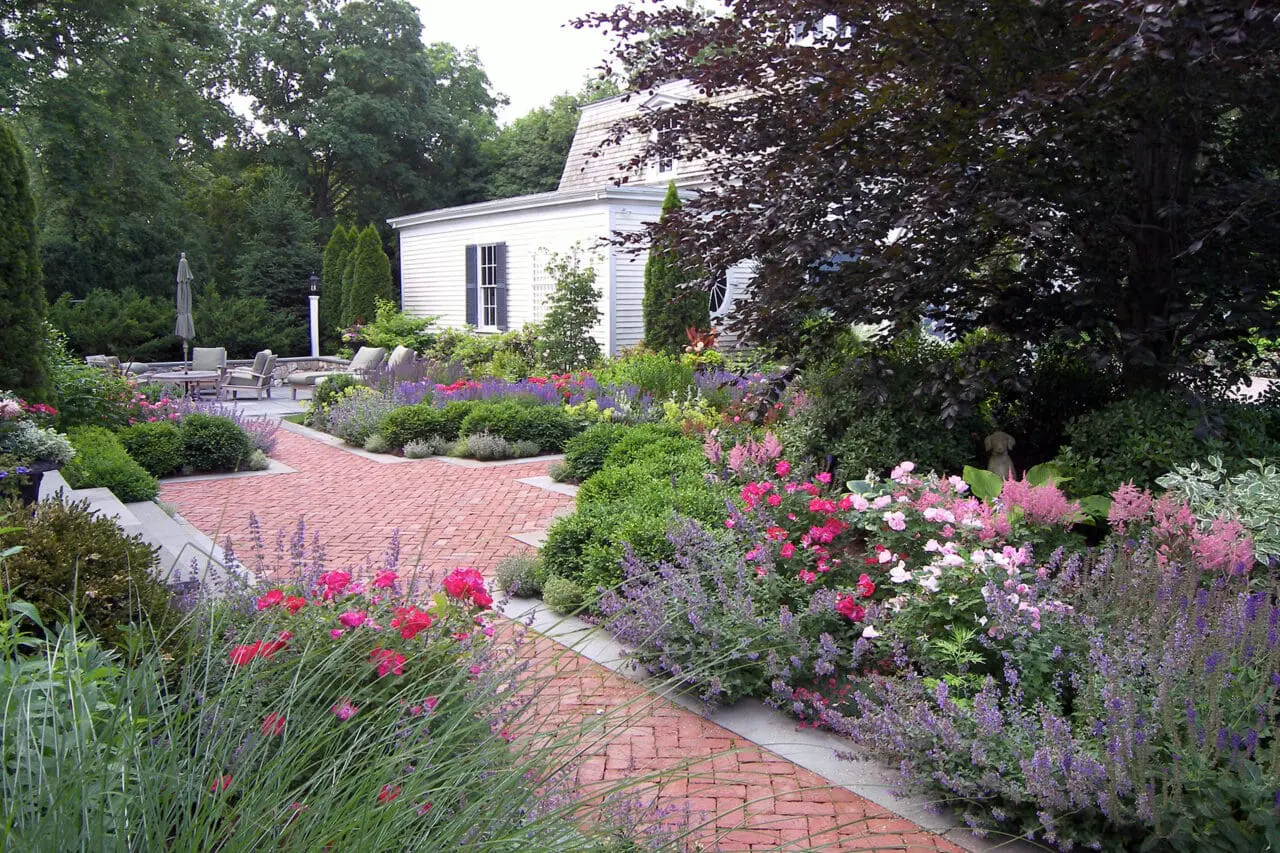
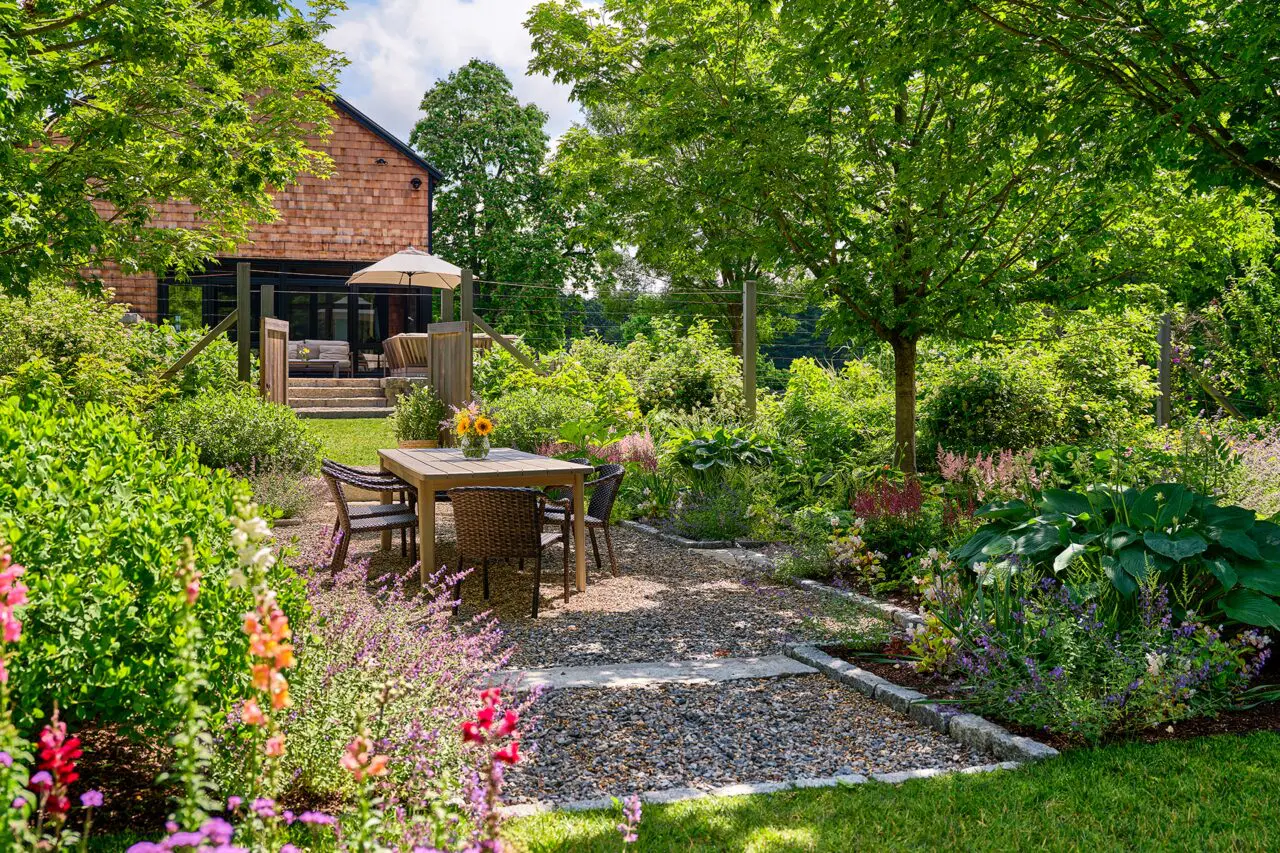
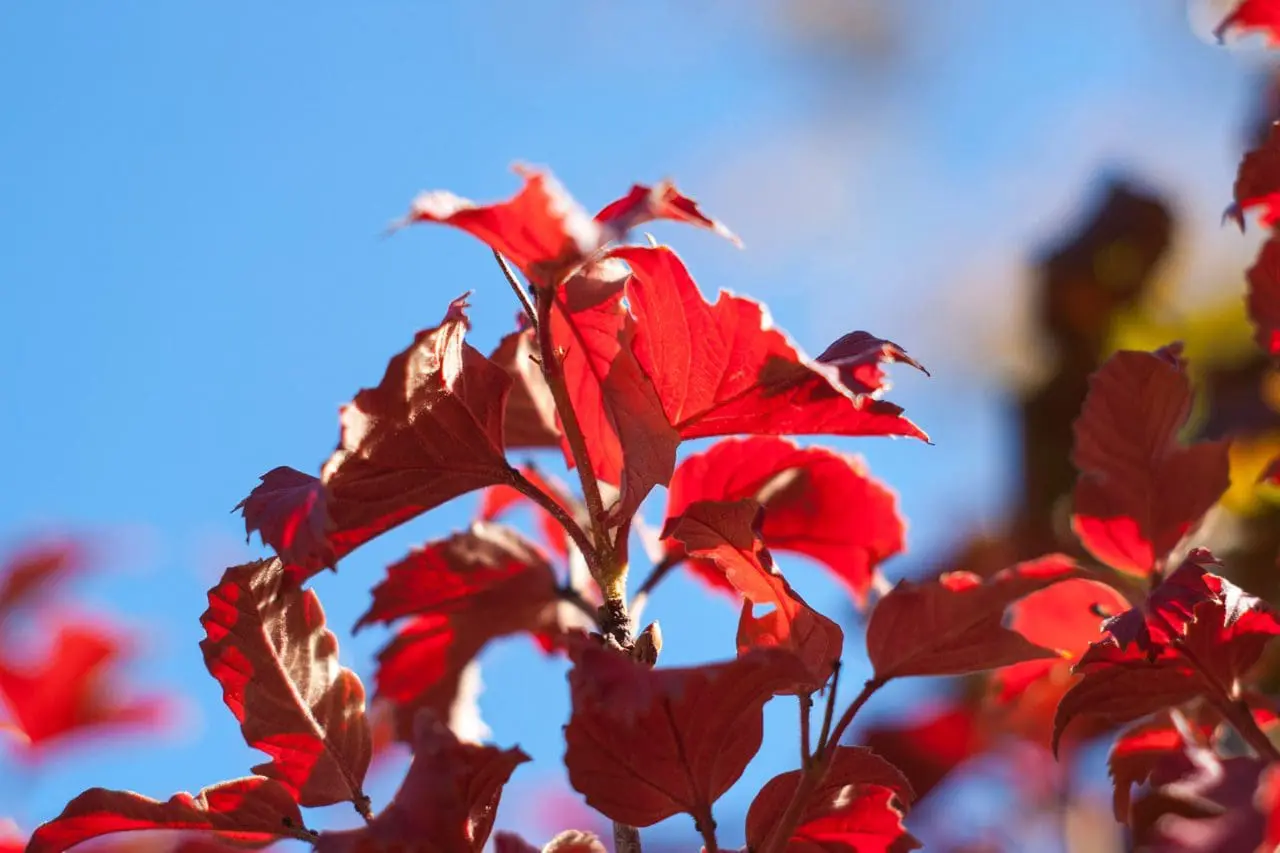
Privacy is a top priority for many homeowners, whether the property is in a quiet suburb, a compact neighborhood, or a spacious rural setting. Creating a sense of seclusion does not have to mean installing tall fences or closing off the landscape. With the right combination of trees, hedges, shrubs, and layered plantings, a natural privacy screen can create separation while also adding beauty, structure, and year-round interest.
For Boston-area homeowners, privacy planting should be planned carefully. New England winters, deer pressure, snow load, soil conditions, and mature plant size all influence which plants will perform well over time. The best privacy screens do more than block views. They shape outdoor rooms, soften property lines, reduce noise, buffer wind, and make patios, pools, terraces, and gardens feel more comfortable.
Key Takeaways
- Trees, shrubs, and hedges can create living privacy screens that feel natural, elegant, and appropriate to the property.
- The best privacy planting strategies balance screening, light, airflow, views, and long-term plant health.
- Evergreen plants provide year-round structure, while flowering and deciduous shrubs add seasonal interest.
- Layered planting often feels more refined and resilient than a single straight row of trees.
- Professional landscape design helps ensure privacy screens are properly sited, spaced, planted, and maintained.
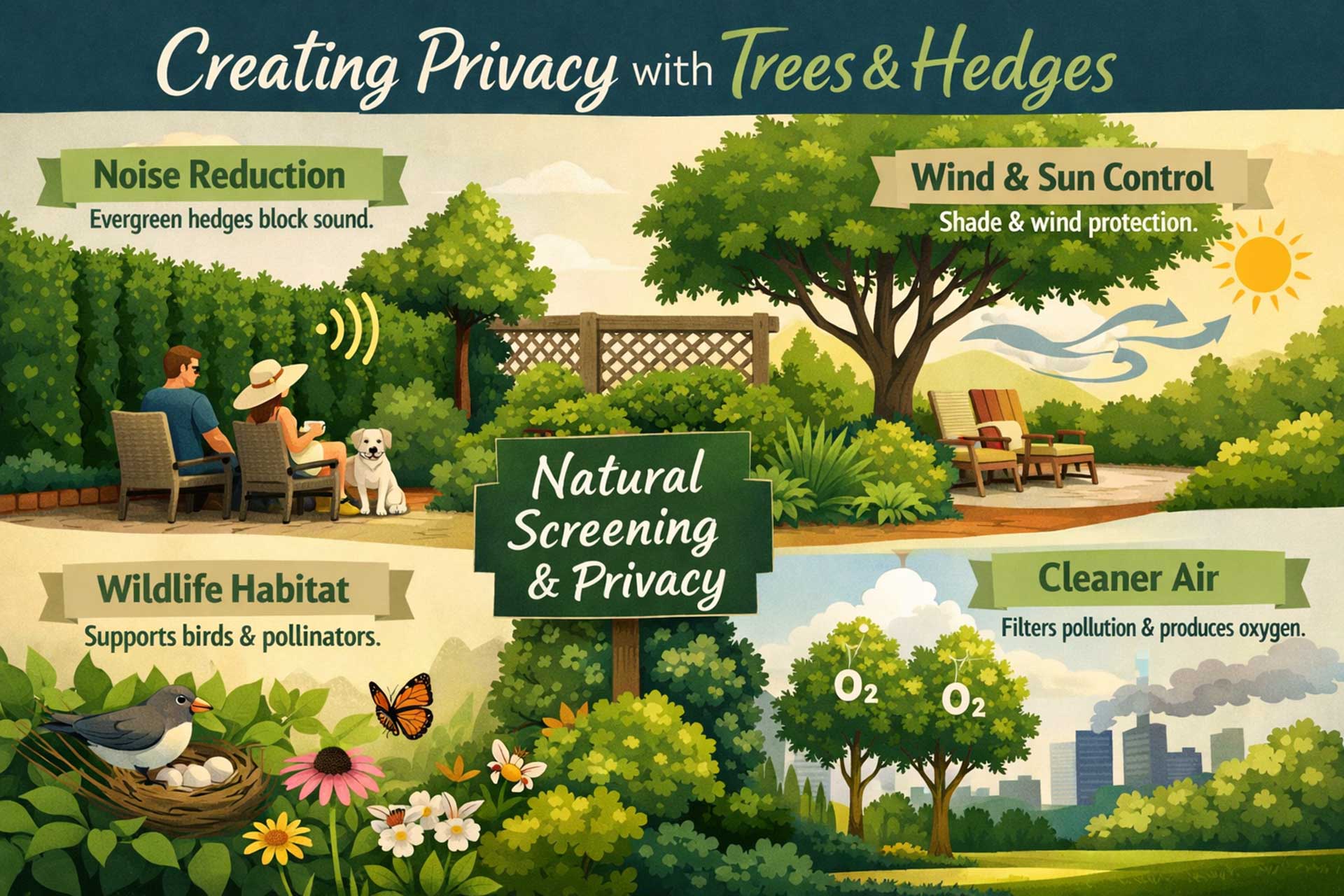
Trees, Shrubs, and Hedges: Natural Solutions for a Private Outdoor Space
Trees, shrubs, and hedges can act like living curtains for a property. Just as window treatments create privacy and softness indoors, a thoughtfully arranged screen of greenery can make an outdoor space feel more comfortable, finished, and protected.
The benefits go beyond blocking views:
- Noise reduction: Dense evergreen hedges and layered plantings can help soften sound from roads, neighboring properties, and active outdoor areas.
- Wind and sun control: Trees and shrubs can buffer wind, provide shade, and make patios, gardens, and seating areas more comfortable.
- Wildlife habitat: Many privacy plants support birds, pollinators, and beneficial insects.
- Four-season structure: Evergreens, branching patterns, berries, and bark can keep the landscape visually interesting even in winter.
The goal is not simply to hide the outside world. The best privacy landscapes create a sense of enclosure while preserving the openness and character of the property.
Why Investing in Privacy Landscaping Pays Off
Even in neighborhoods with generous lot sizes, many homeowners still want a stronger sense of separation from nearby homes, roads, upper-story windows, or active outdoor areas. This is especially true when a property includes outdoor dining, a pool, a terrace, a fire feature, or a frequently used backyard.
Thoughtfully designed privacy landscaping can improve daily comfort while also enhancing curb appeal and perceived property value. A privacy screen that feels composed, healthy, and appropriate to the architecture can make a landscape feel more mature and more intentional.
According to the National Association of Realtors, outdoor features and landscape improvements remain important to homeowner enjoyment and buyer appeal. For high-end residential properties, privacy is often part of that value because it directly influences how usable and comfortable outdoor spaces feel.
Related Blog: Best Privacy Trees for Massachusetts: Top Options That Thrive in Boston’s Climate
Best Privacy Plants for Residential Yards
The best privacy plants depend on the property’s exposure, soil, deer pressure, desired height, maintenance expectations, and whether the screen needs to work year-round. A tall evergreen line may be appropriate for one property, while a mixed hedge of shrubs, small trees, and perennials may be better for another.
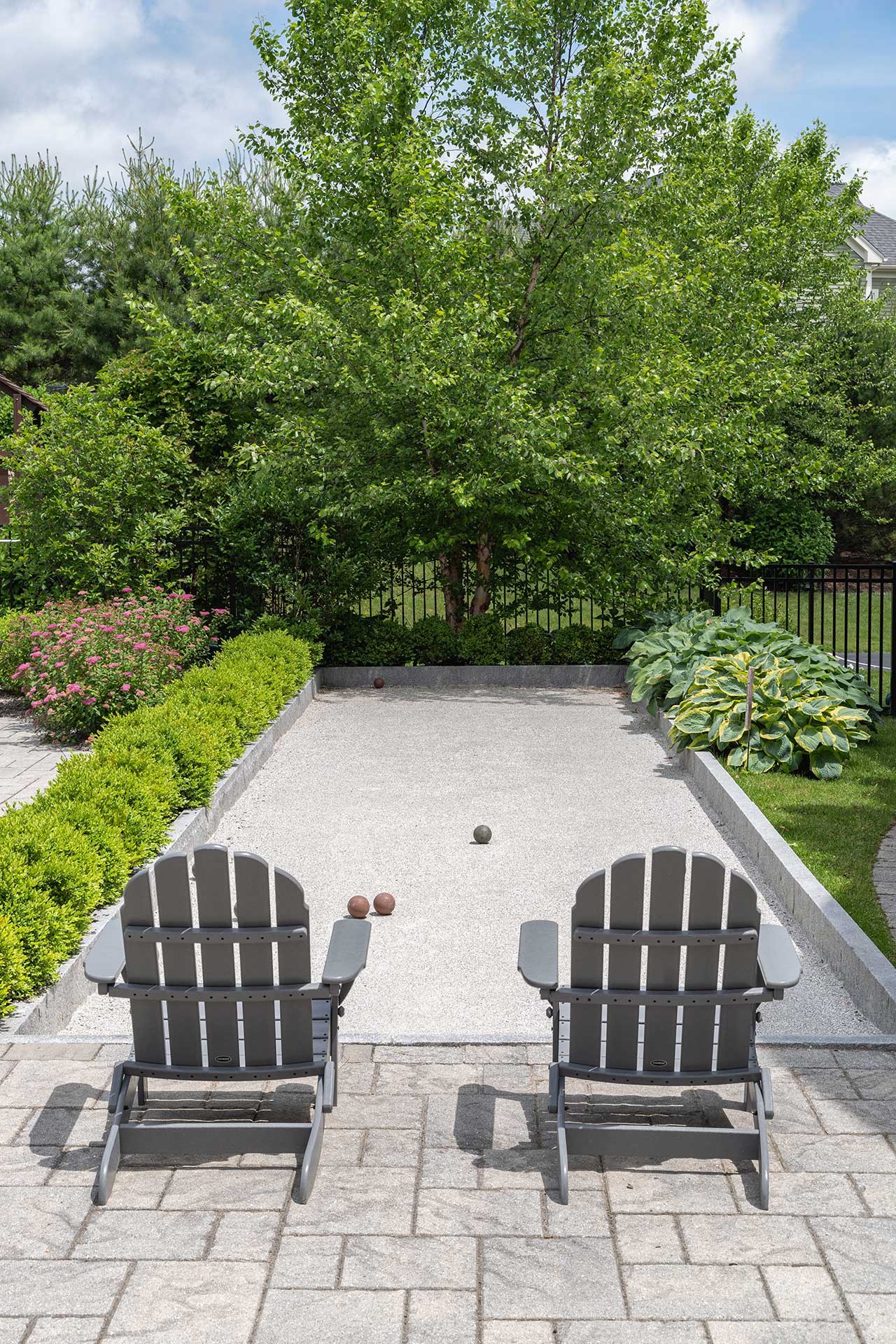
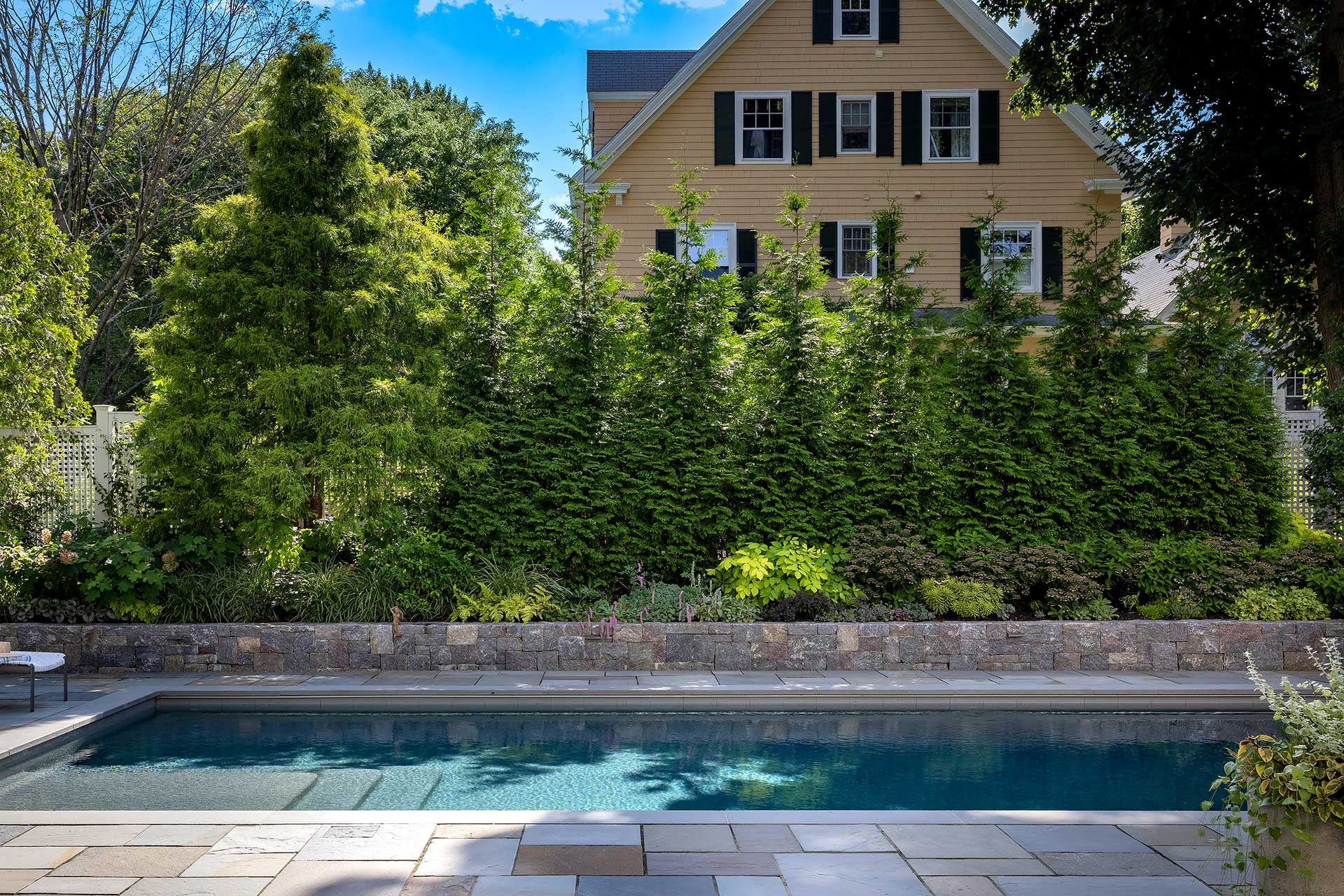
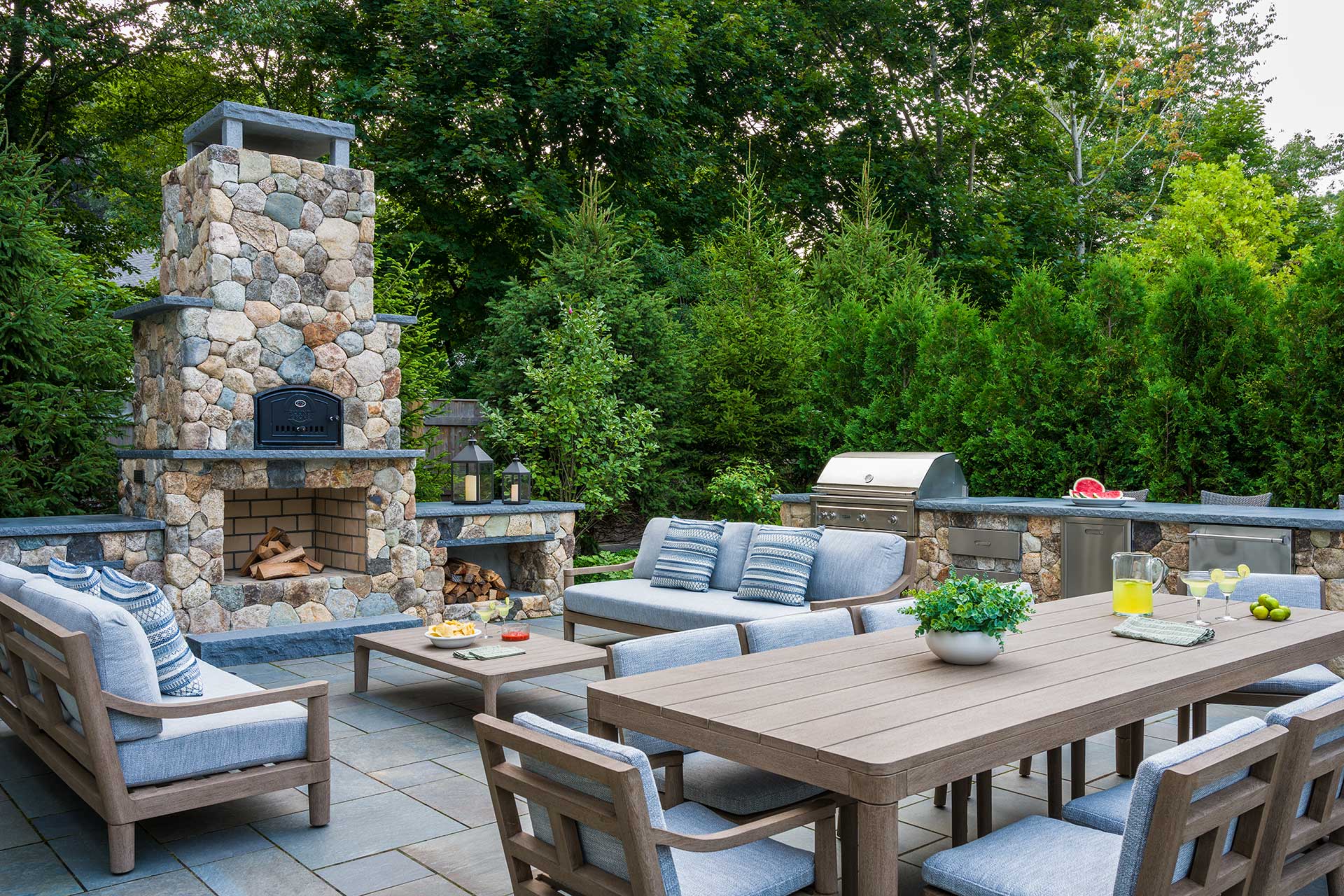
Evergreen Trees for Year-Round Privacy
- Green Giant Arborvitae: Fast-growing and dense, often used for larger yards, long borders, and year-round screening.
- Emerald Green Arborvitae: Narrower and more compact, useful for smaller spaces or tighter property lines.
- Eastern Red Cedar: Native, hardy, and useful in exposed, rural, roadside, or deer-prone locations.
- Japanese Cedar: Elegant form with soft texture and dense foliage, often used as a refined tall screen.
- Norway Spruce: A strong choice for larger properties where scale, wind buffering, and naturalistic screening are important.
Evergreen and Semi-Evergreen Hedges
- Boxwood: A classic formal hedge with dense structure and year-round presence.
- Inkberry Holly: A native evergreen shrub that works well as a softer alternative to boxwood in many New England landscapes.
- American or Japanese Holly: Glossy foliage, winter berries on female plants, and strong structure for screening or hedging.
- Privet: Fast-growing and effective for hedges, but it requires regular pruning and should be selected carefully.
- Viburnum: Many varieties offer dense growth, seasonal flowers, berries, and strong screening value.
Flowering and Seasonal Options
- Rose of Sharon: A tall flowering shrub that works well in informal summer screens.
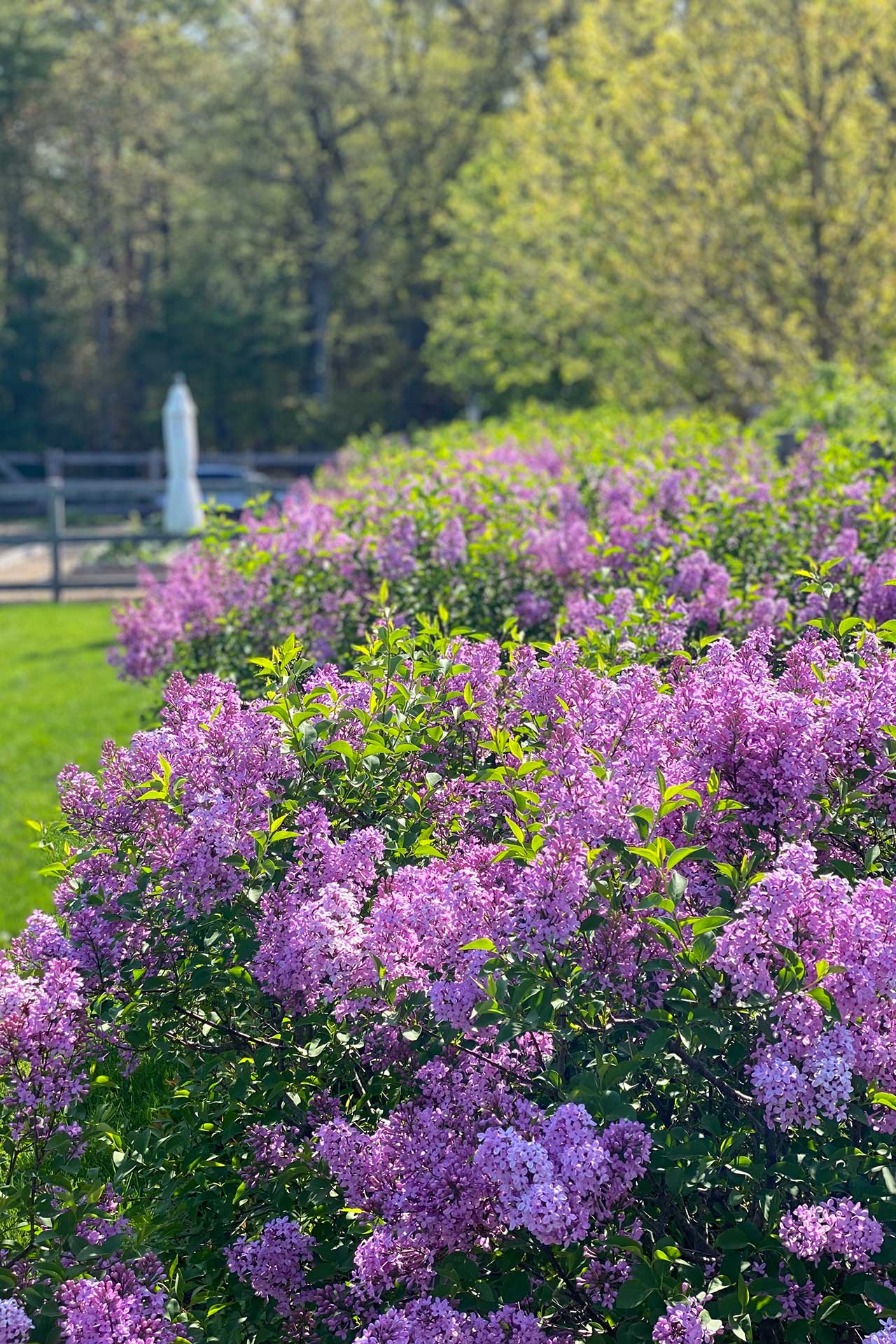
- Lilac: Valued for fragrant spring blooms and dense seasonal coverage.
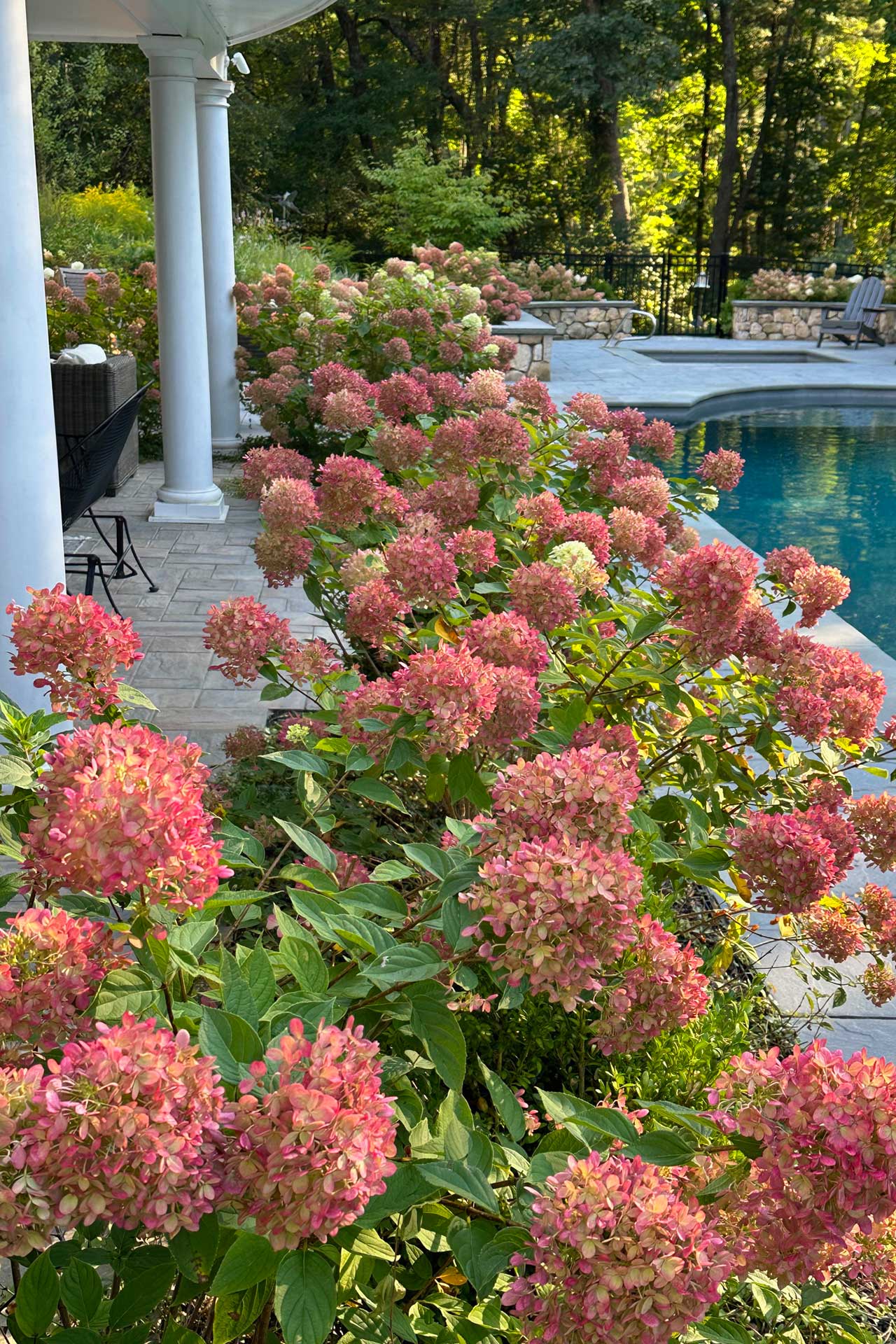
- Hydrangea: Panicle and smooth hydrangeas can add fullness, summer flowers, and softness in mixed screens.
- Forsythia: Bright early spring color and fast growth, best used as part of a mixed screen rather than as the only privacy plant.
- Ornamental grasses: Useful as fast seasonal fillers while larger trees and shrubs mature.
Smart Planting Tips for Maximum Privacy
Choosing the right plants is only the first step. How they are arranged often determines whether the screen feels natural, healthy, and effective over time.
Use Layered Planting
Blend trees, shrubs, perennials, and groundcovers of different heights to build a more dimensional privacy screen. This layered approach can make the yard feel larger, more natural, and more visually interesting than a single line of plants.
Go Beyond Straight Lines
Instead of planting in a rigid row, consider staggered or offset groupings. This creates depth and provides better visual coverage as plants mature. It also reduces the overly formal “green wall” effect that can make a property feel boxed in.
Combine Evergreen and Deciduous Plants
For year-round privacy, evergreens provide essential structure. Deciduous shrubs and flowering plants add seasonal texture, bloom, and softness. Together, they create a screen that works in winter without feeling static in summer.
Use Berms and Raised Beds Where Appropriate
If a property is flat or the desired screen needs more immediate height, berms or raised planting areas can help. They elevate plantings, improve drainage, and create stronger visual separation while plants mature.
Think Long-Term and Space for Growth
It is tempting to plant trees close together for instant screening, but overcrowding can lead to poor airflow, disease, root competition, and uneven growth. Privacy plants should be spaced for mature size, not just installation-day impact. If faster coverage is needed, temporary fillers such as ornamental grasses, perennials, or smaller shrubs can help bridge the gap while larger plants establish.
Related Blog: Arborvitae for New England Homes: What to Know Before You Plant
Privacy Landscaping Pros and Cons
| Pros | Cons |
|---|---|
|
|
Plants as Natural Curtains
Just like you would not install blinds only halfway across a window, your outdoor spaces deserve privacy that feels complete, flexible, and carefully considered. Trees and hedges act like adjustable living curtains. They can be shaped, layered, and positioned to suit the property, the season, and the desired level of screening.
The strongest privacy landscapes do not block everything indiscriminately. They preserve desirable views, filter unwanted sightlines, and make outdoor rooms feel more comfortable without making them feel closed off.
Frequently Asked Questions
Q: What are the best fast-growing privacy plants?
A: Green Giant Arborvitae, Norway Spruce, Eastern White Pine, and certain hedge plants such as privet are often used for faster screening. Growth rate depends on soil preparation, irrigation, spacing, and long-term care.
Q: What is a good privacy option for smaller residential lots?
A: Emerald Green Arborvitae, inkberry holly, Japanese holly, boxwood, and compact mixed shrub plantings can work well in narrower yards or near patios where space is limited.
Q: Do privacy hedges require a lot of care?
A: Some do. Formal hedges such as privet or clipped boxwood require regular pruning. More naturalistic evergreen and mixed shrub screens may need less frequent shaping once established.
Q: Can flowering shrubs be part of a privacy screen?
A: Yes. Viburnum, hydrangea, lilac, Rose of Sharon, and other flowering shrubs can add seasonal color and softness when combined with evergreen structure.
Q: Is it okay to plant near my property line?
A: Generally yes, but always check local guidelines, setback rules, easements, and HOA requirements. Plants should be spaced with mature size in mind so branches, roots, and maintenance needs do not create conflicts later.
Grow Your Privacy Naturally
Whether your home sits on a large estate lot or in a more compact neighborhood, privacy does not have to come from fences or walls alone. With the right mix of trees, hedges, shrubs, and layered plantings, a landscape can become more comfortable, more beautiful, and more functional.
Privacy landscaping is more than a shield. It is a way to shape outdoor living spaces so they feel calm, intentional, and connected to the property.
Bring Privacy Into the Landscape With a Thoughtful Design Plan
Privacy works best when it feels like a natural part of the property, not an afterthought. At a Blade of Grass, our landscape design services help homeowners create screening that feels beautiful, intentional, and well suited to the architecture, layout, and long-term needs of the site.
From layered planting plans and evergreen screening to full-property design, our team creates outdoor spaces that offer privacy, structure, and year-round appeal. Contact us to learn more about our landscape design services and start planning a more private, more purposeful landscape.
Want to Learn More?
Explore these trusted resources for deeper guidance:
- Using Trees and Shrubs for Privacy and Wind Screening – Penn State Extension
- How to Plant a Privacy Hedge – This Old House
- Top 15 Privacy Trees – Garden Design