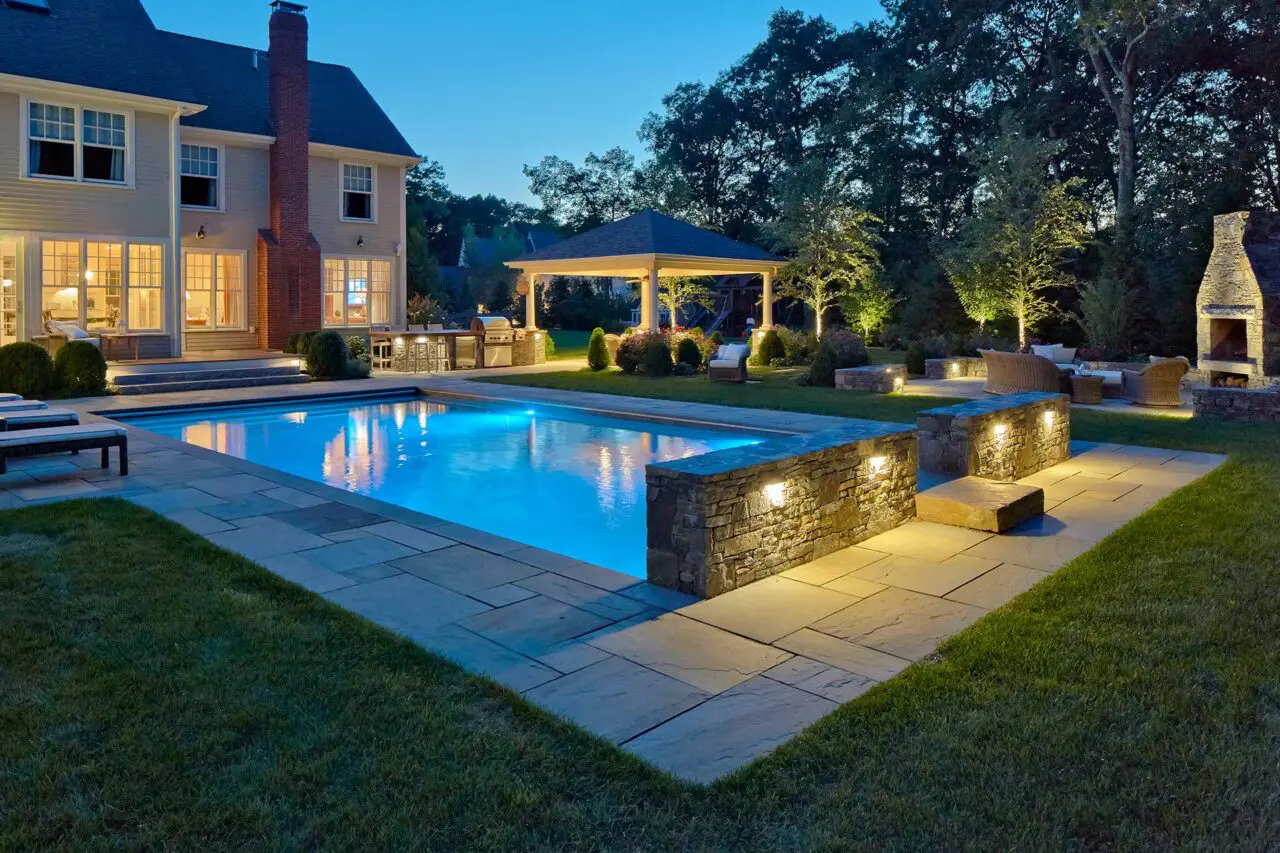
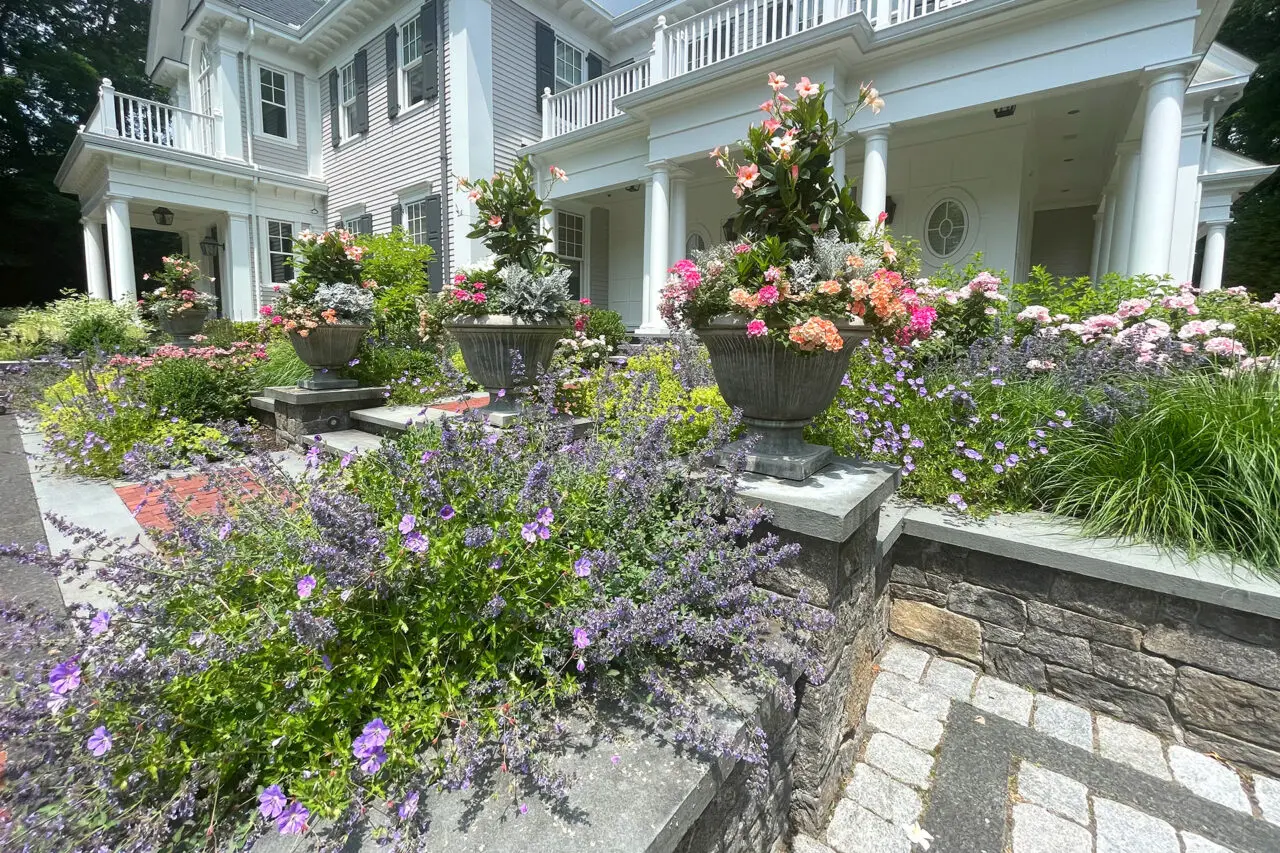
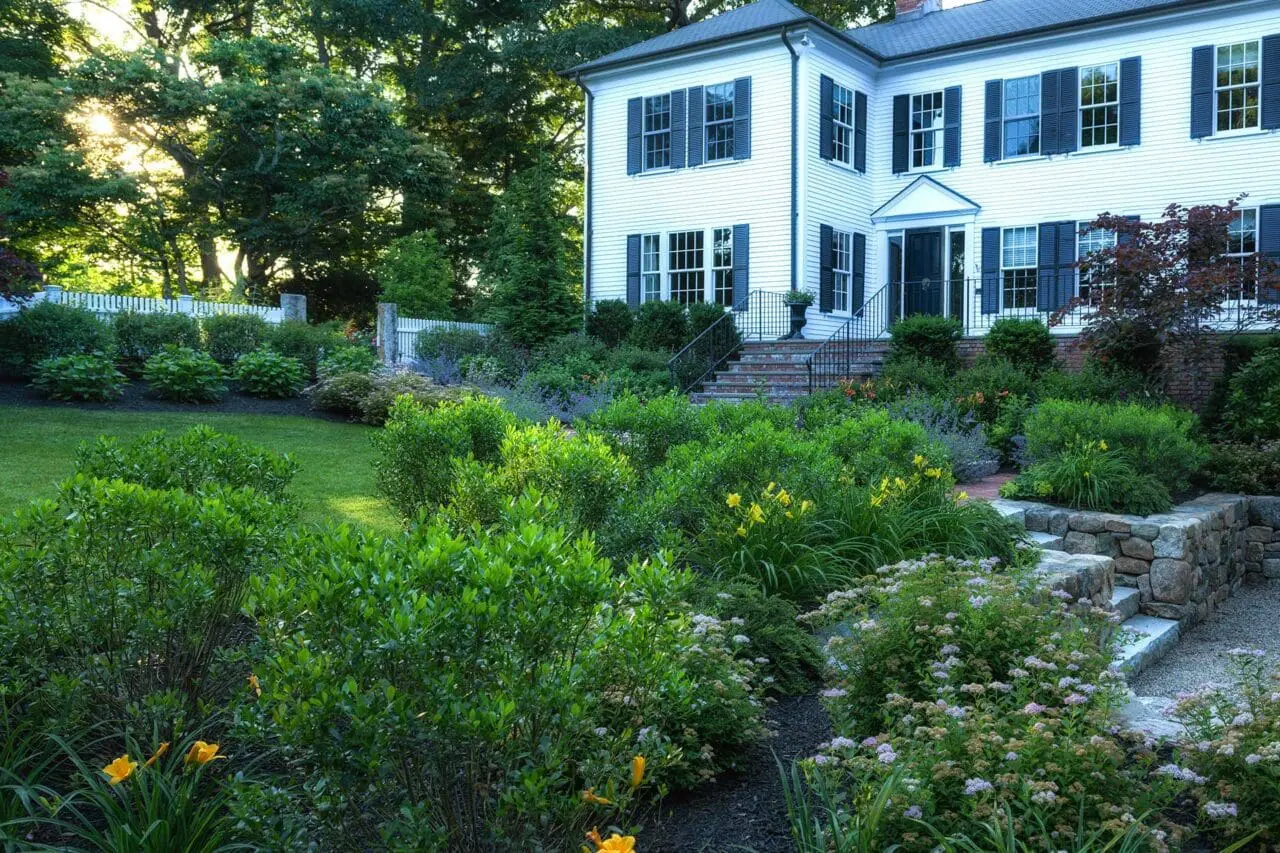
Arborvitae are everywhere in New England residential landscapes, and for good reason. They are evergreen, relatively narrow, soft in appearance, and useful for creating privacy without building a wall or fence. In Greater Boston, MetroWest, Cape Cod, and many of the surrounding suburbs, arborvitae often appear along property lines, pool fences, patios, driveways, side yards, and neighborhood-facing boundaries.
They are also one of the most misunderstood plants in residential landscape design.
A row of arborvitae can look simple on paper. Select a variety, plant them in a line, wait for privacy. In reality, the long-term success of arborvitae depends on mature size, spacing, soil conditions, drainage, irrigation, deer pressure, winter exposure, pruning, and how the planting relates to the rest of the property. When those factors are considered early, arborvitae can be a beautiful and durable part of a landscape. When they are ignored, the result may be browning, gaps, uneven growth, deer damage, or a hedge that outgrows its setting.
For homeowners considering landscape design, privacy screening, or long-term property improvements, arborvitae deserve a closer look. They are popular for good reasons, but they are not the answer to every screening problem.
Key Takeaways
- Plan the pool as part of the full landscape, not as a stand-alone feature.
- Pool location affects privacy, drainage, circulation, planting, lighting, and maintenance.
- Massachusetts pool projects require careful attention to permits, codes, barriers, setbacks, and inspections.
- Poolside hardscape should be durable, slip-resistant, well-drained, and suited to New England weather.
- Planting should add privacy and beauty without creating unnecessary debris or maintenance.
- Shade structures, lighting, irrigation, drainage, and utilities should be planned early.
- Long-term care should shape the design from the beginning.
Why Arborvitae Are So Popular in New England Landscapes
Arborvitae appeal to homeowners because they solve a very common problem: how to create privacy and structure without making the property feel closed in.
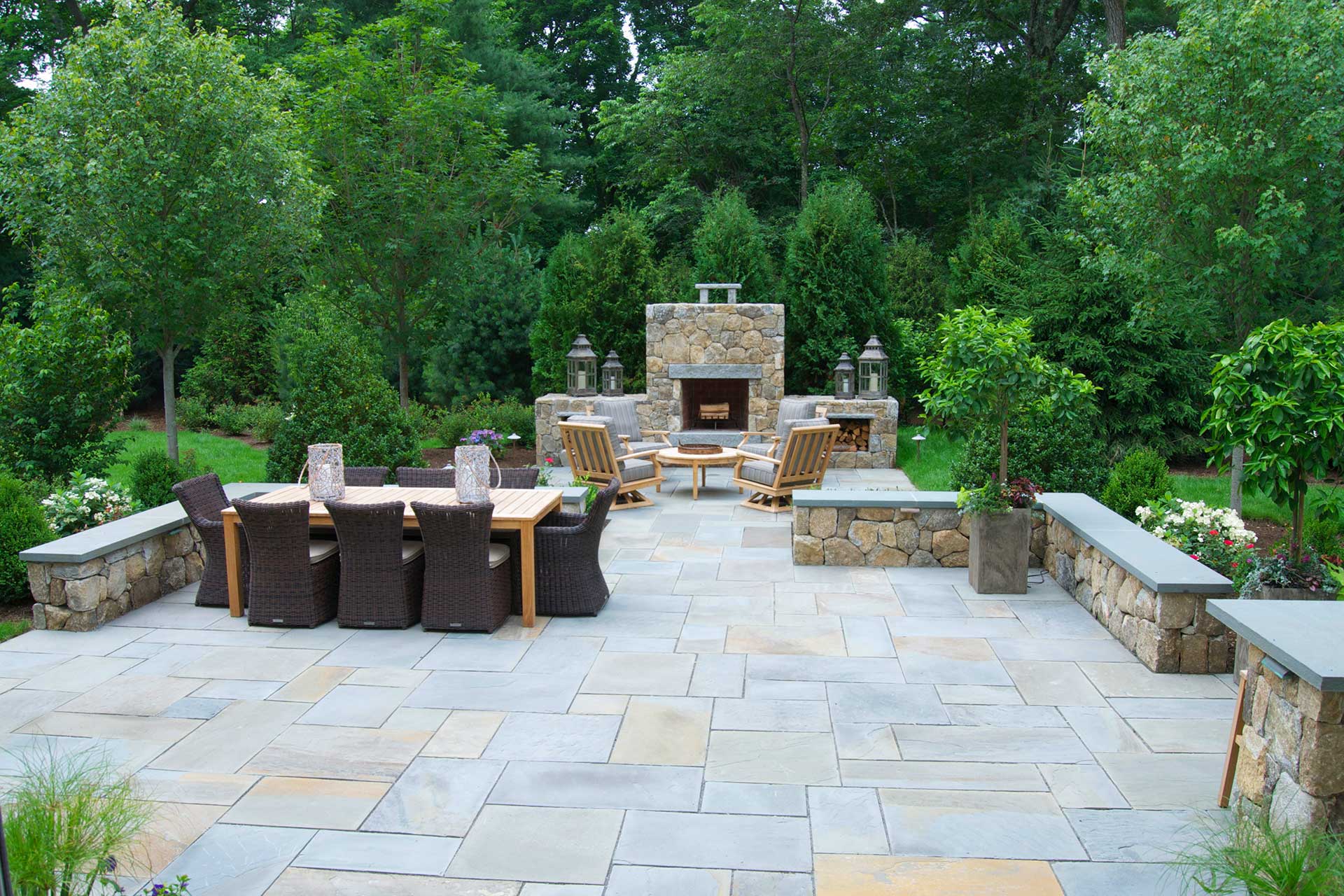
In towns such as Wellesley, Weston, Newton, Brookline, Needham, Concord, Sudbury, Wayland, Lincoln, Carlisle, Cambridge, and Belmont, homes are often close enough to neighboring properties that thoughtful screening becomes part of the overall landscape plan. Even larger properties can have exposed pool areas, arrival courts, side yards, or terraces that need a more comfortable sense of enclosure.
Arborvitae are often chosen because they offer several practical advantages:
- Year-round screening: Their evergreen foliage provides structure and privacy through all four seasons.
- Relatively narrow forms: Many varieties fit where broader evergreens would take up too much space.
- Soft texture: Arborvitae have a refined, green appearance that works with both traditional and more contemporary homes.
- Design flexibility: They can be used as hedges, screens, backdrops, accents, and structural planting.
- Faster results than many alternatives: Some varieties grow quickly when properly planted and cared for.
For many homeowners, arborvitae are attractive because they offer privacy without the visual weight of a solid fence. They can make a pool area feel more secluded, soften the edge of a driveway, define a garden room, or give a patio a more finished backdrop.
That said, popularity does not make them foolproof. Arborvitae need the right site conditions and a long-term plan.
How Arborvitae Are Best Used in Landscape Design
The strongest arborvitae plantings are rarely just rows of identical trees. In more thoughtful arborvitae landscape design, they are used as one part of a larger composition. They may provide the evergreen structure, but the surrounding layers, grades, hardscape, lighting, and seasonal planting determine how the space actually feels.
Privacy Screening and Property Lines
Arborvitae are often used as privacy screens along property lines, especially where homeowners want to soften views of neighboring homes, driveways, roads, utility areas, pool equipment, or service zones.
This is one of their best uses, but it requires restraint. Planting arborvitae too close together for instant privacy is a common mistake. The screen may look full quickly, but overcrowding can limit airflow, increase stress, and create long-term thinning. Planting too close to a property line can also create future maintenance issues for both the homeowner and the neighbor.
A well-planned arborvitae privacy screen should consider:
- Mature height and width of the selected variety
- Distance from the property line, driveway, fence, pool enclosure, or walkway
- Access for pruning and seasonal maintenance
- Views from both inside and outside the home
- Neighboring trees, shade, ledge, slopes and erosion control, and drainage
- Deer pressure and winter exposure
For a more natural effect, arborvitae can also be staggered or mixed with other evergreens and shrubs. This approach is often more attractive than a single flat green wall, especially on larger properties or homes with mature architecture.
Ask an Expert: Why Are My Arborvitae Turning Brown, and Can They Be Saved?
Foundation Planting, Entries, and Garden Structure
Arborvitae can work near homes, but they need to be used carefully. A small arborvitae planted near an entry or foundation may look perfectly scaled at the nursery, then become too tall or too wide over time.
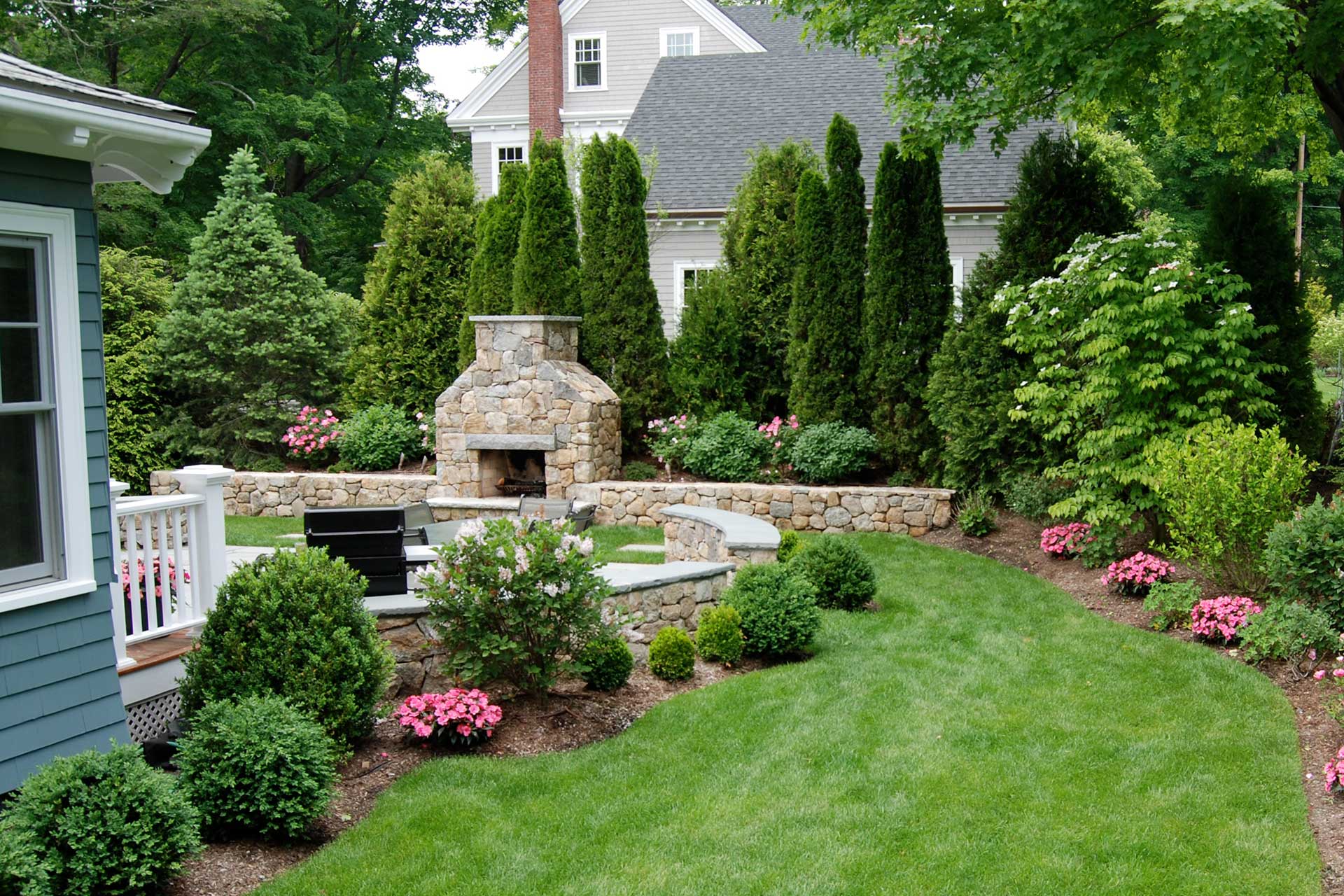
Near the house, arborvitae are usually best used for vertical emphasis, corner structure, or screening where there is enough room for the mature plant. They should not block windows, crowd walkways, trap moisture against the home, or overwhelm architectural details.
In older Greater Boston homes, especially properties with stone walls, traditional entries, mature trees, and established gardens, arborvitae can provide year-round structure. The key is matching the plant’s scale and form to the architecture. A formal row may suit one property, while a looser evergreen grouping may feel more appropriate on another.
Pool, Patio, and Outdoor Living Areas
Arborvitae are frequently used around pools, patios, terraces, and outdoor kitchens because they create privacy while maintaining a green, garden-like feeling.
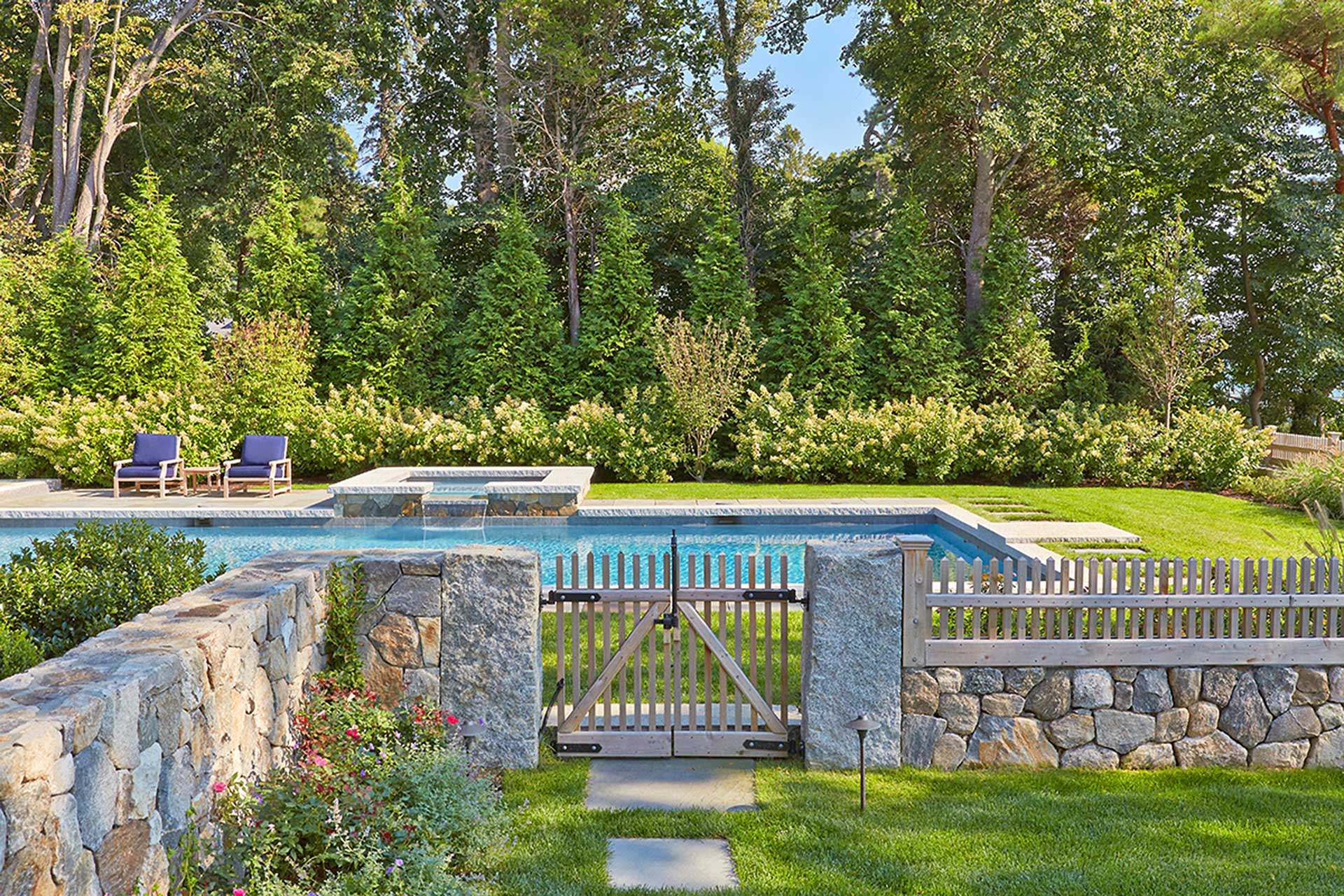
Around outdoor living spaces, arborvitae can:
- Screen views from neighboring homes
- Soften pool fencing or retaining walls
- Create a green backdrop for dining and seating areas
- Define the edge of an outdoor room
- Reduce the visual impact of service areas, utilities, or equipment
They should be placed with care around pools and hardscape. Too close to paving, and they may be exposed to reflected heat, restricted soil volume, or snow storage. Too close to a pool fence, and access for pruning becomes difficult. Too close to a patio, and the space may eventually feel cramped.
For related planning considerations, see our post on privacy trees for New England landscapes.
Related Blog: Creating Privacy with Trees and Hedges in Residential Landscapes
Popular Arborvitae Varieties and Where They Fit
There are many types of arborvitae, and the right choice depends on the property, space available, design goal, and maintenance expectations. Homeowners often hear names like Green Giant, Emerald Green, Techny, and North Pole, but the differences matter.
Green Giant Arborvitae
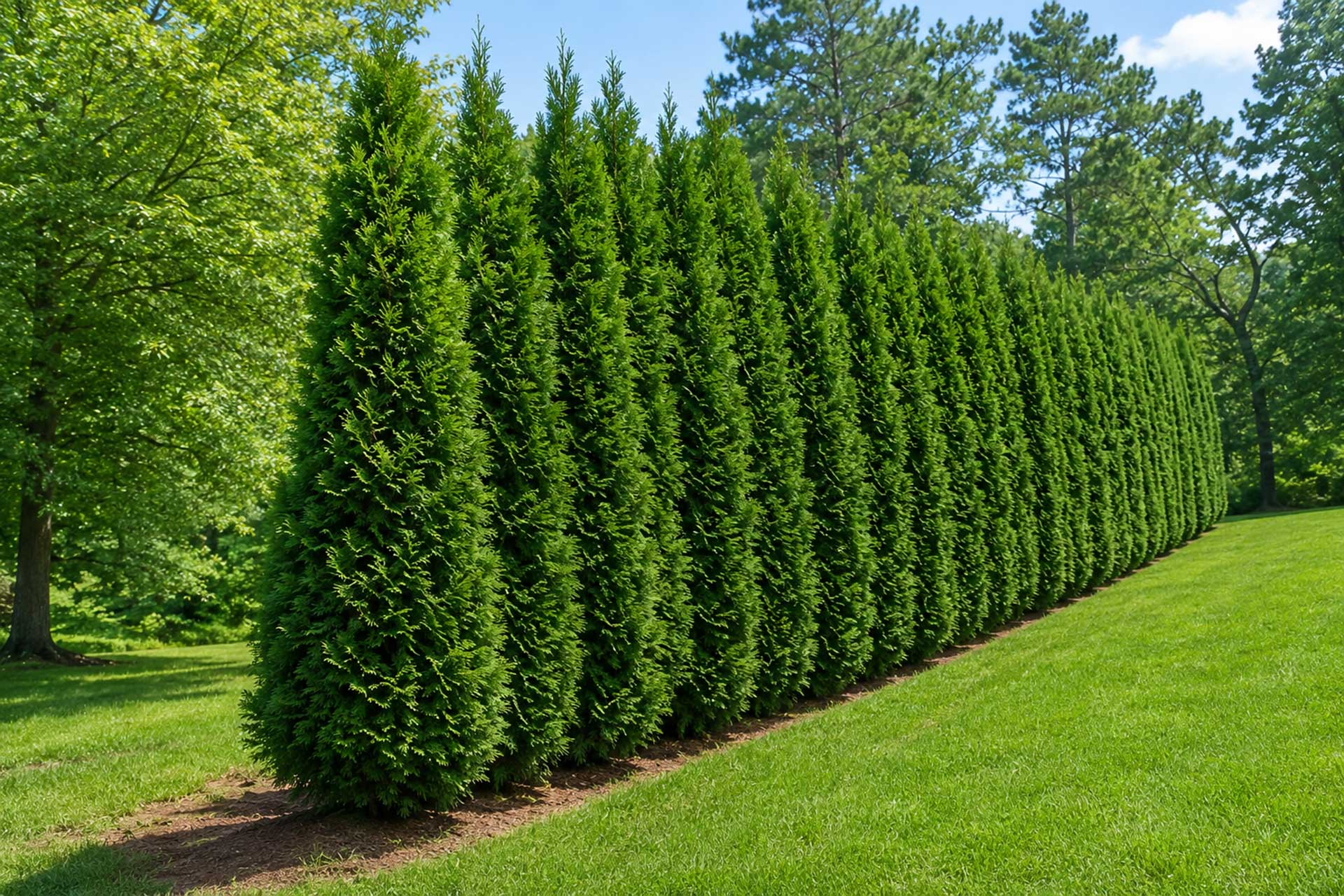
Green Giant arborvitae is one of the most popular choices for larger privacy screens. Missouri Botanical Garden describes Thuja ‘Green Giant’ as a fast-growing arborvitae hybrid that can reach 40 to 60 feet tall in the right conditions, with potential growth of up to 3 to 4 feet per year in a suitable environment. Missouri Botanical Garden
That growth rate is one reason Green Giant is so popular, but it is also why placement matters. A plant that seems appropriately sized when installed can become much larger than expected. Green Giant is often better suited to larger properties, deeper borders, long screening areas, or places where height is welcome.
- Large-scale privacy screening
- Evergreen backdrops on larger properties
- Screening along long property edges
- Softening views of neighboring homes or roads where there is adequate space
Potential concerns include mature size, overuse in narrow spaces, and the temptation to plant too tightly for instant screening.
Emerald Green Arborvitae
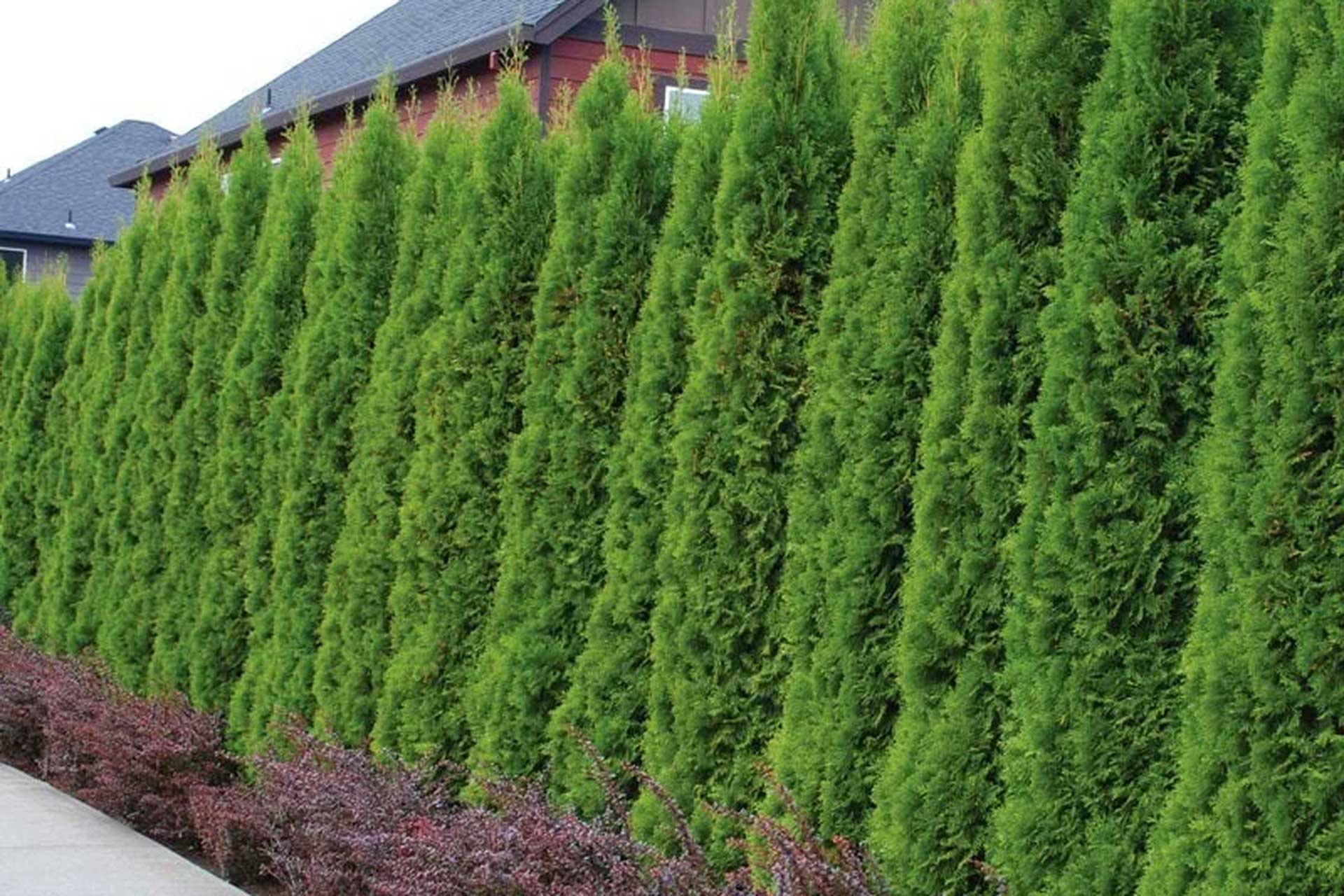
Emerald Green arborvitae, also known as Thuja occidentalis ‘Smaragd,’ is a narrower, more compact variety often used in residential landscapes. Missouri Botanical Garden lists this cultivar at approximately 12 to 14 feet tall. Missouri Botanical Garden
Emerald Green is often used where a tighter, more formal evergreen screen is desired. It can work well in smaller yards, side yards, entry gardens, and defined spaces where Green Giant would become too large.
Best uses may include:
- Narrow privacy screens
- Formal evergreen accents
- Smaller residential planting areas
- Garden structure near patios, entries, or walkways where scale allows
Potential concerns include slower growth compared with Green Giant, sensitivity to drought stress, and vulnerability to deer browsing.
American Arborvitae
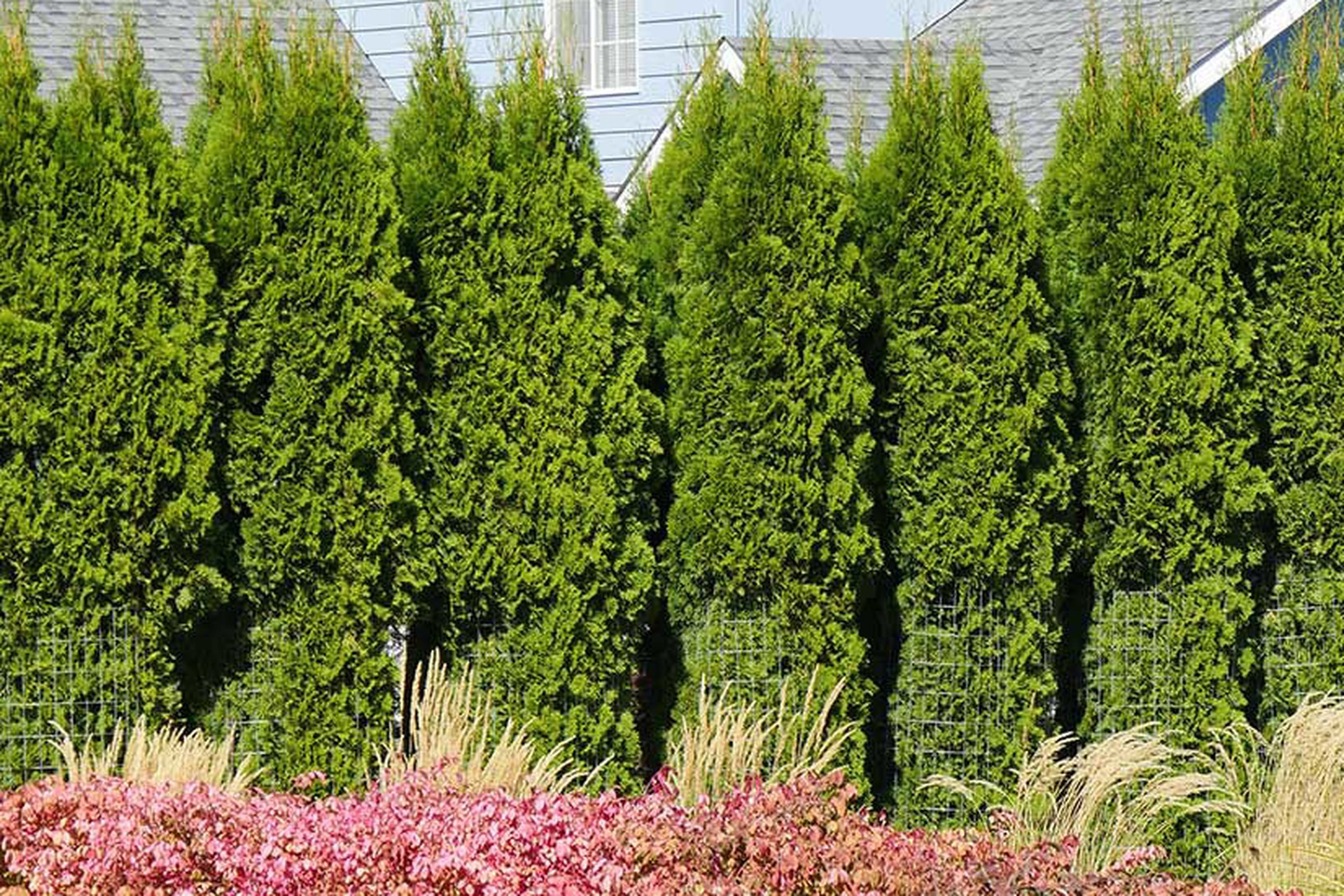
American arborvitae, Thuja occidentalis, is native to parts of North America and has many cultivated forms. It is often used in hedges, screens, and residential planting. Depending on the cultivar, size and habit can vary considerably.
American arborvitae can be useful in New England landscapes, but the exact selection matters. Some forms are better for narrow hedging, while others are better as larger evergreen structure. In areas with high deer pressure, protection or alternative plant choices may be needed.
Techny Arborvitae
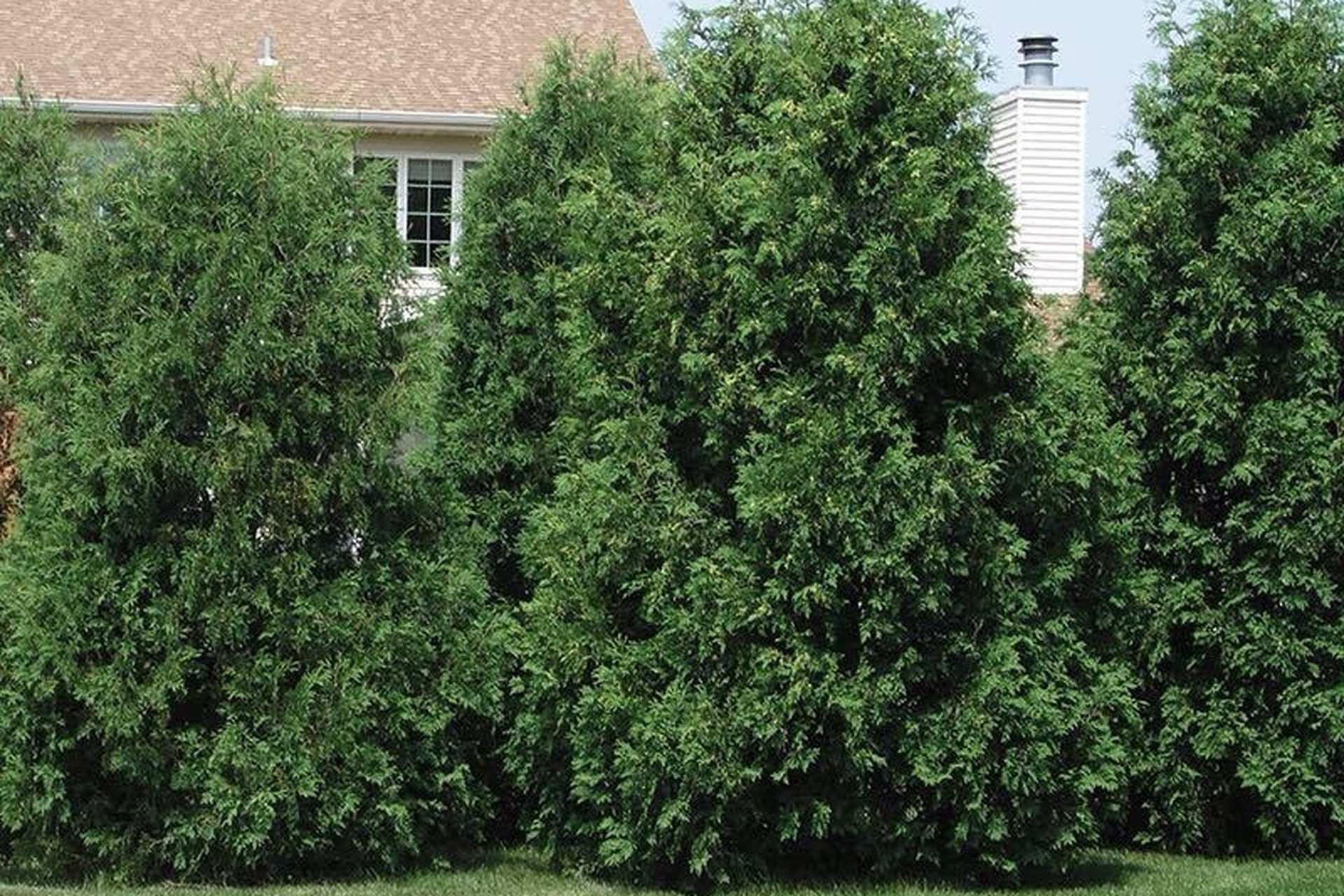
Techny arborvitae is often valued for its dense, dark green foliage and somewhat broader habit. It can be used for hedging and screening where a fuller evergreen mass is desired.
It may be a good fit when homeowners want a more substantial hedge, but it still needs adequate room to mature. It should not be treated as a small, tight foundation shrub unless the design and maintenance plan allow for it.
North Pole Arborvitae
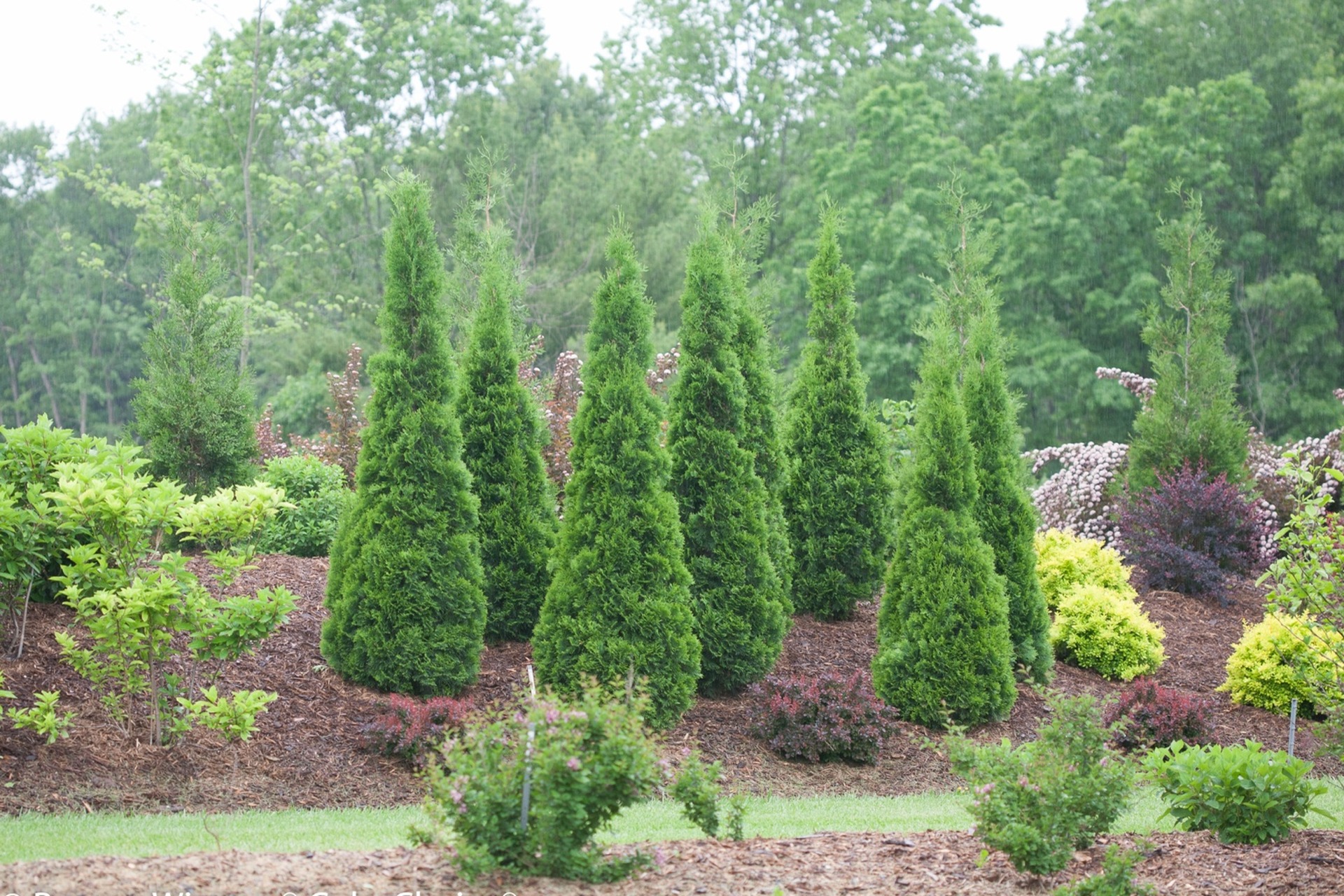
North Pole arborvitae is a narrower selection often used where vertical structure is needed without excessive width. It can be helpful in smaller spaces, entry areas, or narrow screening situations.
Like other arborvitae, it should be chosen for the actual site, not simply because it is narrow. Soil moisture, sun, wind exposure, and deer pressure still matter.
Related Blog: Best Privacy Trees for Massachusetts: Top Options That Thrive in Boston’s Climate
Arborvitae Pros and Cons for Homeowners
Arborvitae can be an excellent landscape plant, but they come with tradeoffs. A clear view of both sides helps homeowners make better decisions before investing in a long row of evergreens.
| Pros | Cons |
|---|---|
| Provides year-round privacy and evergreen structure. | Often browsed by deer, especially in winter. |
| Many varieties have a narrow habit that works well in residential spaces. | Can brown or thin when stressed by drought, wind, salt, poor drainage, or winter exposure. |
| Useful for screening patios, pools, driveways, utility areas, and neighboring views. | Overplanting in straight rows can create a flat, repetitive look. |
| Some varieties grow quickly and provide privacy faster than slower-growing evergreens. | Fast-growing varieties can outgrow tight spaces if mature size is ignored. |
| Soft texture works well with many New England home styles. | Severe pruning into old wood can leave permanent bare areas. |
| Can be part of a low-maintenance planting plan when sited correctly. | New plantings need careful watering and establishment care. |
The best decision is not whether arborvitae are “good” or “bad.” The better question is whether they are appropriate for the property, the intended design, and the level of care the homeowner expects.
“Arborvitae are often selected because they provide privacy quickly, but the long-term success of the planting depends on decisions made before they go in the ground. Spacing, soil, watering, deer pressure, and mature size all need to be considered if the screen is expected to look healthy and intentional years later.”
– Joanna McCoy, Senior Landscape Designer, a Blade of Grass
Placement, Spacing, and Design Mistakes to Avoid
Many arborvitae problems begin at installation. A plant that is placed too close to a driveway, too close to a fence, or too tightly with its neighbors may look fine for a year or two, then begin to show stress as it grows.
Planting Too Close Together
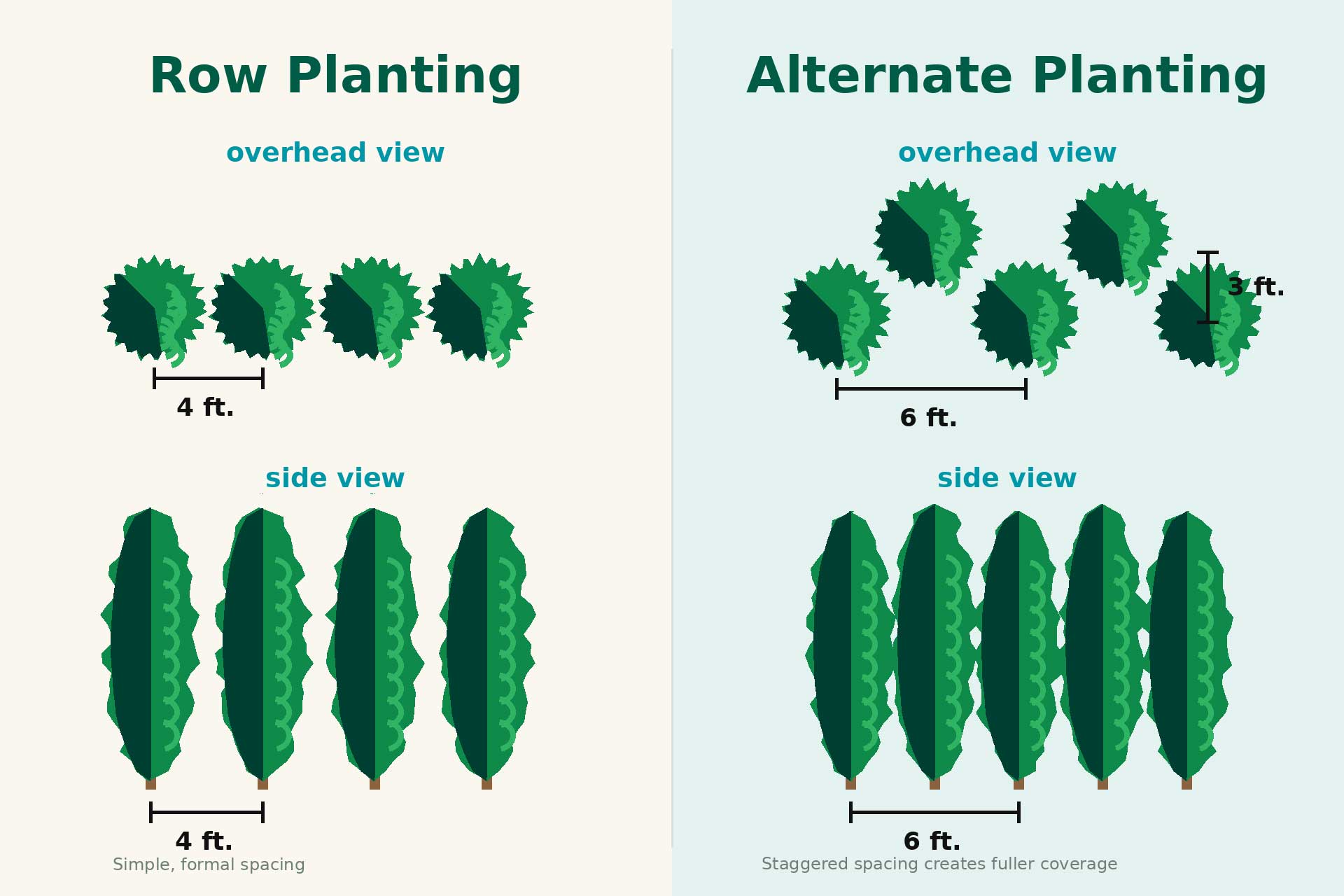
Homeowners often want immediate privacy, which can lead to tight spacing. While closer spacing may create a fuller screen sooner, it can also limit airflow, increase competition for water and nutrients, and make pruning more difficult.
Proper arborvitae spacing depends on the variety, mature width, and design intent. A hedge may be planted differently than a mixed evergreen border. A formal screen may use tighter spacing than a layered planting. The important point is to design for mature size, not just the installation-day appearance.
Planting Too Close to Structures and Hardscape
Arborvitae need room for both roots and foliage. Planting too close to a house, walk, driveway, pool fence, retaining wall, or terrace can create long-term problems. The plant may crowd the space, interfere with access, or require constant pruning to stay in bounds.
In New England, snow storage should also be part of placement. Arborvitae planted along driveways or walks may be damaged by plowed snow, road salt, or winter burn. They can still work in these areas, but spacing and site exposure need to be considered.
Using One Long, Uninterrupted Row
A straight row of arborvitae can be appropriate in some settings, especially where the design goal is a formal screen. But in many residential landscapes, a single row can look rigid and one-dimensional.
A more refined approach may combine arborvitae with:
- Other evergreens, such as holly, spruce, pine, or yew where appropriate
- Flowering shrubs for seasonal interest
- Ornamental grasses for texture and movement
- Small trees to create height variation
- Perennials and groundcovers to soften the base
This layered approach can make privacy planting feel more intentional and less like a utility screen.
Ignoring Soil, Drainage, and Irrigation
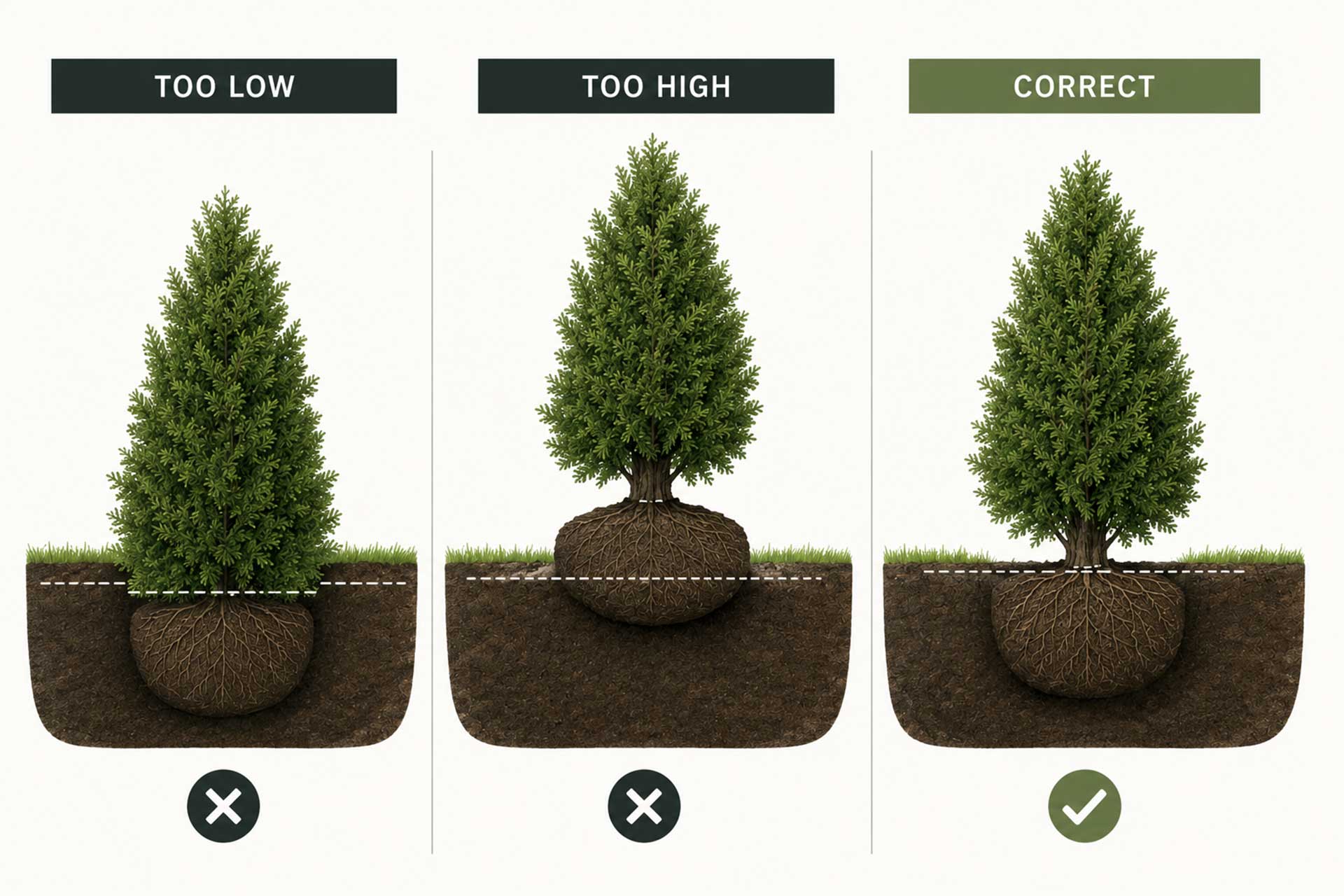
Arborvitae generally prefer moist, well-drained soil. They do not perform well when planted into compacted, poorly drained, or extremely dry conditions without proper preparation and care.
On many Greater Boston and MetroWest properties, soil conditions vary widely. Older homes may have compacted soil near foundations, construction debris, ledge, grade changes, or areas where drainage has been altered over time. Cape Cod properties may bring sandy soils, wind exposure, and salt influence. All of these factors should influence plant selection and installation.
If a privacy planting is part of a larger landscape improvement, it is worth evaluating drainage, soil, irrigation, and grading before planting. For related planning, see our guidance on landscape drainage solutions in Massachusetts.
Care and Maintenance: What Arborvitae Need to Perform Well
Arborvitae are often described as low-maintenance, but low-maintenance does not mean no maintenance. They need proper watering during establishment, periodic monitoring, thoughtful pruning, and protection from predictable stressors.
Watering and Establishment
Newly planted arborvitae need consistent watering while their roots establish. The University of Minnesota Extension recommends that newly planted shrubs receive water equal to one-quarter to one-third of the container volume at each watering, and newly planted trees receive 1 to 1.5 gallons per inch of stem caliper. University of Minnesota Extension
That recommendation matters because many arborvitae fail not from the wrong plant choice, but from inconsistent watering in the first season or two. Evergreen plants continue to lose moisture through their foliage, so they should not enter winter stressed and dry.
As University of Minnesota Extension notes in its winter protection guidance, “Keep evergreens properly watered throughout the growing season and into the fall.” University of Minnesota Extension
For homeowners investing in new planting, irrigation planning can make a significant difference. Drip irrigation or properly designed supplemental watering can support establishment without encouraging shallow roots or wet foliage. For more on this topic, see our post on proper watering after a new landscape installation.
Mulching
Mulch helps moderate soil temperature, conserve moisture, and reduce competition from weeds. Around arborvitae, mulch should be applied in a clean, even layer over the root zone, but not piled against the trunk.
Avoid mulch volcanoes. Mulch packed against the base of the plant can hold moisture against the bark and create conditions for decline. A clean ring or continuous bed is usually better than isolated mounds around each plant.
Related Blog: Which Mulch Is Best for Your Landscape: Leaf, Bark and More
Pruning and Shaping
Arborvitae can be lightly pruned to maintain shape, remove damaged growth, or refine a hedge. The key is to avoid cutting too far into old wood. Many evergreens, including arborvitae, do not reliably push new growth from bare interior stems. Severe pruning can leave gaps that never fully recover.
A good maintenance plan should focus on:
- Light, regular shaping when needed
- Removing broken or damaged branches
- Maintaining the intended form without over-shearing
- Preserving access around the planting
- Monitoring for browning, pests, drought stress, and deer damage
Formal hedges require more frequent attention. Informal screens may require less pruning, but they still need periodic review.
Winter Burn, Browning, and Stress
Browning arborvitae are a common concern in New England. Some browning is seasonal and minor, but larger areas of discoloration may signal stress.
UMass Extension identifies winter desiccation injury as a common problem for landscape evergreens such as arborvitae and juniper. UMass Extension
Common causes of arborvitae browning include:
- Drought stress during the growing season
- Dry soil going into winter
- Winter wind and sun exposure
- Salt spray or deicing runoff near roads and driveways
- Poor drainage or saturated soil
- Planting too deeply
- Transplant shock
- Deer browsing
- Severe pruning into old wood
Because the symptoms can look similar, the cause is not always obvious. A thoughtful assessment should look at site conditions, watering history, exposure, soil, planting depth, and maintenance practices.
Deer and Arborvitae: What Homeowners Should Know
Deer are one of the biggest challenges with arborvitae in New England landscapes. In many areas, especially near wooded edges, conservation land, large lots, and quieter residential streets, arborvitae can be heavily browsed during winter.
The result is familiar: a green top with bare lower branches, often described as a “deer line.” Once the lower foliage is eaten repeatedly, the plant may not fully recover.
University of Minnesota Extension notes that deer-browsed branches, leaves, and twigs often have a rough, torn, or shredded appearance because deer grasp and tear plant material. University of Minnesota Extension
Are Arborvitae Deer Resistant?
In most practical residential situations, arborvitae should not be considered reliably deer resistant. Some varieties may be browsed less than others, and deer pressure varies by neighborhood, winter severity, and available food sources. But in high-pressure areas, arborvitae are vulnerable.
This is especially important for homeowners in towns where deer are common, including many parts of MetroWest, Concord, Lincoln, Carlisle, Dover, Weston, Sudbury, and similar communities.
Design Responses to Deer Pressure
If deer pressure is high, the design should respond from the beginning. Options may include:
- Use protection during establishment. Fencing, netting, or temporary barriers may be needed, especially in winter.
- Consider repellents as part of maintenance. Repellents can help, but they require reapplication and should not be the only strategy.
- Mix plant species. A diverse screen may be more resilient than a single-species arborvitae hedge.
- Use deer-resistant alternatives where appropriate. In some locations, other evergreens or mixed plantings may be a better choice.
- Place arborvitae where access is less inviting. Fences, grade changes, and interior courtyard locations may reduce browsing pressure.
For a broader look at planting in deer-prone landscapes, see our post on deer-resistant landscaping for Boston-area homes.
When Arborvitae Are the Right Choice and When They Are Not
Arborvitae are a strong choice when the site, design goal, and maintenance plan align. They are not ideal when the plant is being asked to solve every privacy issue without enough room, water, protection, or design support.
Arborvitae May Be a Good Fit When:
- The homeowner wants year-round privacy or screening.
- The site has adequate sun and well-drained soil.
- There is enough room for the selected variety to mature.
- Deer pressure is low or can be managed.
- The planting is part of a larger design, not just a quick row of trees.
- Irrigation or consistent watering can support establishment.
Arborvitae May Not Be the Best Fit When:
- Deer pressure is severe and protection is not realistic.
- The space is too narrow for the selected variety.
- The soil is poorly drained or heavily compacted.
- The planting area is exposed to salt spray, plowed snow, or harsh winter wind.
- The homeowner wants a no-care privacy solution.
- The design would look better with a layered mix of plants.
A thoughtful landscape plan may still include arborvitae, but it may use them more selectively. For example, a property might use Green Giant arborvitae along a deeper rear boundary, Emerald Green arborvitae near a side yard, and a mix of holly, ornamental grasses, flowering shrubs, and perennials closer to the patio.
Better Design Often Means Mixing Arborvitae With Other Plants
Arborvitae are useful because they provide evergreen structure, but too much of one plant can make a landscape feel flat. The most refined landscapes usually combine screening with texture, depth, seasonal interest, and careful transitions between spaces.
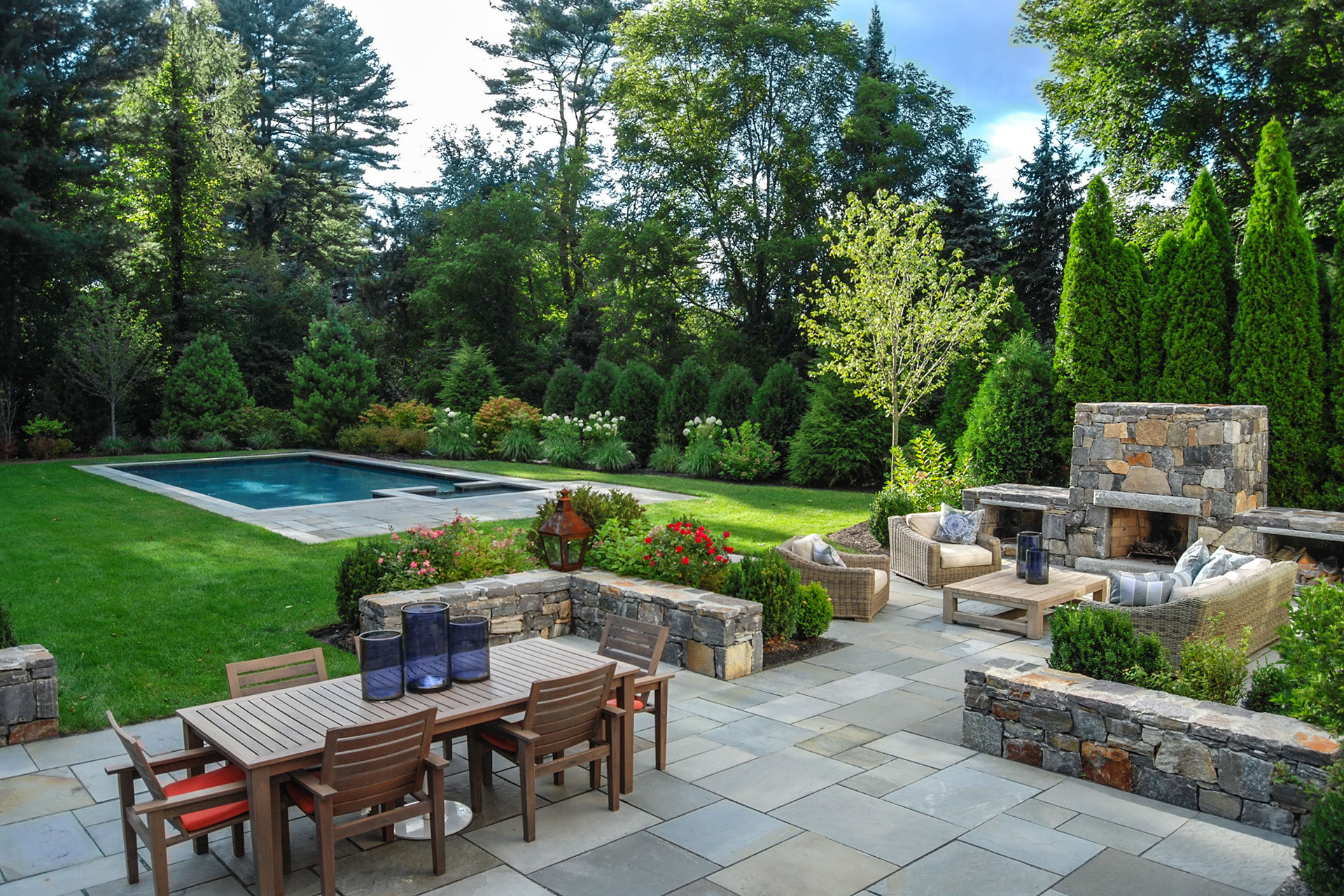
A mixed privacy planting might include arborvitae as the evergreen framework, then add other plants to create a more natural composition. This can help soften the base of the screen, provide flowers or foliage color, support pollinators, and reduce the risk that one pest, disease, weather event, or deer pattern affects the entire planting.
Layered planting can be especially valuable around patios, terraces, pools, and outdoor rooms. Arborvitae can create the privacy, while other plants make the area feel designed rather than simply screened.
For homeowners interested in a more nuanced planting approach, our post on low-maintenance garden design explores how structure, plant selection, and long-term care work together.
Arborvitae and Long-Term Property Maintenance
One of the most important questions is not how arborvitae look when they are planted, but how they will look five, ten, or fifteen years later.
A successful arborvitae planting should be reviewed as part of regular landscape maintenance. That includes checking for browning, deer damage, irrigation coverage, crowding, pruning needs, snow damage, and plant health.
On higher-end residential properties, arborvitae may be part of a larger maintenance plan that includes:
- Seasonal pruning and shaping
- Irrigation startup, monitoring, and adjustments
- Mulch and bed maintenance
- Deer protection strategies
- Replacement planning if plants decline or outgrow their space
- Monitoring for winter damage and drought stress
- Refreshing companion planting as the landscape matures
This is where design and maintenance overlap. A privacy screen is not simply installed and forgotten. It becomes part of the living structure of the property.
Frequently Asked Questions About Arborvitae
Q: Are arborvitae good for privacy screening in Massachusetts?
A: Yes, arborvitae can be very effective for privacy screening in Massachusetts when the right variety is selected and the planting has enough room, sunlight, water, and protection from deer. They are commonly used along property lines, patios, pools, driveways, and side yards.
Q: How far apart should arborvitae be planted?
A: Spacing depends on the variety, mature width, and design goal. A formal hedge may use closer spacing than a layered screen, but planting too tightly can create long-term stress. It is better to design for the mature size of the plant rather than only the first-year appearance.
Q: Do deer eat arborvitae?
A: Yes, deer often browse arborvitae, especially in winter. Damage is usually most visible on the lower portion of the plant. In areas with high deer pressure, homeowners should consider protection, repellents, mixed planting, or alternative evergreens.
Q: Why are my arborvitae turning brown?
A: Browning can be caused by drought stress, winter burn, dry soil going into winter, poor drainage, salt exposure, transplant shock, deer browsing, or pruning into old wood. The right solution depends on the cause, so it is important to evaluate the site and care history before replacing plants.
Q: Which arborvitae variety is best for a New England landscape?
A: There is no single best variety for every property. Green Giant can work well for larger screens, while Emerald Green and North Pole may fit narrower spaces. The best choice depends on mature size, sun, soil, drainage, deer pressure, design style, and maintenance expectations.
Arborvitae Work Best When They Are Part of a Thoughtful Plan
Arborvitae are popular because they solve real landscape problems. They can create privacy, soften property lines, frame outdoor rooms, screen neighboring views, and provide year-round structure. In many Greater Boston, MetroWest, and Cape Cod landscapes, they are a practical and attractive evergreen choice.
But they are not a shortcut around design. The best arborvitae landscape design considers variety, spacing, mature size, deer pressure, drainage, watering, winter exposure, and how the plants relate to the home and surrounding landscape. Used thoughtfully, arborvitae can be elegant and durable. Used carelessly, they can become crowded, damaged, or disappointing.
If your property needs more privacy, structure, or year-round planting, arborvitae may be part of the answer. Contact a Blade of Grass to discuss how thoughtful landscape design, planting, irrigation planning, and long-term property care can help your landscape feel established, resilient, and true to the home.
Learn More
For homeowners who want to better understand arborvitae selection, evergreen care, deer pressure, winter stress, and long-term landscape performance, these confirmed resources are helpful starting points:
- Missouri Botanical Garden: Thuja ‘Green Giant’
- University of Minnesota Extension: Watering Newly Planted Trees and Shrubs
- UMass Extension: Protecting Evergreens in the Winter
- University of Minnesota Extension: Protecting Trees and Shrubs in Winter
- Rutgers Cooperative Extension: Landscape Plants Rated by Deer Resistance