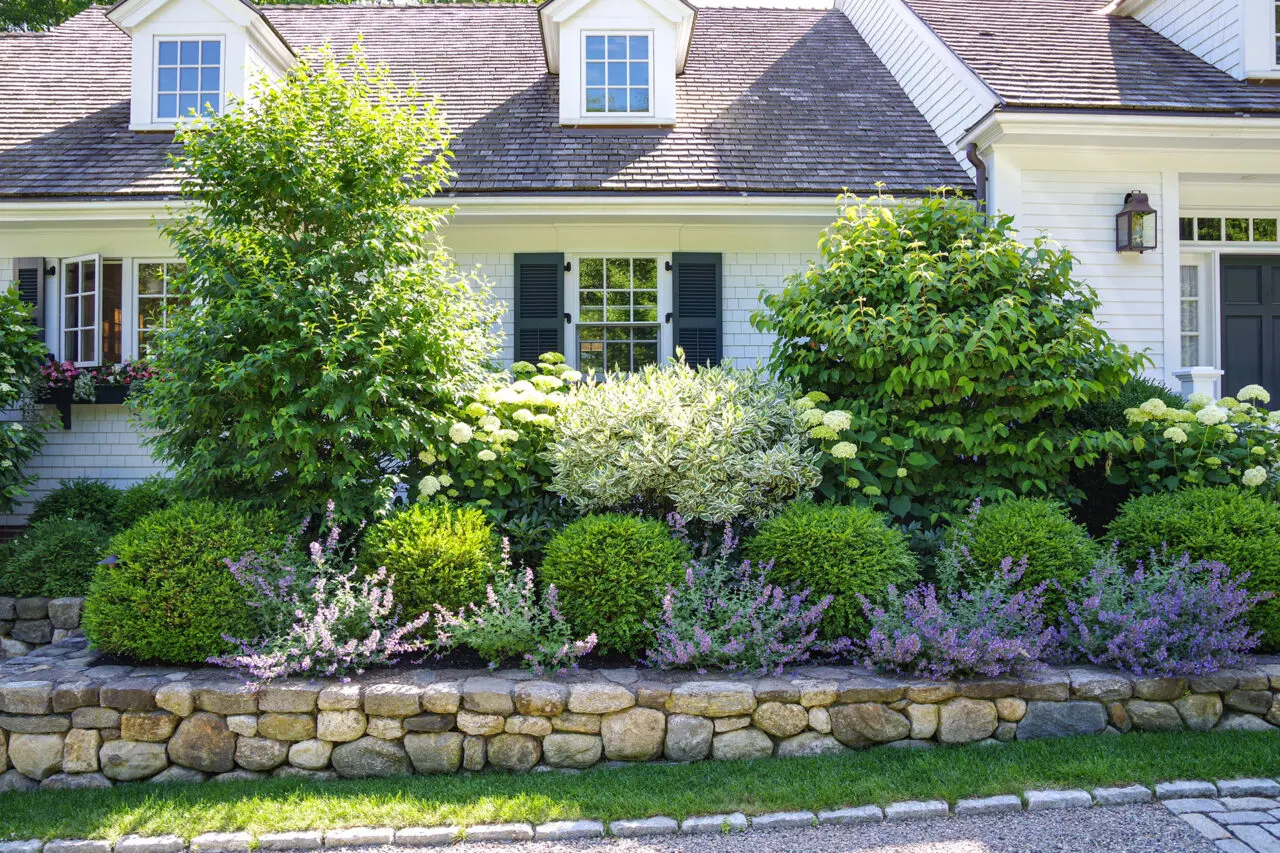
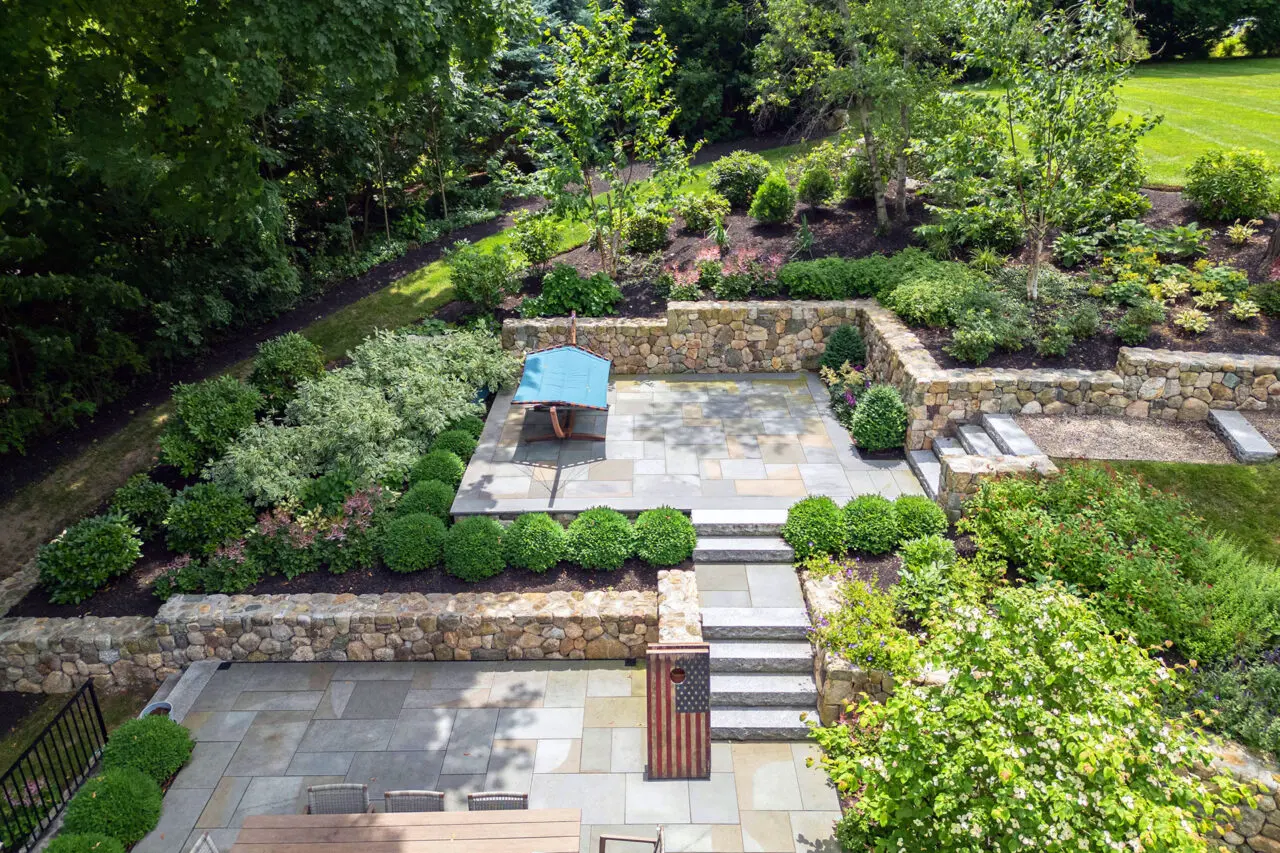
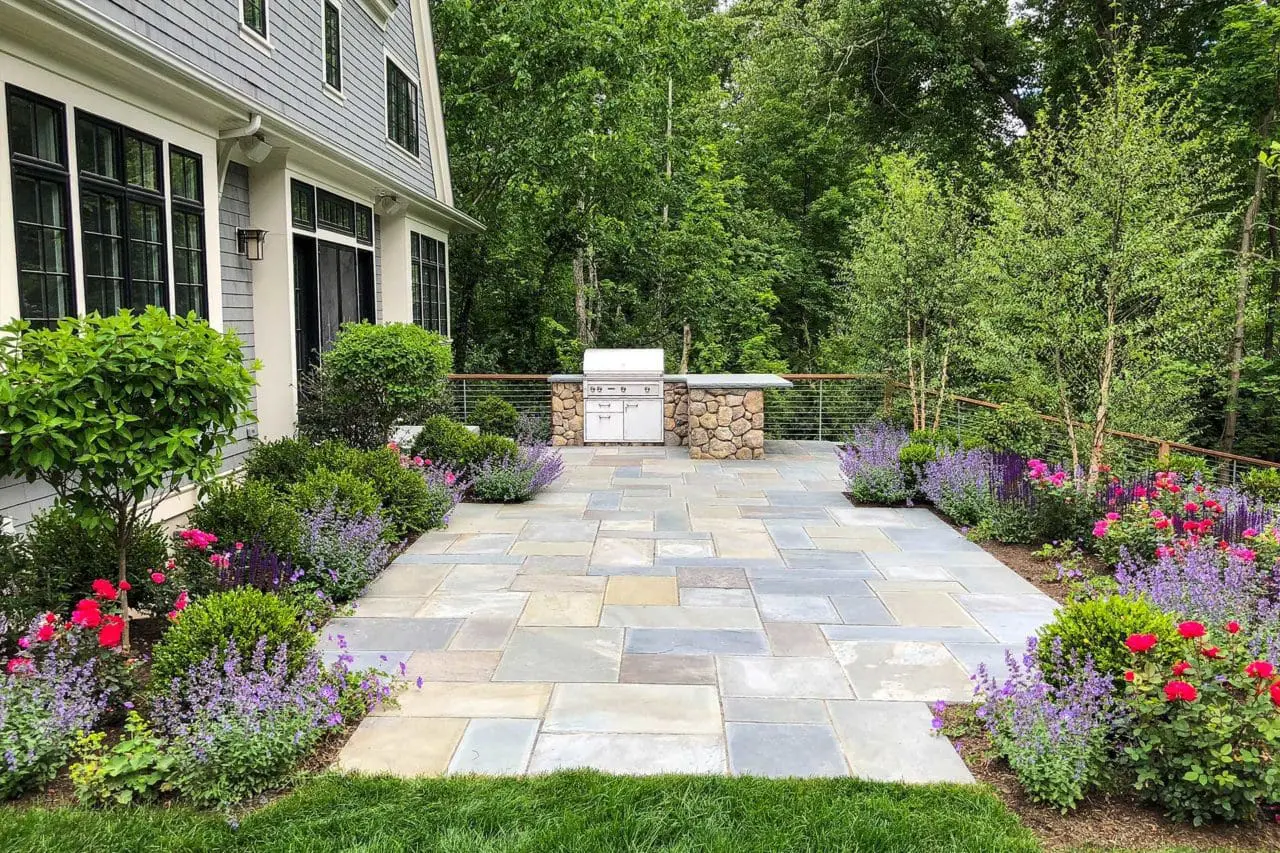
What Boston-Area Homeowners Are Asking For in 2026
When homeowners contact us about landscape design, they are rarely asking for just one thing.
They may start with a patio, a front walkway, a privacy concern, a tired foundation planting, or a backyard that never quite works. But once we walk the property, the conversation usually expands. How should guests arrive? Where does water go during a storm? Which views should be opened, softened, or screened? How will the landscape look in February, not just June? How much maintenance is realistic? What should happen first, and what can wait?
That is why the most popular landscape design projects for Boston-area homes are not simply the trendiest features. They are the projects that improve how a property looks, functions, and ages.
In Greater Boston, we see strong interest in outdoor living spaces, refined front entries, layered planting, privacy solutions, lighting, drainage improvements, and long-term master planning. These projects are especially common for established homes in Boston, Brookline, Newton, Wellesley, Weston, Concord, Lincoln, Dover, Cambridge, and surrounding communities where properties often have mature trees, older grading, tight lot lines, historic architecture, and high expectations for year-round appearance.
There is also a practical reason homeowners continue to invest in the landscape. The National Association of REALTORS® 2023 Remodeling Impact Report on outdoor features found that many outdoor projects deliver meaningful cost recovery, including landscape maintenance at 104%, standard lawn care service at 217%, and overall landscape upgrade at 100% of estimated value recovered.
That data supports what we see every day: a well-planned landscape is not only decorative. It can make a home easier to live in, more attractive from the street, more useful for entertaining, and more resilient over time.
Key Takeaways
- The most requested landscape design projects around Greater Boston often combine curb appeal, outdoor living, privacy, planting, lighting, drainage, and long-term maintenance.
- The strongest projects usually solve more than one problem. A new patio might also improve drainage, circulation, privacy, and evening use.
- Front entries, patios, terraces, planting design, privacy screening, and landscape lighting remain some of the most strategic improvements for established Boston-area homes.
- ROI is not only about resale value. It also includes daily use, lower maintenance, better four-season performance, and a property that feels more complete.
- The best results come from a cohesive landscape design plan rather than a series of disconnected upgrades.
Why Landscape Design in Greater Boston Is Different
Landscape design in Boston and the surrounding suburbs has a distinct set of conditions. Homeowners are often working with older properties, mature trees, ledge, slopes, drainage issues, historic neighborhood character, compact lots, or conservation considerations. Even when the goal sounds simple, the site may be complicated.
A patio in Wellesley may require careful grading to connect the kitchen, lawn, and garden. A Brookline courtyard may need privacy without making the space feel smaller. A Newton front yard may need to respect the architecture of a Colonial or Tudor while still feeling fresh. A Concord or Lincoln property may call for a more naturalistic planting style that fits wooded surroundings.
That is why we encourage homeowners to think about landscape design as a whole-property strategy. A front walk, planting bed, terrace, hedge, lighting plan, or irrigation system should not feel like an isolated improvement. Each piece should support the larger composition.
The American Society of Landscape Architects notes that native plants can offer aesthetic and ecological benefits for residential landscapes, including biodiversity, wildlife habitat, stormwater benefits, and lower irrigation needs once established. That kind of thinking matters in New England, where the best landscapes need to be attractive, durable, climate-aware, and maintainable.
1. Front Entry and Curb Appeal Improvements
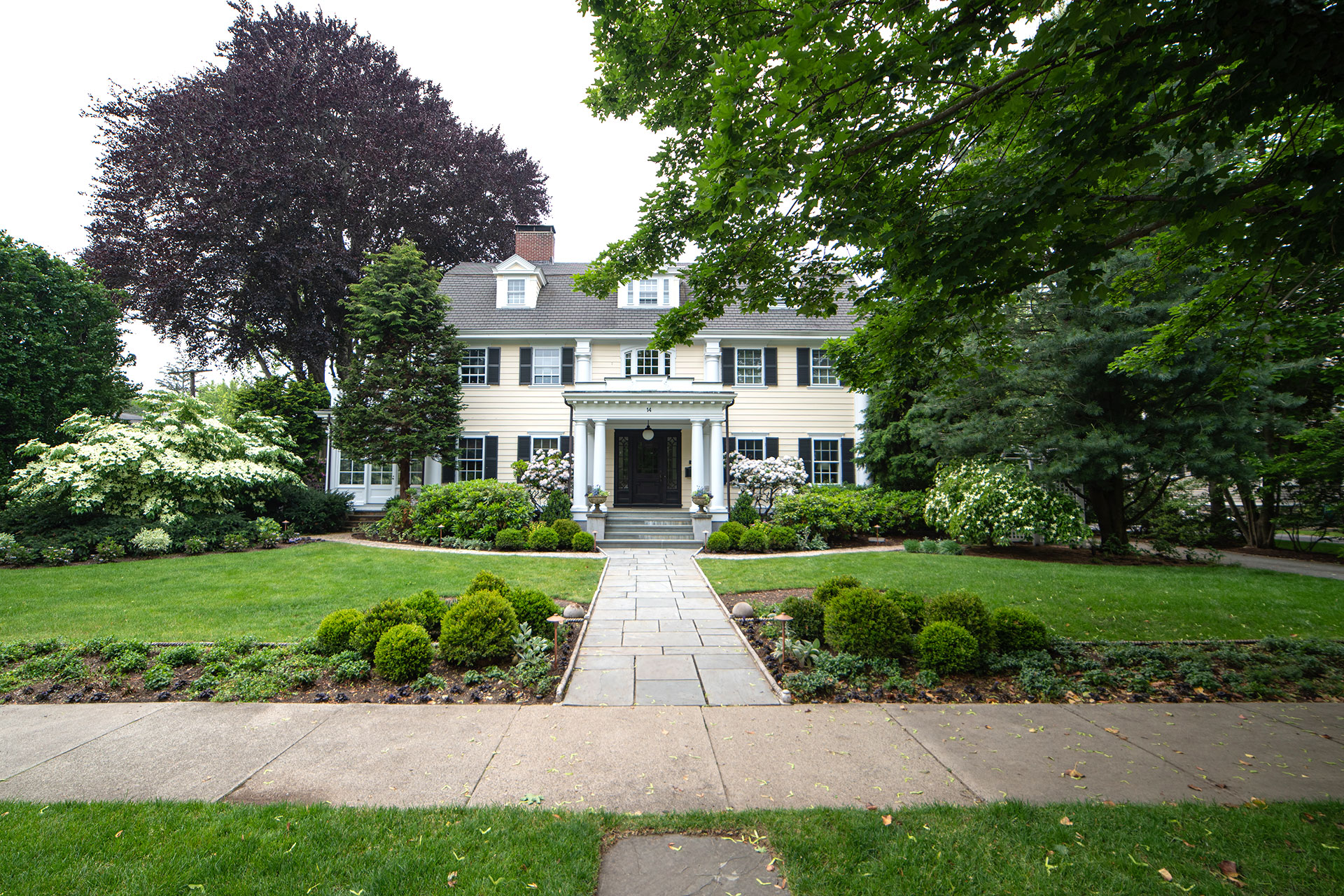
Front entry projects remain one of the most strategic landscape design investments for Boston-area homes. They affect the first impression of the property, but they also shape how people move through the space every day.
A strong front entry design may include:
- a new or reworked front walk
- granite or natural stone steps
- foundation planting
- ornamental trees
- seasonal containers
- path lighting
- improved grading
- better snow storage planning
- a more intentional arrival sequence
For many homes, especially Colonials, Victorians, Tudors, and older suburban properties, the front landscape has been updated in pieces over many years. A shrub was added here. A walkway was repaired there. A tree outgrew its original purpose. The result can feel visually busy, overgrown, or disconnected from the architecture.
From our perspective, the best front entry projects do three things. They clarify the route to the door, frame the house in a flattering way, and create a sense of care before anyone steps inside.
This is also where ROI and daily experience overlap. The more immediate return is often emotional. The house feels better to come home to. Guests know where to go. The architecture looks more settled. The property feels maintained and intentional.
For more ideas, see our guide to front yard landscaping ideas for Boston homes, our post on foundation landscaping ideas, and our article on landscape lighting ideas.
2. Patios, Terraces, and Outdoor Living Spaces
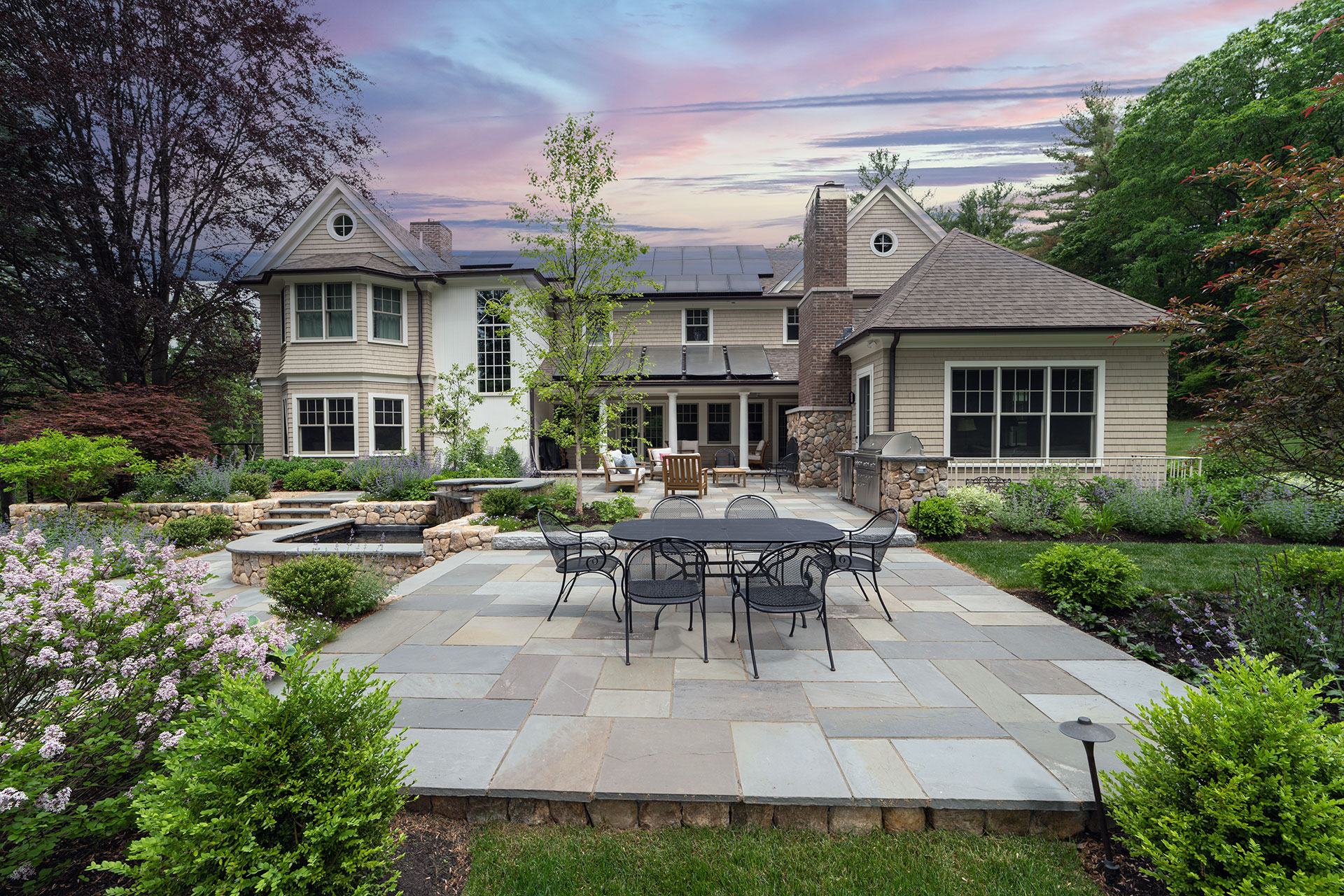
Outdoor living remains one of the most requested categories we see. In the Boston area, homeowners want spaces that feel comfortable and useful, but also integrated with the architecture and garden.
The most successful patios and terraces are not just flat areas with furniture. They are outdoor rooms with proportion, circulation, planting, shade, lighting, drainage, and a clear relationship to the house.
Common requests include:
- bluestone patios
- dining terraces
- fire features
- sitting areas
- poolside terraces
- outdoor kitchens
- garden rooms
- multi-level outdoor spaces
- transitions between house, lawn, and garden
Boston-area properties often need more planning than homeowners expect. A patio may require grading, retaining walls, drainage, steps, planting beds, lighting, and irrigation adjustments. On compact lots in Cambridge, Brookline, or Boston, every foot matters. On larger properties in Weston, Wellesley, Dover, or Concord, scale becomes the challenge. The patio has to feel generous without looking disconnected from the house or landscape.
This is where professional landscape design makes a real difference. The question is not only where the patio should go. It is how the outdoor space should function as part of the whole property.
For homeowners considering this type of project, explore our patios and terraces, landscape construction services, and our guide to outdoor kitchens in Massachusetts.
3. Privacy Planting, Hedges, and Screening
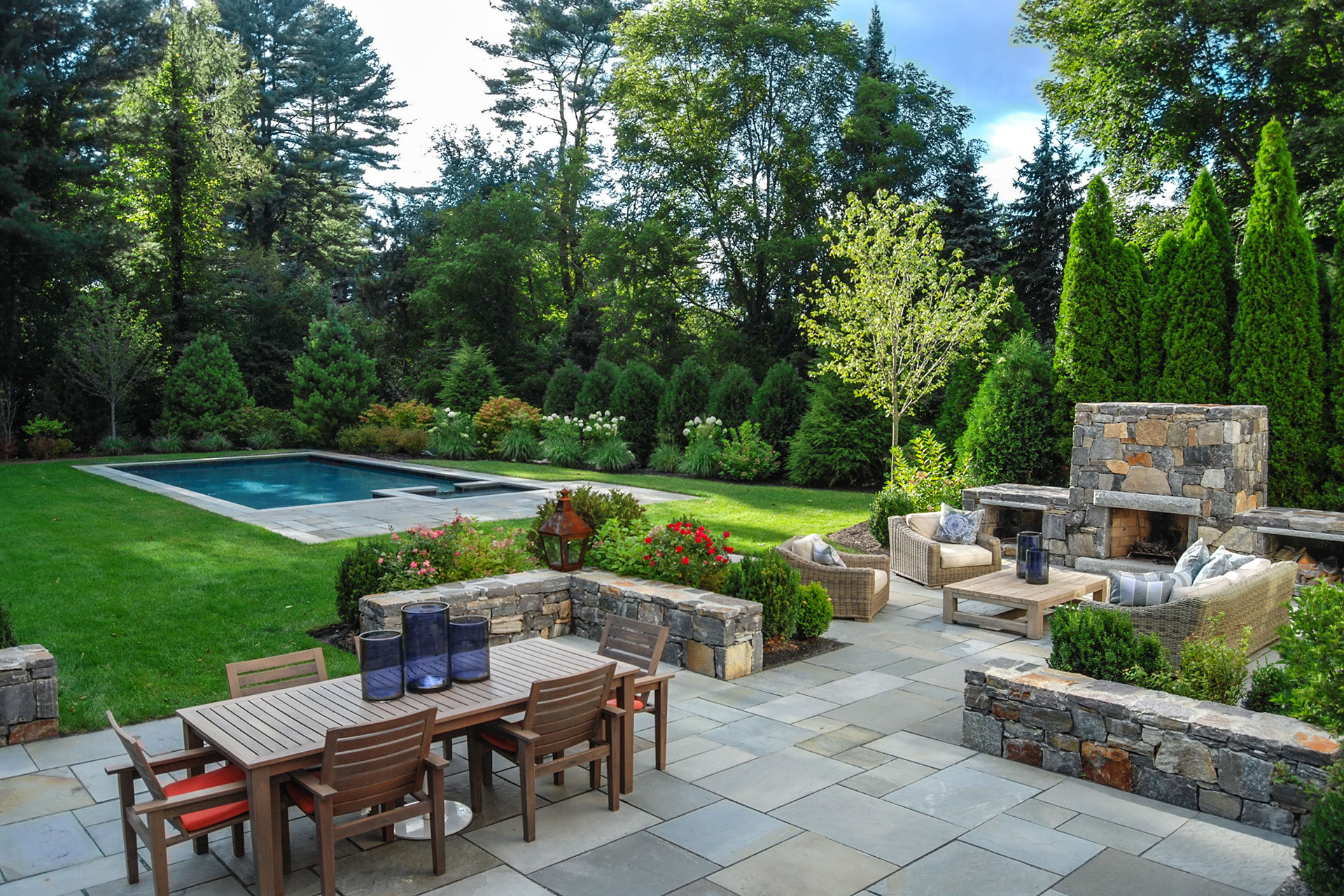
Privacy is one of the most common reasons homeowners reach out for landscape design. It comes up in dense neighborhoods, near patios and pools, along driveways, and around properties where neighboring homes feel too visible.
The request is often phrased simply: “We want more privacy.”
The design answer is rarely simple.
A row of arborvitae may work in some places, but it is not always the best solution. In Greater Boston, privacy planting has to account for deer pressure, shade, mature tree roots, snow load, drainage, available width, sight lines, and the architecture of the house.
The strongest privacy designs often use layers:
- evergreen structure for year-round screening
- deciduous shrubs for seasonal texture and bloom
- ornamental trees to interrupt upper-level views
- fencing or walls where planting alone is not enough
- underplanting to soften the base
- lighting to make the space feel intentional at night
This kind of project is especially common in Brookline, Newton, Cambridge, Wellesley, and other established neighborhoods where outdoor living areas may sit close to neighboring properties. But we also see it on larger lots where homeowners want to define spaces within the property, such as pool areas, terraces, kitchen gardens, or guest parking zones.
Privacy planting is one of the clearest examples of why landscape design and landscape maintenance need to work together. A hedge is not finished the day it is planted. It needs establishment care, pruning, monitoring, and long-term stewardship. Without that, the investment can quickly become uneven, overgrown, or thin.
For a deeper look, read our guide to creating privacy with trees and hedges and our article on layered planting.
4. Planting Design and Four-Season Gardens
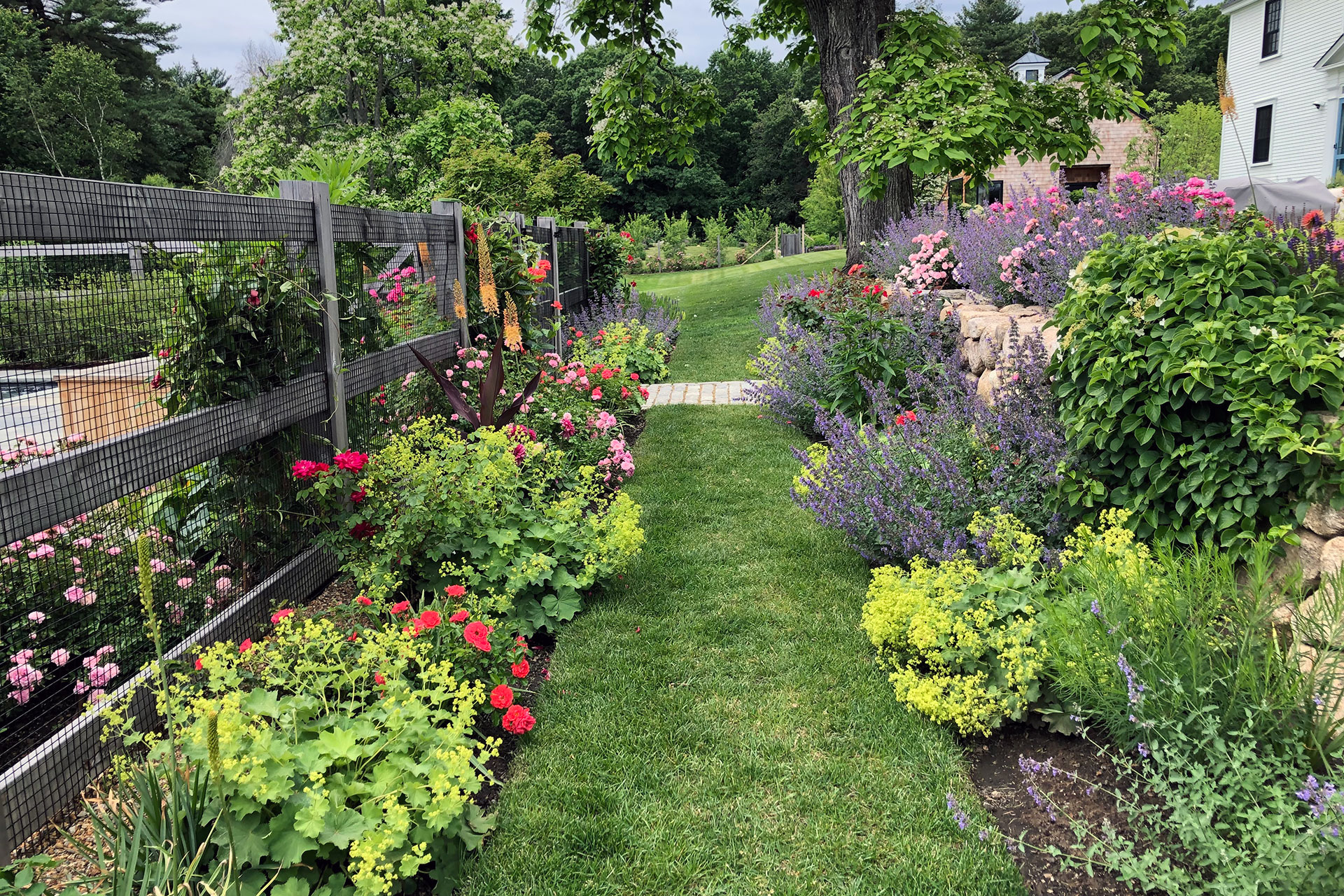
Planting design is one of the places where homeowners often underestimate the value of professional planning.
Many people start with plant preferences. They know they like hydrangeas, boxwood, grasses, flowering trees, or native plants. But a successful planting plan starts with the site, not the wish list.
We look at sun, shade, soil, moisture, root competition, deer pressure, architecture, circulation, maintenance goals, and the way the property should feel throughout the year. A planting that looks good for three weeks in June is not enough for a high-visibility Boston-area home.
Strong planting design considers:
- spring bloom
- summer texture
- fall color
- winter structure
- evergreen massing
- shade tolerance
- drought tolerance
- deer resistance
- scale at maturity
- maintenance needs
This is where many properties can become more refined without needing a full reconstruction. A tired foundation bed, exposed patio edge, bare slope, or overly formal hedge can often be reworked into something more layered and durable.
We also see growing interest in planting that is beautiful and ecologically useful. For our clients, the goal is not usually to make a landscape look wild or unmanaged. It is to create plantings that feel composed, appropriate to the property, and better adapted to New England conditions.
Related resources include our posts on layered planting, native ground covers for shade, pollinator garden design, and our seasonal planting services.
5. Drainage, Grading, and Sloped-Yard Solutions
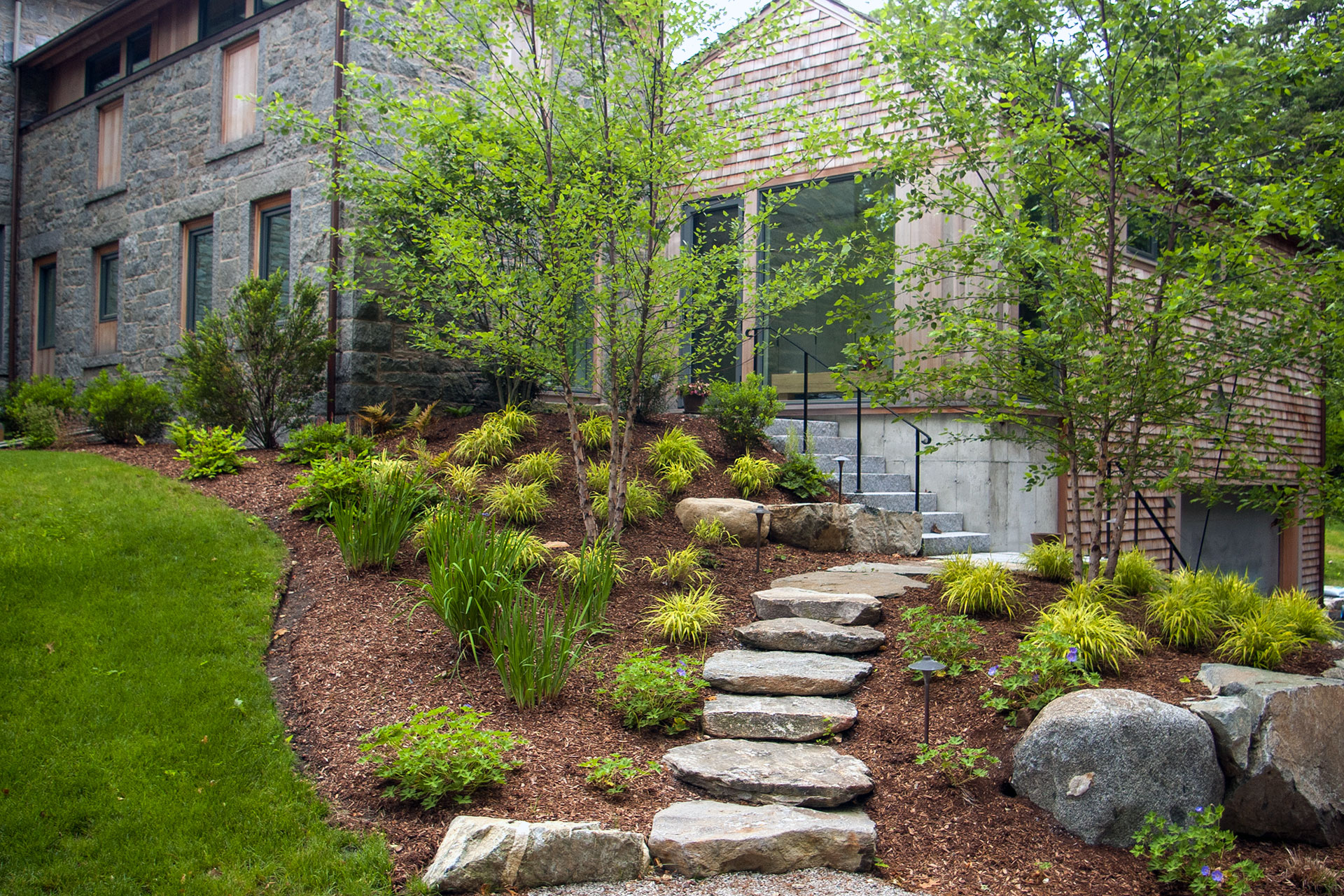
Drainage is not always the project homeowners are most excited to talk about, but it is often one of the most important.
In Boston-area landscape design, water shapes everything. It affects lawns, patios, plant health, walkways, walls, basements, slopes, and long-term maintenance. A beautiful planting plan will struggle if the site is too wet, too compacted, or poorly graded. A patio can become frustrating if water collects along the house or freezes in the wrong place.
Common drainage and grading issues include:
- standing water in lawns
- water collecting near foundations
- erosion on slopes
- failing turf in compacted areas
- wet planting beds
- runoff from driveways or roofs
- poorly drained patios
- frost heave or shifting stonework
We see these issues often on older properties where grading has changed over time. Additions, patios, driveways, walkways, neighboring construction, and mature trees can all alter how water moves through a site.
The best time to address drainage is before investing heavily in visible improvements. That does not mean every property needs a major drainage system. It means the landscape design process should account for water from the start.
This is an important SEO opportunity because homeowners often search for drainage solutions separately from landscape design. By explaining drainage as part of a comprehensive design plan, the post can support both informational searches and higher-intent service searches.
For more on this topic, read our guides to landscape drainage solutions in Massachusetts, professional landscape drainage, and sloped yard design.
6. Landscape Lighting
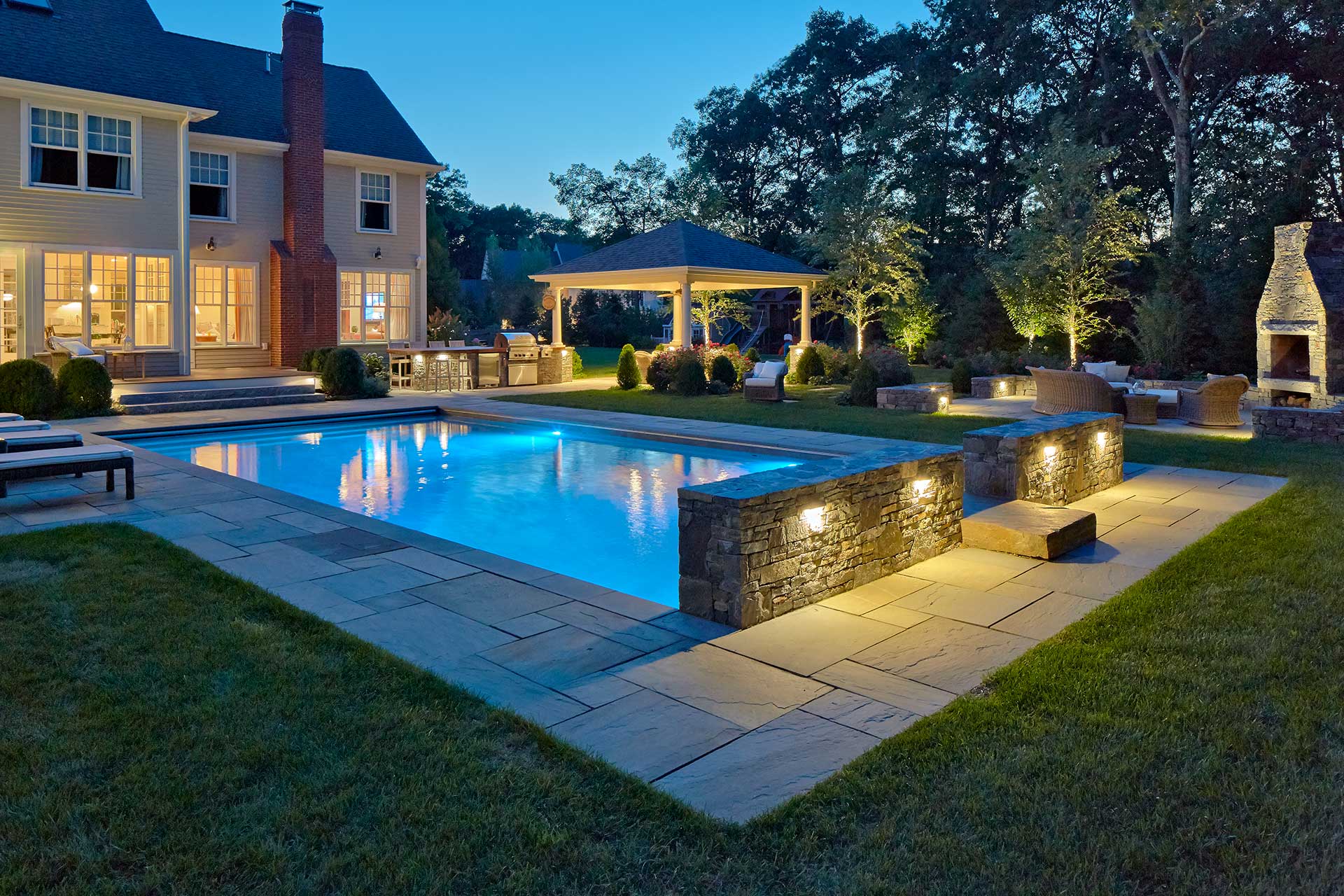
Landscape lighting is one of the most strategic upgrades because it changes how a property functions after dark. It improves safety, extends evening use, highlights architecture and plantings, and makes the landscape feel finished.
Homeowners often ask about lighting after a patio, walkway, or planting project is complete. Our advice is to consider it earlier. Lighting is most effective when it is coordinated with the landscape design, planting layout, electrical access, hardscape, and circulation.
Common lighting opportunities include:
- front walks and entries
- driveway edges
- stone steps
- specimen trees
- garden walls
- patios and terraces
- outdoor kitchens
- pool areas
- architectural features
For Boston-area properties, lighting also matters because the landscape is experienced in darkness for so much of the year. A garden that disappears after 4:30 p.m. in winter is not working as hard as it could.
The National Association of REALTORS® reported landscape lighting at an estimated 59% cost recovery and showed that 97% of consumers would have undertaken the project regardless of the pandemic, which suggests homeowners value lighting for use and enjoyment, not just resale.
From a design standpoint, the best lighting is subtle. It should guide, reveal, and create depth without making the property feel overlit.
See our landscape lighting services and our post on landscape lighting ideas to highlight your Boston property’s best features.
7. Kitchen Gardens and Specialty Garden Spaces
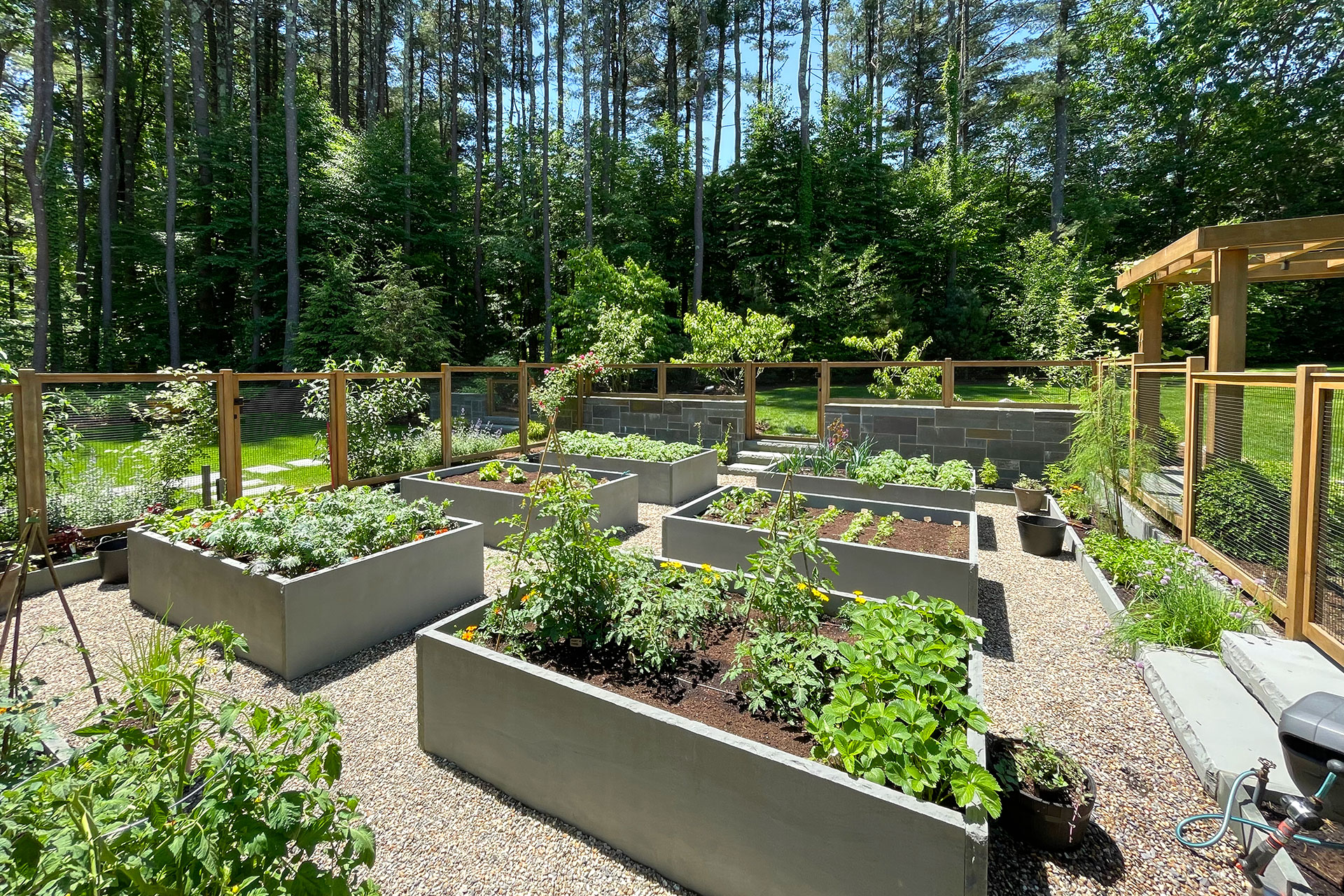
Kitchen gardens, edible gardens, cutting gardens, and specialty planting areas are increasingly requested by homeowners who want more personal, lifestyle-driven landscapes.
These projects are especially appealing because they combine beauty with use. A kitchen garden can be productive, but it can also be a structured design feature. Raised beds, gravel paths, fencing, espaliers, herbs, flowers, and ornamental edging can make the space feel integrated with the rest of the property.
Common considerations include:
- sun exposure
- water access
- deer and rabbit protection
- proximity to the kitchen
- soil quality
- path materials
- maintenance expectations
- seasonal cleanup
- visual relationship to the house and garden
In towns like Concord, Lincoln, Weston, Wellesley, and Dover, these spaces may be part of a larger property plan. In Brookline, Cambridge, or Boston, they may need to fit into a compact side yard, rear courtyard, or sunny terrace.
The most important advice we give is to design these gardens with maintenance in mind. A kitchen garden can be deeply rewarding, but it is not passive. It needs regular care, harvesting, replanting, watering, and seasonal attention.
For more detail, read our article on kitchen garden design in the Boston area.
8. Full-Property Landscape Master Plans
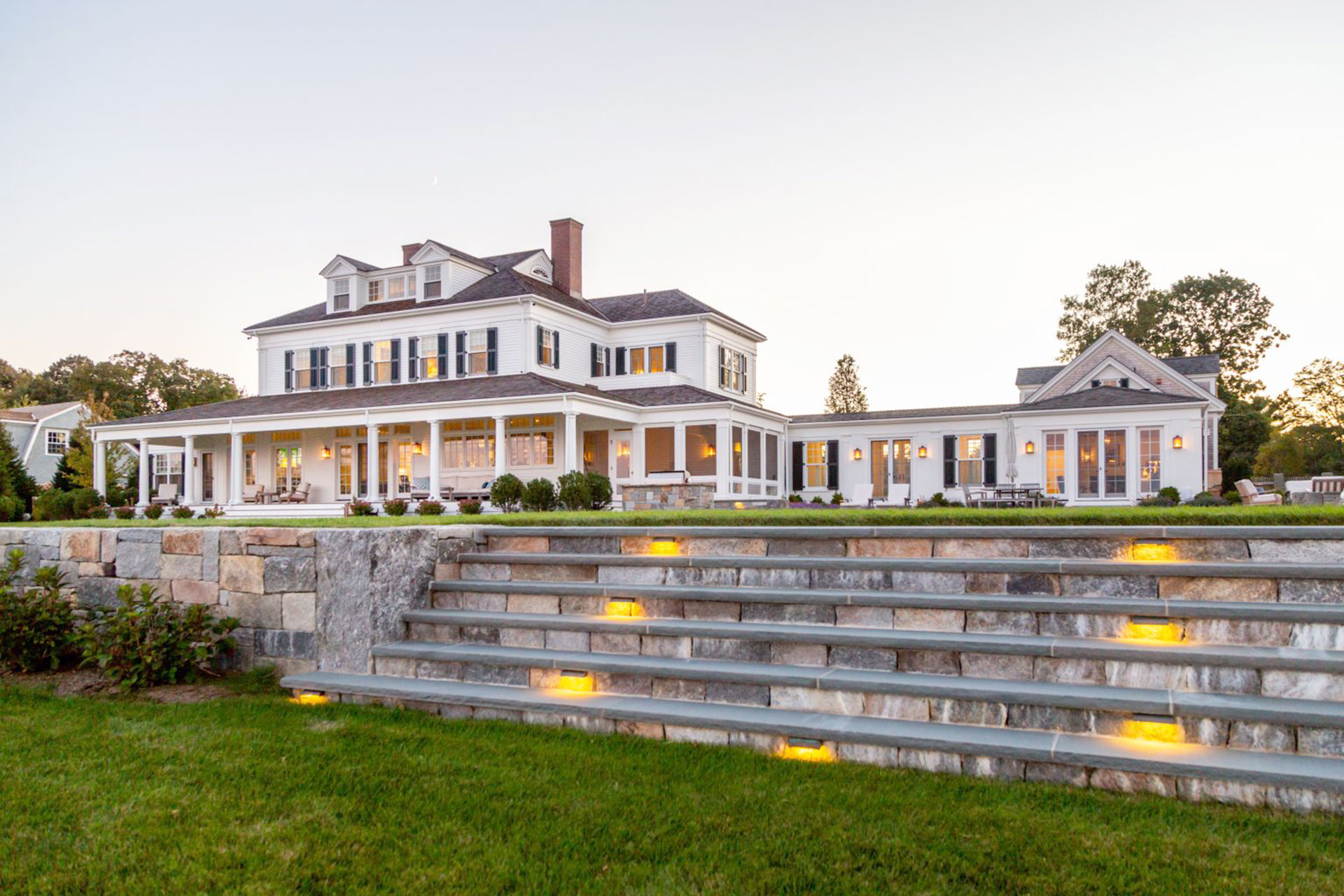
Many homeowners come to us with one clear priority. They want a new patio, better privacy, a front entry, a planting refresh, or help with drainage. But after evaluating the property, we often recommend stepping back before moving forward.
A full-property landscape master plan does not mean everything has to be built at once. In fact, one of its greatest benefits is phasing. It helps homeowners decide what should happen now, what can wait, and how each future improvement should connect to the larger vision.
A master plan may include:
- front entry improvements
- circulation and walkways
- patios and terraces
- planting design
- privacy screening
- drainage and grading
- lighting
- irrigation
- lawn areas
- garden rooms
- service areas
- future outdoor kitchen or pool planning
- long-term maintenance strategy
This is often the most strategic approach for established Boston-area homes because it prevents costly rework. A patio can be placed with future planting in mind. Drainage can be addressed before masonry. Lighting conduit can be planned before hardscape installation. Planting can be phased in a way that still looks intentional.
When several improvements are being considered at once, a landscape master plan can help organize patios, planting, drainage, lighting, privacy, outdoor living, and maintenance into a phased strategy that protects the larger vision.
Learn more about our landscape design services and our integrated landscape services.
Popular Projects by Boston-Area Home Style
Different homes tend to call for different landscape priorities. These are patterns we often see, though every property still deserves its own design response.
| Home style | Common landscape design priorities |
|---|---|
| Colonial | Symmetrical front walks, refined foundation planting, entry lighting, evergreen structure |
| Victorian | Layered planting, ornamental trees, curved paths, period-sensitive details |
| Tudor | Stonework, shade planting, woodland edges, privacy screening |
| Contemporary | Clean terraces, restrained planting palettes, ornamental grasses, architectural lighting |
| Urban row house or townhouse | Compact patios, containers, vertical screening, shade planting, efficient circulation |
| Estate property | Full-property planning, terraces, long views, privacy, lighting, seasonal stewardship |
Related Blog: Front Yard Landscaping Ideas for Colonial, Victorian, Tudor, and Contemporary Boston Homes
How Project Priorities Shift Across Greater Boston
Local context matters. The most popular landscape design project in one town may not be the top priority in another.
| Area | Common project priorities |
|---|---|
| Boston, Cambridge, Brookline | Compact patios, privacy planting, shade gardens, containers, courtyard lighting |
| Newton, Needham, Winchester | Front entries, family backyards, patios, foundation planting, drainage improvements |
| Wellesley, Weston, Dover | Estate-scale planting, terraces, outdoor kitchens, pool landscapes, master plans |
| Concord, Lincoln, Carlisle | Wooded-property design, naturalistic planting, drainage, meadow edges, privacy |
| Cape and coastal properties | Wind-tolerant planting, salt tolerance, outdoor entertaining, resilient materials |
This is why we do not recommend copying a landscape design idea from another property without adapting it to the site. The best design decisions come from the house, the land, the neighborhood, the client’s lifestyle, and the long-term care plan.
The Real ROI of Landscape Design
When homeowners ask which landscape projects have the best ROI, resale value is only one part of the answer.
The more useful question is: which projects will improve the property the most, both now and over time?
In our experience, the strongest ROI often comes from projects that do several things at once:
- Improve curb appeal.
- Make the property easier to use.
- Solve a functional issue such as drainage, circulation, privacy, or grade.
- Reduce future maintenance problems.
- Support the architecture of the home.
- Increase the amount of time homeowners spend outside.
- Create a foundation for future improvements.
By that measure, front entries, patios, privacy planting, drainage improvements, landscape lighting, and full-property master plans are often among the most strategic investments.
NAR’s outdoor remodeling research supports the idea that landscape improvements can create meaningful financial and lifestyle value. But the best projects are not chosen from a list. They are selected because they fit the property and the homeowner’s goals.
Related Blog: Transform Your Property: The Real Numbers Behind Landscaping ROI
How to Choose the Right Project for Your Home
The right starting point depends on the property.
For some homeowners, the front entry is the best first move because it changes the entire presentation of the home. For others, drainage needs to be solved before any new planting or patio work makes sense. In many backyards, the smartest first step is a terrace or outdoor living area because it creates a center of gravity for the rest of the landscape.
A useful way to prioritize is to ask:
- What part of the property bothers us most?
- What area do we use the least, but wish we used more?
- Are there drainage, grading, or maintenance issues that need to be solved first?
- Which improvement would make the house feel more complete?
- Are we planning one project, or do we need a phased landscape design plan?
- How much ongoing maintenance are we prepared for?
- What should the landscape look like in winter?
Those questions lead to better projects than starting with a single feature or trend.
Final Thoughts: The Best Landscape Projects Feel Connected
The most popular landscape design projects for Boston-area homes are not popular by accident. Front entries, patios, terraces, privacy planting, lighting, drainage improvements, planting design, and master plans all address real needs we hear from clients every season.
But the strongest results come when those projects are designed together.
A patio should relate to the house, the garden, the lighting, and the view. Privacy planting should be beautiful, maintainable, and scaled correctly. A front entry should feel natural to the architecture. Drainage should be addressed before it damages the investment. Lighting should make the property safer and more inviting without overwhelming it.
That is the value of professional landscape design. It turns individual improvements into a cohesive property plan.
If you are considering a landscape project for your Boston-area home, the a Blade of Grass team can help you evaluate the site, identify the most strategic opportunities, and create a plan that connects design, construction, planting, lighting, irrigation, and long-term care.
a Blade of Grass works with homeowners across Greater Boston, MetroWest, Cape Cod, and other select New England communities. Contact us to start a conversation about your landscape design goals.