Shady areas are some of the most deceptively difficult parts of a landscape to plant well. On many Boston-area properties, they sit beneath mature maples and oaks, along woodland edges, beside old stone walls, or on sloped ground where turf thins out and bare soil begins to show. These spaces often look like they should be simple to solve. In reality, they are usually shaped by several overlapping conditions at once: limited sunlight, dense root competition, uneven moisture, seasonal leaf drop, and the visual challenge of making a low-light area feel finished rather than neglected.
That is why ground covers deserve a more thoughtful conversation than they often get. They are not just filler. The right native ground cover can stabilize soil, soften hard edges, suppress weeds, reduce the amount of struggling lawn on a property, and bring texture or seasonal interest to places that would otherwise feel sparse. The wrong choice, on the other hand, can leave a planting bed looking patchy, overgrown, or out of place within a more refined landscape.
For Boston-area homeowners, plant selection also has to reflect regional realities. The USDA Plant Hardiness Zone Map is based on average annual extreme minimum winter temperatures, with 10-degree zones and 5-degree half-zones. Greater Boston now sits largely in Zones 6 and 7, but winter hardiness is only part of the story. Freeze-thaw cycles, humid summers, dry spells in late summer, and root-heavy shade all influence how a planting will actually perform.
As our design team often puts it, shade is not the problem. Unread shade is the problem. A planting that works beautifully in cool, moisture-retentive woodland soil may fail under a thirsty Norway maple. A sedge that solves a dry under-tree condition may not be the right answer for a shaded slope that occasionally washes out after a storm. The goal is not simply to choose a native plant. The goal is to choose the native plant that solves the specific issue your property presents.
Key Takeaways
- Native ground covers work best when matched to the actual site condition, not just a general shade label.
- In Greater Boston, the most common challenges include dry shade under trees, moist woodland edges, patchy lawn, and erosion-prone slopes.
- Plants like Pennsylvania sedge, wild ginger, foamflower, green and gold, wintergreen, and woodland stonecrop each solve different problems.
- Ground covers can reduce maintenance and improve difficult areas, but they still need thoughtful installation and early care.
- The strongest New England shade plantings balance horticultural performance with year-round visual appeal.
Why Ground Covers Make Sense in Shady New England Landscapes
Many homeowners first start thinking about ground covers after grass begins to fail. That usually happens for a reason. UMass notes that growing turf in shade is inherently more difficult, and even the more shade-tolerant turf options have limits in heavier shade. UMass also notes elsewhere that in very shady areas, other ground covers may be more practical than lawn. Ground covers are often used in problematic areas where turfgrass and sun-loving plants will not grow well, and they can also help slow erosion on slopes or reduce lawn in difficult parts of the property.
That last point is especially relevant in Greater Boston. Many established residential properties have mature canopies, older soil profiles, and microclimates that change noticeably from one part of the yard to another. A front foundation bed may receive dappled morning light and hold moisture reasonably well. A backyard grove may be dominated by roots and dry leaf litter by mid-July. A side yard may stay cool and shaded but wash out during spring storms. Lumping all of those conditions together as “shade” tends to produce disappointing results.
A well-chosen native ground cover does more than tolerate these conditions. It helps solve them. It can create a softer transition under trees, hold the soil on a bank, knit together the front edge of a border, or replace a patch of tired, mossy lawn in a low-traffic area. Just as importantly, it can do that in a way that feels consistent with the rest of a carefully designed landscape.
Related Blog: Low Care Natives for The Woodland Garden
Start With the Problem, Not the Plant
When homeowners search for “the best ground cover for shade,” they are usually asking a more specific question without realizing it. What they often mean is one of the following:
Dry Shade Under Mature Trees
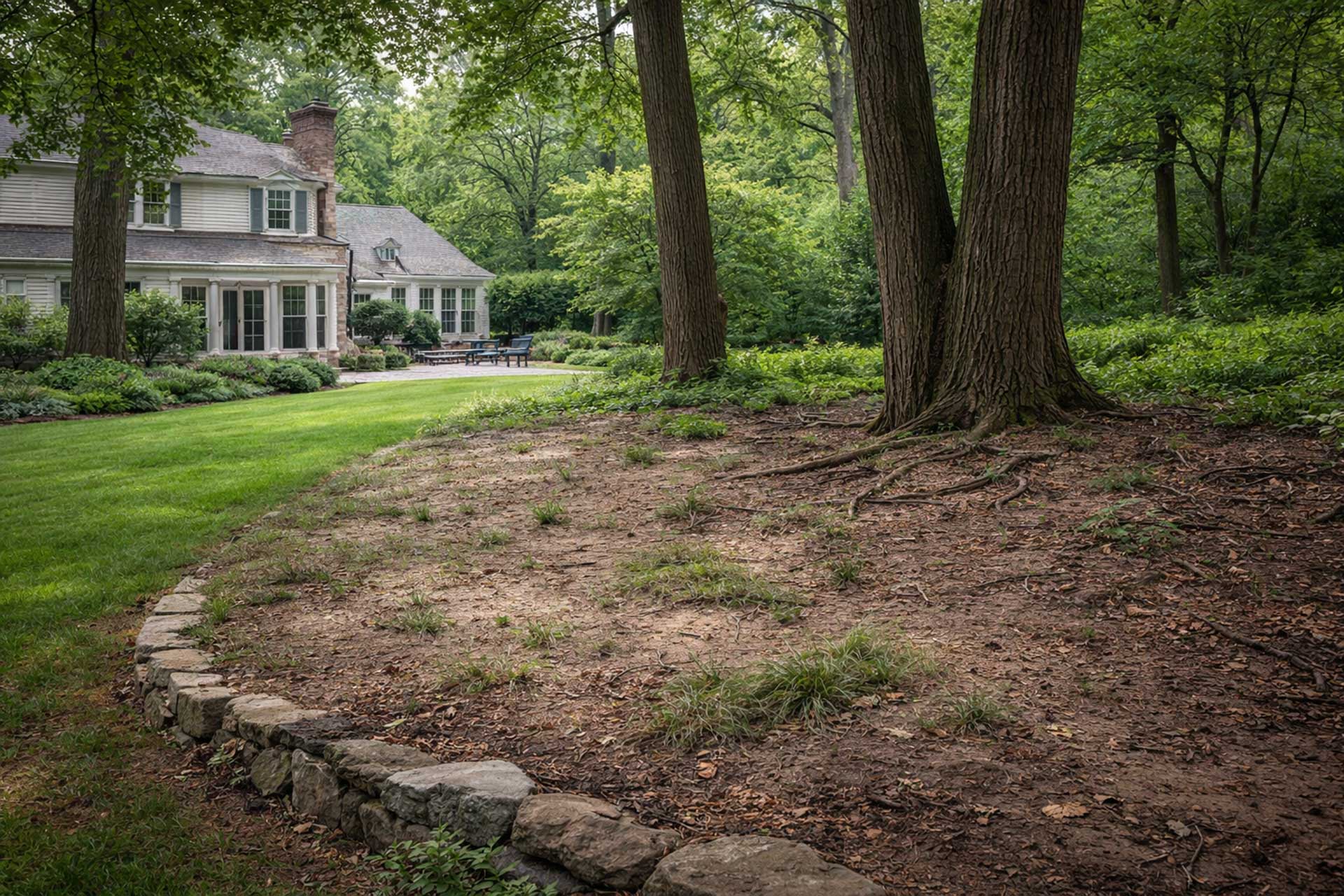
This is one of the most common New England conditions. The issue is not only limited sunlight. It is also intense root competition and quickly depleted soil moisture. Plants that prefer cool, consistently moist woodland conditions often struggle here.
Moist Shade or Woodland-Edge Conditions
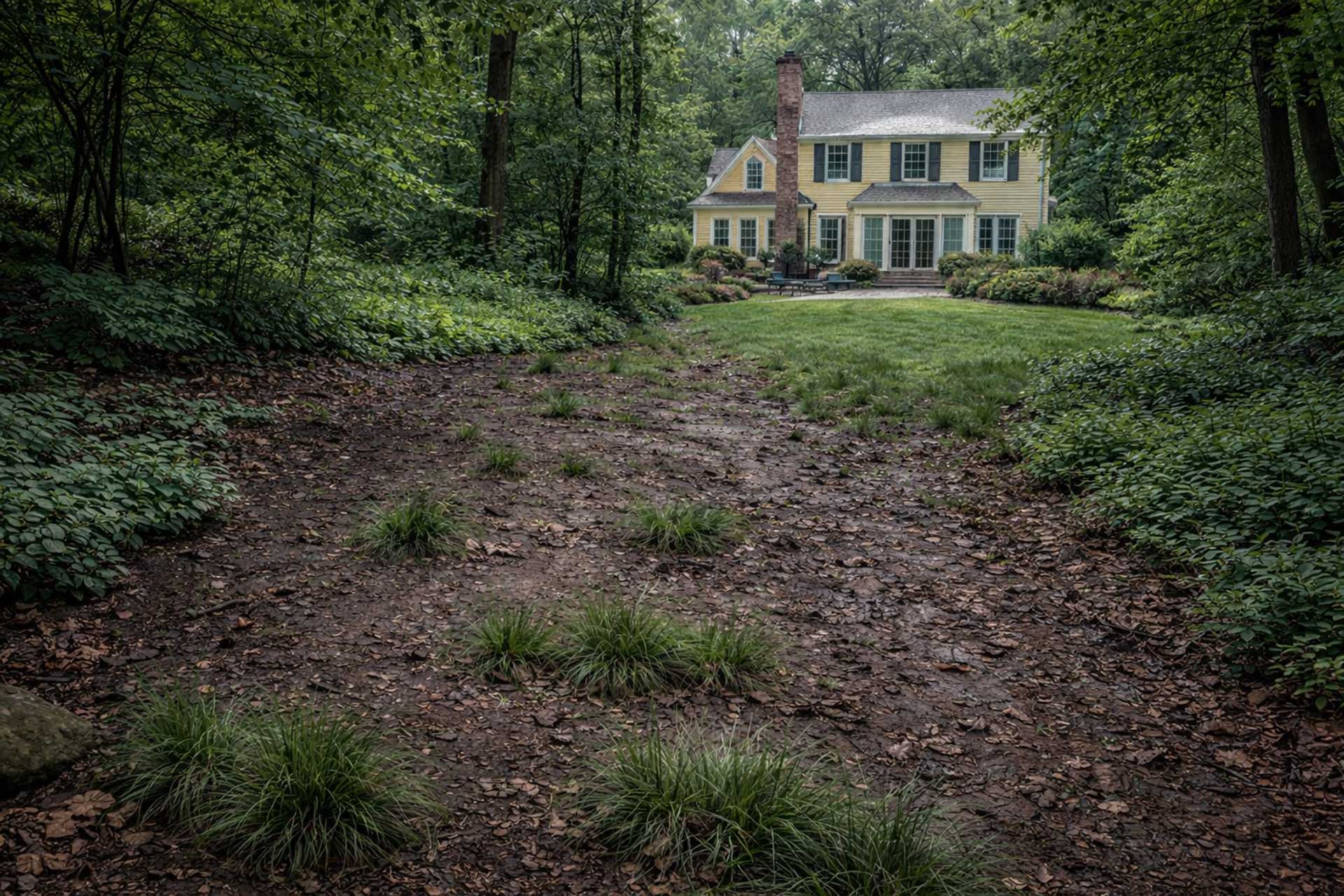
This is a different category entirely. Here, the soil may contain more organic matter, hold moisture longer, and support a broader plant palette. This is often where more layered, naturalistic plantings perform beautifully.
Patchy Lawn in a Low-Traffic Shady Area
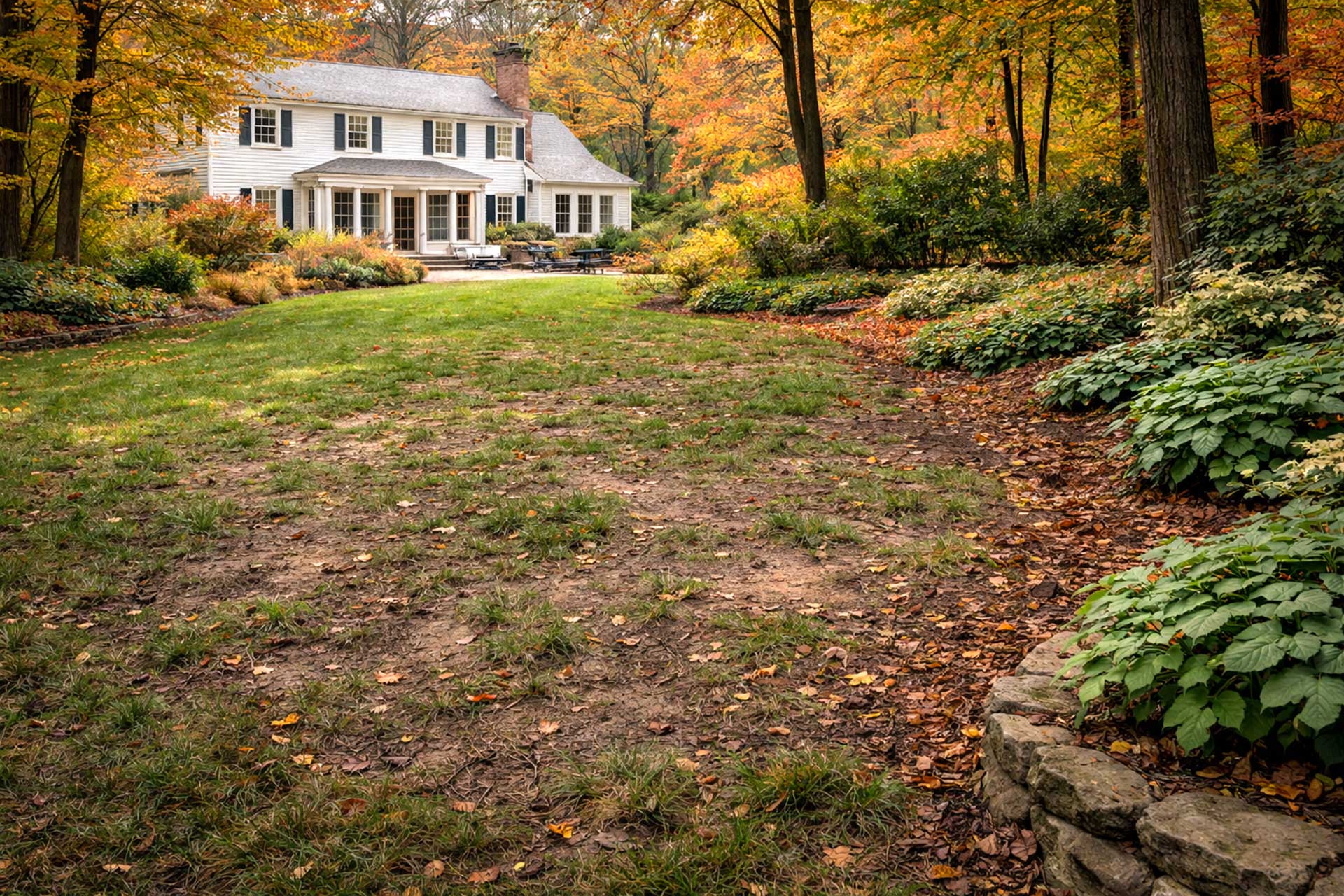
In these spaces, the homeowner usually wants a more continuous, lawn-like look without the effort and inconsistency of trying to force turf where it does not want to grow. UNH Extension is clear that there are few exact replacements for turf, but Pennsylvania sedge can fill a similar role in low-traffic areas because it has a grassy look, suppresses weeds, and tolerates shade.
Shaded Slopes or Areas That Tend to Wash
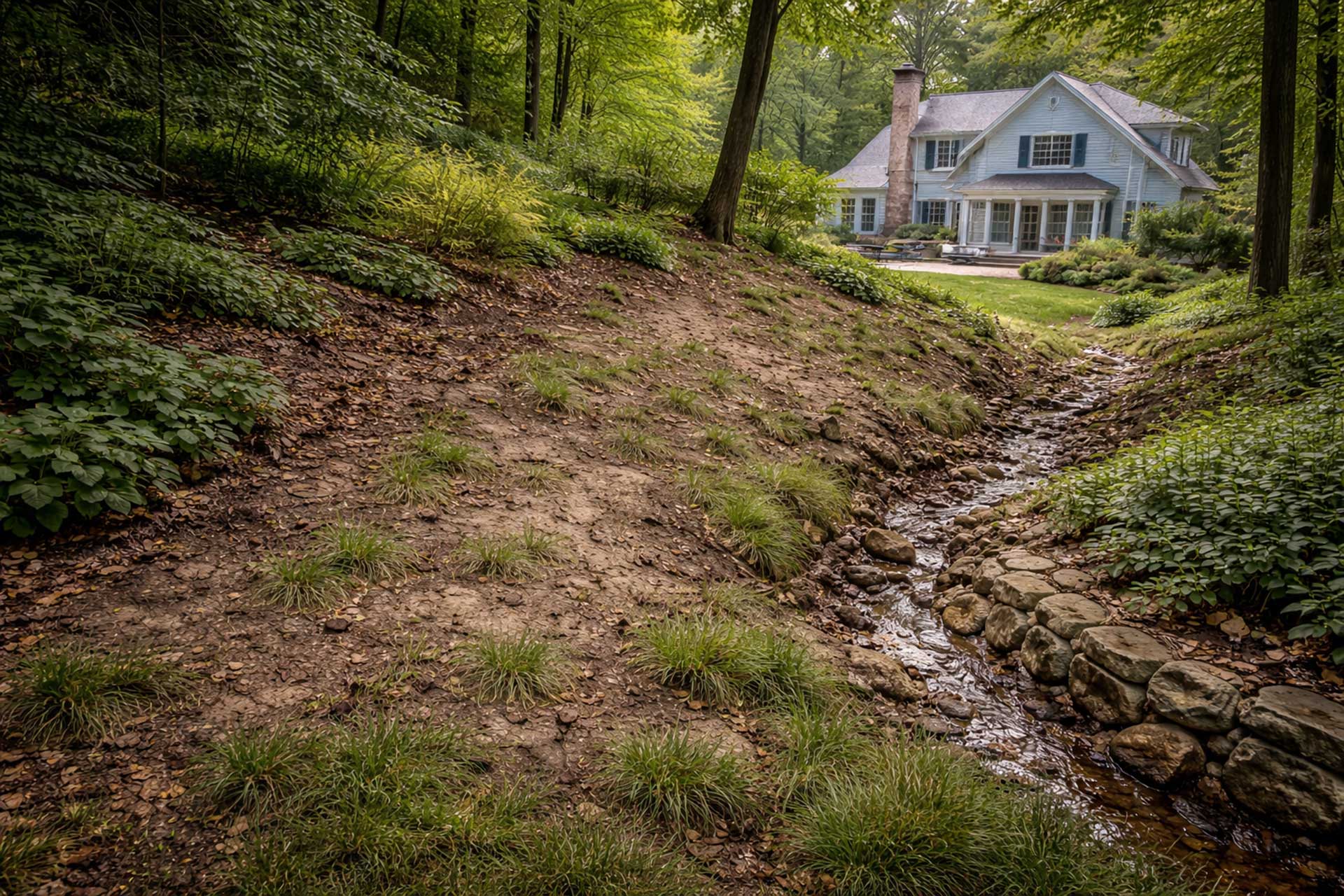
These areas need more than surface beauty. The planting has to hold soil and establish well enough to reduce exposed ground over time. Ground covers are often used on slopes for precisely that reason.
Spaces That Look Bare in Winter
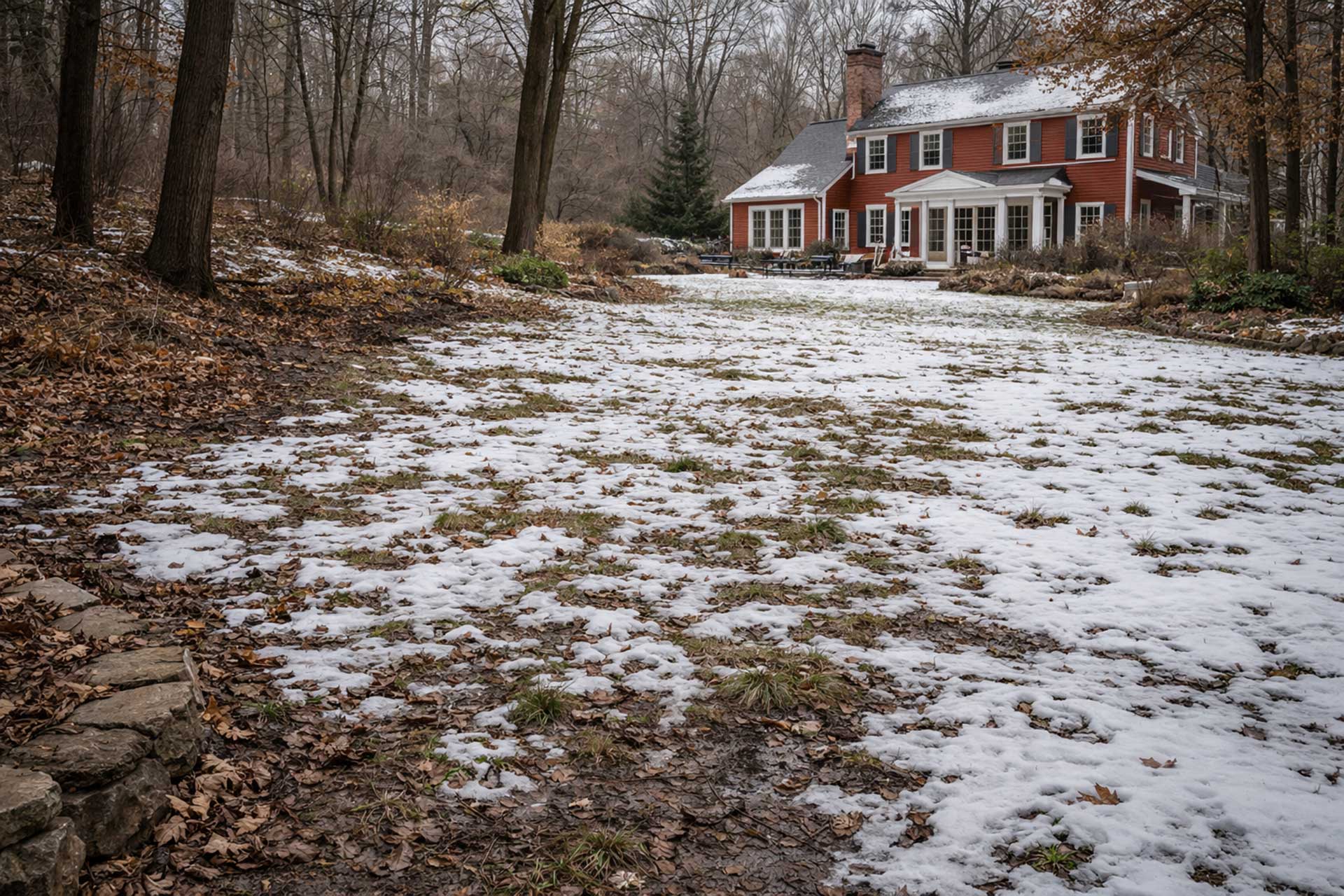
Not every ground cover offers year-round presence. In some locations, foliage disappears seasonally and leaves the area visually empty. In others, an evergreen or semi-evergreen option can provide much-needed continuity.
One way our horticultural team describes this is: a ground cover should earn its place by solving two problems at once, usually a site problem and a visual one.
Related Blog: What Is Layered Planting? A Guide to Depth, Structure, and Four-Season Interest
Native Ground Covers That Solve Real Property Challenges
Native ground covers do more than fill empty space. In shaded Boston-area landscapes, the right selections can stabilize soil, soften transitions, reduce exposed mulch, support tree understories, and create a more finished look in areas where turf and traditional plantings often struggle.
Best for Dry Shade Under Mature Trees: Pennsylvania Sedge
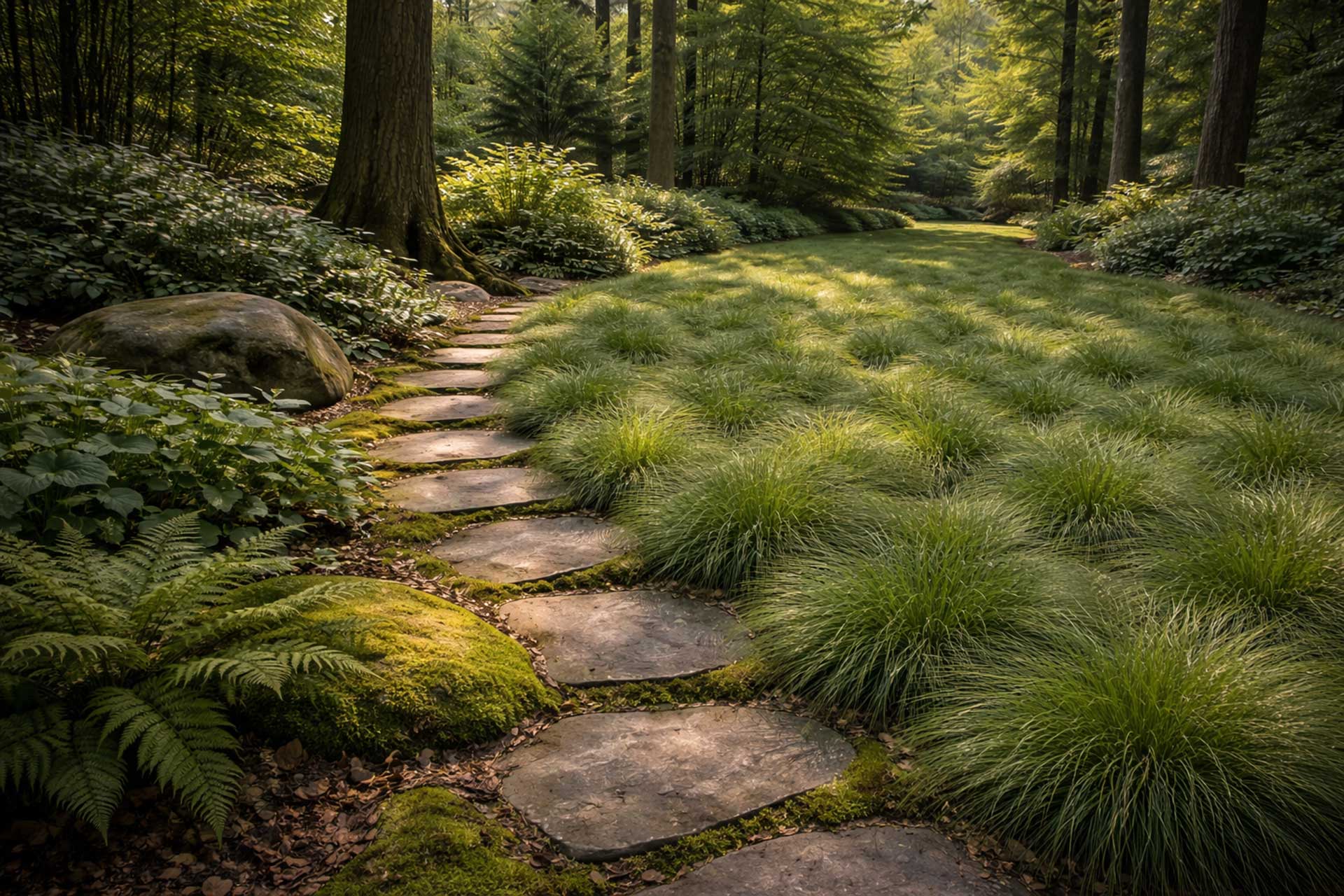
If a Boston-area homeowner has an under-tree space where grass struggles, Pennsylvania sedge is often one of the best places to start. Native Plant Trust describes it as useful for textural sweeps, with foliage that looks good year-round and functions as a living mulch that competes with weeds. It also notes practical benefits that include erosion control, slope stabilization, and deer resistance. UNH Extension describes it as a native sedge for shade to part shade, dry to medium well-drained soil, and notes that it thrives in dry woodland areas and tolerates heavy shade.
This is the plant to look at when the goal is not bold bloom, but a restrained, elegant ground layer that reads cleanly from a distance. It is especially useful on larger properties where repeated masses of one quiet plant can make a shaded area feel intentional rather than busy.
Where it helps most:
- under deciduous trees
- low-traffic areas where a lawn-like look is desired
- broad sweeps at the front of woodland or mixed planting beds
- spaces where weed suppression matters
Where it is less ideal:
- sites that stay wet
- areas expected to handle regular foot traffic
- homeowners looking for showy seasonal flower display
Best for Moist Woodland Shade: Foamflower
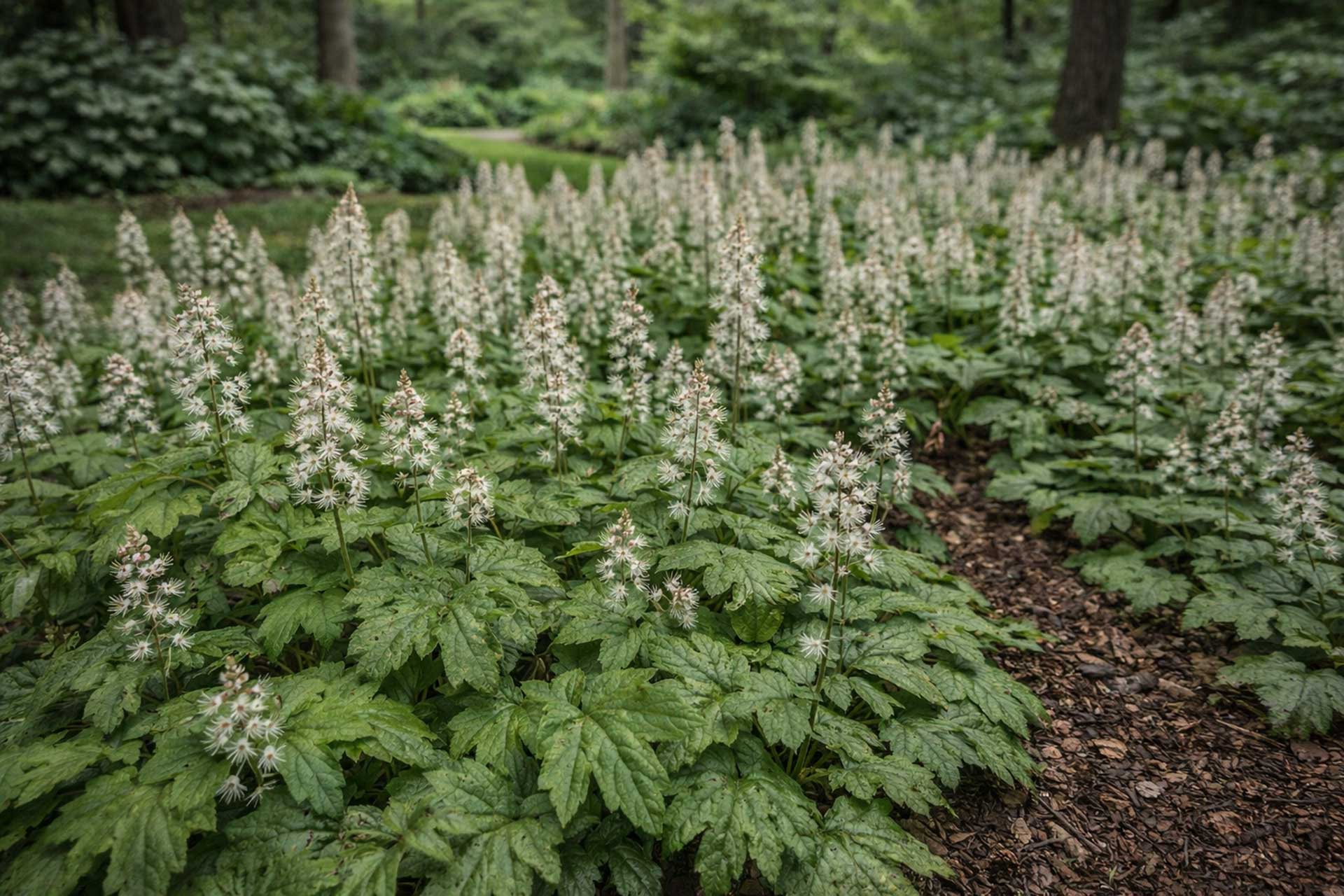
Foamflower is one of the most graceful native solutions for moister shade. Native Plant Trust notes that running foamflower spreads by stolons and can creep along the ground, while its spring flowers rise above attractive foliage. In the right setting, it gives a shaded area a softer, more layered character than a sedge-based planting. UMass’s woodland garden guidance points homeowners toward plants suited to deciduous woodland conditions with shade and humus-rich soil, which is exactly where this type of ground cover feels most at home.
Foamflower is especially helpful when the problem is not just coverage, but the need for a shaded area to feel lighter and more expressive in spring. It works well in woodland-edge gardens, beneath more open tree canopies, and in spaces where the soil is reasonably amended and not dominated by dense, surface-level roots.
Where it helps most:
- woodland-edge planting beds
- part shade to shade with moderate moisture
- layered gardens where spring interest matters
- transitional areas between shrubs, ferns, and lower perennials
Where it is less ideal:
- severely dry shade
- highly compacted soil with heavy competition from roots
- spaces that need an almost turf-like appearance
Best for Color in Shady Understories: Green and Gold
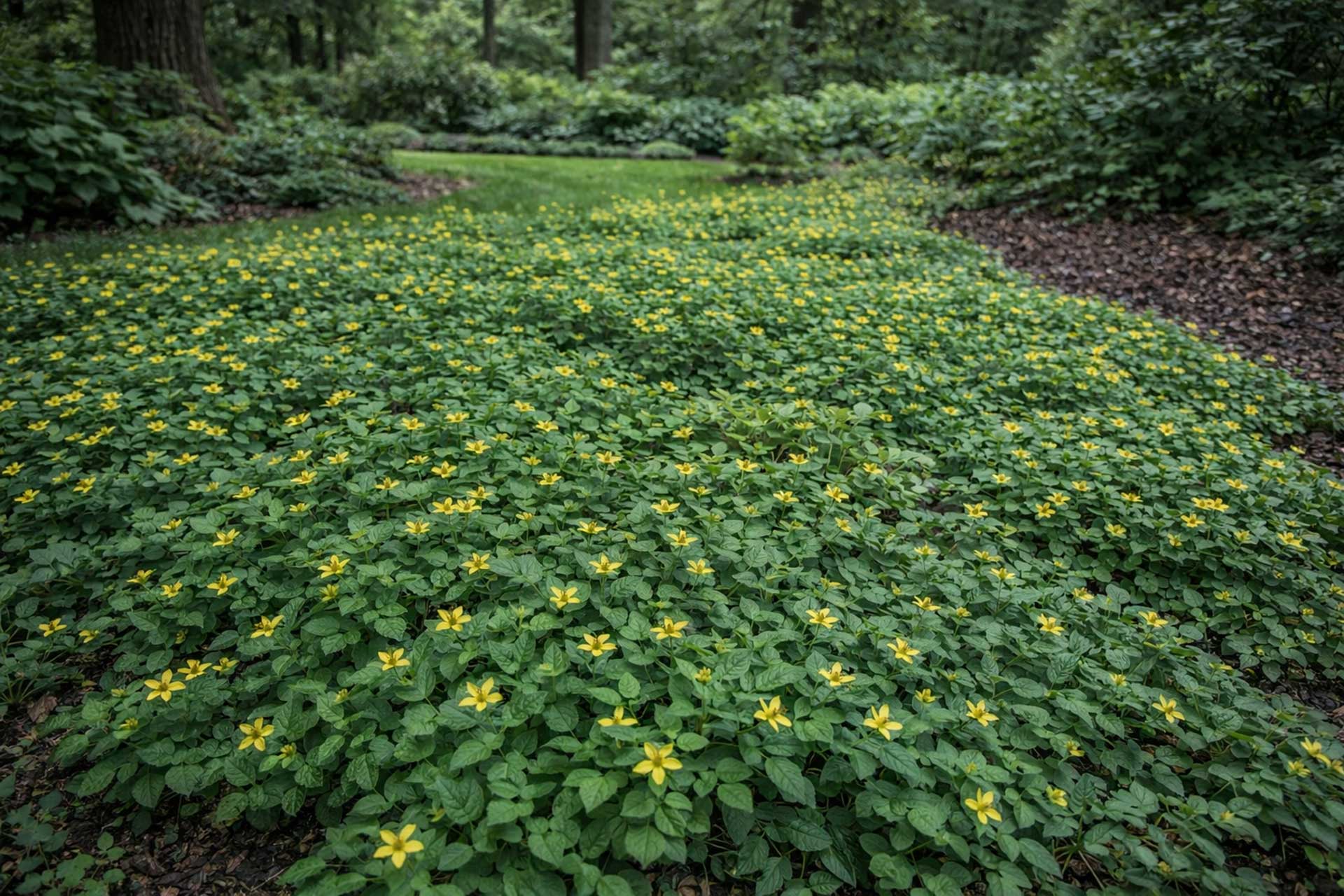
Green and Gold is an excellent choice for homeowners who want a ground cover to do more than simply disappear into the background. Native Plant Trust notes that it brings yellow flowers to deep, shady understories and reblooms sporadically through the growing season. Massachusetts Horticultural Society’s Historic Daffodil and Native Plant Garden also highlights Chrysogonum virginianum as a plant used in mass plantings or as a ground cover, noting average moisture preference and deer and rabbit resistance.
This is particularly useful where a shaded space feels flat or visually cool for too much of the season. In a Boston-area landscape, that might be a side-yard bed, the edge of a shaded path, or a lower planting layer near a front walk that does not receive much direct sun.
Where it helps most:
- part shade to shade with average moisture
- areas that need spring color and a softer transition
- homeowners who want more bloom than a sedge offers
- deer-prone suburban properties
Where it is less ideal:
- the driest under-tree conditions
- sites where a taller or more naturalistic colony effect would feel more appropriate
Best for Broadleaf Texture in Shade: Wild Ginger
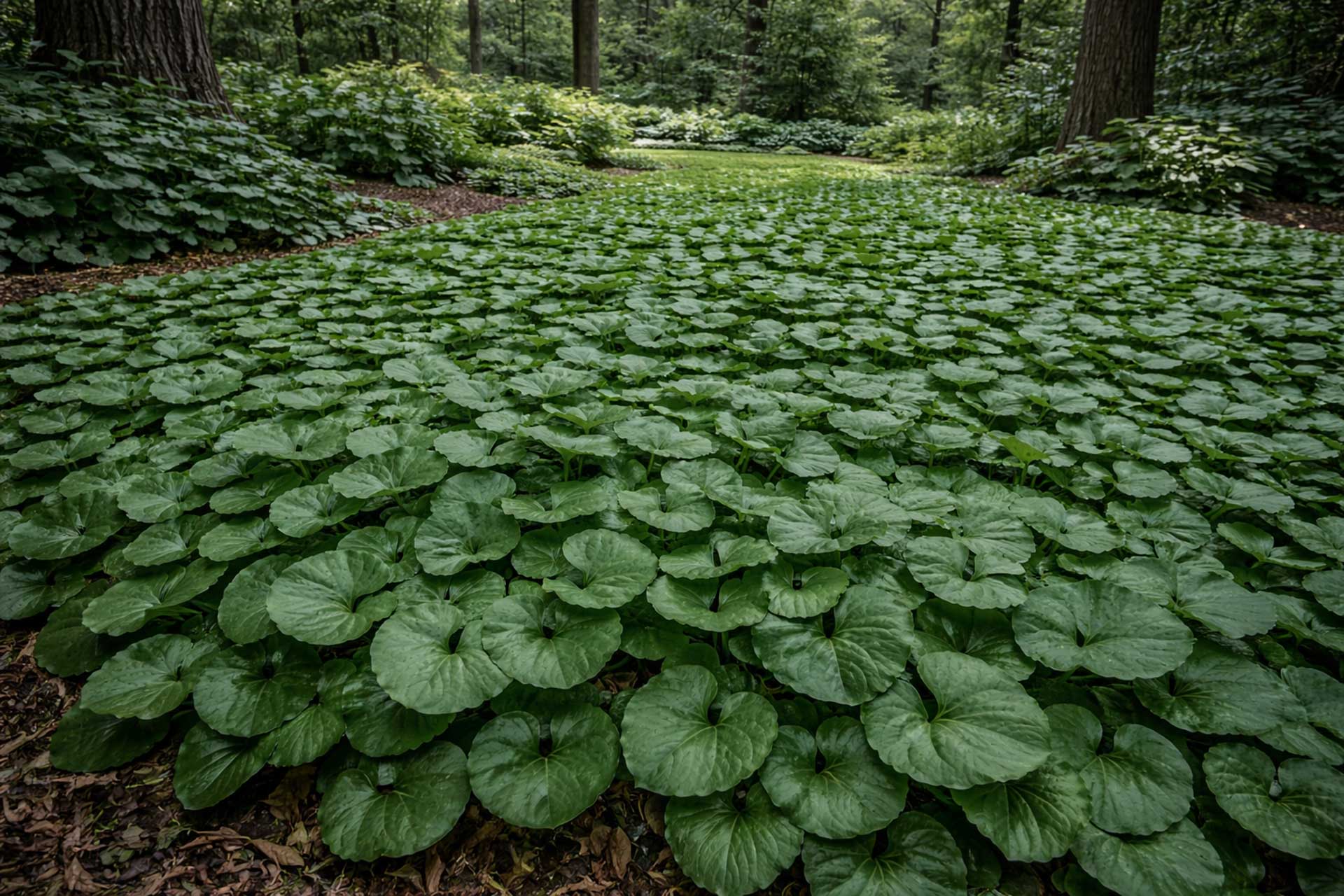
Wild ginger is one of the best answers for homeowners who want a ground cover that feels lush rather than grassy. Native Plant Trust describes Canada wild ginger as a great ground cover for shady situations, with large heart-shaped leaves that hug the ground. It is especially useful where the issue is visual thinness rather than erosion or lawn replacement.
This is a strong choice for shaded borders near patios, bluestone walks, and other designed spaces where foliage texture matters. Its leaf shape reads clearly and gives the eye something to settle on, which is valuable in low-light planting areas that can otherwise disappear visually.
Where it helps most:
- shaded ornamental beds
- edges of woodland gardens
- spaces near paths, terraces, or stone walls
- plantings that need larger, calmer foliage
Where it is less ideal:
- very dry, root-packed shade unless the site has been improved
- places where a finer texture or more lawn-like look is preferred
Best for Winter Presence: Wintergreen and Partridgeberry
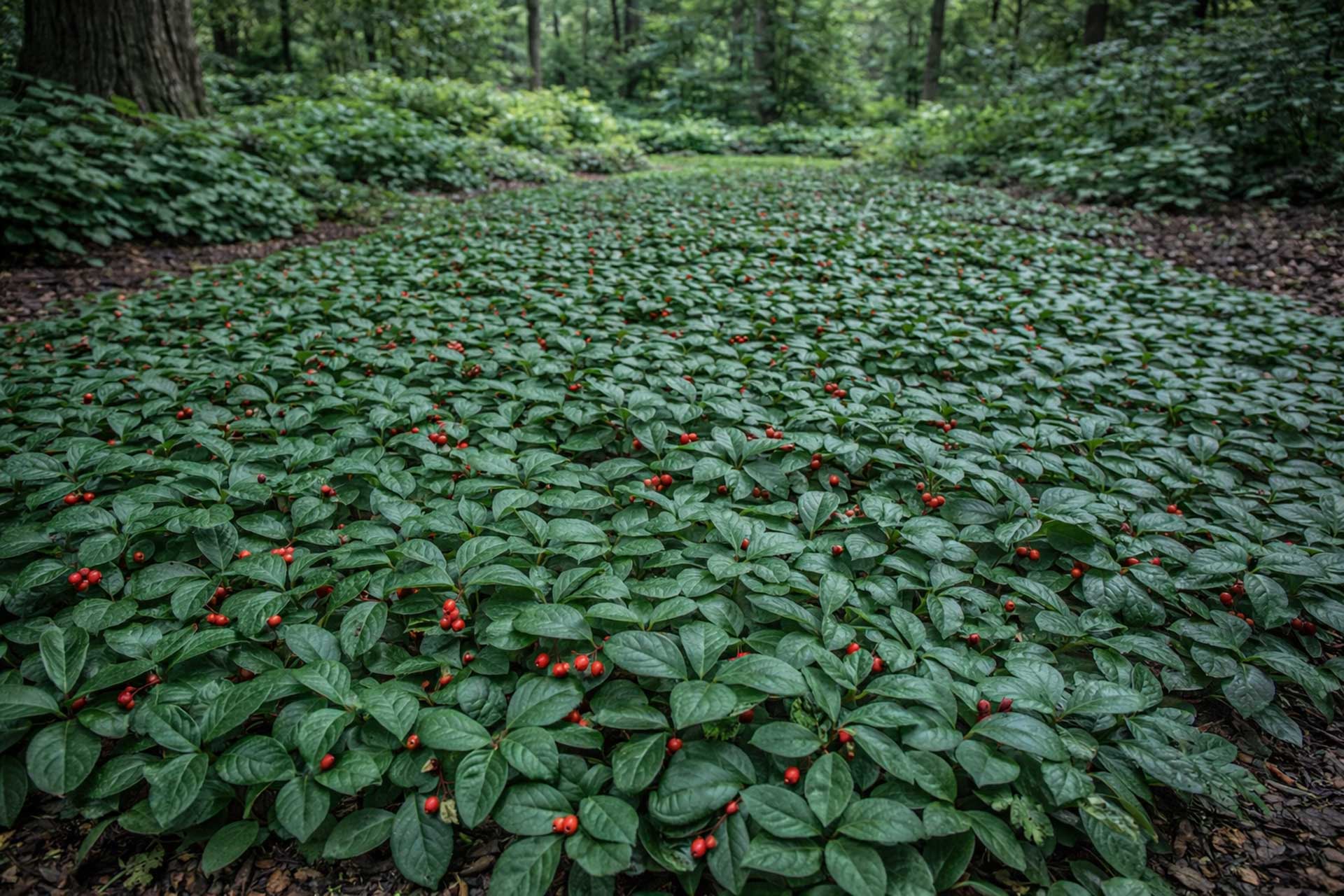
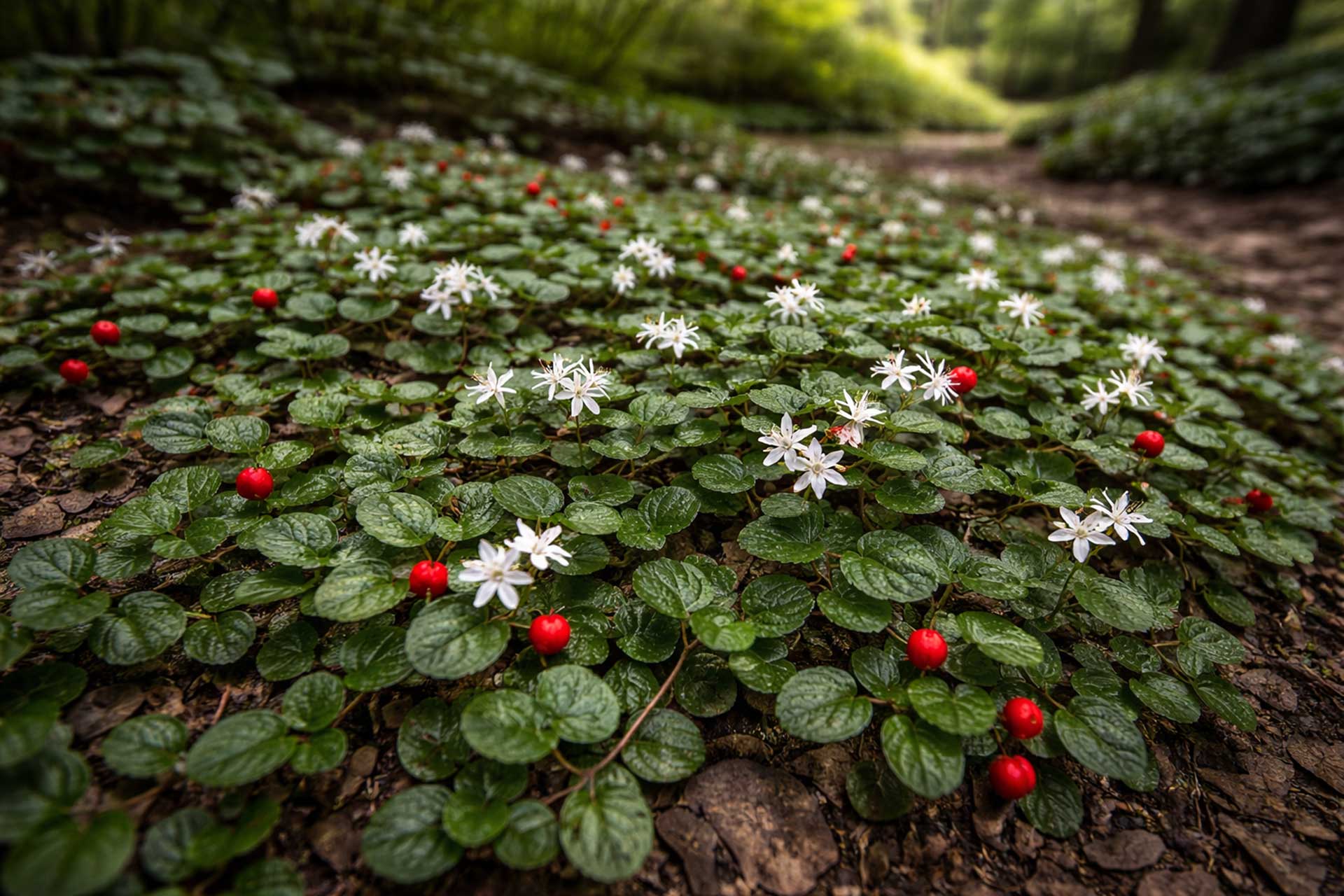
A surprising number of shaded ground layers look good in June and feel absent in January. If winter appearance matters, evergreen or semi-evergreen options deserve attention. Native Plant Trust notes that wintergreen offers year-round interest, with leaves that redden in colder weather and bright red fruits in fall. Its value is not just botanical. It helps a planting hold together visually when much of the surrounding garden has gone quiet. Partridgeberry offers a similar effect on a smaller scale, with evergreen foliage and berries that can persist into winter.
These plants are most effective when used with restraint. They are rarely the answer for a large, difficult area on their own. Instead, they shine in smaller, more intimate spaces where winter texture and detail matter, such as along a shaded entry walk, near steps, or in a woodland garden seen from interior windows during the colder months.
Best for Shaded Walls, Edges, and Crevices: Woodland Stonecrop
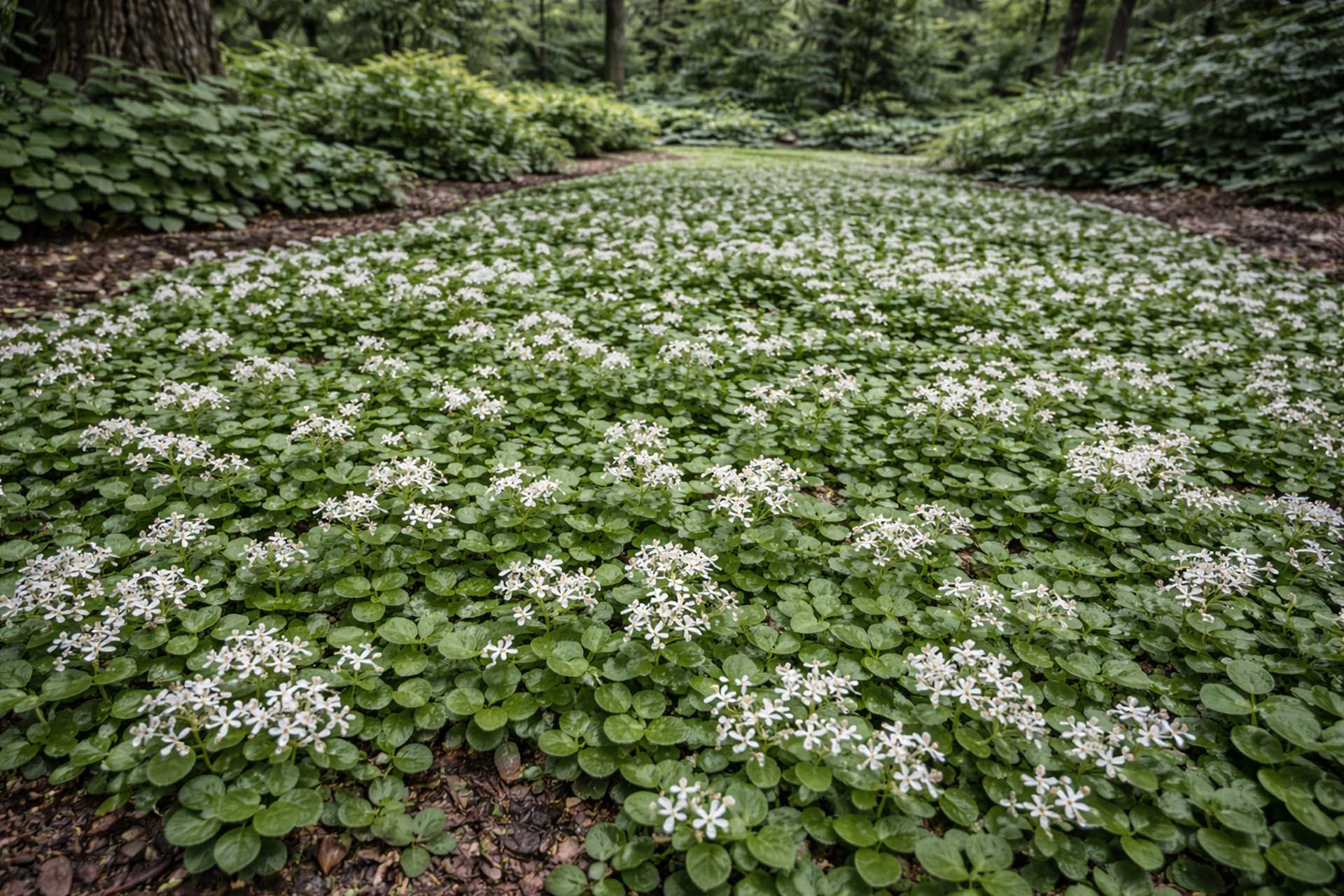
Not every shaded site is deep soil beneath a tree canopy. Some Boston-area properties include old stone retaining walls, shallow ledges, or narrow soil pockets beside steps and paths. Woodland stonecrop can be useful in these more specialized situations. Native Plant Trust describes it as a low-growing plant suited to shady rock gardens or stone walls where there is stable substrate and some moisture.
It is not the broad-coverage answer for every shaded yard, but it can be exactly right where a tighter, lower, more site-specific plant is needed.
Related Blog: Best Ferns for Boston Gardens: 8 Shade-Loving Ferns for New England Landscapes
What Boston-Area Homeowners Commonly Get Wrong
The most common mistake is assuming that every shade plant belongs in every shade condition. That is how a ground cover chosen for a cool woodland edge ends up struggling beneath a thirsty street tree. It is also how homeowners end up frustrated by sparse coverage, leaf scorch, or a planting that never fills in the way they expected.
The second mistake is choosing a plant based only on bloom. In a shaded landscape, flower color matters far less than spread habit, foliage quality, seasonal durability, and how the plant relates to nearby shrubs, ferns, and hardscape. A ground cover is often seen for far more weeks in leaf than in flower.
The third mistake is expecting “low maintenance” to mean instant and maintenance-free. Even the best native ground covers need proper spacing, watering during establishment, mulch management, and some level of weeding while they knit together. A thoughtful planting may reduce long-term maintenance, but it still needs stewardship.
As our maintenance team often says, the first year tells you what a plant can tolerate, but the third year tells you whether it truly belongs there.
Ask an Expert: Which Native Plants Will Thrive on My Weston Property?
How to Choose More Carefully
A better process is to evaluate five things before choosing a plant:
- How much sun actually reaches the space? Deep shade and part shade are not interchangeable.
- How dry does the soil become in summer? A bed that looks fresh in May may be dry and root-bound by August.
- Are mature tree roots competing in the top layer of soil? This can drastically narrow the right plant palette.
- Does the area need to stabilize soil or simply cover it? Those are related goals, but not exactly the same.
- What should the area look like in winter? This matters more than many homeowners expect in New England.
This is also where design judgment comes in. Sometimes the right answer is not a single species. A shaded area may perform better, and look more natural, with a simple matrix of sedges, ferns, and a few broadleaf accents rather than a monolithic carpet. UMass notes that ground covers can be mass-planted or grown together with similar growing requirements for a tapestry effect. That idea translates beautifully to higher-end residential landscapes when it is done with restraint.
Seasonal Timing Matters in New England
Boston’s planting calendar affects outcomes more than many homeowners realize. Spring and early fall are usually the best windows for installing shade ground covers because soil moisture is more favorable and temperature stress is lower. That is especially important in under-tree conditions, where summer establishment can be difficult without close watering attention.
Regional climate matters here too. The USDA hardiness framework is useful, but it does not account for every microclimate on a property. A sheltered woodland edge in Weston or Lincoln may behave very differently from a windy, reflective side yard in Brookline or a milder urban pocket in Boston. Local observation still matters.
Massachusetts Horticultural Society’s Garden at Elm Bank is a reminder of how much these distinctions shape garden design. Its Shade Garden highlights shade-loving plants such as ferns and pulmonaria, while its Native Plant Garden reflects the value of regionally appropriate plant communities in a local educational setting.
Frequently Asked Questions About Ground Covers
Q: What is the best native ground cover for dry shade in Massachusetts?
A: In many cases, Pennsylvania sedge is one of the strongest options for dry shade, especially under mature trees and in low-traffic areas. It has a fine, grassy texture, tolerates heavy shade, and is useful where homeowners want a softer alternative to patchy turf.
Q: What can I plant under mature trees instead of grass?
A: That depends on how dry the area becomes and how dense the root competition is. Pennsylvania sedge is often a strong choice for drier conditions, while wild ginger or foamflower may work in better soil with more consistent moisture. The key is matching the plant to the exact under-tree condition rather than assuming all shaded areas behave the same.
Q: Are native ground covers lower maintenance than lawn?
A: Often, yes, especially in difficult shady areas where lawn struggles and requires repeated intervention. But lower maintenance is not the same as no maintenance. Native ground covers still need watering during establishment, weed management while they fill in, and occasional editing to keep the planting looking intentional.
Q: What native ground cover is best for a shaded slope?
A: That depends on moisture and soil depth, but Pennsylvania sedge, green and gold, and some colony-forming woodland plants can all play a role. The best slope plantings are selected not only for appearance but for their ability to stabilize soil and cover exposed ground over time.
Q: Can native ground covers replace lawn completely?
A: Usually not in the way homeowners imagine. UNH Extension notes that there are few, if any, exact replacements for turf. Some ground covers can fill a similar visual role in low-traffic areas, but they are not the same as a walkable lawn.
Q: Which native ground covers offer winter interest?
A: Wintergreen and partridgeberry are two good examples because they hold evergreen foliage and provide seasonal berry interest. Pennsylvania sedge can also maintain attractive foliage through much of the year, especially in milder sites.
Final Thoughts
The best native ground covers for shade in Boston-area landscapes are not the ones with the most familiar names or the prettiest flowers in a catalog. They are the ones that solve the actual problem in front of them.
That may mean replacing struggling turf beneath mature trees with Pennsylvania sedge. It may mean using foamflower to soften a woodland edge, adding green and gold where a shaded understory needs brightness, or choosing evergreen detail plants that help a garden hold together visually in winter. In every case, the principle is the same: the plant should fit the site, the season, and the role it needs to play within the larger landscape.
When that happens, a difficult shady area stops feeling like a compromise. It starts to feel like an intentional part of the property.
If you are thinking about improving a shaded part of your landscape, a careful site-specific approach usually produces the strongest result. At a Blade of Grass, we design, build, and maintain Boston-area landscapes with long-term performance in mind, including the subtle conditions that shape how planting decisions age over time. Contact us today to learn how our award-winning designers and installers can transform your property into a beautiful living space.