If you are planning to enhance your outdoor space in Boston or the surrounding suburbs, there is more to consider than plants, stone, and patio materials. From fences and retaining walls to outdoor kitchens, drainage changes, tree removal, and work near wetlands, many landscape projects in Massachusetts require permits or municipal review. Skipping that process can lead to fines, delays, redesigns, or even forced removal.
For homeowners in Cambridge, Brookline, Newton, Wellesley, Weston, Concord, and other Greater Boston communities, the permitting process can feel complex because requirements vary by town. A project that is simple in one municipality may require zoning, conservation, building, or historical review in another. Understanding those requirements early helps protect the investment and keeps the project moving with fewer surprises.
Key Takeaways
- Many landscaping upgrades, from fences and retaining walls to drainage changes, can trigger local permits in Boston-area towns.
- Projects near wetlands, floodplains, historic districts, or public trees often require additional review.
- Skipping permits can lead to delays, fines, stop-work orders, or forced removal.
- Permitting should be considered early, before design details and construction schedules are finalized.
- Working with an experienced landscape design and construction team can make the process smoother and less stressful.
Why Permits Are Often Required for Landscape Projects
Landscape permits are not simply administrative hurdles. They are designed to protect your property, neighboring properties, public safety, local infrastructure, and the surrounding environment. Local governments use permits and review boards to enforce zoning rules, building codes, stormwater standards, conservation laws, tree protection ordinances, and historic district requirements.
For example, installing a fence over a certain height might affect visibility on a corner lot. Altering the grade of a yard could redirect stormwater toward a neighbor’s property. Building a retaining wall without proper drainage or structural review could create safety issues over time. Permitting helps identify and resolve these concerns before construction begins.
As Massachusetts land use attorney John Smolak explains:
“Even small landscaping changes can have ripple effects. The permitting process isn’t just about following rules. It’s about planning responsibly for the long term.”
Common Landscape Projects That May Require Permits
It is not always obvious which projects require approval. Planting annuals, refreshing mulch, or maintaining existing beds usually does not require a permit. Larger or more permanent landscape improvements often do.
In many Boston-area towns, permits or official review may be required for:
- fences above a certain height
- retaining walls, especially those over four feet
- patios, terraces, or decks with footings
- pergolas, pavilions, sheds, or other outdoor structures
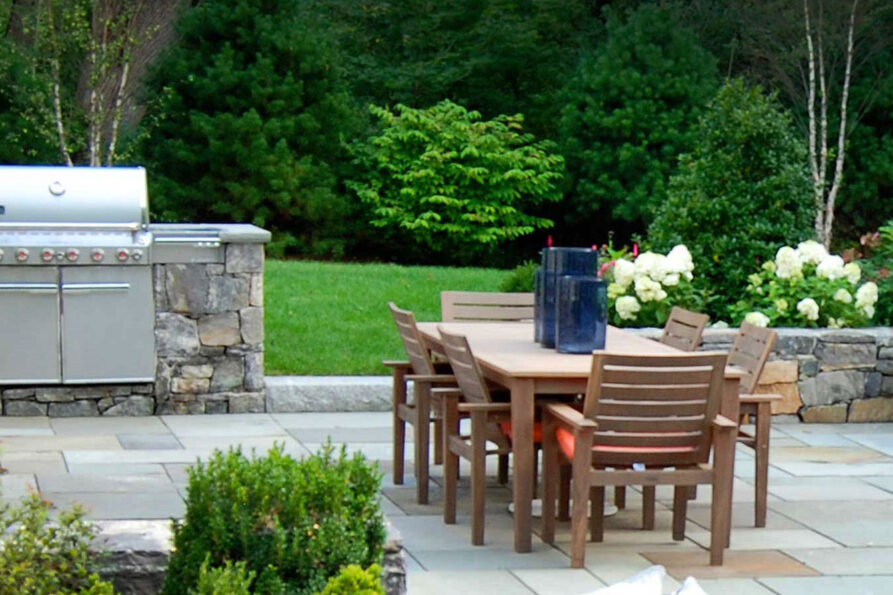
- outdoor kitchens with gas, plumbing, or electrical work
- fire features, fireplaces, or built-in grills
- driveway expansions or curb cut changes
- tree removal in protected areas
- work near wetlands, streams, ponds, or floodplains
- grading, drainage changes, dry wells, or stormwater systems
- hardwired landscape lighting
Before beginning any major project, it is wise to check with your local building department, planning department, or Conservation Commission, even if the work seems straightforward.
Start With Zoning and Property Setbacks
Your first step should be understanding your property’s zoning designation. Zoning laws determine what kinds of structures and features are allowed, how close they can be to property lines, how tall certain elements can be, and how much of the lot may be covered by buildings or impervious surfaces.
You can usually find zoning maps and guidance on your city or town’s planning department website. Boston homeowners can consult the Boston Zoning Viewer to determine their district and applicable rules. Newton, Brookline, Cambridge, Wellesley, Weston, and most surrounding communities offer similar tools or planning department resources.
Zoning is especially important for projects involving:
- fences and gates
- accessory structures
- pools and pool equipment
- outdoor kitchens or covered structures
- driveways and parking areas
- changes near property lines
The earlier zoning is reviewed, the easier it is to design within the rules rather than revise the project later.
Conservation and Wetlands Review
If your property is located near wetlands, a stream, pond, riverfront area, or floodplain, Massachusetts conservation laws may apply. Under the Massachusetts Wetlands Protection Act, work within 100 feet of certain protected wetland resource areas may require review. Work within a 200-foot riverfront area may also trigger additional requirements.
Many towns add their own local wetlands bylaws, which can be stricter than state standards. Communities such as Concord, Lexington, Weston, Wellesley, and Dover often take conservation review seriously because many residential properties include wetlands, streams, low-lying land, or conservation buffers.
Landscape projects that may trigger Conservation Commission review include:
- patios and terraces within buffer zones
- tree removal near wetlands or streams
- grading or excavation
- drainage improvements
- pool installations
- retaining walls
- driveway changes
- trenching for irrigation or lighting
To determine whether your project may be affected, contact your town’s Conservation Commission or consult the MassDEP Wetlands Permitting Guide.
Related Blog: Massachusetts Wetlands Laws and Landscape Projects: A Practical Guide for Property Owners
Building Permits and Planning Reviews
Not every outdoor project requires a building permit, but many do. If your design involves excavation, structural work, plumbing, gas, electrical systems, or built outdoor features, a permit may be necessary.
This process often includes submitting a site plan, construction details, contractor information, and an application fee. Depending on the municipality and the complexity of the project, review may take a few days or several weeks. Boston homeowners can apply online through the City of Boston building forms and applications portal.
Building permits are commonly associated with:
- decks, pergolas, and pavilions
- retaining walls
- outdoor kitchens
- fireplaces and gas fire features
- pools and spas
- covered structures
- major stair or grade transitions
- electrical and plumbing work
Many towns also require permits or engineering review for grading or altering existing drainage patterns, especially when larger areas of soil are disturbed or impervious surface is added.
Stormwater and Drainage Requirements
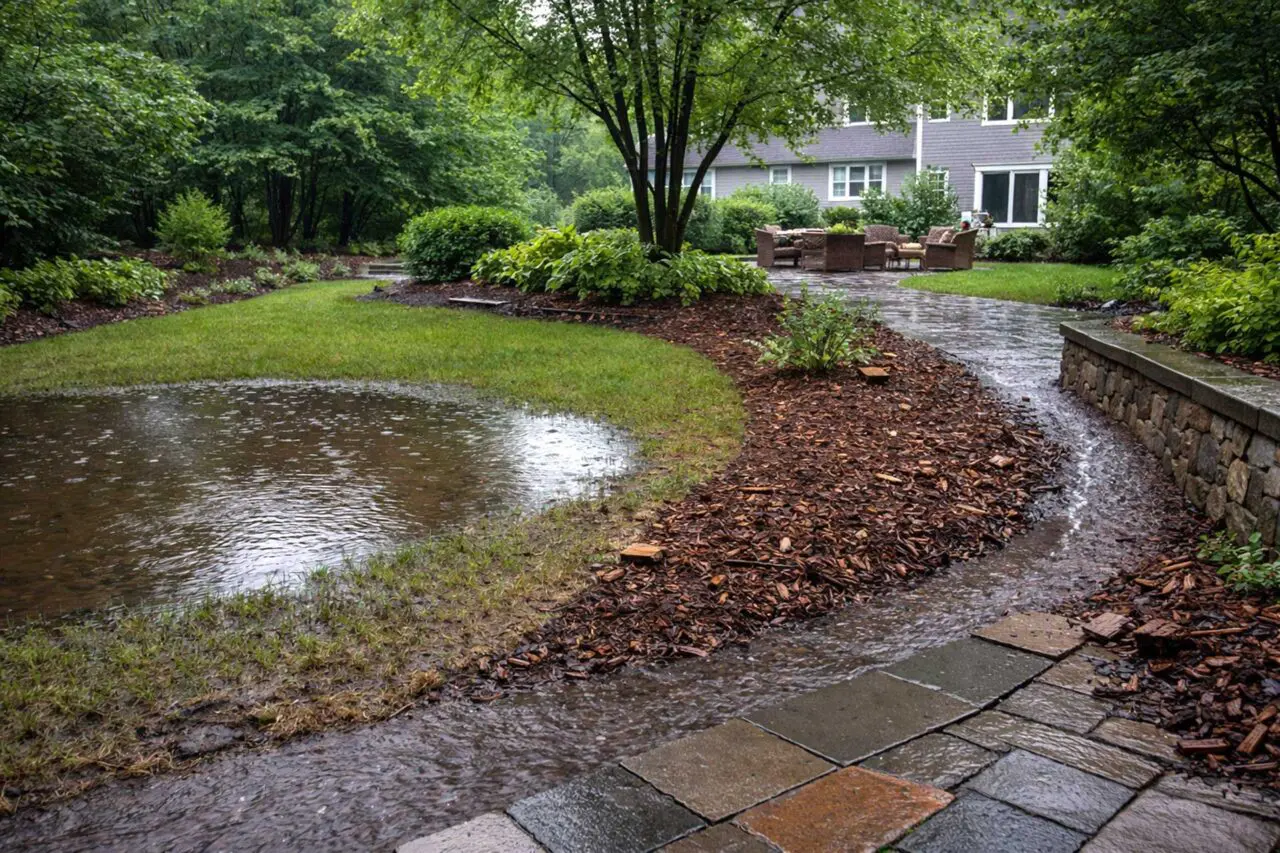
Drainage is one of the most important permitting considerations in Massachusetts landscape projects. Adding patios, driveways, pool decks, walkways, or other hardscape can change how water moves across a property. If that water is not managed properly, it can contribute to erosion, icy surfaces, saturated planting beds, or runoff problems for neighboring homes.
Towns may require stormwater review or drainage plans when a project changes grading, adds impervious surface, or disturbs a certain amount of land. Newton, for example, has detailed stormwater resources and requirements related to development and site work.
Drainage review may be relevant for:
- new patios and terraces
- driveway expansions
- pool installations
- retaining walls
- dry wells or infiltration systems
- regrading sloped yards
- downspout or roof runoff management
Drainage should be addressed during design, not after construction begins.
Related Blog: Landscape Drainage Solutions for Massachusetts Properties
What If Your Property Is in a Historic District?
Properties located in designated historic districts, such as Beacon Hill, parts of Salem, Lexington Center, or certain Brookline and Cambridge neighborhoods, may be subject to an additional layer of review. Visible exterior work, including landscape changes, fences, lighting, masonry, gates, and hardscape, may require approval from a local Historical Commission.
The goal is to preserve the visual character of historically significant neighborhoods. That often means stricter guidelines around materials, colors, visibility from public ways, and architectural compatibility.
If your property is governed by a Homeowners Association, you should also review HOA rules before starting work. HOA guidelines may dictate fence styles, planting restrictions, lighting limits, exterior colors, or acceptable materials for outdoor structures.
Tree Removal and Tree Protection Rules
Tree protection has become a growing priority in Massachusetts, especially in urban and suburban communities where mature trees contribute to shade, stormwater management, neighborhood character, and property value.
Cities such as Cambridge and Brookline have ordinances that may require permits to remove large trees on private property. In Cambridge, trees over a certain size may be protected under the city’s Urban Forestry and tree protection resources. In Boston, trees in the public right-of-way or on city property are protected, and proposed removal or pruning requires approval from the Boston Parks and Recreation Department.
Tree review may be required when:
- removing large private trees
- working near public street trees
- building within a tree protection zone
- removing trees in wetlands buffers or riverfront areas
- altering grade near mature tree roots
A professional landscape plan should evaluate mature trees early, especially when construction access, grading, walls, or drainage improvements are involved.
Retaining Walls, Stone Walls, and Structural Review
Retaining walls taller than four feet often require structural review and permitting. These walls can affect soil stability, drainage, neighboring grades, and safety, so municipalities typically want to confirm they are properly designed and built.
Even shorter walls may require review if they are near property lines, support a surcharge such as a driveway or patio, or fall within a regulated area.
Existing stone walls also deserve caution. In some rural or semi-rural towns such as Weston, Dover, Lincoln, and Concord, roadside stone walls may be protected under scenic road bylaws or local regulations. Moving, altering, or removing them could trigger a public hearing or permit requirement.
Outdoor Lighting, Utilities, and Electrical Work
Outdoor lighting is another often-overlooked permitting issue. Low-voltage path lights or solar fixtures may not require permits in many towns, but hardwired systems, floodlights, transformers, and electrical trenching may require review or licensed installation.
Municipal codes may also regulate glare, fixture placement, light spillover, and lighting near neighboring homes. For larger properties, lighting should be coordinated with pathways, steps, driveways, planting beds, outdoor kitchens, pools, and security needs.
Lighting is especially important in historic districts, where visible fixtures may need to match the architectural character of the property.
How Long Does the Permit Process Take?
Project timelines vary depending on size, complexity, and the number of departments involved. Simple permits may be approved within a week or two. Projects involving Conservation Commission review, zoning relief, historical approval, engineering review, or public hearings may take two to three months or longer.
Spring and early summer are often the busiest times for building, planning, and conservation offices. Starting early is one of the best ways to protect your preferred construction schedule.
Permit fees also vary widely. Minor permits may cost under $100, while projects requiring engineering review, public hearings, or multiple filings may cost several hundred dollars or more.
Pros and Cons of Handling Permits Early
| Pros | Cons |
|---|---|
|
|
Resources for Boston-Area Homeowners
To help you get started, here are direct links to municipal permit pages and zoning or conservation resources for several Greater Boston communities:
- Boston: Inspectional Services Department
- Brookline: Building Department
- Newton: Stormwater Resources
- Cambridge: Department of Public Works
- Arlington: Conservation Commission
The Massachusetts Association of Conservation Commissions is also a helpful resource for understanding wetland bylaws, Conservation Commission procedures, and local environmental review.
Frequently Asked Questions
Q: Do I need a permit for a patio in Massachusetts?
A: It depends on the town, the size of the patio, whether footings are involved, how much impervious surface is being added, and whether the work is near wetlands, property lines, or a historic district. Many patios require at least some level of review.
Q: Do retaining walls require permits?
A: Retaining walls over four feet often require structural review and permitting. Shorter walls may also require review depending on location, slope, drainage, and proximity to property lines or regulated areas.
Q: Can I remove a tree from my property without approval?
A: Not always. Some Massachusetts cities and towns regulate private tree removal, especially for larger trees. Tree removal near wetlands, riverfront areas, public rights-of-way, or historic districts may also require review.
Q: Who is responsible for obtaining landscape permits?
A: Responsibility varies by project and agreement. In many cases, the homeowner is ultimately responsible for compliance, while an experienced landscape design or construction firm may help prepare materials, coordinate filings, or manage the permitting process.
Q: How early should I start the permitting process?
A: Start as early as possible, ideally during the design phase. Projects involving zoning, conservation, historic review, or engineering can take weeks or months before construction can begin.
Final Thoughts
If you are planning a landscape upgrade in the Boston area, do not wait until after hiring a crew to think about permits. Starting early and engaging with your local planning department, or working with a landscape firm that understands local permitting, can make the project smoother, safer, and more successful.
As Chris Tracey of the Ecological Landscape Alliance puts it:
“Permits are not the enemy. They’re part of responsible stewardship. Getting it right upfront protects your investment and helps your project integrate seamlessly into the community and the environment.”
Need Help With Your Project?
At a Blade of Grass, we specialize in creating elegant, sustainable outdoor spaces that are not only beautiful, but also planned with local regulations in mind. Our team understands the zoning, conservation, building, drainage, and municipal considerations that shape landscape projects across Boston and the surrounding suburbs.
From initial concept to final planting, we help coordinate the details that allow a project to move forward with clarity and confidence. Contact us to schedule a consultation and take the first step toward a thoughtful, well-planned transformation of your property.