A well-placed container can change the way a property feels before anyone reaches the front door. Fresh planters at the entry, generous containers around a terrace, window boxes under prominent windows, or seasonal displays near an outdoor kitchen can make a home feel cared for, current, and intentionally designed.
For Boston-area homeowners, seasonal container planting is especially valuable because the landscape is always in transition. Spring arrives with soft color and new growth. Summer asks more from plants, soil, and irrigation. Fall brings richer textures and architectural foliage. Winter requires structure, evergreens, branches, and restraint. Containers allow the landscape to respond to each season without redesigning the entire property.
This is where professional seasonal container planting services become more than a decorative upgrade. They are part of a thoughtful landscape maintenance plan. Containers help define arrival areas, support outdoor entertaining, soften hardscape, frame garden views, and keep highly visible spaces looking finished throughout the year.
The National Association of Realtors reports that 92% of Realtors have suggested sellers improve curb appeal before listing, and 97% believe curb appeal is important in attracting a buyer. While most homeowners are not preparing to sell every season, the point still matters: the exterior of a home shapes perception quickly. Seasonal planters are one of the most flexible ways to strengthen that impression.
“Seasonal containers are small in footprint, but they have an outsized effect on how a property feels. They bring attention to the places people use most: the front door, terrace, patio, pool, and garden paths.”
— Joanna McCoy, Senior Landscape Designer, a Blade of Grass
Key Takeaways
- Seasonal container planting keeps a property looking fresh without requiring a major landscape renovation.
- Professional planter care helps containers perform through New England’s changing temperatures, sun exposure, and watering demands.
- Entry planters, patio containers, window boxes, and terrace plantings can be coordinated with broader landscape design and property maintenance.
- Containers are highly visible, which makes seasonal refreshes one of the simplest ways to improve curb appeal.
- A year-round container program can include spring color, summer annuals, fall textures, winter greens, and ongoing maintenance.
Why Seasonal Containers Matter More Than Homeowners Realize
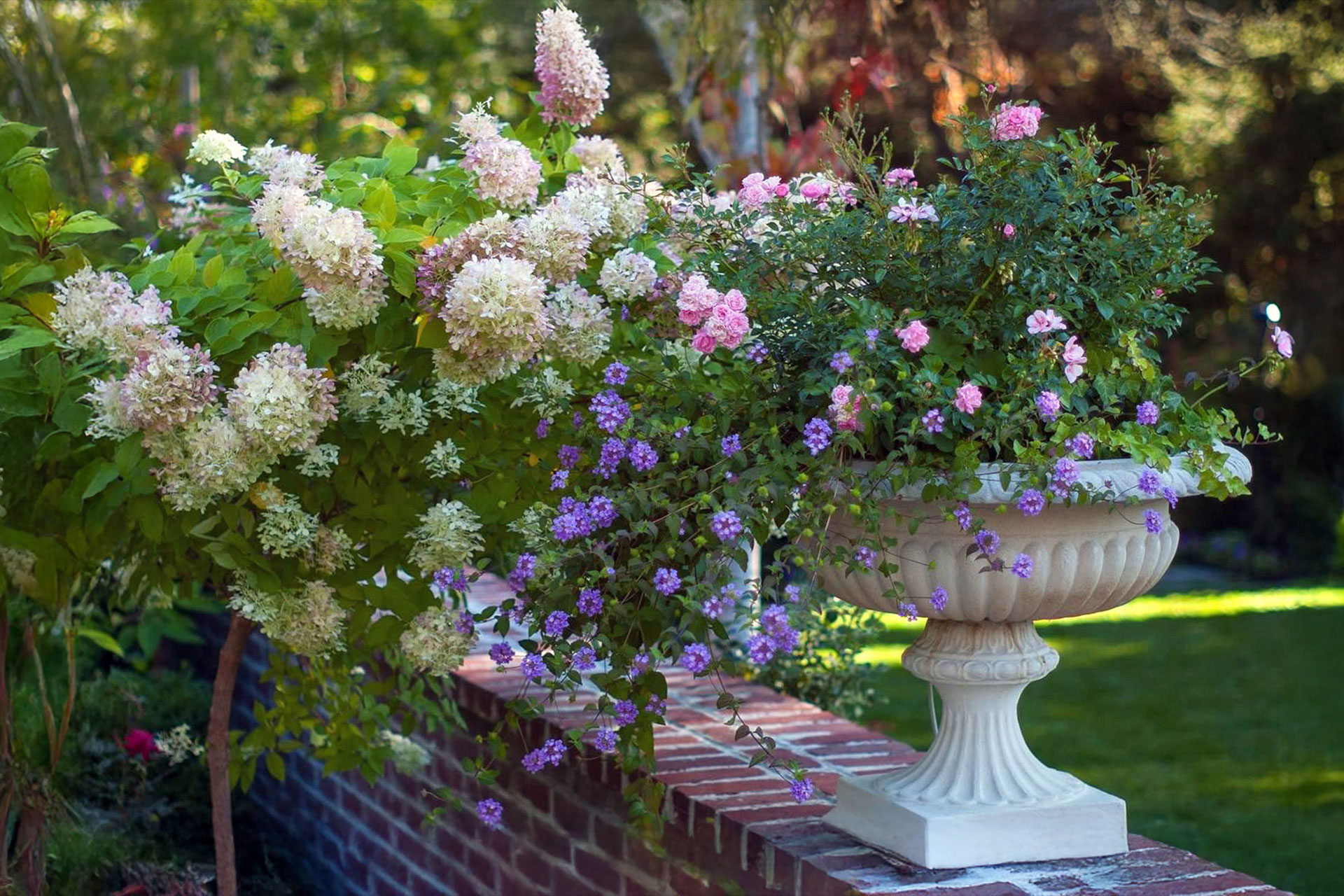
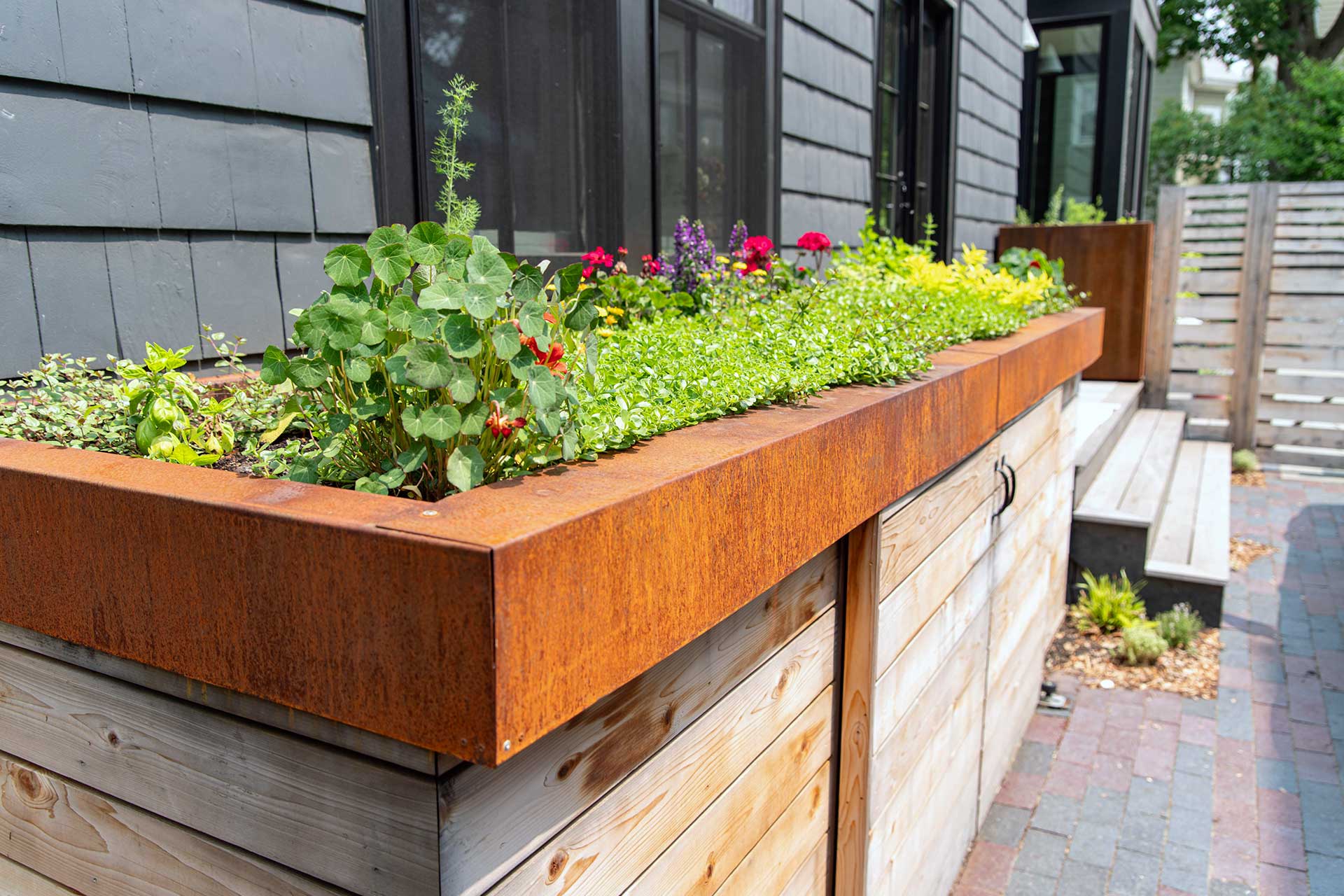
Planters and containers are often thought of as finishing touches. In practice, they do much more.
They guide movement. They frame entries. They soften stone, brick, gravel, and paving. They bring scale to large doors and wide terraces. They add color where permanent planting beds may not be practical. They also create visual continuity between the home, the hardscape, and the surrounding landscape.
For high-end residential properties in Greater Boston, seasonal containers are particularly useful because they solve several common design and maintenance challenges:
- They refresh important spaces quickly. A front entry, pool terrace, or courtyard can feel updated in a single seasonal rotation.
- They add planting where garden beds are limited. This is especially helpful for urban properties, roof terraces, narrow side yards, and paved courtyards.
- They bring color to hardscape-heavy areas. Patios, terraces, driveways, and outdoor kitchens often benefit from living texture.
- They help bridge seasonal gaps. Containers can carry visual interest when perennials are not yet blooming or after garden beds have been cut back.
- They support ongoing property maintenance. Fresh, healthy containers are a visible sign that the whole landscape is being cared for.
The existing post on planters and containers in landscape design explains why containers are such versatile design elements. This article looks more closely at the service side: how seasonal container planting and ongoing care keep a property polished throughout the year.
Seasonal Container Planting vs. One-Time Planter Installation
A one-time planter installation can look beautiful on day one. A seasonal container planting program is different. It considers how the containers will perform, evolve, and be refreshed over time.
That distinction matters because containers live in more demanding conditions than many homeowners expect. They have limited soil volume, dry out faster than garden beds, and are more exposed to temperature swings. The University of Minnesota Extension notes that container plants often require more attention than plants growing in garden beds, and that depending on container size and temperature, watering may be needed more than once per day during hot weather. University of Minnesota Extension
Pros and Considerations of Seasonal Container Planting
| Pros | Considerations |
|---|---|
| Adds fresh seasonal color and texture | Requires consistent watering and care |
| Improves curb appeal in highly visible areas | Containers must be sized appropriately |
| Works well on patios, terraces, entries, and urban spaces | Plant choices must match sun, shade, wind, and exposure |
| Can be refreshed several times per year | Smaller containers dry out quickly |
| Supports broader landscape maintenance goals | Poor drainage can damage plants and containers |
| Offers flexibility without major construction | Best results require thoughtful design and follow-through |
The takeaway is simple: containers are flexible, but they are not “set it and forget it.” When handled professionally, they become one of the most reliable ways to keep a property looking composed.
What Professional Seasonal Container Planting Services Include
A strong container program involves more than choosing attractive plants. It begins with the property itself.
Site Review and Placement
Before planting, each container location should be evaluated for sun exposure, shade, wind, reflected heat, irrigation access, foot traffic, and architectural context.
A front entry in Wellesley may need large, symmetrical planters that hold their scale against a formal façade. A Cambridge courtyard may need slimmer containers that introduce greenery without crowding circulation. A pool terrace in Weston may need durable summer plantings that tolerate heat, glare, and entertaining activity.
Good placement answers several questions:
- Where will the container be seen from?
- Does it frame an entry, path, view, or seating area?
- Is the scale appropriate for the home and hardscape?
- Will the container receive enough water?
- Will the planting style feel connected to the rest of the landscape?
Container Selection and Review
The container itself matters as much as the planting. Size, material, drainage, color, and shape all influence performance and appearance.
For New England properties, durability is especially important. Freeze-thaw cycles, winter exposure, and drainage conditions can affect whether a container performs over multiple seasons. Lightweight materials may be useful on roof decks or terraces, while larger stone, fiberglass, metal, or frost-resistant containers may be more appropriate for prominent entries and estate settings.
Soil Preparation and Drainage
Healthy seasonal planters depend on the right growing medium. Garden soil is usually too dense for containers. A professional potting mix provides better drainage, oxygen, and moisture management.
Drainage is equally important. Containers need water to move through the soil, but they should not stay soggy. The University of Minnesota Extension notes that most container plants prefer soil that is moist, not saturated, and warns that waterlogged soil can create problems for plant health. University of Minnesota Extension
Seasonal Plant Selection
Plant selection should reflect more than color. A successful container design considers:
- Mature plant size
- Sun and shade tolerance
- Heat tolerance
- Water needs
- Texture and foliage
- Bloom timing
- Maintenance requirements
- Relationship to the home’s architecture
- Relationship to nearby planting beds
UMass Extension notes that flowering annuals can provide low-maintenance color from spring to fall, though some benefit from deadheading or mid-season shearing to encourage continued bloom. UMass Extension
Installation and Styling
Professional installation is where the container becomes part of the property, not just a collection of plants. Height, layering, texture, repetition, and proportion all matter.
A refined container should not feel overfilled, under-scaled, or disconnected from its setting. The goal is not to force as much color as possible into one pot. The goal is to create a composition that looks intentional from across the driveway, from the garden path, and up close.
Ongoing Maintenance
Container maintenance may include:
- Watering adjustments
- Fertilization
- Grooming
- Deadheading
- Pruning
- Replacing tired plants
- Checking drainage
- Removing seasonal debris
- Refreshing displays as weather changes
- Transitioning containers between seasons
This is the difference between planters that look good for two weeks and planters that stay attractive through the full season.
Seasonal Container Ideas for New England Homes
The best seasonal container programs are not random. They follow the rhythm of the property and the region.
Spring Containers
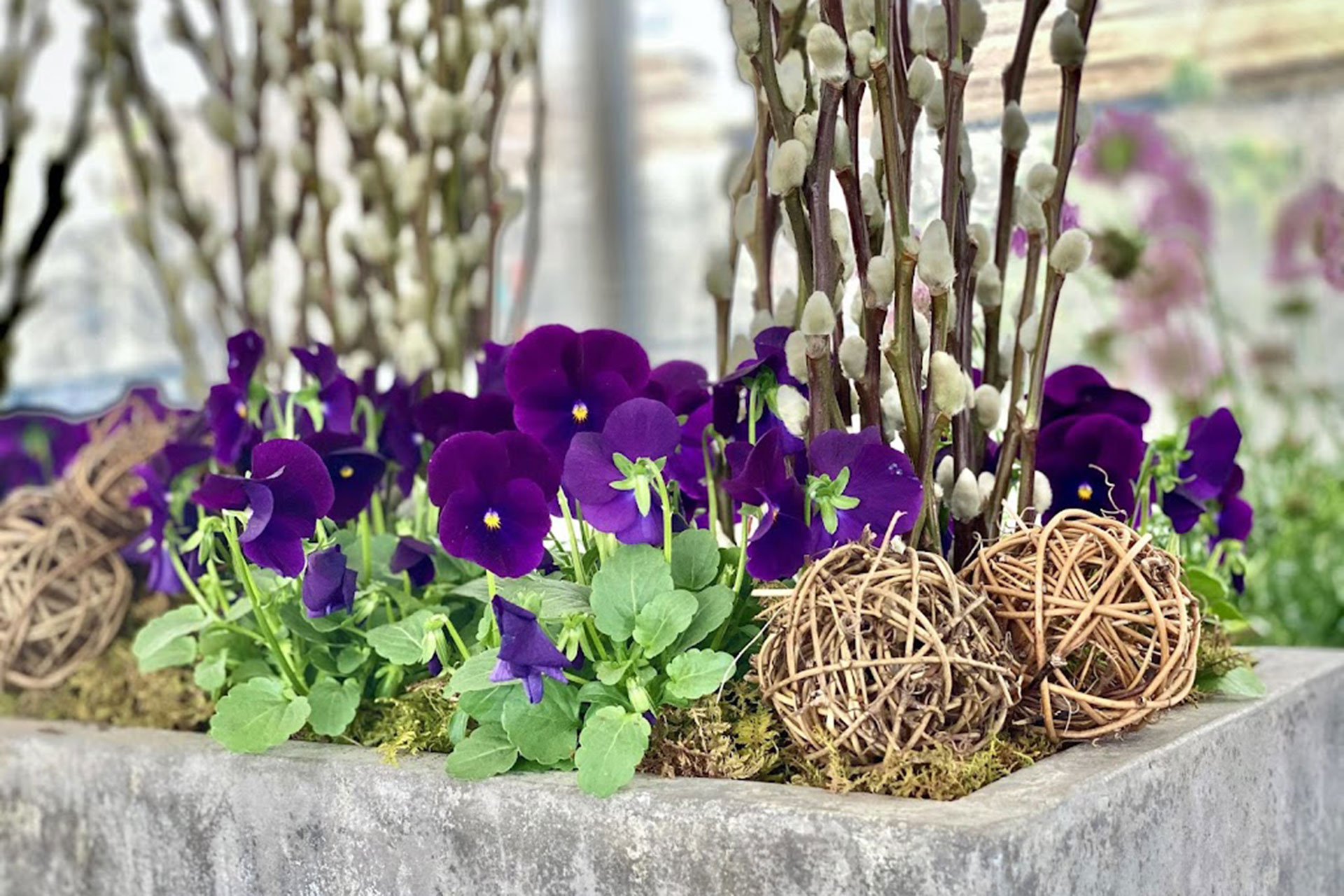
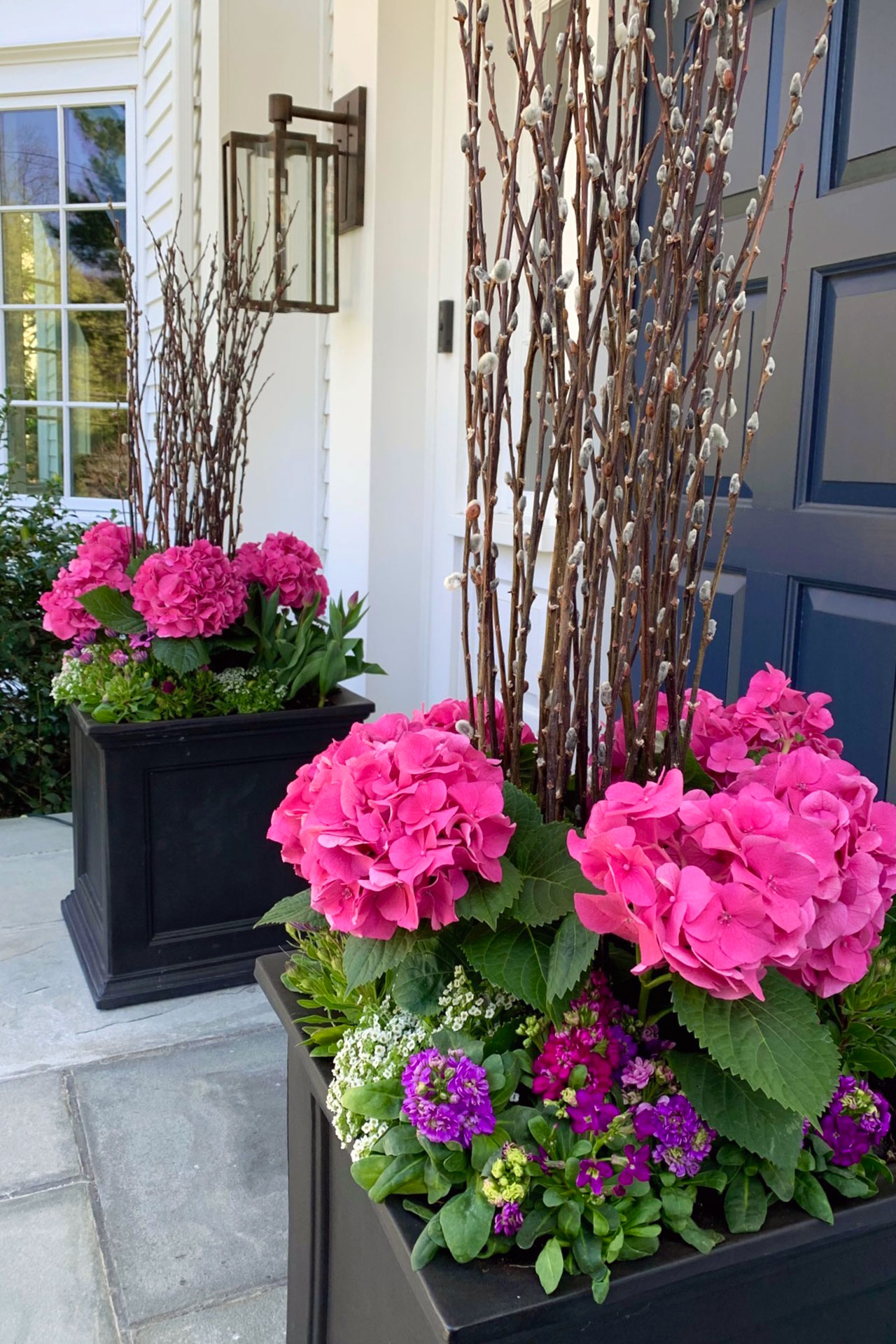
Spring planters bring life back to the landscape after winter. They are especially useful around front entries, walkways, garden gates, and outdoor living areas that begin to see more use as the weather improves.
Spring containers may include cool-season annuals, bulbs, fresh foliage, early texture, and soft color. They can make a property feel awake before the permanent landscape has fully filled in.
Good spring container goals include:
- Brightening the front entry
- Softening bare garden beds
- Adding color near patios and walkways
- Introducing early-season texture
- Creating a clean transition out of winter displays
Summer Containers
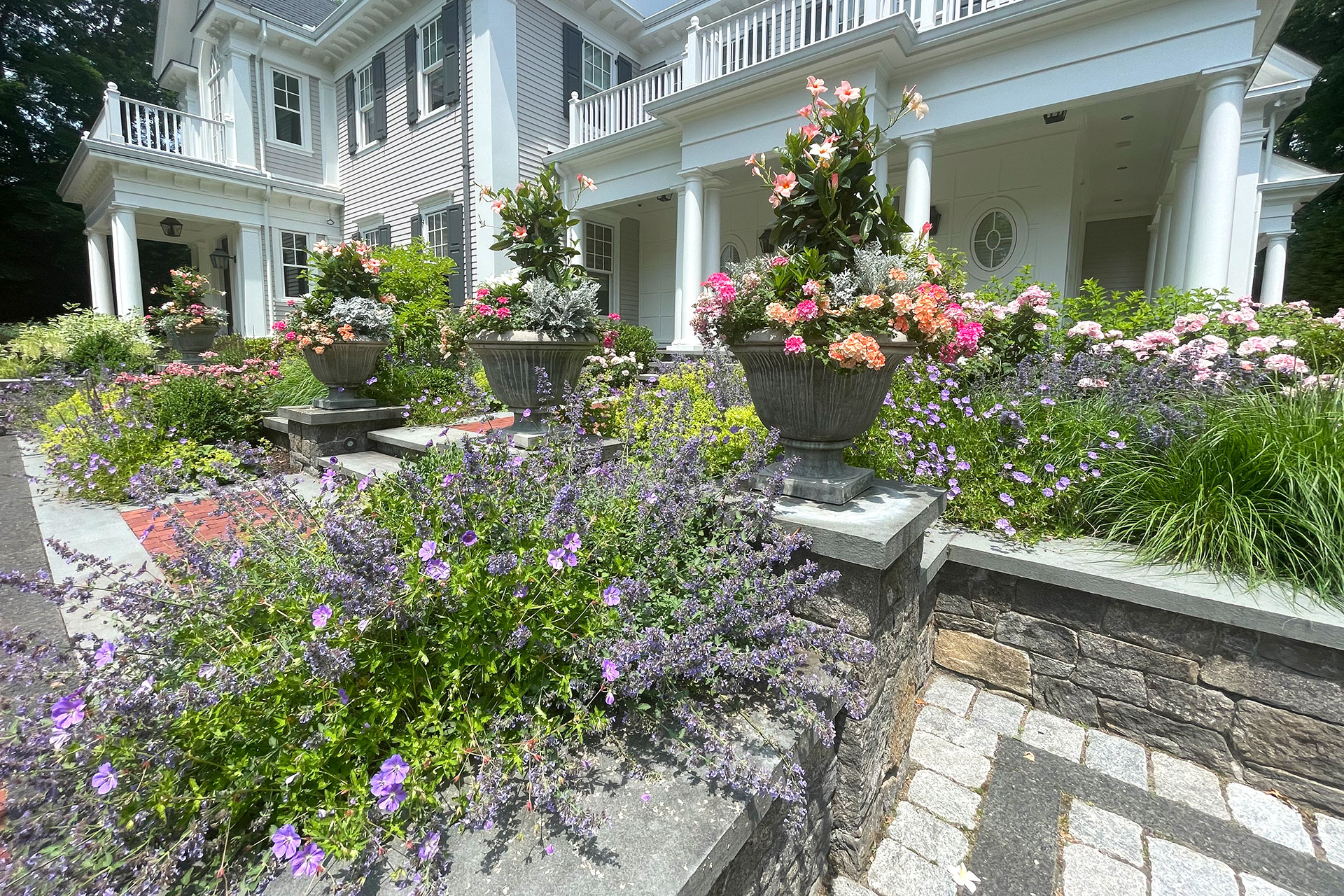
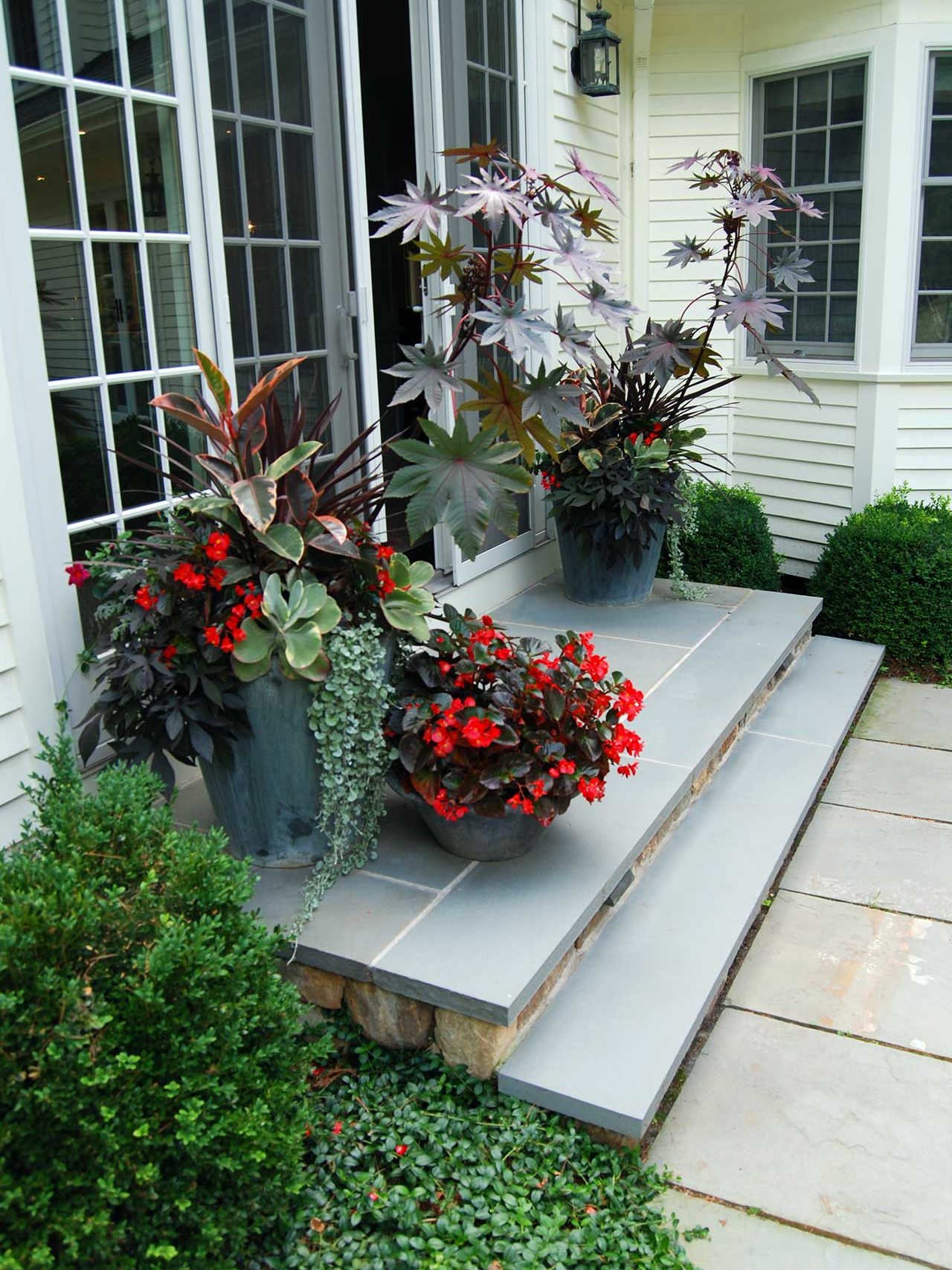
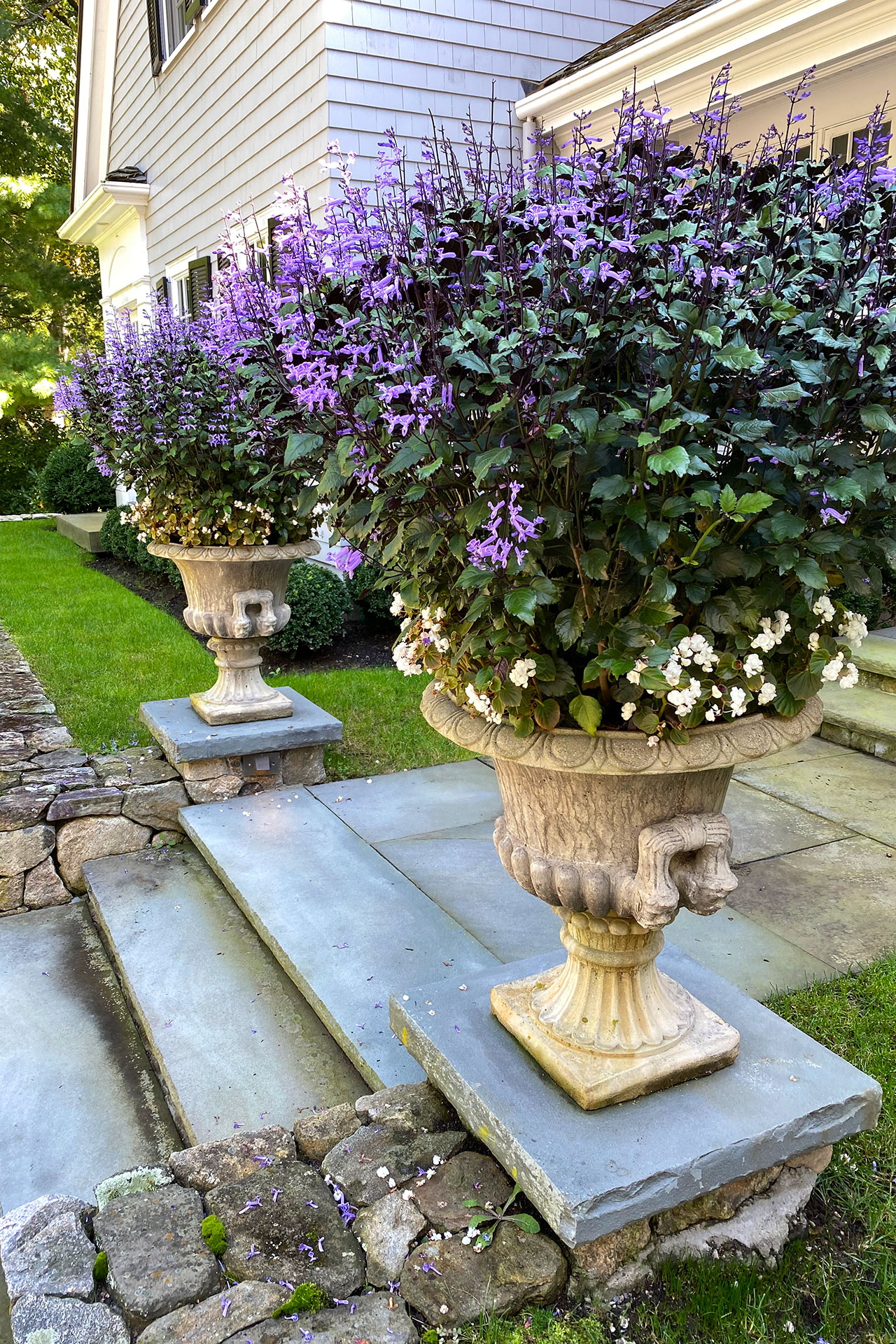
Summer containers often carry the greatest visual weight. They need to look good during outdoor entertaining season and withstand heat, sun, and frequent use.
For pool terraces, outdoor kitchens, dining patios, and larger gathering spaces, summer containers can help define zones and make hardscape feel more inviting. They can also introduce color where permanent planting beds would interfere with circulation or views.
Because summer containers dry out quickly, care is especially important. Larger containers, proper soil, consistent watering, and thoughtful plant selection all make a noticeable difference.
Fall Containers

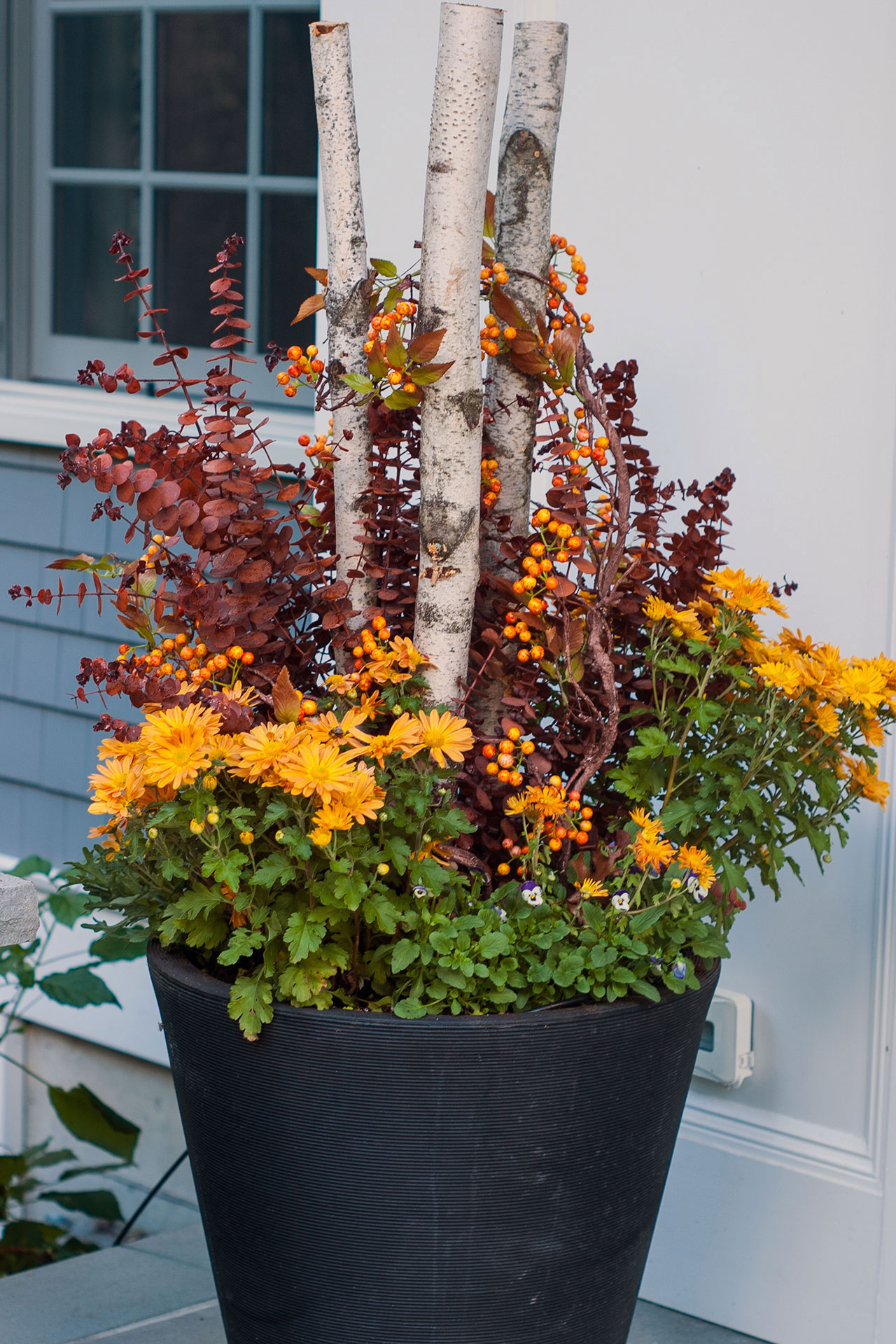
Fall containers bring richness and depth to the landscape as summer annuals fade. This is where foliage, grasses, seed heads, ornamental peppers, cabbages, kale, branches, and restrained seasonal accents can create a more sophisticated autumn display.
For high-end Boston-area homes, fall containers should feel designed rather than overly themed. They can acknowledge the season without overwhelming the architecture.
Strong fall container locations include:
- Front steps
- Driveway entries
- Courtyards
- Outdoor fireplaces
- Covered porches
- Garden paths
- Side entrances used by family and guests
Winter Containers
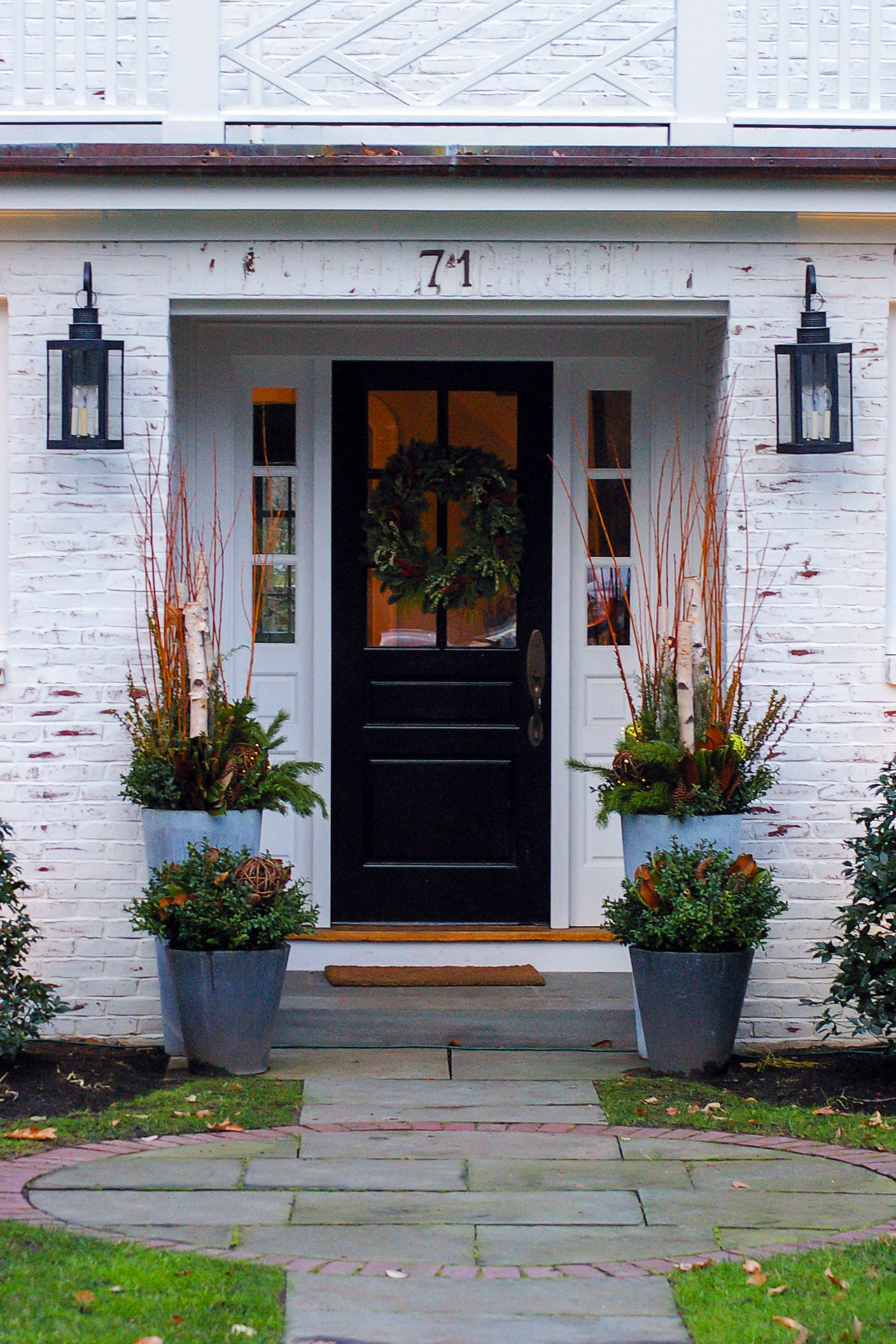
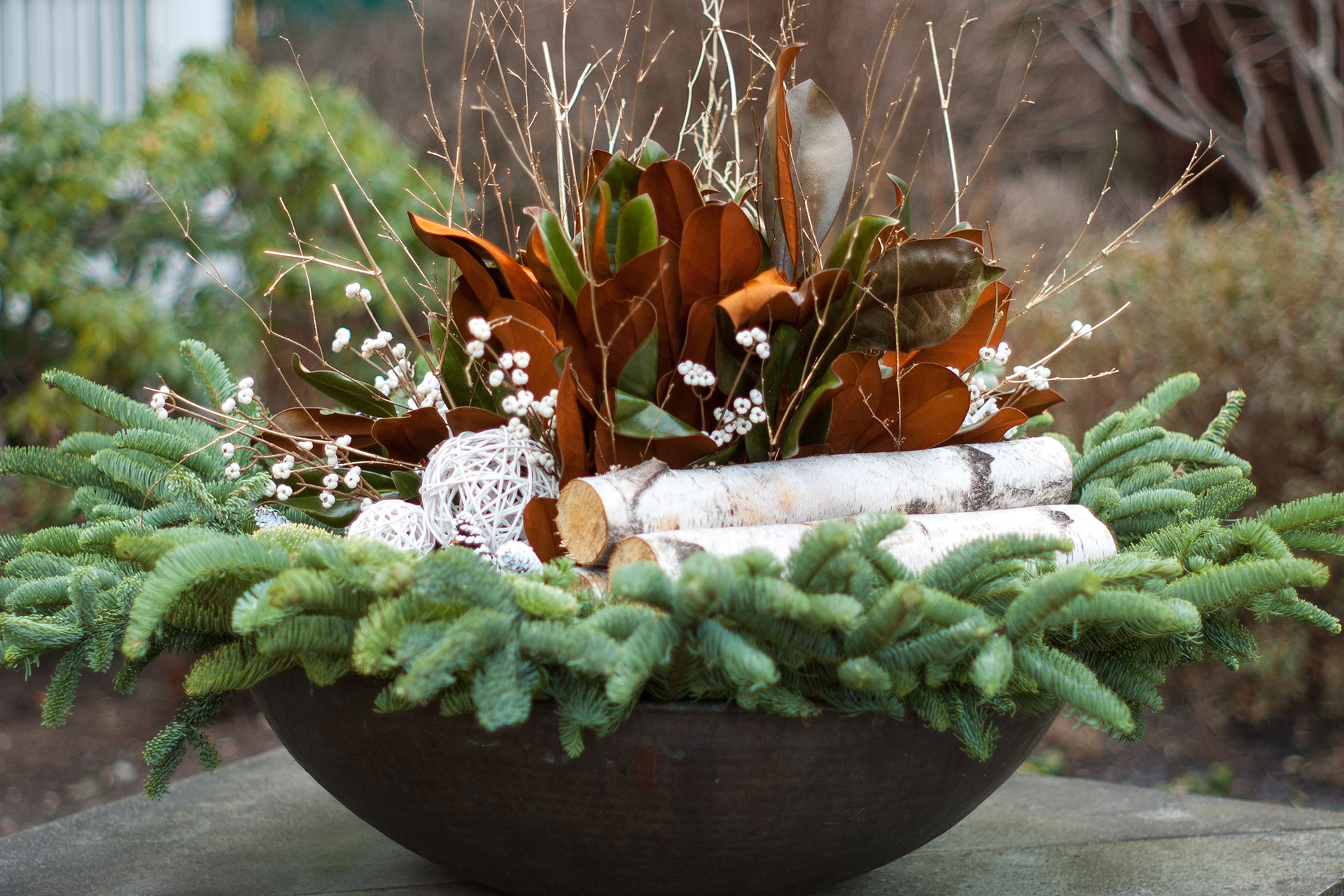
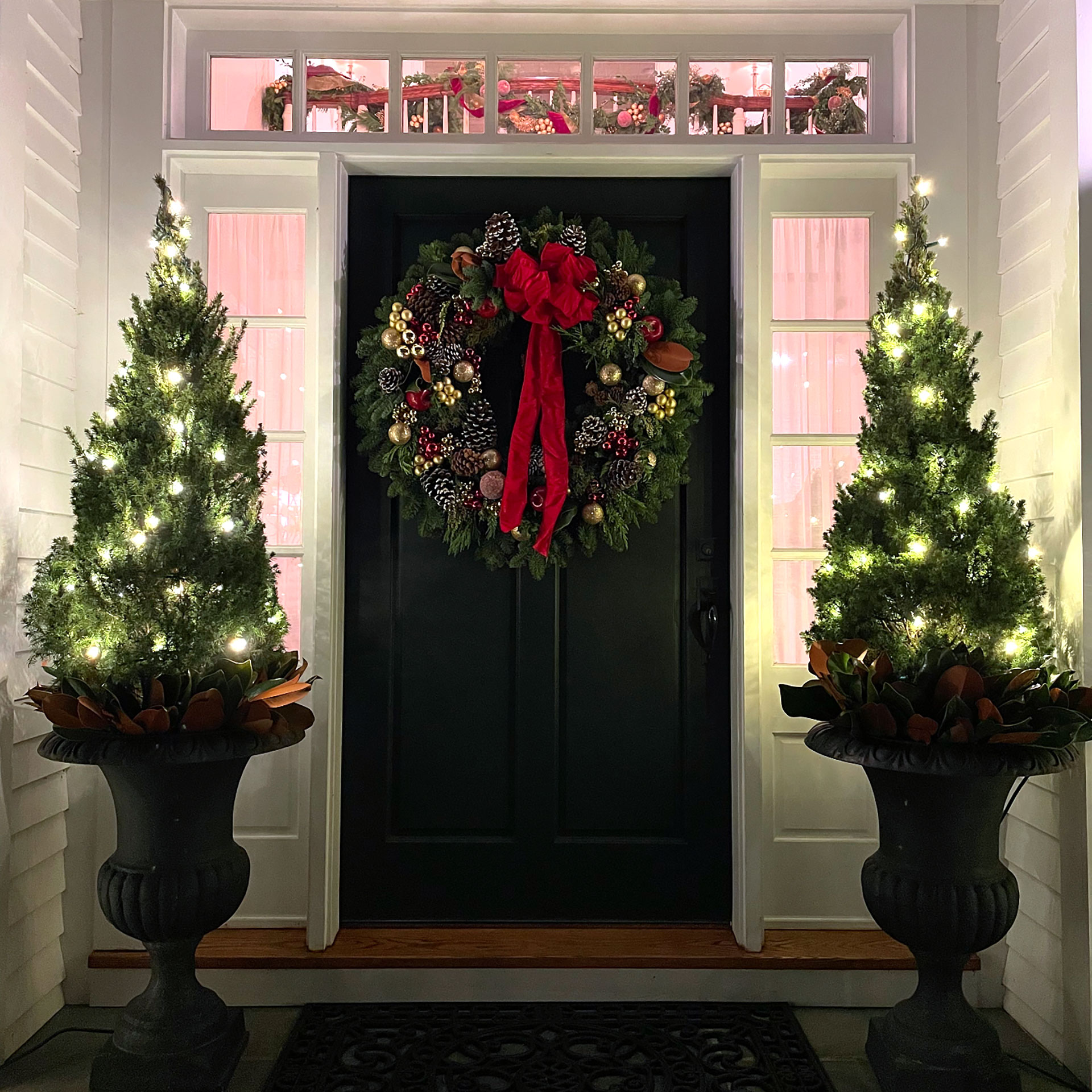
Winter containers are often underused, but they can be one of the most valuable seasonal displays in New England. Once garden beds are dormant and deciduous plants have dropped their leaves, containers can bring structure back to the property.
Winter planters may include evergreen boughs, birch branches, magnolia leaves, winterberry, pinecones, sculptural stems, and subtle lighting. The best winter containers transition beyond the holidays so the property still looks composed in January, February, and early March.
This is also where professional design restraint matters. A winter display should complement the home, not compete with it.
Where Seasonal Planters Have the Most Impact
Seasonal containers work especially well in places where people arrive, gather, or pause.
Front Entries
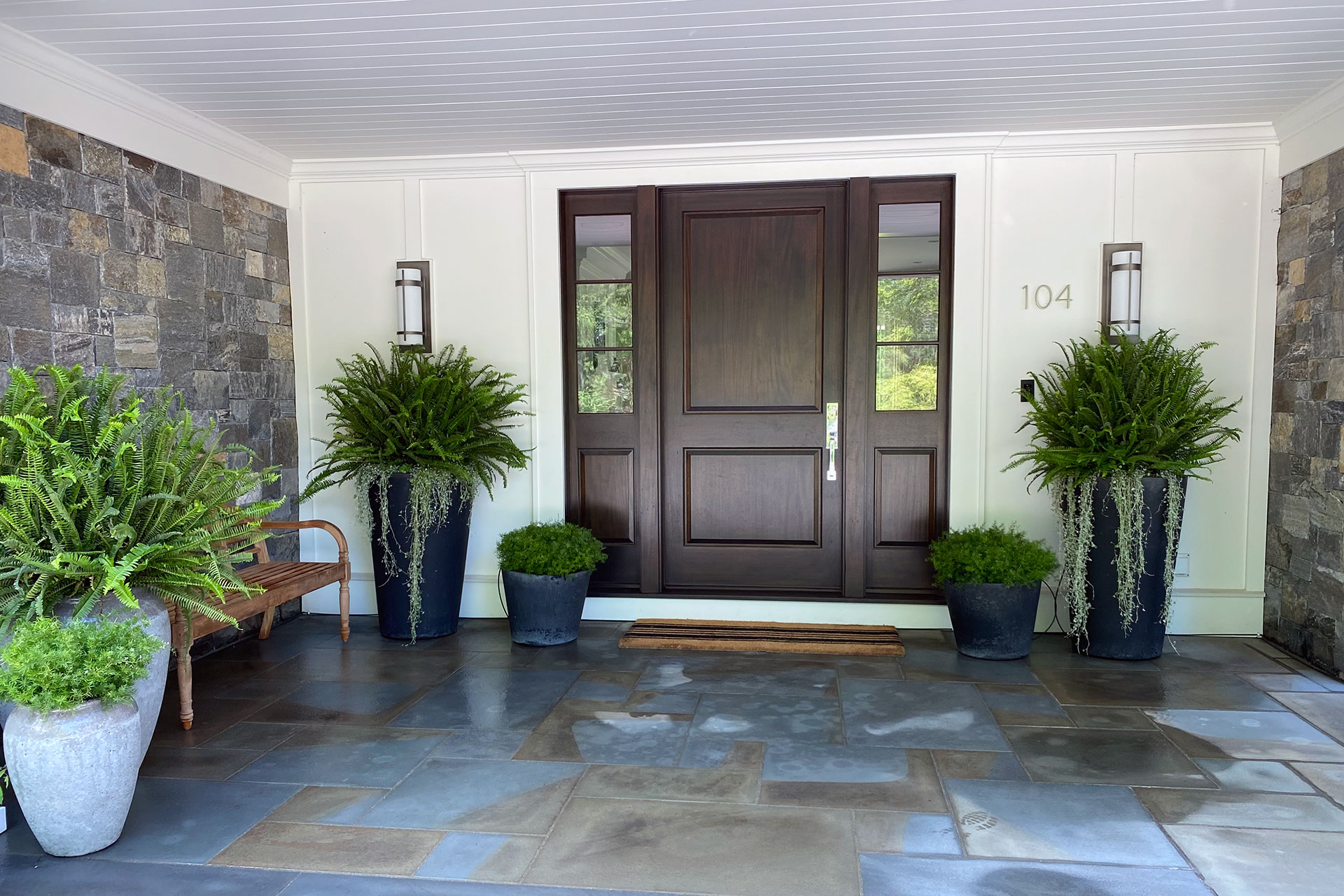
The front entry is the most obvious and often most important location. Containers can balance the doorway, frame stairs, soften masonry, and make the home feel welcoming.
For larger homes, small containers often look undersized. For historic homes, container style should respect the architecture. For contemporary homes, cleaner forms and simpler plant palettes may feel more appropriate.
Patios and Terraces
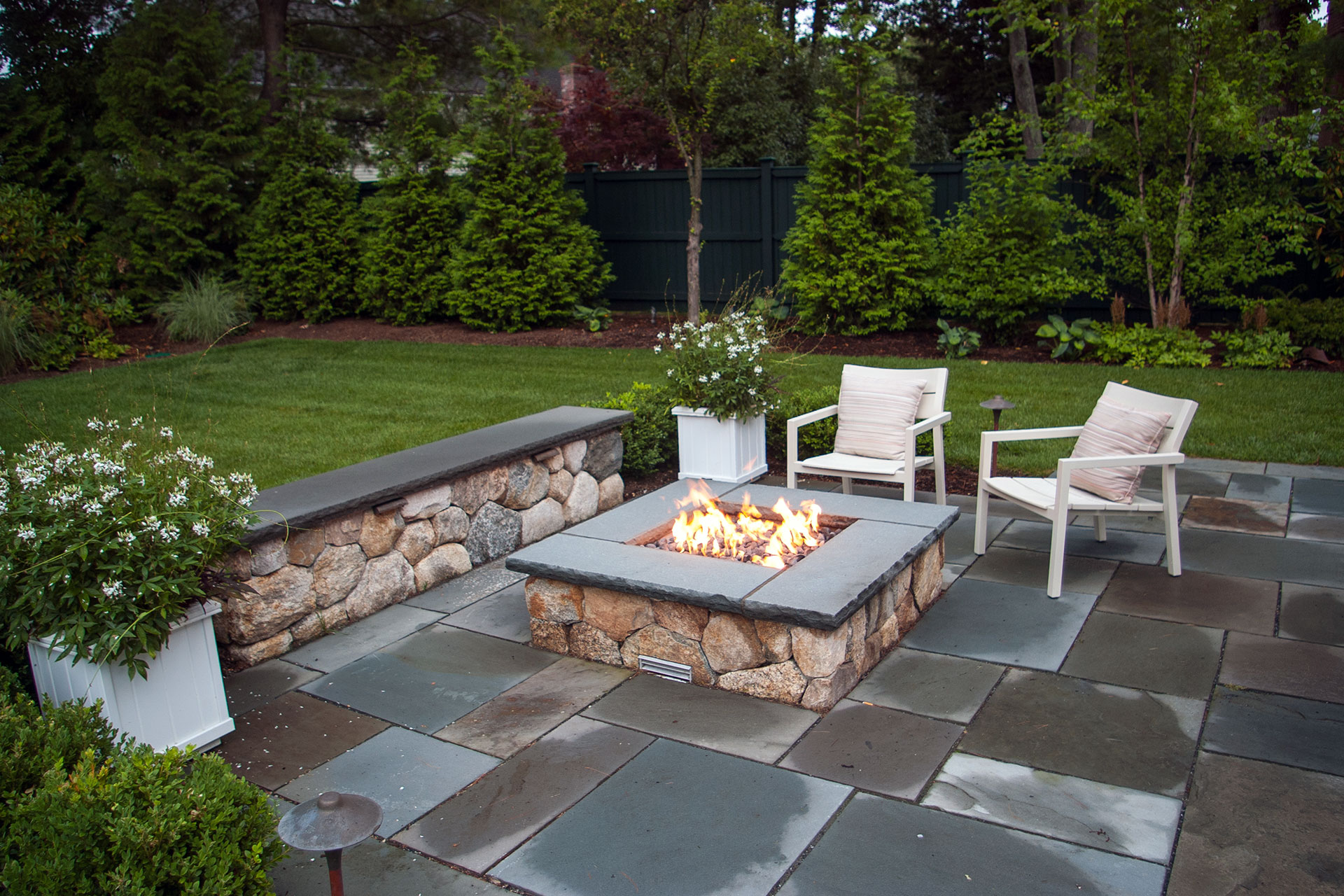
Patios and terraces often need planting, but permanent beds are not always practical. Containers bring softness, scale, and color to stone or porcelain surfaces.
They can also define outdoor rooms. A pair of larger containers can mark the edge of a dining area. A cluster of planters can soften a seating space. Tall containers can bring privacy or enclosure to a terrace without adding a permanent structure.
Pool Areas
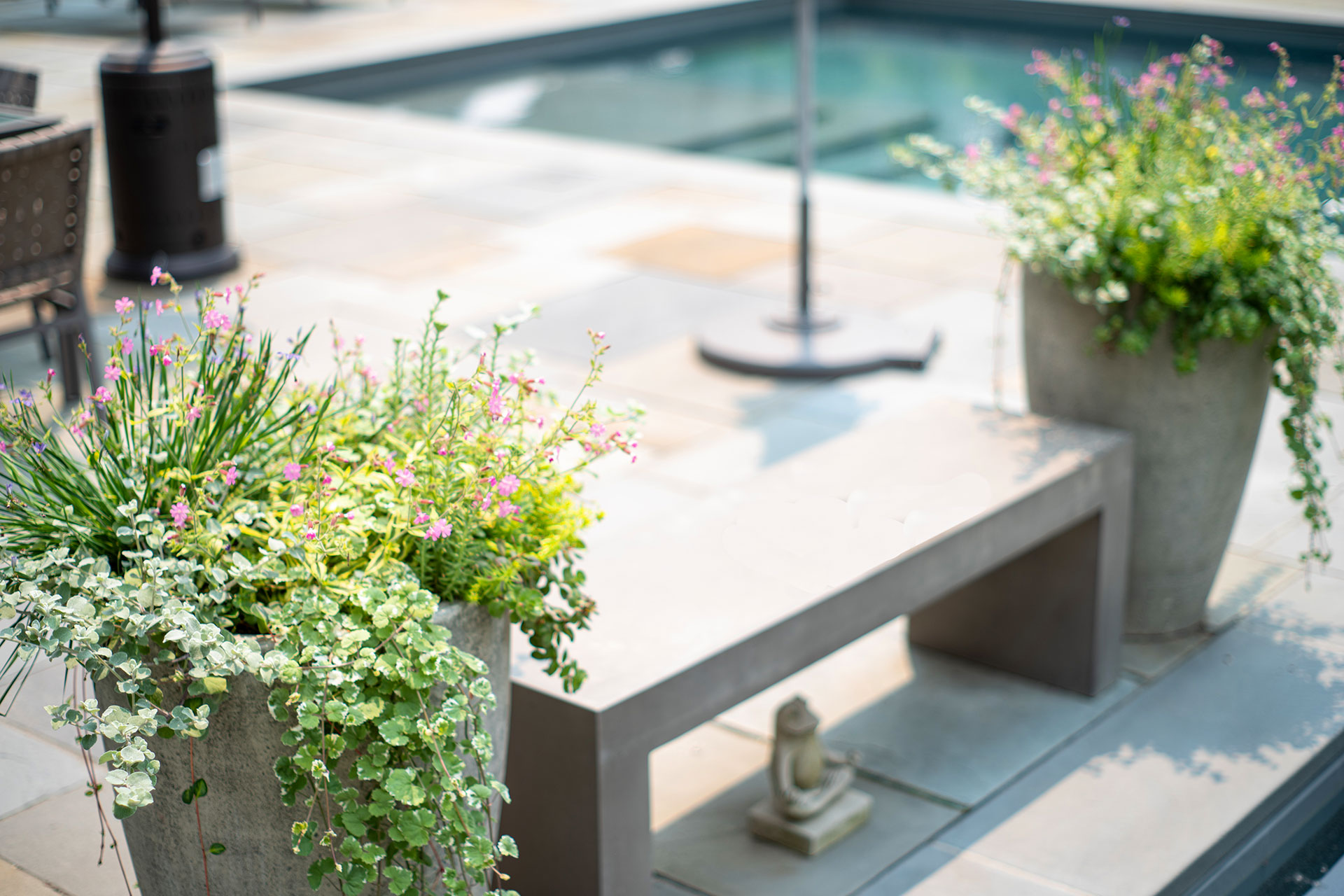
Poolside containers need to be selected carefully. Plants should tolerate heat and glare, and they should not create excessive litter near the pool. Containers should feel substantial enough for the setting, especially around large patios and pool houses.
Outdoor Kitchens
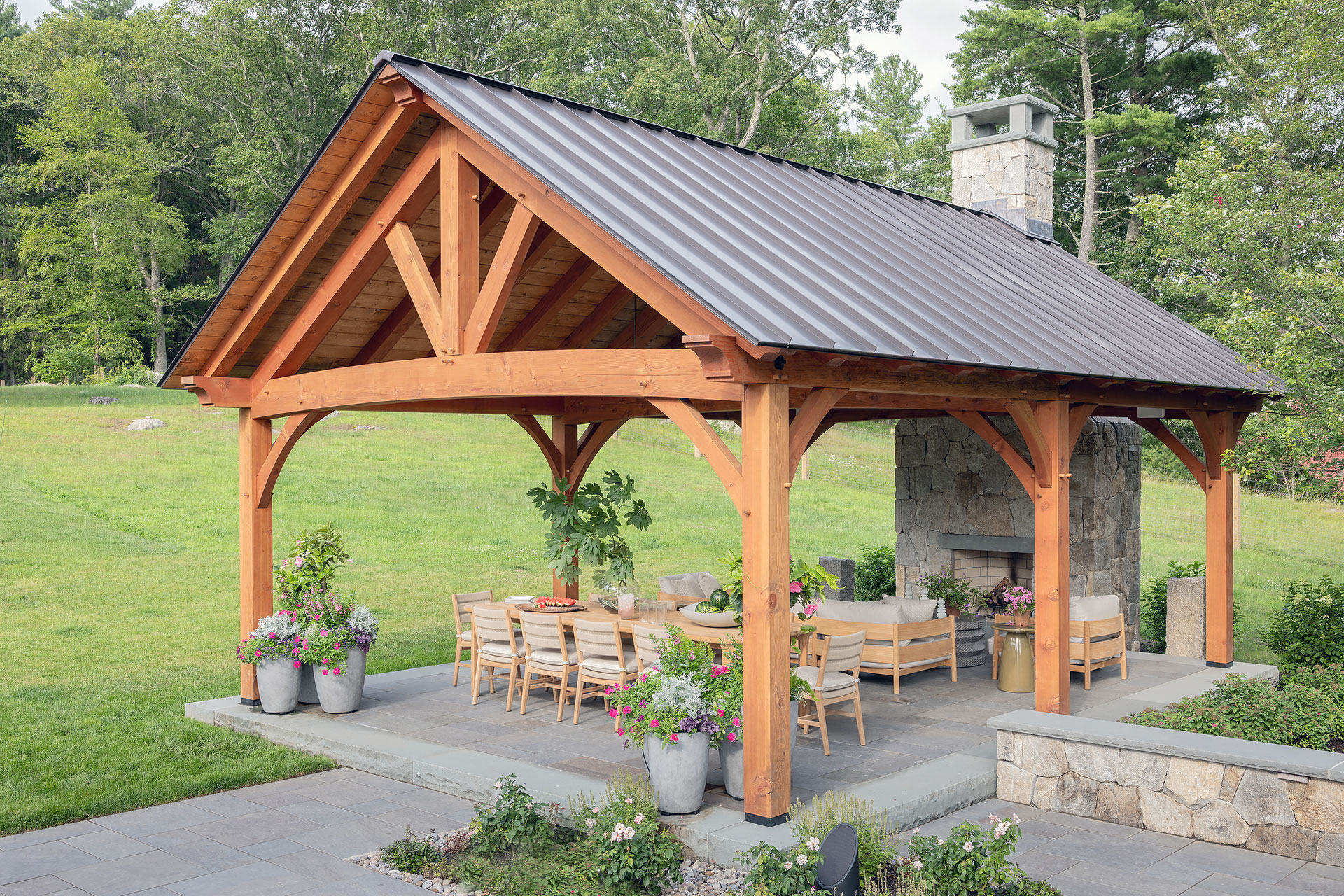
Outdoor kitchens can feel hard and architectural. Containers add life, color, and texture without interfering with cooking, dining, or circulation.
Herbs can sometimes be used, but ornamental performance and placement should come first. The best containers around outdoor kitchens are practical, durable, and scaled to the space.
Window Boxes

Window boxes are highly visible and can make a home feel especially cared for. They are also demanding. They dry out quickly, need consistent attention, and must be planted with the exposure in mind.
For homes in Boston, Brookline, Cambridge, and other dense residential areas, window boxes can be one of the most valuable forms of seasonal planting because they bring greenery and color to areas where ground-level planting may be limited.
Courtyards and Urban Properties

Compact city properties often have limited planting space, heavy shade, privacy concerns, or extensive paving. Containers can solve several of these issues at once.
They add planting without excavation, soften vertical surfaces, and allow seasonal changes in spaces where permanent planting beds may be difficult.
How Seasonal Containers Support Landscape Maintenance
Planters are highly visible. When they look healthy, the property feels cared for. When they are tired, dry, overgrown, or seasonally out of date, they are also highly visible.
That makes containers an important part of landscape maintenance.
A professional landscape maintenance program can coordinate containers with:
- Lawn care
- Fine gardening
- Pruning
- Mulching
- Seasonal planting
- Irrigation monitoring
- Patio and walkway care
- Entryway upkeep
- Holiday and winter décor
- Spring and fall cleanups
This coordination matters. A summer container program should not feel unrelated to nearby foundation plantings. Fall containers should complement the changing landscape. Winter displays should work with the home’s architecture and outdoor lighting. Spring planters should feel like the first step in the year’s broader landscape plan.
The best container programs do not look isolated. They feel connected.
Common Seasonal Container Mistakes
Even beautiful containers can disappoint if they are not planned and maintained correctly.
Choosing Containers That Are Too Small
Small containers dry out faster and often look under-scaled next to larger homes, wide steps, or generous terraces. Larger containers usually offer better visual impact and more stable growing conditions.
Ignoring Sun and Shade
A plant that performs beautifully on a sunny patio may struggle in a shaded entry. A shade-loving plant may burn near a south-facing stone terrace. Site conditions should guide the plant palette.
Forgetting About Water
Water is one of the most common reasons containers fail. In hot weather, containers may need daily watering or more. Automated irrigation, maintenance visits, or a clear watering plan can make the difference between a fresh display and a stressed one.
Leaving Containers in Place Too Long
A container that looked full in June may look tired by late August. A fall display may feel out of date after Thanksgiving. Winter containers may need to transition from holiday-specific to more neutral winter styling.
Overcrowding the Design
More plants do not always create a better container. Strong seasonal container design depends on proportion, texture, restraint, and editing.
Treating Every Container the Same
A front entry planter, poolside container, window box, and shaded courtyard pot each have different jobs. They should feel coordinated, but not identical.
When to Hire a Professional for Seasonal Container Planting
Many homeowners can plant a container. That is not the same as creating a coordinated seasonal container program across a refined property.
Professional help is especially useful when:
- The property has multiple container locations.
- The home has a formal or architecturally significant entry.
- Containers need to coordinate with existing landscape design.
- The property includes patios, terraces, pools, or outdoor kitchens.
- Window boxes need regular seasonal care.
- The homeowner wants a polished look without managing plant selection, installation, watering, and replacements.
- Containers are part of a broader landscape maintenance plan.
For many clients, the value is not only the installation. It is the consistency. The planters are refreshed before they look tired. The plantings are scaled properly. The seasonal palette feels intentional. The property continues to look cared for even as the weather changes.
Frequently Asked Questions About Seasonal Container Planting
Q: How often should seasonal planters be changed?
A: Many Boston-area properties benefit from three to four seasonal rotations per year: spring, summer, fall, and winter. Some homeowners prefer a more subtle transition from holiday winter displays to post-holiday winter containers, especially for front entries and highly visible areas.
Q: Are seasonal containers difficult to maintain?
A: They can be easy to enjoy, but they still need care. Containers dry out faster than garden beds, especially during hot weather. They may also need fertilization, grooming, deadheading, pruning, and occasional plant replacements to stay fresh.
Q: What are the best places to use seasonal containers?
A: The most effective locations are front entries, patios, terraces, pool areas, outdoor kitchens, courtyards, window boxes, garden gates, and side entrances. Any space that is highly visible or frequently used can benefit from seasonal planting.
Q: Can containers be part of a low-maintenance landscape?
A: Yes, if they are designed and maintained properly. Larger containers, appropriate plant choices, good soil, proper drainage, and a maintenance plan can make containers much easier to care for. They are especially useful when homeowners want seasonal interest without redesigning permanent planting beds.
Q: Do winter planters need to look like holiday decorations?
A: No. Winter containers can be elegant and architectural. Evergreen branches, birch, magnolia, winterberry, and sculptural stems can create a winter display that looks appropriate well beyond the holidays.
Q: Are seasonal container planting services worth it?
A: For homeowners who care about curb appeal, outdoor entertaining, and a consistently maintained property, professional container planting can be a strong investment. Containers are highly visible, flexible, and relatively easy to refresh compared with larger landscape changes.
Learn More
For additional guidance on containers, seasonal planting, and curb appeal, these resources are useful:
- Planters and Containers in Landscape Design: Versatile, Affordable, and Easy to Maintain – A broader look at how planters and containers support landscape design, outdoor living, and flexible planting.
- University of Minnesota Extension: Fertilizing and Watering Container Plants – Practical guidance on watering, fertilization, moisture, and container plant care.
- UMass Extension: Annuals for Sun – A helpful reference for annuals that can provide seasonal color in sunny garden and container conditions.
- National Association of Realtors: Remodeling Impact Report, Outdoor Features – Research on curb appeal, outdoor projects, homeowner satisfaction, and perceived value.
Bring Fresh Seasonal Detail to Your Property
Seasonal containers are one of the most effective ways to keep a landscape feeling alive, polished, and connected to the time of year. They can frame the front door, soften a terrace, add color to a courtyard, refresh a pool area, or bring structure to the property during winter.
For more than 30 years, a Blade of Grass has helped Greater Boston homeowners design, build, and maintain landscapes that feel thoughtful in every season. Our team can integrate seasonal container planting into a broader landscape maintenance plan, coordinate planters with your home’s architecture, and keep important outdoor spaces looking cared for throughout the year.
To learn more about seasonal planters, container care, and ongoing property maintenance, contact a Blade of Grass to schedule a consultation.