An Expert’s Summary
Native plants can be a great fit for a Weston property, but being native does not automatically make a plant right for every part of the yard. The most important step is matching each plant to the light, soil moisture, root competition, deer pressure, and available space in that particular location.
I have worked with several clients in Weston and Wayland who have very similar conditions. Their properties may look consistently wooded, but the growing conditions can change quite a bit from one part of the yard to another. An area that stays wet in April may become dry under mature trees by July. The sunny front of the property may support flowering shrubs and grasses that would struggle in the backyard.
I usually recommend starting with one manageable area, observing it carefully, and introducing a few dependable plant groups rather than replacing everything at once.
The Question
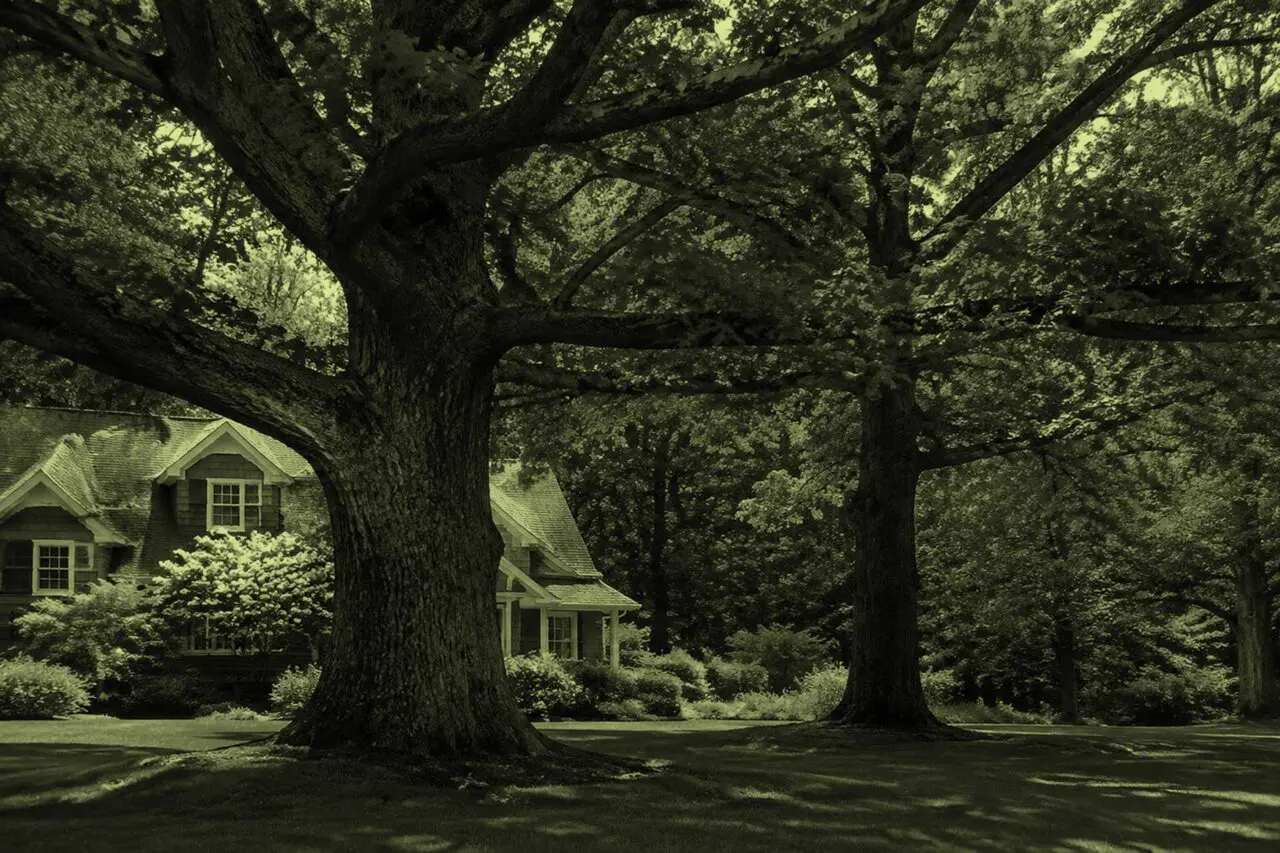
We live in Weston on a fairly wooded property with mature oaks and pines. The backyard is mostly shaded and stays damp in the spring, but parts of it become very dry by midsummer. The front gets more sun, and we also have occasional deer activity.
We’d like to replace some of the pachysandra and struggling shrubs with native plants, but we’re looking for recommendations that will work in our conditions. We want plants that provide color in more than one season.
– Submitted by: Carol H., Weston, MA
The Short Answer
You have several good options, but I wouldn’t choose from a general list of “best native plants.” I’d first divide your property into a few basic growing conditions:
- Dry shade beneath mature trees
- Moist or seasonally wet shade
- Sunny, well-drained areas
- Exposed areas where deer browsing is likely
Once those areas are defined, you can then select a small group of plants for each one and repeat throughout the landscape. That approach usually looks more intentional and performs better than planting many different species one at a time.
For your backyard, you should consider combinations of Pennsylvania sedge, Christmas fern, foamflower, wild geranium, spicebush, sweet pepperbush, and highbush blueberry, depending on the exact moisture and light. In the sunnier front yard, inkberry, chokeberry, bayberry, little bluestem, switchgrass, mountain mint, and New England aster may be possibilities.
These are starting points, not a prescription. I’d still want to see how much light each area receives, how quickly the soil drains, and how much competition there is from the existing trees that you mention.
My Expert Advice
Start With the Conditions, Not the Plant List
This is the part that saves the most frustration.
Homeowners often begin by looking for plants native to Massachusetts and then choosing the ones they like. I understand why. There are lots of great choices, and native-plant lists can make the process appear straightforward.
In practice, I start with the site. I like this advice from UMass Amherst: “Different plants prefer sunny, part-shade, moist or dry conditions.” They go on to recommend grouping plants with similar light and water needs and placing them where those conditions already exist. That sounds basic, but it is the foundation of successful planting. UMass Amherst provides excellent guidance on matching plants to growing conditions.
On your wooded Weston property, I’d look at:
- The number of hours of direct sunlight
- Whether the shade comes from trees, the house, or both
- Where water collects after rain
- How quickly those areas dry
- Whether the soil is compacted
- How close the planting area is to major tree roots
- Where deer tend to enter or travel through the property
- Which areas you see most often from the house, driveway, and outdoor spaces
You don’t need a complicated map. Even a simple sketch with notes from spring, midsummer, and fall can help identify several different planting zones.
Why Your Backyard is Wet in Spring and Dry in Summer
The change you described is common around mature oaks and pines.
In early spring, the trees have not fully leafed out or begun drawing as much water from the soil. Rain and snowmelt can keep the ground damp. Once the canopy fills in, the trees intercept rainfall and their roots compete with smaller plants for moisture. By midsummer, the same area can become quite dry.
That means plants selected only because they tolerate moist spring soil may struggle later. In these transitional areas, I look for adaptable plants or create separate pockets for the wetter and drier conditions.
It’s also important not to disturb large tree roots unnecessarily. Avoid deep excavation, aggressive tilling, or adding a thick layer of new soil over the root zone. Smaller plants and plugs can often be tucked into available spaces with less disruption.
Recommended Native Plants for Dry Shade
Dry shade is one of the more difficult conditions, but it isn’t hopeless. The goal is usually to create a durable ground layer rather than force large, thirsty flowering plants into competition with mature trees.
Depending on the soil and the amount of shade, I might consider:
- Pennsylvania sedge: A soft, grass-like sedge that can form an attractive ground layer beneath deciduous trees.
- Christmas fern: An evergreen fern that provides useful winter foliage and generally handles established woodland conditions well.
- Wild geranium: A spring-flowering perennial that works nicely along woodland edges and in areas with filtered light.
- Foamflower: A lower-growing plant with spring flowers and attractive foliage, best where the soil retains some organic matter and moisture.
- Wild columbine: A light, airy perennial that can work in brighter woodland edges and well-drained soil.
- Lowbush blueberry: A possible choice for acidic, well-drained soil where there is enough light to support good growth and fruiting.
I would not use all of these everywhere. A better design would repeat two or three plants in broad groups, with ferns or sedges forming the background and flowering perennials appearing in selected pockets.
Again, UMass Amherst’s woodland-border planting guidance offers additional plants for shaded and moisture-retentive woodland conditions.
Recommended Native Plants for Moist or Seasonally Wet Shade
Areas that hold more moisture can support a different plant palette. These include:
- Spicebush: A native shrub with early spring flowers, yellow fall color, and value for wildlife. It can tolerate considerable shade, although its form and fruiting are usually better with some light.
- Sweet pepperbush: Also called summersweet, this shrub produces fragrant summer flowers and works well where the soil stays consistently moist.
- Highbush blueberry: A useful native shrub for acidic soil, with spring flowers, summer fruit, and strong fall color.
- Winterberry: A deciduous holly valued for its persistent red fruit. You need compatible male and female plants if berries are an important part of the design.
- Turtlehead: A late-summer perennial for moist soil that can extend the flowering season in a shaded garden.
- Cardinal flower: A vivid late-summer choice for reliably moist locations.
I’d be cautious about using moisture-loving plants in a spot that only stays wet briefly in April. Checking the soil again in July or August will tell you much more about whether those plants will be comfortable there.
Recommended Native Plants for the Sunnier Front Yard
The sunnier part of the property gives you more choices for flowers, berries, fall color, and winter structure.
A few plants I often consider for MetroWest properties include:
- Inkberry: A native evergreen shrub that can provide year-round structure when it is placed in suitable soil and given enough room.
- Chokeberry: A dependable shrub with spring flowers, fruit, and very good fall color.
- Bayberry: A durable shrub for sunny, well-drained areas, especially where the soil is lean or sandy.
- Serviceberry: A small tree or large shrub with spring flowers, summer fruit, attractive bark, and fall color.
- Little bluestem: A warm-season grass with fine texture and coppery fall and winter color.
- Switchgrass: A larger native grass that provides movement, seed heads, and winter structure.
- Mountain mint: A strong summer pollinator plant that should be placed where its spreading habit can be managed.
- New England aster: A valuable late-season flower that can carry color into fall.
This may also be helpful: the Massachusetts Office of Coastal Zone Management maintains a useful native shrub and groundcover guide. Many of the plants are also appropriate inland, but each description should still be checked against your property’s light and soil.
Plan for Deer From the Beginning
Occasional deer activity is a factor too, particularly when new plants are small and tender. In my experience, no plant is completely deer-proof. Deer-resistant plant lists can be helpful, but they should be treated as general guidance rather than a guarantee. What deer choose to browse can change with the weather, the season, and the availability of other food.
Ferns, aromatic plants, tougher grasses, and some hollies are often less appealing to deer, but pressure varies from one property to another. I usually assume that newly planted shrubs and small trees will need temporary protection.
Suggestions:
- Wire cages around young shrubs
- Trunk protection for small trees
- Repellent treatments applied consistently
- Repeated plant masses so the loss of one plant does not leave a major hole
- Avoiding especially vulnerable plants along known deer paths
Protection during the first few growing seasons can make a significant difference.
Create Seasonal Interest With Layers
If you want color and interest in more than one season, don’t rely only on flowers. Bloom is important, but it is only one part of a garden.
Build the planting in layers:
- Trees and large shrubs provide structure, screening, flowers, fruit, bark, and fall color.
- Smaller shrubs fill the middle layer and help the garden feel substantial.
- Sedges, ferns, and groundcovers cover soil and connect the larger plants.
- Flowering perennials add seasonal color and support pollinators.
- Seed heads, berries, evergreen foliage, and branching forms carry the garden through fall and winter.
If you haven’t been to Garden in the Woods in Framingham, it’s definitely worth a visit. They have more than 1,000 species of New England native plants on display, so it’s a great place to see different plants growing together. The selection can feel a little overwhelming, but keep in mind that you only need a small group of well-chosen plants to create a beautiful garden at home.
Don’t Replace Everything at Once
I would absolutely approach this gradually.
On several similar Weston and Wayland properties with mature trees, mixed shade, and changing moisture, I’ve found that smaller phased changes give us useful information. We can see how the first plants respond before repeating them elsewhere.
You might begin with one visible section of pachysandra, perhaps near a path, terrace, or frequently used entrance. Remove a manageable area, protect the existing tree roots, and introduce a simple combination such as:
- One or two adaptable native shrubs
- A repeated ground layer of sedges or ferns
- Two flowering perennials with different bloom periods
- Spring bulbs or woodland flowers for early interest
- Plants with fall foliage, berries, or persistent seed heads
Watch that area through a full growing season. Notice which plants hold up through summer dryness, which receive deer damage, and whether any section remains wetter than expected. That experience will make the next phase much easier.
A Few Mistakes I Would Avoid
The most common problems are usually not caused by choosing a “bad” plant. They come from placing a good plant in the wrong conditions.
Try to avoid:
- Replacing all the pachysandra before testing a smaller area
- Buying one of every plant that catches your attention
- Assuming all shade has the same moisture level
- Disturbing major roots beneath the oaks and pines
- Adding large amounts of soil over established tree roots
- Choosing plants only for their flowers
- Assuming a native plant will be maintenance-free immediately
- Treating any plant as completely deer-proof
Native plants still need regular watering while their roots establish. They also need weeding, editing, and occasional division or pruning. The maintenance usually becomes easier as the planting fills in, but the first two growing seasons deserve close attention.
My Practical Recommendation
I’d start by choosing one section in the backyard and one smaller area in the sunnier front. That gives you a chance to test two different plant communities without committing to a complete landscape redesign.
In the backyard, focus on a layered woodland planting that can handle root competition and changing moisture. In the front, use shrubs, grasses, and perennials that provide a clearer sequence of flowers, berries, fall foliage, and winter form.
Most importantly, keep the plant list restrained. Five dependable plants repeated thoughtfully will usually look better and perform more consistently than fifteen unrelated plants placed individually. The goal is not to fit as many native species as possible into the property. It is to create a garden that belongs in its setting and continues to work as the trees, light, and moisture conditions change.
Suggested Reading
- Woodland Border Wildflower Garden – UMass Extension
- Deer-Resistant Plants – UMass Extension
- Choosing Pollinator-Friendly Native Plants – Massachusetts Department of Agricultural Resources
- Native and Beneficial Plants – Mass Audubon
- Find and Buy Native Plants for Your Garden – Native Plant Trust
- Native Ground Covers for Shade in Boston-Area Landscapes – a Blade of Grass