An Expert’s Summary
We love arborvitae and use them throughout many of our clients’ properties, especially when a landscape needs privacy, structure, or a soft evergreen backdrop. But we’ve also seen how quickly they can struggle when winter exposure, inconsistent watering, poor drainage, improper planting, deer browsing, salt, or root stress come into play. When we evaluate a browning arborvitae, we typically first look closely at where the damage appears, how much healthy growth remains, and whether the plant has a realistic chance to recover or should be replaced with a better long-term solution.
The Question
“We have a row of arborvitae in our backyard that was planted about five years ago for privacy. They have always looked healthy, but this year a few started turning brown, and one now has a large bare section. We first thought it was winter damage, but the browning has continued into the growing season. They get watered regularly, though the soil can stay wet after heavy rain, and deer occasionally browse the lower branches.
How can we tell whether they might recover, or if we should plan to replace them? We would also like to understand what caused the problem before it spreads to the rest of the hedge.”
– Submitted by: Sarah M., Wayland, MA

The Short Answer
From my experience, some browning doesn’t mean an arborvitae is beyond saving. If the plant still has healthy green foliage, flexible branches, and good growth at the tips, it may recover if you identify (and remove) the source of stress.
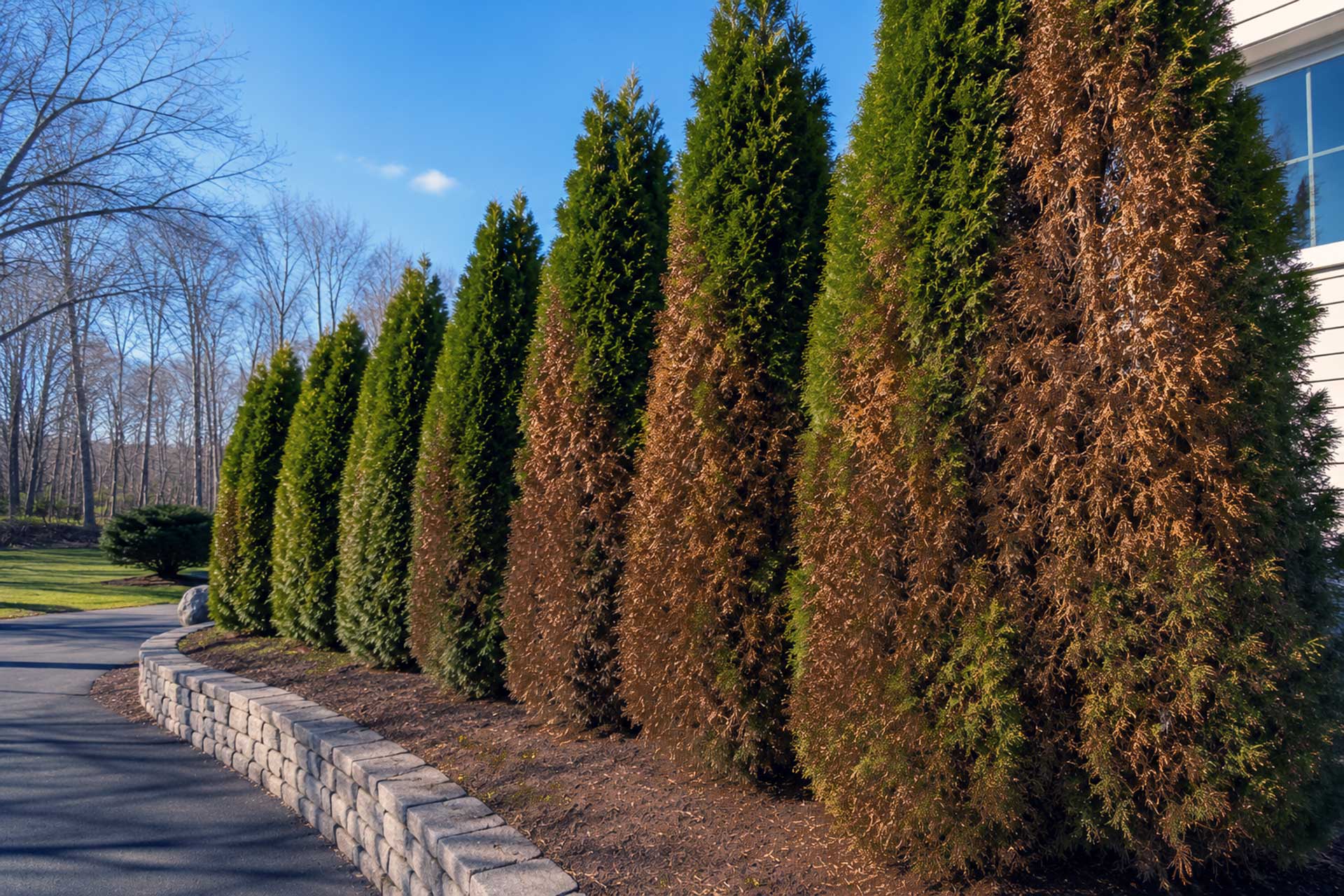
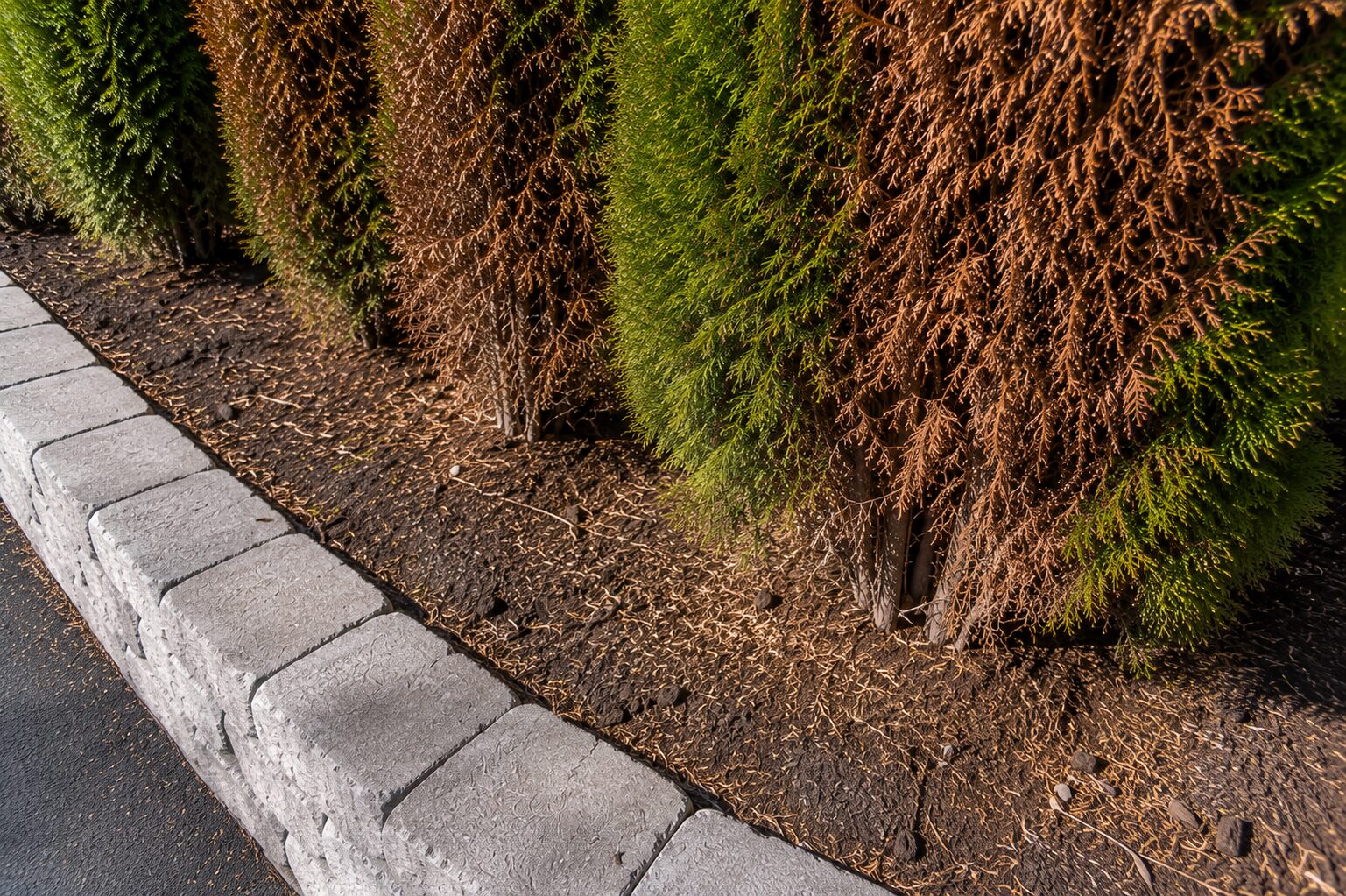
Let’s start with the pattern of the damage. Browning on the sunny or windy side often points to winter burn or drought stress. Browning near the base can suggest drainage, salt exposure, or root problems. Bare lower branches often indicate deer browsing, especially when the damage appears uneven across the hedge.
Brown foliage will not turn green again, and arborvitae rarely fill back in from old bare wood. However, healthy growth can soften smaller gaps over time. Do avoid heavy pruning into brown sections. Instead, remove only clearly dead tips, check soil moisture by hand, water deeply during dry periods, protect the plants from deer if you can, and correct any drainage, irrigation, or planting issues asap, before deciding whether to replace them.
A Closer Look
When I look at browning arborvitae, I start with three questions: where does the browning appear, when did it begin, and what changed around the plants over the last year? Those clues usually point us in the right direction. Arborvitae can turn brown for several reasons, and the pattern often matters more than the color alone.
I’ve seen this issue many times on properties in the Boston-area where we use arborvitae for privacy along driveways, patios, pools, and property lines. You may notice the browning in spring, but the stress often began months earlier. A dry fall, a windy winter, frozen soil, deer browsing, poor drainage, or an irrigation issue can all show up later as brown foliage.
The first thing I look for is healthy green growth. If the plant still has green foliage on the outer branches and only some interior browning, it may simply be shedding older foliage. Arborvitae do that naturally, especially in fall. If the outside tips have turned tan or bronze, winter burn or drought stress may be the cause. If entire sections have turned brown from top to bottom, or the branches feel brittle and dry, the damage may be more serious.
Common Reasons Arborvitae Turn Brown
Winter burn: Arborvitae lose moisture through their foliage during winter, especially in sunny, windy, or exposed locations. When the ground freezes, the roots cannot take up enough water to replace that lost moisture. I often see this on the side of the plant that faces afternoon sun, open lawn, a driveway, or a windy property edge.
Drought stress: Arborvitae need consistent moisture, especially during the first few years after planting. A dry summer or fall can weaken the roots before winter even begins. In many landscapes I have worked on, the browning did not come from one obvious event. It came from months of inconsistent watering followed by cold weather.
Poor drainage: Arborvitae like moisture, but they do not like wet, heavy soil around their roots. If the planting bed holds water after rain, the roots can struggle. I often see this along foundations, low spots, and property lines where grading directs too much water toward the hedge.
Improper planting: Planting depth matters. If arborvitae sit too deep, their roots may decline over time. If the root ball never settles into the surrounding soil, the plant may dry out even when the area looks watered. I have also seen burlap, wire baskets, compacted soil, and poor backfill slow root growth after installation.
Salt or road exposure: Arborvitae planted near driveways, walkways, or roads can suffer from salt spray or runoff. The damage often appears on the side closest to the pavement. In these locations, I look closely at snow storage, plowing patterns, drainage, and how much winter sun and wind the plants receive.
Deer damage: Deer can quickly change the shape and health of an arborvitae hedge. They often browse the lower and outer foliage, leaving bare stems and uneven growth. Once deer strip older wood, the plant may not fill back in well.
Can Browning Arborvitae Be Saved?
Sometimes they can. If the plant still has healthy green foliage, flexible branches, and strong growth at the tips, it may recover with better watering, light pruning, improved soil conditions, or protection from winter wind and deer. I usually recommend patience before making a quick decision, especially in early spring when the full picture has not yet developed.
However, arborvitae do not always regenerate from old brown wood. If large sections have died back completely, the plant may never look full again. In that case, replacement may create a better long-term result than years of trying to disguise a damaged hedge.
For a privacy planting, I also look at the whole row, not just one plant. If one arborvitae fails but the rest remain healthy, replacing a single plant may work. If several plants show the same stress pattern, the site conditions may be the real problem. Before replanting, we need to correct drainage, irrigation, spacing, soil preparation, deer pressure, or exposure. Otherwise, the new plants may struggle in the same way.
What You Should Do First
Start by checking the soil. It should feel evenly moist, not bone dry and not saturated. Next, look for where the browning appears. Browning on the sunny or windy side often suggests winter burn. Browning near the base may point to drainage, salt, or root stress. Uniform browning across the whole plant may indicate more serious decline.
Do not shear heavily into brown wood. Arborvitae rarely respond well to that kind of pruning. Instead, remove clearly dead tips, water deeply during dry periods, add mulch over the root zone, and avoid piling mulch against the trunk. If deer have browsed the plants, consider protection before winter rather than waiting until the damage appears.
If the arborvitae are newly planted, pay close attention to watering. New hedges often need slow, deep watering through the first growing season and into fall. Irrigation systems help, but they do not always deliver enough water to the root ball. I often check new arborvitae by hand because the surrounding soil can feel damp while the root ball remains dry.
When Replacement Makes More Sense
Replacement may make sense when the plants have large dead sections, severe deer damage, poor structure, or repeated decline despite proper care. It may also make sense when the original planting was too tight, too exposed, or poorly matched to the site.
In those cases, I like to step back and ask whether arborvitae are still the right choice. Sometimes they are. Other times, a mixed evergreen screen, layered planting, fence-and-planting combination, or a different species will perform better and look more natural over time.
The goal is not just to replace brown plants with green ones. The goal is to understand why the plants failed and create a more durable, attractive solution for the property.
For a broader look at arborvitae selection, placement, care, deer pressure, and their role in residential landscape design, read our guide to arborvitae in New England landscapes.
A Few Helpful Resources
- Arborvitae Foliage Turns Brown – University of Minnesota
- Winter Burn – University of Wisconsin–Madison Division of Extension
- Deer-Resistant Landscaping Strategies – a Blade of Grass blog
- Browning Arborvitae May Be Result of Lack of Water – University of Missouri