An Expert’s Summary
Hydrangeas are among the most popular flowering shrubs on our clients’ properties, and it is easy to see why. When they are happy, they bring generous color, texture, and structure to a garden for much of the summer. But they can also be confusing. A shrub may look full and green while producing few flowers or none at all.
After decades of caring for landscapes throughout Boston and the Cape, I’ve learned that a leafy hydrangea usually is not sick. More likely, something happened to its flower buds. Winter cold may have damaged them, a late frost may have caught them as they started growing, or someone may have removed them during routine pruning.
The type of hydrangea matters too. Some form their flower buds on stems that grew the previous year. Others flower on new growth produced during the current season. Until we identify the hydrangea, it is hard to know when to prune it or why it failed to bloom.
The good news is that most healthy, non-blooming hydrangeas do not need to be removed. A few changes to pruning, sunlight, watering, or winter protection may bring the flowers back. In other cases, choosing a more reliable hydrangea for the location provides the better long-term solution.
The Question
Our hydrangeas look healthy and have plenty of green leaves, but they barely flower. One of them did not produce a single bloom this year. We have been cutting them back in the fall because the shrubs get large, but now we are wondering if that’s the cause. Are we pruning them at the wrong time, or do they need more fertilizer?
– Submitted by: Jennifer A., Dover, MA
The Short Answer
The fall pruning immediately catches my attention. You didn’t specify in your email, but if these are bigleaf hydrangeas, which include many of the familiar blue and pink mophead varieties, cutting them back in fall may remove most of the following summer’s flowers.
Many bigleaf hydrangeas form their flower buds during the previous growing season. Those buds spend the winter on the stems. A fall cleanup, a cold winter, a late spring freeze, or deer browsing can remove or damage the buds while leaving enough live tissue for the shrub to produce healthy foliage. The result is exactly what you are seeing: lots of leaves and very few flowers.
I would not add fertilizer yet. Too much nitrogen can produce even more leafy growth at the expense of flowers. First, identify the hydrangea, stop cutting it back, and give it another season. Then look at winter exposure, sunlight, soil moisture, and signs of animal browsing before deciding what needs to change.
Detailed Answer
A Healthy Shrub Can Still Lose Its Flowers
Leaves and flowers do not always tell us the same thing about a hydrangea. A shrub can lose its flower buds and still produce vigorous new leaves from lower buds or from the base of the plant. That is why homeowners often assume the plant needs fertilizer. It looks alive and healthy, but something appears to be missing.
In many cases, the plant already has enough nutrients. The missing flowers trace back to damage that occurred months earlier. This is especially common with bigleaf hydrangeas, or Hydrangea macrophylla. UMass Extension calls bigleaf hydrangea one of the most popular landscape shrubs, but also notes that it can be difficult to depend on for consistent flowers. As UMass puts it, “Winter damage is unfortunately very common with bigleaf hydrangea.”
That matches what we see on Greater Boston properties. One shrub may flower beautifully in a protected courtyard, while the same variety struggles in an open bed exposed to winter wind. Conditions can even vary from one side of a house to the other.
First, Find Out Which Hydrangea You Have
Before pruning, fertilizing, or moving the plant, identify its species or cultivar. The original plant tag is helpful, but flower shape, leaf shape, stem structure, and mature size can also provide clues.

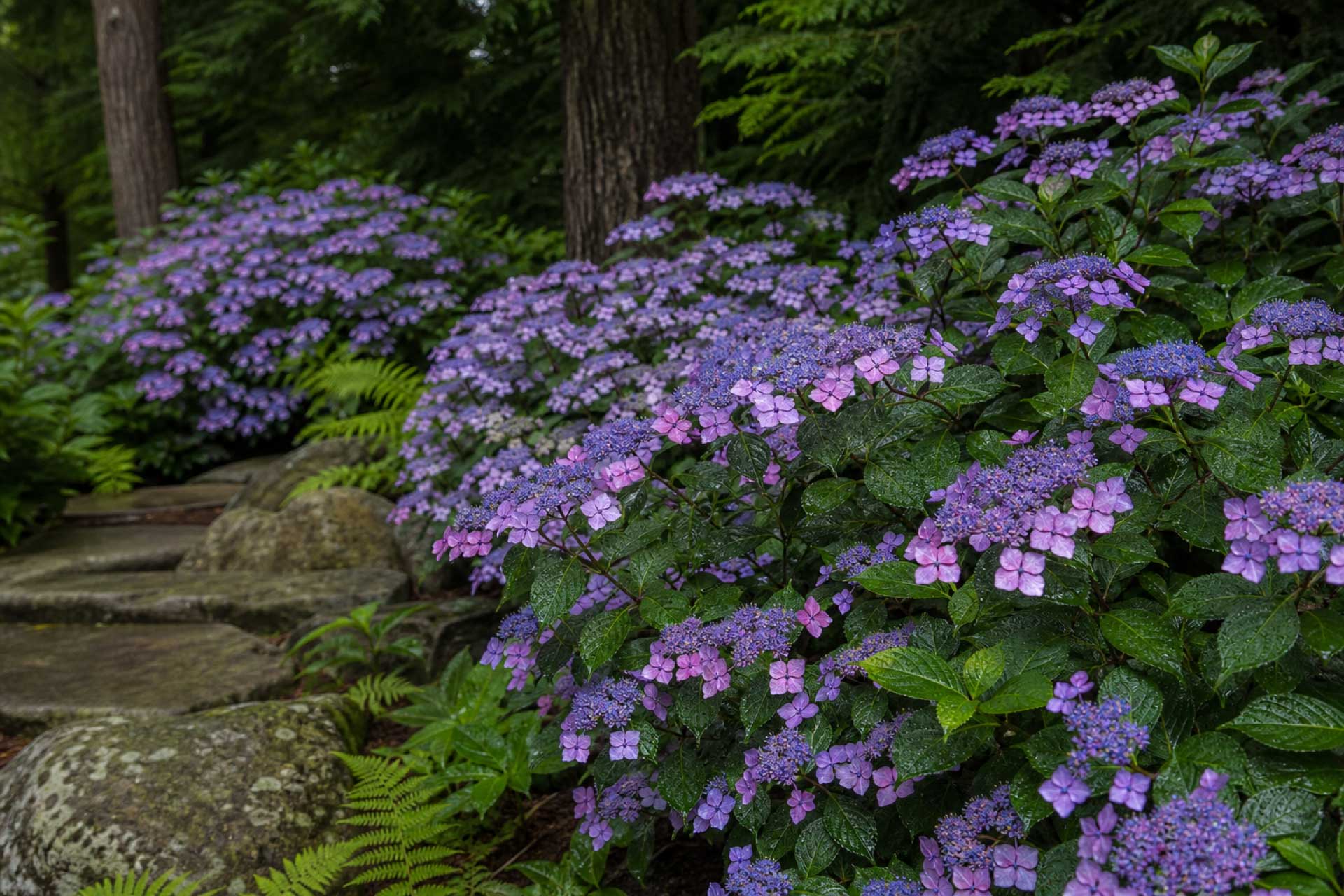
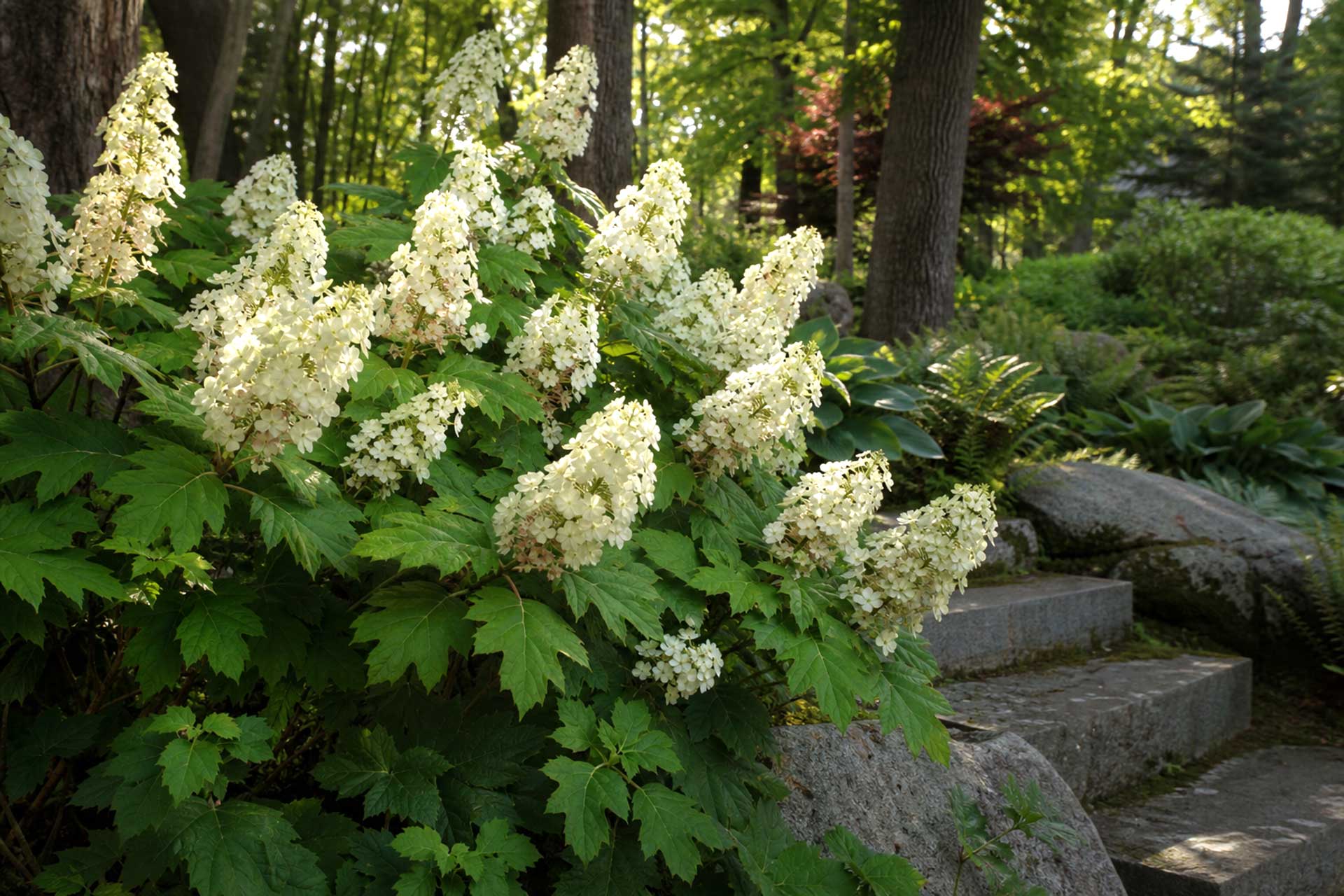
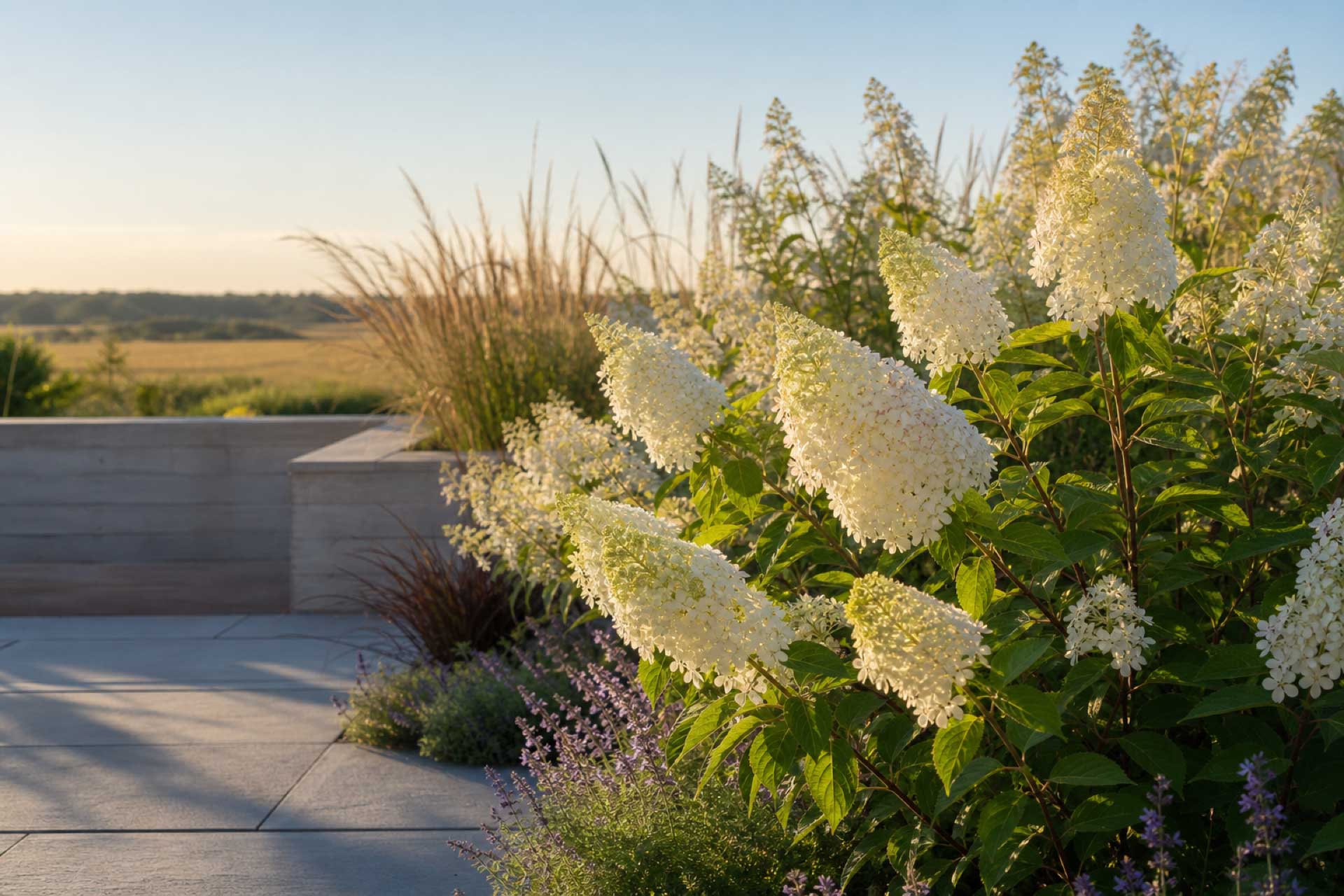
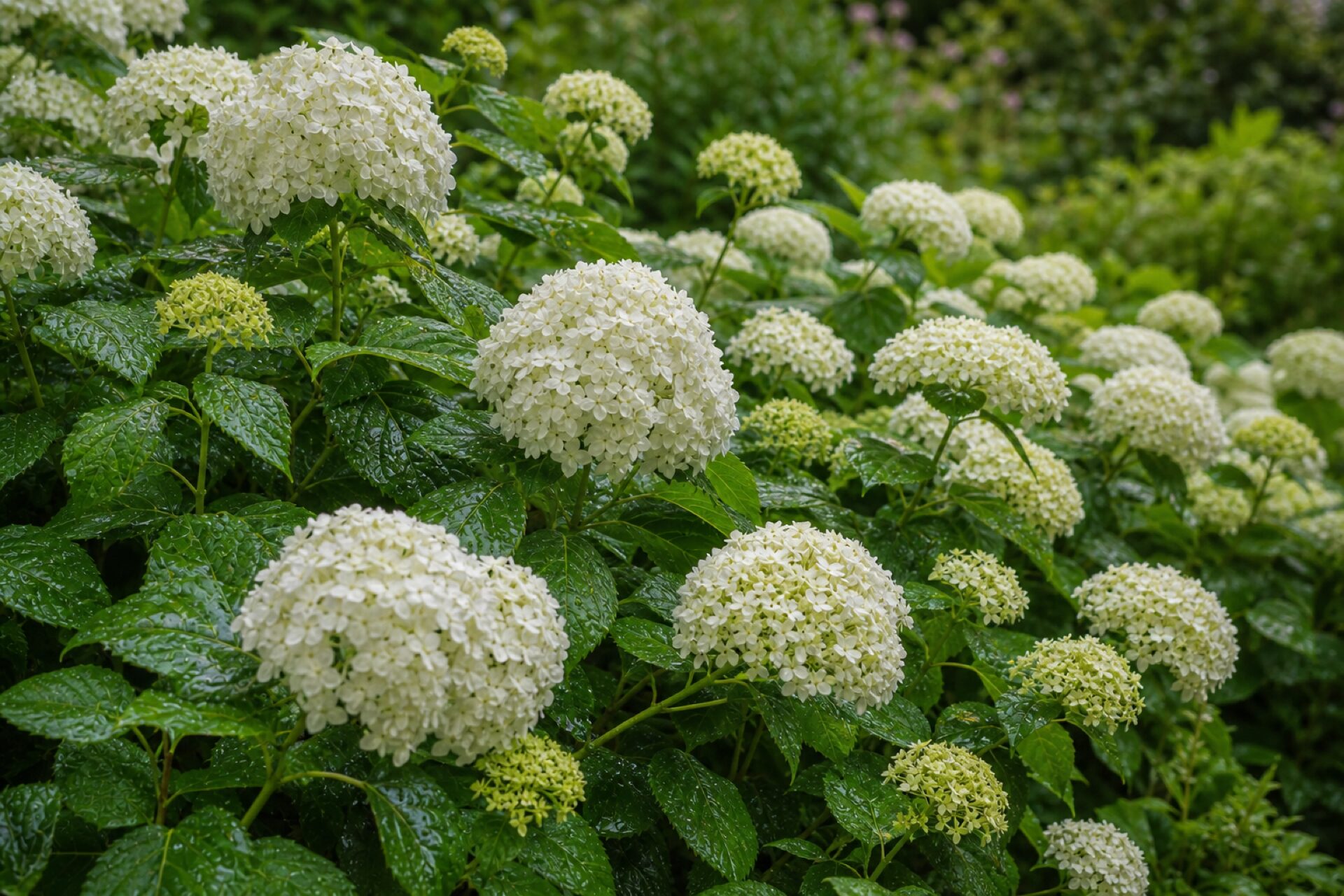
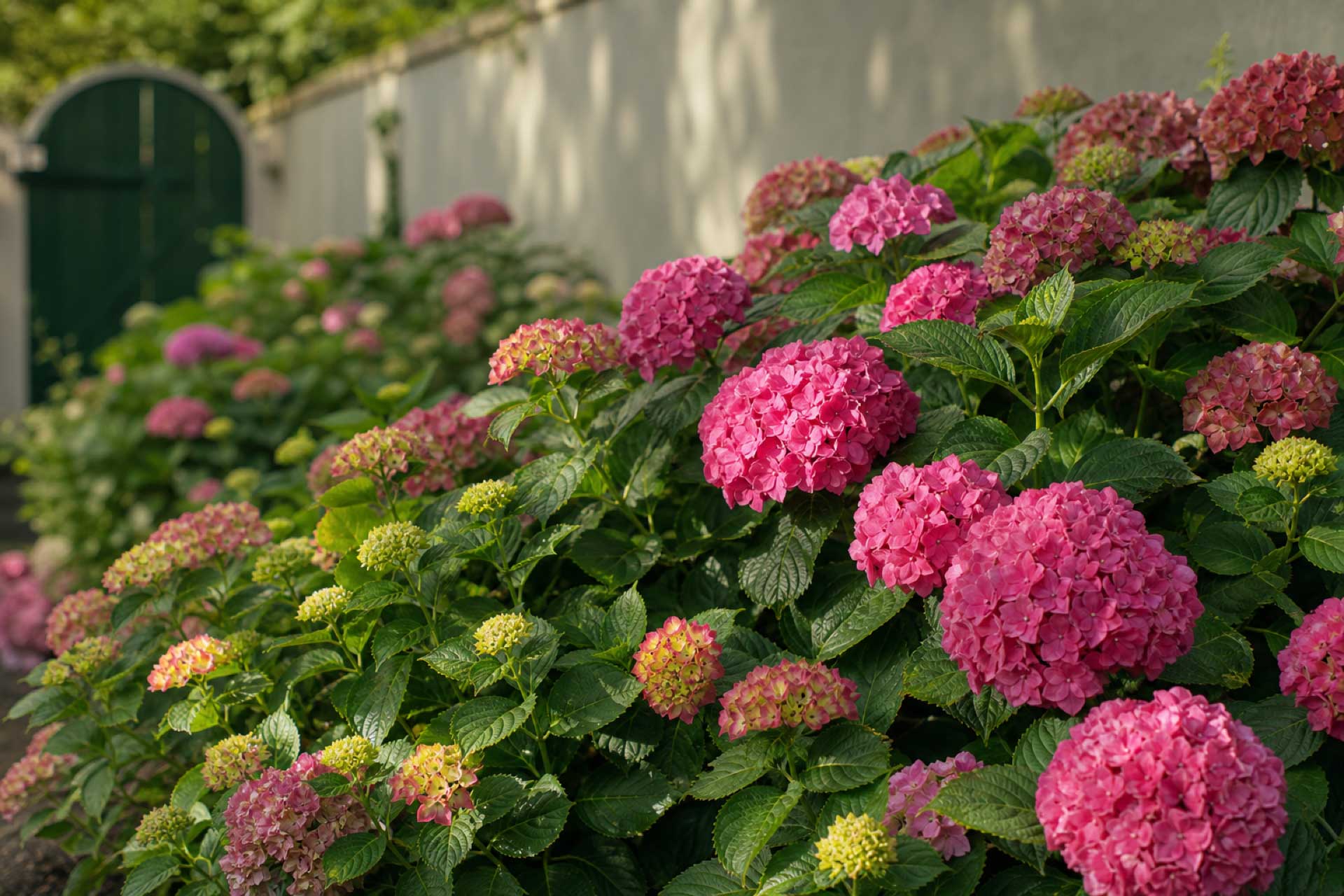
The most common landscape hydrangeas fall into a few groups:
- Bigleaf hydrangeas (Hydrangea macrophylla) include many blue, pink, purple, mophead, and lacecap varieties. Traditional cultivars bloom mainly on old wood.
- Mountain hydrangeas (Hydrangea serrata) often have delicate lacecap flowers. They also tend to bloom on old wood, although some newer varieties rebloom.
- Oakleaf hydrangeas (Hydrangea quercifolia) have distinctive oak-shaped leaves and usually bloom on old wood.
- Panicle hydrangeas (Hydrangea paniculata) produce cone-shaped flowers, often beginning white and aging to pink or rose. They bloom on new wood.
- Smooth hydrangeas (Hydrangea arborescens), including ‘Annabelle’ and related cultivars, produce flowers on new wood.
- Reblooming bigleaf hydrangeas can flower on both old and new wood. They offer some insurance against winter damage, although they may still bloom later or less heavily when old stems lose their buds.
The phrases “old wood” and “new wood” sound more technical than they are. Old wood simply means stems that grew last year. New wood means growth the plant produces this spring and summer. If a hydrangea forms flowers on old wood, those future flowers are already sitting on the stems by fall. Cutting the shrub down removes them.
Fall Cleanup May Be the Real Problem
Hydrangeas often look messy after their flowers fade. The brown flower heads remain in place, stems lean into paths, and the shrub no longer has the neat shape it had earlier in summer. It is understandable that someone would want to cut it back during fall cleanup.
For an old-wood hydrangea, however, a tidy fall pruning can mean a flowerless summer.
If you have bigleaf, mountain, or oakleaf hydrangeas, avoid routinely cutting the shrubs to the ground in fall or early spring. When pruning is necessary, the safest window is generally soon after flowering. This gives the plant time to produce growth and form next year’s buds.
Even then, I prefer a selective approach. Remove damaged or awkward stems rather than shearing the whole shrub into a tight shape. Hydrangeas generally look better when we allow them to keep their natural structure.
Panicle and smooth hydrangeas give us more flexibility because they bloom on new growth. We can prune them in late winter or early spring without removing that year’s flower buds. Still, they do not always need a severe annual haircut. Thoughtful pruning usually produces a stronger, more attractive plant than cutting every stem to the same height.
The University of Minnesota Extension offers a useful overview of when to prune different hydrangea species.
New England Winters Can Remove the Buds for You
Sometimes nobody pruned the hydrangea incorrectly. The weather did the pruning. Bigleaf hydrangeas can survive even the worst Boston winter at the root level while losing the upper stems and flower buds. The shrub returns from the base and produces green foliage, but the old-wood flowers are gone for the season.
Low temperatures are only part of the issue. Buds may also suffer when temperatures fluctuate. A warm period can encourage them to become active, followed by a sudden freeze that damages tender tissue. Late spring frosts can cause the same problem.
The USDA Plant Hardiness Zone Map divides the country into 10-degree Fahrenheit zones, with each zone split into 5-degree half zones. The current map uses 30 years of weather data from 1991 through 2020. However, the USDA describes these zones as general guides rather than guarantees. Wind, soil moisture, winter sun, snow cover, and short periods of extreme cold can all affect an individual plant. You can read more in the USDA’s guide to using plant hardiness zones.
This explains why the same hydrangea variety may perform differently on two properties in the same town. A sheltered planting near the house may retain its buds, while a shrub exposed to northwest winds may lose them.
If winter damage happens once, I would give the plant another year. If it happens repeatedly, we should reconsider the variety or location. Our guide to protecting trees and shrubs from winter damage explains how snow, ice, wind, salt, and changing temperatures affect our local landscapes.
Other Reasons a Hydrangea May Not Flower
Pruning and winter damage are the first two things I investigate, but they are not the only possibilities.
- Too much shade: Hydrangeas tolerate partial shade, but deep shade can reduce flowering. Bigleaf hydrangeas often do well with morning sun and protection from the hottest afternoon light. Panicle hydrangeas generally flower more heavily with additional sun.
- Too much nitrogen: Lawn fertilizer, bed fertilizer, or nutrient-rich runoff can encourage vigorous leaves and stems without improving flowers. Dark green, fast-growing foliage can be a clue.
- Drought stress: Hydrangeas need consistent moisture, especially while establishing and during hot weather. Stress during the previous season can interfere with bud formation even when the shrub looks reasonably healthy later.
- Poor drainage: Hydrangeas like moisture, but they do not want their roots sitting in saturated soil. Chronic drainage problems weaken roots and make the shrub less resilient.
- Deer or rabbit browsing: Animals may eat tender stems and flower buds during winter or early spring. The damage can look surprisingly similar to pruning.
- A newly planted shrub: A young hydrangea may spend its first season developing roots and stems. Light flowering during establishment does not automatically indicate a problem.
- It is simply too early: Some panicle hydrangeas do not flower until midsummer or later. A shrub with no blooms in June may still perform perfectly well in July or August.
One thing that does not explain a complete lack of flowers is soil acidity. Soil pH can influence whether certain bigleaf hydrangeas flower blue or pink, but changing pH does not create flower buds. Adding acidifier to a non-blooming plant treats the color of flowers that are not there.
What I Would Do This Season
For the hydrangeas described in the question, I would take a conservative approach. Healthy shrubs give us time to diagnose the problem without rushing into replacement.
- Stop pruning for now. Do not cut the shrubs back in fall. Leave the stems and faded flowers in place through winter.
- Identify each hydrangea. Look for a tag, receipt, landscape plan, or cultivar name. If none is available, use the leaves, old flowers, and growth habit to narrow it down.
- Wait for spring growth before removing dead stems. Once the plant leafs out, it becomes easier to see which stems survived. Remove only wood that is clearly dead.
- Watch the sunlight. Note how many hours of direct sun the shrub receives after nearby trees leaf out. A bed that looks bright in March may become heavily shaded in June.
- Check soil moisture by hand. The soil should remain evenly moist, not constantly saturated. During dry weather, water deeply rather than giving the surface a quick daily sprinkle.
- Skip automatic fertilizer applications. If the shrub is already producing strong green growth, fertilizer may not help. A soil test provides better guidance than guessing.
- Look for browsing. Ragged or clipped stem tips can indicate deer or rabbit activity. In that case, protection may matter more than pruning changes.
- Give the shrub one undisturbed season. If fall pruning caused the problem, allowing the old stems to remain may restore flowering the following year.
If you do decide to fertilize, base the application on actual soil conditions. Hydrangeas do not need a “bloom booster” simply because the label features a large flower. Excess fertilizer can create more maintenance and fewer blooms.
Can Winter Protection Help?
Winter protection sometimes makes sense for a prized bigleaf hydrangea in an exposed location.
A layer of mulch over the root zone helps moderate soil temperatures and conserve moisture, but do not pile mulch against the stems. For additional protection, some gardeners create a loose enclosure around the shrub and fill it with dry leaves or straw after the plant becomes dormant.
This can protect old stems and buds, but it takes effort and does not guarantee flowers after an unusually difficult winter. On a carefully maintained property with one meaningful specimen, that work may feel worthwhile. Repeating it for a long row of shrubs every year may not.
Good landscape design should account for the amount of maintenance a homeowner actually wants. If consistent flowers are important and annual winter protection is not appealing, plant selection becomes the more practical solution.
When Moving or Replacing the Hydrangea Makes Sense
A healthy hydrangea deserves a chance to recover, but not every plant belongs in its current location.
We may recommend moving or replacing it when:
- The planting receives too little light to flower well.
- The shrub repeatedly loses its buds to winter exposure.
- The mature plant is too large for the bed and requires constant pruning.
- The soil stays wet or becomes extremely dry.
- The homeowner wants dependable flowers with less maintenance.
For reliable performance in the Boston area, panicle hydrangeas are often an excellent choice. They flower on new wood, so winter damage to old stems is less likely to eliminate the entire display. They also offer a wide range of mature sizes, from compact cultivars to large shrubs and tree forms.
Smooth hydrangeas are another useful option. The species is native to the eastern United States, flowers on new growth, and works well in many naturalistic and mixed-border designs. That does not mean we should remove every bigleaf hydrangea. Their blue, pink, and lacecap flowers have a character that panicle and smooth hydrangeas cannot duplicate. In a protected site with the right light and maintenance, they can be outstanding.
The goal is to match the hydrangea to the property rather than expecting one type to perform equally well everywhere.
How We Approach Hydrangeas in a Landscape Design
When we include hydrangeas in a client’s landscape, we look beyond flower color. We consider winter exposure, summer sun, drainage, irrigation, mature size, deer pressure, and how much pruning the planting will require.
We also think about what surrounds the hydrangeas. A border should not depend on one shrub blooming perfectly every year. Foliage, ornamental grasses, perennials, evergreens, and other flowering shrubs can carry the composition before and after the hydrangeas bloom.
This layered approach creates a stronger landscape. If a bigleaf hydrangea has an off year after a difficult winter, the garden still feels finished.
For properties with regular deer activity, plant selection and protection also need to work together. Our guide to deer-resistant landscaping in New England explains why no plant is completely deer-proof and how a broader planting strategy can reduce damage.
The Bottom Line
Your hydrangeas probably are not asking for more fertilizer. The fall pruning is the more likely explanation, especially if they are bigleaf varieties that form flowers on old wood.
Leave the shrubs unpruned this fall, identify what type you have, and wait until spring growth makes the living and dead stems easy to distinguish. Then remove only clearly dead wood. Pay attention to sunlight, moisture, winter exposure, and animal browsing while giving the plants another full season.
If they still produce plenty of leaves but no flowers, we can look more closely at their location and variety. Sometimes the right answer is better pruning. Sometimes it is moving the shrub a few yards into a more suitable microclimate. And sometimes replacing an unreliable variety with a hydrangea that blooms on new wood produces a much better long-term result.
If your hydrangeas have stopped flowering, or you want help choosing more dependable plants for your landscape, contact our team. We can evaluate the site, identify the plants, and recommend a solution that fits both the property and the way you want to maintain it.
A Few Helpful Resources
- Hydrangeas: Pruning for Blooms – UMass Extension
- Why Bigleaf Hydrangeas Don’t Flower – UMass Extension
- Pruning Hydrangeas for the Best Bloom – University of Minnesota Extension
- How to Use the Plant Hardiness Zone Map – U.S. Department of Agriculture
- Three Flowering Shrubs for Garden Structure – a Blade of Grass