An Expert’s Summary
Losing a few trees next door can change how your entire backyard feels. A seating area that seemed comfortably tucked away may suddenly be visible from another house, and planting small trees with the promise that they will eventually fill in can feel like an unsatisfying answer.
There may be ways to make a substantial difference in the first season. Before recommending larger plants, though, I would look closely at where the view has opened up and which parts of your yard feel exposed. The useful screening height might be much lower than the trees that disappeared.
My preference would be to concentrate the strongest screening where you need it most, then connect that planting to the rest of the garden. That can give you meaningful privacy sooner while leaving room for plants to mature and preserving the natural character you want.
The Question
Our neighbors recently removed several trees, and now there’s a clear view into our backyard. What could we put in that would give us privacy fairly quickly and still look natural?
– Submitted by: Thomas G., Concord, MA
The Short Answer
Yes, Thomas, you may be able to regain a good deal of privacy without waiting years. I would start by identifying the most uncomfortable view into your backyard, then consider a few substantial evergreens or large shrubs positioned specifically to interrupt it. Smaller supporting plants can help the new work feel like part of the existing landscape.
If you need complete screening immediately in one particular spot, a short section of fencing or an architectural screen worked into the planting may also deserve consideration. You may not need it along the entire boundary.
I would want to see the property before recommending a plant or promising complete coverage. The height of the neighboring view, available planting space, sunlight, and access for installation will all influence what can work well now.
The Long Answer
First, I Would Look From the Places You Actually Use
When trees disappear, the instinct is often to plant something along the newly exposed property line. That may be the right place, but I would first walk back toward the house and look from the areas where privacy matters to you.
If you have a patio, I would sit where you normally sit. If the concern is the view from a kitchen or family room, I would look through those windows. Then I would check the direction and elevation of the neighboring view. Are you looking toward another ground-level seating area, an elevated deck, or an upstairs window?
Those situations need different responses. A planting that blocks a view while you are seated may leave the yard visible from above. Conversely, a tall tree with a clear trunk may provide very little coverage at the height of a dining table.
Moving a screen closer to the area you want to protect can sometimes reduce the height or length required. The angle has to be checked on site, along with the space the planting will occupy. I would also ask which views you want to keep. A distant tree canopy or an open patch of sky may be part of what you enjoy about the backyard.
Larger Plants Can Help, but I Would Look Beyond Their Height
There is a reasonable case for buying larger plants when privacy has suddenly become a concern. You are paying in part for foliage and branching that already exist, and that can make the space feel different as soon as the planting is installed.
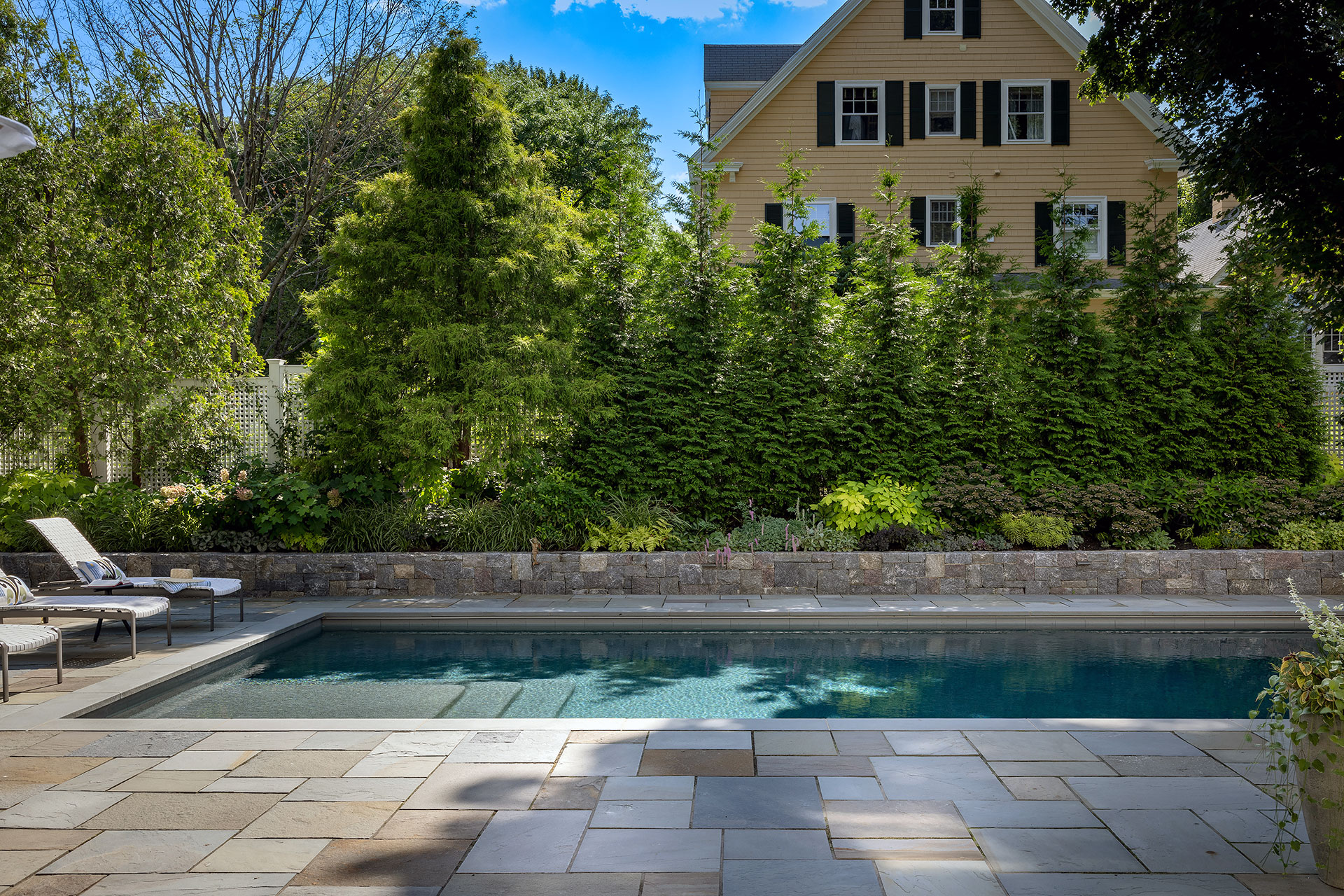
I would compare the actual shape of the available plants, though. A tall, narrow evergreen may leave a substantial opening beside it. A somewhat shorter, fuller plant might cover the troublesome view more effectively. Lower branching matters too, especially if the neighboring view is at ground level.
For your situation, I would consider using larger specimens at the most exposed points and smaller plants where immediate coverage is less important. That gives us a way to prioritize the investment without making every plant the largest size available.
Newly installed trees still need time to establish. UNH Extension’s planting guidance cautions against expecting much above-ground growth in the first season. I would judge the initial screen by the foliage being installed, rather than rely on an advertised annual growth rate to close an important gap right away.
A Natural Appearance Comes From How the New Planting Fits
Your wish for something that looks natural is important. A new screen should feel comfortable beside the garden you already have, even before it has had years to settle in.
I would look for existing shrubs or trees on your side that can become part of the composition. The new bed might connect to an established border or extend around the edge of a seating area. Repeating a few compatible plants can give that addition continuity, while variation in height and position keeps it from looking rigid.
Where there is enough depth, offset groups can help plants overlap visually from the important viewing position. That does not mean crowding them together. Their eventual width still has to fit, and a planting that looks comfortably full at installation can become difficult to manage if there is no room left for growth.
A mixed screen also spreads some of the risk. The University of Maryland Extension explains that using different plant species in a privacy screen reduces the chance of losing the whole planting to a problem affecting one kind of plant. The species still need to suit Concord’s conditions, but the design principle is useful here.
Our broader guide to creating privacy with trees and hedges covers these planting approaches in more detail. For your backyard, I would use them to address the specific opening left by the removed trees.
Check What Will Still Be Screening the View in February
Although you did not specify a season, I would ask whether the new screen needs to work throughout the year. If that view also affects rooms inside your house, winter coverage may matter just as much as summer privacy.
Deciduous trees and flowering shrubs can contribute height, texture, and summer fullness, but their branches will not provide the same coverage after the leaves fall. I would place reliable evergreen foliage at the most important winter sightlines, then use other plants to give the surrounding garden seasonal variety.
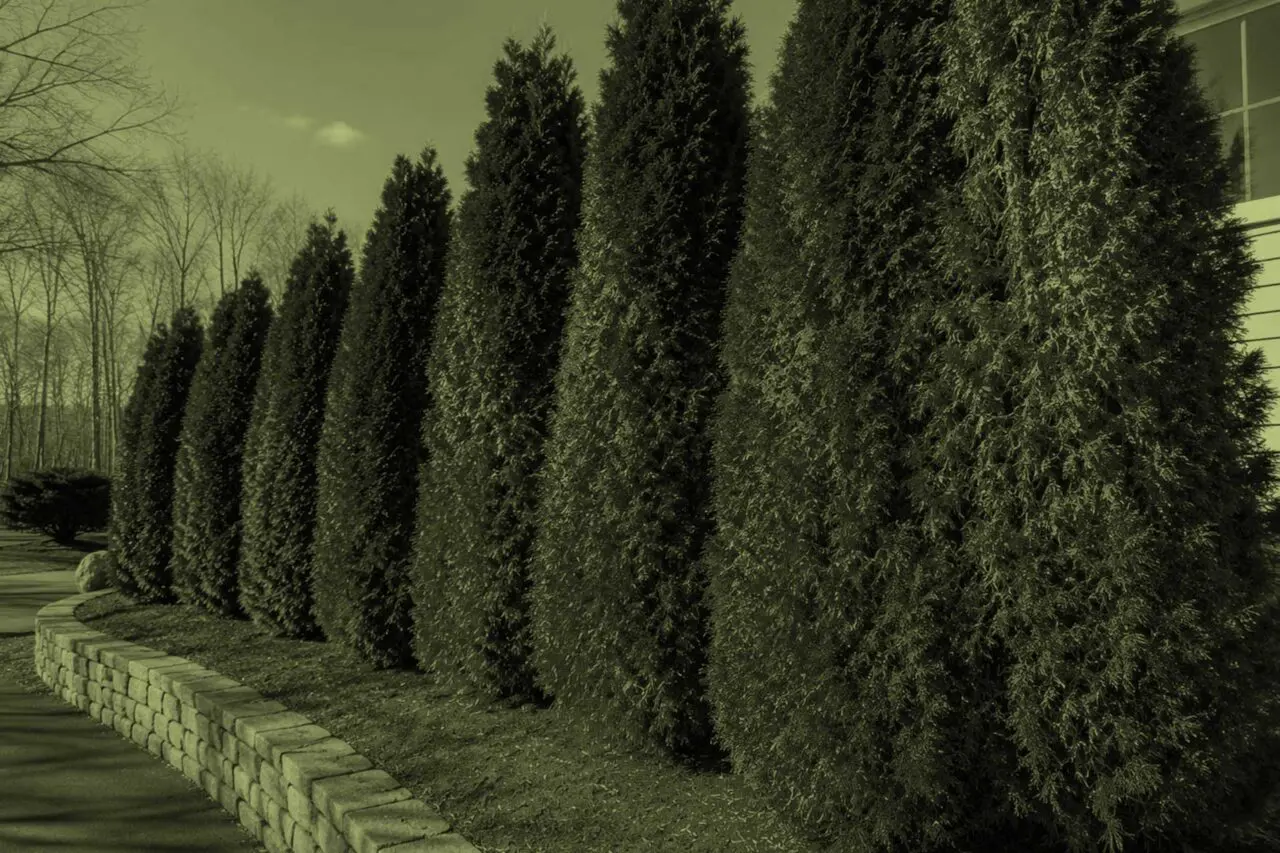
Arborvitae might be suitable in some locations, but I would not choose it automatically. Deer activity could change that recommendation. UNH Extension notes that several familiar screening plants, including arborvitae and yew, are winter food sources for deer. Losing lower foliage would be particularly frustrating in a planting intended to block a view.
Eastern red cedar is one possible alternative for a sunny, well-drained location, particularly where dry conditions are a concern. It would not be my answer to every site either. The useful question is which evergreen will retain the coverage you need in the conditions you actually have.
The Tree Removal May Have Changed the Growing Conditions Too
The new view is the obvious change, but I would also want to understand what happened to sunlight and exposure. Depending on where those trees stood, your planting area may now receive more afternoon sun or be more open to wind.
That could affect both the existing plants and anything we add. A bed that has been shaded for years should be evaluated as it is now, rather than planted according to how you remember it.
Before selecting the screen, I would check the soil, drainage, available root space, and remaining tree roots on your side. UMass Extension’s planting guidelines put that site evaluation ahead of plant selection, including light, exposure, compaction, drainage, and available space.
Those details help determine whether a substantial new planting can perform well. They also help us avoid disrupting healthy parts of the garden while trying to restore privacy elsewhere.
A Small Built Screen May Solve the Most Immediate Problem
If one view needs to be blocked completely from the outset, I would be open to combining planting with a carefully placed built element. A short fence section or an appropriately designed screen near a seating area can provide coverage while the surrounding planting develops.
Its appearance matters. Materials and proportions should relate to the house and garden, and planting can soften the ends so the structure feels intentional. You can see a range of approaches in a Blade of Grass’s privacy-screening portfolio.
An open trellis will filter a view rather than fully conceal it, and a deciduous vine will not supply dependable winter coverage. Before choosing any structure, I would confirm the sightline, property boundary, and applicable local requirements. That review belongs early in the design, before selecting a height or ordering materials.
Installing a Substantial Screen Takes Some Planning
A finished backyard can make installation more involved than it first appears. Before choosing large specimens, I would want to know how they would reach the planting area. Gate openings, paths, existing patios, slopes, and trees can all affect equipment access.
Large root balls are heavy, and moving them into position requires appropriate handling. The installation plan should also account for the surrounding landscape: where equipment can travel, how existing roots and surfaces will be protected, and what areas may need restoration afterward.
I would settle the watering plan at the same time. New planting needs moisture at its roots, and an existing lawn sprinkler may not provide the right coverage. Watering should respond to the soil and the plant’s needs rather than follow an assumed schedule simply because the irrigation system is already there.
This is where coordinated design and installation can be particularly useful. Plant size, placement, access, and care all affect whether the screen we draw can be installed successfully and remain healthy. Those decisions should be made together.
Be Clear About What You Want in the First Season
Before approving a plan, I would suggest asking the designer to distinguish between the screening you are buying now and the screening expected as plants grow.
A plan showing mature plant sizes can look reassuringly full. You should also understand how the installation will look from the places that currently feel exposed. These are useful questions to resolve:
- Which view will be substantially screened at installation?
- Where will there still be gaps, especially in winter?
- What additional coverage depends on future growth?
- How much space will the planting occupy as it matures?
- What watering, pruning, or deer protection will it require?
Complete enclosure may require more space or structure than you want. It is worth deciding whether your priority is concealing one seating area, reducing the view from a particular window, or creating a softer sense of separation across the backyard. Each is a legitimate goal, but they can lead to quite different designs.
My Practical Recommendation
Thomas, I would begin with the place that has become least comfortable since the trees were removed. From there, I would compare a targeted planting of substantial evergreens with a combination of planting and a small built screen, if one is needed.
The first option to test would be whether a few well-positioned plants can interrupt the newly opened view while preserving the parts of the yard you already like. If they can, the rest of the planting can develop around them without leaving you waiting for the whole garden to mature before it feels comfortable again.
If you would like help evaluating the opening and planning a screen that fits your existing landscape, contact a Blade of Grass. We can look at the views, planting conditions, and installation requirements together before you commit to a solution.
A Few Helpful Resources