Shaded areas are some of the most overlooked parts of a landscape. Many homeowners assume deep shade, woodland edges, damp corners, and north-facing foundations limit their options. In reality, those spaces can become some of the most atmospheric and visually refined parts of a property when they are planted with the right structure, texture, and plant palette.
Ferns are especially valuable in Boston-area landscapes because they help solve several common design challenges at once. Many perform beautifully in part shade or filtered light, several are well suited to consistently moist soil, and many offer the graceful texture that makes heavier hardscape, shrubs, and broadleaf perennials feel more balanced. Hardy outdoor ferns are also easier to grow than many people expect when they are matched to the site. As Illinois Extension notes, nearly all ferns do best in dappled shade with organic, well-drained soil, while many also appreciate consistent moisture.
Key Takeaways
- Many ferns thrive in Boston-area shade gardens.
- The best results come from matching fern varieties to site conditions.
- Some ferns are hardy in New England, while others are better as seasonal accents.
- Ferns add texture, softness, and structure to shaded landscapes.
- Boston climate factors like moisture, deer, and winter hardiness should guide plant selection.
Ferns are also far more diverse than their reputation suggests. The American Fern Society notes that there are around 10,500 living fern species worldwide, making them one of the most diverse groups of vascular plants on Earth.
For Greater Boston and much of eastern Massachusetts, that diversity matters. Local gardens often deal with a mix of filtered shade, mature tree cover, coastal wind, freeze-thaw cycles, and shifting moisture conditions from spring rains through late-summer dry spells. The most successful fern plantings are not just pretty. They are well matched to those site realities. USDA hardiness guidance also reminds gardeners that plant zones are general tools, and that small-site microclimates can vary meaningfully even within the same town.
As retired Illinois Extension horticulture educator Rhonda Ferree put it, “Lush ferns create a cool, calming effect.” That is exactly why they work so well in refined New England landscapes, where texture often needs to do as much design work as bloom.
Why Ferns Work so Well in Boston-area Landscapes
Ferns are often treated as filler plants, but in a well-composed landscape they can do much more than fill space. They soften stonework, bring movement to shaded borders, and help knit together spaces where flowering plants may be inconsistent or short-lived.
They are particularly useful in Greater Boston properties for a few reasons:
- many thrive in part shade or bright woodland conditions
- several perform well in moisture-retentive soils
- many pair beautifully with hostas, hellebores, astilbes, spring bulbs, and shade shrubs
- some are less appealing to deer than many common shade perennials
- their texture adds a layered, high-end feel without looking busy
That said, ferns are not interchangeable. Some want moist woodland soil. Some spread steadily. Some stay tidy and clump-forming. Some are truly hardy in New England beds, while others are better treated as seasonal container plants or houseplants.
Related Blog: Deer-Resistant Plants and Landscaping Strategies for Boston-Area Gardens
How to use ferns well in New England gardens
Before choosing varieties, it helps to think less about “shade plants” in general and more about the exact conditions on site.
Start with the Real Conditions, Not Just the Light Label
A shady Boston garden may actually be one of several very different environments: dry shade beneath mature maples, damp shade near downspouts or drainage swales, coastal part shade with wind exposure, or filtered woodland light with rich leaf litter. That distinction matters. Extension guidance consistently notes that most ferns prefer filtered light, organic matter, and even moisture, but some are more adaptable than others.
Use Ferns for Structure and Contrast
In design terms, ferns are most effective when they are used for:
- woodland edges
- underplanting beneath shrubs
- shaded foundations
- transitions between lawn and wooded areas
- softening paths, steps, and walls
- adding height and softness to planters in summer
They are especially useful when a space feels too static. Fern fronds bring movement and a lighter texture that contrasts beautifully with stone, boxwood, broadleaf evergreens, and heavier-leaved perennials.
Know Which Ferns are Hardy here and Which are Seasonal
This is one of the biggest opportunities to improve the original article. Several ferns in your current list are hardy outdoor plants in New England, while others are better used seasonally in containers or brought indoors before cold weather. That distinction makes the post more credible and more useful for Boston homeowners.
Eight Ferns to Consider for Boston and New England Landscapes
Below is the same core plant list from the original article, updated with a more practical Boston-climate lens.
1. Cinnamon Fern (Osmundastrum cinnamomeum)

Cinnamon fern is one of the most architecturally useful hardy ferns for New England landscapes. Missouri Botanical Garden notes that it grows in moist, boggy ground and shaded sites, and can reach impressive size with consistent moisture.
For Boston-area properties, this is an excellent choice for woodland edges, low spots that stay evenly moist, and larger borders where you want vertical presence without the formality of a shrub. Its cinnamon-colored fertile fronds give it seasonal distinction, and its bold scale makes it especially effective in estate landscapes or larger suburban gardens.
Best use: moist shade, rain garden edges, naturalistic borders, larger woodland gardens
2. Ostrich Fern (Matteuccia struthiopteris)
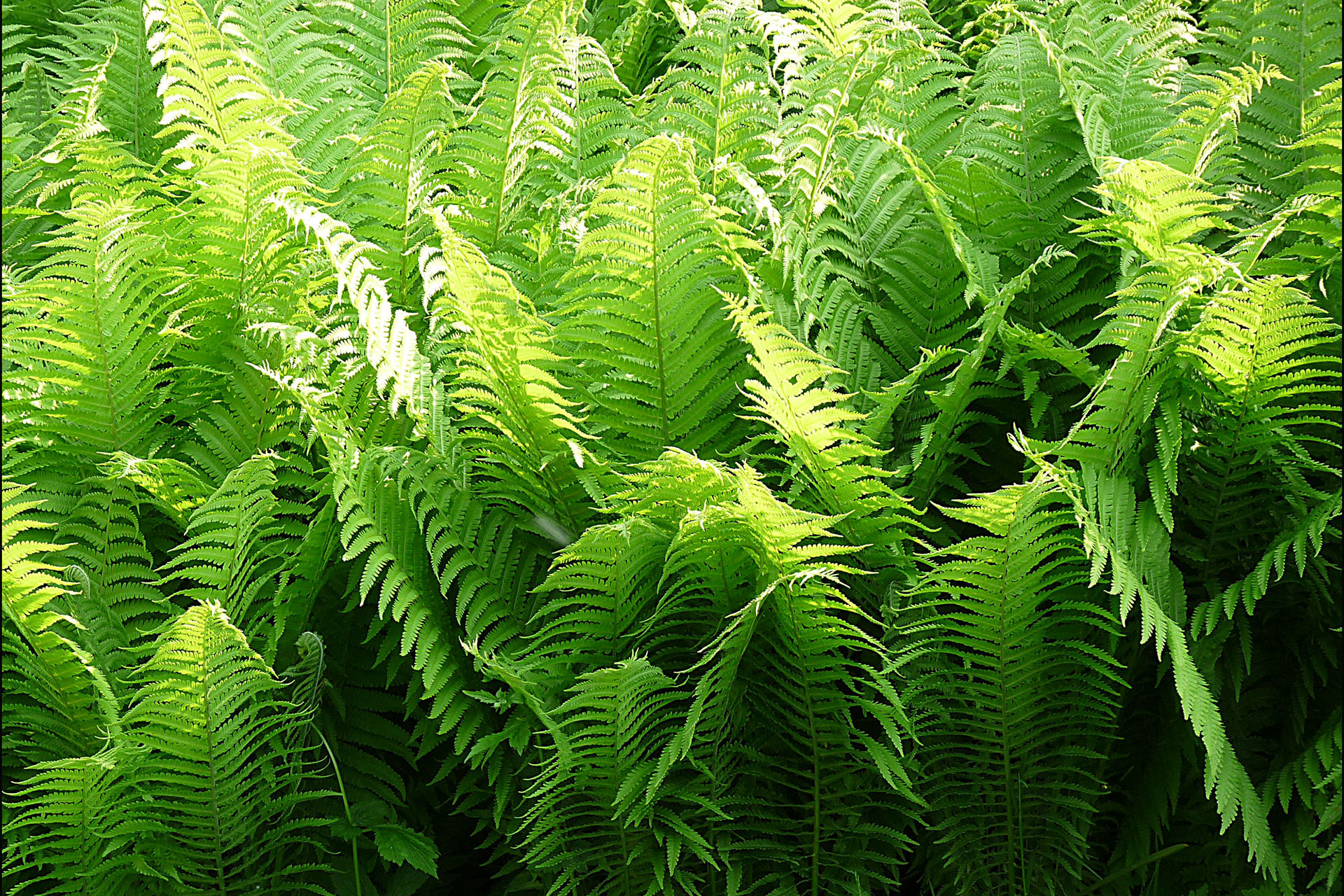
Ostrich fern is one of the best-known hardy ferns for shade and one of the strongest choices for creating a lush, established look. Missouri Botanical Garden describes it as clump-forming and upright to arching, typically 2 to 3 feet tall in cultivation, though taller in cool, moist conditions.
In Greater Boston landscapes, ostrich fern is ideal where you want a soft, green massing effect in part shade or moist shade. It works beautifully along woodland paths, near streams or drainage areas, and behind lower perennials. Give it room. In favorable conditions it can colonize and create the kind of layered, immersive look many homeowners want in shaded garden rooms.
Best use: woodland paths, moist shade, mass plantings, naturalized spaces
3. Lady Fern (Athyrium filix-femina)
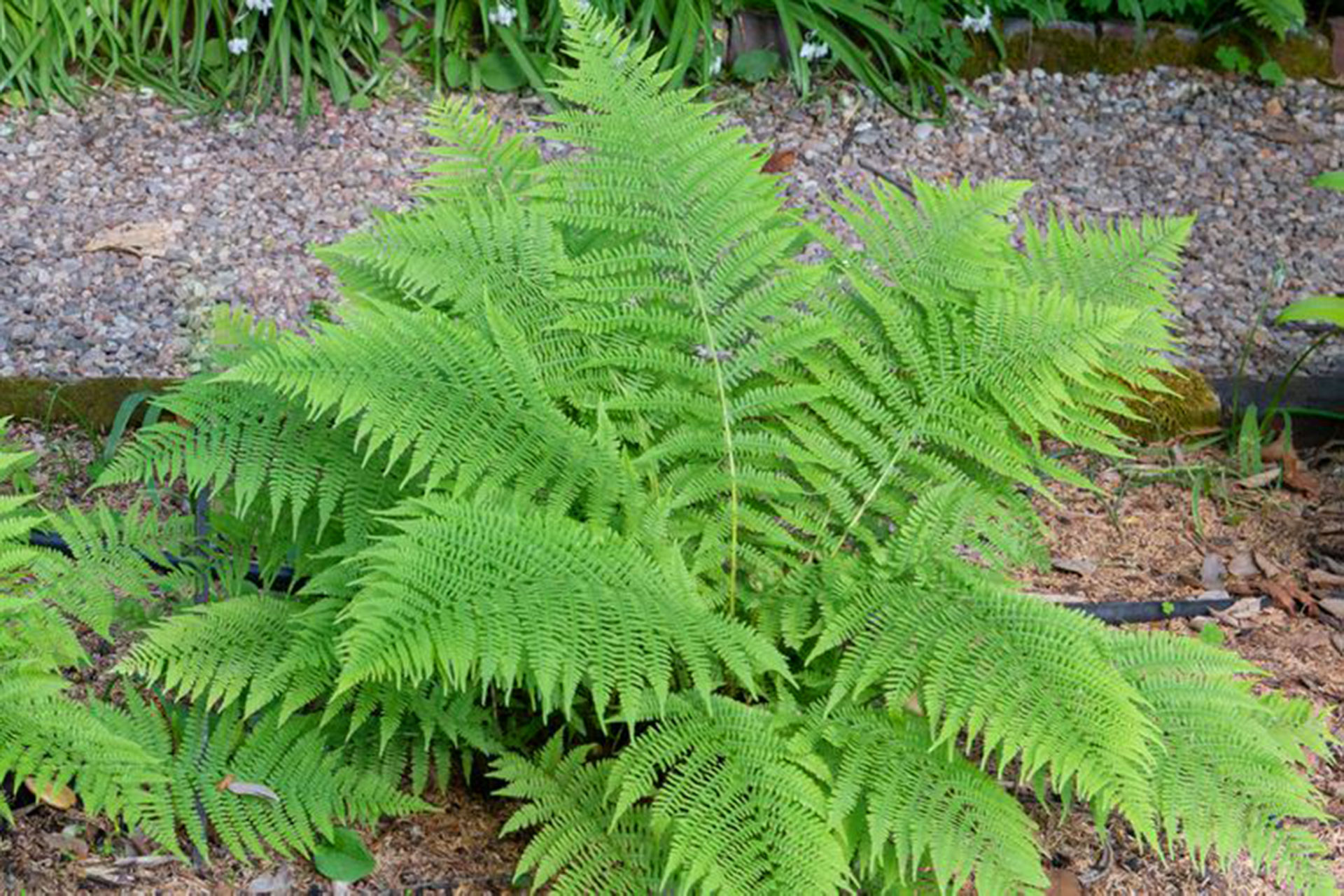
Lady fern is one of the most versatile options on this list. NC State describes it as very cold tolerant and suited to moist shady woodland conditions, while SDSU notes that it is somewhat more drought-tolerant than ostrich fern once established.
That makes it especially useful for Boston-area homeowners who want a hardy fern for more typical residential shade beds, not just damp woodland edges. Its finer texture reads as elegant rather than heavy, so it pairs well with hydrangeas, hostas, hellebores, and spring bulbs. If you want a fern that looks at home in both a naturalistic planting and a more tailored foundation bed, this is a strong candidate.
Best use: mixed shade borders, foundation plantings, woodland-style gardens
4. Sensitive Fern (Onoclea sensibilis)
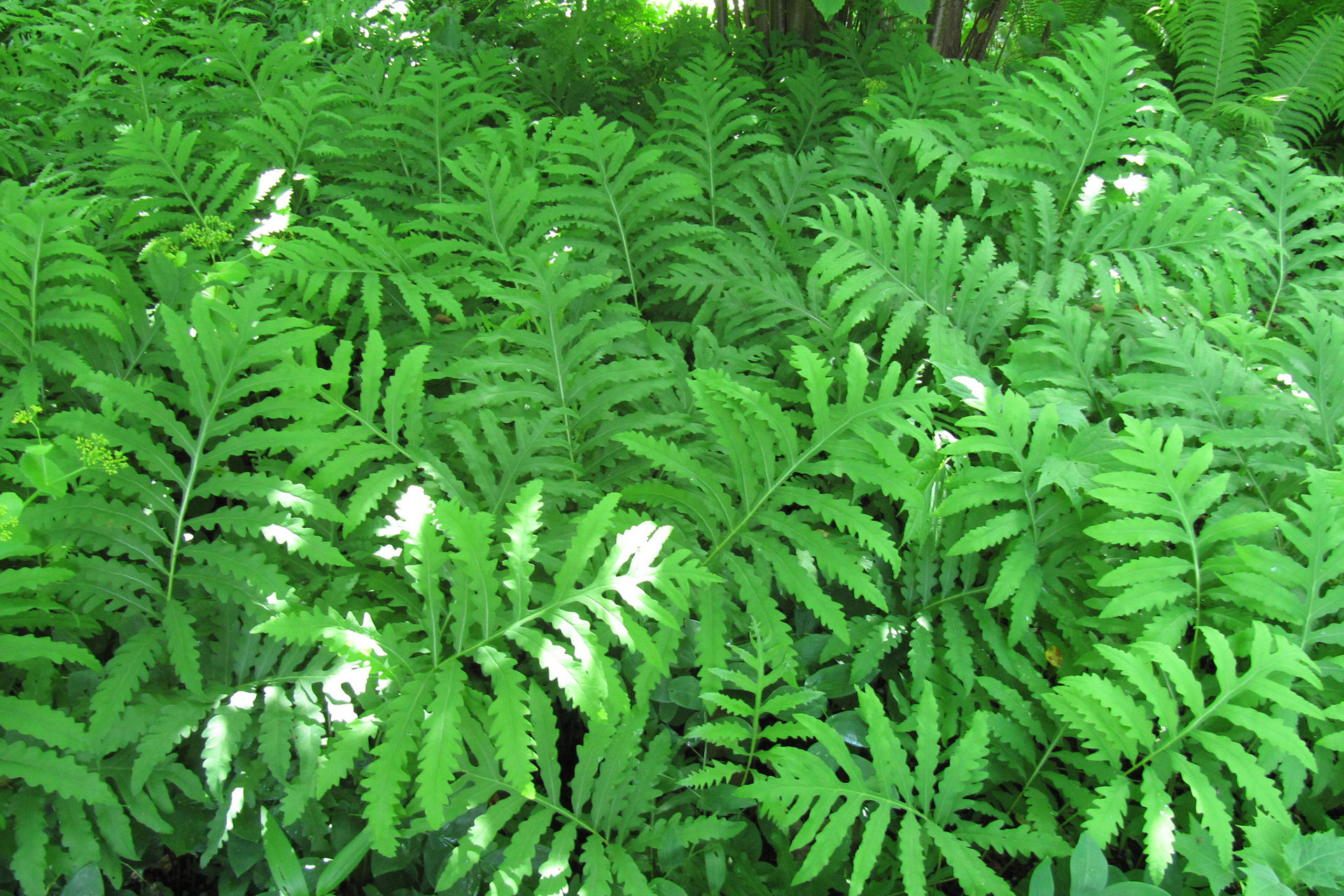
Sensitive fern deserves a more accurate framing than it gets in the original post. NC State identifies it as a deciduous fern that thrives in moist woodland soils, and explains that the name refers to its sensitivity to mild frost or drought, not a lack of overall cold hardiness.
In New England, that makes it a good fit for moist shade and naturalized areas where a slightly looser, more informal look is appropriate. It can be especially useful in lower portions of a property where water lingers after rain. The fresh green color is bright and clean, and the foliage shape is distinct from finer-textured ferns.
Best use: moist naturalized areas, woodland edges, lower-lying shade beds
5. Autumn Fern (Dryopteris erythrosora)
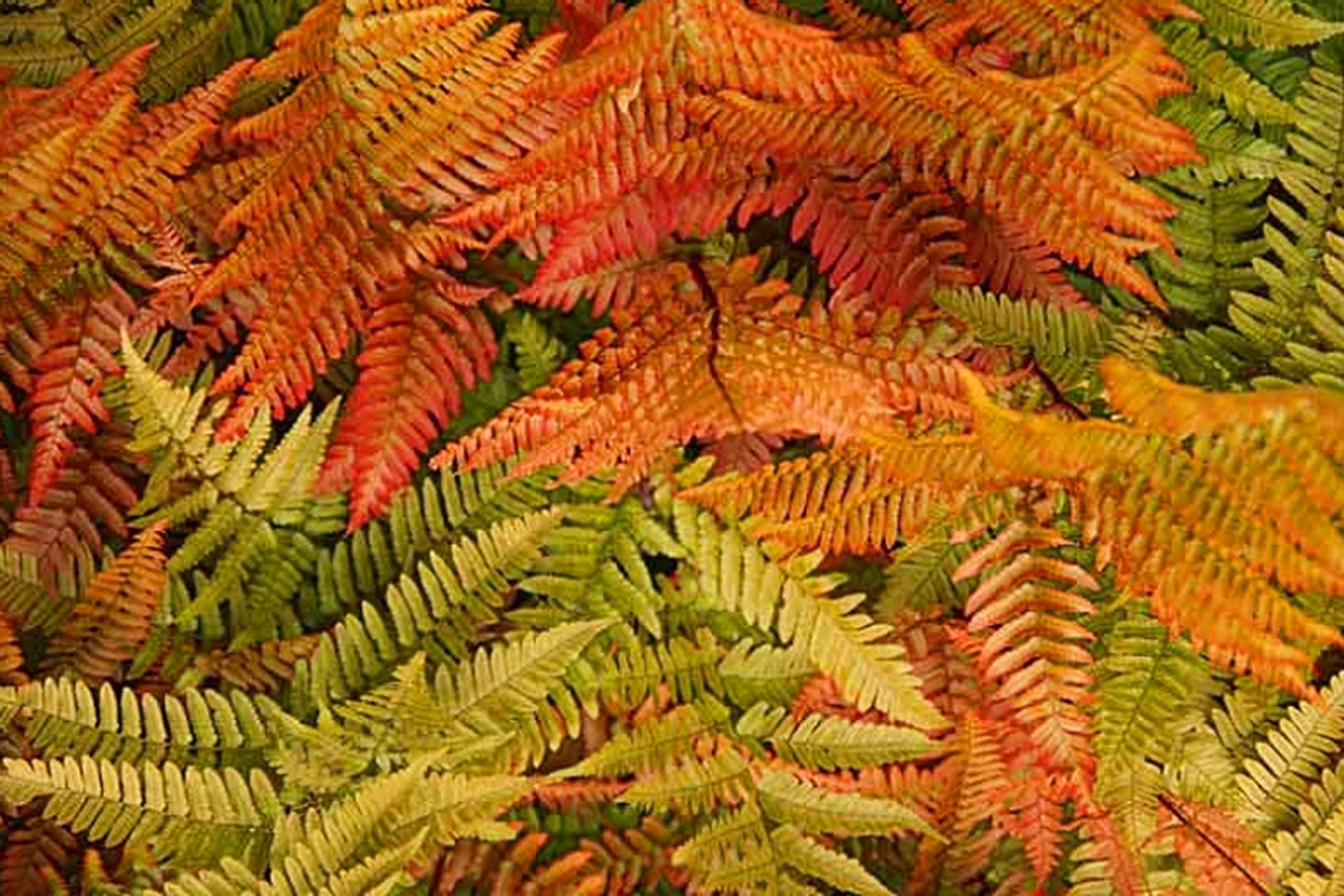
Autumn fern is a smart choice for homeowners who want more color variation in shaded plantings. Missouri Botanical Garden notes its red-toned new growth and the possibility of reddish coloration returning in autumn. It is also widely valued for shade garden use and tidy form.
For Boston landscapes, autumn fern is one of the most garden-friendly choices in the list because it adds warmth and contrast where shade beds can otherwise become a wash of mid-green. It also tends to be mentioned favorably in deer-resistant fern discussions, though no plant is completely deer-proof.
Best use: refined shade borders, entry gardens, woodland edges, deer-prone properties
6. Kimberley Fern (Nephrolepis obliterata)
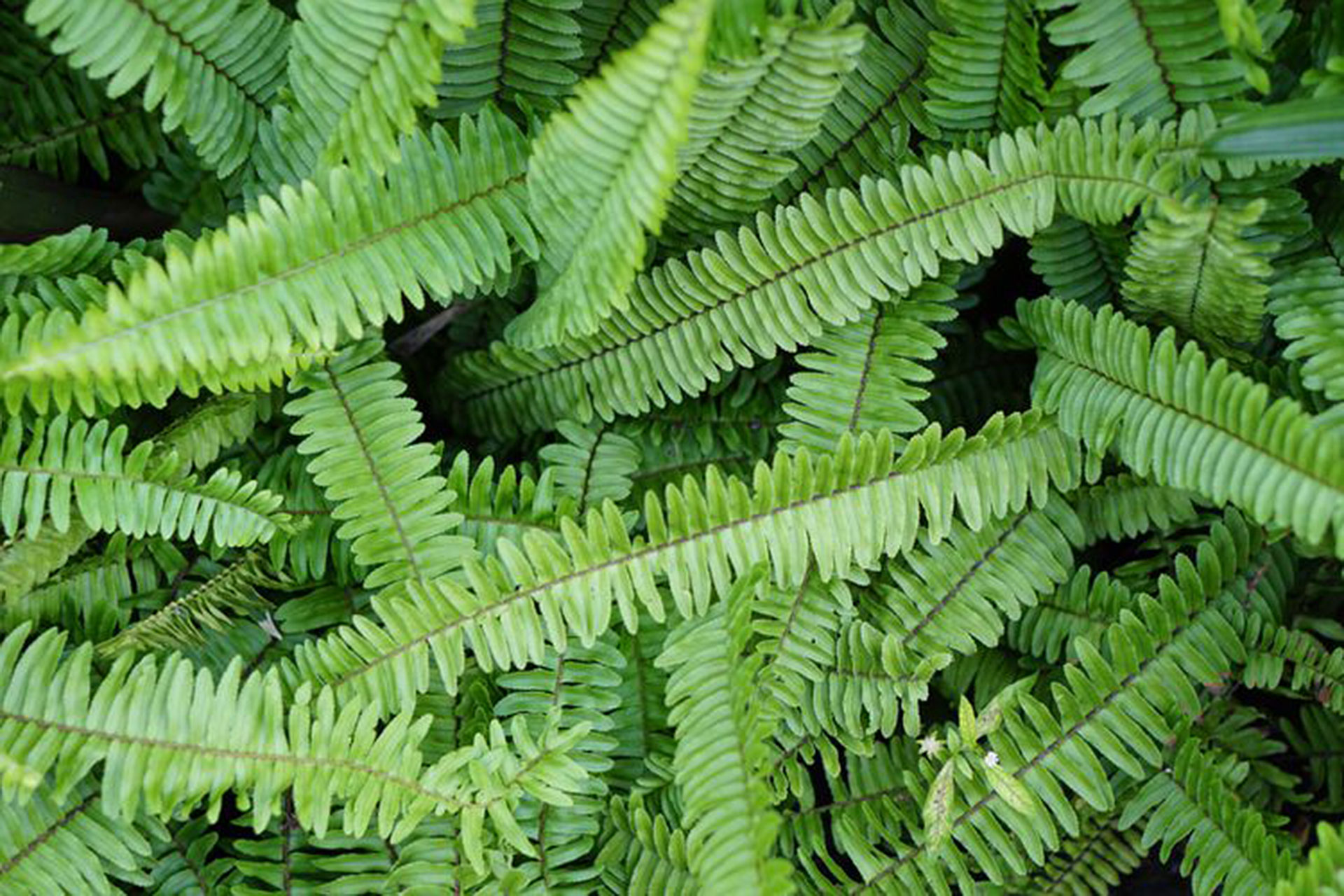
Kimberley fern is not a hardy in-ground New England fern, but it is still worth keeping in the article because it has real value in seasonal container design. It tolerates heat and sun better than many fern types and has a more upright habit than a Boston fern, which makes it useful in summer urns and porch containers.
For Boston-area homeowners, the key is positioning it correctly in the article: this is a seasonal container fern, not a fern to rely on for year-round in-ground performance. It can be a great choice for summer planting, especially in part shade or bright shade, and it can handle breezier exposures better than softer, more cascading fern types.
Best use: summer containers, porch planters, seasonal accents in part shade
7. Maidenhair Fern and Boston Fern (Adiantum raddianum / Nephrolepis exaltata)
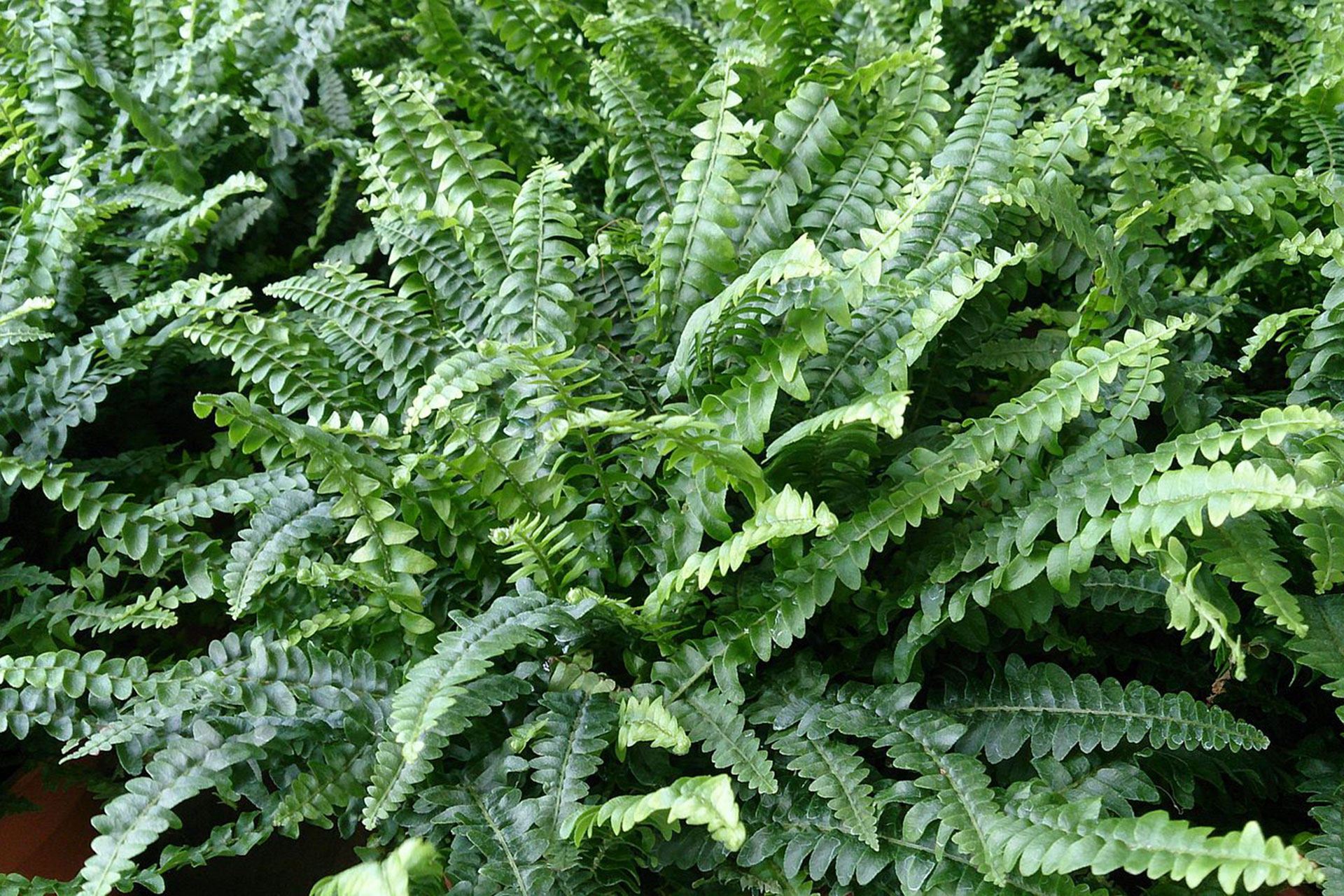
These two are best treated as special-use ferns for this region. Boston fern is widely grown outdoors seasonally but is not hardy outdoors in New England; sources commonly place outdoor hardiness much farther south, and University of Wisconsin Extension notes it should be brought in or protected when temperatures drop into the low 40s Fahrenheit.
That makes both maidenhair fern and Boston fern excellent for:
- summer window boxes
- shaded containers
- sheltered patios
- indoor use
They can absolutely contribute to the layered look of a Boston-area landscape, but they should be discussed as seasonal or indoor plants, not dependable hardy garden anchors.
Best use: shaded containers, seasonal planters, interiors, sheltered summer spaces
8. Japanese Painted Fern (Athyrium niponicum)
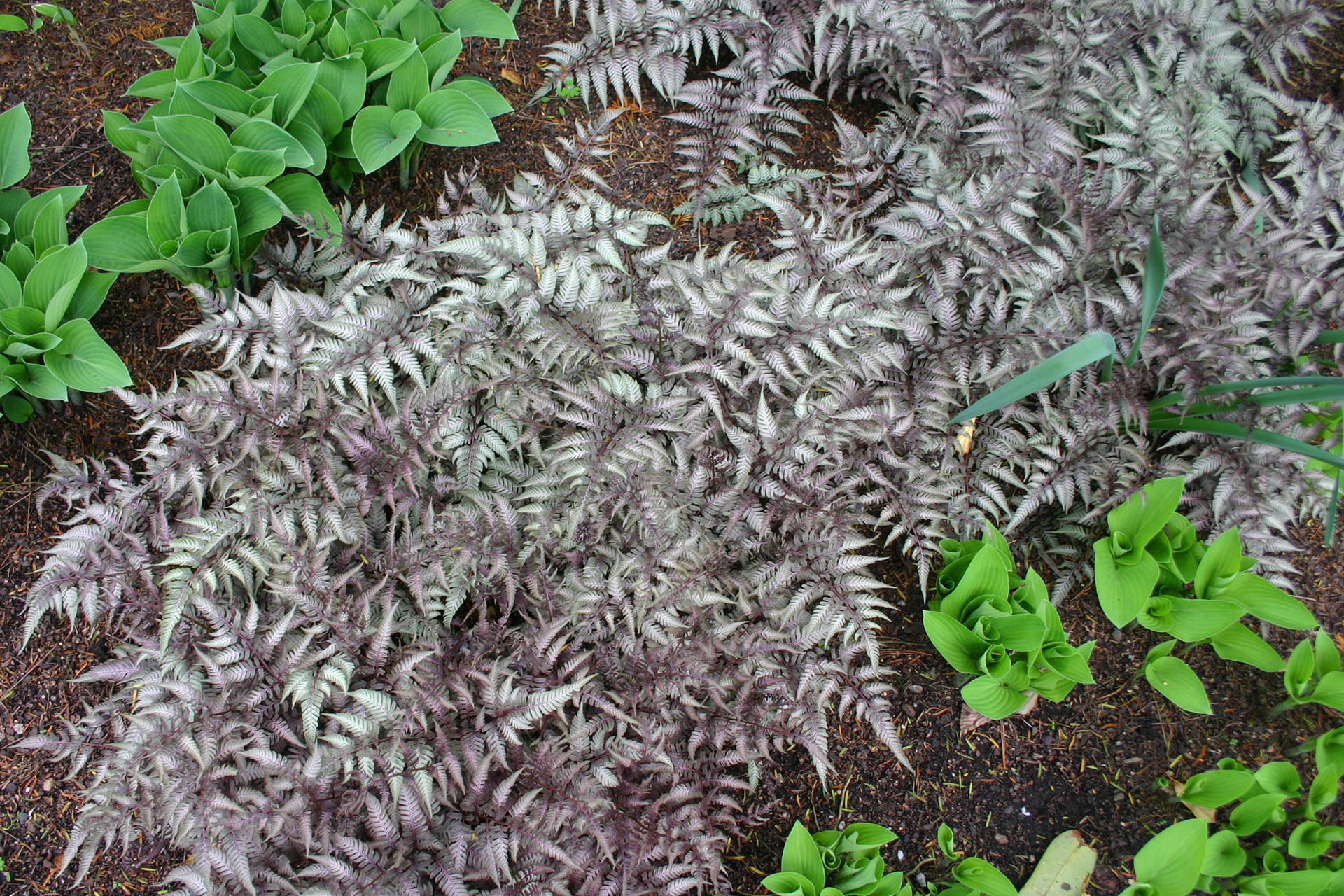
Japanese painted fern remains one of the most distinctive ferns for ornamental value. NC State notes that it prefers partial to full shade and moist, rich soil, and that its best color develops in light shade rather than heavy sun.
This is one of the easiest ways to bring subtle silver, sage, and burgundy tones into a shade planting without introducing something flashy or out of character with a refined landscape. In Boston-area gardens, it works particularly well near bluestone, weathered wood, darker mulch, and shade perennials with solid green foliage. It is a sophisticated accent plant and one of the best options for elevating smaller urban or suburban shade gardens.
Best use: focal points in shade borders, high-contrast pairings, elegant container planting
Related Blog: Low Care Natives for The Woodland Garden
Common Fern Questions Boston Homeowners Ask
Q: Are ferns good for dry shade?
A: Some are more adaptable than others, but most ferns prefer at least moderate moisture and organic soil. If you are dealing with true dry shade beneath mature trees, success depends on soil improvement, mulch, and plant selection. Lady fern is more forgiving than ostrich fern, while autumn fern can also be useful in the right conditions.
Q: Are ferns deer resistant?
A: Many ferns are considered less appealing to deer than hostas, tulips, and other commonly browsed plants, which is one reason they are so useful in suburban landscapes. Still, deer pressure varies, and no plant is completely immune. Japanese painted fern and autumn fern are often included in deer-resistant fern lists.
Q: Do ferns need full shade?
A: Not usually. One of the most useful corrections for homeowners is that many ferns do not want the darkest possible conditions. SDSU Extension notes that most ferns perform better with some sun or dappled light rather than dense, heavy shade.
Q: What is the biggest mistake people make with ferns?
A: Treating all ferns the same. The wrong combination of moisture, soil, and light is usually the issue, not the plant itself. In New England gardens, the difference between filtered woodland shade and dry root-filled shade beneath a mature maple is enormous.
A Better Way to Think About Ferns
Ferns are not just filler for difficult corners. They are design plants. In the right setting, they bring calm, movement, softness, and a sense of maturity that many landscapes lack. They can make a woodland edge feel intentional, help a shaded walkway feel more immersive, and give containers a fuller, more layered look through summer.
For Boston-area homeowners, they are also practical. They can solve real landscape problems where flowering plants struggle, and several of the best varieties are fully capable of earning a long-term place in a New England garden. The key is choosing the right fern for the right conditions and understanding which ones are hardy performers here versus seasonal accents.
If you are looking beyond the usual shade planting palette, ferns are well worth a fresh look.
If you would like help designing or refining shaded planting areas, woodland edges, container groupings, or long-term landscape maintenance for your property, contact the team at a Blade of Grass to learn more.
Related Reading to Support and Inspire
These are strong, credible references you could also use while finalizing the post:
- USDA Plant Hardiness Zone Map guidance
- Illinois Extension on growing hardy ferns in shade gardens
- SDSU Extension on why many ferns prefer dappled light rather than dense shade
- NC State on Japanese painted fern and sensitive fern culture
Explore Landscape Design, Maintenance, and Fine Gardening Services
Whether you are planning a new shade garden, refining an established woodland edge, or looking for better long-term care for existing planting beds, thoughtful guidance makes a noticeable difference. At a Blade of Grass, our team brings together landscape design, landscape maintenance, and fine gardening expertise to help Greater Boston homeowners create beautiful, site-appropriate landscapes that continue to mature gracefully over time. Explore our services to see how we can help shape, care for, and elevate your property.