Ornamental trees play a quiet but powerful role in residential landscape design. They do not usually dominate a property the way a large shade tree might, and they are not as easily changed as annuals, containers, or seasonal plantings. Instead, they sit somewhere in the middle, adding structure, scale, bloom, texture, and character in a way that can influence the entire feel of a garden.
For Boston-area homeowners, ornamental trees are especially useful because many properties need more than one kind of performance from a planting. A front yard may need curb appeal without overwhelming the architecture. A patio may need filtered shade without feeling enclosed. A foundation bed may need height, but not a tree that will crowd windows or rooflines. A side yard may need seasonal interest in a narrow footprint. In each case, the right small tree can help solve a design challenge while adding beauty throughout the year.
This post focuses on three ornamental trees that continue to earn their place in refined New England landscapes:
- Cornus kousa, commonly known as kousa dogwood
- Hamamelis x intermedia, commonly known as hybrid witch hazel
- Heptacodium miconioides, commonly known as seven-son flower
Each brings a different kind of personality to the landscape. Kousa dogwood offers late-spring bloom, handsome form, fruit, fall color, and bark. Witch hazel brings winter or very early spring flowers when the garden is otherwise quiet. Seven-son flower adds late-season bloom, pollinator value, red fall bracts, and exfoliating bark.
The real value, however, is not just in the plant list. It is in knowing where each tree belongs, how it should relate to the home and surrounding plantings, and what site conditions will help it thrive.
Key Takeaways
- Ornamental trees can add structure, height, bloom, texture, and four-season interest without overwhelming a residential property.
- Kousa dogwood, hybrid witch hazel, and seven-son flower are especially useful in Greater Boston landscapes because each contributes interest during a different part of the year.
- The best ornamental tree is not simply the prettiest one at the nursery. It is the one that fits the site, soil, scale, architecture, and long-term maintenance plan.
- Placement matters. Small trees can frame entries, soften foundations, anchor planting beds, create privacy, or add a focal point near patios and terraces.
- A professional landscape design process can help ensure the tree works as part of the broader property, not as an isolated feature.
Why Ornamental Trees Matter in Boston-Area Landscape Design
A well-placed ornamental tree gives a landscape a sense of intention. It can make a new planting feel established, connect a house to the garden, and create a focal point that changes from season to season.
In the Greater Boston area, properties often have layered challenges. Older homes may have mature tree canopies, compacted urban soils, stone foundations, narrow side yards, or sun and shade patterns that shift dramatically throughout the day. Newer renovations may have disturbed soil, construction fill, drainage changes, or planting beds that need to mature gracefully around patios, walkways, and outdoor living spaces.
This is where ornamental trees become especially valuable. They can help:
- Frame a front entry or arrival sequence
- Add height to foundation plantings
- Provide filtered shade near a patio or terrace
- Create a focal point in a courtyard, lawn panel, or garden bed
- Extend seasonal interest beyond spring and summer
- Support birds, bees, and other beneficial wildlife
- Bring balance to larger shrubs, perennials, and ground covers
Trees also have measurable environmental value. According to the U.S. Department of Energy, carefully positioned trees can reduce surrounding air temperatures and help lower cooling costs by shading a home and nearby hardscape surfaces.
Learn More: U.S. Department of Energy- Landscaping for Shade
That kind of performance is particularly relevant in suburban Boston landscapes where patios, driveways, stone walls, and south-facing exposures can create warmer microclimates during the growing season.
Still, ornamental trees need to be chosen carefully. A small tree that looks charming when planted can become awkward if it matures too close to the house, blocks a walkway, shades a lawn, or outgrows a tight foundation bed. Plant selection should always be tied to design intent.
1. Kousa Dogwood: A Four-Season Tree for Refined Residential Landscapes
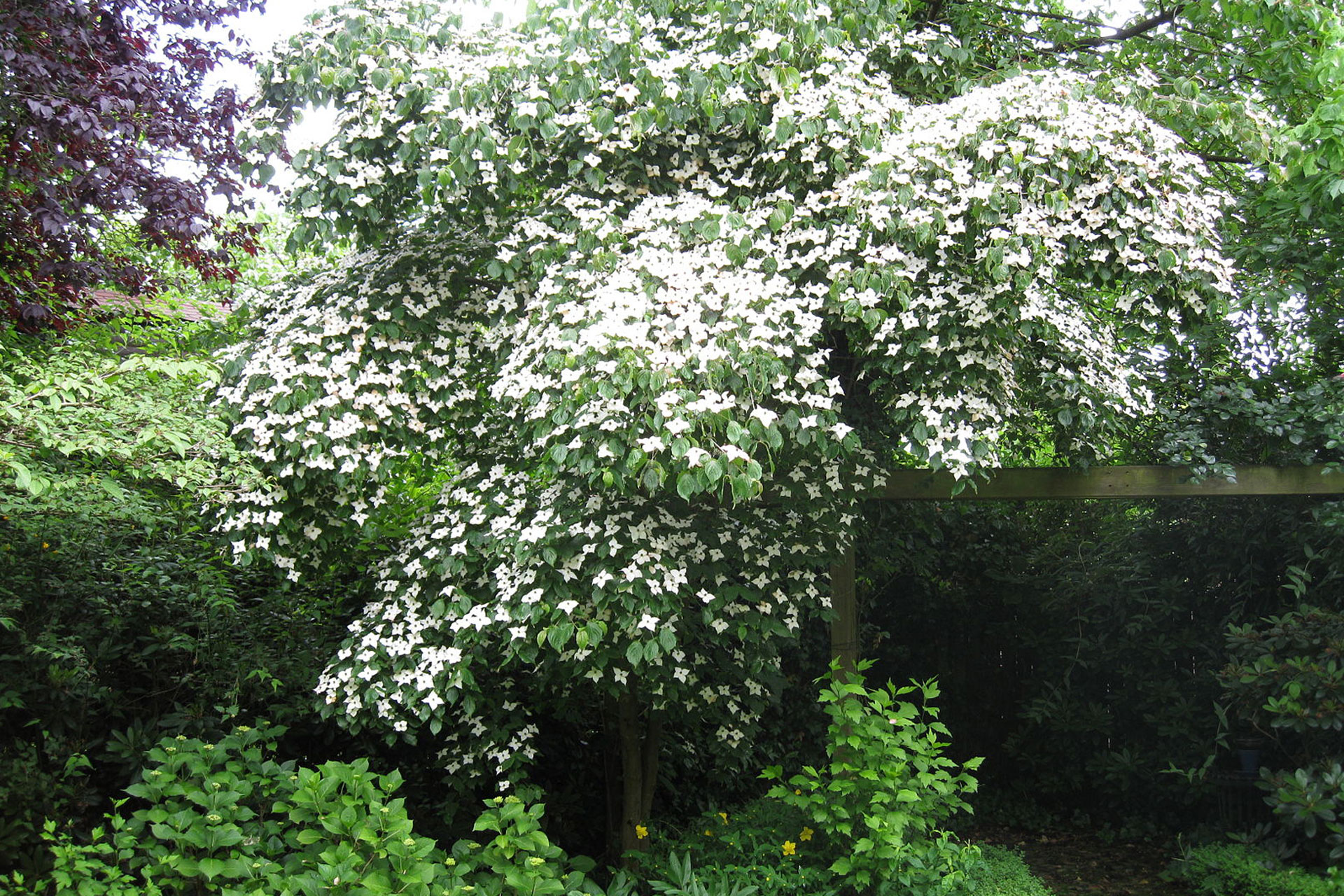
Kousa dogwood, or Cornus kousa, is one of the most versatile ornamental trees for Boston-area gardens. It is compact enough for many residential settings but still substantial enough to make a strong design statement.

Why Kousa Dogwood Works
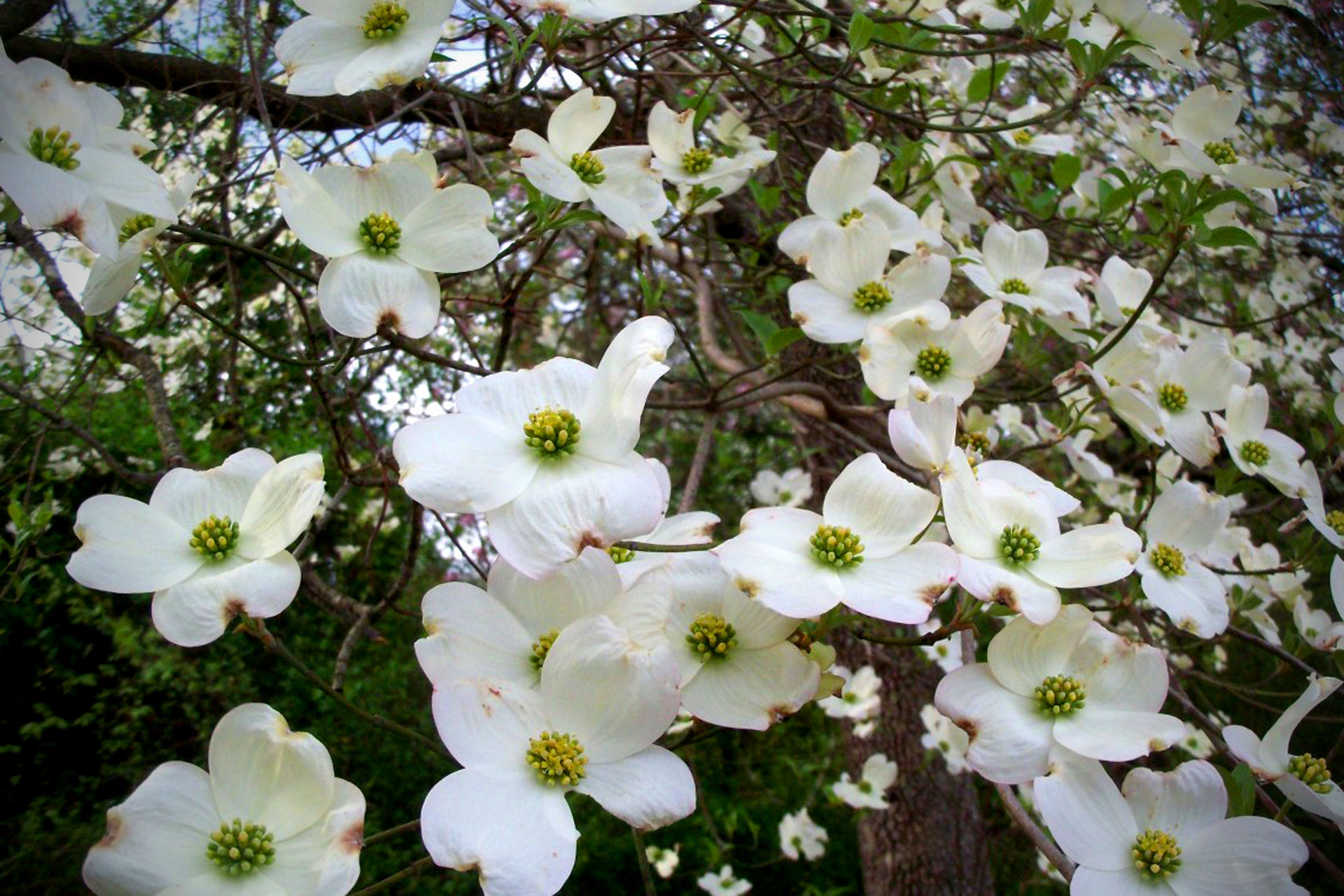
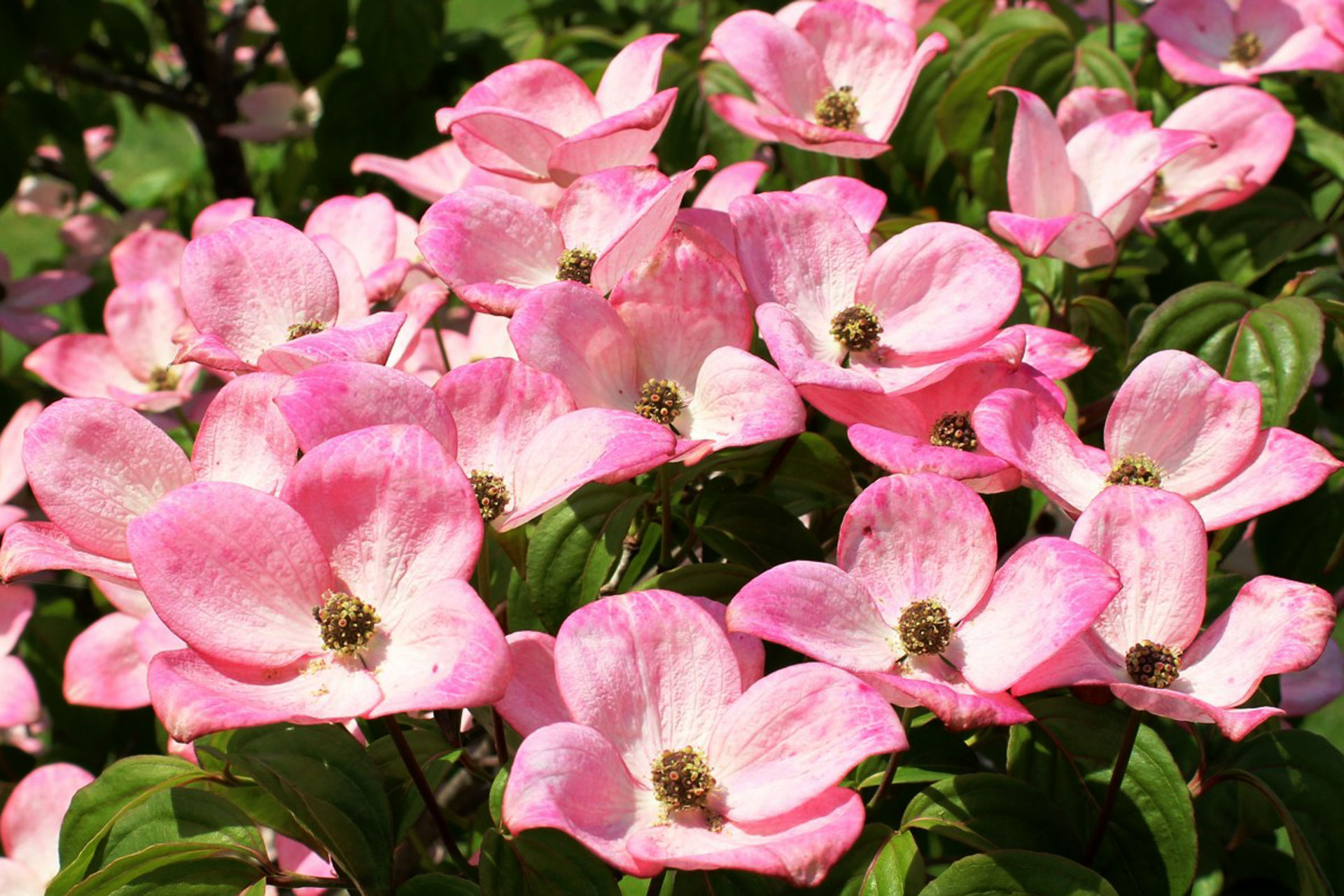
Kousa dogwood is often appreciated for its late spring to early summer flowers. Technically, the showy white or pink “flowers” are bracts, but from a design standpoint, what matters is their effect. They appear after many spring-flowering trees have finished, which helps extend bloom season in the garden.
That later timing can be useful in Greater Boston. Early spring can pass quickly, especially when weather swings from cold rain to sudden warmth. Kousa dogwood helps bridge the gap between classic spring bloom and the fuller perennial display of summer.
Its appeal does not end there. After flowering, Kousa dogwood produces round, decorative fruit that can add summer and early fall interest. Its foliage often turns reddish purple in autumn, and mature trees develop mottled bark that becomes more visible in winter.
That combination of bloom, foliage, fruit, and bark makes it a true four-season plant.
Disease Resistance and New England Conditions
Kousa dogwood is often selected as an alternative to flowering dogwood because it has better resistance to dogwood anthracnose. UMass Extension notes that Kousa dogwood can be infected but is highly resistant and generally suffers only minor leaf spotting.
Learn More: Transform Your Property: The Real Numbers Behind Landscaping ROI
That does not mean it is indestructible. Like most ornamental trees, it performs best when it is planted in the right place, watered properly during establishment, and given adequate air circulation. It is also important to avoid assuming that any tree will solve poor soil conditions on its own. Compacted soil, poor drainage, buried construction debris, and improper planting depth can all limit long-term success.
Where to Use Kousa Dogwood
Kousa dogwood works well in several residential landscape settings:
- As a front yard focal point
- Near an entry walk where seasonal interest can be appreciated up close
- In a layered foundation planting, set far enough from the house to mature gracefully
- At the edge of a patio or lawn panel
- In a mixed border with evergreens, shrubs, perennials, and ground covers
For a more formal property, Kousa dogwood can soften strong architectural lines. For a more naturalistic garden, it can feel relaxed and woodland-adjacent. It is especially useful when the goal is to add elegance without making the landscape feel overplanted.
For more ideas on using small trees and layered plantings near the home, see our guide to foundation landscaping ideas for Boston homes.
Design Considerations
The biggest mistake with Kousa dogwood is planting it too close to the house, walkway, or driveway. It may be considered a small tree, but it still needs room to develop its branching structure.
When used in a foundation planting, it should usually sit forward from the house rather than directly against it. This allows the canopy to mature naturally and gives the planting bed more depth. It can then be underplanted with shade-tolerant perennials, ground covers, spring bulbs, or low evergreen structure.
Kousa dogwood also benefits from being seen from more than one angle. Its branching habit and bark make it more than a flat, front-facing bloom feature. In a well-designed landscape, it can be positioned where it contributes to the view from the street, the front walk, and the interior of the home.
Learn More: UMass Extension: Dogwood Anthracnose
2. Hamamelis x Intermedia: Winter Bloom When the Garden Needs It Most
Hybrid witch hazel, or Hamamelis x intermedia, brings something rare to the New England landscape: flowers in winter or very early spring.
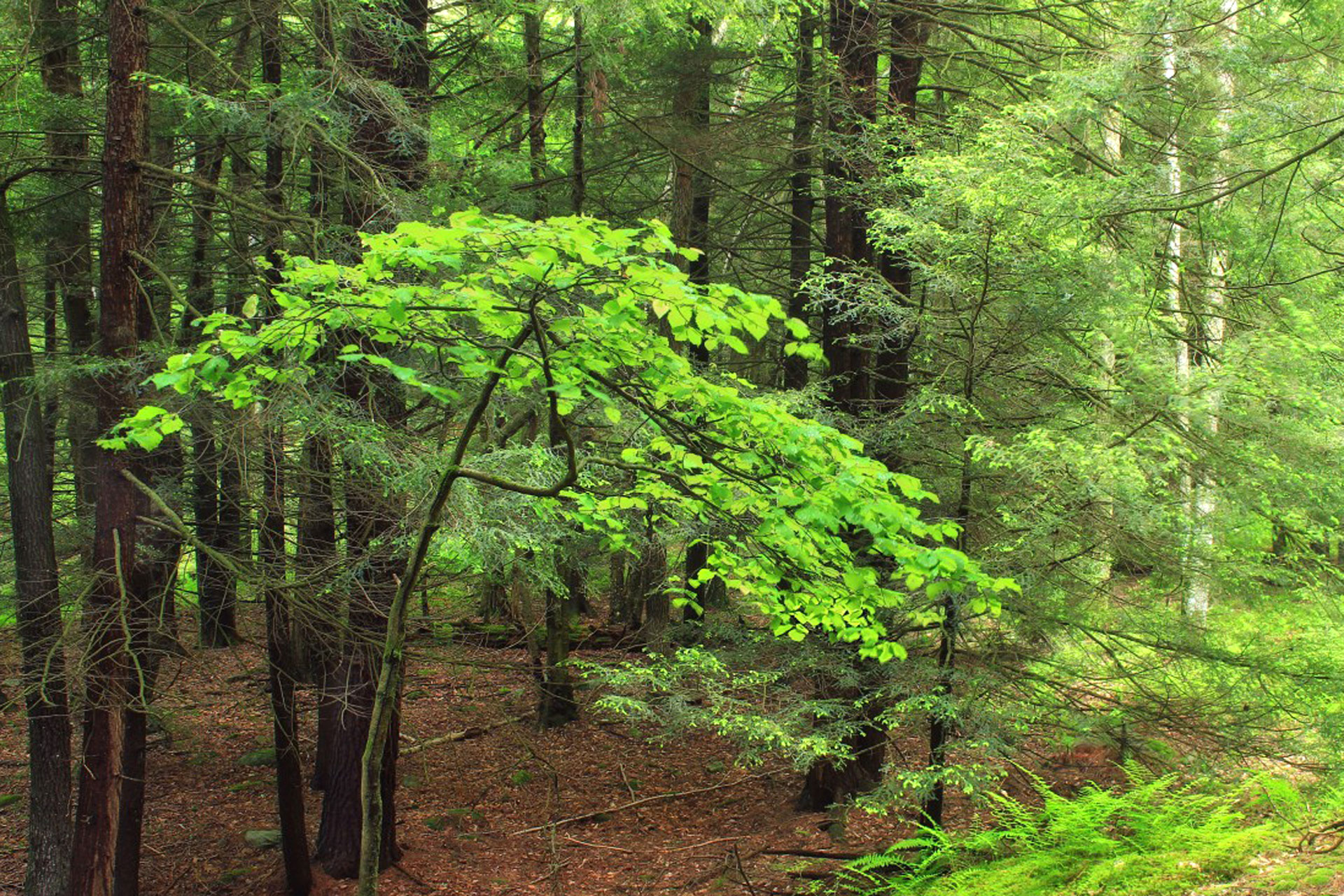
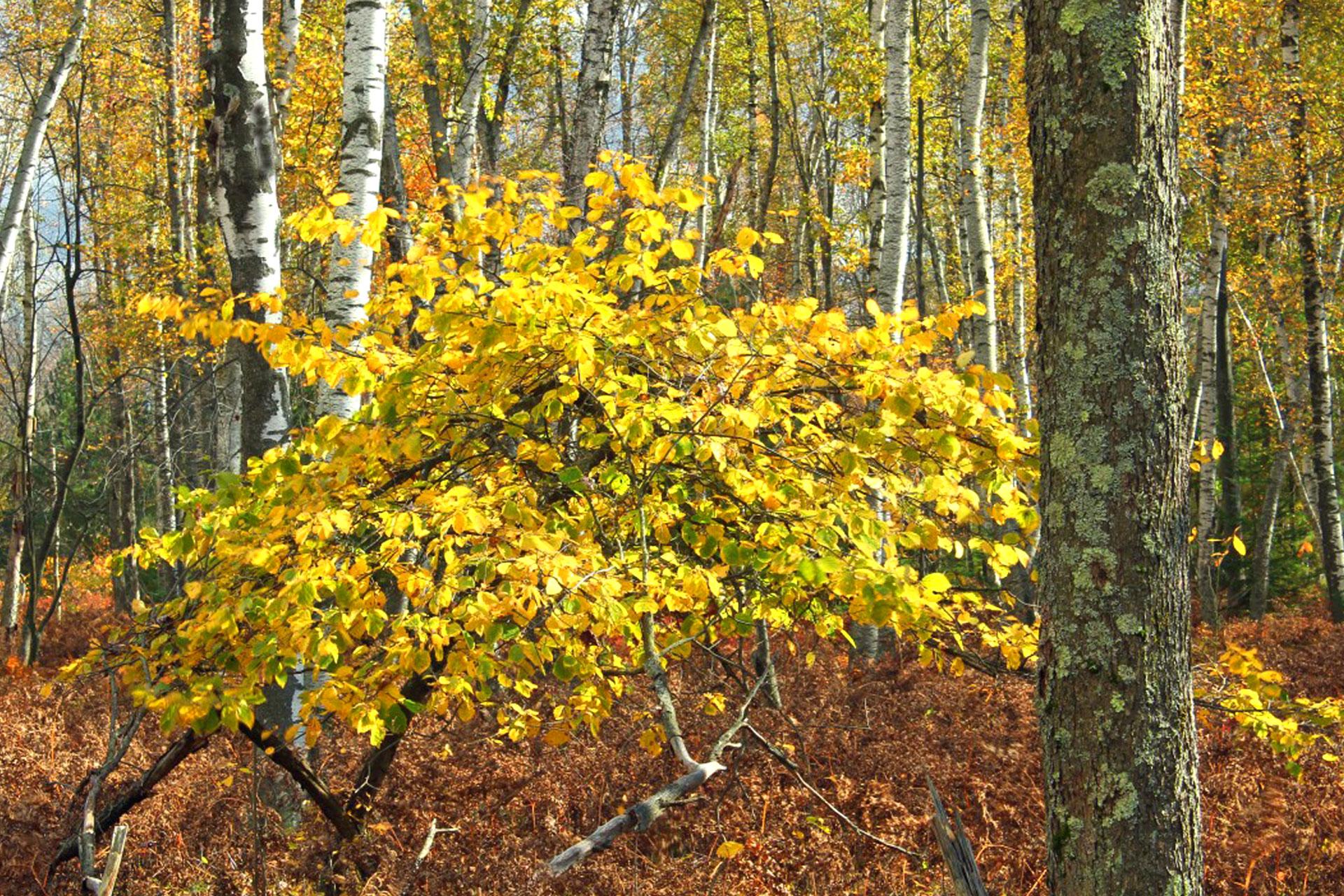
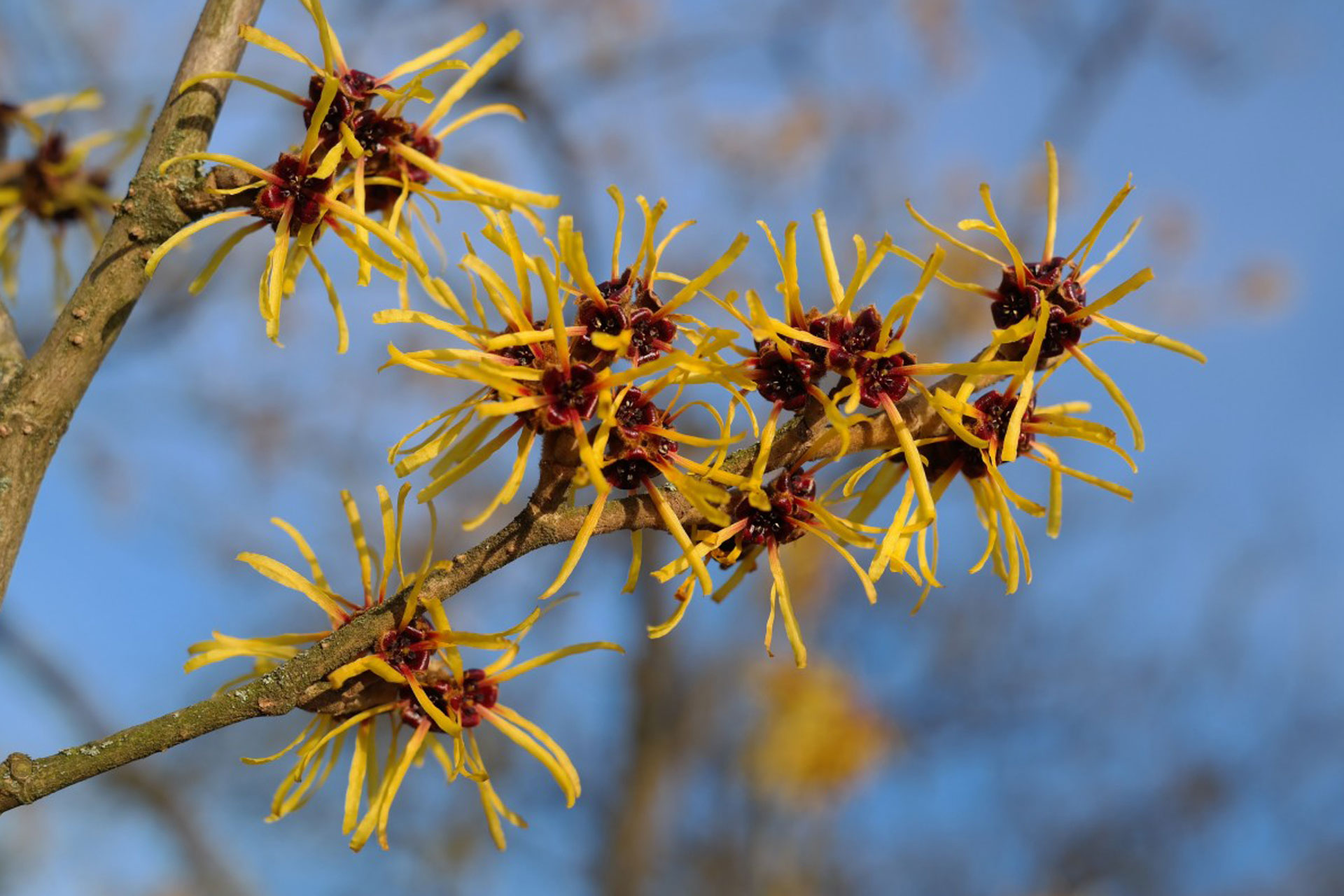
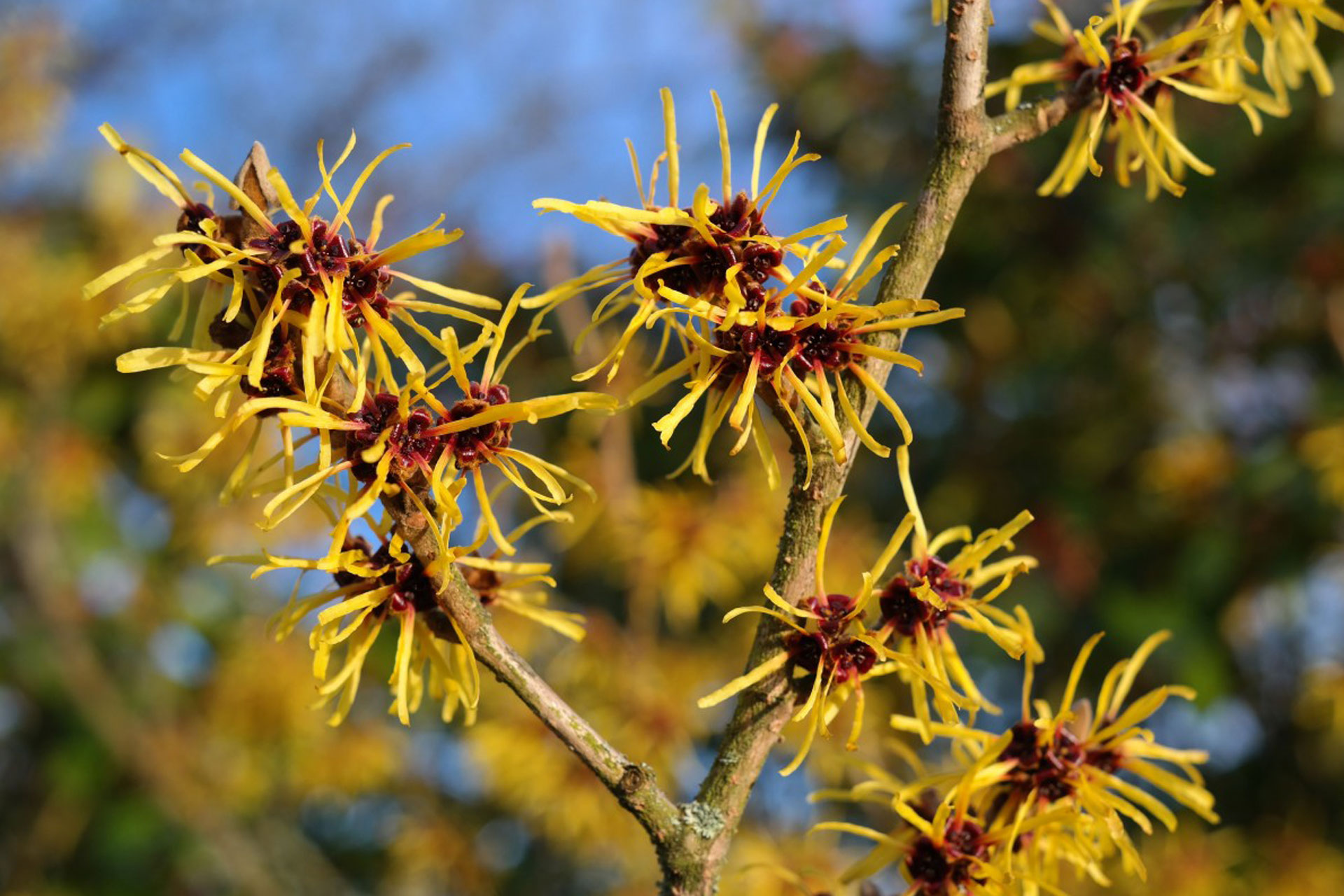
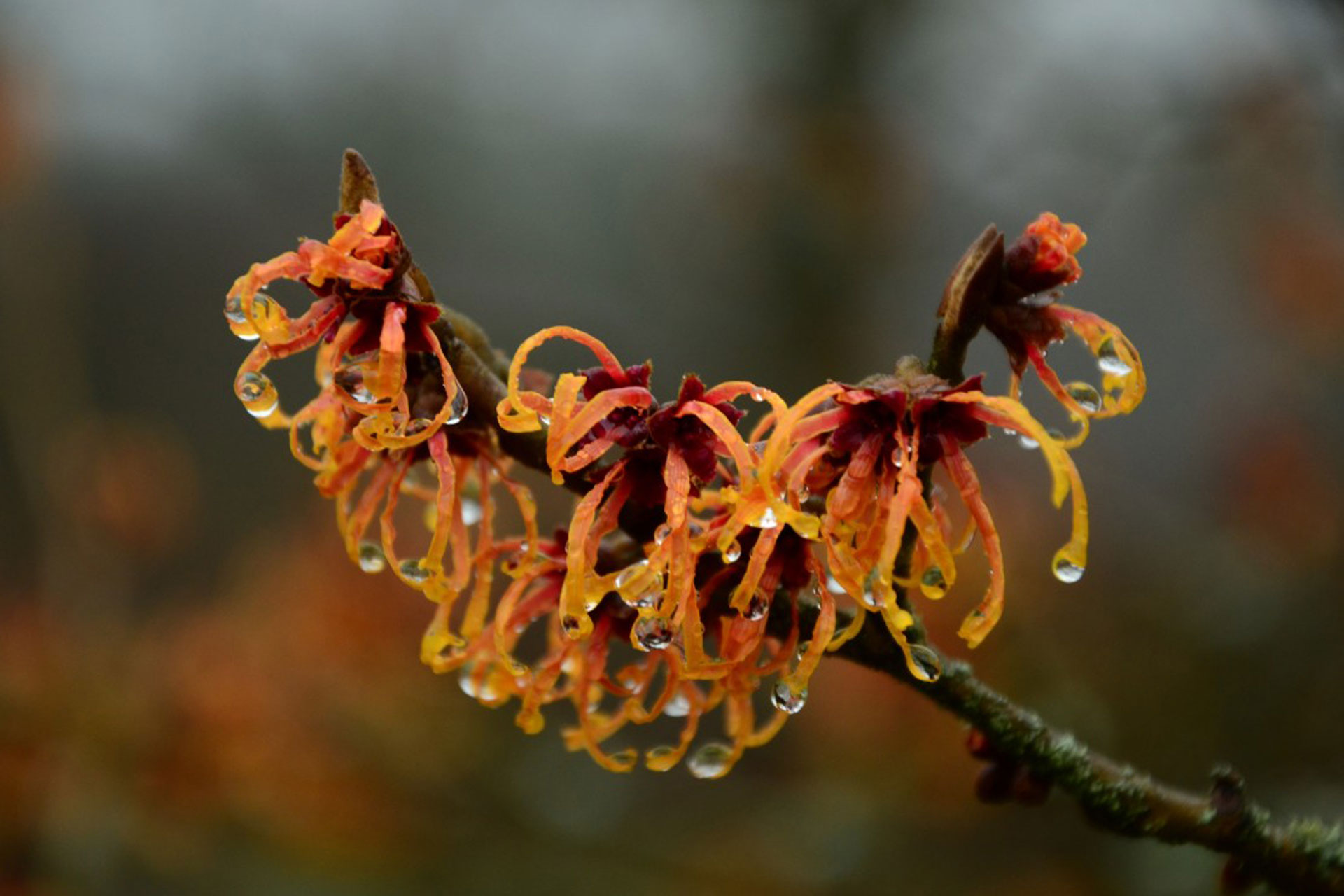
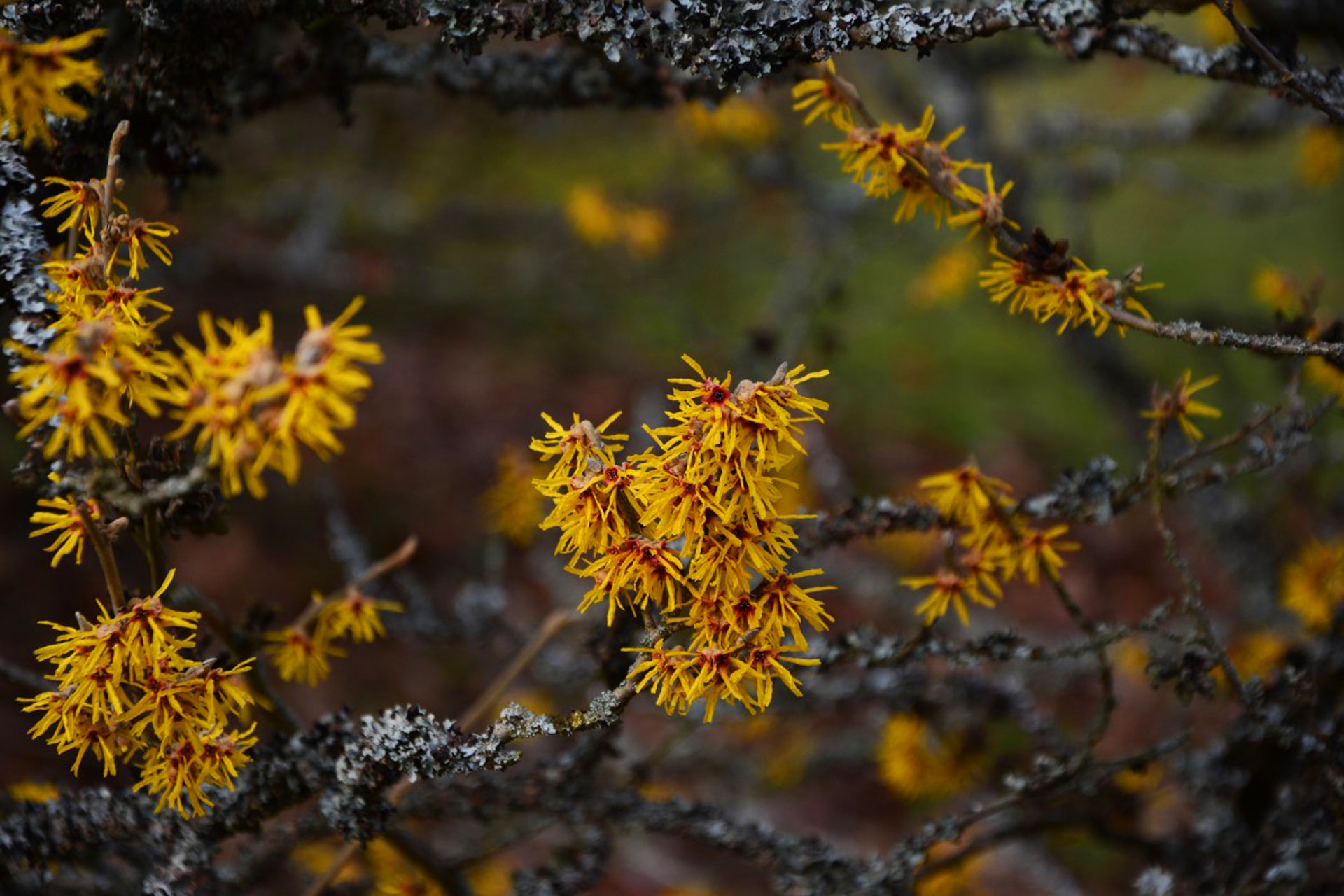
While many flowering trees compete for attention in May, witch hazel earns its place by blooming when little else is happening. Its ribbon-like flowers can appear in shades of yellow, orange, copper, or red depending on the cultivar. Some varieties are fragrant, which makes placement near a walkway, entry, or frequently used garden path especially rewarding.
Why Witch Hazel Deserves More Attention
Witch hazel is not loud. It does not have the immediate drama of a full dogwood bloom or the saturated fall color of some maples. Its beauty is more subtle, but that is exactly why it can feel so appropriate in a refined residential garden.
It offers:
- Winter or early spring flowers
- Fragrance in some cultivars
- A graceful branching habit
- Attractive fall color
- A natural, layered form that works well with mixed plantings
In Boston-area landscapes, where winter can make gardens feel bare for months, witch hazel adds a welcome moment of life. It encourages people to notice the garden at a time of year when outdoor spaces are often overlooked.
Where to Use Witch Hazel
Witch hazel is most effective where it can be seen and appreciated during the colder months. Good locations include:
- Near a front walk or garden path
- Outside a kitchen, dining room, or living room window
- At the edge of a woodland garden
- In a mixed shrub border
- Near a winter entry sequence with evergreens, stonework, and seasonal containers
Because the flowers can be delicate, placement matters. A witch hazel planted at the far back of a property may technically bloom, but the effect could be lost. It is better used where people will pass by it, look out toward it, or experience its fragrance.
Design Considerations
Witch hazel often looks best when given room to keep its natural branching form. It should not be forced into a tight, clipped shape. If the design calls for rigid structure, boxwood, yew, holly, or other evergreen forms may be better choices nearby, while witch hazel provides looseness and seasonal contrast.
It also pairs beautifully with shade-tolerant perennials, early bulbs, ferns, sedges, hellebores, and evergreen ground covers. In a layered planting design, witch hazel can act as a middle-height anchor between larger trees and lower plantings.
For Boston-area properties with existing mature trees, witch hazel can be a useful transition plant at woodland edges, though cultivar selection and light conditions should be reviewed carefully. Flowering is usually stronger with adequate light.
For more inspiration on creating planting compositions with depth and seasonal rhythm, see our post on layered planting.
Learn More: NC State Extension: Heptacodium miconioides
3. Heptacodium Miconioides: Late-Season Bloom and Pollinator Value
Seven-son flower, or Heptacodium miconioides, is less common than Kousa dogwood and witch hazel, but it deserves more attention in residential landscape design.
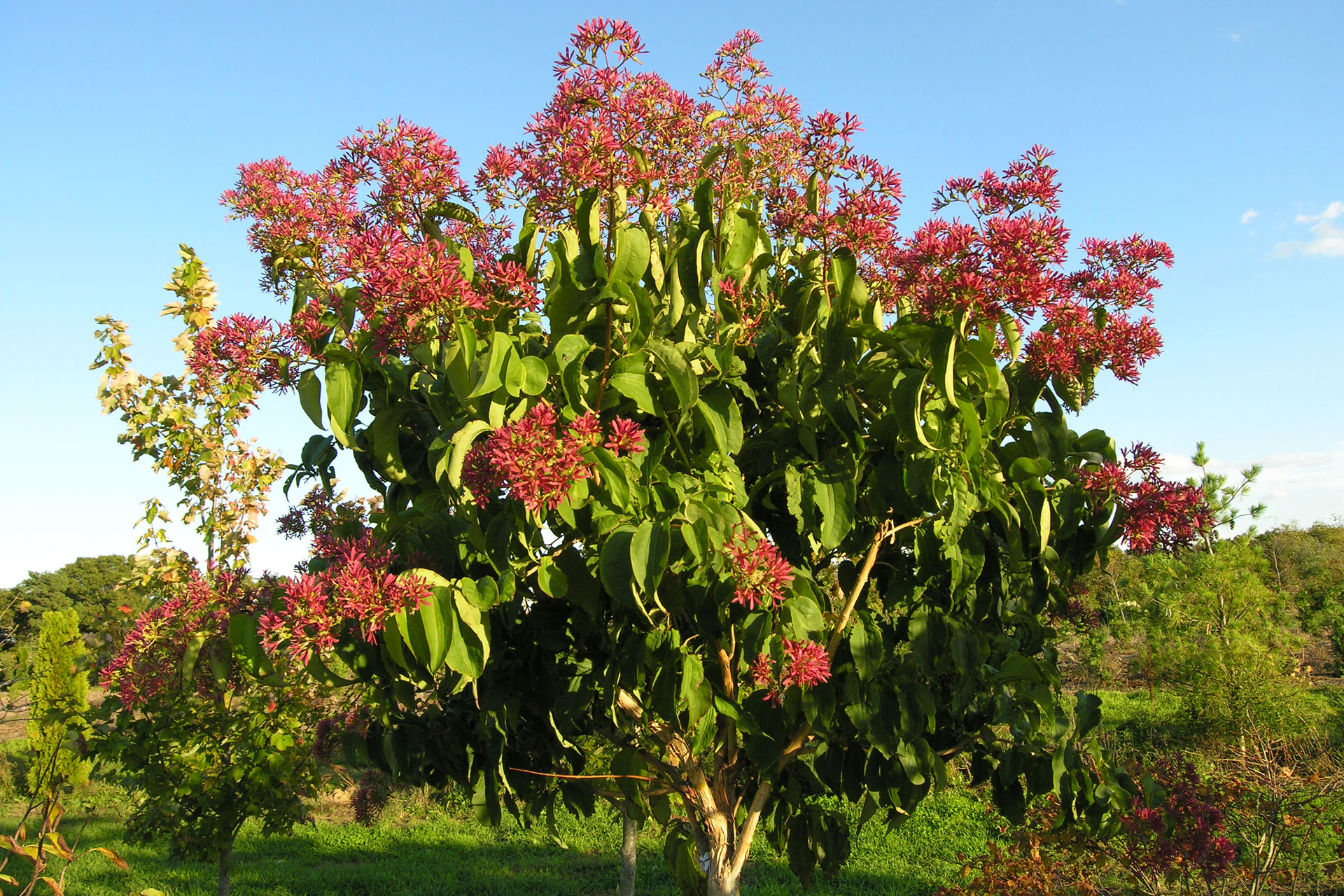

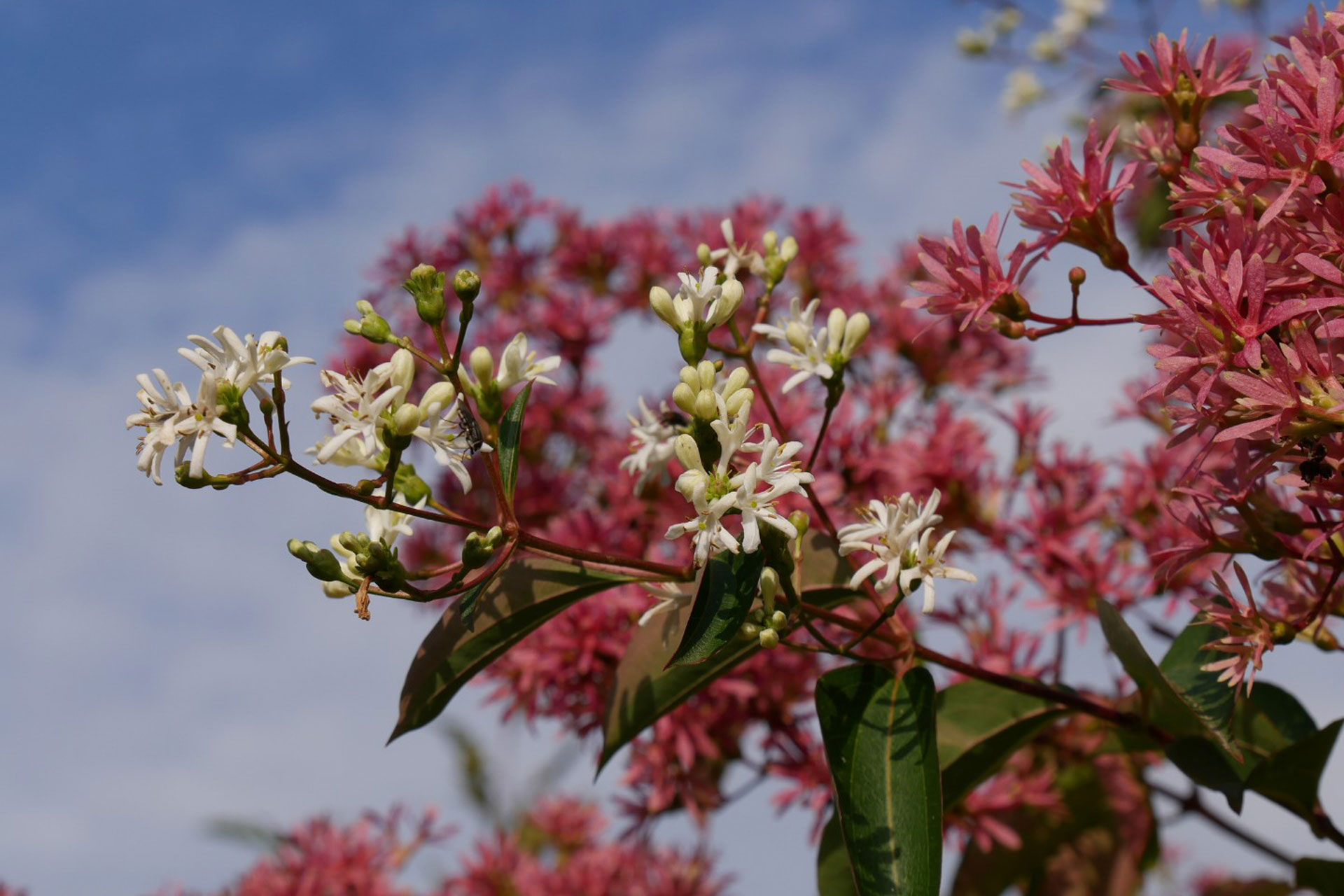
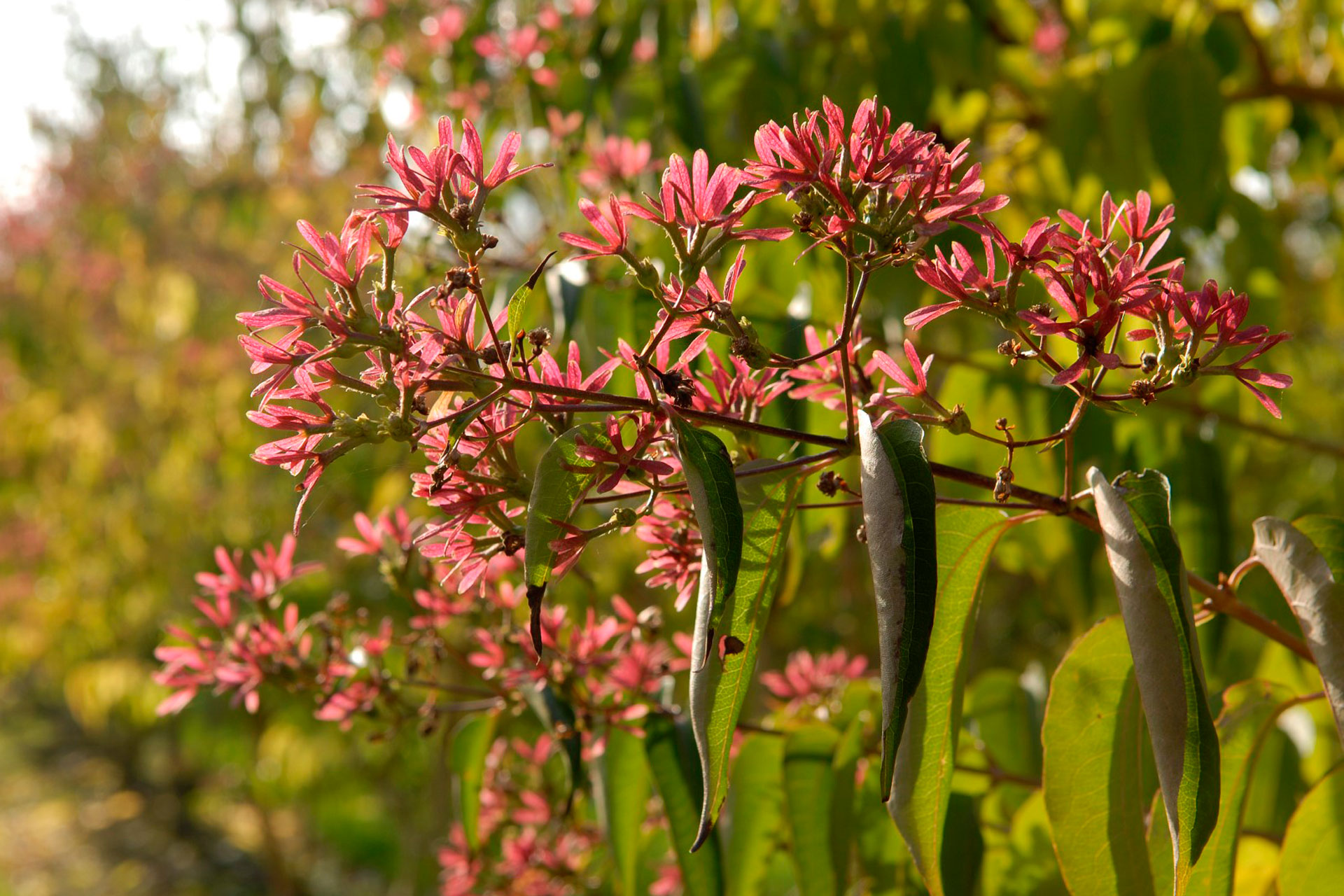
This small tree or large shrub offers an unusual sequence of seasonal interest. It produces clusters of fragrant white flowers in late summer or early fall, followed by showy reddish calyces that can create the impression of a second bloom. Its bark also exfoliates with age, adding winter texture.
NC State Extension describes seven-son flower as a small tree or large shrub with nectar-rich flowers that attract bees, monarch butterflies, and other pollinators. View the NC State Extension plant profile. For homeowners interested in pollinator-friendly planting that still feels composed and designed, this is a compelling attribute.
Why Seven-Son Flower Is So Useful
Late-season bloom is one of the most valuable traits in any New England landscape. Many gardens peak in May and June, then soften into green by late summer. Seven-son flower helps extend the visual calendar.
Its strengths include:
- Fragrant white flowers in late summer or early fall
- Red to purplish calyces after flowering
- Attractive bark in winter
- Upright form suitable for specimen use
- Strong pollinator appeal
- A distinctive look that is less common than many standard ornamental trees
Because it blooms later than many woody plants, it can help a garden feel alive at a time when some perennials are fading and summer color is beginning to shift.
Where to Use Seven-Son Flower
Seven-son flower is often best used as a specimen or anchor plant. It has enough character to stand on its own, especially when placed where its seasonal transitions can be appreciated.
Consider it for:
- A sunny mixed border
- The edge of a patio or terrace
- A large foundation bed with adequate space
- A pollinator-friendly garden
- A lawn or courtyard focal point
- A transition area between formal and naturalistic planting
It can also be useful in landscapes where the design needs height and late-season interest but a larger shade tree would be too much.
Design Considerations
Seven-son flower needs enough sun to flower well. It can tolerate a range of soil conditions, but like most woody plants, it should not be treated as a fix for poor drainage, compacted fill, or improperly prepared planting beds.
Because it is less common, it can also create a sense of distinction. Many high-end landscapes benefit from plant choices that feel familiar enough to be appropriate, but not so common that they disappear into the background. Seven-son flower strikes that balance.
Its form can be trained as a small tree or allowed to grow more like a large shrub. That decision should be made intentionally. In more formal areas, a tree-form specimen may be preferred. In a looser garden, a multi-stemmed habit may feel more natural.
How to Choose the Right Ornamental Tree for Your Property
The best ornamental tree is not always the one with the most dramatic flower. It is the one that fits the design, the site, and the long-term care plan.
Before choosing an ornamental tree, consider the following.
1. Mature Size and Scale
A tree that looks small at installation may eventually interfere with windows, gutters, walkways, lighting, or views. For Boston-area homes with compact front yards or narrow side setbacks, mature size is especially important.
Ask:
- How wide will the canopy become?
- Will the tree block an important view?
- Will it crowd the house or walkway?
- Does it match the scale of the architecture?
- Will it still look appropriate in 10 or 20 years?
2. Soil and Drainage
Soil conditions can vary dramatically across a single property. One area may have compacted fill from past construction while another has looser, more organic soil. A bed near the foundation may be drier because of roof overhangs, while a low area near a patio may stay wet through winter.
Before planting a long-term ornamental tree, it is worth understanding:
- Soil texture
- Drainage patterns
- Compaction
- pH
- Organic matter
- Existing root competition
This is one reason soil testing and site evaluation are so important in professional landscape design. For more on this topic, read our post on why soil testing matters in landscape design.
3. Sun and Shade
Many ornamental trees will tolerate a range of light conditions, but tolerance is not the same as peak performance. Flowering, fall color, density, and overall vigor can all be affected by available light.
A tree placed in too much shade may survive but bloom poorly. A tree placed in too much reflected heat may struggle without proper soil preparation and irrigation.
4. Views from Inside the Home
One of the most overlooked opportunities in residential landscape design is the view from indoors. Ornamental trees can be placed to frame a window, soften a view of a neighboring house, or create a seasonal moment visible from a kitchen, dining room, or primary living space.
A witch hazel outside a winter window, a Kousa dogwood near a front entry, or a seven-son flower visible from a terrace can make the landscape feel more connected to daily life.
5. Maintenance and Stewardship
Even relatively low-maintenance ornamental trees need care during establishment. Proper watering, mulching, pruning, and monitoring are important, especially in the first few years.
Long-term maintenance should also consider:
- Structural pruning
- Mulch depth and placement
- Irrigation needs
- Pest and disease monitoring
- Soil health
- Nearby plant competition
- Seasonal cleanup
A tree is a long-term investment. It should be selected and cared for accordingly.
Designing With Ornamental Trees, Not Just Planting Them
A common mistake is treating ornamental trees as decorative objects rather than design elements. A tree should not simply be dropped into an open spot because it looked attractive at the nursery. It should help organize the landscape.
In a well-designed planting plan, ornamental trees can work with:
- Evergreen shrubs for winter structure
- Perennials for seasonal color and texture
- Ground covers for soil coverage and continuity
- Spring bulbs for early interest
- Stone walls, paths, and terraces for architectural balance
- Landscape lighting for evening presence
- Irrigation systems for establishment and long-term health
For example, a Kousa dogwood can anchor a layered front yard planting. Witch hazel can bring life to a winter garden path. Seven-son flower can extend bloom season near an outdoor living area. Each tree performs best when it is part of a broader composition.
This is where professional landscape design becomes valuable. The goal is not only to choose good plants. It is to make sure each plant has a purpose, fits the property, and contributes to the way the landscape is experienced over time.
For homeowners planning a broader outdoor renovation, our landscape design services can help connect ornamental trees with planting design, stonework, lighting, irrigation, seasonal care, and long-term property maintenance.
Best Uses for These Three Trees
| Tree | Best Seasonal Moment | Strongest Design Use | Key Consideration |
|---|---|---|---|
| Kousa dogwood | Late spring to early summer | Front yard focal point, foundation anchor, patio edge | Give it enough room to mature naturally. |
| Hamamelis x intermedia | Winter to very early spring | Entry walk, winter garden, view from window | Place it where flowers and fragrance can be appreciated. |
| Heptacodium miconioides | Late summer to fall | Specimen tree, pollinator garden, sunny border | Use where late-season bloom and distinctive form matter. |
FAQs About Ornamental Trees in Boston Landscapes
Q: What is the best ornamental tree for a front yard in Boston?
A: There is no single best choice for every front yard. Kousa dogwood is often a strong option because it offers bloom, structure, fruit, fall color, and bark while staying relatively compact. The best tree depends on the home’s architecture, sun exposure, soil, drainage, and available space.
Q: Are ornamental trees good for small yards?
A: Yes, many ornamental trees are well suited to smaller Boston-area properties, but mature size matters. A tree that fits at installation may become too wide or tall if it is not selected carefully. Smaller yards benefit from trees with multiple seasons of interest because every planting has to work harder.
Q: Can ornamental trees be used near patios and terraces?
A: Yes, ornamental trees can be excellent near patios and terraces when properly placed. They can provide filtered shade, seasonal flowers, fragrance, and a sense of enclosure. Placement should account for root space, canopy spread, leaf and fruit drop, lighting, irrigation, and circulation.
Q: Which ornamental trees offer winter interest?
A: Witch hazel is especially valuable because it can flower in winter or very early spring. Kousa dogwood and seven-son flower also offer winter interest through bark and branching structure. For the strongest winter composition, ornamental trees should be combined with evergreens, grasses, stonework, and carefully planned lighting.
Q: Should soil be tested before planting ornamental trees?
A: Soil testing is often a smart step, especially when planting long-lived trees or redesigning a larger area. Soil pH, compaction, drainage, and nutrient availability can all affect plant health. In Greater Boston, where many properties have construction fill, compacted soils, or older planting beds, testing can reduce guesswork.
Bring the Right Ornamental Trees Into a More Cohesive Landscape Plan
Choosing an ornamental tree is about more than selecting a beautiful plant. The right tree should fit the architecture, the soil, the light, the scale of the property, and the way the landscape will be experienced throughout the year.
At a Blade of Grass, our landscape design team brings more than 30 years of experience to residential properties across Greater Boston, MetroWest, and Cape Cod. From front yard planting plans and foundation landscapes to full-property design, construction, maintenance, irrigation, and seasonal care, we help homeowners create landscapes that feel cohesive, personal, and built to mature beautifully.
Contact us to learn how the right ornamental trees can become part of a more refined, resilient, and four-season landscape.
Learn More About Ornamental Trees and Planting Design
- U.S. Department of Energ – Landscaping for Shade
- The Morton Arboretum – Ornamental Tree Selection Guide
- Arbor Day Foundation – The Tree Wizard
- Gardenia – 35 Spectacular Flowering Trees for Instant Curb Appeal