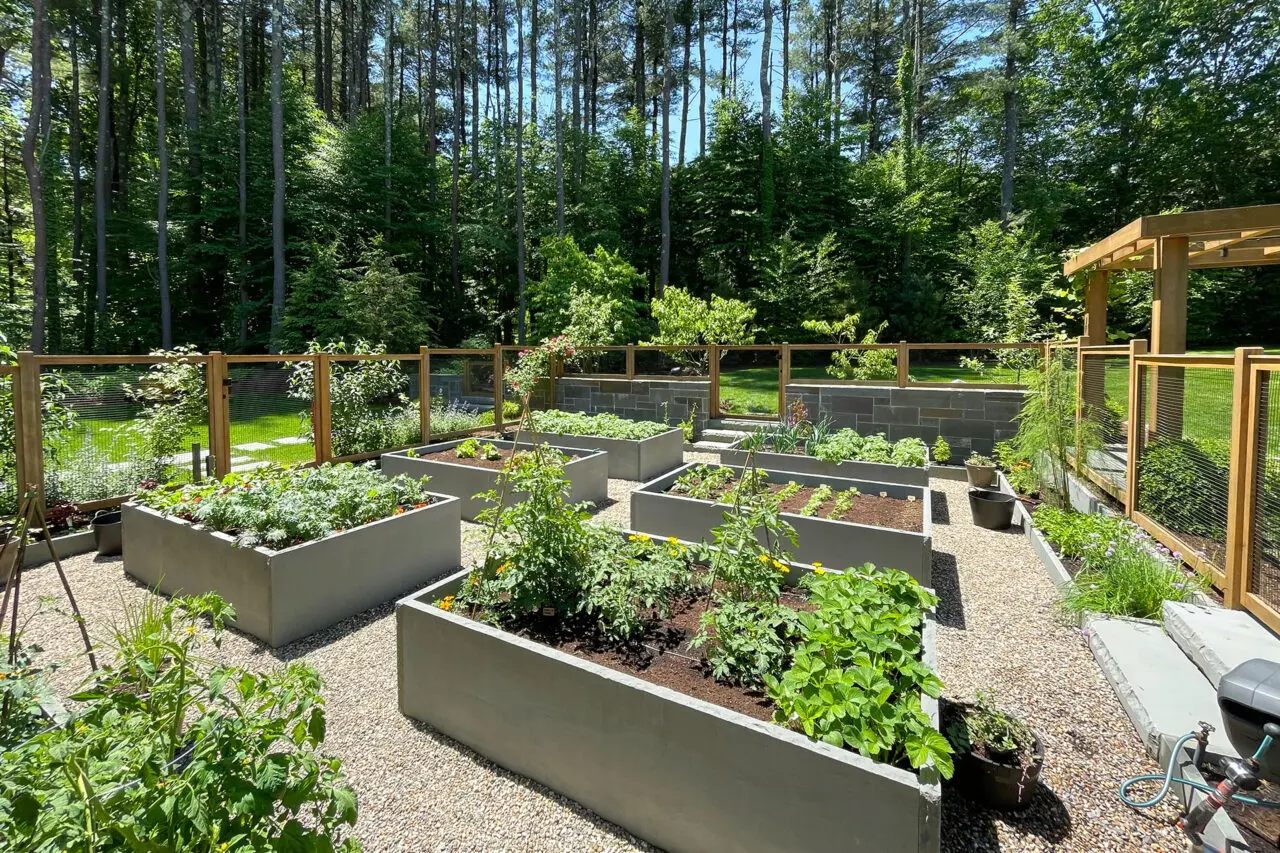
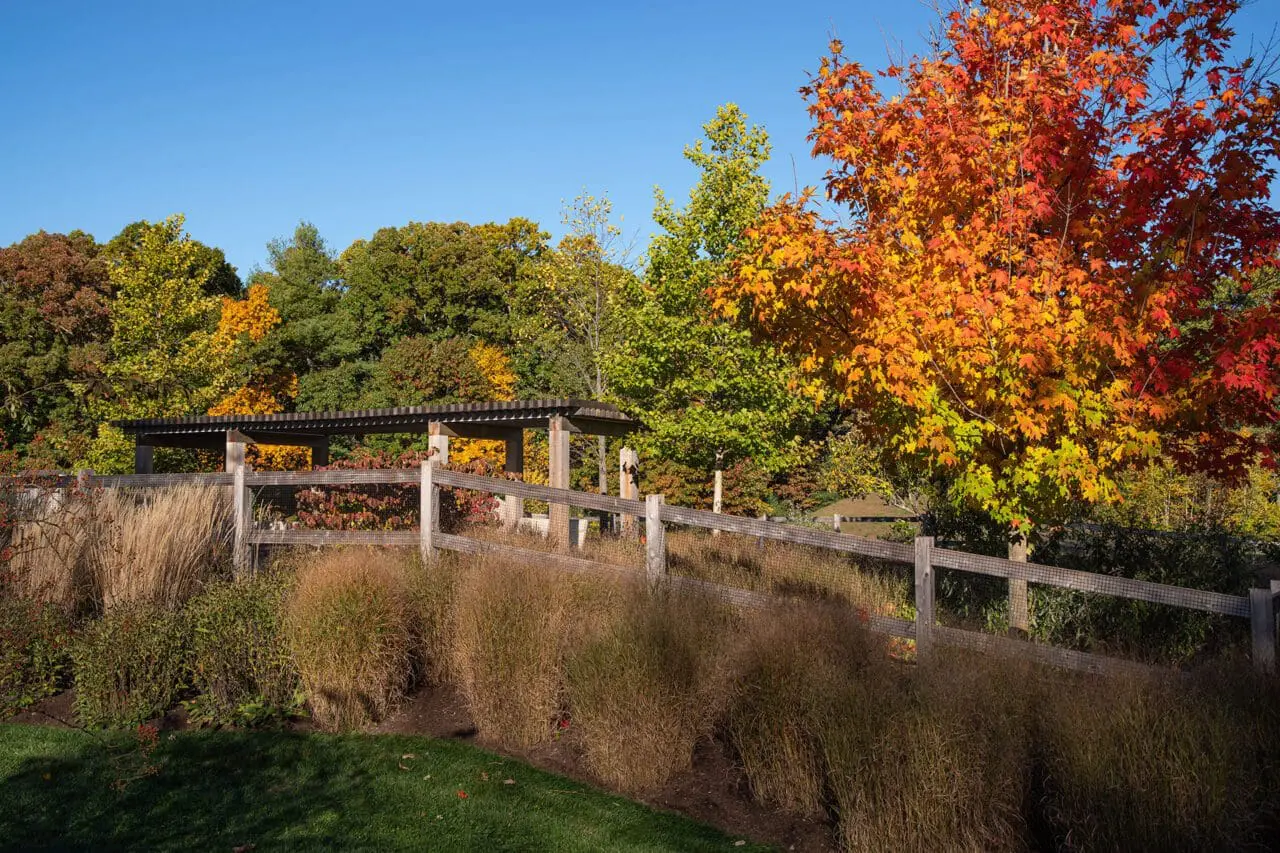
Hot, dry stretches are becoming a more important design consideration for Massachusetts landscapes. Recent state planning materials note that the Commonwealth should expect more frequent drought conditions as climate patterns continue to shift, which means plant selection matters more than it used to. At the same time, outdoor water use remains significant: the EPA says residential outdoor water use in the United States accounts for nearly 8 billion gallons of water each day, mainly for landscape irrigation.
For Boston-area homeowners, that does not mean settling for a sparse or austere landscape. It means designing more intentionally. The right combination of trees, shrubs, perennials, mulch, soil preparation, and irrigation strategy can create a landscape that still feels lush, layered, and seasonally rich while using water more wisely.
A drought-tolerant landscape is also not the same thing as a no-maintenance landscape. As Nebraska Extension educator Kelly Feehan puts it, “a drought tolerant plant is one that can survive on average rainfall with little or no supplemental water once established.” That last phrase matters. Establishment, siting, and soil conditions still determine whether a planting actually performs well.
In other words, the goal is not to remove water from the equation. The goal is to build a landscape that is more resilient, more efficient, and better suited to the realities of Greater Boston properties.
Key Takeaways
- Drought-tolerant planting is a smart strategy for Boston-area landscapes facing hotter summers and periodic water stress.
- “Drought tolerant” does not mean instant durability. New plantings still need regular water until roots are established.
- The best results come from pairing the right plants with the right site conditions, soil preparation, mulch, and efficient irrigation.
- A resilient landscape can still feel refined, generous, and visually rich.
What Drought-Tolerant Really Means
Many homeowners hear the phrase “drought tolerant” and picture gravel, succulents, or a landscape that feels more Southwestern than New England. That is not what this post is about.
In the Boston area, drought-tolerant landscape design usually means selecting plants that can better handle dry periods once established, then placing them thoughtfully according to sun exposure, soil, wind, drainage, and surrounding competition from mature trees. UMass Extension notes that even drought-tolerant plants still need regular water during establishment, and that deep, thorough watering is more effective than frequent light sprinkling.
That distinction is important on higher-end residential properties, where the planting design often needs to do several jobs at once. It has to look beautiful from the terrace and inside the home. It has to soften architecture. It has to perform through summer heat. And it has to remain practical for long-term maintenance.
Why This Matters in Greater Boston
Boston-area landscapes are rarely dealing with just one challenge. A property might have reflected heat off stone terraces, dry shade under mature maples, exposed windy corners, shallow urban soils, or slopes that shed moisture quickly. Even homes with irrigation can experience stress when plants are poorly matched to the site.
That is why drought tolerance should be part of a broader design conversation, not just a plant-shopping filter. A resilient planting plan considers:
- Sun and shade patterns
- Soil structure and organic matter
- Drainage and runoff
- Mulch and root-zone protection
- Establishment watering
- Long-term maintenance expectations
UMass Extension recommends improving soil with organic matter, using mulch to conserve moisture, and avoiding shallow, frequent watering that encourages weak root systems.
Drought-Tolerant Trees for Structure and Shade
A resilient landscape often begins with the canopy. Trees moderate heat, create usable outdoor rooms, and help protect more delicate understory plants from summer stress.
Northern Catalpa
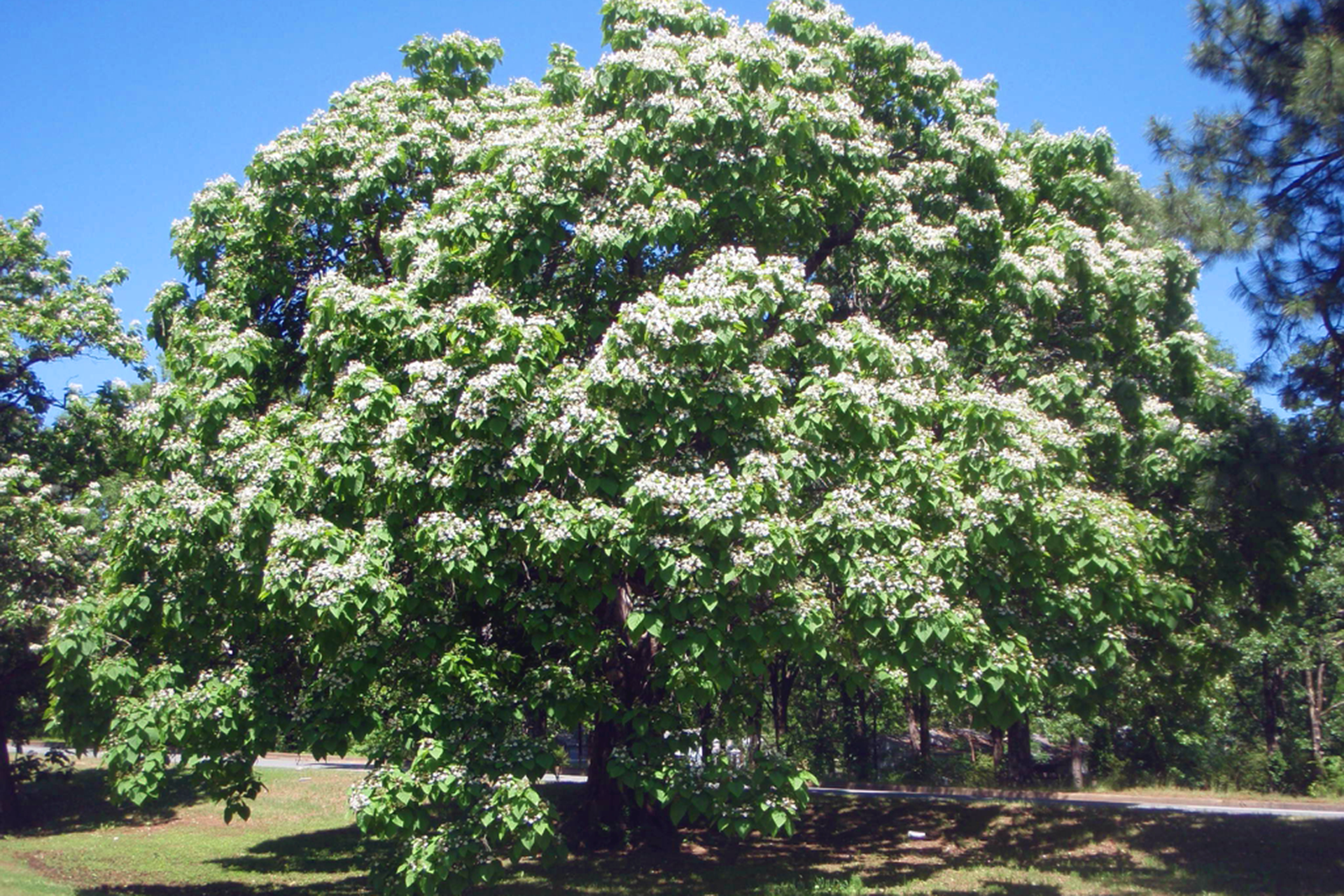
Northern catalpa brings a bold, generous look to the landscape with oversized heart-shaped leaves and striking flowers. It can be a strong choice where you want a deciduous shade tree with character and a looser, more natural feel. On larger suburban properties, it can help create the kind of overhead shade that makes nearby planting beds more forgiving in midsummer.
Quaking Aspen
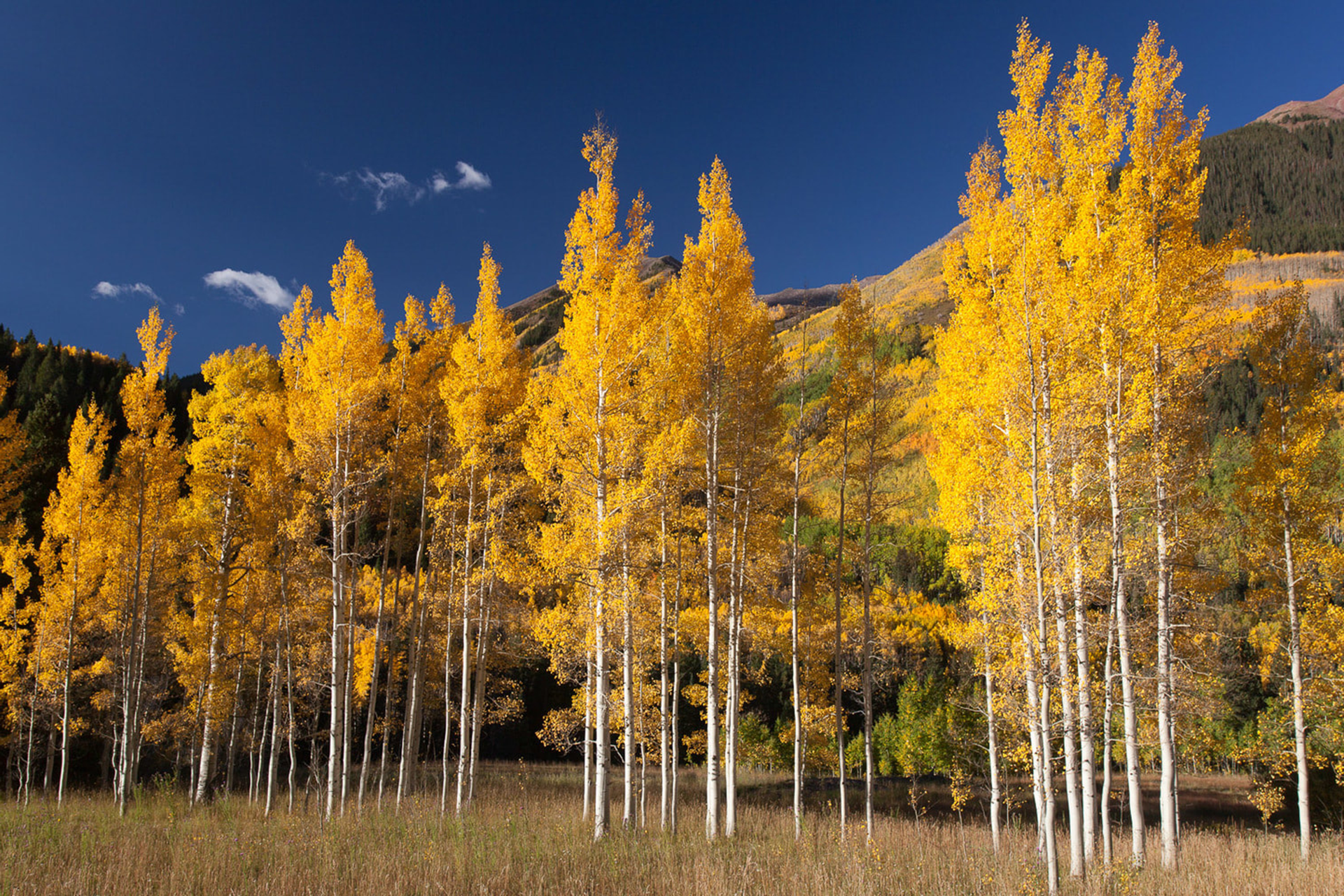
Quaking aspen has beautiful movement and a light, shimmering presence, but it should be used selectively. It can be visually compelling in the right setting, especially where a more naturalistic or woodland edge character is desired. On tightly controlled residential properties, the designer should weigh its visual appeal against its growth habit and site demands.
Kousa Dogwood
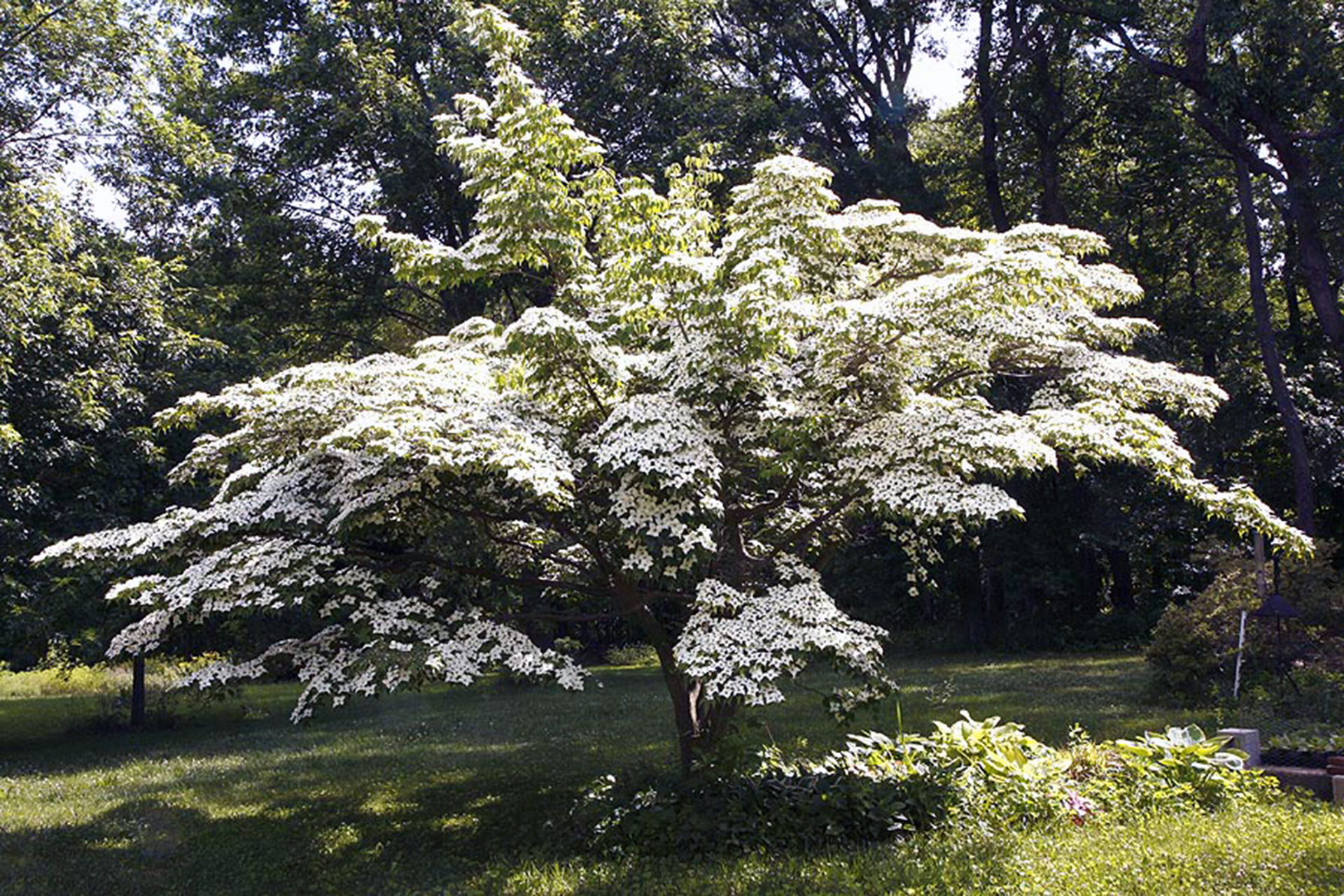
Kousa dogwood is often a better performer than flowering dogwood in tougher summer conditions, which makes it a valuable option for Boston-area gardens that need a smaller ornamental tree with strong seasonal interest. It works especially well in refined foundation planting, courtyard gardens, and transition spaces where scale matters.
Honeylocust, Redbud, and Smoketree
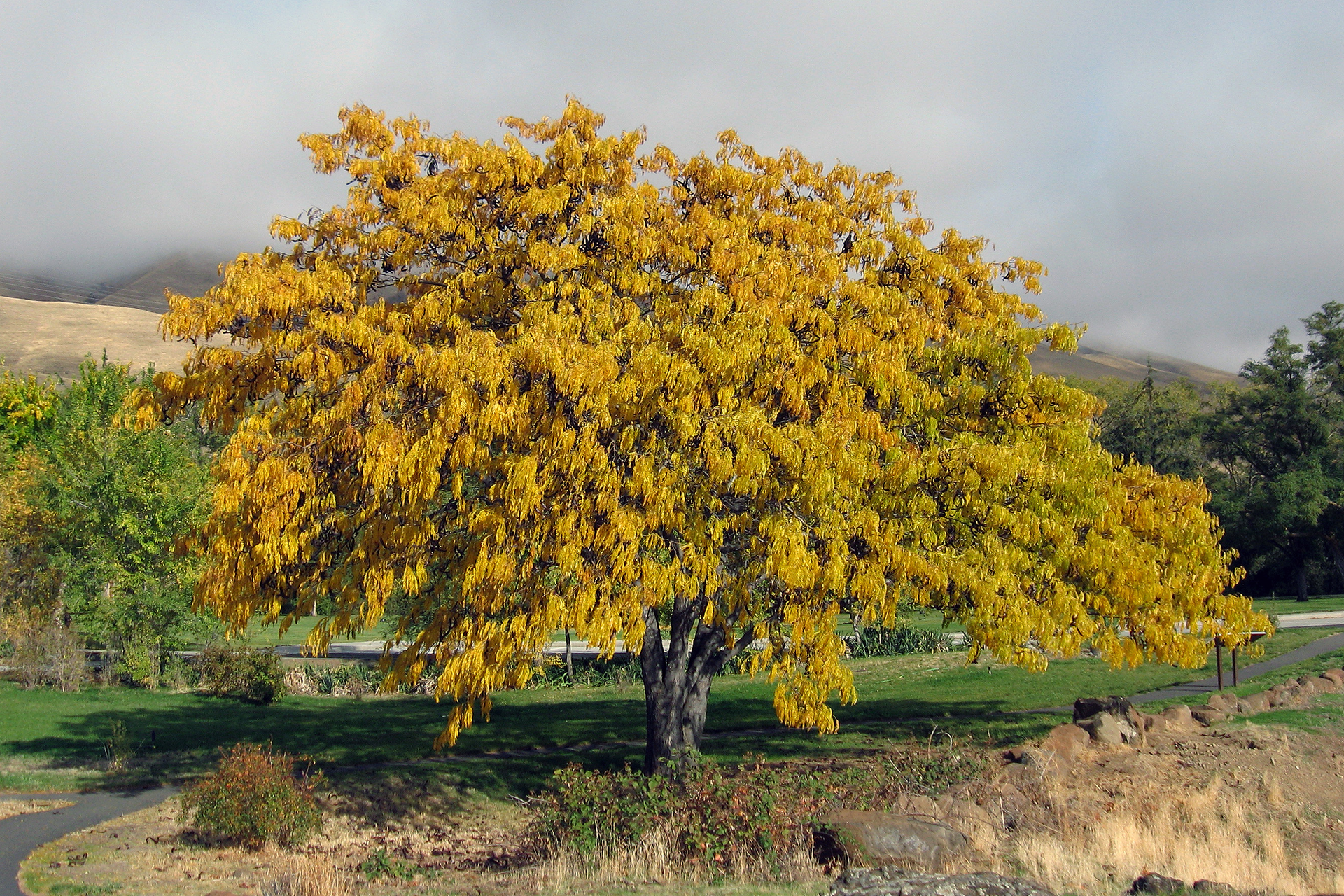
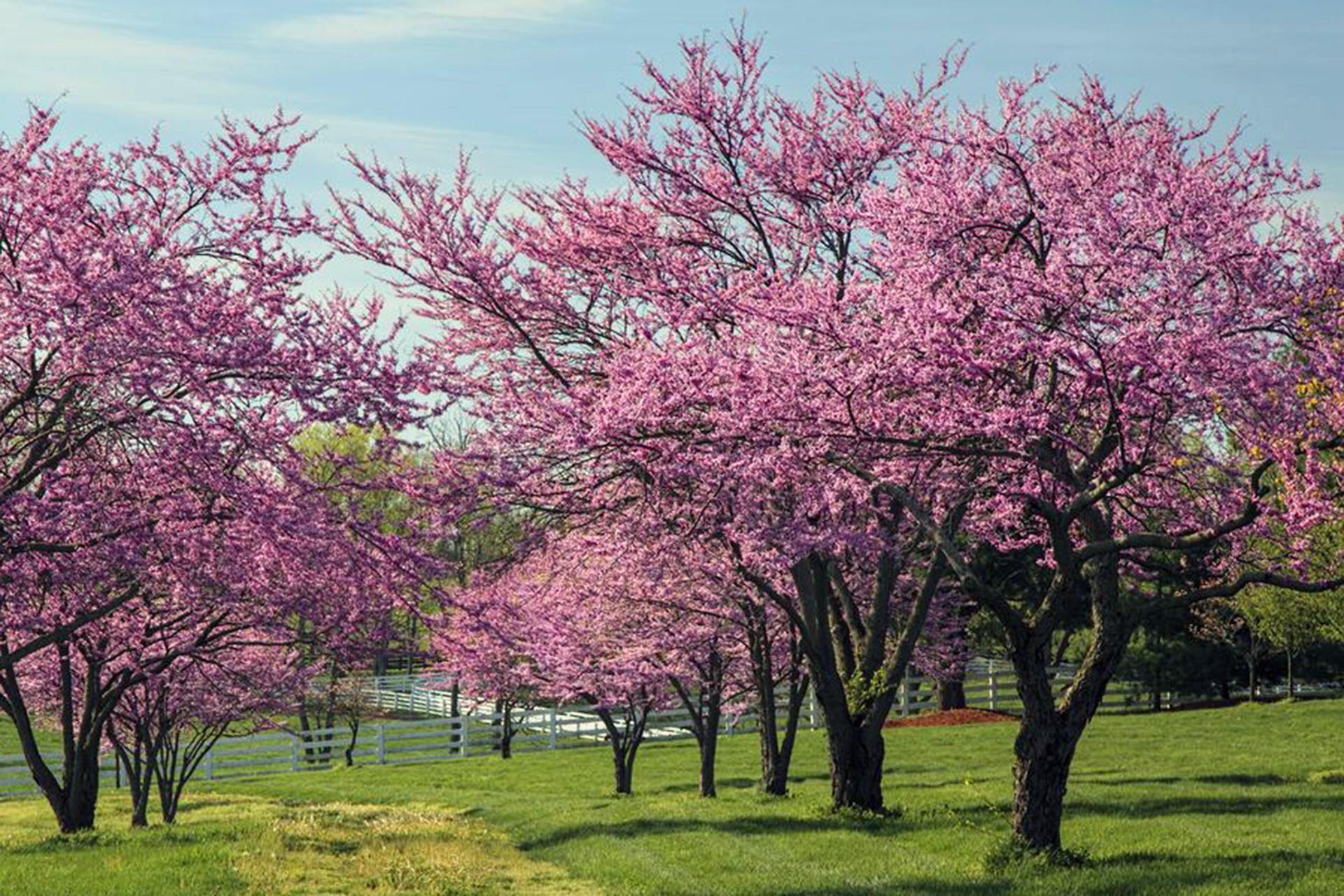
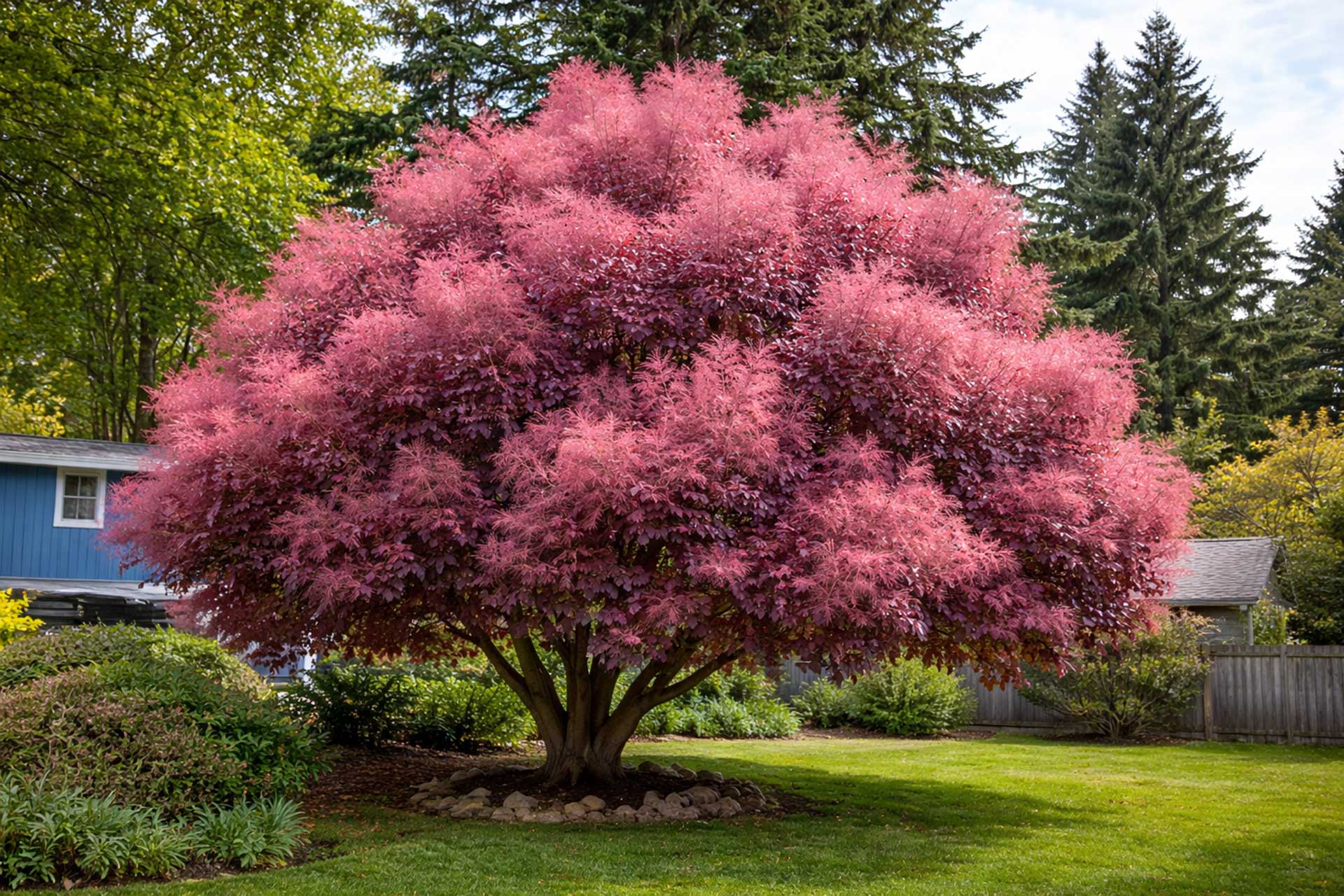
These can all contribute to a drought-aware plant palette once established. Honeylocust offers filtered shade that allows lower plantings to thrive beneath it. Redbud brings spring color and a softer branching habit that works well in more intimate spaces. Smoketree adds distinctive foliage and a sculptural quality that can help a planting composition feel more architectural.
Drought-Tolerant Shrubs That Still Feel Generous
Shrubs do a lot of the visual work in residential landscapes. They define edges, fill beds, bridge transitions, and help properties feel established. When chosen well, they can also reduce the amount of water and intervention needed during hot weather.
Smooth Hydrangea

Hydrangeas are often associated with thirsty New England gardens, but some species are more forgiving than others. Smooth hydrangea can be a useful choice where homeowners want the familiar softness of hydrangea blooms without relying quite so heavily on ideal moisture conditions. It still benefits from thoughtful siting and mulch, especially inland.
Panicle Hydrangea
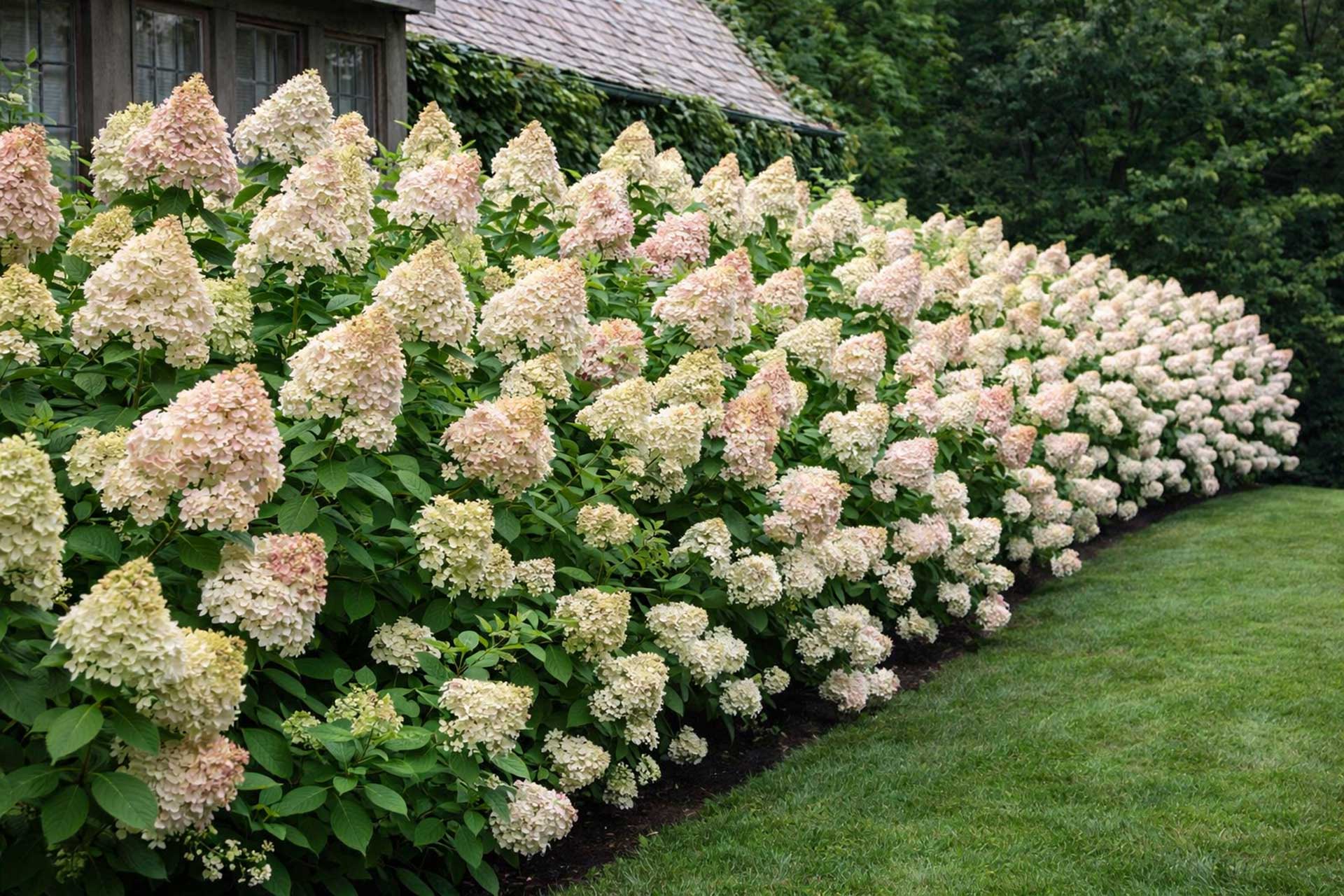
Panicle hydrangeas remain one of the most useful shrubs for Boston-area landscapes because they offer reliable bloom, strong structure, and better tolerance for sun than many other hydrangeas. They are especially effective in mixed borders, foundation beds, and larger planting schemes where a dependable summer presence is important.
Oakleaf Hydrangea
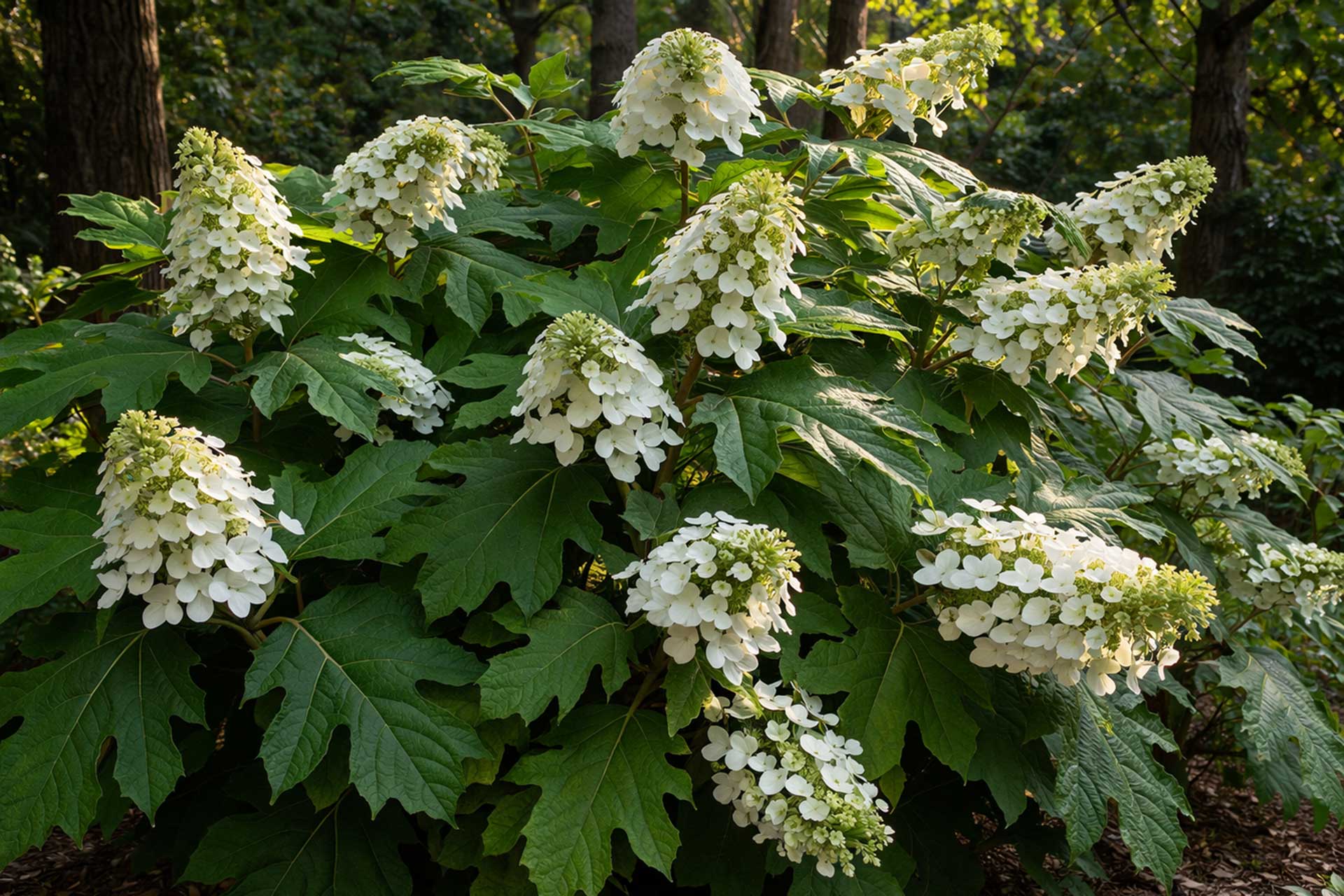
Oakleaf hydrangea earns its place not only for flowers, but for texture, form, and fall color. It can be a smart way to keep a landscape feeling rich and layered while still moving toward a more resilient planting palette. In many properties, it bridges the gap between traditional New England softness and a more performance-driven design approach.
Perennials That Carry the Garden Through Dry Spells
Perennials are where drought-tolerant planting can become visually expressive. According to UMass Amherst, drought-tolerant perennial options include Helleborus, Lavandula, Nepeta, and Salvia, all of which also contribute texture and seasonal interest.
Lavender
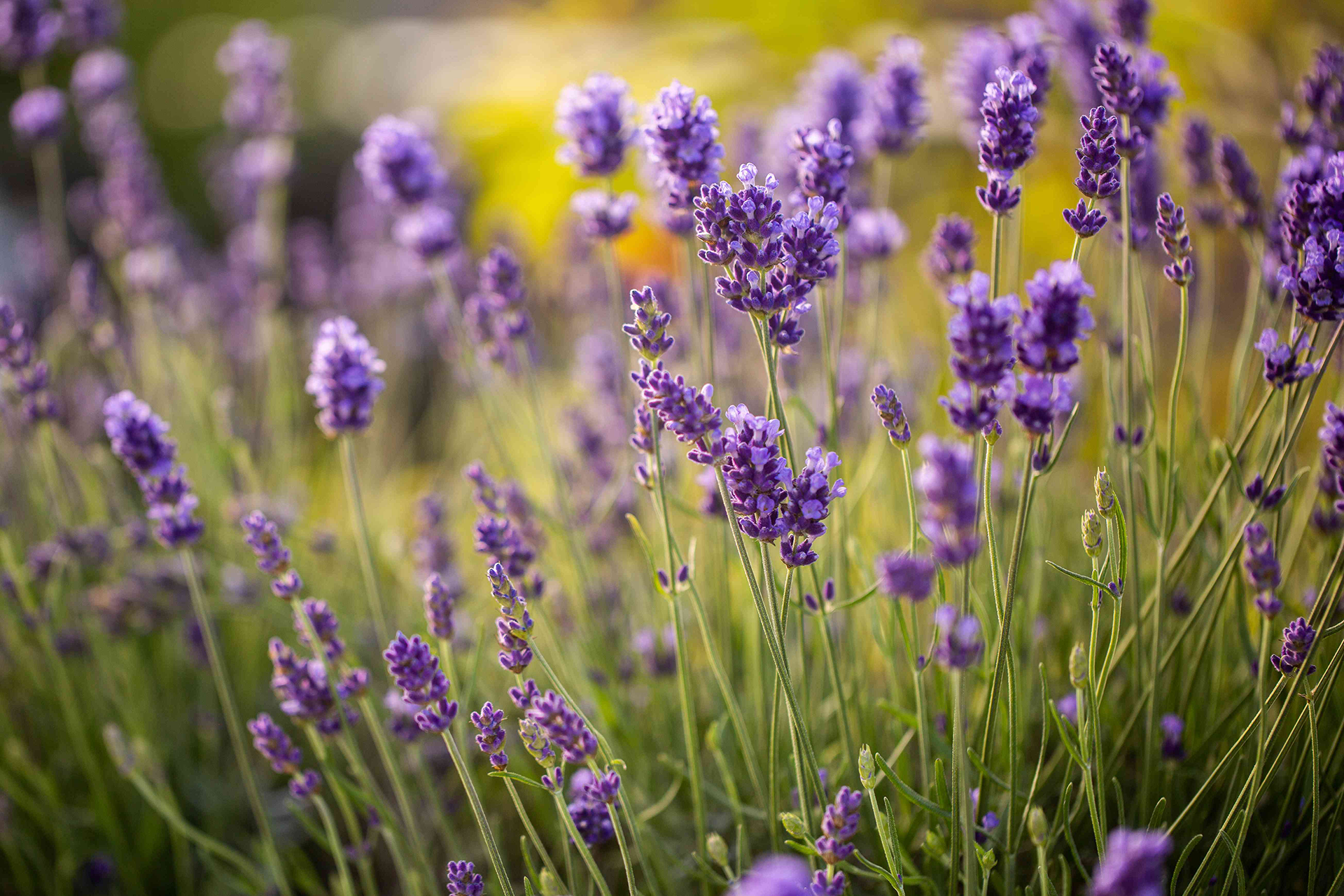
Lavender brings fragrance, silver-toned foliage, and a clean, structured look that pairs well with stone, gravel, and formal edging. It is especially effective where the planting design leans crisp and architectural.
Sage and Salvia
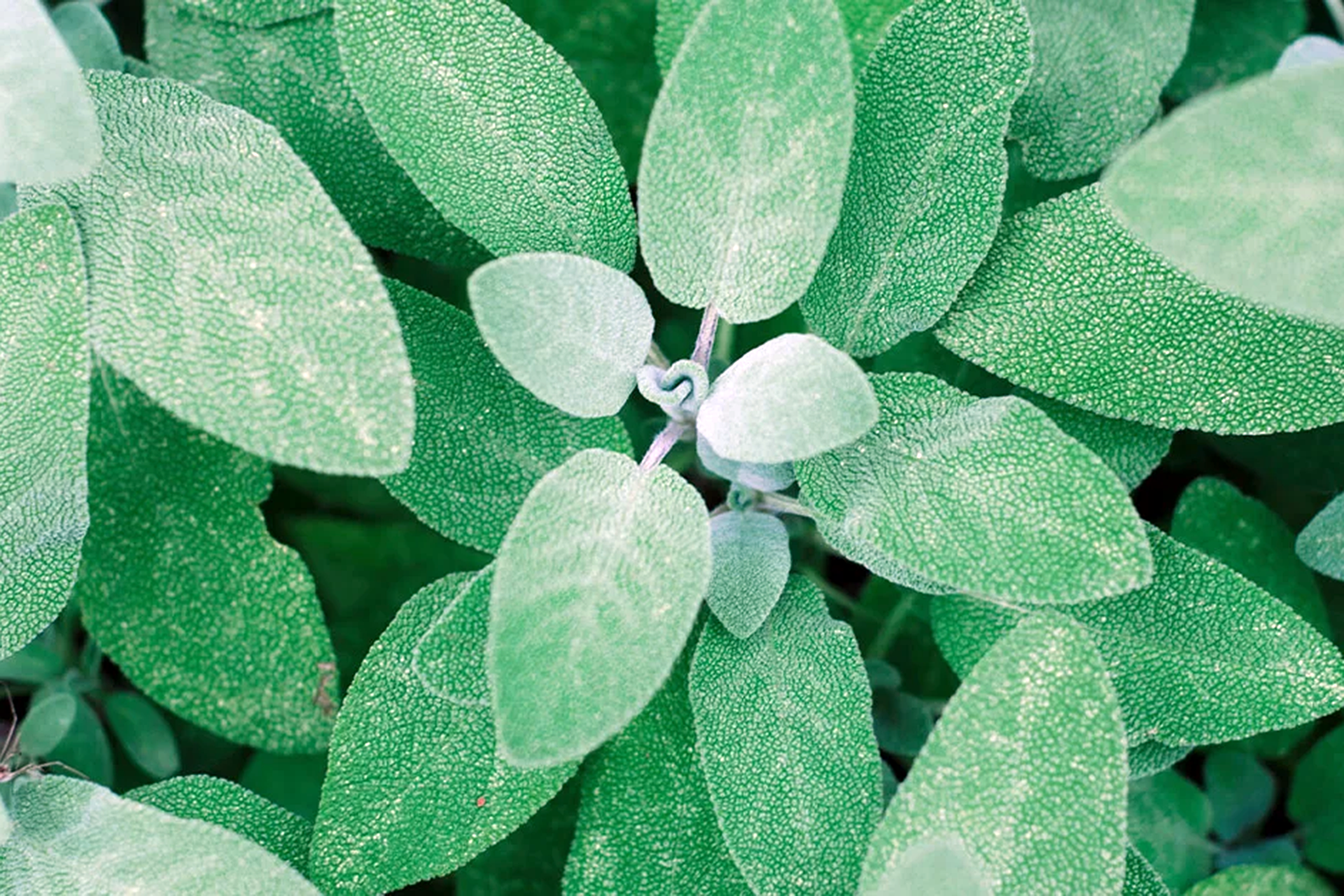
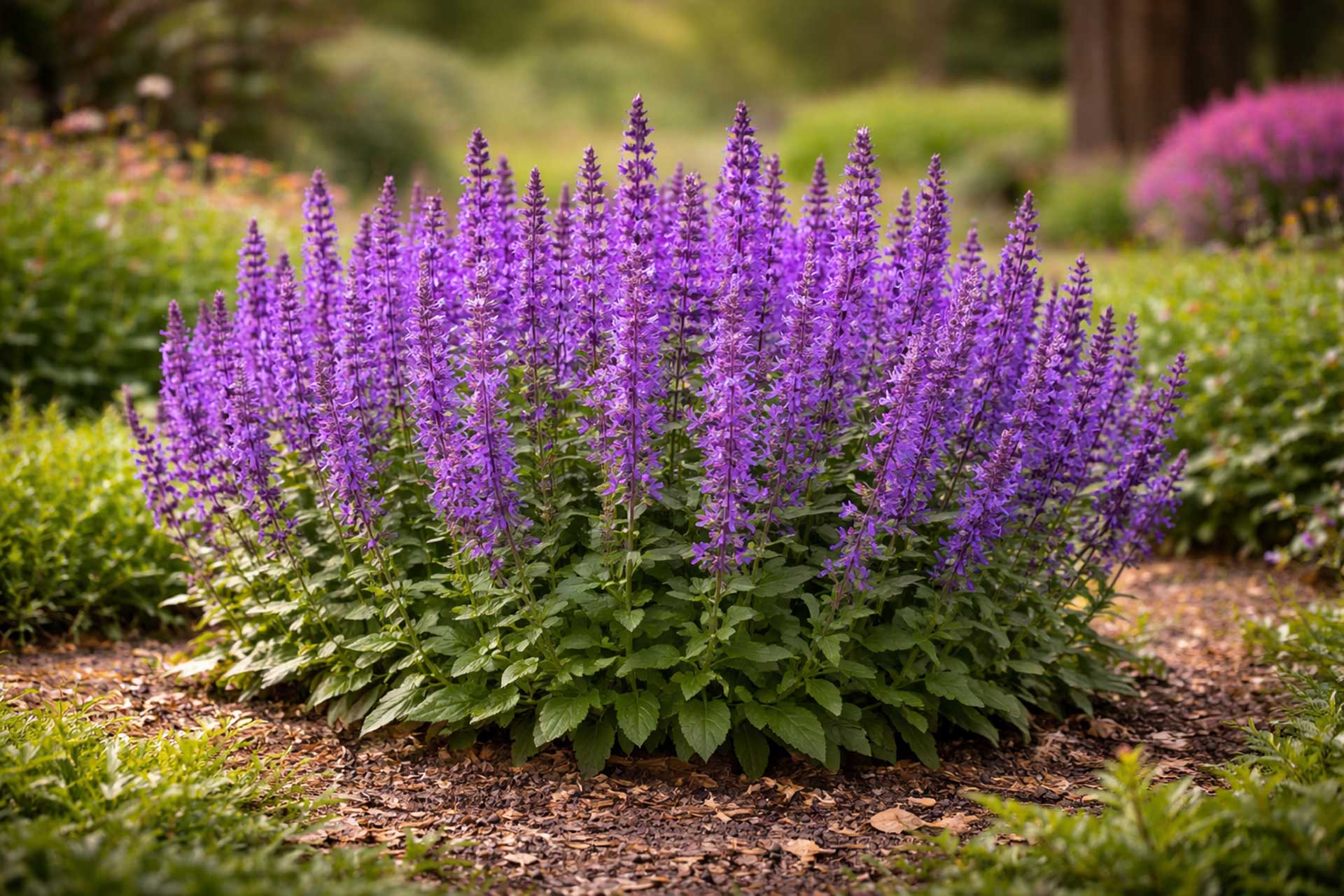
These plants add color and movement while fitting comfortably into lower-water planting schemes. They can support both classic and more contemporary compositions, depending on how they are paired.
Nepeta
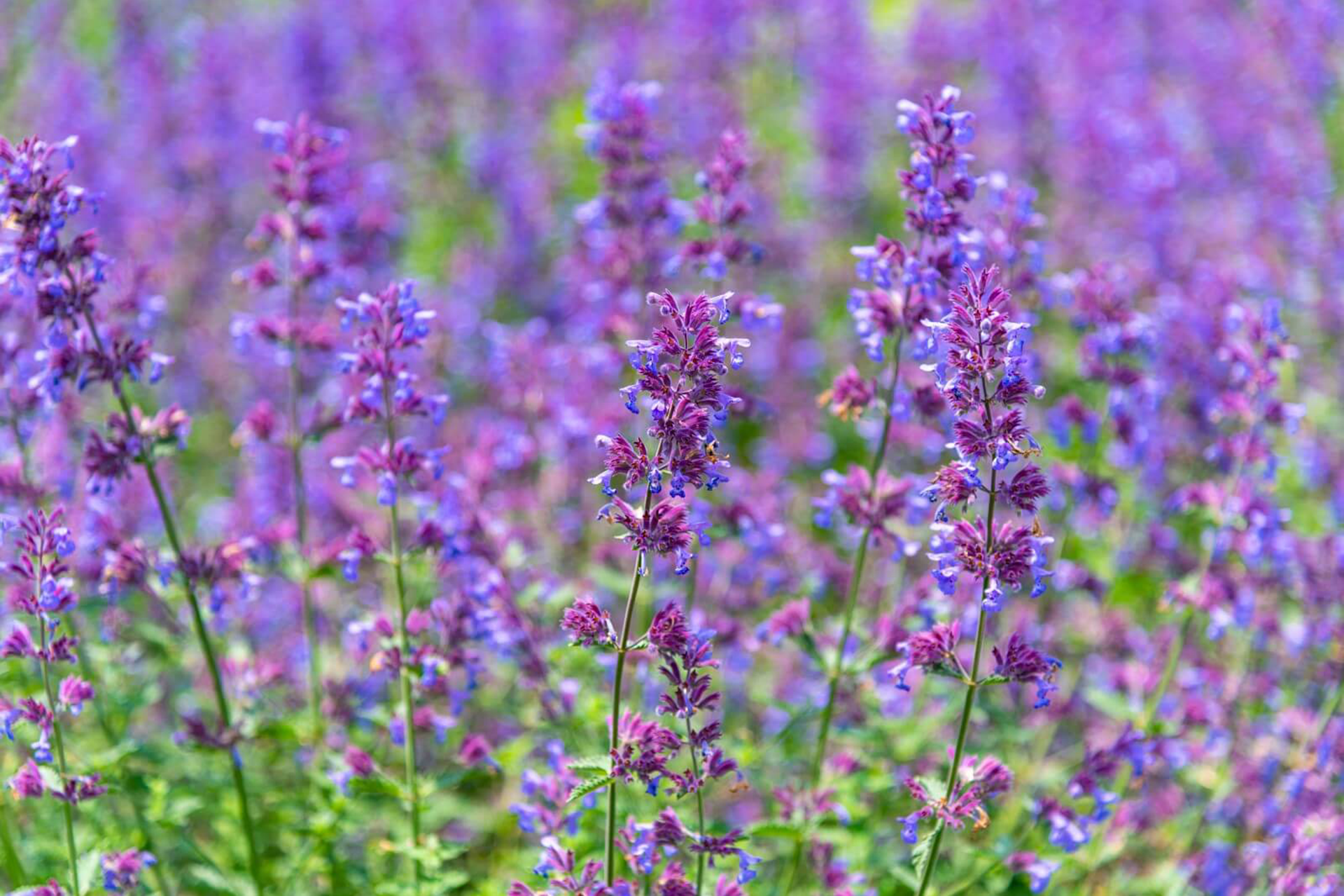
Nepeta is one of the most useful “glue” plants in residential design. It softens hard edges, blooms generously, and helps unify the front of a border without feeling heavy.
Bush Cinquefoil
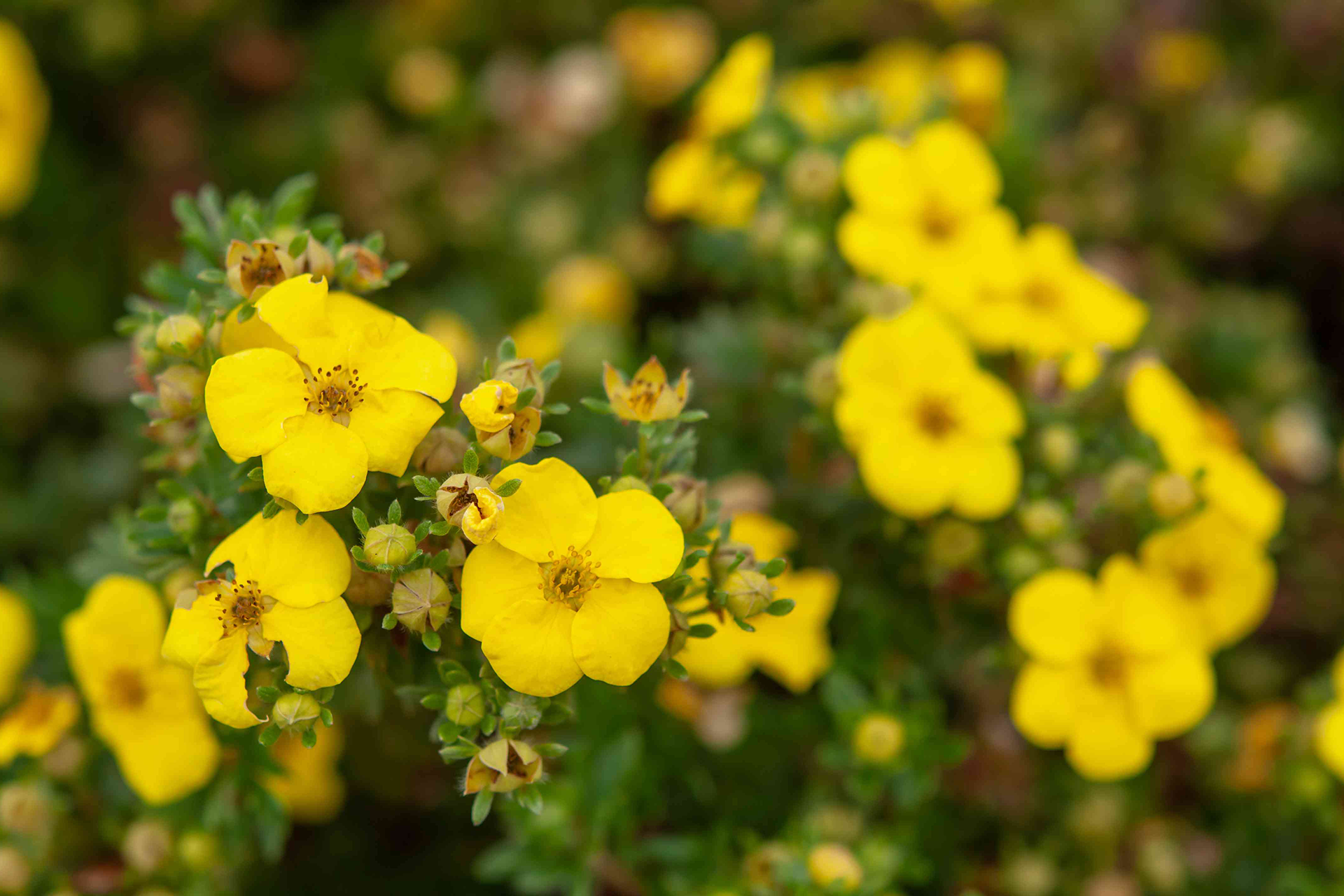
Bush cinquefoil can be a strong utility player in a drought-tolerant landscape. It is neat, floriferous, and well suited to owners who want steady performance without a lot of fuss.
Allium and Helleborus
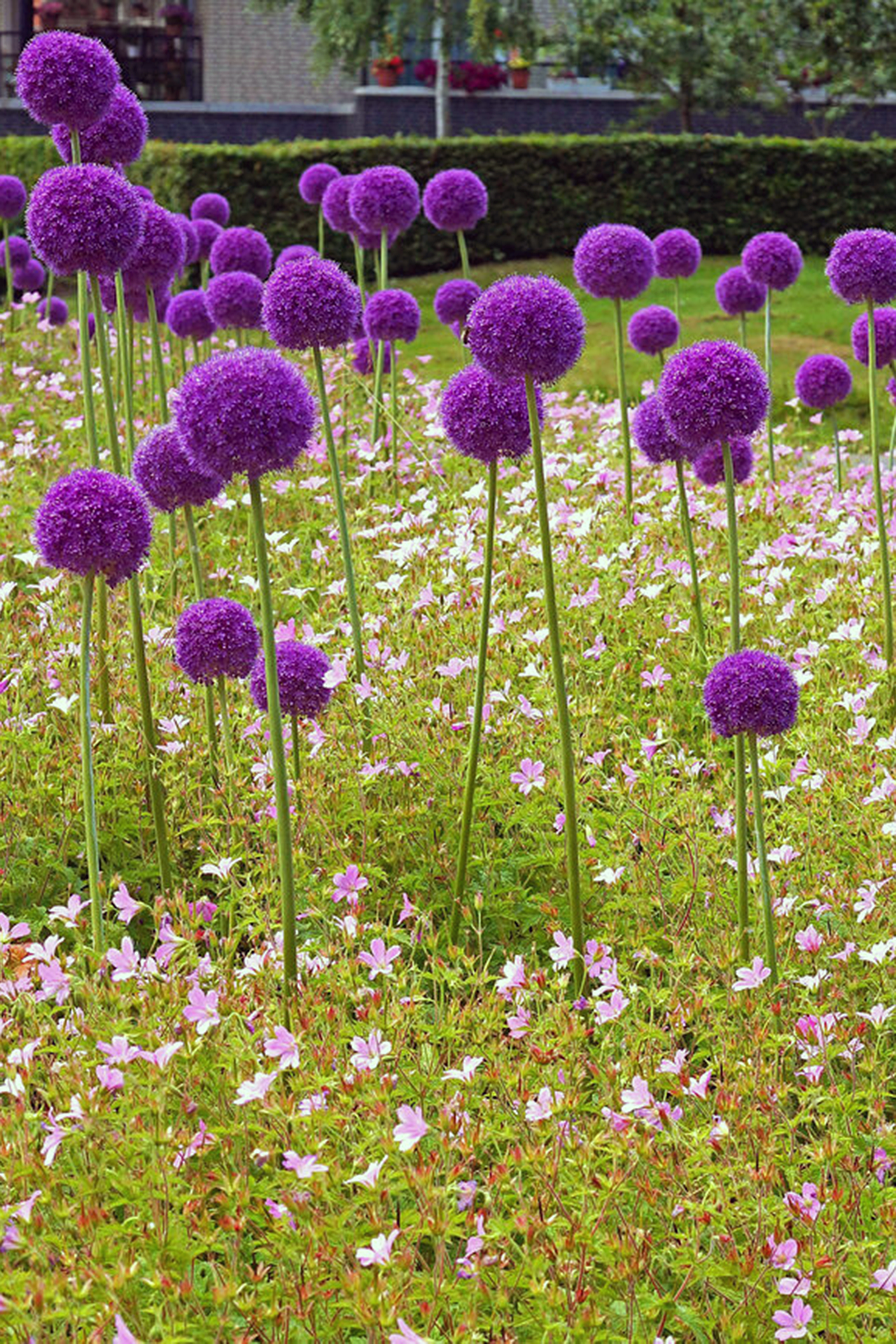
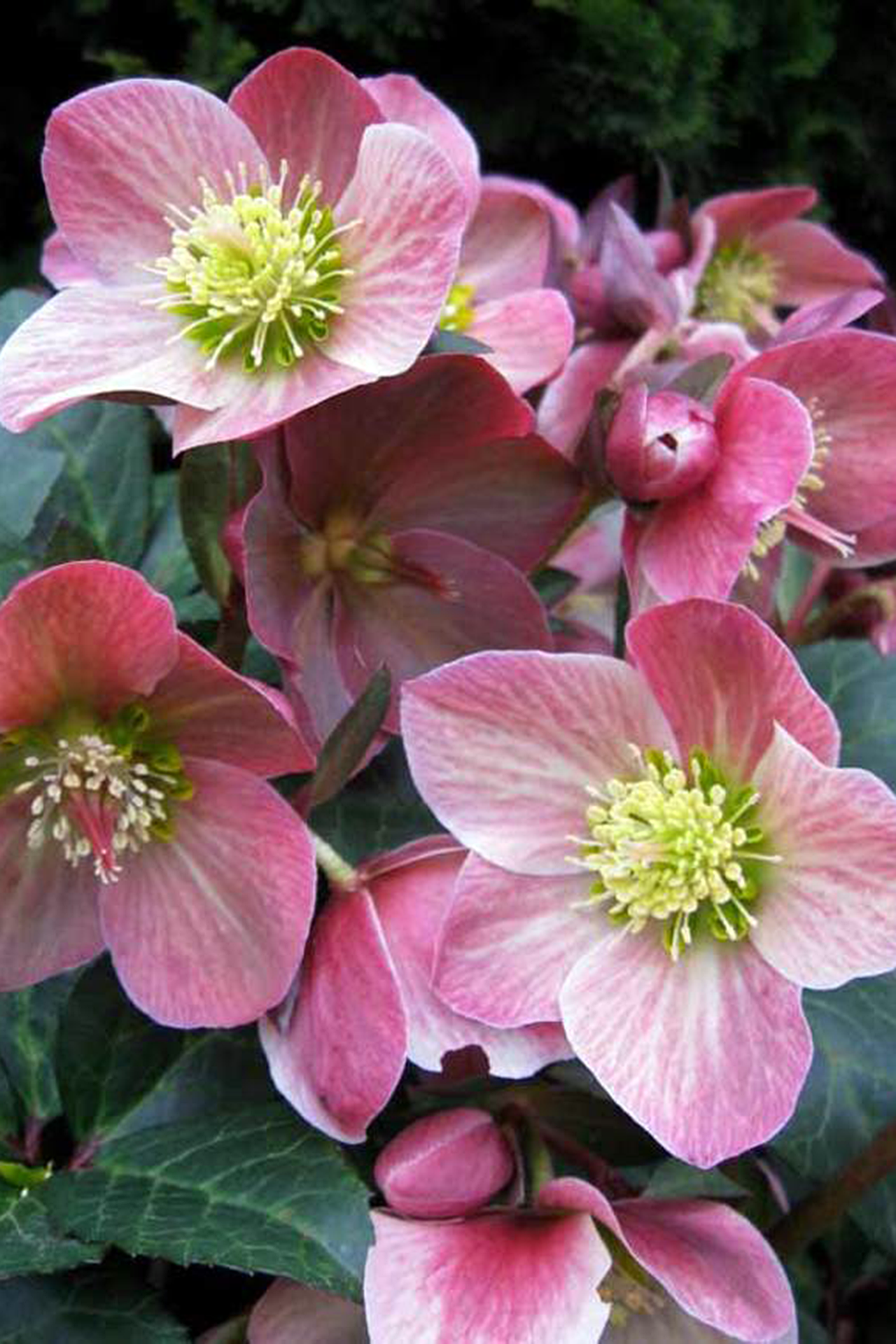
Allium adds structure and punctuation. Helleborus helps with early-season interest and can perform well in dappled light, making it especially useful in layered shade gardens where water competition from trees is a factor.
Related Blog: Deer-Resistant Plants and Landscaping Strategies for Boston-Area Gardens
Design Matters as Much as Plant Selection
A drought-tolerant landscape succeeds when the design supports the plants. On a real property, that often means reducing stress rather than simply swapping species.
A few strategies make a significant difference:
Improve the Soil Before Planting
UMass Extension recommends incorporating organic matter to improve soil structure and moisture retention. Better soil does not eliminate the need for irrigation, but it helps the root zone hold water more effectively and supports healthier establishment.
Mulch Thoughtfully
Mulch is one of the simplest ways to improve drought resilience. UMass recommends organic mulch for conserving soil moisture and reducing weeds, and notes that much less water is required to maintain vigorous plants when mulch is used.
Water Deeply, Not Constantly
This is one of the most common performance issues on residential properties. UMass advises against frequent light sprinkling and recommends deeper watering that penetrates the root zone. That produces stronger roots and uses water more effectively.
Match Plant to Place
A drought-tolerant plant in the wrong conditions is still the wrong plant. Sun exposure, root competition, reflected heat, and drainage all matter. A shaded Boston courtyard and a sunny Weston front foundation bed are not interchangeable environments.
The Best Drought-Tolerant Gardens Still Feel Beautiful
One of the biggest missed opportunities in drought-focused garden writing is aesthetic ambition. Too often, the conversation stops at survivability.
But on well-designed properties, drought-tolerant planting can create some of the most attractive moments in the landscape: airy shade under a well-placed tree, layered hydrangeas and shrubs that hold structure through the season, and perennial combinations that bring fragrance, movement, and long bloom without asking for constant rescue watering.
That is especially relevant for homeowners investing in long-term landscape quality. A planting plan should not only survive a dry spell. It should continue to look composed, intentional, and appropriate to the architecture of the home.
A Smarter Way to Plan for Boston Summers
The most effective drought-tolerant landscapes are not built around a single “miracle plant.” They are built around sound decisions.
That usually includes a combination of:
- plant selection suited to Massachusetts conditions
- healthy soil and proper planting practices
- mulch and root-zone protection
- efficient irrigation where needed
- ongoing fine gardening and seasonal oversight
That approach creates better results than chasing low-water labels alone.
Related Blog: Low Care Natives for The Woodland Garden
Frequently Asked Questions About Drought-Tolerant Plants
Q: What are the best drought-tolerant plants for Boston landscapes?
A: Some of the best drought-tolerant plants for Boston landscapes include select trees, shrubs, and perennials that can handle periodic dry conditions once established. Depending on the site, good options may include kousa dogwood, smoketree, panicle hydrangea, oakleaf hydrangea, lavender, nepeta, salvia, and allium. The best choice depends on sun exposure, soil conditions, drainage, and how the planting fits the overall landscape design.
Q: Does drought-tolerant mean a plant never needs watering?
A: No. Drought-tolerant does not mean no-water. Most plants, even resilient ones, need regular watering while they establish their root systems. After establishment, many can tolerate dry periods better than more water-dependent plants, but they still perform best when planted in the right location and supported by healthy soil, mulch, and efficient irrigation practices.
Q: Can a drought-tolerant landscape still look lush and high-end?
A: Yes. A drought-tolerant landscape does not have to feel sparse or overly rustic. With thoughtful design, it can still look layered, refined, and visually rich. The key is combining the right plant palette with strong structure, seasonal interest, and a planting plan that suits the architecture of the home and the specific conditions of the property.
Q: How do I make my landscape more drought-tolerant without starting over?
A: In many cases, you do not need a complete redesign. A landscape can often become more drought-tolerant through targeted improvements such as replacing struggling plants, improving soil, adding mulch, adjusting irrigation, and selecting better-performing plants for hot or dry areas of the property. A professional landscape plan can help identify where small changes will have the greatest long-term impact.
Ready to Build a More Resilient Landscape?
At a Blade of Grass, we design, build, and maintain landscapes that are tailored to the way Boston-area properties actually perform. That includes thoughtful plant selection, site-sensitive design, efficient irrigation planning, and long-term horticultural care that helps landscapes remain beautiful through changing weather patterns.
If you are thinking about refreshing planting beds, improving water efficiency, or planning a more resilient outdoor environment, contact the Blade team to learn more about our landscape design, landscape maintenance, and landscape irrigation services.