Landscape design is expensive in Boston because land, labor, materials, permitting, and site conditions all cost more here than in most parts of the country, and the expectations for quality, longevity, and customization are significantly higher. In short, Boston homeowners are not paying for decoration. They are investing in complex outdoor construction shaped by climate, regulation, and long-term performance.
If you live in Weston, Wellesley, Lincoln, Sudbury, or another western suburb, you may have noticed that landscape proposals feel markedly higher than what friends or family pay in other regions. That difference is real, and it is driven by a combination of regional economics and design realities that are unique to Greater Boston.
This article explains what goes into landscape design pricing locally, how Boston compares to other cities, and how to think about value rather than sticker price when planning an outdoor project.
Key Takeaways
- Landscape design is expensive in Boston because labor, materials, and regulations all cost more
- Cold-climate durability and drainage requirements add complexity
- Affluent western suburbs often present challenging site conditions
- Phased projects are common and often strategic
- Good design reduces long-term maintenance and replacement costs
Boston’s Landscape Design Costs in National Context
Boston consistently ranks among the most expensive metro areas in the U.S. for construction-related services, and landscape design follows that trend closely.
According to national data from Angi and HomeAdvisor, the average landscape design project in the U.S. typically ranges from $8,000 to $25,000, with full installations often landing between $25,000 and $75,000 depending on scope. In contrast, Greater Boston projects frequently begin where national averages end, particularly for properties requiring drainage solutions, grading, stonework, or custom outdoor living features.
Several national studies highlight the gap:
- HomeAdvisor reports that landscape installation costs in the Northeast are 20–35% higher than the national average.
- The U.S. Bureau of Labor Statistics consistently ranks Boston among the top metro areas for construction wages
- Angi data shows hardscape and masonry work costing significantly more in cold-climate regions with frost-depth requirements
When you combine higher labor rates, material transportation costs, and more complex engineering requirements, Boston pricing begins to make sense.
Labor Costs Reflect Skill, Licensing, and Retention
One of the largest drivers of landscape design costs in Boston is labor, particularly for experienced crews capable of executing high-end residential work.
Landscape projects in this region often require:
- Licensed professionals
- Skilled masons and carpenters
- Drainage and grading specialists
- Project managers familiar with local codes
Unlike warmer regions where seasonal labor cycles are longer, New England’s compressed construction season creates intense demand for skilled workers. Companies that retain experienced teams year after year must offer competitive wages, benefits, and ongoing training.
According to the BLS, construction labor wages in the Boston metro area exceed national averages by a wide margin, and that reality directly affects project pricing.
As one industry expert puts it:
“In Greater Boston, landscape design isn’t just about aesthetics. It’s about solving technical problems that are often under tight regulations with materials and labor that must perform for decades, not just seasons.”
— Scott Cornish, Chief Sales Officer, a Blade of Grass
Materials Cost More and Must Perform Longer
Boston landscapes demand materials that can withstand freeze-thaw cycles, heavy snow loads, and long winters. That reality narrows the list of suitable products and pushes pricing higher.
For example:
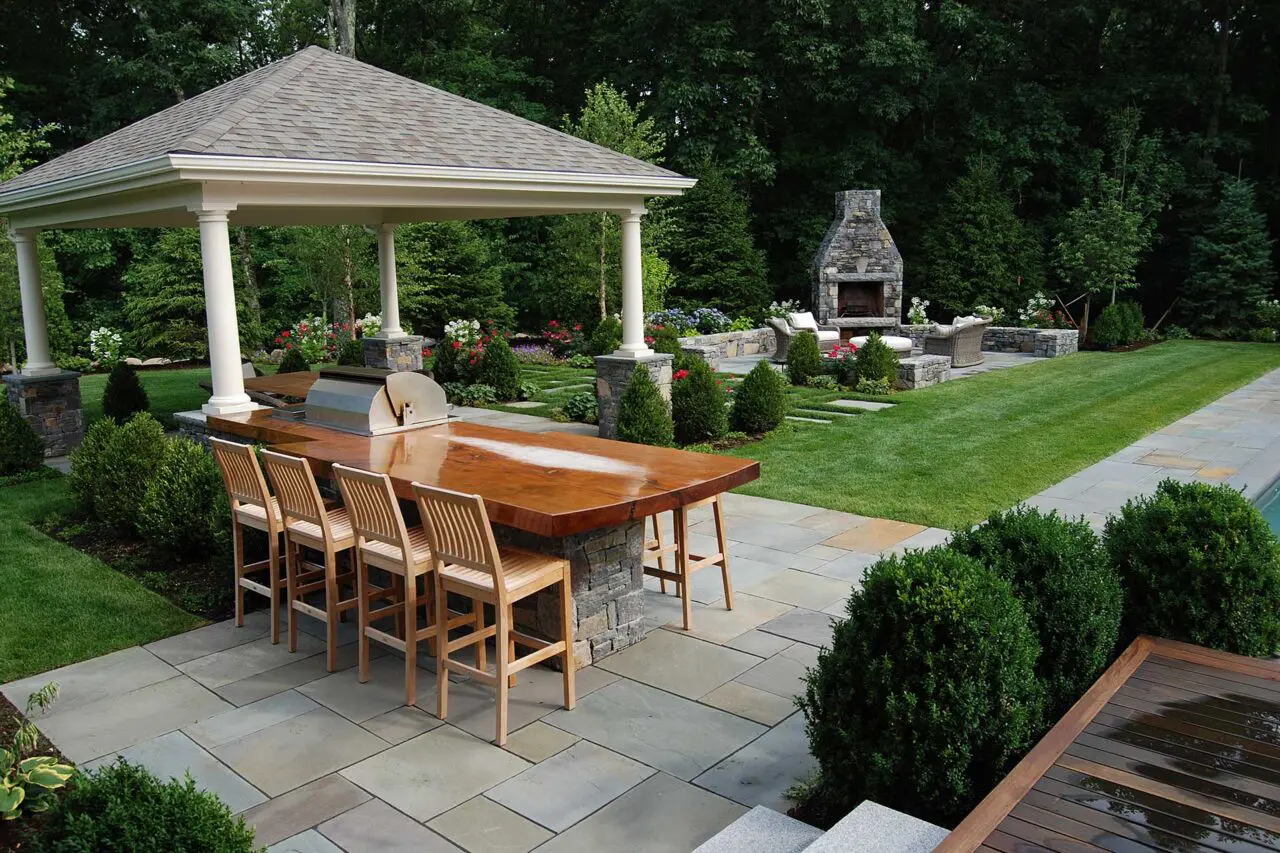
- Bluestone, granite, and high-quality concrete pavers must meet frost-depth and durability standards
- Plant material often requires regional sourcing to ensure cold hardiness
- Drainage systems must be engineered to manage spring melt and heavy rainfall
Transporting premium stone and plant material into Massachusetts also adds cost, particularly for properties in towns like Dover, Sherborn, or Concord, where access and logistics can be more complex.
Cheaper materials may reduce upfront costs, but they often fail prematurely in New England conditions, leading to replacement expenses that exceed the original savings.
Design Complexity Is Higher in Boston Suburbs
Many affluent western suburbs feature properties that are deceptively complex. Sloped terrain, wetlands buffers, mature tree canopies, and aging infrastructure all influence design decisions.
Landscape design in these areas frequently involves:
- Grading and drainage engineering
- Tree protection plans
- Conservation commission review
- Coordination with architects and builders
In towns such as Weston, Lincoln, and Wellesley, zoning and environmental regulations can add months of planning and documentation before installation begins. That professional time is part of the design cost, even if it is not immediately visible on site.
Related Blog: How to Hire a Professional Landscape Designer in Boston: A Homeowner’s Guide
Boston vs. Other U.S. Cities: A Cost Comparison
While every project is unique, national averages help illustrate regional differences.
Typical full-service landscape project ranges:
- Midwest suburban markets: $20,000–$60,000
- Southeast metro areas: $15,000–$50,000
- West Coast urban centers: $35,000–$100,000
- Greater Boston and MetroWest: $50,000–$150,000+
Boston’s pricing aligns more closely with cities like San Francisco and Seattle than with most inland metros. The difference lies in land values, regulatory oversight, and the expectation that landscapes are permanent extensions of the home rather than seasonal features.
Why Phased Projects Are Common in Boston
Many Boston-area homeowners approach landscape design as a multi-year investment rather than a single build. Phasing allows projects to evolve logically while spreading costs over time.
A typical phased approach may include:
- Master planning and site preparation
- Hardscape and structural elements
- Planting and refinement
- Enhancements and seasonal adjustments
This strategy is particularly effective for larger properties in towns like Sudbury or Weston, where long-term vision matters more than immediate completion. Check out our Transformations page shows how phased projects evolve over time.
How Design Fees Are Typically Determined
Landscape design fees in Boston reflect both project scale and technical requirements. While structures vary by firm, fees are often based on:
- Site complexity
- Level of documentation required
- Coordination with engineers or architects
- Anticipated construction scope
Some firms charge flat fees, others work on a percentage basis, and many adjust pricing for phased projects. What matters most is transparency and alignment between design effort and construction reality.
For homeowners, the key question is not “Why does design cost this much?” but “What problems does this design solve, and how long will it last?”
Frequently Asked Questions
Q: Is landscape design more expensive in Boston than New York?
A: In many cases, yes. While Manhattan projects can exceed Boston pricing, suburban Boston landscapes often rival or surpass New York suburbs due to site complexity and climate-related construction requirements.
Q: Can I reduce costs by skipping design?
A: Skipping design may reduce upfront fees but often increases construction costs due to revisions, delays, and missed coordination. Well-developed design documents typically reduce surprises during installation.
Q: Are permits and approvals a major cost factor?
A: They can be. Conservation reviews, zoning compliance, and drainage approvals all require professional time and documentation, which is reflected in design fees.
Q: Do higher costs mean better resale value?
A: According to multiple real estate studies, professionally designed landscapes can increase perceived home value by 5–12%, particularly in high-end markets where outdoor living is expected.
Final Thoughts and Next Steps
Landscape design in Boston is an investment shaped by environment, regulation, and long-term expectations. While initial costs may feel high, thoughtful planning often prevents costly corrections later and results in outdoor spaces that perform beautifully for decades.
If you are considering a landscape project in Greater Boston and would like to better understand scope, timing, and cost, the team at a Blade of Grass would be happy to answer your questions. Contact us today to schedule a free consultation. After all, exploring options upfront is often the most cost-effective step of all.