Introduction
Some landscapes feel balanced and natural the moment you see them. Others can feel cluttered or oddly unfinished, even when the plants themselves are beautiful. Professional landscape designers often rely on a set of guiding principles to avoid these problems. One of the most widely used is known as the Rule of 3.
This concept is simple yet powerful. By grouping landscape elements in sets of three or other odd numbers, designers can create outdoor spaces that feel more natural, cohesive, and visually engaging.
The rule appears everywhere in professionally designed landscapes. It influences how plants are grouped in a garden bed, how trees frame a property, and even how lighting and architectural features are arranged across a landscape.
Understanding this principle helps explain why certain landscapes feel effortless and harmonious while others appear disjointed. For homeowners planning a new landscape, it also offers insight into the design decisions that shape beautiful outdoor environments.
Key Takeaways
- The Rule of 3 in landscaping refers to grouping plants or features in odd numbers, most commonly three.
- Odd-numbered groupings create visual balance and help landscapes feel more natural.
- Designers apply this principle to plants, lighting, containers, and focal points.
- The concept often expands to groupings of five or seven in larger landscapes.
- Professional landscape designers combine the rule with other design principles such as scale, layering, and rhythm.
What Is the Rule of 3 in Landscaping?
The Rule of 3 is a landscape design principle that recommends grouping elements in sets of three rather than pairs. Designers may arrange three plants together in a garden bed, position three trees to frame a lawn, or create a composition that includes three complementary focal points.
This approach is rooted in a broader concept of visual design. Odd-numbered groupings tend to feel more natural and less rigid than even numbers. When two identical elements are placed side by side, the eye often divides them into a symmetrical pair. Adding a third element disrupts that symmetry and creates a more dynamic composition.
This idea appears across many design disciplines, including architecture, photography, and graphic design. In landscape design, it helps outdoor spaces feel organic rather than overly formal.
The American Society of Landscape Architects notes that successful landscapes rely on thoughtful composition and spatial organization to guide how people experience a space.
Why Odd Numbers Work in Landscape Design
The effectiveness of the rule of three comes down to how the human eye processes visual information.
Even numbers naturally encourage symmetry. While symmetry can be useful in formal landscapes, it can also make a garden feel static or predictable. Odd numbers, on the other hand, create movement. The eye travels through the composition rather than stopping at a mirrored pair.
Three elements also form a triangular relationship that feels balanced without appearing rigid. This triangular structure subtly anchors a design and helps guide the viewer’s attention through the landscape.
Garden design experts often point out that odd-numbered groupings mimic patterns commonly found in nature. Plants rarely grow in perfect pairs in the wild, which is why landscapes designed around odd numbers tend to feel more relaxed and authentic.
Gardening Know How explains that designers frequently use odd-number groupings because they encourage visual flow and prevent garden beds from appearing overly structured.
A Designer’s Perspective from a Blade of Grass
For professional landscape designers, the rule of three is not a rigid formula but a helpful starting point for organizing outdoor space.
“Grouping plants in threes creates rhythm within a planting design. It gives the landscape structure while still allowing the composition to feel natural and relaxed.”
— Richard Duhamel, Landscape Designer, a Blade of Grass
Designers often begin with this principle when arranging planting beds or establishing focal points within a landscape. As the design develops, the concept expands to accommodate the scale and character of the property.
Related Blog: What Are the Top 10 Boston Landscape Design Trends for 2026
How Designers Apply the Rule of Three
One of the reasons this principle is so valuable is its versatility. It appears across many aspects of landscape design.
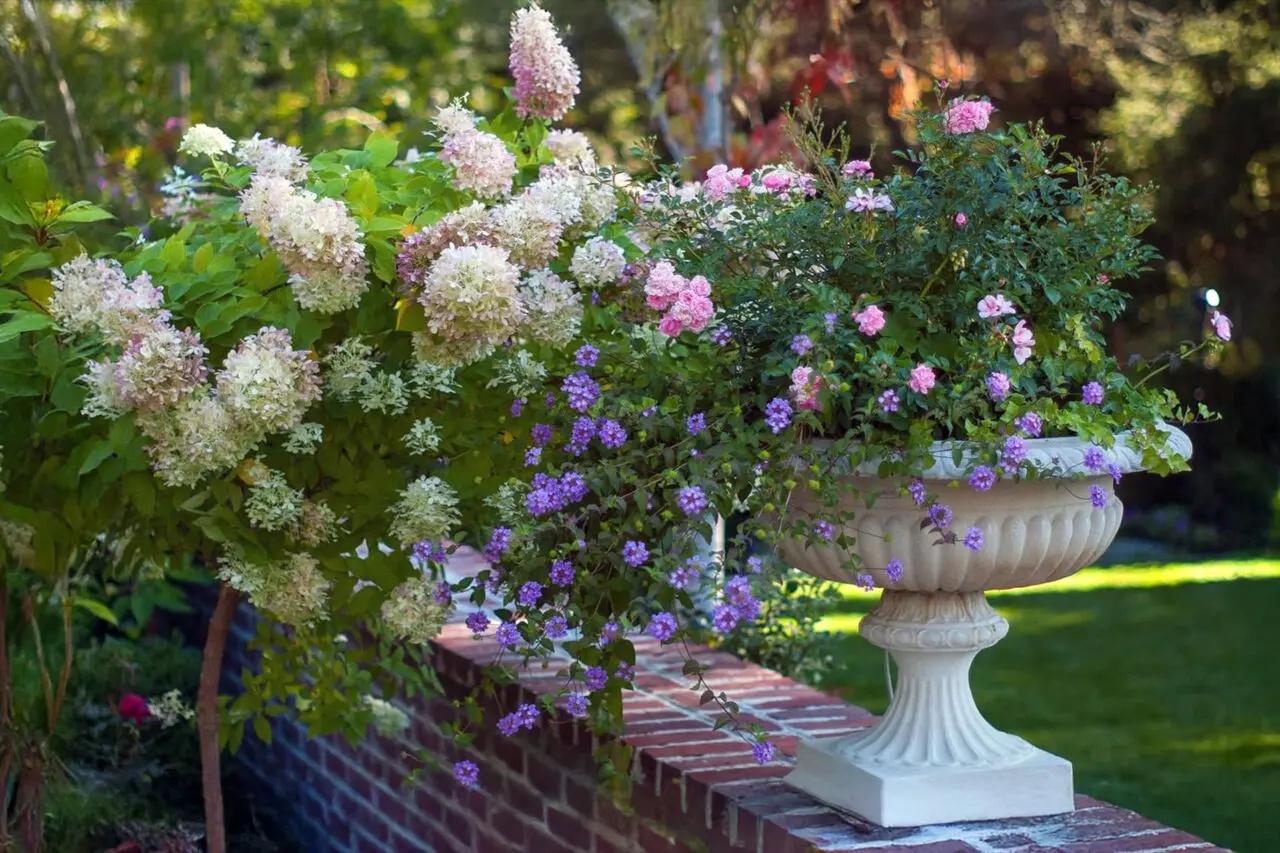
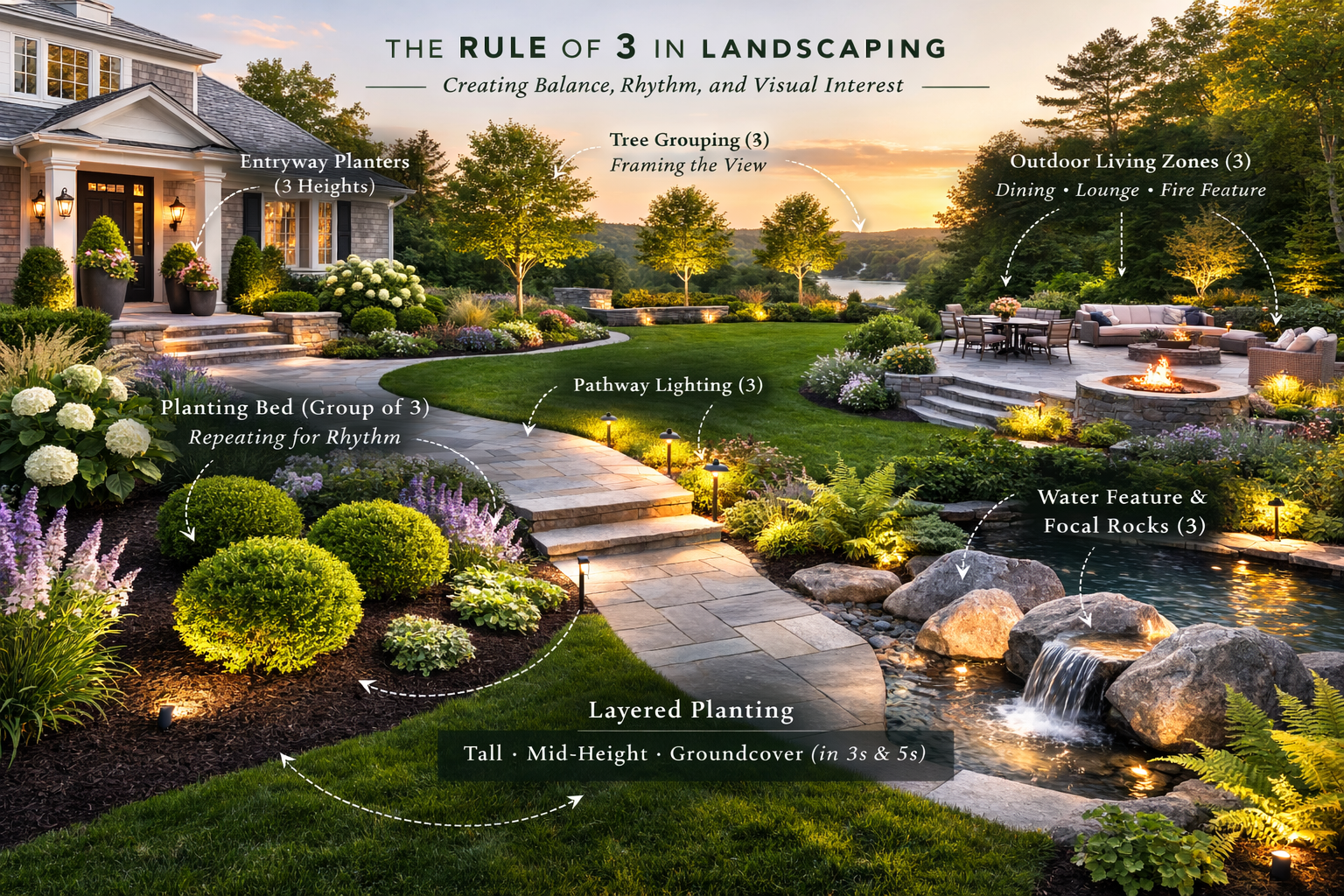
Planting beds are perhaps the most recognizable example. Rather than placing individual plants randomly throughout a bed, designers often group three of the same species together. This creates a stronger visual statement and prevents the scattered appearance that can occur when too many different plants are used in small quantities.
The same idea can shape how a front entry is framed. Three containers of varying heights can create a welcoming arrangement that feels balanced without becoming overly formal. Within each container, designers may also use three complementary plant varieties to establish layered texture.
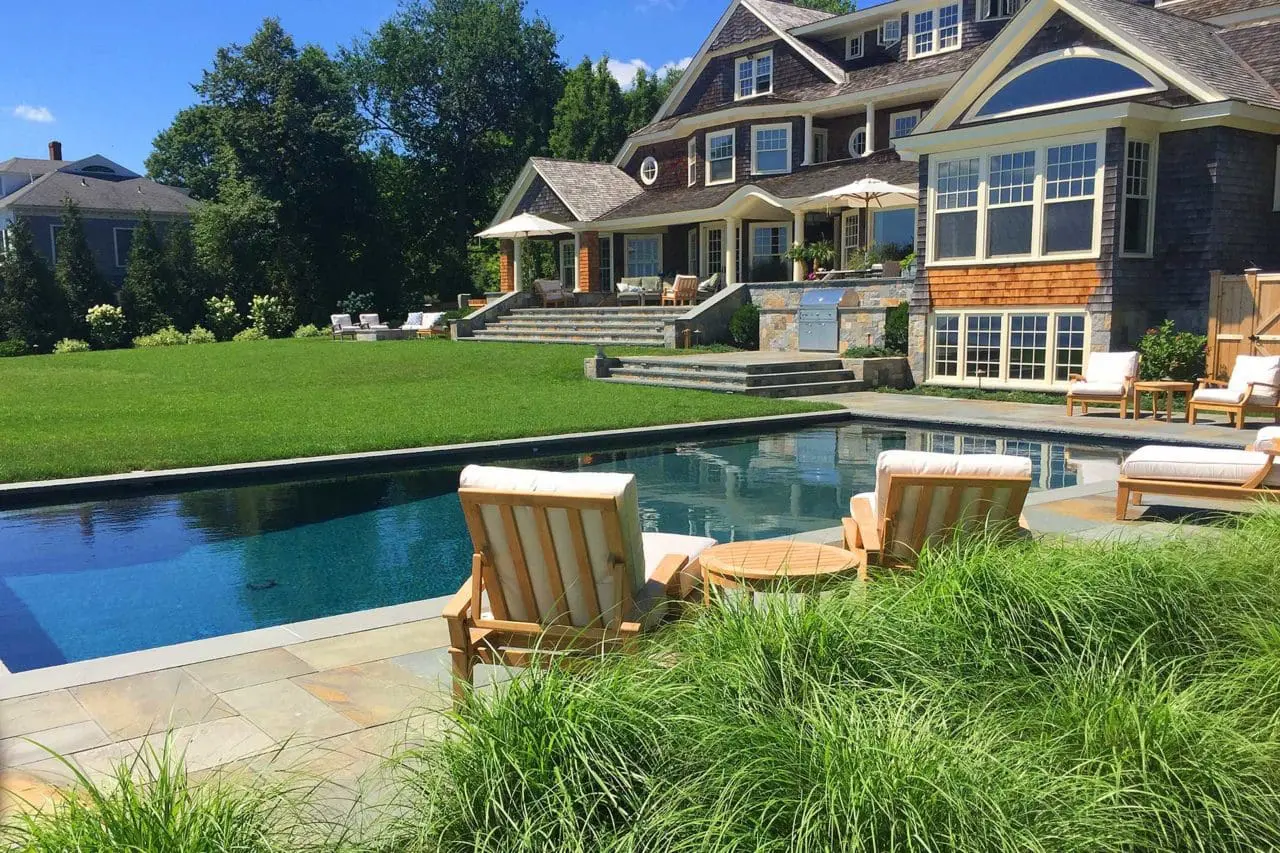
The rule of three also appears at a larger scale when designers organize outdoor living environments. A backyard might be divided into three distinct zones that support different activities, such as dining, relaxing, and gathering around a fire feature. These spaces remain connected but feel clearly defined.
Lighting design frequently follows the same pattern. Designers may illuminate three specimen trees within a landscape or position three pathway lights to guide visitors toward an entry. According to the U.S. Department of Energy, well-designed outdoor lighting not only improves visibility but also extends the usable hours of outdoor living spaces.
When Designers Use Five or Seven Instead
Although the rule of three provides a useful guideline, it is not meant to be followed rigidly.
In larger landscapes, groups of three plants may feel too small to create meaningful visual impact. Designers often expand the same concept to groups of five or seven, particularly within expansive planting beds or estate landscapes.
The important idea is not the number itself but the use of odd-numbered groupings to create rhythm and balance. These patterns help the landscape feel cohesive as the eye moves through the space.
The Rule of Three in Boston-Area Landscapes
Across Greater Boston, professionally designed landscapes frequently incorporate this principle in subtle ways.
A driveway approach might be framed by three ornamental trees that establish a sense of arrival. Foundation plantings often include three groupings of hydrangeas that anchor the architecture of a home. In sloped properties, three terraces may step down a hillside to create usable outdoor space.
These compositions feel natural because they reflect both design principles and the character of the surrounding environment.
Thoughtful landscaping can also influence how a property is perceived. Research from Virginia Tech indicates that well-designed landscaping can increase perceived home value by as much as 15 percent, depending on the quality and maturity of the design.
Related Blog: How to Hire a Professional Landscape Designer in Boston: A Homeowner’s Guide
Why Professional Landscape Design Matters
Understanding the rule of three offers a glimpse into the thinking behind professional landscape design. Yet this principle is only one part of a much larger process.
Designers must consider how plants will grow over time, how water moves through a property, and how outdoor spaces support the daily lives of homeowners. They also think about seasonal change, soil conditions, and long-term maintenance requirements.
When these practical considerations are combined with thoughtful design principles, landscapes evolve into environments that feel both beautiful and functional.
Conclusion
The Rule of 3 in landscaping is one of the simplest and most effective tools designers use to create balanced outdoor environments. By grouping plants, features, and focal points in odd numbers, landscapes gain a sense of rhythm and natural harmony.
While the idea may seem straightforward, applying it successfully requires an understanding of scale, plant behavior, and spatial composition. When used thoughtfully, it helps transform individual landscape elements into a cohesive design that enhances the overall property.
For homeowners in Greater Boston, working with an experienced landscape design team ensures that principles like the rule of three are applied in ways that complement both the architecture of the home and the surrounding environment.
Frequently Asked Questions About the Rule of 3 in Landscaping
Q: What is the rule of three in landscaping?
A: The rule of three in landscaping is a design principle that suggests grouping plants or landscape features in sets of three rather than pairs. Odd-numbered groupings tend to appear more natural and visually balanced because the eye moves through the composition instead of stopping at a symmetrical pair. Landscape designers commonly use this approach when arranging planting beds, positioning trees, or organizing focal points within a garden.
Q: Why do landscape designers plant in groups of three?
A: Landscape designers often plant in groups of three because odd numbers create a more dynamic visual composition. When plants are arranged in pairs, the eye tends to divide them evenly, which can make a garden feel rigid or overly formal. A third element introduces subtle variation and movement, helping the planting appear more natural and visually interesting.
Q: Can the rule of three apply to more than just plants?
A: Yes. While the rule of three is often associated with planting design, it applies to many aspects of landscape architecture. Designers may use the principle when arranging garden containers, framing entryways, positioning landscape lighting, or organizing outdoor living spaces. The goal is to create balance and rhythm throughout the landscape by repeating elements in odd-numbered groupings.
Q: Do you always have to use exactly three plants?
A: No. The rule of three is meant to guide design rather than serve as a strict rule. In larger planting beds or estate landscapes, designers often expand the concept to groups of five or seven plants. The key idea is using odd numbers to maintain visual balance and avoid overly symmetrical arrangements.
Q: Is the rule of three important in professional landscape design?
A: The rule of three is one of several foundational design principles used by professional landscape designers. It helps establish rhythm, structure, and visual flow within a garden. However, designers typically combine it with other considerations such as scale, plant layering, seasonal interest, and site conditions to create landscapes that remain attractive and functional over time.
Ready to Transform Your Landscape?
If you’re considering a new landscape design or outdoor living project, the team at a Blade of Grass can help.
Our designers bring together horticultural expertise, thoughtful planning, and careful craftsmanship to create landscapes that mature beautifully over time. From landscape design and construction to ongoing landscape maintenance, irrigation, seasonal planting, landscape lighting, and snow management, our team provides comprehensive landscape services for residential properties throughout Greater Boston. Contact us to learn more about how our landscape services can help enhance and care for your property.