Introduction
Outdoor kitchens have become one of the most requested features in residential landscape design across Greater Boston. In towns like Weston, Wellesley, Dover, and Brookline, they represent a broader shift in how homeowners think about their properties. The landscape is no longer secondary to the home. It is an extension of it.
A well-designed outdoor kitchen creates a space that supports everyday use while also accommodating larger gatherings. It allows meals, conversations, and time outdoors to happen more naturally.
Designing one in Massachusetts, however, requires a more thoughtful approach than in warmer regions. Seasonal temperature swings, snow, moisture, and freeze-thaw cycles all influence how these spaces should be planned, built, and maintained.
This guide walks through the full process in detail, from early planning decisions to layout, materials, costs, and long-term performance, with a focus on what matters most for New England properties.
Key Takeaways
- Outdoor kitchens in Massachusetts must be designed for durability first, then aesthetics
- Layout decisions should reflect how the space will actually be used over time
- Integration with planting, lighting, and circulation defines the overall experience
- Utility planning is one of the most important early steps and often overlooked
- Site conditions such as drainage and grading are major cost and design drivers
Why Outdoor Kitchens Continue to Grow in Popularity
Outdoor living has become a priority for homeowners making long-term investments in their properties. According to the National Association of Realtors, outdoor kitchens and entertainment spaces are among the most desirable outdoor features for buyers and can significantly enhance resale appeal.
A recent NAR report highlights that outdoor improvements consistently rank among projects that deliver strong lifestyle and resale benefits.
In Massachusetts, this demand is shaped by seasonality. Homeowners want to maximize time outdoors during the months when the climate is most comfortable. When thoughtfully designed, an outdoor kitchen can extend usability from early spring into late fall, especially when paired with heating elements and appropriate shelter.
How Outdoor Kitchens Fit Into the Landscape
An outdoor kitchen should feel like a natural part of the property, not a feature that was added later.
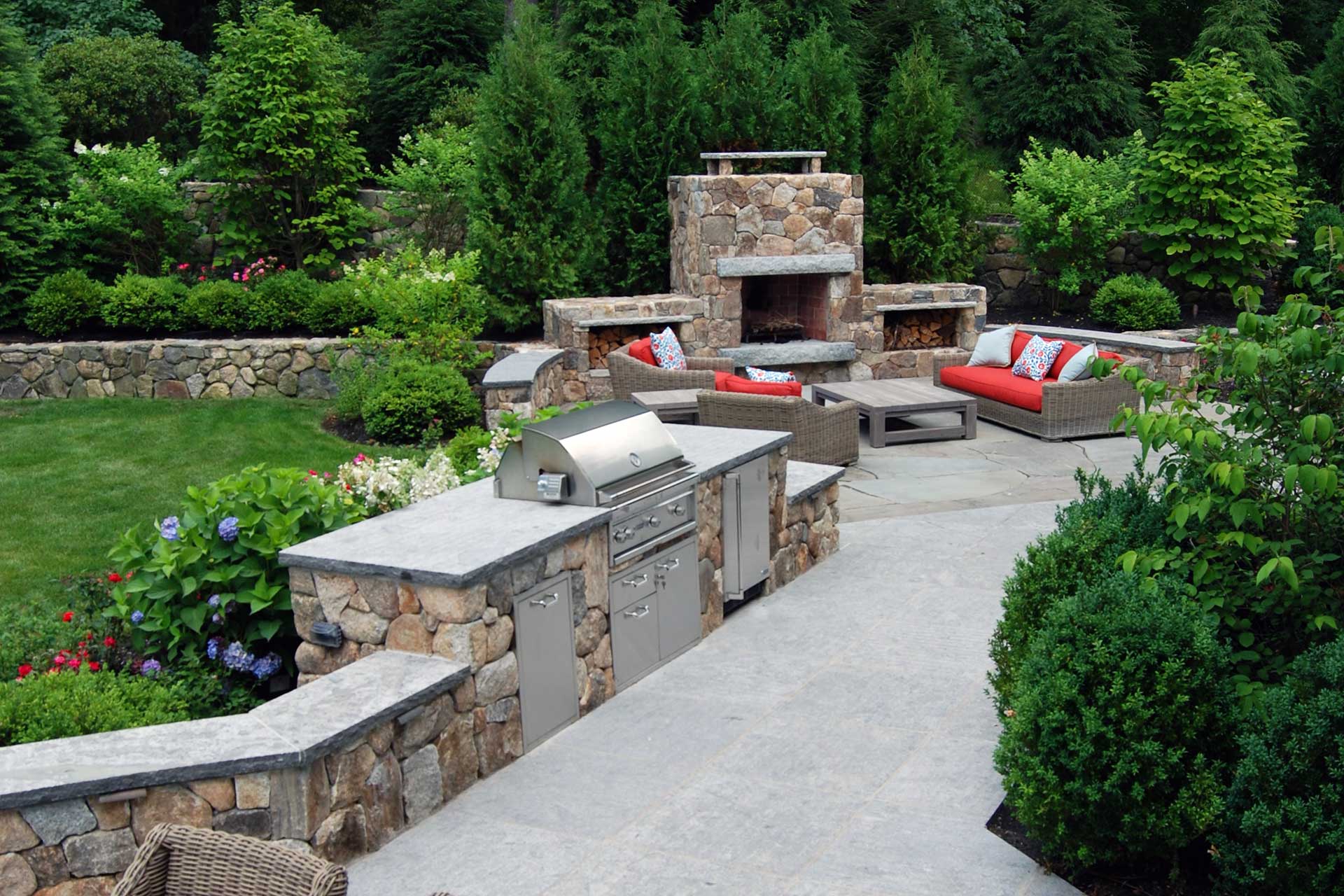
The most successful projects begin with placement. Kitchens located just outside the home tend to be more convenient, especially for everyday use. They allow for easy movement between interior and exterior spaces and often require less infrastructure. Kitchens placed further into the landscape can feel more immersive, creating a destination that draws people into the property.
Beyond placement, the relationship between spaces is critical. A well-designed outdoor kitchen connects naturally to dining areas, seating spaces, and adjacent features like pools or lawns. Movement through the space should feel intuitive, with clear pathways and subtle transitions in materials guiding how people use it.
Planting design plays an equally important role. Carefully placed trees, shrubs, and perennials can create privacy, soften the edges of hardscape, and introduce seasonal variation. Over time, these elements help the space feel more established and integrated.
Lighting is another layer that often defines how successful the space is. Task lighting ensures the kitchen functions properly, while ambient and path lighting extend usability into the evening and improve safety.
Related Blog: Top 10 Things to Consider When Designing an Outdoor Dining Area
A Practical Approach to Planning
Planning an outdoor kitchen is not just about selecting appliances. It is about understanding how the space will function within the context of the property.
A thoughtful process typically follows a few key considerations:
- Define how you plan to use the space
Start with lifestyle. Some homeowners prioritize casual grilling and everyday family meals, while others want a space designed for larger gatherings and entertaining. The level of cooking complexity also matters, as a simple grill setup requires far less infrastructure than a fully equipped kitchen. - Evaluate site conditions early
Many properties in the Boston area include slopes, uneven terrain, or drainage challenges. These factors directly influence where the kitchen can be located and how it must be constructed. Addressing them early helps avoid costly adjustments later in the process. - Plan for utilities and infrastructure
Gas, electrical, and water access are often the most defining constraints. Extending these services to a location further from the house is possible, but it increases both cost and complexity. Early planning ensures the layout aligns with what is feasible.
As one of our designers often explains:
“An outdoor kitchen should feel effortless to use, but that simplicity is the result of careful planning. We are always thinking about how the space will function not just on day one, but five or ten years from now.”
Choosing the Right Layout
Layout decisions should reflect how the space will actually be used, but they should also respond to the scale of the property, the location of the kitchen relative to the home, and how people naturally gather and move outdoors. The shape of the kitchen plays a central role in defining workflow, circulation, and the overall experience of the space. Some layouts prioritize efficiency and simplicity, while others are designed to support larger gatherings and more involved cooking. Understanding the strengths of each configuration helps ensure the kitchen feels both functional and well integrated into the broader landscape.
Linear Kitchens
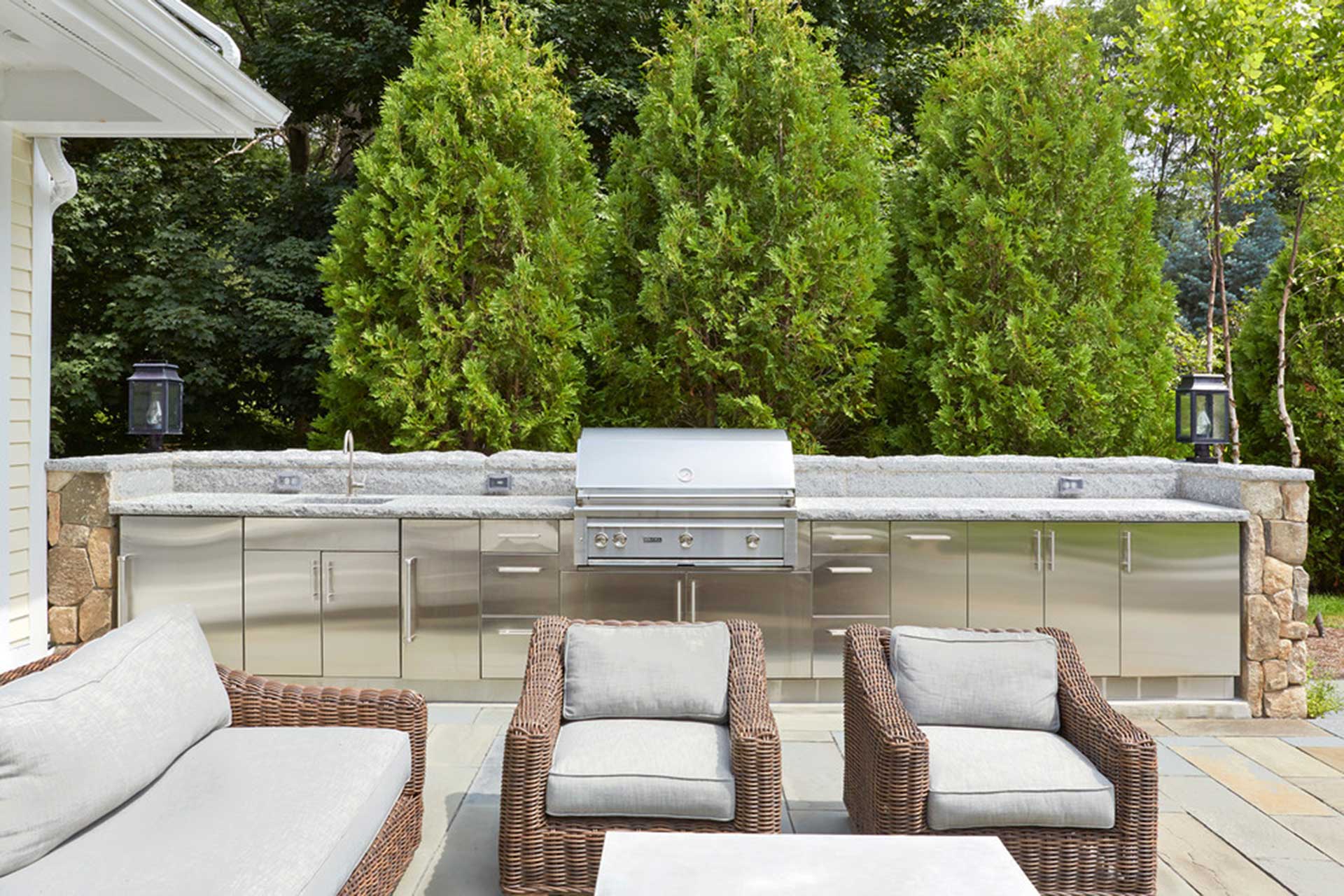
Linear outdoor kitchens are often the most efficient solution for smaller patios or spaces located close to the home. With all appliances and prep areas arranged along a single run, everything remains within easy reach, simplifying both cooking and cleanup. This layout also tends to be more straightforward to design and build, making it a practical option for many properties in the Boston area. Linear kitchens integrate well with existing patios and require fewer utility extensions, which can help manage costs. For homeowners seeking a clean, functional outdoor cooking space without unnecessary complexity, this approach provides everything needed for everyday use.
L-shaped Kitchens
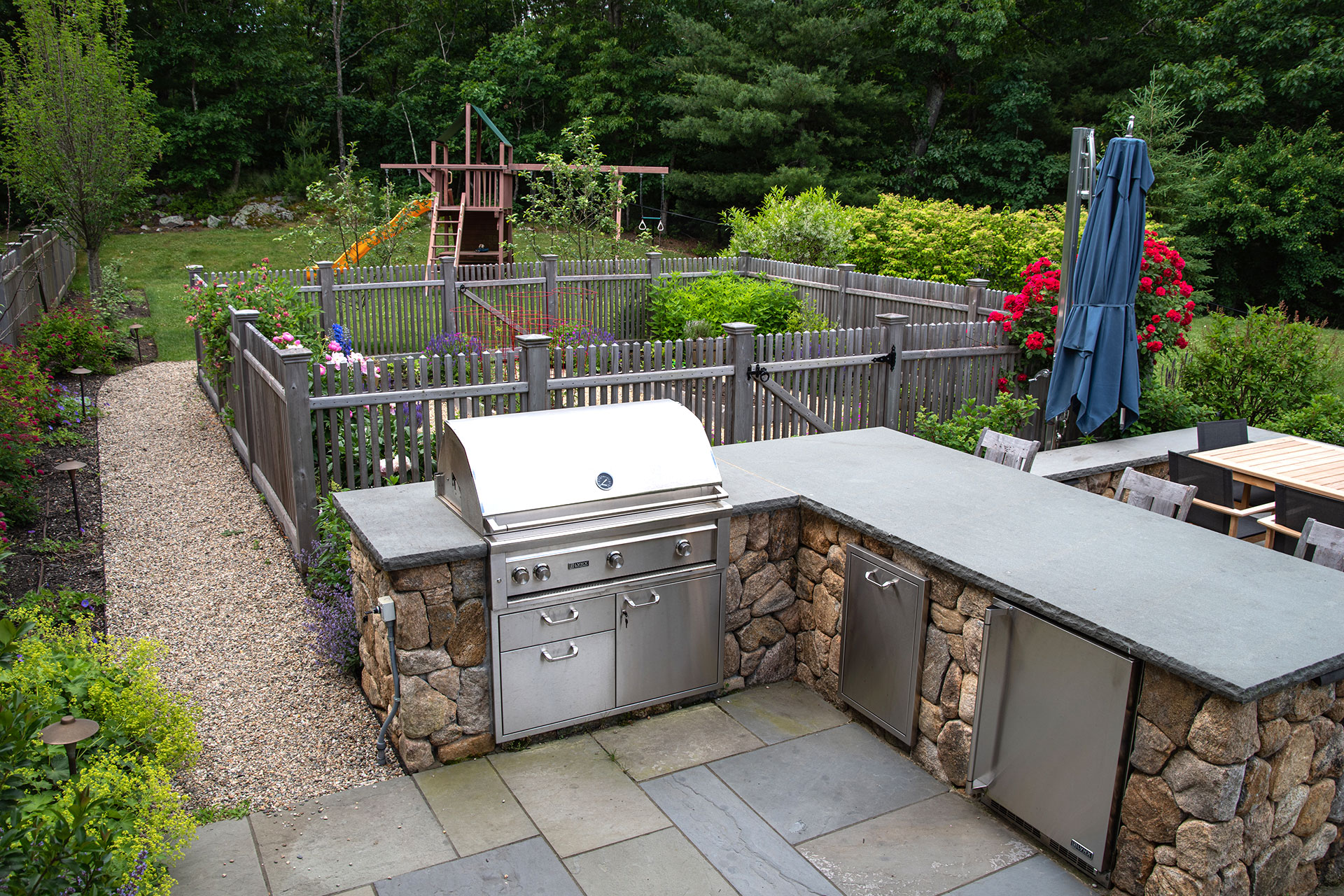
L-shaped outdoor kitchens introduce greater flexibility by organizing cooking and preparation areas along two connected sides. This layout naturally creates a more efficient workflow, allowing multiple people to use the space comfortably at the same time. The added counter space supports more involved meal preparation while maintaining an open feel that connects well to surrounding patios or seating areas. L-shaped kitchens are especially well suited for moderate entertaining, offering a balance between functionality and accessibility. When thoughtfully integrated into the landscape, they help define the space without enclosing it.
U-shaped Kitchens
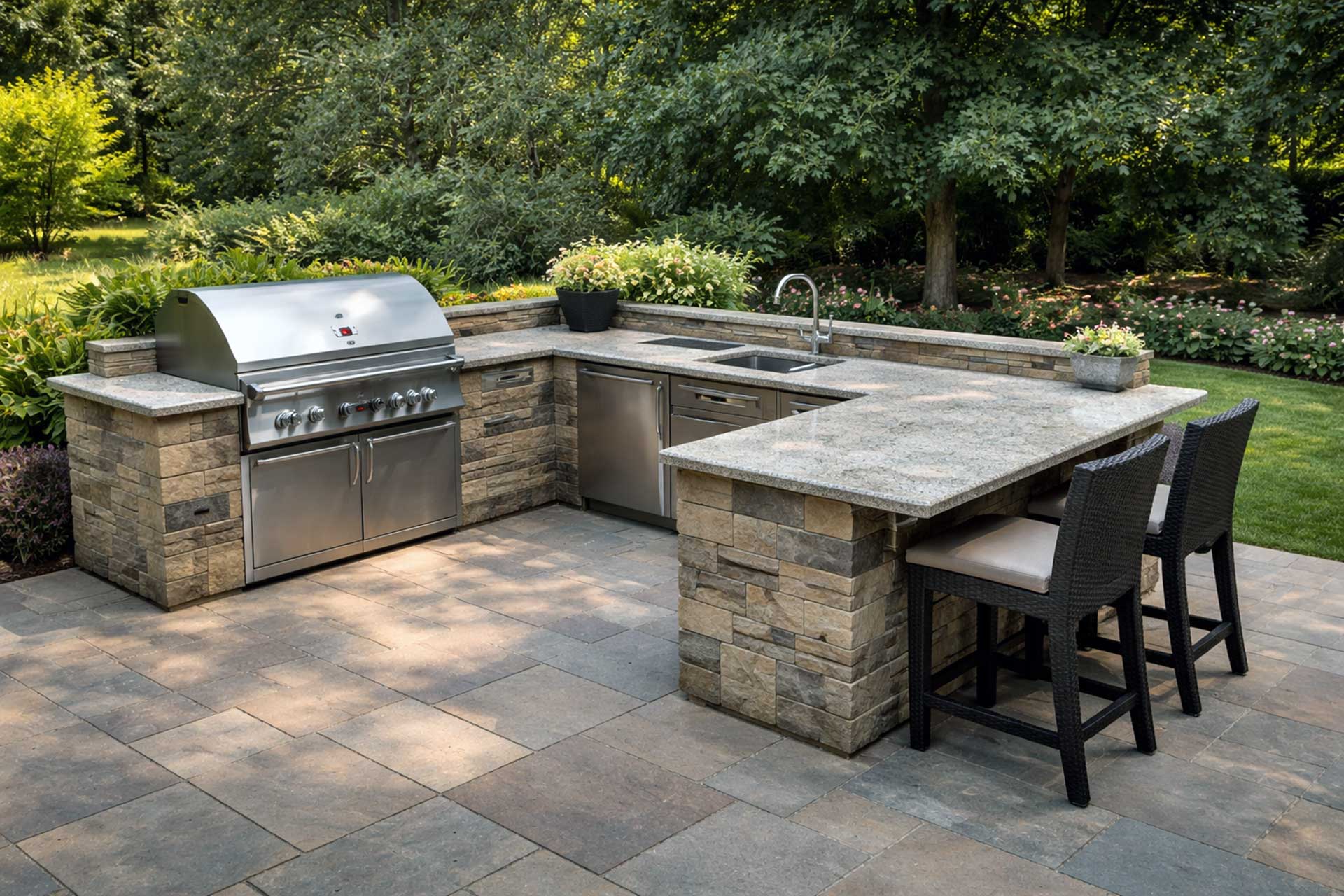
U-shaped outdoor kitchens are typically designed for larger properties and homeowners who entertain frequently. With three connected sides, this layout creates a defined workspace that surrounds the cook with ample counter space, storage, and integrated appliances. It allows for a more immersive cooking experience, where everything is organized and easily accessible. This configuration is ideal for more involved outdoor cooking, including multi-course meals or hosting larger gatherings. In well-designed landscapes, U-shaped kitchens often become a central feature that anchors the entire outdoor living space.
Island Layouts
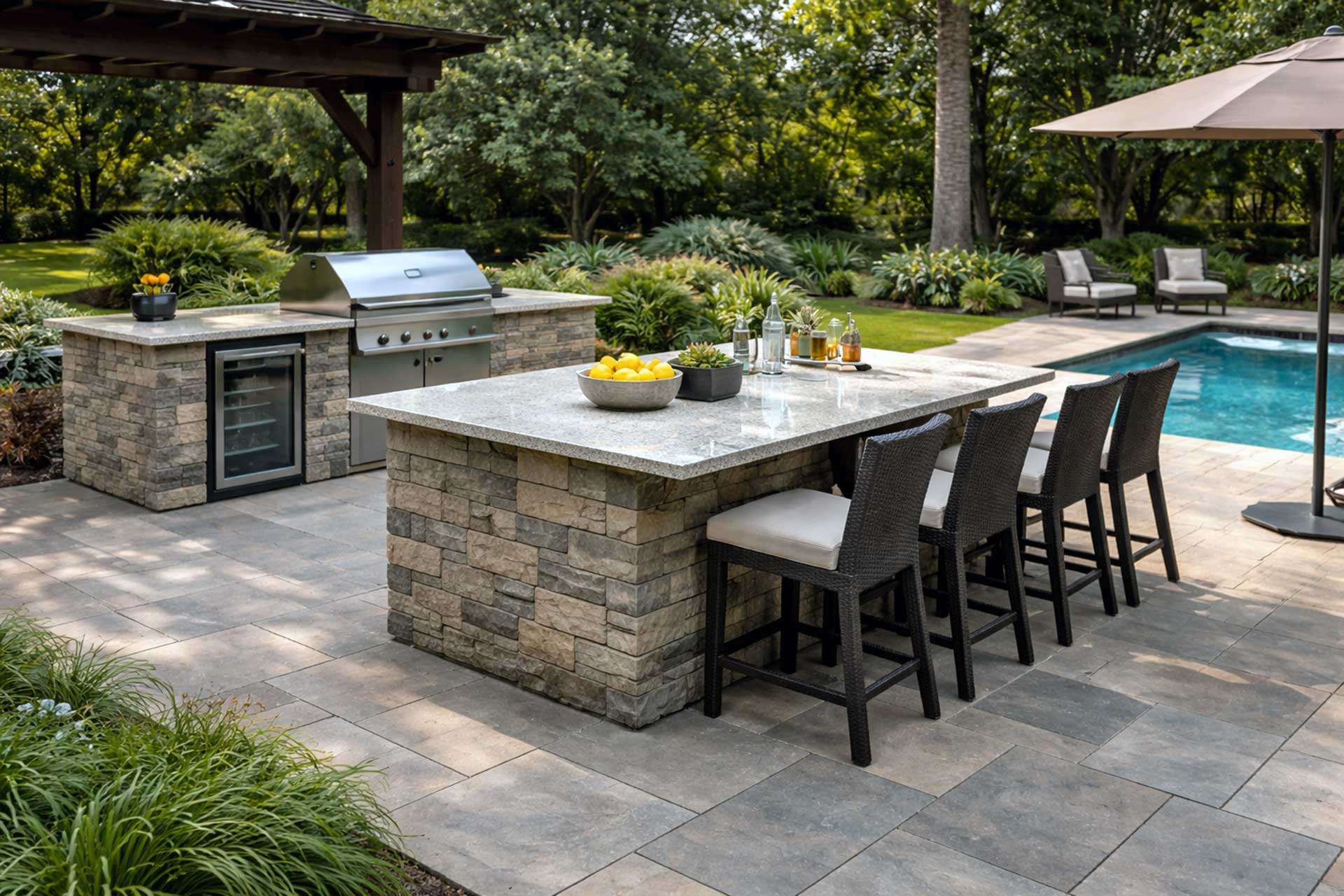
Island-style outdoor kitchens are designed to feel open, inviting, and highly social. By placing the cooking and prep areas within a central island, this layout encourages guests to gather around while meals are being prepared. It creates a natural focal point within the landscape, often complemented by bar seating and adjacent dining or lounge areas. Island kitchens work particularly well in larger, open patios where circulation and visibility are important. For homeowners who prioritize interaction and entertaining, this layout offers a dynamic and engaging outdoor experience.
The right layout is not about scale alone. It is about aligning the design with how the space will be used most often.
Material Selection in a New England Climate
Material selection is one of the most important decisions in outdoor kitchen design, particularly in Massachusetts.
Countertops must be able to withstand temperature fluctuations, moisture, and prolonged exposure to the elements. Natural stone, such as granite or quartzite, is often preferred for its durability. Properly sealed concrete can also perform well when designed and installed correctly.
Cabinetry and structural components should be selected with longevity in mind. Stainless steel offers durability and resistance to weather, while masonry construction provides a more integrated and permanent solution.
The surrounding hardscape is equally important. Outdoor kitchens are rarely standalone features. They are typically part of a larger patio or terrace. Materials such as natural stone or porcelain pavers not only complement the kitchen visually but also provide the durability needed to withstand freeze-thaw cycles, snow, and seasonal moisture.
Selecting materials based on performance rather than appearance alone helps ensure the space continues to function and look its best over time.
Appliances and Features That Add Value
Outdoor kitchens can vary widely in complexity. The key is to prioritize features that align with how the space will actually be used.
For many homeowners, a grill, counter space, and storage provide everything needed for everyday use. These elements support a wide range of cooking styles without unnecessary complexity.
For those who entertain more frequently, additional features such as refrigeration, side burners, and expanded prep areas can significantly improve functionality. These additions make it easier to prepare full meals outdoors without relying on the indoor kitchen.
More advanced features, including pizza ovens, beverage stations, or integrated audio systems, can enhance the experience further. However, they tend to be most valuable when they are used consistently rather than occasionally.
Understanding Costs in Massachusetts
Outdoor kitchen costs vary based on several factors, but the underlying drivers are consistent.
At the lower end, a basic kitchen with limited appliances and straightforward construction may start around $15,000 to $30,000. As materials, appliances, and site complexity increase, costs typically rise into the $30,000 to $75,000 range. High-end installations, particularly those integrated into larger landscape projects, can exceed that range significantly.
Site preparation is often one of the largest variables. Properties that require grading, retaining walls, or drainage solutions will naturally involve higher costs. Utility installation is another major factor, particularly when gas, water, or electrical lines must be extended.
Material selection also plays a significant role. Investing in high-quality materials often results in lower maintenance and better long-term performance.
Designing for New England Weather
Weather is one of the defining factors in outdoor kitchen design in Massachusetts.
Drainage is critical. Water must be directed away from the kitchen to prevent pooling, icing, and long-term damage. Proper grading and subsurface preparation are essential to achieving this.
Seasonal comfort is another important consideration. While outdoor kitchens are most heavily used during the warmer months, thoughtful design can extend their usability. Overhead structures, wind protection, and heating elements all contribute to a longer season.
Winterization is also part of the equation. Shutting down water lines, protecting appliances, and preparing surfaces for snow and ice are necessary steps to ensure the space remains in good condition.
The Role of Plantings and Screening
Planting design plays a significant role in how an outdoor kitchen feels and functions.
Strategic screening can create privacy without making the space feel enclosed. Trees and shrubs can buffer wind, provide shade, and improve comfort during warmer months.
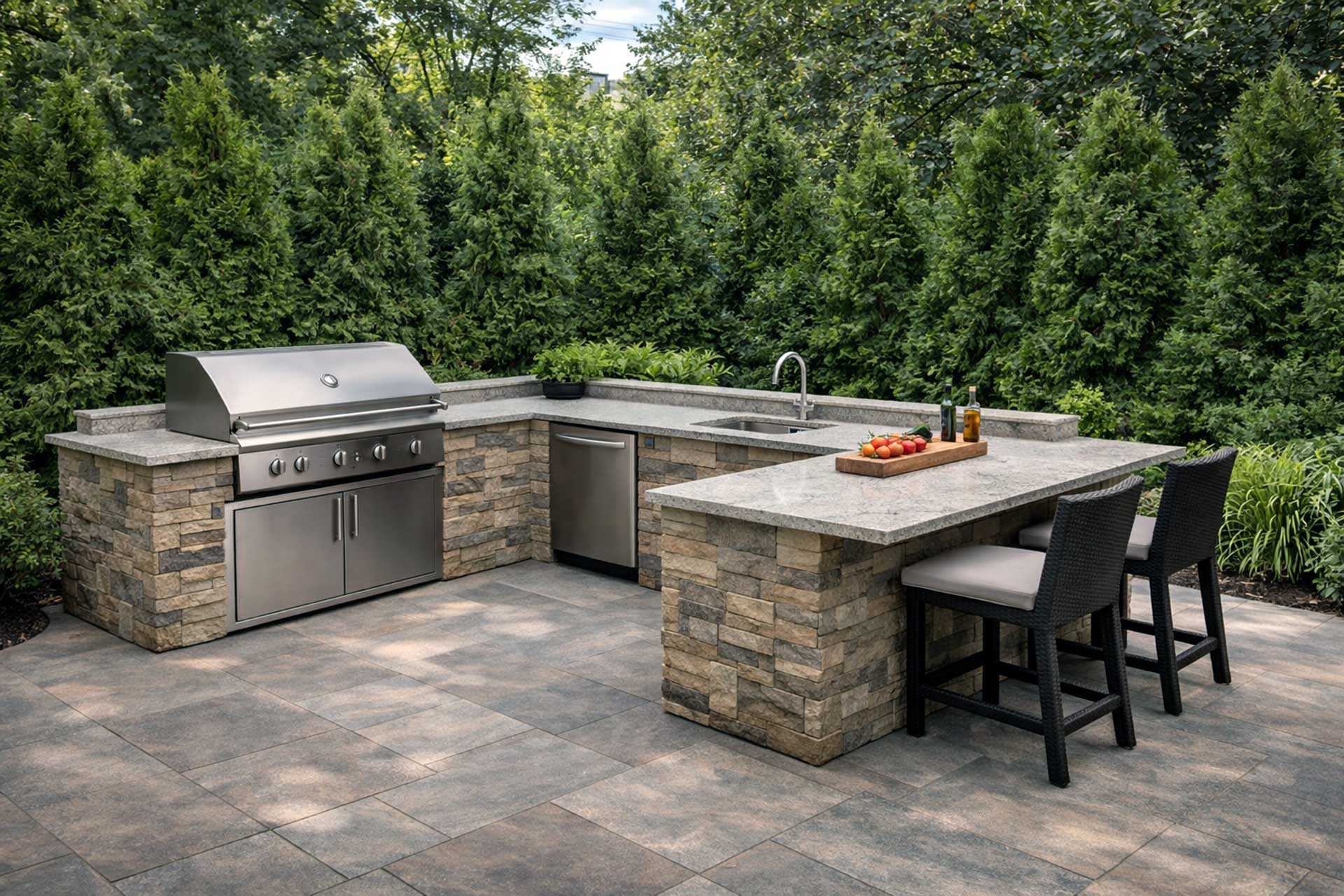
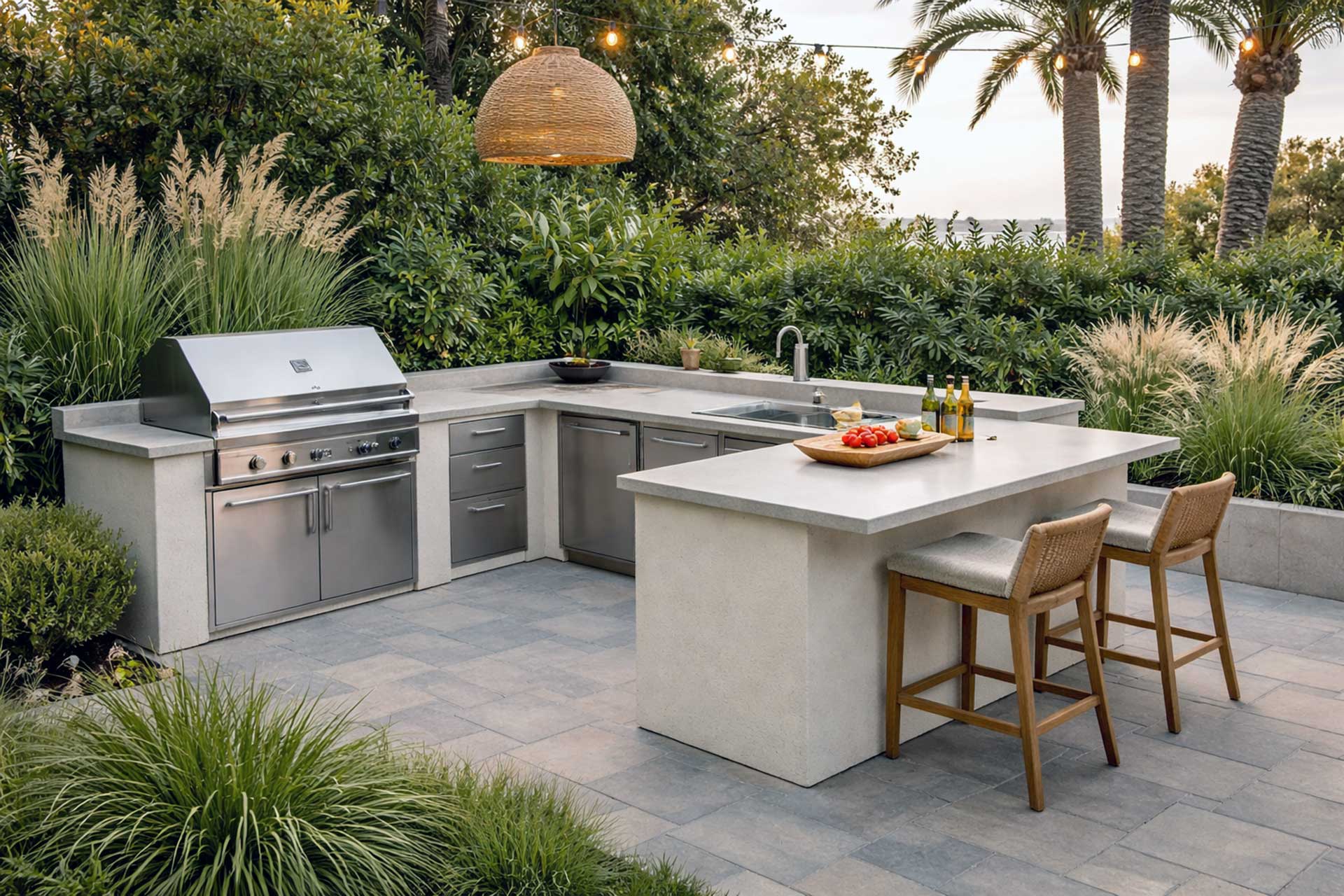
In addition to their functional benefits, plantings contribute to the overall aesthetic of the space. They soften the edges of hardscape, introduce seasonal variation, and help the kitchen feel more connected to the surrounding landscape.
Over time, these elements mature and enhance the experience in ways that built features alone cannot.
Related Blog: Best Privacy Trees for Massachusetts: Top Options That Thrive in Boston’s Climate
Outdoor Kitchen Galleries (Our Work)
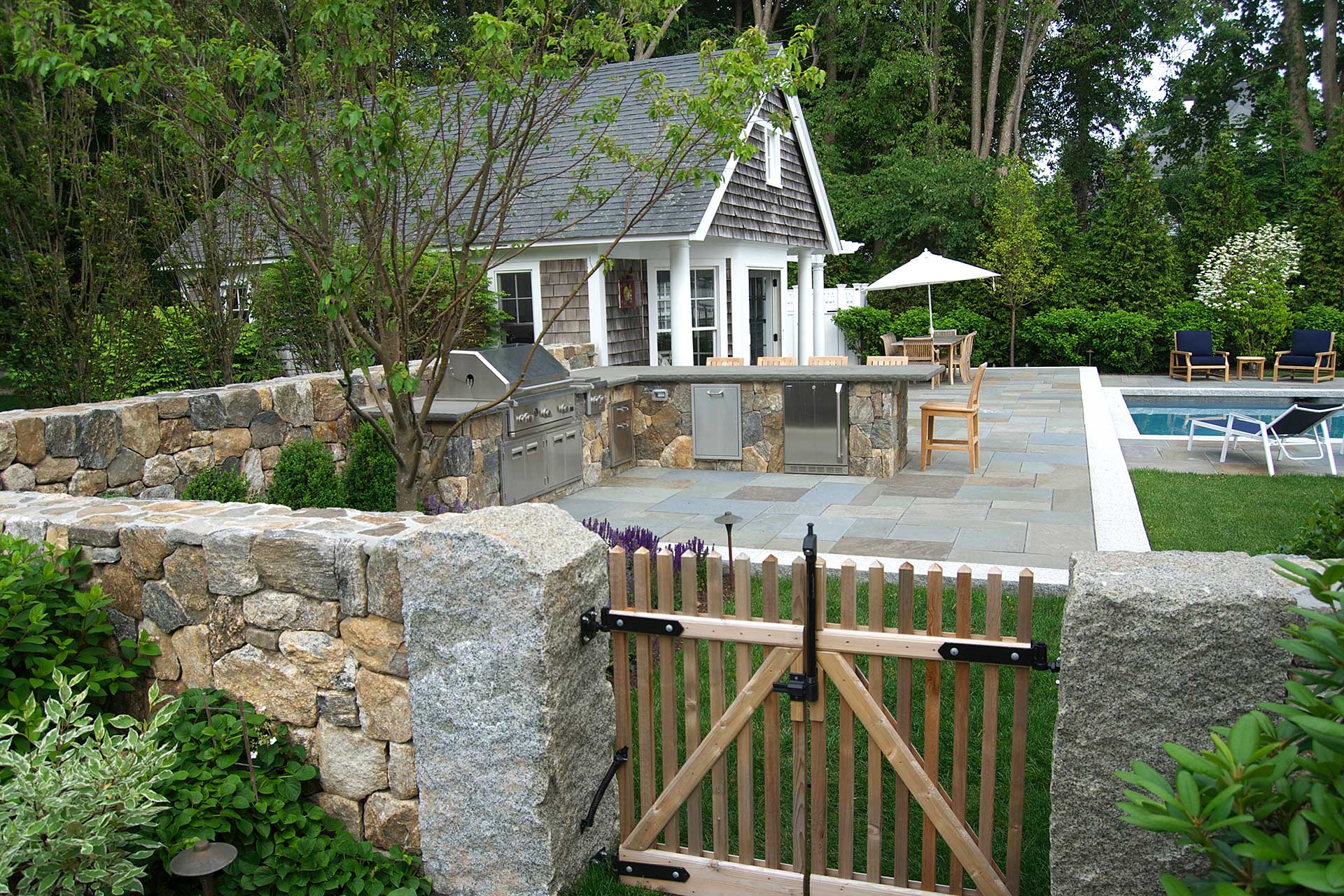
Compact Outdoor Kitchens for Suburban Properties
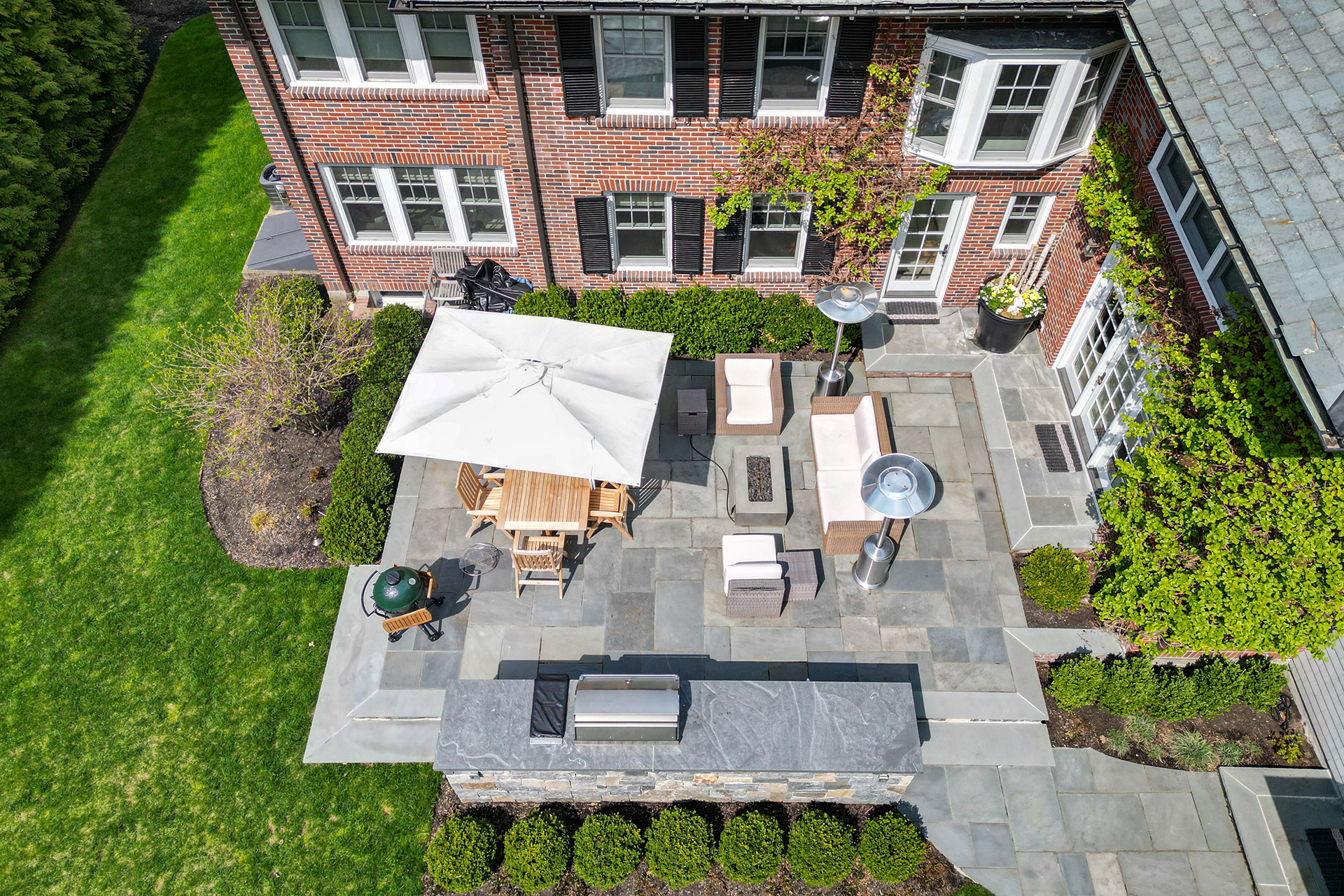
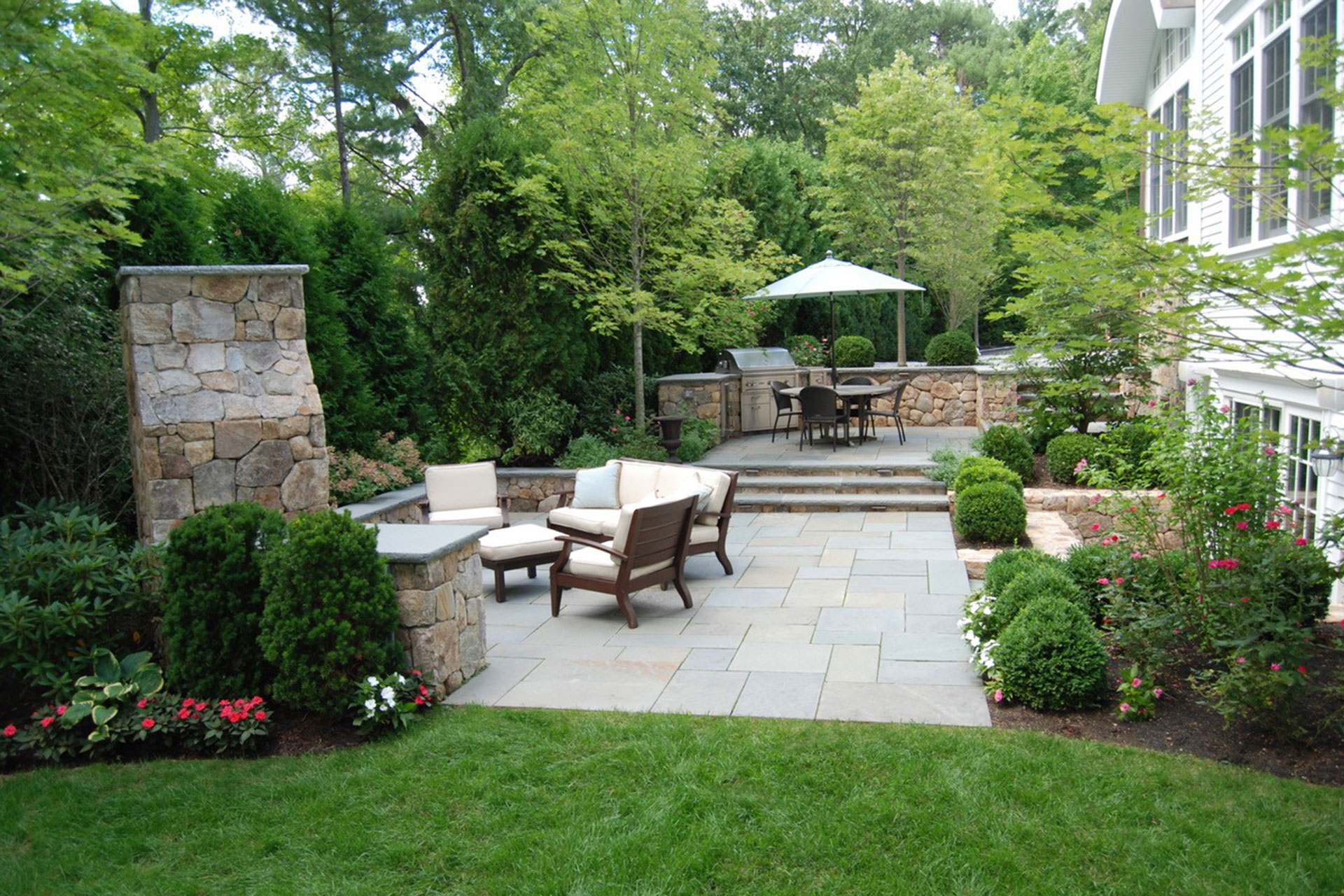
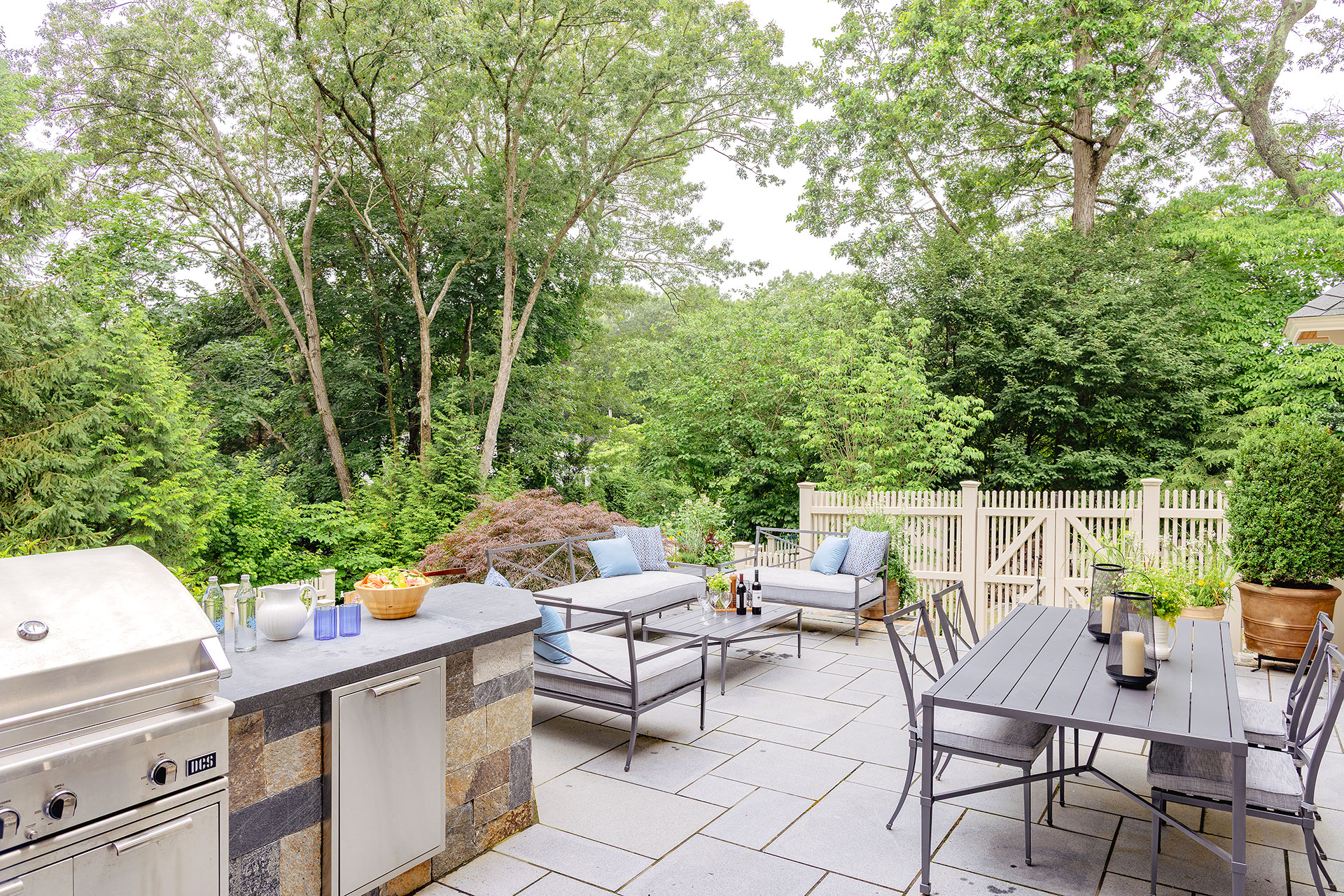
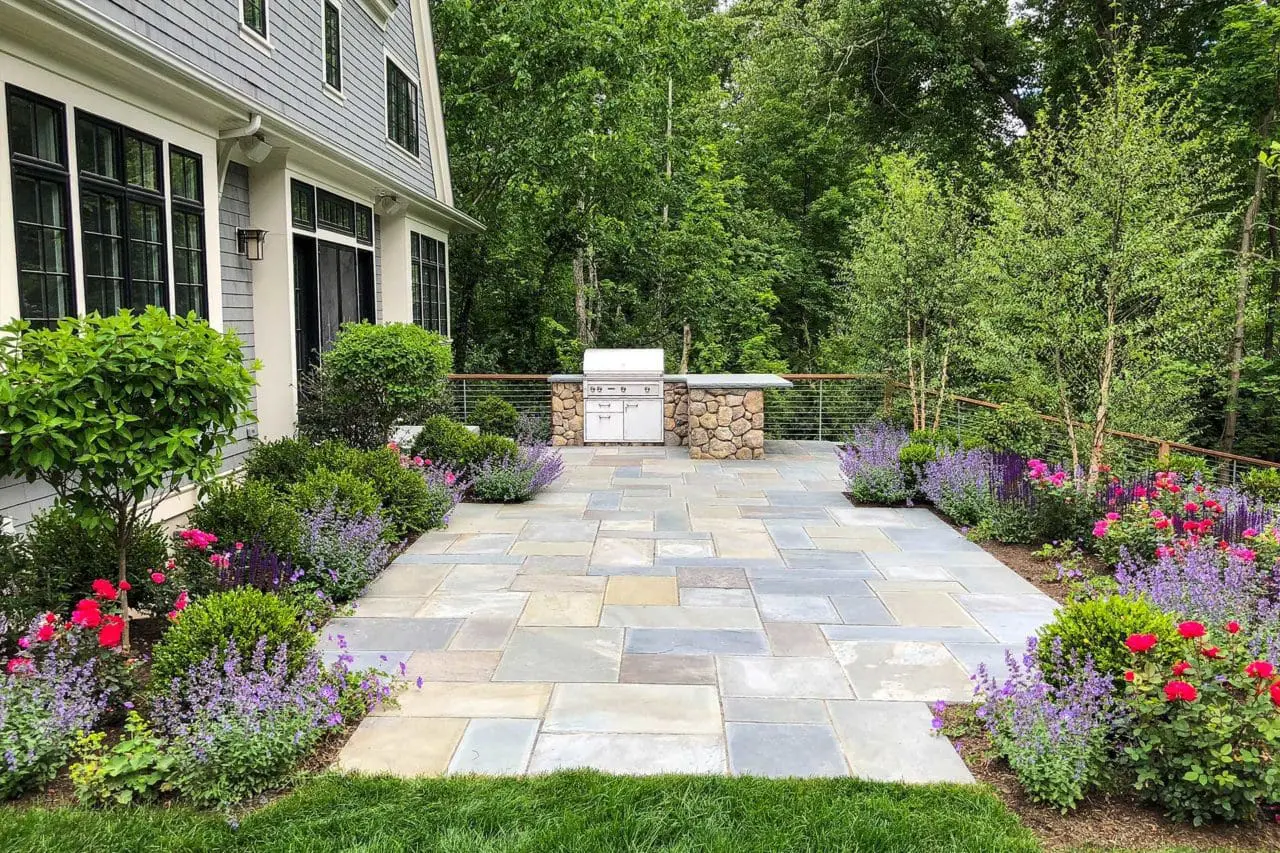
A compact outdoor kitchen designed for a Weston property, balancing efficient layout with natural materials that integrate seamlessly into the surrounding landscape.
Outdoor Kitchens Designed for Entertaining
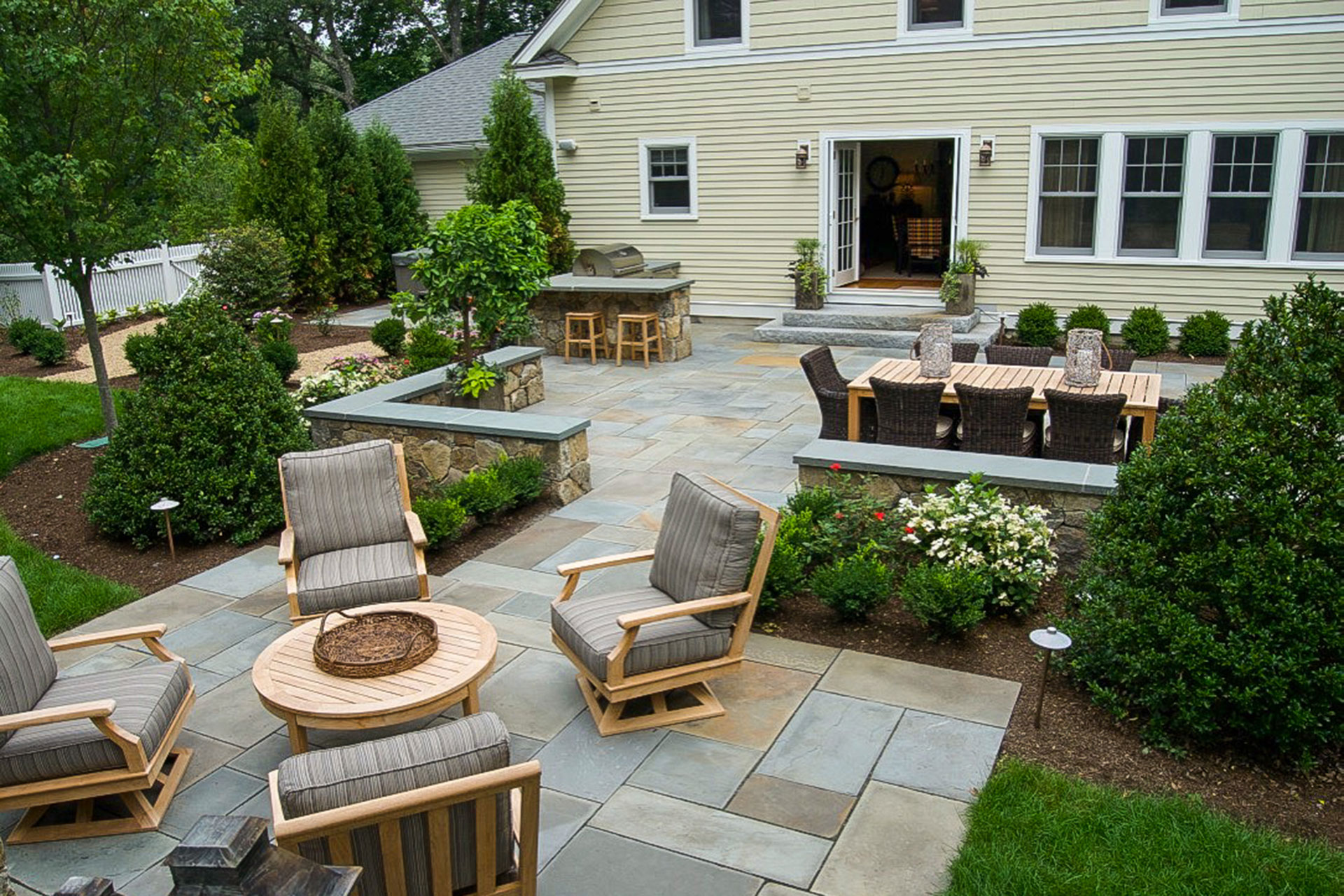
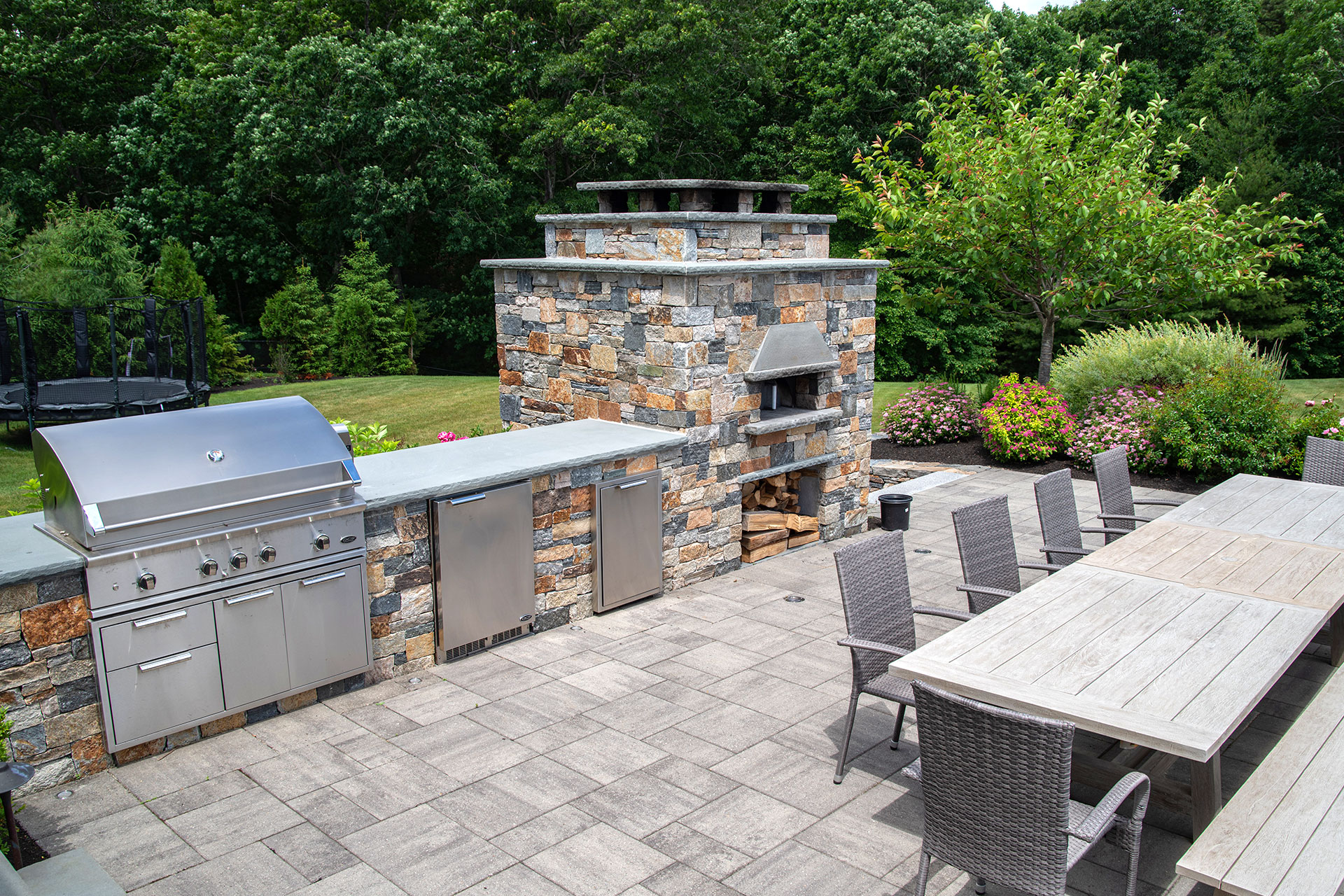
These installations create a natural gathering point, with generous counter space and seating areas that support both cooking and conversation.
Poolside Outdoor Kitchens

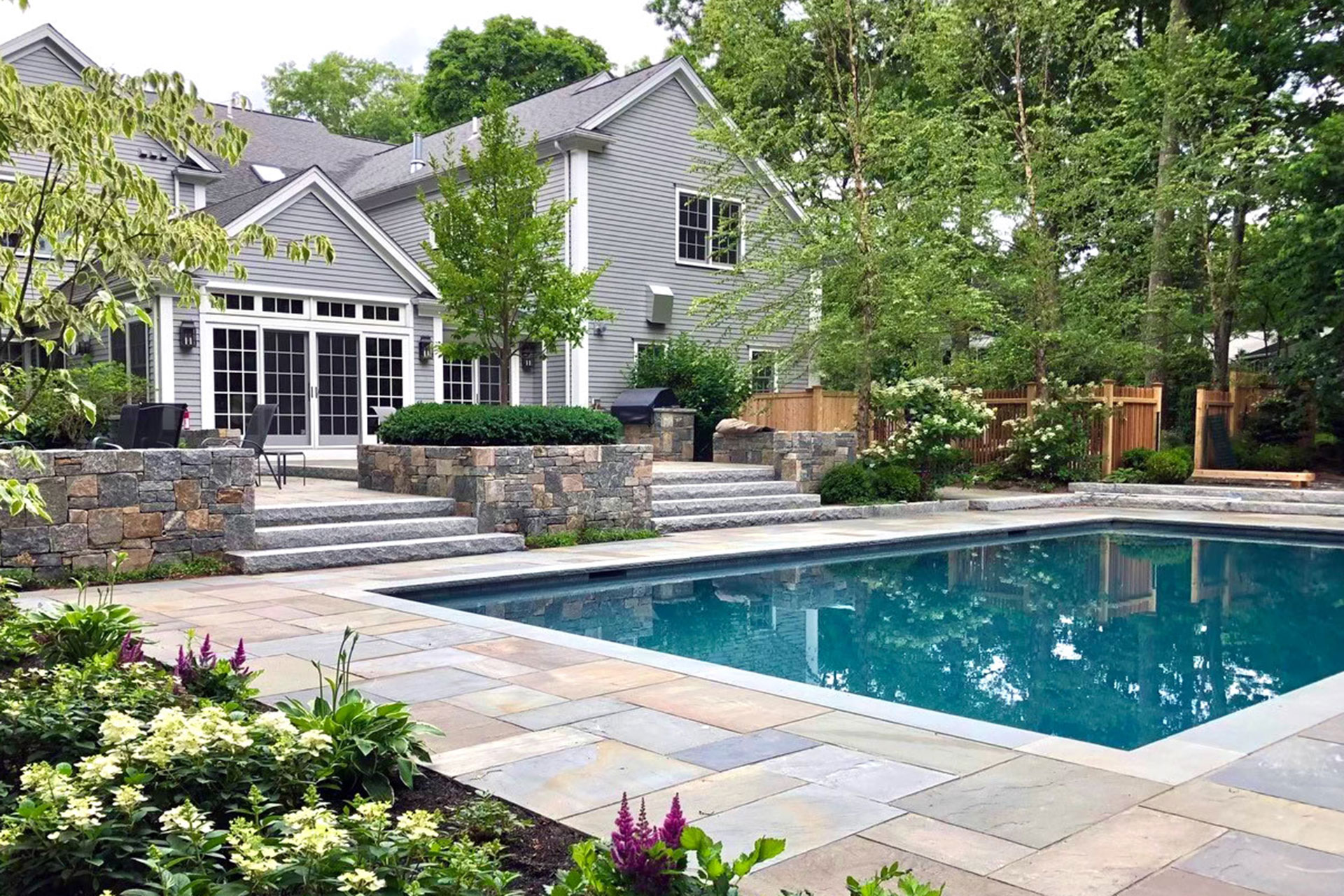

In these projects the kitchen is positioned to complement the pool area, maintaining clear circulation while supporting summer entertaining.
Covered and All-Season Outdoor Kitchens
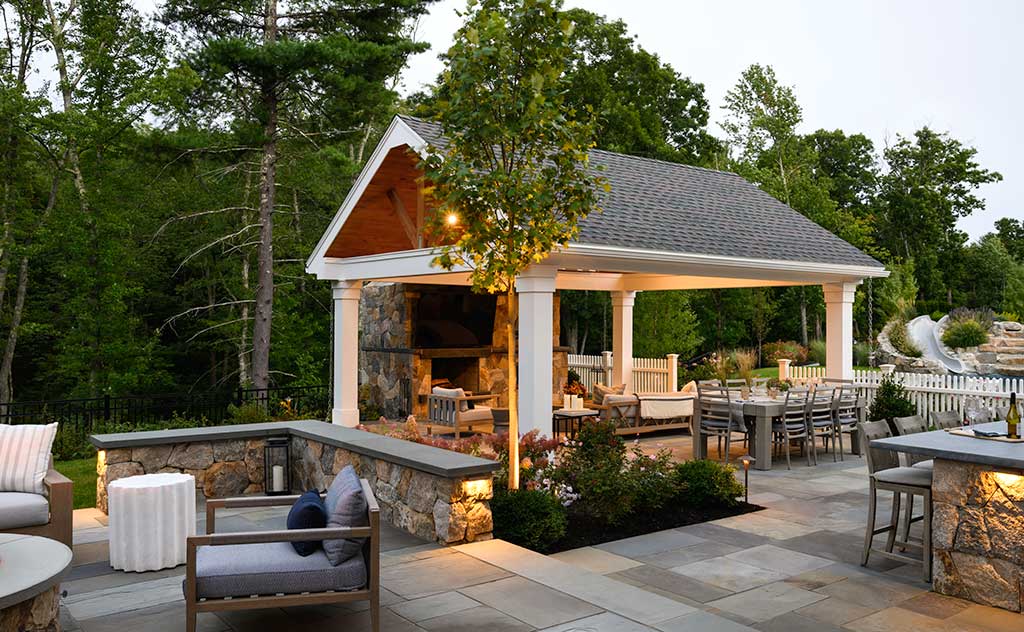
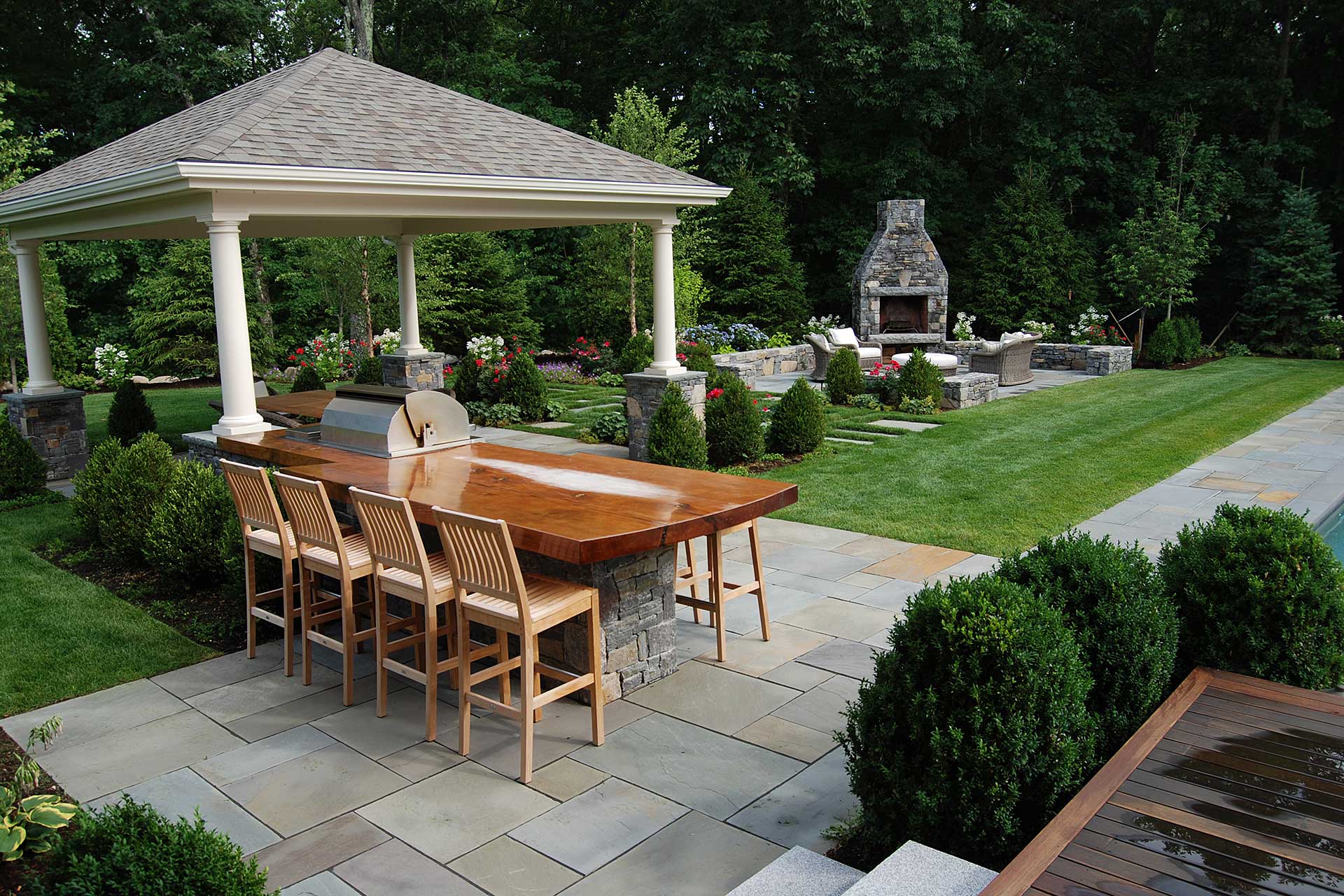
Many outdoor kitchens are designed with overhead structure and integrated lighting, extending usability across a wider range of conditions.
Maintaining an Outdoor Kitchen in Massachusetts
Outdoor kitchens in New England are exposed to a wider range of conditions than nearly any other outdoor feature. Heat, humidity, heavy rain, falling leaves, snow, and freeze-thaw cycles all play a role in how these spaces age.
With the right approach, however, maintenance is straightforward and helps preserve both appearance and performance over time.
Seasonal Maintenance Approach
Rather than thinking about maintenance as a single task, it is more useful to approach it seasonally.
In the spring, the focus is on reopening the space. This typically includes inspecting surfaces for any winter damage, cleaning countertops and appliances, and checking that utilities are functioning properly. Early attention to minor issues helps prevent larger problems later in the season.
During the summer, maintenance is lighter but more frequent. Surfaces benefit from regular cleaning, especially after cooking, and appliances should be kept free of grease buildup. Plantings around the kitchen also require attention to ensure they are not encroaching on circulation areas or cooking zones.
In the fall, preparation begins for colder weather. Leaves and organic debris should be cleared regularly, as they can trap moisture and stain surfaces. This is also a good time to inspect drainage areas and confirm that water will move away from the kitchen as temperatures drop.
Winter preparation is the most important step. Properly shutting down the kitchen protects your investment.
Winterization: Protecting Your Investment
Massachusetts winters require deliberate preparation.
Water lines should be shut off and drained to prevent freezing and potential pipe damage. Appliances that are not rated for winter exposure should be covered or, in some cases, removed and stored.
Countertops and surfaces should be thoroughly cleaned before winter sets in. Any existing stains or residue can become more difficult to address after months of exposure.
Protective covers for grills and cabinetry help reduce wear from snow and ice, particularly in exposed locations.
Caring for Materials Over Time
Different materials require different levels of care, but most follow a similar pattern.
Natural stone surfaces benefit from periodic sealing, which helps protect against moisture and staining. Porcelain and other low-porosity materials require less intervention but should still be cleaned regularly to maintain their appearance.
Stainless steel components should be wiped down periodically to prevent buildup and maintain their finish. In coastal or high-moisture environments, this becomes even more important.
Well-selected materials tend to age gracefully, but consistent care ensures they perform as intended.
Appliance Maintenance and Performance
Outdoor appliances are built for exposure, but they still require regular attention.
Grills should be cleaned after use and inspected periodically to ensure burners and ignition systems are functioning properly. Refrigeration units benefit from seasonal checks, particularly before peak use periods.
Keeping appliances clean and well-maintained not only improves performance but also extends their lifespan.
The Role of Landscape Maintenance
The surrounding landscape has a direct impact on how the kitchen performs.
Plantings should be pruned to maintain airflow and prevent excessive shade or moisture buildup. Ground surfaces should remain clear of debris, and drainage areas should be monitored to ensure proper function.
This is where ongoing landscape maintenance becomes especially valuable. A well-maintained property supports the longevity of every feature within it, including the outdoor kitchen.
Long-Term Stewardship
Outdoor kitchens are not static features. They evolve along with the landscape.
Over time, small adjustments may be needed, whether it is resealing surfaces, updating appliances, or refining planting areas. These incremental improvements help the space continue to feel intentional and well cared for.
With consistent attention and thoughtful upkeep, an outdoor kitchen can remain one of the most functional and enjoyable areas of the property for many years.
Frequently Asked Questions
Q: How much does an outdoor kitchen cost in Massachusetts?
A: Outdoor kitchen costs in Massachusetts typically range from $15,000 to $75,000 or more, depending on the scope of the project. Smaller kitchens with limited appliances and straightforward construction fall on the lower end, while larger, fully integrated kitchens with premium materials and complex site conditions can exceed that range. Factors such as grading, drainage, and utility installation often have a significant impact on overall cost. It is also important to consider long-term value, as higher-quality materials and thoughtful design can reduce maintenance and improve durability over time.
Q: What is the best location for an outdoor kitchen?
A: The best location depends on how you plan to use the space and the characteristics of your property. Kitchens located close to the house offer convenience and efficiency, making them ideal for everyday use. Kitchens positioned further into the landscape can create a more immersive experience, especially when integrated with features like pools or garden areas. Site conditions such as sun exposure, wind, and drainage should also be considered, as they directly affect comfort and long-term performance.
Q: Can outdoor kitchens be used year-round in New England?
A: Outdoor kitchens in Massachusetts are most heavily used between spring and fall, but thoughtful design can extend their usability. Features such as covered structures, wind protection, and heating elements allow homeowners to use the space well into colder months. While full winter use is less common, many homeowners find that these additions significantly increase the value and enjoyment of the space throughout the year.
Q: Do I need permits to build an outdoor kitchen in Massachusetts?
A: Permits are often required depending on the scope of the project. Gas lines, electrical work, and structural elements such as roofs or pavilions typically fall under local permitting requirements. Regulations vary by municipality, so it is important to understand local guidelines early in the planning process. Working with an experienced design-build team can help navigate these requirements and ensure the project is completed in compliance with local codes.
Q: What materials perform best in Massachusetts weather?
A: Materials that perform well in Massachusetts are those that can withstand freeze-thaw cycles, moisture, and temperature fluctuations. Natural stone, porcelain pavers, stainless steel, and properly sealed concrete are among the most reliable options. Selecting materials specifically suited to the local climate helps ensure durability and reduces the likelihood of cracking, warping, or other forms of deterioration over time.
Related Blog: Permits and Regulations for Landscaping Projects in the Boston Area: What You Need to Know
Conclusion
An outdoor kitchen has the potential to redefine how your property is used and experienced. When thoughtfully planned, it becomes more than a place to cook. It becomes a central space that connects architecture, landscape, and daily life.
In Massachusetts, success depends on careful attention to climate, materials, and site conditions. When these elements are addressed early and integrated into a cohesive design, the result is a space that performs reliably and continues to improve over time.
If you are considering an outdoor kitchen for your property, our team can help guide you through each step of the process, from initial design through construction and long-term care.
Contact a Blade of Grass to begin planning your outdoor kitchen.