A tree can be small enough for the yard and still be too large for the place you want to plant it.
A spreading canopy may reach across the front walk. Low branches can occupy the space beside a terrace where someone needs to pull out a chair. A tree that stays comfortably below the roofline may eventually fill the entire view from a first-floor window.
The best small trees for Massachusetts yards are therefore more than a list of compact species. Choosing one involves understanding its mature height, width, branching, growing requirements, and purpose in the landscape.
Begin with the space and what the tree should contribute. A flowering focal point, a light canopy beside a terrace, and a native tree at a woodland edge may require quite different selections.
Key Takeaways
- Compare mature canopy width as carefully as height. Many small trees develop broad crowns.
- Species, cultivar, and nursery form all influence how a tree fits the landscape.
- Low branching and multiple trunks can be beautiful, but they affect walking, seating, and views.
- Match the tree to the actual light, soil, drainage, and exposure of its planting location.
- Allow room for roots, building access, utilities, and long-term care as well as the visible canopy.
- Choose a naturally suitable tree rather than depending on repeated pruning to keep it small.
What Does “Small Tree” Really Mean?
Small is a relative description. Compared with an oak, a tree reaching 25 feet tall is modest. Beside a narrow porch or within a compact courtyard, it can be a substantial presence.
Width often creates the more immediate conflict. A tree expected to spread 20 feet may eventually extend roughly 10 feet from its trunk in several directions. That is useful as an initial way to visualize the canopy, although real trees rarely grow as perfectly balanced circles.
Published dimensions also need context. Some descriptions give a size after a particular number of years; others describe a typical mature range. Growing conditions, cultivar, and the age of the specimen all affect the result. A slow growth rate does not establish that a tree will remain small indefinitely.
The guide to plant spacing and the future landscape explores this relationship between dimensions and design intent. With trees, the additional challenge is imagining the space above the planting bed, not just the footprint at ground level.

Decide What the Tree Should Do
A tree becomes easier to select once its role is clear. It might frame the house, soften the edge of a paved space, introduce spring flowers, or create a view from a room used throughout the year.
Those intentions influence both the plant and its position. A multi-stemmed specimen can provide an interesting foreground outside a window. The same branching may be inconvenient beside a busy entrance. A broad canopy can make a terrace feel sheltered while being unsuitable in a confined strip between the house and driveway.
Consider the difference between a tree you look at and one you expect to sit beneath. The first may be most effective with branches close to the ground. The second needs an appropriate canopy height and enough room around the trunk for people and furniture.
Distinguish seasonal structure from screening. A deciduous tree can provide branching, depth, and summer enclosure without giving dependable winter privacy.
Small Trees Worth Considering for Massachusetts Gardens
The following examples offer contrasting forms and scales. They are candidates for suitable sites rather than interchangeable recommendations for every yard.
Dimensions are approximate planning references drawn from extension and arboretum descriptions. They are not guaranteed maximums. Confirm the exact selection and its expected development before finalizing placement.
| Tree or Selection | Approximate Height × Width | Design Role and Main Consideration |
|---|---|---|
| Allegheny Serviceberry Amelanchier laevis |
15–25 × 15–20 feet | Native seasonal accent or woodland transition; allow room for a spreading, sometimes multi-stemmed form. |
| ‘Royal Star’ Magnolia Magnolia stellata ‘Royal Star’ |
12–20 × 12–18 feet | Spring-flowering specimen; low branching needs lateral space. |
| Sugar Tyme Crabapple Malus ‘Sutyzam’ |
About 18 × 15 feet | Upright-spreading flowering tree; consider fruit and cultivar-specific disease resistance. |
| ‘Tina’ Crabapple Malus sargentii ‘Tina’ |
5–6 × 6–8 feet | Low flowering focal point; its spreading habit does not provide an overhead canopy. |
| ‘Bloodgood’ Japanese Maple Acer palmatum ‘Bloodgood’ |
15–20 × 12–20 feet | Foliage and branching specimen; requires a suitable exposure and room for a broad crown. |
| Eastern Redbud Cercis canadensis |
20–30 × 25–35 feet | Spring flowers and a broad canopy; needs considerably more width than its small-tree label suggests. |
| American Hornbeam Carpinus caroliniana |
20–30 × 20–35 feet | Native tree for structure and suitable woodland settings; belongs toward the larger end of this comparison. |

Allegheny Serviceberry: A Native Option With a Flexible Form
Allegheny serviceberry offers spring flowers, fruit used by birds, and fall color. Its character can suit a garden that transitions toward woodland or a mixed planting where a tree should feel connected to the surrounding vegetation.
NC State Extension describes Allegheny serviceberry as typically reaching 15 to 25 feet, while noting that wild specimens can become taller. Its usual spread is substantial enough to matter beside a building.
Consider both the species and the actual specimen. A multi-stemmed plant creates a different opening beneath its branches from a tree trained around a single trunk. Moisture and drainage also deserve attention; its woodland association should not be taken to mean it will thrive in any dry, root-filled corner.
‘Royal Star’ Magnolia: Smaller Height, Low Branching
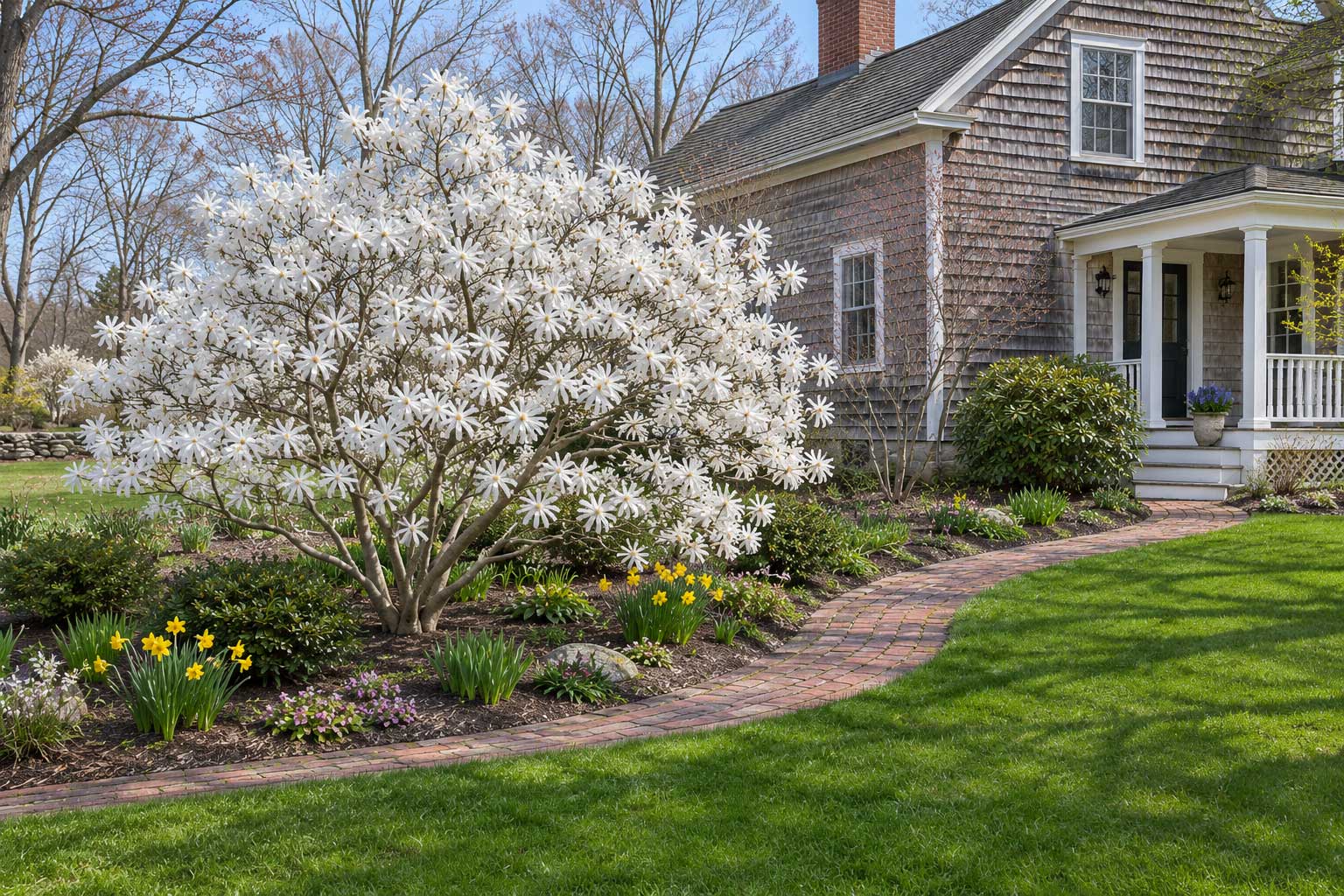
‘Royal Star’ magnolia is useful when an early spring display and a relatively low, rounded form suit the garden. It often behaves as a large shrub or small tree, with branching beginning close to the ground.
That makes it more appropriate as a specimen within planting than as an automatic choice for a canopy above a narrow walk. Its full outline needs room to remain visible without occupying adjacent access.
A sunny to partly shaded setting with suitable moisture and drainage is important. Spring flowers can still be damaged by a cold spell, so the display should be considered alongside the plant’s summer form and winter branching.
Crabapples: Cultivar Selection Changes the Answer
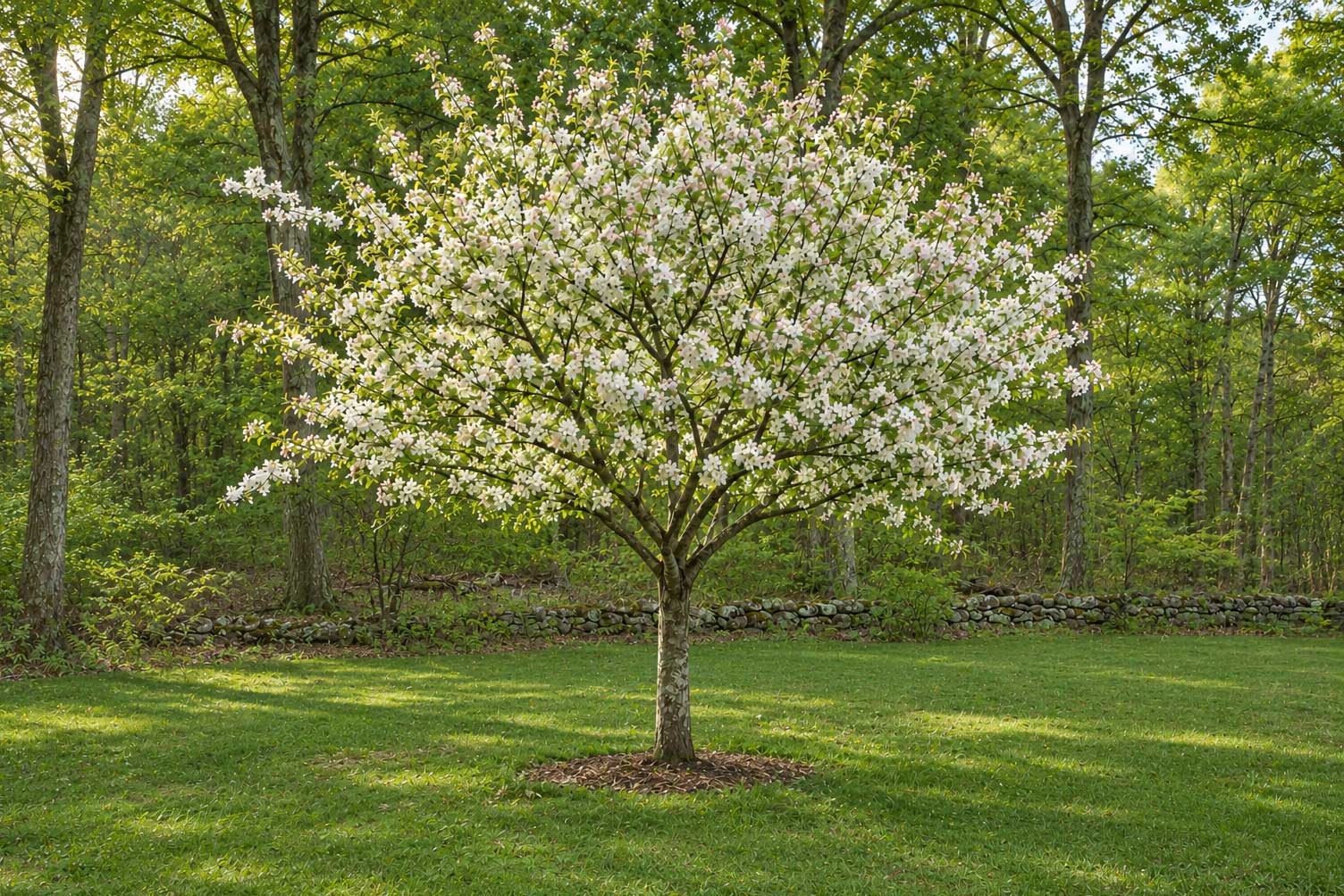
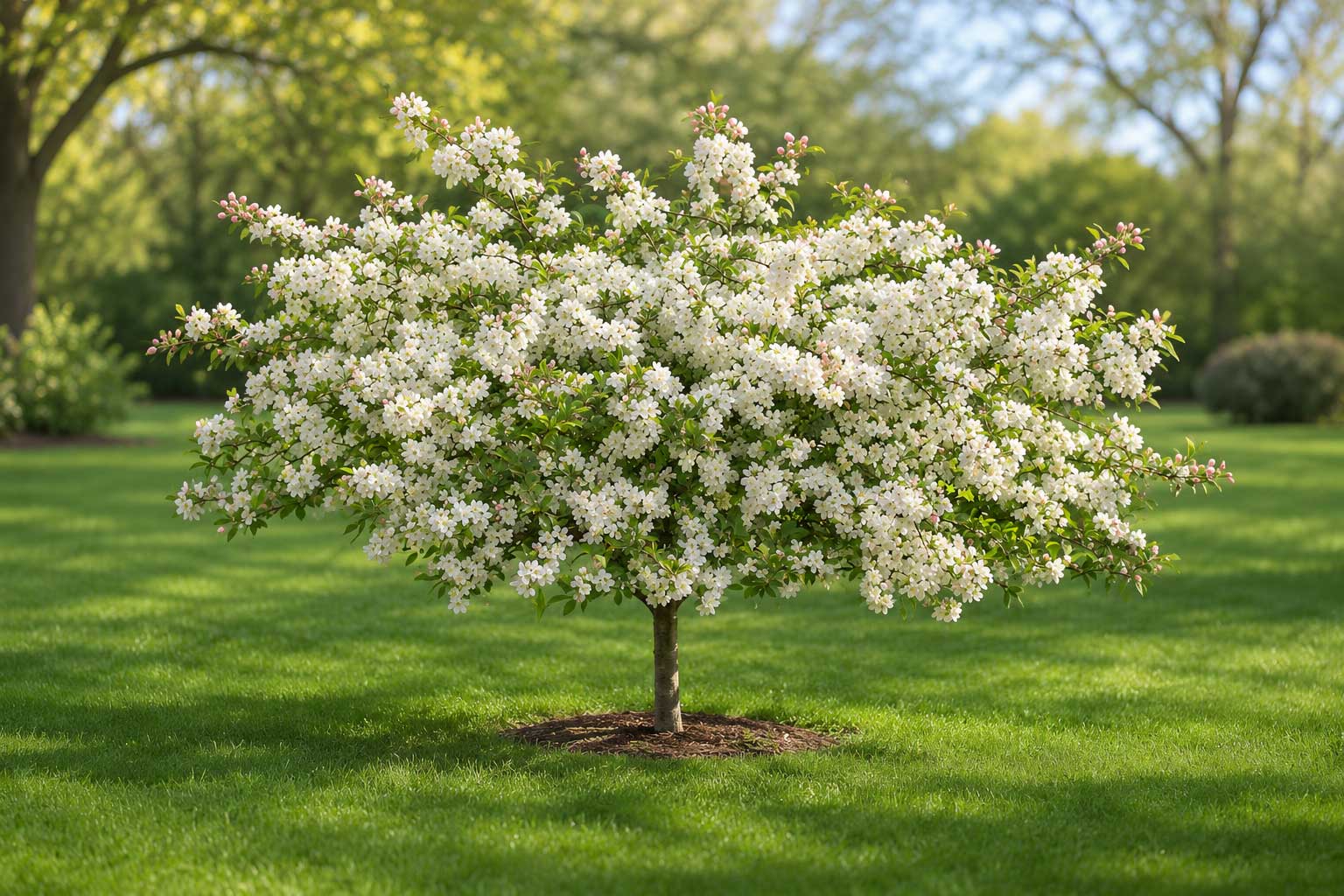
Crabapples illustrate why a common plant name provides too little information. One selection may become a useful small canopy tree; another remains a low, spreading focal point.
The Morton Arboretum’s crabapple comparison lists Sugar Tyme at approximately 18 feet tall and 15 feet wide, while ‘Tina’ reaches roughly 5 to 6 feet tall and 6 to 8 feet wide. Their design roles are quite different.
Disease resistance should be part of the selection, alongside flowers and form. Also consider fruit size, persistence, and the relationship to paving or seating. A compact flowering tree can be appealing near a terrace without needing to stand directly above the dining table.
Japanese Maples: Select the Particular Form
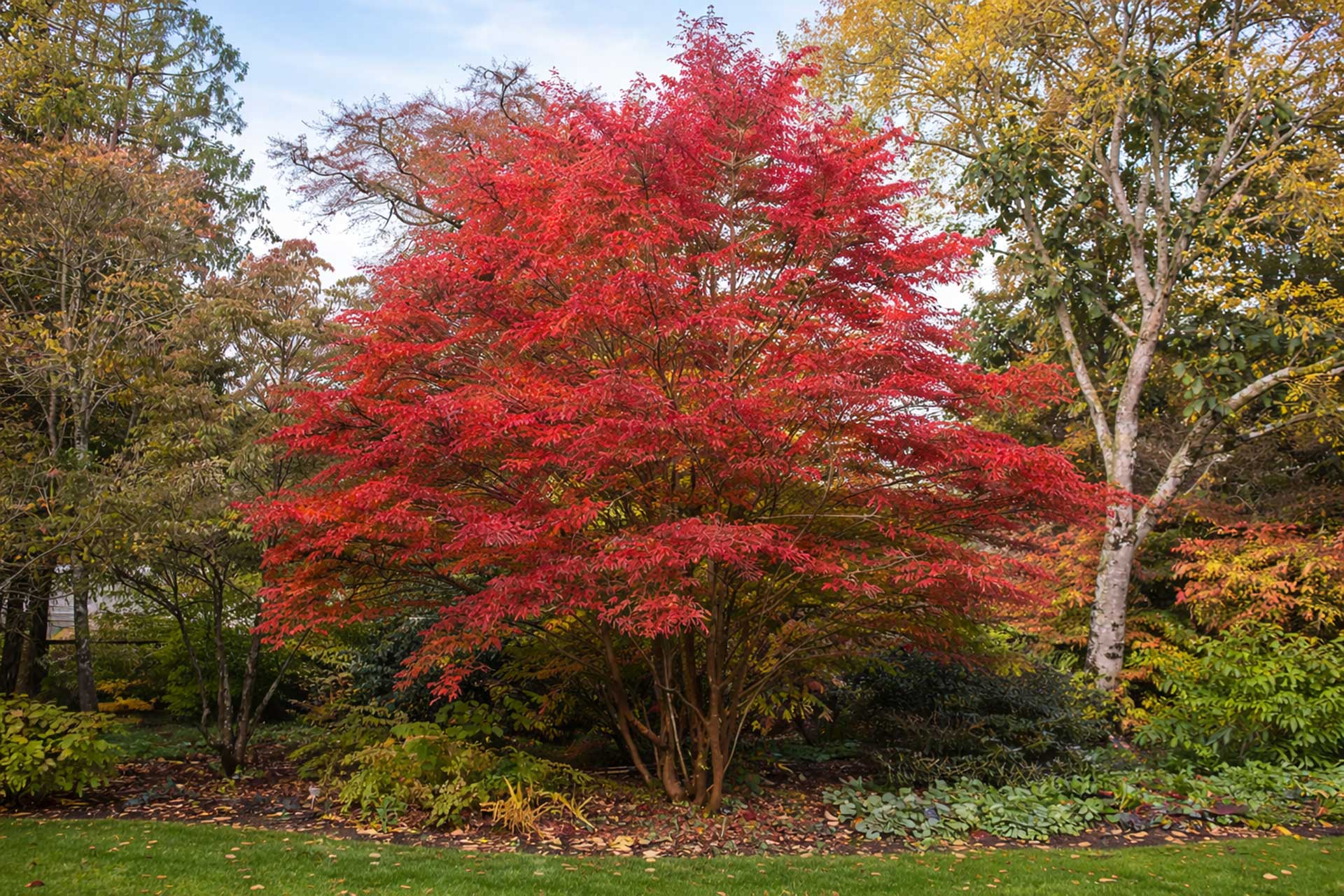
Japanese maples offer a wide range of habits, but the name does not guarantee a miniature tree. ‘Bloodgood,’ for example, can develop a canopy approaching 20 feet across.
An upright selection can provide height within a sheltered garden, while a low weeping form may serve as a specimen within a bed. Neither should be selected solely because a young plant fits between neighboring shrubs.
The Japanese maple guide examines cultivar differences, exposure, and care in greater detail. For this comparison, the important point is to establish the intended form before choosing the position.
Eastern Redbud: A Small Tree With a Broad Canopy
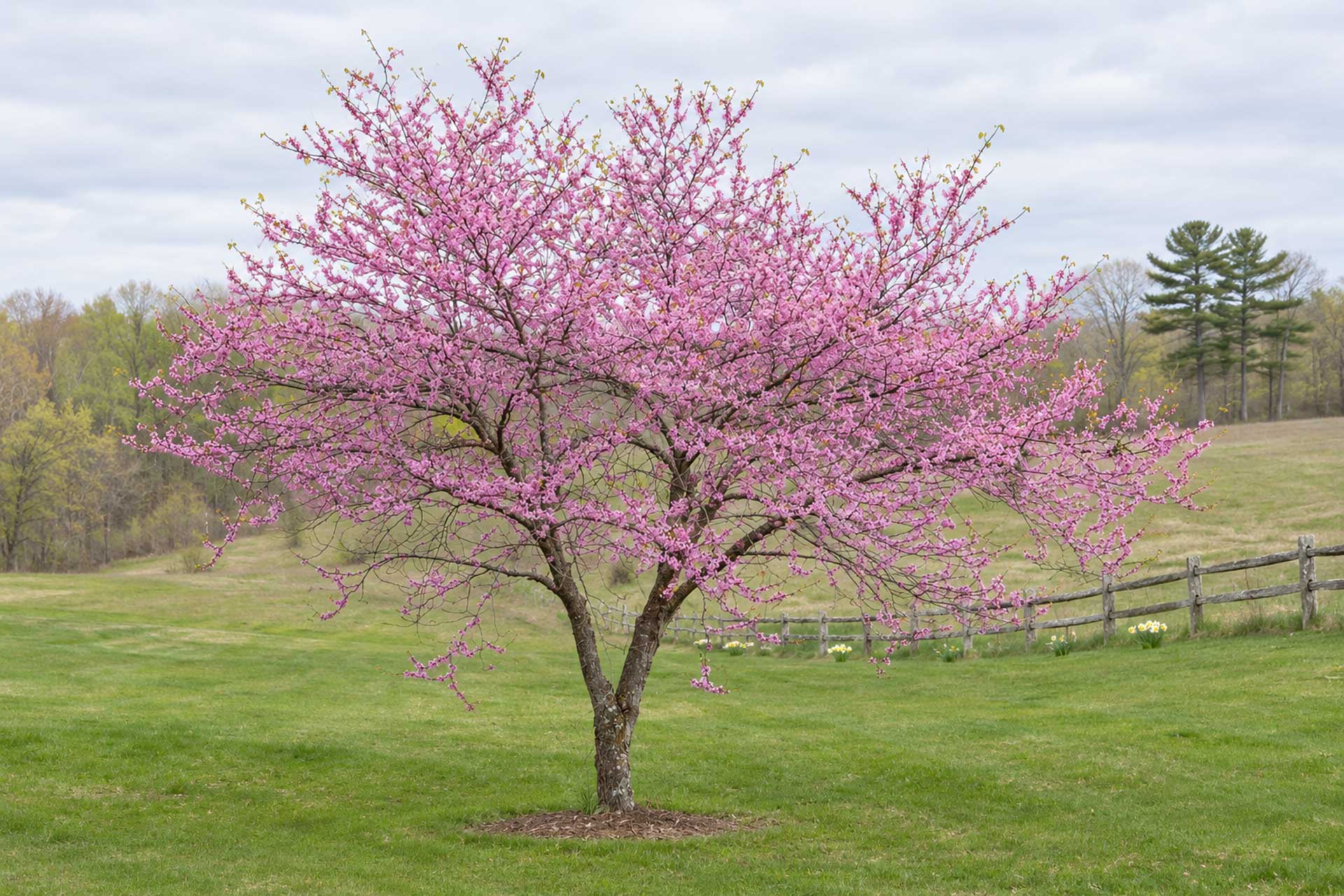
Eastern redbud brings spring flowers along its branches and heart-shaped foliage afterward. It can provide a generous spreading form where a garden needs breadth as well as height.
The species may reach 25 to 35 feet wide, which makes it inappropriate for many narrow planting areas. A smaller cultivar may change that assessment, but its mature dimensions and hardiness must be checked independently.
Redbud can grow in sun or partial shade with appropriate drainage. On Massachusetts properties, selection and exposure deserve particular attention rather than assuming every redbud offered for sale will perform equally well in every location.
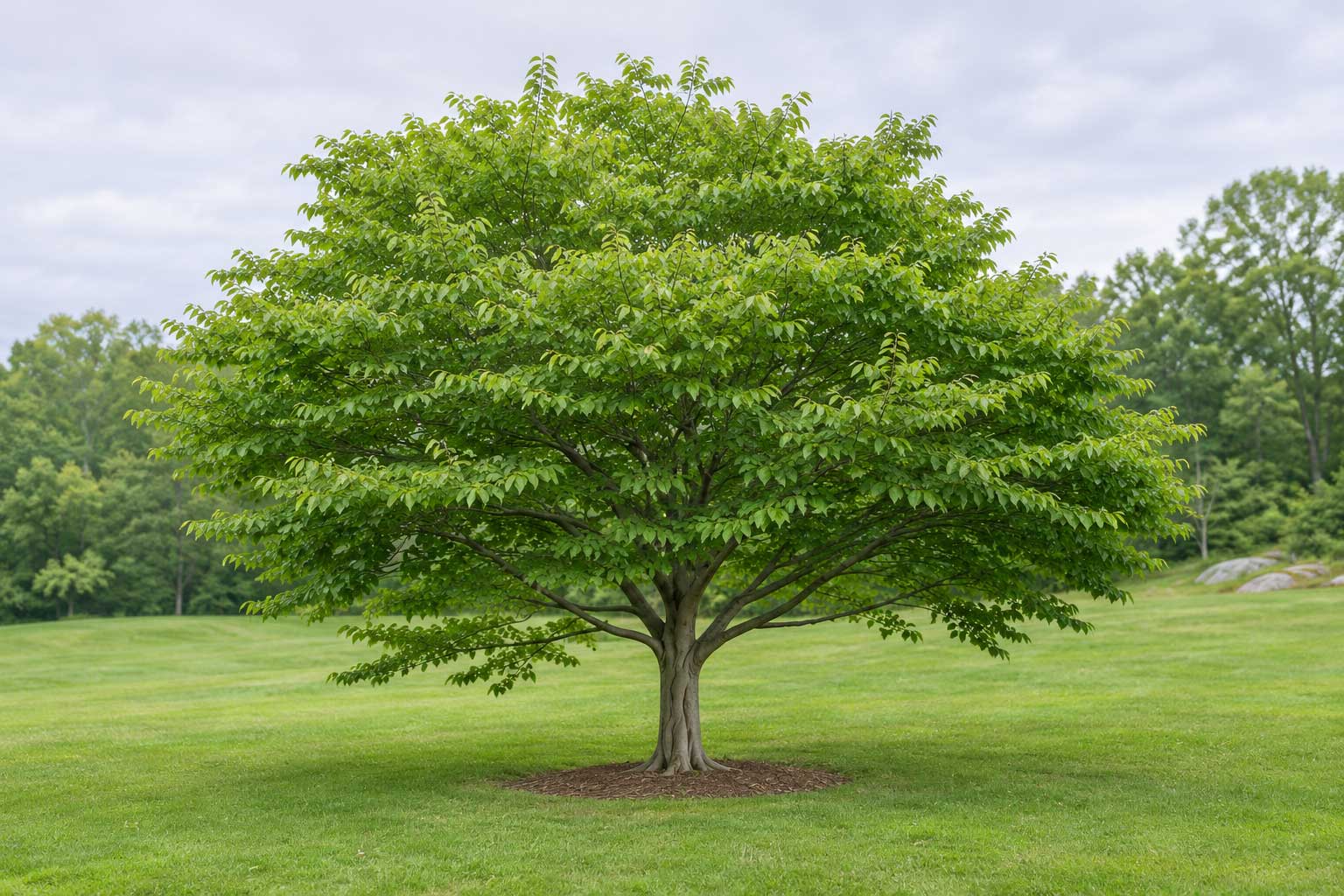
American Hornbeam: Structure for a More Generous Space
American hornbeam offers smooth, fluted bark and a tree form that can sit comfortably within a woodland composition. Its appeal is less dependent on a conspicuous flower display.
The NC State Extension hornbeam profile gives a typical height of 20 to 30 feet and width of 20 to 35 feet. Those dimensions place it toward the larger end of a small-tree discussion.
Consider it where there is sufficient room and suitable soil moisture, particularly in a partly shaded setting. It is included here because it may be an excellent smaller tree for a property while being entirely unsuitable for a small bed beside the house.
Form and Clearance Matter as Much as Dimensions
Two trees with similar height and width can occupy a garden differently. One carries its canopy above a clear trunk; another branches outward from near the ground.
A multi-stemmed tree can create depth and a sense of enclosure, especially when seen through lower planting. Beside a walk, those stems and branches may make the passage feel restricted. A weeping canopy can have the same effect even when the tree remains short.
Check several clearances together:
- Branches beside walking routes, steps, and seating.
- Space around windows, doors, rooflines, and lighting.
- Access for building maintenance and landscape care.
- Visibility where a driveway meets a street or sidewalk.
- Overhead wires and underground infrastructure.
The Arbor Day Foundation’s tree-placement guidance identifies utilities, structures, and available growing space as important constraints. Where utilities are involved, the specific provider’s requirements and the actual site should guide placement.
A Narrow Crown Does Not Mean a Small Tree
Columnar and upright selections can help where lateral room is limited. Their eventual height still matters, and their roots need suitable growing space.
They also create a different visual effect from a spreading canopy. A narrow tree may introduce a useful vertical accent without providing the shelter or overhead presence someone hoped to gain beside a terrace.
Likewise, buying a specimen with a clear trunk does not establish that every branch will remain above the required clearance. Structural care and the tree’s natural growth need to be considered together.
Check the Growing Space Below Ground
A planting pocket may look adequate from above while offering very little usable soil. Compacted fill, old paving bases, retaining-wall construction, and buried debris can restrict the area available to roots.
That matters in established Greater Boston gardens, where planting areas may have been altered repeatedly. A tree surrounded by paving needs more assessment than whether its root ball fits into the opening.
Look at the soil beyond the planting hole, how water moves through the area, and the relationship to nearby trees. A soil test can provide useful chemical information, but it does not replace examining drainage, compaction, and available rooting space.
There is also no single distance from a house that works for every small tree. Half the expected canopy width provides an initial spatial reference, but it does not account for building access, branching asymmetry, infrastructure, or site conditions.
Let Our Boston Conditions Narrow the Shortlist
The same tree can encounter quite different conditions in a sheltered urban garden, an exposed inland property, or a coastal landscape. Hardiness is one part of suitability, alongside wind, light, water, and soil.
A protected location may help a tree vulnerable to drying exposure, but a bed beside a wall can also become hot or dry. Partial shade can be appropriate for one selection while limiting the flowering of another.
Salt handling deserves attention near driveways and walks. A convenient snow-storage area may be a difficult place to establish an ornamental tree. Persistent wetness is another reason to reconsider the plant or location before installation.
Plan for establishment, too. Choosing a tree with appropriate long-term requirements does not remove the need for watering and observation while roots develop into the surrounding soil.
Choose for the Whole Composition
A tree does not need to occupy the center of a bed to become its focal point. An offset position can frame a doorway, preserve a view, or allow a canopy to develop over lower planting.
The surrounding plants influence how clearly its form reads. A low specimen may disappear among shrubs of similar height. A broad canopy can feel more distinct when the planting beneath it is quieter and lower.
The article on ornamental trees with four-season interest explores other possibilities, including Kousa dogwood, witch hazel, and seven-son flower. Those remain useful choices where their dimensions and growing needs fit; they do not need to appear in every shortlist.
Sometimes the right answer is a large shrub, a smaller cultivar, or a different planting arrangement. A confined bed does not become a good tree location simply because the garden would benefit from more height.
Frequently Asked Questions
Q: Does a Dwarf Tree Stay the Same Size?
A: No. Dwarf generally describes reduced growth compared with a larger form, not a plant that stops growing. Check whether published dimensions describe a particular age or expected maturity, and allow for continued development.
Q: Are Serviceberries and American Hornbeams Native to Massachusetts?
A: Allegheny serviceberry and American hornbeam occur naturally in Massachusetts. Native status is useful context, but light, moisture, mature size, and the particular selection still determine whether either belongs in a given planting area.
Q: Can a Small Tree Stay in a Container?
A: Some selections can be grown in containers, but that creates additional watering, root-space, drainage, and overwintering requirements. A tree suitable for the ground is not automatically suitable for an exposed Massachusetts planter.
Q: Will Pruning Keep a Larger Tree Small?
A: Selective pruning can guide structure and maintain necessary clearance. Repeatedly cutting a large-growing tree to fit a restricted position creates a continuing maintenance obligation and can compromise its natural form. A better-sized selection is generally preferable.
Learn More About Small Trees for Massachusetts Gardens
- Town of Weston: Small Trees and Large Shrubs for Seasonal Color
- Wild Seed Project: Flowering Trees for Small Spaces
- Massachusetts Department of Agricultural Resources: Native Pollinator Plant Database
Find the Tree That Belongs in Your Garden
A well-placed small tree gives a garden something that lower planting cannot: a canopy, a branching framework, and a changing relationship to the house as you move around it.
The selection becomes more rewarding when there is room to appreciate those qualities. A spring-flowering specimen may be seen from the kitchen every morning. A canopy beside a terrace can become part of its enclosure. A native tree can help connect a planted garden to the woodland beyond.
If you are considering a tree for your Boston-area property, contact us to discuss the available space, growing conditions, and role it could play in the larger landscape.