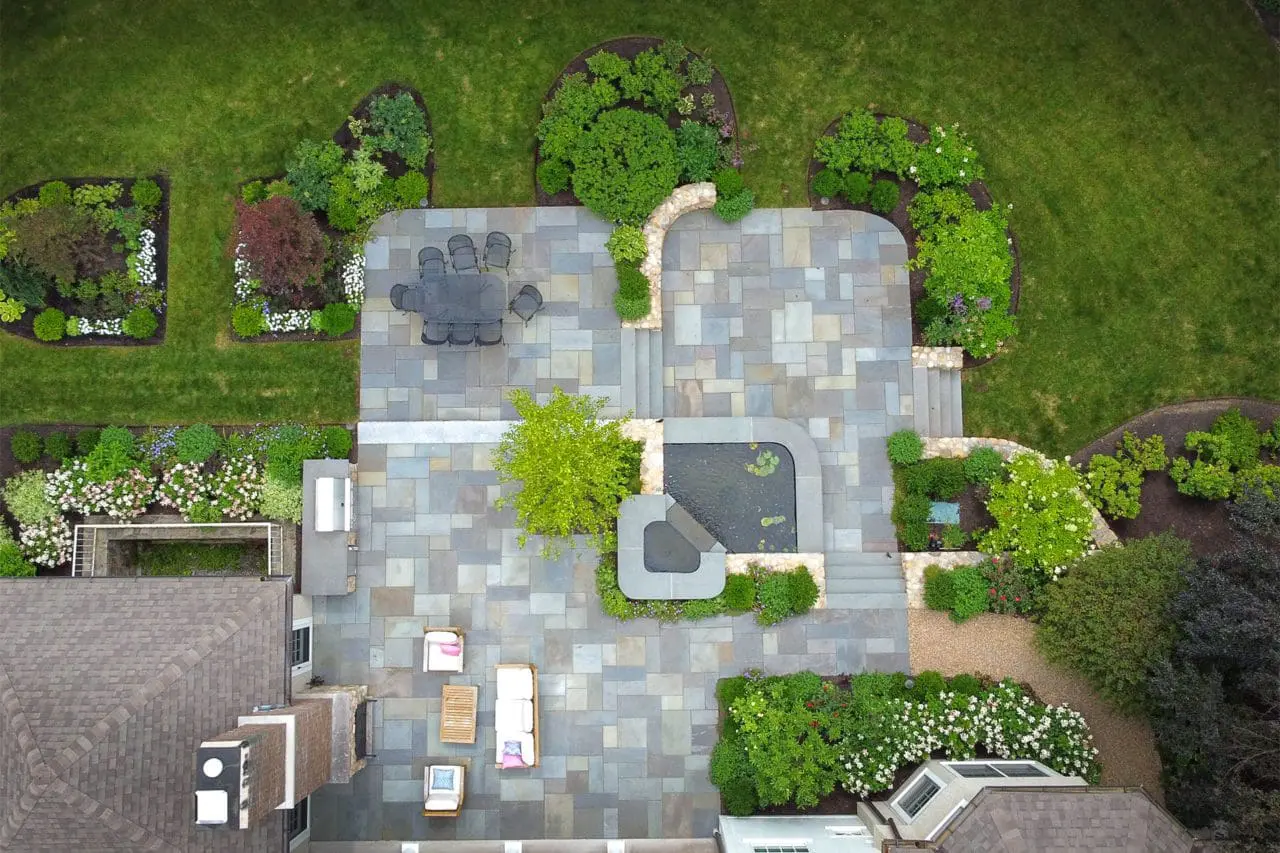
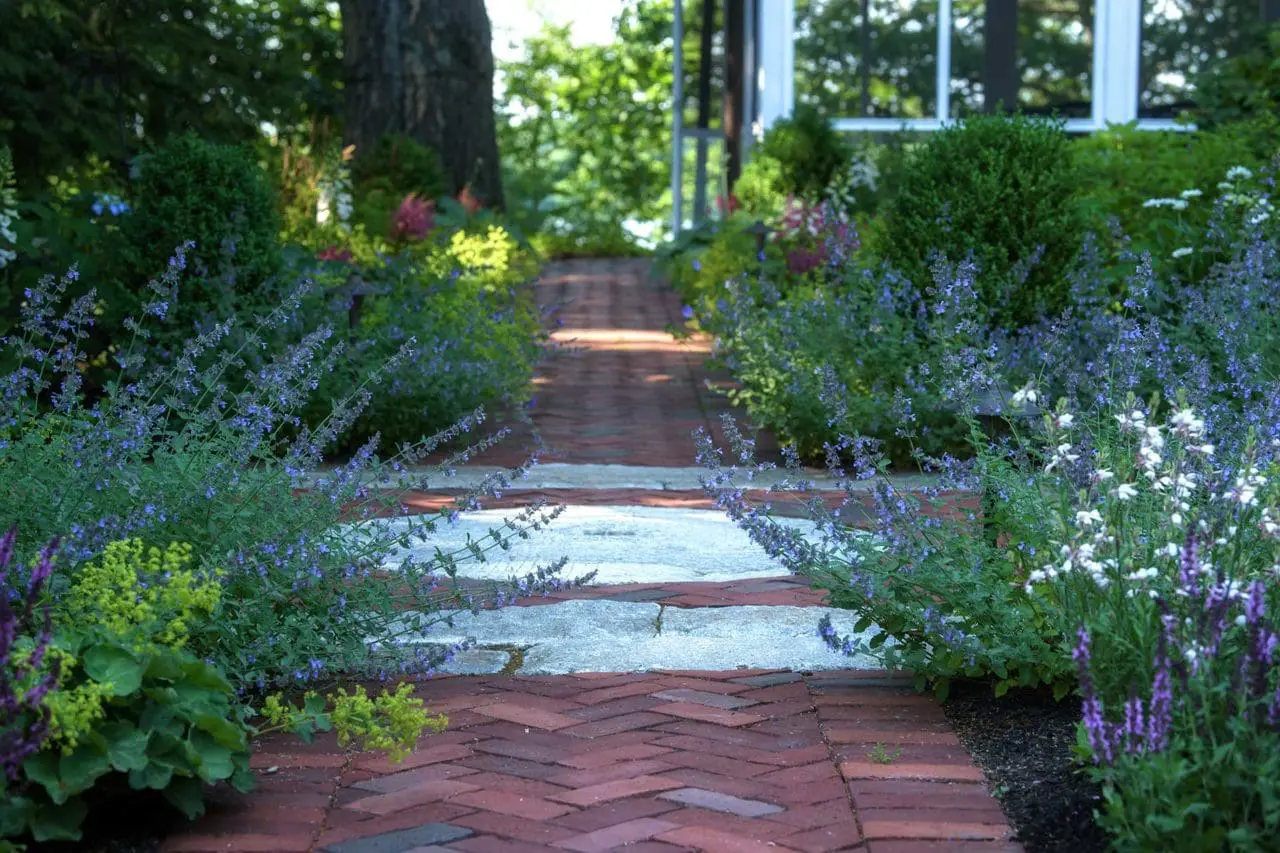
A well-designed kitchen garden can do more than supply herbs, greens, and seasonal vegetables. On the right property, it can become one of the most rewarding parts of the landscape: useful, beautiful, and closely connected to the way a home is lived in every day.
That idea resonates with a lot of homeowners right now. According to the National Gardening Survey, 84% of U.S. households gardened in 2024, which helps explain why interest in edible gardens continues to show up across both design and lifestyle conversations. For Boston-area properties, though, a successful kitchen garden is rarely just about deciding what to plant. It depends on thoughtful placement, soil preparation, sun exposure, irrigation, wildlife protection, and a realistic plan for ongoing care.
Key Takeaways
- A kitchen garden works best when it is planned as part of the overall landscape, not added as an afterthought.
- In Greater Boston, sun, drainage, soil quality, and access are often more important than square footage.
- Raised beds are often a strong fit for vegetable gardens because they help with soil control, organization, and visual structure.
- Irrigation and maintenance should be considered from the beginning if the garden is expected to stay productive and attractive through the season.
- The most successful edible gardens balance function with design, so they feel appropriate to the architecture and character of the property.
Why Kitchen Gardens Appeal to Boston-Area Homeowners
For many homeowners, the attraction is obvious. A kitchen garden brings daily use into the landscape in a way that feels personal. Fresh herbs just outside the back door, salad greens within easy reach, a few well-tended tomato vines in summer, and seasonal color mixed with edible planting can make a property feel more generous and more alive.
For Boston-area homes in particular, kitchen gardens also fit naturally into the way outdoor spaces are evolving. Homeowners increasingly want their landscapes to do more than look polished from the street. They want spaces that support entertaining, quiet routines, family time, and a stronger connection to the seasons. A kitchen garden can sit comfortably within that broader vision, whether the setting is a large suburban property in Weston or Dover, or a compact urban yard where every square foot needs to work harder. You can see that kind of integrated thinking in our own vegetable garden portfolio page and in projects like Compact Cambridge, where edible gardens are treated as part of the overall design rather than a separate utilitarian zone.
“The best kitchen gardens feel connected to the home and the larger landscape. When layout, materials, irrigation, and maintenance are considered together, the garden becomes more beautiful, more useful, and far easier to enjoy.”
— Megan Davey, Landscape Designer, a Blade of Grass
Start With the Right Location
The success of a kitchen garden often depends less on ambition and more on placement.
A beautiful set of raised beds may look appealing on paper, but if the area gets inconsistent sun, sits in poorly drained soil, or is too far removed from the kitchen and everyday circulation of the property, the garden is much less likely to thrive. UMass Extension emphasizes the importance of planning around site conditions and local growing realities, including frost timing, crop temperature needs, and garden layout before planting even begins. In other words, the practical groundwork matters.
Sun exposure should guide the plan
Most vegetables and culinary herbs perform best in strong sun. That sounds straightforward, but it is often more complicated on established properties where mature trees, fences, accessory structures, and neighboring homes shape light patterns across the day. In spring, an area may seem sunny enough. By midsummer, it may be shaded for long stretches.
That is why kitchen garden planning should begin with an honest evaluation of exposure. The right spot does not need to be enormous, but it does need to support the crops the homeowner actually wants to grow.
Access matters more than people expect
Convenience is easy to underestimate. A kitchen garden that is close to the house, easy to reach, and simple to water is far more likely to be harvested, enjoyed, and maintained consistently. If the garden is tucked into a distant edge of the property simply because it is sunny, it may function more like a hobby garden than an integrated part of daily life.
Drainage and soil quality shape long-term performance
In the Boston area, spring weather can be erratic, and soil conditions vary widely from property to property. Some sites drain too slowly. Others are rocky, compacted, or low in organic matter. UMass recommends soil testing as part of the planning process, and its Soil and Plant Nutrient Testing Laboratory provides sampling guidance and routine testing for home grounds and gardens. That is especially valuable when a kitchen garden is being added to a site with unknown history or inconsistent soil conditions.
Raised Beds vs. In-Ground Vegetable Gardens
For many Boston-area homes, raised beds are the most practical and visually successful approach.
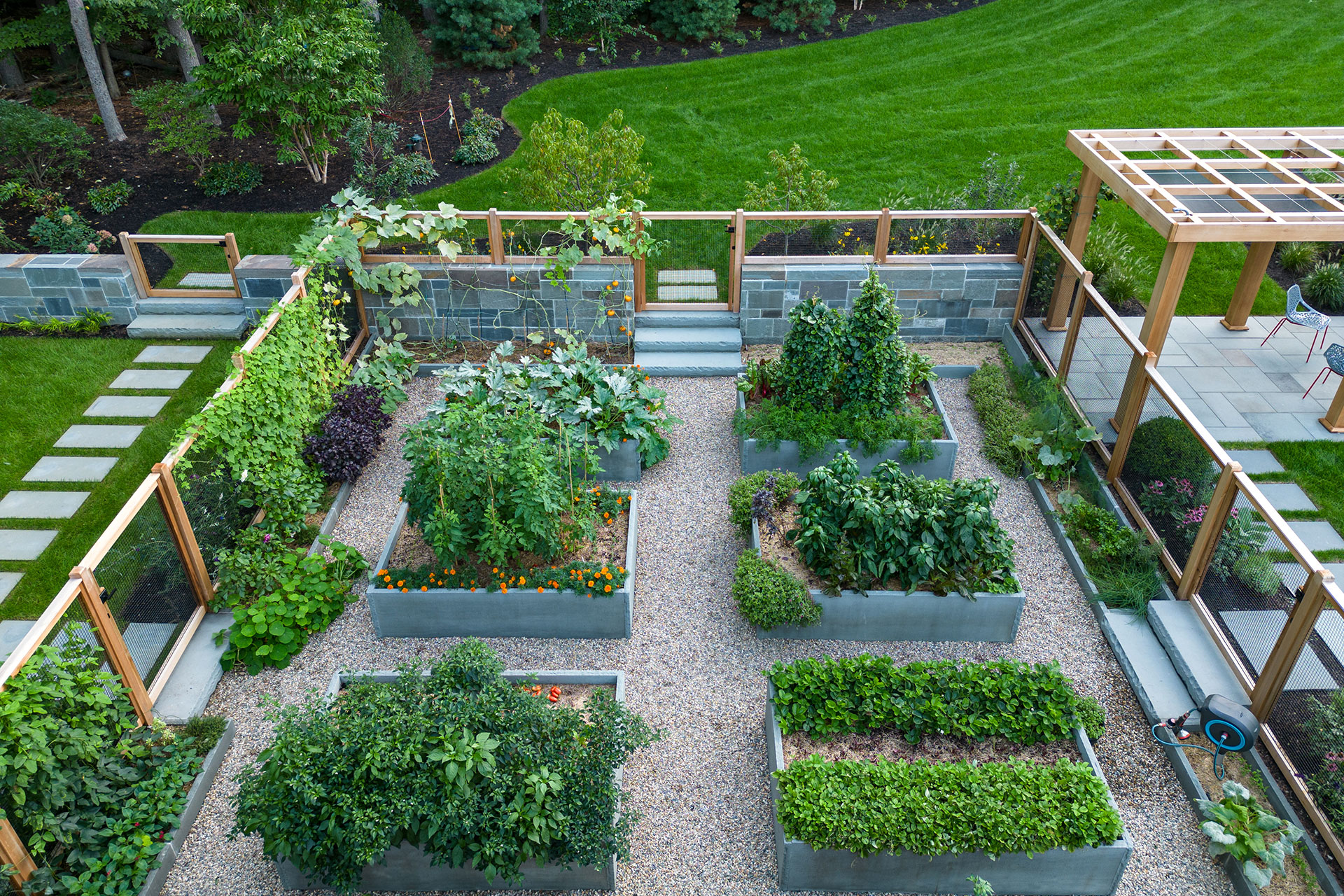
They create order. They help define the kitchen garden as a designed destination. They also make it easier to control soil composition, support drainage, and keep the space looking intentional throughout the growing season. On properties where aesthetics matter just as much as production, that structure is often a major advantage.
That does not mean in-ground vegetable gardens never make sense. On larger or more informal properties, in-ground rows or expanded edible areas may be perfectly appropriate. But in many residential landscapes, raised beds are easier to integrate with paths, fencing, irrigation, and the overall character of the home.
Materials and detailing matter
This is where a kitchen garden can quickly move from functional to refined.
Wood, metal, stone, and gravel all create very different impressions. The dimensions of the beds, the width of the paths, the height of the edging, and the way entrances are handled all influence whether the garden feels improvised or composed. A kitchen garden beside a traditional New England home may call for a different material palette than one attached to a contemporary property in Cambridge or Brookline.
This is also one reason to think beyond the beds themselves. Trellises, obelisks, perimeter fencing, potting surfaces, and water access points all shape how the space feels and how well it works.
Designing for Beauty, Not Just Production
One of the biggest missed opportunities in residential vegetable garden design is treating the space as purely utilitarian.
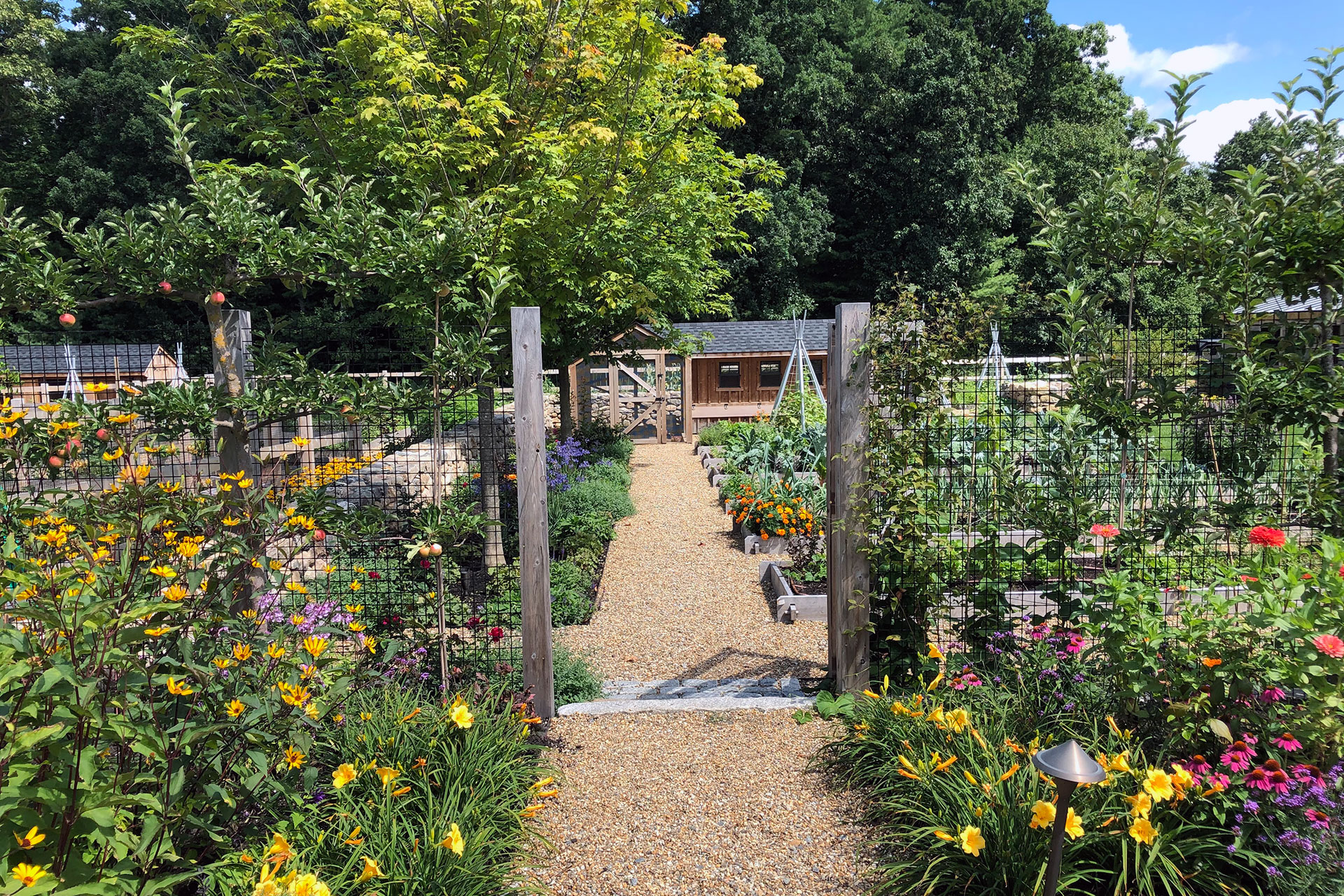
A kitchen garden can be highly productive and still feel elegant. In fact, the most successful ones usually borrow from ornamental garden design. They use symmetry or rhythm where appropriate. They pay attention to repetition, massing, seasonal texture, and focal points. They often mix herbs, edible flowers, and selected vegetables in a way that keeps the garden visually active over a long season.
Garden Design makes a similar point in its edible garden guidance, noting that vegetable gardens can also be beautiful when layout, pattern, containers, and companion planting are considered as part of the design. That design-minded approach is especially relevant for homeowners who want a productive space without sacrificing the overall polish of the property.
The garden should relate to the rest of the property
A kitchen garden should not feel disconnected from the larger landscape. Paths should lead to it naturally. Materials should feel consistent with nearby terraces, walls, or planting areas. The enclosure, if one is needed, should solve a problem without looking overly heavy or temporary.
That broader integration is what turns an edible garden into a lasting landscape feature rather than a short-lived seasonal experiment.
Planning for Boston’s Growing Season
Boston-area kitchen gardens always have to work with the realities of New England timing.
UMass Extension notes that cool-season crops can tolerate some frost and may be planted earlier, while warm-season crops such as tomatoes, peppers, eggplant, and melons should go in only after frost risk has passed and soils have warmed. Its frost occurrence tables also emphasize that these dates are guidelines, not guarantees, which is an important distinction for homeowners who are eager to start early in spring.
That is one reason kitchen gardens benefit from planning instead of improvisation. A well-considered layout makes it easier to rotate crops, transition from cool-season to warm-season planting, and keep the garden attractive as certain areas peak and others decline. Even a relatively modest garden can be organized to provide useful harvests over a long window without looking exhausted by midsummer.
In practice, that often means designing for sequence as much as appearance. Early greens and herbs may give way to summer crops. Structural plantings and clean bed edges help the garden continue to feel orderly even when the mix of plants changes.
Irrigation Makes a Bigger Difference Than Many Homeowners Expect
One of the most common reasons kitchen gardens underperform is inconsistent watering.
Raised beds, in particular, can dry out faster than surrounding ground, especially during warm stretches in summer. Boston-area weather does not always provide reliable rainfall when vegetables need it most. That is why irrigation should be considered early in the planning process, not after planting begins.
A simple, well-designed irrigation approach can improve consistency, reduce stress on plants, and make the garden easier to manage week after week. On many properties, that means drip irrigation or another targeted system that supports efficient watering without soaking paths or encouraging unnecessary waste. Our own landscape irrigation services are built around this kind of long-term performance thinking, particularly where healthy plantings depend on precision rather than guesswork.
Related Blog: The Importance of Irrigation Maintenance: A Seasonal Guide for Greater Boston Homes
Maintenance Should Be Part of the Original Plan
A kitchen garden is rewarding, but it is not passive.
It needs regular observation, grooming, harvesting, seasonal transitions, and occasional intervention. That is not a drawback. It is simply the nature of a productive garden. The problem comes when the garden is designed as though it will take care of itself.
This is where maintenance planning becomes just as important as layout. Homeowners should think early about who will monitor irrigation, keep beds tidy, refresh seasonal plantings, manage plant vigor, and help the space stay attractive through the full growing season. On some properties, that support may come from the homeowner. On others, it makes sense as part of a broader program of landscape maintenance and fine gardening. Our recent post on the Landscape Maintenance Calendar for Boston Homeowners is also a useful companion for understanding how care priorities shift through the year.
Planning for Deer, Rabbits, and Other Pressures
Across much of Greater Boston and MetroWest, wildlife pressure is not a minor detail. It is often one of the defining factors in how a garden needs to be designed.
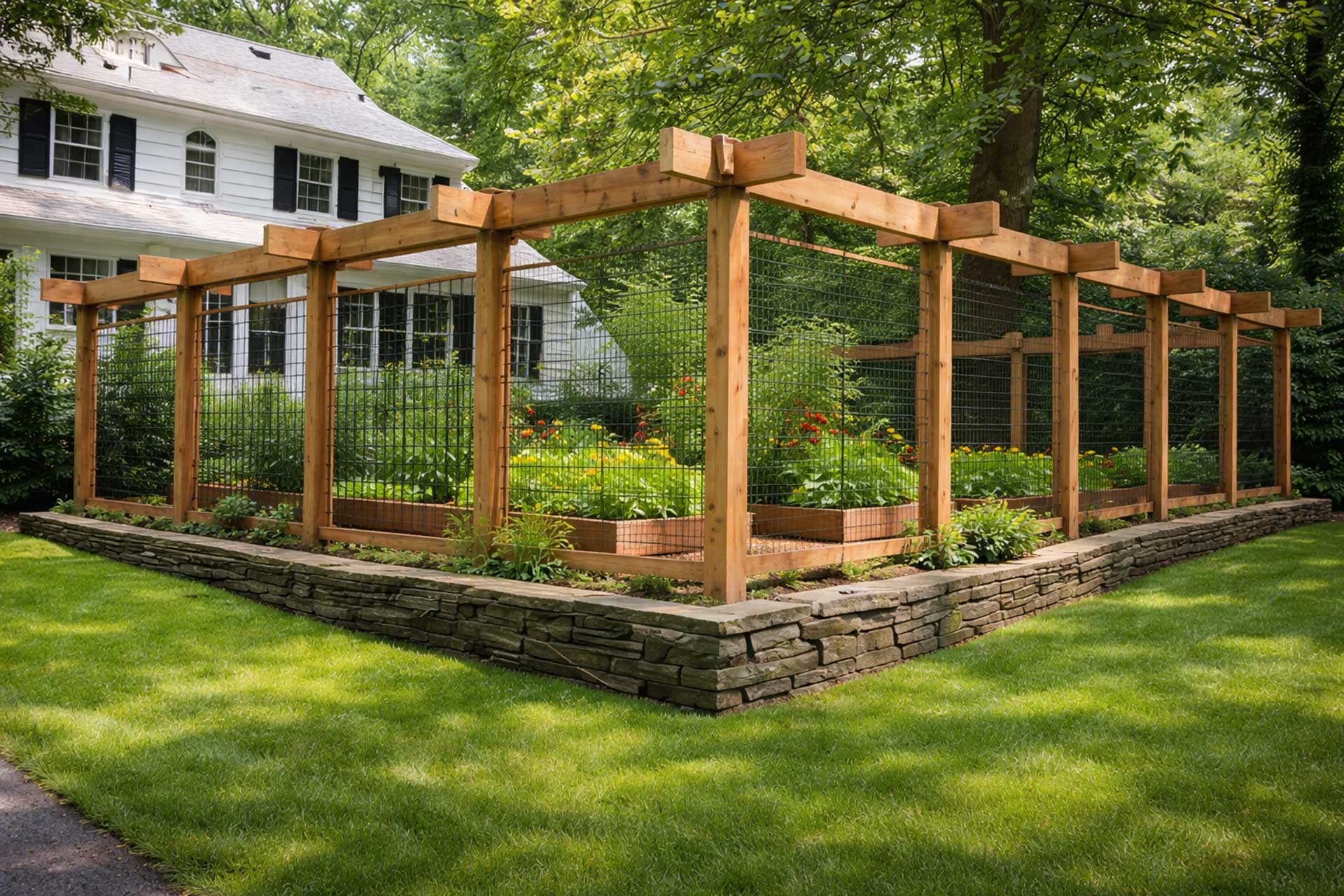
In towns where wooded edges and residential neighborhoods overlap, deer browsing can quickly damage tender edible plantings. Rabbits can be just as frustrating, especially in smaller enclosed spaces. That does not mean a kitchen garden is unrealistic. It means protection needs to be addressed thoughtfully from the beginning.
In some cases, that may involve a full enclosure. In others, it may mean targeted fencing, bed placement, or a mix of ornamental and edible planting that reduces vulnerability. Our recent guide to deer-resistant plants and landscaping strategies for Boston-area gardens explores the broader issue in more detail, and it is often highly relevant when edible gardens are part of the conversation.
A Kitchen Garden Works Best When It Is Part of a Larger Landscape Vision
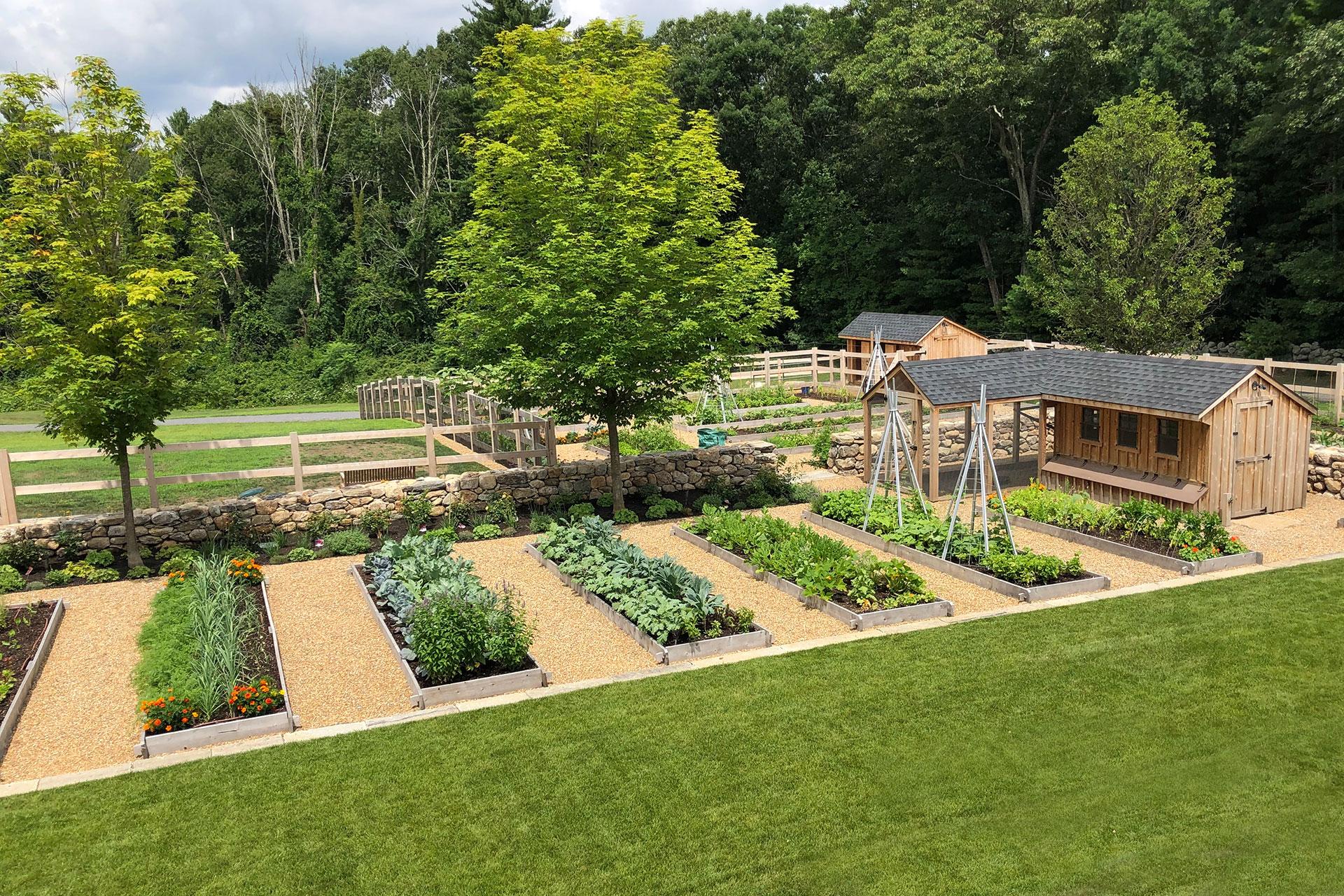
The best kitchen gardens are not isolated features. They are part of a larger composition.
They may sit near an outdoor dining area, connect to a terrace, support a family gathering space, or extend the usefulness of a side yard that previously had little purpose. They can pair naturally with landscape design services, seasonal planting services, and broader conversations about sustainable landscaping for Boston homes. When all of those decisions are aligned, the result is not just a better vegetable garden. It is a stronger property overall.
Final Thoughts
A kitchen garden can be one of the most satisfying additions to a Boston-area landscape, but the ones that succeed over time are rarely accidental. They are carefully sited, thoughtfully detailed, supported by healthy soil and reliable irrigation, and maintained with the same level of attention as the rest of the property.
For homeowners who want a garden that feels as beautiful as it is useful, planning makes all the difference. If you are considering a kitchen garden, edible garden, or raised bed vegetable garden for your property, explore our landscape design, landscape maintenance, and irrigation services, or contact the Blade team to start the conversation.
Frequently Asked Questions
Q: Do kitchen gardens work well in the Boston area?
A: Yes, but they perform best when they are planned around local growing conditions rather than treated as a generic garden concept. Sun exposure, frost timing, soil quality, drainage, and irrigation all play a major role in Greater Boston, and UMass Extension’s vegetable gardening resources are a good reminder that local timing matters.
Q: Are raised beds better than in-ground vegetable gardens?
A: They often are for residential properties, especially when homeowners want better soil control, stronger visual structure, easier access, and a cleaner relationship to the surrounding landscape. In-ground gardens can still make sense on larger or more informal properties, but raised beds are frequently the better fit for a more refined kitchen garden design.
Q: How much sun does a kitchen garden need?
A: Most vegetables and culinary herbs need strong sun for reliable production. Exact needs vary by crop, but site selection should begin with light, because even a beautifully built garden will struggle if it is placed in the wrong location.
Q: Is irrigation necessary for a kitchen garden?
A: Not in every case, but it is often a smart investment. Kitchen gardens, especially raised bed vegetable gardens, tend to perform better when watering is consistent and efficient rather than occasional and reactive.
Q: How much maintenance does a kitchen garden require?
A: More than many homeowners expect. Harvesting, watering, seasonal turnover, grooming, pest observation, and general upkeep all matter. A kitchen garden is highly rewarding, but it should be designed with a realistic maintenance plan from the start.