A Japanese maple can change the character of a garden without occupying the largest space in it. Its branches might spread above a low planting beside a terrace, frame a view from the living room, or introduce a lighter canopy near an entry.
The effect depends on more than red leaves.
Some Japanese maples develop into upright trees with broad crowns. Others form low, cascading specimens whose width becomes more important than their height. Green foliage, finely divided leaves, seasonal color changes, and winter branching offer possibilities that are easy to overlook when choosing a tree from a nursery display.
At a Blade of Grass, we consider those differences alongside the setting. A Japanese maple needs room for its form to develop, growing conditions that support healthy foliage, and surrounding planting that makes its presence feel deliberate.
For Massachusetts landscapes, that also means thinking beyond fall color to winter exposure, spring frosts, summer moisture, and the way the garden will mature.
Key Takeaways
- Choose a Japanese maple for its mature form and landscape role as well as its leaf color.
- Upright and weeping selections need very different allowances for height, width, and nearby circulation.
- Suitable light, protection from drying winds, and moist but well-drained soil support good performance.
- Cold hardiness varies by selection, and hardy trees can still experience damage to newly emerged leaves.
- Thoughtful placement usually reduces the need for repeated corrective pruning.
Japanese Maples at a Glance
- Botanical name: Primarily Acer palmatum and its cultivars in this profile
- Plant type: Deciduous small tree or large shrub
- Mature size: Highly cultivar-dependent; compact forms differ substantially from upright trees that can exceed 20 feet
- Light: Often well suited to filtered light or part shade; sun tolerance varies by selection and site
- Soil / moisture: Moisture-retentive but well-drained soil; avoid prolonged saturation
- Primary ornamental value: Branching, foliage texture and color, fall interest, and sometimes colorful young bark
- Flowers: Small spring flowers, generally secondary to foliage and form
- Native status: Not native to Massachusetts or North America
- Deer resistance: Do not assume young trees are protected from browsing or rubbing
- Best landscape uses: Specimens, sheltered entries, terrace gardens, mixed borders, and suitable woodland edges
What Japanese Maples Bring to a Garden
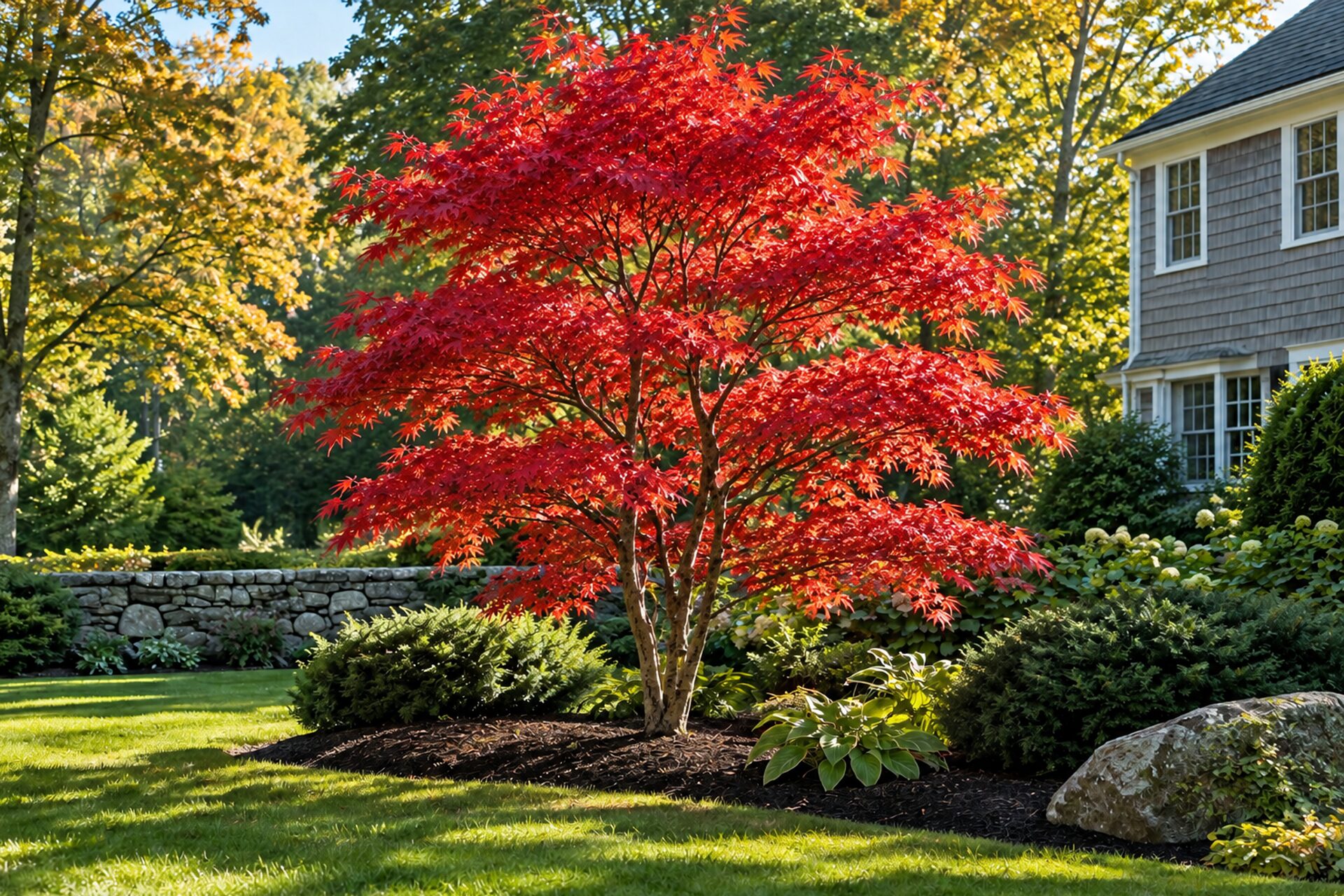
Japanese maples give us a way to introduce a distinct tree form at a scale that can relate closely to the house and garden.
An upright selection might establish a canopy above lower shrubs without creating the scale of a large shade tree. A weeping form can draw attention to a change in level or become a focal point seen across a terrace. Fine foliage can soften the relationship between substantial stonework and the planting around it.
We also consider what sits behind the tree. Dark foliage may lose definition against a shaded background, while green leaves can become especially noticeable when light passes through them. Branches that disappear against a busy planting may be easier to appreciate against a quieter surface.
Those relationships help determine placement. A tree does not always need to stand in the center of a bed to become the most memorable part of it.
Choosing Japanese Maples by Form, Foliage, and Size
“Japanese maple” describes a considerable range of plants. Before looking closely at cultivars, we decide what kind of presence the garden needs.
Upright Forms
Upright Japanese maples can provide a small canopy, frame an outdoor space, or introduce height within a layered planting.
They still need generous consideration of spread. A tree described as small may be small compared with an oak while remaining much too broad for a narrow bed beside the front door.
For example, NC State Extension describes ‘Bloodgood’ as reaching approximately 15–20 feet tall and 12–20 feet wide. That is a meaningful tree in a residential landscape, especially beside a house or terrace.
Weeping and Laceleaf Forms
Weeping selections often create a lower, broader presence, with branches cascading toward the ground.
Their appeal depends partly on being able to see that outline. A spreading specimen surrounded by shrubs of similar height may eventually become difficult to distinguish. Beside a walk, its branches can also occupy more space than the trunk position initially suggests.
Leaf shape and growth habit are separate considerations. Finely divided foliage does not automatically mean a weeping tree. ‘Seiryu,’ for example, combines dissected leaves with an upright habit.
Looking Beyond Burgundy Foliage
Red and purple foliage can create strong contrast, but green-leaved Japanese maples deserve equal consideration.
Green foliage may sit more comfortably within a quiet woodland composition or allow a nearby flowering plant to remain prominent. Some selections offer particularly interesting spring growth, while others contribute colorful young stems after leaf fall.
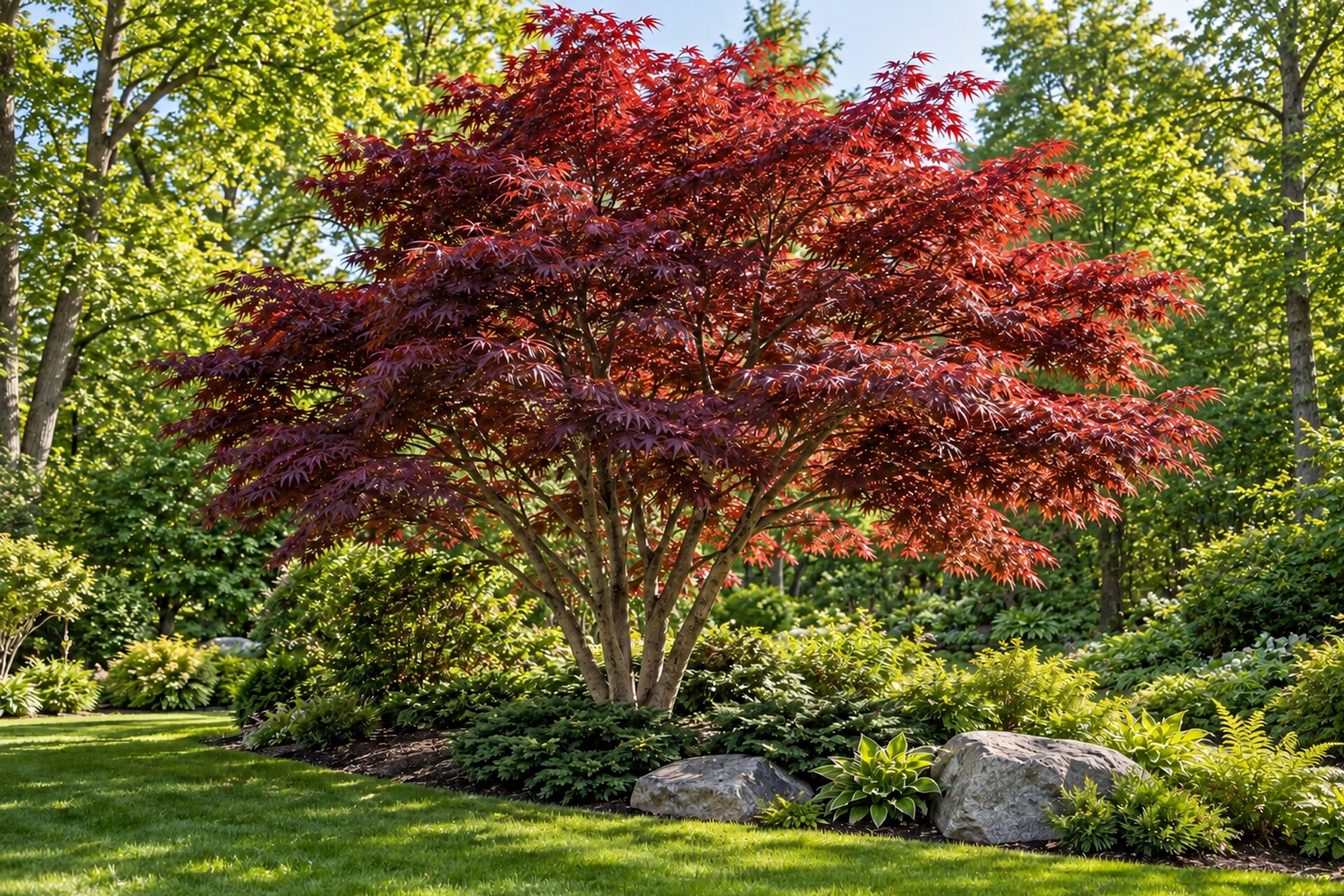
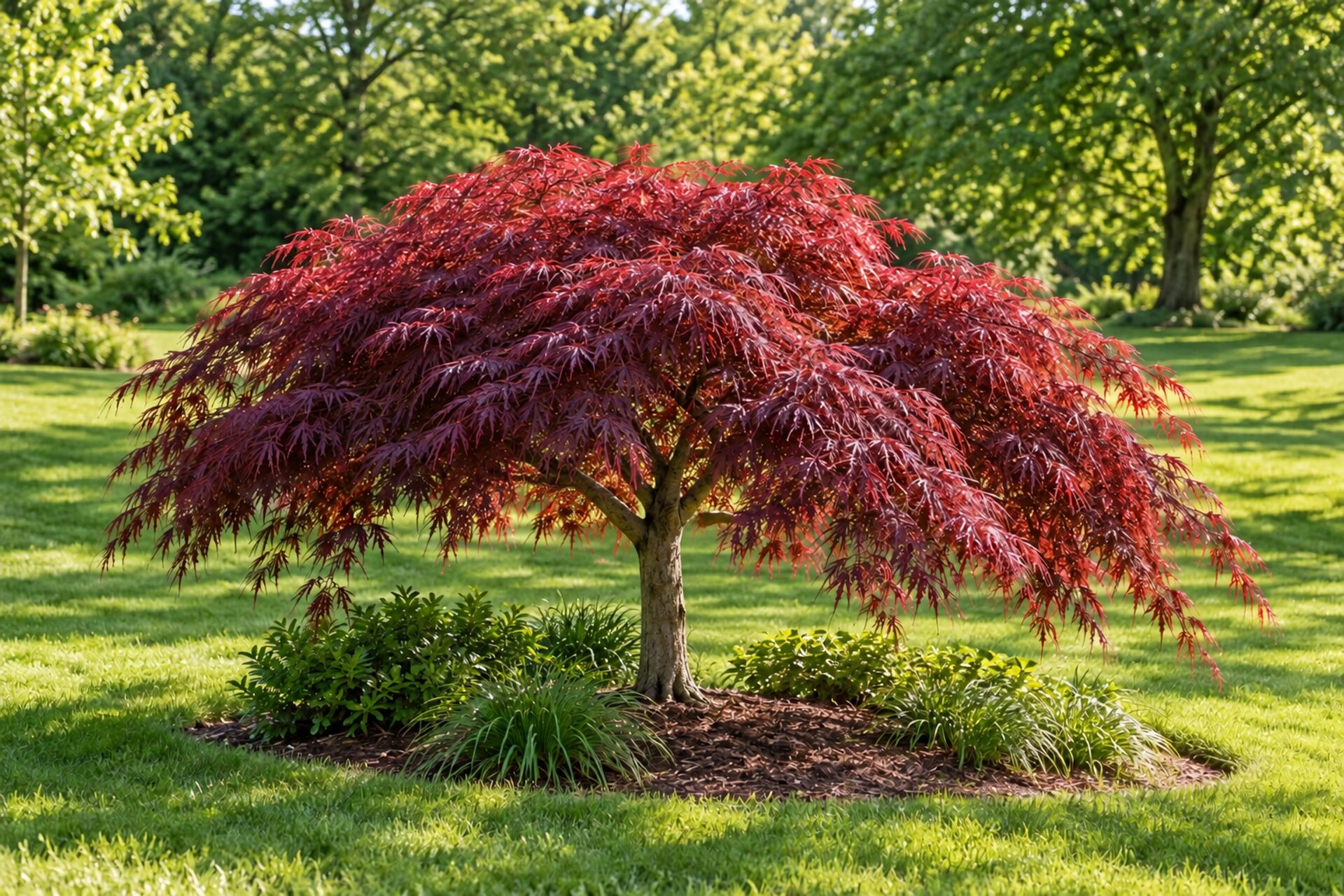
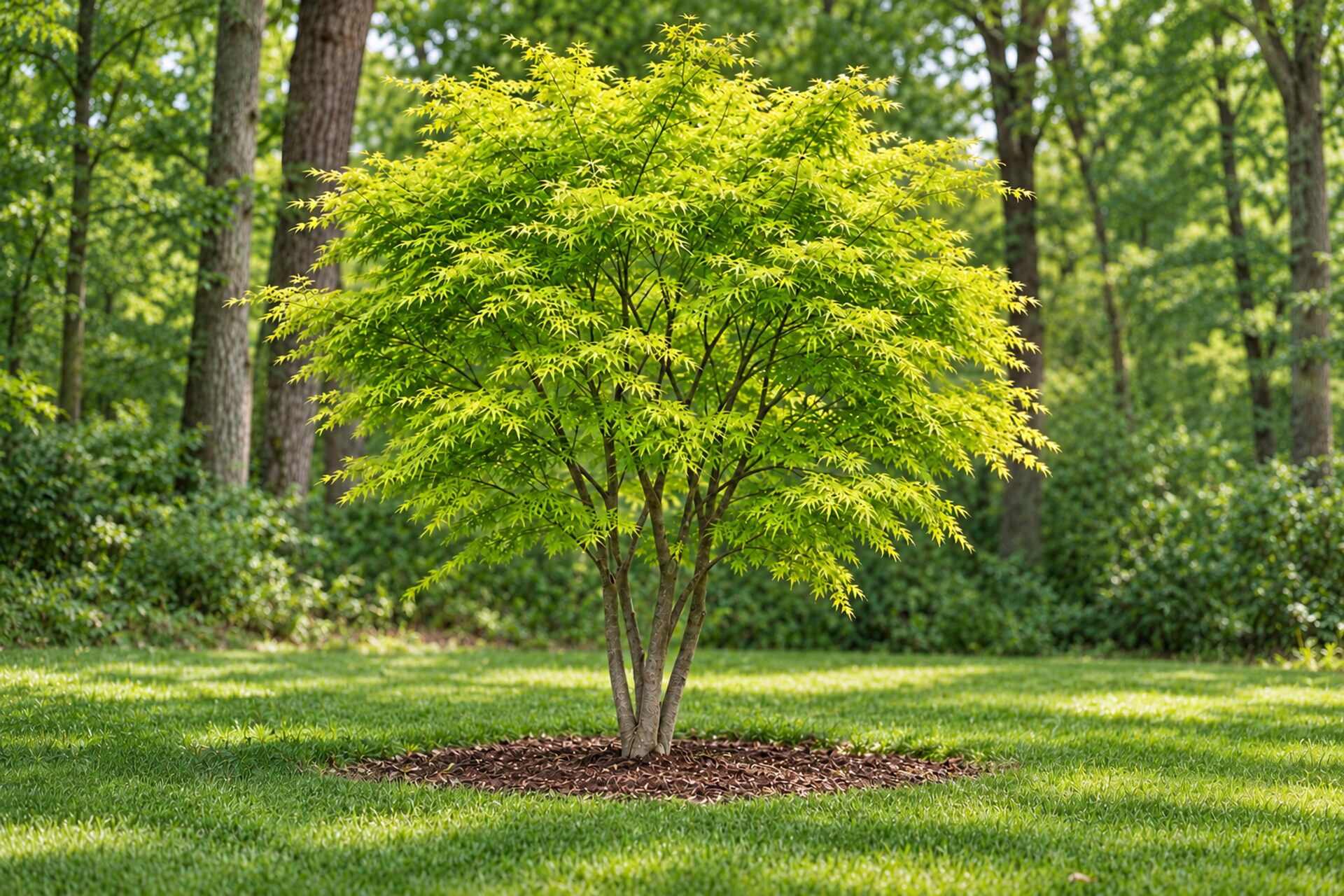
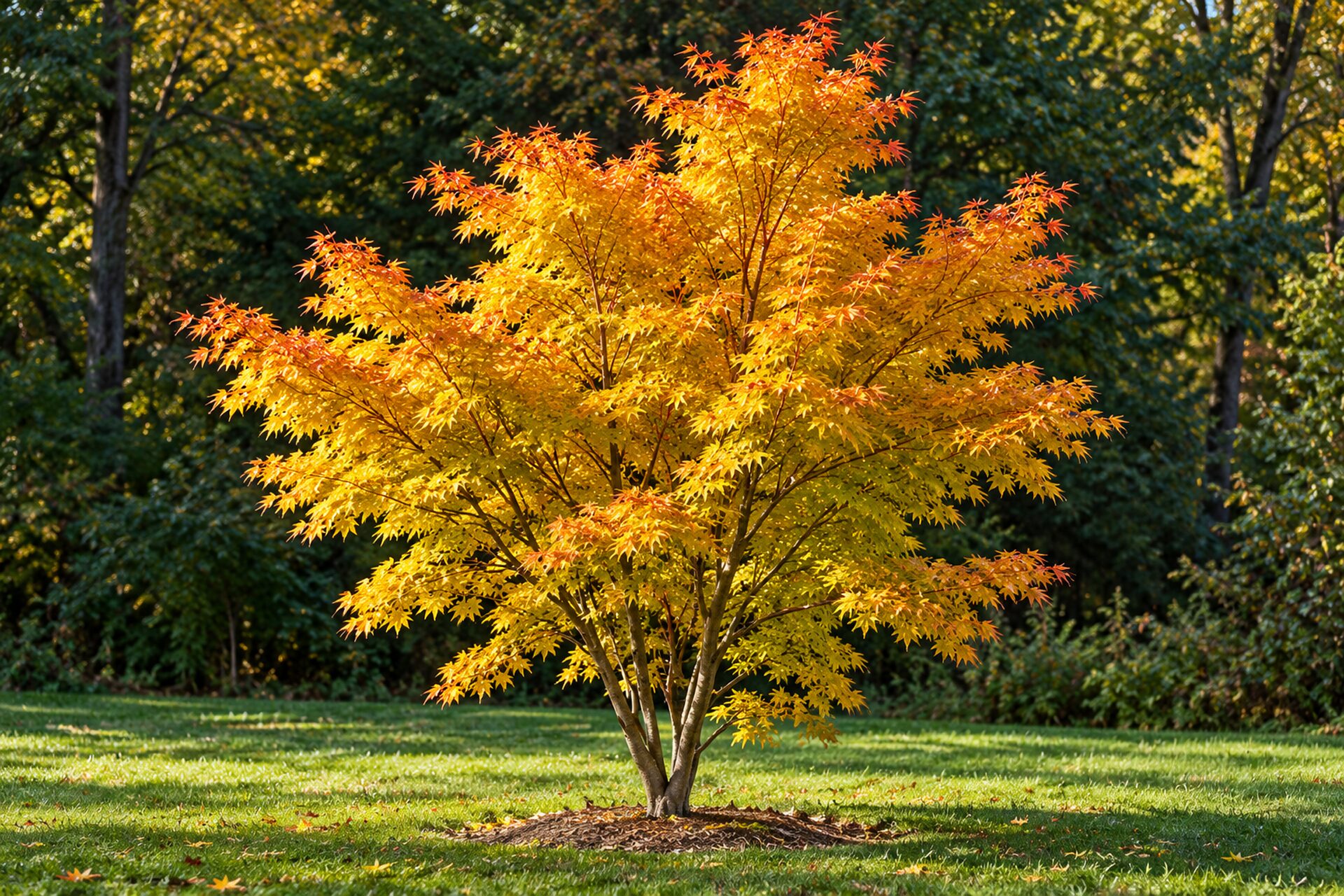
These examples illustrate different design possibilities:
| Selection | General Character | Design Consideration |
|---|---|---|
| ‘Bloodgood’ | Upright, broad-crowned tree with dark red-purple foliage | Needs room for a substantial canopy; useful where a strong foliage contrast is appropriate |
| ‘Crimson Queen’ | Weeping form with finely divided red-purple leaves | Allow lateral space and keep surrounding planting low enough to reveal its outline |
| ‘Seiryu’ | Upright form with finely divided foliage | Offers a finer canopy texture without the low, cascading habit of many laceleaf selections |
| ‘Sango-kaku’ | Upright coral-bark maple with green summer foliage and colorful young stems | Consider winter visibility, eventual tree size, and the suitability of the exposure |
These are examples of contrasting forms, not interchangeable recommendations for every Massachusetts property. Exact dimensions, hardiness, and suitability should be checked for the particular selection.
‘Sango-kaku’ also illustrates why a familiar feature needs some qualification. The coral color is strongest on young growth; the entire trunk does not remain bright red as the tree ages.
What Do Japanese Maples Look Like Through the Seasons?
Spring: New Foliage and a Changing Outline
Emerging leaves can make spring one of the most interesting periods for a Japanese maple. Depending on the cultivar, new growth may introduce fresh green, pinkish tones, yellow, or red before developing its summer appearance.
We consider that color alongside nearby spring flowers. A strong contrast can be effective, but several plants demanding attention at once can make a small garden feel crowded even when their spacing is adequate.
Summer: Canopy, Texture, and Shade
By summer, the tree’s form becomes more apparent. Fine foliage may create a soft canopy above lower planting, while broader leaves establish a more substantial presence.
This is also when we can judge whether the surrounding composition works. The maple should have enough separation to be understood without looking stranded in a large area of mulch.
Fall and Winter: Color Followed by Structure
Fall color varies among selections and with growing conditions. Reds, oranges, and yellows can create a strong seasonal focal point, particularly when nearby planting provides a quieter background.
Once the leaves fall, branching becomes the main feature. A well-positioned Japanese maple may remain interesting from the house throughout winter, even though it provides no evergreen screening.
That distinction matters. Winter structure and winter privacy are different landscape functions.
Where Do Japanese Maples Grow Best?
Light With Some Protection
Filtered light or a location with morning sun and some afternoon protection is often a useful starting point.
It is not a universal prescription. Some selections tolerate more sun, while others need greater protection. Deep shade can also limit foliage color and the effect we hoped to achieve.
Cornell’s Japanese maple profile identifies a protected setting with dappled shade as an ideal site and notes the vulnerability of young foliage to drying sun and wind.
On a property, we look at the whole exposure. A sunny bed beside paving may place different demands on a tree from an equally bright bed surrounded by planting. Shelter from a building can help in one location while reflected heat creates another concern nearby.
Moisture Without Waterlogging
Japanese maples benefit from a root zone that retains moisture while allowing excess water to drain.
That can be challenging in a compacted foundation bed, a low area receiving runoff, or a narrow planting pocket surrounded by hardscape. Installing irrigation does not resolve poor drainage, and a moist surface does not establish that water is reaching the root ball appropriately.
We consider the soil and water movement before choosing the tree. It is much easier to accommodate those conditions during planning than to troubleshoot them beneath an established specimen.
Cold Hardiness and Spring Frost
Many Japanese maple selections can grow successfully in Massachusetts, but the cultivar and location both matter. A hardiness rating should be checked against the property’s conditions rather than applied to Japanese maples as a single group.
Winter survival also does not guarantee undamaged spring foliage. Tender new leaves can be injured when cold weather returns after growth begins.
A sheltered garden in a developed neighborhood and an exposed, windy property may present very different conditions, even when they share a regional climate.
Room Around Existing Trees
A Japanese maple may look appropriate beneath a larger canopy, but the existing roots deserve attention.
We would not create a planting pocket by cutting through important roots or burying them beneath a new mound of soil. The available light, moisture, and planting space need to work for both the new tree and the established landscape.
Sometimes a position near the canopy edge offers a better relationship than a spot directly beneath it.
Where Japanese Maples Work Best in a Landscape
Entries and Arrival Gardens
A Japanese maple can help define arrival without making the planting feel rigid.
We consider how it will be seen from the street, the walk, and the doorway. An asymmetrical placement may frame the house more effectively than centering the tree in front of it.
The canopy must also leave room for people, windows, lighting, and maintenance access. A low weeping form beside a frequently used route requires particular care.
Terraces and Views From Indoors
Near a terrace, a Japanese maple can contribute a sense of enclosure and seasonal change. Its position should allow people to appreciate it without eventually giving up seating space or a clear walking route.
The view from inside deserves equal consideration. A branch pattern seen through a dining-room window can become part of the experience of the house, particularly once surrounding perennials have disappeared.
We plan for both the leafy canopy and the bare winter framework.
Mixed Borders and Woodland Edges
In a mixed planting, a Japanese maple often works best when neighboring plants support its form.
Low foliage, restrained shrub groups, or a quieter evergreen background can help reveal the tree. A collection of equally distinctive specimens may make each individual plant less effective.
Our article on plant spacing and the future landscape explores why the space around a specimen is part of the design, rather than an area that automatically needs filling.
What Should You Plant With a Japanese Maple?
We begin with the tree’s canopy, leaf texture, and growing conditions.
A broad-leaved perennial can contrast with fine maple foliage. Lower evergreen planting can provide continuity after leaf fall. Appropriately selected ferns and sedges may help connect a sheltered tree to a woodland-style garden.
Hostas can also provide a seasonal lower layer where moisture and deer pressure allow. Our hosta profile explains how differences in leaf color and mature size influence that choice.
Companions still need their own space. Dense planting immediately against the trunk can obscure the maple’s structure and complicate inspection and care.
We also consider how the relationship will change. Plants that receive generous light beside a young tree may experience considerably more shade as its canopy develops.
Common Japanese Maple Problems
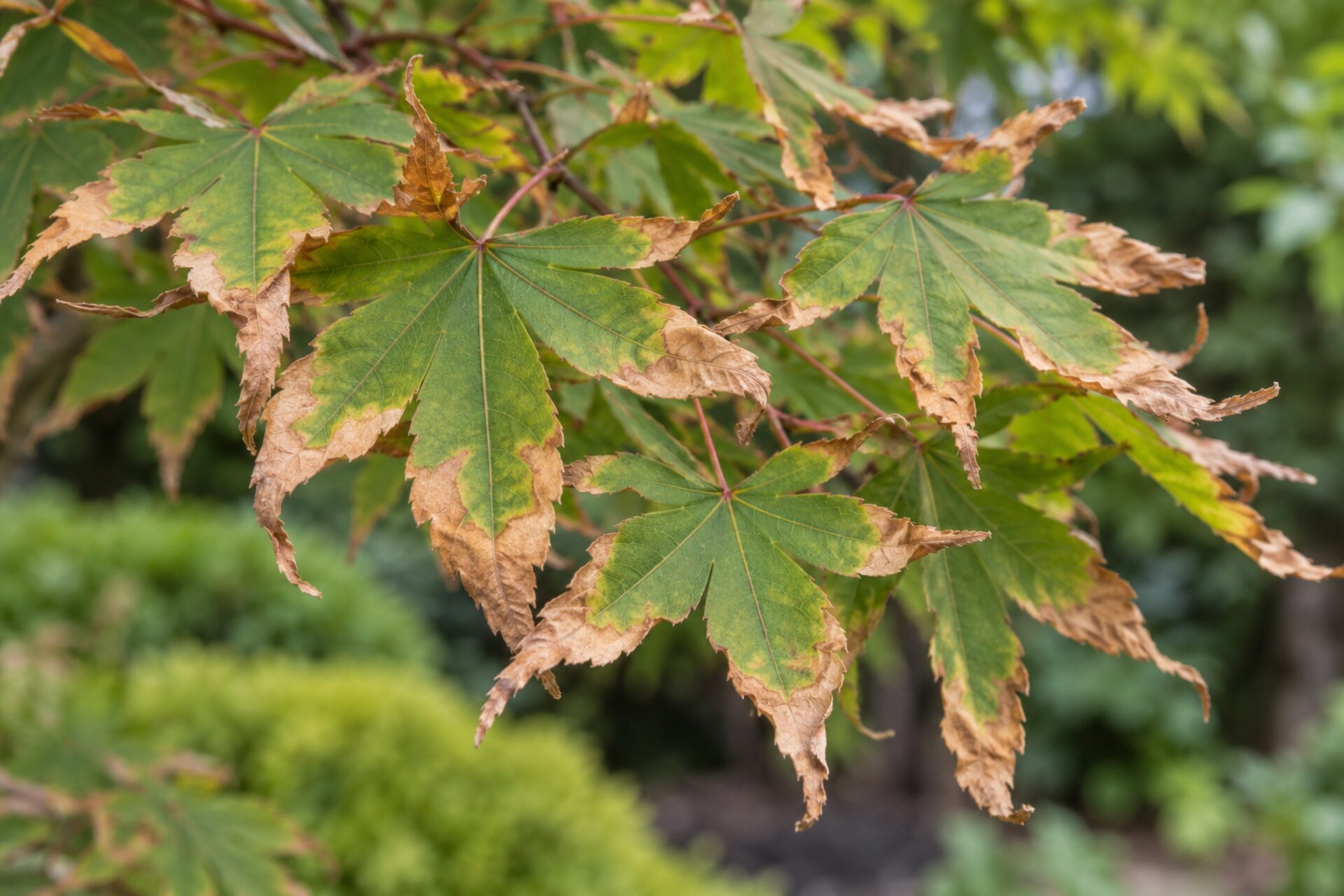
Brown or Crispy Leaf Edges
Scorched foliage is one of the more familiar concerns with Japanese maples.
The Royal Horticultural Society explains that leaf scorch can follow several environmental stresses, including drying winds, strong sun, drought, waterlogging, and salt-laden coastal winds.
That range matters. Brown edges are not an automatic instruction to water more. We need to understand the root-zone conditions and recent weather before deciding what would help.
Damaged foliage can remain unattractive for the season even after conditions improve. Repeated annual damage is a reason to reconsider the setting or care, rather than simply accept that the tree always looks tired by August.
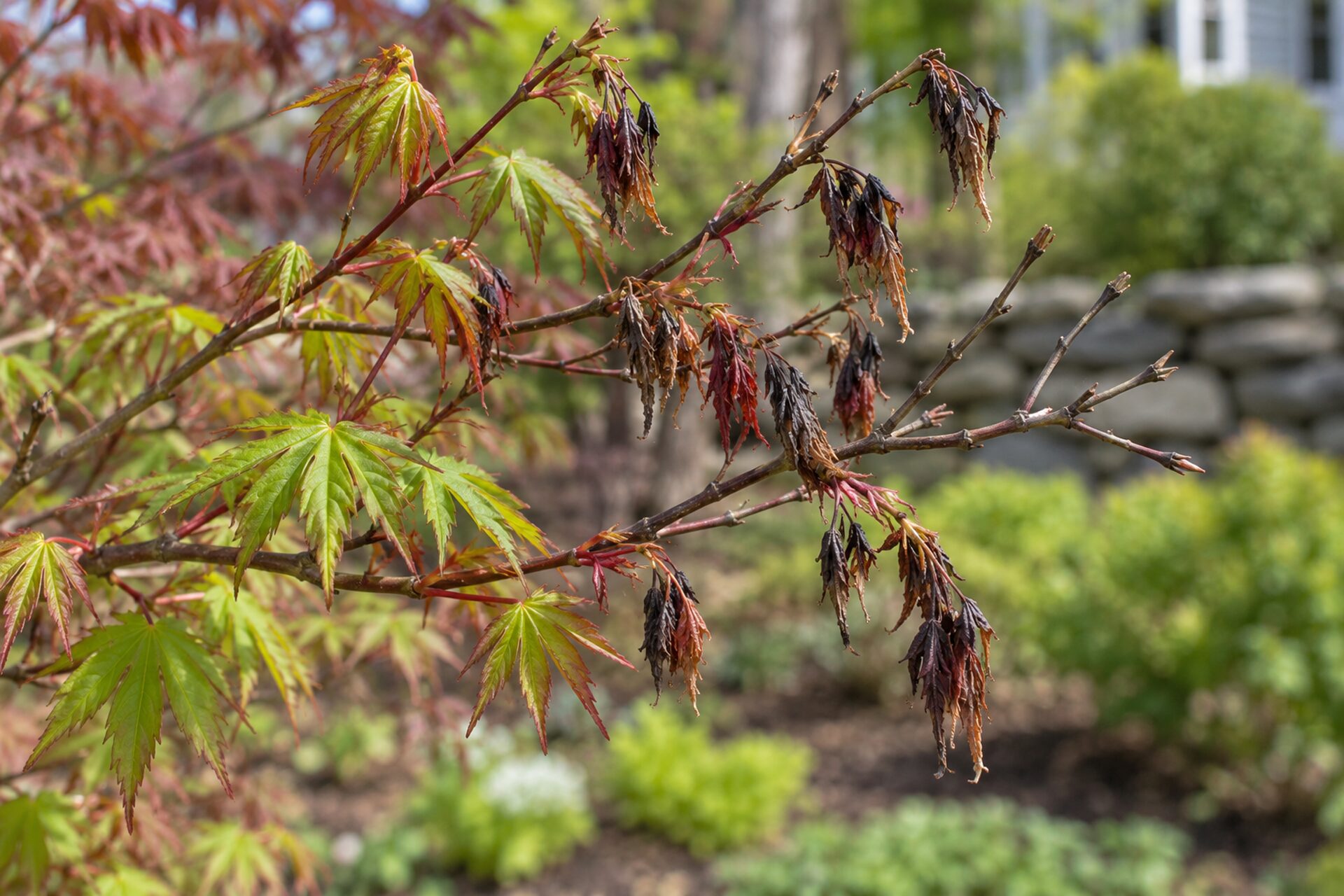
Frost Injury and Branch Dieback
Damage that appears soon after a spring cold spell should be considered in that context. Persistent decline, substantial branch death, or wilting confined to part of the canopy requires a closer assessment.
Japanese maples can also experience diseases, including Verticillium wilt. The Connecticut Agricultural Experiment Station’s guide to maple diseases discusses the distinction between scorch and disease problems.
A brief description or photograph may not establish the cause. Where decline is progressing, diagnosis is more useful than trying a succession of fertilizers or sprays.
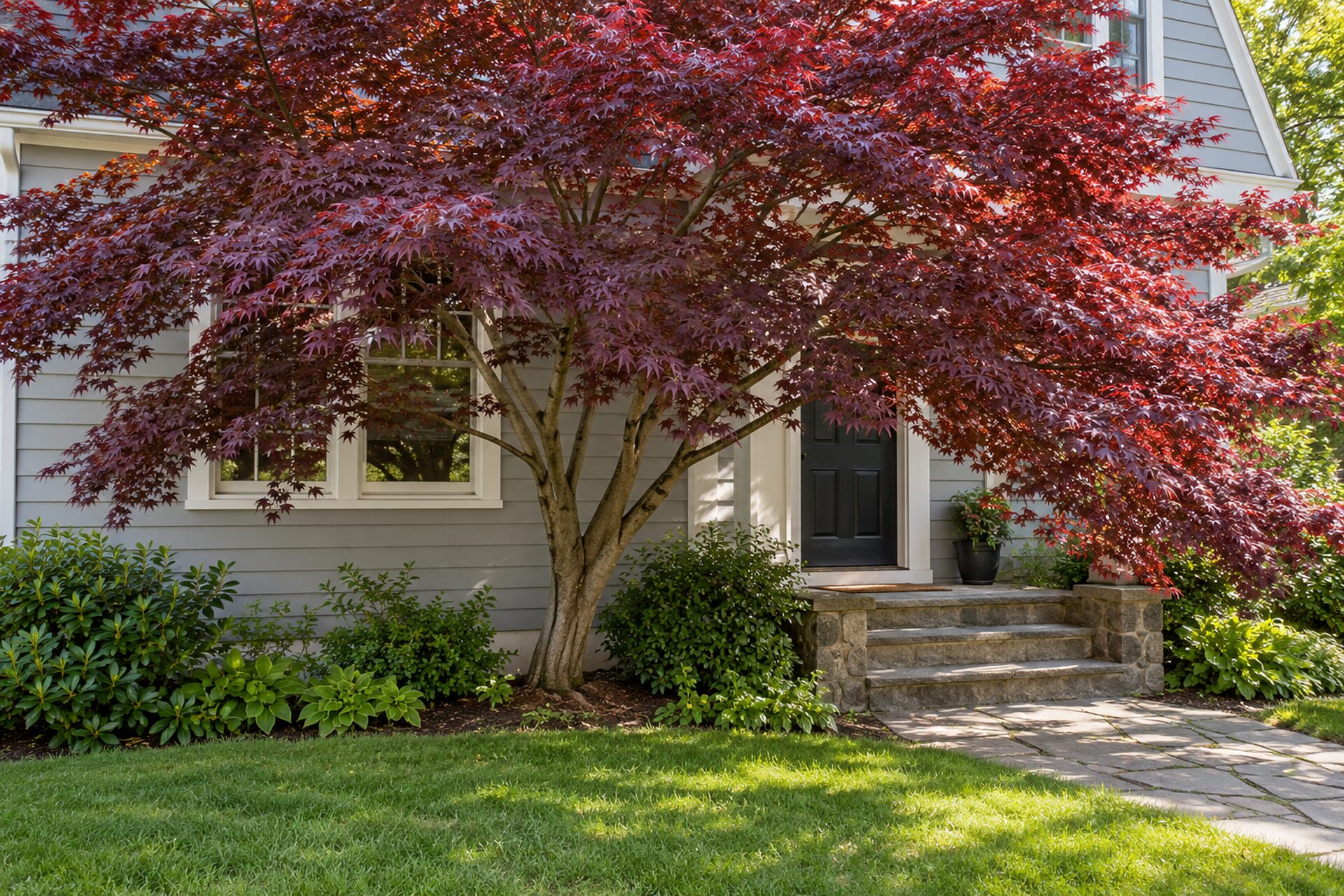
A Tree That Has Outgrown Its Position
Some problems are primarily spatial.
A healthy maple may block a window, spread across steps, or require repeated cutting to preserve access. In those cases, the tree’s growth is revealing a mismatch between the selection and its location.
Before adding another specimen, we look at the mature canopy and the surrounding uses together. Smaller nursery stock does not make a large-growing cultivar a smaller tree.
How Much Maintenance Do Japanese Maples Need?
A well-sited tree generally needs measured care rather than constant intervention.
Establishment watering should respond to the root ball, surrounding soil, and weather. Established trees may still need supplemental water during prolonged dry periods. Mulch can help moderate the root zone, but it should remain clear of the trunk.
Fertilizer should address an identified need. It cannot compensate for poor drainage, an unsuitable exposure, or damaged roots.
Pruning should preserve the branching that made the tree worth selecting. Removing dead or damaged wood and making selective structural corrections is different from repeatedly shortening the canopy to fit a confined bed.
The amount and timing of pruning should reflect the tree’s condition and the purpose of the work. Routine heavy cutting can undermine the natural form we wanted to enjoy.
Where We Would Choose Something Else
We would reconsider a Japanese maple:
- in a persistently wet planting bed without a workable drainage solution
- in a severely exposed location with drying winds or salt exposure
- where the mature canopy would conflict with essential access
- where a large shade canopy or year-round privacy is the primary objective
- where establishing the tree would damage valuable existing roots
- where a native habitat planting is the central purpose of the project
Japanese maples are not native trees, and their ornamental contribution should be considered alongside the broader planting goals. They can also produce seedlings, so monitoring around adjacent natural areas is sensible.
The alternative depends on the job. A sheltered ornamental specimen, a native understory tree, and a durable screening plant answer different needs.
Frequently Asked Questions About Japanese Maples
Q: Why Is My Red Japanese Maple Turning Green?
A: Color can change naturally through the season and varies by cultivar. Light levels can also influence how strongly red or purple foliage develops. If a distinct shoot has different leaves from the rest of a grafted tree, its point of origin should be checked before assuming the whole tree is changing color.
Q: Can a Japanese Maple Grow in a Container in Massachusetts?
A: Some compact selections can, but containers create additional watering, drainage, and winter-protection needs. Roots in an exposed pot experience colder conditions than roots in the ground. Container growing should include a realistic overwintering plan.
Q: Does Laceleaf Mean a Japanese Maple Will Stay Low?
A: No. Laceleaf describes finely divided foliage rather than a guaranteed growth habit. Many familiar selections weep, but upright forms such as ‘Seiryu’ also have dissected leaves. Confirm both the cultivar and its expected dimensions.
Learn More About Japanese Maples
- NC State Extension: Japanese Maple Plant Profile
- Royal Horticultural Society: Growing Japanese Maples
- Oregon State University: Coral-Bark Japanese Maple
Making Room for a Japanese Maple
The most effective position for a Japanese maple is often somewhere it can be appreciated repeatedly: beside the approach to the house, across a terrace, or through a window used every day.
Choosing that position involves more than finding an empty bed. The tree’s eventual canopy, the planting beneath it, the conditions around its roots, and the way people move through the garden all influence whether it belongs there.
Our landscape design approach brings those relationships together, whether the project involves one important planting area or a broader property plan.
If you are considering a Japanese maple, contact a Blade of Grass to discuss how the right tree could fit your landscape and its long-term care.