Wet areas are among the most misunderstood spaces in a residential landscape. A low corner of the lawn may remain soft after spring rain. A border below a slope may collect runoff. A shaded section near mature trees may alternate between standing water and dry summer soil. In each case, the temptation is to search for a few plants that “like water” and begin planting.
The best plants for wet areas in Massachusetts can turn a difficult part of the yard into a layered, seasonally expressive garden. The right plants may also help cover soil, slow shallow runoff, and reduce the maintenance frustrations associated with struggling turf. They cannot, however, repair an incorrect grade, protect a foundation from roof runoff, or make an unsuitable site function as a rain garden.
Before selecting plants, it is important to understand why the area is wet, how long the water remains, and what happens during different seasons. That distinction is especially important on mature properties in Greater Boston and MetroWest, where additions, driveways, compacted fill, ledge, old drainage routes, and changing grades can all influence the movement of water.
Key Takeaways
- Determine where the water comes from before choosing plants.
- Plants that tolerate periodic moisture may not survive standing water that remains for days.
- Choose plants according to light, soil, salt exposure, mature size, and seasonal moisture patterns.
- Trees, shrubs, perennials, ferns, sedges, and rushes can create a more complete wet-area planting than one plant type alone.
- Planting can complement good water management, but it should not be used to conceal a drainage or grading failure.
Why Wet Areas Are Becoming a Bigger Landscape Consideration
Wet yards are not new to Massachusetts, but changing precipitation patterns make water management increasingly relevant. According to the NOAA Massachusetts State Climate Summary, precipitation since 1970 has averaged approximately 4.7 inches more than it did during 1895-1969. The report also documents a record-setting number of extreme precipitation events during 2005-2014.
For homeowners, that trend meets a landscape already shaped by dense development and complex soils. Roofs, patios, pool decks, driveways, and walkways reduce the amount of ground available to absorb water. Older properties in Newton, Brookline, Cambridge, Belmont, and Wellesley may also contain compacted fill or drainage patterns altered by decades of construction.
Farther into MetroWest, properties in Weston, Wayland, Sudbury, Concord, Lincoln, and Carlisle may have broader low areas, woodland edges, seasonal seeps, or runoff moving across slopes. Cape Cod sites introduce another variable: coastal wind, salt exposure, sandy soils, and localized areas where the water table affects planting conditions.
A successful wet-area garden responds to the specific property rather than treating all damp ground as the same condition.
Before Planting, Identify What “Wet” Means on Your Property
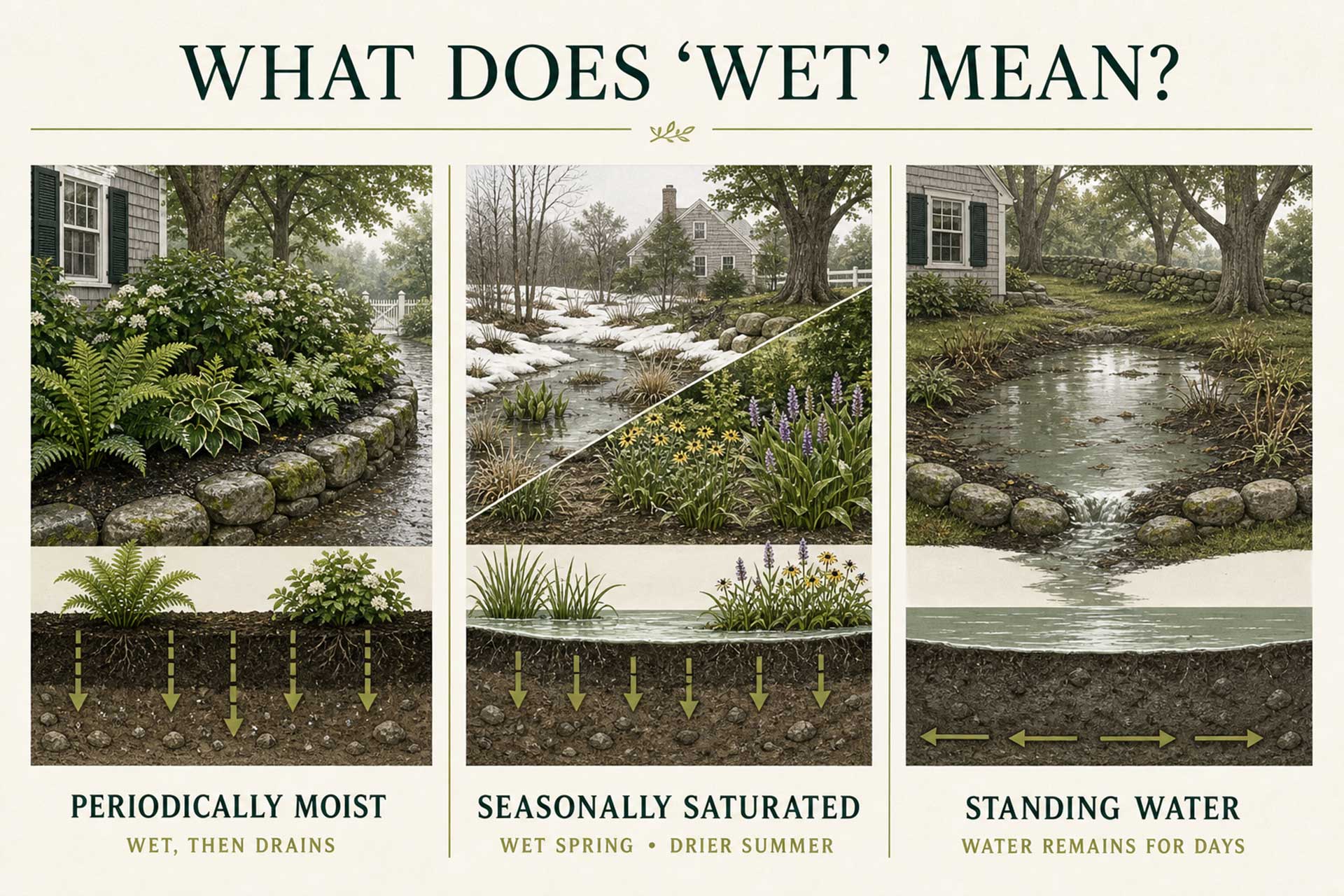
A site can be wet in several different ways. The distinction determines which plants can establish successfully and whether planting is the right first step.
Periodically Moist Soil
This soil becomes wet after rain or snowmelt but drains within a reasonable period. It may remain evenly moist during spring and become moderately dry later in summer. Many moisture-tolerant shrubs, ferns, and perennials perform well in these conditions.
Seasonally Saturated Ground
A low area may remain saturated during winter and spring, then dry substantially during summer. Plants for this setting must tolerate both low-oxygen soil during wet periods and reduced moisture later in the season. Establishment can be more difficult because the site does not remain consistent.
Persistent Standing Water
Water that remains for days after ordinary rainfall may indicate poor grading, compacted subsoil, a high water table, concentrated runoff, or an obstructed drainage route. Most garden plants, including many described as moisture-loving, will not thrive with their roots continuously submerged.
If a planting bed smells sour, plants repeatedly die, or water sits near a foundation, patio, retaining wall, septic system, or property line, begin with a broader evaluation. Blade’s guide to landscape drainage solutions for Massachusetts properties explains why standing water is a symptom rather than a complete diagnosis.
A Designed Rain Garden
A rain garden is not simply a wet depression filled with plants. Massachusetts Coastal Zone Management explains:
“Rain gardens are specially designed and planted depressions in the ground that collect, filter, and treat stormwater.”
The state’s rain garden guidance notes that these gardens typically use amended, porous soils and must be properly sized and located. It recommends placing them at least 10 feet from foundations and at least 50 feet from septic systems or wells. The guidance also warns that sites with poorly drained clay, shallow ledge, or a high groundwater table may be unsuitable.
That is why a rain garden should be designed as a stormwater feature, not improvised in the wettest part of the property.
Ask an Expert: Which Native Plants Will Thrive on My Weston Property?
Best Plants for Wet Areas in Massachusetts
The following plants offer useful starting points for Massachusetts landscapes. Many appear on the state’s list of native plants for rain gardens. Final selection should account for sunlight, soil acidity, exposure, mature size, browsing pressure, and how long the ground stays wet.
Shrubs for Structure, Flowers, and Winter Interest
Winterberry Holly
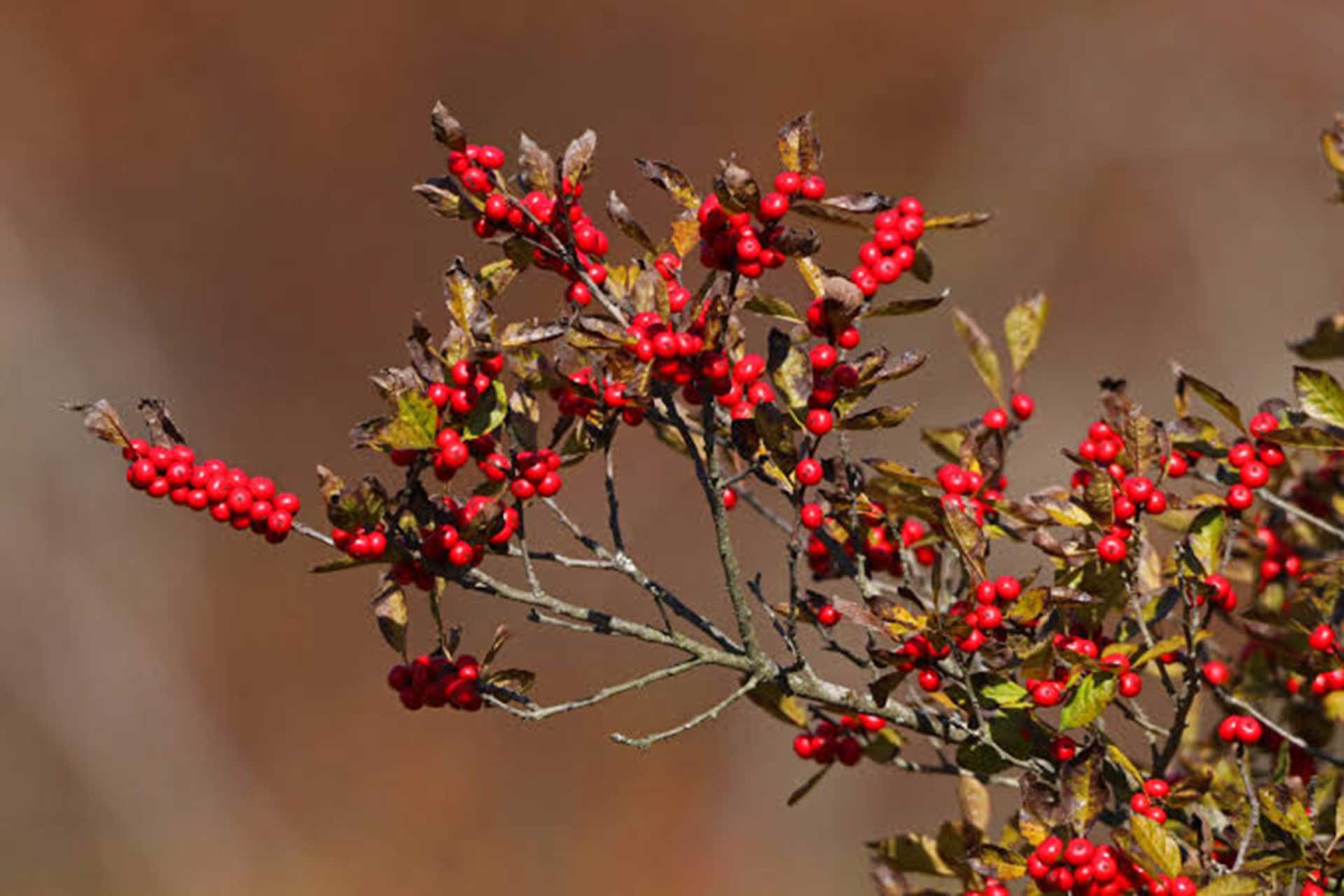
Winterberry holly (Ilex verticillata) is a deciduous native shrub valued for bright fruit that persists after the leaves fall. It performs well in moist, acidic soils and can bring winter color to low borders, rain gardens, and transitions near woodland edges.
Because winterberry plants are male or female, a compatible male pollinator is needed for female plants to produce abundant fruit. The shrub should be placed where its mature habit supports the larger composition rather than crowding a path or smaller perennial bed.
Summersweet
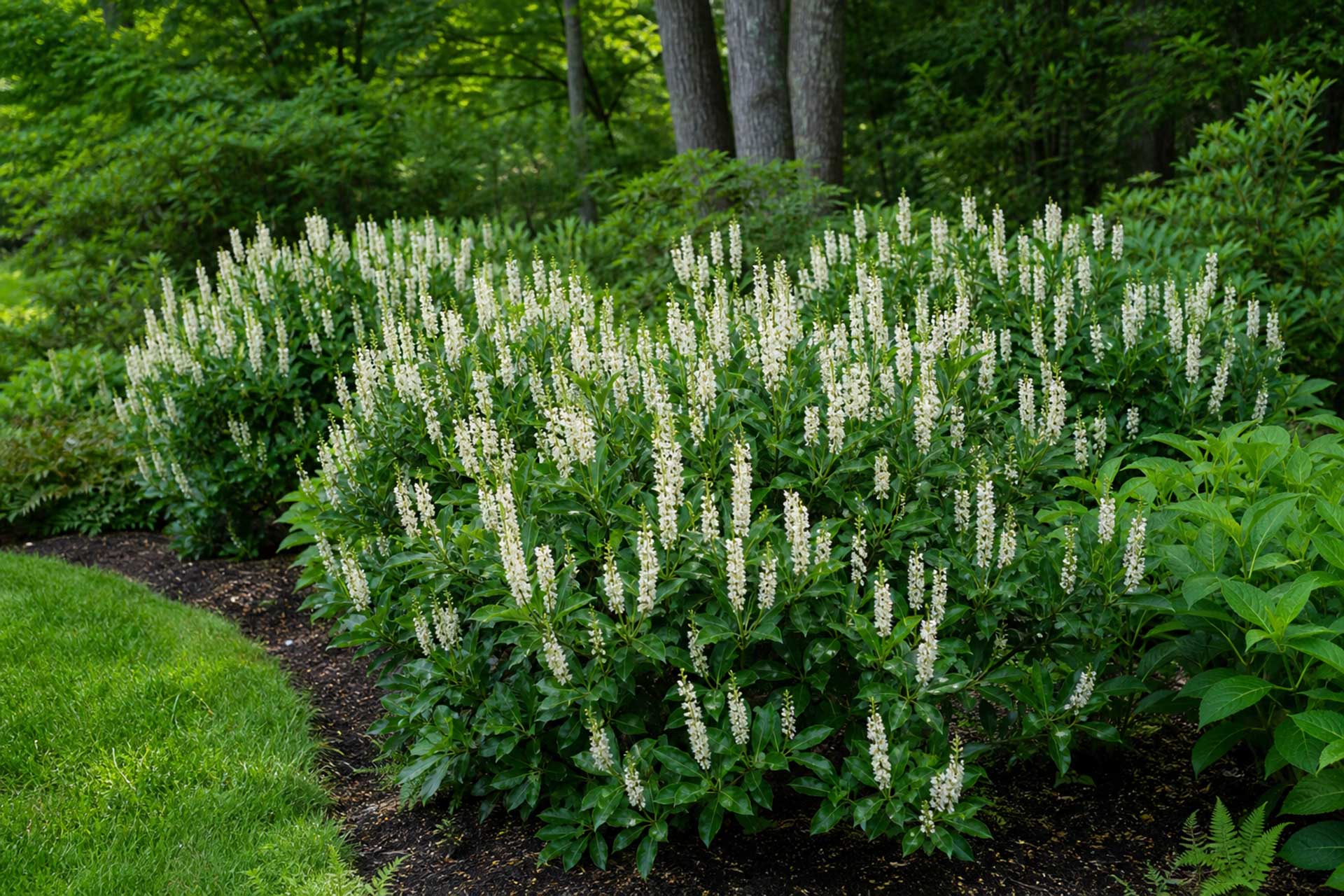
Summersweet, also known as sweet pepperbush (Clethra alnifolia), is especially useful where moist soil meets partial shade. Its fragrant summer flowers support pollinators, and cultivars are available in different mature sizes. It can work well in an informal shrub mass, along a woodland edge, or as part of a layered rain garden.
Summersweet can spread gradually under favorable conditions. That tendency may be useful in a naturalized planting but should be considered carefully in a restrained garden composition.
Buttonbush
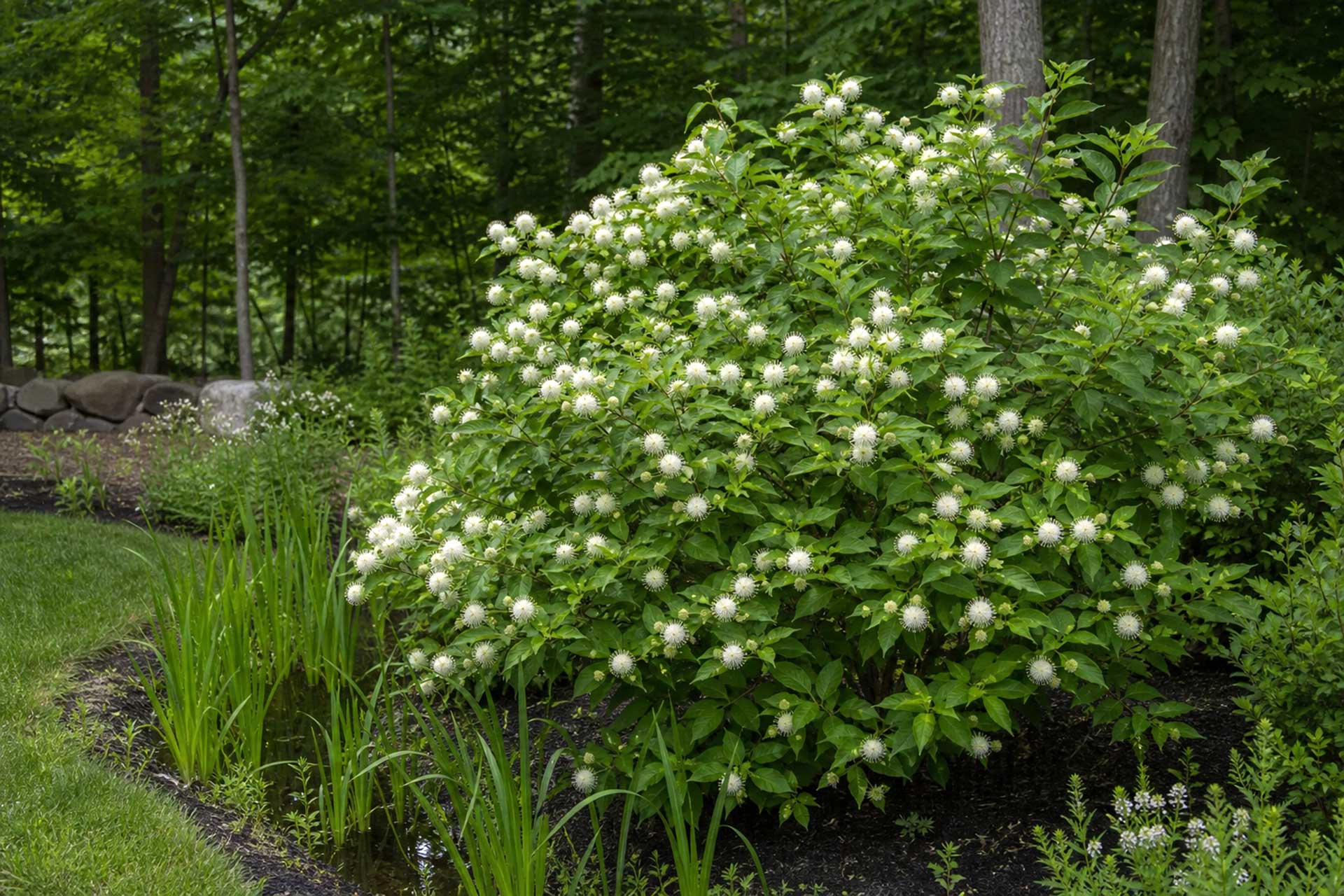
Buttonbush (Cephalanthus occidentalis) tolerates very wet ground and produces distinctive spherical flowers. It is a strong choice for larger, naturalistic spaces where its broad mature form has room to develop.
This is not typically a small foundation shrub. On an estate property in Dover, Weston, or Concord, it may suit the edge of a pond, swale, or expansive wet zone. On a compact property, its eventual size may make another shrub more appropriate.
Red-Osier or Silky Dogwood
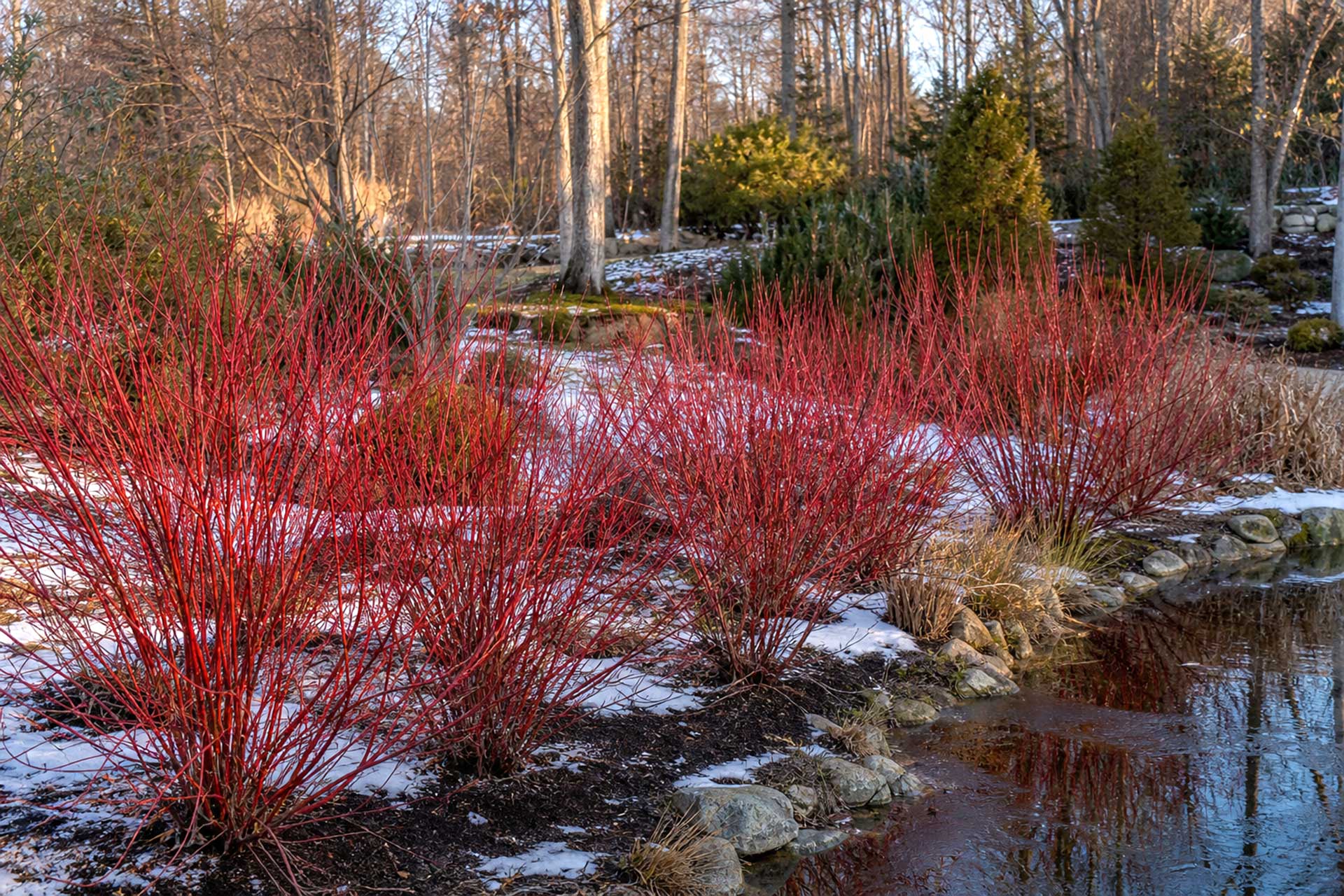
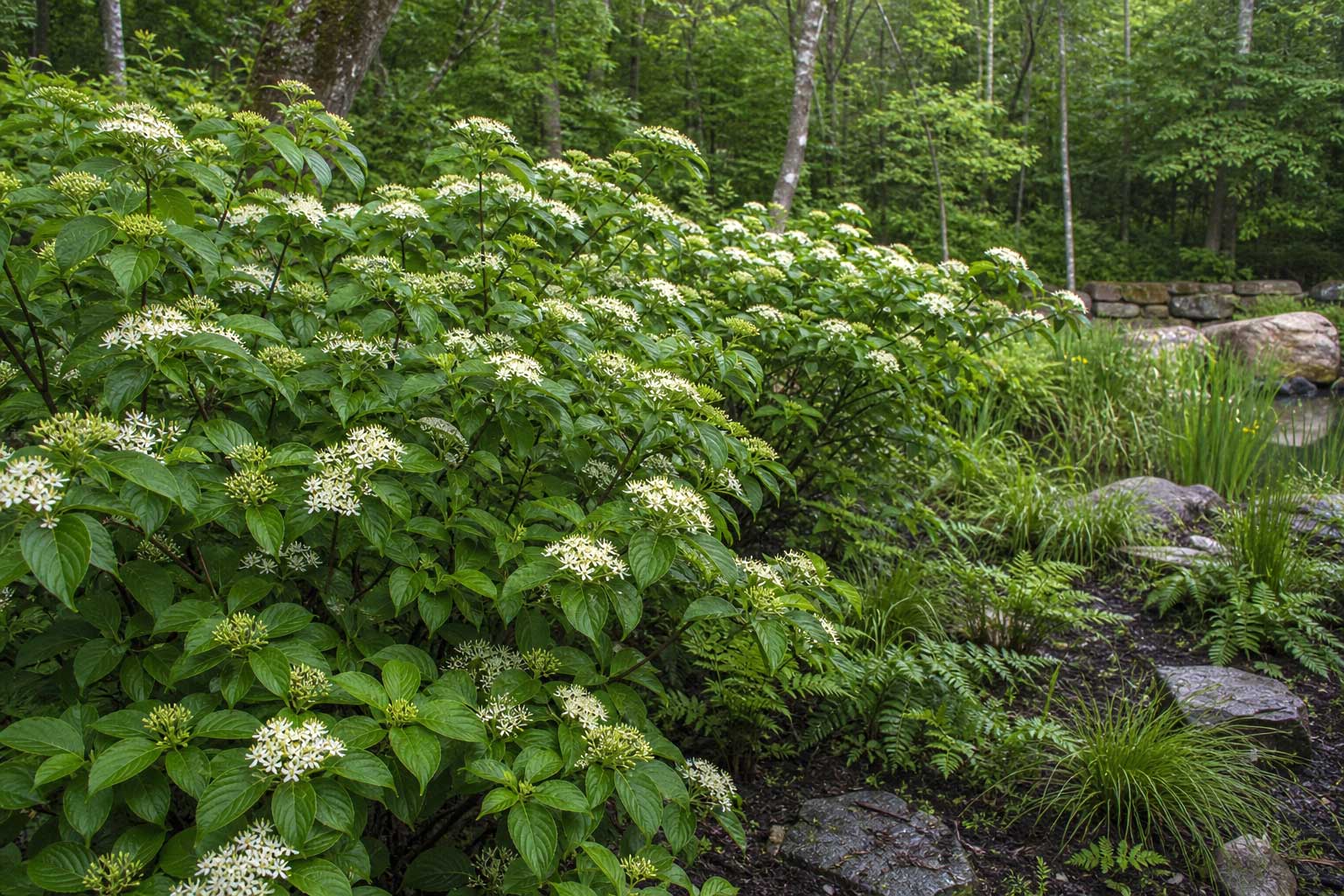
Native dogwoods such as red-osier dogwood and silky dogwood can tolerate wet soil and contribute dense branching, wildlife value, and seasonal stem color. They are useful for larger masses and natural transitions, especially where the goal is to stabilize and visually soften an irregular edge.
Their growth can become broad and informal. They work best where that character supports the design.
Highbush Blueberry
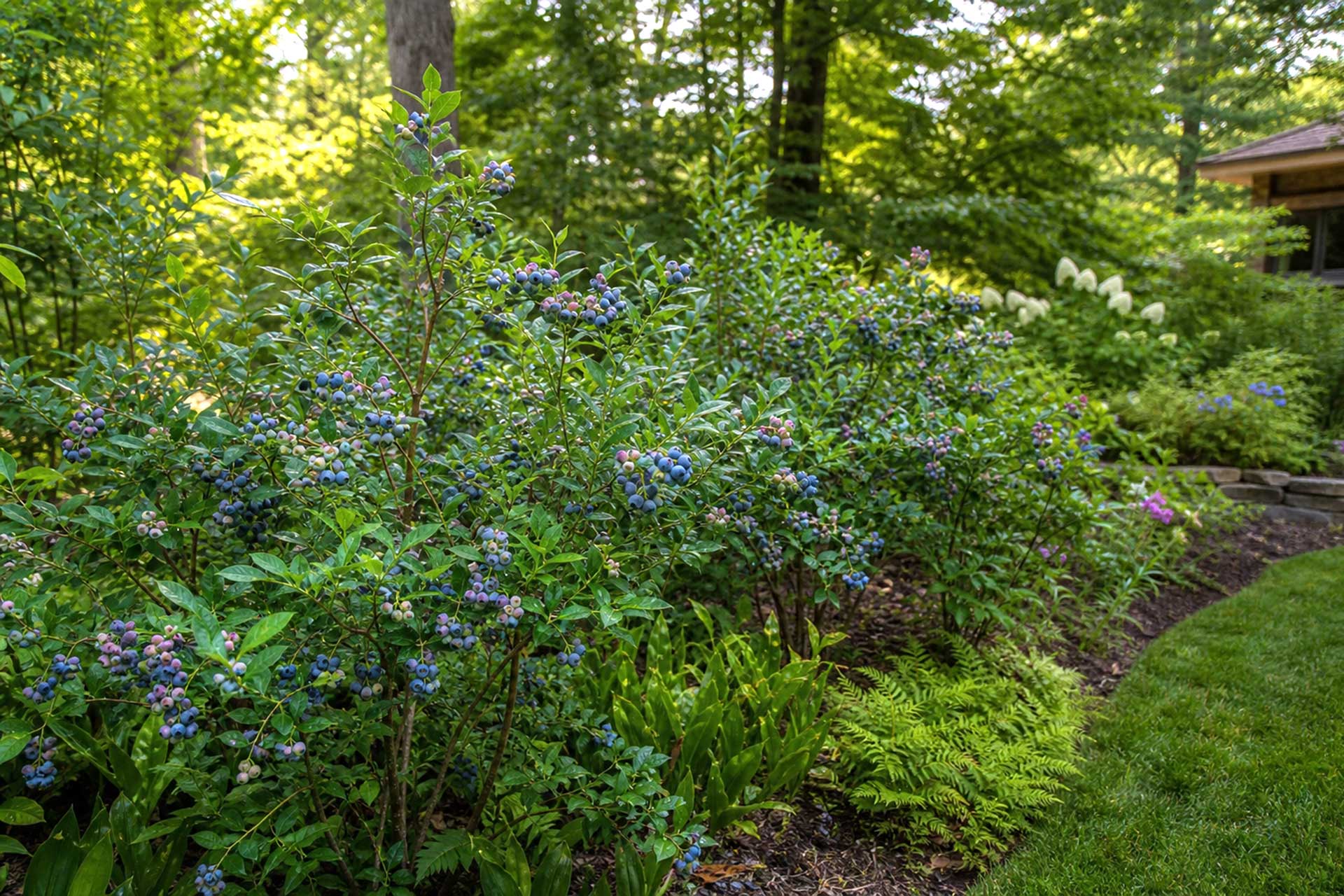
Highbush blueberry (Vaccinium corymbosum) prefers acidic soil and can tolerate moisture when the roots are not left indefinitely underwater. Spring flowers, summer fruit, and strong fall color make it a sophisticated addition to an ornamental planting.
A soil test before planting is especially useful for blueberries because soil pH strongly affects their performance.
Perennials for Color and Seasonal Rhythm
Blue Flag Iris
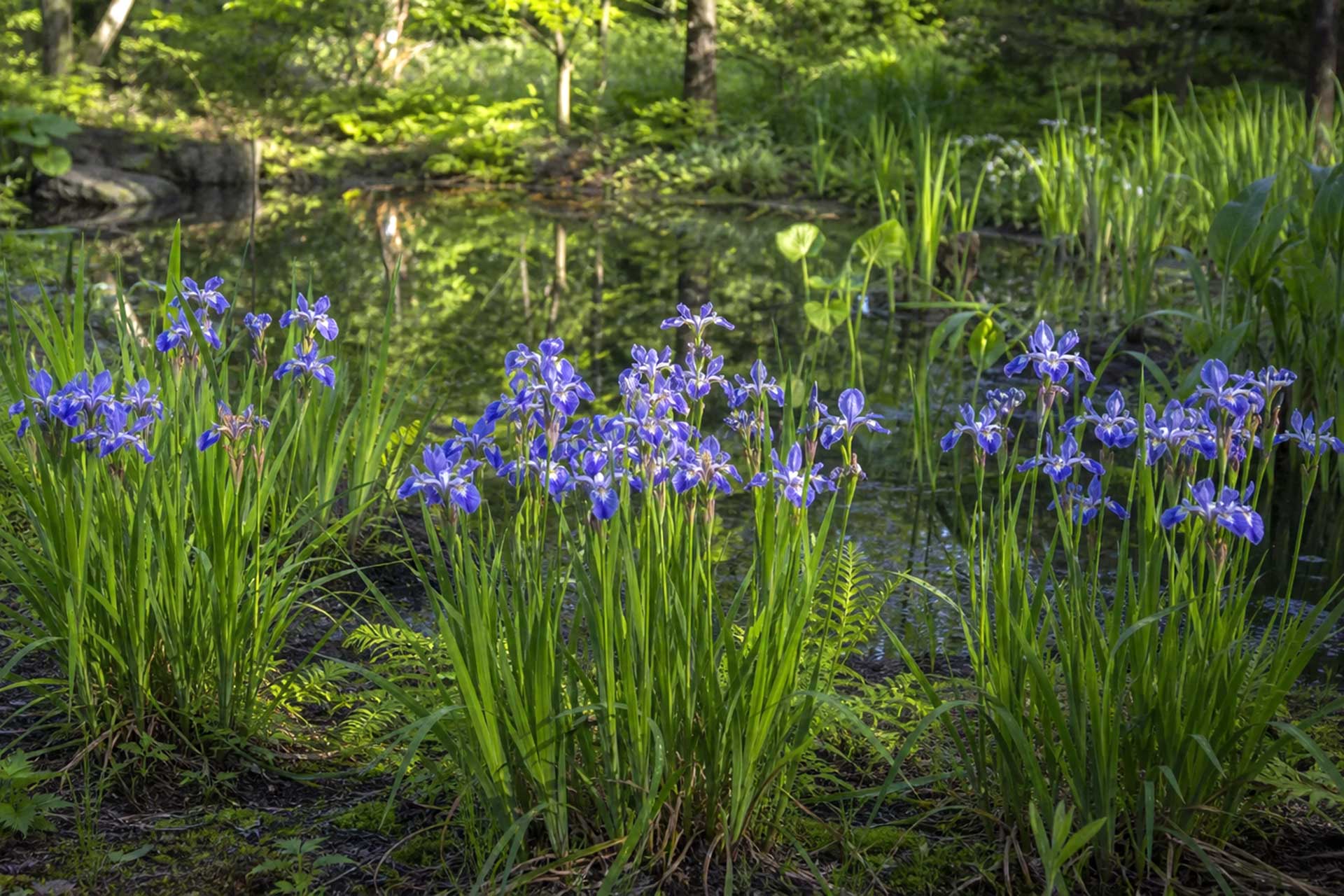
Blue flag iris (Iris versicolor) is a native perennial suited to high-moisture areas. Its upright foliage and blue-violet flowers make it valuable near water, in rain gardens, and among looser masses of sedges and ferns.
Its form is strong enough to read from a distance, which helps bring visual order to naturalistic plantings.
Cardinal Flower
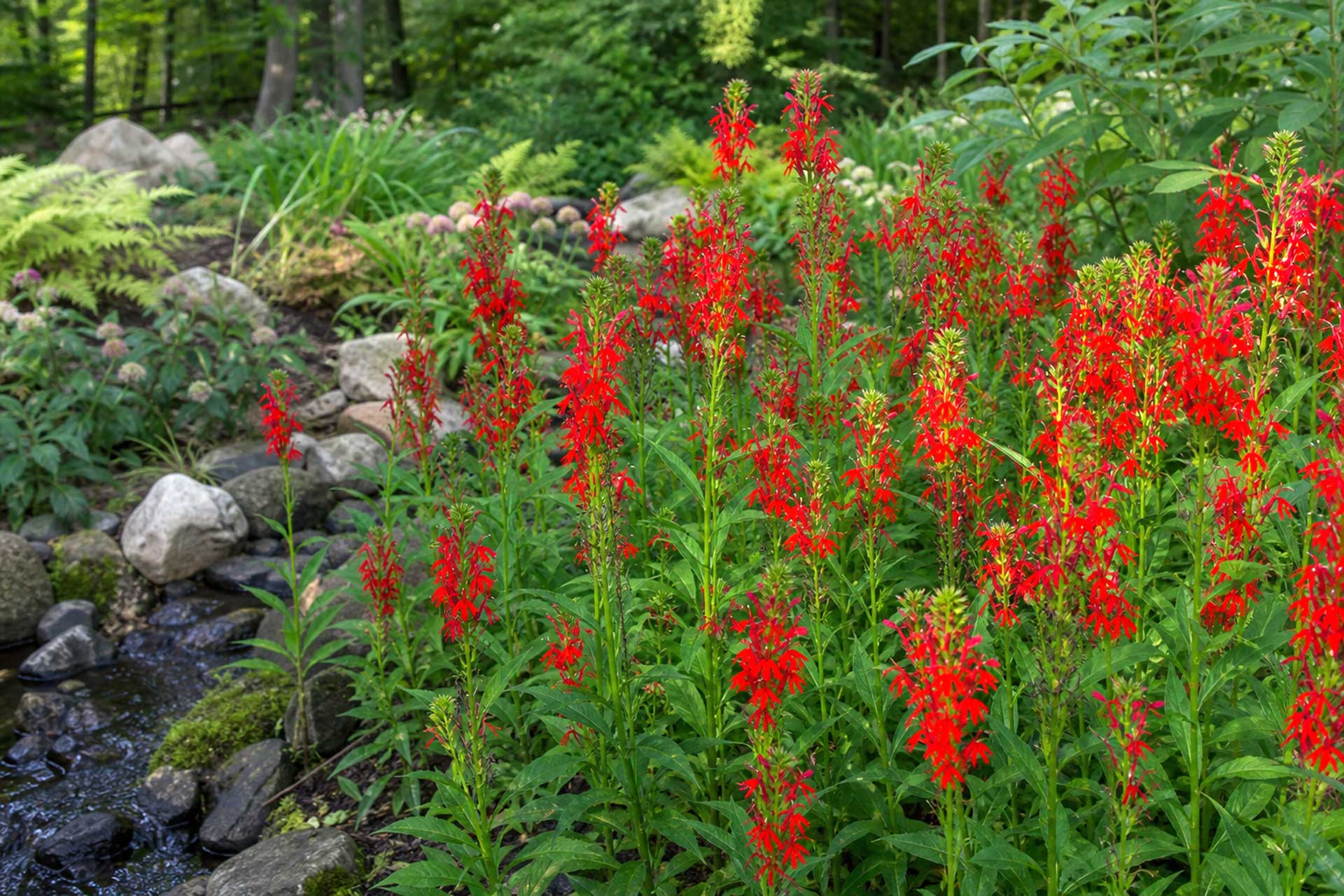
Cardinal flower (Lobelia cardinalis) produces intense red flowers in late summer. It appreciates moist soil and can perform in sun or partial shade when moisture is dependable. Its narrow form works well woven through lower foliage rather than installed as an isolated specimen.
Great Blue Lobelia
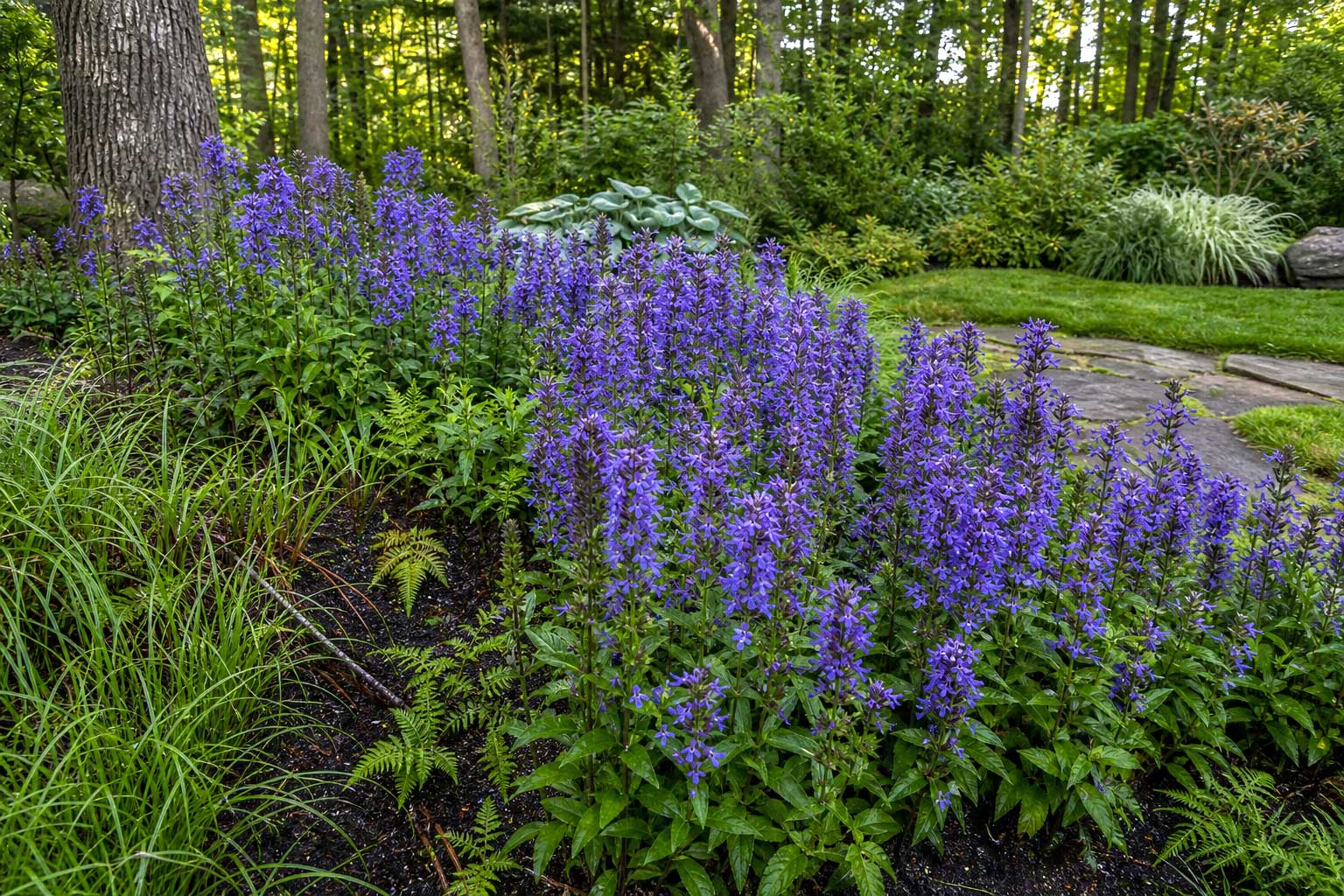
Great blue lobelia (Lobelia siphilitica) offers blue flowers and an upright habit suited to moist perennial combinations. It pairs naturally with cardinal flower, turtlehead, ferns, and sedges, allowing a designer to create a longer sequence of bloom.
Spotted Joe-Pye Weed
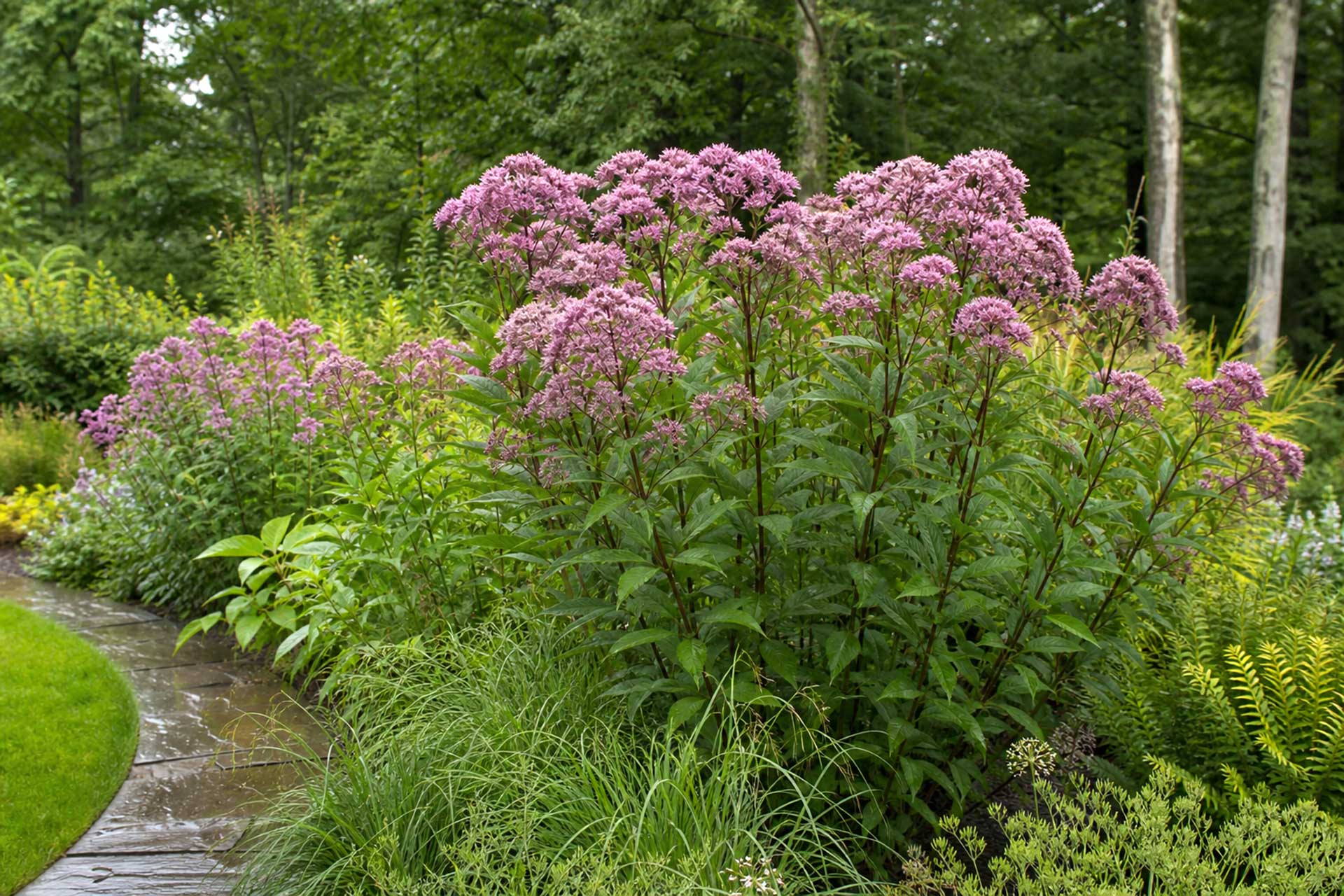
Spotted Joe-Pye weed (Eutrochium maculatum) brings height, late-season flowers, and a strong meadow character. It is best used where its scale is an advantage, such as a broad border, wet meadow edge, or backdrop to lower perennials.
Compact cultivars may suit smaller spaces, but even these require thoughtful placement. On a refined property, repetition and editing are important so the planting feels intentional rather than overgrown.
Swamp Milkweed
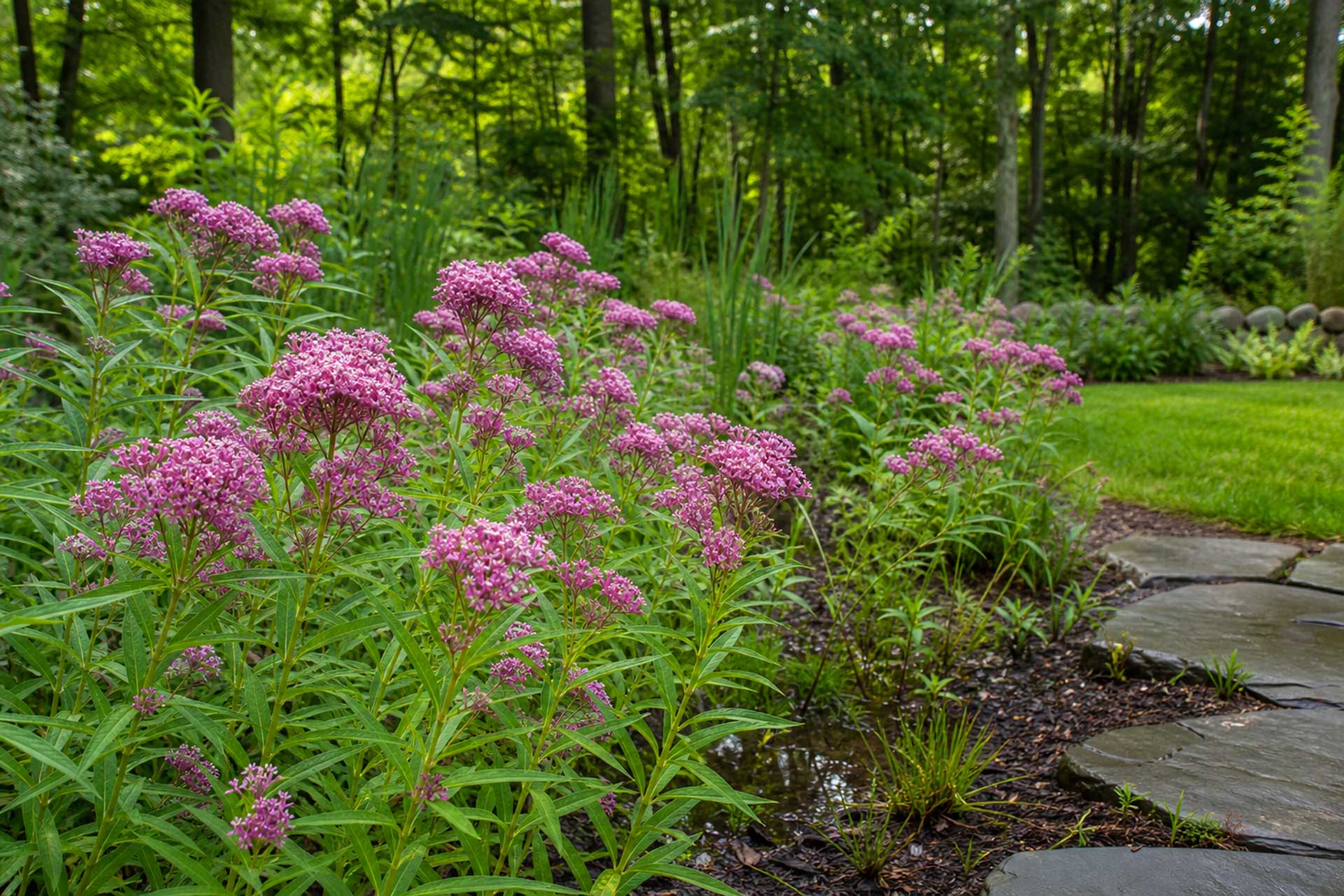
Swamp milkweed (Asclepias incarnata) favors moist soil and produces pink flower clusters in summer. It can be integrated into sunny rain gardens or mixed wet borders where its vertical stems and ecological role fit the design.
Despite its common name, it does not need to stand in permanent water. Consistently moist, well-aerated soil is generally more suitable than stagnant conditions.
White Turtlehead
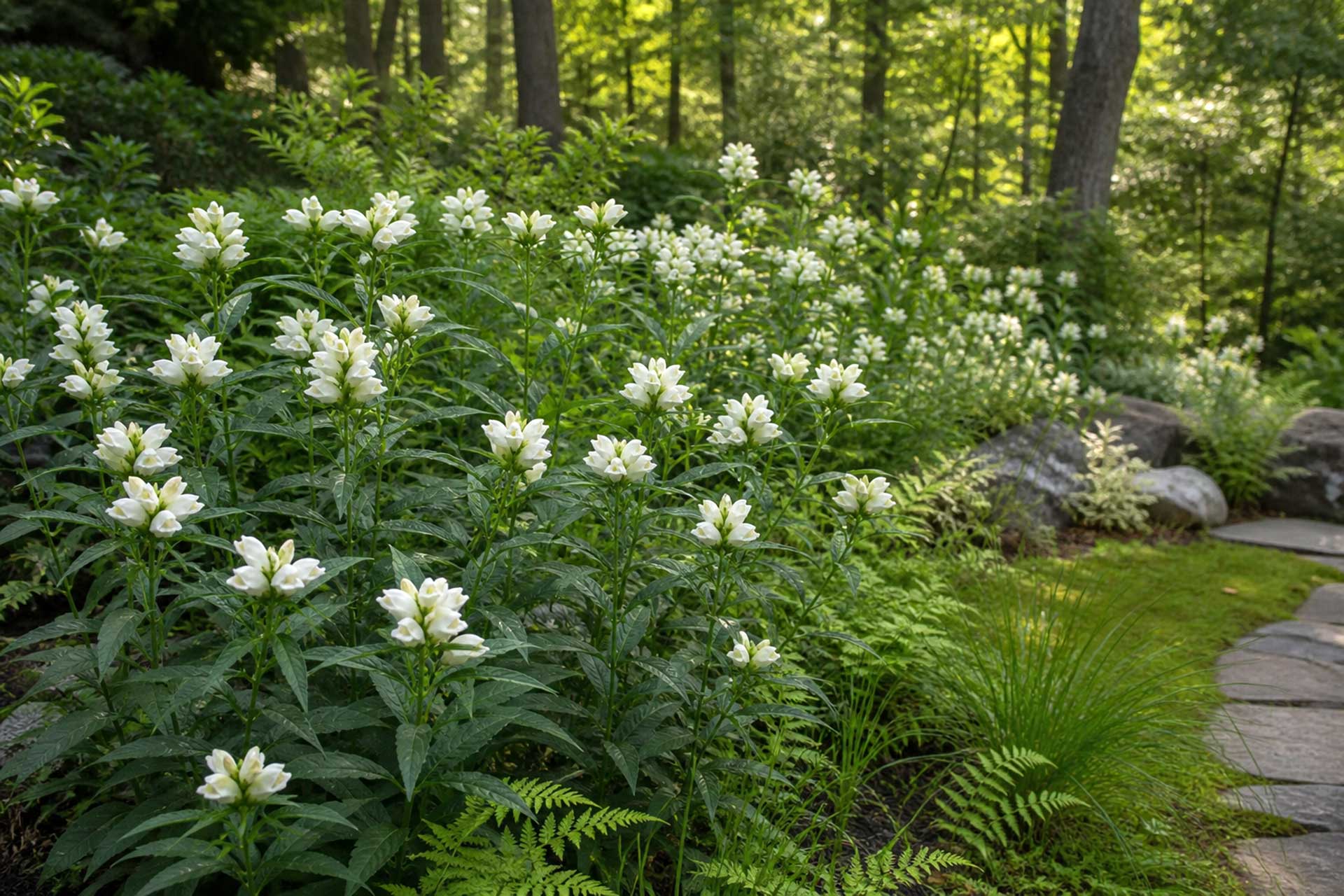
White turtlehead (Chelone glabra) is useful in moist soil and partial shade, including woodland-edge settings. Its late-season flowers and substantial foliage help fill the period when some early perennials have finished.
Ferns, Sedges, and Rushes for the Planting Framework
Flowers often receive the most attention, but foliage plants create continuity and help a wet-area garden remain composed between bloom periods.
- Royal fern: A large, architectural fern for moist to wet soil with room to develop.
- Sensitive fern: A spreading native fern suited to moist shade and naturalized edges.
- Tussock sedge: A moisture-loving sedge that forms distinctive clumps and works well in naturalistic wet areas.
- Soft rush: A strong vertical plant for high-moisture zones, rain gardens, and contemporary compositions.
Sedges and rushes are not interchangeable with ornamental grasses. Their moisture tolerance and growth habits vary by species. They should be selected with the same care given to flowering perennials and shrubs.
Related Blog: Landscape Drainage Solutions for Massachusetts Properties
How to Design a Wet-Area Planting That Feels Intentional
A list of suitable plants is not yet a planting plan. The most successful wet-area gardens organize plants according to moisture, scale, visibility, and seasonal change.
Use Moisture Zones
The center of a low area often stays wetter than its edges. A designed planting can respond with separate zones:
- Place the most moisture-tolerant sedges, rushes, iris, and appropriate shrubs at the lowest point.
- Use plants that tolerate alternating moisture around the middle zone.
- Position plants needing better drainage along the upper edge.
This approach is especially useful in rain gardens, where the basin, side slopes, and upper perimeter experience different moisture conditions.
Build a Layered Composition
Combine taller shrubs with repeated groups of perennials and a consistent lower layer. A winterberry or summersweet mass can provide structure, while iris, turtlehead, and lobelia contribute flowers. Sedges or ferns can tie the composition together.
Repetition matters. Installing one of every moisture-tolerant plant often creates a collection rather than a coherent garden.
Plan for the View in Every Season
A wet area visible from a terrace, kitchen, driveway, or primary arrival path needs more than summer flowers. Consider:
- winterberry fruit and colored dogwood stems
- fern emergence and iris flowers in spring
- summersweet, milkweed, and lobelia in summer
- Joe-Pye weed, turtlehead, fruit, and foliage color later in the season
- persistent seed heads and structural stems through winter
Selective winter cutting can preserve texture, but maintenance practices should fit the formality of the property and the health of the planting.
Account for Shade, Salt, and Browsing
A wet area beside a wooded boundary differs from one receiving full sun beside a driveway. Shade affects flowering and density. Road salt and snow storage can damage plants near entrances. Deer pressure can alter even a well-designed composition, and no plant should be treated as universally deer-proof.
Cape Cod landscapes add wind and salt spray. The Massachusetts coastal landscaping plant list can help identify species suited to coastal conditions, but exposure still needs to be evaluated at the property level.
When Plants Are Not the First Solution
Planting is appropriate when the site conditions are understood and compatible plants can improve the area. It is not the right first response when water threatens the home, hardscape, neighboring properties, or the stability of the landscape.
Arrange a professional assessment when:
- water remains near the foundation
- the area stays submerged after ordinary rain
- runoff crosses a driveway, patio, or walkway
- winter icing creates a safety concern
- soil or mulch repeatedly washes away
- the wet area appeared after construction or grading
- water may be entering from an adjacent property
- the proposed work is close to wetlands or another protected resource area
Work near wetlands, floodplains, streams, coastal banks, and protected buffers may require review by the local Conservation Commission. That determination should be made before excavation, filling, grading, or drainage construction begins.
A comprehensive landscape assessment can identify whether the best response is moisture-tolerant planting, soil preparation, regrading, a swale, drainage infrastructure, downspout management, or a coordinated combination.
Installation and Long-Term Property Care
Even plants adapted to wet soil need careful establishment. Nursery-grown roots can struggle if moved directly into dense, saturated ground without proper preparation. Conversely, a new rain garden may dry more quickly than expected during its first summer before roots have expanded.
UMass Extension cautions that flowering plants installed in soil that is too wet and cold are prone to root rot and nutrient deficiency. Its spring planting guidance is a useful reminder that moisture tolerance does not eliminate the need for appropriate planting conditions.
Long-term care may include:
- monitoring soil moisture during establishment
- adjusting irrigation by planting zone rather than watering the entire area uniformly
- replenishing mulch without burying crowns or directing mulch into drainage paths
- editing vigorous plants before they overwhelm slower neighbors
- removing sediment or debris where runoff enters a designed rain garden
- checking the overflow route after major storms
- dividing perennials and selectively pruning shrubs as the planting matures
A wet-area garden should become more settled and cohesive over time. Ongoing property care protects the original design while allowing plants to mature into the space.
Frequently Asked Questions About Plants for Wet Massachusetts Yards
Q: Can plants eliminate standing water in my yard?
A: Plants can take up moisture, cover soil, and support a properly designed rain garden or wet-area planting. They cannot correct major grading problems, concentrated roof runoff, compacted subsoil, a high water table, or failed drainage infrastructure.
Q: What shrubs grow well in wet soil in Massachusetts?
A: Possible choices include winterberry holly, summersweet, buttonbush, selected native dogwoods, highbush blueberry, spicebush, and sweetgale. The right shrub depends on sunlight, soil acidity, mature size, salt exposure, and whether the ground is periodically moist or persistently saturated.
Q: What plants work in wet shade?
A: Royal fern, sensitive fern, white turtlehead, summersweet, and spicebush may suit moist, partly shaded conditions. Deep shade, mature tree roots, and prolonged standing water can narrow the choices, so the full site should be evaluated.
Q: Is a rain garden the same as a naturally soggy area?
A: No. A rain garden is a designed depression that receives a calculated amount of runoff, uses appropriate soil, allows water to infiltrate, and includes a safe overflow route. A naturally soggy area may have clay, ledge, groundwater, or another condition that makes a rain garden unsuitable.
Q: Should I test the soil before planting a wet area?
A: Yes, especially for a significant planting project. Soil testing can provide useful information about pH, nutrients, and organic matter. It should be combined with an evaluation of soil structure, drainage, compaction, sunlight, and seasonal water patterns.
Turn a Difficult Wet Area Into a Purposeful Part of the Landscape
The best plants for wet areas in Massachusetts are not simply plants that survive more water. They are species selected for a specific moisture pattern, light level, soil condition, mature scale, and design purpose. When those choices are organized into a layered composition, an unreliable lawn or struggling border can become one of the most distinctive parts of the property.
The first decision is still diagnostic. Is the area an appropriate place for moisture-tolerant planting, or is it showing a larger problem with grading, runoff, soil, or drainage? Answering that question protects the planting investment and the surrounding landscape.
If a wet area is limiting how your property looks, functions, or matures, contact us today. A coordinated approach to landscape design, construction, planting, drainage, and long-term property care can turn a recurring problem into a landscape that feels connected, durable, and true to the home.
Learn More About Plants for Wet Areas