Privacy concerns are not limited to dense city neighborhoods. A compact backyard in Cambridge, a historic brownstone patio in Back Bay, or a multi-acre property in Dover can all face the same challenge: how to create separation without sacrificing character. As homes across Greater Boston continue to invest in outdoor kitchens, pools, terraces, and expanded living spaces, privacy screening becomes an essential part of thoughtful landscape design.
In Massachusetts, achieving that privacy requires more than planting a row of trees along the property line. Cold winters, heavy snow loads, deer pressure in suburban towns, and varied soil conditions all influence what will thrive long term. The right privacy trees can soften boundaries, protect outdoor spaces, buffer wind and noise, and enhance property value. The wrong choices can struggle, decline, or create maintenance challenges for decades.
This blog post explores the best privacy trees for Massachusetts, with a focus on species that perform well in Boston’s climate. We will cover evergreen screening, fast-growing options, planting strategy, cost considerations, and long-term maintenance so homeowners can make informed decisions that mature beautifully over time.
Key Takeaways
- The best privacy trees for Massachusetts must withstand Zone 6 winters, snow load, wind, and deer pressure.
- Evergreen species such as arborvitae and spruce provide reliable year-round screening in Boston’s climate.
- Fast-growing options can deliver coverage within a few years, but proper spacing and irrigation are essential.
- Layered planting designs create more natural, resilient privacy than a single row of trees.
- Thoughtful planning and professional installation protect long-term property value and landscape performance.
Key Considerations When Choosing Privacy Trees in Massachusetts
Before selecting a species, it helps to understand the factors that determine long-term success.
- USDA Hardiness Zone 6a–6b across Greater Boston
- Snow and ice tolerance
- Wind exposure, particularly on open suburban properties
- Deer pressure in towns such as Weston, Dover, and Carlisle
- Soil conditions, often clay-heavy or rocky
- Mature height and spread at 10, 20, and 30 years
- Irrigation requirements during establishment
According to the National Association of Landscape Professionals, professionally designed and installed landscaping can increase property value by up to 15 percent. Privacy screening, when done correctly, is not simply a visual barrier. It is a long-term landscape investment that enhances comfort and overall property performance.
As one Massachusetts-based landscape architect often notes, “Privacy trees are rarely about hiding. They are about shaping space. The goal is to create comfort while preserving the openness that makes New England properties feel expansive.”

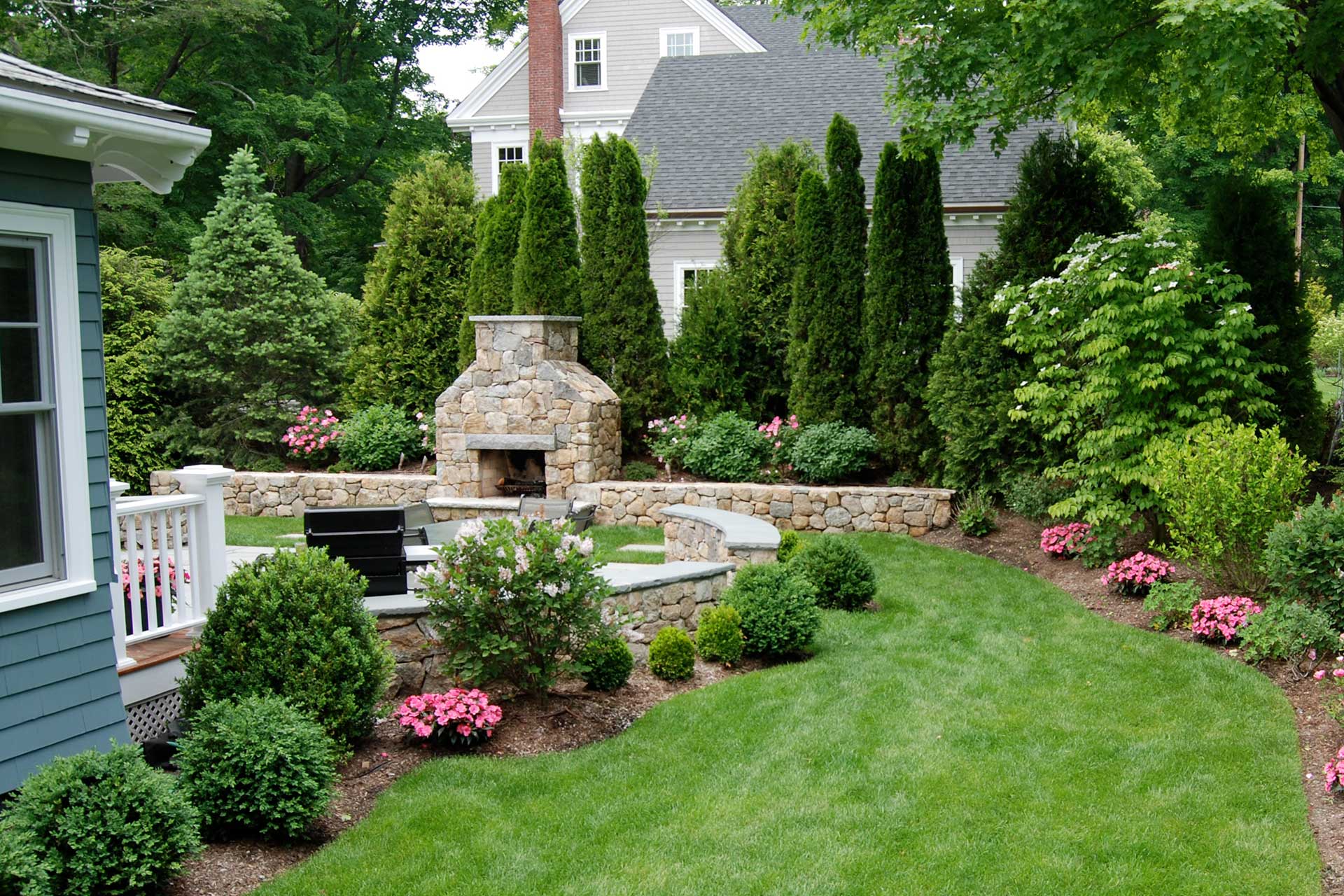
Why Privacy Screening Matters on Massachusetts Properties
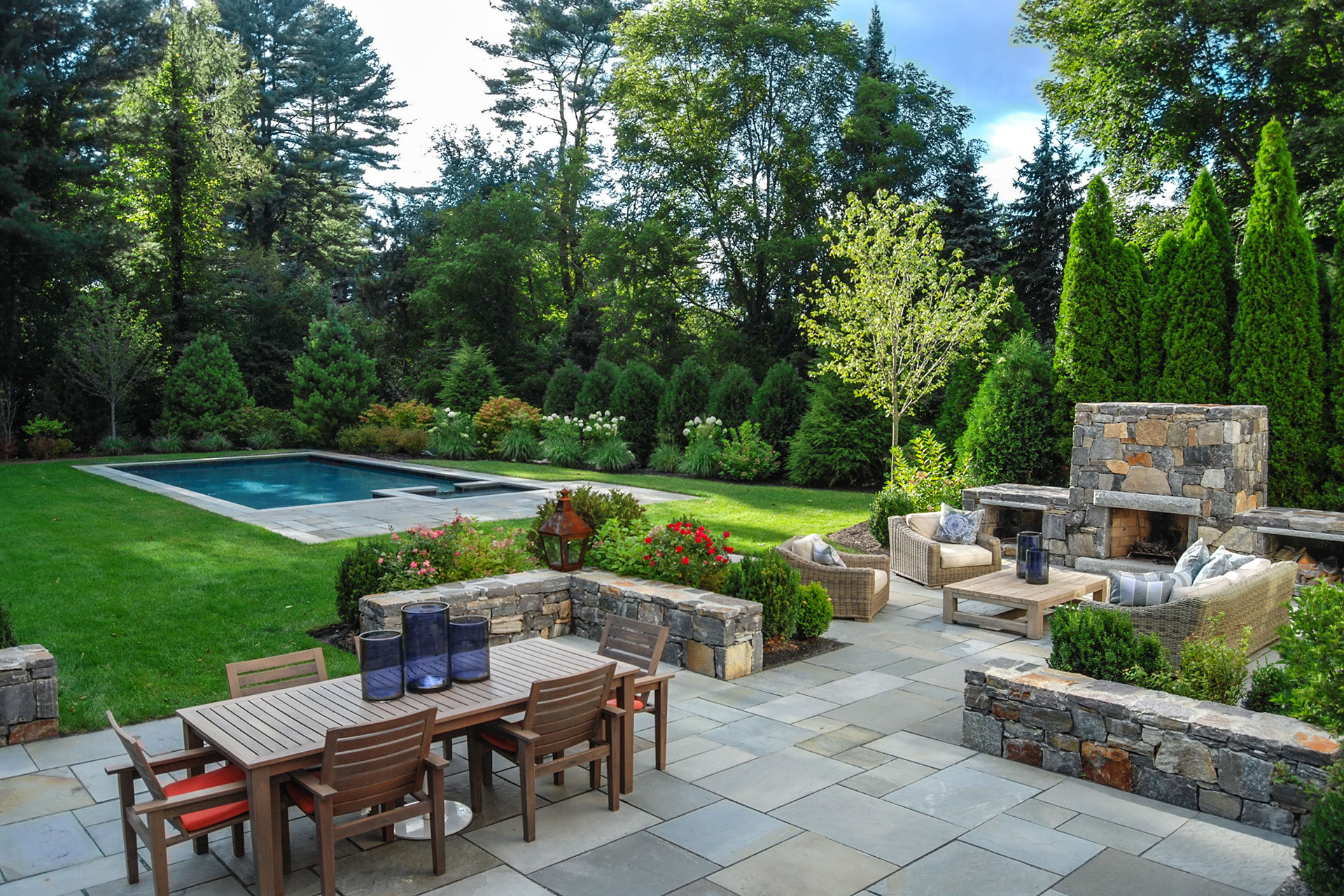
Even on larger suburban lots, privacy challenges remain. Elevated neighboring homes can overlook pool areas. Long driveways may be visible from the road. Winter leaf drop can expose sightlines that feel intrusive once snow arrives.
Thoughtful privacy landscaping serves several purposes:
- Protecting outdoor living spaces such as patios, pools, and fire features
- Buffering wind along open fields and rural roads
- Reducing road noise
- Softening property lines without the heaviness of fencing
Unlike solid fencing, trees evolve with the landscape. They contribute texture, habitat, seasonal interest, and long-term structure.
What Makes a Privacy Tree Successful in Boston’s Climate
Not every tree marketed as a “privacy tree” performs well in Massachusetts. Successful screening depends on matching species to site conditions.
Cold Hardiness and Snow Load
Greater Boston falls primarily within USDA Zone 6. Trees must tolerate prolonged winter cold and withstand heavy snow accumulation without splitting or deforming.
Deer Resistance
In suburban towns like Weston, Dover, and Carlisle, deer pressure is significant. Certain arborvitae varieties may struggle without protection, while species like Eastern Red Cedar perform more reliably.
Soil Conditions
Massachusetts soils vary widely. Many properties have compacted clay subsoils or shallow rocky areas. Professional soil evaluation and amendment can dramatically improve establishment success.
Mature Scale
A common mistake is focusing on initial height rather than mature size. A tree planted at 8 feet may reach 30 feet or more within 15 to 20 years. Proper spacing and long-term planning are essential.
“Effective privacy planting isn’t about building a wall of green. It’s about shaping space with intention. When trees are selected for the right soil, climate, and scale, they create comfort and discretion while still allowing a property to feel open and connected to its surroundings.”
— Katie Johnson, a Blade of Grass
Best Evergreen Privacy Trees for Year-Round Screening in Massachusetts
Evergreens are often the foundation of privacy screening in New England because they provide consistent coverage throughout winter.
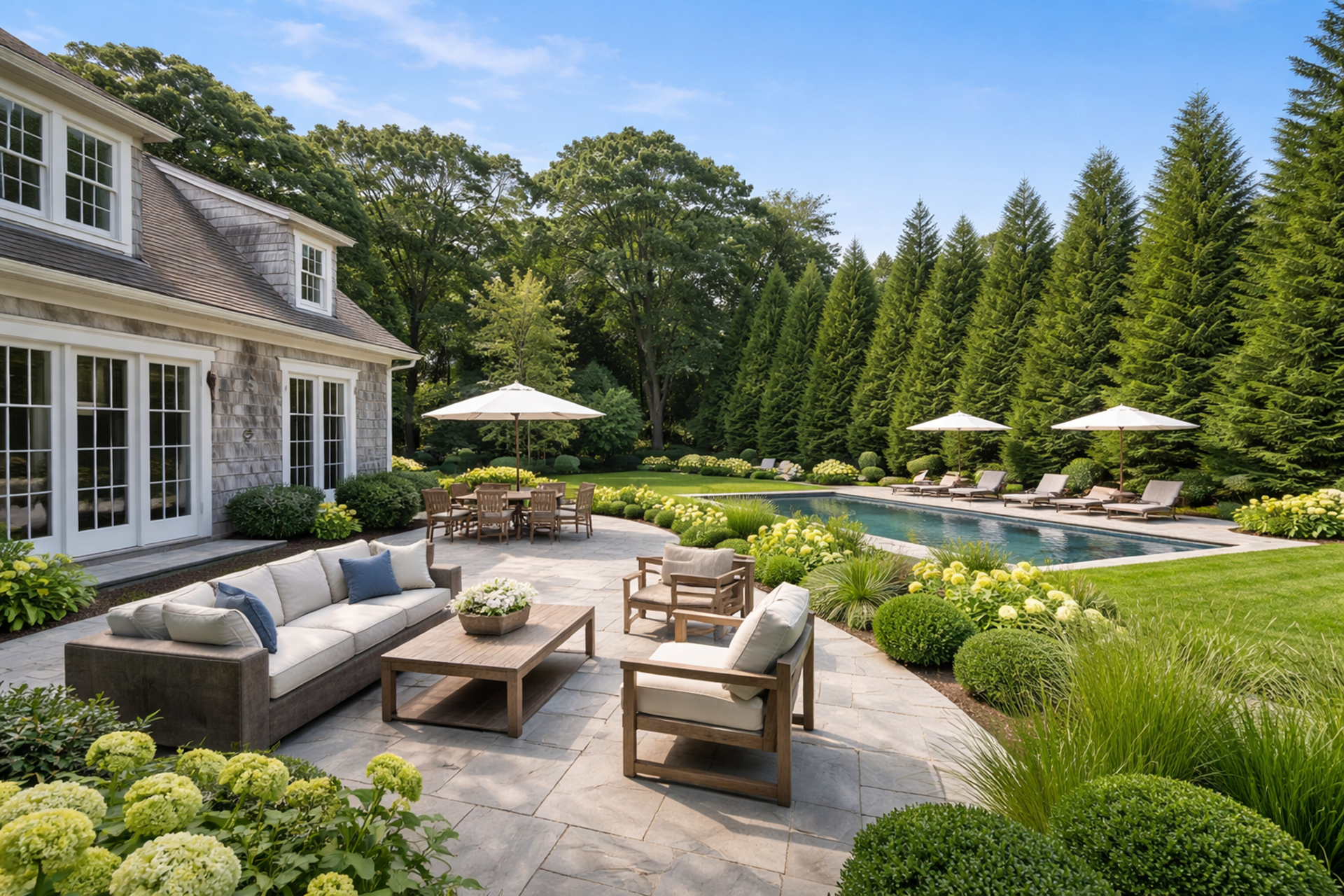
Green Giant Arborvitae
A popular option for long property lines, Green Giant Arborvitae grows quickly and can reach heights of 30 to 40 feet.
Green Giant Arborvitae is one of the most widely specified privacy trees in Massachusetts for good reason. Its rapid growth rate, dense foliage, and strong central structure allow it to establish meaningful screening within just a few years. Mature specimens form a tall, uniform wall of evergreen texture, making them particularly effective along property boundaries, pool enclosures, and areas requiring year-round privacy.
This hybrid variety is also more resistant to winter burn and disease than many older arborvitae selections. Proper spacing is essential, as mature width can exceed 10 to 12 feet. When installed with thoughtful soil preparation and irrigation, Green Giant Arborvitae provides reliable, long-term screening with relatively low maintenance requirements.
Pros: Rapid growth, dense screening, adaptable
Cons: Requires space, may need deer protection when young
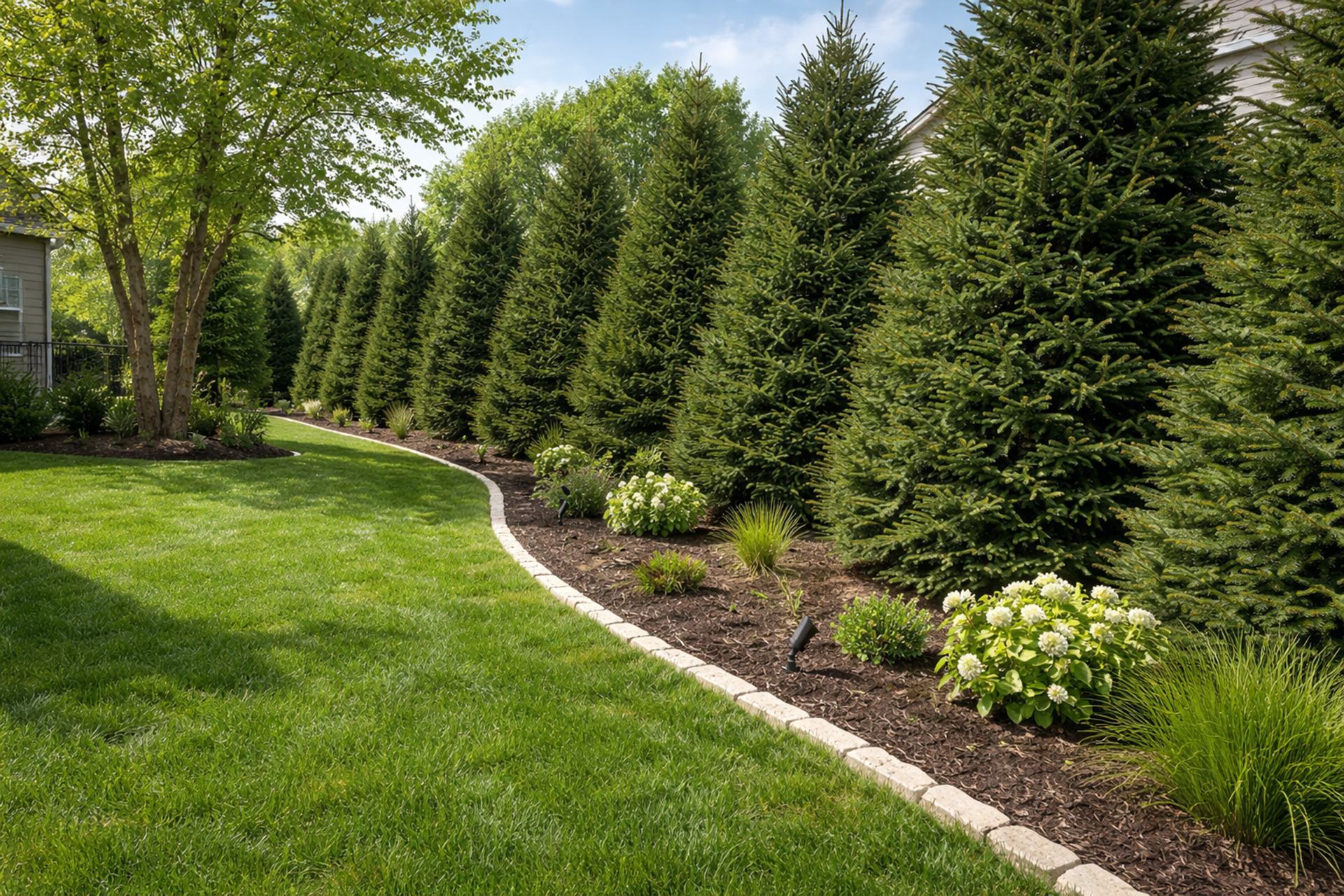
Norway Spruce
Ideal for larger properties and rural settings, Norway Spruce offers a naturalistic look and excellent wind buffering.
Norway Spruce is often favored on expansive suburban or estate properties where a softer, more organic screen is desired. Its layered branching habit and slightly irregular silhouette create a natural woodland character rather than a rigid hedge effect. Mature trees can exceed 60 feet in height, making them particularly effective for wind protection and visual buffering along open fields or road frontages.
Unlike narrower screening trees, Norway Spruce requires ample space to accommodate its broad lower branches. In return, it delivers exceptional durability in Massachusetts winters and performs well under heavy snow loads. For larger properties seeking both privacy and a sense of landscape depth, Norway Spruce is a strong long-term investment.
Pros: Strong structure, cold hardy, effective windbreak
Cons: Wide mature spread
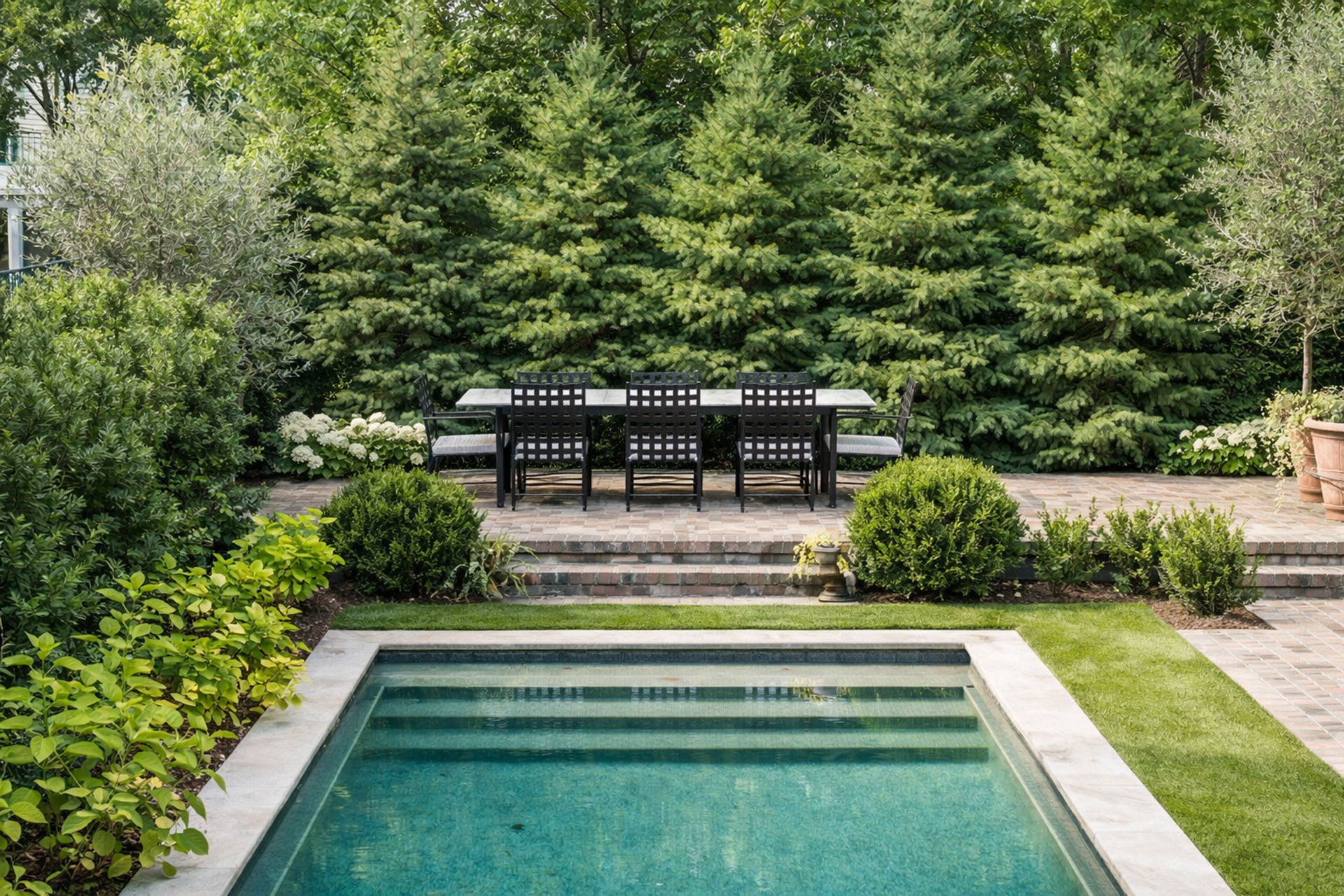
Eastern White Pine
A native species with soft texture and fast growth, well suited for expansive landscapes.
Eastern White Pine is a classic New England tree valued for its graceful form and feathery, blue-green needles. As a native species, it adapts well to regional soils and climate conditions, and its fast growth allows for effective screening over time. Mature trees can reach 50 to 80 feet, making them best suited for larger lots where scale is not a limitation.
White Pine offers a lighter, more open texture compared to arborvitae or spruce, allowing filtered light to pass through while still creating visual separation. It works especially well when integrated into layered planting designs rather than planted in a tight, formal row. Regular monitoring and selective pruning help maintain structure and health as the trees mature.
Pros: Native, fast growing, tall canopy
Cons: Requires room and periodic pruning
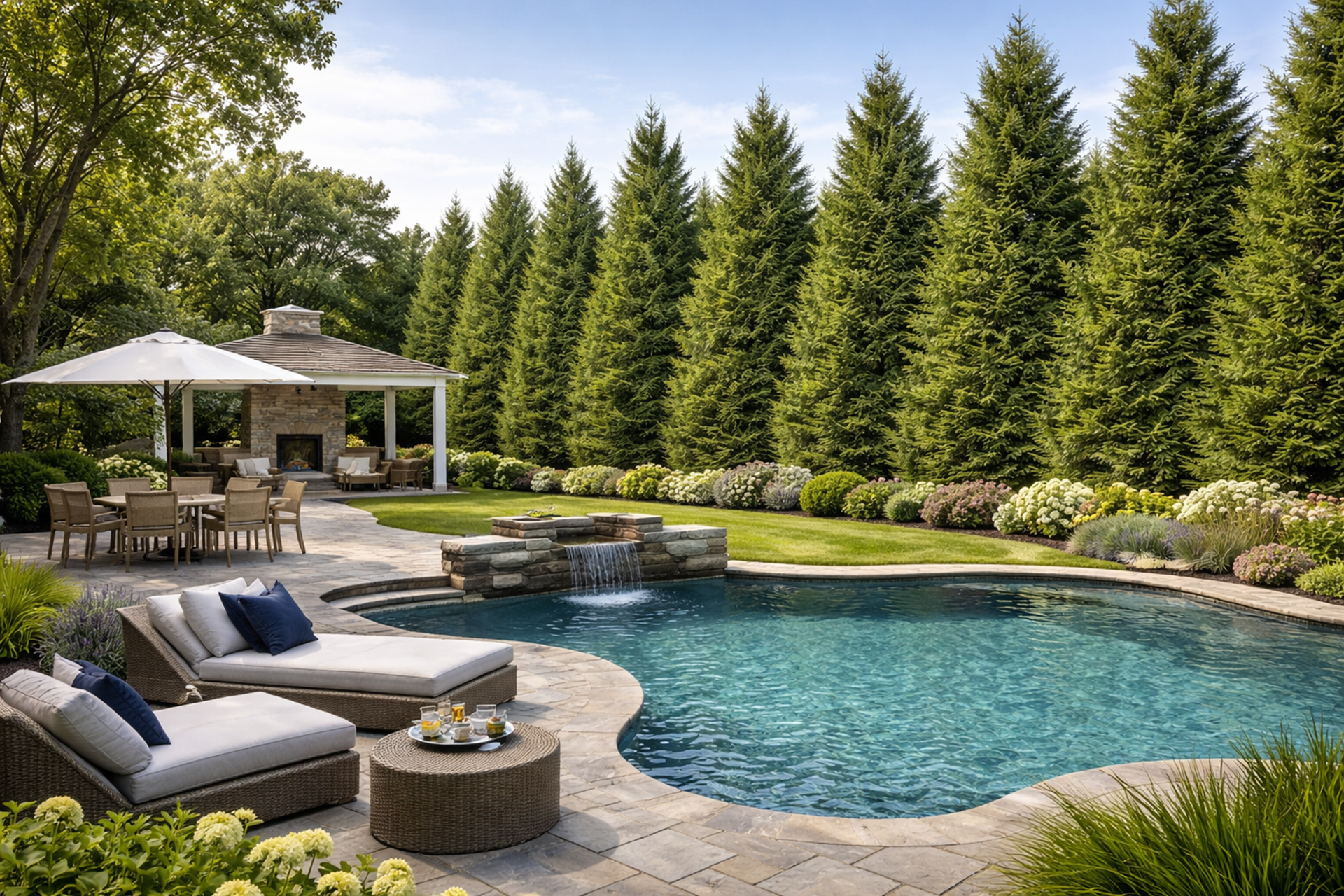
Eastern Red Cedar
Highly tolerant of salt and deer browsing, making it a reliable choice near roads or driveways.
Eastern Red Cedar is among the most durable evergreen screening options available in Massachusetts. Its natural tolerance to road salt, wind exposure, and deer browsing makes it particularly effective along driveways and roadside boundaries. The dense, upright habit provides consistent year-round coverage, while its rich green foliage maintains color through winter.
Compared to faster-growing species, Eastern Red Cedar develops at a moderate rate but rewards patience with long-term resilience and minimal intervention. Mature height typically ranges from 20 to 40 feet depending on cultivar. For homeowners seeking a low-maintenance privacy solution that performs reliably in challenging site conditions, Eastern Red Cedar is an excellent choice.
Pros: Durable, low maintenance, deer resistant
Cons: Slower growth compared to Green Giant
Fast-Growing Privacy Trees That Perform in New England
For homeowners seeking quicker results, growth rate becomes important. However, “fast growing” does not mean instant screening. Most trees require three to five years to provide meaningful coverage and up to ten years for full maturity.
Green Giant Arborvitae remains one of the most reliable fast-growing options. River Birch can provide partial screening with seasonal interest. Hybrid Poplar grows rapidly but may lack long-term structural strength.
Allan Robinson of a Blade of Grass explains it this way: “The first two years determine the next twenty. Proper planting depth, soil preparation, and irrigation during establishment matter more than the initial height of the tree.”
| Tree | Growth Rate | Mature Height | Ideal Use Case |
|---|---|---|---|
| Green Giant Arborvitae | Fast (2–3 ft per year) | 30–40 ft | Long property lines, pool screening, formal privacy hedges |
| Norway Spruce | Moderate to Fast | 50–60+ ft | Large suburban or estate properties, wind buffering, naturalistic screens |
| Eastern White Pine | Fast | 50–80 ft | Expansive landscapes, layered screening, native woodland character |
| Eastern Red Cedar | Moderate | 20–40 ft | Roadside privacy, salt exposure areas, deer-prone properties |
Layered Privacy Screens for a More Natural Look
On larger properties, a single straight row of trees can feel artificial. Layered screening offers depth and visual interest. This approach combines:
- Tall evergreen backdrops
- Mid-level deciduous trees
- Understory shrubs
- Occasional berming for elevation
Layered plantings soften boundaries and preserve selective views across open fields or wooded edges. This strategy also reduces disease risk by avoiding monocultures.
Related Blog: Creating Privacy with Trees and Hedges in Residential Landscapes
How Much Do Privacy Trees Cost in Massachusetts?
Costs vary depending on tree size, species, and site complexity. In Massachusetts, professionally installed privacy trees often range as follows:
| Component | Typical Range |
|---|---|
| 8–10 ft Evergreen Installed | $800–$1,500 per tree |
| 12–14 ft Evergreen Installed | $1,800–$3,500 per tree |
| Irrigation Installation | $2,000–$6,000+ depending on scope |
| Soil Preparation & Grading | Project-specific |
Larger properties requiring equipment access, long rows of planting, or soil remediation may increase investment. While smaller trees are less expensive initially, larger specimens provide immediate impact and faster screening.
Related Blog: Why Is Landscape Design So Expensive in Boston?
Common Mistakes with Privacy Trees in Massachusetts
Several recurring issues appear across suburban properties:
- Planting too close to property lines without considering mature spread
- Choosing a single species for long runs, increasing disease vulnerability
- Ignoring deer protection during early years
- Skipping irrigation during the establishment period
- Blocking desirable views unintentionally
Professional planning helps balance privacy, aesthetics, and long-term health.
Long-Term Maintenance and Stewardship
Privacy trees require ongoing care to maintain structure and health. Annual pruning supports density. Fertilization programs tailored to Massachusetts soil conditions promote steady growth. Irrigation adjustments are critical during dry summers. Monitoring for pests such as hemlock woolly adelgid is essential for certain species.
Trees planted today will define the property decades from now. A proactive maintenance strategy protects that investment.
Frequently Asked Questions About Privacy Trees in Massachusetts
Q: What is the best privacy tree for Massachusetts?
A: Green Giant Arborvitae and Norway Spruce are among the most reliable evergreen screening trees for Zone 6 conditions.
Q: What privacy trees stay green all winter in Boston?
A: Evergreens such as arborvitae, spruce, white pine, and Eastern Red Cedar provide year-round coverage.
Q: How fast do privacy trees grow in New England?
A: Fast-growing varieties may add 2 to 3 feet per year under optimal conditions, though establishment typically takes several seasons.
Q: How far apart should privacy trees be planted?
A: Spacing depends on mature width. Many evergreens require 6 to 12 feet between trunks to prevent overcrowding.
Q: When is the best time to plant privacy trees in Massachusetts?
A: Spring and early fall provide ideal planting windows due to moderate temperatures and improved root establishment conditions.
Learn More About Privacy Trees and Massachusetts Plant Selection
For additional authoritative guidance, these trusted resources provide climate-specific insight:
- Best Privacy Screen Trees and Shrubs – Arbor Day Foundation
- What are some good options for fast growing privacy trees/shrubs other than Arborvitae? – Reddit
- 10 Best Evergreens for Hedges and Privacy Screens – The Spruce
- Planting Native Shrubs For Privacy and Wildlife – University of New Hampshire
- 14 Fast-Growing Evergreens and Conifers for Privacy – Conifer Kingdom
- 15 of the Best Native Trees and Shrubs for Privacy– Treehugger
These sources offer reliable information on plant hardiness, soil health, and long-term care.
Designing Privacy That Matures with Your Property
Privacy screening is most successful when it is approached as part of a comprehensive landscape strategy. The right trees must be selected for your soil conditions, exposure, long-term growth patterns, and how you use your outdoor spaces. Proper spacing, grading, irrigation planning, and installation techniques determine whether your privacy planting thrives for decades or struggles within a few seasons.
At a Blade of Grass, our team evaluates each property individually, considering sightlines, scale, drainage, deer pressure, and long-term maintenance needs. From initial landscape design through installation and ongoing property care, we ensure privacy trees are integrated thoughtfully into the broader environment, not simply placed along a boundary.
If you are considering privacy trees for your Massachusetts property, we invite you to schedule a complimentary consultation. We will assess your site, discuss your goals, and recommend a tailored privacy screening approach that enhances comfort, protects value, and performs beautifully in Boston’s climate.