Water is one of the most powerful forces affecting residential landscapes in Greater Boston. Between heavy spring rains, dense clay soils, coastal storms, and repeated freeze-thaw cycles, unmanaged water can quietly undermine even the most thoughtfully designed property.
Yet drainage is often treated as an afterthought.
Professional landscape drainage is not simply about correcting a soggy lawn. It is foundational infrastructure. It protects hardscape, preserves plant health, safeguards foundations, and ensures long-term performance. In Boston-area communities such as Weston, Wellesley, Dover, Lincoln, and Concord, where many properties include slopes, wetlands, or conservation restrictions, strategic drainage planning is essential.
This guide explains why professional landscape drainage should be integrated into every comprehensive landscape plan.
Key Takeaways
- New England’s climate makes water management critical to landscape performance.
- Poor grading can compromise patios, driveways, lawns, and foundations.
- Clay-heavy soils common in MetroWest slow infiltration and increase runoff.
- Drainage planning should occur during the design phase, not after installation.
- Professional coordination prevents costly reconstruction and erosion issues.
Boston’s Climate Demands Thoughtful Water Management
According to the National Weather Service, the Boston region receives approximately 45 inches of precipitation annually, not including snow accumulation. Snowmelt layered on top of spring rainfall often saturates soils quickly, especially in neighborhoods with limited natural infiltration.
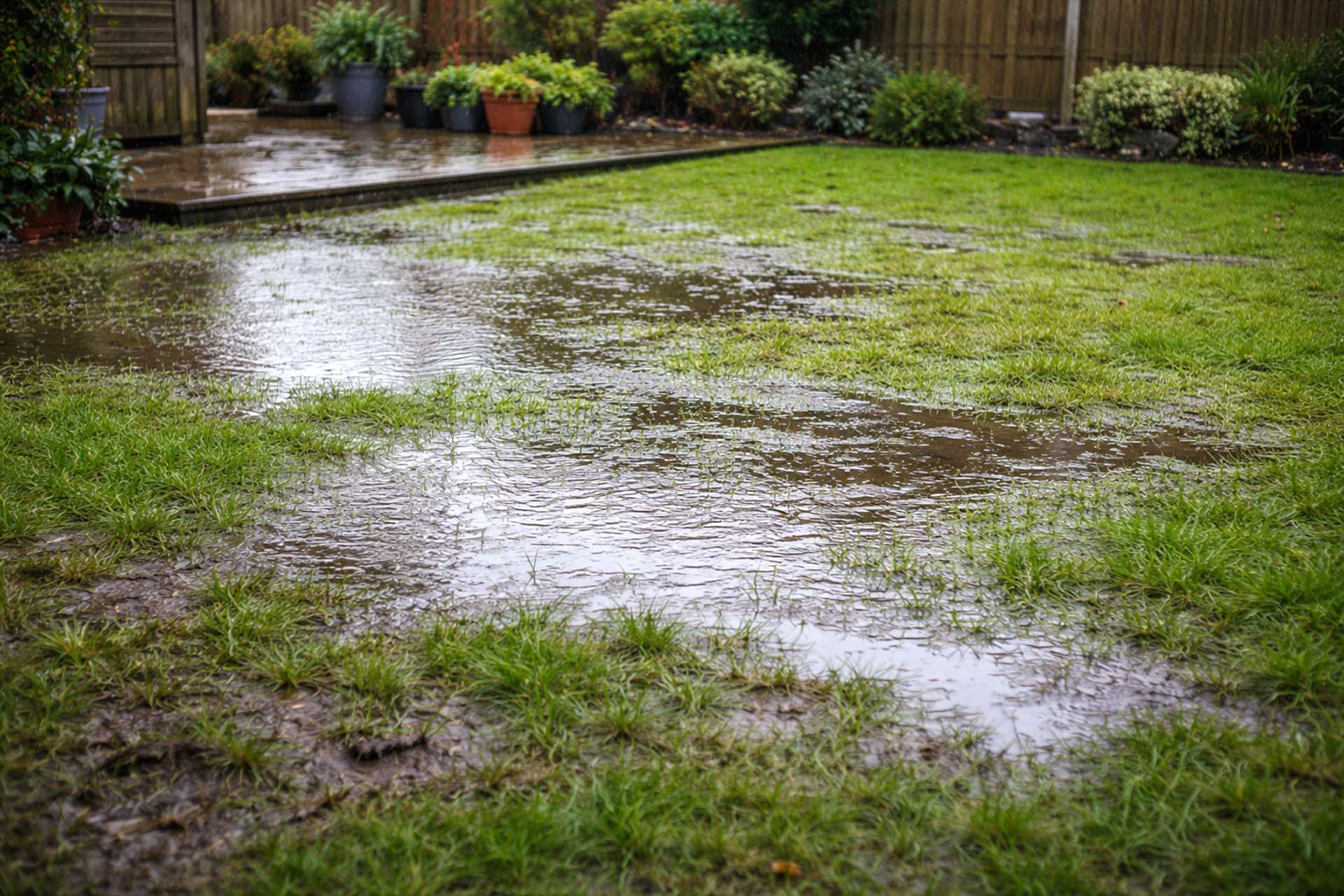
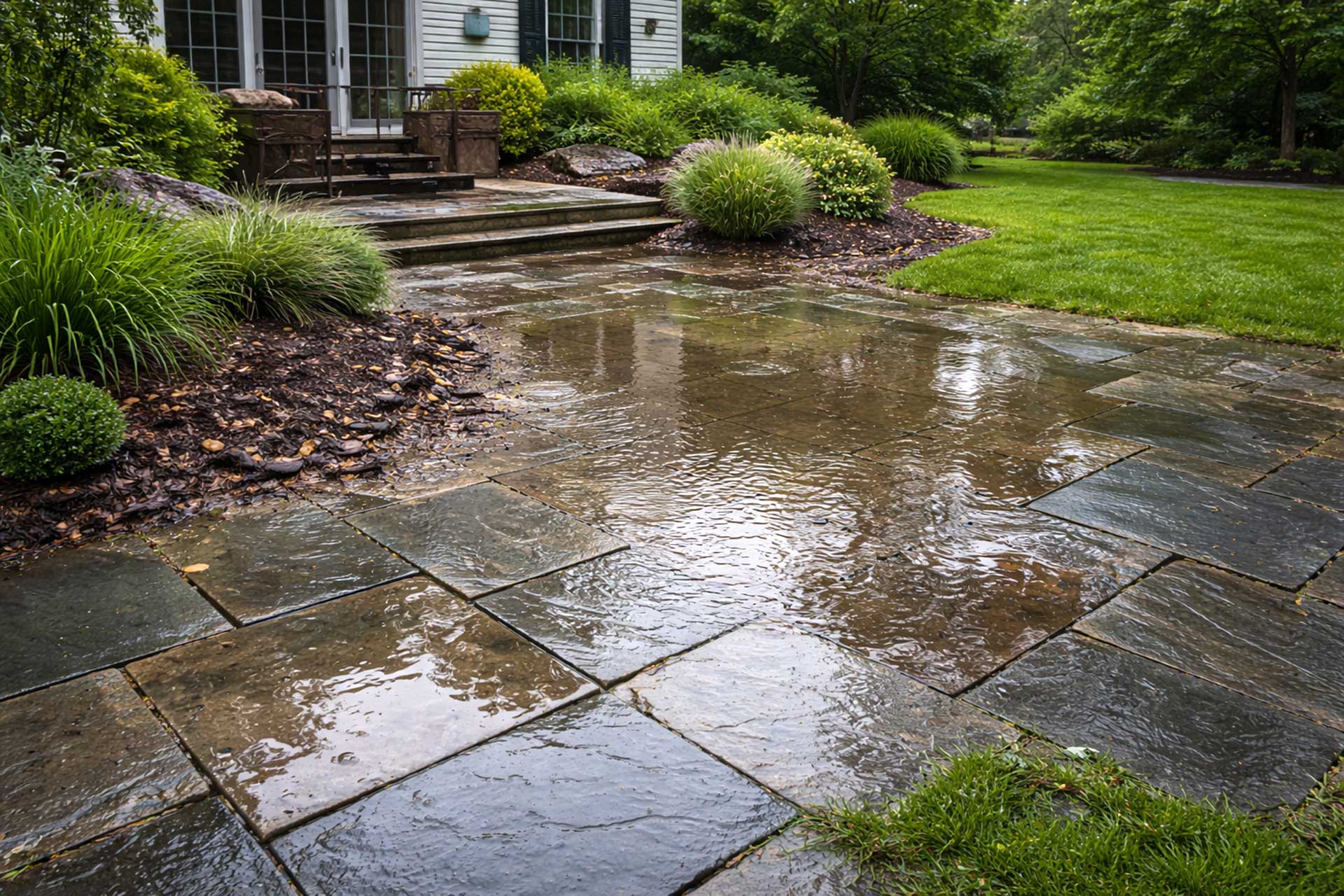
The effects are familiar to many homeowners. Lawns remain soft long after storms pass. Patios shift subtly from freeze-thaw pressure. Erosion appears along slopes. Water pools near foundations and refreezes along walkways during winter.
When drainage is not addressed during landscape planning, these problems compound over time. Water trapped beneath stone or concrete expands when frozen, contributing to settlement and structural stress. Soil displaced during heavy rain rarely returns to its original grade.
In New England, unmanaged water does not resolve itself.
“Greater Boston’s freeze-thaw cycles amplify even minor drainage flaws. What begins as subtle saturation can evolve into hardscape movement or plant decline within just a few seasons.”
— Scott Cornish, a Blade of Grass
Drainage Is an Integrated System, Not a Single Solution
Homeowners searching for “landscape drainage Boston” are often presented with quick solutions such as installing a French drain. While subsurface drainage systems have their place, effective water management is rarely solved by one component alone.
Professional drainage design considers the entire site. Elevation changes, soil composition, downspout discharge, hardscape permeability, and subsurface water movement must all be evaluated together. In many MetroWest properties, especially those near wetlands or conservation areas, redirecting runoff improperly can introduce regulatory complications under the Massachusetts Wetlands Protection Act.
Drainage planning must be intentional, comprehensive, and site-specific.
The Impact of Poor Drainage on Landscape Construction
Water affects nearly every constructed element of a landscape. Hardscapes such as patios and retaining walls rely on stable base preparation. When water infiltrates improperly or collects beneath structural elements, settlement and shifting often follow. Repairs may address surface symptoms, but the underlying issue persists unless grading and drainage are corrected.
Plant health is equally vulnerable. Saturated soil limits oxygen availability to roots and encourages fungal disease. Turf struggles in compacted, waterlogged conditions, and ornamental plantings may decline unpredictably. What appears to be a horticultural issue is often a hydrological one.
Water that flows toward a home rather than away from it can also increase the risk of foundation moisture and long-term structural concerns. Grading is therefore both a landscape and building matter.
The Role of Grading in Professional Landscape Design
Grading shapes how water moves across a property. It is one of the most important yet least visible components of a comprehensive landscape plan.
Professional grading ensures that water drains away from structures, transitions smoothly between elevations, and is directed toward appropriate collection or infiltration points. On sloped properties in Weston, Dover, and Lincoln, grading must be carefully balanced to prevent erosion while maintaining natural landforms.
Drainage and grading decisions should be resolved before material selection, planting design, or construction sequencing begins. When these elements are considered late in the process, revisions become more complex and more expensive.
Drainage and Wetlands Considerations in Greater Boston
In many MetroWest communities, drainage modifications intersect with regulated buffer zones or riverfront areas. Redirecting runoff without proper planning can unintentionally increase flow toward protected wetlands, potentially triggering Conservation Commission review.
Understanding how landscape drainage interacts with Massachusetts environmental regulations is essential for properties near streams, ponds, or low-lying areas. Early coordination prevents avoidable delays and protects both environmental systems and project timelines.
Related Blog: Massachusetts Wetlands Laws and Landscape Projects: A Practical Guide for Property Owners
Recognizing Early Signs of Drainage Issues
Drainage problems often develop gradually. A lawn that remains saturated longer each season, mulch that washes away during heavy rain, or subtle settlement in a patio can signal deeper grading concerns. Ice accumulation in specific low areas during winter may also indicate that water is not being directed properly.
Addressing these conditions early allows for strategic correction rather than reactive reconstruction.
Integrating Drainage Into the Master Plan
Professional landscape drainage should never be a standalone fix applied after installation. It should be integrated into the initial master planning process alongside outdoor living layouts, hardscape design, planting strategies, irrigation systems, and long-term maintenance considerations.
As one senior landscape designer at a Blade of Grass explains:
“Drainage is the invisible framework that allows every other element of the landscape to perform predictably. When water movement is resolved during design, the entire property functions more efficiently and requires fewer corrective interventions over time.”
This integrated approach distinguishes comprehensive landscape construction from piecemeal installation.
Long-Term Protection and Property Value
While drainage systems are rarely visible, their influence is substantial. Proper water management extends the lifespan of patios and masonry, preserves soil stability, supports healthy plant growth, and reduces long-term maintenance costs.
In Greater Boston’s demanding climate, ignoring drainage often results in recurring repair cycles. Addressing it during the design phase protects both aesthetic and structural investments.
Frequently Asked Questions About Landscape Drainage in Boston
Q: How do I know if my yard needs drainage work?
A: Persistent standing water, erosion, or recurring settlement in hardscape areas often indicate underlying grading or drainage deficiencies.
Q: Is a French drain enough to fix drainage problems?
A: In some cases, yes. More often, drainage requires coordinated grading adjustments, runoff redirection, and subsurface systems working together.
Q: Can drainage changes affect wetlands regulations?
A: Yes. Altering runoff patterns near wetlands may require review under Massachusetts environmental regulations.
Q: When should drainage be addressed in a landscape project?
A: Drainage should be evaluated and resolved during the design phase, before construction begins.
Partnering With an Experienced Landscape Team
Drainage challenges in Greater Boston are shaped by soil composition, topography, wetlands regulations, and seasonal freeze-thaw cycles. Addressing them requires technical coordination and long-term planning.
For more than three decades, a Blade of Grass has designed and constructed refined residential landscapes across MetroWest communities including Weston, Wellesley, Dover, Lincoln, and Concord. Our team integrates professional grading and drainage planning into every comprehensive landscape design, ensuring that patios, plantings, and outdoor living spaces perform reliably over time.
If you are planning a landscape project or experiencing drainage concerns, we encourage you to begin with a thoughtful consultation. Resolving water management early protects your investment and supports lasting landscape performance.
Learn More About Massachusetts Wetlands Laws
For homeowners interested in deeper guidance, these trusted resources provide regionally relevant information:
- Drainage and Erosion Control – Mass.gov
- Lawns and Landscapes in Your Watershed – Mass.gov
- How to Create a Drainage Swale – This Old House