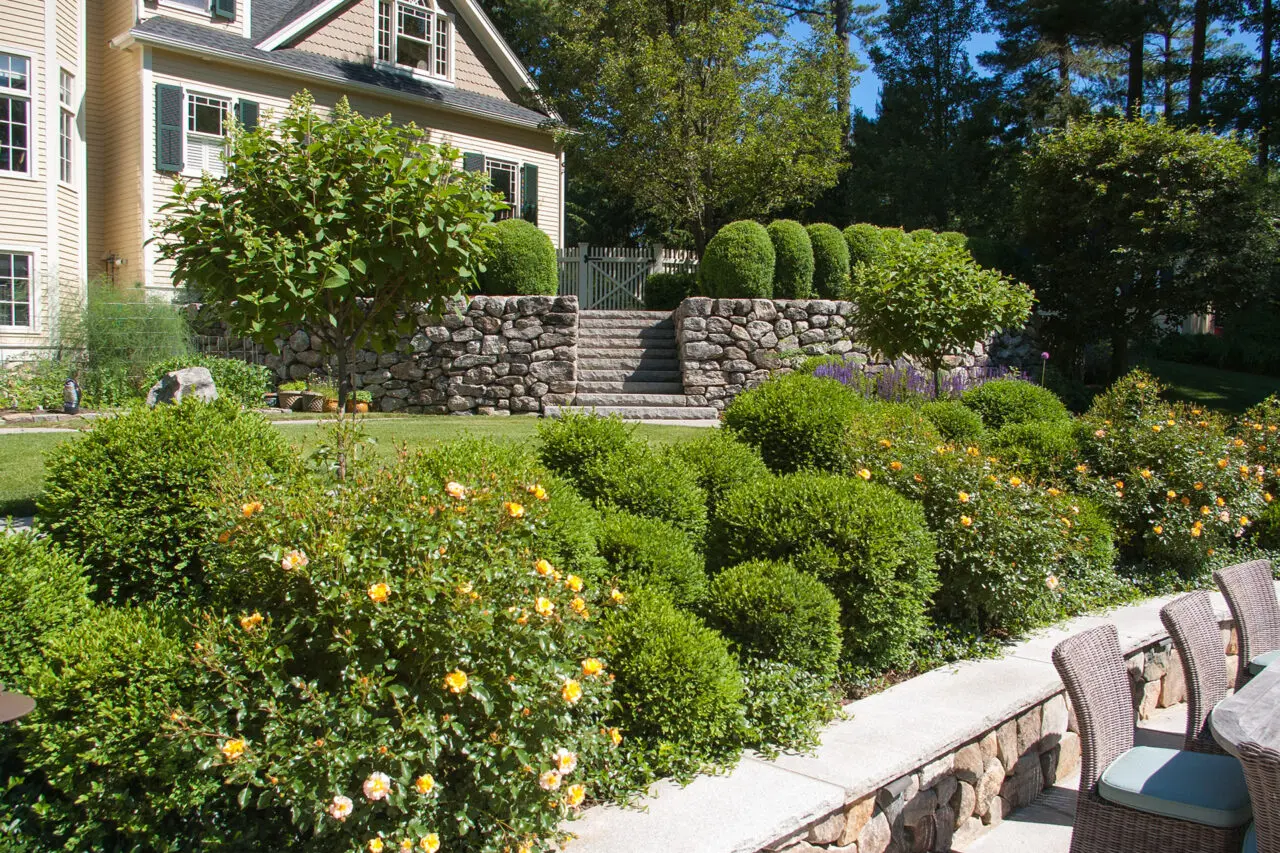
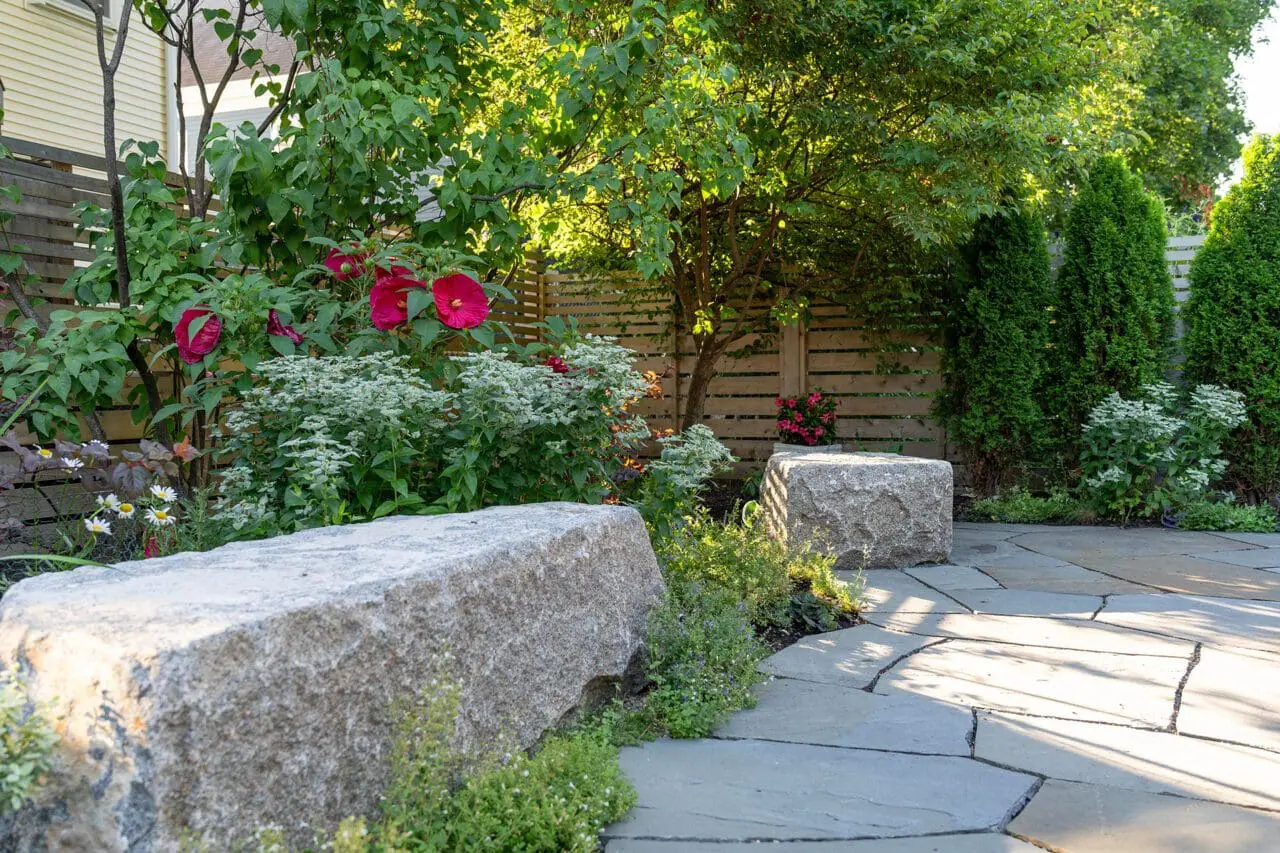
If you have read through our landscape design portfolio or blogs, you have likely seen the phrase “layered planting” more than once. It is a term we use often because it describes one of the most important ideas in residential landscape design. A layered planting scheme gives a landscape depth, softness, structure, and seasonal richness. It helps a property feel more established, more intentional, and more comfortable to live in.
In simple terms, layered planting means arranging plants in coordinated tiers so each layer contributes something different to the overall composition. That may include canopy trees, understory trees, evergreen and deciduous shrubs, perennials, ornamental grasses, and groundcovers. The goal is not simply to add more plants. The goal is to create a landscape that feels balanced, natural, and visually complete.
Key Takeaways
- Layered planting arranges trees, shrubs, perennials, grasses, and groundcovers in intentional tiers.
- It adds depth, structure, privacy, and four-season interest to a landscape.
- Well-layered planting softens hardscape and helps outdoor spaces feel more finished.
- It can make both large properties and compact yards feel more inviting and cohesive.
- The goal is not more plants, but better composition and stronger relationships between them.
For Greater Boston homeowners, layered planting can do more than improve appearance. It can soften architecture, create privacy without heaviness, make outdoor living spaces feel more inviting, and keep a property interesting well beyond peak bloom season. That broader value matters. In the National Association of Realtors’ 2023 outdoor-features report, 92% of realtors said sellers should improve curb appeal before listing a home, underscoring how strongly the landscape shapes first impressions.
As landscape architect Thomas Rainer puts it, “Plants are social.” He notes that the layered structure of naturally occurring plant communities helped inspire his work on resilient planting design. That idea is useful for homeowners too. The most successful planting does not read as a collection of isolated specimens. It reads as a relationship between plants, materials, architecture, and space.

What layered planting actually means
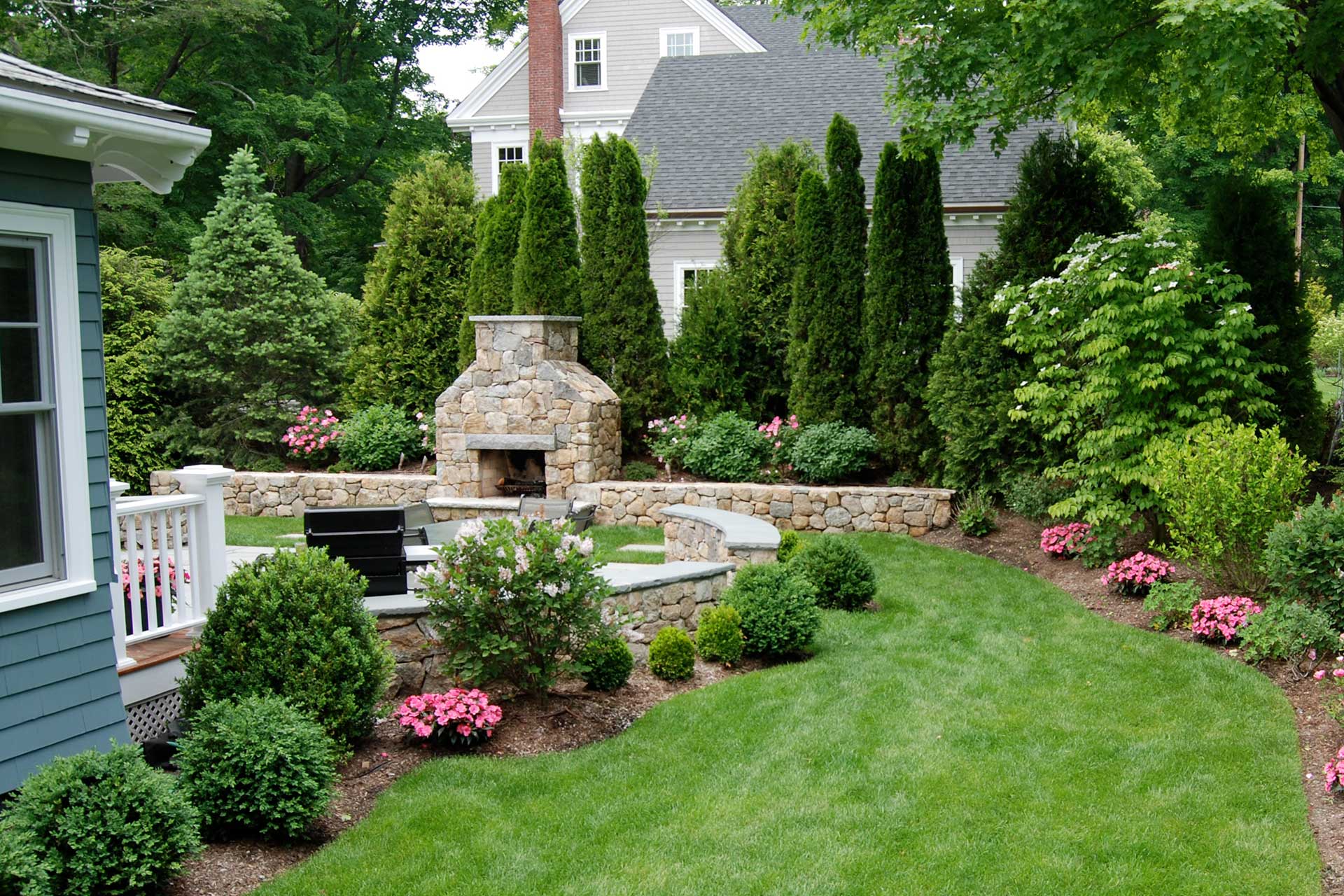
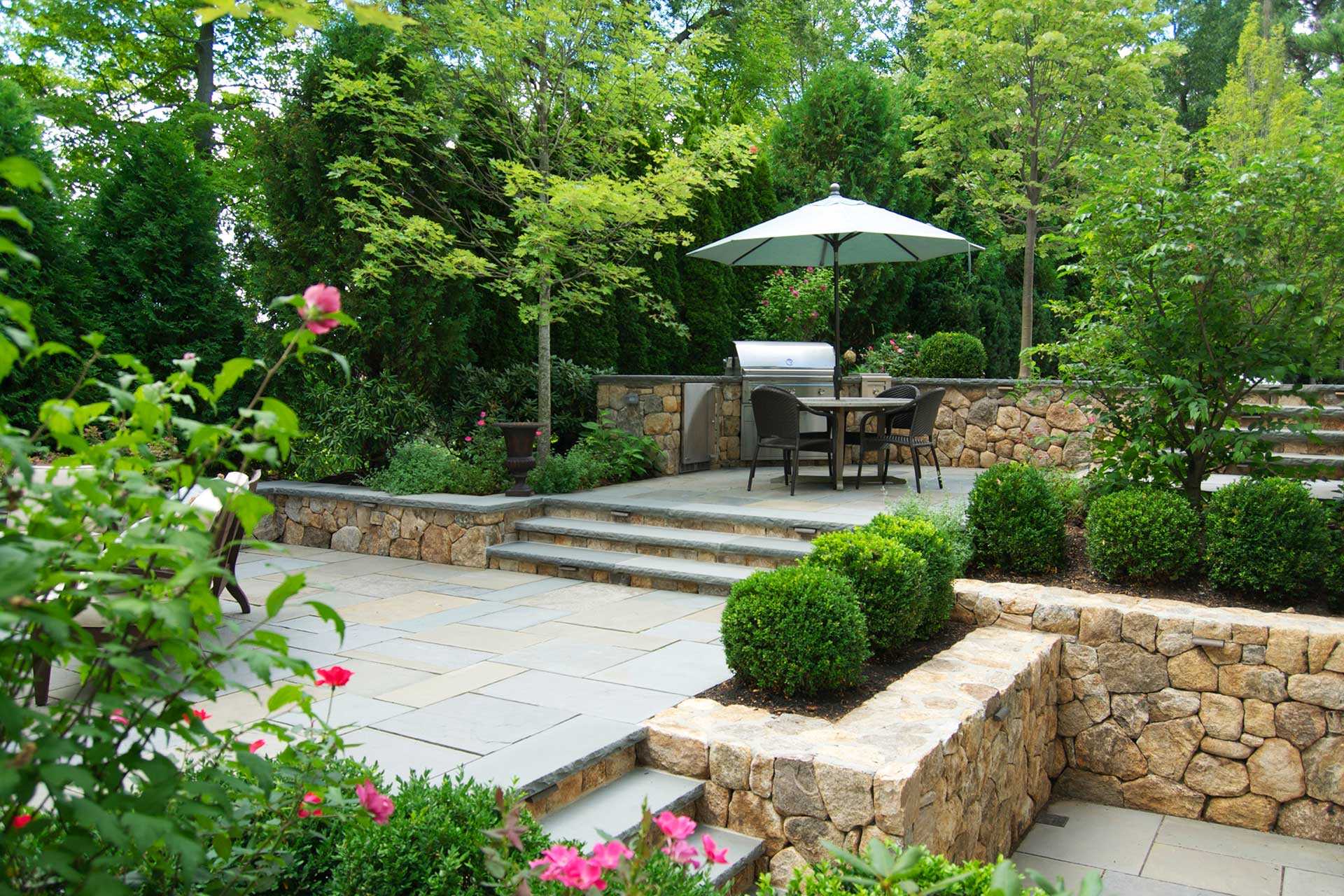
A well-layered landscape is built with intention from the tallest structure down to the lowest planting. That does not always mean a simple tall-in-back, short-in-front arrangement. On a residential property, layering is often more nuanced than that. It may involve framing a lawn with trees and large shrubs, softening a patio edge with mid-height planting, then carrying the composition forward with perennials, grasses, and lower plant material that connects the bed to paths, terraces, or lawn edges.
What matters most is that each layer has a job to do.
Some layers create enclosure. Some frame views. Some provide evergreen structure in winter. Others bring movement, seasonal bloom, texture, or softer transitions between hardscape and planting bed. Together, they make the landscape feel deeper and more coherent.
This is also why layered planting should not be confused with crowded planting. A bed can be full of plant material and still feel flat or disorganized. Layered planting is not about visual busyness. It is about composing a landscape so that each part supports the whole.
Why layered planting matters
Layered planting changes the way a property feels.
It can make a front entry feel more gracious. It can make a patio feel more settled into the site. It can make a pool area feel private without surrounding it with a rigid wall of evergreens. It can also help a compact yard feel larger and more resolved by creating depth and sequencing rather than leaving everything exposed at once.
For homeowners, the benefits are usually felt in a few specific ways:
- More depth and richness so the property feels designed rather than sparsely planted
- Better privacy through a mix of trees, shrubs, and lower planting instead of a single monotonous screen
- Four-season interest through evergreen structure, branching form, texture, and staggered seasonal performance
- Softer transitions between architecture, masonry, lawn, and surrounding landscape
- A more established look that helps a property feel mature and complete
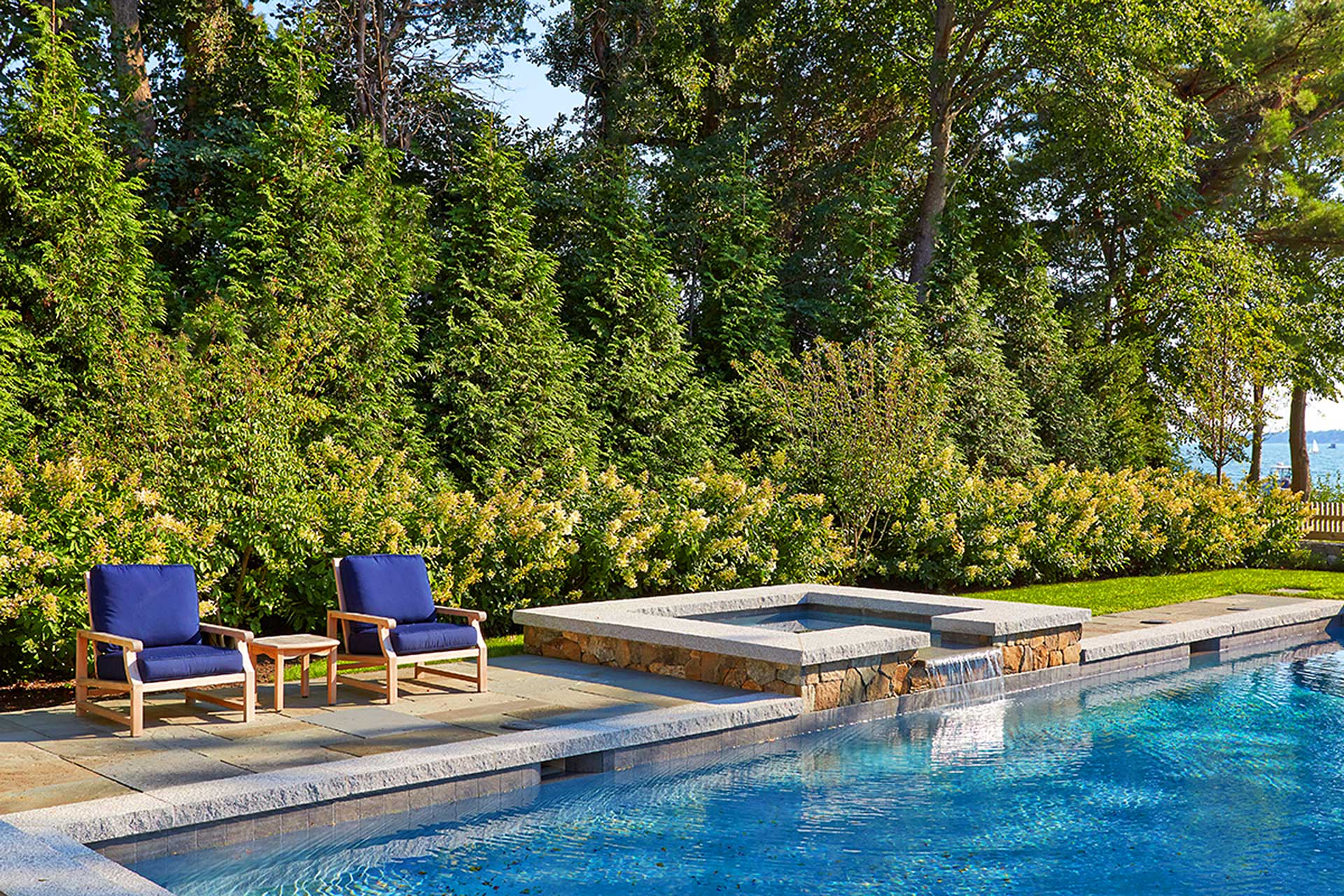
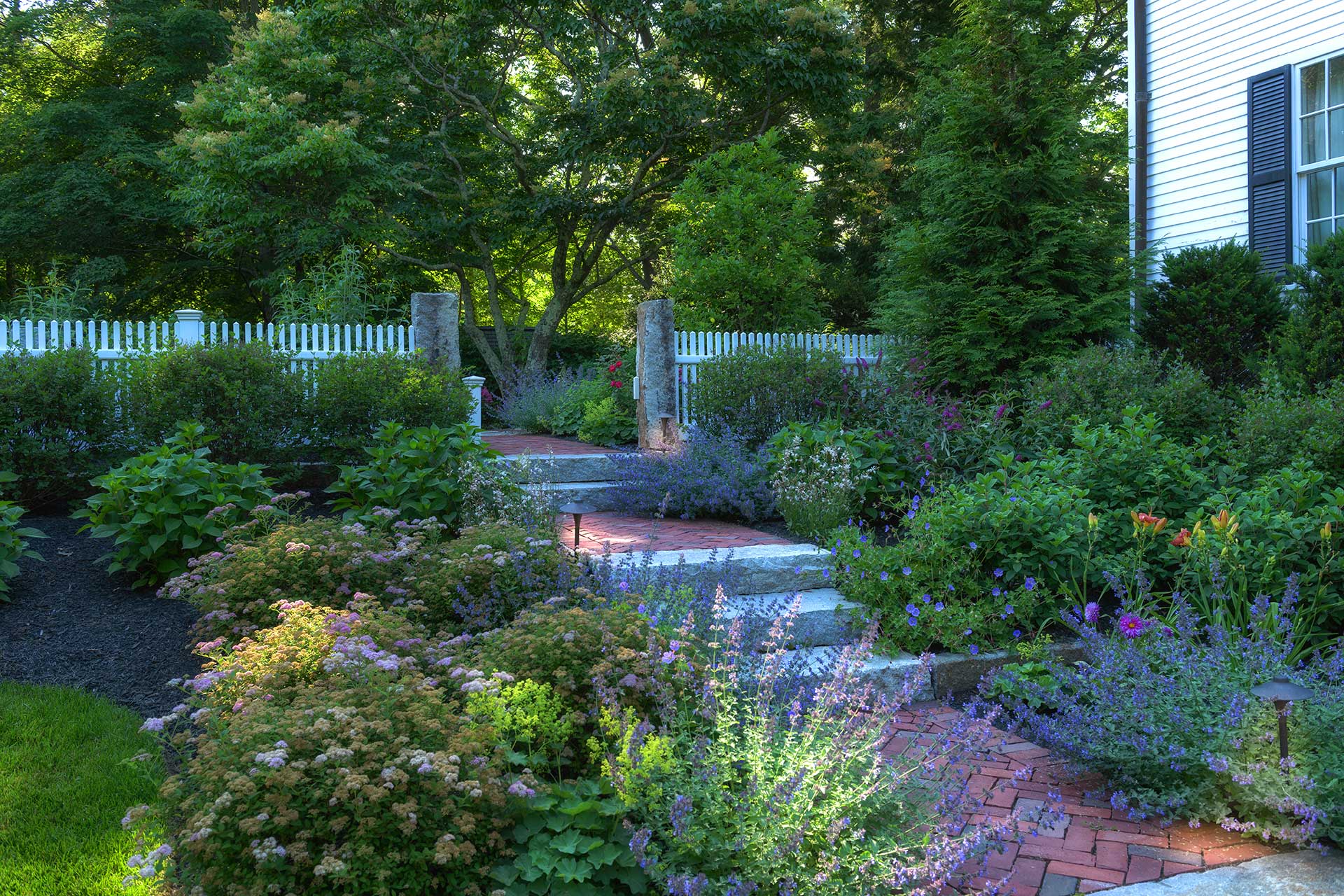
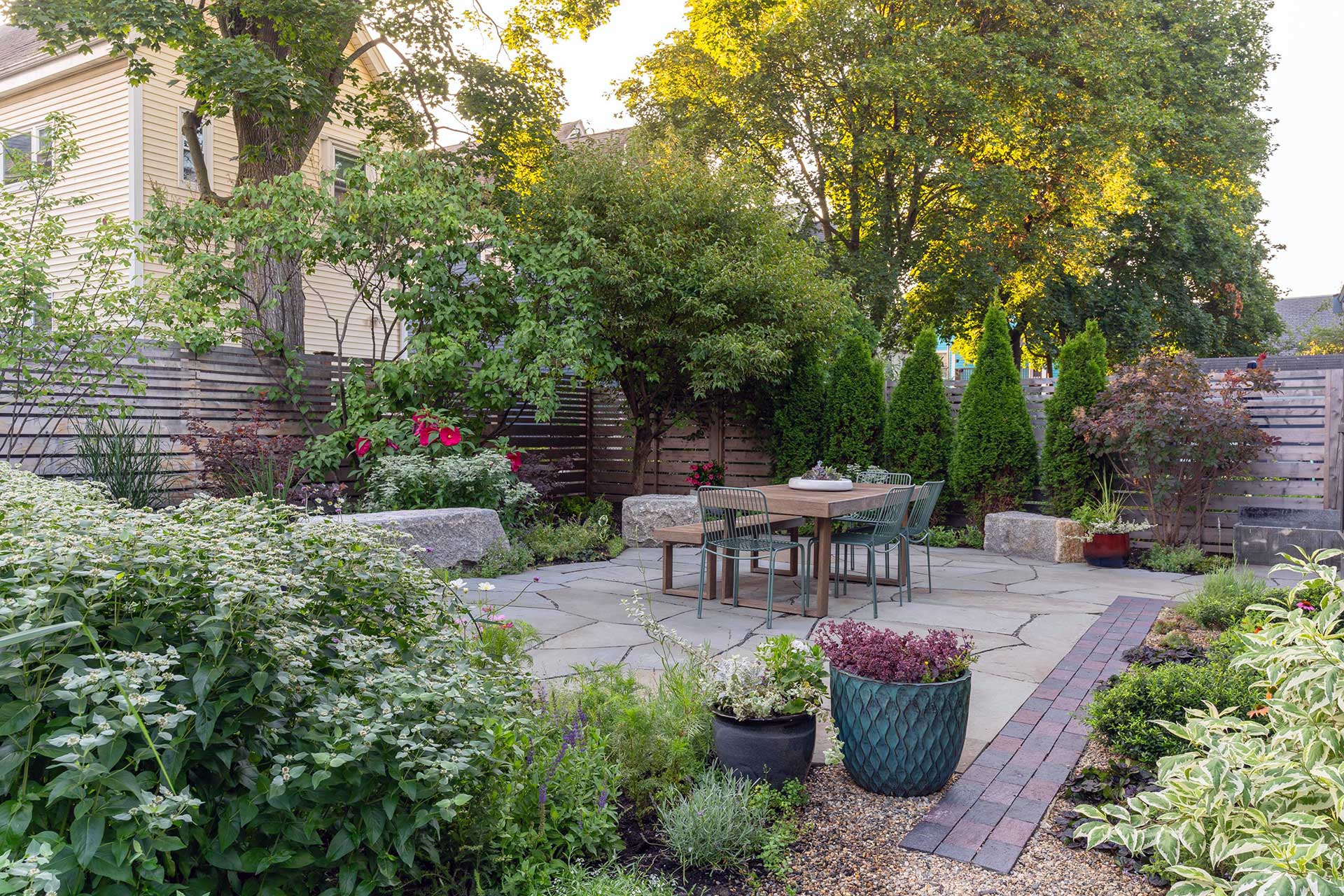
Those benefits are especially relevant in New England, where many landscapes need to work hard across spring, summer, fall, and winter. A planting scheme that only looks good in June is rarely enough.
“Layered planting is what gives a landscape depth and presence. It helps a property feel softer, more private, and more complete because the eye moves through the planting rather than stopping at a single row or edge.”
— Joanna McCoy, Senior Landscape Designer, a Blade of Grass designer
The main layers in a residential landscape
Canopy and understory trees
Trees often establish the upper framework of a landscape. They create scale, shade, filtered light, privacy, and long views. On larger properties, they may also help tie the house to the broader setting. On smaller properties, even one or two carefully placed trees can make a yard feel more composed.
Evergreen and deciduous shrubs
Shrubs often do the heavy lifting in layered planting. They provide mass, structure, and enclosure. Evergreens help hold the landscape together through winter, while deciduous shrubs can add flower, foliage color, branching texture, and seasonal rhythm.
Perennials and ornamental grasses
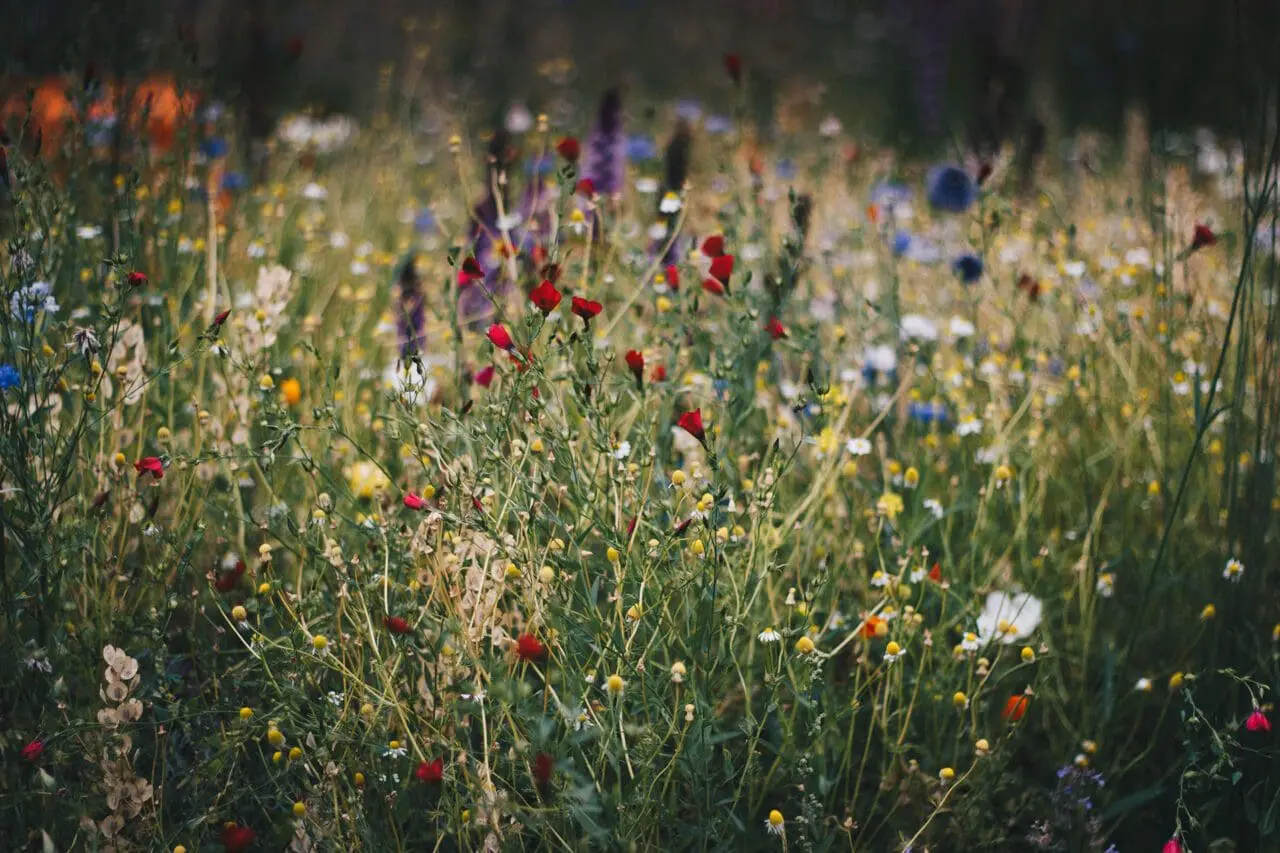
This is where many layered landscapes gain softness and movement. Perennials and ornamental grasses can blur edges, add texture, support pollinators, and prevent shrub beds from feeling static. In the right composition, they also keep planting beds visually active for much of the year.
Groundcovers and lower edge planting
The lowest layer is easy to underestimate, but it often makes the difference between a bed that feels finished and one that does not. Lower plantings help transition the eye from taller material to paths, lawn, or terrace edges. They also help knit the composition together.
What layered planting looks like in practice
Because this term can sound abstract, it helps to look at how it appears in real landscapes.
On a compact urban property like Compact in Cambridge, layered planting helps a narrow lot feel more spacious and intentional. Weathering steel planters, edible herbs, and varied planting heights soften the transition from the house to outdoor living areas while preserving clarity and order.
On a more architectural property like Weston Contemporary, layered planting works differently. There, clipped hedges, ornamental grasses, and layered shrubs support the structure of the hardscape and reinforce the home’s modern character without making the landscape feel severe.
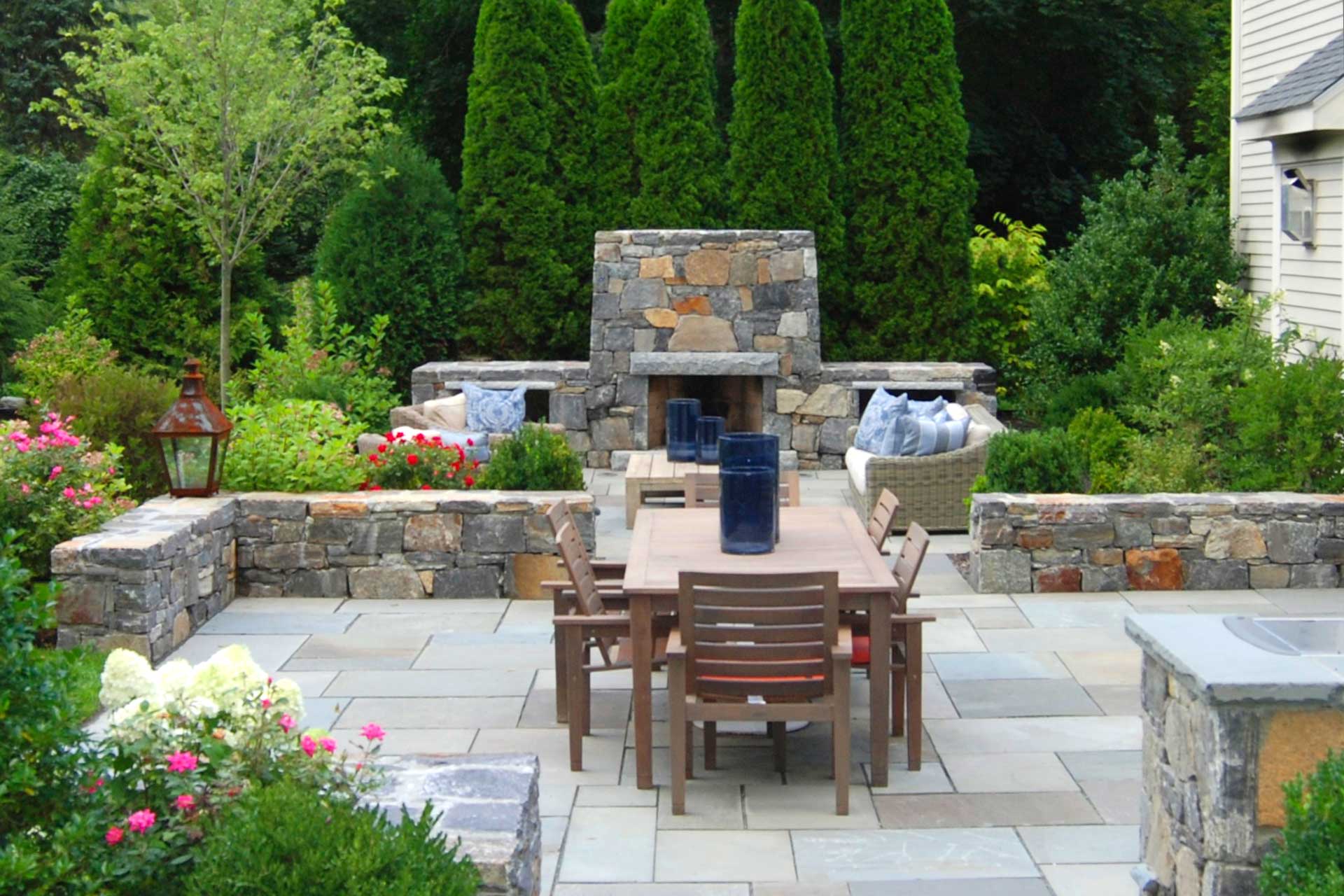
On a more family-focused outdoor living project like Wellesley Four-Season Escape, layered planting helps tie together terraces, a pool, a screened porch, and gathering spaces. Beds around the hardscape soften masonry, frame views, and provide visual rhythm throughout the year.
And where privacy is a priority, layered planting often becomes even more important. As we discussed in Creating Privacy with Trees and Hedges in Residential Landscapes and Best Privacy Trees for Massachusetts: Top Options That Thrive in Boston’s Climate, the most effective screens usually combine multiple plant types and heights. That approach feels more natural, more resilient, and often more attractive than a single row of identical plants.
Why layered planting works so well in Greater Boston
Greater Boston landscapes ask a lot of planting design.
Many properties need privacy from neighboring homes without feeling boxed in. Others need to work with mature tree canopy, shaded conditions, or woodland edges. Some must soften substantial masonry and outdoor living features. Many need to look good for far more than one peak season.
That is where layered planting becomes especially valuable.
A layered planting scheme can create softness around patios and terraces. It can help a front foundation feel less abrupt. It can give a newer landscape a more settled appearance. It can also support a more refined visual experience in winter, when evergreen structure, branching form, and textural contrast matter more than bloom.
For affluent homeowners, another benefit is subtlety. A well-layered landscape rarely relies on one loud gesture. Its strength comes from composition, proportion, and how the spaces feel over time.
Related Blog: What Are the Top 10 Boston Landscape Design Trends for 2026
What kinds of plants are used in layered planting in Massachusetts?
That depends on the site, but layered planting in Massachusetts often combines trees, evergreen and deciduous shrubs, perennials, ornamental grasses, and lower edge planting selected for seasonal performance, mature size, and site conditions.
Common mistakes that flatten a landscape
Many planting beds fall short for predictable reasons.
One is relying too heavily on one plant height. Another is designing only for bloom color, which can leave a landscape weak for much of the year. A third is using screening plants without enough variation, which can make the edge of a property feel stiff or overbearing.
Spacing also matters. Overplanting for instant fullness can create long-term crowding and maintenance problems. Underplanting can leave a landscape feeling thin and unresolved. The best layered planting accounts for mature size, maintenance needs, light conditions, and how each plant will relate to the others over time.
This is also where principles like repetition and grouping become useful. Our recent post on What Is the Rule of 3 in Landscaping? touches on how repetition can create balance and rhythm, which is closely related to how layered planting works visually.
Is layered planting high maintenance?
Not necessarily.
A layered planting design can be relatively low maintenance if it is planned with the site, plant selection, and long-term growth in mind. In fact, many landscapes become easier to manage when the right plant communities are used intentionally rather than treated as scattered ornamental accents.
That does not mean no maintenance. Pruning, editing, seasonal care, and occasional adjustments still matter. But a good layered planting scheme should not feel fragile. It should feel durable, adaptable, and increasingly beautiful as it matures.
Our approach to layered planting
At a Blade of Grass, layered planting is rarely treated as an isolated idea. It is usually part of a bigger design conversation.
We use layered planting to connect architecture to landscape, to improve privacy without creating heaviness, to soften hardscape, and to make outdoor spaces feel more comfortable and complete. On some properties, that might mean shaping a front entry. On others, it may mean defining the edges of a terrace, framing a lawn, or organizing the transition from house to woodland edge.
The point is not to make a bed look full for one season. The point is to create a planting composition that supports the way the property is used and the way it should feel.
Suggested reading
If you want to see how layered planting works in real landscapes, these pages are a good place to learn more:
From our site:
- Compact in Cambridge
- Weston Contemporary
- Wellesley Four-Season Escape
- Creating Privacy with Trees and Hedges in Residential Landscapes
- Best Privacy Trees for Massachusetts: Top Options That Thrive in Boston’s Climate
- What Is the Rule of 3 in Landscaping?
Further reading:
- Planting in a Post-Wild World by Thomas Rainer and Claudia West
- 2023 Remodeling Impact Report: Outdoor Features from the National Association of Realtors
Layered Planting FAQs
Q: What is layered planting in landscape design?
A: Layered planting is the intentional use of multiple plant heights, forms, and types to create depth, structure, privacy, and seasonal interest within a landscape.
Q: Is layered planting just another term for foundation planting?
A: No. Foundation planting usually refers to planting around the base of a house. Layered planting is broader. It can be used at foundations, around patios and pools, along property lines, at front entries, and throughout the landscape.
Q: Can layered planting improve privacy?
A: Yes. In many cases, layered planting creates better privacy than a single hedge because it combines canopy, mid-level screening, and lower planting in a way that feels more natural and visually appealing.
Q: Does layered planting work in small yards?
A: Yes. In smaller landscapes, layering often becomes even more important because it helps create depth and makes compact outdoor spaces feel more intentional and more expansive.
Q: Is layered planting only about using more plants?
A: No. Good layered planting is about placement, proportion, and how plants work together over time. More plants alone do not guarantee a better result.
Layered planting in your landscape
Layered planting is one of the most effective ways to give a landscape depth, privacy, structure, and year-round beauty. When it is handled well, it does not call attention to itself as a technique. It simply makes a property feel more complete, more comfortable, and more connected to the way people actually live outdoors. If you would like help shaping a landscape with that level of clarity and long-term performance, contact the a Blade of Grass team to learn more about our landscape design, construction, and property care services.