Rethinking What Grows in Your Lawn
A lawn can ask a lot of a homeowner: regular mowing, attention during dry weather, repairs where the dog runs, and another round of decisions when thin patches return. Clover offers an appealing possibility. Could a different plant make that familiar green space easier to care for?
Sometimes, yes. But a lawn is also where children play, where guests cross between the terrace and garden, and where an open sweep of green gives the surrounding planting room to stand out. Changing what grows there can change more than the maintenance schedule.
For Massachusetts homeowners comparing clover vs. grass, it helps to consider three possibilities: a turfgrass lawn, a predominantly clover lawn, and a mixture of the two. Each deserves a closer look, particularly when summer appearance is only part of what the property needs.
Key Takeaways
- Choose a lawn according to its growing conditions, everyday use, and place in the overall landscape.
- Well-adapted turfgrass generally handles repeated wear better than clover alone.
- Clover’s winter dieback deserves attention in New England, especially where continuous ground coverage matters.
- A grass–clover mix can offer a useful middle ground, with its own maintenance requirements.
- Some struggling lawn areas are better reconsidered as planting beds or other landscape features.
What Matters Most in Your Lawn?
Before choosing a plant, consider how the space is used.
A front lawn viewed mainly from the street has a different role from a backyard used for games every afternoon. A small green area beside a perennial border may need to look inviting and accommodate occasional footsteps. The route between the kitchen door and the gate may receive concentrated traffic in every season.
A shaded lawn beneath mature trees in Wellesley may call for a different approach from an open, sunny backyard in Sudbury, even when both homeowners want less maintenance.
Those differences should influence the recommendation.
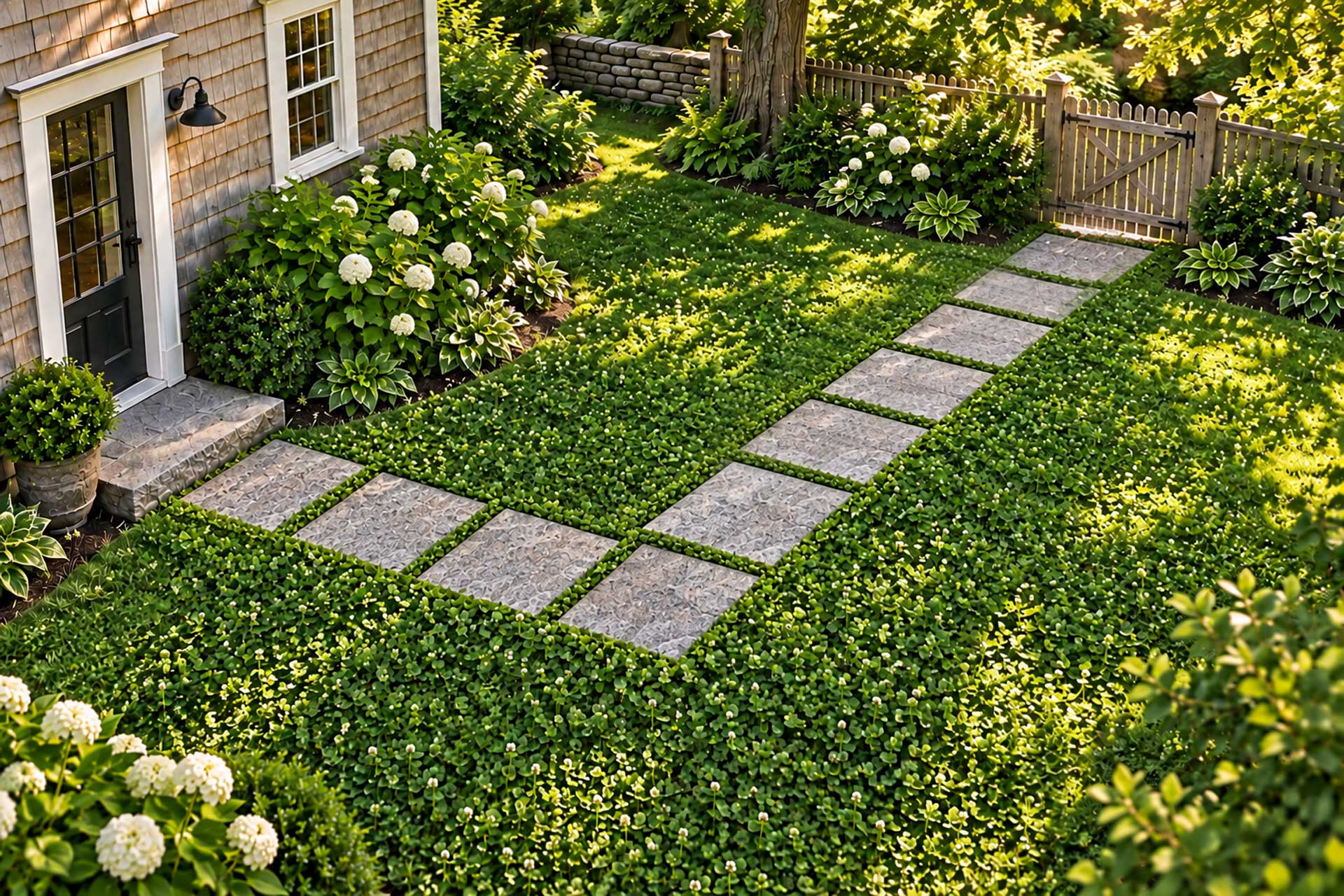
Appearance matters too. Some homeowners appreciate small flowers and variation within a lawn. Others want an even surface that provides a quiet foreground to the house or garden. Both preferences can be reasonable. The difficulty comes when a planting is chosen for its promised benefits without considering whether its everyday appearance will be welcome.
We would also want to understand why an existing lawn is struggling. Limited sunlight, compacted soil, poor drainage, and repeated wear raise different questions. Replacing grass with clover should follow that assessment, rather than substitute for it.
Clover vs. Grass: The Differences That Matter
“Clover lawn” can describe quite different plantings. Common white clover, sometimes called Dutch white clover, is the familiar plant with rounded leaflets and white flowers. Microclover refers to smaller-growing selections of white clover, usually discussed as a component of lawn mixtures.
Grass also varies. The species and varieties in a lawn influence its appearance, growing requirements, and ability to recover from use. The comparison below is a starting point, rather than a promise about every seed blend or site.
| Consideration | Turfgrass | Clover | Grass–Clover Mix |
|---|---|---|---|
| Appearance | A relatively uniform, fine-textured surface | Broader leaves, flowers, and a more varied texture | A grassy surface with visible clover mixed through it |
| Repeated foot traffic | Generally the stronger option with suitable grasses | Less suited to sustained wear | Depends on the grasses, clover coverage, and intensity of use |
| Winter coverage | Persistent plant material helps cover the soil | Top growth dies back in cold weather | The grass component helps maintain coverage |
| Fertilizer needs | Depend on grass selection, soil, and expectations | Can obtain nitrogen through its relationship with soil bacteria | May need less supplemental nitrogen |
| Mowing | Regular mowing during active growth | Frequency depends on desired height and flowering | Still requires mowing appropriate to the mixture |
| Flowers | Typically absent from regularly mown turf | Flowers attract bees | Flowering varies with clover selection and mowing |
The practical question is which combination of characteristics suits the space. A change that works well beside a garden may be disappointing in the middle of a busy play lawn.
Where Clover Can Make Sense
Clover deserves consideration where a homeowner welcomes a less uniform lawn and wants to reconsider some of the inputs associated with conventional turf care.
As a legume, clover works with bacteria in its root nodules to obtain nitrogen from the atmosphere. That relationship is part of its appeal in lower-input landscapes. UConn Extension’s guidance on lawn alternatives also identifies white clover as a plant for sun to partial shade and well-drained soil.
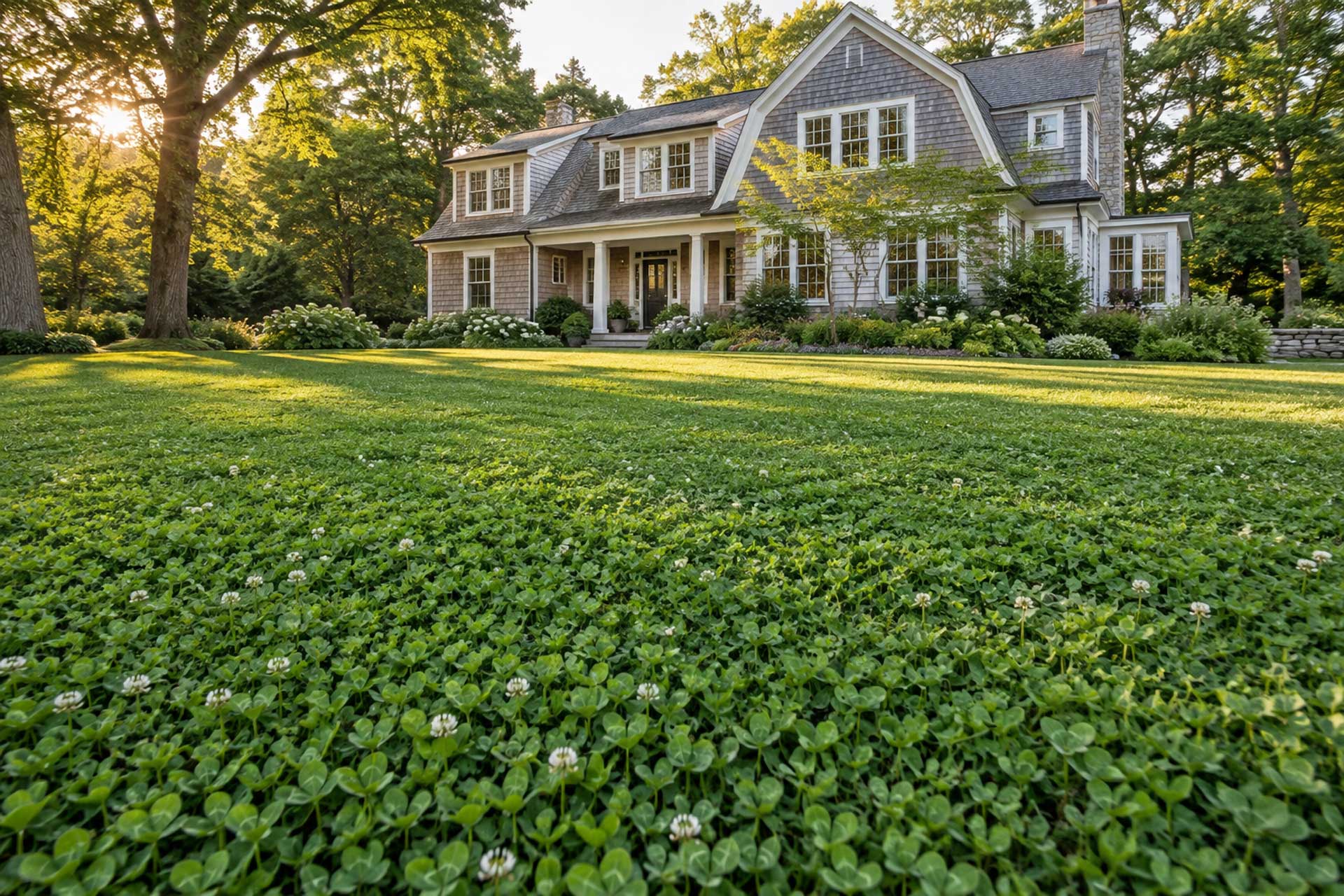
There is an aesthetic decision here as well. White flowers scattered through green foliage can feel appropriate beside an informal border or in a relaxed garden setting. Against a tightly composed entrance planting, the same texture may feel busier than the homeowner wants.
We would consider the view from inside the house as carefully as the view from the sidewalk. A lawn that occupies much of the kitchen-window view becomes part of the daily experience of the property.
Flowering also needs to fit the location. Bees visiting clover are welcome in many gardens, but their presence deserves consideration where people regularly walk barefoot. Mowing to reduce flowers changes the pollinator benefit, so those two expectations should be discussed together.
Be Realistic About Water Savings
Clover is often described as drought tolerant, but that description needs context.
The University of Maine Cooperative Extension notes that white clover can stay green when some grasses brown, while also emphasizing its need for water during establishment and the limits of drought tolerance. The grass being compared matters, as do summer temperatures and site conditions.
“On a coastal property in Duxbury, we would want to understand the soil’s ability to hold moisture, wind exposure, and any salt spray before setting expectations for either grass or clover.”
Where Grass Has the Advantage
For a lawn that receives regular recreational use, well-adapted turfgrass generally remains the more dependable starting point.
In its discussion of clover lawns, UMass Extension makes a useful distinction:
“whether the interest is in a lawn composed entirely of clover, or of some clover mixed with traditional turfgrasses.”
– Jason Lanier, UMass Extension Turf Specialist
That distinction matters because UMass identifies weaker wear tolerance and recovery as limitations of clover compared with suitable turfgrasses.
Think about the areas where activity repeats: the space beneath a swing, the landing area around a soccer goal, or the route a dog follows along a fence. Those patterns deserve more weight than how the lawn looks on a quiet afternoon.
Grass also provides a particular visual effect. A relatively even surface can make the edges of beds, terraces, and walks easier to read. It can give a richly planted garden a calm foreground. Where that role is important to the design, retaining grass may be a considered choice.
Winter Is Part of the Comparison
An all-clover lawn also needs to be evaluated beyond the growing season. Its top growth dies back in cold weather, potentially leaving exposed soil. Turfgrass retains more protective plant material through the dormant season.
For Massachusetts properties, consider what that means in the places people still cross during winter and early spring. A lawn’s off-season condition affects both the view and the usefulness of the space.
What a Grass–Clover Mix Changes
A mixed lawn offers another possibility for homeowners who like clover but still want grass to provide much of the surface.
Visually, it asks for some flexibility. Clover may be more noticeable in certain areas or at particular times of year. The result should be chosen because that variation is acceptable, rather than with the expectation that it will look identical to a conventional turf lawn.
The balance can also shift. Fertilization influences competition between grass and clover, and periodic overseeding may be needed to maintain the desired clover presence. A mixture therefore benefits from a care plan that recognizes both plants.
This is where the homeowner’s expectations become especially useful. Is the goal fewer fertilizer inputs? More flowers? A softer garden character? Those priorities may overlap, but they are not interchangeable.
What to Expect From Microclover
Microclover can be an option within a grass lawn, but the name should not be read as a guarantee of a permanently tiny, flower-free surface.
The University of Maryland Extension’s microclover guidance describes important limitations, including poor shade tolerance and susceptibility to heat and drought. Its findings are a useful caution against applying every positive claim about common white clover to microclover.
We would be equally careful with weed-control expectations. Many broadleaf lawn herbicides can damage or kill clover. A treatment program developed to maintain grass alone may therefore be incompatible with keeping clover in the lawn.
The practical implication is straightforward: everyone caring for the property needs to understand what is intended to grow there.
Some Areas May Be Better With Less Lawn
Sometimes the most useful change is to reconsider the area assigned to lawn.
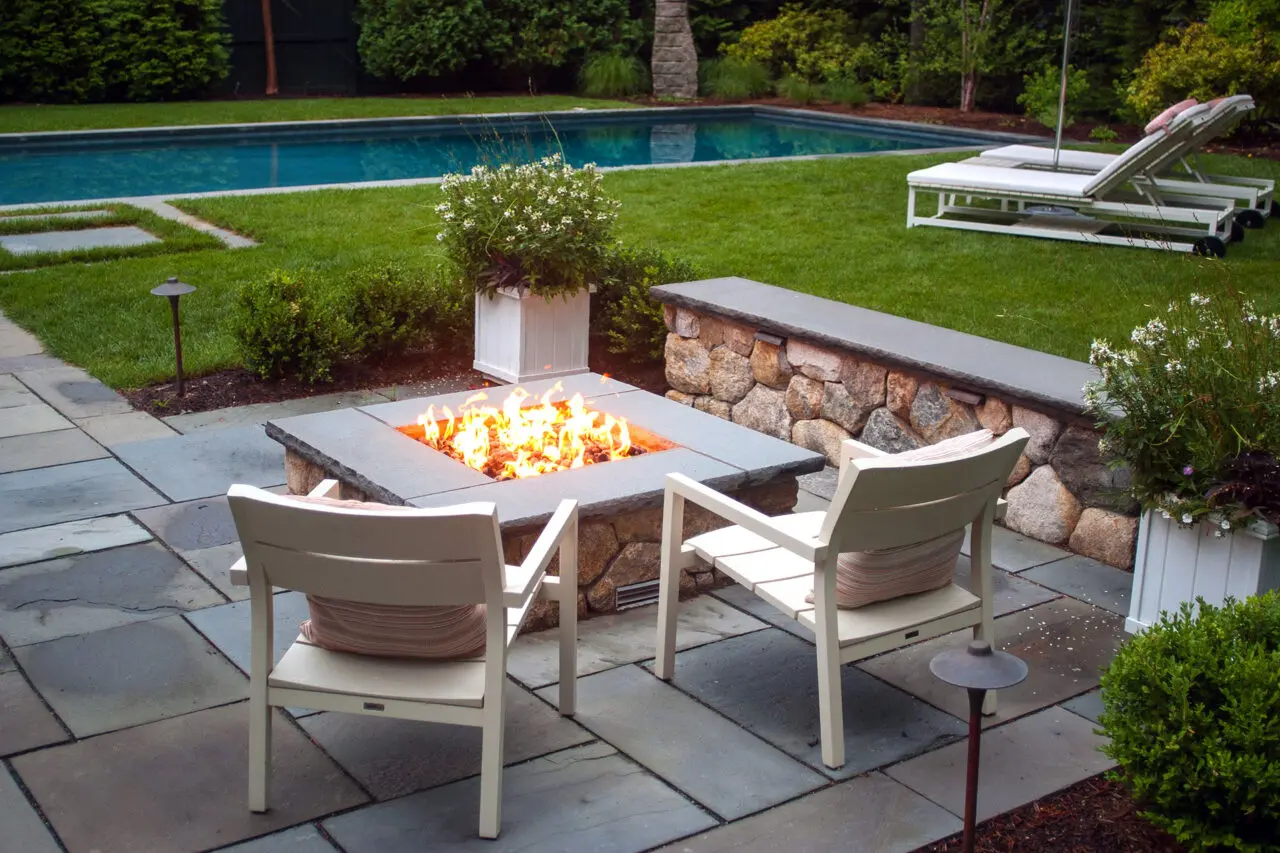
A narrow strip behind shrubs may be awkward to mow and barely visible. An under-tree patch may become thinner as the canopy matures. A small remnant between a walk and a planting bed may contribute little to the way the garden looks or functions.
On a compact Cambridge property, extending a planting bed into an awkward strip of lawn may create a more useful garden and simplify mowing.
But before replacing those spaces with clover, consider what would happen if the bed extended farther, the lawn edge became simpler, or a more suitable ground layer occupied the space.
Blade’s guide to native ground covers for shade explores options for areas where limited light and tree-root competition make lawn difficult. Those plants have their own requirements, but they allow a different design response.
Reducing lawn also deserves the same compositional care as adding it. The remaining open space should have a clear shape and enough room for its intended use. A scattering of small, disconnected planting areas can make a property harder to maintain without making it more satisfying to look at.
A useful plan might retain grass where people gather and play, consider clover within an appropriate secondary area, and expand planting beneath trees. There is no requirement for the whole property to receive one treatment.
Plan for the Care Your Choice Will Need
A lawn decision becomes more useful when it includes what happens after planting.
Start with the existing conditions and the homeowner’s expectations. Soil assessment, light, drainage, and traffic patterns help establish whether a change is appropriate. Irrigation should be considered alongside the planting, including how establishment needs will differ from ongoing care.
It is also worth defining what “lower maintenance” means to the household. Less mowing may be the priority for one homeowner. Another may be comfortable with mowing but want to reconsider fertilizer use. Someone else may mainly want to stop repairing the same unsuccessful area each year.
Those are different goals, and they may lead to different recommendations.
The ongoing plan should account for mowing, unwanted plants, thinning areas, and the edges where lawn meets garden. Our landscape maintenance services connect those recurring tasks with the broader care of the property.
Keeping the intended appearance clear helps everyone make better decisions as the landscape changes.
Frequently Asked Questions
Q: Can You Add Clover to an Existing Lawn?
A: Yes, clover can be introduced into an existing grass lawn. Whether that is worthwhile depends on the lawn’s condition, the site, and the current maintenance program. A healthy lawn being diversified presents a different situation from one that is thin because of unresolved growing problems.
Q: Will Clover Spread Into Planting Beds?
A: It can. White clover spreads through creeping stems and can also self-seed. Where lawn borders planting beds, allow for attention to the edge and removal of unwanted growth. Clover does not recognize the boundary between the area where it is welcome and the garden beside it.
Q: Is Clover Resistant to Dog Urine?
A: It should not be promised as a reliable solution to urine damage. University of Maine Extension notes that claims of better resistance lack strong supporting evidence. For a dog’s regular outdoor area, consider the whole pattern of use, including running, digging, and repeated traffic.
Learn More About Clover and Lawn Alternatives
- UMass Extension: Clover in New England Lawns, Hort Notes Q&A
- UConn Extension: Alternative Lawn Options for New England Landscapes
- University of Maine Cooperative Extension: Is White Clover Suitable for Lawns?
- University of Maryland Extension: Lawns and Microclover
Choosing a Lawn That Fits Your Landscape
The most successful lawn decisions begin with a clear picture of what the space should offer. That might be room for play, an open view across the garden, a more informal planting character, or a smaller area of turf that performs well and is easier to care for.
Once those priorities are clear, the plant choice becomes more focused. It is easier to judge which tradeoffs are acceptable and which would interfere with everyday enjoyment of the property.
At a Blade of Grass, landscape design and ongoing care are considered together. A lawn should sit comfortably within that larger plan, alongside the planting, circulation, and outdoor spaces that give the property its character.
If you are considering clover, renovating an existing lawn, or reducing turf in areas that no longer work well, contact a Blade of Grass to discuss the possibilities for your landscape.