Fall cleanup used to have a fairly simple goal: make everything clean before winter. Leaves disappeared, perennial beds were cut nearly to the ground, ornamental grasses came down, and the garden entered winter noticeably emptier than it had been a few weeks before.
Some of that work still matters. Fallen leaves can smother turf, diseased foliage can carry problems into another season, and walks, patios, steps, and drainage areas need to remain clear. But a well-maintained garden does not necessarily need to be a bare one.
The better question is no longer simply, “What should we clean up?”
It is, “What still belongs here?”
For New England gardens, the answer varies from one part of the property to another. A good fall cleanup is less about clearing the landscape and more about deciding what has finished its work for the year, what has become a problem, and what still has something to contribute.
Key Takeaways
- Fall cleanup does not need to mean removing everything from the garden.
- Diseased, damaged, collapsed, or obstructive material should generally receive priority for removal.
- Healthy stems, seed heads, ornamental grasses, and some fallen leaves can continue to provide winter structure and habitat.
- Leaves may be useful in planting beds while creating problems on lawns, walks, patios, and drainage areas.
- Different parts of a property often deserve different levels of cleanup.
Fall Cleanup Doesn’t Mean Starting Over
A garden does not stop functioning when flowers fade and leaves begin to fall. The growing season may be ending, but plants are entering another stage of the landscape rather than disappearing from it.
That distinction changes how we think about fall maintenance.
UMass Extension recommends scouting a property before cleanup begins to identify areas that should be thoroughly cleaned and others where some leaves, twigs, or branches can remain through winter. That is a more useful framework than applying the same treatment everywhere.
Some perennials lose their form almost immediately after frost. Others remain upright for months. Some fallen leaves create a wet mat over turf. The same leaves beneath shrubs or along a less formal garden edge may be perfectly appropriate. A planting affected by disease may need a thorough cleanup, while a healthy stand of ornamental grasses may look better left alone until spring.
Good maintenance is partly an editing process.
The goal is not to preserve everything simply because it has ecological value, nor to remove everything because the growing season is finished. It is to recognize which parts of the landscape have genuinely run their course and which still serve a purpose.
Start With What Really Should Come Out
Selective cleanup still involves plenty of actual cleanup.
Diseased plant material is one of the clearest examples. Leaf spots, blights, rusts, and other pathogens can survive in infected debris and become a source of problems the following season. UMass Extension’s current fall guidance recommends removing diseased material rather than allowing it to remain through winter.
Physical condition matters too. A sturdy seed head that remains upright after several frosts has a very different role in the winter garden than a perennial that has collapsed into a wet mass over neighboring plants. Broken stems, badly damaged foliage, spent annuals, unwanted weeds, and material that simply deteriorates poorly are generally good candidates for removal.
The same principle extends beyond plants.
Leaves and debris should not be allowed to collect where they interfere with how the property works. Walks and steps need to remain usable. Patios and entry areas should feel cared for. Drainage grates, catch basins, swales, and other water-management areas need to remain open as New England moves into periods of heavy rain, freezing temperatures, and snow.
A useful fall cleanup therefore begins with problems rather than appearances: disease, damage, obstruction, poor performance, and material that no longer contributes anything meaningful.
What Is Worth Leaving Until Spring
Once the obvious problems are gone, the more interesting decisions begin.
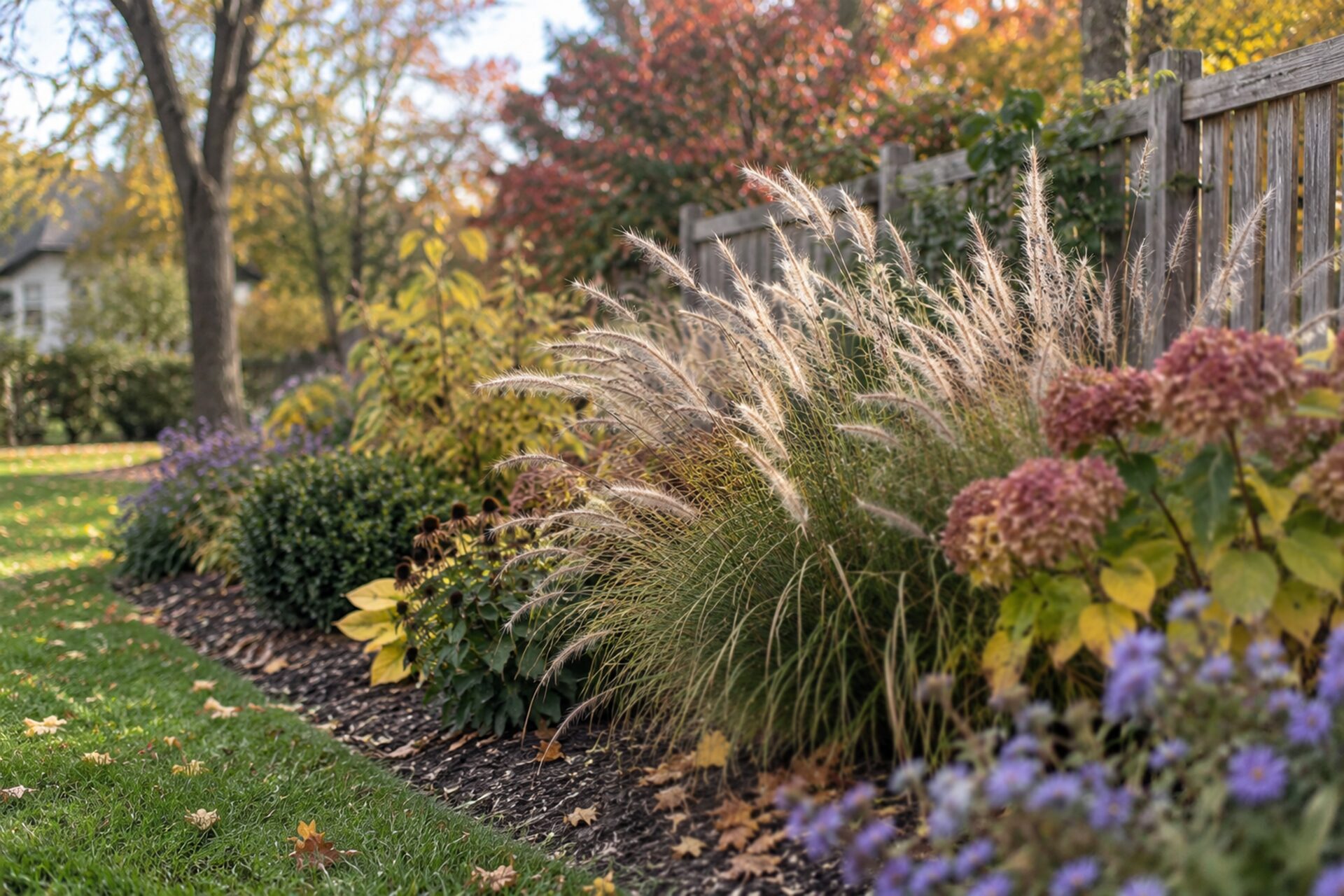
Many perennials continue to provide value long after bloom has ended. Coneflowers and black-eyed Susans hold seed heads. Sedum can retain broad dried flower clusters. Ornamental grasses bring height and movement. Hydrangea flowers often dry into forms that remain visible well into winter.
These plants do not look the way they did in July, but that does not make them finished.
Standing stems and flower heads can also provide food and shelter for wildlife. MassWildlife recommends delaying cleanup of some perennial plants and flower heads, noting that seeds can feed overwintering birds while hollow stems and other plant material can provide shelter for insects.
That does not mean every perennial should remain untouched. Some plants simply do not age particularly well. The decision is less about following a universal list and more about looking at structure.
Does the plant stay upright? Does it have an interesting seed head or dried flower? Does it add texture against evergreens, stone, or snow? Does it provide habitat without creating a plant-health problem?
If so, there may be little reason to remove it simply because the calendar says fall.
This approach also connects directly to designing for winter structure. A garden planned with grasses, seed heads, branching forms, berries, bark, and evergreens can remain visually active even after its summer color disappears.
Leaves Belong in Some Places, Not Everywhere
Perhaps no part of fall cleanup has changed more than the way we think about fallen leaves.
For years, the standard was straightforward: remove them. More recently, “leave the leaves” has become a familiar alternative. Neither instruction is particularly useful if applied to an entire residential property without context.
On lawns, significant leaf accumulation still needs attention. A dense layer can reduce the sunlight reaching cool-season turf and eventually smother the grass beneath it. UMass Extension continues to recommend managing heavy leaf accumulation during fall for precisely this reason.
Garden beds are different.
Leaves that settle beneath shrubs, around established perennials, or along naturalistic edges can return organic material to the soil while providing winter cover for insects and other organisms. MassWildlife suggests using excess leaves in flower beds rather than treating all of them as waste.
The key is not necessarily leaving every leaf exactly where it falls. It is finding an appropriate place for it.
A front walk covered in wet maple leaves is not habitat that needs to be preserved. Neither is a clogged drain. A heavy pile burying low-growing plants may need to be thinned or relocated. Beneath established shrubs or along a woodland edge, that same material may fit naturally into the landscape.
Blade’s guide to leaf mulching and selective leaf management goes into greater detail about lawns, garden beds, excess leaf volume, and situations where removal still makes sense.
The larger point is simple: leaves are a material to manage, not automatically a waste product.
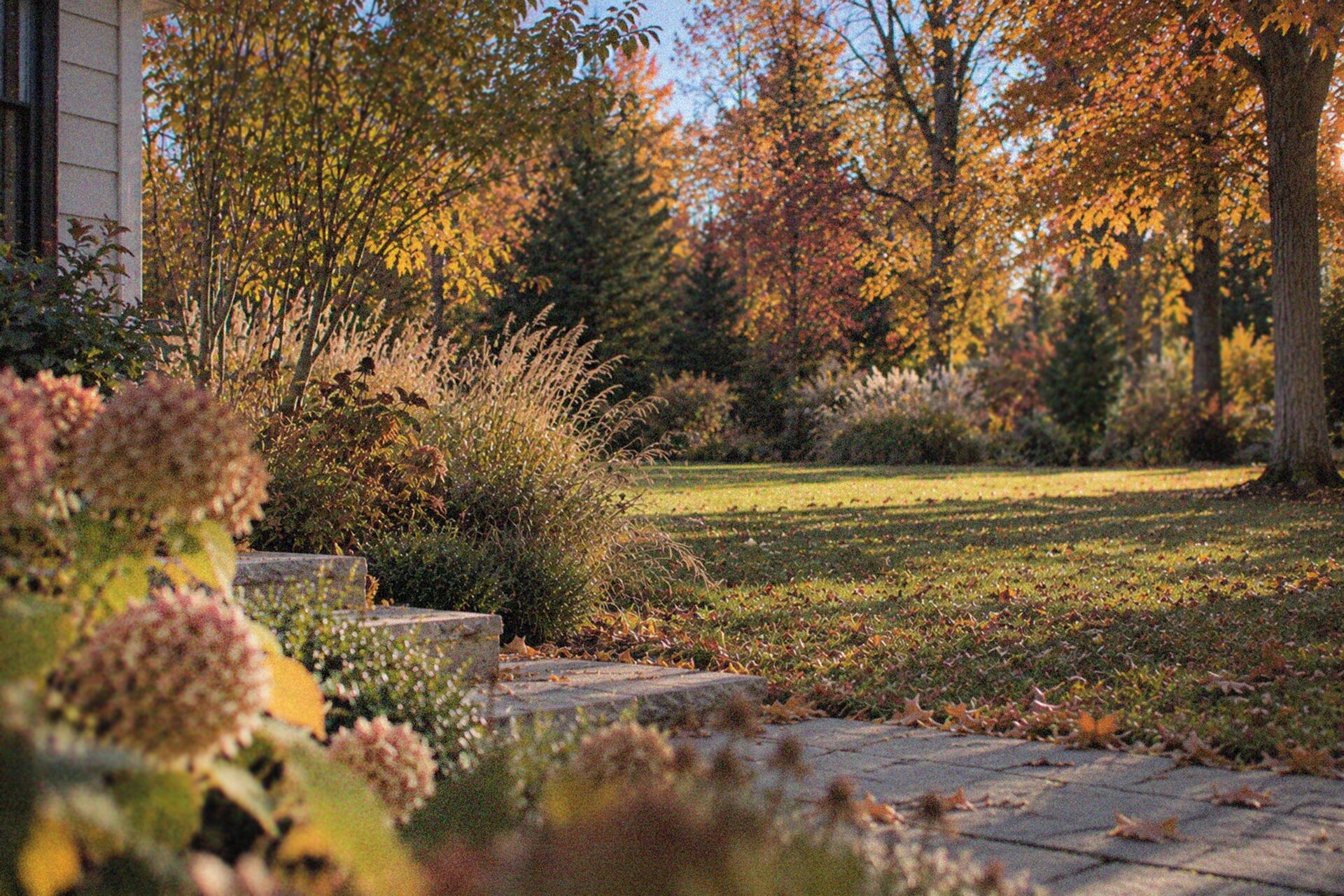
Different Parts of a Property Need Different Levels of Cleanup
One of the limitations of a traditional fall-cleanup checklist is that it tends to treat a property as though every square foot performs the same job.
It does not.
A front entry has different visual and functional expectations than a pollinator garden. A terrace is different from a woodland edge. Turf underneath mature maples needs different fall care than a mixed perennial border.
| Area of the Property | Fall Cleanup Approach | Why It Matters |
|---|---|---|
| Front entry and formal beds | More edited | Presentation, structure, and circulation remain important |
| Mixed perennial borders | Selective | Balance plant health, winter structure, and habitat |
| Pollinator gardens | Leave more standing material | Stems and seed heads can provide food and overwintering habitat |
| Lawns | Manage leaves actively | Heavy accumulation can interfere with turf health |
| Woodland and naturalized edges | Minimal cleanup where appropriate | Leaf litter and woody material are natural parts of these areas |
| Ornamental grass plantings | Often leave standing | Grasses can provide winter form, texture, and movement |
| Walks, patios, and steps | Clear | Usability, safety, drainage, and appearance matter |
| Drains and catch basins | Clear | Water needs an unobstructed path through the property |
This is where selective maintenance becomes particularly valuable on established residential properties. The decision is not being made plant by plant in isolation. It is also being made in relation to architecture, views, circulation, neighboring plantings, and the role each garden area plays.
A looser edge at the back of a property may be entirely appropriate. The same treatment beside a formal front walk may feel unfinished.
Likewise, a pollinator planting can benefit from retaining substantially more standing material. Blade’s guide to pollinator garden design discusses why overwintering habitat is part of a successful planting, not something separate from it.
The best fall cleanup recognizes those differences instead of trying to make every garden bed look identical by November.
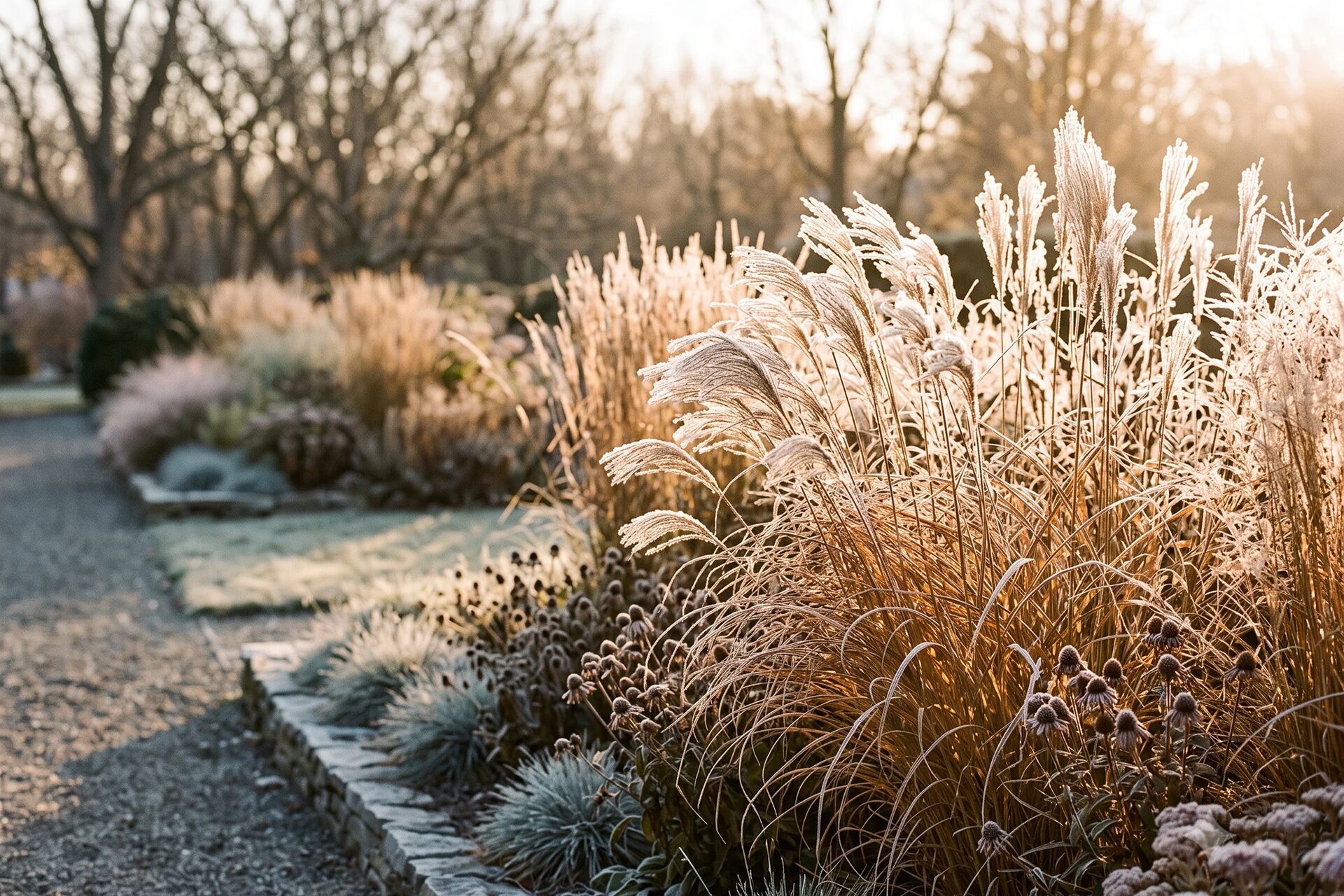
Winter Appearance Is Part of the Decision
New England gardens spend a significant portion of the year without peak foliage or flowers. That makes winter appearance more important than it is sometimes given credit for.
Once deciduous foliage disappears, the landscape becomes simpler. Evergreens become more prominent. Bark, branching, stone, walls, paths, and garden structures come forward. Plants that seemed secondary during summer may suddenly become some of the strongest forms in the garden.
That change is worth considering before everything gets cut down.
An ornamental grass seen from a kitchen window may catch low winter light and move in the wind. Dried hydrangea blooms may hold snow. Seed heads can provide a dark counterpoint against frost. Upright perennial stems can keep a border from becoming completely flat.
“For each of our properties, we try to look at what a plant becomes after the growing season, not just what it looked like in bloom. If it still adds shape, movement, or texture through winter, that’s often a good reason to leave it standing, at least later into winter or early spring.”
— Katie Johnson, Landscape Designer, a Blade of Grass
That perspective is especially useful when thinking about views from inside the house. A border that still has height, repetition, and movement in January can feel very different from one that has been cut uniformly to the ground.
Not everything deserves to stay simply because it is standing. But winter gives us a different set of criteria for deciding what looks good.
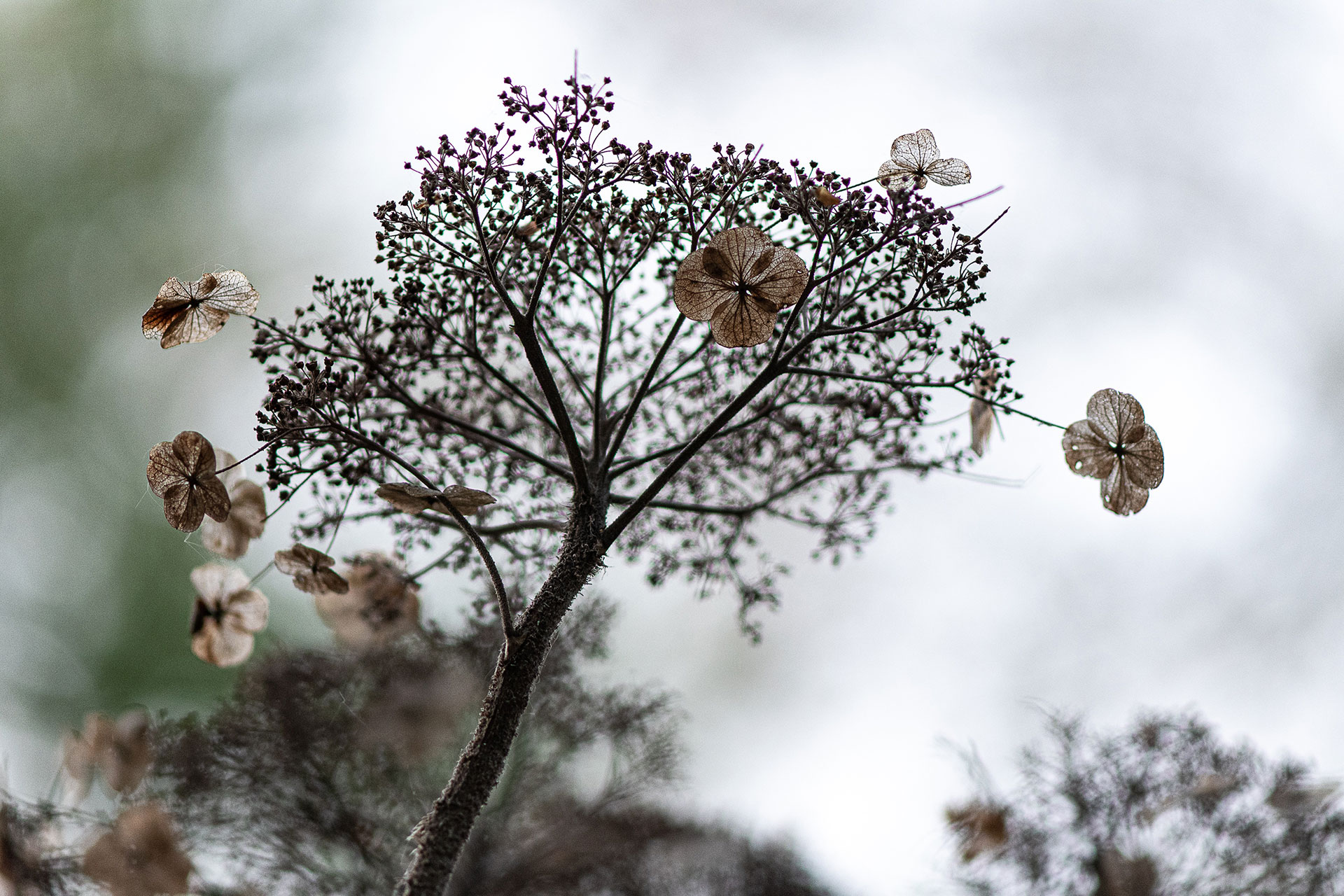
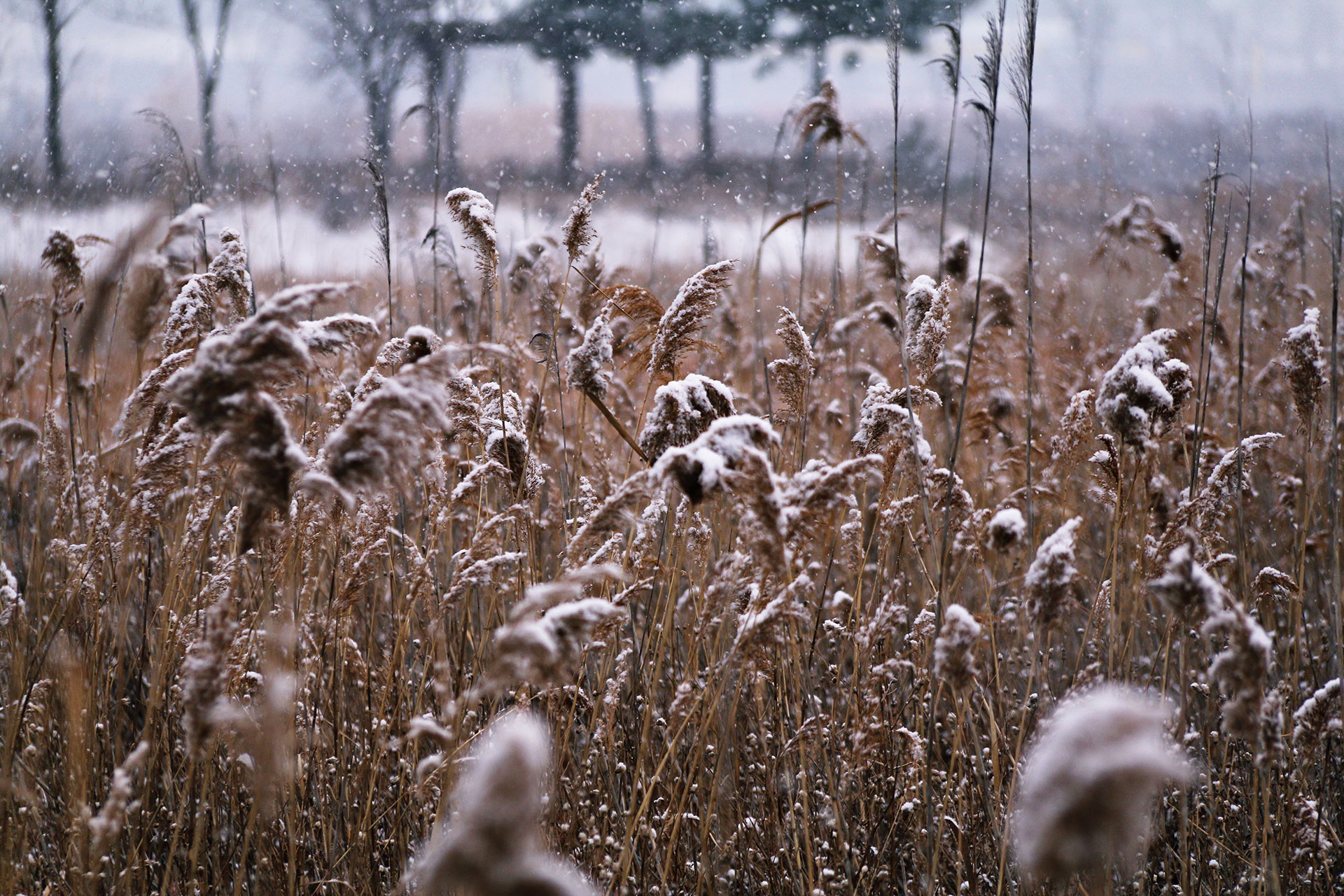
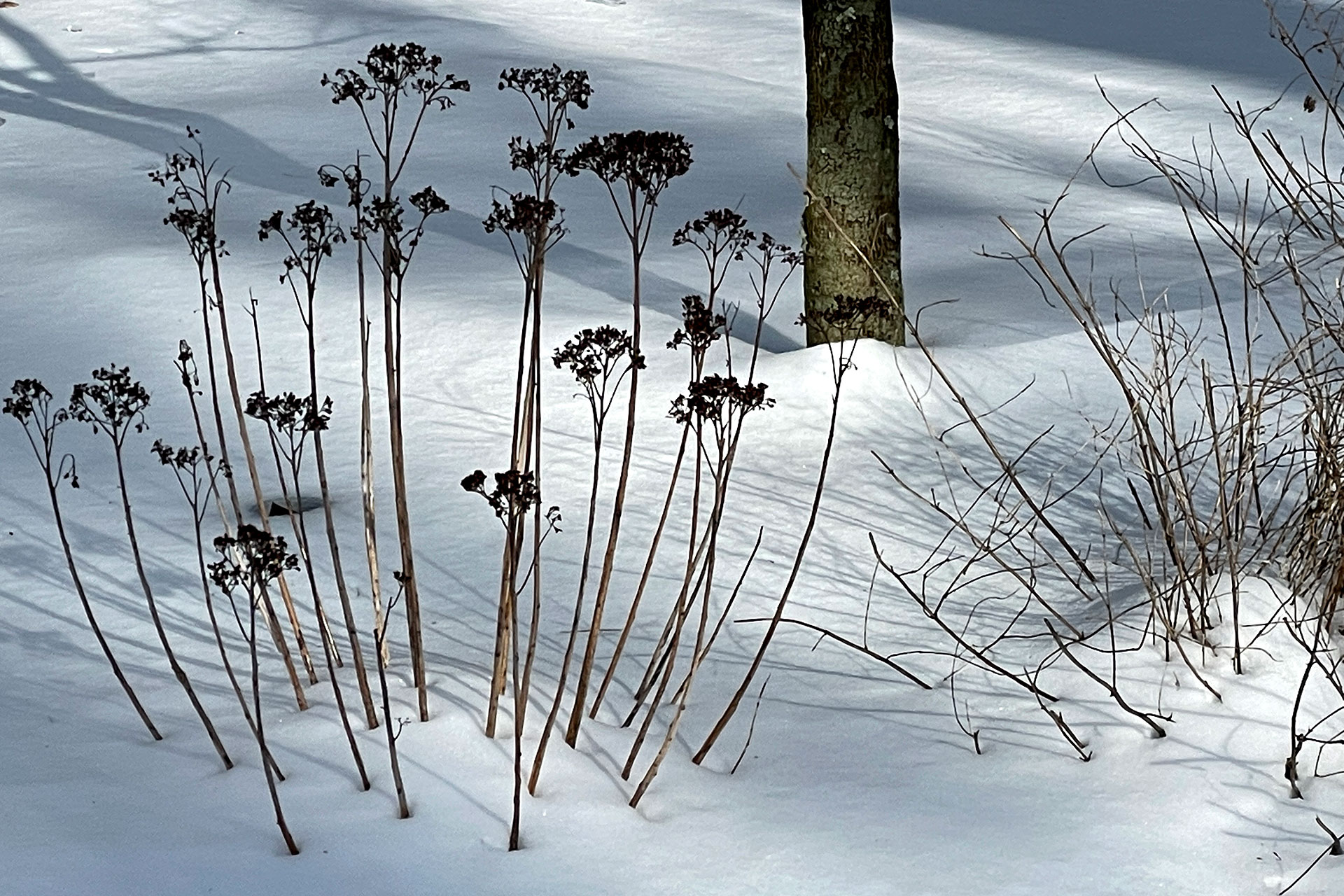
Summer gardens often depend heavily on foliage and bloom. Winter gardens depend more on silhouette, scale, texture, contrast, and repetition. A plant that has lost its color may still be doing important design work.
Plant Health Can Override the “Leave It” Rule
The ecological case for leaving plant material is compelling, but it should not become an absolute rule.
A planting with recurring disease needs to be managed differently from a healthy one. Infected leaves and stems can harbor pathogens through winter, which is why Extension guidance continues to recommend removing diseased material from gardens in fall.
Pest history can matter as well. So can moisture, density, airflow, and the way fallen material accumulates around the crown of a plant.
This is an important part of selective cleanup because the most environmentally appealing choice in one garden may not be the healthiest choice in another.
If a perennial has remained healthy, holds its form well, and contributes through winter, delaying the cutback can make sense. If the same type of plant has struggled with recurring foliar disease, the better maintenance decision may be to remove and dispose of its infected material.
There is no contradiction there. It is simply site-specific horticulture.
Some Cleanup Belongs in Spring
Leaving selected material through winter means accepting that some work moves from the fall calendar to the spring one.
That is not unfinished maintenance. It is delayed maintenance.
Perennial stems and grasses that have provided winter structure eventually need to make way for new growth. Leaves may need adjustment around emerging plants. Winter damage becomes visible and the garden begins shifting back toward its active season.
The University of Maine Cooperative Extension advises that leaving retained plant material in place longer gives overwintering insects a better chance to emerge naturally, with cleanup becoming appropriate as new perennial growth begins to appear.
Blade’s guide to a smarter spring landscape cleanup picks up that part of the seasonal cycle.
Fall and spring cleanup are not competing philosophies. They are two stages of the same maintenance strategy.
What Should a Garden Look Like After Fall Cleanup?
There is no single finished appearance.
A well-maintained New England property may still have ornamental grasses standing near a terrace, seed heads moving through a perennial border, dried hydrangea flowers along a walk, and leaves tucked beneath shrubs. It may look quieter and less colorful than it did a month earlier, but it does not need to look empty.
At the same time, the areas that require clarity should have it. Walks are open. Turf is not buried. Drainage paths are clear. Diseased foliage is gone. Collapsed growth has been removed. Formal areas still have enough structure to feel deliberate.
The result should look cared for without looking erased.
That distinction is especially important in gardens designed for four seasons. If everything that provided summer color is automatically removed in fall, much of the winter composition disappears with it. When maintenance is more selective, the landscape is allowed to change rather than simply shut down.
Fall cleanup does not return the garden to zero. It prepares it for another season, with some elements removed, some deliberately retained, and the overall composition still intact.
Frequently Asked Questions
Q: Should You Cut Back All Perennials in the Fall?
A: No. Some perennials benefit from removal because they collapse, develop disease, or provide little winter value, while others can remain standing for structure, seed, or habitat. Plant condition, species, location, and the character of the garden should all influence the decision.
Q: Which Perennials Are Often Left Standing Through a New England Winter?
A: Plants that hold sturdy stems, persistent seed heads, or attractive dried flowers tend to be the strongest candidates. Coneflowers, black-eyed Susans, sedum, and many ornamental grasses often retain useful structure through New England’s dormant season. Hydrangea blooms can also provide winter interest. Snow, wind exposure, disease history, and the plant’s location on the property may still influence whether it is left standing.
Q: Should Leaves Be Removed From Garden Beds in Fall?
A: Not necessarily. A moderate amount of leaf litter can be useful beneath shrubs and in established planting areas. Leaves should be managed when they form heavy mats, cover sensitive plants, contribute to disease problems, or accumulate on lawns, walks, patios, or drainage areas.
Q: Is It Better to Clean Up a Garden in Fall or Spring?
A: For many New England gardens, the best answer is both. Fall is a good time to remove diseased material, weeds, damaged growth, excess leaves, and debris that creates functional problems. Selected perennial stems, grasses, seed heads, and leaf litter can remain through winter and be addressed as the garden begins growing again in spring.
Learn More About Selective Fall Cleanup
- UMass Extension: Garden Clippings, September Fall Cleanup Guidance
- MassWildlife: Wildlife-Friendly Fall Clean-Up Tips
- Xerces Society: Leave the Leaves, Winter Habitat Protection
- University of Maine Cooperative Extension: When to Remove Fall Leaves and Plant Remains
- Garden Design: Fall Garden Cleanup: What to Cut Back, What to Leave, and Why
Our Approach to Seasonal Property Care
Fall is an important maintenance season, but the quality of the work is not measured by how much material leaves the property.
A landscape that has been carefully designed deserves the same level of judgment as it moves through the seasons. Sometimes that means cutting back, clearing, or removing. Sometimes it means recognizing that a grass, seed head, dried flower, or layer of leaves is exactly where it should be for a little longer.
At a Blade of Grass, our landscape maintenance and fine gardening teams care for properties with that longer view in mind. Seasonal work considers plant health, design intent, property function, and what the landscape should look like not only when the work is finished, but several months later.
That is ultimately the value of selective fall cleanup. It does not start the garden over. It helps the garden move naturally from one season into the next.
If your property would benefit from seasonal care that considers the landscape as a whole, contact a Blade of Grass to talk with our team and request a free consultation.