Wetlands are woven into the landscape of Greater Boston and MetroWest. From stream corridors in Weston and Wellesley to pond edges in Dover and Lincoln, regulated resource areas are common on residential properties. Yet many homeowners are surprised to learn that even routine improvements can trigger review under Massachusetts wetlands laws.
If you are planning a patio, pool, grading adjustment, tree removal, or drainage improvement near a wetland, understanding the legal framework is essential. The process is structured, locally administered, and often more nuanced than expected. This guide explains how Massachusetts wetlands laws apply to landscape projects and how property owners can approach the process strategically.
Key Takeaways
- Massachusetts wetlands laws apply to many residential properties, even when no standing water is visible.
- The 100-foot buffer zone and 200-foot riverfront area often extend into landscaped portions of a yard.
- Most Greater Boston towns enforce local wetlands bylaws that are stricter than state standards.
- Landscape projects such as patios, pools, grading, and tree removal may require Conservation Commission review.
- Early planning with experienced professionals reduces risk, delays, and unnecessary redesign.
Why Wetlands Matter in Massachusetts
Massachusetts maintains some of the strongest environmental protections in the country. According to the Massachusetts Department of Environmental Protection, more than 300,000 acres of wetlands are protected statewide under environmental law. These areas play an essential role in flood control, groundwater recharge, water quality protection, and wildlife habitat.
For property owners, this means that regulated land may exist beyond the obvious wetland edge. A wooded area behind a lawn, a seasonal drainage swale, or land adjacent to a stream may fall within protected zones. In many MetroWest communities, large residential parcels include significant portions of regulated buffer or riverfront areas.
Understanding how Massachusetts wetlands laws affect your property at the outset of a landscape project allows for thoughtful design rather than reactive adjustments.
Understanding Massachusetts Wetlands Laws
The primary statute governing regulated resource areas is the Massachusetts Wetlands Protection Act. This law establishes statewide standards intended to protect wetlands and their surrounding areas from harmful alteration.
The Act regulates not only wetlands themselves, but also defined areas around them. Bordering vegetated wetlands, banks, streams, ponds, floodplains, riverfront areas, isolated land subject to flooding, and certified vernal pools may all be protected under Massachusetts wetlands laws.
The practical implication is clear: work does not need to occur directly within standing water to require review.
The 100-Foot Buffer Zone
One of the most common areas affecting residential landscape projects is the 100-foot buffer zone. This zone extends outward from the edge of a protected wetland. Work within this area is presumed to have potential impact and often requires filing with the local Conservation Commission.
In Greater Boston, it is not unusual for patios, expanded lawn areas, or even portions of driveways to fall within this regulated buffer. Activities such as grading, tree removal, trenching for irrigation, and constructing outdoor living areas can all trigger review.
The 200-Foot Riverfront Area
If your property abuts a perennial stream, Massachusetts wetlands laws establish an additional 200-foot riverfront area. This area carries more stringent standards aimed at protecting water quality and habitat along waterways.
Landscape projects in riverfront areas often require detailed documentation and must demonstrate limited disturbance. In towns across MetroWest, these requirements can significantly influence grading plans, planting strategies, and construction sequencing.
State Law and Local Bylaws
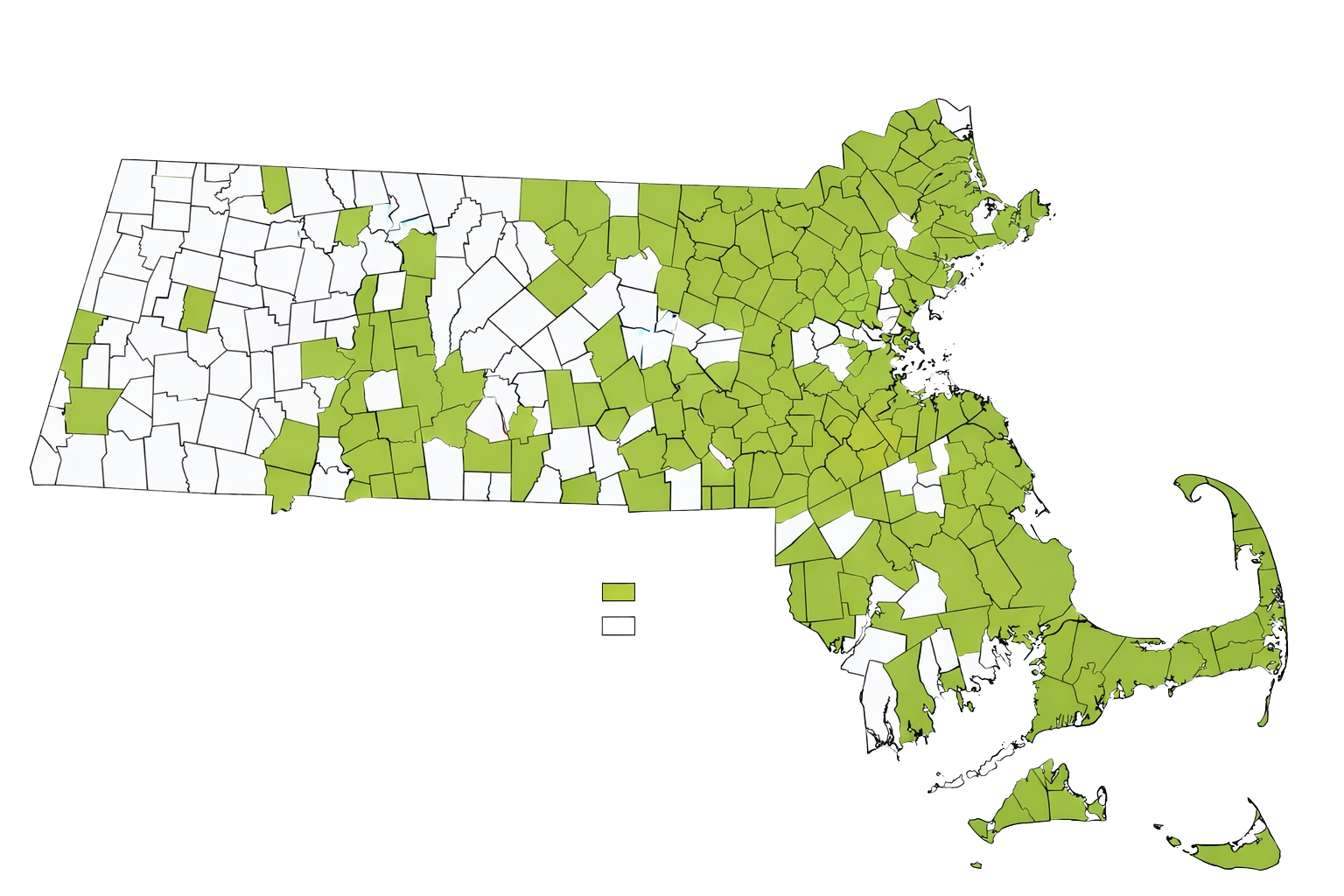
While the Wetlands Protection Act sets statewide standards, many municipalities adopt local bylaws that impose stricter requirements. Communities such as Weston, Wellesley, Dover, and Concord may expand regulated areas or require additional documentation beyond state minimums.
Your local Conservation Commission administers both the state law and any applicable local bylaw. The Massachusetts Association of Conservation Commissions supports these boards statewide, but interpretation and enforcement remain local.
For property owners, this means that understanding Massachusetts wetlands laws requires both state-level knowledge and familiarity with town-specific regulations.
The Conservation Commission Review Process
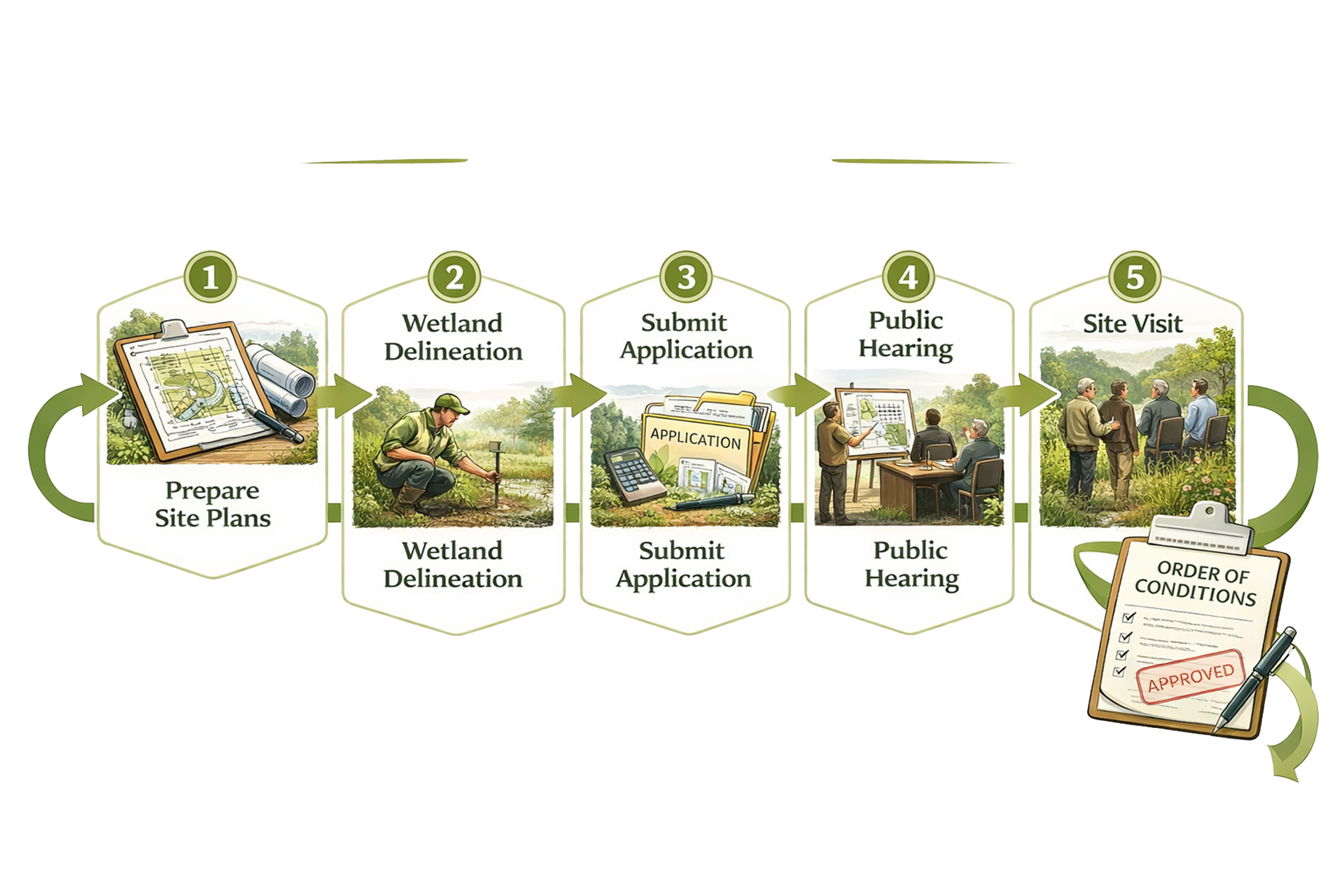
When a landscape project falls within a regulated area, filing is typically required. Depending on the scope of work, homeowners may submit either a Request for Determination of Applicability or a Notice of Intent.
The process often includes preparation of detailed site plans, potential wetland delineation by a qualified professional, submission of application materials, a public hearing, and a site visit with Commissioners. If approved, an Order of Conditions outlines requirements that must be followed during construction.
Timelines vary by municipality and project complexity. Incorporating permitting into the early design phase helps avoid seasonal delays or costly redesign.
Common Landscape Projects That Trigger Wetlands Review
Many projects that feel routine can require Conservation Commission approval. In Greater Boston, the following landscape improvements frequently trigger review:
- Patios and terraces constructed within the 100-foot buffer zone
- Retaining walls near wetland edges
- Driveway expansions adjacent to regulated areas
- Tree removal in buffer or riverfront zones
- Regrading to address drainage concerns
- Pool installations that alter topography
- Trenching for landscape lighting or irrigation
Because Massachusetts wetlands laws focus on alteration of land within regulated areas, even subtle changes can fall under review.
Before Starting a Landscape Project Near Wetlands
If your property includes or abuts regulated land, take these steps before beginning work:
- Confirm whether resource areas or buffer zones are present on your property.
- Engage a qualified professional for wetland delineation if boundaries are unclear.
- Review local Conservation Commission requirements.
- Incorporate permitting timelines into your construction schedule.
- Avoid clearing, grading, or excavation before formal approval.
This measured approach protects both the landscape and the investment.
Related Blog: Permits and Regulations for Landscaping Projects in the Boston Area: What You Need to Know
Why Compliance Is Essential
Noncompliance with Massachusetts wetlands laws can result in stop-work orders, daily fines, mandatory site restoration, and complications during property resale. In some cases, completed landscape improvements must be removed to restore disturbed areas.
Beyond legal risk, improper work near wetlands can affect drainage patterns, increase erosion, and undermine long-term landscape performance. Responsible compliance safeguards both environmental integrity and property value.
Design Considerations Near Regulated Areas
Designing within or near regulated areas requires technical coordination and disciplined execution. It is not about limiting enhancement. It is about aligning refined design with environmental responsibility.
As one senior designer at a Blade of Grass explains:
“Designing near wetlands requires precision and foresight. When we fully understand the site and the regulations, we can create outdoor environments that respect natural systems while enhancing the property.”
Thoughtful strategies may include minimizing disturbance within buffer zones, incorporating native plantings to stabilize soil, designing effective drainage systems, using permeable materials where appropriate, and implementing careful erosion control during construction. Early coordination among landscape architects, engineers, and environmental consultants ensures that aesthetic goals remain aligned with regulatory standards.
Local Example Scenarios
In Weston, a homeowner seeking to expand a terrace discovered that the proposed footprint fell within the 100-foot buffer zone. The project required filing and stormwater documentation to demonstrate no increased impact on adjacent wetlands.
In Wellesley, removal of mature trees near a perennial stream triggered additional review because the work occurred within the 200-foot riverfront area. Replacement planting and erosion control measures were incorporated into the approval.
In Dover, installation of a new pool altered grading in an area subject to flooding. The design team demonstrated no net loss of flood storage and adjusted the landscape plan accordingly.
These examples illustrate how Massachusetts wetlands laws directly influence landscape design decisions across MetroWest communities.
Frequently Asked Questions About Massachusetts Wetlands Laws
Q: Do I need a permit to remove trees near wetlands in Massachusetts?
A: In many cases, yes. Tree removal within the 100-foot buffer zone or 200-foot riverfront area often requires review by the local Conservation Commission.
Q: What is considered a wetland under Massachusetts law?
A: Protected resource areas include bordering vegetated wetlands, streams, ponds, floodplains, riverfront areas, and certified vernal pools. A professional delineation may be required to confirm boundaries.
Q: Can I build a patio within a wetlands buffer zone?
A: It may be possible, but approval is typically required. The design must demonstrate compliance with performance standards and minimal environmental impact.
Q: How long does Conservation Commission approval take?
A: Approval timelines vary by town and complexity. The process may take several weeks to several months.
Q: What happens if work is done without approval?
A: The Conservation Commission may issue a stop-work order and require restoration. Financial penalties and future permitting challenges may also result.
Partnering With an Experienced Landscape Team
Massachusetts wetlands laws are detailed, locally administered, and highly site-specific. They are manageable with proper planning and experienced guidance.
For more than three decades, a Blade of Grass has designed, constructed, and maintained residential landscapes throughout Greater Boston and MetroWest. We have extensive experience coordinating with Conservation Commissions, working alongside wetland scientists and engineers, and delivering compliant, thoughtfully executed landscape projects.
When regulated areas intersect with your property, early coordination makes a measurable difference. Our team understands how to balance environmental stewardship, regulatory compliance, and elevated landscape design. The result is a landscape that performs responsibly while enhancing long-term property value.
If you are considering a landscape project near wetlands in Weston, Wellesley, Dover, Lincoln, Concord, or surrounding communities, we encourage you to begin with a professional consultation. Thoughtful planning today protects your investment and preserves the natural systems that define these properties.
Learn More About Massachusetts Wetlands Laws
For homeowners interested in deeper guidance, these trusted resources provide regionally relevant information:
- Protecting Wetlands in Massachusetts – Mass.gov
- Wetlands Protection Act – Frequently Asked Questions – Massachusetts Association of Conservation Commissions
- Wetland Protection Laws – Town of Wellesley, MA