Pets are part of how many families experience their homes every day. They follow us onto the patio, claim favorite spots in the shade, patrol fence lines, race across the lawn, and often reveal exactly where a landscape is working and where it is not.
For Boston-area homeowners, pet-friendly landscaping is not only about safety. It is also about durability, drainage, comfort, planting, circulation, and long-term care. A yard that works beautifully for pets should still feel refined, intentional, and connected to the architecture of the home.
That balance matters more than ever. According to the American Pet Products Association, dog ownership expanded to 53% of U.S. households in 2025, or about 71 million households. Pets are also influencing real estate decisions, with the National Association of Realtors noting that outdoor space for pets is an important consideration for many buyers.
For a high-end residential property, the goal is not to create a “dog yard.” The goal is to create a well-designed landscape that supports the full household, including the four-legged members.
Key Takeaways
- A pet-friendly yard can still feel polished, architectural, and appropriate for a high-end Boston-area home.
- The best pet-friendly landscape design starts by observing how pets actually move, rest, dig, and play.
- Pet-safe planting requires careful review, especially around common toxic plants, bulbs, and high-traffic areas.
- Lawn, hardscape, drainage, fencing, shade, and maintenance all play a role in how well the yard performs.
- A Boston landscape designer can help integrate pet-friendly features without compromising the overall design.
What Makes a Landscape Truly Pet-Friendly?
Pet-friendly landscaping ideas often focus on lists of safe plants or ways to stop dogs from digging. Those details matter, but they are only part of the picture.
A truly pet-friendly landscape considers:
- Safety: Plant toxicity, fencing, gates, grade changes, pools, and access points.
- Durability: Lawn recovery, traffic patterns, hardscape materials, and planting protection.
- Comfort: Shade, water access, cool resting areas, and soft transitions between spaces.
- Cleanability: Drainage, surface choices, odor control, and easy maintenance.
- Beauty: Planting composition, materials, proportions, and visual connection to the home.
- Long-term care: Seasonal adjustments, lawn repair, pruning, irrigation, and property maintenance.
Pet-Friendly Does Not Mean Design-Free
A beautiful dog-friendly yard does not need to look utilitarian. In fact, some of the same principles that make a landscape elegant also make it more practical for pets.
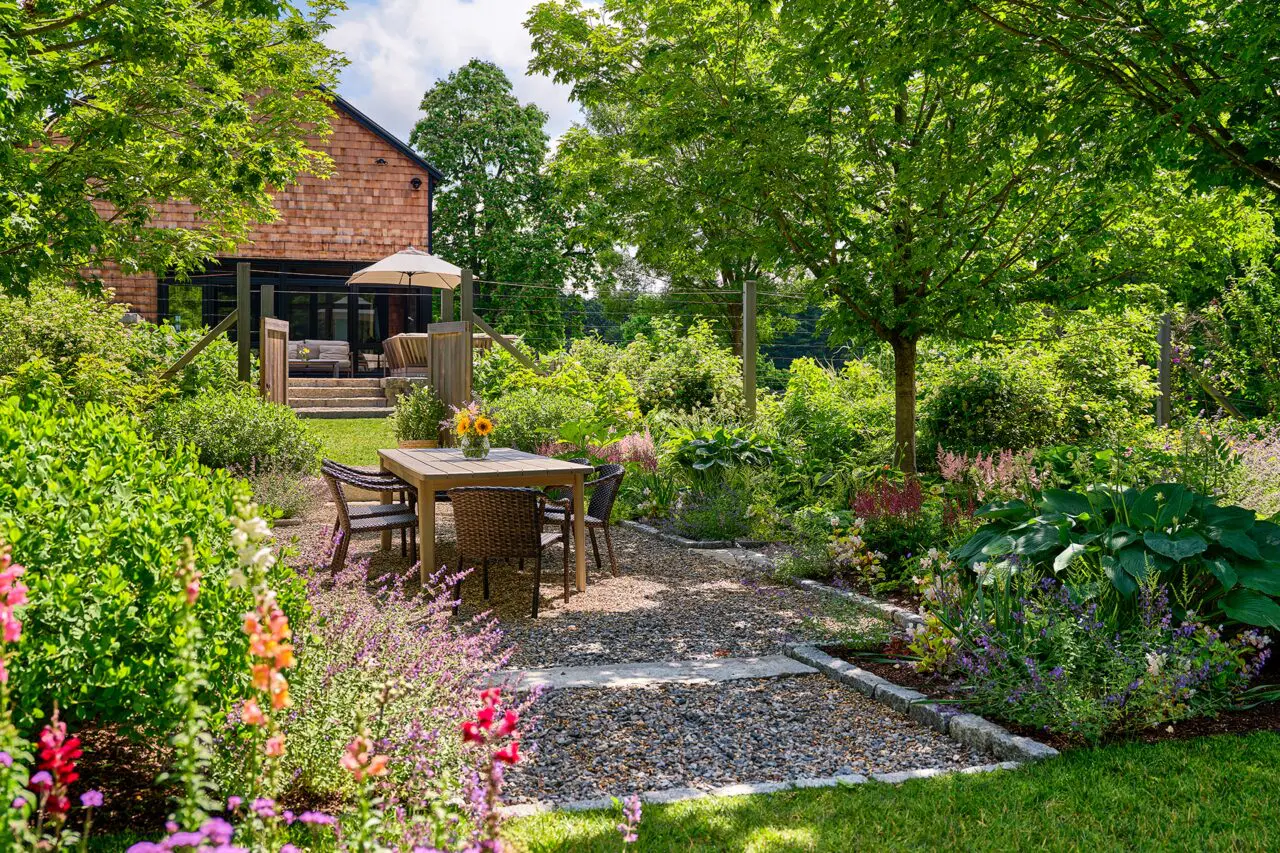
Clear circulation, durable materials, layered planting, defined garden edges, well-drained surfaces, and properly scaled outdoor rooms all help a yard function better. When pet needs are addressed early in the design process, they can be woven into the landscape rather than added later as disconnected fixes.
As Joanna McCoy, Senior Landscape Designer at a Blade of Grass, explains:
“The best pet-friendly landscapes are not designed around restrictions. They are designed around movement, comfort, durability, and beauty. Once we understand how a dog actually uses the property, we can make choices that protect the lawn, guide traffic, support planting, and keep the space feeling intentional.”
Start With How Your Pet Uses the Yard
Before choosing plants, mulch, fencing, or groundcover, watch how your pet moves through the property. Dogs in particular tend to create patterns. They run the same route, pause at the same corners, dig in the same beds, and wait by the same gate.
A thoughtful pet-friendly landscape design begins with those habits.
Look for:
- Worn lawn paths along fences or between doors and gates
- Muddy areas near patios, stairs, and thresholds
- Favorite sunny or shady resting spots
- Digging near shrubs, mulch beds, or exposed soil
- Fence-line pacing or barking zones
- Areas where grass never seems to recover
- Sloped areas that become slippery or eroded
- Planting beds that get trampled during play
Map the Movement Before Choosing Materials
A dog’s natural route through the yard is often the best clue for where a path, stepping stone sequence, gravel strip, or reinforced lawn area belongs. Fighting those movement patterns usually leads to repeated repairs. Designing around them can make the landscape feel more orderly and reduce maintenance.
This is where professional planning matters. The same design thinking used for terraces, front walks, garden rooms, and outdoor entertaining can also be applied to daily pet movement. For homeowners exploring broader property improvements, this can connect naturally to a larger landscape design plan rather than a one-off fix.
Choose Pet-Safe Plants With Care
Plant selection is one of the most important parts of pet-friendly landscaping, but it should be handled thoughtfully. This article is not a substitute for veterinary advice. If your pet has specific health concerns or a habit of chewing plants, consult your veterinarian and use an authoritative resource such as the ASPCA’s toxic and non-toxic plant database.
The ASPCA maintains searchable toxic and non-toxic plant lists for dogs, cats, and horses. Its general plant safety page highlights common concerns including sago palms, lilies, azaleas, and tulips, and advises pet owners to contact a veterinarian or the ASPCA Animal Poison Control Center if an animal may have ingested a poisonous substance.
Common Landscape Plants to Review Carefully
Many familiar garden plants deserve extra review in pet-friendly yards. These may include:
- Azalea and rhododendron
- Tulips and daffodils, especially bulbs
- Lilies, especially around cats
- Lily of the valley
- Foxglove
- Oleander
- Sago palm
- Certain ornamental bulbs and perennials
The ASPCA’s dog-specific plant list is a helpful starting point when reviewing pet-safe plants for yards, especially for homeowners planning new beds, seasonal color, or expanded planting areas.
Pet-Safe Does Not Mean Pet-Proof
Even non-toxic plants can struggle in a pet-heavy landscape. A shrub may be safe but still break under repeated running. A perennial may be non-toxic but too delicate near a play zone. A planting bed may be beautifully designed but poorly placed beside a gate, fence, or favorite digging spot.
Pet-friendly planting design should consider:
- Toxicity
- Growth habit
- Durability
- Placement
- Soil conditions
- Mature size
- Maintenance needs
- Exposure to traffic, urine, and digging
Before investing in new planting, it is also worth understanding the underlying soil. Compacted, acidic, poorly drained, or nutrient-deficient soil can make it harder for lawns and beds to recover from pet activity.
Related Blog: Soil Testing Before Planting: Why It Matters in Boston-Area Landscape Design
Design Durable Lawn and Groundcover Areas
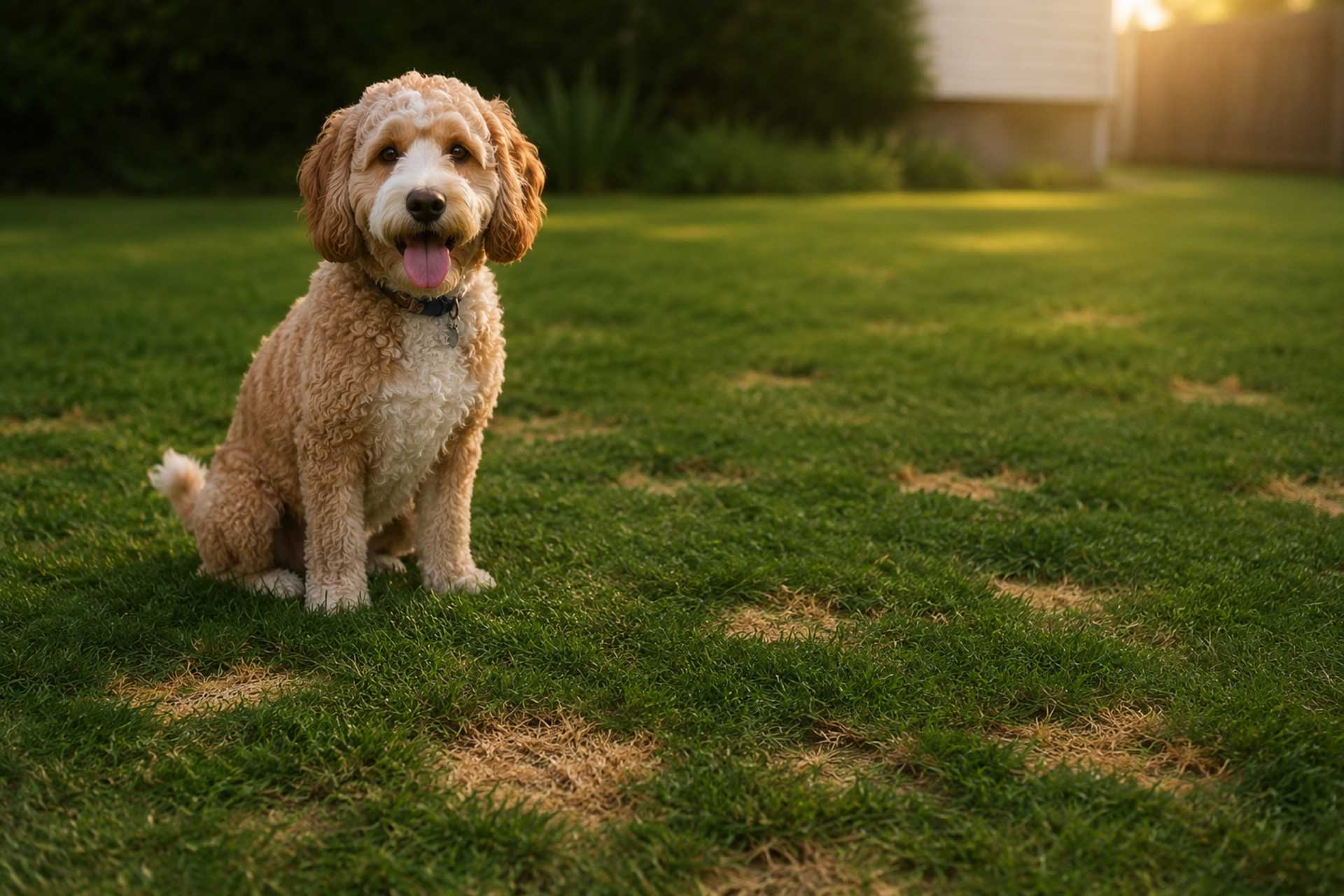
For many homeowners, the first visible pet-related landscape problem is the lawn. Bare patches, yellow spots, muddy lanes, and compacted soil are common in yards used by dogs.
The challenge is that turfgrass needs the right conditions to recover. In a Boston-area yard, grass may already be dealing with shade, tree roots, heavy clay, compacted soil, freeze-thaw cycles, foot traffic, irrigation issues, or poor drainage. Add a dog’s daily routine, and the weakest areas show quickly.
When Lawn Makes Sense
Lawn can still be a good choice for dogs when the area has:
- Adequate sunlight
- Good drainage
- Healthy soil
- Enough square footage to distribute activity
- A realistic maintenance plan
- Proper irrigation
- Seasonal repair and overseeding
In larger suburban properties in Newton, Wellesley, Weston, Dover, or Needham, lawn may remain an important part of the pet-friendly landscape. The design question is whether it is being used in the right places and supported by the right maintenance.
When Lawn Is the Wrong Surface
In narrow side yards, shaded corridors, wet low spots, or high-speed dog paths, lawn may never perform well. Replacing those struggling areas with a more durable surface can make the landscape look more polished and reduce ongoing frustration.
Alternatives may include:
- Natural stone paths
- Pavers
- Gravel areas
- Stepping stones
- Mulched utility paths
- Reinforced planting edges
- Defined dog circulation routes
The right material depends on the home, the dog, the grade, the drainage, and the visual character of the property. For a deeper look at regional material performance, see our guide to the best stone and hardscape materials for Boston-area landscapes.
Related Blog: Best Stone and Hardscape Materials for Boston-Area Landscapes
Solve Mud Before It Becomes a Maintenance Cycle
Mud is one of the clearest signs that a pet-friendly yard needs more than surface-level repairs. In Greater Boston, mud issues often show up during spring thaw, after heavy rain, near downspouts, along shaded side yards, and around gates or patio doors.
Pet traffic makes those areas worse because paws repeatedly compact the soil. Once the soil is compacted, water drains more slowly. Once drainage slows, the lawn thins. Once the lawn thins, mud becomes the dominant surface. It becomes a cycle.
Mud Control for Dog Yards Starts With Drainage
Mud control for dog yards may involve:
- Regrading low areas
- Redirecting downspouts
- Improving soil structure
- Installing drainage solutions
- Replacing failed lawn with durable hardscape
- Adding stone landing areas near doors and gates
- Improving irrigation coverage and timing
- Reducing traffic through vulnerable planting zones
Drainage should be treated as part of the design, not just a maintenance problem. A beautiful landscape will not perform well if water is collecting in the wrong places.
Related Blog: Landscape Drainage Solutions for Massachusetts Properties
Use Hardscape to Guide Movement and Protect Planting
Hardscape is one of the most useful tools in pet-friendly landscape design. It can organize movement, protect planting beds, improve drainage, and create a more comfortable daily experience.
A well-placed path can turn an informal dog track into an intentional garden route. A stone landing outside a back door can reduce muddy paws. A low wall can protect planting without making the yard feel fenced off. A gravel strip near a gate can hold up better than grass in a high-use location.
Think About Paws, Heat, Texture, and Maintenance
Material choice matters. Some surfaces can become hot in direct sun. Some are too rough for frequent paw traffic. Some are slippery when wet. Others may not fit the architectural style of the property.
For Boston landscape design, material selection should account for:
- Freeze-thaw durability
- Winter conditions
- Traction
- Drainage
- Comfort underfoot
- Maintenance requirements
- Visual fit with the home
- How the area will be used by both people and pets
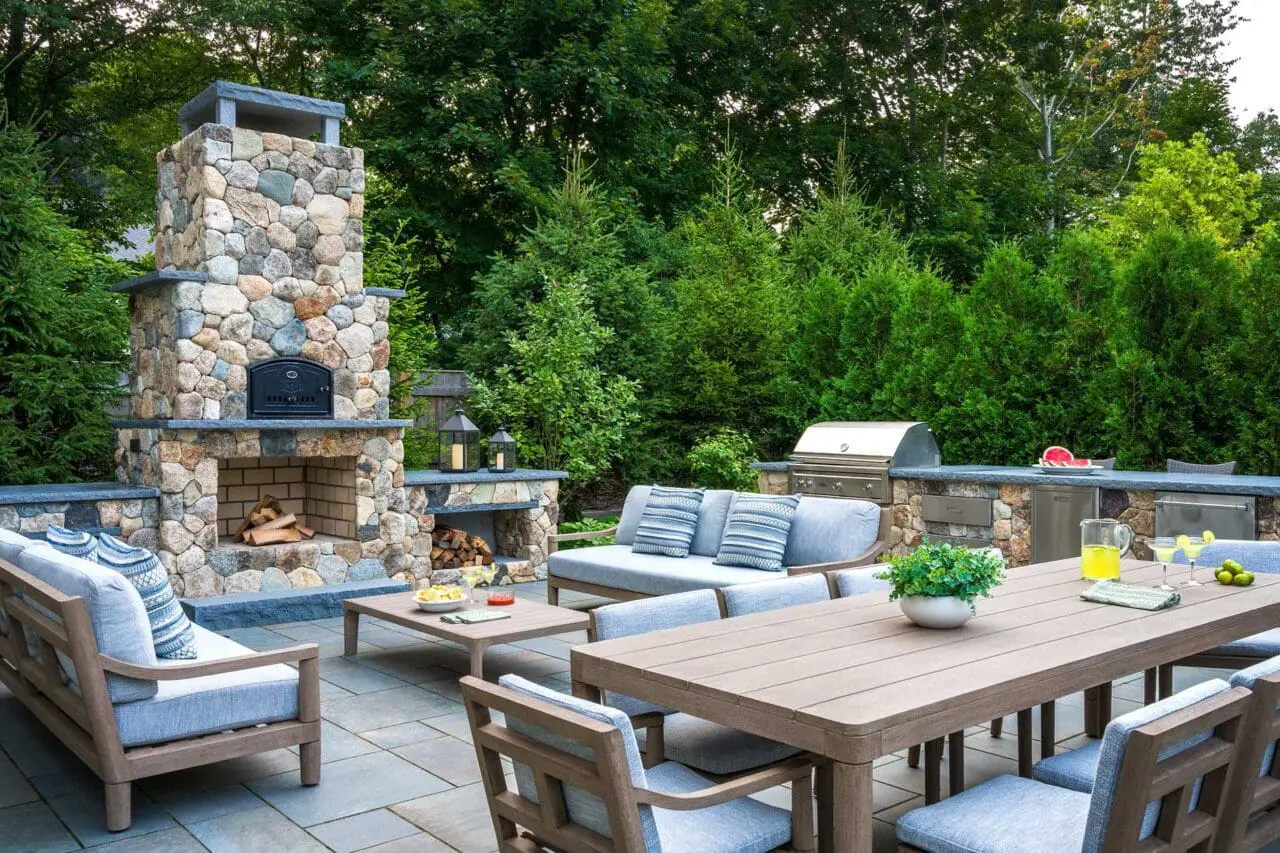
This is especially important around patios, pool areas, outdoor kitchens, steps, terraces, and heavily used paths.
Create Shade, Water Access, and Comfortable Resting Areas
Pet-friendly landscaping is not only about preventing problems. It should also create comfort.
Dogs often seek out the same outdoor resting spots throughout the day. In a well-designed yard, those areas can be supported with shade, planting, and nearby gathering spaces so pets can be near the family without being in the middle of every activity.
Consider:
- Shade trees positioned for afternoon comfort
- Pergolas or covered sitting areas
- Planting that softens patios and terraces
- Durable surfaces near water bowls or hose bibs
- Cool resting areas away from hot paving
- Outdoor rooms with space for pets to settle nearby
A yard that supports pets well often supports people better too. Shade, circulation, comfort, and clean transitions from indoors to outdoors are good design principles for the whole household.
Make Fencing and Gates Feel Integrated
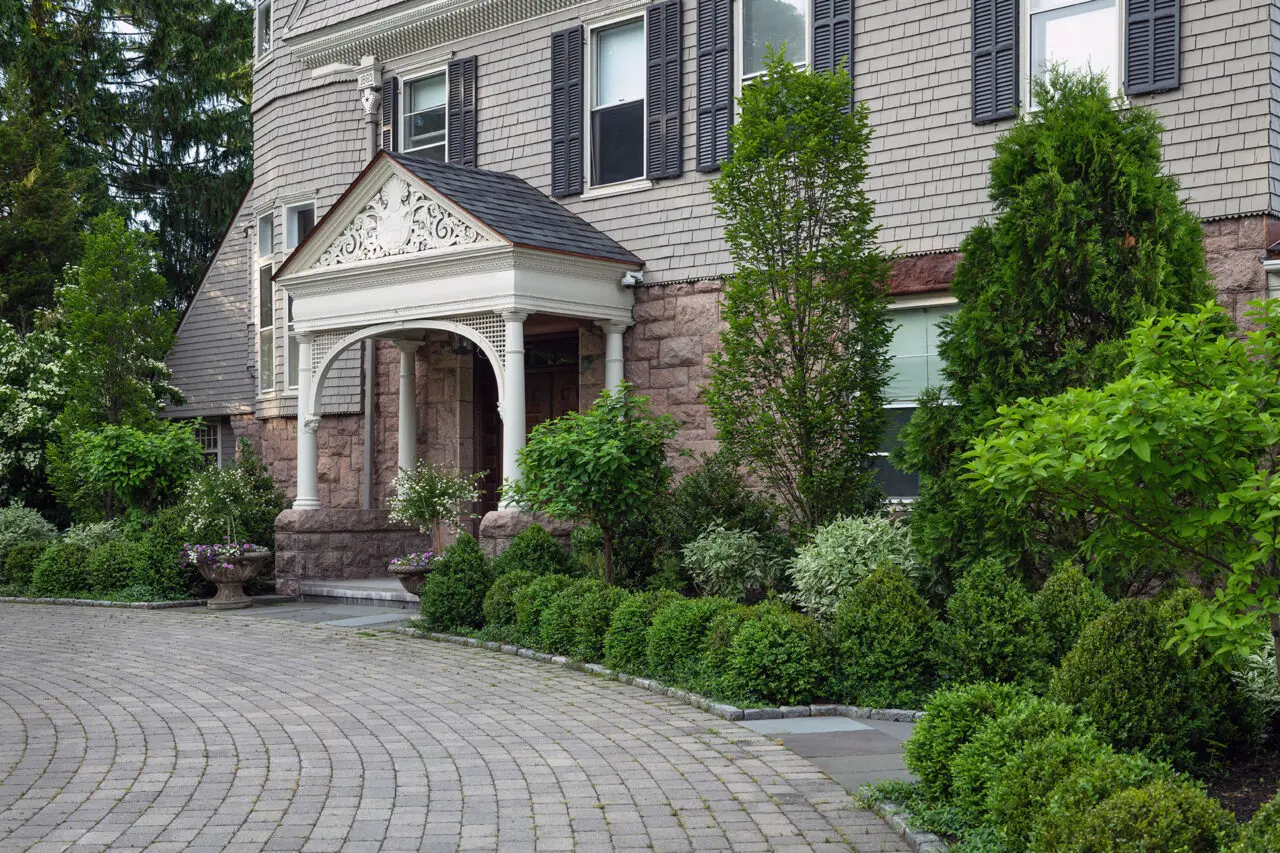
Fencing is often necessary for dogs, but it does not have to dominate the landscape. On high-end residential properties, fencing and gates should feel integrated with the architecture, planting, and outdoor rooms.
A strong fencing plan considers:
- Security
- Gate placement
- Sight lines
- Material style
- Height
- Pool safety
- Privacy
- Planting to soften edges
- Maintenance access
For some properties, a simple fence is enough. For others, a more layered approach works better: fencing combined with hedges, ornamental trees, evergreen screening, stone walls, or structured planting.
In compact Boston, Brookline, or Cambridge yards, fencing may need to solve privacy and pet safety at the same time. In larger MetroWest properties, fencing may be limited to a specific pet zone while the rest of the landscape remains more open.
Balance Pet-Friendly and Pollinator-Friendly Design
Many homeowners want landscapes that support birds, bees, butterflies, and local ecology. That can work beautifully with pet-friendly landscape design, but placement matters.
A pollinator garden directly beside a dog’s favorite running path may not be ideal. A dense planting bed full of delicate perennials may be vulnerable to trampling. A plant that supports wildlife may still need to be reviewed for pet safety.
The ASPCA offers guidance on supporting local wildlife while keeping pets safe and advises avoiding toxic plants such as sago palm, azalea, rhododendron, oleander, foxglove, and lilies in pet-accessible gardens.
For Boston-area homes, the best approach is often zoning. Pollinator-friendly planting can be placed where it has room to thrive, while more durable surfaces and tougher plantings are used near pet routes, lawns, doors, and gathering spaces.
Related Blog: Pollinator Garden Design Ideas for Boston Home
Plan for Cleanup, Odor Control, and Long-Term Maintenance
A pet-friendly yard needs a realistic maintenance plan. Even the best design will need seasonal care, especially in New England.
Landscape maintenance for pet owners may include:
- Lawn repair and overseeding
- Soil improvement
- Mulch refreshes
- Pruning around paths and play areas
- Irrigation adjustments
- Cleaning hardscape surfaces
- Monitoring plant damage
- Replacing stressed plants
- Seasonal cleanup
- Adjusting the design as pets age or routines change
Mulch selection also deserves thought. Some mulches are better suited to ornamental beds, while others may migrate, hold moisture, or invite digging. For a practical comparison, see our guide to which mulch is best: leaf vs. bark.
A lower-maintenance design can also reduce the friction of living with pets outdoors. Durable plants, clear bed edges, resilient materials, and thoughtful circulation all help the landscape recover more gracefully.
Related Blog: How to Design a Low-Maintenance Garden in Boston
Pet-Friendly Ideas by Property Type
Pet-friendly landscaping in Boston is not one-size-fits-all. A Beacon Hill courtyard, a Cambridge side yard, a Wellesley lawn, and a Cape Cod garden all need different strategies.
Compact Boston or Cambridge Yards
Smaller urban yards benefit from careful circulation. Every square foot needs to work hard.
Good strategies may include:
- Durable paving near entries
- Vertical planting to preserve floor space
- Built-in planters that protect soil
- Defined pet paths
- Attractive fencing and gates
- Drainage improvements in side yards
- Shade and privacy planting
In small spaces, the design has to be especially disciplined. Materials, planting, and pet access should feel coordinated rather than crowded.
Suburban Newton, Wellesley, Weston, or Needham Properties
Suburban properties often have more flexibility, but they can also have larger lawns, pool areas, patios, and planting beds to protect.
Good strategies may include:
- Lawn zones designed for recovery
- Hardscape routes between doors, gates, and patios
- Fenced areas softened with planting
- Shade trees and comfortable resting areas
- Pet-safe planting near high-use zones
- Drainage improvements around slopes, gates, and downspouts
These homes often benefit from a whole-property plan, especially when pet-friendly improvements are being considered alongside outdoor living, pool, lighting, or planting projects.
Larger MetroWest or Estate Properties
On larger properties, zoning becomes the primary opportunity. Pets may not need access to every part of the landscape all the time.
Good strategies may include:
- Dedicated play lawns
- Garden paths that guide movement
- Meadow edges or informal trails
- Fenced pet zones near the home
- Durable surfaces near service entries
- Long-term maintenance plans for high-use areas
The goal is to make the property feel expansive while still managing safety and daily use.
Cape Cod Properties
Cape properties introduce different conditions, including sandy soils, salt exposure, wind, and seasonal use patterns.
Good strategies may include:
- Durable coastal planting
- Easy-rinse outdoor areas
- Gravel or stone surfaces in high-use zones
- Shade planning for exposed lots
- Soil improvement before planting
- Simple, resilient maintenance routines
For Cape Cod homes, pet-friendly design should be practical without feeling heavy or overbuilt.
When to Bring in a Boston Landscape Designer
Some pet-friendly improvements are simple. Others are better handled as part of a broader landscape design Boston homeowners can rely on for long-term performance.
It may be time to bring in a Boston landscape designer if:
- The lawn fails in the same places every year
- Mud collects near doors, gates, or side yards
- You are unsure which plants are appropriate around pets
- You are adding a patio, pool, outdoor kitchen, or fire feature
- You need fencing that feels attractive and integrated
- Your yard has slopes, drainage issues, or compacted soil
- You want the landscape to support pets without looking utilitarian
- You need ongoing property maintenance after installation
A Boston landscape design firm can help connect the details that homeowners often approach separately: planting, lawn, drainage, hardscape, lighting, irrigation, fencing, and seasonal care. That integrated view is especially valuable on high-end residential properties, where performance and presentation both matter.
FAQ: Pet-Friendly Landscaping Ideas
Q: What is the best landscaping for dogs?
A: The best landscaping for dogs combines durable surfaces, safe planting, good drainage, shade, and clear circulation. Lawn can work well in sunny, well-drained areas with enough room for recovery. In narrow, shaded, wet, or high-traffic areas, stone, gravel, pavers, mulch, or defined paths may perform better.
Q: Can a dog-friendly yard still look high-end?
A: Yes. A dog-friendly yard can feel refined when pet needs are incorporated into the design from the beginning. Thoughtful paths, structured planting, attractive fencing, durable materials, and well-planned lawn areas can support pets while preserving the character of the property.
Q: What plants should I avoid if I have dogs or cats?
A: Homeowners should review any plant carefully before adding it to a pet-accessible area. Common plants that often require caution include azaleas, rhododendrons, tulips, daffodils, lilies, foxglove, oleander, and sago palm. Use the ASPCA toxic and non-toxic plant database and consult your veterinarian for pet-specific concerns.
Q: How do I stop my dog from ruining the lawn?
A: Start by identifying why the lawn is failing. Common causes include traffic, urine, compaction, shade, poor drainage, and weak soil. Solutions may include soil improvement, irrigation adjustments, lawn repair, alternate surfaces, paths, drainage work, or redesigning high-use areas so the dog’s natural movement is supported rather than resisted.
Q: Should I hire a landscape designer for a pet-friendly yard?
A: A designer is especially helpful when pet needs overlap with drainage, planting, hardscape, fencing, outdoor living, or long-term maintenance. For high-end Boston-area homes, a professional design plan can make the yard safer and more durable without sacrificing beauty.
Design a Yard That Works Beautifully for People and Pets
Pet-friendly landscaping is not about lowering expectations for the yard. It is about designing more intelligently around real life.
A beautiful Boston-area landscape should support how the household actually lives: morning routines, outdoor entertaining, seasonal color, garden views, lawn performance, shade, privacy, and pets moving through the space every day. When those needs are planned together, the result is more durable, more comfortable, and more cohesive.
If your yard needs to work better for both people and pets, the Blade team can help you evaluate the full property, from planting and lawn performance to drainage, hardscape, fencing, lighting, irrigation, and long-term care. Contact a Blade of Grass to discuss a pet-friendly landscape design plan for your Boston-area home.