Why Reclaimed Stone Works So Well in Boston-Area Landscapes
In the Boston area, some of the most memorable landscapes share a quality that is hard to fake: they feel settled. The house, the land, and the hardscape seem to belong together, as though the property has matured naturally over time rather than being assembled all at once. Reclaimed stone can play an important role in creating that effect. Its weathered surface, subtle irregularities, and long history give a landscape an immediate sense of age, character, and permanence that newly quarried materials often cannot replicate.
For homeowners in Greater Boston and MetroWest, that matters for more than appearance alone. Reclaimed stone often complements the historic and traditionally influenced architecture common across towns such as Weston, Wellesley, Dover, Brookline, and Concord. It also supports a more resource-conscious approach to construction by keeping usable materials in circulation. The EPA notes that the United States generated 600 million tons of construction and demolition debris in 2018, more than twice the amount of municipal solid waste generated that year, which helps explain why salvaging and reusing durable materials is increasingly relevant in design and construction.
Key Takeaways
- Reclaimed stone can help a new or renovated property feel more rooted in its setting.
- It is especially well suited to Boston-area homes influenced by traditional New England architecture.
- Reclaimed granite, cobble, and fieldstone offer proven durability because these materials have already performed for decades, and sometimes centuries.
- Reuse reduces demand for newly extracted materials and keeps valuable stone out of the waste stream.
- Reclaimed stone works particularly well in walkways, garden paths, walls, steps, edging, and other hardscape elements that benefit from texture and patina.

The Appeal of Reclaimed Stone in New England Landscapes
Many Boston-area properties benefit from materials that do not feel overly sharp, uniform, or newly manufactured. Reclaimed stone brings softness through wear, slight variation in color, and edges that have been shaped by time. That can be a major advantage when the goal is to make a landscape feel established rather than freshly installed. The original post touches on this idea directly, describing the design challenge of helping a property look “comfortably” settled and noting reclaimed stone as one of the clearest ways to “borrow time.”
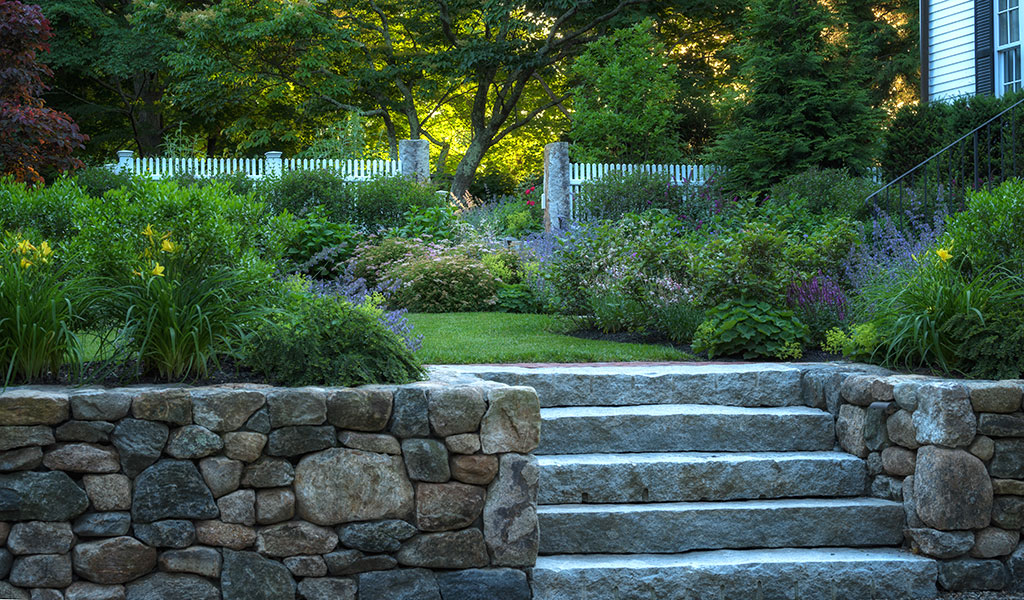
That visual maturity is especially valuable in New England. Historic homes, older neighborhoods, and landscapes with strong architectural character often benefit from hardscape materials that feel authentic to the region. Reclaimed granite cobbles, old brick, weathered bluestone, and salvaged fieldstone tend to sit more naturally within that context than materials that look too clean or too recently cut. A refined landscape does not always need to look brand new. In many cases, it is more compelling when it looks as though it has always belonged there.
What Types of Reclaimed Stone Are Used in Residential Landscapes?
One of the strengths of reclaimed stone is its range. Depending on the property and the intended effect, it can be used in several different ways. The existing a Blade of Grass post references reclaimed road cobbles worn smooth by years of traffic, granite blocks that once served as a seawall in Boston Harbor, reclaimed brick with mellowed color, and even bluestone pieces that previously functioned as sidewalks in Central Park. Those examples give the material a narrative quality in addition to its visual appeal.
In practice, reclaimed stone is often especially effective in:
- walkways and garden paths
- stone walls
- landscape steps
- edging and thresholds
- select patio details or accents
These are all places where texture, patina, and subtle irregularity can elevate the design. They are also closely related to your existing content and portfolio structure around paths & walkways and stone walls & steps.
Reclaimed Stone Is Not Just Beautiful. It Is Proven.
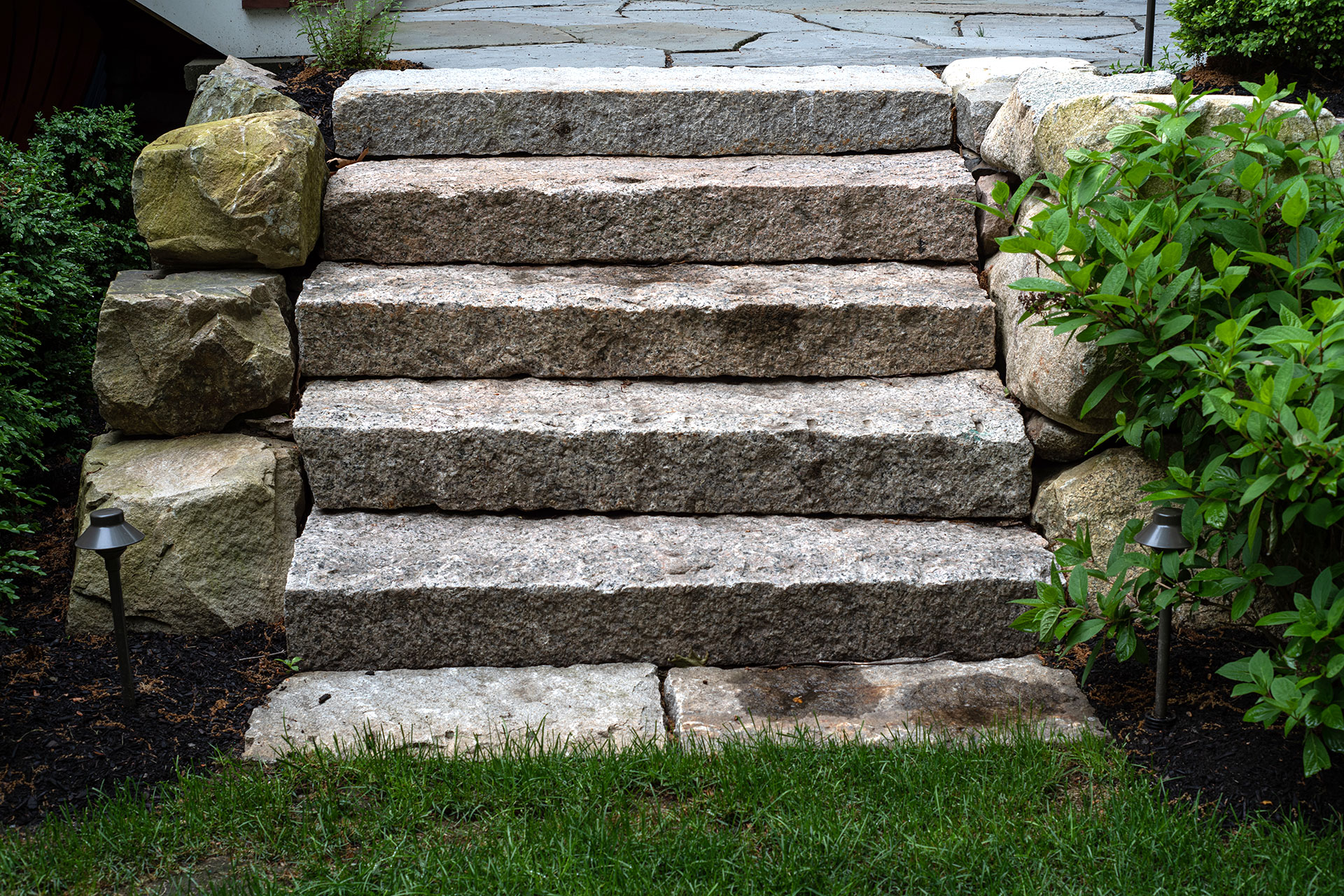
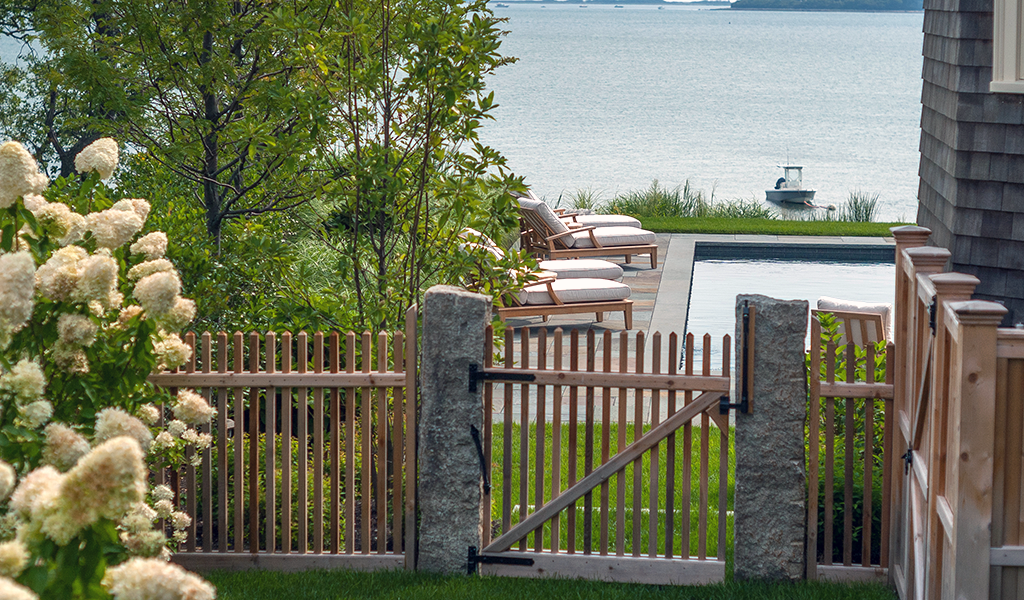
One of the most persuasive things about reclaimed stone is that its durability is not theoretical. These materials have already lived demanding lives. Some have served in roads, sidewalks, harbor structures, or field walls for decades or longer. As the original post notes, much of this stone has “quite literally stood the test of time.” That makes reclaimed granite and similar materials especially appealing for Boston-area landscapes, where hardscape must hold up to freeze-thaw cycles, moisture, foot traffic, and seasonal wear.
This matters because homeowners are not simply choosing a look. They are choosing a material that needs to perform year after year. Reclaimed stone offers a rare combination of visual warmth and practical resilience. It can feel softer and more storied than newly fabricated materials while still delivering the long-term strength expected from premium masonry elements.
Why Reclaimed Stone Makes Sense From a Sustainability Perspective
Reclaimed stone also supports a more thoughtful approach to material use. The EPA’s guidance on construction and demolition materials specifically highlights reuse, source reduction, and salvaging as meaningful ways to divert materials from disposal and reduce the need for new resource extraction. In a category where enormous amounts of waste are generated, reuse is one of the clearest ways to make a practical environmental improvement without sacrificing quality.
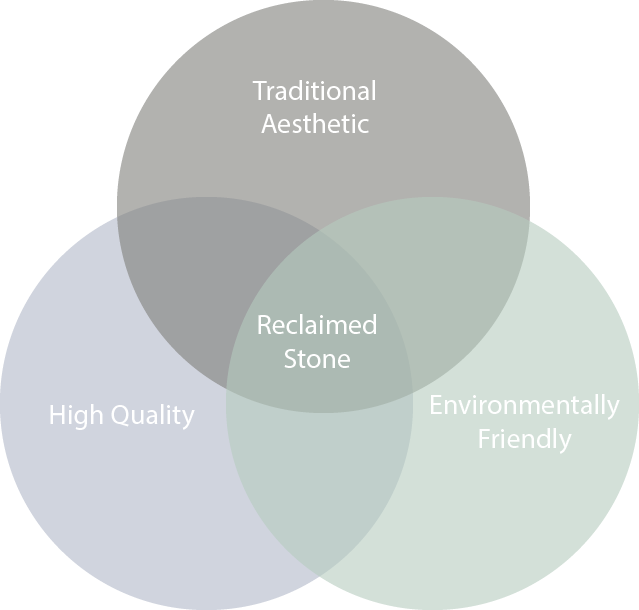
That is part of what makes reclaimed stone so compelling in high-end residential landscapes. It does not ask a homeowner to choose between sustainability and beauty. The same material that helps reduce waste can also create a more distinctive and historically grounded finished result. For a company like a Blade of Grass, that overlap fits naturally with a broader conversation about thoughtful design and long-term stewardship, much like the themes already explored in your post on sustainable landscaping for Boston homes.
Why Reclaimed Stone Feels So Appropriate Around Boston
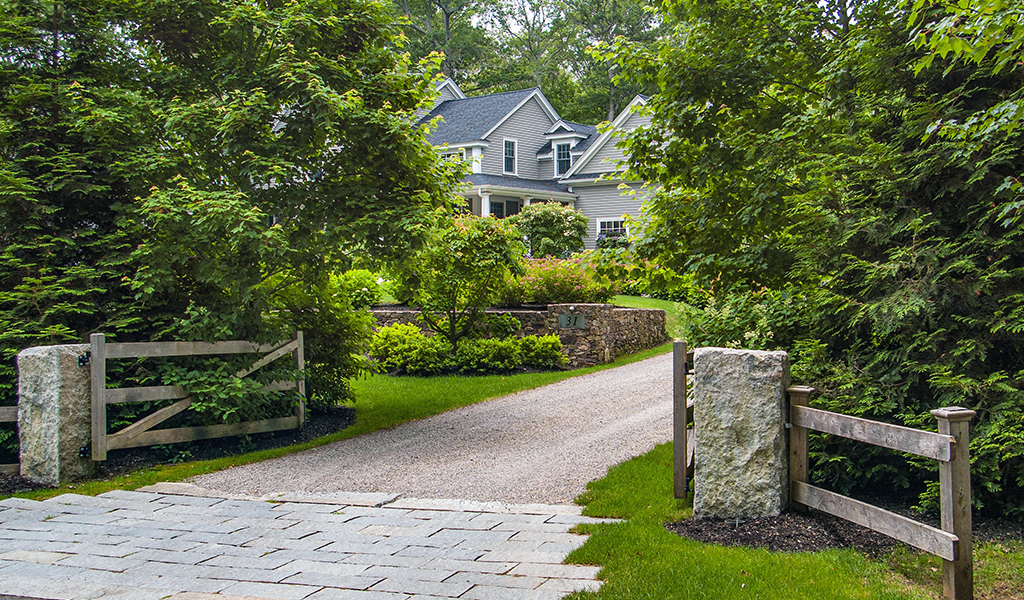
There is also a local logic to this material that makes the story stronger. Your current post notes that much of the reclaimed granite used in your work came from Rockport quarries, which have not operated since the early 1900s, and that much of the stone was originally used within Massachusetts. It also explains that your go-to wall stone, New England fieldstone, is often harvested from abandoned stone walls across the region. That means reclaimed stone in a Boston-area landscape is not just old material. It is often regionally familiar material, reused in a way that preserves its connection to New England building traditions.
For homeowners, that can be a meaningful distinction. A walkway made with reclaimed granite or a wall built from old fieldstone often feels more rooted in the region than a generic hardscape assembled from imported materials with no relationship to local architecture or history. That sense of continuity can be subtle, but it is often part of what makes a finished landscape feel convincing.
Where Reclaimed Stone Has the Most Impact
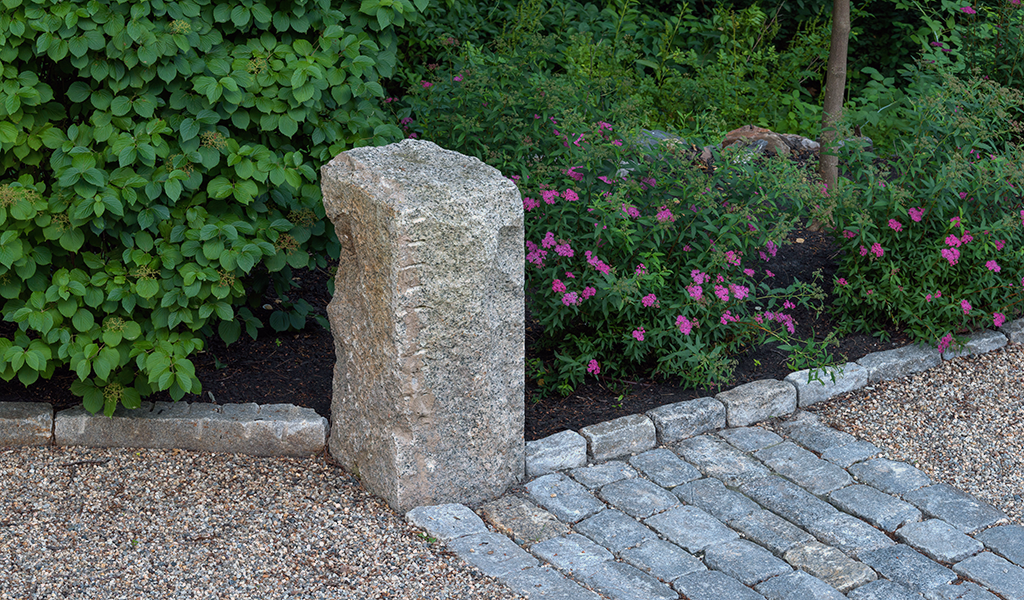
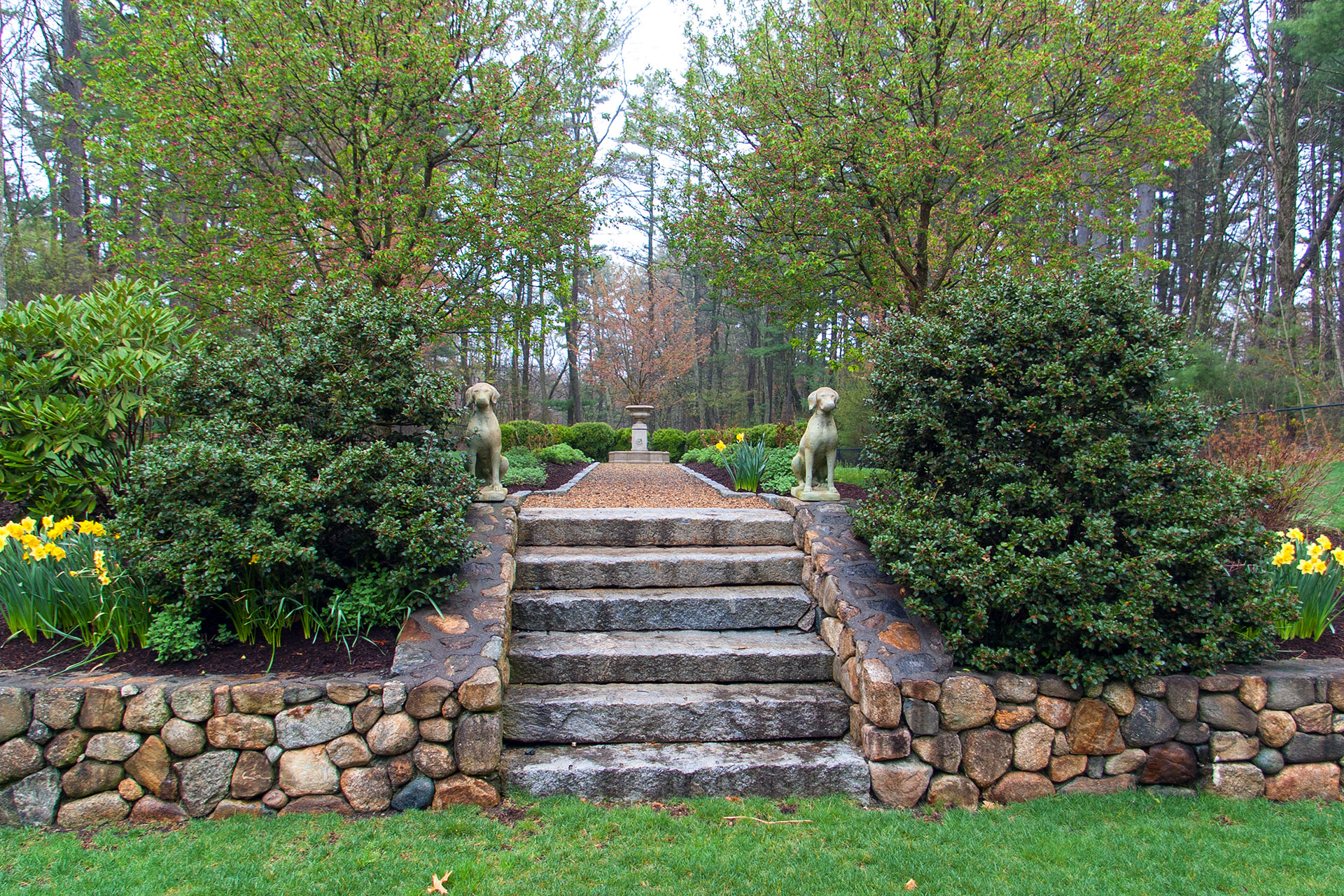
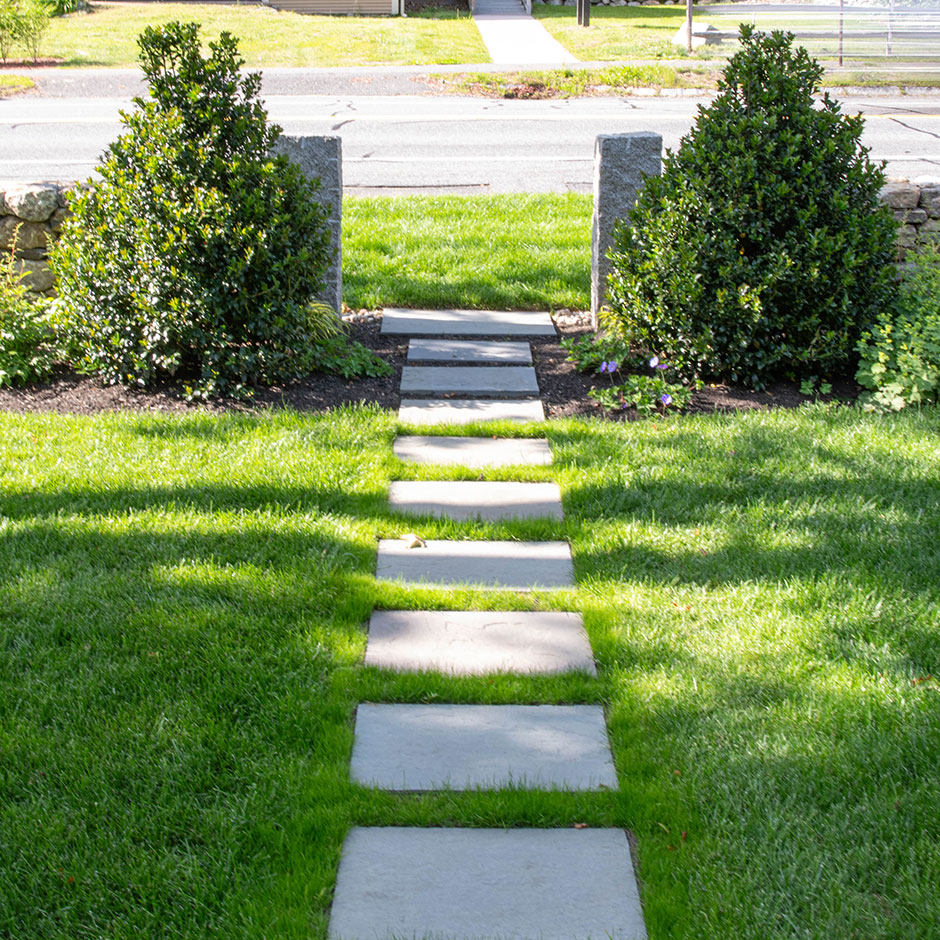
Reclaimed stone does not need to appear everywhere in a landscape to make an impression. In many projects, it is most powerful when used selectively and intentionally. A front walk in reclaimed granite cobble can immediately change the arrival experience. Weathered stone steps can make a grade transition feel more natural. A low wall built from old fieldstone can help a new planting area feel as though it has been part of the site for decades. These are relatively focused moves, but they often have outsized design impact.
This is one reason reclaimed stone fits so well into premium residential work. It can be used strategically to add age, restraint, and material richness without overwhelming the property. In some projects, reclaimed stone may define a major hardscape feature. In others, it may simply provide enough visual continuity to tie architecture, grading, and planting together more convincingly.
Reclaimed Stone and Return on Investment
While reclaimed stone is often chosen for character rather than pure economics, it can still contribute to the perceived value of a property. Hardscape elements such as walkways, walls, and retaining features shape how the landscape is used, how it is experienced on arrival, and how complete it feels over time. Your 2025 post on the ROI of patios, walkways, and retaining walls already makes the broader case that well-designed hardscaping can improve both function and property appeal. Reclaimed stone can strengthen that effect by making those features feel more distinctive and more deeply integrated with the home.
For the right property, the value proposition is not simply that the stone is old. It is that the material helps create a more cohesive, memorable, and durable landscape. That is often exactly what affluent homeowners are trying to achieve.
Choosing the Right Team Matters
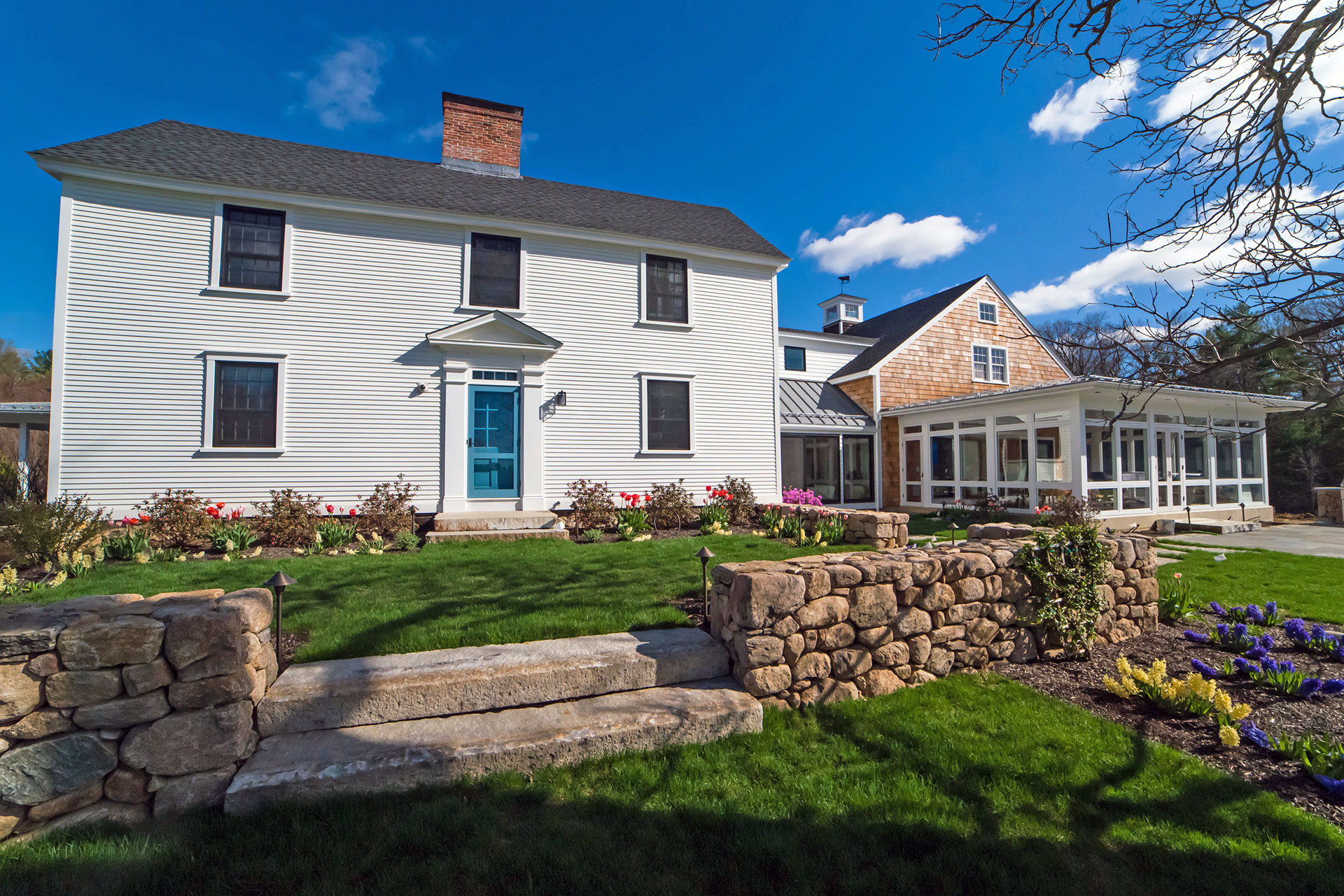
Working with reclaimed stone is not exactly the same as working with new material. Salvaged pieces may vary more in size, thickness, finish, and prior use. That variation is often part of the appeal, but it also means design judgment and installation expertise matter. The stone has to be selected, placed, and detailed in a way that feels intentional rather than inconsistent. It also has to perform in a New England climate where drainage, proper bases, and freeze-thaw durability remain essential. Your newer article on stone walls & steps makes this point clearly in the broader masonry context.
A well-executed reclaimed stone walkway or wall should not feel rustic by accident. It should feel carefully composed, materially appropriate, and built to last. That combination is what separates reclaimed stone as a design choice from reclaimed stone as a novelty.
Final Thoughts
Reclaimed stone offers something many landscape materials cannot: immediate depth. It can make a new landscape feel more grounded, reinforce the character of an older home, and support a more resource-conscious construction approach at the same time. For Boston-area homeowners who value authenticity, craftsmanship, and long-term performance, that is a compelling combination.
Whether it appears in a front walkway, a garden path, a retaining wall, or a set of stone steps, reclaimed stone can help a property feel more established and more connected to New England’s built landscape traditions. To explore how reclaimed materials might fit into your project, visit our award-winning landscape design services, browse our paths & walkways and stone walls & steps pages, or contact the Blade team to start a conversation.
Frequently Asked Questions
Q: What is reclaimed stone in landscape design?
Reclaimed stone is previously used stone salvaged from older structures, roads, seawalls, sidewalks, walls, or other built environments, then repurposed in a new landscape project. Your current post specifically references reclaimed cobble, brick, granite blocks, and bluestone.
Q: Is reclaimed stone durable enough for walkways and steps?
Yes. In many cases, reclaimed stone is appealing precisely because it has already proven its durability over a long service life. Proper installation still matters, especially in New England conditions.
Q: Why does reclaimed stone work so well with Boston-area homes?
It often complements traditional New England architecture, historic materials, and landscapes that benefit from a more settled, time-worn appearance.
Q: Is reclaimed stone more sustainable than new stone?
Reuse can reduce landfill disposal and lessen demand for newly extracted materials. EPA guidance specifically identifies salvaging and reusing construction materials as a best practice.