Introduction: Designing Outdoor Structure with Intention in Greater Boston
Across Greater Boston and MetroWest, outdoor living spaces have evolved well beyond simple patios and decks. Homeowners in Weston, Wellesley, Concord, Brookline, and surrounding communities are increasingly looking to define outdoor rooms that feel architectural, refined, and purposeful. Pergolas and pavilions often lead that conversation.
Yet these two structures are frequently treated as interchangeable. They are not. In New England, climate, architectural context, and long-term property goals should guide the decision. A well-designed pergola or pavilion can elevate a landscape and extend seasonal use. A poorly planned one can feel disconnected, underused, or visually heavy.
This guide outlines the essential do’s and don’ts affluent Boston-area homeowners should consider before adding a pergola or pavilion to their property.
Key Takeaways
- Pergolas and pavilions serve different functional and architectural roles.
- New England weather significantly influences structure design and material selection.
- Proper siting and proportion are just as important as aesthetics.
- Utilities, drainage, and permitting should be addressed early in the planning process.
- The right structure should feel integrated into the landscape, not placed onto it.
Pergola vs. Pavilion: Understanding the Difference Before You Build
What Is a Pergola?
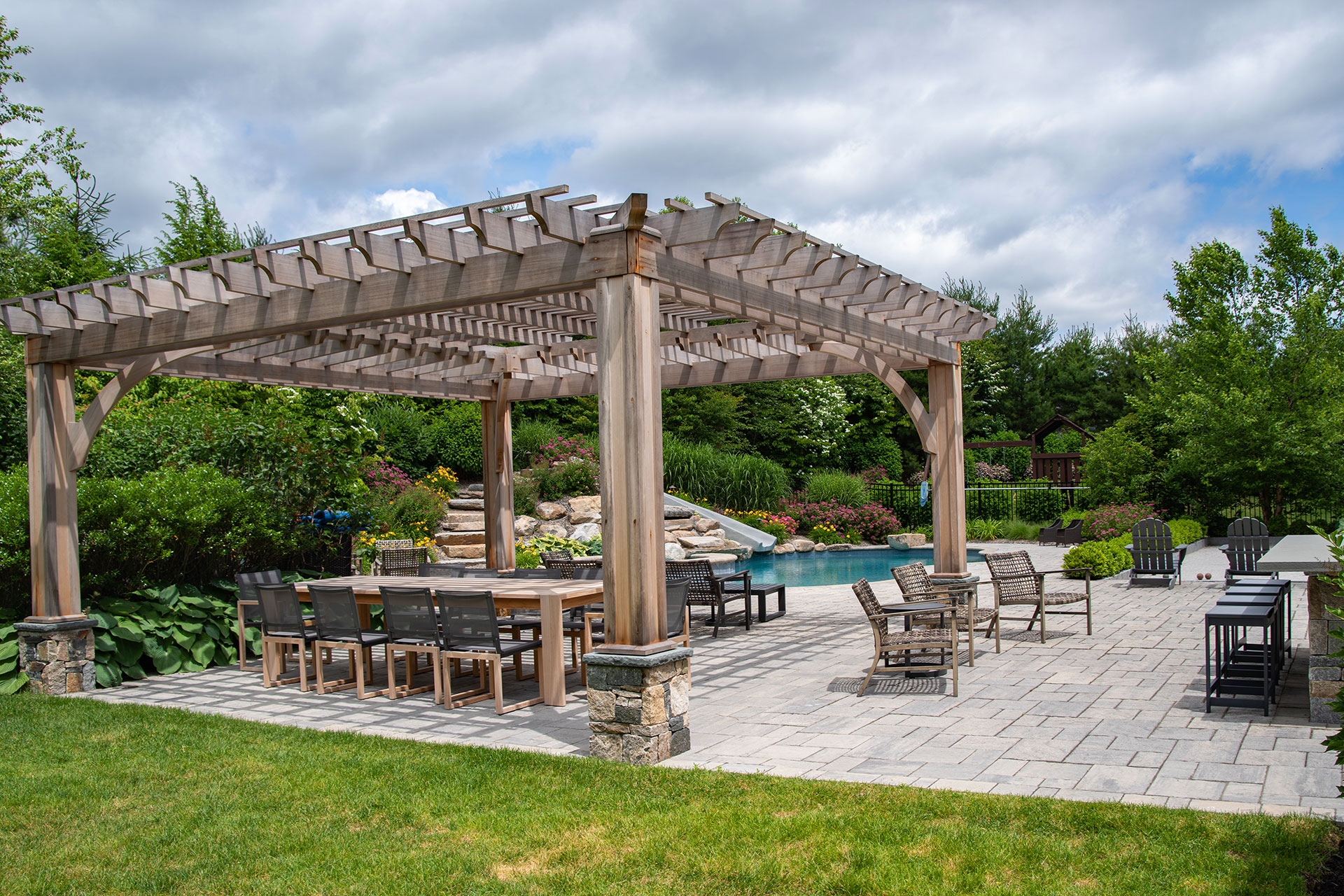
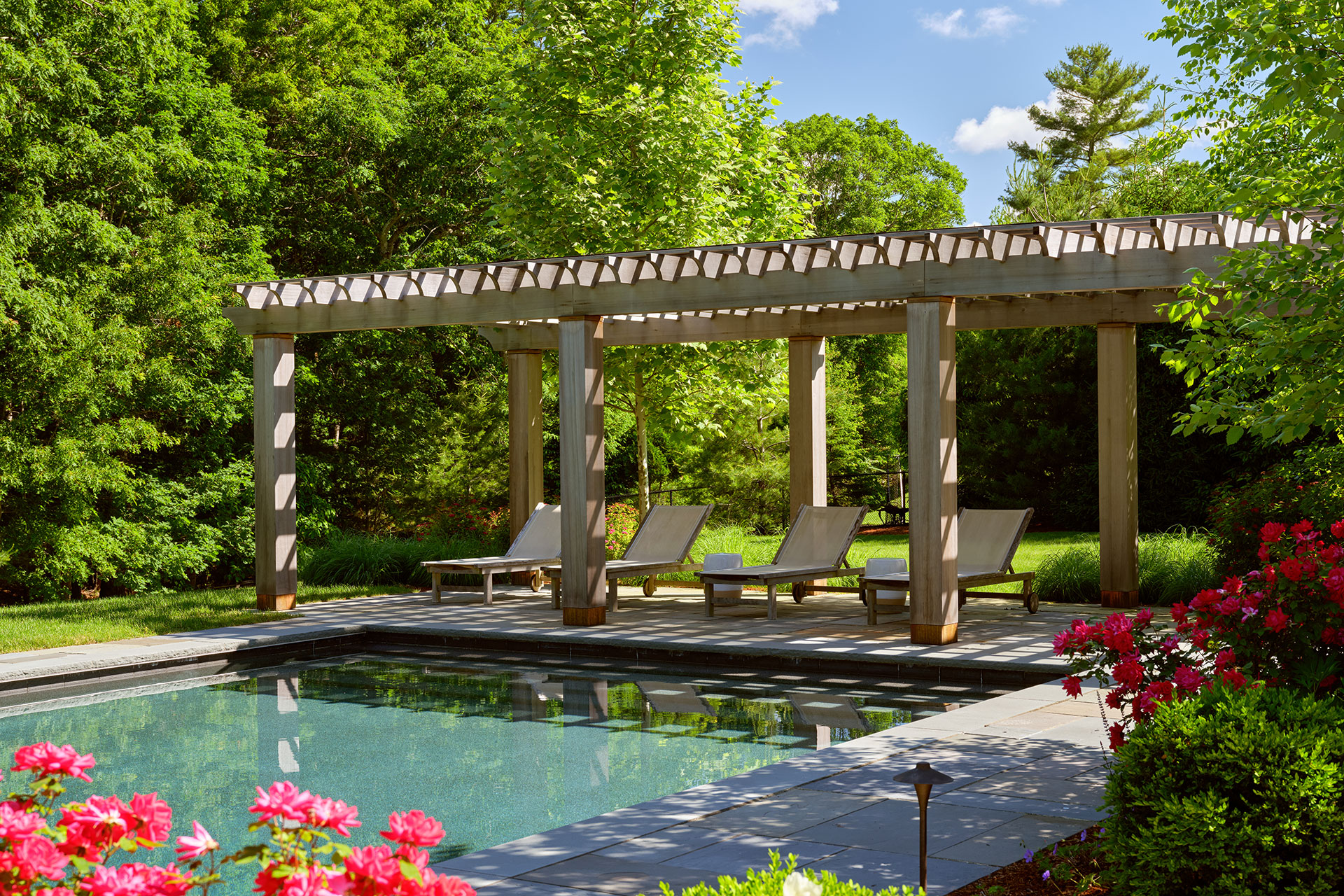
A pergola is typically defined by an open or slatted roof structure supported by columns or posts. It provides filtered light and partial shade rather than full coverage. Pergolas often frame dining areas, garden transitions, or seating spaces while maintaining an airy, lighter visual presence.
In Boston-area landscapes, pergolas work especially well in properties with mature tree canopy, garden-forward designs, or where homeowners want shade without fully enclosing the sky.
What Is a Pavilion?
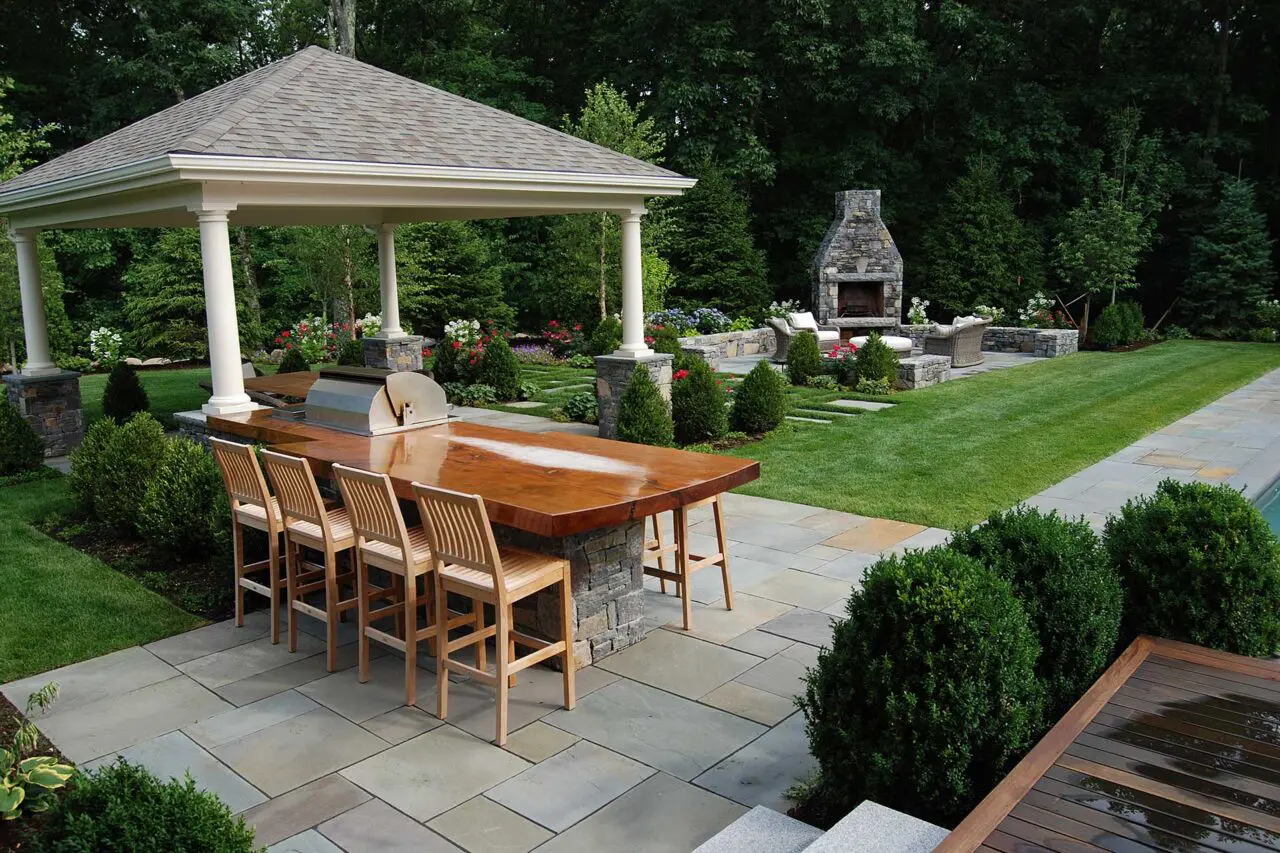
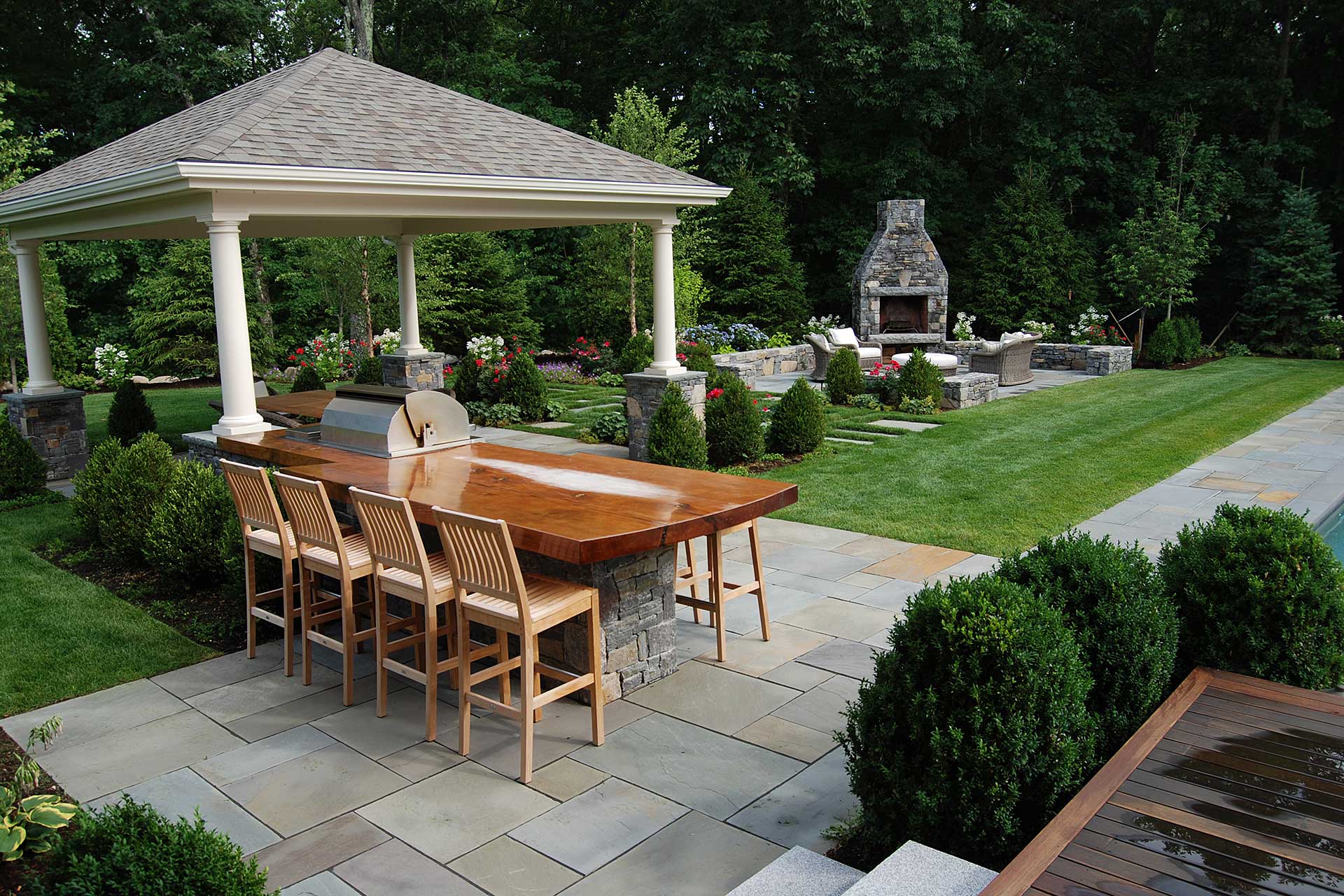
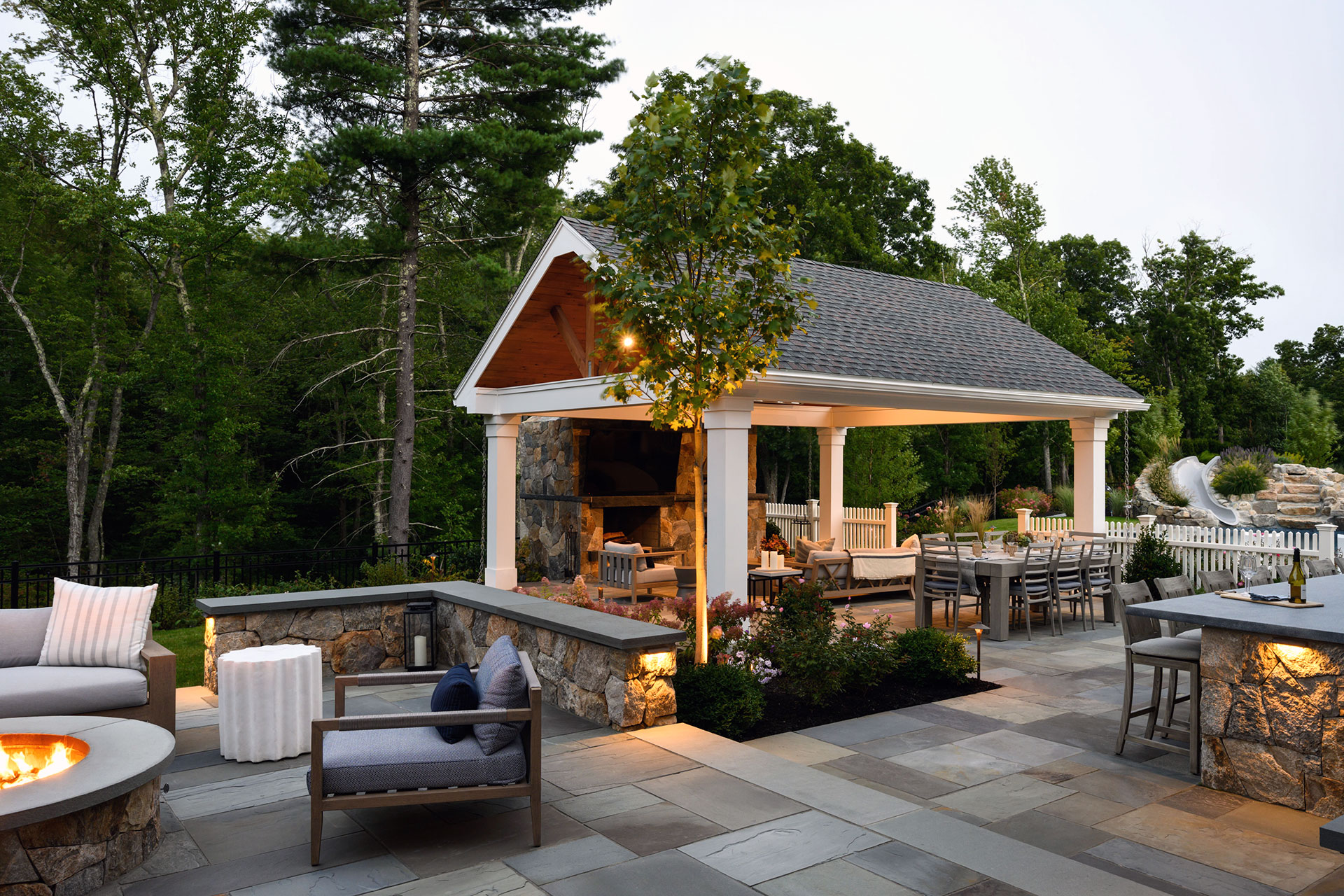
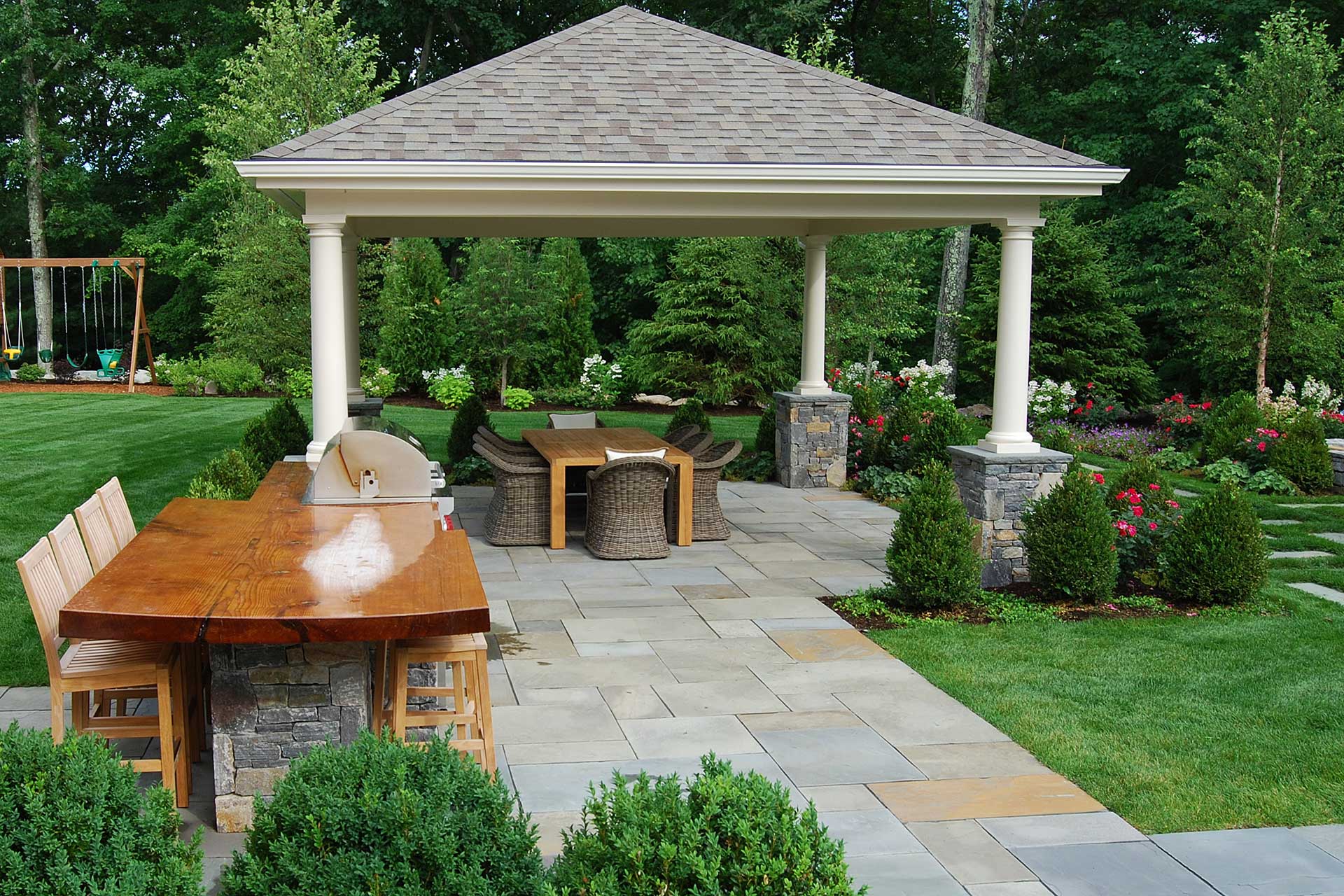
A pavilion features a fully roofed structure. It offers full protection from rain and sun and can support integrated lighting, fans, heaters, and outdoor kitchens. Visually, it reads more like an architectural extension of the home.
For properties exposed to strong sun, coastal winds, or where entertaining is a priority, a pavilion often delivers more functional value.
How New England Climate Changes the Decision
Massachusetts weather is a design variable, not an afterthought. Snow loads, freeze-thaw cycles, and spring rains influence both structural engineering and material choice. According to the National Weather Service, the Boston area averages more than 48 inches of snow annually. Structures must be engineered accordingly.
A pergola may be ideal for filtered summer shade, but if year-round usability is a priority, a pavilion provides meaningful shelter during shoulder seasons.
As landscape architect Kate Notman, Landscape Architect, notes, “Outdoor structures in New England should be designed as long-term architectural investments. When proportion and engineering are considered early, the structure becomes an extension of the home rather than an accessory.”
Related Blog: Top 10 Things to Consider When Designing an Outdoor Dining Area
The Do’s and Don’ts of Choosing the Right Structure
1) Do Consider How You Plan to Use the Space
Will the structure frame outdoor dining, support a kitchen, or provide a covered lounge near a pool? Are heaters or ceiling fans anticipated? Clear use goals influence scale, roofing type, and electrical needs.
2) Don’t Choose Based on Appearance Alone
A structure that looks appropriate in a photo may not suit your sun exposure, wind patterns, or property scale. Overbuilding can overwhelm a garden. Underbuilding may leave the space feeling unfinished.
3) Do Align With Your Home’s Architecture
Colonial and Shingle-style homes common in towns like Concord and Lexington often benefit from traditional timber detailing or painted pavilion structures that echo roof pitch and trim lines. Contemporary homes may call for cleaner profiles or steel elements.
4) Don’t Overlook Permitting and Zoning
Many MetroWest municipalities enforce setback requirements and height restrictions. Historic districts may impose additional design guidelines. Early consultation prevents costly redesigns.
Pros and Cons: Pergolas vs. Pavilions
| Pros | Cons | |
|---|---|---|
| Pergola |
|
|
| Pavilion |
|
|
Which Is Right for Your Boston-Area Property?
For traditional estates in Weston or Wellesley, a pavilion often reads as a natural extension of the home, especially when integrated with bluestone patios or outdoor kitchens.
For garden-centric properties in Carlisle or Lincoln, a pergola can frame plantings and create a transition between lawn and landscape.
The best decision often emerges from a broader landscape master plan. Structures should relate to circulation paths, planting beds, lighting plans, and drainage systems. When treated as part of a cohesive design, they enhance both aesthetics and property value.
“In Greater Boston landscapes, the question isn’t simply pergola or pavilion. It’s how the structure relates to the home, the topography, and how the family truly lives outdoors. When scale and purpose align, the structure feels inevitable rather than added.”
— Kate Notman, Landscape Architect, a Blade of Grass
Design Do’s and Don’ts That Protect Your Investment
1) Do Plan Utilities Early
Electrical lines for lighting and heaters, gas connections for fire features, and audio systems should be integrated before construction begins. Retrofitting utilities after the fact often compromises design integrity.
2) Don’t Ignore Drainage
Roofed pavilions introduce new water flow patterns. Downspout placement, grading adjustments, and subsurface drainage planning are essential in the freeze-thaw climate of Massachusetts.
3) Do Account for Snow Load and Engineering
Footings must extend below frost depth. Structural beams must meet Massachusetts building code standards. Proper engineering protects both safety and longevity.
4) Don’t Treat the Structure as Standalone
The most successful pergolas and pavilions feel embedded within the landscape. Surrounding plantings, landscape lighting, and material continuity create cohesion.
Related Blog: Permits and Regulations for Landscaping Projects in the Boston Area: What You Need to Know
Style Considerations for Greater Boston Landscapes
Pergolas and pavilions can take many forms:
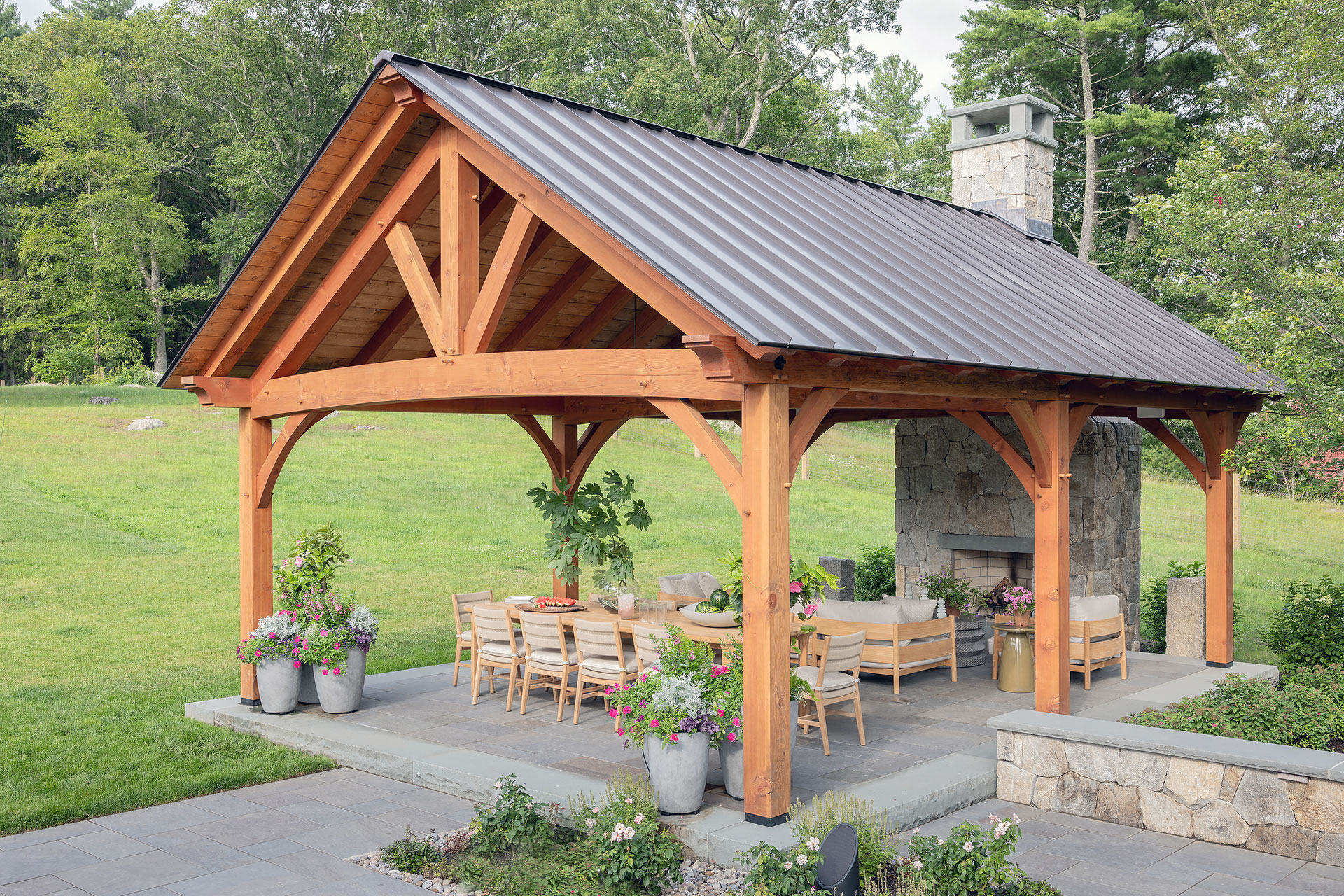
- Classic Timber Frames that complement traditional New England homes
- Painted Pavilion Structures that mirror architectural trim details
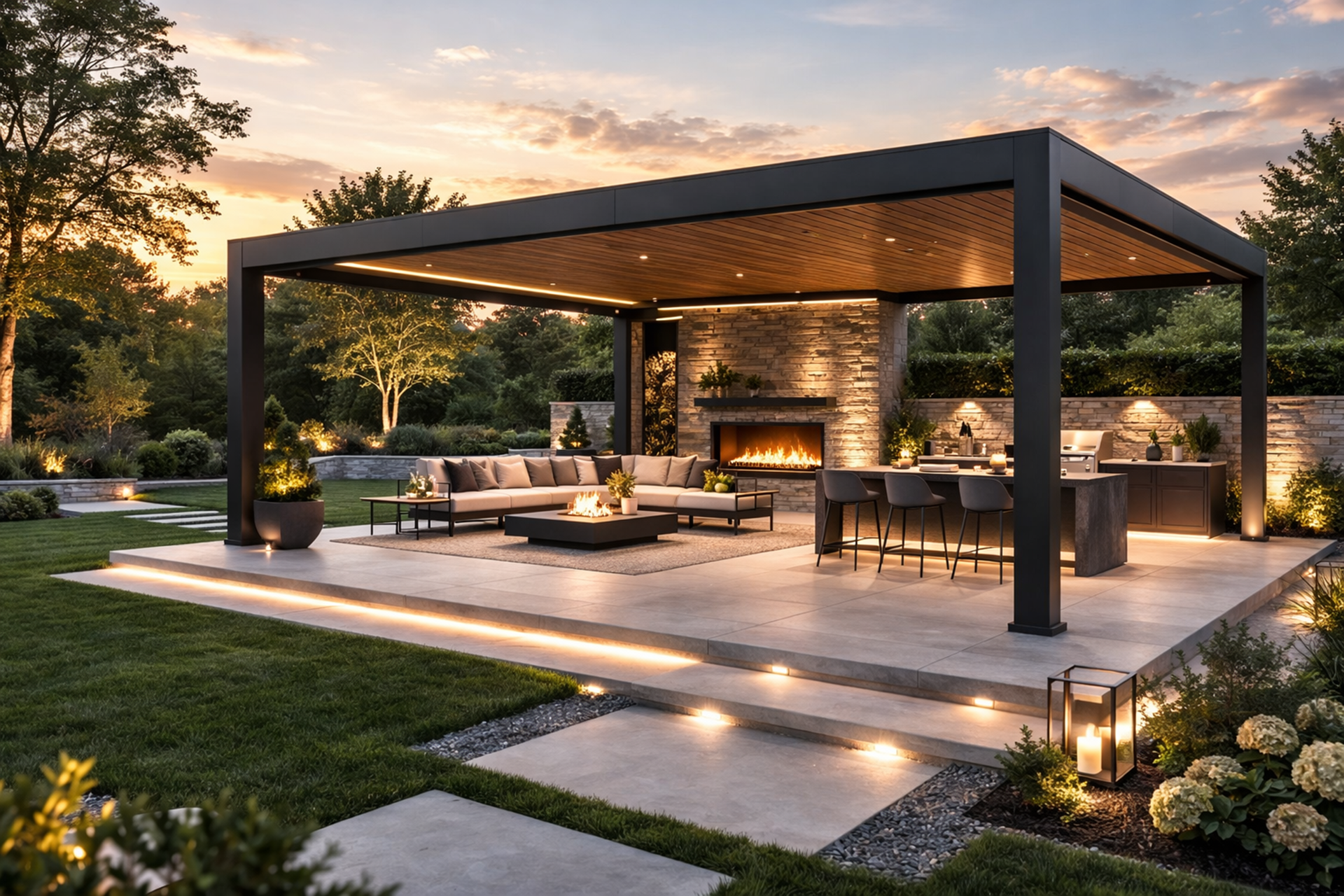
- Modern Steel Designs for contemporary properties
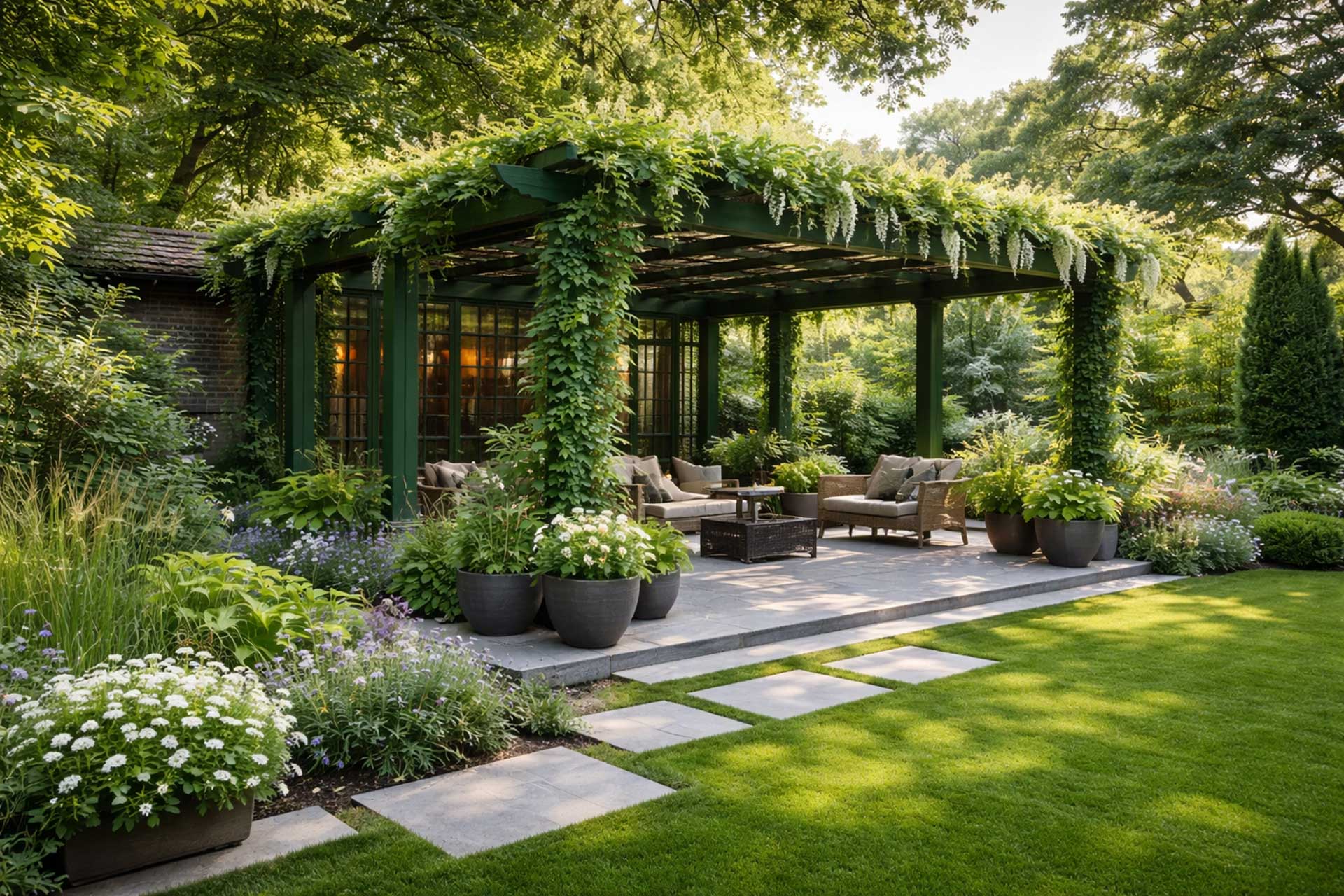
- Green-Wrapped Pergolas with climbing vines that soften structural lines
The goal is not trend adoption, but contextual design. The structure should belong to the site.
Budget Expectations and Planning
Investment levels vary widely based on size, materials, roofing type, and integrated systems. In the Greater Boston market, costs are influenced by:
- Structural engineering requirements
- Material quality
- Electrical and heating integration
- Site accessibility and grading
Choosing based solely on price often leads to compromise. When designed correctly, an outdoor structure becomes a long-term architectural asset.
Frequently Asked Questions
Q: Do pergolas or pavilions require permits in Massachusetts?
A: Most municipalities require permits for roofed structures and larger pergolas. Regulations vary by town, particularly in historic districts.
Q: Which adds more value to a Boston-area home?
A: Value depends on integration and execution. A well-designed pavilion that complements the home’s architecture typically delivers stronger perceived value.
Q: Can a pergola provide adequate shade in summer?
A: Yes, especially when oriented strategically or combined with climbing plants or retractable shade systems.
Q: How long does construction typically take?
A: Timeline depends on design complexity and permitting. Planning during winter months often positions projects for spring installation.
Q: What materials hold up best in New England weather?
A: High-quality timber, engineered lumber, and properly detailed composite materials perform well when designed for freeze-thaw cycles and snow load.
Final Thoughts: Designing a Structure That Belongs
Pergolas and pavilions are not decorative add-ons. They are architectural elements that shape how a landscape functions and feels. When proportion, siting, and engineering are addressed early, the result is a space that feels intentional and enduring.
For Boston-area homeowners considering a pergola or pavilion, the most important step is thoughtful planning.
If you are exploring options for your property in Greater Boston or MetroWest, contact us for a free consultation can clarify what structure aligns best with your home, landscape, and long-term goals.
Learn More About Pergolas and Pavilions
For Boston area homeowners interested in deeper, trusted guidance on outdoor structures and how they relate to design and use, these resources can help: