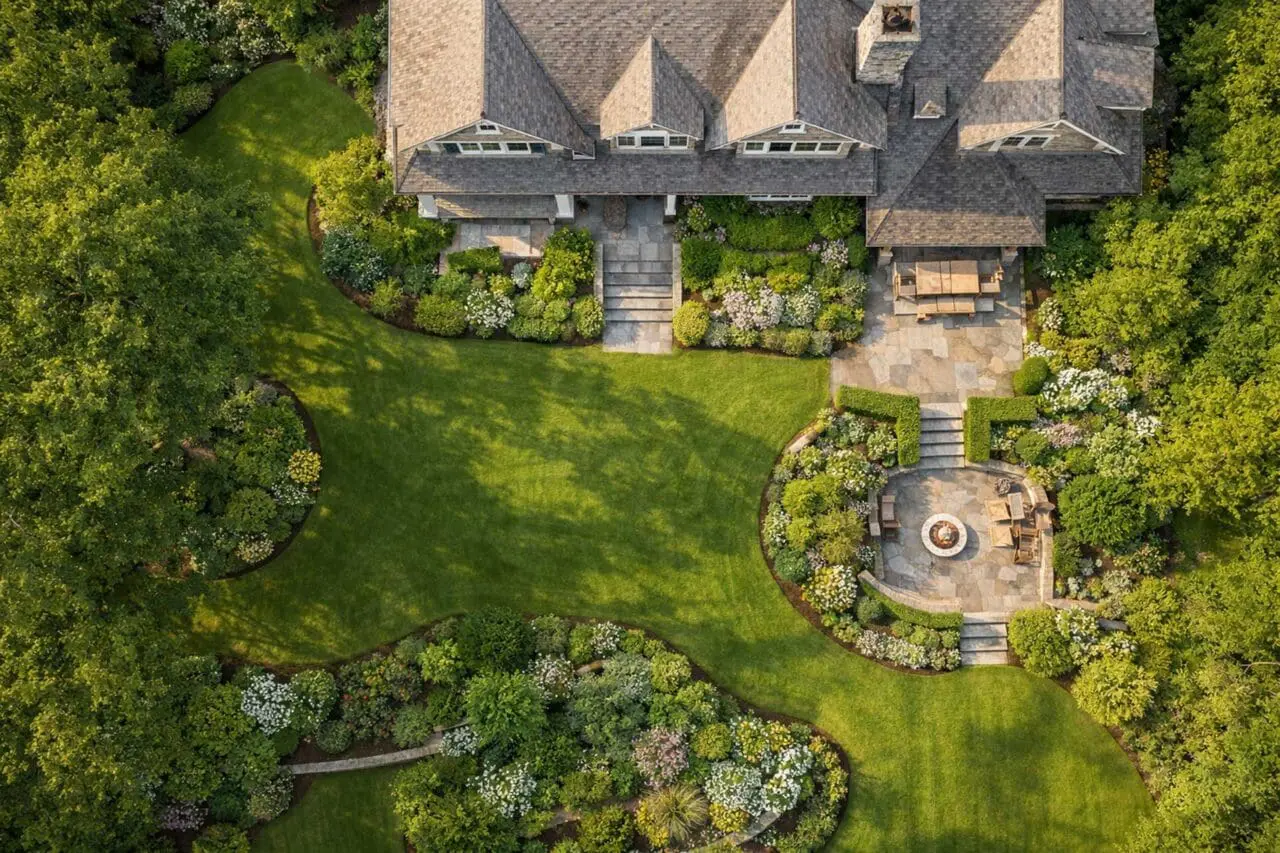
Ticks and mosquitoes can change the way a family uses its own yard. A patio that looks beautiful in May may sit empty by July if mosquitoes gather around the planting beds at dusk. A lawn that seems ideal for children or pets may feel less inviting when ticks are a recurring concern near woodland edges, tall grass, or shaded borders.
For homeowners in Greater Boston, MetroWest, and Cape Cod, the issue is not simply pest control. It is outdoor comfort, landscape performance, and thoughtful property planning. A well-designed landscape should support how people actually live outside, whether that means summer dinners on the terrace, poolside weekends, garden paths, evening fire features, children’s play areas, or a dog that patrols the same shady edge every afternoon.
The internet is full of lists promising that lavender, citronella, rosemary, mint, or marigolds will keep mosquitoes and ticks away. The more useful answer is more nuanced. Plants can play a supporting role, especially when used thoughtfully near patios, containers, outdoor kitchens, and seating areas. But the most effective landscape strategy combines planting with drainage, irrigation management, pruning, lawn care, circulation, lighting, and ongoing property maintenance.
Those recommendations are practical. They are also design opportunities.
“The most comfortable summer landscapes are rarely the result of one trick. They come from managing water, shade, planting density, circulation, and maintenance as one connected system.”
– Ivan Hernandez, Director Maintenance Operations, a Blade of Grass
That is where a design-led approach matters. A skilled Boston landscape designer will not treat ticks and mosquitoes as isolated nuisances. They will look at where water collects, how air moves, where shade holds moisture, where people gather, how planting beds are maintained, and how the property changes from spring through fall.
According to the Centers for Disease Control and Prevention, homeowners can help reduce ticks around the yard by removing leaf litter, clearing tall grasses and brush around homes and lawn edges, mowing frequently, and placing a three-foot-wide barrier of wood chips or gravel between lawns and wooded areas. The U.S. Environmental Protection Agency also emphasizes removing standing water from gutters, buckets, plastic covers, toys, and other containers where mosquitoes can breed.
Key Takeaways
- Plants can support a more comfortable outdoor space, but they should not be treated as a stand-alone tick or mosquito solution.
- Mosquito prevention starts with water management, including drainage, irrigation timing, wet lawn areas, clogged gutters, and container saucers.
- Tick prevention is often most important near woodland edges, tall grass, leaf litter, stone walls, shaded borders, and lawn transitions.
- Smart landscape design can place patios, play areas, seating, lighting, and paths away from the damp, shaded zones where pests are more likely to thrive.
- Professional landscape maintenance, drainage solutions, irrigation management, and planting design can make outdoor spaces more usable through the summer season.
Can Plants Really Help Control Ticks and Mosquitoes?
Plants can help shape a more pleasant outdoor environment, but they are often oversold as pest-control tools. This is especially true with mosquitoes.
Many aromatic plants contain oils or compounds associated with insect repellency. Citronella grass, lemon thyme, scented geraniums, rosemary, basil, mint, lavender, catmint, marigolds, and lemongrass are frequently mentioned in garden articles. They can be beautiful, fragrant, and useful in seasonal containers or herb gardens.
But planting them around a patio is not the same as applying an EPA-registered repellent or addressing the site conditions that allow mosquitoes to breed. Iowa State University Extension notes that several plants promoted as mosquito repellents are generally ineffective as repellents unless their oils are released, such as by crushing the leaves.
That does not mean these plants have no place in a high-end landscape. It means they should be used honestly and strategically.
Where Aromatic Plants Make Sense
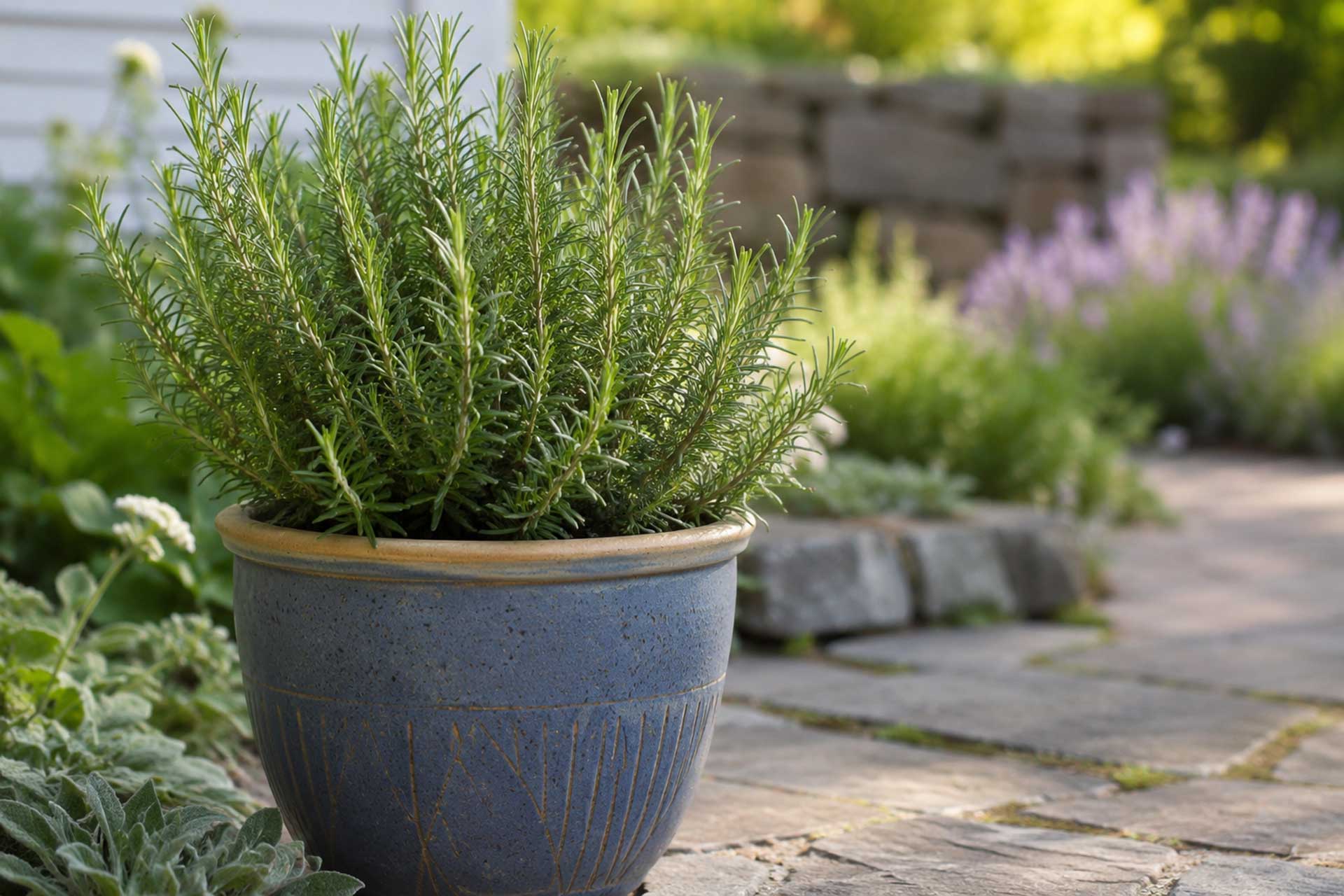
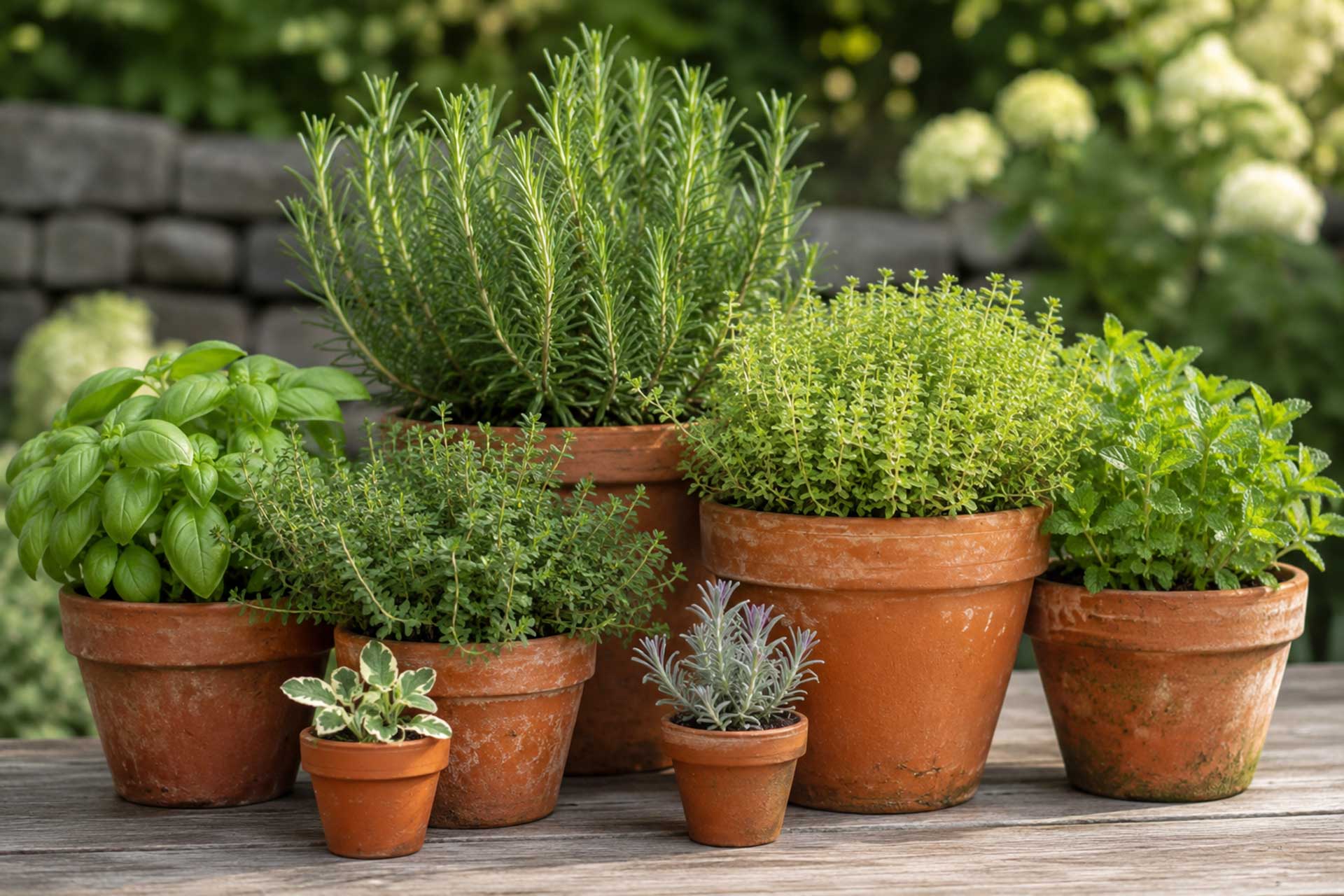
Aromatic plants can be useful near areas where people naturally brush against them, harvest them, or sit close by. Containers near outdoor kitchens, dining terraces, pool gates, garden steps, and lounge areas can add fragrance, texture, and seasonal interest. Herbs can also make outdoor cooking and entertaining feel more connected to the garden.
Good options may include:
- Rosemary: Excellent in containers and outdoor kitchen areas, though it is typically treated as seasonal in colder New England conditions.
- Lavender: Best in sunny, well-drained locations where it will not sit wet through humid summers or winter thaw cycles.
- Basil: Useful near outdoor kitchens and summer dining areas, especially in containers.
- Mint: Fragrant and vigorous, but best kept in pots because it can spread aggressively in garden beds.
- Lemon thyme: A low-growing herb suited to sunny, well-drained spots and container edges.
- Catmint: Durable, long-blooming, and useful in sunny perennial borders, though it should be selected and maintained carefully.
- Marigolds: Seasonal color for containers and vegetable garden edges.
- Lemongrass: A strong architectural annual for containers in New England, useful for summer texture and fragrance.
For a polished property, the goal is not to scatter “mosquito plants” everywhere. The goal is to use them where they contribute to the experience of the space.
The Bigger Mosquito Issue Is Water
Mosquitoes need water to reproduce, which makes drainage and irrigation central to any landscape strategy. A property can have beautiful planting and still become uncomfortable if water collects in the wrong places.
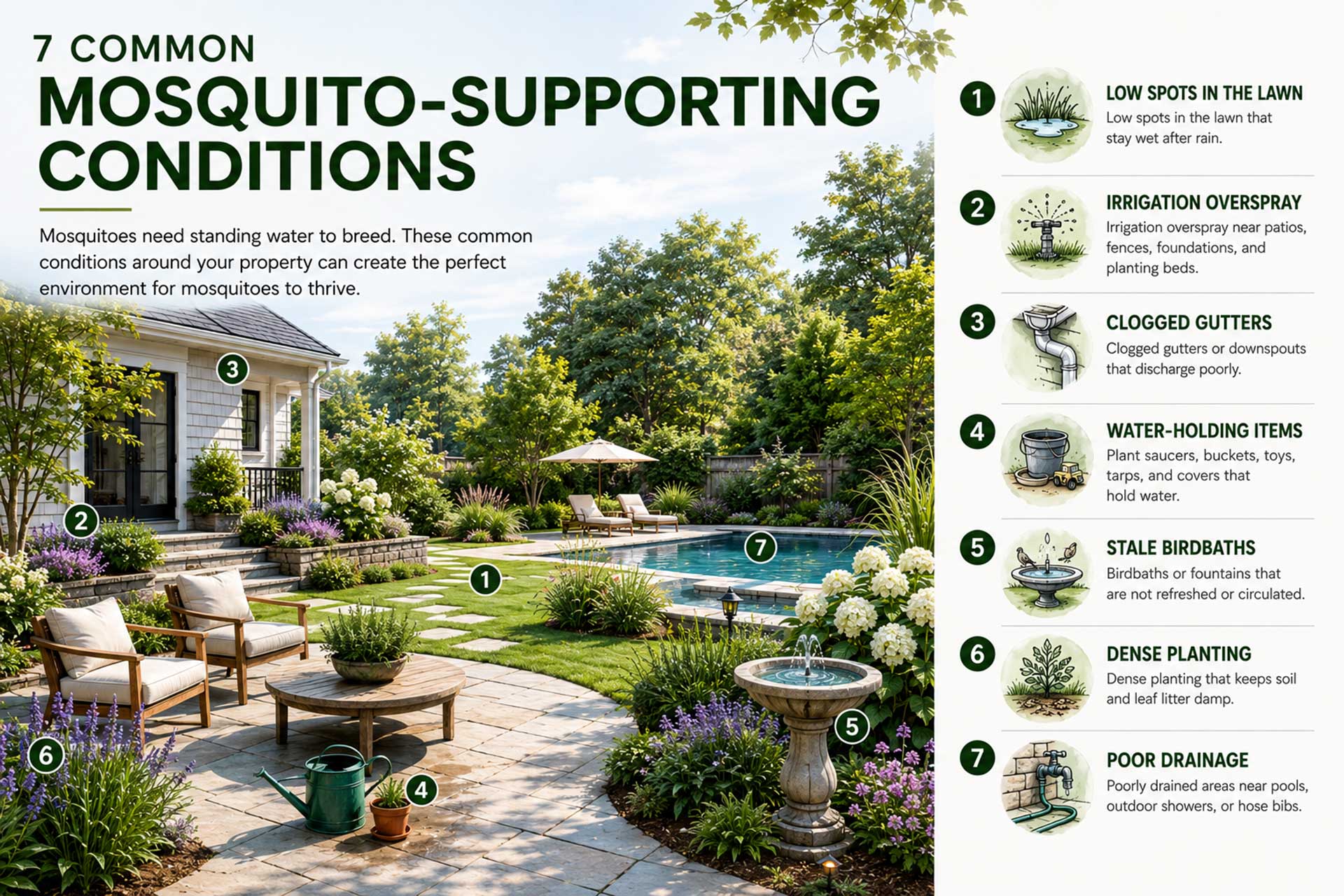
Common mosquito-supporting conditions include:
- Low spots in the lawn that stay wet after rain
- Irrigation overspray near patios, fences, foundations, and planting beds
- Clogged gutters or downspouts that discharge poorly
- Plant saucers, buckets, toys, tarps, and covers that hold water
- Birdbaths or fountains that are not refreshed or circulated
- Dense planting that keeps soil and leaf litter damp
- Poorly drained areas near pools, outdoor showers, or hose bibs
This is where a drainage assessment can be more valuable than another round of seasonal plants. If the patio edge is constantly wet, if a foundation bed holds water, or if a lawn area never fully dries, the landscape may need grading adjustments, subsurface drainage, soil improvement, or better irrigation zoning.
Look Closely at Irrigation Timing
A well-designed irrigation system should support plant health without making outdoor living areas damp and uncomfortable. If sprinklers run too often, too long, or at the wrong time of day, they can create humid pockets around lawn edges, planting beds, patios, and walkways.
For homeowners who entertain frequently, irrigation should be coordinated with how the property is used. The lawn near a play area, pool terrace, or outdoor dining space should not be wet when guests arrive. Planting beds should receive enough water to remain healthy, but not so much that mulch, leaf litter, or shaded ground stays constantly damp.
Smart controllers, drip irrigation, seasonal adjustments, and professional monitoring can all help. The point is not simply to save water. It is to create a landscape that looks good and feels comfortable to use.
Tick-Safe Landscape Design Starts at the Edges
Ticks are often most concerning where maintained landscape meets wilder conditions. In Greater Boston and Cape Cod properties, that might mean woodland edges, conservation land, fieldstone walls, deer paths, tall grasses, shaded shrub borders, or leaf litter beneath mature trees.
The CDC recommends removing leaf litter, clearing tall grasses and brush around homes and lawn edges, mowing frequently, and creating a three-foot barrier of wood chips or gravel between lawns and wooded areas. The Harvard Lyme Wellness Initiative similarly recommends reducing vegetation and leaf litter around decks and patios, trimming nearby trees to allow more sunlight, and creating a dry barrier of wood chips, gravel, or mulch between lawn and woods or around patios and play equipment.
For a high-end residential landscape, these recommendations should be integrated with the overall design instead of treated as an afterthought.
Design the Transition Zone
A wooded edge does not need to look stripped or harsh. It can be designed as a purposeful transition from the more formal living areas of the property to the natural landscape beyond.
This may include:
- A defined gravel or mulch band between lawn and woodland
- Selective pruning to improve sunlight and airflow
- Removing invasive or overly dense understory growth
- Replacing unmanaged brush with layered, maintainable planting
- Locating play areas, patios, and seating away from damp edges
- Using paths, walls, or planting beds to guide circulation clearly
A thoughtful transition zone can reduce pest-friendly habitat while making the property feel more intentional.
Related Blog: 12 Invasive Plants Commonly Found in Massachusetts Landscapes and What to Plant Instead
Where Patios, Play Areas, and Seating Belong
Tick and mosquito reduction is not only about what gets removed. It is also about where outdoor activity is placed.
If a patio is tucked against a damp woodland edge, if a playset sits beneath dense shade, or if lounge furniture is placed beside unmown grass, the problem is partly one of layout. A landscape design Boston homeowners can live with comfortably should consider sun, shade, airflow, drainage, and proximity to natural edges from the beginning.
Outdoor living areas generally perform better when they are:
- Set away from dense brush and tall grass
- Located where air can move through the space
- Supported by dry, well-drained surfaces
- Connected by clear paths and steps
- Lit well enough to discourage damp, neglected corners
- Maintained regularly through the growing season
This is especially important for properties with outdoor kitchens, pools, fire features, and dining terraces. These spaces represent a meaningful investment. They should be planned so homeowners actually want to use them on summer evenings.
Hardscape Can Help Define Cleaner Outdoor Rooms
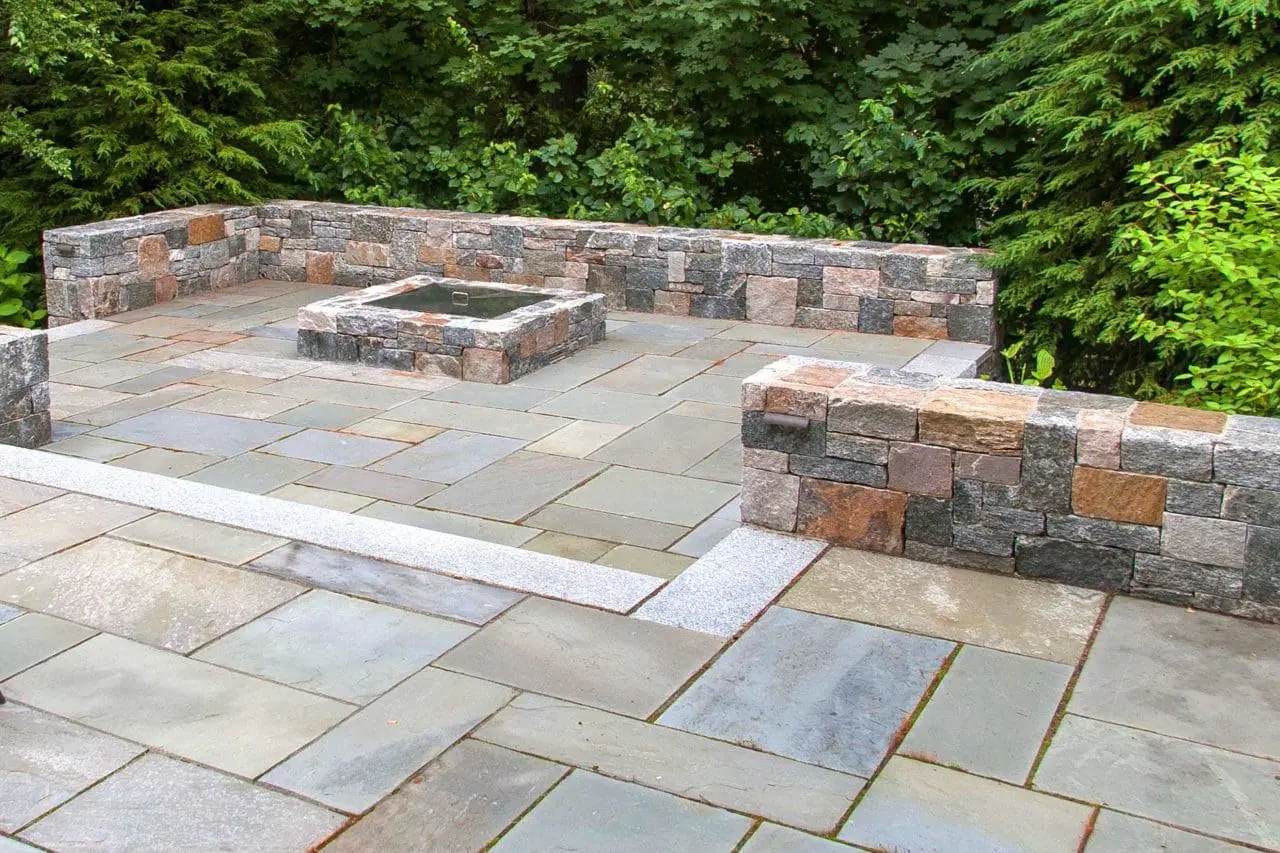
Patios, walkways, steps, and retaining walls can help organize a landscape and keep activity away from less comfortable areas. A well-built terrace can create a dry gathering place. Stone steps can make circulation clearer. Retaining walls can manage grade, improve drainage, and separate outdoor rooms from steeper or wilder parts of the property.
For properties with slopes, woodland edges, or grade changes, stone walls and steps are not just decorative. They can help create cleaner transitions and more usable outdoor rooms.
For more on masonry strategy, see Stone Walls & Steps for Boston Landscapes.
Planting Design Should Balance Beauty, Airflow, and Maintenance
Dense planting can be beautiful, but it needs to be designed with long-term care in mind. Overgrown shrubs, crowded perennials, unmanaged groundcover, and damp leaf litter can make garden beds harder to maintain and less comfortable near seating areas.
A strong planting plan balances texture, privacy, bloom, structure, and airflow. It also considers how plants will mature. What looks lush in year two may become too dense by year five if spacing, pruning, and maintenance are not part of the plan.
“A refined landscape is not the same as a crowded one. The best planting plans leave room for air, movement, maintenance, and mature growth.”
– Katie Johnson, Landscape Designer, a Blade of Grass
Be Careful With Groundcovers in Tick-Prone Areas
Groundcovers can be excellent for erosion control, shade gardens, and low-maintenance planting beds. But in tick-prone areas, especially near woods or stone walls, dense unmanaged groundcover may create a humid, protected environment.
That does not mean groundcovers should be avoided everywhere. It means they should be selected and placed thoughtfully. A Boston landscape design firm should consider whether a groundcover belongs near a high-use area, a pet route, a woodland edge, a children’s play space, or a decorative bed that receives regular maintenance.
For front-facing beds and architecture-driven planting, see Foundation Landscaping Ideas for Boston Homes. For curb appeal and entry sequencing, see Front Yard Landscaping Ideas for Boston Homes.
Lighting Can Make Outdoor Spaces Feel More Usable and More Managed
Landscape lighting does not directly control ticks or mosquitoes, but it can influence how a property is used and maintained. Dark, neglected edges often become the places homeowners avoid. Well-lit paths, patios, steps, and seating areas feel more intentional, safer, and more inviting.
Professional landscape lighting can help define the outdoor rooms where people should gather. It can also make grade changes, walls, steps, gates, and paths easier to navigate after dark.
For summer entertaining, lighting should be layered rather than harsh. Path lights can support movement. Downlighting can create a soft evening effect. Accent lighting can bring attention to trees, architecture, stonework, or garden structure. The goal is not to flood the landscape with light. It is to make the most usable parts of the property feel comfortable and complete.
Maintenance Is the Difference Between a Good Plan and a Usable Yard
Tick and mosquito prevention is not a one-time spring cleanup. It is a seasonal maintenance issue.
A yard may look tidy in April, then become dense, damp, and overgrown by July. Lawn edges blur. Perennials flop. Shrubs push into paths. Mulch gets thin. Irrigation settings fall out of sync with the weather. Leaves collect beneath hedges. Containers hold water. Gutters clog. These small issues can add up quickly.
A proactive landscape maintenance plan can help keep the property performing as intended.
Key maintenance practices include:
- Mowing lawns regularly during the growing season
- Clearing leaf litter near patios, play areas, lawn edges, and woodland transitions
- Pruning shrubs to improve airflow around high-use areas
- Keeping paths, steps, and patios clear of plant overgrowth
- Monitoring irrigation zones and wet areas
- Refreshing mulch where it supports clean bed definition
- Removing standing water from containers, saucers, and outdoor objects
- Keeping firewood stacked neatly and away from primary gathering areas
For homeowners with large properties, second homes, or frequent travel, professional maintenance is often what keeps the landscape from sliding from elegant to overgrown.
What About Sprays, Repellents, and Professional Pest Control?
Some homeowners use professional pest-control treatments, personal repellents, or targeted products as part of their summer routine. Those decisions should be made carefully, especially on properties with pets, children, pollinator gardens, vegetable gardens, wetlands, water views, or conservation restrictions.
The EPA provides guidance on insect repellents, and homeowners should always follow product labels and consult qualified pest-control professionals where appropriate.
From a landscape design perspective, treatments should not replace good site planning. If a yard has standing water, dense wet shade, poor drainage, unmanaged edges, and overgrown planting beds, sprays may only address symptoms. A better long-term strategy begins with the conditions that make the property less comfortable in the first place.
For more homeowner-focused guidance on repellents, EEE, West Nile virus, and seasonal mosquito precautions in Massachusetts, see our related post on protecting your family and property from mosquito-borne illness.
A Smarter Framework for a More Comfortable Summer Yard
The most effective approach combines several layers. Each layer helps the others work better.
| Landscape Layer | How It Helps |
|---|---|
| Drainage | Reduces persistent wet areas where mosquitoes may breed or gather. |
| Irrigation | Keeps plants healthy without overwatering lawns, beds, patios, or shaded edges. |
| Planting design | Balances beauty, privacy, airflow, spacing, fragrance, and long-term maintenance. |
| Lawn and edge care | Keeps high-use areas cleaner, drier, and less inviting to ticks. |
| Hardscape | Creates dry, defined outdoor rooms and clearer transitions across the property. |
| Lighting | Makes paths, patios, steps, and seating areas more usable after dark. |
| Maintenance | Prevents the landscape from becoming overgrown, damp, cluttered, or difficult to use. |
Pros and Cons of Plant-Based Tick and Mosquito Strategies
| Pros | Cons |
|---|---|
| Aromatic plants can add fragrance, texture, and seasonal interest near patios and outdoor kitchens. | Plants alone should not be relied on for meaningful tick or mosquito control. |
| Herbs in containers can make outdoor dining areas feel more connected to the garden. | Some plants promoted as repellents only release relevant oils when crushed or processed. |
| Seasonal containers can support a polished, event-ready outdoor space. | Overplanting can create dense, damp conditions if beds are not maintained. |
| Planting can help guide circulation and keep people away from less comfortable edges. | Mint and other vigorous plants can spread if placed directly in garden beds. |
| Plant selection can be part of a broader low-maintenance and outdoor comfort strategy. | Water, shade, leaf litter, and lawn-edge management usually matter more than plant choice alone. |
When to Bring in a Boston Landscape Design Firm
If ticks and mosquitoes are affecting how you use your property, it may be time to look beyond short-term fixes. This is especially true if the issue overlaps with drainage, shade, outdoor living, overgrown planting, woodland edges, or lawn areas that never seem to dry.
A professional landscape design and maintenance team can help answer questions such as:
- Is water collecting because of grading, soil, irrigation, or drainage?
- Are patios, play areas, and seating zones placed in the right parts of the property?
- Are planting beds too dense or difficult to maintain?
- Would pruning improve sunlight and airflow?
- Should a woodland edge be redesigned as a cleaner transition zone?
- Are walls, steps, paths, or terraces needed to make the yard more usable?
- Would landscape lighting make evening use more comfortable?
- Does the property need a seasonal maintenance plan to keep the design performing?
This is where a Blade of Grass can help. Our team brings design, construction, planting, hardscape, drainage, irrigation, lighting, seasonal care, and long-term property maintenance together so the landscape works as a complete system.
Tick and Mosquito-Resistant Yard Design Questions, Answered
Q: Can plants really repel mosquitoes?
A: Some aromatic plants contain oils associated with repellency, but plants alone are not a reliable mosquito-control strategy. They are best used as part of a broader plan that includes removing standing water, improving drainage, adjusting irrigation, and maintaining planting beds.
Q: What landscape changes help reduce ticks?
A: The CDC recommends removing leaf litter, clearing tall grasses and brush around homes and lawn edges, mowing frequently, and placing a three-foot-wide barrier of wood chips or gravel between lawns and wooded areas. In a designed landscape, those steps can be integrated into attractive woodland transitions, paths, and maintained edges.
Q: Does mulch help with ticks or mosquitoes?
A: Mulch can help define clean bed edges and may be used as part of a dry transition barrier near wooded areas. However, overly damp, thick, or poorly maintained mulch can also hold moisture. Material choice, placement, depth, drainage, and maintenance all matter.
Q: How does irrigation affect mosquitoes?
A: Overwatering can keep lawns, planting beds, and patio edges damp, especially in shaded areas. A properly adjusted irrigation system should support plant health without creating persistent wet spots or uncomfortable outdoor living areas.
Q: When should I call a landscape designer instead of a pest-control company?
A: If the problem is connected to drainage, shade, planting density, lawn edges, patio placement, irrigation, or overall property layout, a landscape designer can help address the conditions that make the yard less comfortable. Pest control may still be part of the plan, but better design and maintenance can improve the landscape itself.
A More Comfortable Yard Starts With Better Design
A tick- and mosquito-resistant yard is not created by one plant, one product, or one weekend cleanup. It comes from understanding how the property works.
Where does water collect? Where does shade hold moisture? Where do people gather? Where do pets travel? Where do lawn, woodland, garden, and hardscape meet? Which parts of the property are beautiful but difficult to maintain? Which outdoor spaces look good in photos but feel uncomfortable in July?
Those are design questions.
For homeowners in Greater Boston, MetroWest, and Cape Cod, a Blade of Grass can help create outdoor spaces that are beautiful, practical, and easier to enjoy throughout the summer. From planting design and drainage to patios, walls, steps, lighting, irrigation, seasonal care, and long-term maintenance, our team can help turn a pest-prone or underused yard into a more comfortable extension of the home.
Contact a Blade of Grass to schedule a consultation and explore how thoughtful landscape design can make your property more usable, comfortable, and ready for the season ahead.
Helpful Resources
- CDC: Preventing Tick Bites — Practical guidance on reducing tick exposure around the yard, including mowing, removing leaf litter, clearing brush, and creating barriers between lawns and wooded areas.
- EPA: Success in Mosquito Control, An Integrated Approach — Explains why mosquito control works best as a layered strategy that includes eliminating standing water, managing habitat, and using products responsibly when needed.
- EPA: Insect Repellents — A helpful reference for understanding EPA-registered repellents, active ingredients, and safe product use for people spending time outdoors.
- Harvard Lyme Wellness Initiative: Protecting Your Yard — Offers homeowner-focused recommendations for making yards less attractive to ticks, especially around patios, play areas, lawn edges, and wooded transitions.
- Iowa State University Extension: Mosquito Control — Provides a useful, research-based overview of mosquito prevention, including why plant-based repellency claims should be viewed with caution.