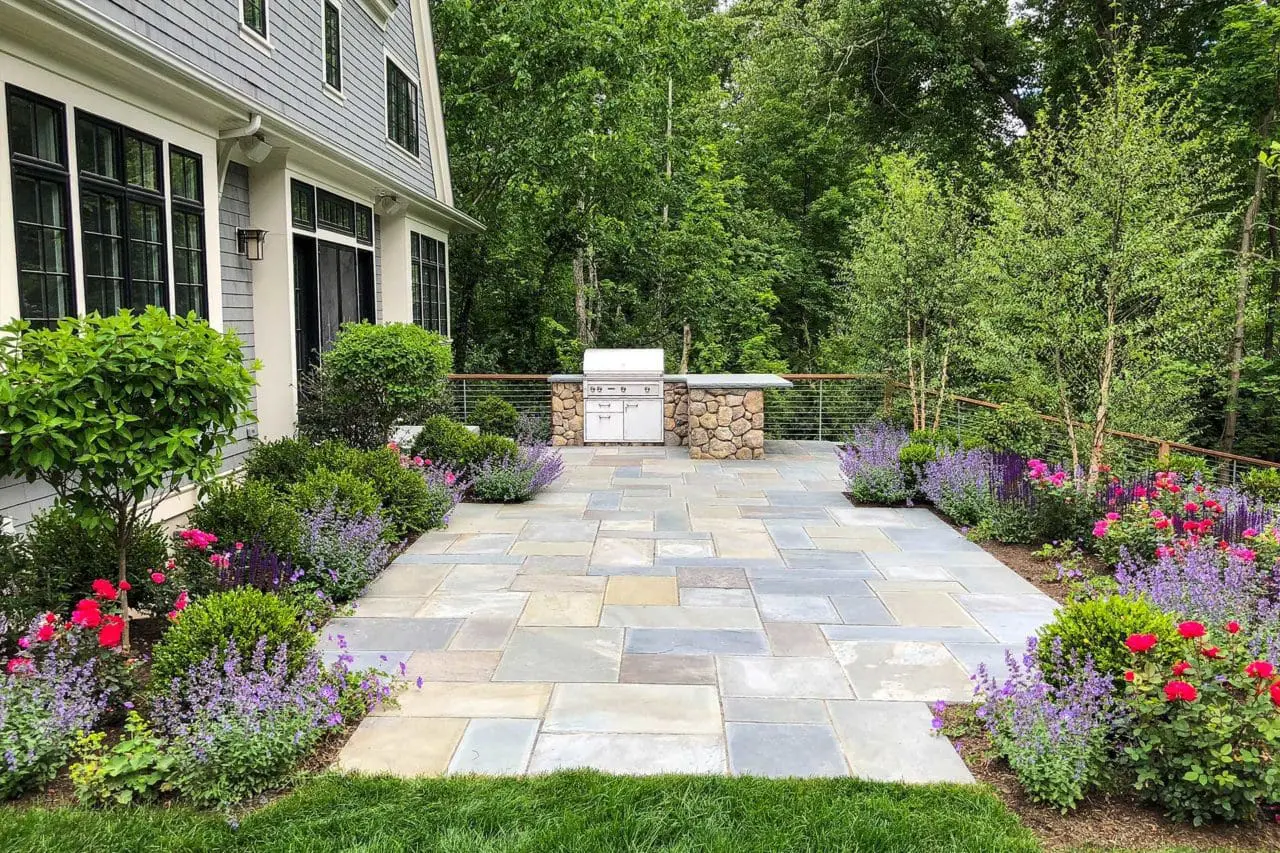
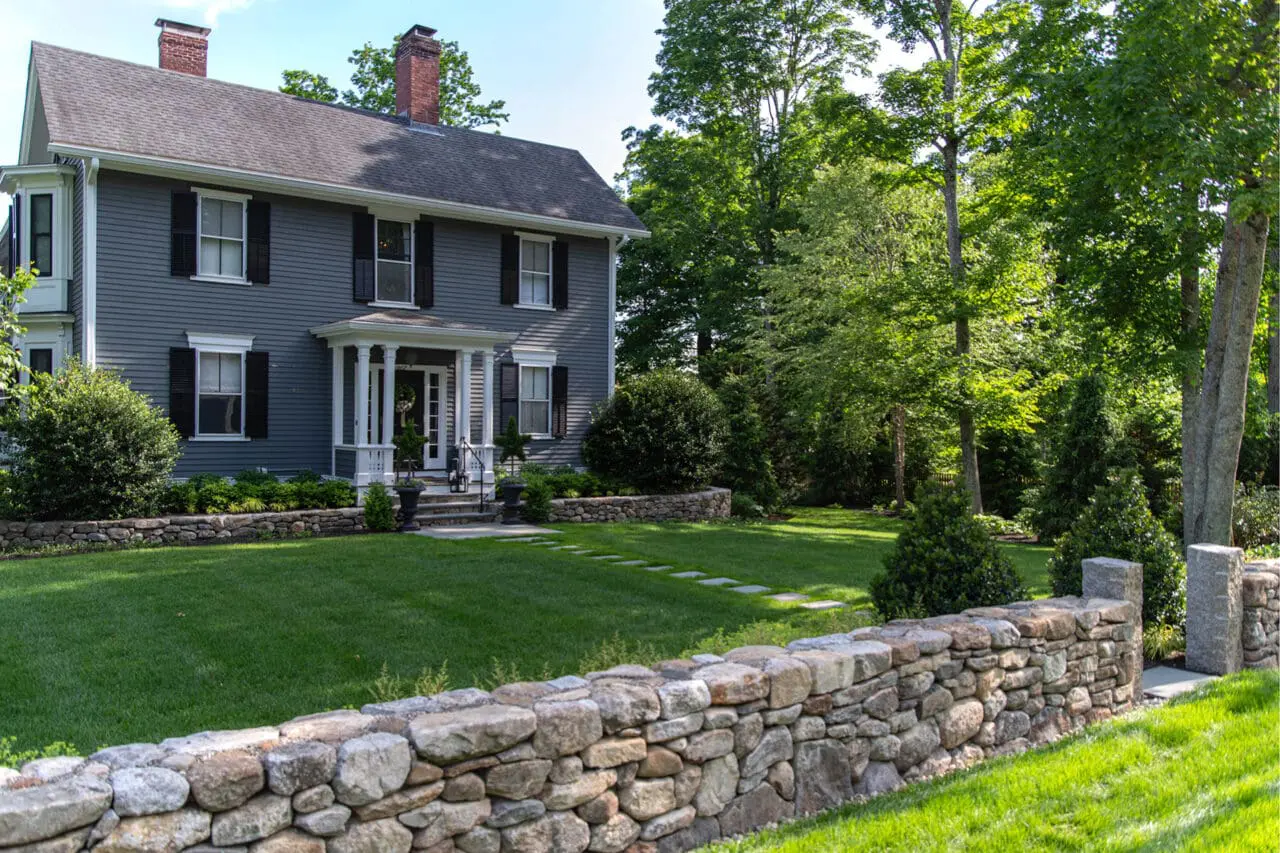
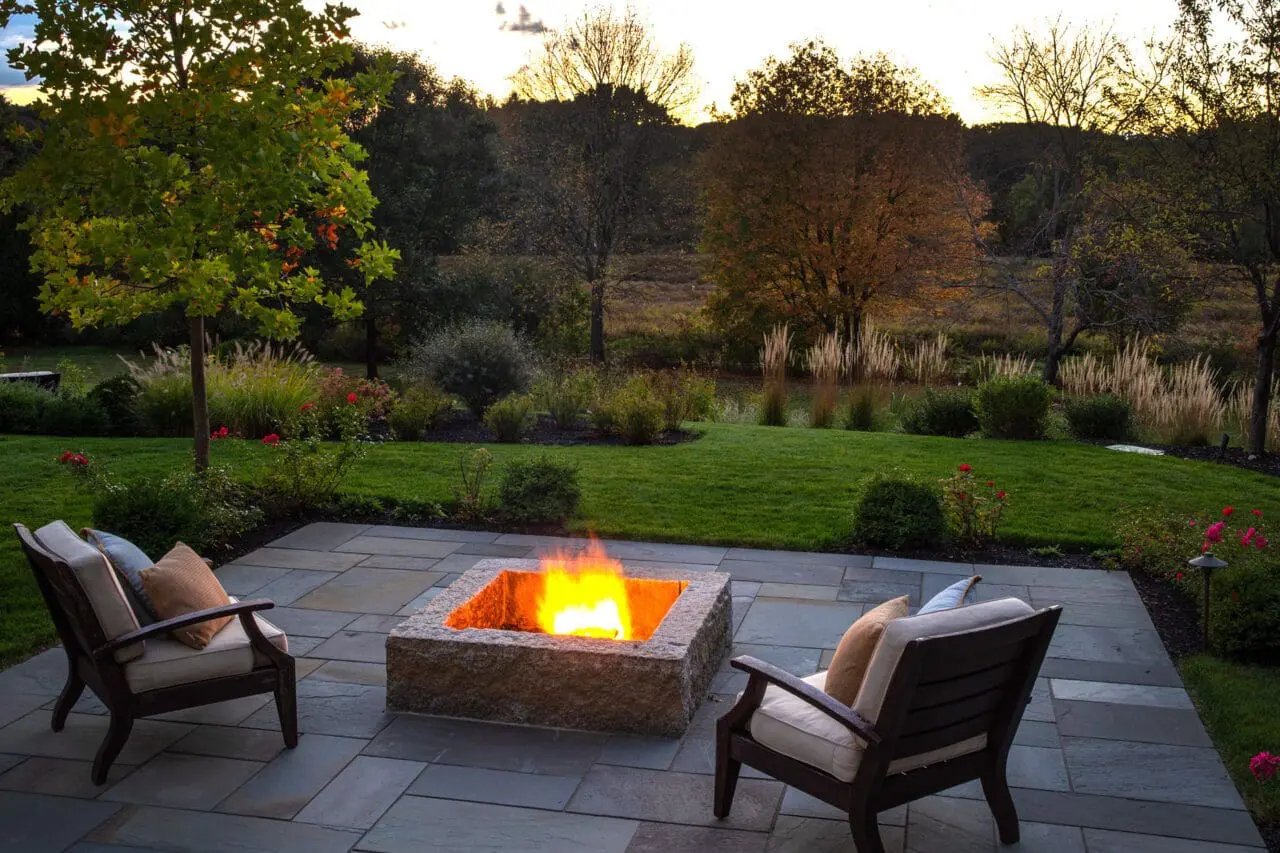
A mature landscape can hold decades of history, including Norway maples, burning bush hedges, and ornamental grasses once valued for shade, fall color, screening, or easy maintenance.
Some of those plants are now recognized as invasive in Massachusetts. The warning signs may be subtle: seedlings appearing beyond a hedge, vines climbing mature trees, shrubs spreading into woodland edges, or grasses emerging outside their original planting areas.
This is especially relevant on established properties throughout Greater Boston, MetroWest, and Cape Cod, where maintained landscapes often meet woods, wetlands, conservation land, and older hedgerows.
Mass Audubon reports that more than 2,200 plant species have been documented in Massachusetts. About 725 are naturalized non-native plants, and 72 have been categorized as invasive, likely invasive, or potentially invasive.
Replacing invasive plants is not simply an ecological concern. It can improve the appearance, structure, manageability, and long-term performance of a residential landscape. The best approach considers what the existing plant provides, what removal may change, and how the replacement fits the property as a whole.
Key Takeaways
- Many invasive plants were once chosen for privacy, color, erosion control, or low maintenance.
- Non-native, aggressive, invasive, and prohibited are not interchangeable terms.
- Watch for seedlings, vines, spreading roots, and growth beyond the original planting.
- Plan removals carefully to protect privacy, shade, drainage, and slope stability.
- Choose replacements based on site conditions, mature size, function, and maintenance needs.
- Large infestations often require phased removal and ongoing follow-up.
Four Terms Homeowners Should Understand
Before digging into this very important topic, it helps to understand how these commonly used terms differ.
- Native: A plant that occurs naturally in the region and participates in local ecological relationships.
- Non-native: A plant introduced from another region. Many non-native ornamental plants remain well behaved and are not considered invasive.
- Aggressive: A plant that spreads readily within a garden or managed landscape. An aggressive plant is not automatically classified as invasive.
- Invasive or prohibited: A non-native plant identified as causing harm beyond cultivation. Plants on the Massachusetts Prohibited Plant List are also subject to state restrictions on activities such as propagation, importation, purchase, sale, trade, and distribution.
What Makes a Plant Invasive in Massachusetts?
An invasive plant is more than a plant that grows vigorously or spreads within a garden bed. Invasive species are generally non-native plants that establish beyond cultivation and cause ecological, environmental, or economic harm.
Mass Audubon summarizes an important part of the issue:
“All invasive plants were first introduced to our area by humans.”
Mass Audubon
Some were introduced accidentally, but many arrived as landscape plants. Without the same natural controls found in their original ranges, they can spread into forests, fields, wetlands, coastal areas, and residential properties.
The Massachusetts Prohibited Plant List restricts the importation, propagation, purchase, sale, trade, and distribution of listed plants. The restrictions also apply to listed cultivars, varieties, and hybrids. A plant already growing on private property is not necessarily subject to a mandatory removal requirement, but listed plants generally cannot be propagated or sold.
The list changes as research and regulatory decisions develop. Massachusetts added Chinese silvergrass, black alder, and jetbead in December 2025, each with a defined commercial phase-out period. Japanese angelica tree and sapphire berry were added in May 2026. Homeowners, designers, and property care professionals should refer to the current Massachusetts prohibited plant updates rather than relying on older nursery information.
Why Invasive Plants Become a Residential Landscape Problem
On a residential property, an invasive plant may remain relatively contained for years before becoming conspicuous. A shrub can begin producing seedlings in adjacent beds. A vine can reach the canopy of a mature tree. A stand of knotweed can expand after soil disturbance. Ornamental grass seedlings may begin appearing beyond the original planting.
The practical problems often include:
- Competition with intentionally planted trees, shrubs, perennials, and ground covers
- Vines climbing, shading, or girdling mature trees
- Dense colonies forming along woodland edges, slopes, and property boundaries
- Repeated cutting or clearing without lasting control
- Open soil and erosion risk after large-scale removal
- Loss of privacy or structure when mature invasive plants are removed
- Increasing seasonal maintenance demands
- Spread into adjoining properties or sensitive natural areas
The challenge is not simply removing a plant. It is deciding what the surrounding landscape should become afterward.
How Urgent Is the Problem?
Not every invasive plant presents the same level of concern. A practical first assessment is to look at how actively the plant is spreading and what it is affecting.
- Higher priority: Vines growing into mature trees, Japanese knotweed near soil disturbance or drainage areas, fruiting colonies beside woods or conservation land, and plants damaging valuable landscape features.
- Moderate priority: Established hedges or shrub masses producing seedlings, spreading into neighboring beds, or increasing seasonal maintenance.
- Plan before removing: Mature trees, privacy screens, slope vegetation, and large shrub colonies whose removal would suddenly affect shade, views, drainage, or erosion.
The goal is not necessarily to clear everything at once. It is to address the plants creating the greatest risk while planning what will protect and improve the site afterward.
12 Common Invasive Plants in Massachusetts Landscapes
1. Burning Bush
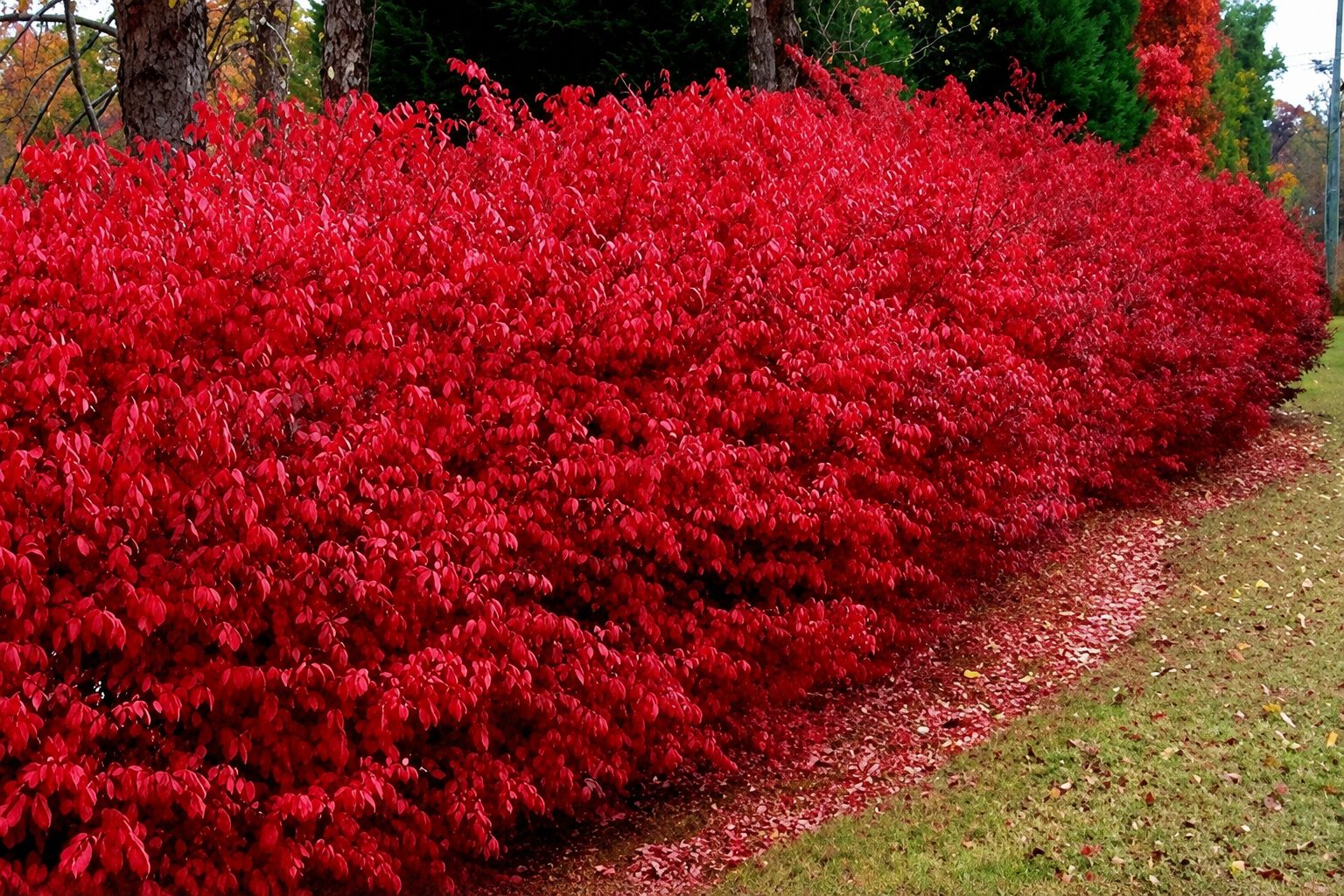
Burning bush, or winged euonymus, became popular for its intense red fall color, compact form, adaptability, and tolerance of shearing. It still appears frequently in older foundation plantings, property-line hedges, parking courts, and mixed shrub borders.
The issue is its ability to produce seed and spread into nearby woods and unmanaged areas. Seedlings may appear well beyond the original hedge, particularly where birds disperse the fruit.
Better alternatives:
- For fall color: Fothergilla, Virginia sweetspire, red chokeberry, or highbush blueberry
- For a structured hedge: Ninebark or inkberry where an evergreen form is appropriate
- For fruit and wildlife value: Winterberry, chokeberry, or highbush blueberry
No single shrub duplicates every feature of burning bush. The replacement should be selected for the site’s sun, moisture, mature scale, browsing pressure, and desired level of formality.
2. Japanese Barberry
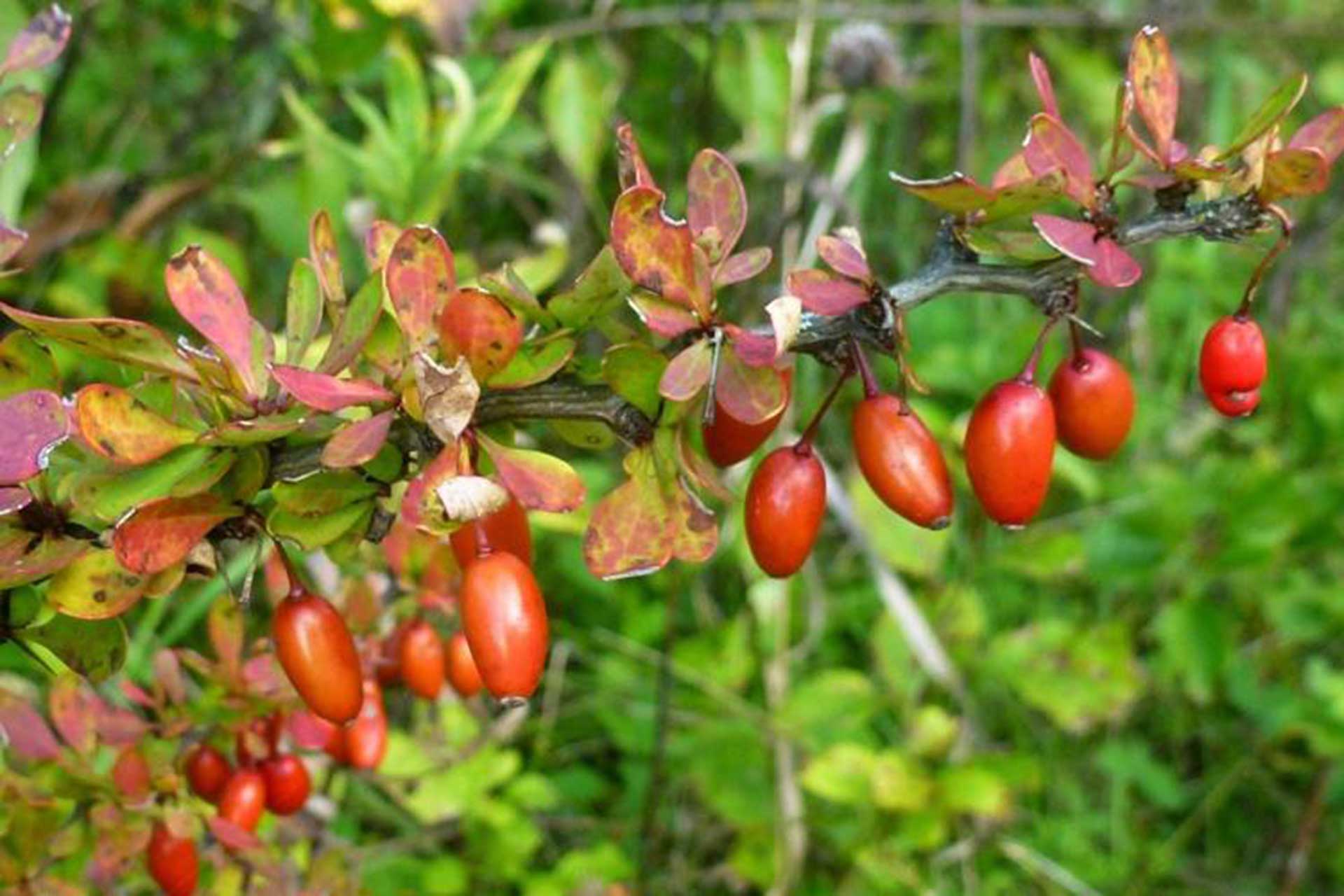
Japanese barberry was widely planted because it is compact, thorny, colorful, adaptable, and relatively resistant to deer. Purple-leaved cultivars became especially common around foundations and entries.
It can escape cultivation and form dense growth beneath trees and along woodland margins. On mature properties, individual plants may be less obvious than large colonies that have spread beyond the maintained garden.
Potential replacements include ninebark for colorful foliage, Virginia sweetspire for flowers and fall color, winterberry for red fruit, fragrant sumac for dry slopes, and inkberry for evergreen structure in suitable soils.
Better alternatives:
- For colorful foliage: Ninebark, Virginia sweetspire, or fragrant sumac
- For a compact hedge: Inkberry, dwarf ninebark, or low-growing native viburnum
- For red fruit and wildlife value: Winterberry, red chokeberry, or highbush blueberry
- For dry slopes or difficult sites: Fragrant sumac or lowbush blueberry
UMass Extension recommends evaluating the feature that made a prohibited plant desirable, such as foliage color, fruit, form, or thorns, before choosing an alternative.
3. Norway Maple
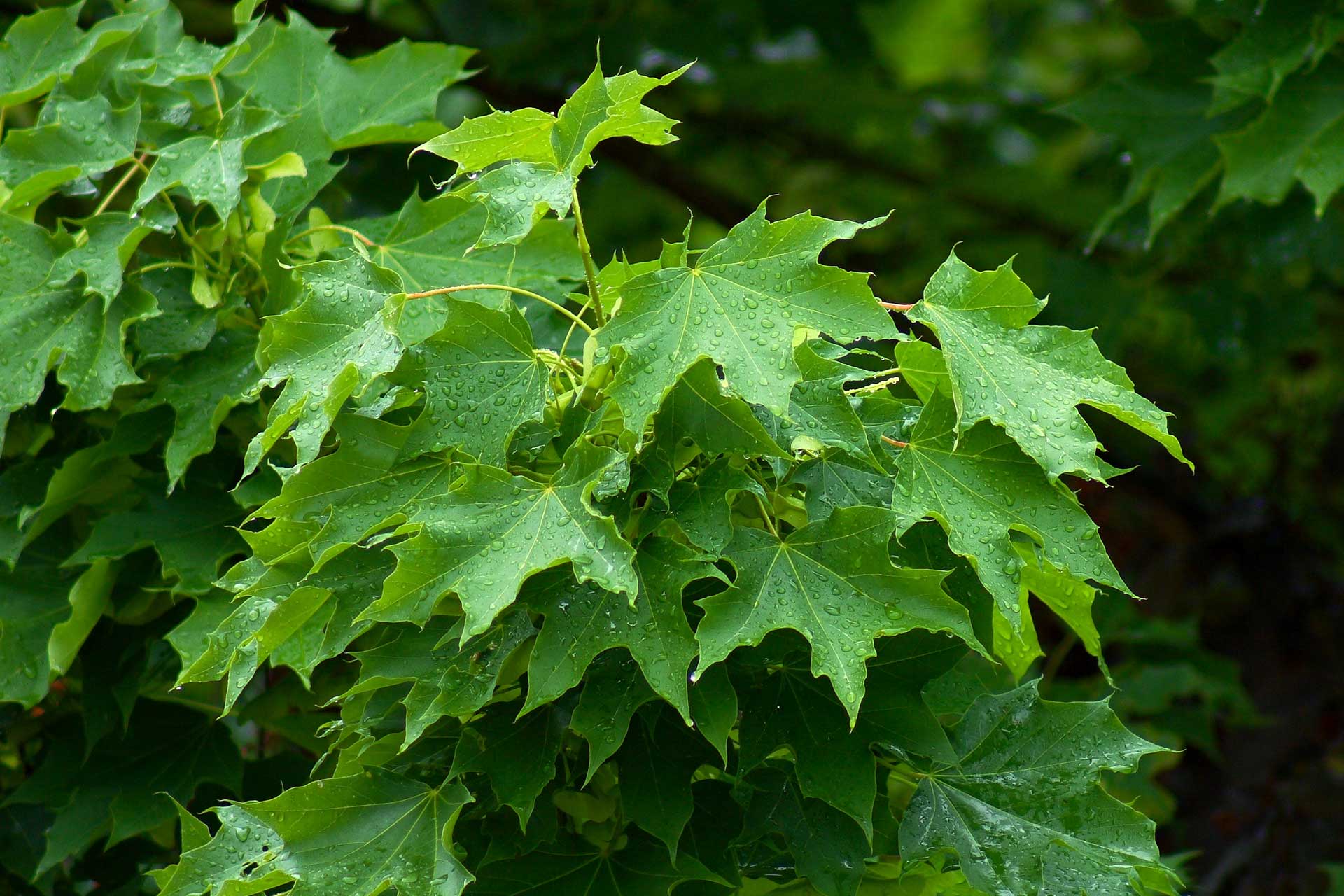
Norway maple is common in older neighborhoods throughout Greater Boston. It was valued as a durable shade and street tree, and purple-leaved cultivars gave homeowners an alternative to green canopy trees.
Mature specimens cast dense shade and compete strongly for moisture. Their seedlings may establish throughout garden beds, hedges, and nearby woodland areas.
Possible replacements include red maple, sugar maple, red oak, disease-resistant American elm cultivars, and serviceberry for a smaller ornamental scale.
Better alternatives:
- For a large shade tree: Red maple, sugar maple, red oak, or a disease-resistant American elm
- For strong fall color: Red maple, sugar maple, or serviceberry
- For a smaller ornamental tree: Serviceberry or another appropriately scaled native tree
- For replacing a mature canopy tree: Select a species based on shade, privacy, soil conditions, and the surrounding landscape plan
Replacing a mature Norway maple is a significant landscape decision. The loss of shade can affect understory planting, irrigation demand, privacy, views, and summer comfort. A new tree should be selected as part of a broader landscape design plan, not treated as an isolated substitution.
4. Oriental Bittersweet
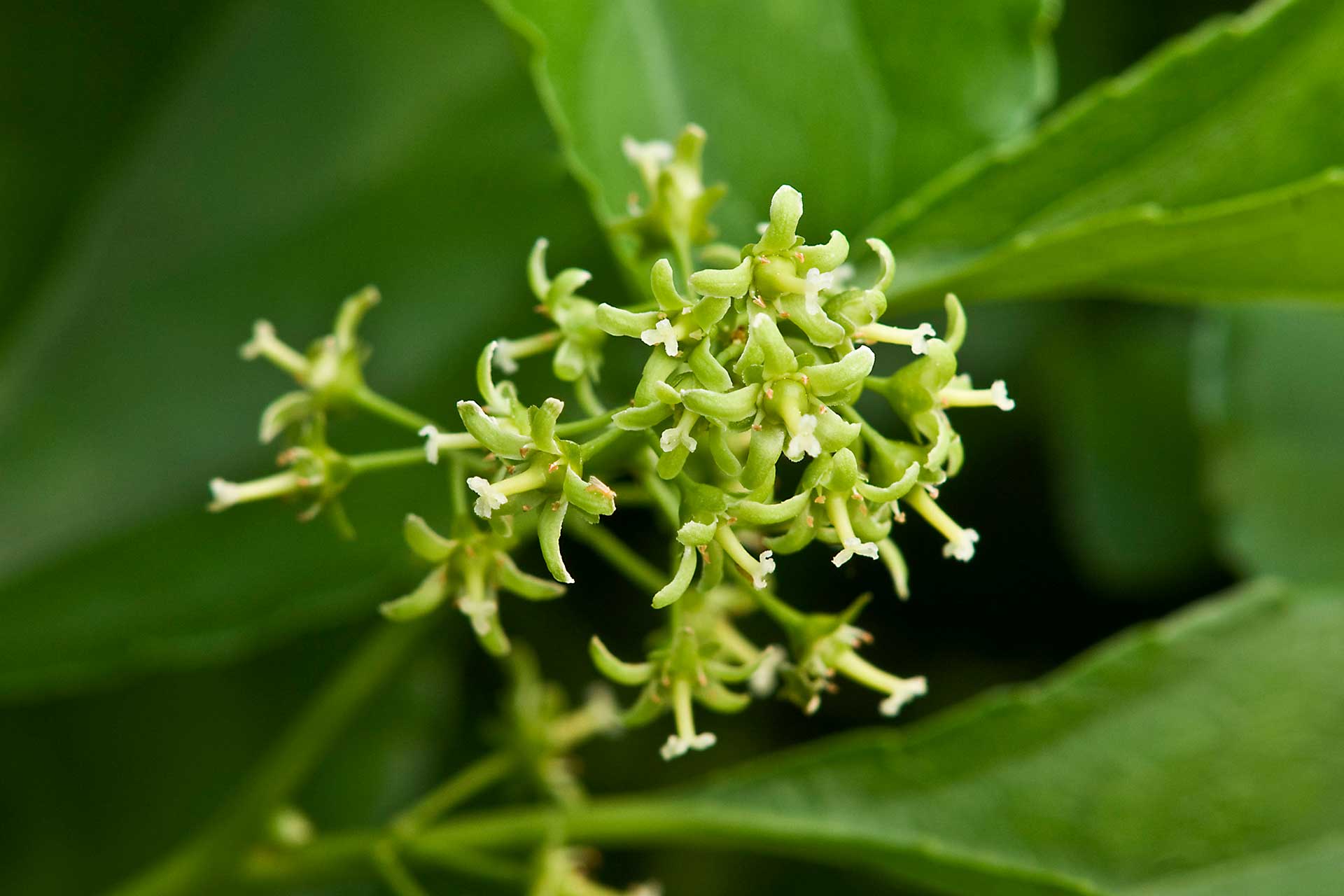
Oriental bittersweet is a vigorous woody vine often found along woodland edges, stone walls, fences, and unmanaged property boundaries. Its orange and red fruit once made it popular for seasonal decoration.
The vine can climb into mature trees, add substantial weight, shade foliage, and wrap tightly around trunks and branches. MassWildlife notes that bittersweet can kill mature trees and resprout from plant material remaining in the ground.
Potential alternatives for a flowering or decorative vine include trumpet honeysuckle, virgin’s bower, American wisteria in an appropriate location, and carefully sourced American bittersweet.
Better alternatives:
- For a flowering native vine: Trumpet honeysuckle or virgin’s bower
- For ornamental fruit and seasonal interest: Carefully sourced American bittersweet
- For a vigorous vine on a sturdy structure: American wisteria in an appropriate location
- For vines growing into mature trees: Choose a lower-impact species and plan support, pruning, and long-term maintenance carefully
Large vines growing into valuable trees should be assessed before removal. Pulling attached vines from a canopy can damage branches or create a safety hazard.
5. Multiflora Rose
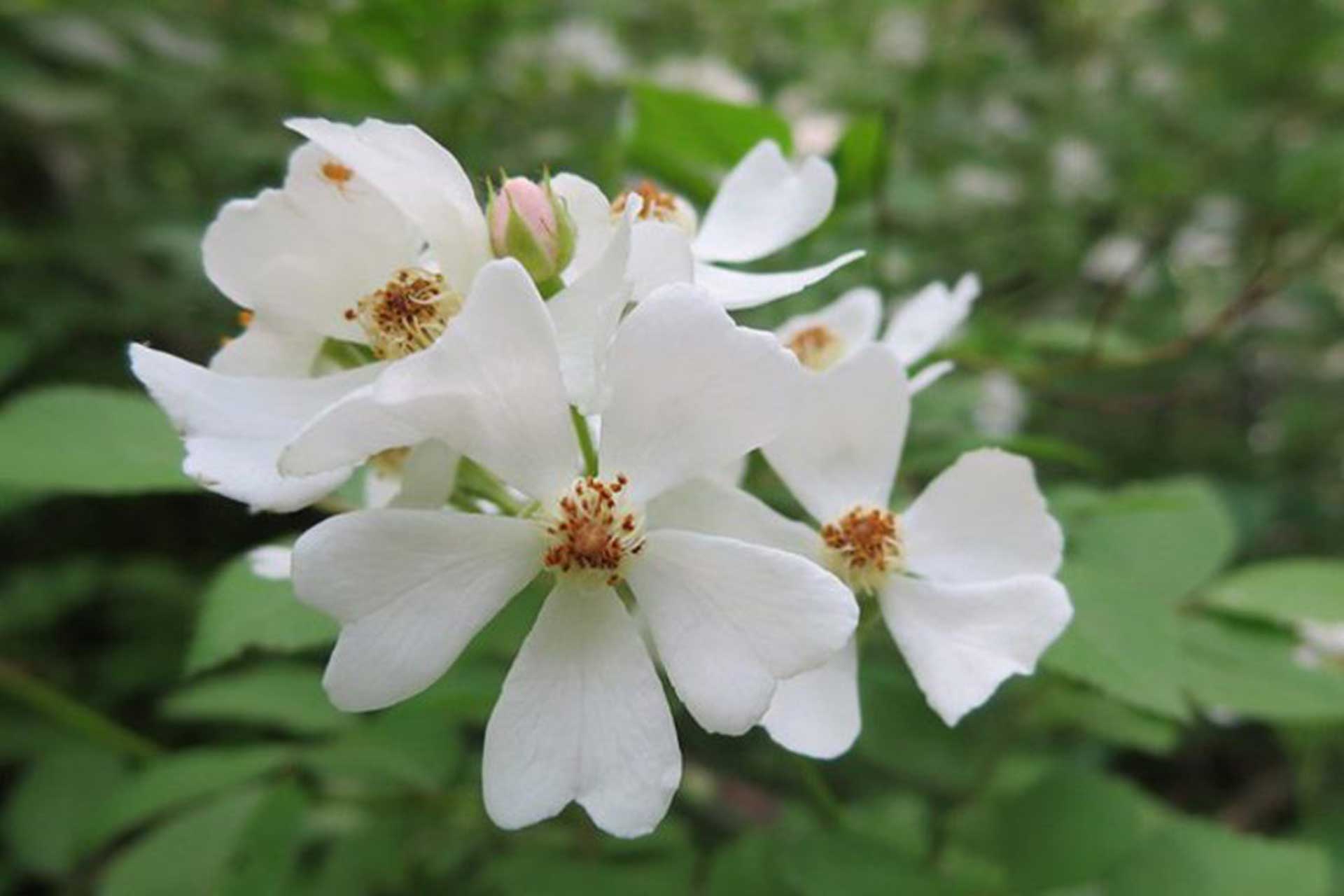
Multiflora rose was historically used for erosion control, barriers, wildlife cover, and living fences. It now appears along roadsides, stone walls, meadow edges, and the outer margins of residential properties.
Its arching, thorny canes form dense masses that are difficult to move through and can overwhelm surrounding vegetation. Cutting alone may encourage regrowth if roots remain active.
Better alternatives:
- For native flowers and rose hips: Virginia rose or Carolina rose
- For an informal meadow or coastal edge: Bayberry
- For evergreen screening: Inkberry
- For a substantial native shrub mass: Arrowwood viburnum
Better alternatives may include Virginia rose or Carolina rose for native flowers and hips, bayberry for an informal coastal or meadow-edge mass, inkberry for evergreen screening, or arrowwood viburnum for a substantial native shrub.
6. Common Buckthorn
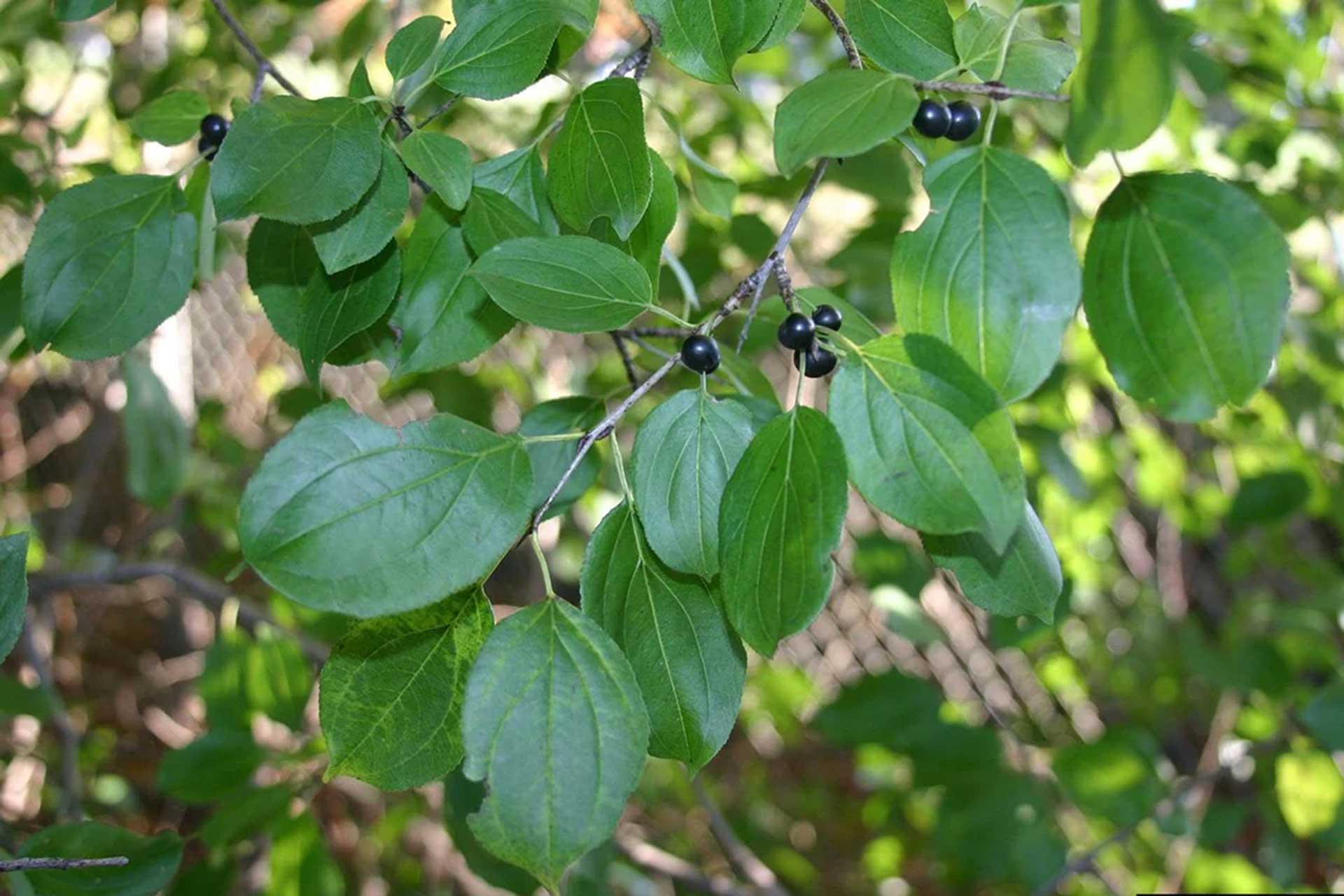
Common buckthorn often develops as a dense shrub or small tree in hedgerows and woodland edges. Homeowners may not recognize it as a planted species because it can blend into an unmanaged boundary for years.
Its dark fruit is dispersed by birds, allowing seedlings to establish across a property. Dense growth can reduce light and limit the regeneration of more desirable woodland-edge plants.
Better alternatives:
- For a small native tree: Serviceberry
- For an informal screen: Arrowwood viburnum or chokeberry
- For berries and wildlife value: Winterberry or serviceberry
- For evergreen structure: Inkberry
Possible replacements include serviceberry, arrowwood viburnum, winterberry, chokeberry, and inkberry. The correct choice depends on whether the goal is a small tree, informal screen, berry-producing shrub, or evergreen mass.
7. Glossy Buckthorn
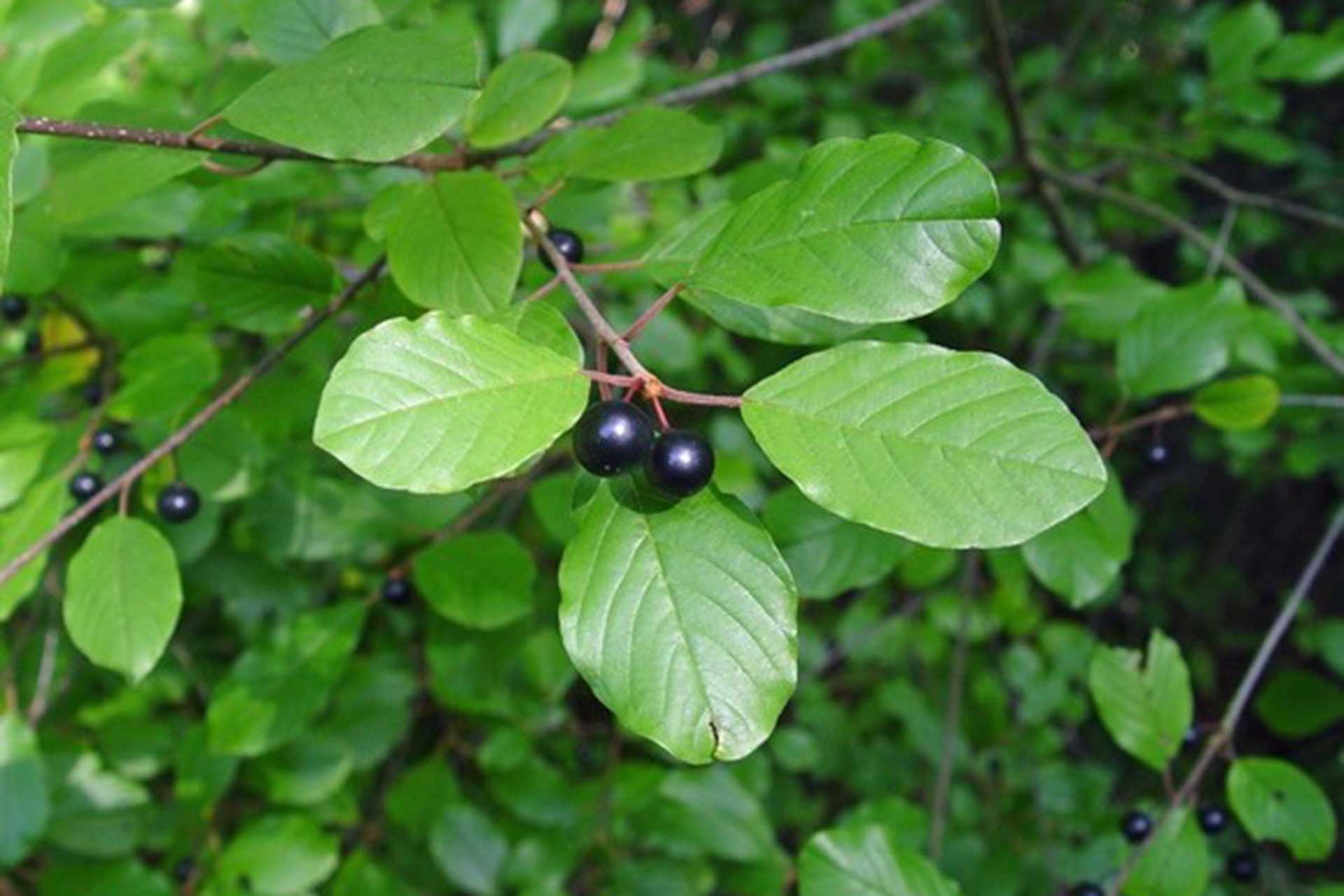
Glossy buckthorn is especially associated with moist soils, wetlands, low areas, and disturbed sites, although it can also appear on drier residential land. It may develop into broad colonies that are difficult to distinguish from the surrounding brush.
For damp sites, alternatives may include winterberry, highbush blueberry, red chokeberry, silky dogwood, or selected native viburnums. These plants can provide seasonal interest and habitat while responding better to a designed planting composition.
Better alternatives:
- For wet soils and seasonal interest: Winterberry or red chokeberry
- For fruit and wildlife value: Highbush blueberry
- For an informal native screen: Silky dogwood or selected native viburnums
- For low or poorly drained areas: Choose plants only after understanding the site’s moisture and drainage conditions
Before replanting a low or wet area, it is important to understand whether the moisture is seasonal, persistent, related to compacted soil, or connected to a larger drainage pattern. Removal and replacement should not conceal an unresolved water problem.
Once you understand the moisture pattern, our guide to plants for wet areas in Massachusetts can help you develop a more appropriate planting palette.
8. Autumn Olive
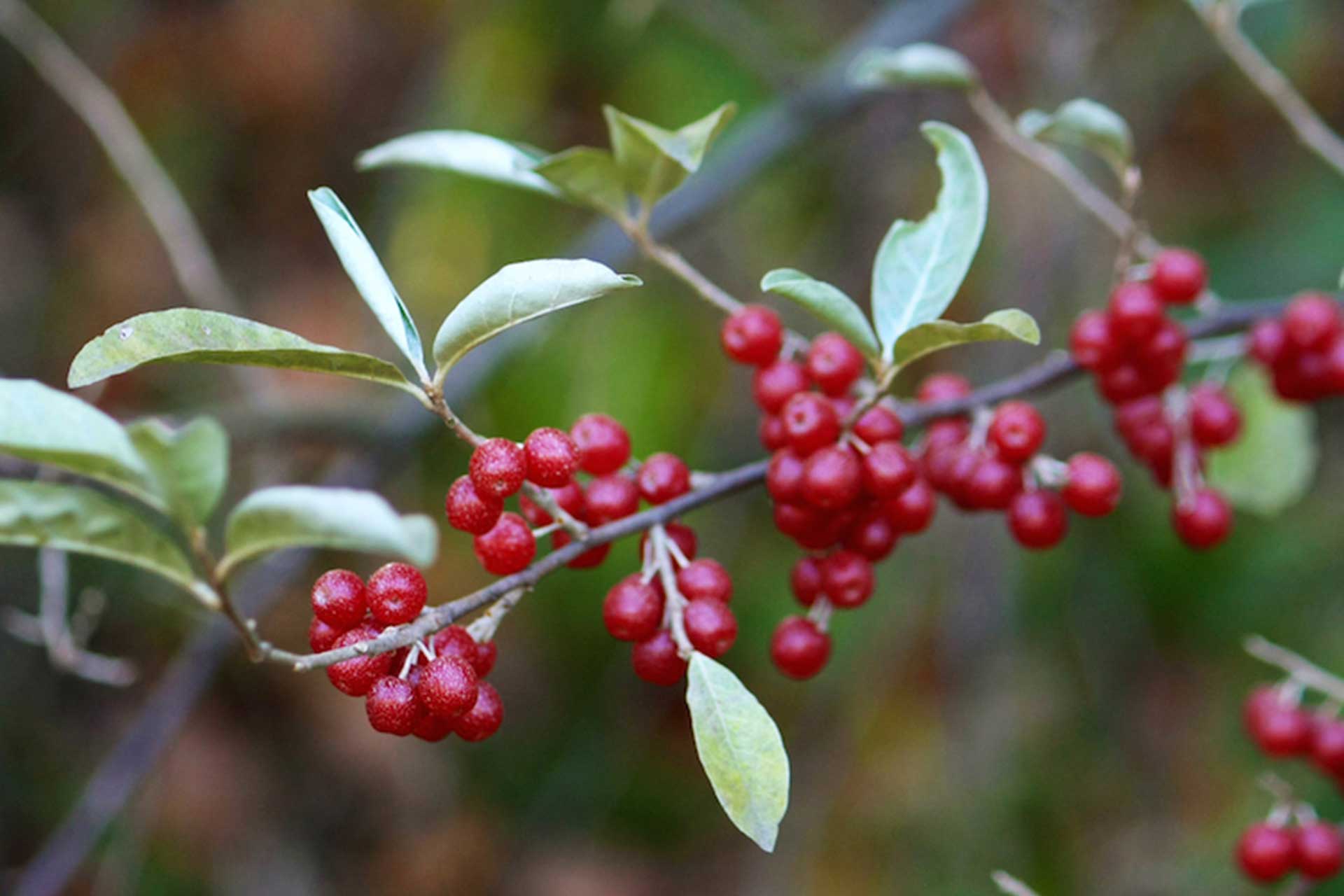
Autumn olive is recognizable by the silvery undersides of its leaves and abundant red fruit. It was historically promoted for wildlife planting, erosion control, screening, and difficult sites.
Its adaptability allows it to establish in poor soils, sunny edges, and disturbed areas. Large shrubs can create a quick visual screen, but they can also spread extensively through bird-dispersed seed.
Better alternatives:
- For dry or coastal conditions: Bayberry
- For seasonal stem color: Red-twig dogwood
- For bright fruit and winter interest: Winterberry
- For flowers, berries, and fall color: Red chokeberry or black chokeberry
Potential replacements include bayberry for dry or coastal conditions, red-twig dogwood for seasonal stem color, winterberry for fruit, and chokeberry for flowers, berries, and fall color.
9. Invasive Shrub Honeysuckles
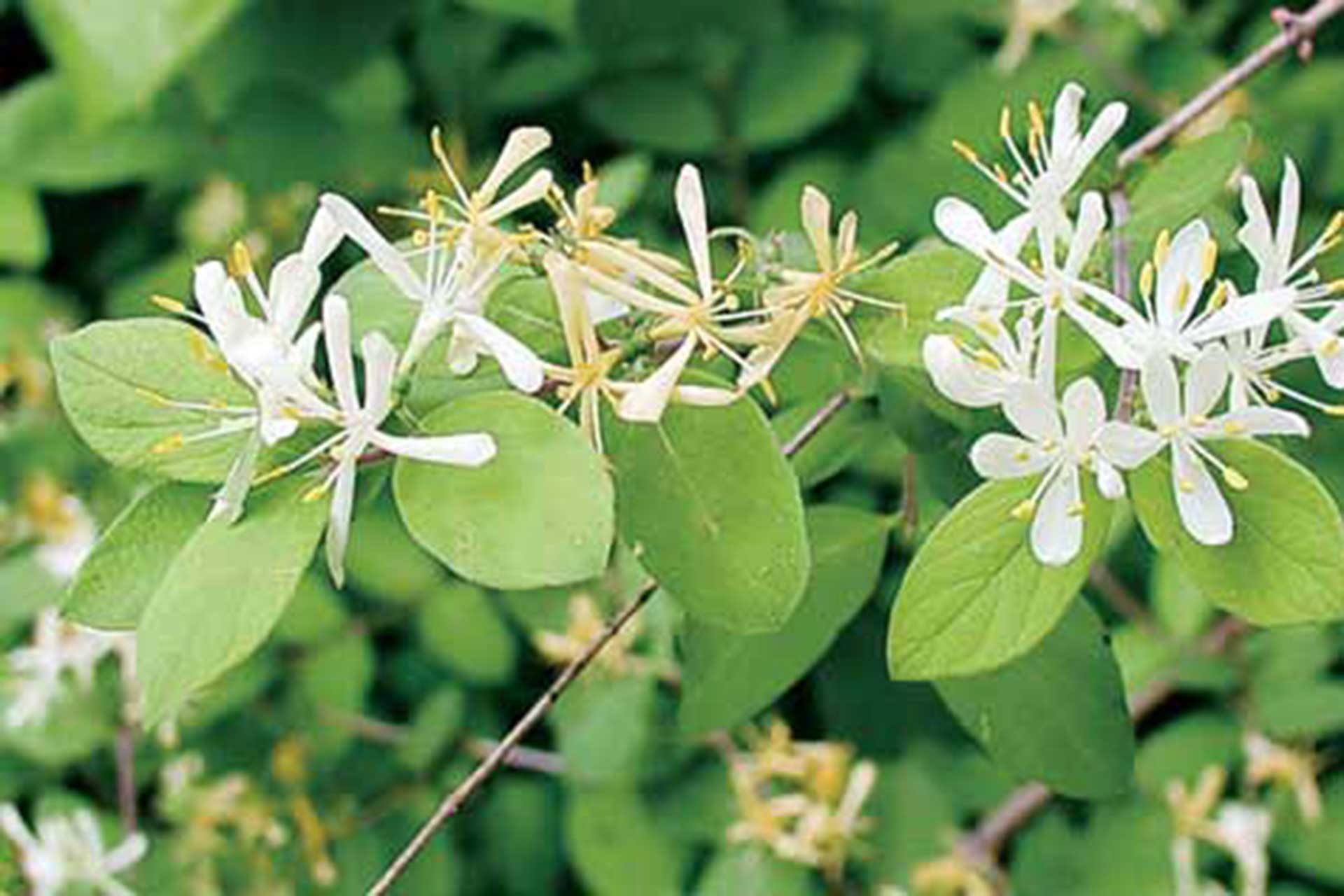
Several non-native shrub honeysuckles occur in Massachusetts landscapes and natural areas. They can form large, arching shrubs with flowers and berries, often at woodland margins or behind maintained planting beds.
Because they leaf out early and remain active late in the season, dense colonies can shade surrounding vegetation and alter the character of the understory.
Better alternatives:
- For a small flowering tree: Serviceberry
- For a dense native screen: Arrowwood viburnum or ninebark
- For woodland-edge interest: Witch hazel or native azaleas
- For berries and winter interest: Winterberry
- For a layered privacy planting: Combine several native shrubs rather than relying on one species
Better alternatives include serviceberry, arrowwood viburnum, ninebark, witch hazel, native azaleas, and winterberry. A layered combination often creates a more attractive and resilient screen than replacing every honeysuckle with a single species.
10. Japanese Honeysuckle
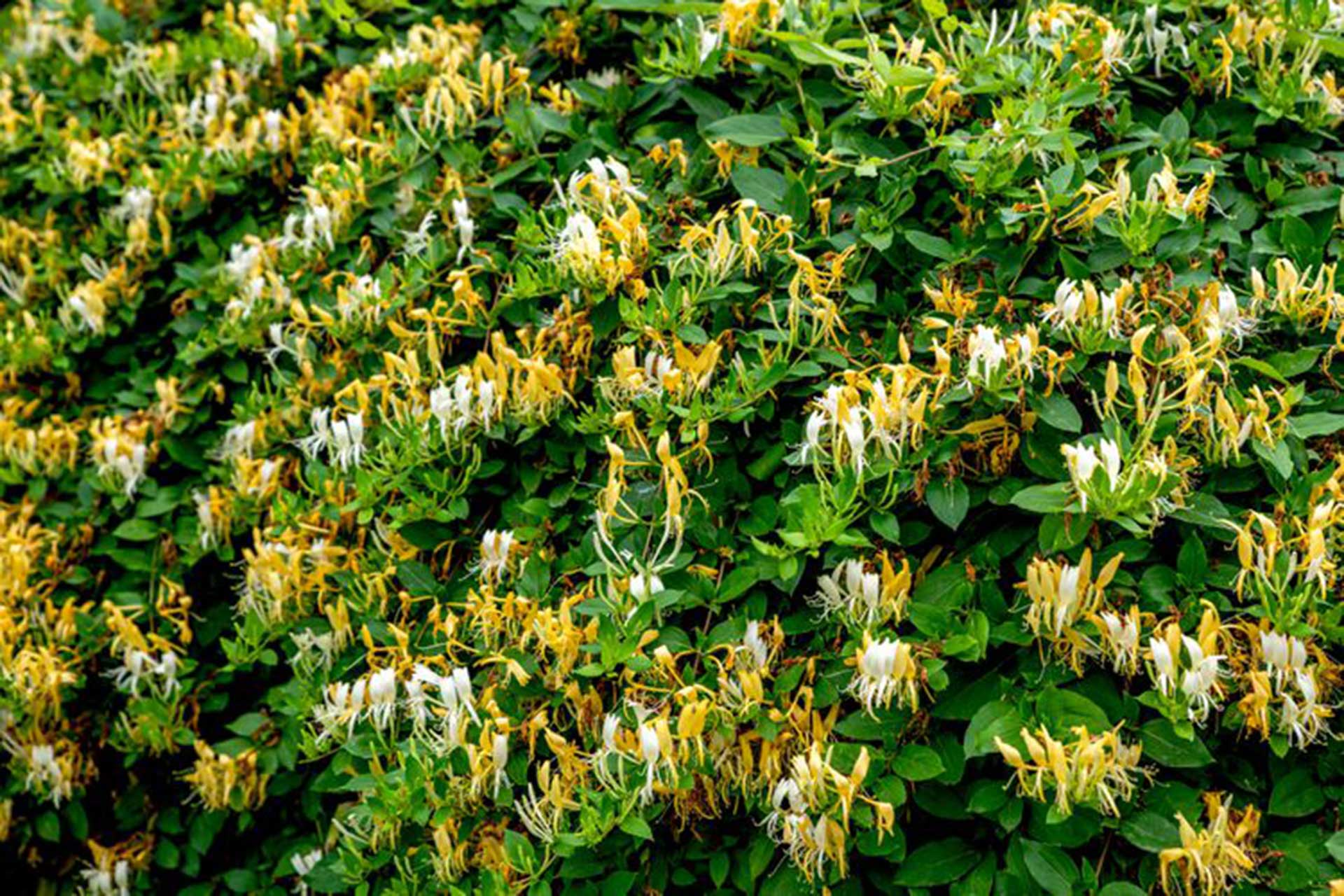
Japanese honeysuckle is a twining vine with fragrant flowers that can spread over shrubs, fences, stone walls, and woodland vegetation. Its familiar scent may make it seem harmless, but established vines can form extensive growth and suppress the plants beneath them.
Trumpet honeysuckle is a strong native alternative for a flowering vine. Virgin’s bower can work in more naturalistic settings, while American wisteria may suit a substantial arbor or pergola when carefully placed and supported.
Better alternatives:
- For a fragrant flowering vine: Trumpet honeysuckle
- For a naturalistic woodland edge: Virgin’s bower
- For a substantial arbor or pergola: American wisteria
- For a lightweight fence or trellis: Choose a smaller vine suited to the structure’s scale and strength
The support structure matters. A vine suited to a large pergola may be inappropriate for a lightweight fence, young tree, or foundation trellis.
11. Japanese Knotweed
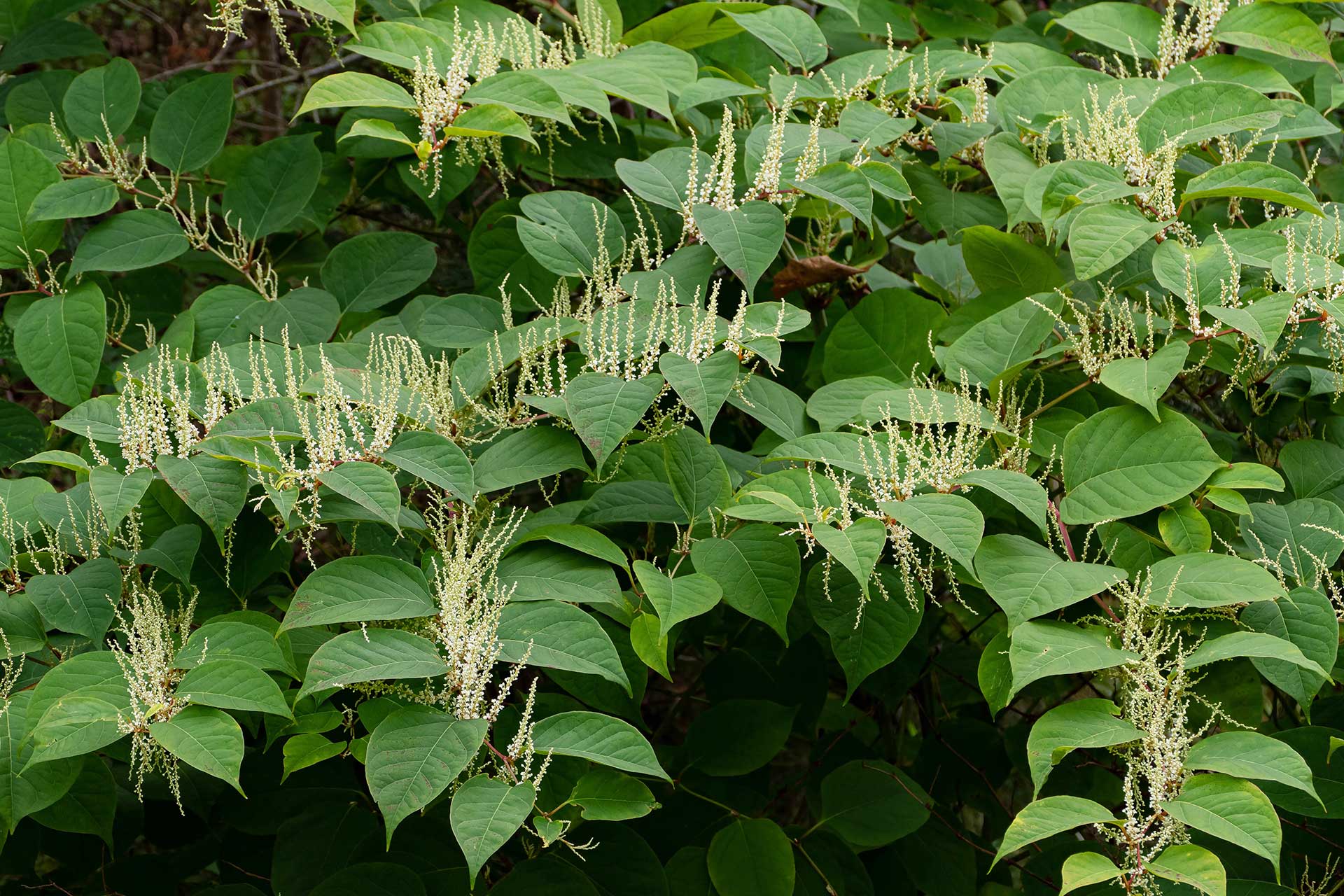
Japanese knotweed forms tall, bamboo-like stems and dense colonies, often near roads, drainage corridors, streambanks, construction disturbance, and filled soils. It is one of the most difficult invasive plants to manage because small rhizome fragments can generate new growth.
This is not a plant that should be casually cut, dug, or moved with fill. Disturbance can spread fragments to new parts of the property. Disposal also requires care so viable material is not introduced elsewhere.
Better alternatives:
- For moist soils and stream edges: Silky dogwood, winterberry, or selected native willows
- For erosion control: Dense native grasses, sedges, and moisture-tolerant shrubs
- For rebuilding habitat: Use a layered mix of native trees, shrubs, and groundcovers
- For established colonies: Plan treatment, disposal, replanting, and long-term monitoring as one coordinated process
For affected areas near water or steep slopes, treatment decisions may also require regulatory or environmental guidance.
12. Chinese Silvergrass
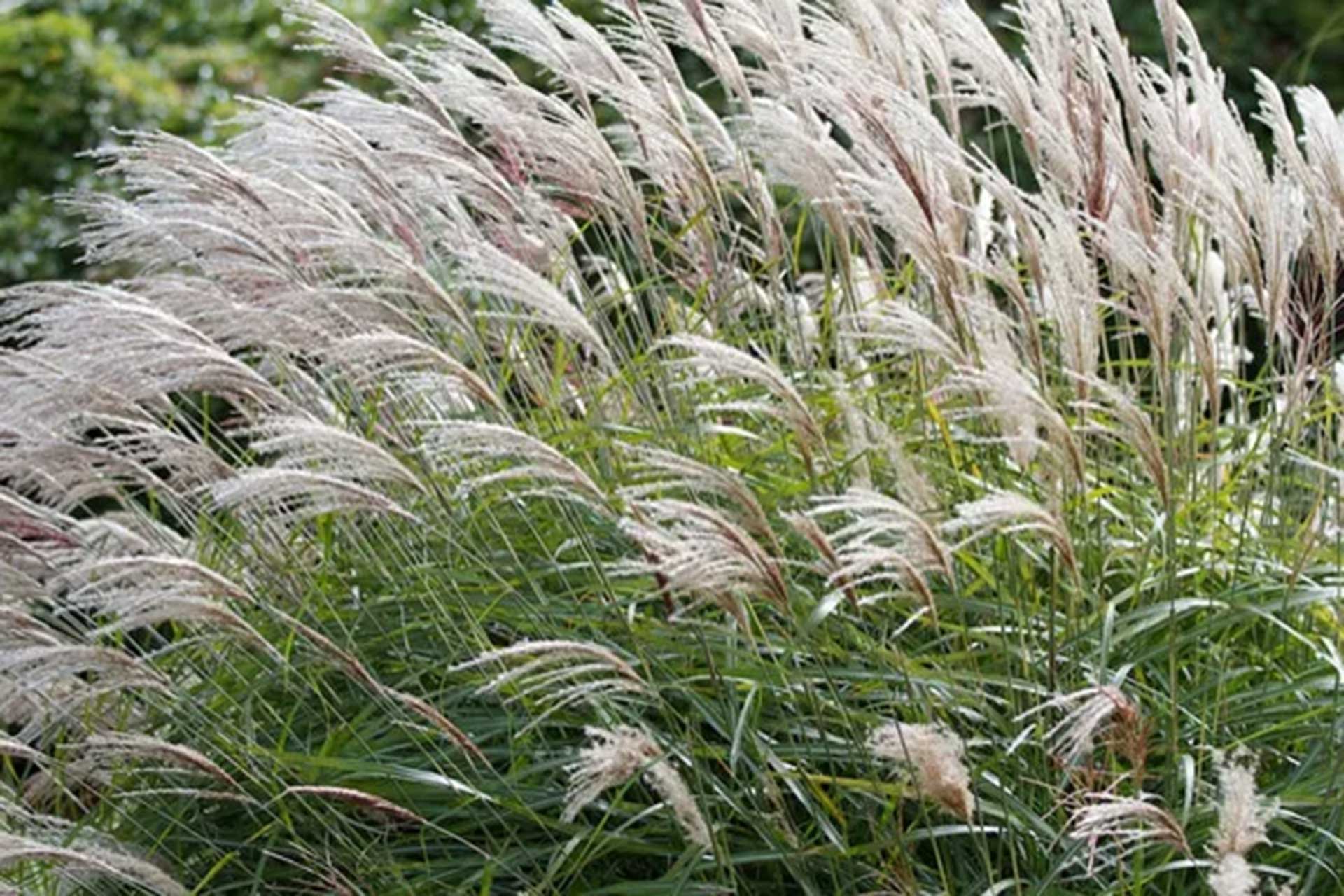
Chinese silvergrass, commonly known as Miscanthus, became one of the most recognizable ornamental grasses in New England landscapes. It has been used for height, movement, screening, winter structure, and low-maintenance massing around pools, patios, driveways, and property lines.
Massachusetts added Miscanthus sinensis to the prohibited plant list in December 2025, with a phase-out period for existing commercial stock. The listing includes cultivars, varieties, and hybrids covered by the state rule.
Better alternatives:
- For height and movement: Switchgrass or Indiangrass
- For screening and mass planting: Little bluestem, switchgrass, or a layered mix of native grasses
- For winter structure: Switchgrass or prairie dropseed
- For pool, patio, or driveway edges: Select native grasses based on mature size, moisture, and maintenance needs
Blade’s guide to ornamental grasses for Boston-area landscapes offers additional context for choosing grasses based on scale, exposure, maintenance, and design character.
Related Blog: Native Ground Covers for Shade in Boston-Area Landscapes
Should Every Invasive Plant Be Removed Immediately?
Not necessarily. A single aging shrub beside a driveway is a different problem from a fruiting colony spreading into conservation land. A mature invasive tree may also be providing substantial shade, screening, slope stability, or visual structure that cannot be replaced overnight.
Removal priorities should consider:
- The species and how aggressively it spreads
- The size and extent of the infestation
- Whether the plant is fruiting or producing viable seed
- Its proximity to woods, wetlands, conservation land, or neighboring properties
- The effect removal may have on privacy, shade, drainage, and erosion
- The presence of desirable plants beneath or around it
- The likelihood of resprouting from roots, stumps, rhizomes, or fragments
- The property’s larger landscape design and maintenance plan
On a mature property, a phased approach is often more practical. Removing every invasive shrub at once can expose views, destabilize a slope, leave large areas of open soil, or create a maintenance burden that the replacement planting is not yet ready to handle.
Choose Replacements by Function, Not Appearance Alone
A useful replacement does not need to look exactly like the plant being removed. It needs to perform the right role in the landscape.
Before selecting an alternative, ask what the existing plant contributes:
- Does it screen a neighboring property or road?
- Does it provide shade near a terrace or lawn?
- Does it hold a slope or occupy a wet area?
- Does it frame an entry, driveway, pool, or view?
- Is fall color, flower, fruit, or winter structure important?
- Is the location exposed to deer, salt, wind, or deep shade?
- How much pruning, irrigation, and seasonal maintenance is realistic?
The answer may be a single specimen tree, but it is often a layered planting of trees, shrubs, ground covers, and perennials. This creates greater depth, seasonal interest, and resilience than replacing a monoculture with another uniform row.
For shaded areas left open after shrub removal, Blade’s guide to native ground covers for shade can help homeowners consider lower planting layers that protect soil and reduce open space where unwanted seedlings may reestablish.
How to Plan a Larger Invasive-Plant Renovation
When invasive plants occupy a meaningful part of the property, removal should be integrated into a broader landscape plan. This is particularly important on estates, woodland-edge properties, steep sites, and older landscapes that have accumulated decades of volunteer growth.
Start With a Property-Wide Assessment
Inventory the invasive plants across the site rather than focusing only on the most visible patch. A vine at the edge of a driveway may be connected to a larger colony behind a hedge. Buckthorn seedlings in garden beds may originate from mature fruiting plants farther away.
Identify What Must Be Protected
Established canopy trees, specimen shrubs, stone walls, wetlands, drainage swales, and desirable understory plants may all influence how work proceeds. Equipment access and soil compaction also deserve consideration.
Plan Removal and Replanting Together
Open soil invites weeds, erosion, and regrowth. Replacement planting should be scheduled as part of the removal strategy, even if installation occurs in phases. Trees and large shrubs may establish the new framework first, followed by understory shrubs, grasses, perennials, and ground covers.
Expect Follow-Up
Most substantial invasive-plant projects are not complete after one visit. Seed banks, roots, stumps, and rhizomes may produce new growth. Long-term success depends on monitoring and timely follow-up through professional landscape maintenance and fine gardening.
Use the Renovation to Improve the Property
Removal can open new views, recover mature trees, reshape a woodland edge, improve circulation, introduce seasonal color, and reconnect isolated parts of the landscape. A difficult maintenance issue can become the starting point for a more coherent property.
Invasive Plants, Native Plants, and Good Landscape Design
Native plants can be valuable alternatives because they are adapted to regional ecological relationships and can support insects, birds, and other wildlife. That does not mean every native plant works in every Massachusetts garden.
A successful planting still depends on matching the plant to:
- Available sunlight
- Soil texture and drainage
- Seasonal moisture
- Mature height and spread
- Salt and coastal exposure
- Deer and rabbit pressure
- The architecture and design character of the home
- The property’s maintenance expectations
A thoughtful plan may combine native plants with well-behaved non-native ornamentals that are not invasive. The goal is not to follow a rigid formula. It is to create a durable, diverse, and visually appropriate landscape without introducing plants that threaten surrounding areas.
For a broader look at this approach, explore Blade’s guide to sustainable landscaping for Boston-area homes.
Frequently Asked Questions About Invasive Plants in Massachusetts
Q: Do Massachusetts homeowners have to remove invasive plants already growing on their property?
A: In general, the Massachusetts Prohibited Plant List regulates activities such as sale, importation, purchase, distribution, and propagation. It does not automatically require every homeowner to remove an established listed plant. Removal may still be advisable when a plant is spreading, damaging trees, increasing maintenance, or affecting a sensitive natural area.
Q: Are all non-native plants invasive?
A: No. Many non-native ornamental plants remain well behaved in gardens. “Non-native,” “aggressive,” and “invasive” do not mean the same thing. Homeowners should consult current Massachusetts guidance and evaluate how a plant behaves on the specific property.
Q: Can an invasive shrub simply be cut to the ground?
A: Sometimes cutting is part of a management plan, but many invasive shrubs and vines resprout from roots or stumps. Japanese knotweed can also spread through small rhizome fragments. The appropriate method depends on the species, size, location, surrounding plants, and applicable environmental considerations.
Q: What is the best replacement for burning bush or Japanese barberry?
A: There is no universal substitute. Fothergilla, Virginia sweetspire, chokeberry, highbush blueberry, winterberry, ninebark, fragrant sumac, and inkberry are among the possibilities. The best choice depends on whether the original plant provided fall color, evergreen structure, screening, berries, compact form, or tolerance of difficult conditions.
Q: How long does it take to renovate a landscape with extensive invasive growth?
A: A small planting bed may be addressed relatively quickly, while woodland edges, knotweed colonies, slopes, and mature hedgerows may require several seasons. Larger projects often benefit from phased removal, immediate stabilization and replanting, and ongoing monitoring for regrowth.
A Better Landscape Can Begin With What You Remove
Invasive plants in Massachusetts landscapes are often part of a property’s history. Some were installed intentionally, while others arrived through seed, roots, vines, soil movement, or years of unmanaged growth. Their presence does not mean the entire landscape must be cleared or redesigned at once.
The more useful question is how removal can support a better long-term plan.
By identifying what each plant contributes, prioritizing the most consequential problems, protecting valuable existing features, and selecting replacements suited to the property, homeowners can turn invasive-plant management into a meaningful landscape improvement.
If invasive shrubs, vines, trees, or ornamental grasses are beginning to dominate your property, contact us to discuss a thoughtful removal and replacement strategy. a Blade of Grass can help connect landscape design, planting, construction, drainage considerations, and long-term property care so the renewed areas feel intentional, durable, and appropriate to the home.
Learn More About Invasive Plants