Landscape design in Greater Boston is unique and has always reflected a balance between tradition, innovation, and the realities of a four-season climate. As we look ahead to 2026, that balance is becoming even more refined. Our clients are investing more thoughtfully, prioritizing long-term value, ease of maintenance, and outdoor spaces that support how they actually live.
The following top 10 landscape design and garden trends for 2026 build on what we are already seeing throughout Boston, MetroWest, and the greater Boston area. Each trend reflects shifting priorities around sustainability, comfort, and craftsmanship, along with a growing expectation that outdoor spaces should feel as intentional as interiors.
Key Takeaways
- 2026 landscape design prioritizes longevity, not short-term trends
- Outdoor spaces are increasingly planned as functional extensions of the home
- Native planting and natural materials are shaping both sustainability and aesthetics
- Integrated lighting and year-round structure are becoming standard expectations
1. Landscapes Designed for Longevity, Not Just Looks
One of the most influential trends for 2026 is a move away from short-term visual impact and toward landscapes designed to mature gracefully over decades. Homeowners are asking for planting plans and hardscapes that look better over time, not worse.
This trend is popular because it aligns design decisions with long-term property ownership and value. Thoughtful spacing, slower-growing trees, and durable materials reduce future replacement costs and visual clutter.
Why it’s popular
- Reduces long-term maintenance and renovation cycles
- Supports higher perceived property value
- Creates landscapes that feel settled and established
Related Blog: Sustainable Landscaping Explained: Smarter Landscape Design for Long-Term Value
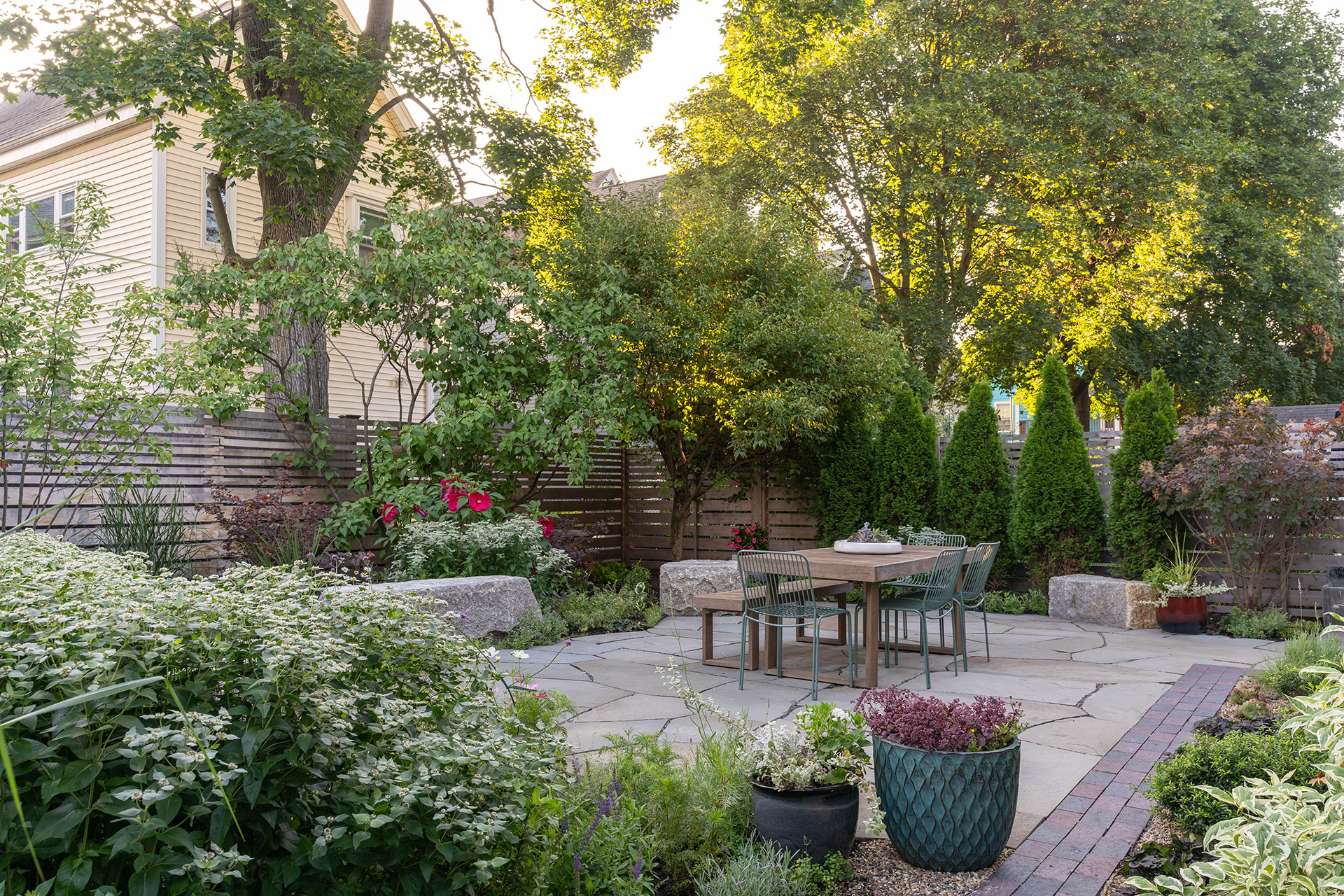
2. Outdoor Spaces That Function Like Interior Rooms
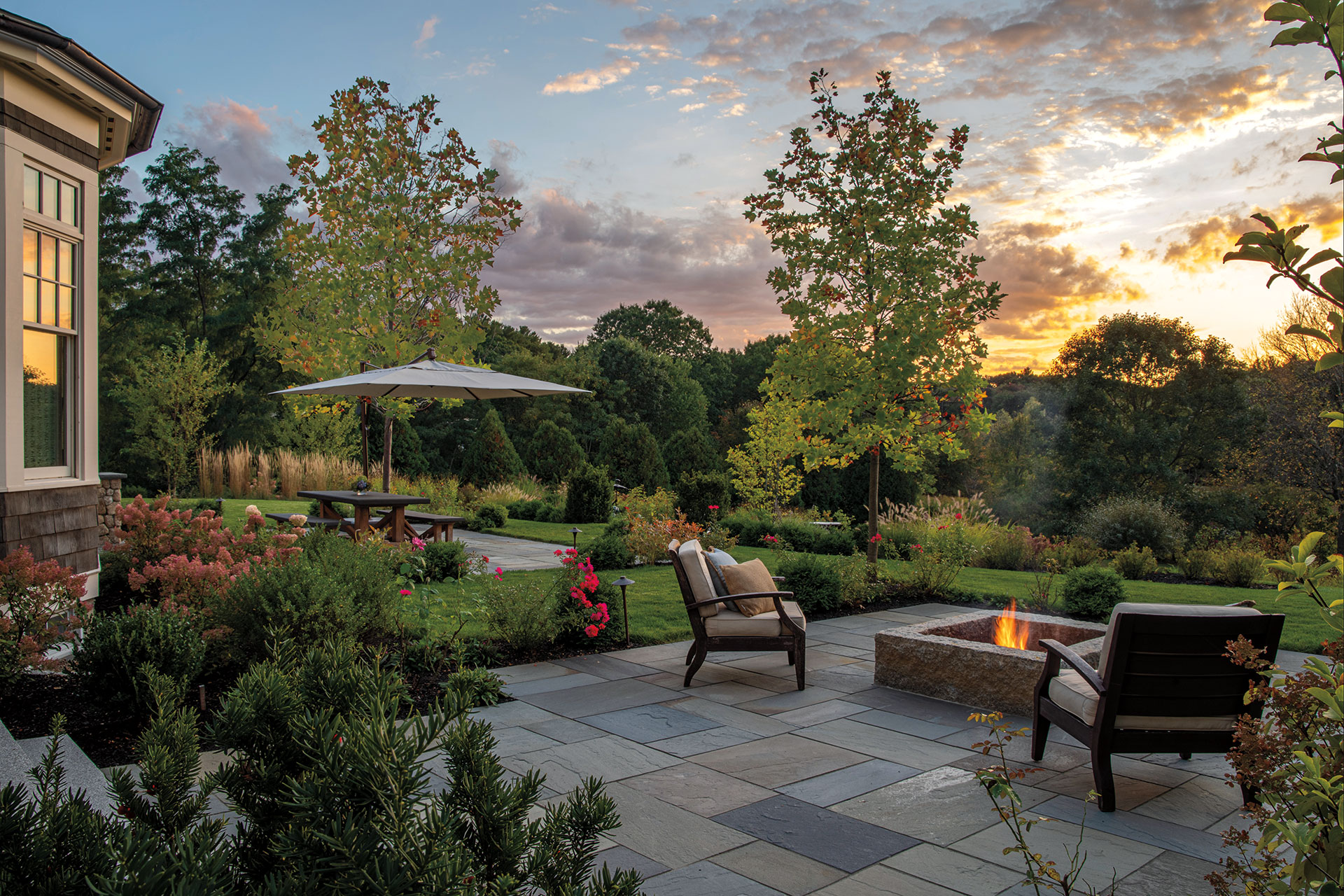
The concept of outdoor living continues to evolve, with 2026 designs treating patios, terraces, and gardens as true extensions of the home. Rather than one large, undefined space, landscapes are being organized into zones for dining, relaxing, entertaining, and quiet retreat.
This trend resonates because it mirrors how homeowners already think about interior layouts. Defined outdoor rooms feel purposeful and are easier to furnish, light, and maintain.
Why it’s popular
- Makes outdoor spaces more usable year-round
- Improves flow between house and garden
- Supports both entertaining and everyday use

3. Native and Regionally Adapted Planting as a Design Feature
Native and climate-appropriate plants are no longer treated as a sustainability checkbox. In 2026, they are central to the aesthetic itself. Designers are using native shrubs, grasses, and perennials to create layered, textural gardens that feel distinctly New England.
This approach is popular because it performs better over time. Plants suited to local conditions require less water, fewer chemical inputs, and recover more naturally from seasonal stress.
Why it’s popular
- Lower maintenance and irrigation needs
- Strong seasonal interest from spring through winter
- Supports local ecosystems without sacrificing design quality
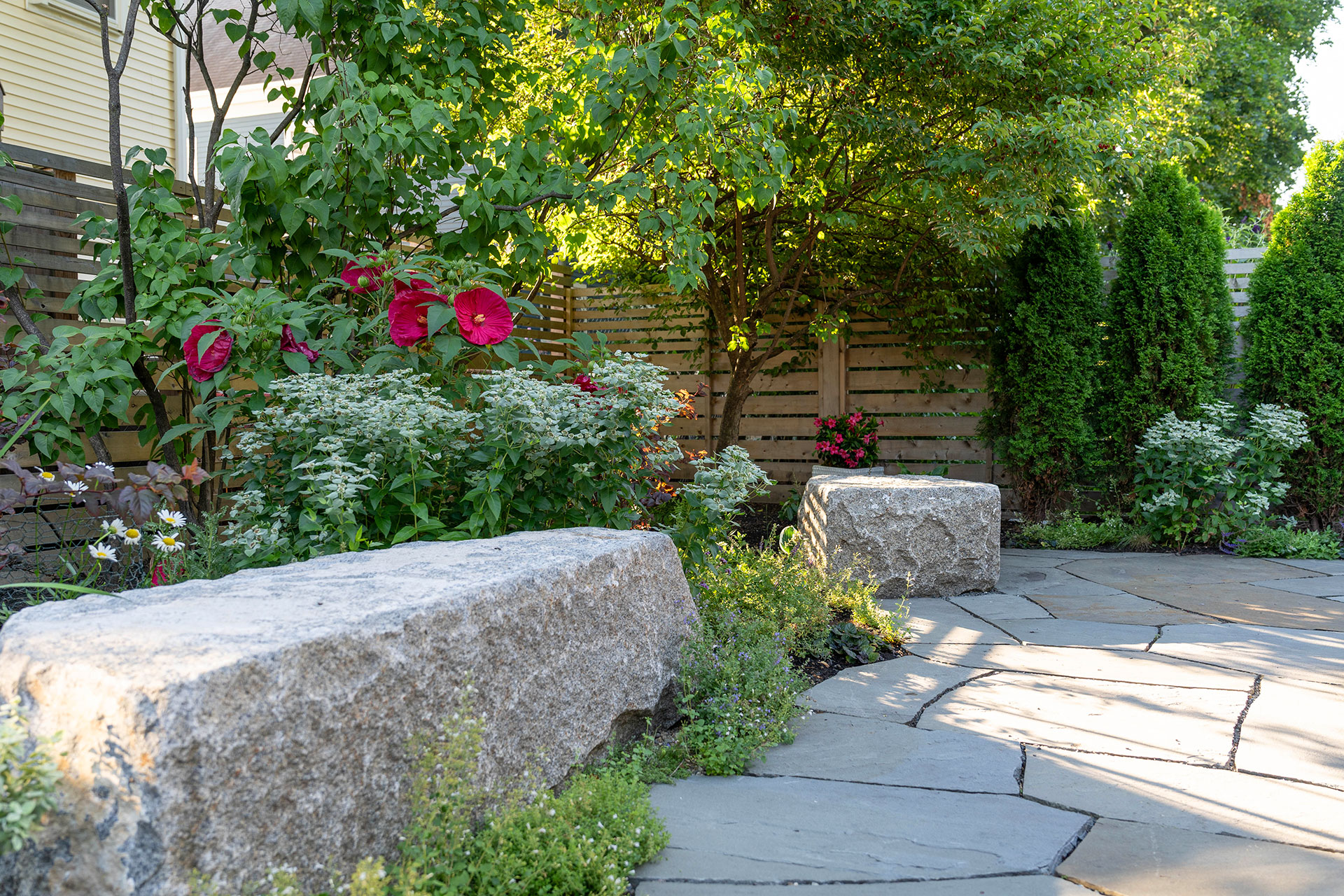
4. Natural Materials With Subtle Variation
Uniform, overly polished finishes are giving way to materials that show character and variation. Natural stone, weathered wood, and hand-finished masonry are increasingly favored over highly manufactured alternatives.
This trend appeals to homeowners who want landscapes that feel authentic and timeless. Subtle variation adds visual depth and prevents outdoor spaces from feeling static or overly designed.
Why it’s popular
- Ages gracefully rather than looking dated
- Complements traditional and modern architecture alike
- Adds tactile and visual richness
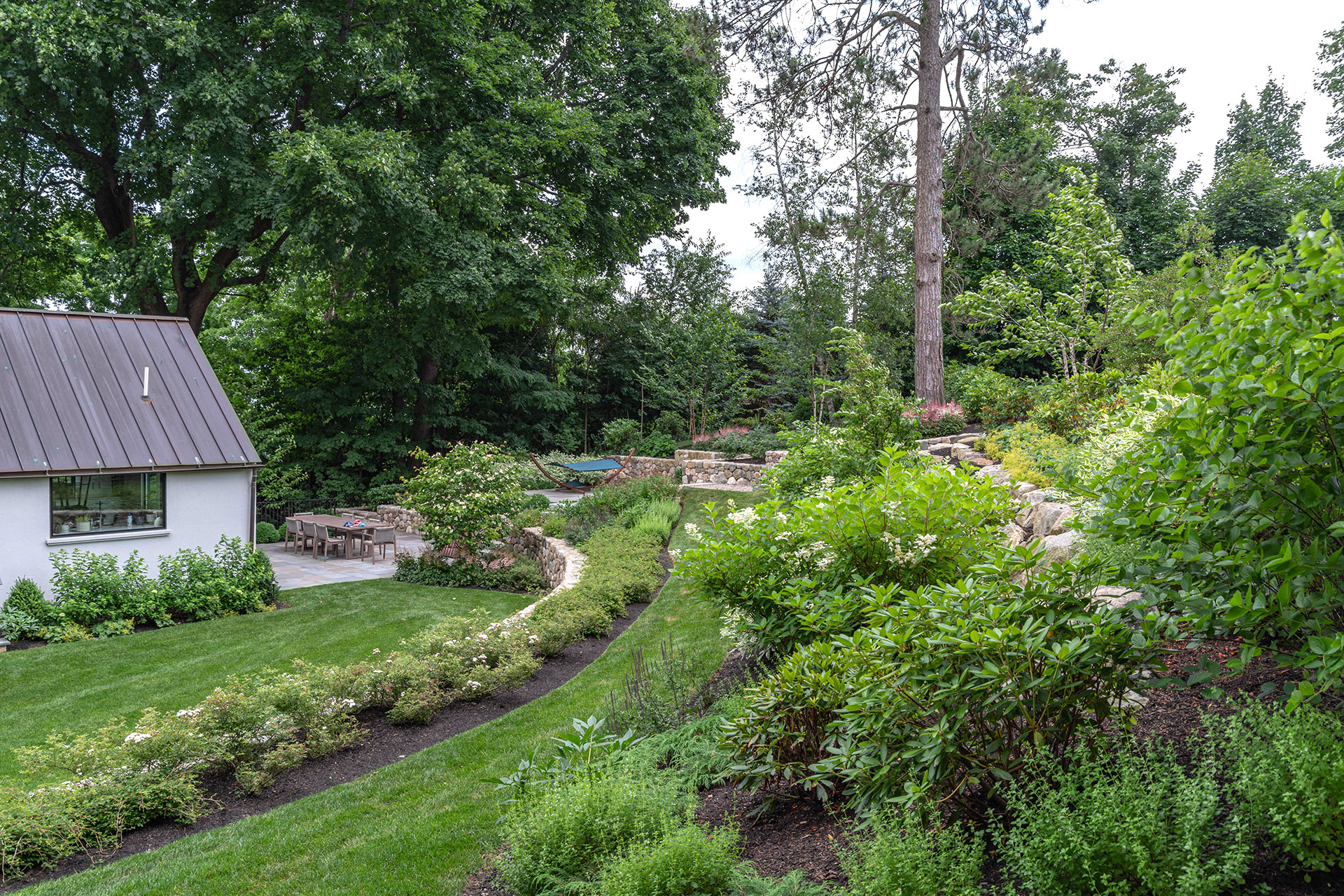
5. Low-Maintenance Gardens With High Visual Impact
In 2026, low maintenance does not mean sparse or boring. Designers are refining plant palettes and layouts to deliver strong structure, color, and texture with fewer inputs. Massed plantings, simplified species selection, and smarter pruning strategies all play a role.
This trend is popular because it respects homeowners’ time while still delivering beauty. It also aligns with rising labor costs and a desire for predictable upkeep.
Why it’s popular
- Reduces ongoing maintenance demands
- Keeps landscapes looking intentional year-round
- Makes professional maintenance more efficient
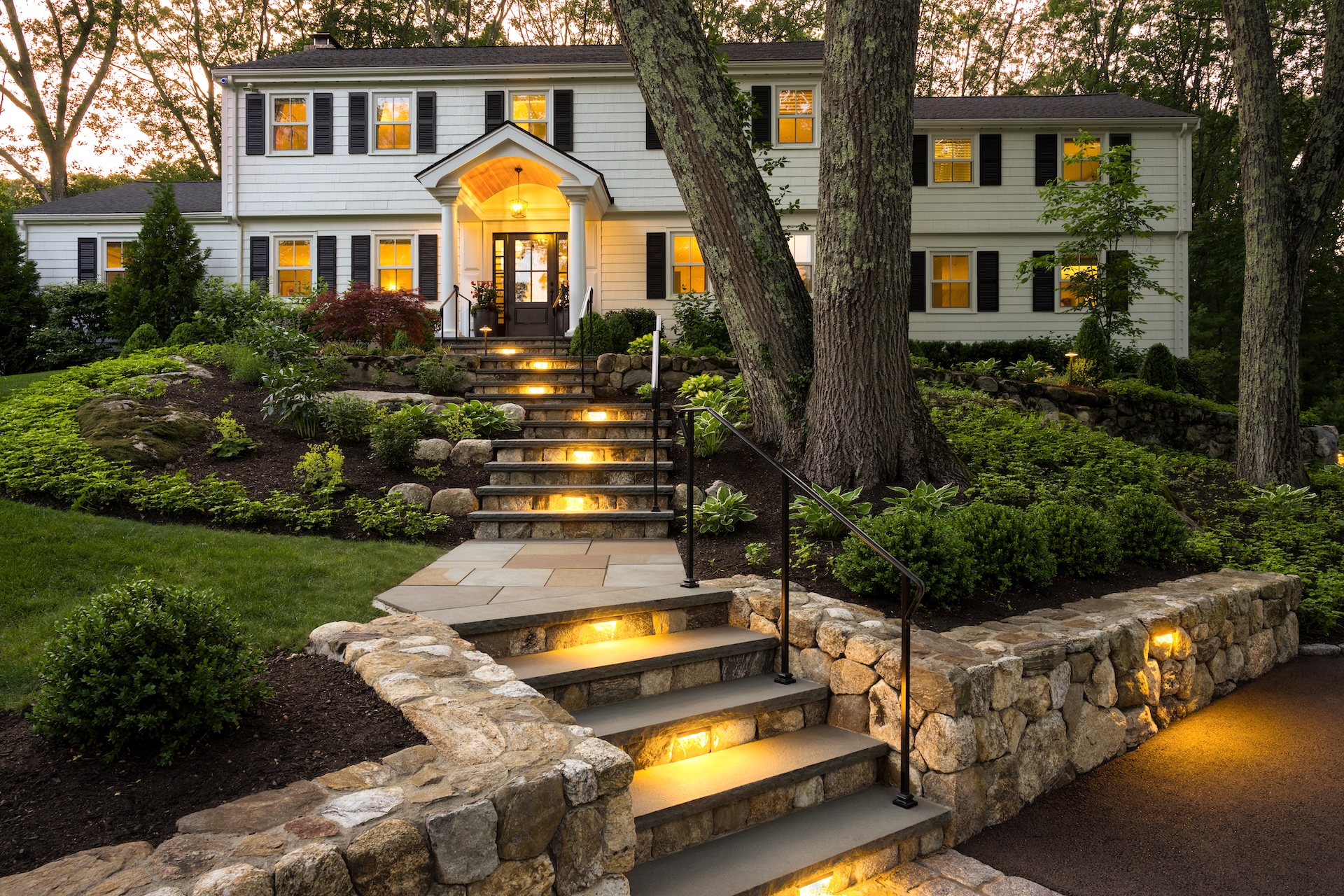
6. Integrated Lighting as a Core Design Element
Landscape lighting is no longer an afterthought. In 2026, lighting is being planned alongside planting and hardscape design from the very beginning. The focus is on subtle illumination that enhances architecture, highlights mature trees, and improves nighttime usability.
This trend is growing because homeowners want their landscapes to feel complete after dark, not disappear.
Why it’s popular
- Extends usability into evening hours
- Improves safety and wayfinding
- Adds another layer of visual depth
Related Blog: Landscape Lighting Ideas to Highlight Your Boston Property’s Best Features
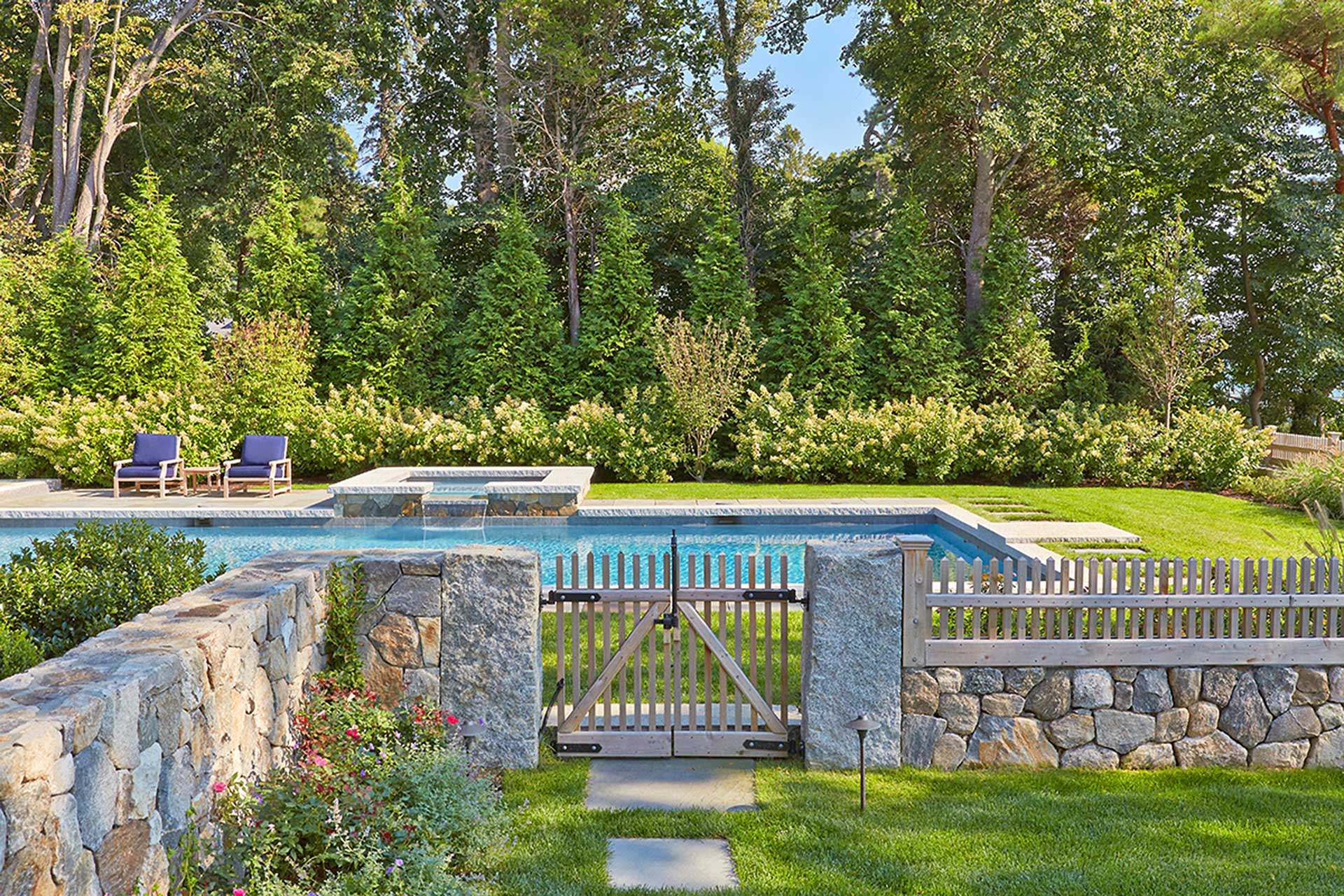
7. Gardens Designed for Privacy Without Isolation
As properties become more actively used, privacy is being addressed through layered planting and thoughtful layout rather than tall fences or walls alone. Designers are using hedges, trees, and grade changes to create privacy that still feels open.
This trend resonates because it balances seclusion with connection to the surrounding landscape.
Why it’s popular
- Feels natural rather than enclosed
- Improves sound buffering as well as sightlines
- Enhances comfort in outdoor living areas
Related Blog: Creating Privacy with Trees and Hedges in Residential Landscapes
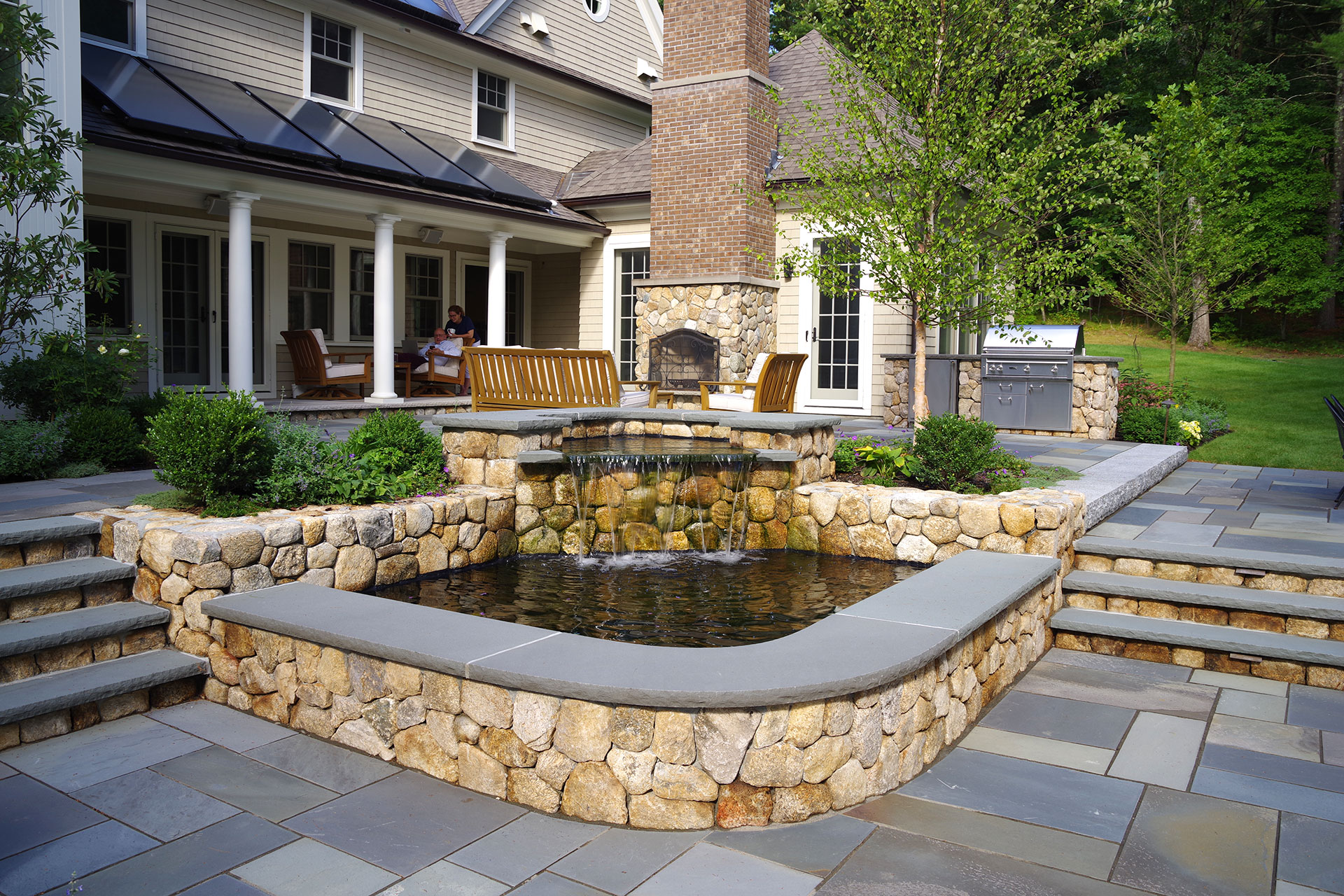
8. Water Features With a Purpose
In 2026, water features are being designed with restraint and intention. Smaller reflecting pools, rills, and subtle fountains are replacing oversized or high-maintenance installations. The emphasis is on sound, movement, and reflection rather than scale.
This trend is popular because it delivers sensory impact without excessive upkeep or resource use.
Why it’s popular
- Adds calming sound and motion
- Fits well in both large and compact landscapes
- Easier to maintain and winterize
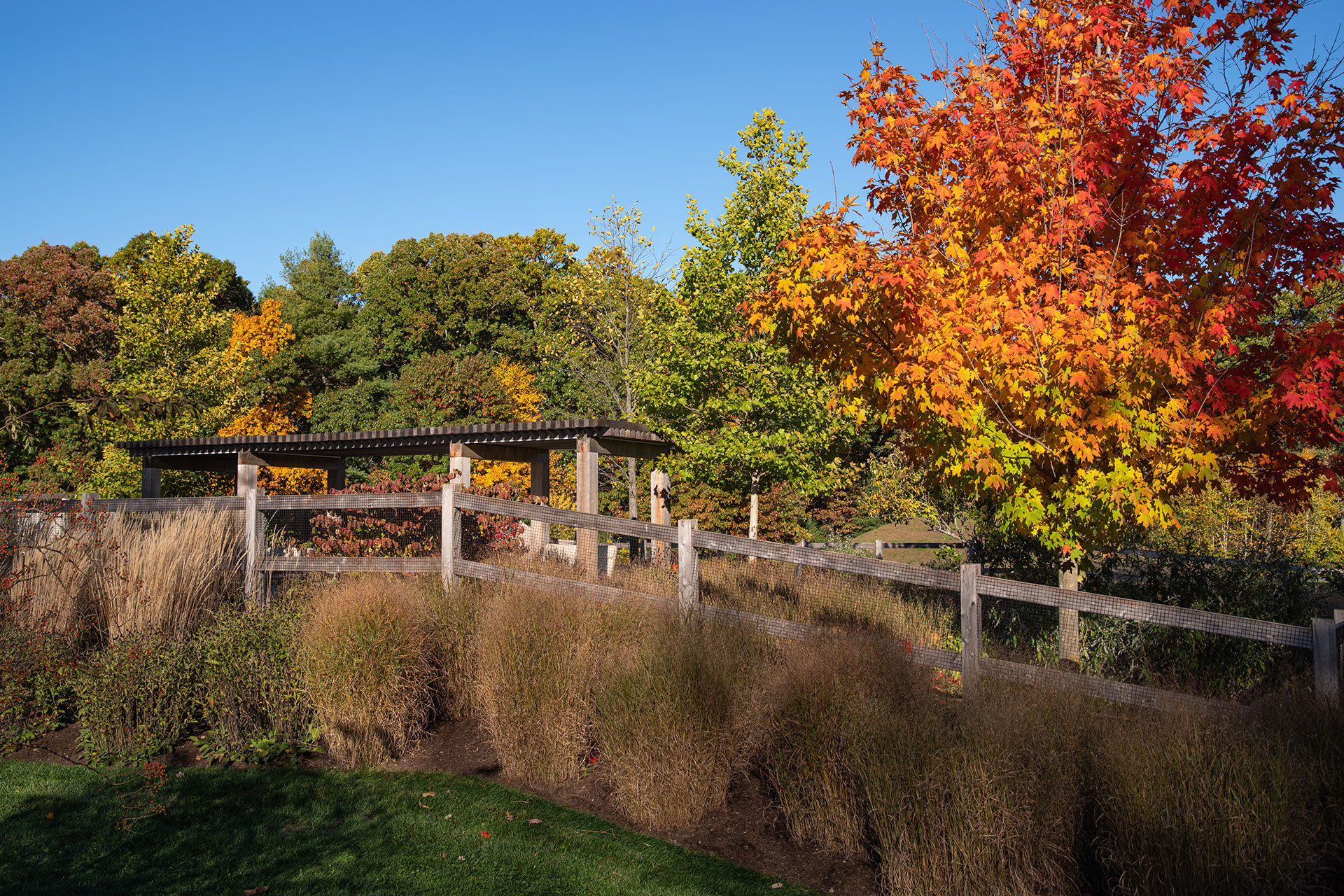
9. Year-Round Structure in Planting Design
Designs for 2026 place greater emphasis on winter interest and off-season structure. Evergreens, ornamental grasses, seed heads, and strong branch architecture ensure landscapes remain visually engaging even in colder months.
This trend reflects the reality of New England living, where gardens are viewed year-round, not just in summer.
Why it’s popular
- Maintains visual appeal in all seasons
- Reduces the “empty garden” effect in winter
- Supports cohesive design across the calendar
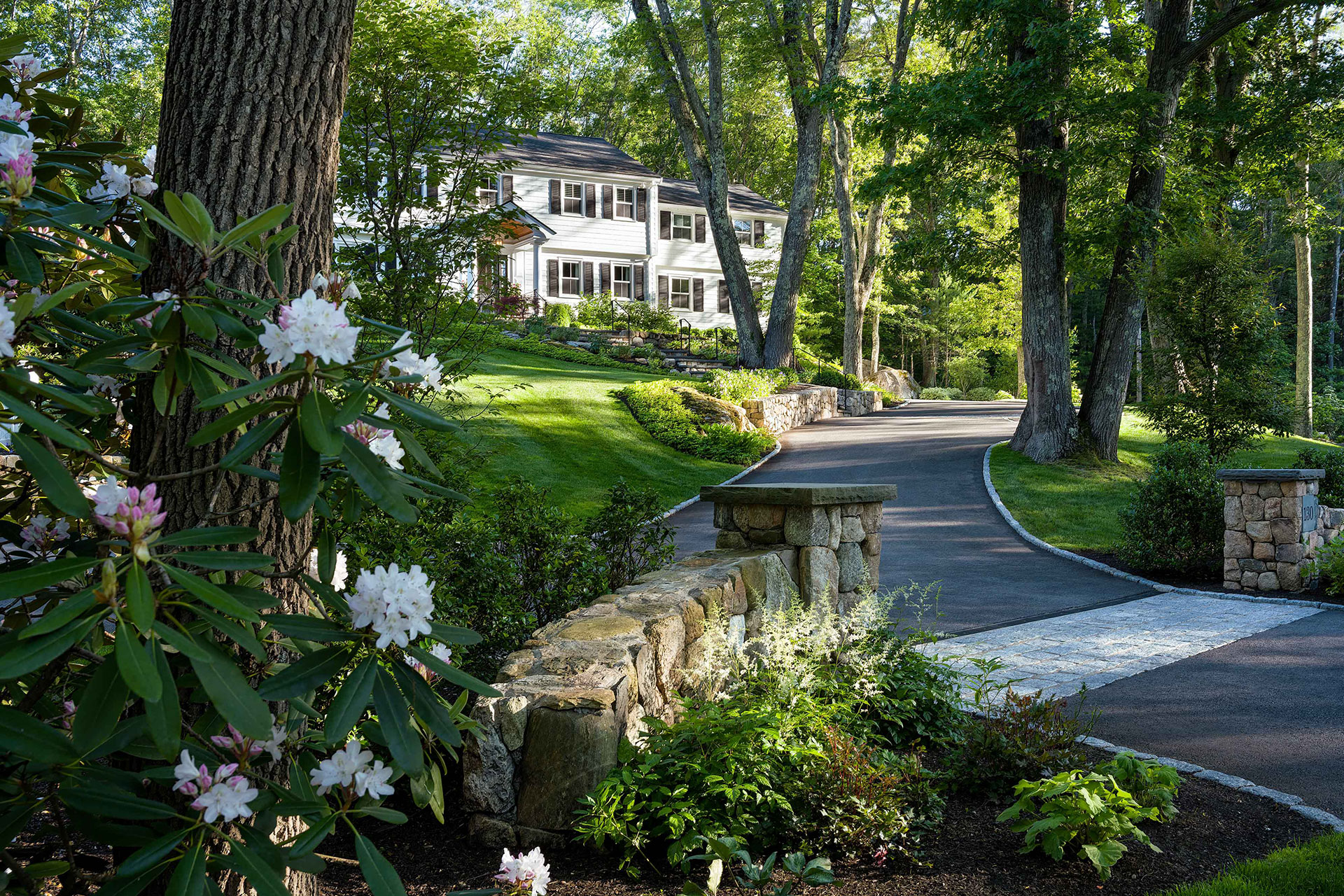
10. Collaboration Between Architecture and Landscape
Perhaps the most important trend for 2026 is closer alignment between architectural design and landscape planning. Hardscape materials, sightlines, and plant choices are increasingly selected to reinforce the home’s style and proportions.
This approach is popular because it results in properties that feel cohesive rather than layered over time.
Why it’s popular
- Strengthens overall property design
- Improves curb appeal and first impressions
- Creates a sense of intentional craftsmanship
“As homeowners become more design-savvy, they are asking for landscapes that feel permanent and personal,” says Colin Hand, senior designer at a Blade of Grass. “The strongest projects we see now are the ones where planting, hardscape, and architecture are all telling the same story.”
Looking Ahead
The landscape trends for 2026 point to a clear shift: homeowners want outdoor environments that are purposeful, enduring, and deeply connected to how they live. Thoughtful landscape design is no longer about making a statement for one season. It is about creating spaces that continue to perform, mature, and feel relevant for years to come.
If you are considering a new landscape design or planning updates to an existing property, the Blade team can help translate these trends into a tailored, long-term plan. Contact a Blade of Grass to start a conversation about what your outdoor spaces could become in 2026 and beyond.