Winter can be one of the most damaging seasons for trees and shrubs in the Greater Boston area. Heavy snow, ice storms, drying winds, temperature swings, and de-icing salts all stress plants in different ways, often causing damage that doesn’t fully appear until spring. Knowing how and why winter affects your landscape is essential to protecting plant health, preserving long-term value, and ensuring a strong recovery when the growing season returns.
Key Takeaways
- Winter weather and salt exposure present distinct risks to trees and shrubs.
- Proactive protection—like burlap wind breaks, mulching, and smart salt management—can reduce damage.
- Recovery steps in spring, such as gentle pruning and soil flushing, support long-term plant health.
- Expert planning and species selection make landscapes more resilient year-round.
Why Do Trees and Shrubs Suffer Damage During New England Winters?
Trees and shrubs in New England are generally adapted to cold temperatures, but winter damage is rarely caused by cold alone. Instead, it develops when multiple stresses overlap, including heavy snow and ice, moisture loss from wind and sun, freeze–thaw cycles that disrupt soil and roots, and exposure to de-icing salts. Even healthy plants can struggle when these conditions occur together over the course of a long winter.
This combination of stress is common in Massachusetts landscapes, where temperature swings, coastal moisture, and routine salt use intersect. According to the Morton Arboretum, winter injury is most severe when plants face several stressors at once rather than a single extreme event. Understanding winter damage as a cumulative process helps explain why issues often appear in spring and why proactive care is so important.
How Do Snow and Ice Physically Damage Trees and Shrubs?
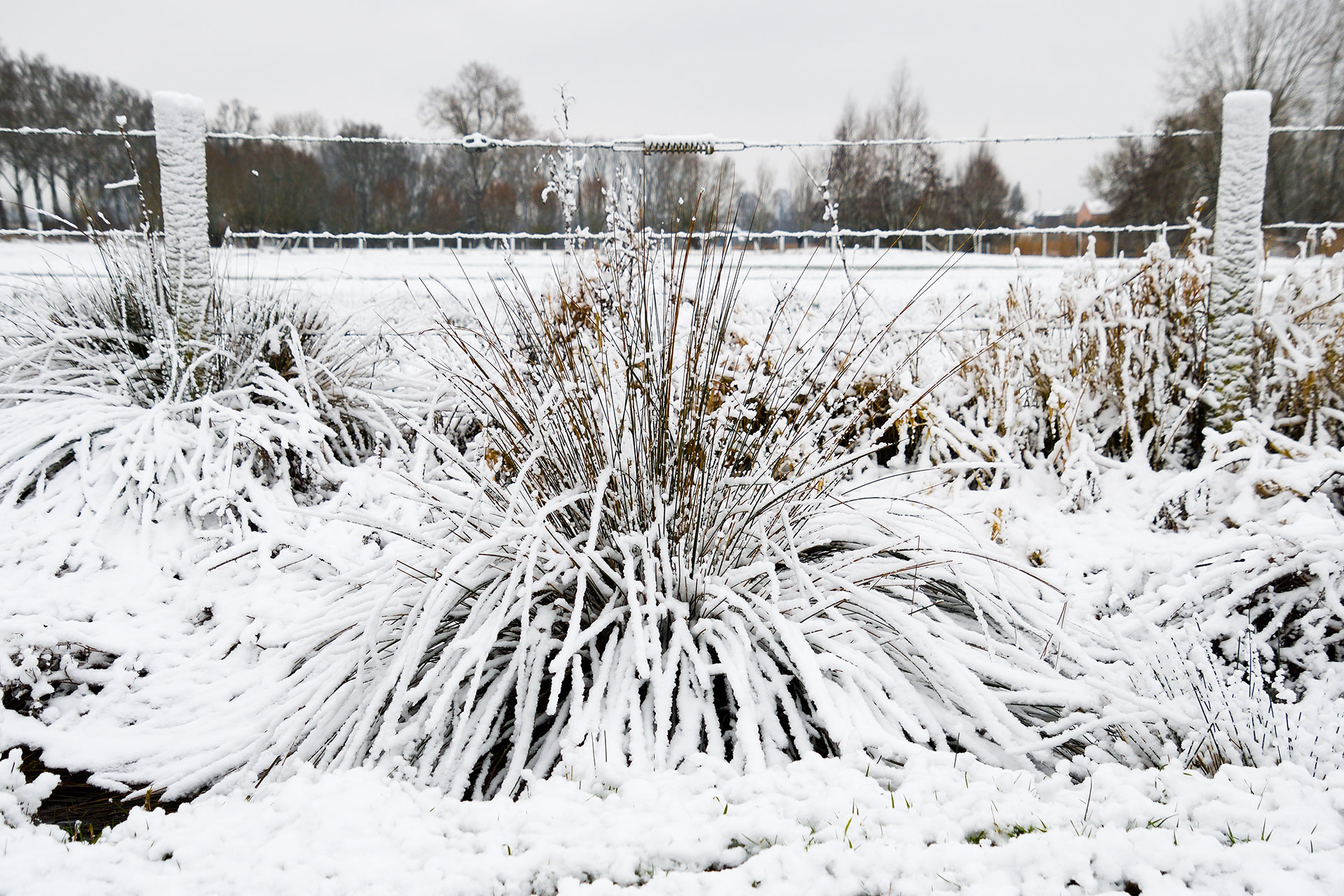
Snow and ice present immediate structural risks to trees and shrubs. Heavy, wet snow can bend branches under its weight, while ice forms rigid coatings that increase the likelihood of cracking or breakage. Upright evergreens and multi-stem shrubs are especially susceptible to this type of damage.
University of Connecticut Extension specialists advise gently brushing off light, fresh snow using an upward motion and allowing ice to melt naturally. Forcing ice from branches often causes more harm than leaving it in place until temperatures rise.
What Role Do Winter Wind and Sun Play in Plant Stress?
Winter desiccation occurs when cold winds and dry winter air pull moisture from leaves and needles at a time when frozen soil prevents roots from replacing that lost water. Bright winter sun can further accelerate moisture loss by triggering transpiration, even on cold days. Broadleaf evergreens such as boxwood, rhododendron, holly, and mountain laurel are especially susceptible, particularly when planted in exposed locations or along prevailing wind corridors.
Symptoms often appear in late winter or early spring as bronzing, browning, or scorching along windward edges of foliage. While winter desiccation is not always fatal, it weakens plants, delays spring growth, and can lead to branch dieback if left unaddressed. Stressed plants are also more vulnerable to pests and disease later in the season, making recovery a gradual process that benefits from careful pruning and supportive care.
“The most resilient landscapes are designed with winter in mind. When planting, placement, and maintenance are aligned, winter becomes far less disruptive and spring recovery is much smoother.”— Joanna McCoy, Senior Landscape Designer
Why Is Road Salt So Harmful to Trees and Shrubs?
Salt damage is one of the most common—and most preventable—forms of winter injury in residential landscapes, particularly in regions where de-icing is routine. Sodium chloride disrupts a plant’s ability to absorb water by creating an imbalance in the soil, effectively dehydrating roots even when moisture is present. Repeated exposure can compact soil structure, limit oxygen availability, and interfere with nutrient uptake, weakening plants well beyond the winter season.
The effects of salt are often delayed, making them difficult to identify right away. Trees and shrubs may appear healthy as winter ends, only to develop browning leaf edges, needle scorch, sparse growth, or delayed bud break weeks later in spring. As Mahoney’s Garden Center explains, salt accumulates in both soil and plant tissue, which is why symptoms frequently emerge after snow melts rather than during winter itself. Reducing salt use near planting beds and managing snow placement can significantly limit long-term damage.
What Can Homeowners Do Before Winter to Protect Trees and Shrubs?
Preparation begins well before the first snowfall. Deep, consistent watering through late fall helps trees and shrubs enter winter fully hydrated, which is especially important for evergreens that continue to lose moisture throughout the colder months. Plants that enter dormancy under drought stress are far more susceptible to winter burn, dieback, and delayed spring growth, making fall hydration one of the most impactful yet overlooked steps in winter readiness.
Selective fall pruning and proper mulching further strengthen plants ahead of winter stress. Removing dead, damaged, or weakly structured branches reduces the risk of breakage under snow and ice while improving overall structure. Mulching moderates soil temperatures, limits freeze–thaw cycles, and protects fine roots, particularly for newly planted material. Mulch should be applied evenly and kept slightly away from trunks to avoid moisture and pest issues.
Related Blog: The Essential Guide to Winter Pruning: Boost Your Landscape’s Health Before Spring
When Does Physical Protection Like Burlap or Tree Wrap Make Sense?
In exposed areas, burlap screens provide an effective buffer against harsh winter conditions by reducing wind exposure and limiting salt spray from nearby roads and walkways. They are especially helpful for broadleaf evergreens and newly planted shrubs that are more vulnerable to drying winds. Tree wraps serve a different but equally important purpose, protecting young or thin-barked trees from sunscald caused by rapid temperature fluctuations between daytime warming and nighttime freezing.
Proper installation is critical for these measures to be effective. Burlap should be positioned to block prevailing winds while allowing airflow and light to reach the plant, rather than tightly wrapping foliage. Tree wraps should be applied in late fall and removed in early spring to prevent moisture buildup and pest issues. When used selectively and installed correctly, these protections reduce winter stress without introducing new problems.
How Should Snow Be Managed Without Harming the Landscape?
Snow storage decisions play a meaningful role in protecting winter landscapes. Piling plowed snow onto garden beds or around shrubs concentrates salt, sand, and debris exactly where roots and stems are most vulnerable, often leading to soil contamination and delayed spring recovery. Designating snow storage areas away from planting beds helps limit this damage. When snow accumulates on branches, light, powdery snow can be gently brushed off using an upward motion to reduce weight without stressing the plant. Ice, however, should always be left to melt naturally, as frozen branches are brittle and forcing ice loose often causes more breakage than the ice itself.
How Can You Identify Winter Damage in Early Spring?
Some winter damage is obvious as soon as snow melts, while other symptoms take weeks to appear as plants begin to break dormancy. Delayed or uneven bud break, brittle or broken branches, and browning along leaf or needle edges often point to winter stress caused by wind exposure, ice load, or salt injury. Early assessment in late winter or early spring allows for timely corrective pruning, soil flushing, and targeted care before plants expend valuable energy on compromised growth, improving overall recovery and long-term health.
What Steps Help Trees and Shrubs Recover After Winter?
Once soil thaws in early spring, deep watering plays a critical role in flushing accumulated salts from the root zone and rebalancing soil moisture after winter stress. Pruning should be approached conservatively, focusing only on branches that are clearly dead, broken, or structurally compromised, as over-pruning can further weaken plants that are already stressed. Gradual, well-timed fertilization supports steady recovery by replenishing nutrients without pushing excessive early growth, which can leave plants vulnerable to late cold snaps and slow overall rebound.
How Does Landscape Design Influence Winter Performance?
Design choices play a major role in how well a landscape withstands winter conditions. Plant placement, spacing, and species selection directly influence exposure to wind, winter sun, and salt spray, all of which can intensify seasonal stress. Four-season landscapes are designed with these factors in mind, emphasizing strong plant structure, durable materials, and thoughtful siting to provide natural protection. By prioritizing resilient plant palettes and architectural elements that offer shelter, these landscapes experience less winter damage while maintaining visual interest and cohesion throughout the year.
When Is It Time to Call a Professional?
Recurring winter damage is often a sign of deeper, underlying issues such as poor drainage, inappropriate plant selection, or site conditions that expose trees and shrubs to excessive wind, sun, or salt. While short-term fixes may reduce visible damage, they rarely solve the root problem. A professional evaluation looks beyond symptoms to assess soil structure, grading, drainage patterns, plant health, and placement within the landscape. By addressing these foundational factors through thoughtful design adjustments, targeted renovations, or improved maintenance practices, professionals help create landscapes that are more resilient, easier to maintain, and far less vulnerable to repeated winter stress.
Protecting Your Landscape Through Every Season
Snow, ice, and salt are part of life in New England, but serious winter damage does not have to be. With proactive care, thoughtful design, and expert guidance, trees and shrubs can emerge healthy and ready to thrive.
If you’re planning winter protection, spring recovery, or long-term landscape improvements, contact the Blade of Grass team to learn how our award-winning design, installation, and maintenance services support properties year-round.
Related Blog: Navigate Winter with Ease Using a Liquid De-icer
Frequently Asked Questions
Want to Learn More about Protecting Your Landscape?
For deeper insights into winter tree and shrub care, especially around snow, wind, and salt impacts, these resources offer reputable, research-backed guidance:
- Winter Salt Injury and Salt-Tolerant Plants (UW-Madison Extension): Explains how salt affects woody plants and lists salt-tolerant species you can consider in winter-exposed areas.
- Impact of Salts on Plants (UMass Extension): Details how road salt harms soil and plant health and suggests strategies to reduce injury.
- Protecting Trees and Shrubs from Winter Damage (UNH Extension): Offers fall-through-spring care tips, from watering to burlap windbreaks, that help reduce winter stress on landscape plants.
Find Expert Support for Winter Landscape Protection
Winter places unique demands on every landscape, and the steps taken now have a lasting impact on how your property performs in the seasons ahead. Whether you’re concerned about protecting mature trees, reducing salt damage, or planning improvements that make your landscape more resilient, the a Blade of Grass team is here to help. Our award-winning design, installation, and maintenance services are tailored to New England conditions and delivered with long-term care in mind. Contact us to learn more about how we can support your landscape through winter and beyond.