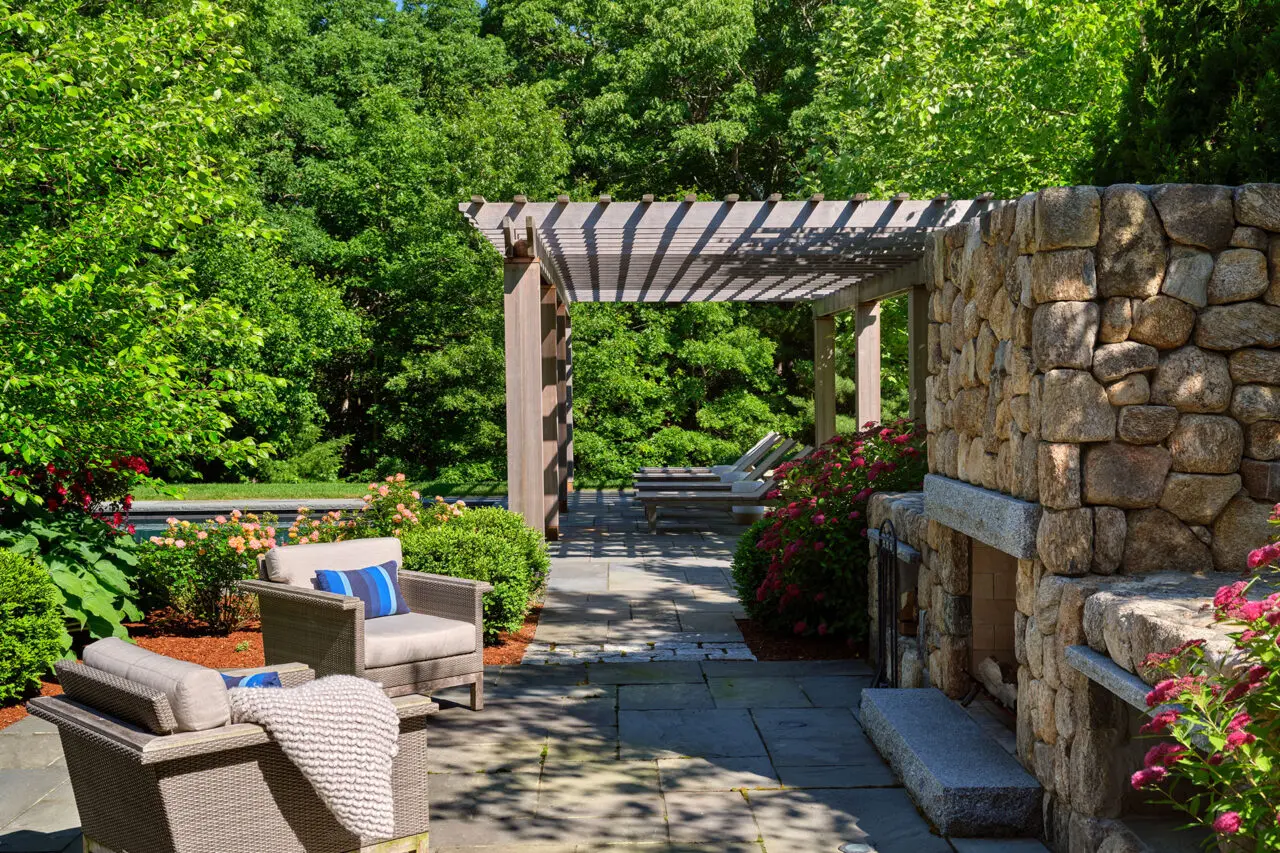
Foundation landscaping does more than fill the space in front of a house. It helps a home feel grounded, balanced, and cared for. When it is done well, it softens hard edges, highlights the architecture, guides the eye to the entry, and gives the front of the property a more finished look in every season.
For Boston-area homeowners, this part of the landscape deserves extra thought. A beautiful planting plan needs to handle snow cover, salt spray near walks and driveways, wet springs, humid summers, and long stretches when the garden is judged mostly by its structure rather than by flowers alone. That is why the best foundation landscaping ideas for Boston homes are not just about what blooms in May. They are about scale, spacing, durability, and year-round composition.
Curb appeal also matters in practical terms. The National Association of Realtors reports that 92% of REALTORS® recommend improving curb appeal before listing a home, and 97% say curb appeal is important in attracting a buyer. These numbers speak to something most homeowners already sense. The front of a home shapes expectations before anyone steps inside.
At a Blade of Grass, we often think of foundation planting as the visual bridge between architecture and landscape. Without it, even a beautiful house can feel a little abrupt, like a well-tailored jacket without a collar. The structure is there, but the finish is missing.
Key Takeaways
- The best foundation landscaping complements the house instead of covering it up.
- Boston homes benefit from planting plans built for four seasons, not just spring bloom.
- A strong design usually relies on layers, with low, medium, and taller plant material working together.
- Mature plant size matters. Crowding is one of the most common foundation planting mistakes.
- Evergreen structure, thoughtful spacing, and a restrained palette often create the most polished curb appeal.
- Good foundation landscaping can also support drainage, reduce splashback, and improve the sense of arrival at the entry.
What Is Foundation Landscaping?
Foundation landscaping is the design of planting beds and related landscape features around the base of a home. Most often, this includes the front façade, front entry, side elevations visible from the street, and the transition areas where walkways, steps, porches, and planting beds meet.
The goal is not to hide the house. It is to make the house sit more naturally within the property.
A well-designed foundation landscape can:
- soften long walls and hard corners
- frame the entry and improve the sense of arrival
- highlight windows, porches, and architectural features
- create visual balance between the home and the lot
- provide four-season interest close to the house
- help organize runoff and planting bed transitions
This is especially important in Greater Boston, where the style of the home often plays a big role in the planting approach. A colonial, shingle-style property, brick townhouse, and contemporary new build each call for a different visual language. The planting should reflect that.
Why Foundation Landscaping Matters in Boston
Boston-area landscapes ask a lot from plants and design details. Winters are long enough that evergreen structure and branch character matter. Freeze-thaw cycles put stress on plant roots and hardscape edges. Snow piles change sightlines. Street-facing beds may deal with salt. Older homes may have raised foundations, narrow front setbacks, or masonry that reflects heat in summer.
That does not mean the planting needs to feel defensive or utilitarian. It means the design should be intentional.
The most successful foundation plantings in this region tend to share a few traits. They use plants suited to the site. They leave room for growth. They create visual structure even in January. They also respect the architecture instead of competing with it.
Properly placed trees can support home performance as well. The Arbor Day Foundation notes that properly placed trees can reduce air-conditioning needs by 30% and save 20% to 50% in heating energy use. While foundation planting is not the same as shade-tree planning, the broader point matters. Plant placement near a home affects more than appearance.
Start With the Architecture, Not the Plant List
One of the biggest mistakes homeowners make is starting with favorite plants before thinking about the house. A foundation planting that looks great in a garden center can feel random once it is placed against the wrong façade.
A better starting point is to study the house itself.
Ask a few simple design questions
- Is the architecture formal or relaxed?
- Are the lines clean and modern or more traditional and layered?
- Is the front elevation symmetrical?
- Does the entry need stronger emphasis?
- Are there blank foundation walls that need softening?
- Are there windows or stone details that should remain visible?
A traditional New England colonial often benefits from a more orderly composition, with symmetry or near symmetry around the entry and a quieter plant palette. A more contemporary home may look better with fewer plant types, larger masses, and stronger contrast in form. A shingle-style or naturalistic property may support softer layering and a more relaxed rhythm.
In other words, foundation landscaping should feel like an extension of the architecture. It should not look pasted on.
The Best Foundation Landscaping Ideas for Boston Homes
Use Layering Instead of a Single Row of Shrubs
One of the easiest ways to improve curb appeal is to move beyond the old formula of planting one row of identical shrubs along the base of the house.
That approach often looks flat at first and overcrowded later.
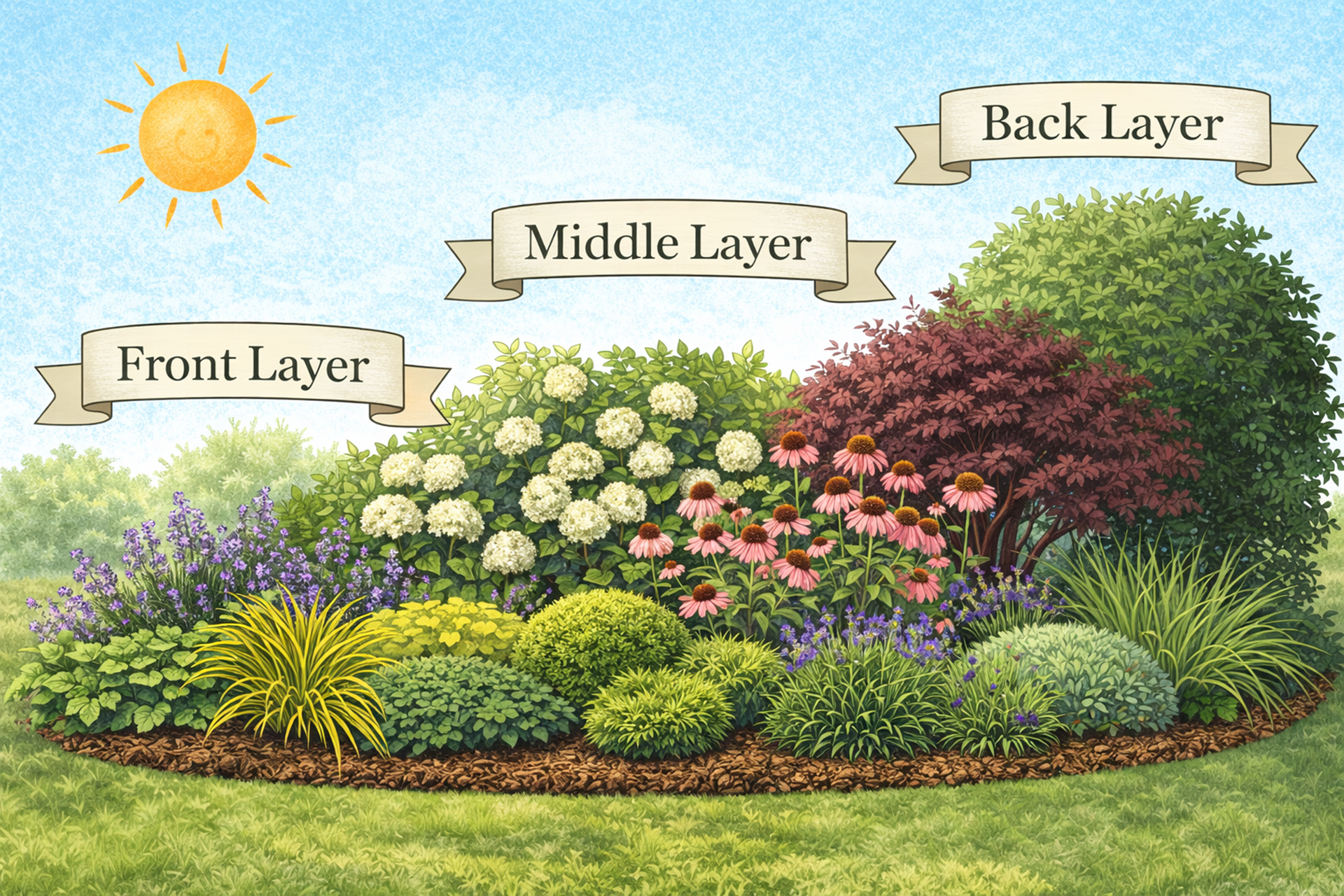
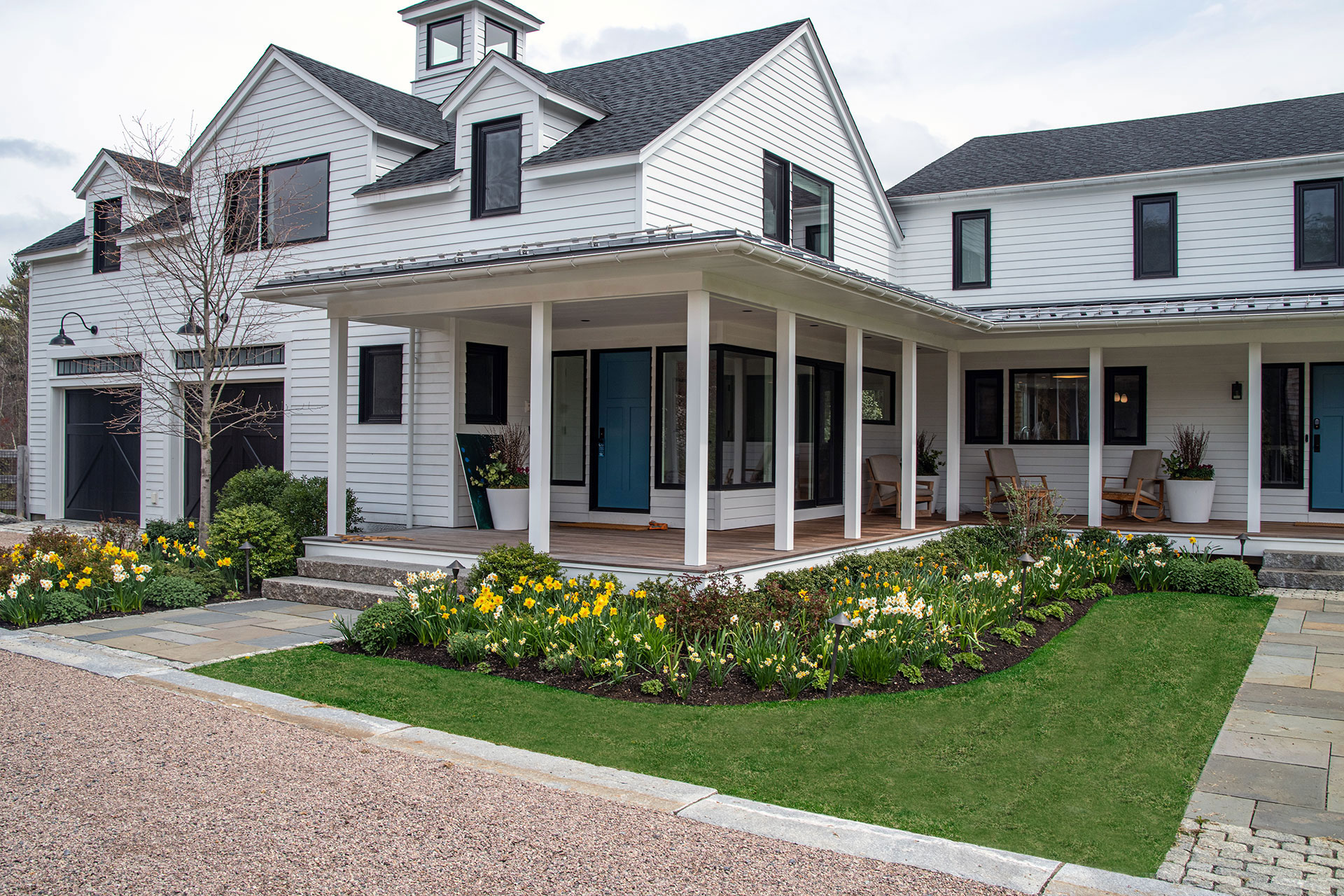
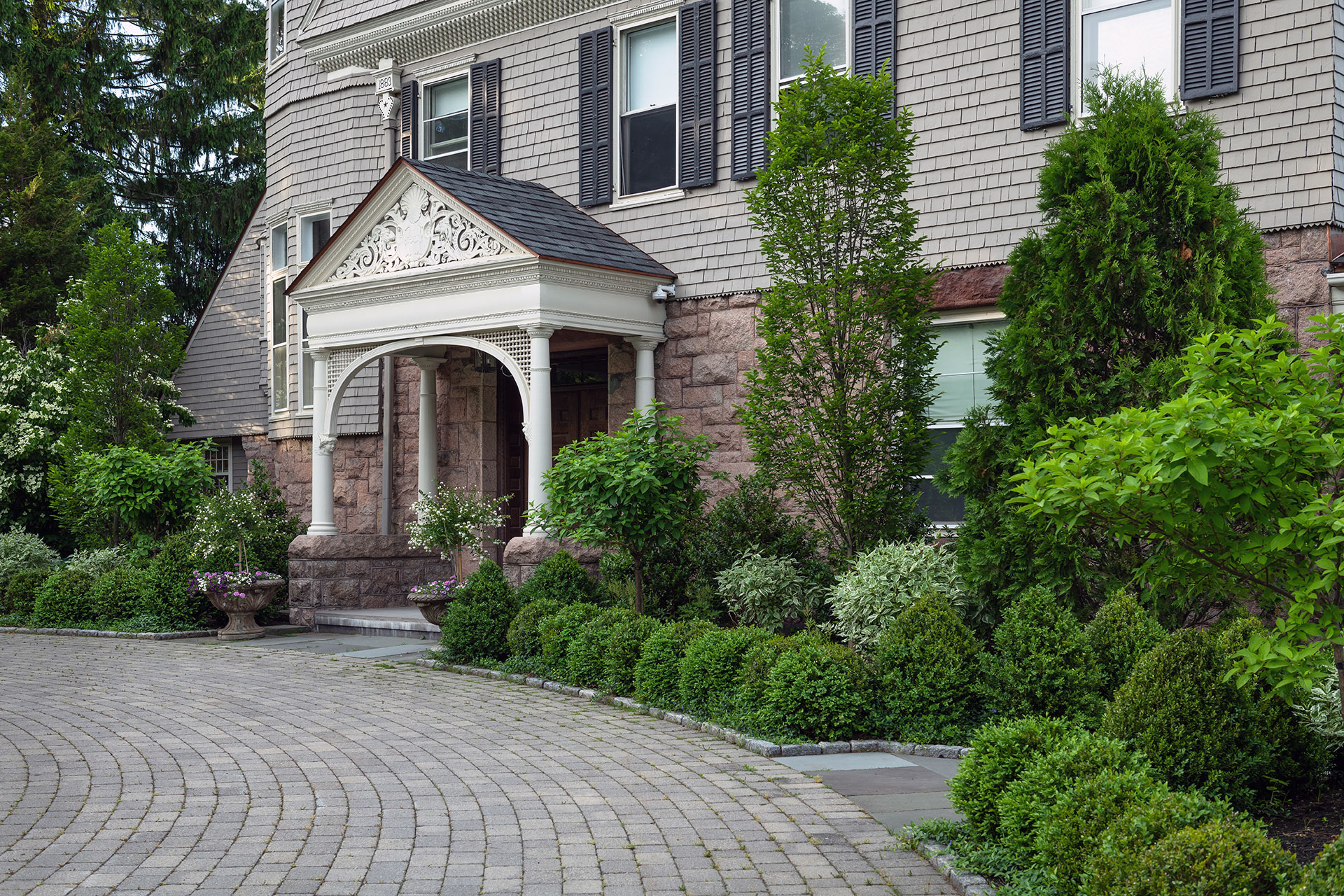
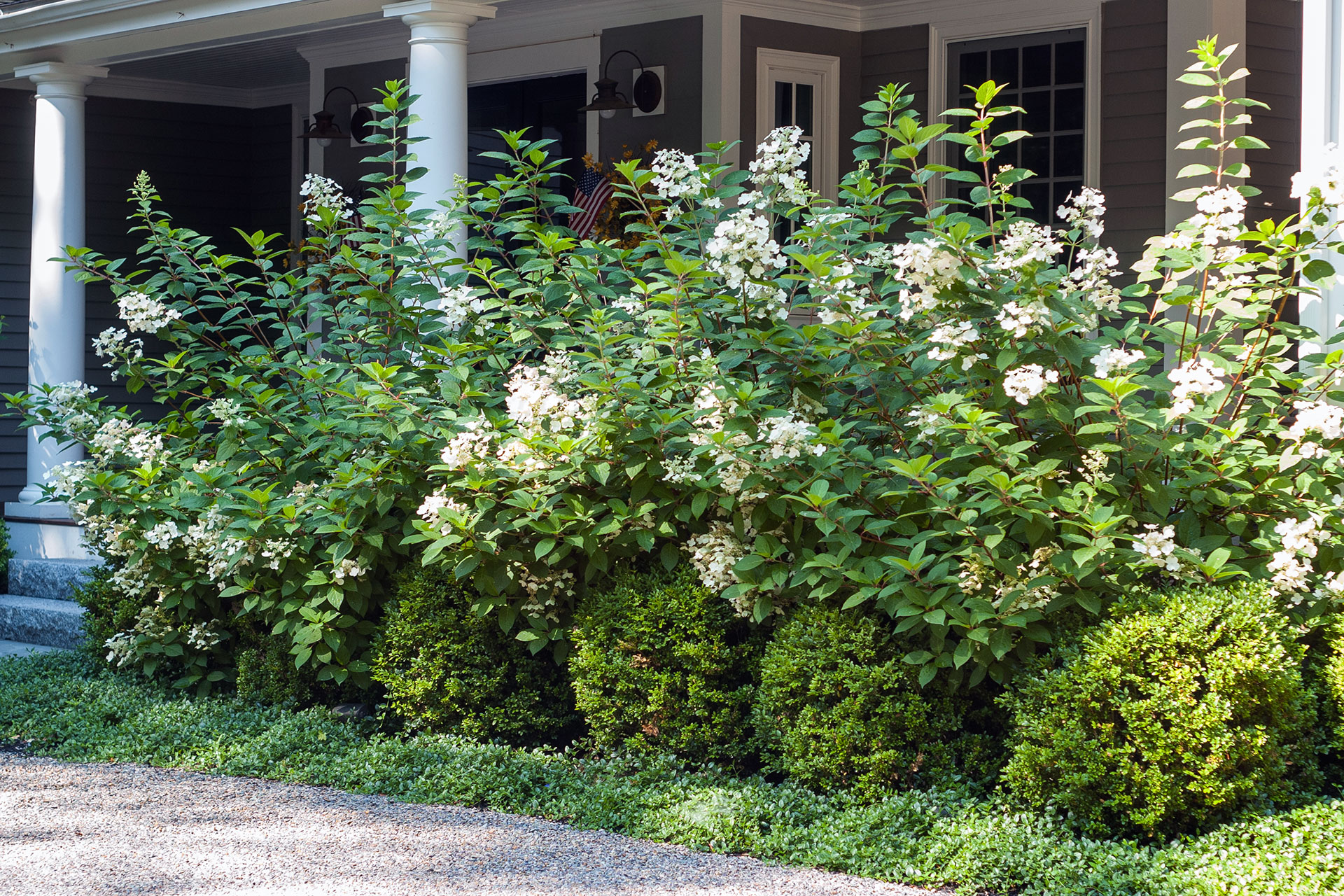
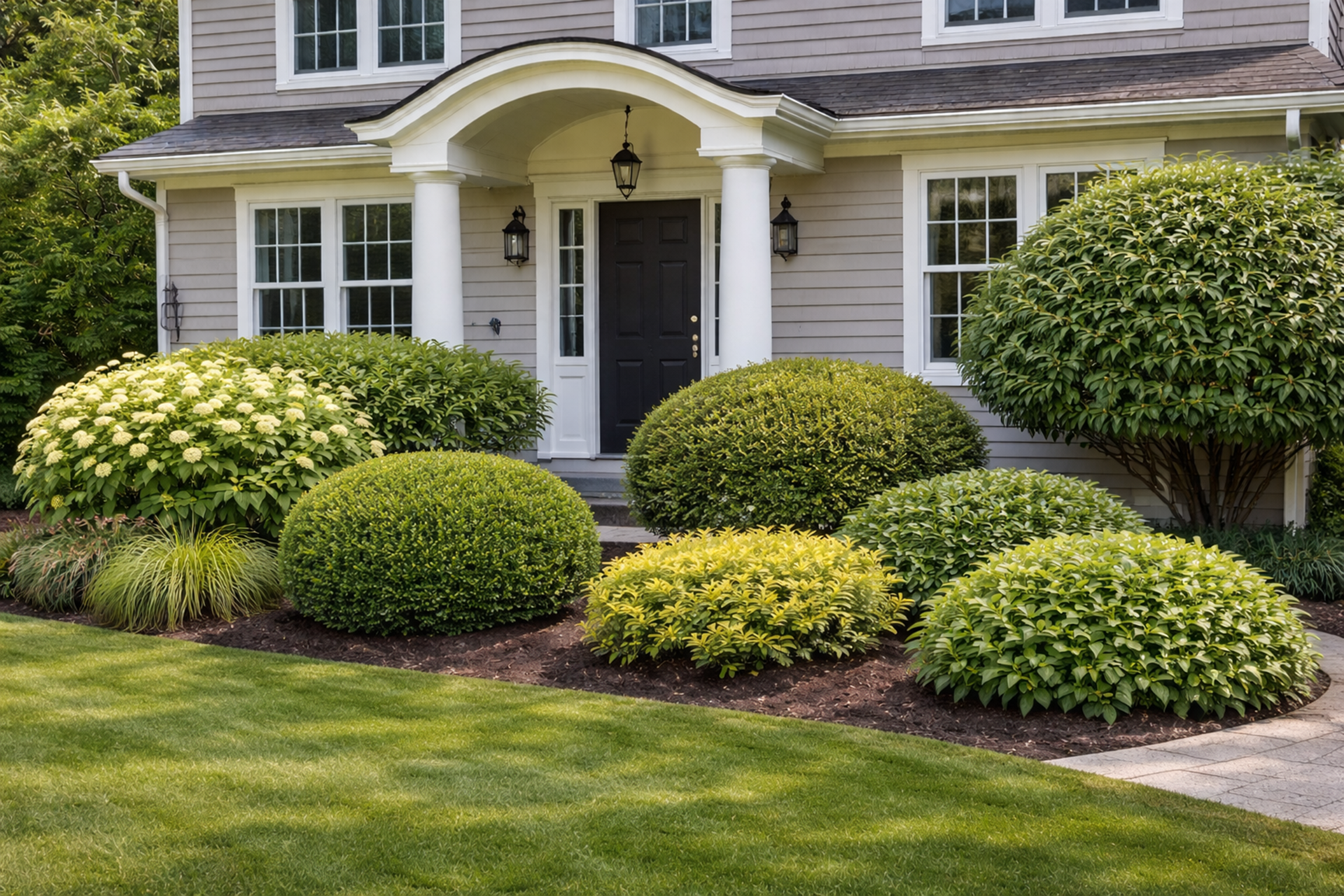
A better strategy is layered planting. Instead of creating one visual line, you create depth. Low plants define the edge. Medium plants build body. Taller plants anchor corners or highlight focal points.
A simple foundation bed might include:
- a front layer of neat groundcovers or compact perennials
- a middle layer of shrubs that provide body and seasonal interest
- a back layer of taller shrubs or small trees placed where they will not block windows or crowd the façade
- This approach helps the planting feel more natural and more finished. It also gives you more flexibility across the seasons.
Related Blog: What Is Layered Planting? A Guide to Depth, Structure, and Four-Season Interest
Build the Design Around Evergreen Structure
In Boston, winter exposes weak planting design very quickly. Beds that rely only on flowers can feel empty for months. That is why evergreen structure is so useful in foundation landscaping.
Evergreens create year-round form. They help organize the bed and keep the front of the home from looking bare when deciduous shrubs drop their leaves.
This does not mean the whole planting should be evergreen. It means evergreen material should play a supporting structural role.
Good evergreen uses near a foundation may include:
- compact broadleaf evergreens for consistency and mass
- upright forms near corners or entries for emphasis
- low mounding evergreens to stabilize the composition in winter
- carefully placed conifers to introduce texture and permanence
The right evergreen choices depend on light, exposure, deer pressure, and the style of the house. The key is restraint. A few well-placed evergreens often do more for curb appeal than a long hedge of plants that all mature into the same height.
Frame the Entry, Not Just the Wall
Foundation landscaping is often discussed as if the only goal is to soften the base of the home. In reality, the entry is usually the most important part of the front landscape.
People do not experience a house as a flat elevation. They approach it. They move along the walk. They notice where the path widens, where the steps begin, where planting shifts, and where the front door comes into view.
That means your front walk, steps, porch, and entry deserve focused design attention.
Ideas that often work well include:
- placing stronger evergreen or flowering anchors near the entry
- using repeated plant groupings to guide the eye toward the door
- softening stoops and steps with lower plant material rather than overgrown shrubs
- pairing foundation planting with containers where seasonal emphasis is helpful
- leaving enough open space so the approach still feels clear and inviting
A front entry should feel composed, not crowded.
Related Blog: Planters & Containers in Boston Landscape Design
Focus on Four-Season Appeal
A lot of foundation beds look good for a few weeks and then lose momentum. Boston homeowners usually need more than that. The front of the home is too visible, and New England weather is too varied, for a planting to rely on one short burst of bloom. A strong foundation landscape should offer something meaningful in every season, even when flowers are not the main attraction.
Spring
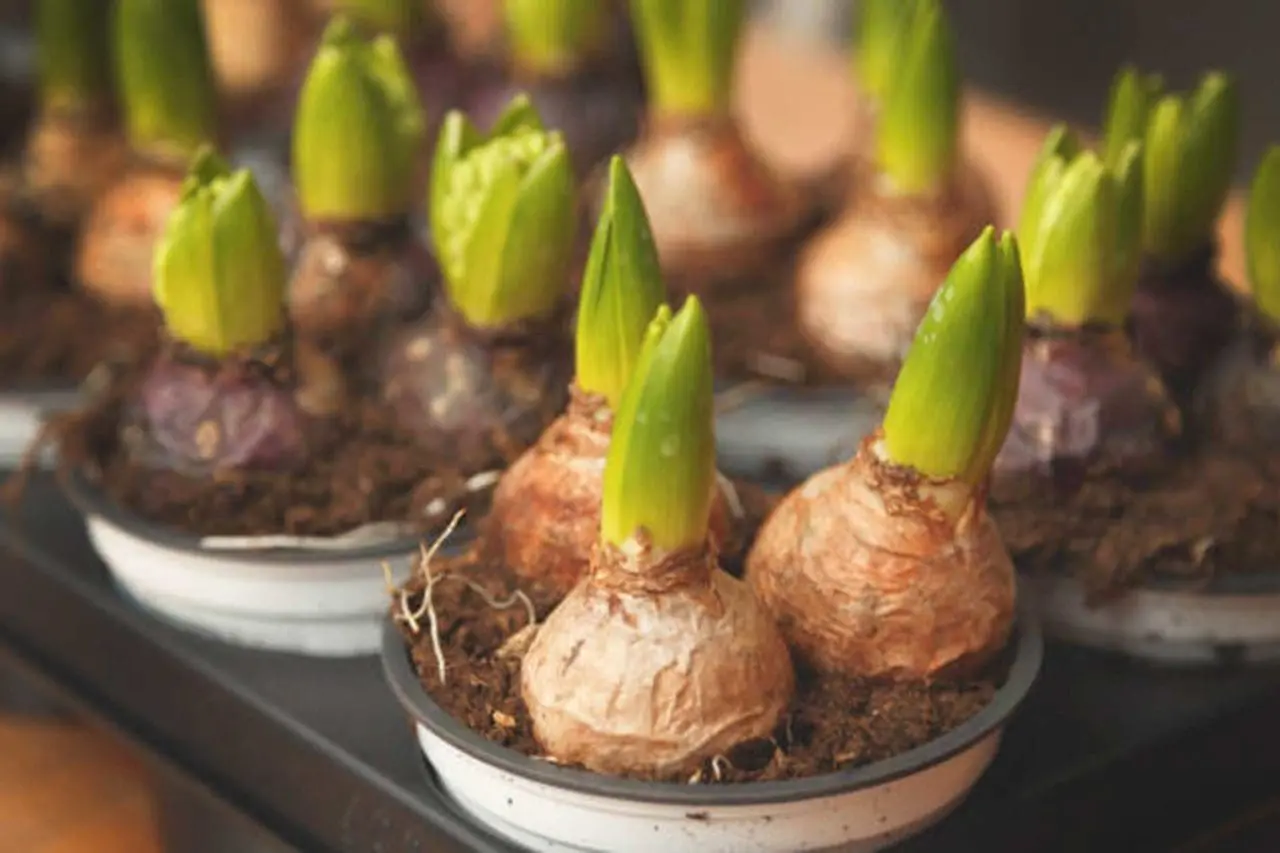
Spring is often when homeowners notice foundation planting the most. After a long winter, fresh growth near the house immediately changes how the property feels. Early bulbs, flowering shrubs, and new foliage can make the entry feel brighter, softer, and more welcoming.
This is also the season when plant layering begins to show its value. Low bulbs and emerging perennials can bring color and texture at the front of the bed, while shrubs begin to leaf out and reestablish the structure of the planting. Spring does not need to be loud to be effective. In fact, a more restrained spring palette often feels more sophisticated, especially against traditional Boston-area homes.
The key is to create a sense of renewal without making the front of the house feel busy. A few well-placed bloom moments near the walk or entry usually have more impact than scattering color everywhere.
Summer
Summer is when foundation landscaping has to do more than bloom. Many front beds look attractive in late spring, then flatten out once those early flowers fade. A stronger design continues to hold together through foliage, massing, contrast in leaf shape, and clear plant forms.
In this season, texture becomes especially important. Broad leaves, fine foliage, upright forms, and mounded shapes all help create visual interest even when very little is flowering. Summer is also when poorly scaled plantings start to reveal themselves. Shrubs that are too large can crowd the façade, block windows, or make the entry feel closed in.
For that reason, summer foundation planting should feel composed rather than overgrown. Controlled bloom, clean edges, and repeating plant groups usually look better than a front bed that tries to do too much at once. This is often the season when the difference between a plant collection and a designed landscape becomes most obvious.
Fall
Fall gives foundation landscaping another chance to add depth and character. In Boston-area landscapes, this season often brings some of the richest color and some of the most satisfying texture. Shrubs and perennials may shift into deeper reds, golds, bronzes, or burgundy tones, while seedheads, berries, and fading foliage can add warmth close to the house.
This is also when the planting begins to transition from ornamental display to structural presence. A well-designed bed still feels intentional as flowers recede. Plants with strong form, attractive fall color, or persistent berries help the foundation landscape stay visually active without needing to be heavily replanted.
For many homes, fall is one of the most flattering seasons for the front of the property. The light is softer, the architecture stands out more clearly, and the planting can echo the colors of the broader New England landscape. When handled well, foundation beds feel settled and seasonally appropriate rather than tired at the end of the growing season.
Winter
Winter is where strong foundation design proves itself. In Boston, the front landscape can spend months with little or no floral display, so structure matters more than many homeowners expect. This is the season when evergreen mass, bark, branching pattern, berries, seedheads, and the overall composition of the bed do the heavy lifting.
A foundation planting with good winter presence does not have to be complicated. It needs clear shapes, enough evergreen material to hold the composition together, and a layout that still reads well under snow or against bare ground. Upright forms can help mark corners and entries. Mounded evergreens can hold the base of the planting. Shrubs with interesting stems or branching can add another layer of visual interest once leaves are gone.
Winter also makes clutter more obvious. If the bed depends too much on scattered seasonal color and not enough on form, it can feel thin or disorganized once the growing season ends. A more disciplined planting plan tends to look calmer, stronger, and more polished from the street.
This is where plant discipline matters. Too many scattered bloom moments can make the front of a home feel visually noisy. A smaller number of strong, repeating plant groups usually looks more refined. The goal is not to have something flashy happening at every moment. It is to create a foundation landscape that feels composed, welcoming, and well-considered all year long.
As our design team often says:
“The best foundation planting does not shout from the curb. It quietly makes the home feel more settled, more intentional, and more complete in every season.”
Related Blog: What’s Included in a Landscape Maintenance Plan? A Practical Guide for Homeowners
Choose Plants for Mature Size, Not Nursery Size
This is one of the most important practical rules in foundation landscaping.
Plants should be selected and spaced based on how large they will become, not how they look on planting day.
That sounds obvious, but it is where many foundation beds go wrong. Small shrubs look manageable in gallon pots. A few years later, they block lower windows, press against siding, crowd walkways, and require constant shearing just to stay within bounds.
UMass Extension’s guidance on right plant, right place is especially useful here. The principle is simple: choose plants suited to the conditions and to the space they will occupy over time.
For homeowners, that usually means asking:
- How tall and wide will this plant get?
- Will it block windows or trim?
- Will it crowd the walkway?
- Can it hold its shape with light pruning instead of constant clipping?
- Does it belong near the house at all, or would it be better farther out in the bed?
A landscape that is always being cut back hard usually started with the wrong scale.
What to Plant Around a House Foundation in Boston
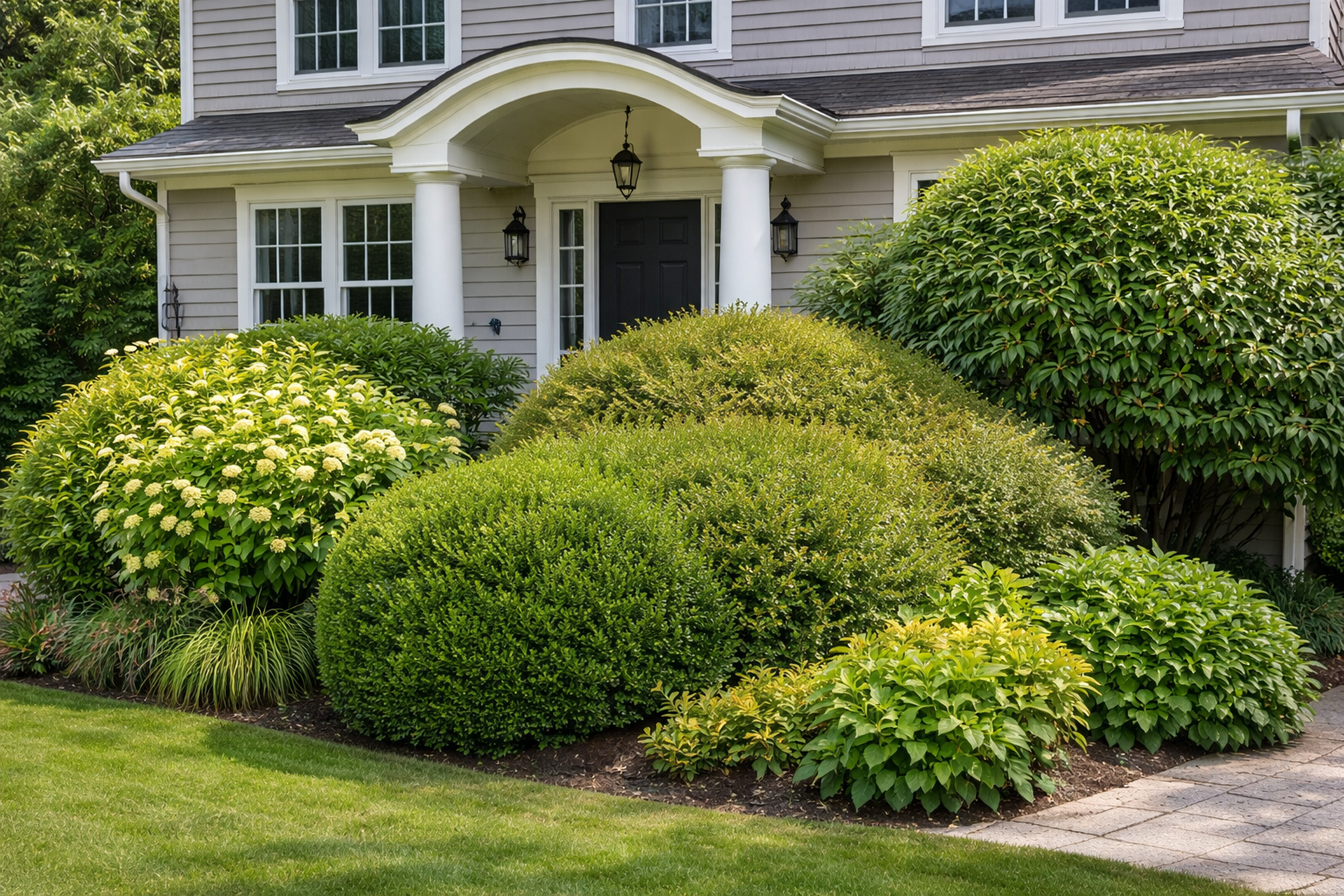
There is no single best plant list for every property. Light, drainage, architecture, maintenance goals, and deer pressure all matter. Still, a few categories tend to be especially useful.
Evergreen shrubs for structure
These are often the backbone of a foundation bed. They help carry the design through winter and create visual consistency.
Look for shrubs that offer:
- reliable form
- manageable size
- clean texture
- tolerance for the site conditions
Depending on the property, candidates may include compact hollies, select broadleaf evergreens, dwarf conifers, and other shrubs chosen for their mature scale.
Flowering shrubs for seasonal lift
Flowering shrubs can bring softness and seasonal emphasis, but they work best when used in moderation and placed where their mature size suits the façade.
For many Boston homes, panicle hydrangeas, smooth hydrangeas, and select smaller flowering shrubs can be effective choices, depending on the look you want and the available light.
Perennials for texture and repeat color
Perennials are often most effective at the front edge or woven through the middle layer. They can soften the planting, add seasonal movement, and keep the design from feeling shrub-heavy.
In foundation beds, the best perennials are often those that hold a clear shape and do not collapse or sprawl awkwardly across paths.
Groundcovers for clean edges
Groundcovers help unify the bed and reduce the patchy, unfinished look that comes from bare mulch alone. They can also help soften edging and tie a planting together.
Native plants for a more sustainable design
Native plants are not only for informal or rural settings. In the right composition, they can look highly refined.
Massachusetts resources such as the Massachusetts Native Plant Palette and Grow Native Massachusetts plant guides can be very useful for identifying species suited to local conditions.
Related Blog: Sustainable Landscaping Explained for Boston Homes
Common Foundation Landscaping Mistakes to Avoid
1. Planting too close to the house
This is one of the most common problems. It may look full on day one, but it often turns into constant crowding later.
2. Blocking windows or architectural details
Foundation planting should support the house, not hide what makes it attractive. If shrubs swallow lower windows or cover stonework, the design is working against curb appeal.
3. Using too many plant types in a small space
A front foundation bed usually benefits from restraint. Repetition often looks better than variety for its own sake.
4. Ignoring drainage and runoff
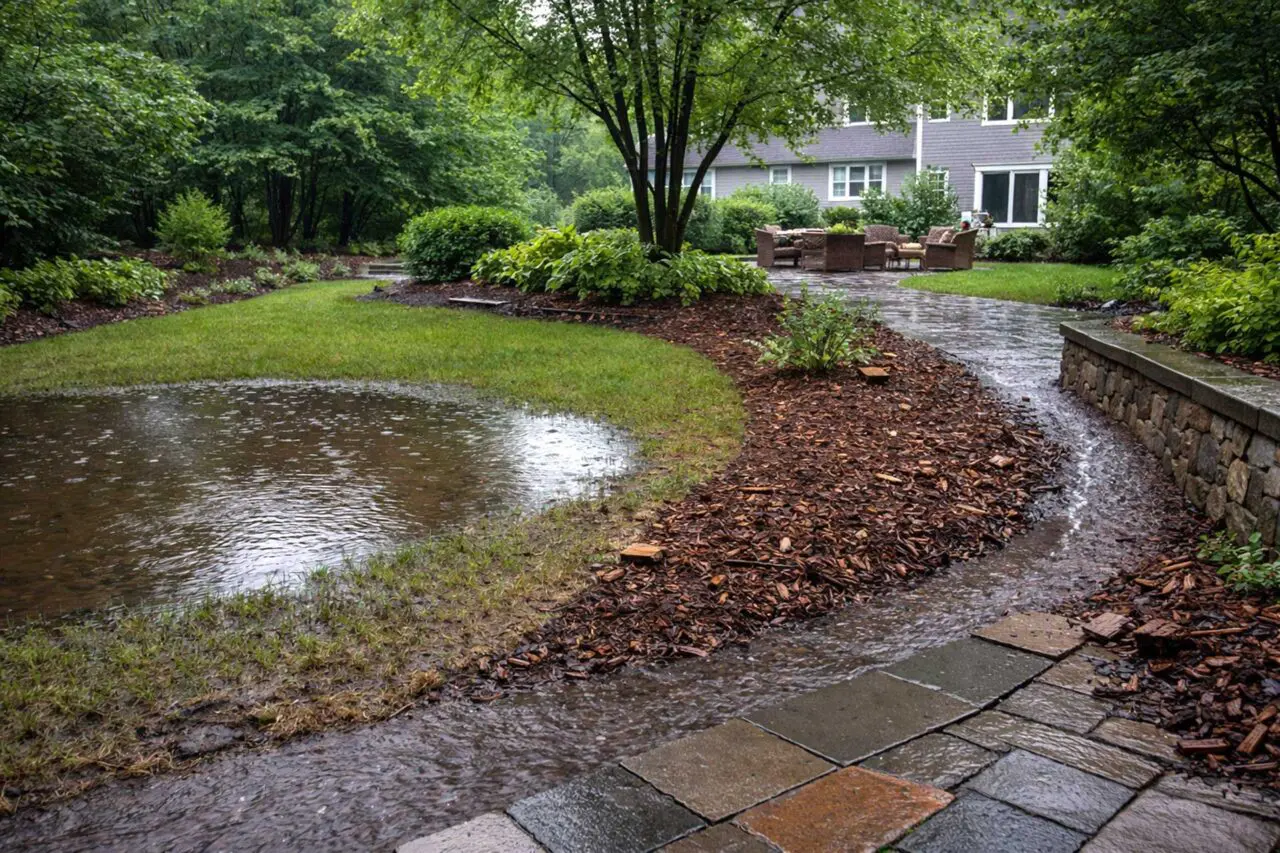
Downspouts, roof lines, grade changes, and snowmelt can all affect foundation beds. When water sits too long or moves too aggressively, plants struggle and mulch washes out.
5. Designing only for spring
A planting that peaks for two weeks and then fades is usually not enough for the front of a high-visibility property. Aim for structure first, then seasonal interest.
Foundation Landscaping Ideas by Home Style
Traditional and colonial homes
These homes usually benefit from a more tailored composition. Symmetry or visual balance around the entry often works well. Evergreen structure, hydrangeas, soft perennials, and a restrained color palette tend to suit the architecture.
Contemporary homes
Modern architecture often looks best with fewer plant species, bolder masses, stronger form contrast, and a cleaner edge between hardscape and planting.
Shingle-style and naturalistic homes
These homes can support softer layering and more relaxed plant groupings, as long as the composition still feels intentional.
Compact urban homes
Narrow frontages often call for disciplined plant selection. In smaller spaces, every plant does more visual work. Upright forms, compact shrubs, and containers can help create polish without crowding the entry.
How Foundation Landscaping Supports Long-Term Value
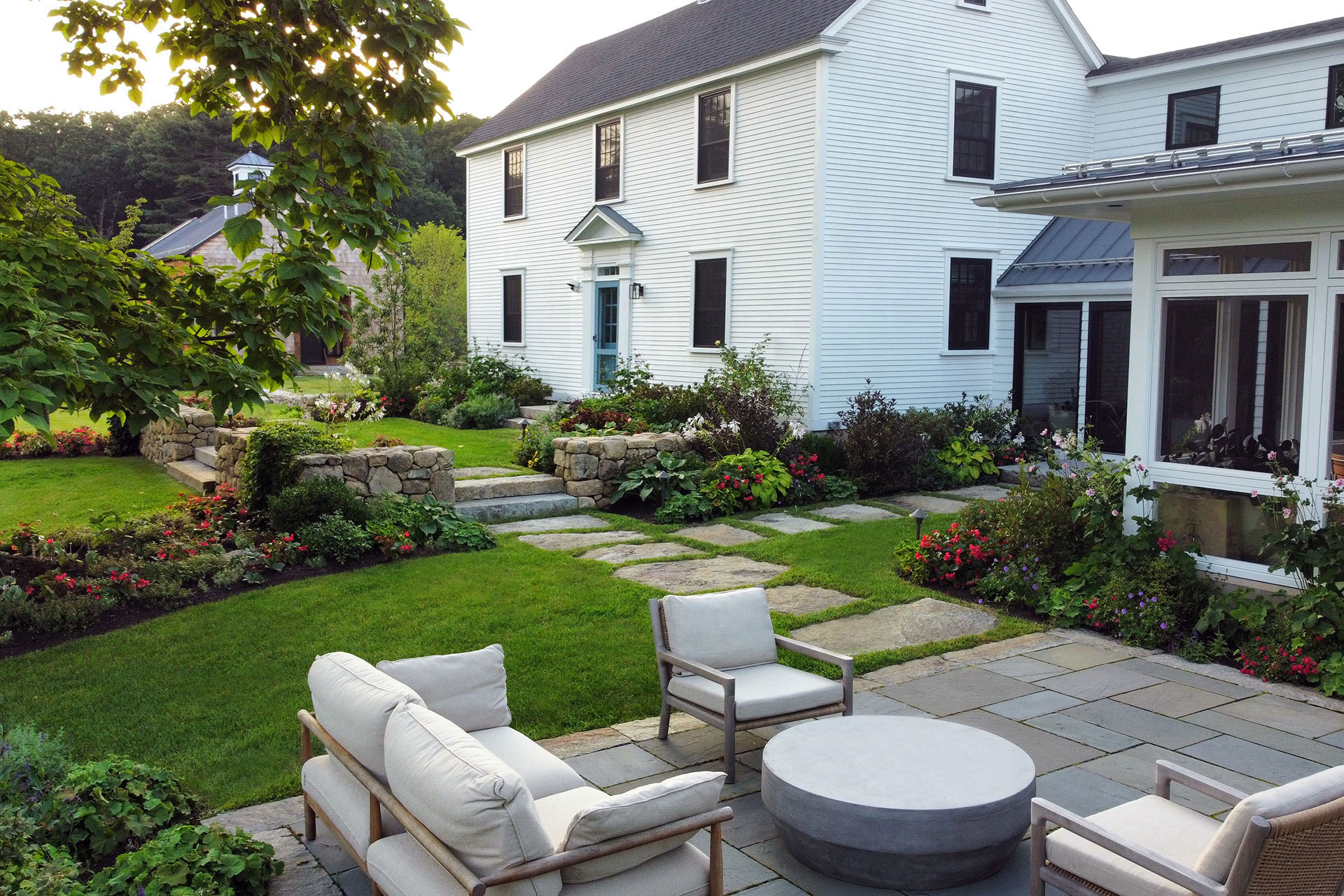
Homeowners usually think about foundation planting in visual terms first, which makes sense. It is one of the most visible parts of the landscape.
Still, good design can support long-term value in other ways as well.
A better planting plan can:
- reduce the need for frequent replacement
- lower pruning demands when plants are sized properly
- help direct attention to the strongest architectural features
- improve the experience of arriving at the home
- support a more cohesive landscape identity across the property
That is one reason curb appeal remains so important in real estate. It influences first impressions, but it also signals that the property has been thoughtfully maintained.
Practical Foundation Landscaping Tips for Boston Homeowners
If you are planning to refresh the front of your home, these principles are a strong place to start.
Keep the windows visible
Unless privacy is the goal in a specific location, lower windows should usually remain readable from the street.
Let plants breathe
Leave enough room between plant material and the house for growth, airflow, and maintenance access.
Repeat, do not scatter
Repeating a smaller number of plants often creates a stronger and more elegant design than using one of everything.
Mix evergreen and deciduous material
Evergreens provide structure. Deciduous shrubs and perennials bring seasonal change. The balance between the two is what gives a foundation bed lasting interest.
Work with the site
Sun, drainage, exposure, deer pressure, and snow storage all affect plant performance. Right plant, right place is not a cliché. It is one of the clearest shortcuts to a better landscape.
FAQ: Foundation Landscaping Ideas for Boston Homes
Q: What is the best landscaping to put around a house foundation?
A: A layered planting of shrubs, perennials, and groundcovers usually works best. The right mix depends on the architecture, sun exposure, drainage, maintenance goals, and how much structure you want in winter.
Q: What are the best low-maintenance foundation plants for Massachusetts?
A: The best low-maintenance foundation plants are those that fit the site and the available space at maturity. In many Boston-area landscapes, manageable evergreen shrubs, durable perennials, and regionally adapted plants are more successful than fast-growing plants that quickly outgrow the bed.
Q: How far should shrubs be planted from the house?
A: There is no one-size-fits-all distance because mature plant size varies. A good rule is to space each shrub based on its eventual width and to leave enough room for airflow, maintenance, and a clean visual relationship with the façade.
Q: Should foundation plants touch the house?
A: No. Plants should soften the base of a home, but they should not be pressing against siding, trim, or masonry.
Q: Are native plants a good choice for foundation landscaping?
A: Yes, many native plants can work very well in foundation beds when they are chosen for the site and arranged with a clear design framework. Native does not have to mean loose or messy. It can also look structured and elegant.
Q: What makes foundation landscaping look good in winter?
A: Evergreen structure, strong branch character, berries, seedheads, and a clear planting layout all help. In Boston, winter structure often matters more than people expect.
Learn More
For readers who want to dig deeper into plant selection, sustainability, and curb appeal, these reputable resources are worth bookmarking:
- Remodeling Impact Report: Outdoor Features
- The Value of Trees
- Right Plant, Right Place: A Plant Selection Guide for Managed Landscapes
- Trees, Shrubs, and Vines for Low Maintenance Landscapes
- Plant Lists & Landscape Guides from Grow Native Massachusetts
Conclusion
The best foundation landscaping ideas for Boston homes are not about adding more plants. They are about making better design decisions.
When foundation beds are shaped around the architecture, scaled for mature growth, and built for four-season performance, they do far more than fill empty space. They improve curb appeal, strengthen the front entry, and help the entire property feel more cohesive.
For Boston-area homeowners, that usually means resisting quick fixes and thinking in layers, structure, and long-term fit. A home can look softer, more welcoming, and more refined without feeling overplanted.
If you are considering a front landscape refresh, the team at a Blade of Grass can help you evaluate what the architecture needs, what the site will support, and how to create a foundation planting that looks polished in every season. Contact us today to learn how our award-winning designers and installers can transform your property into a beautiful living space.