Rhododendrons are easy to notice when they flower. A shrub covered in lavender, pink, or white blooms can briefly become the most prominent thing in the garden.
For the rest of the year, we see a different plant. Its leaves, branching, height, and width become more important than its flower color. Those qualities determine whether it provides a useful backdrop, frames an entry, or eventually occupies a window and half the front walk.
That is why we look beyond the flowers when choosing rhododendrons for Boston-area landscapes.
A smaller-leaved PJM rhododendron can bring early color and a relatively fine texture to a mixed border. A larger-leaved variety can create substantial evergreen mass beside a house or along a woodland edge. Both may be good choices, but they are doing different work.
At a Blade of Grass, we consider that role alongside the growing conditions. Rhododendrons can be beautiful, lasting parts of a planting when the variety, exposure, soil, and available space fit together. Familiarity with the plant does not make those decisions any less important.
Key Takeaways
- Choose rhododendrons for mature size, foliage, and landscape role as well as flower color.
- PJM types and large-leaved rhododendrons can create very different effects.
- Acidic soil, good drainage, and appropriate moisture are central to successful planting.
- Winter exposure, tree-root competition, and deer browsing can limit where rhododendrons work.
- Evergreen foliage provides lasting presence, but surrounding plants should extend seasonal interest.
Rhododendrons at a Glance
- Botanical name: Rhododendron spp. and hybrids
- Plant type: This profile focuses primarily on evergreen flowering shrubs
- Mature size: Highly variable, from compact selections to substantial shrubs
- Light: Often best with filtered light or part shade; requirements vary by selection
- Soil / moisture: Acidic, moisture-retentive but well-drained soil
- Bloom season: Primarily spring, with timing varying by species, cultivar, and weather
- Flowers: Commonly lavender, purple, pink, red, or white
- Primary ornamental value: Flowers, foliage, and evergreen presence
- Native status: Species-dependent; garden hybrids are not necessarily native
- Deer resistance: Variable and unreliable where browsing pressure is substantial
- Best landscape uses: Sheltered foundation beds, mixed borders, woodland edges, groups, and specimens
Why We Use Rhododendrons in Boston-Area Landscapes
Rhododendrons can give a planting a substantial middle layer.
Trees establish the upper canopy. Perennials and groundcovers occupy the lower levels. Between them, a well-placed rhododendron can provide enough volume to make those layers feel connected.
The foliage influences that relationship. Large, leathery leaves create a different impression from small leaves held along finer branches. One may provide a strong, quiet backdrop beside stone or architecture. The other may sit more comfortably among smaller shrubs and perennials.
We also consider the view from inside the house.
An evergreen shrub can remain part of that view after neighboring plants have lost their leaves. From a kitchen window or a frequently used room, its placement may matter just as much in February as it does during flowering.
The flowers add a distinct seasonal moment. They should strengthen a planting that already makes sense.
Are Rhododendrons and Azaleas Different Plants?
Azaleas belong to the genus Rhododendron.
In everyday garden language, however, people usually distinguish azaleas from the shrubs they call rhododendrons. Many familiar azaleas have smaller leaves and a different overall character, and some are deciduous.
For this profile, we are focusing mainly on evergreen rhododendrons, including small-leaved PJM types and larger-leaved selections.
That keeps the discussion useful without treating a very broad plant group as though every member has the same appearance or growing requirements.
What Do Rhododendrons Look Like Through the Seasons?
Spring: Flowers at Different Times
Rhododendrons do not all flower together.
PJM types are among the earlier bloomers, while many large-leaved selections flower later. Choosing different plants can spread the flowering period, although exact timing changes with the season and location.
We would still be cautious about assembling a border entirely around a succession of rhododendron flowers. The planting needs a coherent shape and foliage palette once the last flowers have faded.
Summer: Foliage Becomes the Background
After flowering, the shrub’s outline and leaves become more prominent.
This is when we see whether its scale belongs in the composition. A broad rhododendron may provide a useful backdrop for smaller plants, while a compact selection may help define a more detailed planting near an entry.
Too many similarly sized, dark evergreen mounds can make a border feel heavy. Contrast in leaf texture, height, and branching helps keep it interesting.
Fall and Winter: Evergreen Does Not Mean Unchanging
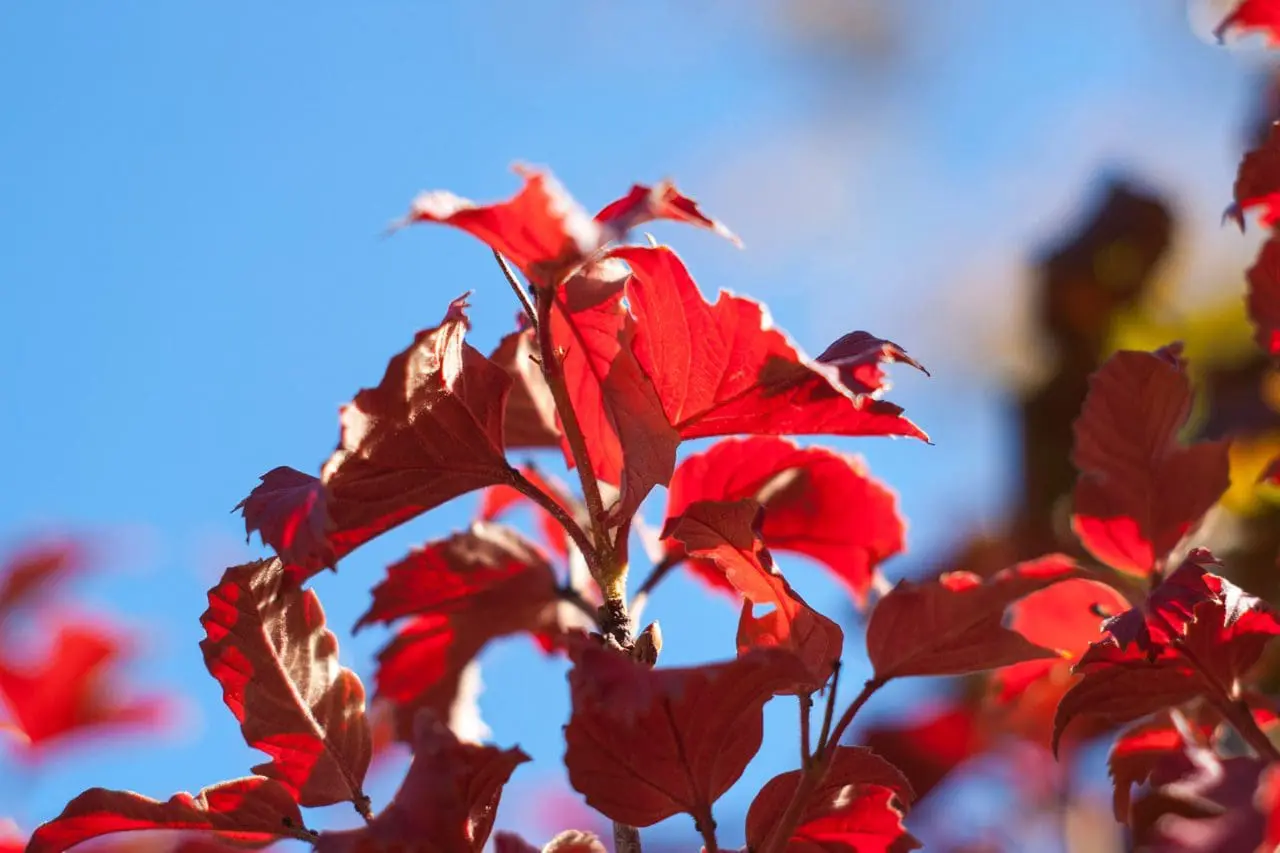
PJM foliage often develops purple or mahogany tones during cold weather. Larger-leaved types may retain a greener appearance, depending on the selection and conditions.
The winter outline also matters. Evergreen leaves do not guarantee that a shrub will remain dense from top to bottom. We consider its natural habit before relying on it to screen a particular view.
Choosing Rhododendrons by Size, Form, and Foliage
A plant label that says only “rhododendron” leaves too much undecided.
We want to know how broad the plant is likely to become, how its foliage will relate to neighboring plants, and whether its natural form suits the space. Flower color comes into that conversation, but it should not settle it.
These examples show some of the range:
| Selection | Typical Size | General Character and Use |
|---|---|---|
| PJM ‘Amy Cotta’ | About 3′ tall × 3′ wide | Compact, small-leaved selection with lavender-pink flowers; useful where a smaller shrub is appropriate |
| PJM ‘Compacta’ | About 4′ tall × 4′ wide | Compact form with lavender flowers; a possible choice for repeated groups and mixed planting |
| PJM ‘Elite’ | About 6′ tall × 6′ wide | Larger, vigorous PJM selection with lavender-pink flowers; requires more generous space |
| ‘Roseum Elegans’ | Typically about 6–8′ tall × 6–8′ wide | Large-leaved evergreen with lavender-pink flowers; useful for substantial shrub borders and broader compositions |
| Rhododendron maximum | Large shrub, potentially 10–20′ tall with substantial spread | Native species with white to pale pink flowers; better considered for generous woodland settings than narrow foundation beds |
These are approximate planning dimensions, not promises that a plant stops growing at a particular height. Age, site conditions, and individual selection all influence the result.
The difference between a three-foot shrub and an eight-foot shrub is significant beside a window or walkway. Choosing the smaller plant at the beginning is usually more sensible than repeatedly cutting a larger one back to fit.
Our article on plant spacing and the future landscape explains how those dimensions affect the relationship between plants, architecture, and circulation.
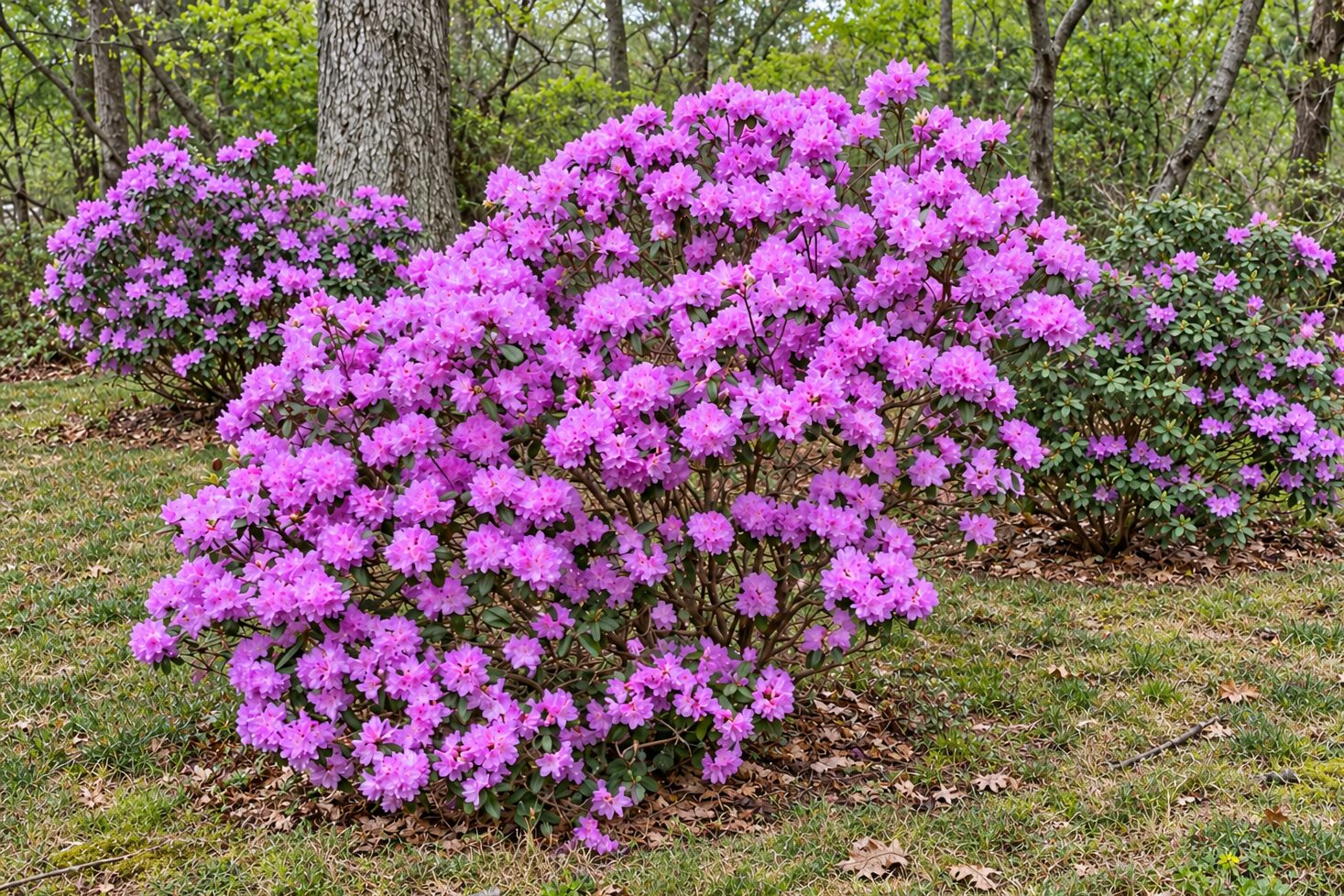
A Massachusetts Connection: PJM Rhododendrons
PJM rhododendrons have a local history.
The group originated through breeding work by the Mezitt family at Weston Nurseries in Hopkinton. The original hybrid was developed by Ed Mezitt in 1943 and named for his father, Peter J. Mezitt.
That work produced small-leaved evergreen rhododendrons valued for their winter hardiness, early flowers, and seasonal foliage color.
But cold hardiness is only part of the story. In its profile of PJM rhododendrons, UMass Extension emphasizes the importance of placement:
“Ideal site selection would include protection from exposure, acidic soil, consistent soil moisture and a mulched root zone.”
— Russ Norton, Agriculture & Horticulture Extension Educator, Cape Cod Cooperative Extension
A locally developed plant can be an excellent option without being suitable for every local planting bed.
Where Do Rhododendrons Grow Best?
Light and Exposure
Filtered light and part shade are often useful starting points, but the particular selection matters.
Large-leaved rhododendrons generally benefit from protection from harsh afternoon sun and drying winds. A sheltered bed with morning light presents a different situation from a west-facing planting beside paving.
We also look at how exposure changes through the year. A deciduous canopy may shelter a shrub in summer while leaving it exposed to winter sun and wind.
That is especially relevant when a planting is intended to look good throughout the colder months.
Acidic Soil
Rhododendrons are acid-loving plants.
Many New England soils are naturally acidic, but that does not establish the conditions in a particular foundation bed. Previous treatments, imported soil, and construction work can change what roots encounter.
A soil test before planting helps determine whether adjustments are necessary. We would rather work from that information than automatically add an amendment because the plant is labeled acid-loving.
Moisture With Drainage
Rhododendrons need moisture without prolonged saturation around their roots.
That distinction becomes important in established landscapes. A bed may remain wet after rain, or it may dry quickly despite looking shaded and cool.
Their shallow root systems also deserve consideration during planting and subsequent work around the shrubs. Good placement, mulch, and appropriate watering support the root zone; repeatedly disturbing it creates another challenge.
Competition From Mature Trees
A woodland setting can look like an obvious place for rhododendrons. The available moisture may tell a different story.
Before adding shrubs beneath established trees, we consider root competition and whether the new planting can be supported without damaging the existing landscape.
Sometimes there is a suitable pocket at the woodland edge. Sometimes the conditions call for a different plant or a more restrained planting plan.
Where Rhododendrons Work Best in a Landscape
Sheltered Foundation Plantings
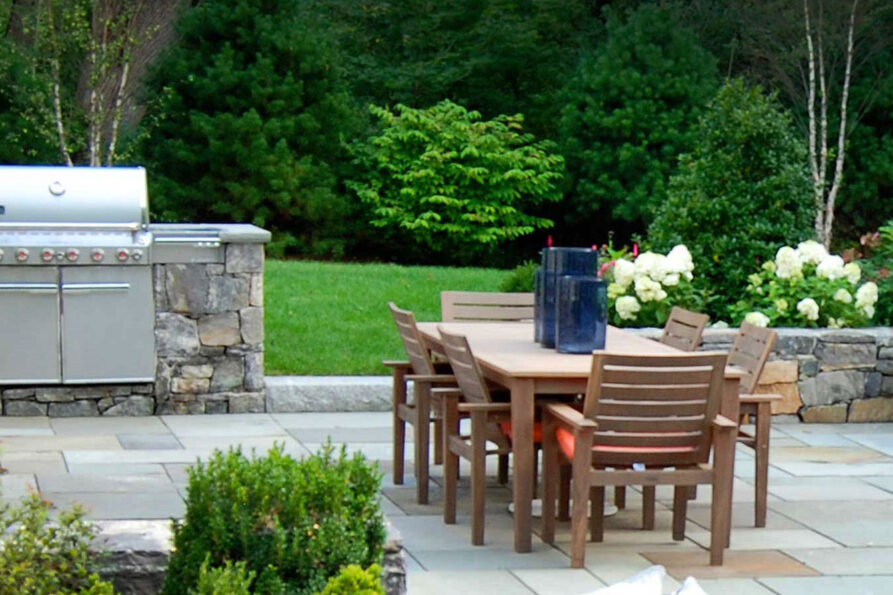
A rhododendron can provide useful volume beside a house when the bed accommodates its natural dimensions.
We consider window height, the depth of the planting, and the space needed for access. A broad shrub may work well beside a taller section of wall but feel crowded beneath a low window.
Foundation planting should respond to the architecture rather than conceal it.
Woodland Edges and Mixed Borders
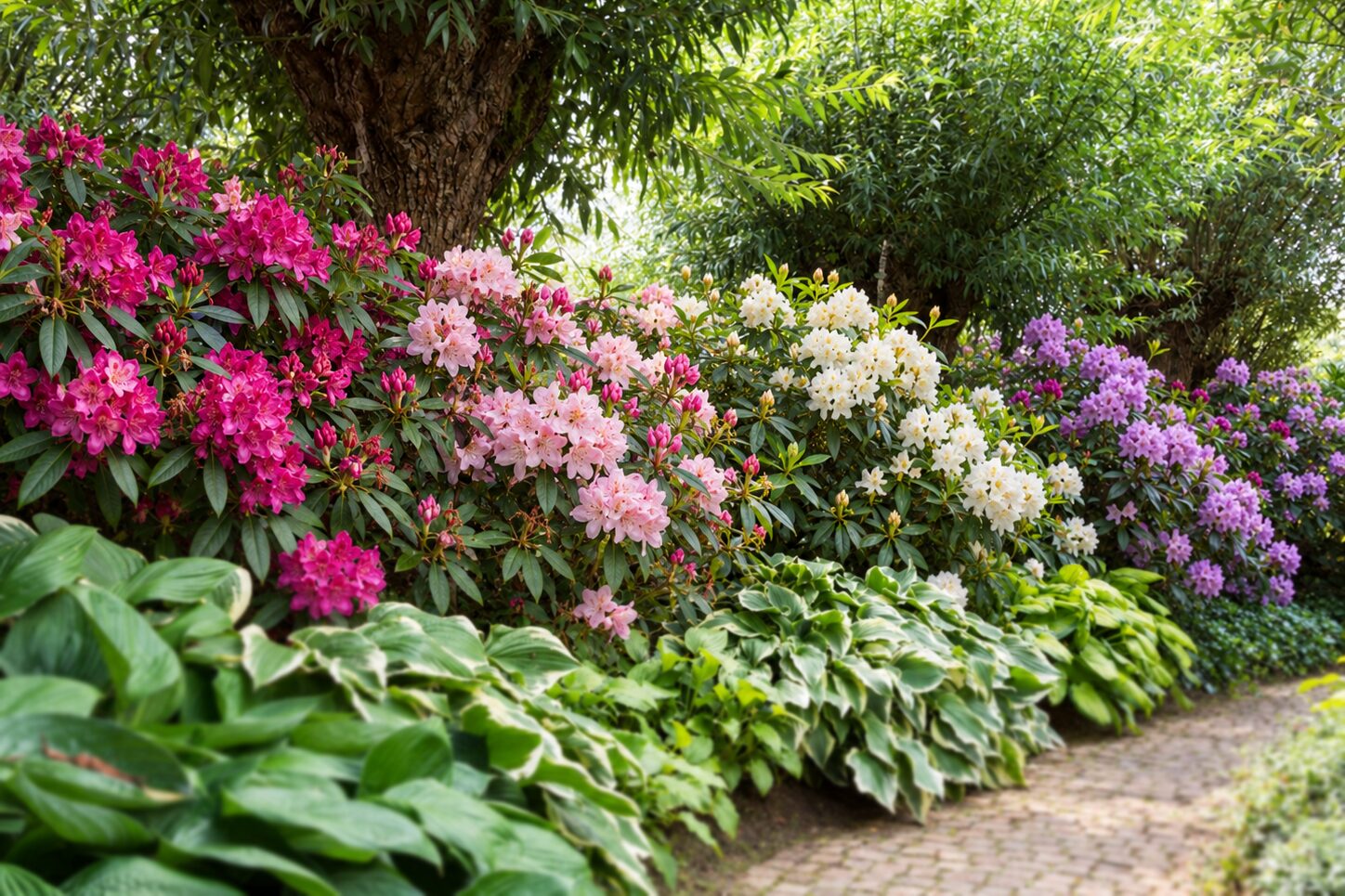
At a woodland edge, rhododendrons can help transition between the larger tree canopy and a more detailed garden.
We might use a group to establish a consistent middle layer, then introduce lower plants with contrasting foliage. The aim is to make the edge feel resolved without turning it into a wall of unrelated shrubs.
In a mixed border, the same plant can provide a steady background while other plants change through the season.
Repeated Groups and Individual Specimens
Repetition can give rhododendron flowers greater visual continuity.
Several plants of the same selection may create a clearer effect than several different flower colors distributed through a bed. That approach also lets foliage and form remain consistent after flowering.
An individual plant can be equally effective when it has a distinct role. We allow enough surrounding space for its shape to be appreciated, particularly near an entry or a junction between garden areas.
Where We Would Choose Something Else
We would reconsider rhododendrons:
- in persistently saturated or poorly drained soil
- in severe dry shade where competing roots leave little available moisture
- in exposed locations that are poorly suited to the chosen selection
- in narrow beds that require continual size reduction
- where heavy deer browsing cannot realistically be managed
- where another broad evergreen would make the planting feel too dense
The alternative depends on what the landscape needs.
If the objective is to soften a woodland edge, we might change the scale or type of planting. If it is to define an entry, a different shrub form may be more appropriate. If the underlying problem is drainage, changing plants alone may not resolve it.
Deer deserve particular attention. Rhododendrons should not be assumed to be deer-resistant simply because their leaves are evergreen. Our guide to deer-resistant planting and landscape strategies considers the broader decisions involved.
What Should You Plant With Rhododendrons?
We start with the texture and scale already present.
A large-leaved rhododendron contributes considerable visual mass. Finer foliage can make that mass feel more balanced, while lower plants can connect it to the ground.
Ferns and Sedges
Appropriately selected ferns and sedges can introduce finer lines beneath or beside rhododendrons.
We choose them for the actual moisture conditions and available space. Their design value comes from contrast, but their growing requirements still need to fit.
Hostas and Other Foliage Plants
Hostas can provide a lower seasonal layer where moisture and deer pressure allow.
Their leaf color and form should contribute something distinct rather than simply repeat another broad green mound. Our hosta profile explores how different selections change the scale and character of a shade planting.
Plants That Extend the Season
A garden organized entirely around spring bloom can become quiet rather quickly.
We consider what will be visible before the rhododendrons flower and what will carry interest afterward. That might involve lower flowering plants, foliage contrasts, or nearby shrubs with a different seasonal contribution.
We also leave the rhododendrons enough room. Companion planting should enrich the composition without crowding the shrubs or complicating care.
How Much Maintenance Do Rhododendrons Need?
Maintenance depends heavily on whether the plant belongs in the location.
New shrubs need dependable moisture while establishing. Established plants may still need supplemental water during prolonged dry periods, especially where soil drains quickly.
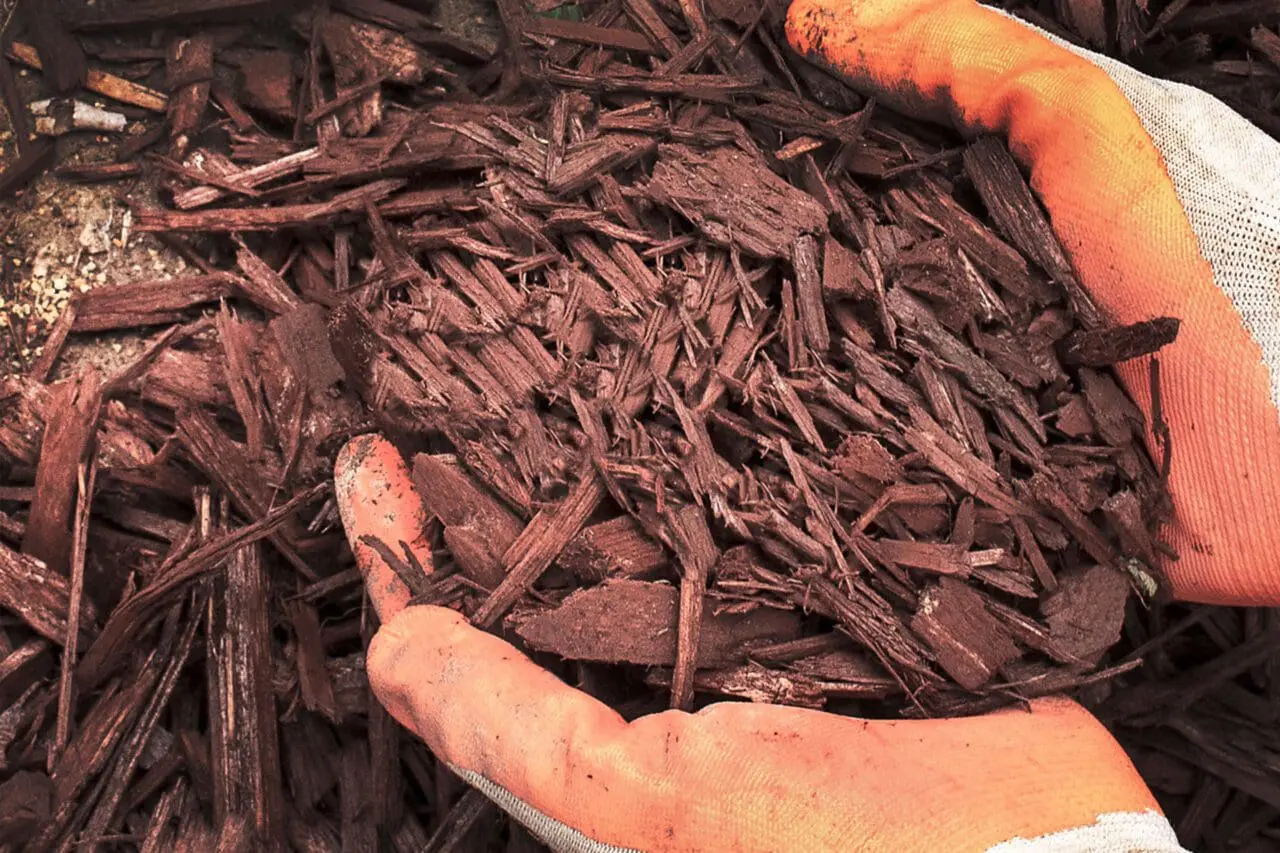
Mulch helps moderate conditions around the roots, but should be kept away from the base of the stems. Fertilizer and soil amendments should address an identified need rather than become automatic seasonal treatments.
Pruning Without Losing the Flowers
Rhododendrons form flower buds before the following flowering season.
When shaping is necessary and preserving bloom is important, pruning soon after flowering is generally the appropriate approach. Cutting back healthy growth in winter or early spring can remove buds that were already present.
Regular pruning should support the plant’s form. If substantial reduction is needed every year, we would revisit whether its natural size suits the bed.
Understanding Winter Leaves
Large-leaved rhododendrons may curl and droop their leaves during cold weather. That response alone does not establish that a plant is dying.
Persistent discoloration or foliage that fails to recover as conditions improve needs closer attention. UMass Extension’s guidance on winter injury recommends waiting until the extent of damage is clear before removing affected branches.
The useful distinction is between a normal seasonal response and lasting injury.
When Foliage or Growth Changes
Lace bugs can affect foliage, while root disease and other problems can reduce vigor or cause dieback.
We would not diagnose a declining shrub from one symptom alone. Exposure, drainage, watering, roots, and visible pest activity all deserve consideration.
Replacing the plant without understanding the cause may leave the next shrub facing the same conditions.
Are Rhododendrons Native to Massachusetts?
Some are. Native status depends on the species.
Many familiar landscape rhododendrons are hybrids, so the word “rhododendron” does not by itself establish native status.
Rhododendron maximum, commonly called great rosebay or rosebay rhododendron, occurs naturally in Massachusetts. Native Plant Trust identifies it as a native species and lists it as threatened in the state.
It is also a substantial shrub with a different character from a compact garden hybrid. Where it is appropriate, planting should use nursery-propagated material rather than plants collected from the wild.
We consider native status alongside space, exposure, and the purpose of the planting. Choosing a native species still requires choosing a suitable setting.
Frequently Asked Questions About Rhododendrons
Q: When Do Rhododendrons Bloom in the Boston Area?
A: Timing depends on the selection and weather. PJM types commonly flower in April into early May, while many large-leaved selections bloom later in spring. Some species extend flowering into early summer. A specific cultivar gives a more useful expectation than the general plant name.
Q: Why Does My Rhododendron Have Leaves but Few Flowers?
A: Flower buds may have been removed by pruning or damaged by winter conditions or browsing. Light and other growing conditions can also affect performance. We would first identify the plant and examine its buds, pruning history, and location rather than assume it needs fertilizer.
Q: Can an Overgrown Rhododendron Be Reduced?
A: Some established rhododendrons respond to renovation pruning, but the appropriate approach depends on their health, type, and condition. A gradual reduction may be preferable to a severe cut, and flowering can be affected. Before deciding, consider whether the shrub can remain useful at a size the site accommodates.
Q: Are Rhododendrons Toxic to Dogs and Cats?
A: Yes. Rhododendrons are toxic to dogs and cats if eaten. That matters when choosing plants for areas used by pets that chew foliage. If ingestion is suspected, contact a veterinarian promptly.
Learn More About Rhododendrons
- UMass Extension: PJM Rhododendron Group
- NC State Extension: Rhododendron ‘Roseum Elegans’
- NC State Extension: Rosebay Rhododendron
- ASPCA: Rhododendron and Pet Toxicity
Choosing Rhododendrons as Part of the Larger Landscape
A rhododendron can be a significant part of a garden long after its flowers have faded.
Its leaves may provide the backdrop for a lower planting. Its shape may help balance the house. A repeated group may give a woodland edge enough consistency to feel connected to the maintained garden.
Those contributions depend on decisions made before planting: the selection, the location, the space allowed around it, and the way neighboring plants will develop.
At a Blade of Grass, we bring those relationships into planting plans that consider the entire property and its ongoing care. If you are planning a new garden or reconsidering established rhododendrons, contact us to discuss your landscape.